
Making Room is a biweekly opinion column. The views expressed are solely the author’s.

This is my last column. Over the past two years, I’ve had the privilege of sharing my views about housing with you. I don’t know if I changed anyone’s mind, but I do know I stirred up some conversation (and plenty of clicks for ARLnow). I hope ‘Making Room’ has at least inspired you to reflect on what Arlington means to you and the role that secure housing plays in your life.

When I moved to Arlington in 2015, I would never have thought I would become a local online guest columnist. My foray into Arlington housing politics began in October 2017. After Trump’s election, I vowed to get more politically engaged. That led me to canvas for Ralph Northam and to start following local races.

It was at a candidate forum, featuring soon-to-be-elected Erik Gutshall, that the attitude of Arlington’s political constituents crystalized for me: As a newcomer (with a child no less) I was a burden: I was the reason for more apartment buildings and more crowded schools. I was the reason for higher property tax assessments and higher County budgets. I was the reason for fewer trees.

Housing wasn’t a top issue for me until then. I knew that housing was expensive in DC. For my two-bedroom in Arlington, my husband and I paid three times as much for the same size space as we did back in the Midwest. But I didn’t realize that a vocal minority of Arlington’s influential citizens actively blocked or scaled back new housing. I didn’t realize that for many of my neighbors, density is the enemy.

But density can be an unparalleled opportunity to advance the economic and social progress of our community if we let it.

Density means more places to live and allows for housing to meet different needs. Density allows our communities to be diverse in age, race, income, and family type.

Density means more livable streets. Density helps us have walkable neighborhood schools. Density allows people to participate in the community without a car. This could be an older adult or a younger teen, or anyone in between.

Density brings people together, which builds community and helps ensure a healthy civil society and democracy. It helps businesses thrive by having more customers nearby.

Density helps households have a smaller carbon footprint and allows for a more efficient use of public resources. Density allows people to live closer to the things that they value.

Embracing density means looking to the future, rather than the past.

Arlington is lucky enough to be part of one of the most economically dynamic metropolitan areas in the country. Because we have the privilege of an unparalleled job market, robust transportation and other amenities, we have an obligation to welcome more people.

The most important lesson I’ve learned in the past four years of political engagement in Arlington is that people who value density, especially renters, ‘transients,’ young professionals, and newcomers, need to show up. We need to advocate for housing that supports not only how we live now and how we want to live in the future, but also serves the needs of those who will follow. We need to advocate for affordable housing for people who are often left out of the planning process.

Arlington won’t change because people read my column and had a change of heart about getting a duplex next door. But it can change when our leaders hear more from the people who see the opportunities that density will bring — for ourselves and our neighbors.

Jane Fiegen Green, an Arlington resident since 2015, proudly rents an apartment in Pentagon City with her family. By day, she is the Membership Director for Food and Water Watch, and by night she tries to navigate the Arlington Way. Opinions here are her own.



On January 8, 2013, ARLnow published its first regularly-scheduled opinion column, written by Peter Rousselot.

Since then we’ve expanded to eight distinct columns, which run on a biweekly basis. In all, we have published nearly 2,000 articles from our opinion columnists since Peter’s first piece.

Times change, however, and we must not be afraid to adapt as the media landscape and reader expectations evolve.

In August we made the decision to end the columns at the end of the year. There were three primary reasons.

  1. A shift in reader perceptions of opinion content. Many readers now perceive the publication of an opinion piece to be a tacit endorsement of it.
  2. A change in reader reactions. We’ve noticed that in the comments, on social media and in emails people are increasingly engaging in personal attacks on our opinion columnists themselves, instead of just debating their opinions.
  3. A need to evolve. Nothing lasts forever and we need to keep what we publish on ARLnow fresh, interesting and relevant to our readers. While interest in the columns remain strong — Jane’s piece on leaf blowers is our most-read post of the year — it feels like it’s time to try something new.

The column decision followed a previous decision to end publication of all unsolicited letters to the editor and op-eds, which itself was made in the wake of the New York Times / Sen. Tom Cotton controversy.

Given the current state of social media and the national discourse, it is simply too fraught of an environment in which to pick what we do and do not publish among opinion contributions. And, frankly, there is no shortage of places where those with opinions can have them heard.

Whether publishing a missive on Medium, a thread on Twitter, or a comment in our comment section, those with opinions are not lacking options for getting them out there. What is more difficult is amplification — getting them widely read. Publication on the homepage of ARLnow is certainly a way to do that, and it’s a power that we take seriously.

As such, instead of rewarding those who write a few paragraphs and send an email with amplification in the form of a letter-to-the-editor post, we are instead considering such opinions for inclusion in news articles on a given topic. Those who have put in the work to get a petition widely signed, to start a coalition, to get politically engaged, to do in-depth research — and then to reach out to us — are more likely to get quoted in these pages.

In the case of the columns, the plan is to find new ways to highlight the perspectives of our current columnists, as well as other knowledgeable and civically-engaged locals. We’re not totally sure what form this will take, but we’re looking forward to working with contributors and readers to present a diverse and representative range of opinions in a way that adds meaningfully to the local discourse while minimizing toxicity.

In the meantime, we are saying goodbye for now to our current columnist lineup. The final Making Room, Community Matters, Modern Mobility and Ed Talk columns will publish this week. The final Progressive Voice, Right Note, Peter’s Take and What’s Next columns will publish next week.

Thank you to our columnists for sharing your time and your knowledge — and for your willingness to put your opinions out there, despite it all — in the interest of trying to make Arlington a better place.

Photo by Jeremy Bezanger on Unsplash


If it’s shocking to you that it’s December already, you’re not alone.

Maybe it’s because fall seemed to be a mere extension of summer that then quickly transitioned to winter. Or maybe it’s continued remote work that makes the days blend together. Or maybe we’re all working harder than usual given the nationwide labor shortage.

Whatever it is, Christmas lights are proliferating, the first tiny snowflake have fallen, another bout of snow is in the forecast for this coming Wednesday. Bottom line: winter is here, believe it or not.

With that, here’s a look back at the most-read local stories of the past week.

  1. CarPool to open new Ballston location tomorrow
  2. Gunshots fired in Westover yesterday morning, police say
  3. Driver flees after striking and seriously injuring pedestrian near W&OD Trail crossing
  4. APS targets two overcrowded schools in latest boundary change proposal
  5. Peter’s Take: Arlington’s ‘Missing Middle’ housing morass
  6. Morning Poll: Should gas-powered leaf blowers be banned?
  7. Arlington resident dies in house fire in Augusta County
  8. ACPD: Officers assaulted by drunk men in Rosslyn, Crystal City and Pentagon City
  9. New pizza place moving in after former Clarendon late night spot Goody’s closes
  10. Seven years since debut, how’s the region’s first rapid bus transit system faring?
  11. An “Uncommon” restaurant is set to open in Clarendon early next year
  12. Ask Eli: Cost of new construction homes in Northern Virginia

Feel free to discuss those stories or anything else of local interest in the comments. Have a nice weekend!


What’s Next with Nicole is a biweekly opinion column. The views expressed are solely the author’s.

Infrastructure needs should be built into Arlington’s Sector plans and the Missing Middle study as part of the long-range planning process.

Currently, our long-range planning documents largely center around building heights and setbacks, building and greenery aesthetics, as well as road and public transportation configuration, design and demand management. Missing from this are other significant aspects of infrastructure including schools, public facilities, parks, public spaces and stormwater. I am defining infrastructure as anything that Arlington has used bonds to fund.

Arlington has five planning studies currently in progress — the Clarendon Sector Plan update, Crystal City Building Heights Study, Missing Middle Housing Study, Plan Langston Boulevard and Pentagon City Planning Study — that will all have significant impacts on infrastructure needs over the next several decades.

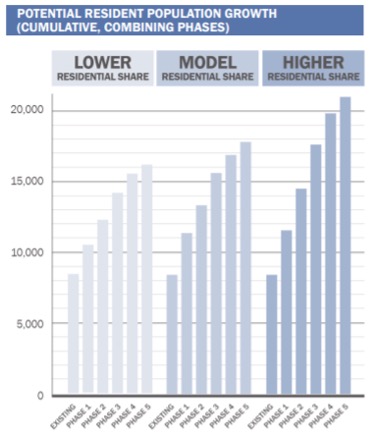
To give an example of why this is important: I was a part of the Pentagon City Planning Group and strongly advocated for including a potential range of additional housing units expected in future development. This was so that Arlington Public Schools (APS) could provide student projections and in turn, Planning would be able to include potential sites for a school that we know is needed in the area.

Staff were accommodating to that request, which was appreciated, but it was obvious that this was not a part of the usual planning process. Even with APS and Planning in the working group together, there was no “normal” procedure for the type of request that was made. That lack of coordination can be said for other aspects of infrastructure as well.

Population projections included in the Draft Pentagon City Plan (courtesy of Nicole Merlene)

The following infrastructure planning areas are needed:

Schools: It is obvious that there is a disconnect between Arlington County and APS in school site planning. APS staff has indicated that estimates on the range of new housing units and types are needed to properly use their multiplier equation and estimate future school sizes. Typically, this information isn’t provided in a study, but was for the first time in the Pentagon City Planning. This allowed APS to communicate a potential new school footprint size, and thus, in the last draft we were able to see potential sites for a new school. This was a big win, but is not what is or will be included in all of the other planning studies.

Transportation: Current planning processes do a good job of planning transportation impacts of future development. A “Travel Demand Forecasting Model” produced by the Washington Area Council of Government’s is the basis for demand management, and plans will also prescribe extensive details on street dimensions, medians, bike lanes, public transit specs and traffic calming measures.

This type of planning should continue in the other areas of infrastructure listed, with the same type of specificity and modeling. One item for improvement in this area is that there is not always a marrying of the Comprehensive Transportation Plan to long-range planning. This lack of continuity between infrastructure planning and long-range planning will be a theme among my recommendations.

(more…)


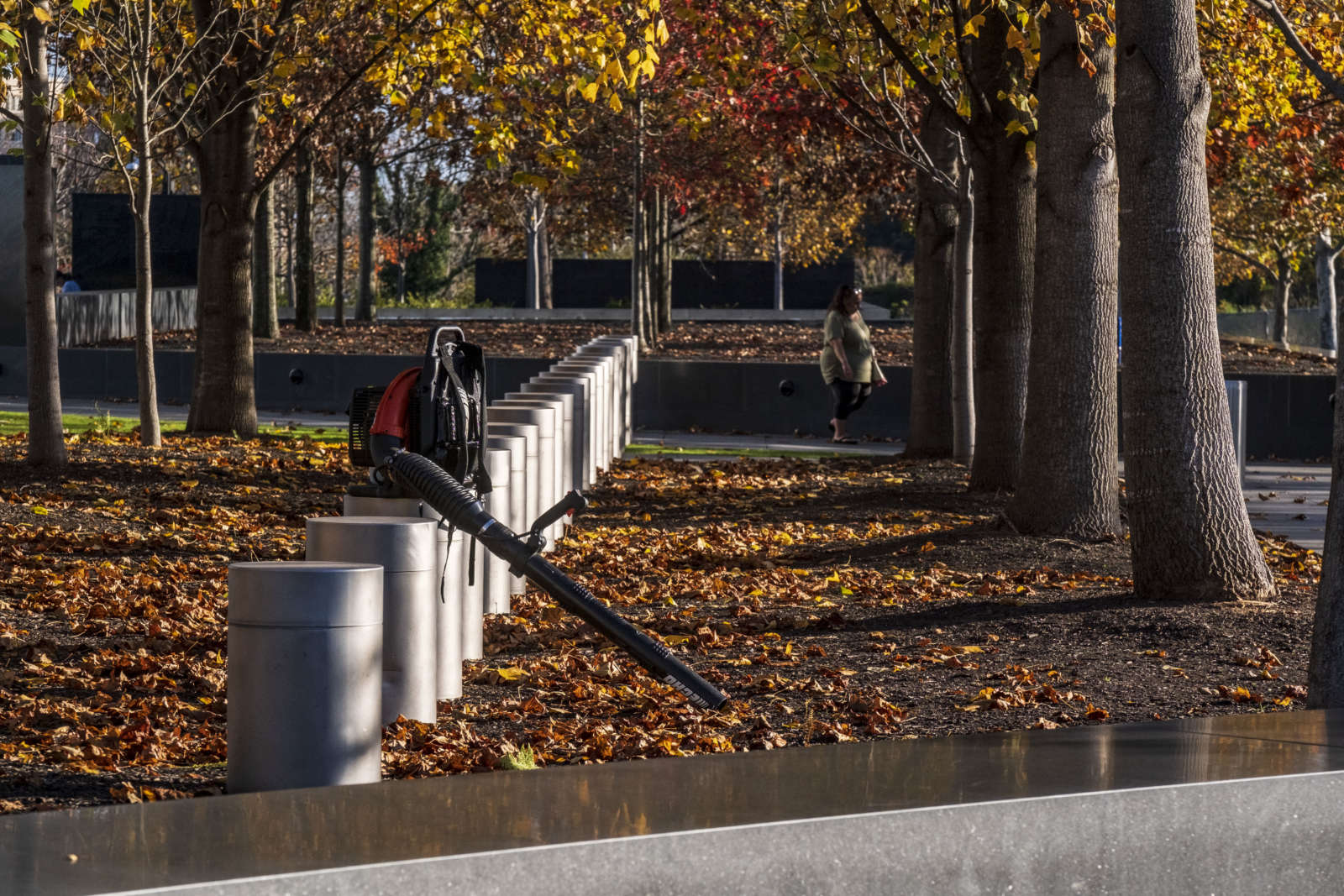
An opinion column railing against gas-powered leaf blowers apparently struck a nerve: it is now ARLnow’s most-read article of the year.

Opponents of the blowers have two primary complaints: the noise and the fumes.

In her opinion piece, Jane Green wrote:

The region is waking up to these noxious machines. The Arlington County Board took an important step on Tuesday, Nov. 16, when it appropriated funds from the American Rescue Plan Act to replace gas-powered landscape equipment with other options.

Leaf blowers are a drain on quality of life. Their piercing noise shatters concentration or the enjoyment of the outdoors. They spew noxious gas into the air. They can destroy insect habitats. But as a collective, we have come to expect leaf-free surfaces wherever we go. The pressure to maintain this appearance means that leaf blowers are ubiquitous.

But a movement against it is underway. I was visiting the Courthouse farmers market a few weeks ago and saw a table from Quiet Clean NOVA, a group petitioning the Virginia legislature for the local authority to regulate gas-powered yard equipment.

Across the river, D.C. is poised to ban gas-powered blowers after ringing in the new year.

From DCist:

… as the D.C. government gets ready to implement a ban on the use or sale of gas-powered leaf blowers at the start of 2022, this will be the final fall that the particular noise and fumes from the equipment will exist without the potential for a $500 fine. The city just introduced a rebate program to help people switch from gas-powered blowers to electric alternatives.

“Ten years from now, people will marvel that these things were ever used,” says James Fallows, a longtime D.C. resident who helped advocate for the ban. He has also written about his efforts in The Atlantic.

But gas-powered blowers also have their supporters. Many of those commenting on Green’s column were landscape workers — those hired by homeowners to clear leaves from their yards. The suggestion that other ways of clearing leaves can be just as effective doesn’t take into account the real-world experience of such workers, they wrote.

Even electric blowers, a potential option should the fossil fuel-powered versions be verboten, are not practical for many landscaping crews, some wrote.

What do you think? Should the Virginia legislature give Arlington the ability to ban gas-powered blowers, should the county do so?


Peter’s Take is a biweekly opinion column. The views expressed are solely the author’s.

On Nov. 16, County planning staff briefed the County Board on Phase I of the Missing Middle Housing Study.

Prior to the pandemic, County planners asserted that up-zoning to enable new Missing Middle (“MM”) housing would be a major contributor to ease Arlington’s affordable housing crisis.

But by the time Phase I was launched, the County had been forced by cascades of data to abandon this false claim.

Misappropriating the language of civil rights advocates, County planners’ latest rationale is that up-zoning to enable MM housing is necessary to provide diversity of building types in certain neighborhoods, noting for example that each of two new $900,000 duplexes is more “affordable” than a $1.6M single-family house that might otherwise occupy the same lot.

As a leader of Arlingtonians for Our Sustainable Future (ASF), I reject the notion that County planners’ preferences for more luxury buildings in certain neighborhoods deserves much weight compared to the preferences of the residents who live there now.

Prominent Arlington activist Suzanne Smith Sundburg points out that if more density were the key to affordable housing, more densely populated places like New York City would be more affordable than Arlington.

Arlington lacks adequate infrastructure and environmental plans for its current zoning

Arlington forecasts a total population of 301,200 in 2045 compared to 234,200 residents in 2021. These additional 67,000 residents are coming to Arlington under current zoning. Can Arlington’s infrastructure and environment sustain them?

For starters, where, exactly, are we going to put the new school facilities that will be required? In November 2019, the County Manager sent a letter to the acting APS superintendent offering County properties — including parks — to be turned into school properties. But those same parks are needed to support the park and recreational needs of these new residents. The Manager’s awkward overture reveals that the County has not planned adequately for either additional school capacity or additional parks.

Moreover, we regularly see water and sewage pipeline breaks in our old systems. Infrastructure problems are acute in many other areas, including flooding, power failures, building integrity, tree maintenance and protection, bridges and competition for parking spaces as population increases.

The County and APS have failed to adopt an internally consistent plan for all major public facilities, i.e., a Public Facilities Master Plan, despite the fact that six years have passed since the 2015 recommendation of the Community Facilities Study Group that such a Master Plan was critical to Arlington’s future. Many potential sites for important public facilities have been lost permanently to private development during those six years of dithering.

Generational transformation

Arlington County has not quantified the full costs of critical capital expenses that will have to be incurred as our population increases. In fact, the Manager told the County Board in his message of Nov. 12, 2020: “[G]iven that we are undergoing a generational transformation in how we provide services and use facilities, this is the wrong time” to support a proposal from the Joint Facilities Advisory Commission for long-range planning.

How then can this be the right time for an action like major MM up-zoning that could have a huge, irreversible, net-negative impact on Arlington’s future?

(more…)


The Right Note is a biweekly opinion column. The views expressed are solely the author’s.

Arlington has seen its share of school board members come and go the past few years. It is not because the work is not important or extremely worthwhile. No, it’s because there is nothing more personal to people than their children, as Terry McAuliffe found out the hard way. And, there is virtually no decision of consequence that can leave everyone happy.

School boundaries can leave parents fuming after spending $1 million or more to move into their preferred Arlington neighborhood. Every school budget almost certainly leaves something popular on the cutting room floor. Curriculum and classroom policy decisions can quickly inflame passions on both sides. Even the names of schools now generate extreme controversy.

Right now, learning loss from COVID-based decisions not to teach full-time, in-person for five straight academic quarters is probably the leading hot-button topic. Studies continue to point to our kids falling behind because they were locked out of in-person learning.

Many parents who could afford it have removed their children from APS and are not coming back. Many more who could not afford to leave are still upset that teachers and administrators could not figure out a way to get kids back in the classroom in one of the richest school districts in America. And now they do not see enough progress being made to make up for lost time.

As an aside, if you are going to run for school board anywhere in America, Arlington is the easiest if for no other reason than money is no object. Despite all the protestations to the contrary, Arlington Public Schools have virtually unlimited resources. We will likely spend over $25,000 per child this year, and we have millions left over each and every year that we budgeted for and did not spend. One year we “shook the couch cushions” to provide thousands of extra computers for students.

And of course, there are decisions on school safety. Just this past year, APS opted to remove school resource officers. Fortunately for Arlington, we have not seen some of the same incidents that lead Alexandria school officials to reverse a similar decision. Let’s hope and pray it stays that way.

A lot of parents would give the entire board a low grade when it came to providing leadership through the pandemic. What we could use moving forward is someone on the school board who without question is dedicated to preparing our children to succeed in college or the workforce.

Arlington does not need to be a beta tester on our kids. Woke notions should never supplant things that work academically, and buzzwords like equity should never be used as an excuse for missing the mark. Moreover, how much more we borrow and spend each year, or even the number of new buildings, should never be the measure of how we are doing. The budget process should be approached with the idea we will identify what is working — and what isn’t — and spend only what we need to get the job done.

There is a natural constituency for someone who puts first things first when it comes to our kids. If that is you, maybe you should run for school board.

Mark Kelly is a long-time Arlington resident, former Arlington GOP Chairman and two-time Republican candidate for Arlington County Board.


Progressive Voice is a biweekly opinion column. The views expressed are solely the author’s.

By Andrew Schneider

“I want to do a job, but I don’t have a babysitter. It’s too expensive.” That was the explanation from one mother about how the scarcity of affordable childcare affected her. In a recent survey conducted by Arlington Thrive, 41% of parents cited the lack of affordable childcare as a barrier to returning to work.

With barely half the capacity to serve children ages 0 to 5 years in Arlington, local childcare providers are simply not able to meet the needs of local families. This inability to access childcare can have a devastating impact on a parent’s ability to work. The resulting economic instability can lead to financial crisis, eviction and families being forced to leave Arlington to raise their families elsewhere.

In Arlington, infant care at a childcare center is more than $24,000 per year — roughly 20% of the median household income of $120,000 in Arlington. For families earning less, childcare costs represent a bigger burden, often requiring them to make hard trade-offs to meet their basic needs. One local parent said that during pandemic-related school closures, some childcare centers were charging more for one day of care than she makes in a week.

Arlington and Prince William have the lowest availability of licensed care in Northern Virginia. A recent study from the Community Foundation of Northern Virginia showed the economic impact of preschool enrollment disparity across income levels and race. Building on their recommendations and others, here are several ideas that could work in Arlington to improve the situation:

  • Help match families with openings through a clearinghouse or intermediary.
  • Increase the number of licensed providers and spaces by revising restrictive codes in favor of simple regulations that prioritize child health and wellbeing, providing support to programs through the licensing process, working with the faith and business community to identify facilities, and waiving local licensing and permit fees in exchange for fee-reduced spots;
  • Improve the overall quality and access to high-quality programs by subsidizing and expanding training and professional development for childcare workers; and
  • Provide direct funding subsidies to childcare programs to increase workers’ wages.

Arlington has a long history of innovating to address social challenges. Arlington Public Schools’ Extended Day after-school program was created in the 1970s to help women enter the workforce without having to worry about their children being safe from 3-6 p.m.

More recently, Arlington demonstrated a desire to improve access to affordable, quality childcare. With leadership from County Board Member Katie Cristol, the Child Care Initiative was established in late 2017 and made some progress toward this goal. Earlier this month, under Cristol’s leadership, the County pledged $5 million to develop affordable childcare options in Arlington. This investment will be an essential element in building more childcare capacity with the same innovative spirit that has become emblematic of Arlington.

Because of what we are hearing from the people we serve, Thrive is committed to supporting this issue and developing more long-term solutions. We are identifying successful models from around the country that might have some applicability to Arlington.

The availability of affordable, safe and enriching childcare options is linked to the economic health of Arlington. Without more childcare options in Arlington, families will face harsh realities as to whether they can remain in our community. For these reasons, we hope to engage our neighbors, nonprofit partners, funders, county leaders and others in thinking about childcare solutions comprehensively for children ages birth through 14.

Won’t you join us in this work to expand access to high quality childcare and enrichment opportunities? Solving this problem will go a long way in reducing financial crisis, and improving opportunity for all in Arlington.

Andrew Schneider was born and raised in Arlington County and has served as the Executive Director of Arlington Thrive since March 2016. He is the incoming chair of Arlington’s Continuum of Care, Co-Chair of the Arlington Interfaith Network and host of Arlington Voices on WERA.


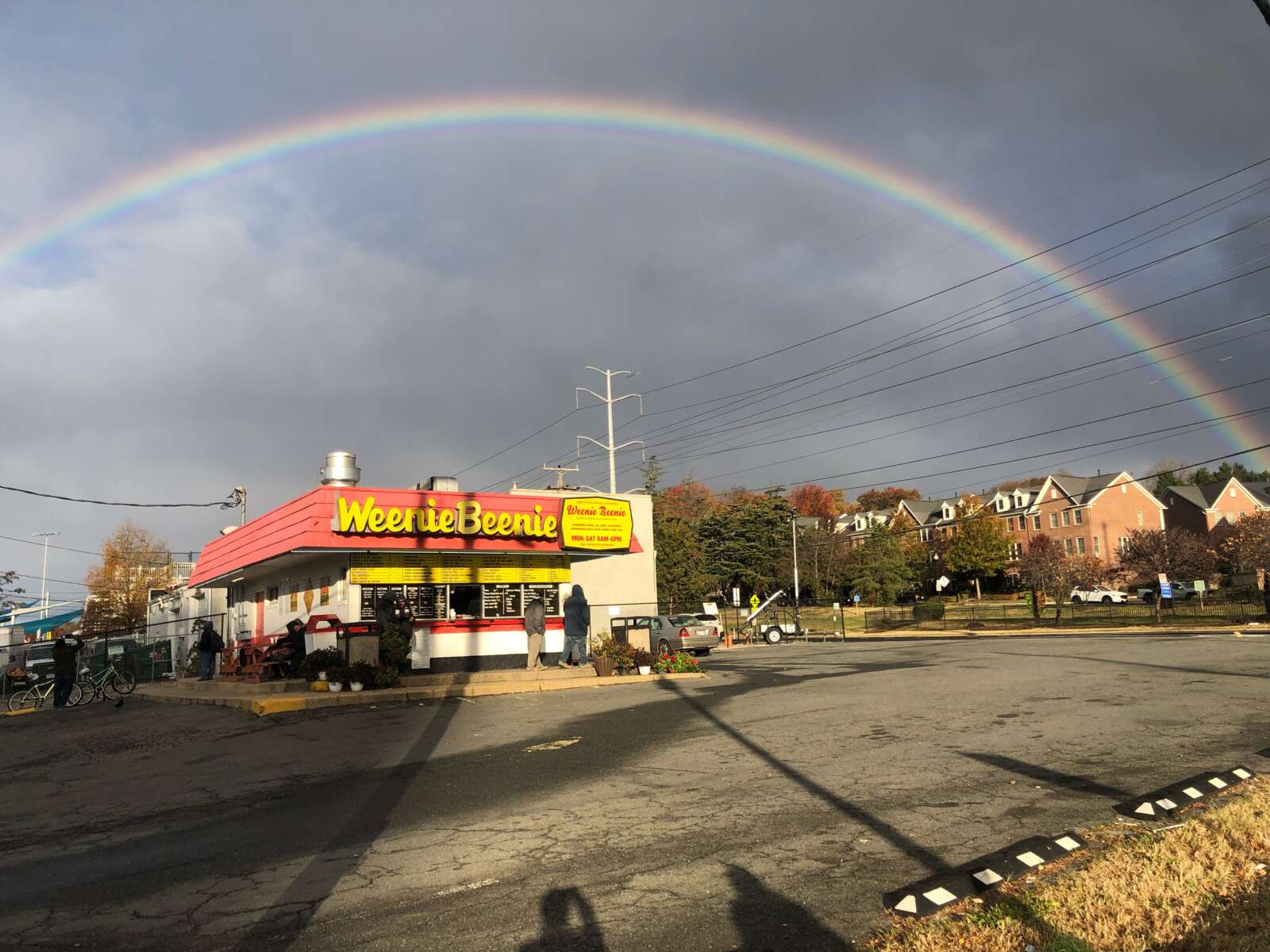
Rainbow over the Weenie Beenie near Shirlington (photo courtesy Nicole Waldeck)

Happy Friday, Arlington. Hope you had a nice Thanksgiving!

Today might have been a light publishing day for us, but rest assured: we’re not hearing of much news happening locally, so you’re not missing much. Wish we could say the same about the stock market and the pandemic.

We’ll be back Monday with a full slate of stories. In the meantime, below are the most read ARLnow articles of the week.

  1. Making Room: Stop using leaf blowers*
  2. Police pursue fleeing suspects in Pentagon City
  3. Police: Group of five robbed two kids in Ballston, near W-L High School
  4. Wharf developer announces major residential project in Ballston
  5. Korean rice hot dogs are coming to Arlington, perhaps as soon as next month
  6. APS modifies snow day procedures ahead of colder weather
  7. Two severe crashes prompt countywide look at alley safety in Arlington
  8. EXCLUSIVE: Airbnb is not paying a required lodging tax in Arlington County
  9. Don’t be surprised to see a helicopter lifting stuff from a roof in Pentagon City on Tuesday
  10. Former Clarendon Ballroom once again turning into a winter wonderland
  11. Yorktown student petition about sexual misconduct grabs attention of administration
  12. Happy Thanksgiving, Arlington!

Feel free to discuss those stories — or anything else of local interest — in the comments. Have a nice rest of your holiday weekend!

* Currently, this is the No. 2 most-read article of the year


It’s late on a Wednesday afternoon before Thanksgiving.

Perhaps you’re starting to get ready for a Wednesday night out at the bars with your fellow locals. Or mentally preparing for a long day of parades, football, cooking, eating and dishwashing with family.

Whatever you’re doing, ARLnow hopes you have a fun and safe Thanksgiving. Lest anyone forget, here are some turkey frying safety tips from ACFD:

Cooking safety aside, we were also wondering around Covid safety.

Though our planned morning poll on the topic got preempted by the unexpected Ballston development news, we’ll ask it now: given that vaccines are widely available, but the virus is still infecting people, how has the pandemic affected your Thanksgiving plans this year?

ARLnow will not be publishing tomorrow unless there’s major breaking news. We’ll have a lighter-than-normal publishing schedule for Friday.

Happy Thanksgiving!


Modern Mobility is a biweekly opinion column. The views expressed are solely the author’s.

Arlington prides itself on its public engagement, but when there is a fundamental disagreement on the basic design of our streets, public engagement becomes a frustrating, repeated rehashing of the same arguments rather than a productive and collaborative conversation about what might make a particular street unique.

Arlington needs a Street Design, Operations and Maintenance Guide — a set of localized standards, tools, interventions and policies that reflect not just professional engineering standards, but also community-driven values.

As someone who attends a lot of transportation project public meetings, I’ve heard the same feedback directed at the County in meeting after meeting: people wanting real, physical protection for bike lanes, not just paint; folks concerned that we are building wide lanes that encourage speeding; a desire to not have to push a button in order to safely cross the street; frustration with sidewalk curb cuts that seem to direct pedestrian out into the middle of an intersection rather than into a crosswalk; a desire for shelter and seating for bus stops, not just a signpost on a sidewalk.

None of these pieces of feedback is really location-specific. These requests were not because of a particular feature of the street or neighborhood where the project was being built; instead, they represent a fundamental disagreement between how Arlington currently designs and operates its streets and how residents wish them to be.

This disconnect creates a frustrating experience for both residents and for staff. Residents are frustrated, feeling like they need to go to every single transportation project engagement session and give the same feedback over and over, often with no visible results. Staff are frustrated because their engagement session, meant to help inform them about unique conditions and needs in a particular location is instead overrun with feedback about bigger, over-arching design issues that are unlikely to be changed as the result of feedback on a single project.

It’s past time for Arlington to have a community conversation about how we design, operate and maintain our streets and then put it all down in a frequently-updated, publicly-accessible guidance document. Many of Arlington’s peer localities (and nearly all larger cities) have a street design guide (Examples: Montgomery County, MD; Austin, TX; Seattle, WA; New York, NY)

An Arlington Street Guide could cover design issues (lane widths, protected bike lane materials, corner radii, etc.) as well as operational issues (signal timing policies, right-turn-on-red restriction policies, etc.) and maintenance issues (snow removal, street sweeping, pothole filling, keeping traffic calming features in good shape, etc.) and be a useful resource for county transportation staff, engineers for private developers, as well as Arlington citizens and advocates.

Providing an appropriate venue to have these broader design, operation and maintenance conversations would free up project-specific public engagement time for its intended purpose: discussing site-specific conditions that local residents may be more familiar with than County staff. On top of that, it would give an opportunity for community values and priorities to be inserted into existing county operational decisions like signal timing, pedestrian recall, etc. which are currently made entirely based on staff judgement.

With Arlington preparing to work through the “Multimodal Safety Toolkit” it promised as part of the Vision Zero Action Plan, now is the time to get started on Arlington’s Street Guide. Arlington has already started releasing for public review some of their existing guidance and the toolkit will further set out design guidance for the sort of interventions Arlington is willing to install on our streets to improve safety. With that great starting point, the County should prioritize codifying guidance on operational and maintenance procedures to create a one-stop-shop for understanding how we design, operate and maintain these critical parts of the public realm.

Chris Slatt is the current Chair of the Arlington County Transportation Commission, founder of Sustainable Mobility for Arlington County and a former civic association president. He is a software developer, co-owner of Perfect Pointe Dance Studio, and a father of two.


View More Stories