The Right Note is a biweekly opinion column. The views expressed are solely the author’s.

For years, Democrat politicians across Virginia campaigned on creating a redistricting commission. Arlington Delegate Rip Sullivan and former Governor Terry McAuliffe were leaders in the effort.

It always seemed like an interesting political maneuver from a party that, while in control of the Virginia Senate 10 years ago, drew a map that divided Arlington into three separate senate districts despite Arlington’s population being roughly equivalent to a single district. Alas, they wanted to use Arlington’s heavily Democrat population to impact three districts, not just one.

Democrats persisted in the redistricting reform push anyway and ultimately reached a deal with the Republicans to put a constitutional amendment to Virginia voters.

At the same time, Democrats won control of the House of Delegates, Senate and Governorship. Under the old system, they could now have total control of the map-drawing process. So what did the state Democrats do? They rejected the redistricting reform they had campaigned in favor of for years and officially opposed the commission when it went to the ballot last year.

Ultimately, only the loyal sample ballot following Arlington Democrats produced more votes against it than for it. Every other jurisdiction passed it. So, Democrats quickly passed statutory limitations on the commission in an attempt to shape the outcome.

As the commission approaches its deadline for House and Senate maps, many prognosticators believe that the commissioners will not be able to produce maps for approval by the General Assembly. If they fail, the decision will be left to the Virginia Supreme Court. The only upside of that outcome is that it would be extremely difficult for Virginia Democrats to challenge the constitutionality of the Supreme Court-drawn maps mid-decade like they did to gain seats a few years ago.

From the some issues never go away category, last week the Sun Gazette reminded us once again that some Arlington residents do not believe the County Board is doing enough to eliminate aircraft noise. Whether it is jets flying into Reagan National Airport or helicopters to the Pentagon, the issue comes up at fairly regular intervals.

This is because airplanes and helicopters have always made, and most likely will continue to make, noise. The FAA is well aware of it and spends a lot of time and money to study and address it. So too has Arlington County.

For residents who continue to complain about it, please keep in mind that Reagan National opened 80 years ago, just before the Pentagon 78 years ago. Meaning, there is a good chance the offending locations were in existence and receiving aircraft long before you bought your house. In other words, you knew or should have known about the offending noise when you decided to purchase your home.

The good news is that the continued existence of the Pentagon and Reagan National are big economic boosters for Arlington. So, every time you hear a helicopter or airplane just remember your house is worth more money than if it were located 30 miles away.

Mark Kelly is a former Arlington GOP Chairman and two-time Republican candidate for Arlington County Board.

For hours yesterday, Facebook-owned services, including the Instagram, WhatsApp, and original blue Facebook app, were knocked off the internet.

It was a throwback to the growing pains of Facebook, Twitter and other social networking services more than 10 years ago, when major technical snafus like this were more common.

The timing was also conspicuous, given that the outage came one day after a bombshell 60 Minutes episode in which a former employee levied a number of accusations, including that the company incentivizes “angry, polarizing, divisive content” in order to boost user engagement.

Here at ARLnow HQ, the primary effect of the outage was to disrupt our ability to post stories to our Facebook page and photos to our Instagram account. Also our readership dipped a bit, though not as much as one might imagine given how much traffic Facebook drives.

Elsewhere, though, one would think the widespread use of Facebook and Instagram as a time-filling utility — a quick break from work, a boredom reliever, etc. — actually resulted in some people being more productive during the workday while it was down. Does that include you?

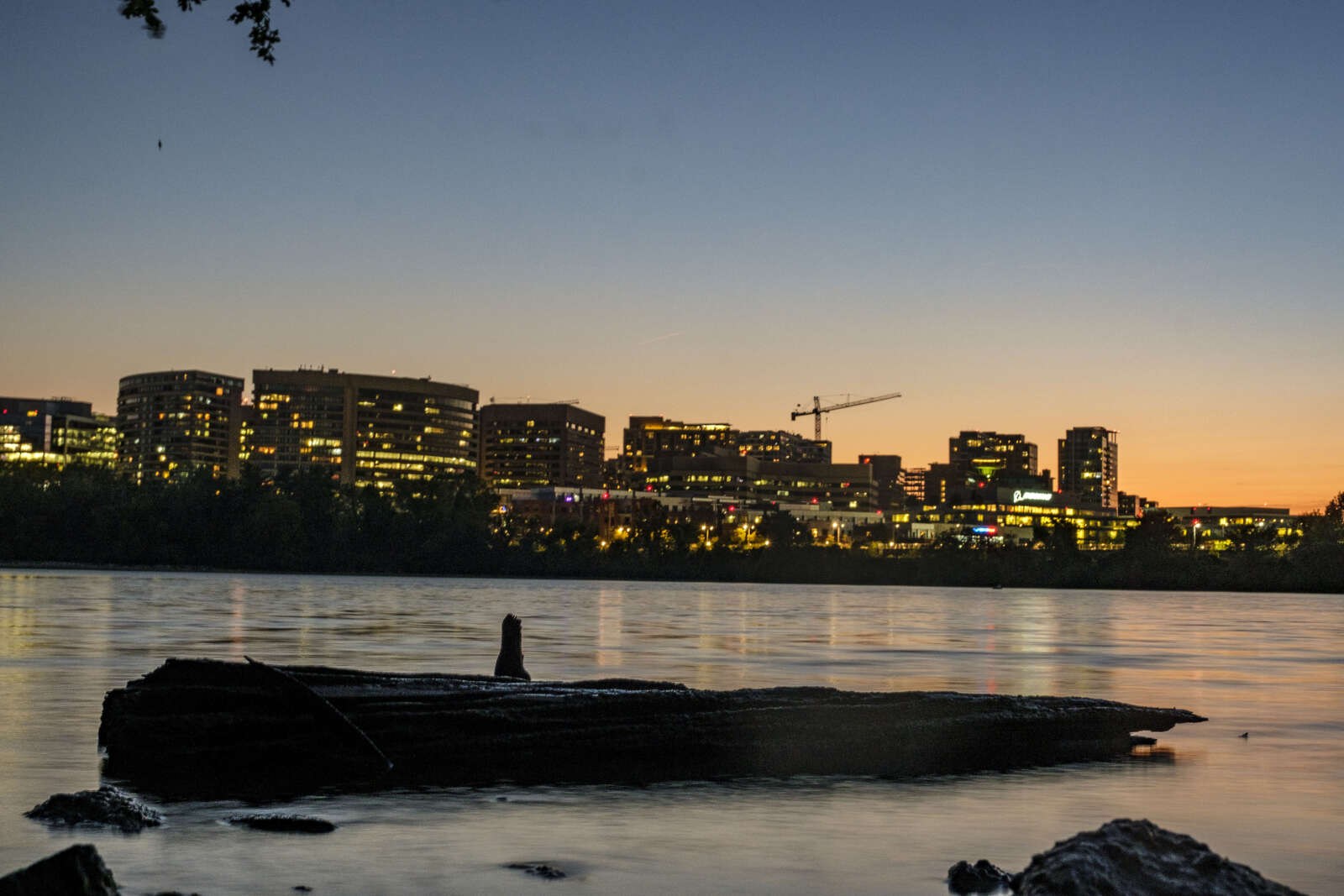
Photo by Timothy Hales Bennett on Unsplash


Progressive Voice is a bi-weekly opinion column. The views expressed are solely the author’s.

By Cheryl Moore

Like many people, I was deeply moved by the racial justice protests that marked the summer of 2020. Because of the COVID-19 pandemic, I didn’t feel comfortable marching in large groups, but I knew there had to be a way for me to make a difference. What could I do, using the experience and resources that I already had?

The answer began to emerge as I was preparing for a meeting of the Mount Olivet Foundation, which has a more than 50-year history of providing grants and loans to students pursuing higher education. The foundation president and I discussed the tumultuous events of the summer, both expressing our wish to do something that would promote equity in our own community. Then we had an idea: maybe the foundation could establish scholarships exclusively for Black or Latinx students. Perhaps this could be a tangible way to address unequal access to post-secondary education that restricts career choices and earning power for many young people of color.

We then convened a group of board members to develop the scholarship parameters and begin raising funds for the Mount Olivet Foundation Equity Scholarship. This was a new venture because preference for receiving foundation grants had usually been given to applicants with financial need who had a connection to Mount Olivet UMC or to those committed to serving the United Methodist Church.

For the new scholarship, however, we planned to reach out into the wider community. We discussed the difference between “equality” — treating everyone the same way — and “equity” — recognizing that many young people of color often encounter unique obstacles to obtaining higher education and need different opportunities and resources.

With a goal of providing substantive support for students who demonstrated significant financial need, particularly if they were the first in their family to attend college, we came up with an award of $5,000 per year, renewable for four years. A generous foundation board member offered to match contributions up to $50,000. Donations arrived, and we soon had almost $100,000.

Dotty and Jim Dake, who for many years had supported the work of the Mount Olivet Foundation, were early donors. Jim said, “The murder of George Floyd jolted us out of our complacency, and our study of the effects of systemic racism in Arlington led us to want to do more.”

The foundation made its first award in June 2021 to a young Black woman from Arlington who now attends Northern Virginia Community College. The plan is to continue fundraising so the fund will become an endowment that will benefit her and other students well into the future. “We see the Mount Olivet Foundation’s equity scholarship as a small but tangible step toward racial justice in our community,” said Jim Dake.

With this action, we hope to begin to remedy some of the effects of racism and, more recently, of the pandemic. The loss of lives and livelihoods during the pandemic has been felt profoundly. Some Black and Latinx families have had to choose between paying for rent and food and writing a check for college tuition. Some students saw their grades decline when they were forced to balance their own academics with supporting the schooling of younger siblings, thereby missing opportunities for merit-based aid.

(more…)


It’s now October, after an September that featured plenty of gorgeous late summer/early fall weather and which seemingly went by too quickly.

Another nice weekend is on tap — just in time for the National Landing Oktoberfest and other outdoor events — before the weather turns rainier next week.

Now, let’s take a look at the most-read ARLnow stories for the past week.

  1. Glebe Road Divide in Ballston Gets Renewed County Attention
  2. Jaleo in Crystal City to Close, Making Way for Residential Development
  3. New Study Ranks APS Second-Best School System in Virginia
  4. Elementary School Assistant Charged With Sex Offenses
  5. Arlington Man Arrested for Green Valley Shooting
  6. Car-Share Company Free2Move Halts Arlington Operations Over Insurance
  7. Arlington to Start Providing Vax Booster Shots Today
  8. Delayed Zitkala-Ša Park Finally Nears Opening
  9. Obscene Graffiti, BB Gun Brandishing at Rocky Run Park Worry Neighbors
  10. More Gunfire Reported Near Drew Elementary
  11. Man Arrested for Arlington Robbery Released On Bond The Day Before
  12. UVA Expanding Presence in Rosslyn and N. Va.

Feel free to discuss those articles or anything else of local interest in the comments. Have a nice weekend, Arlington!


Ed Talk is a biweekly opinion column. The views expressed are solely the author’s.

“A backward situation.” That’s how Arlington School Board Chair Barbara Kanninen described the planning process for the expansion of the Career Center during the Board’s Sept. 21 work session on the upcoming Capital Improvement Plan (CIP).

What’s backward is staff’s proposed timeline that has the School Board voting in October to set a budget and the number of seats for the Career Center project. Instead, these decisions should not be made until the School Board votes on its next CIP in June.

The Board’s detailed CIP procedures provide for the Board to have critical information needed to make capital improvement decisions — information that it will not have until the winter and spring, including updated:

  • Enrollment projections
  • County revenue estimates
  • Assessments of capital and non-capital options to meet student needs
  • Priorities for capital options

The history of addressing the need for additional high school seats and the option of locating them at the Career Center has been fraught.

More than three years ago, the School Board set a budget ($184.7 million) and the number of seats (800) for the Career Center expansion as part of its FY2019-28 CIP, adopted in June 2018.

But the School Board dropped the project from its FY2021 CIP two years later in June 2020. This was after an extensive design and planning process that resulted in a concept design that could not be built due to an estimated cost of $237-272.5 million — far above the budget.

This past June, the Career Center project was put back in the Board’s FY2022-24 CIP, but without the number of seats to be added and with funding listed as “TBD.”

How many additional high school seats are needed is a fundamental question and a moving target.

The CIP adopted this past June was based on enrollment this fall of 29,633 students, growing to more than 30,000 students by next fall, and peaking at more than 31,000 in the fall of 2024. But actual enrollment as of the first day of school this year was 26,932 students — 2,701 fewer students than projected.

How much money the School Board can spend on additional high school seats is another fundamental question.

This depends on how much revenue the county has because debt service — the amount of money the School Board spends to repay interest and principal on the bonds issued to pay for capital projects — is capped at not more than 10% of general expenditures.

Because of the limits on capital expenditures, the CIP involves making hard choices among competing needs to renovate existing buildings and add new seats in elementary, middle and high schools. Deciding how much to spend on the Career Center this fall, outside of the normal CIP process, risks not having sufficient funds for other projects when those are considered in the spring.

In its year-end report to the School Board in June, the Advisory Council on School Facilities and Capital Programs (FAC) cautioned the Board not to rush the Career Center project and to include it in the next CIP, after considering a range of options. The FAC report notes the uncertainties in critical variables needed to make decisions, including enrollment and revenue projections as well as increasing construction costs during the pandemic.

The FAC is correct. The Board will not have the best available information on which to base decisions about the Career Center until this winter and spring, when it has updated enrollment projections, updated revenue projections and the list of other needed capital improvement projects. Doing so before then will add to the fraught history of Career Center planning.

Abby Raphael served on the Arlington School Board from 2008-2015, including two terms as Chair. She also led the Washington Area Boards of Education for two years. Currently she co-chairs the Destination 2027 Steering Committee, is a member of the Board of the Arlington YMCA, and works with Project Peace, the Community Progress Network, and Second Chance.


Community Matters is a biweekly opinion column. The views expressed are solely the author’s.

This weekend, I was preparing to give a speech on racial equity and I decided to get an image consultation.

The session started off well and towards the end, we discussed what hairstyle I should wear. I have been in the process of exploring different styles including natural styles. The consultant recommended that I wear a wig, as she saw me in a longer, straighter style. While one could argue that a wig might be more complimentary to my look for this event, we have to question why one would think it would be a better option.

It wasn’t lost on me that a Black woman was advising me to wear a more European-inspired hairstyle as opposed to my natural style which clearly shows my African roots (literally!). The fact that the talk was on racial equity made the scenario all the more interesting. I would define this as a microaggression: “a statement, action or incident regarded as an instance of indirect, subtle or unintentional discrimination against members of a marginalized group such as a racial or ethnic minority.”

I would not have taken the time to process what happened if I had more engagements this weekend. This was a reminder that some members of “marginalized” groups experience microaggressions often, and the effects over time can be psychologically damaging, to the point we don’t even realize it.

Later this weekend, I also did research on John Mercer Langston, after whom the Arlington County Board voted to name Langston Blvd, to replace Lee Highway/Route 29.

I first learned of Langston when I wrote my master’s thesis at George Washington University about the lack of Black congresspeople from Virginia. At the time, Langston and Bobby Scott were the only two people who had held the honor of being Black members of Congress representing Virginia (Donald McEachin was elected in 2017).

Serving as a member of Congress was only one part of his impressive career. Langston was an attorney, an abolitionist and served in leadership roles at Howard University and Virginia State University.

His connection to Arlington began in 1867 when he was appointed inspector general of the Freedman’s Bureau overseeing Freedman’s Village, a settlement for formerly enslaved people on land that is now part of Arlington National Cemetery. According to the Washington Post, from 1925 until 1966, all Black children in then-segregated North Arlington attended John M. Langston Elementary School, which became a cherished part of the local Black community. Four students at that school would go on to attend the all-white Stratford Junior High, making it the first in Virginia to racially integrate.

Representation matters; that is clear. Yet, it is much more than just putting a “diverse” person in a position. It’s the pride, connection and affinity we can create by lifting up the lives well-lived of people who look like you, despite the “isms” that were in place to hold them back, and still burden us today. Additionally, it’s one thing to learn more about their life in a book, it’s another to have their accomplishments lauded by your local government and recognized as a street name, especially when it was formerly named after a Confederate general.

After the sting of the microaggression, that felt good.

If we really want to get to the root of racial equity, this is an important conversation. We can’t control the personal microaggressions that others may sling at each other, but it’s our responsibility to consciously lift each other up on a systemic level. Let’s all do our part to ensure representation in all Arlington spaces and build pride as a community.

Krysta Jones has lived in Arlington since 2004 and is active in local politics and civic life. This column is in no way associated with or represents any person, government, organization or body — except Krysta herself.


As September ends and we head into October, we have a handy new Arlies category to vote on! First, the results of last week’s voting.

Your favorite condo complex is Arlington Village, followed by Shirlington Village Condos and The Continental at Ballston.

Your favorite real estate agent for condo buyers is Shawn Battle and Eli Tucker (tie), followed by Carol Temple.

Now, let’s vote on this week’s category. Is there a certain handyman you have on speed dial? A go-to person for your various home projects and maintenance? Let us know below or by clicking this link.

Voting is open until next Tuesday, when we announce the winners and vote on a new category.


Making Room is a biweekly opinion column. The views expressed are solely the author’s.

From flash floods in Arlington to wildfires on the West Coast, climate change is an increasing threat to life and property. This is not a future problem, but a current crisis. We have only a few years to reverse human-made emissions.

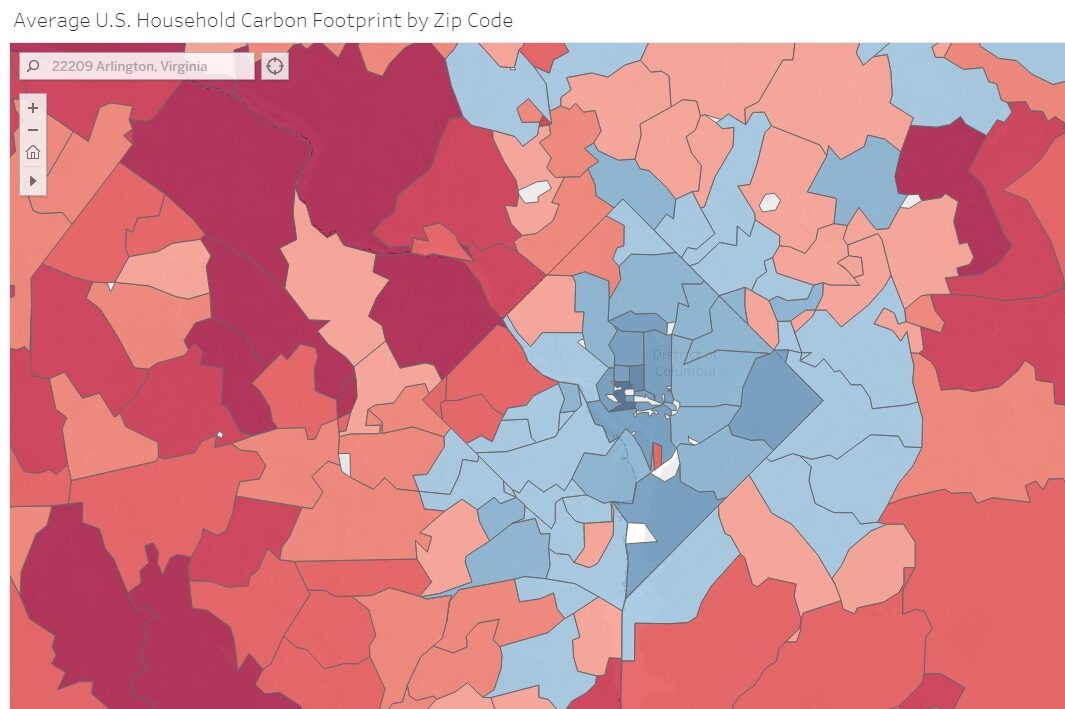
Transportation is one of the United States’ largest contributors to greenhouse emissions. Helping people drive less must be part of any climate change solution. Research also shows that multifamily housing requires less energy to heat and cool compared to detached homes. The densest parts of the D.C. region also have the lowest per-person energy consumption. The best thing we can do for our planet, for ourselves and for the next generation is to allow more people to live in these low-carbon neighborhoods.

But density and urban development is sometimes demonized by self-described environmental activists. Some groups focus only on the loss of trees in urban neighborhoods, ignoring the acres of trees that are bulldozed for sprawl development and the broader climate benefits of compact communities.

Douglas Stewart, Transportation and Smart Growth Co-Chair for the Virginia Sierra Club, shares how environmentalists and anyone concerned about sustainability can advocate for housing policies that will help address climate change:

The Sierra Club recognizes that we can’t address climate change without addressing our nation’s housing crisis. The lack of diverse, affordable housing options in developed areas with transit networks where jobs and services are concentrated is a major factor in increasing greenhouse gas emissions. Locating housing farther away from these centers increases traffic and, in Virginia’s transportation sector, accounts for 48% of carbon dioxide emissions.

Average Annual Household Carbon Footprint in 2013 (UC Berkeley CoolClimate Network)

“Infill” is the development of new homes, jobs, shops and services in existing urban and suburban areas and small towns. By enabling people to live closer to jobs and services, infill development reduces driving and greenhouse gas emissions while providing other quality of life and economic benefits. Research by the Coalition for Smarter Growth has demonstrated that more compact development reduces greenhouse gas emissions by 10-40%. Other research has shown that more compact, mixed-use communities also reduce household transportation costs, which are often the second biggest household expense after housing.

Arlington has 11 Metrorail stations, around which more housing could be built, including housing that is affordable to lower-income residents. However, a recent report by the Brookings Institution indicates that a large proportion of new housing is in areas that have fewer jobs and transportation options, such as Loudoun and Prince William Counties, while job-rich areas like Arlington are not building enough housing.

Arlingtonians who are concerned about climate change and equity can help reverse this trend and focus on new growth in walkable, transit-oriented communities with a range of housing options for all incomes. With 3.8 million members, the Sierra Club works to advance climate solutions and ensure everyone has access to clean air, clean water and a healthy environment. The Sierra Club derives its grassroots power from members and volunteers in local groups and state chapters, including the Potomac River Group that covers Arlington, Alexandria and Falls Church.

(more…)


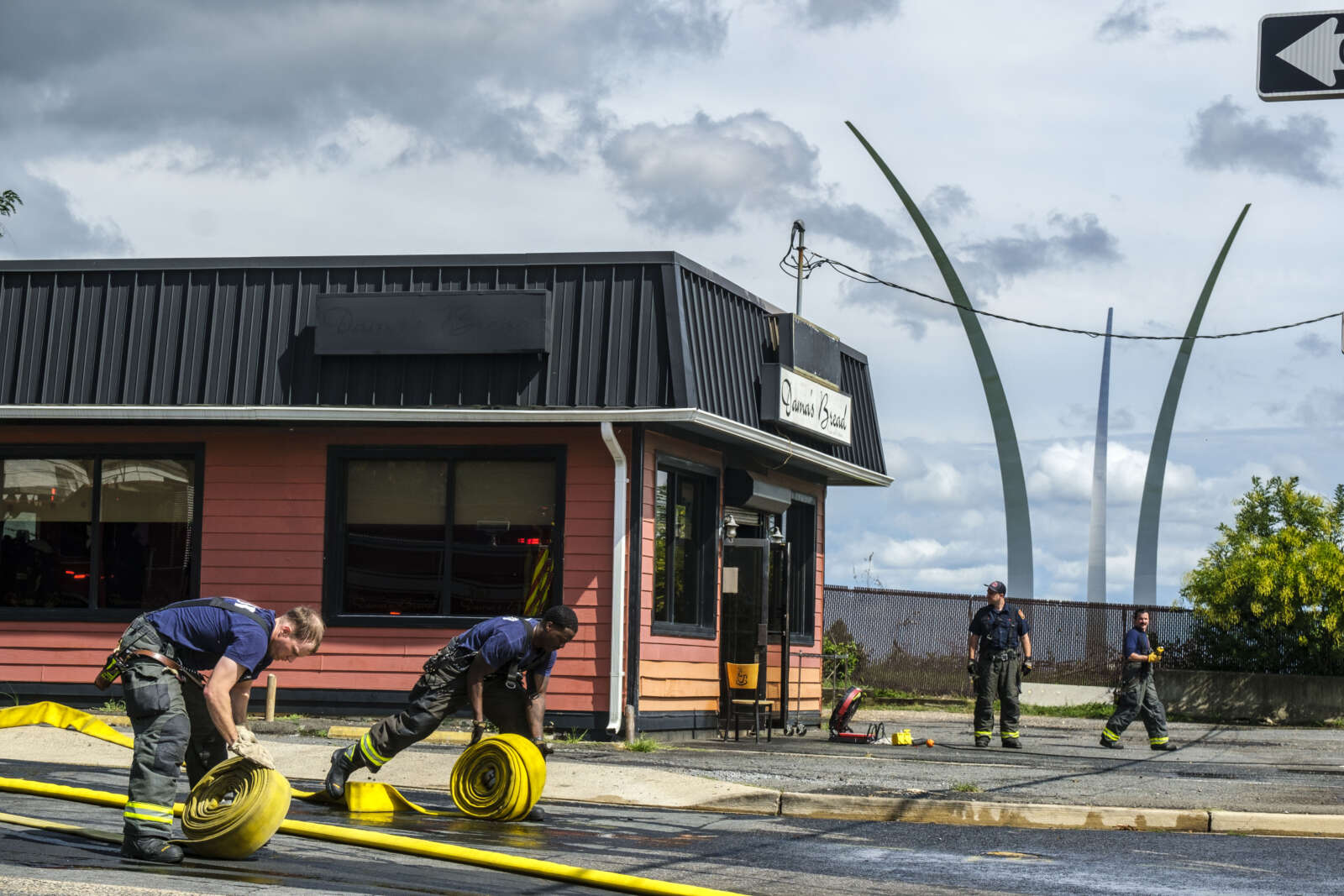
Arlington County Fire Department on the scene of a kitchen fire at Dama on Columbia Pike on Thursday (staff photo by Jay Westcott)

(Updated at 6 p.m.) It’s a Friday afternoon and the start of what promises to be a gorgeous, basically perfect early fall weekend.

Here’s wishing lots of sunshine and quality time out of the house for our readers over the next couple of days.

If you are headed out tonight to grab dinner, there is a possible restaurant closure to be aware of.

Portabellos, the Langston Blvd (formerly Lee Highway) restaurant, was set to close tomorrow. But a Nextdoor post from the owner, since deleted, said that that landlord locked him and the restaurant out today. Police were also dispatched to the restaurant earlier today for a report of an escalating dispute between the owner and the landlord, according to scanner traffic. The restaurant’s phone line was disconnected and we were unable to reach the owner to see whether Portabellos would get its last hurrah or not.

Separately, the phone line at Dama on Columbia Pike rings to a perpetual busy signal, after its kitchen fire yesterday, but we’re now told the pastry shop and Ethiopian restaurant is open “with normal operations.”

Now, without further ado, here are the most-read ARLnow articles of the past week.

  1. Viral Video Shows Marines Helping Stranded Driver During Thursday’s Flooding
  2. Marine Corps Marathon Canceled Again
  3. Police Ask for Help Finding Fugitive Accused of Clarendon Stabbing
  4. Morning Poll: What Do You Think of the New County Logo?
  5. Arlington Firefighters Are Also Sounding the Alarm on Pay
  6. Rider Fell onto Tracks While Walking Between Metro Trains in May
  7. Arlington Sees Sustained Drop in Covid Cases
  8. County Board Adopts Plastic Bag Tax, Joining Fairfax County and Alexandria
  9. What $500,000 Can Get You in Northern Virginia Real Estate
  10. Does the ‘Missing Middle Housing Study’ Need a New Name?
  11. ACPD and Dept. of Human Services Plead for Funding Boost Amid Staff Exodus
  12. APS Staff Say Virtual Learning Program Needs ‘Drastic’ Improvements

Feel free to discuss those stories or anything else of local interest in the comments. Have a great weekend!


What’s Next with Nicole is a biweekly opinion column. The views expressed are solely the author’s.

An increase in extreme weather events and community power usage has made the need to modernize our power grid’s resilience a pertinent topic of discussion.

For that reason, it is past due for Arlington to update its 15-year 2002 Underground Utility Plan and for the Virginia Legislature to have Dominion spend some Strategic Undergrounding Program funding to underground main lines in urban/suburban corridors instead of exclusively undergrounding suburban/rural tap lines as is current practice.

In Arlington, over one-third of our energy usage comes from electric energy, which is primarily provided by Dominion Power. A known way to reduce energy loss in the process of distributing electricity while also reducing prolonged power outages is to underground power lines.

Virginia Legislature and Dominion Energy’s Strategic Undergrounding Program
How it currently works

All Dominion Power users pay a portion of their utility bill towards the multibillion-dollar Strategic Undergrounding Program that has been authorized by the Virginia Legislature. The parameters are set in Code 56-585.1 A6.

Virginia requires undergrounding project areas average nine or more outages over a 10 year period, that the project doesn’t cost customers over an average of $20,000 per customer and, specifically, the code references upgrades to ancillary tap lines and does not mention main lines which are what typically line major corridors. Dominion representatives confirmed tap lines are what are chosen for improvements. In Arlington, Dominion’s Program financed tap line undergrounding on N. Marcey Road (2016), N. Kenmore Street (2018), 16th Street N. (2018), N. Somerset Street (2020) and another project is expected on N. Kensington. The estimated cost of all four completed projects was about $750,000.

As you can see, these projects are located in leafy neighborhoods and not where a majority of residents live. Dominion representatives stated that the reason behind this choice also lies in that it is easier for their trucks to access main roads than suburban areas during storms which is why there is a better cost benefit analysis for those areas.

Moving forward

Virginia Legislators should dedicate a portion of the Strategic Undergrounding Program towards main line undergrounding. Notably, the relative cost per project would increase and, for that reason, I suggest only a portion of the fund for the highest priority main lines.

Leaving out urban ratepayers in areas passes on these costs to either 1) renters of apartments or office tenants, by way of developers needing to pay for undergrounding to get an approved site plan; or 2) all taxpayers in those urban jurisdictions, by way of local governments needing to put undergrounding efforts on a bond referendum. This creates a negative financial burden on areas like Arlington, Alexandria, Norfolk, Richmond or Virginia Beach from benefiting from this program — adding to already high local rents and putting pressure on local governments for bonding measures.

Additionally, this past week the Virginia State Corporation Commission that regulates Dominion, found that Virginia customers paid Dominion more than $1.1 billion above fair profit over four years and might need to pay back or cut rates to the tune of $312 million. This might be one of many ways the General Assembly might choose to reinvest those funds (as well as investments in renewable energy, etc.).

(more…)


Peter’s Take is a biweekly opinion column. The views expressed are solely the author’s.

As ARLnow reported, APS unveiled plummeting 2020-2021 SOL test scores just days before the academic year began. Virginia’s Superintendent of Public Instruction concluded that Virginia’s SOLs “tell us… students need to be in the classroom without disruption to learn effectively.”

A recent survey of superintendents shows that many other school districts are providing additional in-person instructional time and/or intensified tutoring to address learning loss. Meanwhile, APS initially hailed its Virtual Learning Program (VLP) as one of APS’s “bright spots,” after teasing the possibility earlier this year of permanent virtual programming for secondary students. VLP saw a botched roll-out.

SOLs are part of a puzzle with missing pieces

Arlington’s SOL pass rates declined 21 points in math and over five points in reading. This is an undeniable educational crisis. The reality might be worse than the scores show. It’s reasonable to assume those most likely to pass were most likely to take SOLs. The smaller drop in reading scores misleads. Last November, the State Board of Education adopted a motion advocated by Arlington’s own Superintendent to lower the minimum pass rates for reading.

The inherent limitations of SOLs are well-known, but they are the only reliable state-wide longitudinal gauge of where Arlington’s children are relative to their peers and to previous years’ learning.

Long-standing achievement gaps widen

A year of missed learning substantially widened the long-standing APS equity gap. Closing it must be central to addressing system-wide losses. Regrettably, the Aug. 26 School Board presentation buried the comparison of minority vs. white student performance within the last two slides of a 70-page deck: declines in passing rates of 12 points among Hispanic students and 10 points among Black students in reading, 35 points among Hispanic students and 30 points among Black students in math. The corresponding declines among white students are three points in reading, 13 points in math.

Minority parent voices should be given their deserved greatest weight as the entire Arlington community seeks common ground to produce major and lasting system-wide improvements.

VLP’s disastrous launch and subpar effectiveness

Despite a nationwide consensus that the vast majority of students learn best in person, APS chose to allocate to VLP the majority — at least $11 million — of its federal American Rescue Plan funds. Yet VLP’s first week was marked by reports of students without schedules or stuck interminably in “waiting rooms,” while 42 of VLP’s teaching slots were unfilled on the first day.

Although VLP has improved since its disastrous launch, this school year must be VLP’s last. APS should strictly limit participation in any future virtual program by adopting criteria similar to those Fairfax, and even the nation’s largest school district, have adopted.

(more…)


View More Stories