Yes, fall is here and Mr. Autumn Man is again walking down the street with a cup of coffee, wearing his signature sweater over a plaid collared shirt.

Last month we found that after an especially warm and stormy summer more than two-thirds of poll respondents were “suffering summer fatigue” and ready for the start of fall. A few years ago we also established the kinds of autumnal things that readers most look forward to: the leaves changing color, fall festivals, playoff baseball and going to pumpkin patches and orchards.

Today, however, we’re asking about the things you’re not looking forward to as the season changes.

For one, it’s getting darker by the day.

Then there’s the colder weather, which will soon enough necessitate jackets, gloves and hats. And that’s not to mention leaf blower noise and leaf raking duties for those with yards.

Of those three things, which are you least looking forward to?


The Right Note is a biweekly opinion column. The views expressed are solely the author’s.

School is back in session and Arlington’s Public Schools had some bad news to deliver. Last week we learned that enrollment at the beginning of the school year is off by nearly 2,200 students from projections in the current budget — from 29,100 projected to 26,932 actual.

Thumbs down to the APS staff who had originally projected an additional 500 students would be back in school this fall and only pulled back at the request of School Board members.

If the current enrollment number holds that means Arlington will spend just a shade under $26,000 for every student enrolled under the topline budget number passed this spring. That number will drop slightly as Arlington will see its share of state funds reduced, but it should be remembered when the School Board claims they don’t have the resources to adequately educate our kids.

The School Board should give the public more answers on what went wrong in the projections? On the surface, it appears that many parents who opted their kids out when the schools were locked down are simply not coming back. Whatever the reason, as we build next year’s budget, we need to do a better job on behalf of the taxpayers who are footing the bill.

The County Board is also back from a two month break. Soon the board will start talking about another round of closeout spending and next year’s budget.

In the meantime, thumbs down to the new five cent plastic bag tax. Arlington has long wanted to impose the tax, but was previously unable to under Virginia law. The tax, which will go into effect in January, will produce little revenue and will do little to reduce plastic bag use. However, the new proposal makes Arlington feel like it is doing something for the environment. And, Arlington would have been left out of the club as D.C., Alexandria and Fairfax will all have bag taxes moving forward. Remember though, if you are switching to reusable bags to please wash them regularly as they often carry dangerous bacteria.

Speaking of Alexandria and D.C., thumbs down to the new logo which features the other two jurisdictions prominently in its design. The logo may have been one of the best among bad options, but it is still a disappointment. With all the name and logo changing, one has to wonder if calls to change the name Arlington itself will come one day?

Finally, thumbs up to the allocation of $15.1 million for stormwater infrastructure improvements. This is the type of infrastructure funding we should expect as regular course from our county officials, but why not give the appropriate pat on the back for doing the right thing?

Mark Kelly is a former Arlington GOP Chairman and two-time Republican candidate for Arlington County Board.


A new week and the Arlies are back again with two new categories. First, the results from last week’s voting.

Your favorite biking trail is the W&OD Trail, followed by the Mt. Vernon Trail and the Four Mile Run Trail.

Your favorite bicycle shop is the Trek store in Clarendon, followed by Spokes Etc. and Bikenetic in Falls Church.

Now, let’s vote on this week’s categories. Do you have a favorite condo building that you call home or would love to call home? Is there a real estate agent you’ve worked with or would recommend when buying a condo? Let us know below or by clicking this link.

Voting is open until next Tuesday, when we announce the winners and vote on a new category.


Progressive Voice is a biweekly column. The views expressed are solely the author’s.

By Alice Hogan

For the past few years, there have been ongoing, serious problems with property management, resident services, and health and safety at the Serrano Apartments on Columbia Pike, which finally came to the public eye this spring.

We are witnessing the real-world consequences of poor management and poor accountability with the Serrano case. At stake are the well-being of our neighbors, the public perception of the county as it responds, the reputation of the Serrano owner, and, indeed, the community’s support of Arlington’s affordable housing programming.

My hope is that this situation will not adversely impact our county’s response to the growing need for housing that is affordable for low/medium-wage earners, seniors and residents with disabilities. The data show many Arlingtonians are in desperate need of affordable housing options.

  • How can we use the Serrano experience as an opportunity to improve owner management and property maintenance?

Property maintenance is the responsibility of building owners and their management staff, not the county, which is one of the lenders. However, the county has an interest in living conditions being adequate and appropriate at every property that receives any type of county funding. Indeed, it has a moral and fiduciary responsibility to ensure that taxpayer dollars are well invested so that all CAF residents are living in safe and decent housing.

The 2013 purchase of the Serrano was atypical because the financing package did not include federal tax credits to which substantial oversight and reporting requirements are attached and its acquisition did not budget for an immediate rehabilitation, leaving the property vulnerable to many of the problems that have emerged in the interim.

In the wake of the Serrano fiasco, county housing staff is conducting a capital needs assessment of its entire CAF portfolio to provide recommendations for major maintenance projects at the many aging properties that house our 8,000+ CAFs.

The county can also protect its affordable housing investments by requiring all future CAF purchase agreements to include adequate budgeting for anticipated building needs, regardless of funding sources. Furthermore, to protect our investments and ensure decent housing, all county affordable housing loans should require annual, third-party inspections for public review of the physical property and financial performance of CAFs.

  • What can we learn from the Serrano tenants’ experience that can strengthen county oversight of Arlington’s growing portfolio of Committed Affordable Units?

Does Arlington’s growing affordable housing program have sufficient and appropriate staff? Currently, the responsibility for overseeing Arlington’s housing programs is dispersed among several government departments, including Housing, Planning and Human Services. Since housing affordability is a priority for the County Board, should this collaboration be streamlined into a single Housing Team that reports to the County Manager? And/or should certain oversight tasks be contracted out to specialized consultants? The county might benefit from studying how comparable jurisdictions operate their housing programs.

  • How do we ensure the burden doesn’t fall on tenants to advocate for the services they expect and are paying for?

At the Serrano, regular work sessions with participation from the County Board and staff, residents, advocates and Serrano owner and management representatives, should continue until property issues are resolved.

The county should also assess the organizational governance of its affordable housing partners to determine how they listen to tenants’ voices. It should ensure our partners effectively take tenants’ needs and concerns into account when conducting business and delivering services through annual and public tenant satisfaction surveys at each CAF property.

Let’s ask these and more questions, listen carefully and move forward, using the lessons learned from the Serrano crisis, to make Arlington’s affordable housing program as efficient, accountable and resident-centered as possible.

Alice Hogan holds a Master’s in Social Work, with a focus on affordable housing and social justice and is a member of Arlington’s Citizens Advisory Commission on Housing. She is a native Arlingtonian who resides in Westover with her husband and their two teenagers.


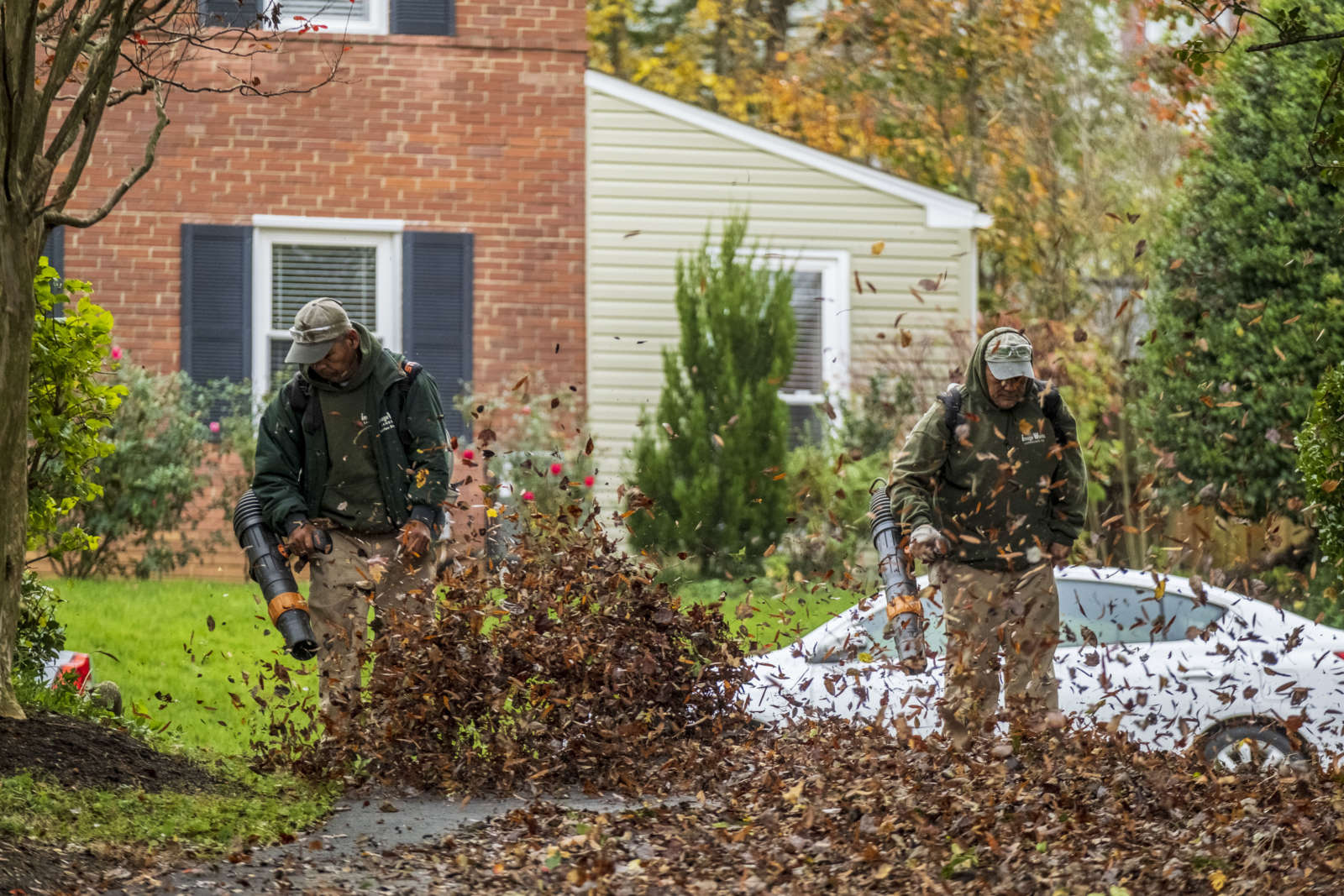
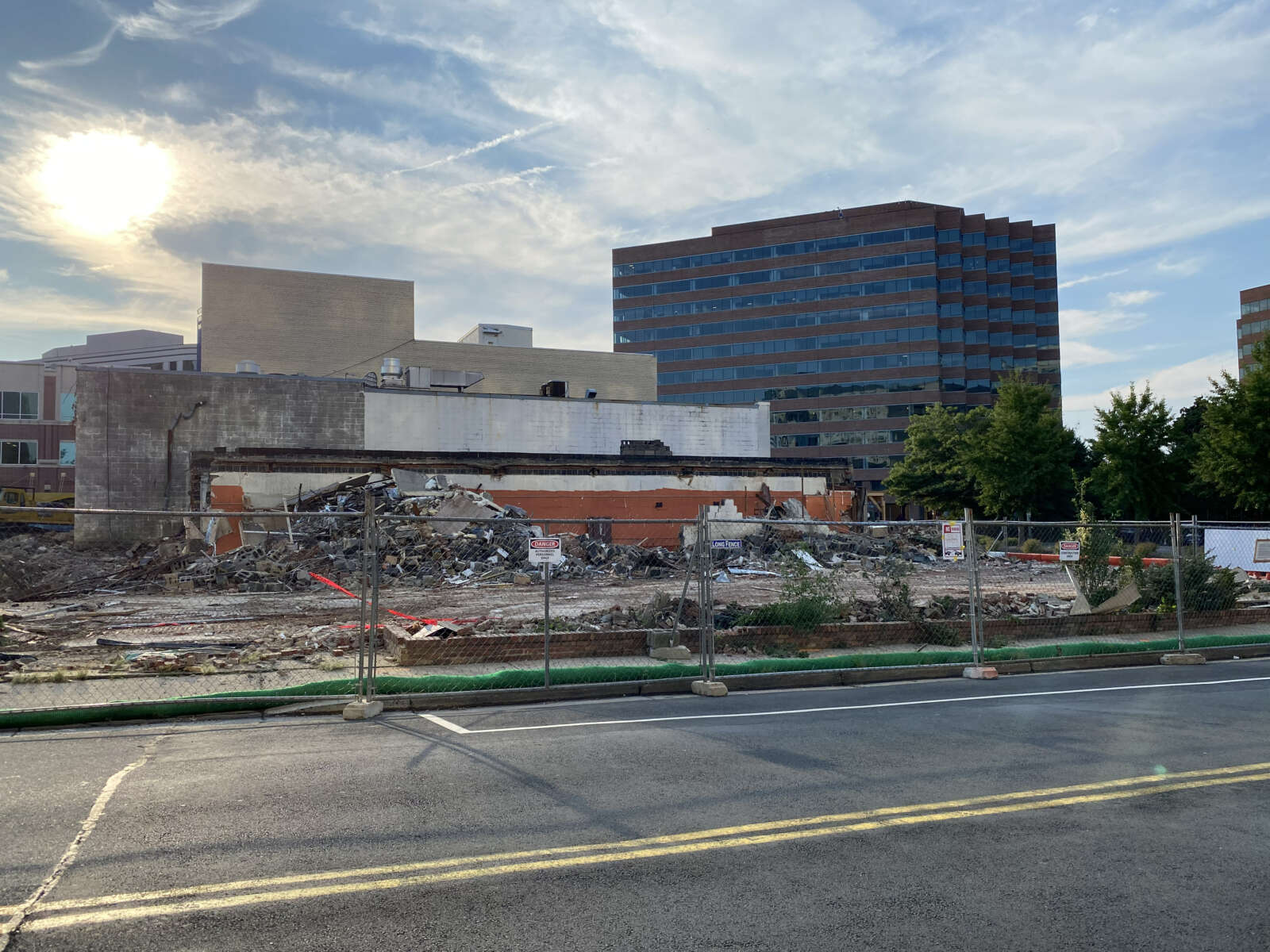
Demolition has leveled the former Summers restaurant in Courthouse (staff photo)

A nice late summer weekend is on tap as we start to dry out tonight after a soggy couple of days.

Autumn officially begins on Wednesday, and the forecast currently shows high temperatures in the 70s for the entirety of next week, so enjoy the final vestiges of summer while you can.

Here are the most-read Arlington stories of the final full week of summer 2021:

  1. Columbia Pike Blocked By High Water Amid Flash Flood Warning
  2. Widespread Power Outage Reported in Parts of N. Arlington
  3. County Board Set to Pick a New Logo From One of These Four Options
  4. Tatte Bakery in Clarendon Set To Open Tomorrow
  5. Arlington Covid Cases Continue Upward Trajectory
  6. Firefighters Rescue Man Dangling from Scaffolding in Rosslyn
  7. Arlington Public Schools’ German Language Program Struggles to Stay Afloat
  8. Book Excerpt: Remembering Arlington’s Luna Park
  9. VDOT Fixes a Capital Mistake Along Route 50
  10. Arlington Police to Assist at the Capitol This Weekend

Feel free to discuss the above stories — or anything else of local interest — in the comments. Have a nice weekend, Arlington!


Ed Talk is a biweekly opinion column. The views expressed are solely the author’s.

Arlington is the home of the Pentagon, headquarters of the U.S. Department of Defense, and of Joint Base Myer-Henderson Hall, which comprises three main installations that were combined during the last round of Base Realignment and Closure: Fort Myer (Army), Henderson Hall (Marines), and Fort McNair (Army). Many of the students living on and off JBMHH attend Arlington Public Schools.

The Virginia Purple Star Designation is awarded to military-friendly schools that have demonstrated a major commitment to students and families connected to our nation’s military. Disappointingly, despite its proximity to the heart of the military, only one APS school (Discovery Elementary) earned the Purple Star designation in 2019-2020. None has earned it for 2020-2021. By contrast, 34 Fairfax County public schools and 21 Prince William County public schools earned the Purple Star designation between 2018-2021. In the other military mecca, 59 Virginia Beach City public schools and 11 Norfolk public schools earned the Purple Star designation between 2018-2021.

To qualify for the Purple Star designation, a school must have a staff point of contact for military students and families who, (i) serves as the liaison between the military family and the school; (ii) completes two online Virginia Department of Education training modules titled “Supporting Our Military-Connected Children in School Settings: Moving them from Risk to Resilience;” and (iii) conducts school-wide professional development that informs staff of the unique needs of and supports available to military-connected students.

In addition, the school must maintain a student-led transition program to include a student transition team coordinator. This program should provide peer support for newly enrolled and withdrawing students to include those that are military-connected. Finally, the school must maintain links to an APS division-wide page dedicated to military student and family supports that includes, but is not limited to, the following:

  • Clear and concise information on the enrollment and remote registration process for persons to whom public schools shall be free, including enrollment of military children living in temporary housing
  • Information on educational records requests and transfers
  • Information on gifted services, advanced academic programs and application deadlines, graduation requirements, diploma options, and home instruction
  • Information on the Compact Rules and their application under the Interstate Compact on Educational Opportunities for Military Children
  • Information on Special Education services and parental rights, including parental consent
  • Other important information such as Impact Aid Student-Parent Survey (Impact Aid programs and grants are designed to assist local school districts that enroll federally connected students), PTA membership, school advisory committees, participation in extracurricular activities and local community support

In addition to the aforementioned site-based requirements, APS would need to assign a central office staff member to be the contact for the school-based liaison and military families and complete at least one of the following:

  • Division-wide professional development regarding special considerations for military students and families or
  • The School Board passes a resolution publicizing the school division’s support for military students and families or
  • The school division hosts a military recognition event designed to demonstrate a military-friendly culture across the school division community

The average child in a military family will move six to nine times during a school career. That’s an average of three times more frequently than non-military families. The majority of moves occur over the summer months, even as late as August. A number of military families shared the following challenges with me:

  • Missed deadlines for Extended Day, resulting in a childcare crisis
  • Missed opportunities for desired electives. APS doesn’t allow students to select their electives or classes until fully registered, so electives may be unavailable
  • Missed deadlines for high school sports tryouts and/or missed leadership opportunities on sports teams and clubs. No reciprocity for prior experience
  • Although SB 775 allows incoming military students to fully register for school based on the zone the family intends to reside in (with documentation provided within 120 days), some APS families have been asked to meet onerous requests for documentation before registering their children
  • Lack of social-emotional supports: (i) No dedicated counselors equipped to support students with issues of deployment, combat, PTSD, etc.; (ii) no cohorting of military peers to support each other; and (iii) no special recognition or celebration of military students for Month of the Military Child
  • Having to start over with a new Individualized Education Plan (IEP) or 504 plan. No reciprocity given for an IEP or 504 from the last school district
  • Difficulty keeping track of (or meeting) the additional classes/credits needed for an advanced diploma
  • Enduring additional disruptive school changes with boundary changes or program moves while on temporary orders

Many of these challenges could be resolved if APS was a Purple Star school district to better support the children whose parents are laying their lives on the line for us. Let’s do better by our military families.

Symone Walker is a federal attorney and an APS parent. She is Vice President of the Arlington Special Education Advisory Committee (ASEAC), serves on the Commonwealth Attorney’s Community Advisory Board, and is an Executive Committee Member of the Arlington NAACP and Co-Chair of the NAACP Education Committee. Symone is a former candidate for the Arlington school board.


Modern Mobility is a biweekly opinion column. The views expressed are solely the author’s.

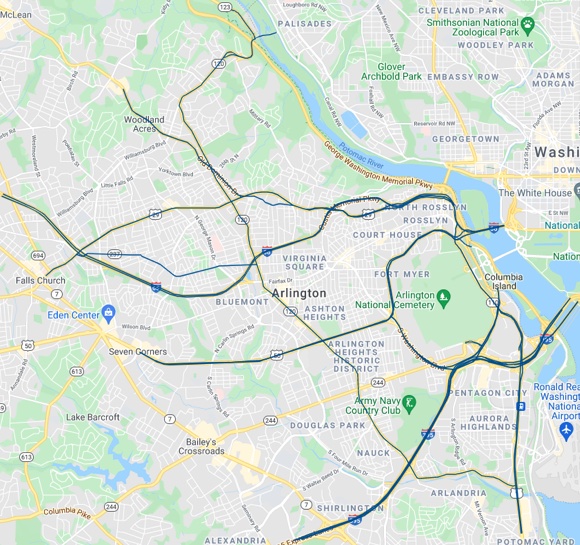
Unlike most counties in Virginia, Arlington owns and maintains the vast majority of the County’s roads… but not all of them. Highways like I-395, I-66 rightly belong under the control of the Virginia Department of Transportation, but for other streets in Arlington, the value proposition is much less clear.

Do you know who owns any given road in Arlington? Ownership isn’t obvious and two roads that look similar can actually have different owners: Hayes Street in Pentagon City is Arlington-owned, Glebe Road in Ballston is owned by Virginia; Potomac Avenue is owned by Arlington, Langston Blvd by Virginia.

These ownership differences can make major differences when it comes time to make improvements to these streets to meet our Vision Zero goals and address safety issues. Design and construction on state-owned roads require a long and lengthy approval process from the state and urban-appropriate street design configurations often require special waivers from VDOT whose standards are highway-focused.

This lack of flexibility has been a problem in the past. In 2010 Arlington sought and received ownership of Columbia Pike to facilitate its reconstruction from an auto-centric arterial to a pedestrian-friendly Main Street. The massive rebuild of Columbia Pike has been long and arduous as it is, adding state approvals to the process might have stretched the timeline beyond feasibility.

State-Controlled Roads in Arlington County (Arlington County Website)

In 2018 Arlington sought and received ownership of VA-237 which is the designation for parts of 10th Street N. and Fairfax Drive to give Arlington flexibility on making pedestrian improvements there as well.

With Langston Blvd going through a reimagining process that is likely to result in a dramatic transformation in the future, now is the time for Arlington to seek control of Langston Blvd from the state to facilitate that transformation. With large parts of Glebe Road appearing on Arlington’s High Injury Network, control of the high-pedestrian areas of Glebe Road, to facilitate safety improvements, would also be wise.

The additional maintenance costs of these acquired streets would be somewhat, but not entirely, offset by the state. Arlington is reimbursed for each lane mile of street they maintain, but historically that amount does not fully cover what Arlington pays out per year in maintenance for each lane mile of street.

The additional benefits — local control of our streets and the ability to deliver better safety interventions more quickly — are well worth that price.

Chris Slatt is the current Chair of the Arlington County Transportation Commission, founder of Sustainable Mobility for Arlington County and a former civic association president. He is a software developer, co-owner of Perfect Pointe Dance Studio, and a father of two.


Community Matters is a biweekly opinion column. The views expressed are solely the author’s.

On Saturday, I made an interesting discovery. In 2008, I volunteered on a campaign and in the process met Kevin Vincent and his wife Pat Haman. I was relatively new to Arlington community work, and I remember being appreciative of the opportunity to connect with great people.

Anyone who has had a conversation with me recently knows that I have become fascinated by genealogy over the past couple of years. I was looking through my list of distant relatives and came across a distant cousin with the profile name “Kevin Vincent.” There was no photo on his profile so I looked at his ethnicity and it was 100 percent European. I reached out to Kevin, and he confirmed that it was him. There is a 97+ percent chance that we share a distant relative.

Some may not think much of distant relatives, and others in my situation may try to hide (or refuse to discover) these relationships. Considering the fact that our connection probably dates back to some time in the mid-1800s in Alabama, we can guess what the circumstances were. I can’t help but marvel at yet another reminder that we are all much more connected than we think, no matter how hard we try to distance ourselves.

As we both search to find the exact connection, it has made me think back to how much I enjoyed working with Kevin and Pat here in Arlington, and it has opened up a new clue in my own family history. Through our research, I am already exploring new branches and asking questions about certain people in my tree. It also makes me think about something a friend told me the other day — they believe that when people leave this earth, their energy stays and their descendants will someday reconnect.

Arlington is a special community with a rich history. We pride ourselves on our commitment to civic engagement and responsive government. Our challenges throughout the years have helped us grow stronger. Each civic association, community group, county board, newsroom and any other organized group is made up of people with individual lives and stories, with a multitude of connections and relationships, both known and unknown.

I would like you to consider the idea that our individual relationships, as a part of these organizations, are what make Arlington strong, and if we strengthen them, we will be an even stronger community. It is those bonds and that energy between individuals which will help us tackle some of our most pressing challenges.

For Kevin and I, I am proud of the work that we did in Arlington, and in our own way now, we have continued to work on similar projects and issues. No matter what threads you hold in the fabric that makes up Arlington, I challenge you to reach out to an old connection or even start a new relationship. You don’t want to miss an opportunity to build a relationship with an individual with whom you think you could create some amazing energy that would be felt today, and for generations to come.

Krysta Jones has lived in Arlington since 2004 and is active in local politics and civic life. This column is in no way associated with or represents any person, government, organization or body — except Krysta herself.


The Arlies are back this week with two new categories to vote on, but first, the results from last week’s voting.

Arlington’s favorite sushi spot is Sushi-Zen, followed by Sushi Rock and a tie between Endo Sushi and Yume Sushi.

Now, on to this week’s categories.

Do you have a favorite local bike trail? One that offers the best views and the smoothest ride?

Do you have a favorite bicycle shop you recommend to others? A shop that has knowledgeable sales personnel and/or dependable repair services? Let us know below or by clicking this link.

Voting is open until next Tuesday, when we announce the winners and vote on a new category.


Making Room is a biweekly opinion column. The views expressed are solely the author’s.

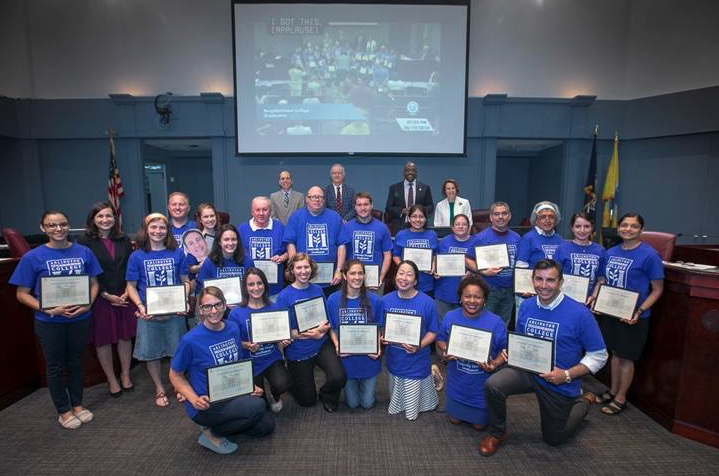
In the Spring of 2018, I had the great fortune to participate in Arlington Neighborhood College. This county program brings together a group of residents who want to be more involved in the County’s civic life.

Over the course of eight weeks, we were introduced to a diverse range of Arlington County staff and elected officials, as well as the leaders of some of Arlington’s central public-facing institutions.

I recommend the program to anyone interested in being more engaged. The application is due on Friday, Sept. 17. You don’t have to be a civic association president or a frequent visitor to County Board meetings to be accepted. Neighborhood College is for emerging leaders of all kinds. My class of 2018 had long-time and new residents, with a variety of languages, professions and civic interests. The program is for people who live or work in Arlington and “want to improve their communities, are interested in addressing local issues and are willing to devote time and energy to community activities in Arlington County.”

The program, as I experienced it in 2018, had many strengths. The curriculum was divided between leadership skill-building and informal presentations by representatives for Arlington’s key governmental and civic institutions. The program should exemplify what Arlington values in civic leaders and should introduce the central gatekeeping institutions that form the Arlington Way.

For me, the leadership training had limited value. We usually practiced by discussing benign topics, rather than the critical issues that we are concerned about. Our conflict resolution and listening practice did not take advantage of genuine differences of opinion and perspective within the group.

The facilitators did a great job of bringing in representatives from all aspects of Arlington community management and governance. However, in my civic engagement over the three years since I ‘graduated’ from Neighborhood College, it seems that many of our most important decisions are made in a web of public and semi-public meetings that can be opaque to newcomers.

For example, we didn’t hear from representatives of County commissions, such as Planning or Transportation. These groups play a significant role in making recommendations to the County Board and they are often a first or second step for community involvement.

A truly engaged Arlington citizen needs to know the ins and outs of many bureaucratic processes. For example:

  • How do you read the County Board’s agenda and sign up to speak?
  • How does the site plan process work?
  • How does the budget process work?
  • How does someone become a client of PathForward (formerly ASPAN) or AFAC?
  • What happens if someone is arrested?
  • How do you get a stop sign added to your neighborhood?
  • How do school boundaries get drawn?

To be effective neighborhood advocates and engaged citizens of Arlington, we need to learn how these processes work. To train a cohort of Arlington leaders, Neighborhood College should encourage participants to dig into these issues and practice leadership skills through real-world cases where citizens engage with County staff and officials.

Neighborhood College is a great opportunity for Arlington County to think about the meaning of civic engagement and what residents need to learn to be full participants in the Arlington Way.

Jane Fiegen Green, an Arlington resident since 2015, proudly rents an apartment in Pentagon City with her family. By day, she is the Membership Director for Food and Water Watch, and by night she tries to navigate the Arlington Way. Opinions here are her own.


View More Stories