Transit planners have come up with four different ways that they say could solve congestion at the Rosslyn Metro Station while planning for future ridership needs.

Unfortunately, a Metrorail line through Columbia Pike — supported by nearly 70% of ARLnow poll respondents — did not make the cut. But each of the potential future projects does start with changes that some Arlingtonians could see as benefits: a second Metro station in Rosslyn and a first-ever Georgetown stop.

After linking Rosslyn to Georgetown, all four expanded lines would run parallel to and to the north of existing east-west trains, connecting Arlington to West End, the southern halves of Dupont Circle and Logan Circle, and stopping at Union Station. From there, they veer north toward Greenbelt and New Carrollton, Maryland or south to National Harbor.

Two options stand out from the pack. First, a Silver Line express tunnel in Virginia starting at West Falls Church station, and stopping at a possible second Ballston station en route to a second Rosslyn station. Another intriguing possibility is a Blue Line loop to National Harbor, which would add some new direct transit connectivity to Arlington’s Crystal City-Pentagon City corridor.

WMATA says these two would have the second-greatest and greatest gains in new ridership and annual fare revenue, respectively.

While these changes could improve commutes, the projects are decades down the road, if they happen at all. Each of the two options above could take up to 25 years to fund (needing $20-25 billion), construct and complete.

Suspending for a moment how far away these new Metro projects could be, what do you think of WMATA’s proposed changes to connectivity in Arlington and just over the river?


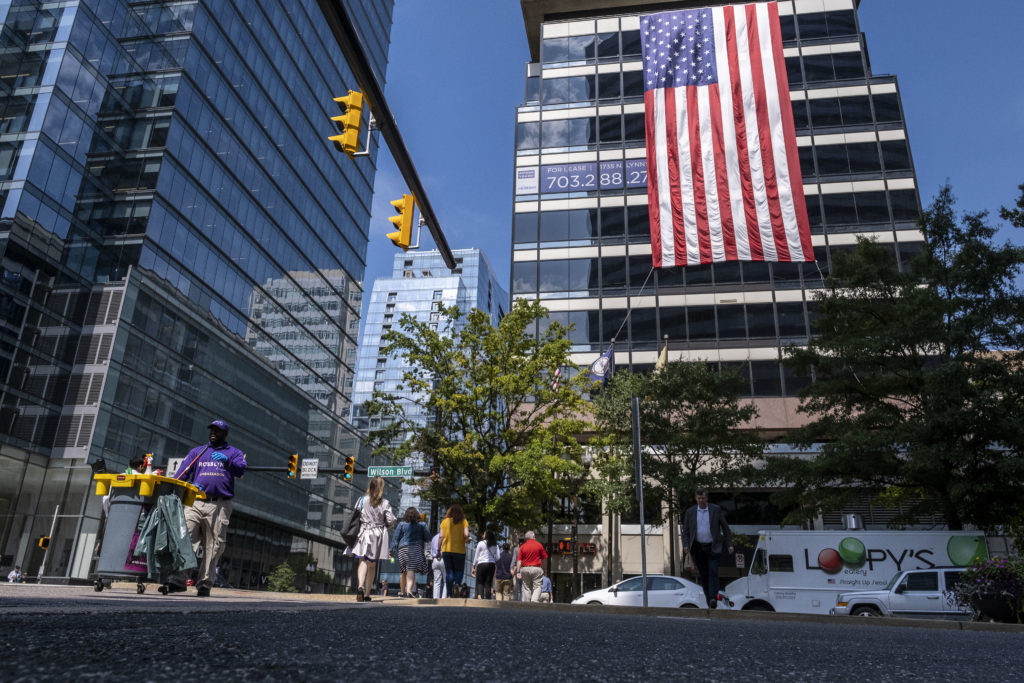
A large flag hangs from a building on Wilson Blvd. in Rosslyn on Monday, Sept. 9, 2019 in Arlington. (Staff Photo by Jay Westcott)

It’s the eve of the 20th anniversary of the Sept. 11, 2001 terror attacks, and two things are striking: how vivid memories of the horror of that day remain for many, and just how much time has passed between then and now.

Arlington County held a 9/11 remembrance ceremony this morning in Courthouse, which can be viewed below.

We’re also re-posting a 2018 podcast interview we conducted with Justin Tirelli of the Arlington County Fire Department, about his memories of responding to the Pentagon on that fateful day.

Listen below or on iTunesGoogle PlayStitcher or TuneIn.

As for this Labor Day-shortened week’s other news, which included a number of exclusive scoops, the most-read stories on ARLnow since Sunday are listed below.

  1. Carpool to Return to Arlington This Fall
  2. Staff Shortages Cause ‘Frustrating and Unacceptable’ Start to New APS Virtual Learning Program
  3. Arlington Election Official Facing Corruption Charge
  4. Columbia Pike Bar Seeks to Move on from TikTok Controversy
  5. APS Chief Diversity, Equity and Inclusion Officer On Leave to Start School Year
  6. Columbia Pike Metro Expansion Nixed For Now
  7. Construction to Start on Office Building, Public Plaza in Virginia Square
  8. County Solicits Public Input on Plans for Vacant Wendy’s Lot
  9. Arlington County Launches Food Scrap Collection Service
  10. New Dunkin’ Near Clarendon Nears Opening
  11. Covid Cases Reach New Seasonal High in Arlington
  12. County Launches Annual Free Tree Giveaway

Feel free to discuss those stories, 9/11 remembrances, or anything else of local interest in the comments. And if you want to support our work and help us break more stories, consider joining our ARLnow Press Club.


Voting for the fall 2021 Arlies kicked off this week with a tasty new category, but before we say goodbye to summer here’s a look back at the Summer 2021 Arlies winners.

Thousands of readers selected winners from 18 categories, which included favorite summer camp, ice cream shop, real estate agent for sellers, sports bar and more.

Favorite barbershop
1. Bearded Goat Barber
2. Willy & Habib’s Barber Shop
3. Westover Barber Shop

Favorite dentist (for adults)
1. Dr. Richars Gruntz
2. Dr. Tamara Garrett
3. Roca Dental

Favorite dog park
1. Shirlington Dog Park
2. Ethan Allen Dog Park
3. Gateway Park

Favorite food truck
1. Tacos El Chilango
2. La Tingeria
3. Tacos Los Primos

Favorite gym/fitness studio
1. Gold’s Gym
2. Arlington Jazzercise
3. MADabolic, Earth Treks and Vida Fitness (tie)

Favorite hair salon
1. Casal’s De Spa & Salon
2. Smitten
3. Urban Halo

Favorite HVAC company
1. Chandler’s Plumbing and Heating Co.
2. Arlington Heating & Air Conditioning

Favorite ice cream shop
1. Toby’s Homemade Ice Cream
2. Nicecream
3. Carvel

Favorite lawn care service
1. Andy’s Lawn and Landscape
2. Better Lawn Service Inc.
3. The Lawn Barbers

Favorite moving company
1. JK Moving Services
2. Two Marines Moving, Town & Country Movers, Bookstore Movers (tie)

Favorite OB/GYN
1. Northern Virginia Physicians to Women
2. Physicians and Midwives
3. Healthcare for Women

Favorite outdoor dining
1. McNamara’s Pub and Restaurant
2. Ruthie’s All Day
3. SER

Favorite preschool/daycare
1. Trinity School of Early Learning
2. Overlee Preschool
3. Maria Teresa’s Babies Early Enrichment Center

Favorite real estate agent for sellers
1. Liz Lord
2. Kristin Francis Team
3. Paul Cachion

Favorite sports bar
1. Crystal City Sports Pub
2. First Down Sports Bar & Grill
3. Ireland’s Four Courts

Favorite summer camp
1. Get Out of the House Camp by Social Grace
2. Congressional Camp
3. KidRealm

Favorite urgent care
1. Immediate Care by PMA Health
2. Virginia Hospital Center Immediate Care
3. Old Dominion Urgent Care

Favorite veterinarian
1. Clarendon Animal Care
2. Cherrydale Veterinary Clinic
3. Caring Hands Animal Hospital

Thank you to all who voted over the course of the summer!


The autumnal equinox is still a couple of week away, but today is nonetheless the start of the Fall 2021 Arlies awards.

First, the results of last week’s voting.

Your favorite moving company is JK Moving Services, followed by Two Marines Moving, Town & Country Movers and Bookstore Movers (three-way tie).

Now, let’s get to the first official category for fall! Do you have a favorite local sushi spot that caters to all your sashimi and nigiri cravings? A go-to place that has your favorite sake and maki? Let us know below or by clicking this link.

Voting is open until next Tuesday, when we announce the winners and vote on a new category.


Screenshot of lightning striking above Ballston Quarter (via Jordan Tessler/@terpweather)

It was a workweek that started with a sense of impending doom and ended with some very nice weather and light traffic.

Ida is long gone and the Labor Day weekend is here. For the several dozen of you still hanging around this afternoon, here are some of the most-read ARLnow stories of the week:

  1. Video: Lightning Strikes Above Ballston Quarter Mall
  2. Flash Flood Watch Issued Ahead of Arrival of Ida’s Remnants
  3. ACPD: Man Stabbed and Robbed Along Columbia Pike
  4. HQ2 Reaches 3,000 Employees As Construction Progresses
  5. More Ghost Kitchens Appear in Clarendon Parking Lot Eyed for Redevelopment
  6. Car Overturns in Crash Near Westover
  7. Man Survived Serious Bike Crash in Yorktown Last Month
  8. Most Expensive Arlington Homes Sold in August

Now go forth, enjoy the near-perfect weather and those last few days of outdoor pool time, and — if you are sufficiently reclined — discuss the above stories or anything else of local interest from your lounge chairs. Have a nice holiday weekend!


Ed Talk is a biweekly opinion column. The views expressed are solely the author’s.

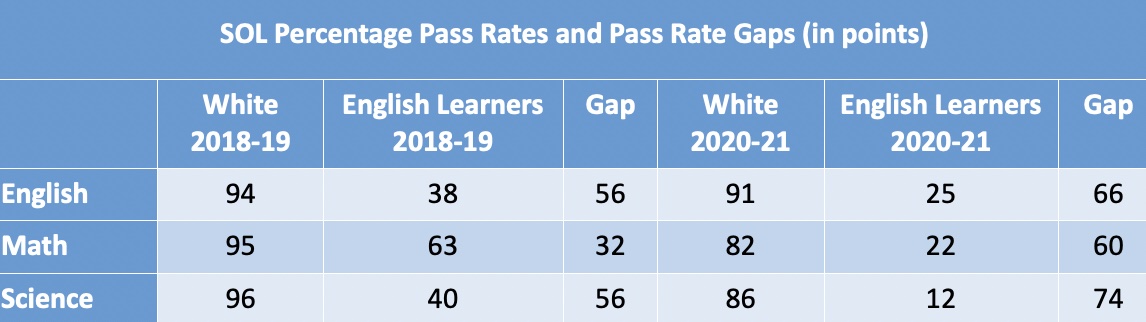
The Virginia Department of Education has released the results of the 2020-21 Standards of Learning (SOL) tests. It is no surprise that pass rates for Arlington Public Schools (APS) students have declined significantly and gaps in student achievement between different groups have increased. These test results are consistent with trends in Virginia and nationwide.

In a recent APS press release, Superintendent Francisco Duran stated that the results show “where we need to focus our attention.”

In Arlington, English learners had the lowest pass rates on the recent subject area tests in English, math and science and some of the largest declines in scores compared with the last SOL test administration in 2018-19. White students had the highest pass rate of all student groups on these tests and had the smallest decline in scores.
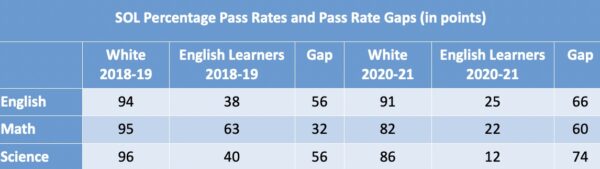
Test results for other groups of students are cause for concern as well. 2020-21 math pass rates are: 35 percent for students with disabilities, 36 percent for economically disadvantaged students, 38 percent for Hispanic students and 46 percent for Black students, compared with 82 percent for white students.

For English, the pass rates were a bit better, but large gaps persist: students with disabilities — 47 percent, economically disadvantaged students — 51 percent, Hispanic students — 53 percent and Black students — 61 percent, compared with 91 percent for white students.

The fact that APS returned to in-person learning this week will be a significant factor in improving student achievement for all students.

Addressing the learning loss that has occurred during the pandemic is a daunting task. Dr. Duran has stated that accelerated learning and support will be a focus this year, which he has described as teaching current grade level material while reinforcing skills and concepts from the previous level.

As APS works to improve student achievement and close gaps, it should be transparent and focus its attention on:

Data

The APS press release about the SOL results cited one increase in a test result and did not include any data about gaps in student achievement or significant declines in scores. And in last week’s School Board meeting, SOL results presented did not compare data of different student groups with white students, the group with the highest pass rates on the 2020-21 SOL subject area tests.

American Rescue Plan Act Funds

APS expects to receive nearly $19 million from the Elementary and Secondary Emergency Relief III Fund, part of the American Rescue Plan Act. These funds are intended to help school divisions address learning loss that occurred during the pandemic.

A summary of how these funds will be spent is posted on the APS website. It is expected that the initial estimate of more than $10 million and 111.50 full-time employees for the Virtual Learning Program, which as of July 12 had 891 students enrolled, will be reduced. APS should make clear how funding will be reallocated to support in-person learning.

Enrollment

The School Board’s approved budget for this school year is based on an enrollment of 29,108 students. This is significantly higher than the pre-pandemic September 2019 enrollment of 28,020 students and the September 2020 enrollment of 26,895 students. If the fall 2021 enrollment does not meet projections, APS will need to lay out its plan to reallocate teachers to improve student learning and reduce gaps.

The Superintendent is right to conclude that the 2020-21 SOL test results show where we need to focus our attention. In the coming months, APS should make clear how it is allocating resources to improve student learning and reduce gaps.

Abby Raphael served on the Arlington School Board from 2008-2015, including two terms as Chair. She also led the Washington Area Boards of Education for two years. Currently she co-chairs the Destination 2027 Steering Committee, is a member of the Board of the Arlington YMCA, and works with Project Peace, the Community Progress Network, and Second Chance.


In our area it seems like every September there’s a stretch of perfect late-summer or early-fall weather, with sunny skies and comfortable temperatures.

And it appears we have just entered such a stretch.

The ten-day forecast currently includes no rain, and a range of high temperatures between 75-84 degrees. Granted, such stretches are often too fleeting, but — it sure is nice while it lasts.

Today’s kickoff of the D.C. area’s Nice September Stretch follows an extended period of awful weather. Deluges of rain, storms that knock out power, and borderline unbearable combinations of heat and humidity in between. It felt like it was never going to end.

With our weather dreams coming true, albeit temporarily, we were wondering just how excited locals were about it. Beyond extended stretches of nice weather being a bit… well, boring… there’s also a thought given to the need to water plants, wash the car, etc. if it stays dry for too long.

And, just how much do locals care about the weather after all? If we really prioritized warm temperatures and sunny skies to go along with the expensive real estate, wouldn’t more of us be packing up and moving to Southern California?

Given the national picture — destruction caused by Hurricane Ida and deadly floods and devastating wildfires — we should be counting our weather blessings. This is not to minimize the suffering of those recently affected by severe weather, which top scientists say is being made worse by climate change.

But sticking to our local reality here in Arlington, this morning we’re wondering just how jazzed everyone is for our run of September weather perfection.


Modern Mobility is a biweekly opinion column. The views expressed are solely the author’s.

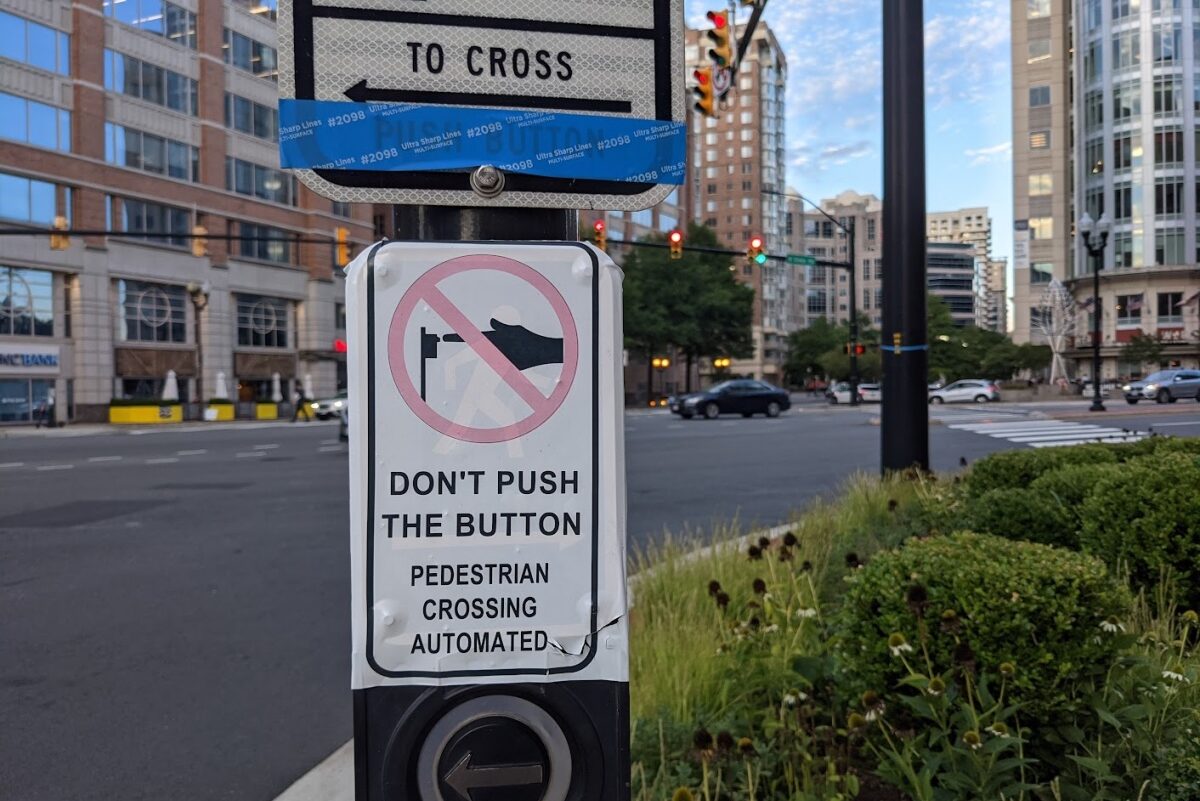
Arlington recently announced the end of one of the only good things to come out of the pandemic: the widespread implementation of automatic pedestrian phases on many of our traffic signals.

In many areas, pedestrians will have to go back to pushing a button in order to trigger an opportunity to safely cross the street. The response from many has been “pushing a button is not a big deal,” and indeed, pushing a button is not hard or onerous; what is a big deal is the guaranteed additional pedestrian delay that comes along with it, the negative effect on accessibility and the message that it sends.

Unnecessary Pedestrian Delay. How much? It’s complicated.

When the signal is set to go to walk automatically (called “pedestrian recall”), a pedestrian has a decent chance of arriving at the intersection and encountering a fortuitous set of circumstances: the walk signal has already come on and that there is enough time left in the countdown for them to safely cross the street. In this instance, the pedestrian encounters zero delays, they can immediately cross the street.

A pedestrian approaching this same intersection in “actuated mode” where a button press is required, at the exact same point in the signal timing will encounter one of a couple of different circumstances. If a car going the same direction has been sitting there waiting and has tripped the light then they might have a walk signal and still encounter zero delay — or the car may have a green but the signal may not present a walk signal so that it can provide a shorter green for this cross street than the amount of time it takes a person to safely cross, in which case they will encounter a “don’t walk.” Pressing the button now will require waiting the full length of the remaining signal plus the entirety of the green for the crossing direction. If there isn’t a car going the same direction as them to trip the light, then they definitely don’t have a walk signal. Pressing the button will require an unknown wait time that depends on whether that signal is “coordinated” with other nearby signals as well as what the “minimum green time” is for the crossing traffic direction.

With all of the various ways that a traffic signal can be programmed it’s impossible to say at a high level how much these changes are going to slow down pedestrians, but Arlington’s DOT absolutely could. Average pedestrian delay given a set of signal timings is an easy calculation. At a minimum, Arlington should do this calculation for all signals that are proposed to be put back on actuation so Arlingtonians can fully understand what is being proposed.

Safety & Accessibility

While delaying people walking is obnoxious, especially given that it affects us all — we all, at some point in time have to try and cross the street. There is also a safety impact — both studies and a basic understanding of human nature tell us that the longer people have to wait to safely cross the street, the more likely they are to unsafely cross the street. This decision is in clear opposition to our Vision Zero goals.

The press release announcing these changes indicates that they are doing so to “improve walkway safety;” Arlington County spokesperson Jessica Baxter explained to Greater Great Washington that “the theory amongst professionals is when there is manual input by a pedestrian at a walkway, pedestrians are more likely to pay attention to their surroundings.” In all of my time looking at transportation research and learning about transportation safety, I have never before heard this theory.

It is, however, a theory — not peer-reviewed research. It is also predicated on a notion that “distracted walking” is a significant contributor to crashes. This is a trope that has been debunked by actual research — distracted walking has a minimal effect on pedestrian behavior. A meta-analysis of all studies on distracted walking does not show any increased risk for pedestrians. What does increase risk of pedestrian crashes? Speeding, intoxication and driver inattention.

Pedestrian recall is also much more accessible for wheelchair users who may have difficulty accessing the push button and those with low or limited vision who have difficulty locating the push button.

(more…)


Community Matters is a biweekly opinion column. The views expressed are solely the author’s.

As Arlington organizations seek to be more inclusive, and we adopt policies as a community to end structural racism, the elephant in the room is time and patience.

Many of us know that it is the right thing to do, but when it comes down to individual decisions that we know could move us in the right direction, we question whether we have the patience to weigh our options and do the right thing, in the right way, at the right time.

Training is often a default with diversity work, yet workplace diversity consultant Josh Bersin notes that training increases awareness and sensitivity, but it does not change behavior. Nancy J. Di Dia, chief diversity & inclusion officer for pharmaceutical company Boehringer Ingelheim USA Corporation says it “simply takes time… it’s a marathon… and the key is to be patient, knowing that you may not always get through… but be persistent.”

There are a few instances when I have seen time and patience become an issue:

Inclusive decision-making. I have had a few circumstances lately where I or others wanted to make a quick decision. We often resort to believing that those who are the representatives or leads will make the decision for the group. While I am as guilty as anyone of wanting to move through processes quickly, there are often repercussions when we don’t get everyone’s feedback. Possible solutions include using platforms and establishing processes that facilitate quick feedback ahead of time. For example, email may not be the best way to reach everyone. We can also broaden our top decision-making team to be representative of different interests.

Recruiting diverse candidates. By now most people have heard of the Rooney Rule, an NFL policy requiring every team with a head coaching vacancy to interview at least one or more diverse candidates, and this concept has been adopted for other organizations. I believe that when an organization doesn’t have diverse networks from which to recruit board members, they should conduct programs that reflect diversity, recruit diverse panelists and program leads, highlight the diversity they do have and express their desire to learn more.

Facilitating Belonging. One of the most important pieces of the puzzle is ensuring our new team members feel like they belong once they have been recruited, or else this is all for naught. This step definitely takes time, patience, and being willing to fail a few times. I strongly believe that if our hearts are in the right place, we can overcome this barrier. If we have taken previous steps like listening, understanding and quality recruitment, it can save us time in this step.

The truth is that diversity, equity, inclusion and belonging will not happen overnight, and we will have challenges along the way. Some of those challenges include battling our own need to move quickly. If we are clear on our final goals and follow the necessary steps, we can avoid having to do earlier parts of the process again. As we work together and support each other in this journey, there is no way to deny that we will need plenty of patience along the way.

Krysta Jones has lived in Arlington since 2004 and is active in local politics and civic life. This column is in no way associated with or represents any person, government, organization or body — except Krysta herself.


The summer Arlies conclude this week with a new category but first, the results from last week’s voting.

Your favorite urgent care clinic is Immediate Care by PMA Health (Clarendon), followed by Virginia Hospital Center Immediate Care (Aurora Highlands) and Old Dominion Urgent Care (McLean).

Now, let’s vote on this week’s category. Is there a local moving company that can move your belongings quickly? A got-to company that will get your fragile items to your new home safely? Let us know below or by clicking this link.

Voting is open until next Tuesday, when we announce the winners and vote on a new category as part of our fall Arlies slate.


Making Room is a biweekly opinion column. The views expressed are solely the author’s.

The following was written by guest columnist Alex Pilkington.

According to the most recent census bureau data, Arlington County is home to nearly 230,000 residents. Over 10 percent of these residents are disenfranchised from participating in deciding how our community should be governed. Although they call Arlington home, they have not yet acquired citizenship.

As an inclusive county that values civic participation, Arlington should seek to grant local voting rights to all people that call Arlington home, including those that might not be fully recognized citizens.

Non-citizen Arlingtonians have children in Arlington Public Schools, engage in commerce within our local economy, drive on Arlington roads, use public transportation, play within Arlington’s parks, and study and read within Arlington’s libraries. Regardless of where they emigrated from or how long they have lived here, they are Arlingtonians at their core and should be given the ability to vote for their representatives at the local level.

Although state and federal elections garner most of our attention, local races have a significant impact on daily life for all Arlington residents. This includes the County Board, Commissioner of Revenue, Treasurer, Sheriff, Commonwealth Attorney and Arlington County School Board. Our democracy would improve if more residents of Arlington engaged in these elections. Through extending such voting access, our elected representatives from these offices will need to seriously consider the additional input of a group of people that has traditionally been kept in the dark.

This isn’t some brand new proposal either. This past year, two cities in Vermont (Montpelier and Winooski) joined San Francisco and nine jurisdictions in Maryland in allowing non-citizen voting access in local elections. With Massachusetts, Illinois, New York City, and D.C. considering legislation that would extend voting access within their jurisdictions, Arlington should consider adding its name to this growing list.

Of course, it wouldn’t be an easy feat to accomplish. Based on the debate that previous jurisdictions have seen, there’s reason to believe that there would be significant opposition to such a proposal. In fact, some states have gone so far as to preemptively nullify any local jurisdictions from implementing such a policy.

However, just because something might be difficult shouldn’t preclude it from being considered and brought up for debate. Arlington should be doing everything it can to support and stand behind the immigrants who call our county their home.

I assume that many opponents of this proposal may argue that if people wish to participate in our country’s democratic process, they must go through the complex process of becoming a citizen. A policy analysis from the Cato Institute shows that the typical time it takes to apply for a green card, which is the first step in the naturalization process, is six years (up from about two and a half years in 1991) and that length of time is expected to only increase unless steps are taken to streamline our immigration processes.

(more…)


View More Stories