Gov. Ralph Northam announced this morning a proposal to move up the legalization of marijuana in Virginia to this summer.

A legalization bill championed by state Sen. Adam Ebbin (D), who represents part of Arlington, passed the General Assembly earlier this year. But it called for legalization of recreational marijuana possession and cultivation on Jan. 1, 2024.

Northam is sending the bill back to the state legislature to consider a July 1, 2021 implementation.

“Governor Ralph Northam today proposed moving up the legalization of simple possession of marijuana to July 1, 2021, nearly three years sooner than previously planned,” said a press release. “The Governor also announced he is proposing changes that advance public health protections, set clear expectations for labor protections in the cannabis industry, and begin to seal criminal records [of past marijuana convictions] immediately.”

Ebbin told news outlets he thinks the sped-up timeline will be approved.

“My colleagues and I worked closely with Governor Northam to ensure this bill prioritizes public health and social equity,” Ebbin said in a press release from the governor’s office. “I look forward to adopting these amendments and passing this important legislation into law.”

While small-scale marijuana possession was decriminalized in Virginia last year, Northam said those facing fines under the new statute are disproportionately Black.

“Virginia’s communities of color deserve equity — and that means taking action now to end the disproportionate fines, arrests, and convictions of marijuana offenses,” Lieutenant Governor Justin Fairfax said in the press release.

The bill allows people 21 and over to “legally possess up to one ounce of cannabis, without intent to distribute,” and will also “allow households to grow up to four plants… out of sight from public view, and out of range of individuals under the age of 21.”

Smoking marijuana while driving and possession of it on school grounds will remain illegal.

Previous ARLnow polls revealed strong local support for marijuana decriminalization. When Ebbin proposed it in 2016, nearly 80% of poll respondents said they supported decriminalization. In 2019, when then-candidate Parisa Dehghani-Tafti pledged not to prosecute simple marijuana possession charges as Commonwealth’s Attorney, more than 75% of poll respondents said they supported that.

Legalization obviously goes beyond decriminalization, however, and there are some who believe the risks associated with marijuana use call for something less than full legalization. There are also some who think Virginia should take more time to legalize weed, in order to allow a more orderly establishment of a statewide marijuana industry.

Still, Northam’s changes to the legalization bill reportedly have support on both sides of the aisle and are expected to pass

What do you think?

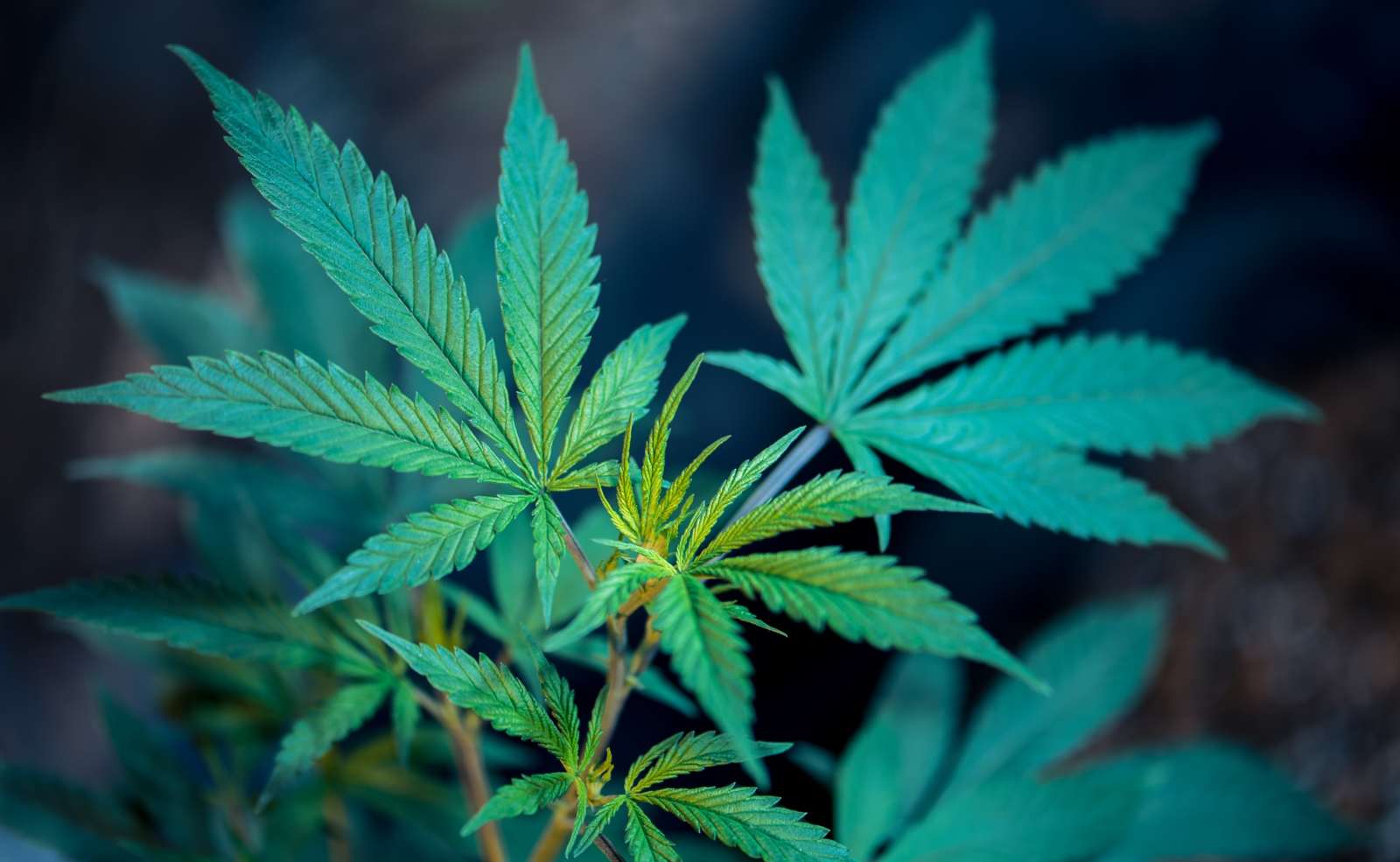
Photo by Roberto Valdivia/Unsplash

The weekend is here, along with what should be a very nice Saturday, weather-wise.

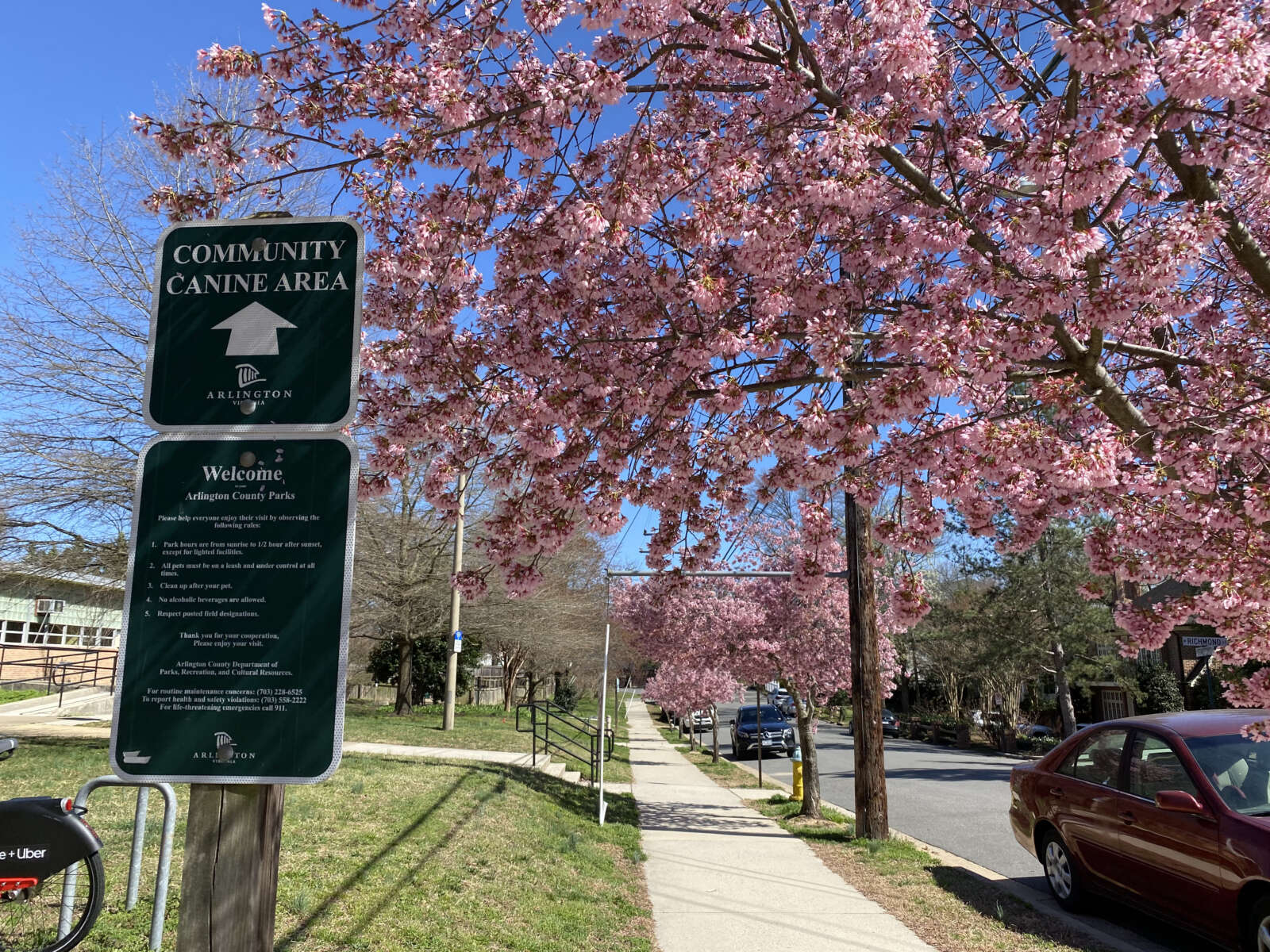
Whether you’re heading out to check out Arlington’s cherry blossoms, to go for a long-overdue bike ride around the Arlington loop, or to spend time with friends or family you haven’t seen in awhile, we hope you enjoy some quality outdoor time.

Now, here are the most-read articles of the past week.

  1. Whitlow’s Says It Will Close in June, But May Reopen Elsewhere
  2. Street Closed in Ballston While Bomb Squad Investigates ‘Concerning Materials’
  3. Pipe Bombs Found in Ballston Home, Police Say
  4. Mario’s Pizza House Continues to Serve Up Slices and Memories
  5. County Board Approves Agreement with Alexandria To Dredge Four Mile Run
  6. ACPD: Knife-Wielding Man Lands in Jail After Bar Fight in Clarendon
  7. Rouse Estate Is Currently Being Torn Down
  8. Arlington County Police Encrypt More Radio Channels
  9. County Board Approves Revised Plans for Crystal City Water Park

Feel free to discuss those stories, or anything else of local interest, in the comments. Have a great weekend!


Lyon’s Legacy is a limited-run opinion column on the history of housing in Arlington. The views expressed are solely the author’s.

Arlington County was once home to a community of former slaves so prosperous that tours were given to foreign dignitaries as evidence of America’s racial progress.

Today, just about the only physical trace of Freedman’s Village is a plaque on a highway overpass. Some of the descendants of that community remain in Arlington today, but for others, exile has been made permanent.

This is the second part of Lyon’s Legacy, a biweekly series on ARLnow (you can read the whole thing, with citations, here). It will tell an eight-part history of how Black people, and other groups that experience racial or economic discrimination, have been excluded from living in Arlington County. Last week, the story started with Freedman’s Village. But with the destruction of that community comes the arrival of Frank Lyon and others who willfully embedded white supremacy into our county’s laws and urban planning.

What those men did is still with us, a century later.

By the 1880s, the county’s white leaders began to agitate against Freedman’s Village. One of Virginia’s U.S. senators called it “improper that government property should be continually occupied by squatters who have no interest in it such as to stimulate improvements.” These ‘squatters’ were residents who had worked to build on the land for a quarter-century, paid rent, and paid municipal, state, and federal taxes of all kinds. But they were Black, and their law-abiding industry didn’t turn a profit for white real-estate developers in the county. The government issued eviction orders at the beginning of winter, 1887. Mt. Zion Baptist Church, like all the other people, businesses, and institutions in Freedman’s Village, had to go.

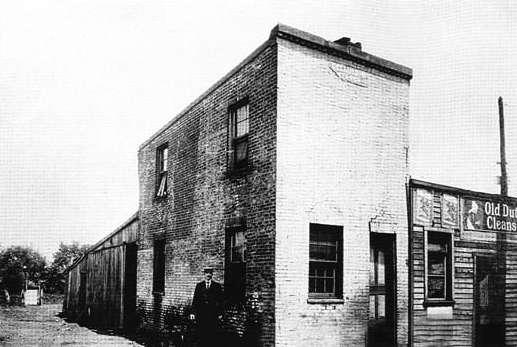
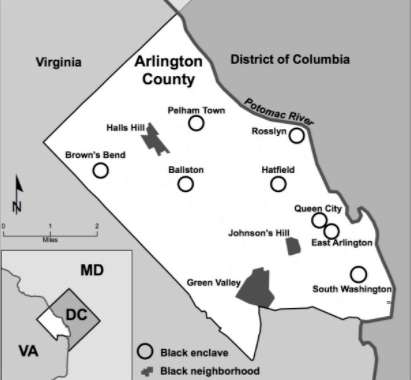
The diaspora of Freedman’s Village took root across the county and beyond. The forbearing evictees settled in middle-class Black communities like Johnson’s Hill, Butler-Holmes, and Green Valley, as well as poorer areas like the farms of Hall’s Hill and the bustling Queen City. Queen City was so egalitarian that some residents later recalled that “a man sometimes didn’t know he was poor until he was 27 years old.” But Queen City isn’t on any Arlington map today. Only fifty years later, the government demolished their homes a second time — not to build the Pentagon, but to build the Pentagon’s freeway exit.

In the late 19th century, the county’s Black community had political power. No fewer than five Black men served on the County Board between 1871 and 1888: William A. Rowe, John B. Syphax, Travis B. Pinn, John W. Pendleton, and Tibbett Allen. Tibbett Allen lost his seat under suspicious circumstances and was replaced by a white Confederate veteran. There were no more Board members of color for a full century afterwards.

After the dispersal of Freedman’s Village, before the turn of the century, there were Black neighborhoods, there were white neighborhoods, and there was Rosslyn. Rosslyn was a residential district inhabited by working-class Black people. They were attracted by the chance to live so close to the Federal jobs across the river, where racial discrimination in employment wasn’t quite as intense.

Rosslyn was also “Dead Man’s Hollow,” a thicket of saloons, gamblers, and sex workers. It attracted white Washingtonian drinkers, too, on the merit of its location: The county was outside the jurisdiction of Washington’s cops, but close enough that a drunk who’d blown his streetcar fare on cards could teeter home across a bridge. And the county maintained a police force totalling two — not enough for a crackdown.

But what made Rosslyn special wasn’t the Black people or the saloons — it was their combination. These saloons weren’t segregated. At least one was Black-owned. These were tables where spades and diamonds meant more than black and white.

(more…)


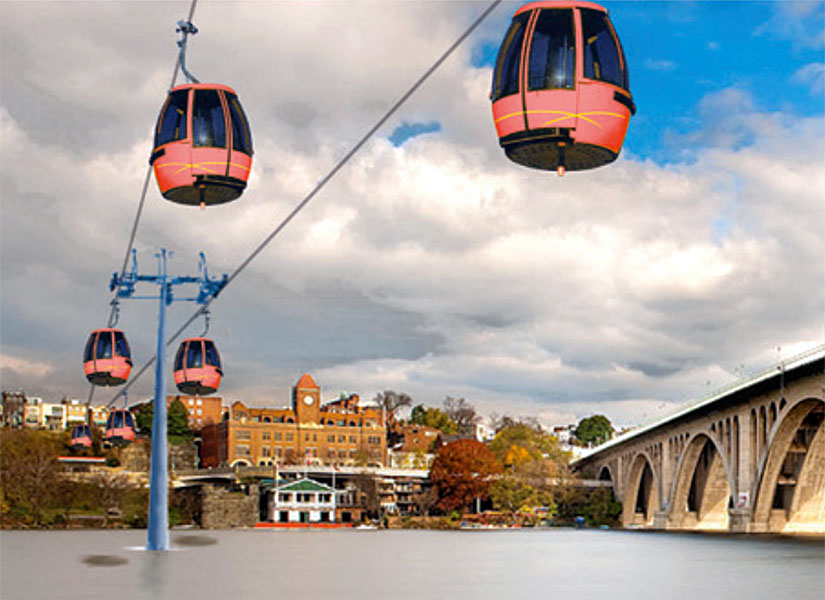
There’s word this morning that the idea of a Rosslyn-Georgetown gondola might not be as dead as we first thought.

Just over four years since the Arlington County Board said it was “not in favor” of the $80-90 million project, which always seemed to be more attractive to Georgetown business interests than to those on the other side of the river, a D.C. Council member is raising the hopes of the gondola’s cult-like following with a new funding request.

Per the Washington Business Journal’s Alex Koma:

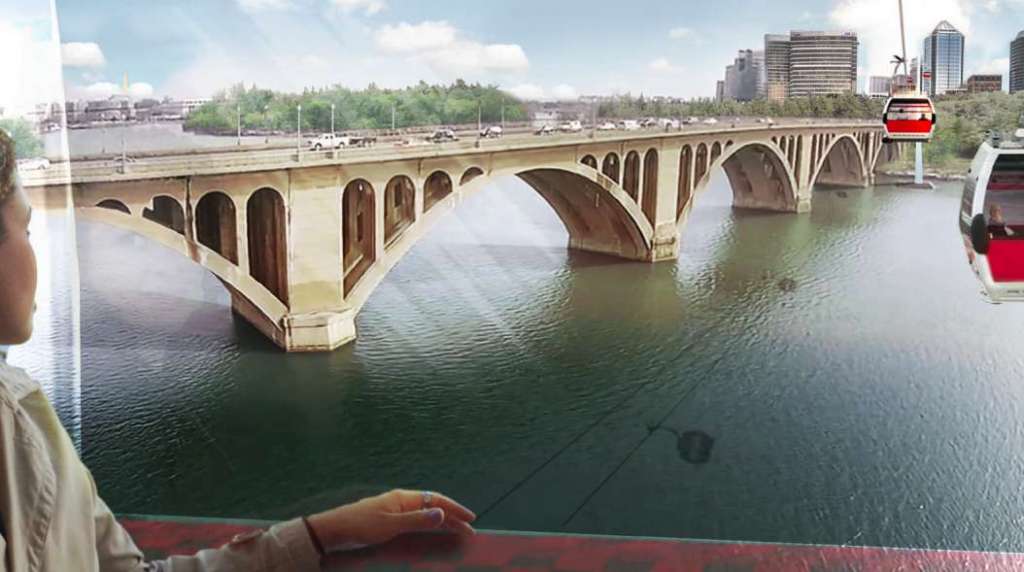
While the idea of aerial lift transportation from Manhattan on the Potomac directly to the Exorcist steps — not to mention the sweeping views in between — may make gondola advocates giddy, the initial estimate of $3.25 million in annual operating costs puts a damper on the chances of it actually happening.

Nonetheless, should Councilmember Brooke Pinto’s proposal go through, purchasing the former Exxon station and completing an Environmental Impact Study would eliminate major hurdles to the gondola project moving forward. Next stop: getting Arlington County elected officials to climb on board.

What do you think of this latest gondola news?

(If you can’t see the emojis, here is the key: 1 = happy, 2 = unhappy, 3 = shrug.)


What’s Next with Nicole is a biweekly opinion column. The views expressed are solely the author’s.

A majority of Arlington’s affordable apartments are not built into typical new apartment or condo buildings, but rather separated into their own building complexes.

Over the course of decades this has created segregated housing in Arlington. Although the dynamic is improving, the equation and incentive structure at the heart of this issue must change.

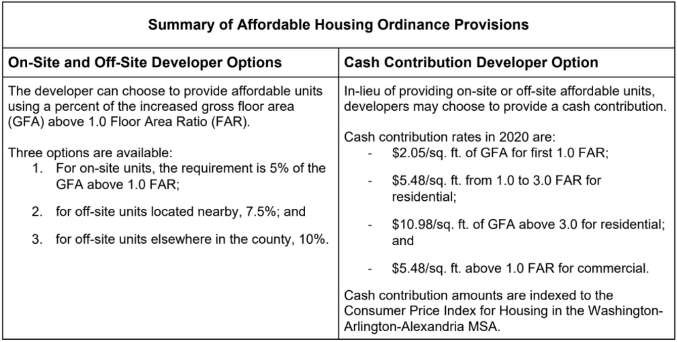
In 2006 a group of Arlington developers lobbied and successfully codified in the Virginia General Assembly an equation that disincentivizes developers from building affordable units in their market rate buildings. This equation alternatively incentivizes developers to pay a cash contribution to a housing trust fund — in Arlington this is called the Affordable Housing Trust Fund (AHIF) — instead of building affordable units in normal market rate apartment or condo buildings.

Arlington ordinance provisions (image via Arlington Community Foundation). Source: Arlington Community Foundation: Status Report on Affordable Housing Ordinance Review, November 2020.

According to multiple developers in an Arlington Community Foundation review it is significantly cheaper to simply contribute cash to AHIF than build affordable units in their new buildings.

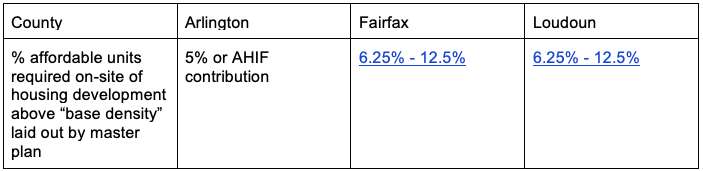
With the understanding that it is cheaper for developers to contribute to AHIF using this equation than building on site affordable units in mind, the following regional comparison makes the state policy decision to zero-out and force Arlington to use this equation even more starkly disturbing.

Developers are currently paying a cash payment equal to less than 5% of on site units instead of the 6.25%-12.5% of on-site affordable housing units that are typical in our surrounding jurisdictions. This is compounded with the policy conundrum that our affordable units are not in the more “desirable” parcels that developers are building market rate units, like is done in other jurisdictions, and thus creating a segregated housing situation. A double whammy.

I implore our state legislators to reevaluate the unfair discrimination against Arlington in Virginia’s affordable housing ordinance laws. Our County Board is just as capable as any other jurisdiction in the Commonwealth of Virginia to make ordinances that make sense for our community and should not be unfairly zeroed out to abide by this obscure rule.

Nicole Merlene grew up in Arlington County and has been a civic leader in both policy and political arenas. She has been an Economic Development and Tenant-Landlord Commissioner; Community Development Citizens Advisory Committee, Pentagon City Planning Study, Rosslyn Transportation Study, and Vision Zero member; Arlington County Civic Federation and Rosslyn Civic Association Board Member. In 2019 she sought the Democratic nomination for the 31st District of the Virginia State Senate. Professionally Nicole is an Economic Development Specialist where she works to attract businesses to the region. She lives in an apartment with her dog Riley and enjoys running and painting.


The pandemic is still here, but — with rising vaccinations — there is a light at the end of the tunnel.

It could yet be many months before things return to some semblance of normal, but today let’s try to imagine the pandemic being over.

There was immense suffering and death over the past year, and plenty to complain about even for those who were fortunate enough to remain healthy and employed.

Lockdown life has not been all bad, however. There are perhaps some pandemic practices that you wouldn’t mind sticking around, even when the COVID threat has declined.

For instance, thanks to social distancing and mask wearing, sales of cold and flu remedies are way down. Perhaps if we adopt the Japanese practice of wearing a mask when sick as a courtesy to those around you, along with more liberal use of working from home when under the weather, we make the common cold less common.

Then there’s the fact that you can have cocktails delivered to your door and there are more outdoor dining options that ever before. Oh, and many now don’t have to make miserable commutes to an office five days a week.

Which of the following would you most like to keep in place post-corona?


Peter’s Take is a biweekly opinion column. The views expressed are solely the author’s.

A new report called Spending Growth and Real Estate Taxes by Dr. John Huntley of Arlington Analytics explains why Arlington real estate taxpayers will be hit by sharply rising tax bills over the next ten years. Such increases will disproportionately drive out of Arlington the most vulnerable, diverse residents the County claims to value.

Arlington’s long-term structural operating budget deficit

These tax bills will be rising sharply because the costs of many different County operating expenses are increasing at faster rates than County revenues. There is a long-term structural deficit built into Arlington County government’s operating budget. APS enrollment growth is a major driver of Arlington’s structural operating budget deficit.

The new report’s analysis of the County’s operating budget is based on Arlington’s own 2019 Multi-Year Financial Forecast, development projections that include anticipated revenues from Amazon-related growth, APS’s 2022 proposed operating budget, APS’s enrollment projections, and historical real estate assessment growth rates across different categories of properties.

The report documents the results of simulations in which real estate assessments are projected to increase at their historical rates to determine how the additional real estate tax burden will be distributed among Arlington homeowners. The report concludes that expensive detached single-family homes will see the greatest dollar increases in taxes. Duplexes and side-by-sides, with rapidly growing assessed values, also are likely to pay far higher taxes (both in percentage and dollar terms).

By 2031, real estate revenues (adjusted for inflation) must increase by $255 million compared to 2022 to meet County and APS spending needs. $100 million will come from residential property owners of townhomes, duplexes, condos, and detached single-family homes. $155 million will come from taxes on business real estate, which includes commercial properties, apartment buildings, hotels, and office buildings.

The report explains how these higher real estate tax revenues affect the individual tax liabilities of 10 illustrative homeowners of a variety of residence types, prices, and locations in the County (Report pp. 7-8). The largest tax increases, from several hundred to more than $2,000, will be paid by owners of detached single-family homes, duplexes, and side-by-sides.

Such real estate tax increases could imperil Arlington’s much prized 50-50 split between business and residential tax burdens by shifting greater burdens to residential homes.  A permanent teleworking increase could reduce office space demand and also increase this shift. (more…)


The Right Note is a biweekly opinion column. The views expressed are solely the author’s.

As the pace of vaccinations accelerate and we anticipate a return to a more normal way of life, the County Board and School Board are making budget decisions for the upcoming fiscal year.

Here are seven recommendations for our elected officials as they move forward:

1. Arlington Public Schools should stay on track for five days per week, in-person learning this fall. The academic and mental health needs of the kids are abundantly clear and vaccinations are on track to alleviate the virus concerns.

2. The School Board should consider creating a blue ribbon panel to bring forward recommendations to improve academic achievement. The panel should not consider buildings or school boundaries, but how to put instruction plans in place to raise the level of achievement for all students within the current, robust, budget. And this should not be a report that simply goes up on a website. The School Board should require themselves to take an up or down vote on those recommendations.

3. The County Board should meet in person again as soon as possible. As soon as the board and a handful of key county staff receives vaccinations, they should be able to end their emergency meeting procedures and resume in person meetings. This would show leadership as we all look toward getting back to normalcy.

4. At the same time, the County Board should adjust its rules to allow for virtual public comment on an ongoing basis. This hybrid approach would allow maximum public participation in a process using technology that is already available to us.

5. The County Board should scrap any notion of a pay raise this year. Last year, the Board originally planned to boost their salaries by $10,000. Then they almost, inadvertently according to county staff, put a smaller one in the budget last Spring. If they want to resume discussions of an appropriate pay scale moving forward, 2022 is the year to have that discussion.

6. The County Board should scrub the budget for unnecessary spending items, like the implementation of rank choice voting, and look for a way to cut the property tax rate. (The Board will not cut the tax rate, but if they want to help the community get fully back to work as quickly as possible, they should.)

7. The County Board should add a family pass back into its residential parking program. Any family with a live-in grandparent or adult child living at home should be allowed to purchase at least one extra street parking pass. This plan would alleviate concerns about a rental house full of unrelated people putting four cars on the street while accommodating families who are essentially being told to suck it up by county staff.

And finally, our elected officials should challenge themselves to get through an entire meeting without using buzz words. “Equity” and “missing middle” come to mind. Instead, please focus on explaining in concrete terms what you mean, what you plan to do it about it, and how it will impact the average household.

Mark Kelly is a long-time Arlington resident, former Arlington GOP Chairman and two-time Republican candidate for Arlington County Board.


Progressive Voice is a bi-weekly opinion column.  The views expressed are solely the author’s.

By Maurine Shields Fanguy

The January attack on the United States Capitol reminds us of our duty to protect democracy and the importance of local civic engagement, especially as Arlington prepares for gubernatorial and local elections this year.

At the same time, a year in quarantine also has opened up new opportunities to support democracy–more important than ever to combat voter suppression efforts springing up across the country.

Virtual Citizen Comment.

In a historic first, Arlingtonians now may address the County and School Boards over voice and video conferencing. Commenting on this development, County Board Chairman Matt de Ferranti remarked, “We are able to hear from more citizens online, but it is also important to consider the Digital Divide.”

This allows people to make their voices heard from home, instead of sitting through lengthy board meetings to share opinions. Board members also foster engagement through virtual office hours. De Ferranti noted that although, “we miss the sense of community from in-person meetings, there could be benefits to retaining remote engagement options alongside in-person. At the very least, we must modernize the Arlington Way and make it much more inclusive. Allowing for online options is worth exploring as a step in the right direction.”

Voting Early and Conveniently.

November 2020 saw the largest voter turnout in Arlington history, with 63% of active Arlington voters voting early. More than 45,000 voted by mail and nearly 60,000 through early in-person voting – nearly a three-fold increase over 2016 early voting.

Arlington’s Democratic Committee demonstrated impressive alacrity by shifting to a mail-in caucus just a week after the Governor’s stay-at-home order in March 2020. A historic first, the May 2020 caucus resulted in over 5,700 ballots cast, nearly eclipsing prior county caucus records. Future caucuses, primaries and general election must allow the same flexible options for early voting.

Welcome to the Next Generation of Election Officers.

2020 marked an incredible response to calls for Election Officers who facilitate free and fair elections. The Arlington County Board of Elections reported a wait list of more than 500 citizens who offered to serve in 2020. Election officers are unsung heroes in any election, arriving at 5 a.m. and staying until the last vote is tabulated. (Disclosure: I served as an election officer this year and in prior elections.)

This year was particularly challenging with the need to implement new safety measures during the pandemic. Anyone who has served as an election officer or as an observer in our county has seen first-hand the stringent measures to ensure the integrity of the electoral process. If more people served as election officers or observers across the country, perhaps we might hear less “stop the steal” rhetoric and citizens would appreciate the beauty of our electoral process. It is important to encourage the newly minted election officers of 2020 to serve again in 2021 and future elections.

Candidates Embrace Virtual.

School Board Vice-Chair, Barbara Kanninen observes, “People in Arlington have traditionally liked to kick the tires when it comes to local candidates. Unfortunately, with the pandemic, so much engagement is on social media — not an ideal format to get to know how a candidate thinks.”

The COVID-19 pandemic forced candidates for elected office to change how they engaged with voters. Video conferencing allowed candidates to reach more people through virtual events. Advocacy groups promoted virtual candidate forums and debates, enabling participation by a wider audience. And voters could join all of these events conveniently from their homes.  Kanninen predicts that “…post-pandemic, I would expect to see a spectrum of campaign strategies, including those that rely heavily on social media and others that focus on old-fashioned, personal engagement at farmers markets and community meetings.”

Every Vote Counts.

Although Arlington did not experience close races in 2020, we saw across the country how even a hundred votes could swing an election. We must reach out to neighbors who have recently become U.S. citizens and those who recently moved to Arlington to keep their voter registration information updated. The acceptance of elections as free and fair depends upon broad participation in the process.

Maurine Shields Fanguy served as an election officer in 2020 and in prior Arlington elections. An Army brat who lived around the world, she is proud to adopt Arlington as her hometown where she works and raises two children.


It’s been a busy week here and, frankly, we’re all exhausted.

That being said, let’s get right to the most-read Arlington articles of the week.

  1. Baltimore Ravens Player Arrested in Arlington
  2. Wakefield HS Football Players Called Racial Slurs During Recent Game, APS Says
  3. Proposed Pedestrian Bridge from Crystal City to DCA Set for Next Stage
  4. Arlington Drops to No. 2 on ‘Best Cities to Live’ List
  5. Mom’s Pizza on Columbia Pike Closing This Summer After 32 Years
  6. As Va. Transitions to Next Vaccination Phase, Arlington Still Working Through Current Group
  7. Here’s How Your Tax Dollars Are Spent in Arlington County
  8. Courthouse ‘Landmark’ Block Redevelopment Set for County Board Vote
  9. Portion of GW Parkway to Close This Weekend for Removal of Crashed Cars

Feel free to discuss those stories, or any other topics of local interest, in the comments. Hope you enjoy the sunny weekend weather!


Ed Talk is a biweekly opinion column. The views expressed are solely the author’s.

Arlington Public Schools (APS) has opened for hybrid learning for students from pre-kindergarten through 12 grade whose families have chosen that option, one year after it closed its doors due to the pandemic.

Sixty-four percent of APS students have opted for the hybrid model and attend school two days per week. Thirty-six percent of APS students — 9,611 of them — have remained with full distance learning.

APS data show the impact of distance learning on academic achievement. That impact has not been the same for all students. Test scores and grades for Economically Disadvantaged students, English Learners, Black students, and Hispanic students have declined the most.

For example, scores for Black students in kindergarten through grade two on a literacy test known as PALS dropped from 87.1% in the fall of 2019 to 78.6% in the fall of 2020. However, scores for White students fell only from 93.8% to 91%.

An APS analysis of second quarter grades shows that the percentage of economically disadvantaged middle school students who failed classes nearly doubled from last academic year to this year, increasing from 6.3% to 11.53%. This compares with middle school students overall, whose failing grades increased from 2.46% to 4.92%.

In high school, failing grades for English learners increased from 16.1% to 25.72% during distance learning, compared with an increase from 6.2% to 9% for high school students overall.

In light of this learning loss, it is important to know which students have not returned to school. Who is missing out on the benefits of in-person learning and why have they made that choice?

But APS has provided no demographic data about this.

Fairfax County Public Schools reported this week that 37% of Black parents intended to send their children back to school, compared with 52% of Hispanic parents, and 57% of White parents, according to a March survey.

A study of the Centers for Disease Control (CDC) conducted last summer found that Black and Latino parents were more concerned about sending their children back to school than were White parents. The study suggested that for minority parents, the fear of poor health outcomes as a result of COVID-19 outweighs the benefits of in-person learning.

Those fears are well-founded. COVID-19 has had a disproportionate impact on minority communities. The gap in life expectancy, for example, has increased between 2019 and 2020.  According to a recent report of the CDC, life expectancy decreased by 2.7 years for the Black population, 1.9 years for the Hispanic population, and .8 years for the White population during this period.

During the March 11 School Board meeting, Superintendent Dr. Francisco Duran commented that a large number of parents of English learners have opted to continue with distance learning. It may be that they — and Black and Latino parents in Arlington — like those surveyed by the CDC, fear sending their children to school because of the impact of COVID-19 on their communities.

In Arlington, the highest number of COVID-19 cases is in the 22204 zip code, where the percentage of the Black and Hispanic populations is about twice that of Arlington overall. In addition, the rate of cases per 100,000 residents in this area is much higher than the County average, according to data on the County’s website.

With 64% of students in the hybrid model, APS must not lose sight of the 36% of students who continue with full distance learning, and especially those students whose grades and test scores have declined the most.

APS should report on the demographics of the 9,611 students who remain in full distance learning. It also should set targets for improvement in grades and test scores such as PALS. This accountability is necessary to start to reverse the trend of greater learning loss during distance learning for minority students.

Abby Raphael served on the Arlington School Board from 2008-2015, including two terms as Chair. She also led the Washington Area Boards of Education for two years. Currently she co-chairs the Destination 2027 Steering Committee, is a member of the Board of the Arlington YMCA, and works with Project Peace, the Community Progress Network, and Second Chance


View More Stories