
Health Matters is a biweekly opinion column. The views expressed are solely the author’s.

The short answer is an emphatic yes. 100%. Absolutely.

The question has evolved into when to vaccinate after COVID-19 symptoms resolve (recommendation is 90 days) and if a second shot is even necessary if you are a COVID survivor.

Contracting COVID-19 confers natural immunity for an estimated five months at an 83% risk reduction of infection, but those numbers are highly variable depending on the severity of disease. For example, if only mild symptoms occurred during the COVID infection, then less antibodies were made and thus shorter immunity effectiveness and duration compared to the patient with more severe symptoms.

The vaccine offers superior and more predictable protection, and evens the playing field so that all recipients have a baseline expected antibody level. For those wondering, we do not know how long the vaccines provide protection, but we do know it is longer than what natural immunity offers.

So we have established that if you had COVID-19 you should get the vaccine. The next question is if a second shot is needed. A few studies published in recent weeks have suggested that one shot may build up the immune system sufficiently, even superfluously, if COVID was previously contracted.

One trend researchers have noticed is more reactogenicity — fatigue, headache, chills, fevers and muscle pain — after the first shot for COVID survivors compared to COVID-naive recipients. One recent yet-to-be peer reviewed study tries to explain this phenomenon, revealing that the antibody response to the first shot was equal to or greater than the antibody response to the second shot in COVID-naive recipients. This was also reflected in the significantly higher reactogenicity in individuals who had been infected.

Another preliminary study echoed the findings of higher antibody count after the first shot for COVID survivors. This research has led some scientists to suggest a more evidence-based approach to vaccine protocol and distribution:

  1. Only one shot is needed if previously COVID positive
  2. Patients who have had laboratory-confirmed COVID-19 can be placed lower on the vaccination priority list. This in effect would increase vaccine availability to others — especially in areas of vaccine shortage — and avoid unnecessary painful side effects of a second shot.

While an evidence-based approach seems logical, modifying an FDA-approved vaccine schedule can be precarious. First, some patients with mild cases may not get the robust antibody spike on first shot like the others, so a second shot may still be necessary to achieve immunity.  Second, a COVID survivor may not have antibodies for the more contagious variants, which vaccines have effectiveness against based on some early studies.

My take would be to follow the schedule of two doses regardless of COVID history, at least for now. Making exceptions for the second shot seems too risky at this early stage of the vaccine rollout.  Moreover, the studies approved by the FDA were performed with two shots, and no studies skipping the second dose have been peer-reviewed or large scale (the studies mentioned above were between 30-100 patients — hardly large scale). Lastly, there is no known harm from taking a second shot if previously COVID positive.

To date, Arlington County has a reported 13,729 cases of known COVID-19, which is the lowest incidence among neighboring counties adjusted for population (Arlington: 5,780, Alexandria: 6,629 and Fairfax: 6,000 cases per 100,000). It is not clear how many of these Arlington COVID survivors have gotten the vaccine, but this large number underscores the importance of spreading the word that if you had COVID, a vaccine is still recommended.

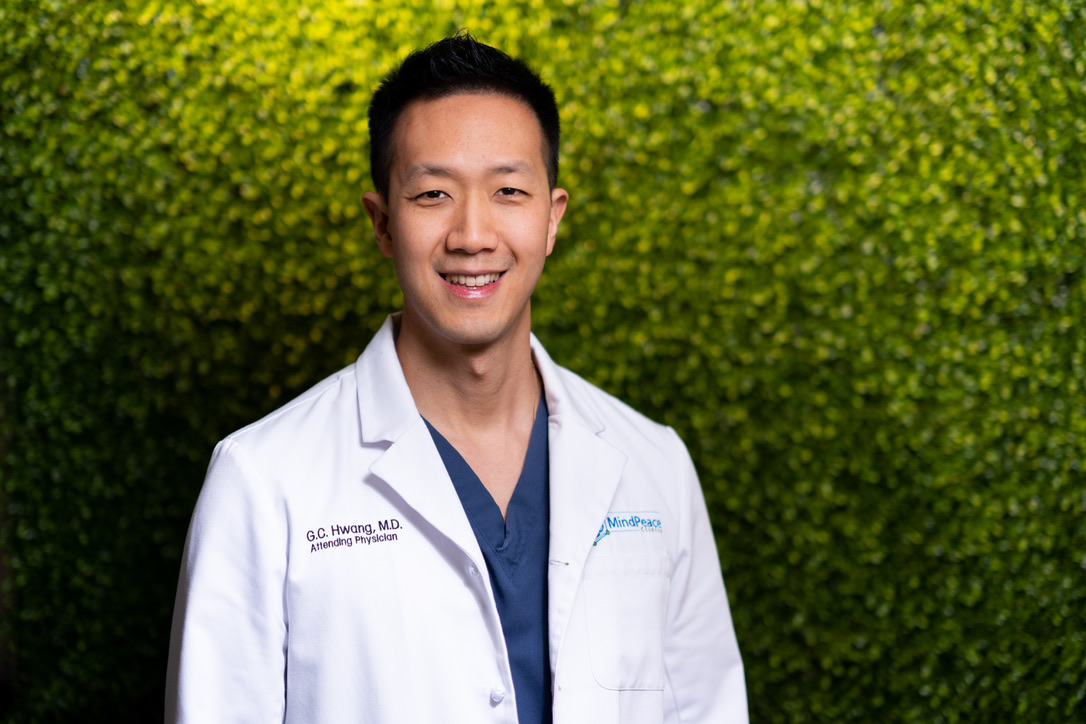
Dr. George C. Hwang, known to his patients as Dr. Chaucer, is a practicing anesthesiologist who also helps to run Mind Peace Clinics in Arlington. He has written for multiple journals, textbooks and medical news outlets, and has been living in Arlington for the past 15 years.

Modern Mobility is a biweekly opinion column. The views expressed are solely the author’s.

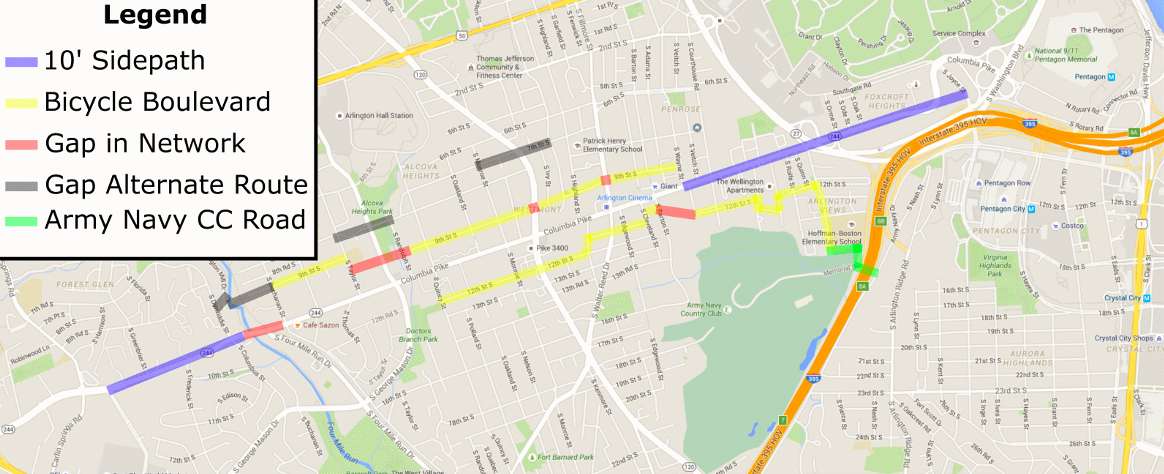
Columbia Pike is one of Arlington’s least bike-friendly corridors — there aren’t any bike lanes, traffic is heavy, and the bike boulevards on parallel streets are disjointed and disconnected.

Almost 3 years ago now, Bike4ThePike rode to highlight this fact, along with the gaps in the County’s plans for the Pike.

Today, we have a big opportunity to close ones of those gaps, but the County’s going to need some help to do it.

Three years ago, this is what the map looked like for the County’s planned bike facilities along the Pike.

We’ve made some progress — the sidepath on the bridge over Four Mile Run will be widened this year. The Complete Streets project on Walter Reed Drive is moving forward and is likely to add a traffic light at 9th Street S to create a safe crossing there for bike boulevard users — but the North side still has a fair number of gaps.

With the completion of the new section of 12th Street S between Rolfe and Ross Street, built by the Trove development, the south-side Bike Boulevard only has one major gap remaining — Barton to Wayne Street.

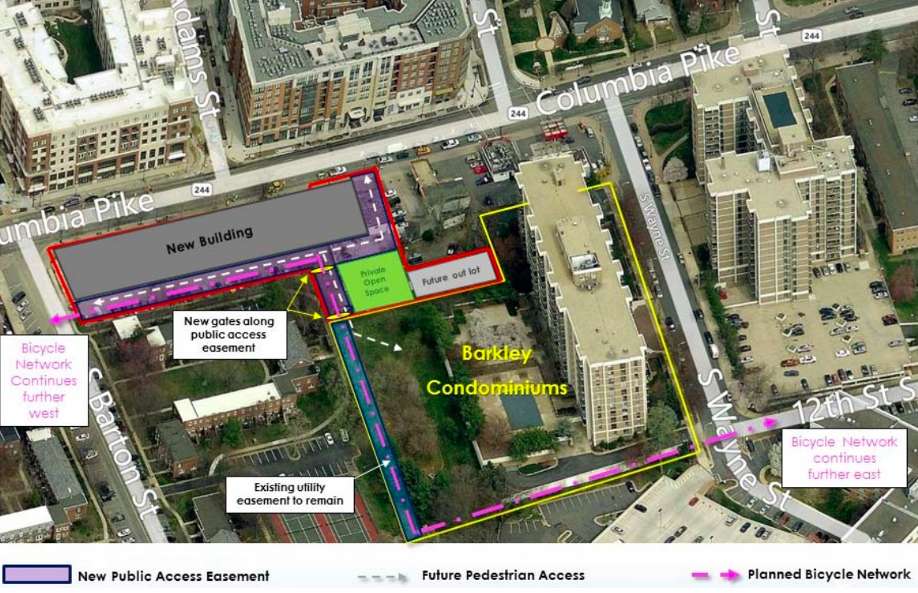
The redevelopment project at 2400 Columbia Pike (which includes the current Rappahannock Coffee building, among others) offers an opportunity to finally bridge this gap, but it will require help from the developer, the County and the Barkley Condominiums. This development was originally approved in 2016, but is back undergoing review with some revisions.

The Form-based Code requires this development to have an east-west alley. Since this alley would serve only traffic from this one building, it could, if designed well, function as a quiet, low-stress place to bike much like the rest of the Columbia Pike Boulevards. However, the alley itself only goes as far east as this development does — it wouldn’t connect to Wayne Street.

It was noted during the last review of this project that a connection could be possible to Wayne via the construction of a small stretch of trail on property owned by the Barkley Condominiums; part of this land already has a utility easement granted to the County for some buried utilities. There are certainly many routes that such a trail could take, but here is one potential alignment that was shown the last time this development was reviewed (pink dashed line):

Why might Barkley Condominiums want to grant such an easement? Here are a few thoughts:

  • It was noted during the last review of this project that the condo residents have been using the existing alley to walk from the back of their condo building to the Pike, despite having no legal easement to do so. It was also noted that the Condo building has relied on the existing private alley to provide access to maintenance crews to complete work on the rear of their property such as landscaping; again, without the legal right to do so. The trail could provide a safer, more pleasant, and legal access route for both condo residents and maintenance crews to access this side of the building.
  • Generally, trails are a sought-after amenity that raise property values. In this instance, the County would be constructing and maintaining the trail. The Barkley would simply need to provide legal access to the land. The land that already has the utility easement over it isn’t useful for much of anything else anyway.
  • Being a good neighbor. This is one problem on the Pike, that is extremely difficult to solve without the Barkley’s assistance. If we don’t fix this now, people who want to bike here will be relegated to the narrow sidewalks of the Pike or mixing it up with heavy Pike traffic for the foreseeable future, barring a joint redevelopment of two gas stations and Bob & Edith’s diner (please no!).

This sort of trail easement isn’t unprecedented — the Four Mile Run Trail runs behind the Brittany and the Carlton Condominiums along Four Mile Run Drive, on land that appears to be owned by the Condo Associations, presumably in a similar easement.

I think it’s important that everyone involved know that this gap in the bike network is important to citizens along the Pike. If you support a bike-able Columbia Pike and would like to see the Rappahannock Developer, the County and the Barkley Condominiums come together to solve it, please consider signing this petition that Sustainable Mobility for Arlington County launched yesterday. You can also ask the developer about the biking experience in their proposed alley at this virtual meeting tonight at 7 p.m. about the development proposal.

Chris Slatt is the current Chair of the Arlington County Transportation Commission, founder of Sustainable Mobility for Arlington County and a former civic association president. He is a software developer, co-owner of Perfect Pointe Dance Studio, and a father of two.


Community Matters is a biweekly opinion column. The views expressed are solely the author’s.

Over the past several months I have researched my ancestry online, connecting with 3rd and 4th cousins whom I have never met. In that research, through old news articles and death records, I learned and confirmed stories of domestic violence and murder in our family in the early 1900s.

These revelations have increased my interest in learning more about and preventing intimate partner violence.

For the past nine months I have led my sorority’s international domestic violence policy efforts and have become more frustrated with the slow progress in eliminating this deadly issue. Understanding that it is a complicated problem, I use every avenue to remind myself and others of the impact that it has on our communities. According to the Partnership Against Domestic Violence, every 9 seconds, another woman in the U.S. is beaten. Of course, women aren’t the only victims; men are simply less likely to report the abuse.

The Violence Against Women Act (VAWA) reauthorization expired in 2018, and the 2021 version was reintroduced recently by Representative Sheila Jackson Lee (D-TX). The reauthorization is a priority for President Biden who has led its reauthorization since 1994. The new bill builds upon the previous versions of VAWA, aims to improve access to housing for victims and survivors, protects victims of dating violence from firearm homicide, and helps survivors gain and maintain economic independence.

During the 2021 General Assembly session, HB 1992 was introduced by Delegate Kathleen Murphy, and prohibits a person who has been convicted of assault and battery of a family or household member from purchasing, possessing, or transporting a firearm. The prohibition expires three years after the date of conviction, at which point the person’s firearms rights are restored, unless he receives another disqualifying conviction. A person who violates the provisions of the bill is guilty of a Class 1 misdemeanor. A similar bill that was introduced by Senator Barbara Favola which would have made it a Class 3 misdemeanor, was defeated by the Senate. HB 1992 is awaiting the Governor’s signature.

Domestic violence doesn’t only affect the perpetrator and the survivor. It can have a lasting impact on family members, and we can eradicate intimate partner violence by starting with our youth. The Centers for Disease Control program, “Dating Matters”, is designed for local entities (e.g.,health departments, boys and girls clubs), and employs evidence-based strategies and a community-driven approach to educate youth, parents, educators, schools, and neighborhoods about healthy relationships to stop dating violence before it starts.

We are extremely fortunate to live in a community that has invested resources in addressing domestic violence, and COVID-19 has placed even more families at risk. Doorways’ 24-hour domestic and sexual violence hotline provides an immediate, safe response for survivors of domestic violence and sexual assault. Arlington County’s Project PEACE is a coordinated community response dedicated to advancing the most effective and efficient array of education, prevention, protection, and support services to end domestic and sexual violence in our community. You can learn more about Project PEACE online.

There are too many people who still believe that domestic violence is the “dirty little family secret” that we can’t address. If you or someone you know needs support because of intimate partner violence please reach out to Doorways 24-hour hotline at 703-237-0881 and the Arlington County Police Department at 9-1-1.

Krysta Jones has lived in Arlington since 2004 and is active in local politics and civic life. This column is in no way associated with or represents any person, government, organization or body — except Krysta herself.


Making Room is a biweekly opinion column. The views expressed are solely the author’s.

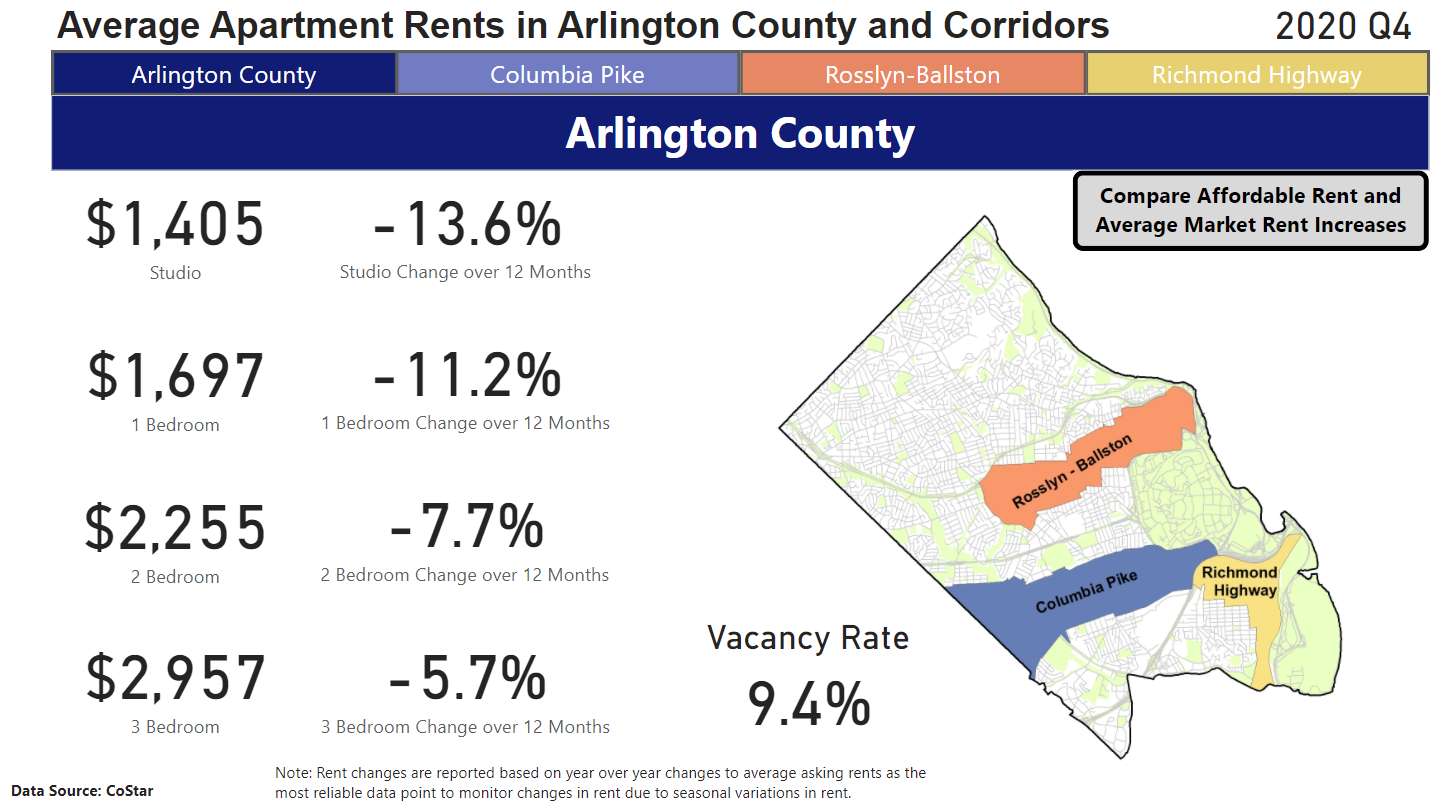
The year-long (and counting) pandemic has caused a large increase in the apartment vacancy rate in Arlington.

While stories of an urban exodus are overblown, national research indicates that the pandemic has decreased the inflow of new residents. Some of Arlington’s landlords have responded to high vacancy rates by lowering rents. This is welcome news for renters who struggle to afford payment or want to upgrade their home.

But landlords also have another tactic to fill vacant apartments, by taking long-existing units off the market for long-term tenants and switching them to hotel units or short-term rentals. The County Board should scrutinize these requests and consider the benefits of abundant housing, even if it means large landlords must charge competitive prices. Renters should be the ones benefiting from the lower demand.

Arlington’s vacancy rate is relatively high at 9.4% across the county. This is slightly above what is considered healthy for a rental market (7-8%), but it is still below the rate that would be worrisome. County-wide, landlords have responded by lowering nearly 15%. However, given that Arlington had a 4% vacancy rate before the pandemic, it is not surprising that landlords would look for other options to reduce the number of vacant units they carry.

Dittmar, a locally-based company that owns and manages dozens of older apartment buildings throughout Northern Virginia, has asked the County Board for permission to convert 5% of its vacant inventory at three properties in the R-B corridor as short-term rental units for up to 5 years. (This is a different situation from a new development requesting temporary hotel zoning during its lease-up phase.)

Dittmar’s letter requesting this minor site plan revision, explains:

Due to the ongoing COVID-19 pandemic, the Applicant has experienced unprecedented levels of vacancy in residential units. It believes that, as business travel begins to return to the region in the future, there will be a demand for leases of furnished units for less than 30 days. The Applicant seeks to serve this group of people by converting a portion of the residential units on the Property to Flexible Units to allow for a more socially-distanced temporary stay in Arlington.

In their Statement of Justification, Dittmar doesn’t discuss what steps it has taken to fill their vacant units with long-term residents, such as how deeply they have cut rents or other financial incentives they have offered.

(more…)


It was a week for retrospectives, as we marked the one-year anniversary of the first coronavirus case in Arlington.

The virus has so far claimed 242 lives in Arlington County, but there’s hope that the quickening pace of vaccinations will help prevent the kind of mortality that we saw last spring and this past winter. There’s also hope that this spring and summer life will increasingly return to something approaching normal.

As the realization that COVID has been a part of our daily lives for more than a year continues to set in, here are the most-read ARLnow articles of the past five days.

  1. Motorcycle Club Pays Highlander Motor Inn One Last Visit
  2. Permit Approval Clears Way for Dominion Hills Mansion Demolition
  3. Controversial Dr. Seuss Titles to Remain at Library, But Won’t Be Replaced
  4. Fire on Top of High-Rise Condo in Rosslyn
  5. Demolition of Mid-Century Building Underway To Make Way for GMU’s Arlington Expansion
  6. Viral Outbreak Among Raccoons Prompts Warning for Pet Owners
  7. Leaders Say Arlington Has the Ecosystem to be the Next Austin or Miami
  8. New W&OD Trail Bridge in East Falls Church Opening Today
  9. New CVS in Crystal City Now Open, Solidcore to Open This Summer

Feel free to discuss those stories, or anything else of local interest in the comments. Have a nice weekend!

Photo courtesy Josh Folb


Lyon’s Legacy is a limited-run opinion column on the history of housing in Arlington. The views expressed are solely the author’s.

“A nation may lose its liberties and be a century in finding it out.” -John Mercer Langston

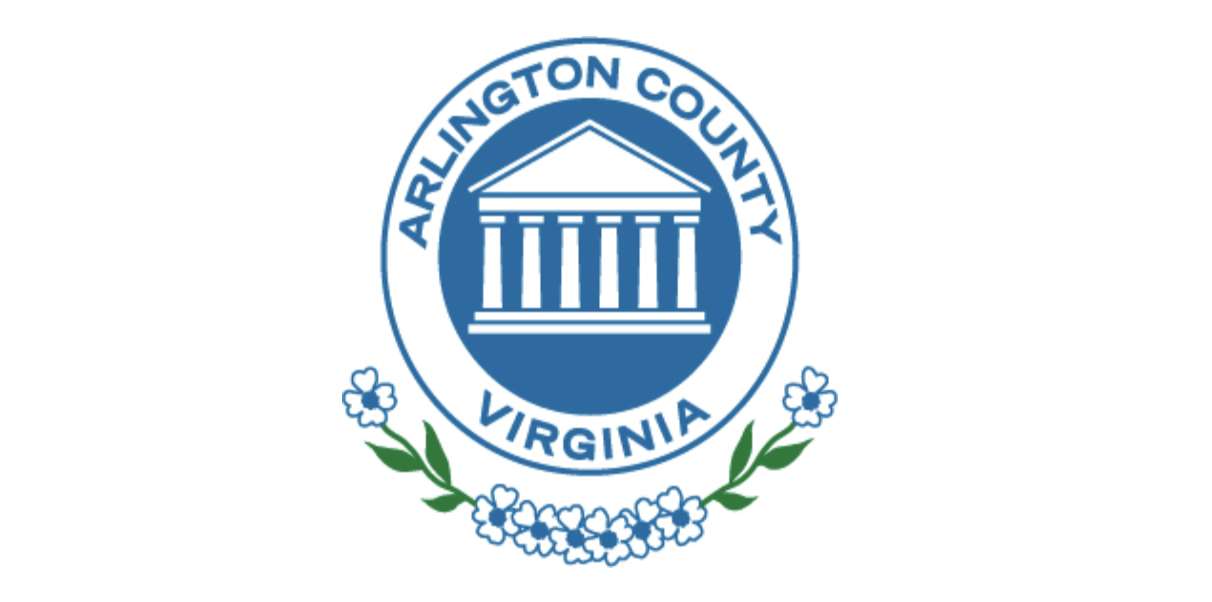
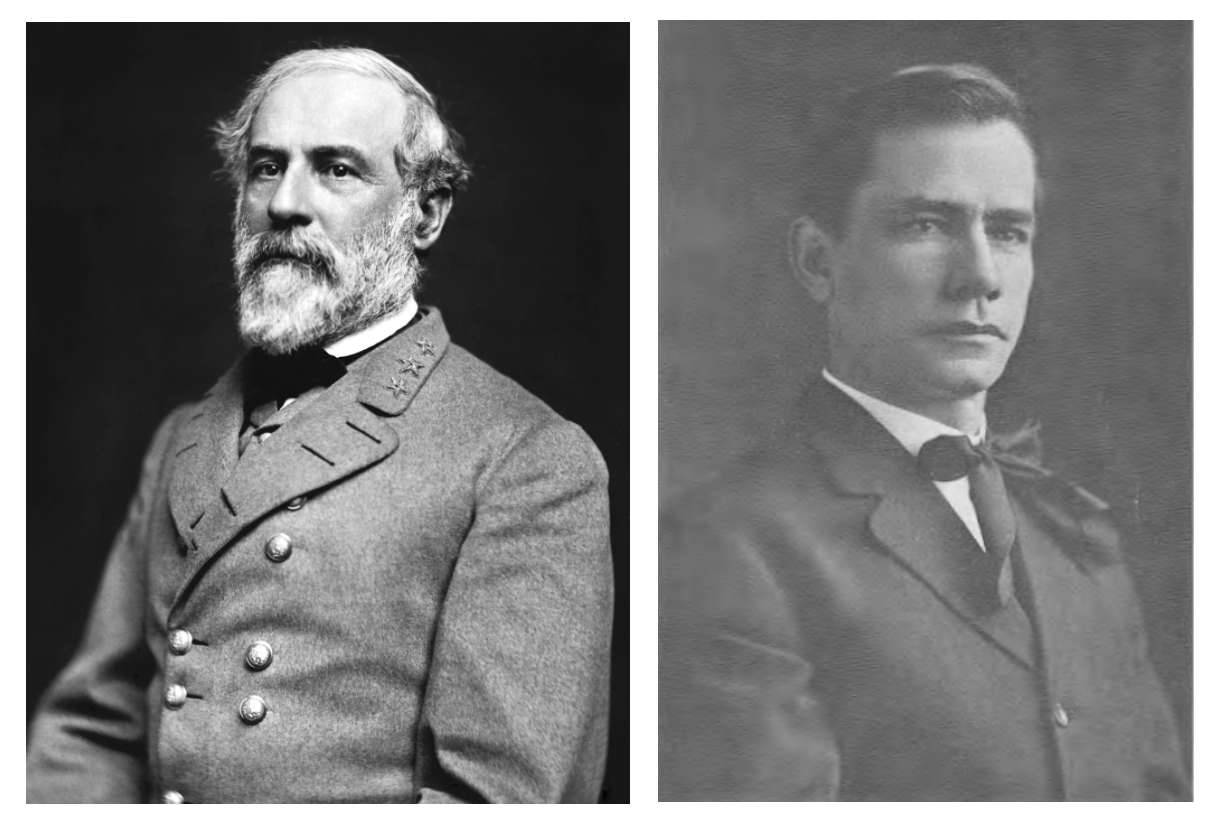
My county’s seal is a six-columned pediment, classical white on a blue field. This is the facade of Arlington House, built by enslaved Black people for George Washington’s step-grandson, the later home of Robert E. Lee, and the namesake of the county.

Arlington is changing. The seal is changing too, with an effort to replace the image of Lee’s mansion.

For us to make Arlington a county we can be proud of, we must understand how the racism in our past runs deeper than an image of a facade. For the new seal to be more than an empty symbol, we must use that understanding to build an antiracist future. To shape the change that is coming, we must know the legacy not only of Robert E. Lee but also of Frank Lyon and the men like him who, a hundred years ago, turned our county from hilly farms into the exclusive suburbs we know today.

This article is the first of a series. Over eight parts I will tell the story of Frank Lyon, the scars his racism left on our county, and how we can begin to heal those scars. These parts will be published biweekly, and as they’re published, you’ll also be able to read them with citations here. But this story is bigger than Lyon. This is in fact a story about the vast majority of neighborhoods across Arlington, indeed, across the United States — Frank Lyon only happens to illustrate it clearly.

In order to see the full picture, we first have to look at the decades after Lee departed and before Lyon arrived. We have to remember the decades when Arlington was Black.

At the dawn of the Civil War, Lee lost Arlington House. Although the county’s citizens voted to stay with the Union, secession carried Virginia, and the nation prepared for war. On the eve of war’s outbreak, Lee called for his wife, Mary Lee Custis, to leave their mansion and join him in Richmond. She ordered their one hundred and ninety-six enslaved people to pack the family silver and transport it to the Confederate capital. Mary Lee Custis stayed a few last days among the dogwoods, looking down at Washington in the late Virginia spring. Then she fled. Union soldiers took possession of the estate a few days later, toppling trees and erecting barricades in the elegant gardens to establish a fortified camp.

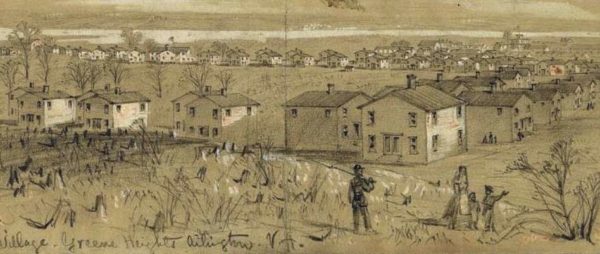
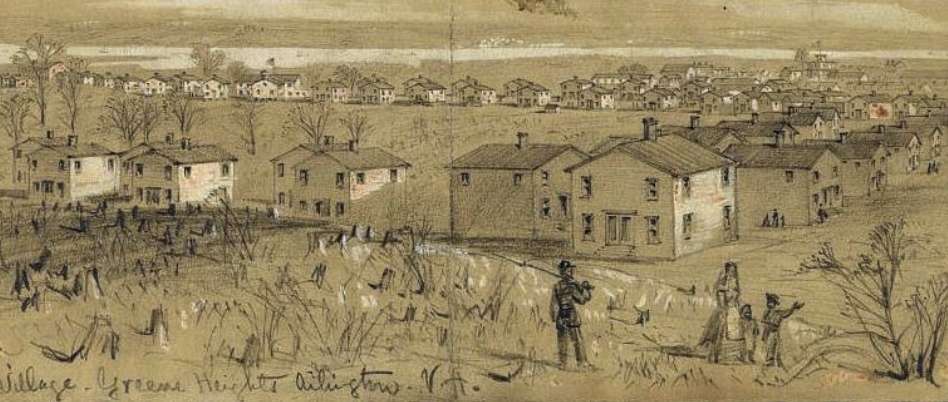
But as the war that ended slavery took its course, refugees began to appear in Washington. At least 16,000 Black people arrived in the city over the course of the war. They sought safety from violence and slavery. The fledgling capital didn’t have enough space for all these people, and the War Department established emergency camps for them. The officers of that department may have smiled at the justice when, in 1863, they turned over the grounds of Arlington House to establish one of the happiest of those new settlements. What had been home to Lee and the people he enslaved became a place for free Black families: Freedman’s Village.

More than a refugee camp, this was the first planned development in the county. The War Department set up the fundamentals for a decent life. They established schools, including vocational schools; they built a hospital; and they offered honest jobs for honest pay. But the heart of the village was the houses:

One-hundred white-washed, one-and-a-half story duplexes were constructed along a quarter-mile long thoroughfare through the Village. The clapboard houses used a pared-down version of the Classical Revival style… Classical Revivalism used symmetry and columns to allude to Greek temples, symbolically connecting America to the ancient democracy and its ideals through architectural style. In its vernacular execution at Freedman’s Village, the Classical Revival architecture used color and symmetry to convey the ideals of the movement. The external symmetry of the home was meant to lead to social harmony and stability. The white color of the homes was meant to encourage cleanliness, godliness, and order. Initially chosen by the War Department, this housing type was embraced by black Arlingtonians. They took great care in the maintenance and upkeep of these homes. When building their own homes later residents often recreated this style.

(more…)


What’s Next with Nicole is a biweekly opinion column. The views expressed are solely the author’s.

TW: suicide, mania.

Arlington has begun an effort to improve mental health services in our community with dollars attached to these priorities. Taking this initial first step is significant, but we still have miles to go. Next Tuesday you can learn more about this topic at the Civic Federation monthly meeting.

Movement on mental health services all started with the overwhelming support for the Black Lives Matter movement last summer. Thousands marched, hundreds of first time speakers came to County Board hearings, and policy change was demanded. The County Board convened and the County Manager appointed a “Police Practices Group” (PPG) to recommend policy changes.

This working group narrowed their scope to four major sections: mental health crisis intervention, police civilian review board, traffic enforcement, and alternative dispute resolution. For purposes of this analysis I will focus on the mental health aspect of the recommendation.

Current State of Play

If an Arlingtonian is facing a crisis situation such as a manic episode, suicidal thoughts, or substance abuse, the response from Arlington is predominantly from the police. There is limited co-response with both a clinician and responding police officer. While it is impressive that ¾ of Arlington’s police force is “Crisis Intervention Trained” (CIT), police acknowledged during this process that their presence with flashing lights and uniforms immediately escalates a crisis situation even with the best trained officers.

There is little that is done for those in crisis after the initial police point of contact. In a situation where you experience a physical medical emergency, like a car crash, there are follow up services that are needed for treatment. Ultimately there are not currently adequate follow up services available for those in mental emergency situations.

With little support from federal or state agencies, we are left to our own devices to create a solution. This issue is too great to continue to push off a response. We have a number of best practice models to look at in other local jurisdictions and our police practices group recommendations put together a great target implementation framework.

What’s Budgeted for Improvements

In the County Manager’s budget there is a proposed $574,000 dedicated to supporting Arlington’s Crisis Intervention Center (CIC) and a medically equipped vehicle dedicated to crisis transit.

Additional staffing will be helpful to taking the CIC closer to being able to have a 24/7 response capacity, since crises takes place at all hours of the day, and provides services from a team of individuals who are adequately trained to respond to these specific types of medical emergencies.

One of those positions will be an emergency services clinician that presumably would be an additional co-responder to emergency calls, bringing our response team to a whopping two people dedicated to respond to the entire county’s mental health related calls around-the-clock.

The additional vehicle would hopefully eliminate the anxiety of flashing lights, from what have otherwise been a police or ambulance transit vehicle, while maintaining the medically necessary materials during transport time.

What’s Next

Some implementation items are process and coordination oriented, while others will require long-term funding commitments. What is included in the Manager’s Budget is able to address some of the important short-term funding oriented goals. There is still a tremendous amount of work to do though that is effectively summarized in the PPG Recommendation.

(more…)


Peter’s Take is a biweekly opinion column. The views expressed are solely the author’s.

Arlington residents’ lives have been upended by COVID-19: parents have struggled to juggle virtual schooling and work responsibilities; many restaurants, hotels and small businesses have disappeared. The County budget has been battered. Yet, County government has been moving full speed ahead to help builders and developers of high-end housing fatten their bottom lines.

Arlington’s Missing Middle (MM) Housing study is a heavily subsidized County government initiative pre-ordained to reach a “solution” to a non-existent problem. The housing types on which this study focuses already are plentiful in Arlington. Many more already can be built by right.

As my colleagues at Arlingtonians for Our Sustainable Future (ASF) demonstrate, up-zoning to enable construction of even more of this MM housing will NOT provide affordable housing for those most in need.

Missing middle housing is high-end, not affordable, housing

County staff have abandoned earlier claims that their MM study will yield affordable housing. Cloaking themselves in the language of civil rights advocates, they now argue these MM housing types are “under-represented.” A current Green Valley project demonstrates why increasing the representation of MM housing will boost the supply of high-end housing while accelerating the loss of racial, ethnic, and economic diversity, exacerbating our long-term budget deficit, and further damaging our environment. County Board members should renounce these bad community outcomes.

Dr. Jon Huntley of Arlington Analytics (along with ASF’s Mary Glass) recently completed a study of the Towns of 24th townhomes project in Green Valley. This project will provide townhome units in two fourplexes, replacing two single-family homes valued at $675,000 each. Marketing materials show each luxury townhome “starting at $800,000,” meaning owners will need to make $138,977 per year to get a mortgage.  

The County — with no factual evidence to support its claims – says MM homes will be a pathway to diversity. Yet consider 2014-18 U.S. Census data cited in Arlington’s Missing Middle Research Bulletin #2, which shows these Arlington average annual household incomes:

  • African-American – $58,878/year
  • Hispanic – $77,743/year
  • Non-Hispanic white – $134,723/year

Based on these averages, Towns of 24th owners are more likely than not to be white, and in any event, wealthier persons of any race/ethnicity whether relocating from within or outside Arlington. Other data show the townhome price range falls well above income levels of current residents who are over 65, occupy federal or county government jobs, or who are single parents or immigrants.

In higher income or more expensively priced areas either in South Arlington or North Arlington, the market values of new MM housing will require owners to have much higher incomes than the $138,977 in the Towns of 24th example.

By contrast, analyses presented to County staff as part of the current 5-year review of Arlington’s Affordable Housing Master Plan, demonstrate that Arlington’s greatest need for affordable housing is for those who earn 60% or less of Area Median Income (AMI). Sixty percent of current AMI is $68,040 (Slide 8).

Arlington lacks long-term infrastructure financing plans

Arlington has forecast that about 63,000 new residents will move here between 2020 and 2045 under existing zoning. As documented in an ASF presentation (Slides 2-5), Arlington has failed to develop long-term plans to pay for the new infrastructure needed to support these anticipated new residents, let alone the additional residents beyond the 63,000 who would be newly enabled to live here under MM up-zoning.

Arlington lacks long-term environmental impact plans

Arlington also lacks long-term plans to address the severe impacts on our environment of the current hyper-development that ASF’s Anne Bodine describes, let alone the incremental adverse environmental impacts of the arrival of 63,000, or even more, new residents.

Conclusion

Missing Middle housing is high-end housing not affordable housing. MM housing will accelerate gentrification, but will not help those in greatest need.

Before proceeding further, the County government first must:

  • Perform site-specific fiscal impact analyses for new, multi-unit residential projects
  • Release all existing long-term operating budget forecasts
  • Prepare these three sets of County forecasts comparing current zoning with any and all proposed MM up-zoning: (1) Long-term operating budget; (2) Long-term environmental impact; (3) Long-term household income by quintiles, showing projected disparities among different household groups compared to the national average

Peter Rousselot previously served as Chair of the Fiscal Affairs Advisory Commission (FAAC) to the Arlington County Board and as Co-Chair of the Advisory Council on Instruction (ACI) to the Arlington School Board. He is also a former Chair of the Arlington County Democratic Committee (ACDC) and a former member of the Central Committee of the Democratic Party of Virginia (DPVA). He currently serves as a board member of the Together Virginia PAC, a political action committee dedicated to identifying, helping and advising Democratic candidates in rural Virginia.


The Right Note is a biweekly opinion column. The views expressed are solely the author’s.

Days of breathless coverage about books written and illustrated half a century ago is what fills in the 24-hour news cycle when the current president will not take questions from the press and a former president no longer has access to Twitter. In case you missed it though, Arlington’s schools will be fully open to hybrid in-person learning by next week.

While many parents are opting to keep their students at home, it will be the first time in a year most of our kids will have the option to return to school — even if it’s only two days a week. While it is inexcusable that it took one of the most well-funded school systems in the country an entire year to figure it out, here is to hoping we are back to five days a week in the fall.

Maybe the current state of our school leadership will inspire an independent candidate emerging from the parent community and challenging the all-Democrat control of the School Board? If not for the inability to better adapt to the pandemic, an independent voice would be able to start asking some tough questions.

To begin, why is the Superintendent pretending the current school year enrollment drop didn’t happen? According to his proposed budget, Arlington is projecting 29,653 students will enroll next fall after only 26,895 this year. Never mind the fact that enrollment projections were off by two percent in the fall of 2019 and 2018, this year they were off by ten percent. There were five percent fewer students enrolled than the year before instead of the projected five percent more.

The total proposed budget is $704.5 million, or a cost of $23,758 per projected student. If enrollment is off by just five percent again, the total per student cost would rise to $24,917. This would be nearly equal to the current $24,923 cost. Whatever the rationale for the spending levels, there should be a discussion about it. And, the School Board should stop pretending there are not plenty of resources available to get the job done for our kids.

One fish, two fish, red team, blue team. With the November federal elections a fading memory, we Virginians are starting to be reminded that we will have the opportunity to choose a new governor this year. Virginia has regularly, though not always, voted in the opposite party into the governor’s mansion than the one currently occupying the White House. The fields for the statewide offices are crowded in 2021, and Democrats will have to defend their record under unified government. Did they try to move the Commonwealth too far to the left? The voters will decide soon enough.

They probably will not like “Green Eggs and Ham.” The Sun Gazette ran an article this week about a Civic Federation initiative to study Arlington County governance. Should we try to become a city with a Mayor like Alexandria? Should there be more County Board members? Should we elect them by district? What should their pay be?

There is little doubt the County Board will dismiss any proposals, except for a pay raise, just as they did when Arlingtonians attempted to gather enough signatures to put a change of government question on the ballot in 2010. Like a decade ago, this Board has moved back into the mode of 5-0 votes where most of the real discussion goes on behind closed doors with county staff. They should be careful though: this insular thinking could open them up to another independent challenge very soon.

Mark Kelly is a long-time Arlington resident, former Arlington GOP Chairman and two-time Republican candidate for Arlington County Board.


VDOT is in the process of designing changes to Route 1 as it travels through Crystal City.

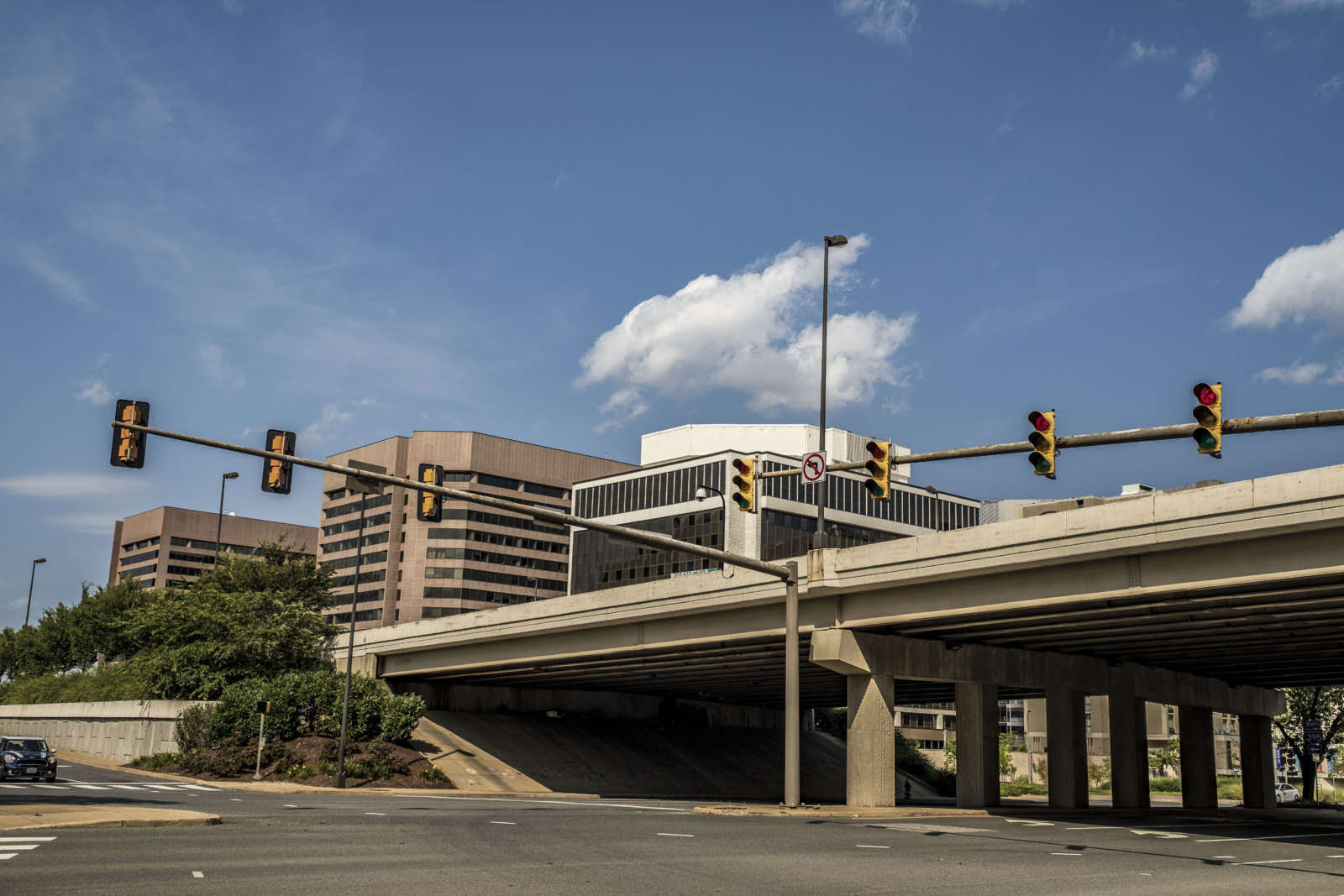
The changes include turning Route 1 from more of a highway to an urban boulevard of sorts, with the heavily-traveled commuter route brought down to grade in places where it’s currently elevated.

That means removing the imposing overpasses that, on one hand, physically separate portions of Crystal City — but on the other hand provide a relatively safe path for pedestrians and cyclists to get from one side to the other.

Under the VDOT plan, there would be more intersections mixing vehicle and pedestrian traffic.

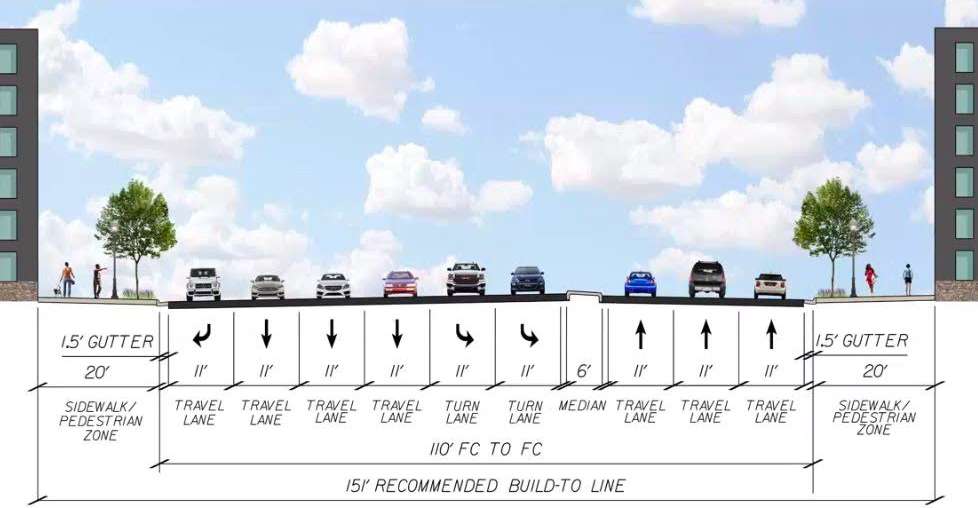
Though the urban boulevard idea is supported by the National Landing Business Improvement District and major local property owner JBG Smith, VDOT’s initial design of it, with 9 vehicle travel lanes and no bike infrastructure, has managed to pick up united opposition from the BID, JBG, neighborhood groups and other local activists.

Last year we published a poll asking about the idea of bringing Route 1 underground instead, an expensive proposition but one supported by local civic associations. Just over 75% of respondents preferred that idea to an at-grade urban boulevard.

The BID and some neighbors would like to see the urban boulevard concept implemented, but in a more pedestrian-friendly manner with fewer vehicle travel lanes. VDOT and some other locals, however, are concerned that would cause more cut-through traffic on local roads.

Today we’re asking: assuming that an underground Route 1 is infeasible, what about just keeping the overpasses largely as is? Is that preferable to the alternatives? Or should VDOT stick to some form of the urban boulevard idea, perhaps refining its initial concept plan?


 Progressive Voice is a bi-weekly opinion column. The views expressed are solely the author’s.

By Rev. Jonathan Linman

A year ago, Resurrection Lutheran Church in Westover voted to call me as their pastor. Shortly thereafter, the global pandemic was declared and the congregation, in keeping with safety protocols, discontinued meeting for Sunday worship. Only once have I experienced this congregation as a people that actually congregates in the church building in person on Sundays!

Meanwhile, our entire nation entered into at least three intersecting crises – the pandemic, the economic upheaval that resulted, along with people pouring into the streets throughout the country to protest unjust killings of Black persons at the hands of police.

What a way to begin a new ministry with people I barely knew, and to seek to lead them through these crises. Yet, there was significant energy among leaders in our Congregation Council (our board of directors) to respond to the crises.

In response to the pandemic, motivated by love of our most vulnerable neighbors, and like most other churches, we went online and provided resources for worship at home. In response to the economic crisis, we are collecting food twice a month, a doubling of our usual practice, donating what we collect to the Arlington Food Assistance Center. In response to the call for racial justice, our Council voted in June 2020 to place Black Lives Matter signs and banners on our church property to publicly signal support for racial justice.

This latter initiative, as you can imagine, provoked the most energetic response. Within an hour of the signs’ placement, I began to receive emails and phone messages both from members of the congregation and people in the wider community expressing opposition to the signs on church property. There were also expressions of support for this public witness.

The decision to place the Black Lives Matter signs was the result of thoughtful deliberation by the lay leaders on our Council. But the deliberation was undertaken via meetings on Zoom and within group email exchanges – not ideal ways to engage on sensitive and difficult topics. Yet, the urgency of our days prompted the decision to go forward with the signs.

Alas, thoughtful deliberation about all of this did not benefit from the salutary effects of people gathering in person, face to face, for heartfelt conversation. Moreover, there was not occasion to hear from wider segments of the congregation so that viewpoints across the political spectrum could be heard. I regret that, but the urgency of the crises and the limitations of our digital formats precluded what otherwise might have been a more holistic and orderly process of discernment and decision-making.

As pastor of this congregation, I certainly hold forth a vision that our church will be a community of moral discernment that thoughtfully engages the salient issues of our day in ways that honor and respect a wide array of viewpoints – conservative, progressive and moderate. I especially envision this congregation to be a place of civil civic discourse, a reality in short supply during these divisive days across our nation. I hope that ours will be a congregation in which we can agree to disagree on some topics, and yet remain in community together, bound to each other in the love of God for the sake of the healing of the nations.

Still, amidst the messiness of our pandemic-induced realities, our Council resolved to make public our support for racial justice. It strikes me that this is in keeping with our congregation’s Lutheran tradition when Martin Luther, protesting the materialism and the spiritual and theological abuses of the church in his day, nailed his 95 Theses to the church door, ultimately saying, “Here I stand, I can do no other. So help me God.”

Jonathan Linman is Pastor of Resurrection Lutheran Church on Washington Boulevard in Arlington. In May of 2020 he relocated here after 18 years in New York City, where he was a professor at The General Theological Seminary of the Episcopal Church and a Bishop’s Assistant in the Metropolitan New York Synod of the Evangelical Lutheran Church in America.


View More Stories