Making Room is a biweekly opinion column. The views expressed are solely those of the authors.

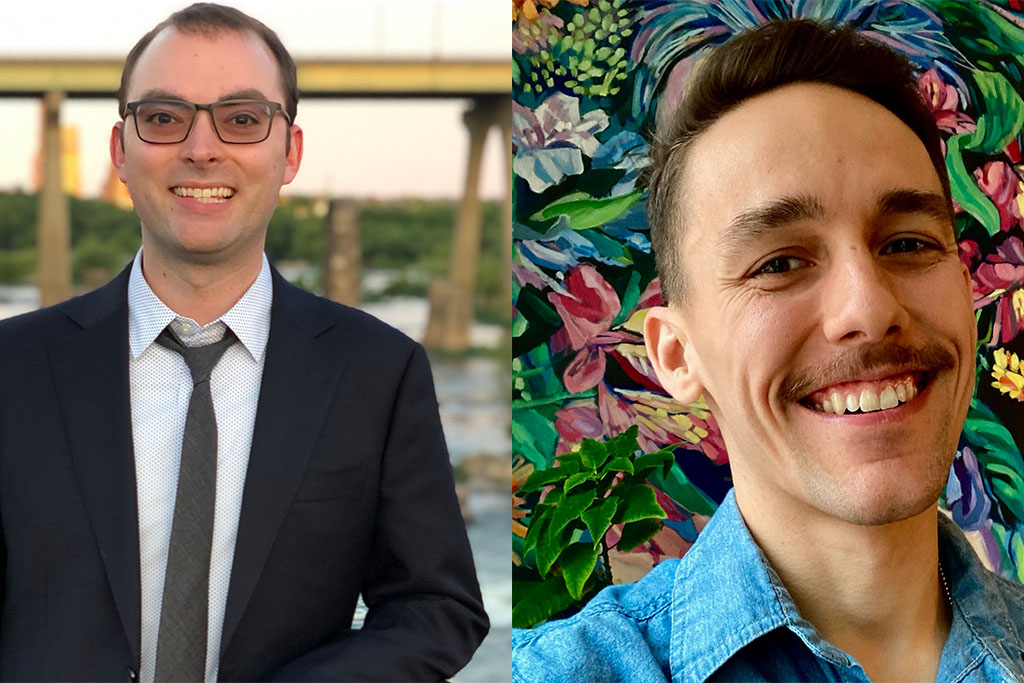
Guest column by Kellen MacBeth and Michael Pruitt

Arlington County has an opportunity to develop critical policies to address the ongoing negative impacts of over 100 years of racial segregation and discrimination in our housing market.

In fall 2020, county staff released a draft Fair Housing Plan and the accompanying Analysis of Impediments to Fair Housing Choice (AI) report which consolidated data on housing segregation and its continuing impact on our community.

The Analysis is comprehensive, detailing how the color of your skin and the neighborhood in which you live drastically impacts your life expectancy, educational attainment, income, employment, and poverty level. It makes abundantly clear that there are massive disparities between white residents and residents of color that are shutting many of our neighbors out of Arlington’s prosperity.

However, instead of being a serious attempt to implement Arlington’s 2019 Equity Resolution and meaningfully address our legacy of segregation, the draft Fair Housing Plan appears to be a bureaucratic paperwork exercise. The plan is a 10-page rehash of existing programs and half-hearted measures that have produced little evidence of progress toward eliminating obstacles to fair housing in a meaningful way. Arlington County’s elected leaders and County Manager have failed to acknowledge the clear political will in our community to address these longstanding issues.

Arlington’s draft Fair Housing Plan attempts to follow Obama-era federal guidance, but fails. Under past guidance from U.S. Department of Housing and Urban Development (HUD), communities must tie their theoretical aims to specific, quantifiable goals. Arlington’s draft plan contains no such metrics, no way to monitor success or failure, and no way for the public to hold our leaders accountable.

If Arlington County truly wants to make good on their statements supporting racial equity, they should consider the following changes.
(more…)


A busy news week, with a pair of County Board meetings to report on, is set to give way to a busy news weekend, with a snowstorm bearing down on the D.C. region.

As we await the storm, here are the most-read Arlington articles of the week:

  1. Here’s a Look at the Proposed Redevelopment that Would Replace Silver Diner in Clarendon
  2. Large Power Outage Reported in Arlington
  3. Police Release Surveillance Video of ‘Person of Interest’ in Ballston Murder
  4. Arlington County Adjusts to ‘Chaos’ of Vaccine Rollout
  5. Photos: Alpine Restaurant Being Torn Down on Lee Highway
  6. Coronavirus Cases Continue to Dip in Arlington, Amid Vaccine ‘Chaos’
  7. WeWork in Crystal City to Close
  8. Arlington Historical Society Fights to Save Dominion Hills Mansion from Demolition
  9. Here Are Some of the Common Items You Actually Can’t Recycle in Arlington
  10. Eight More Arlington Streets to Get an Additional $200 Speeding Fine

Feel free to discuss those or anything else of local interest in the comments. Stay warm!


What’s Next with Nicole is a biweekly opinion column. The views expressed are solely the author’s.

This year every campaign finance reform bill is expected to die in the General Assembly. That is extremely problematic considering we aren’t even aiming for federal standards.

Federally, candidate committees have a $2,800 limit on donations from individuals per election or $5,600 if there is a primary and general election that year, and corporations are banned from contributing at all. Nonaffiliated PACs (thanks to Citizens United) can accept $5,000 from individuals per year and corporations are able to contribute.

In Virginia we do not have any contribution limits. This legislative session bill were introduced that aimed for a floor below the bare minimum and committees with Democratic majorities still killed these reform including:

Senate: Prohibit campaign contributions over $20,000

YEAS — Adam Ebbin (D – Arlington/Alexandria), Deeds (D), Surovell (D), Mason (D), McClellan (D), Boysko (D). 

NAYS — Janet Howell (D – Arlington/Fairfax), Lionell Spruill (D), John Bell (D), Reeves (R), Ruff (R), Peake (R), McDougle (R), Dunnavant (R).

Senate: Prohibit campaign contributions from public utilities

YEAS– Ebbin (D – Arlington/Alexandria), Deeds (D), McClellan (D), Boysko (D), Bell (D).

NAYS — Howell (D-Arlington/Fairfax), Spruill (D), Surovell (D), Mason (D), Vogel (R), Reeves (R), Ruff (R), Peake (R), McDougle (R), Dunnavant (R).

House: Prohibit campaign contributions from public utilities

KILL THE BILL — Reid (D), Sickles (D), Bloxom (R), Runion (R).

VOTE ON THE BILL — Rasoul (D), Mundon King (D).

If you look at a breakdown of the latest campaign contributions you will see a correlation between large corporate donations and how our local legislators voted. (more…)


Peter’s Take is a biweekly opinion column. The views expressed are solely the author’s.

Arlington is flying blind regarding the costs of future critical capital expenses, including seats to accommodate APS enrollment growth and the increase in the ratio of Arlington’s population to permeable green space available for parks and storm water absorption.

The County Manager has warned correctly that our budget is under severe stress from COVID-19 impacts, and some of these impacts may be transformational.

The Manager has concluded that it is too difficult to engage in long-range fiscal planning in these dire circumstances. But during five pre-COVID-19 years, he resisted utilizing fiscal planning tools to measure development costs versus anticipated revenues.

The Manager recently revealed that County government is working to develop a model to measure fiscal impacts of development–but only by retroactively combining many different projects. It’s unclear whether this model will enable prospective measurement of the fiscal impacts of any single project or how useful it will be otherwise.

Merion Pike West project demonstrates the utility of advance single-project analysis

In November 2020, the County Board unanimously approved Phase 1 of the Merion Pike West site-plan development at 843 S. Greenbrier St.

The Board authorized the developer to build new apartment buildings containing 400 units. The new buildings will replace older buildings containing 90 market-rate-affordable units.

Local consultant Arlington Analytics prepared a fiscal analysis of this project, concluding:

  • This development will increase county spending $32-$37 million between 2022 and 2031.
  • The bulk of this new spending arises from the incremental cost of educating just over 100 additional APS students.
  • Incremental revenues, principally from real estate taxes, will increase by about $14.5 million over the same time period due to the higher assessed value of the property.
  • The County will need to tap revenues from other sources between $17 and $23 million through 2031 to cover the anticipated budget shortfall.

As part of the Board’s review of the project, this fiscal analysis was presented by Arlingtonians for Our Sustainable Future (ASF). Both staff and Board disregarded the conclusions, and did not present any comparable County government analysis because Arlington doesn’t engage in this type of planning.

Arlington needs to adopt new planning tools to ensure its sustainable future, and pump the brakes on gentrification.

(more…)


The Right Note is a biweekly opinion column. The views expressed are solely the author’s.

In response to School Board Member Reid Goldstein’s column yesterday, let’s talk about schools in Arlington.

First, here are some numbers to provide some perspective. The FY 2021 adopted budget was set to spend $670.3 million. When it was passed, the School Board projected enrollment at 29,142 — an increase of 1,122. The total cost per student was projected to be $23,001.

The official count for our closed school buildings enrollment on September 30th was actually 26,895 — a decrease of 1,125. The total cost per student for this school year is actually $24,923. Few school districts in the country match the resources of Arlington Public Schools.

Instead of talking about how the school board intended to use these resources to solve the current COVID challenges, Mr. Goldstein’s spent 710 words opining on the current buzzword on the left — “equity.” In fact, he did not mention COVID once in the entire piece. It reads as if it was written in January 2020, not January 2021.

At the end, Mr. Goldstein sums it up with these words, “Equity is the path to equality of opportunity for our students.” Providing equality of opportunity for our students is certainly something Mr. Goldstein can find agreement on across party lines. So how should we go about it?

Here are a couple simple suggestions for where Mr. Goldstein and the School Board can start. (more…)


Progressive Voice is a bi-weekly opinion column. The views expressed are solely the author’s. 

By Reid Goldstein

We all talk about it, but without pulling together, we can’t achieve it. Equity, that is.

Arlington Public Schools’ definition of equity is found in its Strategic Plan, which aspires to “Eliminate opportunity gaps and achieve excellence by providing access to schools, resources, and learning opportunities according to each student’s unique needs.”

However, eliminating opportunity gaps and achieving excellence is more difficult when our students — upper and lower income, native English and English learner households — are separated from their peers due to decades-old land use and housing policies that exacerbate inequity. When the County Board approves new housing developments or expands density in the same few areas of the County, the same set of schools are repeatedly impacted. And where schools are repeatedly impacted, stability is disrupted, and opportunity gaps can and do widen to adversely impact equity in our school system.

Newly approved multi-family residences bring increased school enrollment which inevitably spurs additional relocatables, potential capital expansion, boundary changes, staffing changes, bus route changes, program moves, and parent organization leadership and advocacy changes. While these are normal growing pains, the growing happens repeatedly in the same places.

To eliminate opportunity gaps and achieve excellence, the School Board needs the County Board’s help in managing growth and looking at its consequences, especially where increased density is contemplated. One strategy needs to be a commitment to greater socio-economic integration in the classroom.

Greater classroom socio-economic integration is a path to universal opportunity for a shared educational experience and the social intelligence and awareness that comes from exposure to peers from wide-ranging walks of life. The Century Foundation’s Richard Kahlenberg has written extensively on its benefits. In addition to improved academic outcomes, classroom socio-economic integration can narrow the opportunity gap and create a 21st century workforce and citizenry adept at collaborating across diverse groups.

To reach the excellence that equity promises, all schools require sufficient funding for unique needs, high-quality staffing and professional learning support, and student and family engagement — all factors that strengthen a school’s stability. APS provides additional resources through increased staffing for schools with higher proportions of English learners, as well as staffing and funding through the Federal Title I program for students from economically disadvantaged households. Yet those additional resources have not achieved equity.

On its own, APS has limited tools to accomplish greater socio-economic integration in classrooms. Doing so through boundary readjustment faces the challenge of overcoming the geographic concentration of socio-economic disparities in the County. Relocating students out of their neighborhoods was one factor creating near-universal dislike of busing as that practice played out in the 1970s and 1980s. Further, school boards and communities have to wrestle with which neighborhoods are bused, and why.

A third method, option schools, can encourage a measure of socio-economic diversity. The percentage of students receiving free-and-reduced lunch, a measure of poverty, cluster around the county average at option schools Arlington Traditional School (31%), Claremont Immersion (31%), Key Immersion (39%) and the Montessori Public School of Arlington (28%), for example, in the most recent data available. Yet option schools also come with waiting lists, more students bused longer distances, higher transportation costs, less walking and the character of the school system tipping away from neighborhood schools.

(more…)


Even though the bulk of the action was across the river, it was still an eventful week in Arlington.

There’s a new presidential administration and a new balance of power Congress. In one sense, local life in Arlington continues with few visible changes when the political balance of power shifts on the other side of the Potomac. On the other hand, federal policies do have a tangible local impact, and a change in administration often means changes in the job titles of local residents.

Here are the most-read Arlington articles of the past week:

  1. Four Bridges Connecting Va. to D.C. Will Be Closed Starting Tuesday (Jan. 15)
  2. Police Release Surveillance Video of ‘Person of Interest’ in Ballston Murder (Jan. 15)
  3. Arlington’s Yene Damtew Styled Michelle Obama’s Hair, Stole Spotlight at Inauguration
  4. Highlander Motel is Now Closed, Will Be Torn Down For a CVS in March
  5. New VRE Station Could Bring Amtrak to Crystal City in 2024
  6. Rents Have Dropped By Nearly 15% in Arlington Since March
  7. Cosi Closes in Rosslyn, Starbucks Closing Soon
  8. County Defends Vaccine Rollout, Amid More APS Employee Complaints (Jan. 15)
  9. Arlington Residential Property Values Soar (Jan. 15)

Feel free to discuss those, or other topics of local interest, in the comments. Have a nice weekend!


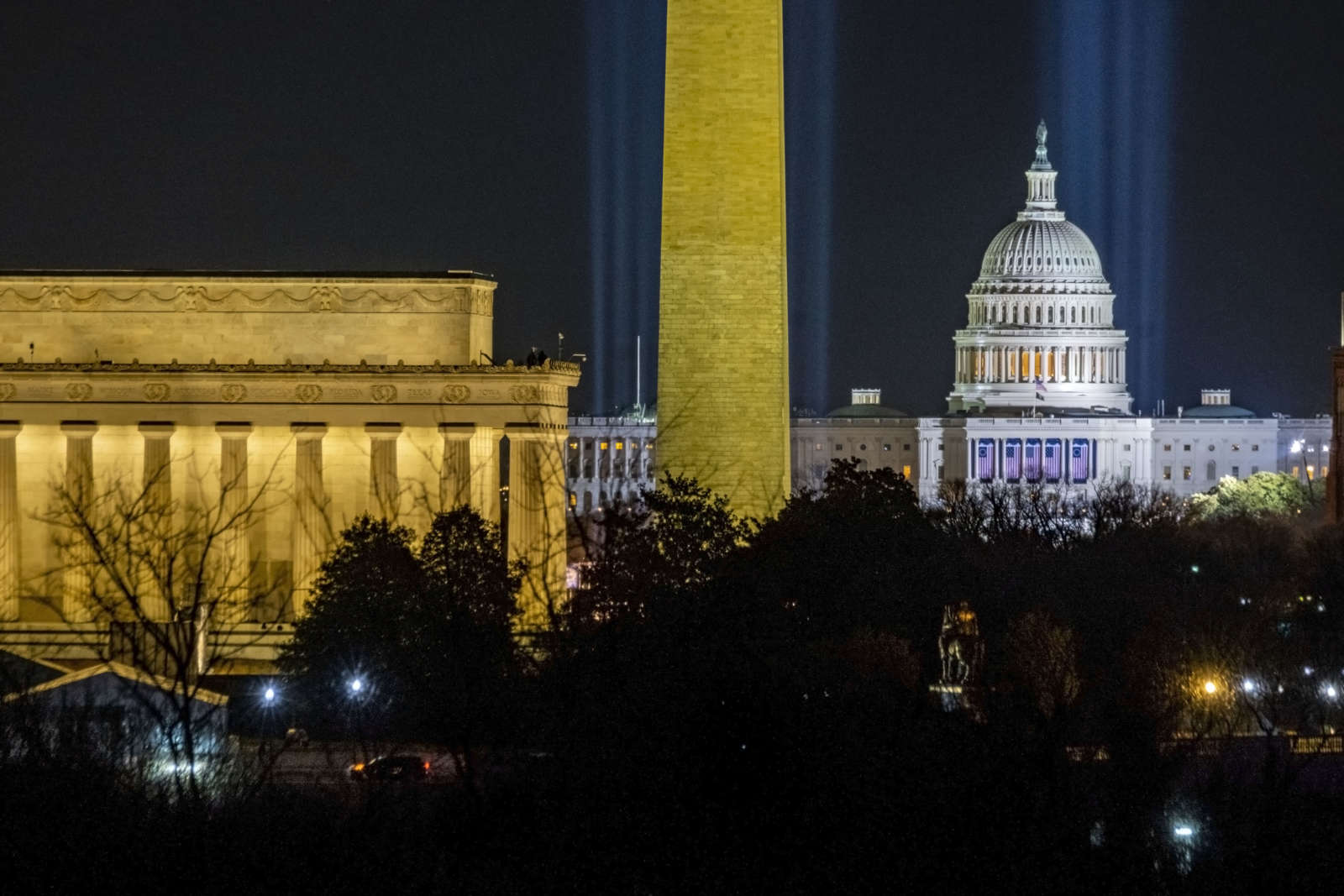
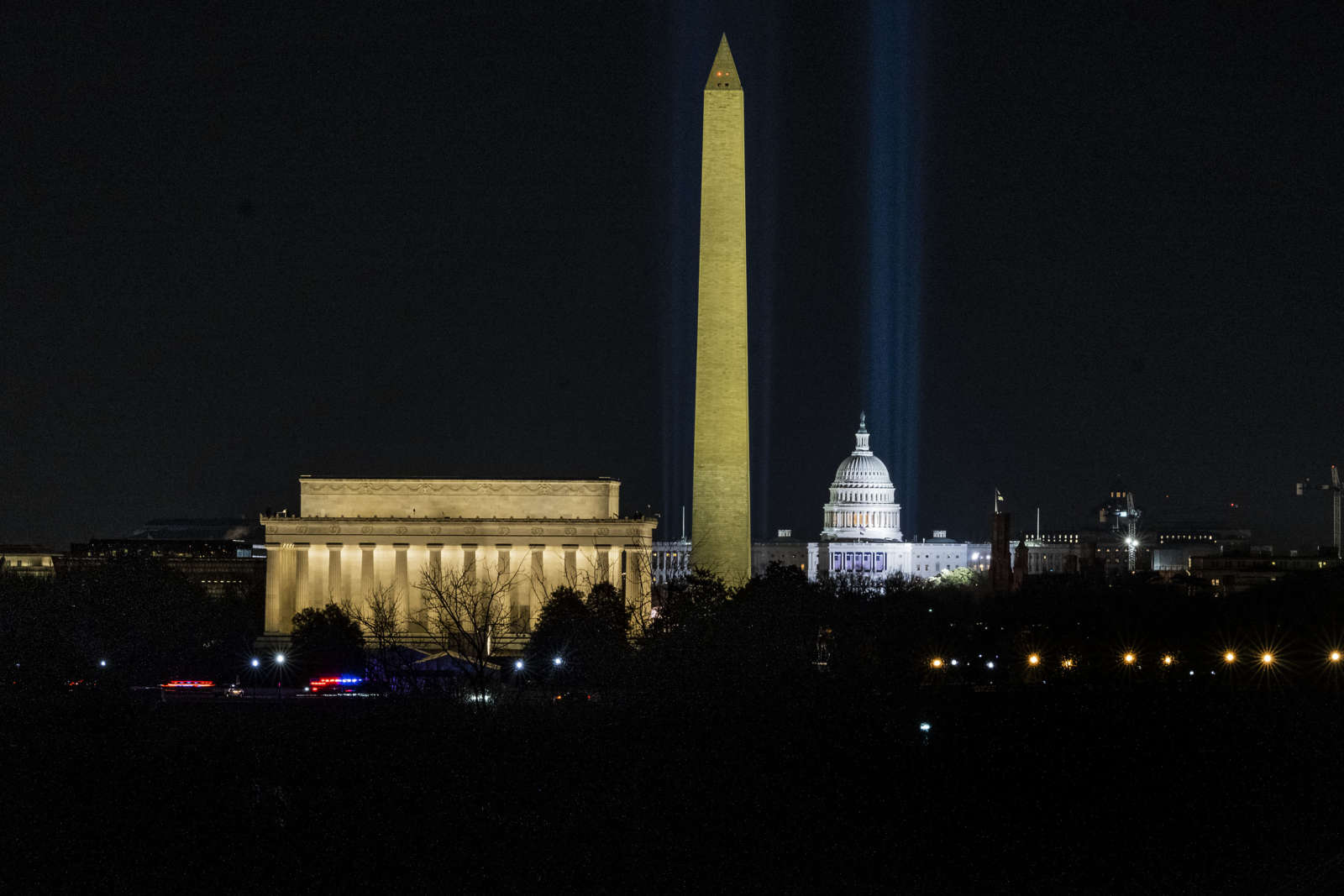
The spectacular fireworks display that unexpectedly capped off the 90-minute “Celebrating America” special on Inauguration Day had some extra oomph for local viewers.

While those in Arlington and across the nation watched the musical tribute on TV, many in the D.C. area could actually hear or see the fireworks from their homes.

And it wasn’t just the usual suspects whose homes overlook the Potomac. As the Capital Weather Gang reported, a weather phenomenon known as an inversion allowed people relatively far from the National Mall to hear the fireworks rumble.

The temperature inversion “‘caps’ the atmosphere, preventing cooler surface air from rising. It also helps turn the lower atmosphere into an echo chamber, allowing sound waves to propagate across long distances,” CWG wrote. “A firework-induced rumbling was heard as far away as Silver Spring, Huntington, Bethesda and Hyattsville.”

We know of at least one family in Reston who also said they could hear it.

Such weather phenomena, however, are fickle, and while someone 15 miles away might have heard it, there were no doubt parts of Arlington that were perfectly quiet.

So this morning we’re wondering: did you hear the fireworks Wednesday night?

Flickr pool photo by David Giambarresi


It’s been, to say the least, a busy couple of weeks for local news.

At this point next week is not looking any less eventful, though barring breaking news we will not be publishing on Monday on account of the Martin Luther King, Jr. Day holiday. (Note the county government closures and lack of parking enforcementon Monday.)

Below are the most-read ARLnow stories of the past week.

  1. Police Release Surveillance Video of ‘Person of Interest’ in Ballston Murder
  2. Four Bridges Connecting Va. to D.C. Will Be Closed Starting Tuesday
  3. ‘The G.O.A.T’ Has Officially Closed in Clarendon
  4. Arlington Residential Property Values Soar
  5. Two Injured After Cars Careen into Potomac River
  6. Demolition Permit Application Filed for Dominion Hills Mansion
  7. Airbnb Cancelling D.C. Area Reservations Next Week
  8. Coronavirus Cases Pass 10,000 Mark in Arlington
  9. As Vaccinations Continue, County Officials Are Trying To Find Ways To Move Quicker

Feel to discuss any of those stories, or anything else of local interest, in the comments. Have a nice weekend!


Peter’s Take is a biweekly opinion column. The views expressed are solely the author’s.

Arlington County Board member Christian Dorsey was in the news last year after he accepted, and much later returned, a $10,000 campaign contribution from Metro’s largest labor union.

Dorsey’s original acceptance of this contribution violated Metro’s ethics rules, and led to Dorsey’s resignation from the Metro board.

Near year’s end, a federal bankruptcy trustee made a formal finding that “Dorsey overstated his debt obligations in ‘an act of overt misrepresentation.'” (Dorsey denies overt misrepresentation.)

Last year’s debate over Dorsey’s conduct did nothing to rectify severe weaknesses in Virginia’s and Arlington’s rules defining ethical behavior. Until these rules are strengthened, it’s inevitable that other situations like Dorsey’s will be repeated.

Unless the Dillon Rule is significantly relaxed, many of the major ethics improvements necessary must be enacted by Virginia. Nevertheless, there also is a lot more that Arlington County government should do now to demonstrate that ethical behavior is a high priority.

Virginia ethics reform

Virginia should broaden the scope, and more vigorously enforce, its conflict-of-interest law.

Virginia’s current Ethics Advisory Council lacks critical enforcement powers.

Virginia needs a new ethics body with:

  • resources to conduct investigations
  • power to assess substantial fines
  • authority to make referrals to the Virginia Attorney General and local Commonwealth’s Attorneys

Virginia should create a new, independent Ethics Review Commission with subpoena and enforcement powers like Massachusetts, South Carolina, and Pennsylvania.

The Massachusetts Ethics Commission can impose substantial civil penalties for violations of its conflict-of-interest laws.

Virginia campaign finance reform

Virginia is one of only 5 states with no campaign contribution limits. Virginia’s campaign finance laws were ranked 47th out of 50 in America, and received a grade of “F” from a state integrity investigation.  

We need to prioritize Virginia campaign finance reform. According to an NPR report:

Virginia’s campaign finance laws are far more permissive than most other states. They’re also lenient compared to the rules for running for U.S. Congress, where the Federal Election Commission limits individual contributions to $2,800 per candidate, per election. …Virginia requires only that candidates disclose the source of their funds.

Virginia should renew efforts to pass legislation similar to an unsuccessful bill introduced in the 2019 legislative session that would have prohibited “individuals and political action committees from making any single contribution, or any combination of contributions, that exceeds $10,000 to any one candidate for Governor, Lieutenant Governor, Attorney General, or the General Assembly in any one election cycle… .”

But wouldn’t such new Virginia contribution limits violate the U. S. Supreme Court’s Citizens United decision? Maybe not. In 2019, the Supreme Court declined to review a federal appeals court ruling upholding Montana’s campaign contribution limits on the grounds that those limits were a reasonable way to prevent corruption while still allowing candidates to raise enough money.

(more…)


The Right Note is a biweekly opinion column. The views expressed are solely the author’s.

At this point each year, we have the opportunity to examine the speeches of the five Arlington County Board Members to gauge their priorities for 2021. There was no doubt from those remarks that real challenges lie ahead as we move into COVID recovery.

Arlington has weathered the pandemic better than many communities. Our economy is still largely dependent on the relatively stable federal government budget. We are able to work from home due to access to technology and strong and fast internet connections. Still we saw businesses close their doors. And many more are wondering how much longer they can hang on.

Yesterday New York Governor Andrew Cuomo took to Twitter and said about his state’s economy, “We simply cannot stay closed until the vaccine hits critical mass. The cost is too high. We will have nothing left to open. We must reopen the economy, but we must do it smartly and safely.”

While Virginia’s business closures have not been as restrictive as other states like New York, we still need to have a forward-looking plan to return to normal as quickly as possible.

We need to address our budget in a way that does not put additional pressure on our economy and family budgets. Now is not the time to fund shiny object projects. As the newest County Board Member Takis Karantonis mentioned, he will focus “On fiscally sound, sustainable and accountable governance. This is a challenging year where all our fiscal priorities will have to be carefully re-examined and contrasted against major challenges in the commercial tax-base . . .”

We need to get our kids back in school. The truth is that while some students are thriving in a virtual environment, many are just getting by, and many others are struggling. While the County Board often takes a largely hands-off approach to Arlington Public School policy, they do provide the annual funding for the schools. More could have been said by County Board members about the role schools play in our overall community and economic life, particularly if “equity” truly is as big of a concern as the speeches made it out to be. The schools need to be held accountable now more than ever.

We also need more civility. As Libby Garvey said in he remarks, “We may disagree on something important, but we should respect each other even as we argue vigorously.” As we stare at growing polarization and civil unrest, may we all engage in more self-reflection and less knee-jerk blame in 2021.

Finally, an interesting note is that incoming Chairman Matthew de Ferranti encouraged Arlingtonians to shop local. He acknowledged people may still need to have some things delivered which was an apparent swipe at Amazon. Now that Arlington is home to Amazon’s second headquarters, wouldn’t we still be shopping local? Anyway, in addition to patronizing your favorite local restaurant, remember local charities can also use your support.

Mark Kelly is a long-time Arlington resident, former Arlington GOP Chairman and two-time Republican candidate for Arlington County Board.


View More Stories