This week, we asked the three candidates in the County Board race to write a 750-word essay on why our readers should vote for them in the July 7 special election. 

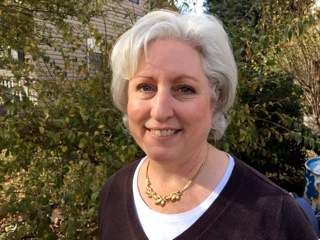
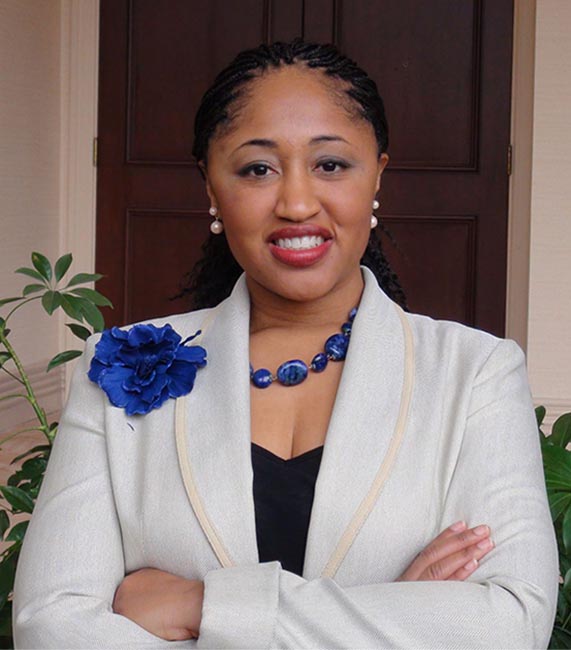
Here is the unedited response from Independent candidate Susan Cunningham.

I am running for Arlington County Board as a progressive Independent. As a community advocate, mother, and business owner, I know Arlington needs experienced, practical, and effective leadership right now. Professionally, I have led business, government, and nonprofits through crises and change. Here in Arlington, I have worked closely with every County and School Board member, while leading the Hamm Middle School construction (BLPC) and the Historic Interpretation Committee for the Stratford Junior High site, and as a founding member of both the Joint Facilities Advisory Commission (JFAC) and the Lee Highway Alliance.  Grounded in 25 years of professional and community experience, I will ask good questions, bring people together, and get the right things done for Arlington.

Two months ago, I started this campaign with clear priorities around accountability, collaboration, innovation, and practical investments. But the last eight weeks have taught me much more about what Arlington really needs in a new County Board Member. I have talked with Arlingtonians who come from very different places – geographically, politically, demographically, and economically. I’ve listened to their concerns, contemplated their advice, and learned even more about what Arlington needs and wants. And so now, just days before this election comes to a close, I want to share with you what I’ve learned and what I will focus on as your next Arlington County Board Member:

  1. Arlington needs to prioritize our core services. Schools, infrastructure, transportation, housing, and health must be at the top of every agenda during our recovery and beyond. In particular, we must bring APS and County together to innovate and deliver. If we don’t get these right, our future prospects are in peril.
  2. Arlington wants to reconnect our communities. We have to focus on both the visible connections and those that impact our daily lives in other ways. We must physically connect through planning and transit, economically connect through support services, and emotionally connect through facing tough realities about racial equality and justice.
  3. Arlington needs to simplify. For both residents and businesses, our community engagement process is burdensome and unequal for too many. We need to streamline, ensure more representative participation, utilize virtual meeting options, and actually heed community input instead of moving forward with predetermined outcomes. We have innovated during COVID to make it easier to do business — shifting permits online and helping restaurants with grab-and-go parking, signage, and outdoor seating — and should continue to innovate all of our government services for greater ease and efficiency.
  4. Arlington wants bold leadership, during COVID and beyond. Instead of upholding the status quo, I will bring to the Board a focused eye and an open mind. Drawing on decades of experience leading change in government and business, I will challenge our County Board to think differently, hold staff accountable, and be more fiscally responsible and results-oriented in its deliberations and action. Arlington has a $1.4 billion annual budget — we deserve professional management and professional results.
  5. Arlington needs to move away from one-party control. This is the biggest thing I’ve heard — the issue that many blame for an increasing deafness from the County Board and a reluctance of highly qualified candidates to run for local office. Every elected official in Arlington today has been blessed by a single party. This encourages groupthink and discourages tough questioning and drilling down on the details. As an Independent, I will challenge the status quo, probe assumptions, and prioritize critical infrastructure and fiscal discipline over gold-plated projects.
    I am confident I can deliver all of these wants and needs as your next County Board Member. My campaign is heading towards the finish line with incredible momentum, widespread support, and a real shot at upsetting what many assumed would be a predictable sleeper race. Arlington deserves better than a predictable outcome and I’m willing to put in the work to make us better. I humbly ask for your vote on July 7th.

Please join me at susanforarlington.com to volunteer, donate, or find your polling place.

Thank you.

Susan Cunningham

This week, we asked the three candidates in the County Board race to write a 750-word essay on why our readers should vote for them in the July 7 special election. 

Here is the unedited response from Republican candidate Bob Cambridge

Bob Cambridge has been an Arlington resident for over 40 years. He has had a varied background, Captain in the US Army (Military Intelligence Branch), three years with the Central Intelligence Agency as an information science instructor, and over 40 years as an attorney, both corporate and as a litigator. Ideas developed over that period appear to be relevant to a lot that is going on now, and the opportunity to run for Arlington County Board was an opportunity to get those ideas out where they might do some good.

My website, https://BobCambridge.com, has articles which provide more detail supporting what I will say here. I invite you to check that site out too. I read a lot, and my website brings together several ideas I have shamelessly plagiarized to support other ideas I wanted to share that may be useful.

The website refers to the parable of the Blind Men and the Elephant which illustrates the fact that people often disagree without necessarily disagreeing about the same thing. My experience has also been that we all have different perspectives about just about everything. The website refers to a book by Leonard Shlain, The Alphabet Versus the Goddess, which offers some interesting suggestions for why there was male dominance for so long and why the recent emergence of a more balanced (and rational) arrangement should not be surprising. The website also provides observations that support the argument that we do better together because different perspectives properly solicited and actually considered can be a powerful tool for doing almost anything better. Please see https://bobcambridge.com/we-do-better-together/.

The one-party County Board we have had for forty or so years has not had incompetent or narrow-minded members. But that one-party board could have easily been better. Complaints I am hearing now often emphasize a perceived unwillingness of the Board to effectively consider a broader base of ideas. I hear of waiting three hours to speak two minutes at a Board meeting only to see no apparent effect that speech had on anyone. Promises are made, such as budgeting more for parks and Arlington’s tree canopy, only to see nothing actually budgeted and requests for information about that stonewalled by Board insistence that a Freedom of Information Act request be submitted. FOIA requests can be expensive and when our tax dollars pay for a study, why should we pay a second time to see the results of what we paid for?

My platform is different because while I definitely have preferences on some issues, I also freely acknowledge that I do not know everything and will not pretend that I do. The best decisions are made by decisionmakers who listen more than they talk. There seems to be a concern that comments and criticism of Board action will not be seriously considered. That concern will definitely act to suppress suggestions, many of which might actually be very effective and actually get us a bigger bang for some of our tax dollars. Five Board members, even supported by the County Staff, cannot provide number or quality of ideas anything near to what the quarter million Arlington residents supported by many more individuals who work in Arlington can provide. My platform, better laid out in my website, https://BobCambridge.com, is not so much support or opposition to specific issues, as to getting more transparency on the part of the Board and more involvement from a broader group of interested individuals. Why? Because that is a management process that has shown significant success in the private sector and it clearly should be used to make our government more successful too. The process is also oriented not to put in place a perfect solution – there is no such thing, promises of politicians notwithstanding – but to start and continue a process that makes unending improvement the goal. That is a goal shown to be achievable. Corporations have done it, continue to successfully do it, and there is no excuse why the Arlington County Government should not implement similar programs.

I ask that you vote for me if you choose, but please check out my website in either case. If you agree with the ideas, please pass them on. If you disagree, or if you can suggest an improvement (an inevitable occurrence) please send comment or criticism to [email protected]. I will do my best to respond, even after July 7.


This week, we asked the three candidates in the County Board race to write a 750-word essay on why our readers should vote for them in the July 7 special election. 

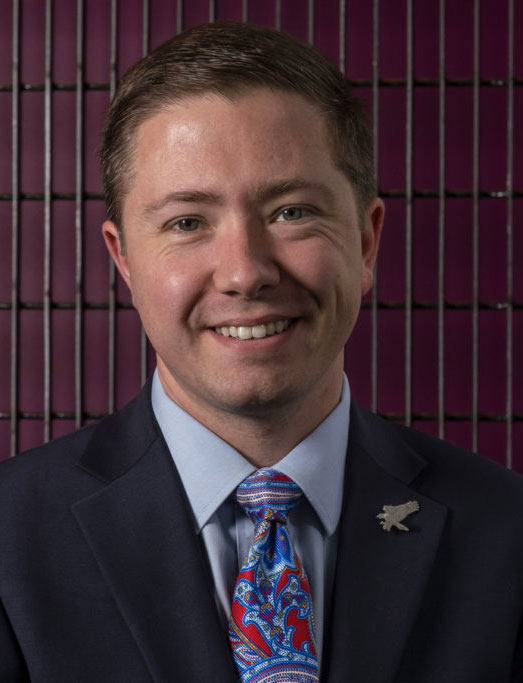
Here is the unedited response from Democratic candidate Takis Karantonis

My name is Takis Karantonis and I am the Democratic candidate in the special election for the Arlington County Board on July 7. I was born in Greece and emigrated to the United States to join my wife, Lida, upon completion of her Ph.D. studies. Since moving to Arlington in 2007, I have experienced and appreciate the values that Arlingtonians hold important: safe and walkable neighborhoods; excellent schools; great public places and facilities; accountable governance; ethnic and cultural diversity; an unwavering commitment to community involvement; and neighbors who uphold and sustain these values.

My voice, my way of thinking, and my politics are rooted in civic engagement and day-to-day involvement with our community. I am running for County Board because I am proud of what Arlington is and stands for and because I truly believe in the importance of inclusivity of all voices in our governance. During the 60 days of this campaign two larger-than-life issues dominated my actions and thoughts: the permanence of COVID-19 conditions and their long-term effects on every aspect of life and the stark reminder, spurred by the murder of George Floyd, of racial inequity and divides in our community. To make Arlington a just and equitable place for all, I pledge to work with you to tackle inequities in housing, education, health, and life outcomes in our county. We must:

  • use the lessons of the COVID crisis to address the inequalities that COVID has revealed that have led to a disproportionate impact on our marginalized communities and communities of color;
  • actively advocate for a strong local social safety net that helps our less prosperous neighbors and all locally-owned businesses;
  • bring an equity lens to County Board work to identify metrics to chart progress; examine every decision to uncover who is helped, who is hurt, who benefits and who is left behind;
  • prioritize support for our small businesses by instituting a permanent revolving microloan program, which will also leverage private investment to boost small business creation and sustainability in the long term.

I am an economist and urban planner with over 25 years of urban and regional planning experience. I work for a non-profit micro-lender, currently helping Arlington’s small businesses recover from COVID-19. I have been involved with several Arlington non-profit organizations, appointed to advisory commissions and participated in many planning processes affecting progress in our community. My experiences as Executive Director of the ColumbiaPike Revitalization Organization, past chair of Eco ActionArlington and Vice Chair of the Alliance of Housing Solutions add to the vision, practical knowledge and insight I would bring to our Board. Politically, I have been an active and vocal supporter of local, progressive campaigns that challenged and changed the status quo (e.g., Erik Gutshall and Parisa Deghani-Tafti).

This campaign has been like no other due to the compressed timeline imposed by Virginia law and by COVID-19: to substitute for face-to-face conversations, meetings, and debates, I became adept at online media and hosted 20 Zoom-and-Greets covering all neighborhoods in Arlington in 40 days.

I responded to multiple questionnaires that allowed me to express my vision on many issues: arts, education, environment, housing, mental health, and more. The diversity of organizations which submitted questionnaires is just one indicator of the diversity of priorities in our community. As a Board member, I would have an obligation to listen to and provide a seat at the table for all, as we move forward with discussions and policies to equitably address our community needs.

I believe in democratic values, collaborative leadership and inclusive planning expressed in the four pillars of my platform: equitable governance; fiscal sustainability and resilience; environmental sustainability; and principled and inclusive long-term planning. I have earned the endorsement of Arlington’s elected officials from the County and School Boards to the General Assembly to Congress; professional organizations; citizen-led advocacy groups (representing the African-American community, Latino community, Seniors, and the Immigrant community; supporting multi-modal transportation; cycling; public education; affordable housing; environmental sustainability; and mental health services) and more than 200 community leaders. These endorsements are the result of years of working on Arlington issues and a testament to my passion for good, responsive and responsible local governance.

I hope to earn your vote and the opportunity to serve as your next County Board member on July 7.

Photo via Takis for Arlington/Facebook


Virginia started Phase 3 of its reopening on Wednesday, allowing more activity in indoor public spaces like restaurants and gyms.

While the Commonwealth remains one of just over a dozen states where the COVID-19 epidemic is in decline, some fear that further reopening could send us in the direction of Texas, Florida and other states currently seeing a virus resurgence.

In recent days, both Florida and Texas reversed course and closed bars. California, which has also seen a big jump in coronavirus cases, yesterday announced that it would “shutter indoor operations at restaurants, museums, bars and other venues” for at least three weeks. And New York is delaying its plans to reopen indoor restaurant dining rooms.

A growing body of research suggests that restaurants — indoor settings where where diners sit near one another and converse for extended periods of time — are fertile ground for coronavirus infections. More evidence of that from USA Today:

Money spent in restaurants and supermarkets could offer insight into how fast or slow the coronavirus pandemic may spread.

According to a note from Jesse Edgerton, an economist with JPMorgan Chase, the level of spending in restaurants three weeks ago – most notably in-person versus online – was the strongest predictor of a surge in coronavirus cases during that time period.

Based on spending by 30 million Chase credit and debit cardholders, Edgerton found that higher spending in supermarkets predicted a slower spread of the virus, suggesting consumers are practicing “more careful social distancing in a state.”

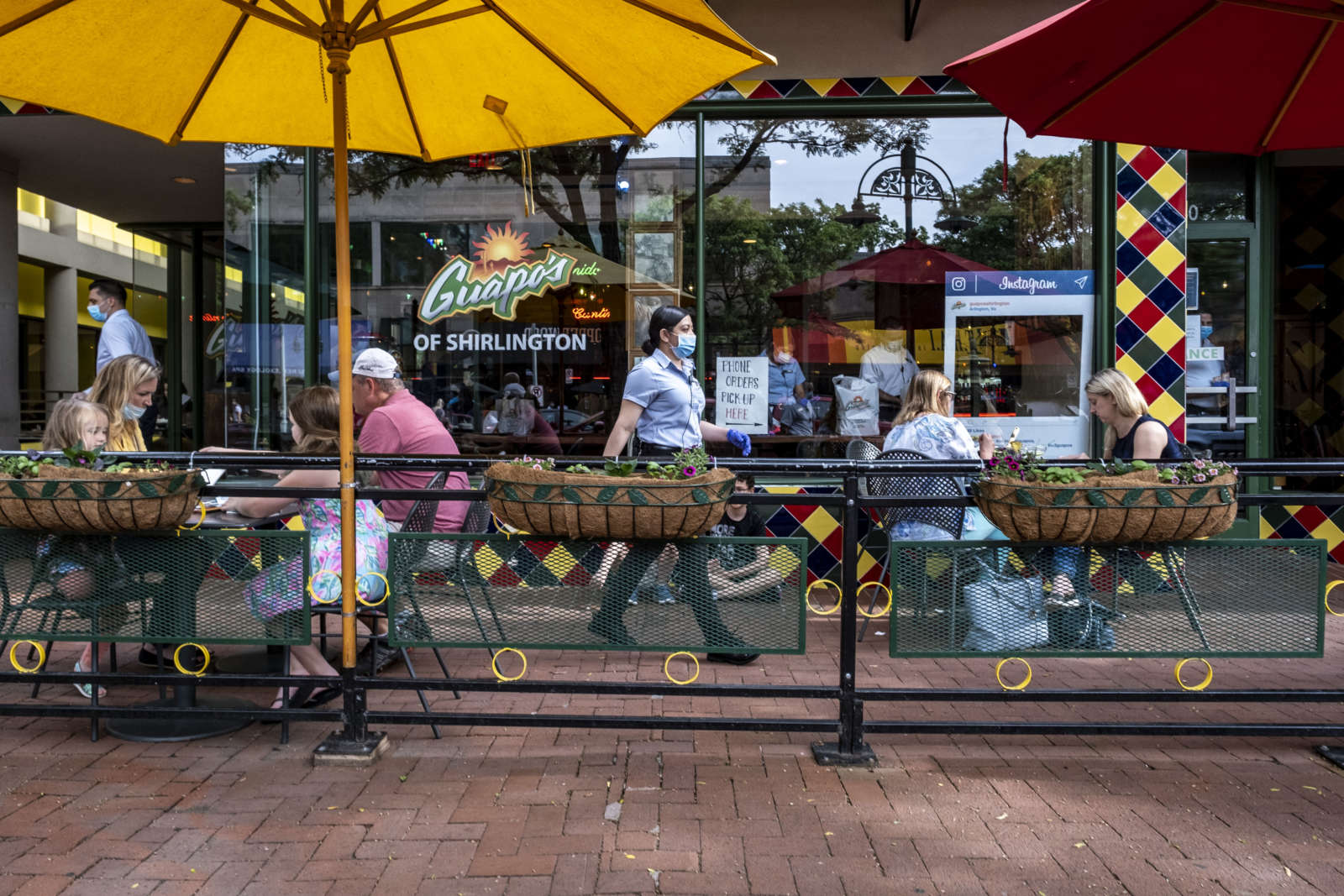
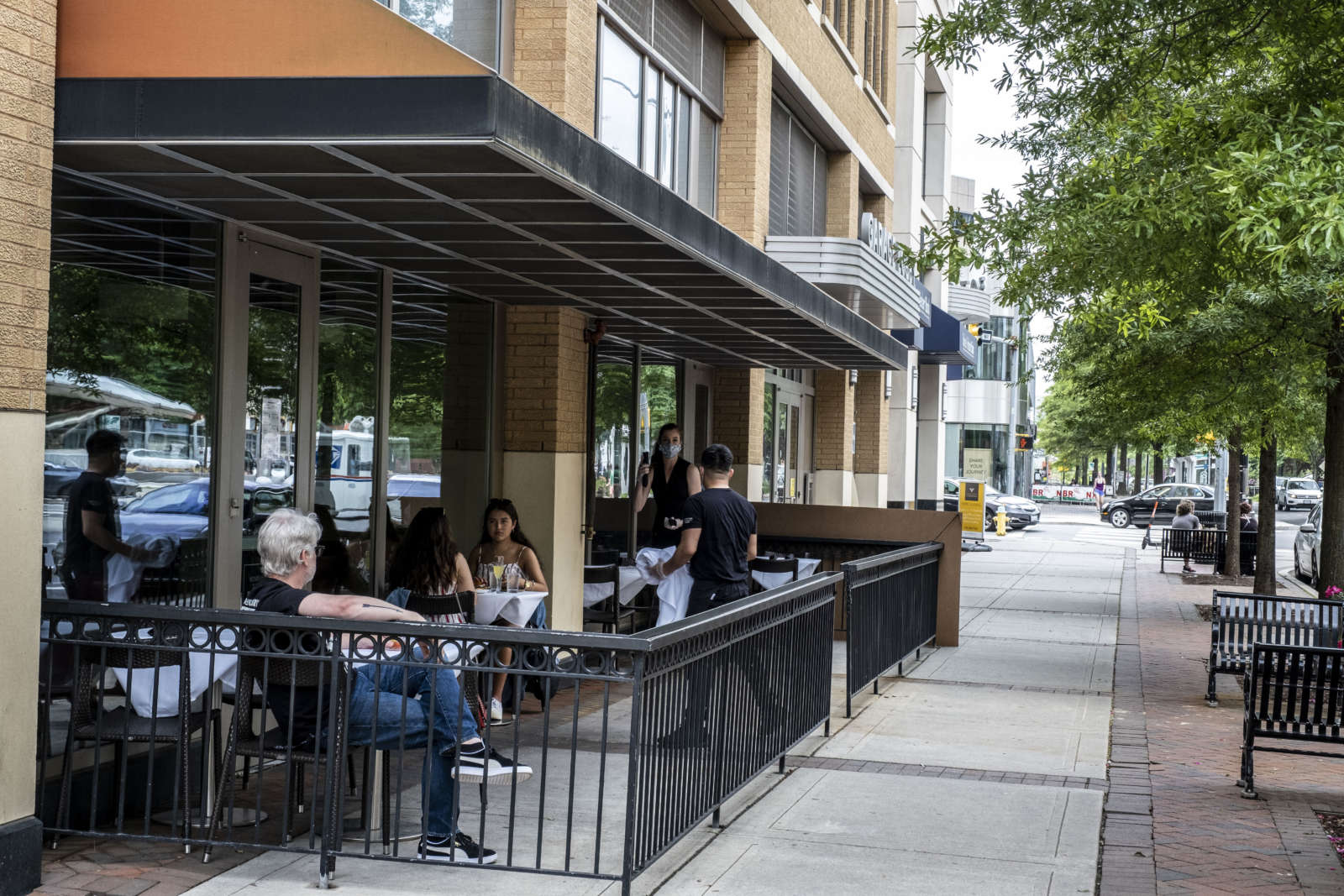
Outdoor settings, meanwhile, are believed to be safer, as the respiratory particles that spread the virus are quickly diluted in the open air. That’s why Virginia’s Phase 1 reopening included only outdoor dining and why Arlington has allowed restaurants to expand their outdoor dining areas.

Do you think Virginia should stay the course and see what happens, bring back Phase 2 restrictions, or try to preempt a possible resurgence by closing indoor dining areas altogether? That latter, while perhaps safer, could be a death knell for many already-struggling local restaurants, however.


A three-day Fourth of July weekend is fast approaching.

This would usually be one of the busiest travel times of the year. Instead, airports have barely a quarter of the travellers as last year, and traffic maps are mostly a sea of green. The pandemic has affected nearly all aspects of normal life, including the willingness of people to leave one’s house and visit other places or people.

The anemic level of air travel is expected to continue, though driving may take up some of the slack: this summer is being dubbed the summer of the road trip.

How has coronavirus affected the Independence Day travel plans of Arlingtonians? Let’s find out.


Ed Talk is a biweekly opinion column. The views expressed are solely the author’s.

APS parents are known for their engagement on issues with the School Board.  But why should parents direct their attention to the County Board?

The most obvious answer is because APS relies on the County for its funding. However, the County’s independent priorities and policies affect not just APS’ budget, but also its policies and decisions.

It is, therefore, in the County Board’s interest to understand the needs of its school system and community. County Board members should recognize the challenges APS faces and understand how it operates and uses its resources. They should appreciate and acknowledge how its own policies and decisions (housing, transportation, land use, zoning, “community benefits” from developers, bike trails, sidewalks, bond allocations, etc.) impact APS’ resources, how efficiently it can use those resources, and the resulting types of services and quality of education APS delivers.

APS parents should be just as concerned about County Board candidates’ positions on issues as they are about candidates for school board. With a special election to fill Erik Gutshall’s County Board seat upon us, now is the time for voters to ask themselves some questions they may not typically consider when voting for County Board:

  • How well do County Board members understand our school system, the expectations placed on Arlington public education today, and how school and County issues relate to each other?
  • Do they understand the effects of development, housing policy, and land use decisions on individual school enrollments, transportation and boundary policies, and APS’ ability to provide equitable and inclusive learning environments?
  • How will their positions impact school crowding; or how attendance zones can be drawn; or the instruction that can be implemented; or how employees can be compensated; or accessibility of school facilities for staff, substitute teachers, parents, volunteers, and even community members attending events and using facilities?
  • Do they have ideas about ways the County can partner with APS in providing supportive services (such as childcare or preschool, after-school enrichment, mental health services, transportation, etc.) so that APS can devote more of its budget and attention to academics and instruction?

The argument that only 20% of Arlington residents have children in the schools has grown tiresome. The fact is, far more than 20% of Arlington residents have had, have, or will have children in Arlington Public Schools. Furthermore, every resident is affected by the quality and reputation of Arlington’s school system and the resources it uses from the County’s coffers – whether in the form of property values, available amenities, quality of public services, or by inefficient delivery systems unnecessarily diverting money from other community needs and desires.

School and County Board members differ on even the most fundamental matters, such as the urgency of issues APS is facing due to demographic shifts in Arlington. A friend said recently, “Denial is bad public policy.” It is time for County Board members to stop denying the challenges APS and parents tell them they are confronting. The two boards do not have to see eye-to-eye, but it is not County Board members’ role to determine schools don’t need expensive parking because they prefer to encourage alternative transit, or that APS does not need more land or buildings because education will look different in the future. APS has 28,000 students to educate now, and Arlington is not the progressive city with the sophisticated public transit system the County likes to believe it is.

(more…)


It was another busy week in Arlington, but one bit of good news held up for the entire week: Arlington’s coronavirus prognosis continues to look good.

With relatively few new infections and an improving local economic outlook, there’s reason for optimism. But as Texas and Florida shows, there remains a possibility that the virus could come back and disrupt Arlington’s economy anew.

That’s all the more reason to wear a mask while indoors in a public place or outdoors in a crowd.

Here are the most-read ARLnow articles of the past week:

  1. County Manager’s Memo Regarding Removal of Black Lives Matter Chalk Art
  2. Va. Attorney General Sues Advanced Towing
  3. Virginia to Enter ‘Phase 3’ Reopening Next Week
  4. APS to Propose Students Spending Two Days in Classrooms Per Week
  5. Arlingtonians Seem To Be Encountering Snakes More Often, But Locals Shouldn’t Be Rattled
  6. ‘Black Lives Matter’ Sign in Front of Church Vandalized
  7. Signature Theatre Denies Sexual Assault Allegation Against Co-Founder
  8. Gas Station Carjacking Leads to Arrest
  9. As Arlington Coronavirus Metrics Hit Fresh Lows, a Nervous Calm
  10. Morning Poll: Time to Rename Lee Highway?

Feel free to discuss those or any other topics of local interest in the comments. Have a nice weekend!


The Hurtt Locker is a biweekly opinion column. The views expressed are solely the author’s.

I am encouraged by the shift in the national (and local) discussion about citizens’ relationship to the law and with law enforcement we have seen take place over the last few weeks.

In the many rallies, marches, and protests, people of all races and creeds have united to call into question overcriminalization and police practices that quite frequently lead to the unnecessary and tragic deaths of our black and brown brothers and sisters.

Americans have shifted our thinking on a range of practices related to policing in relatively short order. From limiting the transfer of military equipment to police departments to banning no-knock warrants and chokeholds, the shift has been dramatic in the wake of the killing of George Floyd by Minneapolis police officer Derek Chauvin.

I anticipate these debates will play out at every level of government, resulting in good and bad proposals. Ahead of a special session later this summer, Virginia’s Legislative Black Caucus released a “comprehensive list of policy priorities,” many of which are broadly supported by Democrats and Republicans alike.

But there’s something missing from the dominant conversation around overcriminalization and policing, especially in communities like Arlington.

I wanted to title this column “A libertarian defense of Black Lives Matter,” but I know the political realities of the Arlington community. Many of my neighbors have an unshakeable faith in the power of government, and they do not seem to connect the intentions they have for any number of government policies with the outcomes that manifest in the execution of those policies. I have to sneak these libertarian civics lessons into the commentary.

You see, there is no law so trivial that the government will not kill you to enforce it. Be it Eric Garner for loitering and selling loose cigarettes or Atatiana Jefferson for leaving her front door open or Stephon Clark for holding a mobile phone in his grandmother’s backyard, each law we clamor to enact gives law enforcement officers another opportunity — another excuse — to pull their firearms on otherwise peaceable citizens.

I write a lot about criminal justice reform, and I am involved in advancing substantive public policy change in the criminal justice space because it is the most public way people view execution of the law in their communities. Every frustrating or tragic interaction with the law causes someone else to question the proper role of government — and to consider the solutions we could achieve and the lives we could save if we relied more heavily on the other key institutions that strengthen our society.

This moment is calling out systemic racism and injustice. Right now, the American people are considering the consequences of criminalizing poverty and using the law to target fellow Americans who fall overwhelmingly on the lower end of the socioeconomic scale.

The uncomfortable fact of the matter is, it is easier in this country to be rich and guilty than poor and innocent. We must consider that reality when weighing new laws or harsher penalties for old laws.

If we are a community that believes #BlackLivesMatter, we must advocate for the repeal of countless laws that by their very nature increase the likelihood that someone — disproportionately someone black or brown — will be forced to interact with law enforcement. I’m here for that advocacy.

Matthew Hurtt is an 11-year Arlington resident who is passionate about localism and government transparency and accountability. Hurtt is a member of the Arlington Heights Civic Association and was previously the chairman of the Arlington Falls Church Young Republicans. Hurtt prides himself on his ability to bring people of diverse perspectives together to break down barriers that stand in the way of people realizing their potential. He is originally from outside Nashville.


Washington-Lee High School in Arlington is now Washington-Liberty. Robert E. Lee High School in Fairfax County will be getting a new name, after a vote yesterday. Jefferson Davis Highway, meanwhile, is now Richmond Highway.

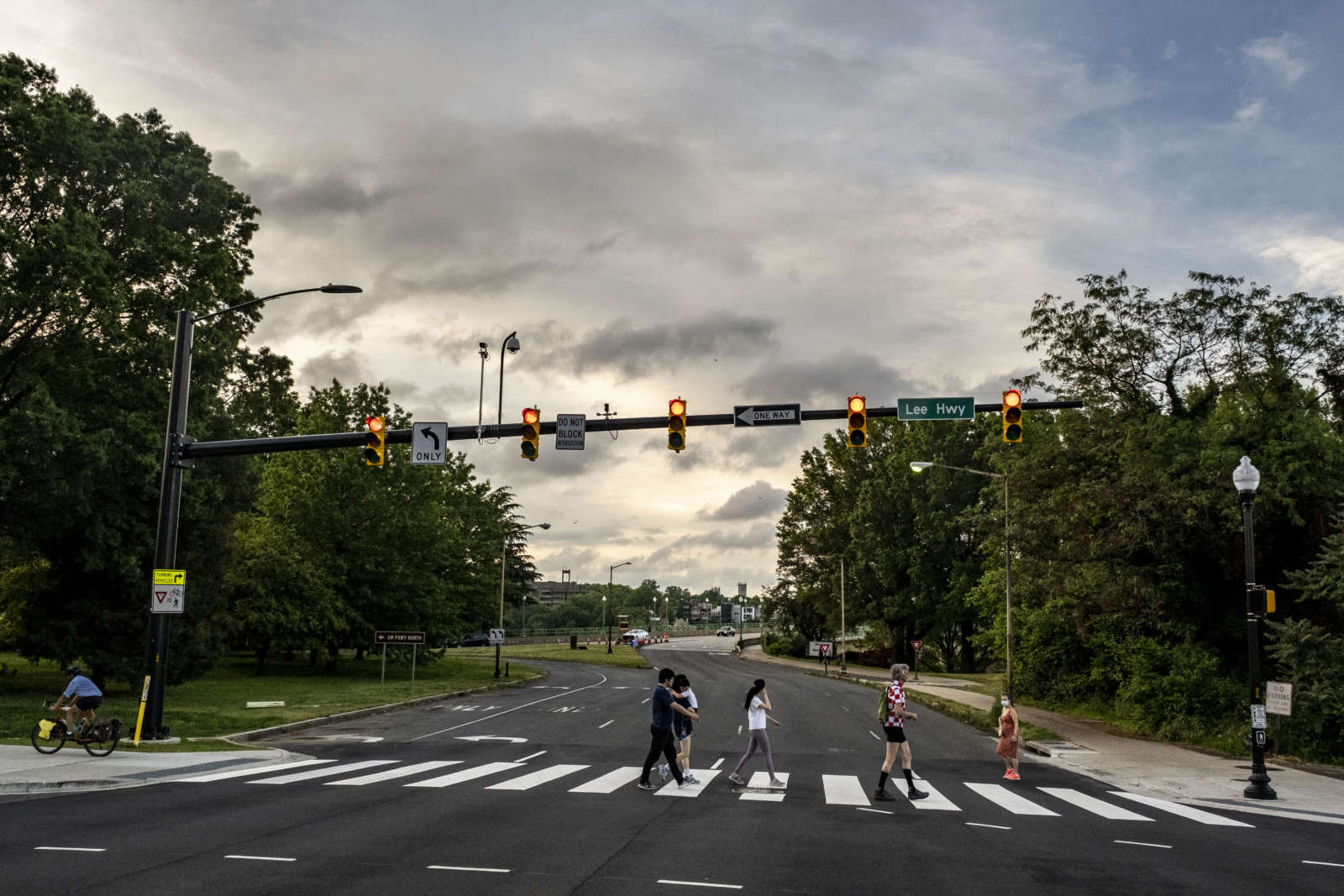
Is it time for Lee Highway — also known as Route 29 — to get a new name?

At a time when racial justice has taken center stage in Arlington and around the world, when Confederate monuments are being removed or toppled by angry mobs, keeping the leader of the Confederate army’s name on one of the main east-west thoroughfares through Arlington might be untenable.

(Granted, Arlington itself is named after Robert E. Lee’s house, and the county’s logo is a stylized version of the home, which is now more closely associated with Arlington National Cemetery.)

Lee Highway, once part of an auto trail that ran from New York City to San Francisco via southern states, is now partially a commuter route and partially a commercial strip for North Arlington neighborhoods. It is currently subject to a planning process — albeit one stymied by the pandemic — that is attempting to envision a new future for the corridor.

In 2017, after a white nationalist rally and violence in Charlottesville, the Arlington County Board released a statement saying it was seeking the legislative authority from the state to rename both Jefferson Davis Highway and Lee Highway. It received authority to rename the former thanks to an opinion from Attorney General Mark Herring that the county only needed permission from the Commonwealth Transportation Board, not the then-GOP-controlled legislature.

With Democrats now firmly in control in Virginia, renaming Lee Highway should be achievable, though it may not be the highest priority during a global pandemic and a budget crunch.

What do you think? If you do think it should get a new name, let us know any suggestions you might have in the comments.


Community Matters is a biweekly opinion column. The views expressed are solely the author’s.

While the Black community has experienced disproportionate deaths as a result of COVID-19, the pandemic has left us all with clarity about the lack of value of Black Americans to the larger society.

Until 1865, Black bodies, minds and souls were an official currency in our capitalist society. The remnants of the peculiar institution of slavery, which exist today in the form of institutional racism, may be withering away slowly. Yet today, there is more energy from white Americans to demand change, including, more support for our lives and our businesses.

If you are not Black, why should Black businesses matter to you? Aside from wanting to support a more racially just society, and benefit from additional diversity as a consumer, frankly, it becomes more difficult over time for whites to segregate from Blacks. Black families are disproportionately living in poverty, and poverty creates a number of social problems, which affect us all.

Last week I moderated a virtual panel discussion on economic empowerment in the Black community. The panelists further elaborated on several important issues and barriers critical to Black economic empowerment.

Fear — African Americans have often been discouraged from entrepreneurship, even as a “side hustle”, due to the risk and lack of access to capital. COVID-19 is an excellent example of when additional income sources would have been helpful to a population that was largely out of work due to social distancing restrictions. Consider encouraging Blacks who are proficient in an area to pursue business training and start a business.

Business Directories — Business directories which highlight Black businesses are necessary. As Randy Philip, owner of the Washington Insurance Consulting Group and one of the cofounders of the Northern Virginia Black Chamber of Commerce noted quite simply, “We can’t support them if we don’t know who they are.” Race blind initiatives may result in policies and ideologies which prevent us from knowing who to support. If you know of a Black-owned business, share them with ARLnow.com to be listed in this directory of Arlington Black businesses.

Preparing Youth/Role Models — All of the panelists agreed that preparing our youth was critical to encouraging entrepreneurship in the Black community. The Arlington Chamber of Commerce recently shared this blog post by Eshauna Smith from the Urban Alliance on the importance of supporting future entrepreneurs. “You can’t be what you can’t see” is a common refrain used when encouraging any unrepresented population to excel. We should connect Black youth with entrepreneurs for internships and encourage Black entrepreneurs to speak at career days and other youth events.

(more…)


With the start of Northern Virginia’s “Phase 2” reopening nearly two weeks ago, diners could again enjoy a meal indoors at a restaurant.

But how many people are actually doing that?

A growing scientific consensus suggests that coronavirus — a respiratory infection that spreads via airborne droplets — infects most prolifically in confined indoor spaces, when one is exposed for an extended period of time to someone who has the virus, particularly if that person is doing a lot of talking or singing. That makes restaurants and churches potentially fertile ground for the spread of COVID-19.

Nonetheless, in Phase 2 restaurants are allowed to open at 50% capacity indoors. Soon, if the state moves to Phase 3, the capacity limitation could be lifted.

Phase 1 allowed outdoor dining in Virginia, but outdoor transmission of the virus is believed to be much less common than indoors — part of the reason why the wave of mass protests across the U.S. did not result in a large wave of infection. Meanwhile, coronavirus is currently surging throughout much of the South and Sun Belt, hot places where people are spending more time indoors and where businesses started reopening earlier in the pandemic.

One will find few arguments against supporting local restaurants by dining outside or ordering takeout, but indoor dining is still making some people wary, despite mitigation measures like spread out tables, servers wearing masks and frequent cleaning.

On the other hand, Arlington has been reporting relatively few new cases as of late, including just seven new cases overnight. The fewer infections in a given area, the lower the chance of getting infected — though the reported numbers are likely a fraction of the actual number of infections, including asymptomatic cases.

Have you gone back to dining out, inside a restaurant, or are you not quite ready to do that yet?


View More Stories