
Modern Mobility is a biweekly opinion column. The views expressed are solely the author’s.

Happy New Year, it’s 2020. This is the year the combined Columbia Pike and Crystal City streetcar system was scheduled to open.

Streetcar opponents like Libby Garvey and Peter Rousselot said a “Modern Bus Rapid Transit System” could be implemented much more quickly than a streetcar, so let’s check-in to see how things are progressing.

What was proposed?

When the Arlington Streetcar was initially looked at, the County had to do an Alternatives Analysis (AA) (actually, they did several AAs, but that’s a long story). In the final AA, they compared the Streetcar Alternative to a “No Build” alternative and two different bus alternatives.

The “No Build” alternative was basically to see what happens if we continue with the status quo and some improvements that were already in the Capital Improvement Plan. The first bus alternative, called “TSM-1” was an “enhanced bus” service that made some minor improvements but didn’t really have a big impact. The second bus alternative called “TSM-2” made a lot of improvements and, at least on paper, was projected to provide nearly the same benefits as the Streetcar alternative for a lot less money.

This TSM-2 alternative is what many streetcar opponents championed as a “Modern BRT” system and encouraged the County to implement in place of the Arlington Streetcar. The system I am going to outline below and set forth as my expectations is mostly defined by that TSM-2 alternative, but I will add in a few additional items related to Crystal City.

The planned Arlington Streetcar system was made up of two projects: the Columbia Pike Streetcar and the Crystal City Streetcar, which, at least early on were on two different schedules and were being funded separately but would have ultimately been an integrated system. The bus system that replaces it needs to meet some of those same needs.

Arlington is calling their bus plan the Columbia Pike Premium Transit Network (PTN), not BRT. Likely this is to avoid the whole controversy about whether TSM-2 qualifies as BRT or not. From here on out I will stick to Arlington’s nomenclature.

Why is the Pike Premium Transit Network Important?

Columbia Pike is the densest residential area of Arlington outside of the Metrorail corridors. The Columbia Pike Initiative worked to plan for a re-imagined Columbia Pike that would be a walkable Main Street area rather than the car-dominated commuter arterial with surface parking lots and drive-throughs. The Columbia Pike Form-based Code and Neighborhoods Plan were designed to guide that redevelopment, and improved transit on Columbia Pike is needed to ensure that at least some of the new neighbors who come to the Pike as part of that transformation can live car-free or car-light lives, since Columbia Pike isn’t getting any wider.

Key Features

So what does the Pike Premium Transit Network need to support that transformation? It needs to be fast, convenient, dependable and high capacity. TSM-2 had a number of features each of which played an important role in one or more of those areas and together they elevate it above the existing bus service.

Travel Time Features

  • Off-Vehicle Fare Collection
  • Multi-door Boarding
  • Stop Consolidation
  • Transit Signal Priority

Convenience & Dependability Features

  1. All-Day, Everyday Operation
  2. 2-3 minute peak frequency
  3. 4 minute off-peak frequency
  4. Enhanced Transit Stations

Capacity Features

  1. High-Capacity Vehicles

Additionally, I would add the following as necessary to truly replace the combined Columbia Pike / Crystal City system:

  • Dedicated Transit Lanes (in Crystal City)
  • A one-seat ride from Skyline to Crystal City

What’s to Come

In future columns, I will explain why each of these features is important to the Pike’s Premium Transit Network, look at how Arlington is doing at implementing each feature and ultimately give the County a grade on how close we have come to the originally-envisioned alternative. Stay tuned.

Chris Slatt is the current Chair of the Arlington County Transportation Commission, founder of Sustainable Mobility for Arlington County and a former civic association president. He is a software developer, co-owner of Perfect Pointe Dance Studio, and a father of two.
Community Matters is a biweekly opinion column. The views expressed are solely the author’s.

I recently did something which may be considered a faux pas among social media users.

The “People You May Know” section on Facebook had gotten on my last nerve. I have designed a very specific Facebook experience for myself. I don’t like reminders or requests. I check messages and handle any action items which create notifications quickly, just so I do not see the notification. (I do realize this is odd!)

I had approximately 4,600 friends, and the limit is 5,000. I randomly added about 400 friends so I would reach the limit and avoid enduring the “People You May Know” section while I scrolled on my Facebook timeline.

While most of the people with whom I have shared this think it’s the stupidest thing someone can do (who wants a bunch of random people to see their posts or better yet, why do you want to see their random posts?), it has been a fascinating experiment. It has forced me to get comfortable with being uncomfortable each time I see a post contrary to my long held beliefs.

In 2006 I graduated from the Sorensen Institute of Political Leadership at the University of Virginia. One of the basic principles of the organization is to bring together people who “have a wide variety of viewpoints and backgrounds but want to work together for the common good.” I relished the opportunity to hear different perspectives and to have my own ideas challenged. So much so that when I started Virginia Leadership Institute in 2006 to increase the number of Black elected officials, it was important to me that the organization was non-partisan.

While the majority of African Americans identify with the Democratic Party, if we are focusing on electing the most qualified African Americans who will create public policy which helps all African Americans advance, we must recognize the value of diverse perspectives at the table.

On Facebook, when I meticulously selected friends who I either knew personally, or knew people I knew, I predictably agreed with the majority of what they posted. With my new influx of “friends,” I quickly began to notice ideological differences in everything from politics, to what they felt comfortable posting on Facebook (some of these comments and memes are straight out of the 1950s in terms of the sexist tones.)

It is tempting to unfriend them, or unfollow them, but being confronted daily with opinions which are so far from what I would ever believe or entertain, is important. That “discomfort” comes with a constant reminder that there really are people who think that way, and they have supporters who like, love and laugh at their opinions and inappropriate humor.

I recently took an unpopular position publicly and have been chastised for it, to include rude and inappropriate behavior in public. I was surprised because I expected more from the person. Living in a progressive Democratic community, I had hoped that disagreements would be treated differently.

When members of our community react negatively when we disagree, it creates an unhealthy dynamic. Arlington’s public engagement norms for the most part provide ample opportunity for dialogue, but what happens afterwards? How are you treating people on the “winning” or “losing” side? Are we coming together to rationally discuss our differences? We will not grow as a community if we don’t learn to respectfully disagree, and truly understand each other’s perspectives.

This month, I challenge you to find at least one person who you disagree with on an issue and just talk to them about it. Listen to their ideas. 2020 is sure to bring a number of challenges throughout Arlington. We will not always agree on the best way forward, but the final solutions will likely be a combination of perspectives, with a dash of discomfort along the way.

Krysta Jones has lived in Arlington since 2004 and is active in local politics and civic life. This column is in no way associated with or represents any person, government, organization or body — except Krysta herself.


Making Room is a biweekly opinion column. The views expressed are solely the author’s.

I have lived in Arlington for almost 5 years and I’ve come to see the “Arlington Way” as both a blessing and a curse on the County.

For those not familiar, the Arlington Way as a tradition of citizen democracy, realized through an extensive culture and apparatus for public engagement around most County policies, as well as new commercial or residential developments. The goal is to give residents many opportunities to influence, or at least register their opinion, on a range of regulatory and administrative topics and projects that will have a broad impact.

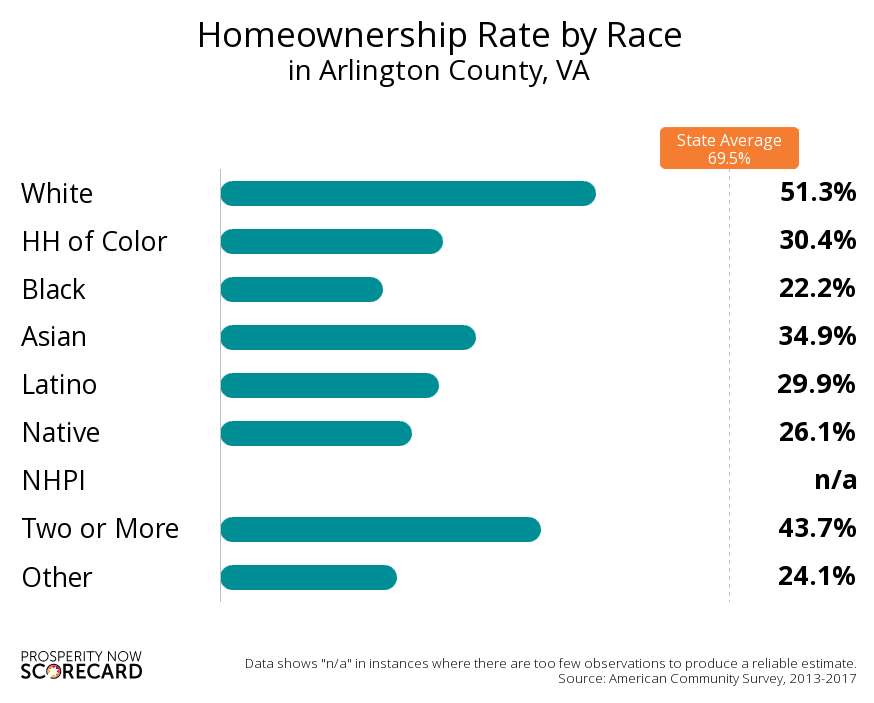
However, the problem with this reliance on resident voices is the over-representation of the whiter, older, home-owning population. This does not reflect the Arlington’s diversity. County-wide, less than half of housing units are owner-occupied — 44.5%. These households are much more likely to be White than Black or Latino.

Because our tradition and apparatus for soliciting public input privileges homeowners and leaves out renters, many people have the opinion that renters are not invested in Arlington. We saw the manifestation of this attitude in the Sun-Gazette’s November 27 editorial, which argues that renters should not be mobilized to participate in local elections because they “have short-term interests in a community they do not plan to live in forever.” I’m heartened to see the results of ARLnow’s poll show a more inclusive attitude.

But the difficulties in engaging Arlington’s renter majority remain, and it should be the county’s New Year’s Resolution to bring more renters into the civic engagement process. I also encourage renters who are reading this to make a commitment to get more involved in their neighborhoods.

There are many civic organizations in Arlington that are conscientiously working to improve the representation of Arlingtonians in public discourse. My own civic association, Aurora Highlands, has a mix of single-family homes and multi-story apartment buildings. During my year on the executive board, I’ve been pleased by the effort to bring more renters into the conversations. The Arlington Civic Federation, a venerable institute for amplifying resident opinions, is also working to be more diverse as well.

But we can do more to bring renters and other underrepresented groups into to public discourse.

The County Board and its staff should use their influence with developers and property owners to ensure better communication about the Arlington Way with renters. Management companies need to help their residents be part of the community. This isn’t just the community within the building, but the broader neighborhood beyond their doors. Every apartment building, particularly those with professional management, should participate by distributing Civic Association newsletters, letting the Civic Association hold a meeting in their community space, and inviting County staff and board members to speak to residents. Some effort on the part of property managers can go a long way to show that renters want to have a voice in the County.

Happy New Year! Let’s resolve to make 2020 a great year for civic participation from all Arlingtonians.

Jane Fiegen Green, an Arlington resident since 2015, proudly rents an apartment in Pentagon City with her husband and son. By day, she is the Development Director for Greater Greater Washington and by night she tries to navigate the Arlington Way. Opinions here are her own.


It was a slow, holiday-shortened week in Arlington that saw the calendar turn to the neatly symmetrical year of 2020.

(Pro tip: there’s no need to comment with “slow news week?” on a week that’s obviously a slow news week.)

All signs point to the 2020s being the Roaring ’20s for Arlington, with Amazon continuing to hire for HQ2 at a fast clip and the Amazon glow driving significant interest in local office space. Economic growth, however, may lead to higher housing prices and other challenges — and County Board members are pledging to tackle those issues head-on in 2020.

With Arlington’s location and new-found prestige helping the county to sell itself, local leaders made the interesting choice last month to bring on a new head of economic development, Telly Tucker, whose bonafides are mostly around building regional partnerships and helping small businesses, not attracting huge new employers. Tucker is set to get to work mid-month.

Here are the most-read stories of the past week:

  1. Gone Today, Here Tomorrow: Local Openings and Closings in 2019 and Beyond
  2. Bank Robbed in Courthouse
  3. Cosi Closes in Ballston
  4. Kabob Restaurant, Optometrist Coming to New Ballston Development
  5. ACPD Investigating Shooting Near Pentagon City

Feel free to discuss those articles or any other topics of local interest in the comments. Have a nice weekend!


The end of a holiday-shortened week is here.

For those in the office and working this week, we salute you. For those who left town, we hope you have a relatively painless return journey amid the holiday travel rush.

The news never sleeps, but it did perhaps rest its eyes a bit this week. Nonetheless, here are the most-read stories of the week:

  1. Where to Celebrate New Year’s Eve in Arlington
  2. Morning Notes (Friday)
  3. Man Rescued from Creek After Flipping Car
  4. ACPD Makes Arrest in Christmas Day Mall Robbery
  5. Columbia Pike Utility Work Prompting Lane Closures
  6. Long-Time APS Educator Running For Seat on School Board
  7. Morning Notes (Tuesday)
  8. Neighborhood Spotlight: Best Spots To Eat In Clarendon
  9. Some Changes in the Works at ARLnow

ARLnow will be back with another week of local news coverage starting Monday, with a break for New Year’s Day.

Feel free to discuss the above stories or any other topics of local interest in the comments. Have a great weekend!


Progressive Voice is a biweekly column. The views expressed are solely the authors’. 

By Tara Teaford and Dana Milburn

As mothers, our priorities center on our children’s health, well-being, happiness, and yes — definitely — their safety. As progressives, we support measures to promote those rights for everyone, everywhere.

Such is the case with preventing gun violence. We cannot fathom the pain suffered by parents who lose a child to gun violence — especially at school, which should be a safe place of learning and joy. We both took more active roles in preventing gun violence after witnessing the horror of continued mass shootings, especially at schools, and the staggering toll of daily gun violence that does not make the evening news. We cannot and should not consider this gun violence crisis acceptable.

Every day in America, 100 people are shot and killed, four of them children. We are fortunate to live in Arlington, a community with relatively little gun violence, but we are no more immune than Newtown, Las Vegas, Jersey City, Virginia Beach and many other American communities were when they were shattered by gun massacres. Arlington has experienced several shootings in the past year. And our neighbors in D.C. experience almost daily gun violence partly because Virginia’s lax gun laws help enable that violence via the “Iron Pipeline,” with guns trafficked up and down the I-95 corridor.

Now, finally having elected a Democratic majority in the House of Delegates, Senate and governorship, Virginia has an historic opportunity to make all Virginians safer. We gratefully support the Arlington delegation’s plans to help make real change happen in the upcoming session of the General Assembly.

We expect the bills introduced this January in Richmond to be very similar to those proposed for the July 9, 2019, Special Session on gun violence prevention, which the then-Republican majority ended without action. These and other potential legislation are designed to work together to address the gun violence crisis for Virginians:

(more…)


It’s Christmas Eve and the third night of Hanukkah, and nothing is stirring in the ARLnow offices, not even Vernon Miles — because we’re taking the next day and a half off.

ARLnow will be back on a limited coverage schedule on Thursday. Of course, if there’s breaking news, we’ll be on top of it no matter what holiday or day of the week it is.

We wish you and yours a very merry Christmas and happy Hanukkah. Feel free to use the comments to discuss your favorite Arlington holiday memories or whatever locally-relevant topic might be on your mind.


Progressive Voice is an biweekly opinion column. The views expressed are solely the author’s.

By Cheryl Moore

Every year from Thanksgiving through year-end, my mail fills up with pleas from various nonprofit organizations — for financial donations, groceries or holiday gifts for low-income families in Arlington.

Nonprofits’ posts on Facebook and Twitter remind me that, despite Arlington’s wealth, many people still struggle with needs like food, housing, education and employment.

“We have over 28,000 people in Arlington living on $35,000 for a family of four,” says Anita Friedman, director of Arlington County’s Department of Human Services.

While our holiday donations help in the short-term, just throwing money at a problem isn’t necessarily a progressive solution. To reduce disparity, we need to fundamentally tackle the root causes that are keeping some in our community from achieving stability and success.

Making systemic change supports employment, education and health care–some of the tools needed as a springboard to self-sufficiency. Here are just a few examples.

  • Building a better future for Arlington residents living on the edge is the goal of the Bridges Out of Poverty Leaders in Arlington’s nonprofit sector, Arlington County staff, and the Arlington Community Foundation are collaborating on lifting families out of poverty by coordinating resources in health, mental health, employment, child care, education, housing and social capital. This goes beyond just day-to-day stabilization.
  • La Cocina VA is a culinary training program for un-employed and under-employed immigrants. Students graduate with the practical skills and English-language proficiency that help them secure higher-paying jobs in the food service industry.
  • Just Neighbors provides legal services that enable low-income immigrants and refugees to gain the legal status they need to work, so that they can support themselves and become self-sustaining members of their communities.
  • R.E.A.D. (Read Early and Daily) offers families in need a free book a month for each child between birth and five years old. They also promote family literacy by sponsoring family reading playgroups.
  • APAH (Arlington Partnership for Affordable Housing) is partnering with Edu-Futuro to prepare high school students for college and careers through skill-building in writing and public speaking.
  • Arlington Free Clinic‘s “Filling the Gap Campaign” aims to triple the number of low-income clients who receive dental care. Because many diseases that start in the mouth can cause life-threatening illness and chronic conditions, proper dental care has an enormous effect on health and well-being.

“Change is happening, but it takes time,” said Arlington County’s Friedman. “Coalitions of nonprofits such as Bridges out of Poverty have been bringing the voice of the poor to the forefront so that our approaches to helping people are informed by their day-to-day realities.”

Each of us can also help promote systemic change. Consider first steps such as:

  • If your employer has an ongoing relationship with a local nonprofit, ask what can be done in addition to hands-on, practical assistance. Your company may be able to offer help with strategic planning or other ways to address root causes of a problem.
  • Urge your elected officials to make job training and education that support low-income individuals a priority in the County budget and hold them accountable.
  • Support legislative efforts that enable jurisdictions like Arlington to set a minimum wage higher than the $7.25 per hour mandated by the federal government. According to the Massachusetts Institute of Technology living wage calculator, the annual income it takes to raise three children in a household with two working adults in Arlington is over $92,000. You can also support Sen. Barbara Favola’s (D-31) bill to provide paid sick leave for the 1.2 million Virginians — mostly low-income–who do not receive it.

It’s still important to support Arlington’s vulnerable residents by contributing to safety-net programs. As Charlie Meng, director of the Arlington County Food Assistance Center said “During the month of December, we must raise over 25% of our annual goal.”

Yet we also need to focus much harder on affecting long-term transformation. Creating a more hospitable and equitable environment for everyone who lives here requires getting behind strategies that offer a springboard to a better future.

Cheryl Moore is an active community member and volunteer who has lived in Arlington since 1983.

Editor’s note: A few Progressive Voice columns, including this one, will be publishing outside of the new biweekly schedule, following our column changes earlier this fall.


It has been a cold and active week, both weather-wise and news-wise.

Luckily, after a cloudy and cold Saturday, milder temperatures and a stretch of fair weather is on tap for at least the next week. And, barring breaking news, starting Tuesday ARLnow will be switching to a reduced publishing schedule around the holidays, giving the hard-working people who bring you the news a chance to take a little break after a busy year.

Here are the most-read stories of the past week on the site:

  1. Arlington County Board Revokes Live Entertainment Permit for Purple Lounge
  2. Six Restaurants Coming to DCA’s New Concourse
  3. Alexandria Man Arrested After Clarendon Stabbing
  4. Plans for New CVS on Highlander Motel Site Appear to Be Advancing
  5. Photos: Pupatella Now Open In South Arlington
  6. Cyclist Struck Near Clarendon
  7. County Board Approves Request To Eliminate Off-Site Parking At New Children’s School on Lee Highway
  8. What’s Next: Arlington’s Best
  9. Governor Announces Deal for New Potomac Rail Bridge, Expanded Passenger Rail Service

Feel free to discuss these or any other topics of local interest in the comments. Have a nice weekend!


The following Letter to the Editor was written by Jennifer Myers, a parent of two children at McKinley who’s active in the McKinley PTA and serves as a SEPTA parent liaison.

Arlington Public Schools’ recent proposal to swap a number of elementary schools has gone no better than past boundary changes.

Parents, stymied by APS’s reliance on data that they’re later told should be considered “back of the envelope” work at best, and by APS’s refusal to release alternate proposals despite its requests for community engagement and feedback, are frustrated and angry. PTAs are expressing concerns about the quality of data and impacts on diversity.

Community meetings are breaking down into yelling, and neighbors are trying not to feel pitted against one another. A former Arlington School Board member has weighed in, questioning APS’s stated decision not to factor demographics into the school moves.

Given the size and scope of the current elementary school moves proposal, and given that APS staff have signaled that they expect to redraw boundaries every year for the foreseeable future, we need to improve this process for the health of our school system and our County.

APS should hire an outside consultant to improve what is a broken school boundary process.

As an example of how an outside consultant can help, I would point to a Nov. 2019 report released by Public Consulting Group (PCG). Hired by APS to evaluate the “effectiveness and efficacy of APS policies, procedures and practices” when it comes to special education, PCG spent the past school year surveying and speaking with parents and staff, analyzing data and documents, and benchmarking APS against local, state and national standards. They asked how well APS was doing in its evaluation practices, resource allocation, access and equity, use of high-quality staff to service needs, and parent and family engagement. From there, 54 action items to improve special education in APS were recommended.

We need the same for school planning.

We all want to make sure the process and data for school moves and boundary changes are optimized in a way that will produce successful schools. Bringing in an outside consultant would allow us to make sure that APS employees in the Planning & Evaluation office have the right staffing structure and resources to do their work — particularly at a time when there are unfilled staff positions in the Planning & Evaluation office — and that they have a clear framework for how to partner productively with parents and other community members during each boundary process. An outside consultant would be a smart investment in our system and County.

ARLnow.com occasionally publishes thoughtful letters to the editor about issues of local interest. To submit a letter to the editor for consideration, please email it to [email protected]. Letters may be edited for content and brevity, at our discretion.


We hope you enjoyed our series of locally-themed t-shirts available for the holiday season.

In case you missed them, check out our Clarendon Cheesecake Riot shirt, Gondola Now! shirt, South Arlington 4 Life shirt, Definitely Not an ARLnow Commenter shirt and Local Is Everything shirt.

Today, we’re going to show you some of the rejected shirt designs — and let you pick one to send to production. Here are the shirts that didn’t make the cut:

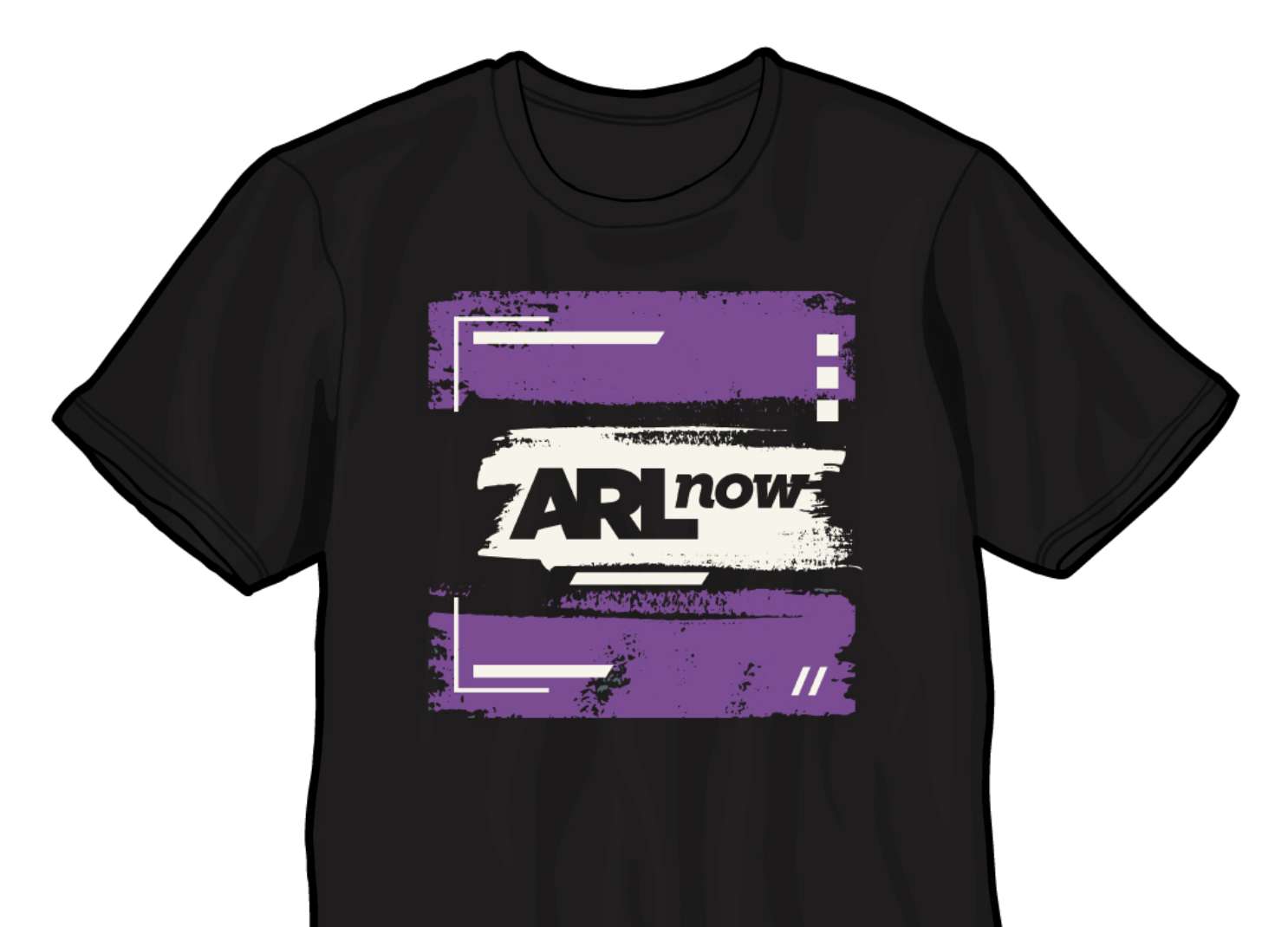
ARLnow logo shirt: It seems like kind of a no-brainer to produce a shirt with our logo on it. So we sent the logo to the designer with a note to “make this look cool… be creative!” The resulting design seemed, well, a bit like a t-shirt design from the early aughts. Maybe we’re wrong and it’s actually cool? We could potentially ditch the purple design elements on either side of the logo, if desired.

The Cheesecake Incident 2018: Continuing the theme of designing shirts that reference last year’s Cheesecake Factory incident in Clarendon and niche 1990s bands, we asked our designer to come up with a psychedelic design reminiscent of a String Cheese Incident tour shirt. It’s appropriately weird, but we weren’t sure it was distinctive enough to make the band reference clear.

Keep 23rd St. Weird shirt: We “borrowed” the rallying cry of businesses along the 23rd Street S. Restaurant Row in Crystal City and turned it into a shirt that looks kind of like those “Keep Austin Weird” shirts from Texas. It looks good, but it gave us pause to appear to be supporting any particular policy — in this case, preserving parking spaces for the businesses on a lot not owned by those businesses. Consider this shirt an expression of general support for local businesses on 23rd Street and for retaining some of Arlington’s unique and quirky places.

King of the North (Arlington): We really wanted to make this shirt design work to accompany the South Arlington 4 Life shirt. But after three rounds of revisions with our designers that came back disappointing and not sufficiently Game of Thrones-eque, we gave up. If you select this shirt, we’ll send it back for one last revision to add some color and maybe change the font. We might also make a “Queen of the North (Arlington)” variant.

Which of these designs should we revive and turn into a t-shirt for sale?


View More Stories