Progressive Voice is a weekly opinion column. The views and opinions expressed in the column are those of the individual and do not necessarily reflect the views of their organizations or ARLnow.

By Paula Lazor

Ever since middle school, Chloe Pilkerton wanted to become a veterinarian. Thanks to the animal science program at the Arlington Career Center, she was able to get a head start on her dream. In addition to her textbook studies about the anatomy and physiology of animals, she and her classmates had the unique experience of handling, feeding, and observing the behavior of up to 200 species all under one roof.

“Hands-on learning can’t be learned in a textbook,” Pilkerton noted. Nor was it limited to inside the animal science lab. Arlington students have participated in internships at local animal hospitals, nature centers, and the bird house at the National Zoo.

Arlington Public Schools (APS) has laid a firm foundation in career and technical education (CTE), offering more than 20 high school CTE programs at the Career Center. The question is what must APS do now to ensure even more students are well-prepared for post-secondary education or to enter the workforce directly from high school — with the right skills that are useful immediately in the jobs of tomorrow?

There is a huge skills gap in the United States. A recent report by Georgetown University’s Center on Education and Workforce and JPMorgan Chase found an estimated 30 million jobs that do not require a bachelor’s degree. This supports the need for more workforce training in high school. These jobs are available in skilled services industries such as health care, education, finance, leisure and hospitality.

To further students’ skills for tomorrow’s jobs, Arlington could focus on three areas:

First, we could boost our valuable work-based learning (WBL) internships, which are performed in partnership with local businesses and organizations. The Career Center’s auto technology program, for example, long ago established successful partnerships with local dealerships. Several auto tech and collision repair students participate in paid internships with dealers every summer.

Through Career Center partnerships with local hospitals, emergency medical technician students participate in clinical rotations visiting patients, ambulance ride-alongs, and emergency room visits. And the early childhood education program partners with the Career Center’s infant care center and preschool program and will provide field experience for students at the new Montessori Public School of Arlington. APS has made good headway in WBL internships and can do more.

Second, make CTE courses accessible to more high school students. Some students cannot take CTE courses at the Career Center because they conflict with the class schedule at their home school. To remove this obstacle, APS could better publicize a school policy provision that permits students to earn high school and college credits simultaneously at Northern Virginia Community College (NOVA). In some instances, taking dual enrollment courses on the NOVA campus could free up a student’s schedule to take the desired CTE course at the Career Center.

APS should also ensure CTE class availability so that every student who wants to enroll can do so, despite challenges posed by school construction projects affecting capacity at the Career Center, a situation that arose earlier this year.

Third, NOVA and Amazon Web Services recently partnered to establish an apprenticeship program to train military veterans to be Associate Cloud Consultants. It would be a wise move for APS to explore opening the Amazon-NOVA apprenticeship program to high school students who want to pursue advanced training in cloud support.

Having real-world, work-based experiences gives students a chance to test-drive a potential career and, in the process, determine what might or might not be the right fit. Too often, the CTE path is viewed as an either-or choice when, in fact, career and technical education prepares students to be ready for both, and to be ready to ensure their financial footing as young adults.

Paula Lazor is the author of Beyond the Box: How Hands-on Learning Can Transform a Child and Reform Our Schools. She is the host and producer of “Education Innovations” on WERA 96.7 FM and has been a parent advocate for nearly 20 years. Paula and her husband have been Arlington residents since 1981 and love walking and biking along the W&OD Trail. They have two adult children who have benefited from an APS education.
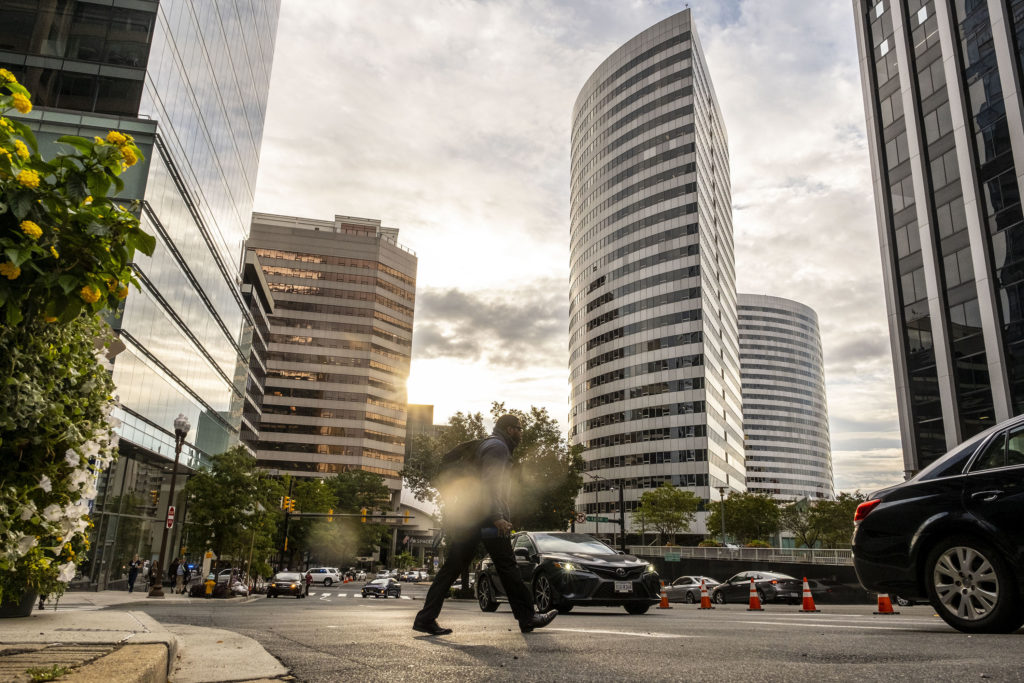

Hurricane Dorian is making its way out to sea and a pleasant weekend awaits here in Arlington.

It will be a weekend of some major events in Arlington, including the annual Arlington Police, Fire & Sheriff Memorial 9/11 5K and the Rosslyn Jazz Festival.

Here are the most-read articles of the past week:

  1. New Reality TV Show Films Scene at Lyon Park’s Texas Jack’s BBQ
  2. Woman Critically Hurt After Being Struck by Driver in N. Arlington
  3. Man With Weapon Causes Scare Yorktown HS
  4. Morning Notes (Sept. 4)
  5. New Flight Logs, Photos Show Former Local Congressional Candidate with Epstein and Prince Andrew
  6. New Irish Pub Plans to Replace Fiona’s in Crystal City
  7. Police: Irate Man Punches Man Filming Him With Phone
  8. First ‘Richmond Highway’ Signs Now Up Along Route 1 in Crystal City
  9. MONA Launches Monthly Family Social At Ballston Quarter

Feel free to discuss these stories or any other topics of local interest in the comments. Have a nice weekend!


The Labor Day holiday weekend is here and Arlington residents are looking forward to vacations and the extra day off — as well as the start of September on Sunday.

In a poll this week, ARLnow readers said the top three things they were most looking forward to in the month of September were more pleasant weather, the start of football season and pumpkin spice food and drink. This weekend in Arlington you should be able to enjoy all three.

The start of school was No. 5 on our list, but it’s still something that all Arlingtonians should be aware of as you head out on the roads on Tuesday.

Another thing to look forward is two new members of the ARLnow team who are both starting on Tuesday. Jay Westcott will be our first staff photographer/videographer and former ARLnow intern Kalina Newman will re-join us as a reporter following a fellowship at Washingtonian. Welcome, Jay and Kalina!

https://twitter.com/jwestcottphoto/status/1167251397508771840

Without further ado, here are the most-read articles on ARLnow.com this week:

  1. Two Shot in Crystal City Office Building
  2. Police Investigating Death at Whole Foods Parking Lot
  3. Dirt Bike and ATV Riders Rolled Through Arlington Last Night
  4. Civil War Camp to Mark Anniversary of Skirmish Near Ballston Tomorrow
  5. Police: Camera Found in Bathroom of Rosslyn Business

Feel free to discuss these stories or any other topics of local interest in the comments. Have a great holiday!


Peter’s Take is a weekly opinion column. The views and opinions expressed in this column are those of the author and do not necessarily reflect the views of ARLnow.com.

Earlier this month, ARLnow.com posted a story highlighting a spate of restaurant closures on the west side of Glebe Road:Restaurateurs along the west side of Glebe Road almost unanimously agreed that the biggest challenges for local businesses all stem from traffic issues. …[I]t can be difficult for visitors to find the right places to park.”

But some sources held out hope for west side restaurants:

“[T]here’s some light at the end of the tunnel with a massive mixed-use building called The Waycroft — which includes 491 residential units as well as a Target and Silver Diner — expected to open at 750 N. Glebe Road sometime in the first quarter of 2020.”

One other massive new Ballston residential project is the redevelopment of the Harris Teeter site at 600 N. Glebe Road (732 residential units, 965 parking spaces). This project envisions the creation of a tiny new privately-owned “park.” Over 100 mature trees will be destroyed.

Other substantial Ballston residential projects completed or in the pipeline include :

The belief that adding density is the right solution doesn’t end at Glebe Road. Discussions continue about adding more and more density in the Bluemont residential neighborhood, and expanding the western boundaries of the Ballston BID to include portions of Bluemont.

Show us the money and the green — Part 1

While many of the residents in these new Ballston projects may become customers of restaurants on the west side of Glebe Road, our County government has yet to demonstrate that it has fiscally and environmentally sustainable long-term plans to accommodate them plus all the other new residents in other parts of the County.

Fiscal Sustainability

In his analysis of the likely impacts on Arlington’s budget of Amazon’s arrival, prominent regional economist Stephen Fuller prepared a report estimating (at p. 11) that each new Arlington resident will have a net negative impact on Arlington’s budget of over $800. It’s net negative because the likely new infrastructure costs, including schools, fire stations, and road improvements, exceed the likely new tax revenues from higher real estate assessments.

The County has yet to explain what its long-term plans are to finance these new infrastructure costs.

Environmental Sustainability

Portions of the Ballston/Bluemont area are part of the Lubber Run watershed. As outlined in a recent column, County development and construction policies and practices in this area exacerbated the July 8 flooding damage to Lubber Run Park.

Also, County government has failed to develop appropriate long-term plans to upgrade our stormwater infrastructure serving Ballston/Bluemont and other areas of the County to accommodate all the new residents in our climate change era.

Show us the money and the green — Part 2

County leaders have sent multiple signals that they favor new plans to enable a lot more density on top of that already authorized.

For example, in a story earlier this year, County Board members were quoted as believing that Arlington housing would be made more affordable by up-zoning to substantially increase housing supply. (Up-zoning = approving more dense development than permitted by current zoning.)

Another ARLnow.com story (“Arlington Must Open Up Single-Family-Neighborhoods To Different Housing Options, Advocates Argue”) further described such suggestions.

Conclusion

It makes no sense to plunge ahead and enable for the first time such large increases in new residential density without first preparing and discussing with the community a long-term strategic plan demonstrating that we have fiscally and environmentally sustainable solutions for the density and population growth we have already authorized.

Therefore, I concur with Eric Harold’s suggestion in a recent Progressive Voice column:

“[T]he County Board should lead a transparent public process to rethink how growth is managed and develop better tools for managing the County’s growth for the next 50 years.”

Peter Rousselot previously served as Chair of the Fiscal Affairs Advisory Commission (FAAC) to the Arlington County Board and as Co-Chair of the Advisory Council on Instruction (ACI) to the Arlington School Board. He is also a former Chair of the Arlington County Democratic Committee (ACDC) and a former member of the Central Committee of the Democratic Party of Virginia (DPVA). He currently serves as a board member of the Together Virginia PAC-a political action committee dedicated to identifying, helping and advising Democratic candidates in rural Virginia.


The Right Note is a weekly opinion column. The views and opinions expressed in the column are those of the author and do not necessarily reflect the views of ARLnow.com.

Thumbs up to Arlington for finally opening its online permitting process. Phase one of moving the permitting process online launches on September 9th with phase two scheduled to follow on in 2020. Another good change coming as part of the process is all in-person filing will be done in one consolidated office location.

Thumbs down to this important line from the homepage: “Estimated review processing times are not changing.”  Having recently been through the permitting process in Arlington, I was really hoping the move would help speed up the review process. As it stands the changes might save you a day or two on the front end, but it will have little impact on getting construction projects moving faster. Time is money in the construction businesses, so delays only add to the costs of the housing our county needs.

Thumbs up to regional leaders for recognizing that housing and transportation go hand and hand as issues. The real test is whether Arlington leaders continue to focus on transportation “solutions” that do not recognize people will continue to drive their cars. The other lingering question is whether Metro really is moving in the right direction as Christian Dorsey suggested.

Thumbs up to the same regional leaders who recognize that not everyone needs to go to a four year college to be successful. Vocational education, apprenticeships, technology training would provide many students a path to a good job without huge student loans.

Thumbs down to the incomplete notion of splitting our elementary schools by this week’s Progressive Voice. We should all be for innovative solutions and shaking up the status quo when it comes to preparing our kids for the future. Unfortunately, nowhere in the piece did the author point to any evidence that there could be substantial improvements in student achievement. This is particularly important as a plan like this would almost certainly add significant extra costs to the APS budget.

Mark Kelly is a 19-year Arlington resident, former Arlington GOP Chairman and two-time Republican candidate for Arlington County Board.


September will arrive this weekend, heralding the unofficial start of fall.

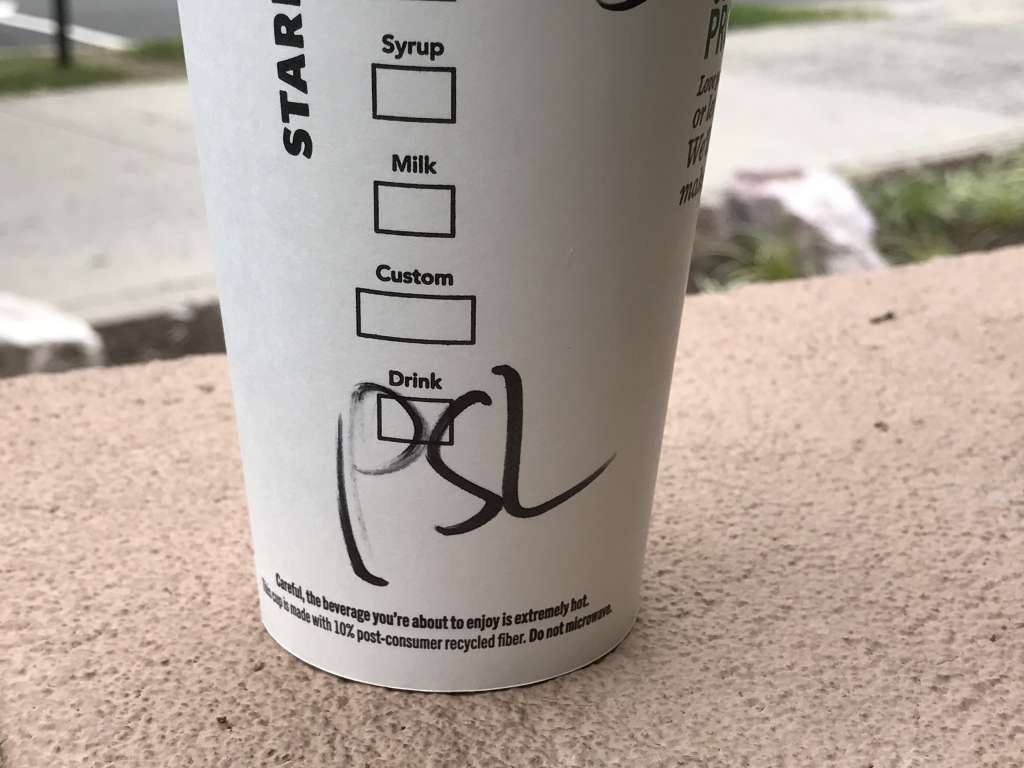
Yes, the actual season starts on September 23, but with pools closing after Labor Day, football being played, Oktoberfest beer being poured and Pumpkin Spice Lattes being brewed — well, it’s basically fall.

(Note: In an affront to summer, Starbucks launched its pumpkin spice beverages today. More like pumpkin spite, right?)

With the weather feeling a bit fall-like to start the week, we thought we’d ask: what part of September are you most looking forward to?


Progressive Voice is a weekly opinion column. The views and opinions are those of the individual authors and do not necessarily reflect the views of their organizations or ARLnow.com.

By Claire Noakes

Vacationing families expect a line at the funnel cake stand on the boardwalk, but they shouldn’t be surprised if there’s also a line at the monkey bars back at the schoolyard for the foreseeable future.

The latest Arlington Public School (APS) projected enrollment figures anticipate that a decade from now demand for elementary school seats will outstrip the planned supply by 2,472 seats — roughly 19% of the current amount. Meanwhile, development has reduced the availability of acreage for new school construction, especially along Columbia Pike and near Metro stations, where the housing pipeline growth is most concentrated. And parents continue to clamor for walkable neighborhood elementary schools. How will we resolve these competing pressures?

APS commits resources to keep elementary class size hovering around 21 kids, but classroom size doesn’t tell the whole story. The average number of kids attending an Arlington elementary school last year was 619, and planning efforts assume that future elementary schools will consist of 725 seats each, resulting in nearly three dozen classes at one location.

Yet much of the elementary school day occurs outside of the classroom — on bus rides, in the cafeteria, and at recess. Three dozen classes have to cycle through lunchtime — packed into a chaotic cafeteria, with shortened lunch periods that start at 10:45 a.m. Three dozen classes have to share recess space, and crowd control measures like banning games of tag are implemented. Class size can be exemplary, yet students may be miserable — one child at my son’s school would become tearful whenever the cafeteria noise level became too loud.

An elementary school is expected to house six grades (plus pre-school in some cases), but why are we packing these grades into one building, other than tradition? The youngest grades need close chaperoning during the school day, but don’t need the dedicated space for band or theater. Older grades access many resources electronically and need teachers to prepare them for standardized tests. We shouldn’t automatically conflate the different needs of these grades and then replicate the current model to address the upcoming 2,742-seat deficit.

Imagine instead if elementary school was sub-divided, with K-2 incubated at new, smaller scale schools, embedded in residential neighborhoods. Bus traffic might be minimal if the entire boundary had a walkable radius. Physical space could focus on social development and emotional wellness. APS might have better luck with acquiring contiguous residential parcels, rather than competing to find 6-acre lots or upgrading commercial space. Meanwhile, existing elementary schools could be repurposed to hold grades 3-5, or add grade 6, or converted to a middle school as needs dictate.

Of course, building smaller K-2 schools would require a re-think of assumptions for meal preparation, libraries, administrative staffing costs, and after-school activities. Given the shortage of land for building new elementary schools, however, planners should put all options on the table for consideration.

And Arlington wouldn’t be a trailblazer if we subdivided our elementary schools. Five years ago, Fairfax split Bailey’s Elementary School into two campuses, grades K-2 and 3-5. The location for the older kids had challenges — it lacked a playground and is located in a renovated commercial space. Still, we could draw lessons from their experience and emulate what works. Arlington must be nimble–and perhaps think smaller–to address our upcoming elementary school needs.

Claire Noakes serves on Arlington’s Joint Facilities Advisory Commission (JFAC). Her own elementary school experience involved lengthy bus rides, portables (as relocatables were called), and nacho cheese on everything, so things could be worse.


It’s a wet and downright cool start to what should otherwise be a very comfortable weekend, weather-wise.

The past week was another that started slow, but ended up being more eventful that one might have expected for the end of August.

Here are the most-read articles on ARLnow this week:

  1. Police Investigating Death at Whole Foods Parking Lot
  2. BREAKING: Man Arrested for Woman’s Death in Crystal City
  3. Quick, There’s One Popeyes in Arlington Still Serving the Sandwich
  4. Police: Man Punched Officer at Arlington County Fair
  5. Letter to the Editor: A Tale of Two APSs
  6. Morning Poll: Should John Glenn’s House Be Torn Down?
  7. Civil War Camp to Mark Anniversary of Skirmish Near Ballston Tomorrow
  8. Police, Medics on Scene of Pedestrian-Involved Crash in Clarendon

Feel free to discuss these stories or any other topics of local interest in the comments. Have a nice weekend!

Flickr pool photo by Kevin Wolf


Peter’s Take is a weekly opinion column. The views and opinions expressed in this column are those of the author and do not necessarily reflect the views of ARLnow.com.

On May 31, a gunman killed 12 people and injured 6 more in a Virginia Beach municipal building. Virginia Governor Ralph Northam subsequently called the Virginia legislature back for a July 9 special session to act on a series of gun safety bills. Most of the bills had been under consideration for years.

The Republicans who control our legislature–on a party line vote–successfully passed a motion to adjourn that special session without voting on a single bill:

“Republican leaders adjourned … after only 90 minutes, referring some 60 bills to the state Crime Commission for further study. The legislature is scheduled to reconvene to take the matter back up on Nov. 18 — nearly two weeks after this fall’s elections.”

The Crime Commission is meeting this week.

On July 28, a gunman in Gilroy, California, killed 3 people, wounded at least 15, and then killed himself. On August 3, a gunman in El Paso, Texas killed 22 and wounded 25 more. On August 4, another gunman in Dayton, Ohio killed 9 and wounded 27 in just 32 seconds before he was fatally shot by police .

Virginia Republican legislators are playing Russian roulette with our lives

Our elected officials are elected to solve problems. Our tax dollars pay their salaries. We are entitled to a full public discussion, followed by up-or-down votes, on proposed key gun safety legislation because gun violence can kill any one of us at any time.

This doesn’t mean that all the 60 some bills that were sent to the Crime Commission for further “study” should have been passed on July 9 nor that any single bill sponsored by Democrats was perfect as filed. Of course not. But where is the Republican sense of urgency? Where is the Republican leadership to negotiate some compromises to enable meaningful action?

Sadly, what we see too often from Virginia Republican legislative leaders after every new mass shooting is a parade of excuses like:

  • “this particular bill wouldn’t have prevented that particular shooting”
  • “it’s too early to be talking about legislation while people are grieving”
  • “a determined shooter can’t be stopped”
  • “let’s wait to see what the federal government does”

No, now is the time for Virginia to act.

Some examples of Virginia gun safety legislation that should be enacted now

  • Expanded local options to prohibit guns in public buildings: Virginia localities like Arlington have very limited powers to regulate the use of guns. An analysis of the current law is here. Virginia law should be amended to give localities the option to limit the possession of guns in public buildings to only certain categories of owners (e.g., police officers).
  • Universal background checks: Private sellers of guns in Virginia are not required to conduct universal background checks. This loophole should be closed. Virginia law should be amended to require private sellers to conduct background checks through a central law enforcement agency that has access to federal and state databases of prohibited purchasers;to maintain records of all firearms transfers for a lengthy period;and to report all transfers to state and local law enforcement.
  • Red flag law: A red flag law permits police or family members to petition a state court to order the temporary removal of firearms from a person who may present a danger to themselves or others. Even Donald Trump has endorsed red flag laws. Virginia House of Delegates member Rip Sullivan (D. 48), who represents major portions of Arlington, has repeatedly introduced a red-flag bill. Unlike 17 other states, Virginia doesn’t have a red flag law. Virginia law should be amended to include one.
  • One-a-month limits: Laws limiting the number of firearms an individual can purchase per month help reduce the number of guns that end up at the scene of a crime. For that reason, Virginia used to have a one-gun-a-month law. But Virginia repealed that law in 2012 at the request of the NRA. That law should be re-enacted.

Conclusion

These and other excellent examples and legislative recommendations are discussed here (Testimony of Leanne Fox, gun owner, Crozet, Virginia). All these key gun safety measures should be enacted in Virginia now.

Peter Rousselot previously served as Chair of the Fiscal Affairs Advisory Commission (FAAC) to the Arlington County Board and as Co-Chair of the Advisory Council on Instruction (ACI) to the Arlington School Board. He is also a former Chair of the Arlington County Democratic Committee (ACDC) and a former member of the Central Committee of the Democratic Party of Virginia (DPVA). He currently serves as a board member of the Together Virginia PAC-a political action committee dedicated to identifying, helping and advising Democratic candidates in rural Virginia.


The Right Note is a weekly opinion column. The views and opinions expressed in the column are those of the author and do not necessarily reflect the views of ARLnow.com.

Yesterday, the Progressive Voice’s Krysta Jones wrote about what has happened in Virginia after the jarring revelations about Governor Northam and Attorney General Herring earlier this year. She tries to answer whether it has been an opportunity for “racial healing and atonement?” It is an important question.

Ms. Jones goes on to discuss things that have been done and things that can be done. Before making a suggested addition to her list, let’s first look at the current state of our politics.

Here is a question for all of the Democrats in Arlington. Would you have let Northam and Herring off the hook for something that happened four decades ago if they were Republicans?

Why do I ask?

Over the past few days, former Vice President Joe Biden came under fire for emphasizing the use of bipartisan relationships to get things done. He even went so far as to say, “there’s an awful lot of really good Republicans out there.”

Some Democrats pushed back. They seemingly would have preferred the quote have been, “Republicans are an awful lot.”

The rationale seems to be, these Republicans voted for President Trump. Therefore, they cannot be good. Remember when Senator Barbara Favola said Republican candidates in 2017 were evil?

Too often both sides have been guilty of stoking the fire of hatred for the other side. That we are dangerously divided politically right now can only be addressed if the people currently in opposing camps dial back the tribalism.

So here is the suggestion for Ms. Jones. Talk to some Republicans. Let’s have a “working lunch or dinner.” You bring three other Democrats. I will bring three other Republicans.

Let’s have a conversation to gain a better understanding of our experiences, our motivations, our expectations for the future. We can talk about race. We can discuss policies that increase opportunity. We can talk about things we can do right here in Arlington to strengthen our community.

It certainly will better inform our opinions than a 60 second sound bites on cable news, or a Facebook comments section argument, or a Tweet storm.

Mark Kelly is a 19-year Arlington resident, former Arlington GOP Chairman and two-time Republican candidate for Arlington County Board.


The following Letter to the Editor was submitted by Arlington Public Schools parents Amina Luqman-Dawson and Robert Dawson, following the publication of our article, Group of Black Parents Say Racial Disparities in Arlington Schools Need to End.

For parents with black children in Arlington Public Schools, hope and wariness accompanies the experience. Like other families, we have hopeful expectations about our community’s excellent schools. We read the headlines. APS Named Top School System in Virginia for the second year in a row. Four of our high schools are ranked in the top 2% of schools nationwide. We hope our children will also be beneficiaries of that excellence. Yet, the data tells a different story. It tells a tale of (at least) two school systems in one County. One which offers countless advantages to white children, the other which offers far less to black children.

The tale unfolds in APS’s own published data recently compiled by Black Parents of Arlington. In one story, a white child enters APS, and from the first years in school, that child has a one in four chance of being identified as gifted. By middle school that child has a 46% chance of being of being labeled gifted. 46%! That “gifted” child will be, at times, clustered with other “gifted” students, and will ultimately end up in higher-level classes which are disproportionately white. Just as the white child’s high intelligence will be presumed, that child’s innocence will also be presumed, with a far lower likelihood of being suspended than their black and Latinx counterparts.

For instance, at Thomas Jefferson Middle School, despite a 32% white population, white students account for only 9% of suspensions, and at Yorktown High School, despite a 65% white population, white students constitute only 28% of suspensions. In their course work, the white child has about a 90% chance of taking at least one AP/IB course and around an 80% chance of passing at least one AP/IB exam. The white child will almost certainly graduate on-time, but more importantly, has around an 80% chance of graduating with an advanced diploma, best suited when applying to competitive colleges and universities. For white students, the tale of APS is often a great one.

In contrast, the APS tale is quite different for a black child. It begins in elementary school, where a black child has only a 12% chance of being identified as gifted. By the time that child reaches middle school, it rises to 21%. As the child’s gifted identification is lower than the white child, her/his presumption of guilt is far higher. For example, in suspensions at Thomas Jefferson Middle School, despite a black population of 17%, black children received 82% of suspensions. At Washington and Liberty High School, despite a 9% black population, black children constituted 43% of suspensions. APS data only reflects the most punitive sanction, suspension.

We still don’t know about disproportionate uses of other disciplinary measures, such as detention, in-class and in-school sanctions that disrupt a child’s learning and define how black children see themselves. In their course work, about 62% of black students will take at least one AP/IB course. However, a black child has only a 30% chance of passing one of those course exams. Is it any wonder; after they’ve been over disciplined and under educated relative to their white counterparts? Although it’s highly likely a black child will graduate on-time, it’s not likely that child will leave APS with an advanced diploma. Only 46% of black children graduate with an advanced diploma. The tale of APS for black students isn’t quite as bright.

The data also shows that prospects for black students may differ depending on the APS schools they attend. For the past two reporting years, SOL disparities in math and reading between black and white students are relatively small (a 0 to 10-point difference) in some elementary schools, including Arlington Traditional, Long Branch, Randolph, Campbell, Carlin Springs and Arlington Science.

(more…)


View More Stories