Progressive Voice is a weekly opinion column. The views and opinions expressed in the column are those of the individual authors and do not necessarily reflect the views of their organizations or ARLnow.

By Krysta Jones

It’s been about seven months since Virginia and the nation were stunned by the revelations that Gov. Ralph Northam “may have” posed in blackface or Ku Klux Klan uniform. In the subsequent days, Attorney General Mark Herring also admitted to posing in blackface.

A flurry of elected officials, leaders and organizations called for their resignations. Others took a more tempered approach and saw it as a moment of racial healing and atonement. Since then, the Northam administration has made several policy announcements that would impact minority communities. They are:

  • Hiring a new top diversity officer to develop a sustainable framework for the continued promotion of inclusive practices across Virginia state government.
  • Creating a Virginia African American Advisory Board. The authorizing legislation was signed into law shortly after the incident and could empower commission members to press for a more prominent role than originally laid out to address racial equity issues.
  • Announcing intentions to decriminalize possession of small amounts of marijuana. Black people are more likely to do jail time for marijuana.

While there may be a reconciliation tour and conversations done out of the public eye, we have not used this opportunity to take bolder steps for racial healing. At the very least, the incidents encouraged conversation. After my last post, “We Know How You Can Cure White Guilt,” I received both positive and negative feedback.

One comment especially resonated with me. An older white gentleman, who has been intentional about using his “privilege” to help the less fortunate, wanted more tangible recommendations for racial healing.

Advocating for new policies is only one way to affect change. Other ideas to make real progress with racial healing include:

Recognize where you are and how you got there. Take personal stock of what you and others have observed about your sensitivities or lack thereof. It’s hard to see your blind spot, but after some thought, you may notice areas for improvement.

Listen.It may seem like a simple act but it is often hard to do. After the Northam incident, online and in-person conversations surged about a possible way forward. I witnessed some hurt feelings by African Americans who felt they were not being heard, and subsequently withdrew from what could have been worthwhile efforts.

Be conscious that groups are rarely monolithic. I attended the Martha’s Vineyard African American Film Festival in August and viewed an interesting short film called “Four Points” by R. Cadell Cook. The film highlighted differences of opinion within the Black community. It was an important reminder that in politics — and in life — we can’t assume someone’s beliefs based on how they look.

Call out the lack of diversity. Catherine Read, an activist and fundraising and PR strategist, notes that when she observes a homogenous slate of panelists at conferences, she brings it to their attention. It is something to consider when organizing and attending presentations.

Do intentional outreach. I served on the steering committee for the June 2019 Network NOVA Women’s Summit. This Summit brought together over 900 attendees to learn, connect and strategize about progressive issues. The organizers recognized the lack of diversity at previous conferences and invited me to serve because of my work in the Black community. Don’t be afraid to find people with connections to certain communities and invite them to lead. As we recruited diverse presenters and attendees, it was critical because of their expertise, not their “difference.” Recruiting diverse leaders does not mean sacrificing quality or experience.

As I have spoken with people and navigated my personal journey toward greater diversity and inclusion, what is very clear to me is that this is not easy. To be successful, we have to come to terms with some of our past mistakes, experiences, and in some cases trauma. It requires that we ALL leave our comfort zone and have difficult conversations — not just white people. When we discuss this incident 20 years from now, let’s be able to say that it was a turning point in our history. Despite what the government did, as individuals we listened, grew, cried, learned and laughed toward equality — together. That is real progress.

Krysta Jones is founder and CEO of Vote Lead Impact, Inc., and a graduate of Leadership Arlington, the Sorenson Institute of Political Leadership, and the Women’s Campaign School at Yale.
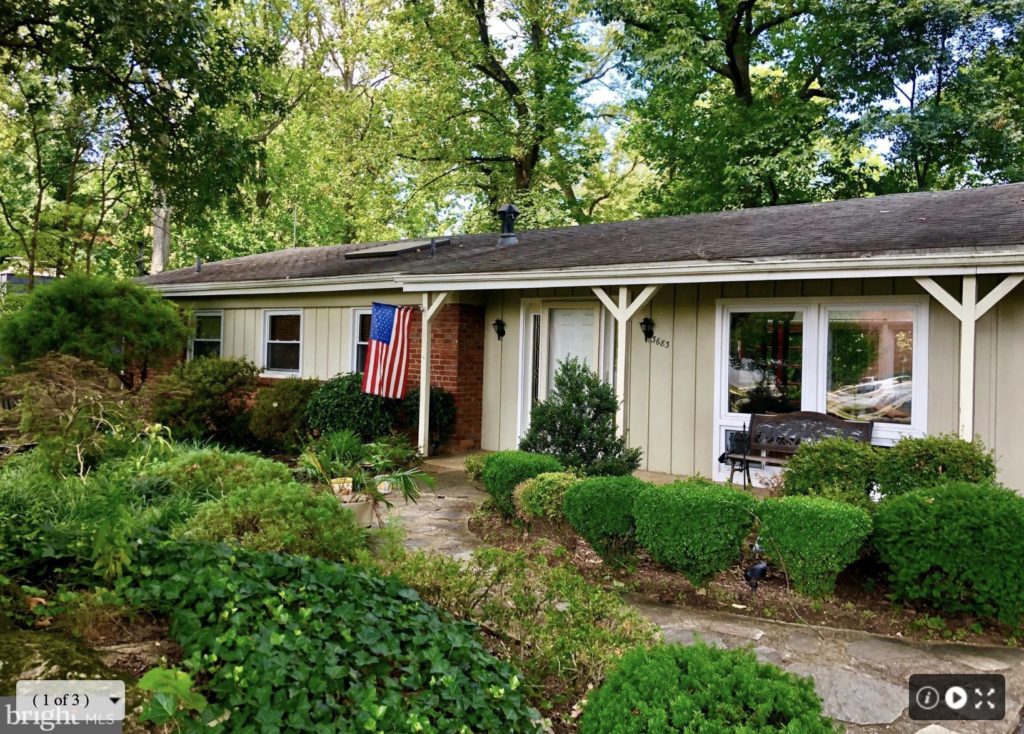

Astronaut John Glenn was the first American to orbit the earth. He was also an Arlington resident for about 5 years.

The group Preservation Arlington points out that Glenn’s former home, a mid-century rambler near Williamsburg Middle School, is now for sale with the listing hinting — “the value is in the land,” it says — that it will likely be a tear-down. The property is listed for $1,050,000.

During the lead-up to Glenn’s historic Friendship 7 mission, reporters camped outside the house on N. Harrison Street and Vice President Lyndon Johnson tried to visit, but was rebuffed by Mrs. Glenn. After, Glenn continued working in D.C., and at one point hosted at his home a cookout with special guest Gherman Titov, the Russian who was the first human to orbit the earth, according to an Arlington Public Library history.

Glenn moved with his family to Texas in 1963, but his presence in Arlington is still felt. In 2012, the home’s owners told WUSA 9 that people still stopped by to gawk at the space hero’s former house. Glenn died in 2016 and was interred at Arlington National Cemetery.

There’s likely little that could be done to legally prevent the house from being torn down at this point, if that’s what the eventual buyer wants to do. But if you could call the shots regardless, what would you do? Would you allow the owner of the property to do whatever they want with it, or prevent demolition on the basis of the house being historic?

Photo via Washington Fine Properties


We are now officially in the back half of August and the final innings of summer.

That is especially true if you define summer as the time between Memorial Day and Labor Day, which pools are open and shandies are still stocked on supermarket beer shelves.

For those staying here or heading out of town, we hope you have an enjoyable and relaxing weekend. Here, for your weekend (beach) reading list, are the most-read stories on ARLnow this past week.

  1. Netflix Documentary Shines Spotlight on Shadowy, Arlington-Based Christian Organization
  2. Group of Black Parents Say Racial Disparities in Arlington Schools Need to End
  3. Pete’s New Haven Apizza in Clarendon Has Closed
  4. The Legend of Marceytown and Arlington’s Buried Treasure
  5. Subway in Ballston Closing Within the Month
  6. Whitlow’s Seeking to Renew Lease
  7. Shelter to Host Kitten Yoga Event with Adoptable Felines
  8. JUST IN: Serious Pedestrian Crash on Columbia Pike
  9. Cheesetique to Open New Location in Shirlington

Peter’s Take is a weekly opinion column. The views and opinions expressed in this column are those of the author and do not necessarily reflect the views of ARLnow.com.

Two months beforethe July 8 flooding, a catastrophic and expensive sewer failure occurred not far from Amazon’s new HQ.

That May 5 sewer failure, combined with the multiple July 8 sewer failures, graphically illustrate Arlington’s lack of integrated long-range planning and investment in Arlington’s below ground infrastructure (e.g., sewer, storm water, water mains) even as new development continues to get a green light.

Arlington needs to provide its unsuspecting residents with a direct warning that theyare going to bear the costs of this situation until Arlington gets its act together.

May 5 sewer failure

Miriam Gennari and her husband own a rental property in South Arlington in 22202. That property is near Restaurant Row on 23rd St., and across from the Crystal Houses at 1900 S. Eads where building owners currently are petitioning the County to build 4-6 new buildings and add 798 new units, significantly increasing density.

Late on the evening of May 5, Gennari’s renters reported water in the basement. When Gennari arrived, she discovered 8 inches or more of raw sewage which filled the main basement area and utility room.

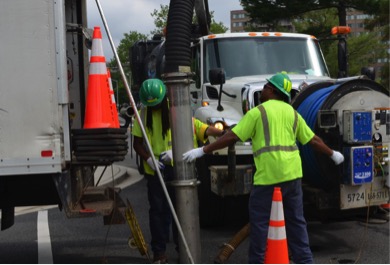
Recognizing this was not a backed-up toilet issue, Gennari called Arlington Waste Management’s emergency number (703-228-6555). County personnel arrived with equipment in less than an hour and a half. As shown in the photo below, they snaked the main sewer line.

Then, the liquid drained from the property, leaving a blanket of decaying grime all over the renters’ personal possessions, the interior structure and the mechanical systems of the home.

An Arlington County government representative gave Gennari and her husband a card acknowledging that the sewer discharge into this rental property was caused by a sewer main line back up. The discharge might well have been prevented by more frequent maintenance of trouble and grease spots.

The Gennaris first called their home insurance provider who denied their claim because that provider does not offer sewer-line backup coverage on rental properties.

“Our homeowners insurance carrier at the time told us that they do not even carry an option for such coverage on rental properties; if we had known, we would have found an insurance company that did. If County leaders only had explained how serious our infrastructure weaknesses were, many residents would be better prepared for system failures and the implications of climate change,” Gennari said.

The Arlington County government referred the Gennari’s damages claim to its third-party processor, PMA Companies. Gennari knew they were in deep trouble when the first question the PMA representative asked was “what was the cause of the clog,” signifying that any claim might depend on evidence that already had been washed down the drain.

Ultimately, PMA denied Gennari’s claim in a letter with two short paragraphs. PMA asserted that the claim had been denied based on the County’s sovereign immunity and lack of notice, and Gennari’s case had been closed. Gennari and her husband have been left to pay almost $20,000 in damages to repair and restore the premises. Gennari’s tenants similarly received only an apology for their losses.

(more…)


The Right Note is a weekly opinion column. The views and opinions expressed in the column are those of the author and do not necessarily reflect the views of ARLnow.com.

It is time for the Arlington County Fair, one of my favorite local traditions. This year the fair features a butterfly encounter, a first-ever beer garden, and goat yoga among other things.

As with every year, the fair also features appearances by your elected officials here in Arlington. Your school board members and interim superintendent, your county board members, the treasurer, and the sheriff will be there.

Here are 11 questions you can ask your school board and county board members when you see them at the fair this week:

1. Why is the school board dragging out the selection process for the permanent school superintendent? Is it because Cintia Johnson is the front-runner for the job and they want to give her an extended trial run?

2. Why won’t the county board give more resources to the auditor’s office?

3. After this year’s tax increase, will the county board commit to setting aside 100% of unspent funds and excess tax collections to offset next year’s budget?

4. Why does the school board report lower than actual per pupil spending? 

5. Why does it cost $412,000 to build a bus stop?

6. After the recent flooding, does the county board believe it is doing enough to address basic infrastructure needs versus other non-essential services or projects?

7. Why does the county board eliminate travel lanes on heavily trafficked streets?

8. To every county board member, why do you believe you deserve a pay raise of over 60% particularly in light of Chairman Dorsey’s suggestion that board members should possibly work less?

9. Has APS rectified its exit interview process that left school board members in the dark about attrition in the workforce?

10. Looking back at your county board New Year’s kickoff speeches, what have you accomplished and what have you failed to make progress on so far?

11. What specifically will you advocate for to reform the way WMATA operates and fix Metro?
Mark Kelly is a 19-year Arlington resident, former Arlington GOP Chairman and two-time Republican candidate for Arlington County Board.


Progressive Voice is a weekly opinion column. The views and opinions expressed in the column are those of the individual authors and do not necessarily reflect the views of their organizations or ARLnow.com.

By Martha Villanigro-Santiago

At any age, we must be intentional about living your best possible life, especially being healthy and active. It’s important that individuals, community and government use data and resources to develop policies, programs and other assets that enable aging residents to flourish in Arlington.

As a caregiver and aging advocate, every day I recognize that enjoying the services and choices of daily life later on requires serious planning now. Here are three lessons I’ve learned to help aging residents enjoy a fulfilling life.

Get to Know Your Neighborhood

For a happier life a few years down the road, we may want to make better-informed choices about where we choose to live based on where we like to eat and socialize. We might want to consider how easy will it be to travel to and from the supermarket. Will we want to drive, walk or ride public transportation?

Fortunately, Arlington County is a member of the AARP network of Age Friendly Communities. This means that it is a community that is beneficial to all ages. This initiative focuses on livability. “Livability” is defined in the context of the following eight domains: community support and health services; outdoor spaces and buildings; housing; transportation; social participation; respect and social inclusion; civic participation and employment; and community and information. In short, livability encourages individuals to engage in community life, stay healthy, and continue doing things they value.

The Age Friendly Arlington project has begun the process of identifying what makes Arlington a great place to live and plans on using this data to develop a plan to make it even better for aging residents.

Additionally, residents should make sure to let your leaders know what you think. For example, the Arlington Commission on Aging wants to know residents’ opinions about how livable Arlington is for them personally. Residents may communicate their experiences by participating in an online survey. The survey is an excellent way for residents to weigh in with their thoughts on growing Arlington to ensure it is a place where residents of all ages have options for living, recreation, community engagement and employment.

Make Smart Choices About Your Home

When looking for a new home or improving your current residence, universal design is a very helpful tool. Sometimes we think that the size of our home and the number of stair steps inside are unimportant until we need to use a walker or wheelchair. The reality is that we can fall at any age and be off our feet for weeks. We may be challenged when trying to access a bathroom located on a different level from the living room, for example.

Universal design represents smart living for all ages. The Commission on Aging produced a video demonstrating several examples of the benefits of this design principle for aging residents, and a brochure on smart design choices in homes for older residents is available from Arlington County.

Be Active

The benefits of physical fitness, social engagement and brain health have been widely recognized. Keeping active is not just about completing a marathon. Life may be easier following a smart and steady strategy of the exercise you enjoy best.

In Arlington, there are a wide variety of happenings and activities to experience. You can meet friends and make new connections in a number of places, from your local coffee shop to the library. Also, people age 55 and older may find more activities through programs and activities sponsored by Arlington County.

The bottom line is that life is constantly evolving. And there is no one size fits all solution for us to tackle the issues of aging and everything that life brings our way. Living in Arlington works for those who desire a community that is inclusive of every age and welcomes aging in place.
Being informed of your resources, being smart about your home, and being active are excellent ways to successfully navigate life and keep moving forward.

Martha Villanigro-Santiago is an attorney, advocate for the aging, the owner of Aging and Moving Forward, LLC, and a caregiver. She is a member of the Arlington Commission on Aging and has been living in Arlington for over eight years.


It’s August and lots of people are going on vacation (including the person writing this post, from Gate 28 at DCA), but for those staying here it looks to be a beautiful weekend.

For a week in typically slow August, the past few days were especially busy news- and readership-wise.

Here are the most-read articles on ARLnow this week.

  1. Arlington Man Survived on Coca-Cola for Five Days After Falling at Home
  2. UPDATED: Widespread Power Outage in Arlington
  3. Hunan Number One Closing in Clarendon
  4. JUST IN: Street Closed in Ballston After Man Falls from Building
  5. BREAKING: ART Bus Rolls Into Building on Columbia Pike
  6. ‘World Market’ Closing at Pentagon Row With Big Sale
  7. Construction Underway on New Ballston Target
  8. APS Named Top School System in Virginia
  9. BREAKING: ART Bus Careens into Community Garden After Crash

Flickr pool photo by Samer Farha


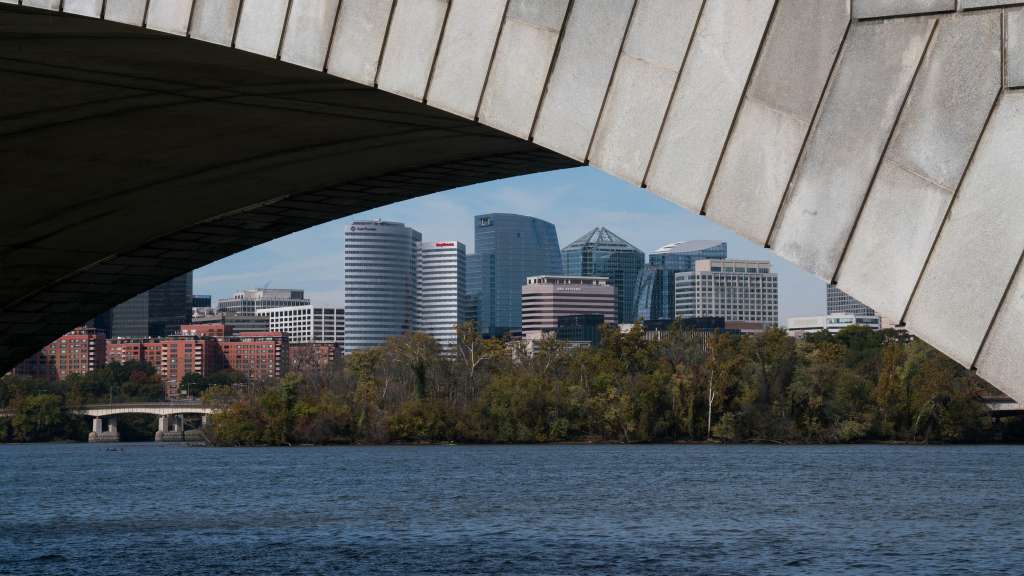
Despite only being a few miles apart as the crow flies, some residents of Arlington and D.C. are reticent to date people who live in the other jurisdiction.

For some, it’s the perceived differences among people who live on opposite banks of the Potomac. For others, it’s more practical concerns: the distance makes Metro travel slow and Uber travel pricey.

Yet, cross-Potomac romances do happen, as sometimes a river is not enough to deter two people who feel a real connection.

How do you feel it?

Photo via Flickr/John Sonderman


Peter’s Take is a weekly opinion column. The views and opinions expressed in this column are those of the author and do not necessarily reflect the views of ARLnow.com.

Two recent columns discussing Arlington’s July 8 countywide flooding and Donaldson Run’s pollution and flood damage explained how the County’s development and construction policies and practices have increased impervious surfaces and resulted in the loss of mature trees. Combined, these factors have almost certainly heightened our flood risk and intensified the damage.

Today, I focus on the July 8 flood impacts on Lubber Run Park.

Lubber Run suffered severe flood damage on July 8

An Arlington resident captured the severe July 8 flood damage to Lubber Run and its park in a series of dramatic videos. This video depicts the destruction of one of the park’s pedestrian bridges, not far from the amphitheater.

Other videos capturing the July 8 flood’s ferocity are here, here, here, and here.

Traveling upstream, the videographer documents the severity of damage to the trail after the flood.

Several factors almost certainly compounded Lubber Run’s intense flooding on July 8.

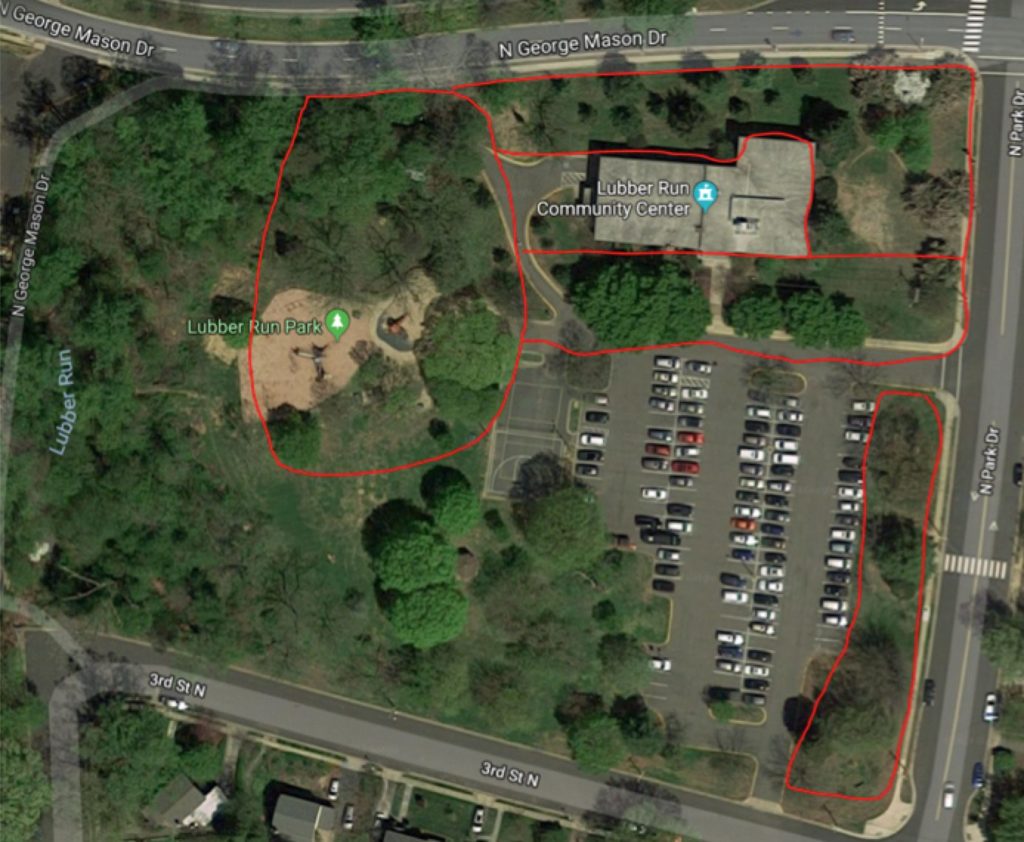
  • Community Center construction: As part of the new Lubber Run Community Center’s construction, the County removed over 100 mature trees. Some of these trees were located on a steep grade and were within Lubber Run’s Chesapeake Bay Resource Protection Area (RPA). Toward the end of 2018, every tree and every other living thing were removed from within the areas outlined in red (see image below) reproduced from Google maps:
  • Bridge replacement and sanitary sewer installation: At around the same time, the County replaced and widened the spans of the Carlin Springs bridge crossing George Mason Drive and installed new sanitary sewer infrastructure nearby. Both projects involved soil excavation and land disturbance in or near Lubber Run’s RPA. And the significant land disturbance associated with these projects likely exacerbated the stormwater runoff and flood damage to Lubber Run Park on July 8.
  • Ballston Pond “rehabilitation”: Further contributing to July 8’s flood intensity along Lubber Run is the still-incomplete restoration of the Ballston “Beaver” Pond (no beavers are in residence)–a project that has dragged on for years after this stormwater detention pond silted up and could no longer hold and filter large amounts of water. As part of the County’s plans to “retrofit” the pond, many trees and much of the existingvegetation will be removed and the sediment from the pond excavated. Since the pond no longer functions as designed, all the stormwater runoff from 300 urban and suburban acres flows directly downstream into Lubber Run without slowing down to settle out sediment or to filter contaminants from the water.

How the County fails to exercise regulatory powers it already possesses

The Arlington County Board’s repeated claims of powerlessness to take action to protect our environment ring hollow. Here is just one example of those claims.

While it is indeed true that some “rules” on some issues can only be made in Richmond, existing rules often permit adjustments to be made right here in Arlington–but only if County Board members are willing to seize these opportunities.

Stormwater management legislation offers a prime example. Arlington could do a lot more to protect our environment simply by exercising its existing regulatory authority under § 62.1-44.15:33 of the Virginia Code . This section grants Arlington powers to adopt more stringent regulations governing “existing water pollution including nutrient and sediment loadings, stream channel erosion, depleted groundwater resources, or excessive localized flooding within the watershed.”

Conclusion

Development, construction, increases in impervious surfaces, and the ongoing loss of mature tree canopy all exacerbate Arlington’s risk of severe flooding. As further discussed in July’s two columns, Arlington already possesses untapped powers to control each of these contributing factors.

Yet despite the tremendous damage that occurred on July 8, elected officials and staff continue to trot out “Act of God” or “flood of the century” arguments that inspire little confidence in local government.

Had Arlington fully exercised its existing regulatory powers, the damage to Lubber Run Park and other public and private assets almost certainly would have been far less.
Arlington was lucky that no lives were lost on July 8. Next time, there’s no guarantee.

Peter Rousselot previously served as Chair of the Fiscal Affairs Advisory Commission (FAAC) to the Arlington County Board and as Co-Chair of the Advisory Council on Instruction (ACI) to the Arlington School Board. He is also a former Chair of the Arlington County Democratic Committee (ACDC) and a former member of the Central Committee of the Democratic Party of Virginia (DPVA). He currently serves as a board member of the Together Virginia PAC-a political action committee dedicated to identifying, helping and advising Democratic candidates in rural Virginia.

Image via Google Maps


The Right Note is a weekly opinion column. The views and opinions expressed in the column are those of the author and do not necessarily reflect the views of ARLnow.com.

The recent audit of the Arlington County Fire Department’s (ACFD) budget crunching overtime costs is exactly the type of work that was envisioned when the independent auditor was proposed.

As reported on ARLnow, the audit found that ACFD is insufficiently staffed to avoid overtime. The department is fighting against attrition of an average of two employees per month. According to the audit, “it takes almost 12 months and costs almost $100,000 per recruit to recruit, hire and train” new firefighters  And ACFD is unable to conduct as much training of existing personnel.

Also, the audit identified that AFCD uses two separate systems to track hours worked and payroll. There is no reason these systems should not be combined into one, so that everything is tracked as efficiently and accurately as possible.

Now that we have identified and made public the issues to be addressed, what is the County Board and the County Manager going to do about it? Will they do it soon, or put it off for further study? Do they need to spend 2019 closeout funds to speed up the hiring of additional firefighters and EMS personnel?

And what about elsewhere across the government?

The latest work plan for the County Auditor shows the next two priorities for the office also have the potential of producing actionable items for the Board in 2019: overtime in the Sheriff’s office, and how the county tracks money it gives out as part of economic development incentives. In 2020, the plan is to look at contract administration and real estate assessment and appeals.

The plan also lists items the Auditor would like to get to if time and resources allow, including oversight of Business Improvement Districts, procurement practices, neighborhood conservation, and site plan benefits.

Why shouldn’t we get audits on all of the above items done by the end of 2020? I have written in the past that the County Board is not dedicating enough resources to the auditor’s office. Doubling the output of the office would be a good first step.

In reality, implementing actionable recommendations from the audits should save the taxpayers money over time. But, if the Board is really worried about finding the money, they could pay for it instead of giving themselves a 60% raise.

The Board needs to take action to turn the audits’ recommendations into real reforms. And, the Board needs to give the County Auditor’s office the resources they need to move even faster.

Mark Kelly is a 19-year Arlington resident, former Arlington GOP Chairman and two-time Republican candidate for Arlington County Board.


Progressive Voice is a weekly column. The views and opinions expressed in the column are those of the individual and do not necessarily reflect the views of their organizations or of ARLnow.

By Nick Dilenschneider

While young progressives across Virginia are mobilizing to retake both chambers of the legislature in this year’s elections, it is impossible for us to ignore the 2020 Democratic presidential primary already in full swing. Were you to ask 100 millennials whom they support right now, you would find answers as diverse as the generation itself. Some are looking to experience and electability, others are drawn to candidates taking aggressive stands on issues like healthcare and taxes.

The tension is understandable. On one hand, the daily chaos fosters an understandable desire for the stability of traditional politics. This path, it could be argued, offers the best chance of capturing voters disillusioned with the president and his party. This type of candidate may not grab the headlines, but by remaining moored to positions that helped Democrats retake the House in 2018, it is not unreasonable to believe it would work again in 2020.

On the other hand is the view that we must find a candidate who is bold and daring. Now is not the time for the “safe” politics of yesterday, but instead beckons us to pursue sweeping policy changes since the current framework isn’t adequately addressing the needs of so many people, including millennials. This perspective counsels us to pick a candidate whose vision goes beyond the 2020 election and who can help lead the nation into a new progressive era.

Though millennials’ support remains split among the various candidates, there are several broad areas where there appears to be general agreement. The first is that number of candidates must be narrowed–and quickly. Trying to accommodate 10 candidates on a debate stage, some of whom are barely registering any support, reduces the chances for a forum for thoughtful discussions. Ultimately, crucial time is lost and the quality of the debate suffers.

Talk to millennials and you will hear a related frustration that someone like Steve Bullock is running for president instead of eyeing the Senate seat in Montana. We know that the Republican-controlled Senate must be flipped for a Democratic president to pass any meaningful legislation and fill key vacancies, such as on the Supreme Court. Quixotic campaigns by candidates who have no path to the nomination waste time and energy. As these doomed campaigns stumble forward, money and manpower are being sucked away from important efforts to retake the Senate and hold the House majority.

Honest leadership means setting aside personal ambition. Any Democratic candidate for president who continues to poll below 2% by the middle of August should accept that reality and move on.

Young people are also aware of how important unity will be in 2020 for defeating the president and having any chance of controlling Congress. This means that presidential candidates should avoid poisoning the race with personal attacks and uncompromising stances. This does not mean contenders should abstain from engaging with each other with conviction on issues that may be uncomfortable, but it does mean that the debate should be framed with an eye toward the general election. To win, the Democratic Party must be a big tent that welcomes difficult discussions, but also respects the diverse viewpoints from moderate to liberal.

The final shared view among my cohort is simple: that we must win. The danger of this moment is real, and we can never forget that. Left, right or center–now is not the time for protest votes or ideological rigidity. The stakes are far too high. The candidate who wins the nomination will not align perfectly with my beliefs and may not even be one of my top choices.

But I do know already that the nominee will be someone who at least believes in democracy, the rule of law, and basic decency. And in the end, that will be more than enough motivation for me.

Nick Dilenschneider is an attorney who commutes to D.C for work, and who enjoys Arlington’s many neighborhoods, establishments and opportunities for civic involvement.


View More Stories