Progressive Voice is a weekly opinion column. The views and opinions expressed in the column are those of the individual authors and do not necessarily reflect the views of their organizations or ARLnow.com.

To inform voters, Progressive Voice asked each candidate in the upcoming Democratic caucus for School Board to respond to this question: “The community has heard a lot about issues regarding a fourth high school, the capacity crunch, and school budget. What is a different major issue affecting students’ future success that you would address as a School Board member?”

School Board Chair Reid Goldstein

Arlington Public Schools are rightly considered excellent, and our students’ achievement is remarkable. But the stress on our students, from demanding classes, competition, peer pressure and just being an adolescent or pre-adolescent are showing up in alarming ways.

The Youth Risk Behavior Survey (YRBS) is taken by 6th, 8th, 10th and 12th graders nationwide. These are some of the Arlington students’ responses from 2017

  • About 340 high school students attempted suicide
  • Half of the 8th, 10th and 12 grade girls were sexually harassed
  • Illegal use of over-the-counter medications by 6th grade students has increased from 2% in 2013 to 11% in 2016
  • More than a quarter of 8th grade students have used alcohol.

This is a big problem and growing worse. To serve our students well, we must do more to reduce their stress.

Student stress is a community health issue that requires a community response. I will continue to support efforts to:

  • Push harder on bullying and harassment prevention, making sure every student is acknowledged, accepted and safe;
  • Continue expanding the number of social workers and psychologists;
  • Support social and emotional learning, particularly in building empathy;
  • Teach students how to moderate their stress; and
  • De-emphasize academic competition in favor of personal achievement that boosts personal goals.

Programs supporting these goals are essential, not frills.

Students can engage more with each other on similar anxiety topics when they understand that their peers are struggling with the same issues.

Parents need to talk to their children, but empathetically, realizing that the child’s developmental and school experiences are different from the parents’ experiences.

And we all need to pause and remember that we are in this together as teammates, not competitors.
Dave Priddy

Under the Arlington Public Schools’ (APS) 1:1 Initiative, every student in grades 3-12 (2nd grade is shared) will be provided a personal computing device. Providing digital devices to every student is an ambitious and reasonable proposition in light of the Internet age and the workplace demands for digital literacy. Yet questions remain about the most effective use of technology, both in the classroom and at home, for supportive learning, critical thinking and problem solving skills.

On March 28, 2019, APS with the help of the Friday Institute for Educational Innovation, released the 1:1 Study (Phase 1): Preliminary Findings survey which evaluates the use of personal digital devices in the classroom, comparing benefits and drawbacks from the perspective of teachers, students and parents. Among the initial findings, the Institute noted that:

  • Students are using their devices 47% of the time in class.
  • Teachers report a range of 66-85% positive outcomes on student development.

There is difference of 26-40% in opinion from the parents, with the parents questioning the effectiveness of the program.

While the 1:1 Initiative is essential for digital literacy, it is crucial to ensure that all students have a balance of skills that include mastery in collaboration, creativity and problem solving. As lifelong learning becomes the norm, it is essential that interest based learning is student driven, not technology driven.

The success of all Arlington students cannot be solely dependent on learning any single type of technology or digital platform. As a candidate for School Board I will strive to bridge the gap between the frustrations of parents and the perceived effectiveness of the program by making sure that all voices–teachers, parents and students–are included and remained informed as changes in the program are developed by APS.

Reid Goldstein is a 33-year resident of Arlington. He began his service on the School Board in January 2016 and has been the School Board Chair since July 2018.

Dave Priddy is a native Arlington resident who grew up attending APS Schools. He and his wife Melanie have two children in the Arlington Public Schools system. He enjoys playing basketball, tennis and Muay Thai. 

Another Friday, another week, another robocall, and you’re still hanging in there. Good for you.

Here’s a few tips from this reporter on how to stay on top of what’s coming down the pipeline for Arlington residents.

First off, expect some road closures in Clarendon for the 7th annual arts festival taking place 10 a.m. to 5 p.m. on Saturday and Sunday.

Secondly, the story yours truly penned about the end of days for Mister Days remains one of the most read one our site. So we thought you should know that bar owner Robert Lee is hosting a second “last call” party for the bar tomorrow (Saturday.)

This means you can say goodbye to Mister Days tonight or tomorrow, but whatever you do, don’t sleep over.

And in other news, did you know there’s an election going on?

Well if not, never fear: ARLnow has all the speed read info you need. Start with this reporter’s overview of all the candidates, and then check out this week’s “legislative lookbacks” on our state senators and delegates if you want to start brushing up before the primaries.

Other things to brush up from this week’s coverage around the county include:

Lastly, how do you like our new look? ARLnow debuted its shiny new design last week and we’re eager to hear what you think. (Unfortunately it contains zero gondolas.)


This year, half of all calls to your mobile phone could be robocalls, according to predictions by call protection company First Orion. And ARLnow wants to know: have you noticed more robocalls to your phone?

There were 27.2 million robocalls placed to 703-area-code numbers in March, per call tracker YouMail, and 13.2 million calls to 571 numbers.

That’s up from 17.2 million robocalls to 703 numbers in March of last year, and 8.5 million calls to 571 numbers.

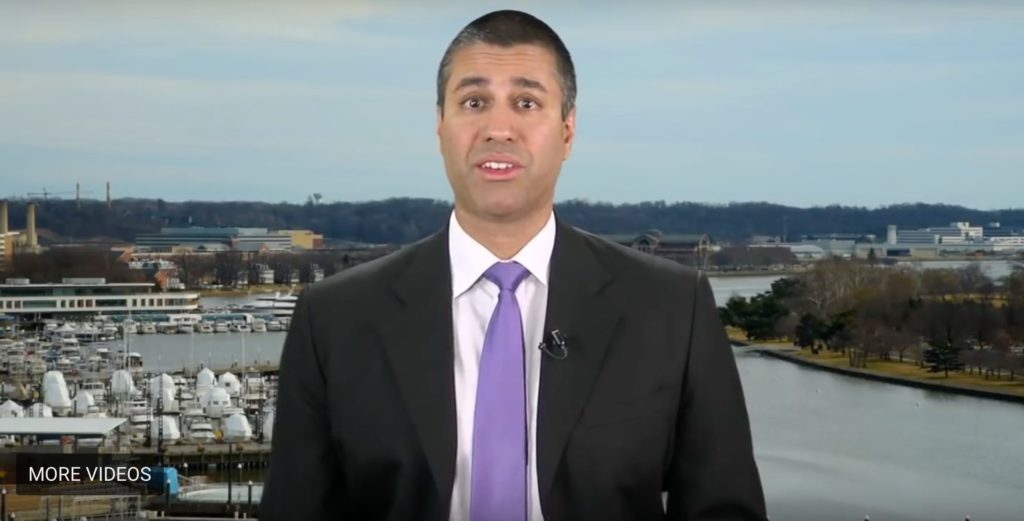
One Arlington resident who’s definitely getting spammed with robocalls is FCC Chairman Ajit Pai. “Last Week Tonight” host John Oliver set up a robocall system to call Pai every 90 minutes and leave a voicemail urging him to take action to reduce robocalls.

First Orion’s prediction that robocalls will make up half of all cellphone calls was based on an analysis of 50 million calls which showed an increase from 3.7 percent of cellphone calls were robocalls in 2017 to 29.2 percent in 2018.

It may be a reason why one analysis of monthly calls by caller ID provider Hiya found people now only pick up their phone about half the time it rings.


Peter’s Take is a weekly opinion column. The views and opinions expressed in this column are those of the author and do not necessarily reflect the views of ARLnow.com.

On April 1, ARLnow.com reported that the APS 1:1 program “gets high marks from students, but remains polarizing for parents.”

The most up-voted comment to that story cuts to the chase:

“Wow what a surprise, students were for free ipads and laptops, and the parents are wondering if the real estate tax hikes are worth it.” – Black Metal list Krieg

APS staff has been unable to explain how much APS spends annually on the 1:1 elementary iPad program.

On April 2, APS School Board members held a revealing work session with their staff on a variety of budget issues. The discussion of the 1:1 program starts at 3:03:54 and lasts 30 minutes.

On social media, one astute parent accurately summarized the bottom-line conclusion:

“We really don’t know what 1:1 costs us. We have a complex leasing model for these devices, and the tech budget includes more than 1:1. If you drop 1:1 the state still requires a certain ratio of access to devices for testing purposes… They are not saying it, but of course 1:1 has additional costs in terms of staffing and electronic resources that you also save if you drop it… Device budget is somewhere around $4 million a year just for devices, but that does not include staff or subscriptions to e-content…”

But this work session revealed one relevant ball-park number. When APS decided to begin the program in 2nd grade instead of 1st grade, dropping that one year produced a savings of at least $1.1 million.

More studies, analyses, or surveys will not provide significantly more relevant information.

The APS Assistant Superintendent of Instruction is now telling the community that the latest (overly-narrow) evaluation of the 1:1 program will drag on until at least the Fall of 2019. This is simply unacceptable at a time in which APS’s long-term operating budget is unsustainable and the APS Superintendent is suggesting class size increases or cutting much more worthwhile programs like the Outdoor Lab just to balance this year’s operating budget.

The community has been engaging APS in meetings about this program for over five years asking the hard questions. Concerns over elementary school opportunity costs have already prompted a petition asking for low-screen-time options.

Survey results show that half of the class time is spent on devices (40% ES, 53% MS, and 58% HS). The time has come to pull the plug on 1:1 in the elementary grades and go to a shared device model. This will allow access required by the state for testing and allow our youngest learners less screen time. It will give teachers the flexibility to be less tied to the APS Central Office and have more face-to-face instructional interaction with their students. The community has spoken for maintaining the Outdoor Lab. Over time, fewer devices will mean fewer cuts in higher quality experiential activities for children like the Outdoor Lab.

The latest evidence of the health, safety, questionable educational effectiveness, and childhood developmental risks of these devices is disturbing.

We are bombarded almost weekly with mounting evidence that the more time children spend using electronic devices, the greater the risk of physical, psychological, and developmental harm.

A 2015 study reviewing school IT programs in over 36 countries worldwide (not in the United States) concluded that less is better when it comes to using technology, both for reading scores and particularly for math scores.

The health and developmental effects on young children of the current 1:1 elementary iPad program won’t be any clearer 6 months from now, 1 year from now, or 2 years from now.

A report published along with the first phase of APS’s overly narrow 1:1 evaluation was not written by a medical doctor but by a Ph.D. who sells consulting services.  We do not need more consulting on this subject.

Conclusion

Now is the time for the Arlington School Board to lead:

  • vote to phase out the 1:1 iPad program in the elementary grades
  • shift to a shared device approach
  • stop kicking the can down the road for even more studies, analyses, or surveys

Peter Rousselot previously served as Chair of the Fiscal Affairs Advisory Commission (FAAC) to the Arlington County Board and as Co-Chair of the Advisory Council on Instruction (ACI) to the Arlington School Board. He is also a former Chair of the Arlington County Democratic Committee (ACDC) and a former member of the Central Committee of the Democratic Party of Virginia (DPVA). He currently serves as a board member of the Together Virginia PAC-a political action committee dedicated to identifying, helping and advising Democratic candidates in rural Virginia.


The Right Note is a weekly opinion column. The views and opinions expressed in the column are those of the author and do not necessarily reflect the views of ARLnow.com.

When faced with the need to find budget savings, budget writers have been known to cut one of the most popular budget line items in hopes of avoiding the cuts altogether. It is known as the “Washington Monument Strategy.”

If the National Park Service needed to make a cut, they could simply propose closing the Washington Monument to visitors. News crews would catch disappointed tourists on the National Mall and ask them how they feel about the site being closed, creating a public relations nightmare. Capitol Hill offices would be flooded with phone calls. To stem the tide, funding would be restored.

Our friends at the Progressive Voice opined this week against the proposed cut to the Equity and Excellence position at Wakefield High School. There is a good chance that the Superintendent’s staff was fairly certain when proposing such a cut that it will not be in the final budget.

Proposing cuts like this one is designed to help create a public outcry against cuts. The public is led to believe that all the fat has been cut in the budget, so we must either go to the bone or raise taxes to pay for it. It is also why we constantly hear the terms “tight budget times” and “shortfalls” and “difficult choices” despite rising revenues. The goal is that taxpayers will accept paying more in taxes to “save” critical needs.

The County Manager did the same thing in his budget. The County Board budget hearing went on for nearly three and a half hours last week as citizens called for restoring cuts. And, the resignation to pay more was in full effect as the tax rate hearing drew only a handful of Arlingtonians to speak against the full rate increase.

John Vihstadt did make an appearance at the tax rate hearing to speak against going above the County Manager’s recommendation. Vihstadt encouraged Board Members to roll up their sleeves and go back to work to find a way to keep the tax rate from rising further. Vihstadt’s message: rising equity in your home doesn’t pay the bills. In other words, if your household income isn’t rising by 6% in 2019, your family budget will be worse off if the County Board adopts the advertised tax rate.

In many places, raising taxes year after year would result in office holders being swept out of office. But in Arlington, the Washington Monument Strategy works and party loyalty prevails.

Mark Kelly is a 19-year Arlington resident, former Arlington GOP Chairman and two-time Republican candidate for Arlington County Board.


Progressive Voice is a weekly opinion column. The views and opinions expressed in the column are those of the individual authors and do not necessarily reflect the views of their organizations or ARLnow.com.

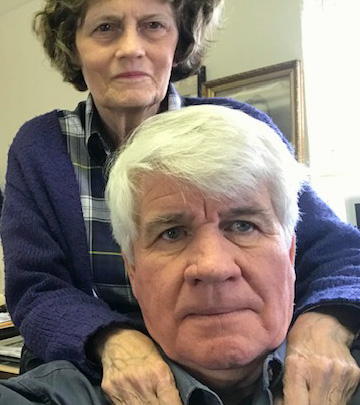
By Jan and Ralph Johnson

It sometimes amazes us where our priorities are in this day of Amazon. Two highly successful programs at Wakefield High School, Cohort (for boys) and United Minority Girls, could be ended with the proposed Arlington Public Schools (APS) budget.

These two programs are led by the Equity and Excellence Coordinator, whose main focus is to guide minority boys and girls through high school, challenging them to take the hardest courses, to study hard and commit themselves to a path to college. Such actions awake in these students of color a world of possibilities never before imagined.

“Those first weeks of high school were overwhelming. I realized how behind I was,” recalled Yoel Fessahaye, a 2014 Wakefield graduate. “Cohort was there to offer me food and brotherhood. Now, I have graduated from Georgetown University and still go back and visit Mr. Beitler regularly.” Fessahaye said, “We all call the Cohort program our salvation from the hopeless future we once felt bound to.”

The success of these programs is unprecedented. Over the past 18 years since Cohort began, 358 Cohort members have graduated and 93% have gone on to college. Over 500 students have been members of United Minority Girls (UMG) and 97% have gone on to college. Other public school systems have come to us asking how Arlington has been so successful as they wish to replicate our program.

But now the Equity and Excellence position has been proposed for elimination. If this position is eliminated, Cohort and UMG are eliminated as well. No longer will there be weekly lunch meetings with fellow program members to discuss their futures. No longer will there be the Equity and Excellence Coordinator to take them on bus trips (privately funded) to visit colleges. No longer will there be that safe place where Cohort and UMG members visit daily to discuss their issues. No longer will there be an advocate for the minority male and female students at Wakefield High School. It will all end.

“Counselors like Mr. Beitler are not just school staff; to communities like mine, they are our champions. And the programs they tirelessly work on are the essential tools that even the playing field for us,” said Fessahaye.

In the APS mission statement, it says “the office of Equity and Excellence advances high expectations, facilitates equitable access and remedies opportunity gaps for Black and Latino students.” This mission has been met at Wakefield High School.

“The strong guidance and encouragement I received from Mr. Beitler and the United Minority Girls program paved the way for someone like me to attend such an outstanding institution as Washington College,” said Bethelehem K. Yirga, a 2017 Wakefield graduate whose family immigrated from Ethiopia in 2011. “I will continue to work hard so that I can become successful and create unlimited opportunities for those who are marginalized by our society.”

By eliminating the Equity and Excellence Coordinator position — thus ending Cohort and UMG — what are we saying to the students at greatest risk in our school system? What are we saying to the minority students in Arlington?

Instead of discontinuing this powerful motivating force, can we instead support it and redouble our efforts? In the words of former Cohort member Fessahaye, such a move would help Arlington “be an inclusive community that empowers all students to explore their possibilities and create their futures.”

Jan and Ralph Johnson are longtime Arlington residents. Jan is a former teacher and Ralph has owned and managed apartment buildings in Arlington.


Congratulations on making it to Friday, everyone!

It’s a been a busy week for everyone, and especially those trying to catch up on all things Amazon.

This week, we wrote about how developer JBG Smith finalized a lease with the company, and we also revealed that Arlington is forwarding public records requests to Amazon without redacting filer’s personal information.

It’s also officially April now, which means festival season is around the corner. Check us out for the latest updates on the Arlington Palooza and the Columbia Pike Blues Festival where you can bust out your dancing shoes and take part in a variety of art workshops.

Here are some other stories from this week you may have missed:

Speaking of reading, what the best book you’ve read lately? Here’s a recently-published local book (and an author talk event) that may be of interest. Share your recommendations and plans for the weekend in the comments below.


Peter’s Take is a weekly opinion column. The views and opinions expressed in this column are those of the author and do not necessarily reflect the views of ARLnow.com.

Arlington needs to replace its World War II-era water mains faster than it’s replacing them. A sampling of what’s been happening:

Crystal City

On March 27, ARLnow.com reported that “hundreds — and perhaps even thousands — of water customers in Crystal City are without water service this morning:

“Arlington’s Dept. of Environmental Services (DES) says it is currently performing emergency water main repairs following a series of at least three water main breaks… ‘Several buildings’ are without water, the Crystal City Business Improvement District said via social media.”

Is this really the way to welcome Amazon?

Virginia Square

As ARLnow reported March 21, a significant water main break on Kirkwood Road between Washington Boulevard and 14th Street N. left “GMU, Others High And Dry.” Video posted of the scene and linked in the ARLnow story “shows a large hole in the roadway filled with roiling, cloudy water.”

Columbia Pike

On August 30, 2018, ARLnow reported that “South Arlington Water Main Breaks Cut Off Service for Thousands Overnight”:

“The problems started … when [DES] received word of pipe problems near the intersection of Columbia Pike and S. Frederick Street…. By 10 p.m., they reported several other water main breaks along the pike … and determined that the S. Park Drive problem was “related” to the previous breaks.”

In a tweet about the Columbia Pike breaks, DES attempted to explain by saying:

It’s not as if the County Government hasn’t seen this coming for many, many years.

Winter 2017-2018

In January 2018, ARLnow reported that “County Crews Have Repaired Dozens of Water Main Breaks Since Mid-December.” At that time, DES pointed the finger at freezing temperatures: “When ground temperatures drop to the water main depth, the pipe material gets cold, but the water temp drops at a slower rate due to its movement…”

May 2016

ARLnow reported that DES was boasting that it had fixed “217 water main breaks in the past year.”

January 2014

ARLnow posted another story about water main breaks. That story highlighted the fact that “Arlington has 500 miles of water mains, 60 percent of which are 55 years or older,” with the oldest dating to 1927.

A county video accompanying the January 2014 story struck an ironic tone. That video proceeded from the flawed premise that water main breaks are always “unavoidable.” The video’s message: learn to live with them. The video explains why old water mains break. Surprise: it’s because they’re old and decaying!

Conclusion

While freezing weather was the proximate cause of many of these water main breaks, many other mains broke because they were just too old.

Arlington County needs a more aggressive program of proactive water main replacement, not the Que Será, Será attitude displayed in the 2014 County video and cemented by the inadequate amount of money County Government currently devotes to proactive replacement.

Meanwhile, the County Government is devoting too many resources to projects like the new $70+ million Aquatics Center and its new state of the art AV system.

A comprehensive recent water main study accurately captures the situation we face:

“[W]ater-main failure rates generally increase exponentially over time… . One could envision a rapid increase in break rates in the future… If a break rate doubles, the economic impact is significant; one would need to double the number [of] personnel repairing the breaks.”

The County Government should prepare and share for discussion with the community a Life Cycle Replacement Cost analysis of Arlington’s water mains as recommended by Dr. Sunil Sinha, Professor of Civil and Environmental Engineering and Director of the Sustainable Water Infrastructure Management (SWIM) Center at Virginia Tech:

“[T]o meet the important challenges of the 21st century, a new paradigm for the planning, design, construction, and management of water pipeline infrastructure is required.”

Bottom line: replace more of ’em before they break.

Peter Rousselot previously served as Chair of the Fiscal Affairs Advisory Commission (FAAC) to the Arlington County Board and as Co-Chair of the Advisory Council on Instruction (ACI) to the Arlington School Board. He is also a former Chair of the Arlington County Democratic Committee (ACDC) and a former member of the Central Committee of the Democratic Party of Virginia (DPVA). He currently serves as a board member of the Together Virginia PAC-a political action committee dedicated to identifying, helping and advising Democratic candidates in rural Virginia.


Arlington’s new Pet of the Week is Bitey, a one-year-old dog mysteriously born from a Bernese mountain mother and miniature poodle father.

Here is what Bitey’s owner, Dan, had to say:

Long before she joined her family, her owner’s decided over a decade ago (and perhaps over a few too many drinks) that if they ever did get a dog it would be named Bitey. Now that she’s here, her name prompts other parents to pull their kids closer, and other dog owners to pull taut their leashes. But once she bounds upon them looking for pets and hugs, all is well, assuming she doesn’t tumble them with enthusiasm.

When not out and about, Bitey is an ineffective but relentless backyard squirrel chaser, a gourmand consumer of toilet paper rolls, an incessant dispenser of licks and a huge proponent of lying near her dog bed but not on it. Highlights of her day include waking up the adults an hour before they need to, waking up all the kids for school (especially on Saturdays), and waking up the neighbors by barking. She is a huge fan of chase games at the dog park, and despite her 23 pound frame size she loves nothing more than shutting up bigger dogs that have far more bark than bite.

Want your pet to be considered for the Arlington Pet of the Week? Email [email protected] with a 2-3 paragraph bio and at least 3-4 horizontally-oriented photos of your pet. Please don’t send vertical photos, they don’t fit in our photo galleries!

Each week’s winner receives a sample of dog or cat treats from our sponsor, Becky’s Pet Care, along with $100 in Becky’s Bucks. Becky’s Pet Care is the winner of six consecutive Angie’s List Super Service Awards, the National Association of Professional Pet Sitters’ 2013 Business of the Year and a proud supporter of the Arlington County Pawsitively Prepared Campaign.

Becky’s Pet Care provides professional dog walking and pet sitting in Arlington and all of Northern Virginia, as well as PetPrep training courses for Pet Care, CPR and emergency preparedness.


The Right Note is a weekly opinion column. The views and opinions expressed in the column are those of the author and do not necessarily reflect the views of ARLnow.com.

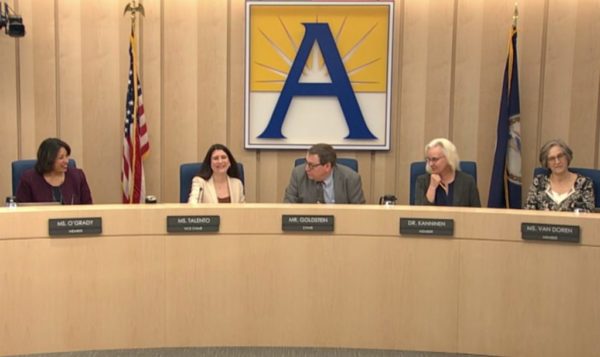
In a split decision last week the Arlington School Board voted to require Chairman Goldstein to inform the County Board they need more money in the upcoming budget via an increased tax rate.

Serving on a local school board may be the toughest job in politics. There is nothing more personal to a parent than what happens to their children. That means even modestly controversial decisions come with the knowledge it could produce a heightened outcry from the community. And that undoubtedly puts significant pressure on our School Board members to make it look like they are doing something in the face of Superintendent Murphy’s proposed budget priorities.

Three members decided to take the unusual step of sending a letter to the County Board to make it look like they are doing something. Here is what they could do instead.

First, they could stop using language that is misleading. When the Superintendent is proposing to increase the budget by 4.9% to $671.6 million, and per student spending will rise to $23,569, you do not have a budget shortfall. When you have closeout funds available to spend every year, you do not have a budget shortfall. What you have is the job to balance spending priorities and growth within a healthy school budget.

Second, if they do not like the budget priorities that the Superintendent proposed, they can keep working through the budget line by line to determine if APS can spend $23,569 per student in a way that meets the needs of our schools. The Superintendent proposes spending levels, it is their job as our elected representatives to ensure those spending levels work within the budget constraints.

Third, if after doing the above they believe they still need additional resources, then do all of the homework in advance of passing the proposed budget on April 11th. At that point, they can take advantage of the joint work session scheduled between the County Board and School Board scheduled for April 12th. Be prepared to walk in there and make the case for the increase they are seeking, backed up by numbers not just rhetoric. That gives the County Board 10 days to make a final decision on whether or not to increase the tax rate in a manner that is dedicated to schools.

Sometimes letters are helpful in bringing awareness to issues. In this case, however, it looks more like an attempt to lay the foundation for the finger to be pointed at the County Board for any unpopular cuts.

Mark Kelly is a 19-year Arlington resident, former Arlington GOP Chairman and two-time Republican candidate for Arlington County Board.


It was an April Fools’ Day joke, but an interesting one.

The Rosslyn Business Improvement District, riffing off the much-ballyhooed but not-actually-happening Rosslyn-to-Georgetown gondola proposal, floated an idea: a zip line over the Potomac.

Putting aside questions about feasibility — for instance, is it a good idea to have a zip line running across a major airline and helicopter flight path? — an argument could be made that a zip line would be a fun local activity and tourist attraction.

If this was a real proposal — again, putting aside whether it could actually work — would you be in favor of it?


View More Stories