
Peter’s Take is a weekly opinion column. The views and opinions expressed in this column are those of the author and do not necessarily reflect the views of ARLnow.com.

On Jan. 9, Virginia House of Delegates member Michael Webert (R-Fauquier) offered legislation (HB 1886) that would, if enacted, establish:

“an interstate compact among the Commonwealth of Virginia, the State of Maryland, and the District of Columbia (the party states) that prohibits the party states from providing incentives for a Washington area professional football team franchise facility, including tax incentives, state or local appropriations, and loans.”

In support of his bill, Webert explained,“think tanks on the left and right show the subsidies that go to professional stadiums, there really is not the return on investment that everybody says there is.”

State Senator Chap Petersen (D-Fairfax) disputed Webert, holding out hope that Virginia would at least be willing to “offer to build a Metro station or highway ramp to serve a stadium, or provide land for it at a nominal rent.”

Football stadiums do not spur significant economic growth

The evidence is overwhelming that subsidizing the construction of a new Redskins football stadium will never be in the best interests of Virginia taxpayers:

“Roger Noll, an economist who studies sports-stadium subsidies at Stanford University, says he has never witnessed the construction of a football stadium that has had a significant positive impact on the local economy.”    

Direct costs outweigh the benefits

Fifty-seven percent of a panel of U.S economic experts agreed that the costs to taxpayers are likely to outweigh the benefits, while only 2 percent disagreed–though several panelists noted that some contributions of local sports teams are difficult to quantify.

Subsidizing stadiums is a game that taxpayers lose: “Governments should never finance a stadium with public money as it is simply a subsidy to rich team owners and a few businesses that stand to benefit from the events held there.”

Opportunity costs further tilt the balance against taxpayer funding

The costs of a new Virginia stadium for the Redskins are even higher when you factor in the opportunity costs. Virginia tax dollars spent on such a stadium would be tax dollars that could have been spent to:

  • increase Virginia’s state share of the new dedicated funding stream for Metro
  • increase Virginia’s state share of public education funding
  • redress some of the many remaining critical deficiencies in Virginia’s mental health facilities
  • help bring high-speed broadband to rural areas of Virginia that currently lack it

These are only four of hundreds of more deserving needs than a Redskins stadium.

Dan Snyder doesn’t need the money

Redskins’ owner Dan Snyder is a billionaire who doesn’t need a public hand out. Any Virginia tax dollars for a new Redskins stadium will go directly into Dan Snyder’s pockets.

A 2003 study by a member of the University of Texas economics department documented that a new stadium increases:

  • team profits by an average of $13 million annually
  • payroll salaries by $14 million annually
  • team book value by $90 million

Sixteen years later, all these numbers are likely to be much higher.

Conclusion

Regardless of what DC or Maryland decide to do, nothing related to any new Redskins stadium should be subsidized by Virginia taxpayers. Dan Snyder should arrange 100 percent private financing. Under these conditions, Snyder could build his stadium in Virginia if he could find a welcoming local government.

San Francisco 49’ers cornerback Richard Sherman got it right: “I’d stop spending billions of taxpayer dollars on stadiums…and maybe make the billionaires who actually benefit from the stadiums pay for them.”
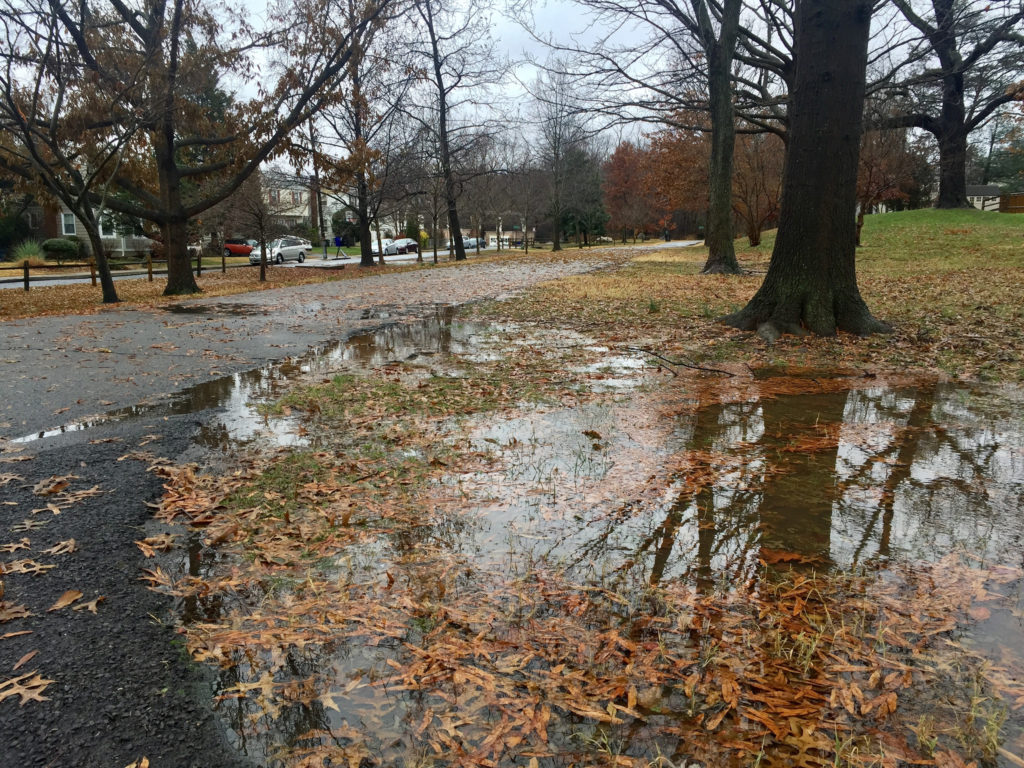
The first weekend of 2019 is set to be a warm and wet one.

The forecast is calling for a whole lot of rain to move into the D.C. area starting tonight, and lingering into Saturday as well. At least temperatures will shoot up into the 50s for most of the weekend.

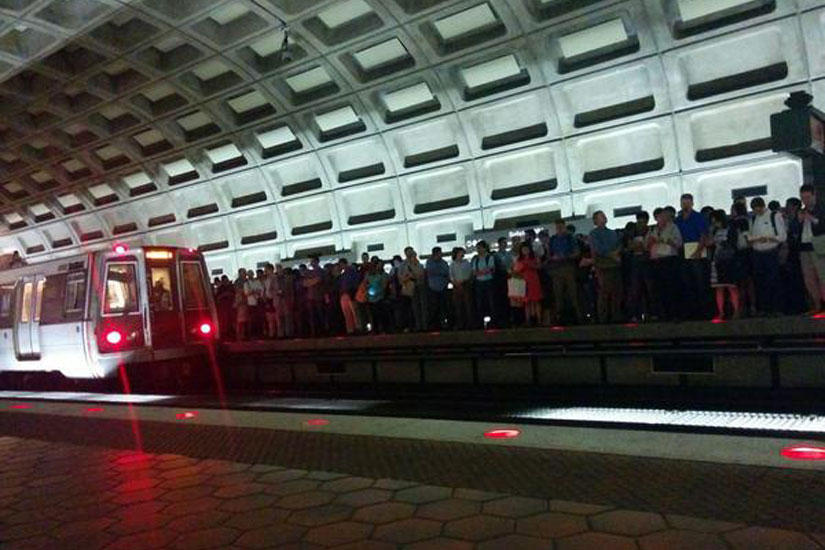
Check out our event calendar if you need a few things to fill your time this weekend. But if you’re planning on using the Metro to get there, watch out: trains on the Blue and Yellow lines will be single-tracking between the Pentagon City and National Airport stations, meaning that trains on both lines will only run once every 20 minutes.

If you’re stuck on the train or otherwise behind on your Arlington news, you can also catch up on our most popular stories of the past week:

  1. Former A-Town Space in Ballston Set to be Transformed into German Food Hall
  2. Police Arrest Arlington Woman in Connection with Fatal Stabbing on New Year’s Day
  3. Man Shot on S. Glebe Road, Expected to Survive
  4. Clarendon Gym Owner Pleads Guilty to Federal Drug Charges
  5. Longtime Rosslyn Pizzeria Piola Shuts Down

Head down to the comments to discuss these stories or anything else local. Have a great weekend!

Flickr pool photo via wolfkann


Arlington’s School Board is set to pick a new name for Washington-Lee High School next week, putting an end to the simmering debate over how to best strip Robert E. Lee’s name from the building.

The Board voted in June to remove the Confederate general’s name from the school’s moniker, kicking off months of squabbling over potential new names and even a failed lawsuit seeking to block the change. A renaming committee has recommended “Washington-Loving” to honor the Virginia couple who successfully challenged the state’s ban on interracial marriage, while “Washington-Liberty” earned the support of some committee members as a secondary recommendation.

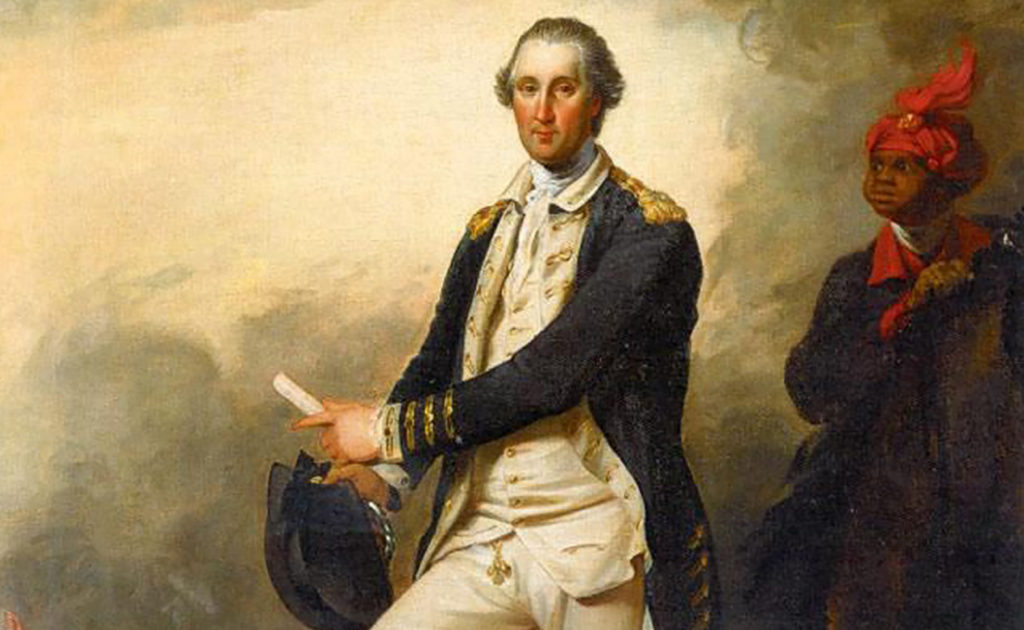
Others still supported swapping in one Lee for another, particularly William Lee, George Washington’s enslaved manservant. The following letter to the editor comes from a coalition of W-L alumni, former faculty members and even one of the original four black students to integrate the school in support of that option. 

The letter writers argue that the Board should delay its vote on Thursday (Jan. 10), and pursue a more “unifying solution” than its current options.

We are alumni and community stakeholders who care deeply about Arlington and the legacy of its oldest high school, Washington-Lee High School. We also support one of the renaming committee’s five finalist names, Washington-Lee High School, in honor of the African American Revolutionary War patriot William Lee.

A school that figures so prominently in Arlington’s history deserves a name that will inspire an understanding of our nation’s complex past and how it can move us forward. The clumsy attempts to retain the school’s nickname with the current Washington-Loving and Washington-Liberty proposals, however well-intentioned, do not meet that high standard. The name William Lee best “aligns with or reflects the APS mission, vision, and core values and beliefs” as stated in Policy F-6.1 Naming of Facilities.

William Lee, who served alongside Washington throughout the Revolutionary War, has long represented the contributions of the country’s “neglected patriots,” enslaved African Americans who fought in the Revolutionary War for their country and their own personal freedom. These patriots and heroes will soon be honored by the National Liberty Memorial on the National Mall in Washington, D.C. Congress has approved a location for the memorial which, poetically, could be the last site on the Mall across from the Washington Monument. Their contributions, previously shunned, are among the most important in our nation’s history. Moreover, because of the intimate connection between the two men, Lee’s influence on Washington, his abhorrence of slavery, and our country’s founding are of profound importance. A newly renamed W-L could be a powerful impetus that redefines history and imbues our diverse community with a common purpose and pride.

Unfortunately William Lee had not been properly considered by the committee due to historical inaccuracies in its brief biography of his life and an incomplete assessment of his legacy. Regarding Mildred Loving, there are serious questions over how she viewed her own black heritage. While it is laudable a member of the Arlington Historical Society was appointed to the committee, historians and other experts should have been consulted as history is often more complex than it appears on the surface. Moreover, the significant number of resignations from within the committee further cloud the process. As the legacy of a school and county hangs in the balance, it is critically apparent that the five finalist namesakes need to be more thoroughly researched.

With a postponement of the Jan. 10 vote on a new name, the School Board could rectify these fundamental shortcomings. Moreover an extension would help build a bridge to alumni who have felt sidelined throughout the entire renaming process, which has lacked the transparency and public discourse typical of the Arlington Way. Hopefully, William Lee would then be fairly vetted by all stakeholders and the School Board. Alternatively, since Lee is one of the five finalist names chosen by the committee, the Board could opt to choose among all of those names on Jan. 10. Notably, many alumni who had been divided over the name change are now embracing the William Lee name as the school’s best opportunity to educate and inspire future generations of students.

The process is an understandably difficult one, made more painful by missteps that could have been avoided. We feel without reservation that the name Washington-Lee High School in honor of William Lee would be the most unifying solution, and one that will likely ensure continued alumni support that has been invaluable over the past 90-plus years. Most importantly, the school would have a dignified name and inspiring new namesake with an unmistakable connection to one of our country’s earliest African American heroes who helps us to better understand Washington and his extraordinary nature.

Sincerely,

Duy Tran, Ann Felker, Bill Sharbaugh, John Peck, Carmela Hamm, Kim Phillip, Maurice Barboza, Anne Ledyard, Anthony Varni, Peggy Jeens, Janeth Valenzuela, Charles Augins, Leonardo Sarli, Sally Mann, Max Golkin, Lauren Hassel, Margaret Jackson Bartolini, Betsy Debevoise Staz, Tom Dickinson, T.W. Dickinson, Betty Settle, Geraldine (Dresser) Frank, Marcia Bourkland Pauly, Fred Grover, Alfred Greenwood, John Dobson, Dana Gandy Croyle, Rebecca Mimms, Chris Fleet, Yolanda McDonald, Nancy Roberts, Gail Zucker Braunstein

We are a group of alumni, alumni faculty, and stakeholders. Many of us have contributed to local civic and cultural affairs over the years and devoted thousands of hours to support the excellent educational opportunities at Washington-Lee and APS. Our names are listed in no particular order. Bill Sharbaugh was the principal of Washington-Lee High School from 1976-1999. Maurice Barboza is CEO of the National Mall Liberty Fund, a non-profit that supports the establishment of a memorial to African American contributions to liberty during the Revolutionary War. Charles Augins is one of the four students who integrated Washington-Lee in September, 1959.

ARLnow.com occasionally publishes thoughtful letters to the editor about issues of local interest. To submit a letter to the editor for consideration, please email it to [email protected]. Letters may be edited for content and brevity.

Photo via Mount Vernon


WMATA announced this week that Metro riders will be able to bring their bikes with them on trains regardless of the time.

The new policy “ends a longstanding restriction that prohibited bicycles during rush hours.” On social media, some celebrated the decision as a win for carless commuters, while others lamented the idea of having to compete for space with bulky bicycles on crowded Metro trains.

More from a WMATA press release:

The policy change, which takes effect Monday, is expected to make Metrorail a more attractive travel option for reverse commuters (i.e. customers traveling outbound in the morning and inbound in the evening) who want to take their bike to travel between the rail station and their workplace.

Metro reviewed its policy and determined that it could respond to requests from the bicycling community by ending the rush-hour bike restriction without significant negative effects. The review took into account that the majority of rush-hour trains are 8 cars in length (the longest possible), and that new 7000-series trains provide more open space.

“We received requests from Washington Area Bicyclist Association (WABA) and others in the bicycle community asking us to take a fresh look at our policy,” said Metro Chief Operating Officer Joe Leader. “We believe this change supports ridership growth by Metro and a commuting option for those who want to have a bike with them.”

The Washington Area Bicyclist Association welcomed today’s announcement. “Bicycling extends the reach of Metrorail for customers at the beginning and end of their trip. Members of the community have long wanted the option to bring a bicycle along with them on their rush hour trips, especially reverse commuters,” said Greg Billing, WABA Executive Director. “I have to say that we’re pleasantly surprised with how flexible and accommodating Metro has been in responding quickly to this request. We are grateful to leadership at Metro for this policy change to permit bicycles during all hours of Metrorail operations.”

When Metrorail first opened, bikes were not allowed in the system at all. Since then, Metro has incrementally loosened restrictions without significant problems. Bikes were first allowed in 1982, with a paid permit on weekends and holidays only. The days and hours when bikes were allowed gradually expanded over time. Permits were eliminated in 1998, and the current policy was established in 2001, allowing bikes at all hours except weekdays from 7-10 a.m. and 4-7 p.m.

What do you think about the policy change?

File photo


The Right Note is a weekly opinion column. The views and opinions expressed in the column are those of the author and do not necessarily reflect the views of ARLnow.com.

On Jan. 2, the County Board held its organizational meeting for 2019 with speeches from each County Board member outlining their priorities for the year. Today, I will focus on the remarks from our current Chairman Christian Dorsey as well as our outgoing Chair Katey Cristol.

Christian Dorsey was elected to take the center seat as chairman for 2019. Early in his remarks, Dorsey did what was expected, set the stage for why a tax rate increase would be necessary, primarily blaming a “depressed” tax base, primarily because of a low commercial vacancy rate.

To translate for people who do not follow county budgets, our “depressed” tax base continues to produce tens of millions of dollars in additional revenue each and every year.

Nevertheless, desired county spending continues to outpace our growing revenue. The county, Dorsey said, would practice austerity to make up for this gap. Austerity is a word that makes one think the county will take extreme steps to reduce spending, but that is unlikely. What is extremely likely is that the county will not reduce spending enough to avoid a tax rate increase.

Dorsey did move on to the theme for his year as chairman. The word for the year was clearly “equity.” Dorsey argued we needed to put our words and commitment to equity into practice for all Arlingtonians. Unfortunately, Dorsey did not lay out exactly what success would look like a year from now on this front.

Cristol, who should get some sort of credit for working the word “crystalized” into her speech, offered two constructive suggestions to compliment what Chairman Dorsey had to say.

First, she suggested reforming our zoning code to increase the types of housing that could be available to meet our long term needs for people of all income levels. Those reforms should also include making it easier and cheaper to make your way through the permitting and construction process.

Cristol also suggested that the county use data to measure the progress it makes in all of its goals, particularly when it comes to equity.

A data-driven approach is 100 percent in line with the transparency and accountability that is promised by our County Board. It also fits right in with the time of year we are in where we are thinking about our resolutions and goals for the new year. If you have gone through the planning process with your business, you know this: if it’s not measurable, it’s not a real goal.

I look forward to how Cristol works with county staff to turn this idea into reality.


Progressive Voice is a weekly opinion column. The views and opinions expressed in the column are those of the individual authors and do not necessarily reflect the views of their organizations or ARLnow.com.

By James Swindell

One dreary September afternoon, I took the elevator to the top of the recently opened Observation Deck at CEB Tower in Rosslyn. I was surprised to find a well curated experience that highlighted several fascinating stories of our region and showcased a brilliant view of Washington, D.C. As an arts management professional and arts advocate, the views of the Kennedy Center and other national monuments reminded me of the reason why I relocated to this area in the first place: the arts are alive in and around the nation’s capital.

In Arlington, I’ve seen the arts foster creativity in children by developing their own staged musical from start to finish, promote values of inclusion with an actor who was deaf portraying the lead character in the musical The Hunchback of Notre Dame, and celebrate cultural diversity with a number of outdoor street festivals.

Coming down from the clouds, however, brings a troubling view of a situation on the ground in a county that is fighting desperately to determine how it will support the arts.

Arlington County states in its cultural strategy, Enriching Lives, that it “thrives as a community because arts and culture create a sense of place, catalyze economic vitality, and enrich the lives of those who live in, visit or work here.” But a county budget shortfall projected by County Manager Mark Schwartz to be as high as $30 million puts this goal in jeopardy.

As a commissioner on the Arlington Commission for the Arts, my colleagues and I fear cuts to the county’s budget that affect the arts and culture. Budget cuts would target modest appropriations like the $216,000 in small Arts Grants that our Commission administers, funding special projects and providing space and services. While cuts may help shrink a deficit, they would penalize organizations that achieve great success on budgets that are already lean even after receiving grants as low as $5,000. A shortfall would also stymie funding for additional Challenge Grants, a consistently efficient type of funding that requires an organization to match the county’s commitment by raising new, private dollars. Funding for these have provided a 4:1 return on investment since 2009.

My experience advocating for the arts has shown me, unfortunately, that the subject does not necessarily command attention among all of Arlington’s residents. In a 2018 Arlington County Resident Survey, 51 percent of respondents expressed they would choose to reduce the modest funding for Arlington Cultural Affairs ($3 million), the county’s largest cultural program, if needed to avoid increases in property taxes.

This runs contrary to the proven impact of the arts — the arts are good for the soul and good for business. Studies commissioned by Americans for the Arts, the nation’s leading nonprofit organization for advancing the arts and arts education, concluded that the arts contributed $189 million to Arlington’s economy in 2015, supporting local jobs, local businesses and local artists. That same study also concluded that non-resident attendees spent an average of $27 (on top of admission) when attending a performance or event in Arlington.

Turning our backs to these results will only stunt additional gains in an industry yearning to take shape in places like the newly established Arts District along Four Mile Run. Reducing arts funding would in turn reduce necessary support of our arts organizations, reduce the staff to administer quality arts programs at the county level and reduce opportunities to participate in programs by local arts organizations.

We must have the political will not to leave the arts behind if we are going to keep community-based arts programs available for Arlingtonians, and to compete with other jurisdictions. Companies like Nestle and Amazon are drawn to a community like Arlington with a distinct quality of life, of which the arts are a central part.

A budget shortfall does not have to inevitably affect our arts organizations, or how we address a shortage of cultural facilities or maximize the visibility of artists in our community. It does require that our community take a strong stand to the Arlington County Board to emerge with a more favorable position on the arts in Arlington County’s budget.

James Swindell is a native Virginian living in Crystal City. He works in the non-profit arts in Washington, DC and serves on the Arlington Commission for the Arts. In the photo above, Swindell is visiting a striking public art installation called Dressed Up and Pinned, located at 2401 Wilson Boulevard.


Peter’s Take is a weekly opinion column. The views and opinions expressed in this column are those of the author and do not necessarily reflect the views of ARLnow.com.

The 2019 Virginia legislative session begins on Jan. 9.

Once again, a batch of proposed bills have been submitted which, if enacted, would authorize no-excuse absentee voting in Virginia.

No-excuse absentee voting bills

Some of these no-excuse absentee voting bills have been continued from the 2018 legislative session, e.g., SB 136 submitted by state Sen. Janet Howell (who represents portions of Arlington). Others are new, e.g., HB 1641 submitted by state Del. Charniele Herring..

Virginia should enact a law authorizing no-excuse absentee voting

Like other voting rights issues, Arlington voters only can obtain the right to no-excuse absentee voting if that right is enacted at the state level because Virginia is a Dillon Rule state.

Virginia has developed a series of 16 narrow, but often confusing and overlapping, excuses that entitle registered voters to vote absentee before Election Day. Unless your reason for wanting to vote absentee fits squarely within one or more of the 16 categories on the authorized list, you can’t vote absentee.

Virginia’s current system should be changed. It should be replaced by a system that permits any registered voter to vote absentee without having to provide any excuse.

Reasons to support no-excuse absentee voting

The most important reason why the current system should be changed is that experience in many other states has demonstrated that no-excuse absentee voting enables more legally registered voters to vote to choose their elected officials. The broader the base on which our political leadership rests, the more likely that decisions made by our leaders will be respected.

The League of Women Voters of the Fairfax Area has prepared a helpful checklist of reasons to support no-excuse absentee voting. Those reasons are:

  • All voters should have equal access to the ballot
  • No voter should have to provide personal unrelated information to cast a ballot
  • Voters have found their eligibility to vote before Election Day very confusing
  • Voting absentee in-person is as secure as voting on Election Day
  • Local election offices have had success in reducing long lines on Election Day by encouraging absentee voting
  • For voting absentee in-person, eliminating the cumbersome process of completing the absentee application would save time as well as the expense of printing the form
  • Extra personnel are needed to explain the form and check it for completion before a voter can proceed to checking in
  • Eliminating the use of the application form would speed the voting process considerably

Opponents of a no-excuse absentee voting system have argued that it encourages too many more voters to vote too early, thereby foreclosing their opportunity to vote based on late-breaking developments in a political campaign. Weighing this risk against the depression of voter turnout under the current system, the benefits of providing more opportunities to vote outweigh the risks that some voters might regret that they voted too early.

Both Democrats and Republicans should support no-excuse absentee voting

Twenty eight states and the District of Columbia permit any qualified voter to vote absentee without offering an excuse. Those states include so-called “red” states such as South Dakota and Wyoming as well as so-called “blue” states like California and Vermont. Therefore, absentee voting should be a subject on which Virginia Republicans and Virginia Democrats also ought to be able to agree.

Conclusion

No-excuse absentee voting will enable more eligible Virginia voters to vote.

The current patchwork quilt of 16 authorized excuses should be replaced by: no excuses necessary.


It may be dreary and cold today, but the final weekend of 2018 should prove to be a pretty one.

The forecast is calling for a sunny Saturday and Sunday, with some slightly warmer temperatures than we’ve seen the last few weeks.

And things should generally remain nice for your New Year’s plans — check out our event calendar if you’re looking for any big ideas.

You can always catch up on our most popular stories of the past week too (or even take a dive into our top stories of 2018 before the year ends):

  1. Columbia Pike’s Twisted Vines, BrickHaus Both Set to Close Next Week
  2. Feral Cats Abound in Arlington
  3. School Board Names New Middle School for Dorothy Hamm, Ditches Any Reference to Stratford School
  4. School Board Mulls New Names for Washington-Lee High School, As Final Vote Draws Near
  5. County Creates New Dockless Scooter ‘Corrals’ to Encourage More Orderly Storage

Head down to the comments to discuss these stories, your NYE plans, or anything else local.

ARLnow will once again be publishing on a reduced schedule through Wednesday to account for the holiday. See you in 2019!

Flickr pool photo via Tom Mockler


The Right Note is a weekly opinion column. The views and opinions expressed in the column are those of the author and do not necessarily reflect the views of ARLnow.com.

Next week, the County Board will meet for its annual organizational meeting, and it will do so with a new member for the first time since 2016. While the annual tradition of meeting on New Year’s Day seems to be relegated to the past, the tradition of speeches filled with a laundry list of “priorities” is here to stay.

Here are 10 questions the Board should try to answer as they craft their messages to Arlingtonians:

What will the first year of Amazon’s arrival look like? Now that the decision has been made and the incentive package has been promised, there are still a lot of practical questions to be answered. Housing, transportation and other infrastructure issues are on a lot of our minds.

How do you intend to improve the zoning and permitting process to help keep housing construction costs in check?

What is the future of Metro? While this is certainly not a question left up to us, Christian Dorsey could be a leader in calling for reforms.

How much do you plan to raise the tax rate? There is little question the Board plans to raise rates for 2019 on top of rising assessments, in order to ramp up spending significantly. It is unlikely anyone will come right out and say just how much, but they will instead spend most of their time apologizing for why they “have” to do it.

Will you give the county auditor more resources to do his job? Assuming the Board really does seek the most efficient use of taxpayer dollars.

How many more things will Arlington try to rename? And, has anyone determined the amount of staff time spent on such efforts?

Would you vote to institute “Instant Runoff Voting” in County Board elections if the General Assembly said you could?

Does Arlington have a long-term plan if our share of Medicaid expansion costs continue to rise? No one knows yet the full impact of this decision on our local budget, but the County Board is already asking for relief in the package it sent to the General Assembly.

Will the Board revisit its stance against funding the Potomac River gondola? A simple one-word answer will suffice if you do not want to clutter up your speech, preferably starting with the letter ‘n.’

Finally, with the return of one-party control of the County Board, what assurances can you give Arlingtonians that you will not slip into the patterns of the past?


Progressive Voice is a weekly opinion column. The views and opinions expressed in the column are those of the individual authors and do not necessarily reflect the views of their organizations or ARLnow.com.

By State Sen. Janet Howell

Last summer my husband Hunt and I spent 11 days in Southside and Southwest Virginia. We had read The Extremes of Virginia by Augie Wallmeyer and realized we really didn’t know the people, cultures and challenges of those regions very well.

What started as a simple personal trip went viral when I mentioned our plans at the Leadership Arlington annual breakfast. ARLnow.com picked up our plan and soon the Roanoke Times was writing editorials about it. Dozens of individuals and groups sent suggestions and invitations for our itinerary. We were overwhelmed! With the help of Wallmeyer, who accompanied us on much of the trip, we scheduled various meetings and activities.

More than 250 people came out to chat with us during our 1,238-mile journey. We visited Farmville, Danville, Martinsville, Hillsville, Abingdon, Bristol, Wise and Grundy. Civic leaders, business leaders, higher education administrators and faculty, public safety professionals and engaged citizens participated in a wide range of briefings, conversations and tours.

Reflecting back, I am basically optimistic about the future of these parts of our state. They have great challenges but they also have engaged, committed local leaders. Most are convinced the worst of the economic dislocation is behind them. They are preparing their workforce for future jobs. They are forming public/private partnerships to attract new businesses. I believe we must help them achieve their goals. Virginia won’t reach its potential unless all our people are able to reach theirs.

Education is the focus everywhere. The community colleges, the New College Institute, and specialized colleges are agile and responding to workforce needs. Increasingly, the emphasis is placed on credentials rather than degrees.

Since we were there in the summer, we did not focus on public schools. However, they are stressed. Ancient buildings and leaky roofs are the norm. Internet access is limited. Enrollment is declining as families move elsewhere. There is a severe teacher shortage (a statewide problem). Interestingly, a couple of localities have increased taxes to better fund their schools. Some local officials are showing real political courage in a deep red part of the state.

Everyone realizes they are facing serious social problems. Specifically, substance abuse is destroying many youth and disrupting the social fabric. Access to healthcare is a critical need. Medicaid expansion will help tens of thousands of residents but other thousands will not qualify. The doctors leading the internationally recognized Health Wagon (providing services to low-income residents) expect their mission to continue.

Southside is slowly overcoming the legacy of segregation. African American leaders – many elected — say there has been much progress over the past 50 years but there is still a long way to go. I was briefly a civil rights worker in Danville in 1963 when there was a police riot, so seeing the improvements there has a deep personal meaning for me.

In this part of the commonwealth, counties with fewer than 30,000 people are commonplace. In my opinion, there are too many governmental entities in the regions. This is inefficient and unnecessarily costly. It also leads to competition where collaboration would be more production. GoVirginia — a state effort to encourage economic growth and collaboration — is having some success in breaking down these barriers.

Southside is cleverly exploring international business ventures. Various institutes are finding a niche with smaller startups. Most encouraging for the region is the strong leadership being shown by business and elected leaders. Both Danville and Martinsville have well-endowed foundations that provide resources and guidance to their communities. Educational opportunities are topnotch, such as the University of Virginia’s campus in Wise, the Appalachian School of Law and the Appalachian Collage of Pharmacy, both in Grundy.

Southwest has tremendous tourist potential. I have never seen a more beautiful and dramatic countryside. Outdoor recreation opportunities are everywhere. Music buffs have concerts in almost every community weekly throughout the summer. Summer theaters also are located in several towns. And there are several good wineries and breweries!

I left the two regions hopeful about their future. Yes, they are the “extremes of Virginia” as Wallmeyer labeled them in his book outlining their poverty and challenges. But both regions have local leaders who are focused and determined to improve their communities. I think they will succeed. We must actively collaborate with them.

Virginia State Sen. Janet Howell represents District 32, which includes a portion of Arlington. She has been a member since 1992 and has worked on family violence prevention, technology issues, and improving the treatment of those with mental illness.


Peter’s Take is a weekly opinion column. The views and opinions expressed in this column are those of the author and do not necessarily reflect the views of ARLnow.com.

In a Dec. 17 interview, County Manager Mark Schwartz, when asked about Arlington County government’s projected $20-$35 million FY 2020 budget deficit, stated:

“For the last [several] years, the commercial market has either been flat or going down. If revenue grows less than your expenses, you already have a gap. Now, add on top of that the obligations to Metro, expansion of Medicaid, public safety pay increases, steady funding for affordable housing and you get to $20-$35 million quickly.”

Schwartz also acknowledged that:

  • at least in the short run, Amazon’s arrival in Arlington will not solve the county government’s structural budget problem
  • APS is projecting a $43 million (!) FY 2020 budget deficit

Fiscal Impact Analyses of Development

There are some steps the County Board should take early in 2019 regarding the fiscal impacts of development across the county, especially in light of the major land use changes now planned in Crystal City by JBG Smith and Amazon.

At its April 21 meeting, the County Board took one small, partial step in the right direction. As part of its FY 2019 budget guidance, the Board directed the manager to develop for Board review by the end of this calendar year (2018) a plan for preparing and making public periodic, retroactive cost-benefit analyses of new residential and commercial development on an aggregate rather than a project-specific basis.

The manager has yet to share for discussion with the community a draft of his proposed approach to this Board directive.

  • Project-specific fiscal impact statements needed for major site plan projects

As I have previously explained, what Arlington really should do is adopt the recommendation of the Community Facilities Study Group (CFSG) for prospective, site plan-specific, fiscal impact statements. We need project-specific, prospective fiscal impact statements for each major site plan project, particularly to measure impacts on schools and parks.

Multiple studies have demonstrated that constructing new, large multi-unit residential projects consistently generates more new costs than new revenues. The most comprehensive “cost of community services” survey of 125 jurisdictions nationwide found that the mean ratio was $1.18 of incremental costs incurred compared to every $1 of incremental revenues generated (at p. 392).

This comprehensive study’s results recently were corroborated by noted GMU economist Stephen Fuller in a November 2018 Amazon Arlington HQ fiscal impact study (at Table 6).

Just some examples of the other studies reaching the same net-negative-cost-impact results are available here and here.

  • Arlington County Attorney continues to block transparency

The adoption of project-specific, prospective fiscal impact statements for major site plan projects continues to be blocked by the stubborn and unjustified refusal by the Arlington County attorney to release for review by independent legal experts a public-facing version of his existing legal memorandum that Arlington lacks the legal power to implement the carefully-considered CFSG recommendation for such statements.

The County Attorney has been refusing to disclose his detailed legal reasoning to the public for at least 5 years.

In an interview with ARLnow.com earlier this year, the county attorney also demonstrated that he does not understand the facts regarding development and school enrollment growth. He mistakenly believes that “the practice of replacing small, single-family homes on large lots with multiple new homes tends to drive most of the strain on Arlington’s classrooms.” To the contrary, the principal enrollment growth challenge APS confronts now is the absolute total number of students generated when:

  • thousands of elevator apartment units are being built every year
  • these units are not evenly distributed across the county

Conclusion

Arlington County government:

  • cannot legally proclaim a moratorium on by-right development even if it realized that it previously might have approved too much of it
  • can and should prepare project-specific, prospective fiscal impact statements for major site plan projects in which developers are seeking more density than permitted by current zoning
  • should be able to condition approval of such projects on the developer’s willingness to provide community benefits directly tied to the impact of the project on schools and/or parks

View More Stories