(Updated at 10:45 a.m.) Since its founding in 2010, ARLnow has kept its focus solely on Arlington.

We often explain that should the Washington Monument topple over one night, our story about it — were we to cover it — would likely come with the headline “Arlington’s View of D.C. Changes.” The basic thinking is that we should cover what we do best and link to the rest — on the internet, there’s no need to spend time doing duplicative coverage of other places.

As a result, we almost exclusively cover Arlington news, while very rarely covering stories outside of the county’s borders that may be of special relevance to people in Arlington.

We’re considering changing that a bit, however, as we prepare for our ninth year in business.

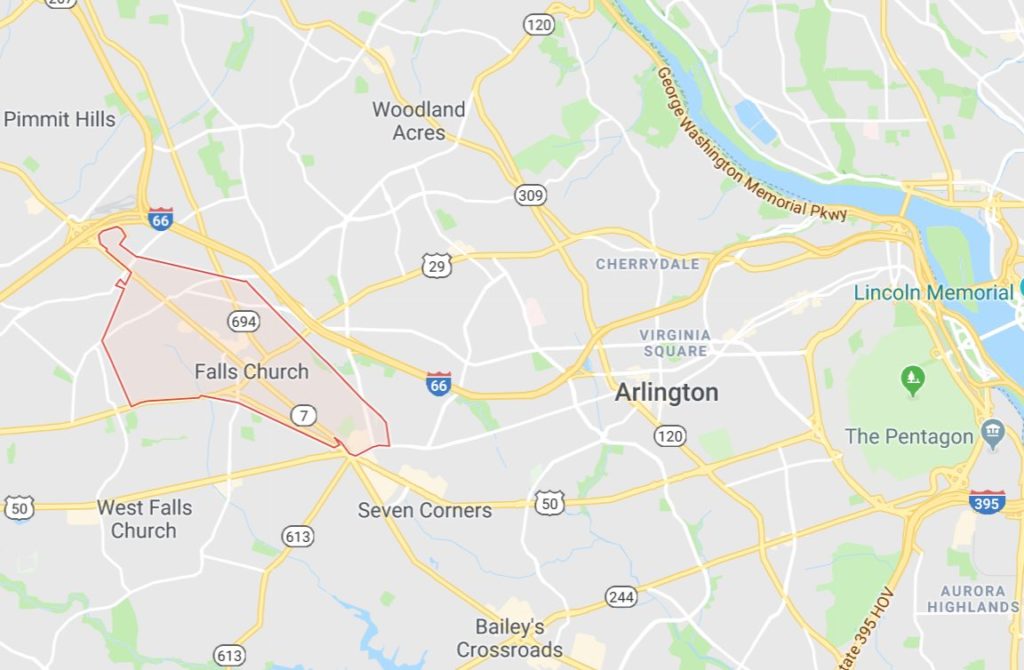
We now regularly hear about younger Arlington residents trading in their rentals to buy homes in that slightly more affordable Little City on our western border: Falls Church. We would love to continue serving them. And that’s on top of other parallels between Arlington and Falls Church: the two jurisdictions share courts, a fire department, a public safety radio station, and have discussed other ways to work together.

Many aspects of civic life in Falls Church are already well covered by our friends at the Falls Church News-Press. Our approach to coverage of the two-square-mile city would be a bit different: focusing on breaking news, businesses openings and closings, events, development, roads and trails, and other subjects that could be of interest to both residents of Falls Church and Arlington.

But first, we wanted to put the question to you: do you think ARLnow should cover the City of Falls Church? (We would, in turn, also open up our event calendar to events in Falls Church.)

Map via Google Maps


ARLnow reports on news that happens any hour of the day, any day of the year. But generally, barring breaking news, we only publish articles during waking hours on weekdays.

This schedule means that readers can check out over the weekend and not have to worry about falling behind on the latest Arlington local news. And it means that our staff can take a couple of well-deserved days off at the end of the week.

That said, we’ve had more local news than ever to report over the past few months, and it has us considering expanding our publishing schedule — specifically, by publishing on Saturday.

Staffing up for news coverage on Saturday would allow us to better cover breaking news over the weekend and report on Saturday Arlington County Board meetings in real time. It would also mean that we won’t have to skip some smaller stories that don’t make the weekly cut, while providing more flexibility for publishing feature articles funded by our Patreon community.

The downside is that some readers clearly prefer to tune out over the weekend. Even when we’ve tried to publish a full slate of articles on a Saturday, readership is roughly half of a typical weekday. And… well, even those of us most passionate about local news reporting are a little less enthusiastic about spending most of their Saturday at a County Board meeting.

All things considered, what do you think about ARLnow publishing on Saturdays?


The weather outside today may be frightful, but temperatures are set to turn positively delightful this weekend.

After a couple oppressively rainy days, the forecast calls for skies to clear and temperatures to rise as Christmas approaches.

As always, you can curl up by the fire with our most popular stories of the past week:

  1. Mike Isabella’s Three Ballston Restaurants Have Shut Down, As ‘Top Chef’ Star Dissolves Company
  2. Police Investigating Apparent Murder-Suicide Near Seven Corners
  3. Baja Fresh in Clarendon Appears to Have Closed
  4. With Amazon On Board, JBG Smith Prepares to Bet Big on ‘National Landing’
  5. Police Charge Dump Truck Driver Who Allegedly Struck Woman Pushing Stroller in Rosslyn Crosswalk

Head down to the comments to discuss these stories, your holiday weekend plans or anything else local.

The ARLnow team will be publishing on a limited schedule Monday (Christmas Eve), but we’ll be back to our regular schedule on Wednesday. See you then!


The Right Note is a weekly opinion column. The views and opinions expressed in the column are those of the author and do not necessarily reflect the views of ARLnow.com.

Tis the season of reflecting on the year that is almost behind us and looking forward to the year to come.

Here are a few things that caught my eye this week as we are rounding the corner into 2019.

Out With the Old?

The county manager this week sent a shot across the bow of the ART bus service, saying bluntly that it “stinks.” More likely than not, Mark Schwartz is just trying to get their attention, not necessarily making a threat to yank their contract next time around.

Over the past week, John Vihstadt was honored for his service on the Arlington County Board. Katie Cristol and Christian Dorsey each heaped praise upon the departing Vihstadt, no doubt hoping he would not run again in 2019 when they are both on the ballot. For his part, Vihstadt left open the possibility of running again, telling his supporters not to put away their purple.

In With the New?

The County Board also welcomed its newest member this week. Matthew de Ferranti pledged in his first ceremonial speech to follow in the footsteps of his predecessor and listen to all perspectives on the issues. It was nice rhetoric to hear as the County Board reverts to one-party rule once again, particularly facing the big Amazon vote as well as a tax rate increase that was telegraphed by the Board’s budget guidance. Only time will tell how serious he is about his promise.

A judge this week tossed out a lawsuit challenging the renaming process for Washington-Lee High School. There is no doubt that this process has been one of the most unpopular moves the School Board has made, particularly among the W-L alumni. But the ruling may clear the way for the School Board to vote on a new name on Jan. 10 with the most likely outcome that the school remains “W-L” with the “L” still TBD.

Meanwhile, Delegate Patrick Hope hopes to pass a bill through the General Assembly to allow for instant runoff voting in Arlington County Board elections. In such a system, if no candidate reaches 50 percent of the vote, the lowest vote getter would be eliminated. Then, those who voted for that person would have a second choice indicated on their ballot and those votes would be allocated accordingly. The process would repeat until someone reached a majority.

Hope’s goal is to prevent a fringe candidate from winning a crowded Democratic primary with just 20 percent of the vote. While there is absolutely no indication that such a move is necessary, Hope is forging ahead.


Progressive Voice is a weekly opinion column. The views and opinions expressed in the column are those of the individual authors and do not necessarily reflect the views of their organizations or ARLnow.com.

By Christian Dorsey

Amazon’s embrace of Arlington as one of two sites for its corporate headquarters expansion stands as one of the more significant events in the history of our county. Already, camps have emerged that are unabashedly for or against welcoming the world’s largest online retailer. Yet for many, there are significant questions when assessing whether Amazon in Arlington stands as a positive development.

Implicit in some of these questions is a concern: “Can embracing Amazon be consistent with my progressive values?” It is a concern that I have wrestled with, and I believe that the presence of Amazon in Arlington can be consistent with my progressive values and even accelerate our moving toward a more equitable and inclusive community. Here are a few ways in which this could happen, if the County Board and our community hold firm to a path of equitable growth and inclusive opportunities. 

A Better Deal for Residential Taxpayers

Arlington faces a near-term budget deficit where the costs of delivering fundamental government services are growing faster than our revenues. My County Board colleagues and I will work with the county manager to find efficiencies in service delivery and raise revenues as necessary. The high commercial vacancy rate — around 18 percent — means that residential taxpayers shoulder more of the load for delivering government services than when the tax base was evenly split between the commercial and residential sectors.

Amazon alone does not solve that, but its planned absorption of 4-6 million square feet of office space in Pentagon City and Crystal City, along with the yet-unknown investment Amazon will spark, means that Arlington will be on the path toward the commercial sector paying for a larger share of our community’s needs in housing, infrastructure, schools, parks and sustainability programs.

Increasing Our Housing Supply to Encourage Affordability

Many are concerned that Amazon in Arlington will have the same deleterious effects on housing affordability and homelessness that have occurred in Seattle. Without effective intervention, those concerns could be realized. However, leaders across our metropolitan region have committed to increasing the region’s housing supply so that we accommodate projected employment growth, while stabilizing prices overall.

In 2019, the jurisdictions that compose the Washington Council of Governments are looking to develop a regional plan for housing, and here in Arlington, the Board expects to consider proposals to permit exterior accessory dwellings and to encourage preservation of market-rate affordable housing through Housing Conservation Districts. We will also begin exploring zoning ordinance flexibility to permit housing types that are more affordable by design, and our investments in committed affordable units will be enhanced by $15 million each year for the next 10 years that the commonwealth of Virginia will devote to Arlington and Alexandria.

Jobs and Opportunities

Amazon is planning on investing $2.5 billion to construct the Arlington headquarters and to accommodate at least 25,000 permanent jobs. My goal is to work with Amazon to implement a competitive Project Labor Agreement (PLA) so that jobs needed to construct, renovate and equip their buildings are quality jobs where workers will earn livable wages with robust labor standards. These temporary jobs — along with half of the permanent jobs that are expected to be entry-level, support and junior positions — provide a significant opportunity to expand job opportunities. I am committed to seeing that Arlingtonians who are underserved and underemployed have a chance to compete for those jobs.

Smart Incentives

I have engaged many in the community on concerns about offering incentives to a company as big as Amazon headed by the wealthiest man in the world. I don’t like it either. Yet as an elected leader, I must deal with the world as it is while trying to shape it into the world most of us want it to be. The County Board stood firm that any direct incentive offered to Amazon would not divert existing revenues. Our staff has proposed granting them an increment of the transit occupancy tax growth (mostly paid by non-Arlingtonians) that occurs after they establish here. The other incentives that staff proposed are investments already identified in our capital improvement program, envisioned in our Crystal City Sector Plan or are current policy priorities.

Furthermore, the commonwealth of Virginia will fund hundreds of millions of dollars in projects devoted to transportation such as improvements to Route 1, a bicycle pedestrian connection to the airport and a second entrance to the Crystal City Metro station, and affordable housing. On top of that, a graduate campus for Virginia Tech will be constructed just across our border in the City of Alexandria along with as yet undefined contributions to K-12 education and other local universities. These state investments would not be realized without Amazon coming to Arlington. They serve to catalyze job growth, housing investment and a transformation of the built environment in both Pentagon City and Crystal City.

With the opportunities comes the responsibility to ensure that we realize the benefits of Amazon while avoiding and mitigating adverse consequences. The path Arlington must pursue is one of equitable growth, where Amazon builds in a manner consistent with our approved plans and community benefits are secured commensurate with their impact, and inclusive opportunities, whereby Arlingtonians seeking stable employment or better jobs are given priority consideration by Amazon’s recruiters. I am confident this can become a shared vision with Amazon and I personally welcome our community demanding that this vision become our reality.

Christian Dorsey is Vice-Chair of the Arlington County Board, a principal director of the WMATA Board of Directors, a commissioner on the Northern Virginia Transportation Commission, a member of the Transportation Planning Board, and member of the Board of Directors for the Metropolitan Washington Council of Governments.


Peter’s Take is a weekly opinion column. The views and opinions expressed in this column are those of the author and do not necessarily reflect the views of ARLnow.com.

The County Board approved the Four Mile Run Valley Area Plan (Area Plan) at its Nov. 17 meeting. A Dec. 13 c ounty press release summarizes the plan.

The plan recommends the continuation of industrial and commercial uses, while also encouraging more arts-related uses. The recommendations also call for a new working group to duplicate what another county committee already has accomplished.

That new working group will:

  • waste government resources and volunteer time
  • discourage future volunteer recruitment

Background

At the direction of the County Board, the Arts District Committee was formed to study the possible creation of an Arts District in the Four Mile Run Valley Area. With significant and constructive input from businesses, arts representatives and the community, a detailed report, known as the SNAIQ report, was issued. Like other parts of the Four Mile Run Valley study, this report was shared widely through numerous meetings and public engagements.

What the County Manager is mistakenly doing now

A county manager Oct. 12 report recommended a new planning process to identify “an arts/industry vision.” This manager’s report also recommended the appointment of a new working group to work on this project for at least a year.

Referencing the existing SNAIQ report, the county manager’s  Oct. 12 report states: “while these suggestions have not yet been fully analyzed by staff, staff would make this information available to the future working group established to advance the arts district idea.”

The SNAIQ report was published in 2017. The County government now has admitted that it hasn’t reviewed it, yet it somehow did find the time to recommend a new working group to duplicate what another county committee already has accomplished?

In outlining the proposed new working group process, county staff, at an Oct. 20 County Board hearing, said it wanted to “establish a vision for a possible arts district” and “look at a variety of scenarios… and pros and cons” (beginning at 1:16:17 and at 2:01:16 and in the county manager’s report).

This is a direct duplication of what the existing Arts District Committee already did in preparing the SNAIQ report. (Just read page two of the SNAIQ report to verify.)

Conclusion

I have previously criticized the possible use of new taxpayer subsidies that might be part of the creation of a formal Arts District. Before any serious consideration is given to any such new taxpayer subsidies, the County Board must adopt a comprehensive 21st century arts subsidy policy and engage in a transparent cost benefit analysis of any proposed Arts District.

However, the County Manager’s plan for a new working group essentially ignores a significant and effective job by volunteers on an authorized, existing county committee (page 5).

County Board members often proclaim that recruiting and encouraging residents to serve on county committees is a high priority, but the county manager’s plan here will have exactly the opposite effect. The County Board failed us by acquiescing in the manager’s plan at its Nov. 17 hearing. (The county government even failed to post on its website a Nov. 16 letter from the existing Arts District Committee explaining its position.)

The Arts District Committee ably fulfilled its charge. If further work needs to be done, this existing committee would like to do it. Instead of duplicating its significant work, the county should ask this existing committee to continue its work with a new, expanded portfolio.

As one Arts District Committee member stated, “All in all, I think the Arts District Committee experience has been a model for how such groups can and should operate – dare I say it, a model of ‘the Arlington Way.'”

Proceeding with a new working group in these circumstances mocks the Arlington Way.


(Updated at 10:30 a.m.) For years now, there have been calls to revamp, fix or rethink the “Arlington Way.”

There is no single, comprehensive definition of what the Arlington Way is, but broadly, according to one county document, “the Arlington Way refers to the form citizen participation takes in Arlington County.”

It is, essentially, the way the county government — along with the school system — goes about shaping its plan and policies, through input from stakeholders like civic associations and by convening committees and commissions.

While the stated goal is inclusion and seeking input, there have been grumbles over the years that the Arlington Way is actually about getting residents to accept a preordained outcome set by elected officials or county staff.

The recent elementary school boundary process, Four Mile Run Valley planning process and Washington-Lee renaming process all featured disgruntled residents complaining about getting railroaded. In those and other controversial decisions, we’ve often heard from those involved that they felt certain cogs in the community process — committee members, consultants hired as “facilitators,” etc. — were specifically chosen to help steer the process to a desired outcome.

On the opposite side of those arguments, others who’ve talked to ARLnow have expressed disappointment in the slow, trodding pace of decision-making in Arlington. The complainers, some have said, are simply trying to slow down progress or to use the process to get their way despite being ultimately being in the minority on a given issue.

There has been a notable amount of off-the-record criticism, for instance, about the County Board dragging out the approval process for a very necessary expansion to Virginia Hospital Center. The cost to the hospital and the delay in the project, some have said, was not worth trying — unsuccessfully — to appease a handful of residents who essentially didn’t like the idea of bigger buildings in their neighborhood.

That’s not to mention the fact that serving on committees is a massive time commitment — a big “ask” of those involved — and attending civic association and County Board meetings requires setting aside considerable time as well. Thus, those serving on committees and attending meetings are often those with strong opinions about the outcome — opinions not necessarily reflective of the view of most residents unwilling or unable to put in the time.

So today we’re asking: what should be done about the Arlington Way? Should it be scrapped altogether in favor of a more streamlined process of gathering community input — online or otherwise — and then letting those elected to make such decisions do so, taking into account the input received? Or should it be kept the same or even strengthened to be more inclusive and iterative, and less deterministic?


Rain is rolling into our neck of the woods tonight, and doesn’t seem set to leave any time soon.

The forecast is calling for a soggy weekend with no relief in sight until Sunday night — but at least temperatures will inch up just a hair.

Anyone looking to persevere and celebrate the holiday season, despite the rain, can take advantage of the Washington Regional Alcohol Program teaming up with Lyft to offer free rides again.

Starting today (Friday), rides up to $15 are free with the use of a promo code from 8 p.m. to 4 a.m. The offer will continue until Jan. 1. Weekly codes will be posted at the Sober Rides website at noon on today, then Dec. 22 and Dec. 31. The weekly code is only valid for one ride.

Our event calendar can help with brainstorming for ways to take advantage of that offer. Or you can stay inside and catch up on our most popular articles of the past week:

  1. School Board Signs Off On New South Arlington School Boundaries, Ending Messy Debate Over Maps
  2. Crystal City Building Evacuated Amid Widespread Bomb Threats
  3. Police Drag Man Out of Home After Alleged Drunken Conduct Around Child
  4. Chick-fil-A in Ballston Quarter Starts Serving Up Sandwiches Today
  5. Dump Truck Injures Woman Pushing Stroller in Rosslyn

Head down to the comments to discuss your weekend plans, or anything else local. Have a great weekend, and stay dry!


The Right Note is a weekly opinion column. The views and opinions expressed in the column are those of the author and do not necessarily reflect the views of ARLnow.com.

The County Board will close out the year at its Dec. 15 meeting by considering their legislative priorities and policy statements to transmit to the Virginia General Assembly.

The Board’s top priorities are more money for education and transportation. They also would like some of the money back that was used to pay for Medicaid expansion, an initiative they supported. According to their priorities, they would be happy to pay for any spending increases with new taxes on internet sales as well as the extra revenue created by the federal tax cut. The County Board will have to get in line behind the $462.5 million shortfall in the Medicaid budget that will have to be made up first.

The policy statements are a rather extensive laundry list of 39 items, some of which have no impact on the job of our County Board other than to make a political statement.

But let’s look at a couple examples of where we agree.

Improvements in mental health services. If you talk to health care professionals, school administrators, and law enforcement, addressing mental health issues is critically important to fighting back against so many of the tragedies we see around us, including drug addiction and suicide.

Supporting law enforcement efforts across Virginia to fight against human trafficking. Many people do not realize that this modern day slavery is happening all around us. Law enforcement is already working hard on this issue, but they need our continued support.

And examples of where we disagree?

Putting the ability to raise taxes at the top of the list. Despite protestations to the contrary, Arlington County continues to take in more and more revenue each year. And our County Board has already signaled a willingness to raise taxes next year under their current authority.

“Non-partisan redistricting.” It sounds nice but may have no practical effect on the influence of politics into the process. In fact, a popular proposal to make redistricting less partisan essentially remove any accountability to the voters for the process by using an appointed commission — appointed by the party in power. And since every seat on the County Board is elected countywide, this definitely falls into the not relevant category.

The Board opines on everything from immigration, to the ERA, to solar power, to preserving trees, to the ability to impose greater local land use restrictions, to tracking our movements by keeping data from license plate readers. You should read the entire list for yourself.


Progressive Voice is a weekly column. The views and opinions expressed in the column are those of the individual and do not necessarily reflect the views of their organizations or of ARLnow.

By Nick Dilenschneider

When I moved to Arlington in 2011 to study law at George Mason University, I had no idea what my future looked like. Through the years as I have settled into the community, the desire to make Arlington where I want to live and raise a family has grown stronger. It grew considerably after the 2016 election when I became intimately involved with the Arlington Young Democrats and in Democratic politics more generally. Over time and through this work I have established close friendships that will surely last a lifetime, come to appreciate how truly special and unique this community really is, and recognized how fortunate I am that fate brought me here.

I suspect that like me, many other young people have come here to receive an education, be on the front line of politics and international affairs, pursue a career in public service, or dedicate themselves to issue-based advocacy by working at a non-profit. Unfortunately, our future in Arlington is jeopardized by the lack of affordable housing. In many instances young residents will be forced to decide whether to continue living in Arlington and accept the risk that we may never own a home — or distance ourselves from friends and professional networks established at a critical juncture in our lives in order to buy a home elsewhere to better secure a stable financial future.

There is no singular experience in Arlington, a fact that should remind us to listen to all communities with a stake in achieving the dream of living for the long term in Arlington, and ensuring they are active participants in shaping public policies on housing affordability, transit options and other factors contributing to livability. Tapping into the experiences and ideas of our county’s millennials will help make the middle class dream a reality for more Arlingtonians.

Housing affordability is one of the most pressing issues for our county and particularly for young people. This problem is not unique to Arlington. For instance, this year a one-person household in San Francisco can earn as much as $82,200 per year and still qualify for affordable housing.

Is this Arlington’s future as well? It may very well be if steps are not taken to mitigate the risk. One possible solution is to adjust Arlington’s Moderate Income Purchase Assistance Program (MIPAP) so the maximum income thresholds for eligibility are not tied to the region, but rather to conditions in Arlington itself. Under the current framework, these thresholds are being artificially suppressed and will only serve to make people ineligible who might otherwise qualify for the program. In addition, other considerations such as student debt, hours spent volunteering in the county, and time spent living or working here should be factored in to provide additional assistance for those looking to buy. These changes alone will not resolve the housing situation in Arlington, but they are straightforward and pragmatic proposals that will at least help on the margin.

It is also essential that we continue expanding transit options within the county. Young people often forego having a car (or cannot afford one) and instead rely on other modes of transportation such as Metro, Uber/Lyft, and shared mobility devices like bicycles and scooters. The continued development of such options will improve the quality of life for young people in Arlington.

Ultimately, solving the problem of housing affordability — or at least addressing it in a meaningful way — will take substantial time and resources, not to mention the courage of citizens and elected officials to explore bold actions like re-zoning or single-dwelling areas to facilitate the development of multi-family and multi-use units. The debates surrounding such consequential decisions will be difficult, but they must take place. Otherwise, the already elusive dream of owning a home in Arlington will slip even further away for my generation and other young people.

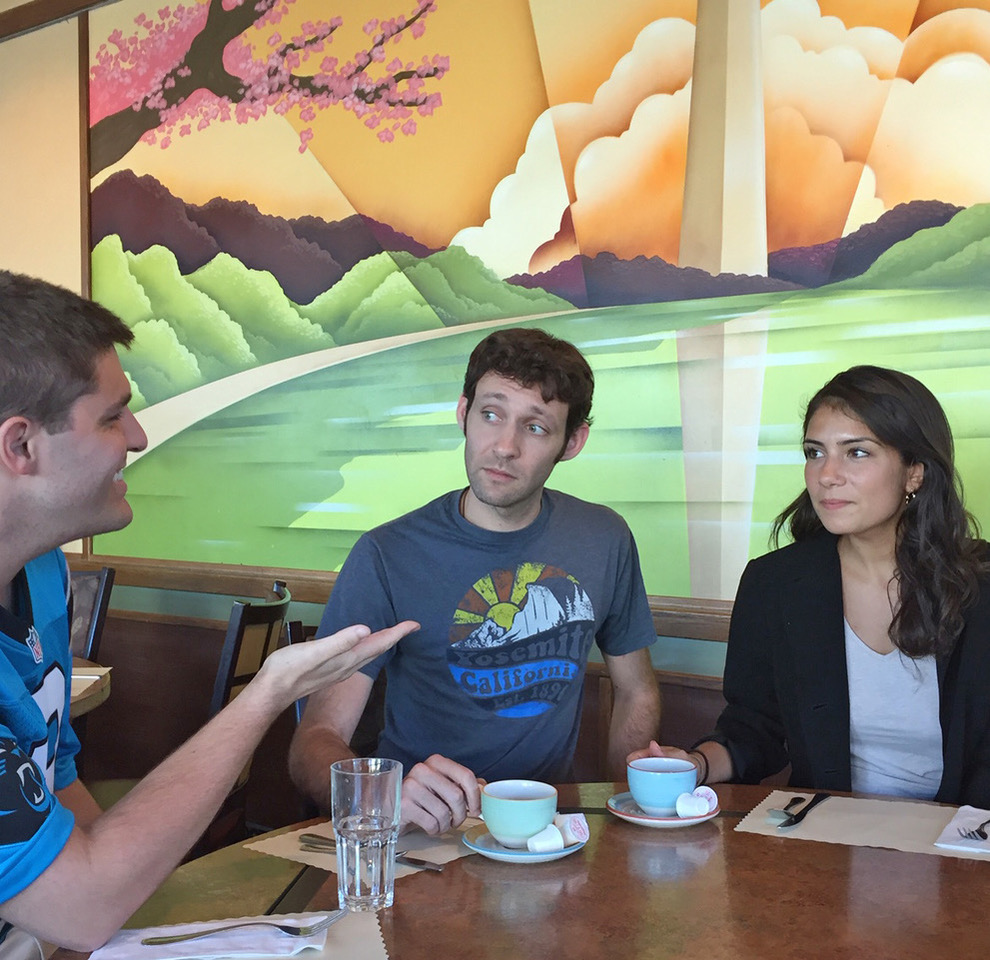
Nick Dilenschneider (left, in the photo above, with Jimmy McBirney and Nicole Merlene) is an attorney who lives in south Arlington, commutes to D.C for work, and enjoys Arlington’s many neighborhoods and establishments. He hopes to one day own a home in Arlington.


Peter’s Take is a weekly opinion column. The views and opinions expressed in this column are those of the author and do not necessarily reflect the views of ARLnow.com.

In October, I explained why the Arlington Public Schools superintendent was placing the cart before the horse by proposing to swap the buildings currently housing the Arlington Science Focus (ASFS) and Key Elementary Schools.

On Nov. 16, APS staff posted a new FAQ document that continues to dodge these major questions:

  • does the swap make sense?
  • should the School Board leave that decision to APS staff?

The School Board should direct the Superintendent to cancel the ASFS-Key building swap

APS’s premise that the Superintendent can approve this swap because it only entails swapping programs is incorrect. Further, given the major level of disruption that a swap would cause, the School Board should step-up and own any swap decision as a matter of community accountability.

An APS memorandum (“memo”) discussed at an August 28th School Board meeting offered six reasons for the swap. None of those reasons justify a swap:

  1. The memo states that ASFS is the only neighborhood school that sits outside its attendance boundary. It proposes the swap to fix this without thoughtful consideration of what a new boundary could offer. APS created this problem via its Options and Transfer Policy. APS should fix it by drawing a revised attendance boundary around ASFS.
  2. The memo states that the Key building can accommodate all 680 ASFS K-5 current students through use of trailers. However, if APS intends to move the ASFS program to the Key building, APS also needs to move the associated equipment to Key, reducing the Key building capacity to 605 students. Meanwhile immersion students will be crammed into a building that is 19 percent smaller.
  3. The memo states that a swap offers more flexibility than boundary changes. APS guarantees that once a student is admitted to an option school or accepts a transfer to a neighborhood school, enrollment is continuous until there is a boundary change. Since the School Board plans to revisit all boundaries in 2020, APS should maximize its flexibility by waiting for the next boundary process to determine if option and neighborhood schools should be moved. If a program move is needed (such as moving an elementary immersion program), a county-wide analysis should first be published and discussed with the community to determine the optimum locations of elementary immersion programs and to locate neighborhood schools in places where all the seats will be filled.
  4. The memo claims the swap would minimize the number of students needing to be reassigned to different schools. But as demonstrated repeatedly during the just-concluded South Arlington boundary process, parents deserve to be highly skeptical of such APS assurances. Rather than make an impetuous decision, APS should wait until the 2020 boundary process to determine if program moves are needed and all APS sites should be considered.
  5. The memo claims the swap would reduce transportation time for students, incorrectly comparing the 46 percent of students who could walk to Key to the 18 percent of students APS says can walk to ASFS. But the superintendent did not do a comparative analysis of crossing guards and walkability. Others have. Their analysis shows that drawing a boundary around ASFS and adding a crossing guard at N. Kirkwood Road enables more walkers than Key. The Key crossing guard enables 62 students to walk, while one at Kirkwood will enable 184 more ASFS students to walk. ASFS’s ½-mile and 1-mile walkability rates are 40 percent and 51 percent respectively, while Key’s are 28 percent and 46 percent. Drawing a reasonable boundary around ASFS yields the greatest reduction in the number of busses and reduces transportation time for many students who have one of the longest bus rides in APS (to Ashlawn Elementary) even though they live within ½-mile of ASFS. During a $43 million APS budget shortfall, this fiscally responsible path forward has no “TBD”-program-move costs and reduces overall transportation costs.
  6. Finally, the memo notes that the current constrained ASFS walk zone is not diverse. But, for diversity purposes, APS should be comparing attendance boundaries not walk zones. The families who live within 1-mile of ASFS are diverse. Moreover, APS overlooks major developments that will provide diversity like the 100 percent committed affordable housing American Legion redevelopment in the same planning unit as ASFS.

Conclusion

Even to the casual observer, the Superintendent’s proposed ASFS-Key building swap exposes a lack of basic long-range planning. For that reason alone, the School Board should cancel the swap and work to regain the public trust.


View More Stories