Halloween weekend has arrived, and the forecast is looking a bit spooky.

A nor’easter seems set to bring plenty of rain tonight and tomorrow, and the temperatures just keep dropping.

Luckily, the rain should mostly leave the D.C. region by Sunday, meaning the Marine Corps Marathon and some of the Halloween fun scheduled for this weekend should go off as planned. Be sure to check our event calendar for a full list of the goings on this weekend.

And if you’re huddled up inside, you can always catch up on our most popular stories of the past week:

  1. Arlington Man Arrested After Sexual Assault, Homicide in Douglas Park
  2. Condominium Building Fire in Rosslyn Area
  3. Video: Soldier on Scooter Menaced by Driver in Pentagon City
  4. Man Killed While Trying to Stop Sexual Assault Remembered as Warm and Unassuming
  5. Police Investigating Fall from Ballston Apartment Building

Head down to the comments to discuss these stories, your weekend plans or whatever else strikes your fancy. Have a great weekend!


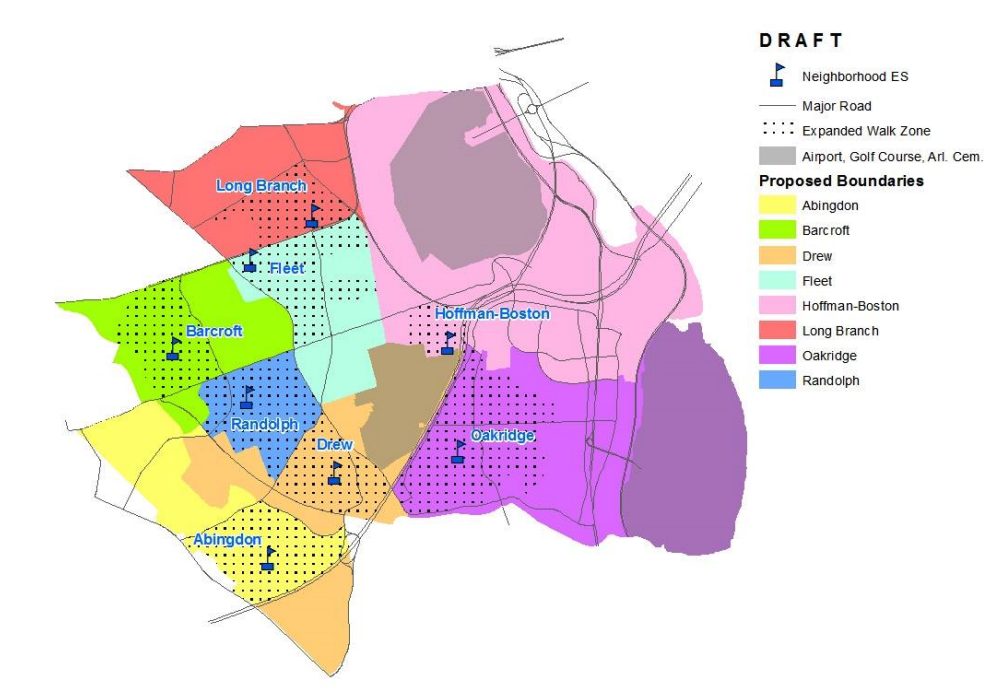
The following Letter to the Editor was submitted by Mike Rosenberger, a parent of a second grader at Abingdon Elementary who has deep concerns about a proposal by Arlington Public Schools officials that would send some students in South Fairlington neighborhoods to Drew Model School instead of Abingdon.

The School Board has spent the last few months considering a redrawing of boundaries for eight South Arlington elementary schools, precipitated by the opening of the new Alice West Fleet Elementary next year, and tempers have frequently flared over how the changes will impact Drew, in particular. But one APS proposal designed to alleviate those concerns has prompted new worries among Abingdon parents.

The Board is still considering a variety of proposed maps, and will approve final boundaries in December. 

I am writing regarding the proposed elementary school boundary map released at APS’s “What We Heard” meeting on Oct. 17. APS’s proposal to bus the students of southern Fairlington from the walkable Abingdon school zone to Drew Model School is not in the best interests of the children and does not reflect the values or the limited transportation resources of the county. The failure of the “What We Heard Proposal” to address in a fair and appropriate way several of the county’s guiding principles in the redistricting process means that this map should be withdrawn from serious consideration.

One of APS’s objectives in establishing new elementary school boundaries is to ensure that most students can attend the school closest to their home. Under the current proposal the students of southern Fairlington, all of whom live within one mile of Abingdon, would be bussed up to two miles to Drew Model School. This proposal would effectively eliminate the popular options of walking and biking to school for all southern Fairlington students, despite the know health benefits of walking or biking to school. Virginia’s Safe Routes to School initiative recognizes that children who walk or bike to school are more active, more physically fit, and more ready to learn when they arrive at school than students who are driven or bussed to school.

Increasing the school transportation needs of Fairlington also has important consequences for APS’s future capital and operating costs. The fiscal year 2019 school budget already allocates $18.3 million for transportation and was only balanced by extending the useful life of buses by three years. Arlington County is already being forced to make difficult financial decisions about existing tax rates and services. The School Board must look for opportunities to stabilize or reduce transportation costs and concentrate its budget on children’s educational needs.

The walk from southern Fairlington to Abingdon is through a safe neighborhood that features contiguous sidewalks, crosses no major roads, has no traffic lights, and, for some children, would be as short as .3 miles. Expanding the Abingdon walk zone would be a common-sense decision that supports APS’s dedication to the welfare of the whole child and would seize a valuable opportunity to reduce transportation needs from the current levels.

I ask the School Board to consider the significant benefits of leaving the southern portion of Fairlington within the borders of Abingdon Elementary School. I understand that redrawing school boundaries is a difficult process. Finding a better alternative to the current proposal would not only be in line with Arlington County’s efforts to promote walkable communities, but would also serve the health interests of the children of southern Fairlington and APS’s limited transportation resources and budget.

I encourage APS to withdraw the “What We Heard Proposal,” to explore other options, and to think more creatively about possible solutions to the challenges we face as we work to ensure our schools meet the needs of our communities.

Sincerely,

Mike Rosenberger

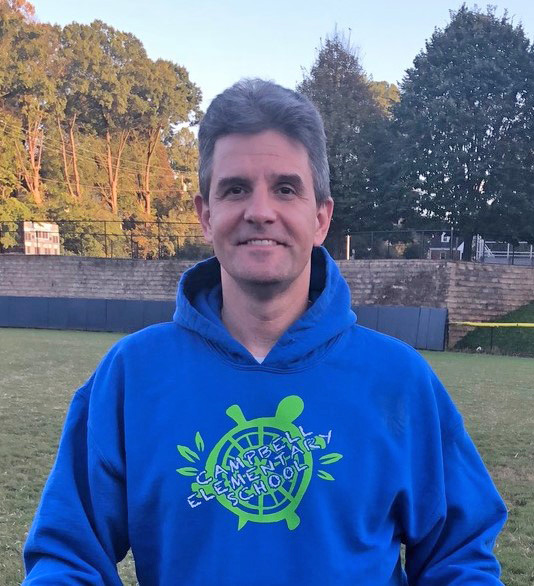
ARLnow.com occasionally publishes thoughtful letters to the editor about issues of local interest. To submit a letter to the editor for consideration, please email it to [email protected]. Letters may be edited for content and brevity. Photo via Arlington Public Schools.


The Right Note is a weekly opinion column. The views and opinions expressed in the column are those of the author and do not necessarily reflect the views of ARLnow.com.

On the County Board agenda this past week was the County Manager’s recommendations on closeout spending for this year. The manager recommended that $16.5 million be set aside to offset next year’s budget.

This is certainly better than spending all of it now and causing tax rates to go even higher next year. However, the proposal still falls short of where we need to be.

The county manager is already previewing that he will ask County Board members for a tax rate increase in 2019. It will be necessary, he says, to address the $78 million “shortfall” for next year.

The schools are slated to receive $10 million to spend now in the closeout process. This money should be set aside to address a shortfall next year they project could be as much as $43 million.

The manager opted to recommend an increase in the county reserves from 5 percent to 5.5 percent. There is no demonstrable need to do so. Once again, millions more in revenue came in during the last fiscal year than was projected.

This was totally predictable, as it happens year after year. Just as the county does not spend its entire budget, year after year. In other words, next year’s budget “crunch” will also not be as dire as the county manager is predicting — just like it wasn’t this year. So, the $6.4 million added to the reserves should instead be set aside for next year.

Finally, the county manager recommended he receive a $2 million contingency fund to spend as he sees fit. Included as examples of items the manager could spend this money on is an airport noise study and a parking permit study.

It goes without saying that these are not emergencies, particularly if the budget is really “crunched.” There is no reason the County Board cannot approve these expenditures in a supplemental fashion. The County Board should reject this slush fund and set it aside for next year.

With all of this in mind, the County Board should modify the manager’s proposal. In total, $34.9 million from this year’s closeout funding should be used to pay for next year’s budget. That would cut the “gap” nearly in half without raising the tax rate one penny or making any cuts.


Progressive Voice is a weekly opinion column. The views and opinions expressed in the column are those of the individual authors and do not necessarily reflect the views of their organizations or ARLnow.com

By Nathan Zee

As an Arlington resident for 17 years, and a former PTA president with two elementary-age children in the Arlington school system, I’ve been closely following the race between Matt de Ferranti and John Vihstadt for County Board.

Four years ago I voted for John Vihstadt — and I now regret it. John campaigned on promises to reduce the commercial vacancy rate, proactively address school capacity challenges, support parks and recreation, including youth sports, and deliver other core services. He also promised to replace the Columbia Pike streetcar proposal with a robust Bus Rapid Transit System.

John Vihstadt has not delivered. Over and over again, he emphasizes a “delay and obstruct” approach to governing — often in response to only a few shrill voices — which results in rising costs for core services over time.

In the face of a capacity crisis plain to any parent of an APS student, John spearheaded efforts to delay the new Alice West Fleet Elementary School. The school is scheduled to open in 2019 instead of 2018, which increased construction costs and trailer expenses. He led the charge to postpone addressing youth soccer capacity challenges with his vote against adding lights at the Williamsburg Middle School and has aligned himself with a group focused on reducing the number of sports fields in Arlington. This is despite years of work from community groups and constructive solutions at other lighted fields across Arlington. He also voted to delay the contract award for the new Lubber Run Community Center.

John Vihstadt has failed to lead or advance Bus Rapid Transit on a meaningful timeline along Columbia Pike. Earlier he was loudly vocal against the streetcar, but over the past four years he has been strangely silent in showing what being “for” Bus Rapid Transit really means. His delay tactics, always pushing decisions on down the road, increase future costs to taxpayers while denying us much needed services today.

As I cast my vote for County Board on Nov. 6, this time I’m choosing Matt de Ferranti, a candidate who is more deliberately and urgently focused on making things better for future generations. Matt de Ferranti will make fiscally smart, prudent investments to achieve progressive goals like education, parks and recreation activities and the basics like storm water management. He will make decisions with plenty of community input, yet without dragging out decisions and actions for years.

Matt de Ferranti has clearly articulated what he will focus on as a member of the County Board.

His priority is bringing down Arlington’s commercial vacancy rate more quickly and more purposefully. Unless the county brings in new businesses (and revenue) more quickly, Arlington will never be able to fund our countywide priorities like schools. Matt advocates bringing in different types of businesses in the fields of the future, like cybersecurity, while investing in small and independent business to create jobs that grow our commercial tax base.

Matt de Ferranti supports our world-class school system. In his leadership role on the School Board’s Budget Advisory Council, he’s demonstrated the ability to make tough choices like taking the lead on reducing the APS budget deficit by $20 million in a tight budget year while prioritizing spending on core services for our students. Matt has actually shown he can make the tough choices on governing instead of just saying “no.”

Matt understands the importance of community centers, parks and youth sports. He is opposed to efforts that will shrink the number of sports fields, and is committed to identifying cost-effective solutions and putting them into action promptly, putting into practice the same sound judgment that helped the school system.

Matt’s values demonstrate fiscal responsibility. Please don’t fall for Vihstadt’s fear mongering about wasteful spending or tales from many years ago. John’s way is to rail “against” something, but it’s much harder to do the heavy lifting of government and nimble decision-making that shapes what Arlington is “for,” and there Vihstadt has failed. His delay and obstruct approach results in higher future costs while limiting progress for us today.

We need a fresh perspective on the County Board. Matt de Ferranti will make the tough choices in a timelier, cost-effective manner for investing our limited resources to address countywide challenges. Let’s elect Matt de Ferranti for County Board on Nov. 6.

Nathan Zee is a long-time resident of the Arlington Forest neighborhood. He’s married with two children and loves to call Arlington his home.


Peter’s Take is a weekly opinion column. The views and opinions expressed in this column are those of the author and do not necessarily reflect the views of ARLnow.com.

Like thousands of other Arlington Democrats, I support independent John Vihstadt for re-election to the County Board.

Having an independent as one of the five Board members provides oversight, accountability, checks and balances.

John helped redirect the Board’s priorities

The Board is now more focused on core services:

  • Ended or scaled back many extravagant projects, like the streetcar, the aquatics center, the Artisphere, $1.6 million dog parks and million-dollar bus stops.
  • Prioritized funding for schools’ capacity and Metro while improving roads, parks, and public safety.

John’s community-centered vision for the future

Arlington’s population is forecast to continue to grow. That growth is a sign that we are considered a desirable place to live.

John commutes to work daily via public transit. He is the only County Board candidate who put children through Arlington Public Schools.

John has the many years of community experience necessary to implement his vision for Arlington’s future by properly managing growth.

Here’s how:

Developer contributions for schools and parks

John already has led the way to get the county soon to begin conducting development impact studies. John wants to reform developer contributions received in return for added density so that more money can go towards public facilities such as schools and parks.

Better coordination with our public schools

John is working to bring down Arlington’s high cost of school construction, to deliver new seats more quickly, and to help ensure educational equity for all Arlington communities through sound planning and adequate funding.

Community engagement from the start

John believes development impacts are better addressed when the full range of residents and stakeholders are made part of the discussion from the start, not as an afterthought.

Lowering the office vacancy rate

Free-market macroeconomic forces beyond county government’s control are a significant factor in our office vacancy rate. But, it’s still imperative that we lower that rate to hold down the tax burden on residents. John believes we must make the business environment more attractive through carefully structured economic incentives and minimizing red tape such as further reforming our permitting systems.

Improved environmental management

John believes we must do everything within our legal powers to address the negative effects of increased impervious surfaces on water run-off, our green space, and our tree canopy.

Stronger fiscal discipline

Continued funding pressures from needed school capacity and Metro repairs means it’s more essential than ever to spend our limited tax dollars wisely on core services – not extravagant projects. John is leading reforms to our approaches to end-of-year budget surpluses and to neighborhood infrastructure improvements.

Conclusion

Tribal partisanship has no place in local government decisions.

Extravagant projects like streetcars, a hyped-up aquatics center, million-dollar bus stops and fancy dog parks are not core Democratic Party values. Yet such projects sprung from group-think on a five-person Democratic County Board.

John has brought together voters from across the political spectrum, striving to take partisanship out of local issues. He has rightly questioned “the way we’ve always done things”.

We need a reliably fiscally conservative voice on the Board to evaluate the serious budget challenges coming next year and in following years.

You can read about John’s years of community service, more details on the issues on which he is running, and his support from across the political spectrum here.

Independent John Vihstadt should be re-elected on Nov. 6.


The Right Note is a weekly opinion column. The views and opinions expressed in the column are those of the author and do not necessarily reflect the views of ARLnow.com.

An article this week at the Sun Gazette suggested the County Board race was a referendum on the incumbent. If that were the case, many Arlington politicos believe John Vihstadt would win in a landslide.

The fact is Vihstadt’s reelection is not a lock Nov. 6. The 2018 political environment is much more favorable to Democrats than it was in 2014 when Vihstadt comfortably won a full term. Many Democrats who are expected to vote in 2018, but did not in 2014, may not be as tuned in to local issues as they are to what is going on across the river in Washington.

But every voter should know that John Vihstadt has been exactly the County Board Member he promised Arlingtonians he would be when he ran — an independent voice who does his homework on the issues and is a strong advocate for fiscal sanity.

Vihstadt has worked hard to stay on top of the issues that concern our community, not just during this election year, but all four years. All you have to do is scroll through his Facebook page to see how many events he attends throughout our county. This should not be a surprise. Vihstadt voluntarily contributed to his community long before he decided to run for the County Board, with a particular emphasis on supporting our schools.

Matthew Di Ferranti is running an interesting race. It is hard to to decipher what his campaign theme is other than, “I’m a Democrat, so elect me.” When he does talk about issues, he is often criticizing policies put in place by the Democrat majority which has run Arlington County for three decades. Yet, to elect him would guarantee more of the same by eliminating the lone independent voice.

I twice had the privilege to run for County Board as a Republican. Both times I found countless independents and Democrats around Arlington who believed as I did that one-party rule on the Board was not healthy for our community. Based on conversations I continue to have with people of all political stripes, that view is largely unchanged.

While John Vihstadt has been the driving force for positive changes, there simply are not yet three votes on the Board to do even more. Our regular budgeting and closeout spending processes could be reformed to be more transparent and to keep excessive spending in check. Big projects should be voted on separately as bond questions. To attract and retain more businesses, we must go beyond incentives for big companies and make this the best place for everyone to do business: eliminate the BPOL tax, reform and streamline permitting and revisit the zoning process in general.

That means we need more County Board Members like John Vihstadt, so the first step toward more positive change is to re-elect him on Nov. 6.


Progressive Voice is a weekly opinion column. The views and opinions expressed in the column are those of the individual authors and do not necessarily reflect the views of their organizations or ARLnow.com.

By Anne Vor der Bruegge

Along with Arlington’s high national rankings for its schools and livability, consider this fact: Arlington is home to tens of thousands of people living in or near poverty. Arlington’s median household income is $110,000, but there are significant income and quality-of-life disparities from one neighborhood to the next.

Nearly 20,000 people in Arlington live below the federal poverty level, which is $25,100 for a family of four — yet living costs for such a household here average three times that. Child care and health care workers, office cleaners, and restaurant, retail and construction workers are likely to be struggling with poverty. Some of Arlington’s baby boomers, disabled individuals and veterans are also among those.

While the statistics are sobering, individuals’ stories illustrate just how precarious living in poverty can be. One woman’s window was broken by a baseball. Confronted by the property manager with a $32 repair fee and worried about being evicted, she desperately handed over the cash. That $32 was her weekly bus fare to work. Looking for a ride made her late, so her manager docked her two shifts. She could no longer pay her babysitter, which meant she lost her job, bringing her back to the real possibility of eviction.

What can be done, collectively, for families that constantly live so close to the edge?

Beginning this fall, Arlington’s Department of Human Services (DHS) and a wide array of nonprofits convened by the Arlington Community Foundation are piloting a new approach with 200 families to break the downward spiral of poverty. Using the Bridges Out of Poverty framework, this public-private partnership represents a re-design of the safety net system to reduce bureaucratic hurdles and strengthen connections so people in poverty can gain traction and move forward.

The 200 Bridges pilot uses a two-generation approach with parents and their children to build opportunities for adequate housing and child care, jobs with better wages, health care, and educational advancement. This united effort involves unprecedented collaboration across the County, nonprofit system and families.

The Bridges Out of Poverty partners have streamlined the myriad consent forms for different organizations into one common form, while still complying with HIPAA privacy rules, so individuals no longer have to repeat their history over and over. They’ve reduced the “agency time” spent navigating the system, so people can use those hours more productively.

200 Bridges goes beyond services that stabilize families (such as emergency shelter or food) to address two important factors recognized in poverty research as requisites for forward mobility: having control over one’s life and a sense of belonging in the community.

A job loss, a catastrophic accident, an abusive partner, or addiction can put any of us in crisis mode. But people with a family legacy of economic security and community connections can recover from these crises far better than those coming from generational poverty. Brain science shows that the toxic stress of living in crisis limits one’s ability to maintain focus and take the long view to make a plan. A broken window and unexpected $32 charge play out very differently for someone in the middle class than for someone who is poor.

Anita Friedman, Director of Arlington County DHS, shares, “We envision that families participating in 200 Bridges will be empowered to identify what they need to thrive, and to more easily connect to the network of resources we have to support them. Our goal is for families to build social and financial capital for themselves and their children.”

Beyond this pilot, what can be done to address the root causes of poverty–too few decent paying jobs, lack of affordable housing, childcare, health care and opportunities for educational advancement?

Arlington County, the Community Foundation and the many nonprofit partners hope to use what is learned through Bridges Out of Poverty and other complementary initiatives to create policies that improve mobility for everyone in Arlington. For example, the experiences of these 200 families will inform efforts underway in Arlington’s Child Care Initiative, which aims to provide more affordable quality child care so that all Arlington children have a strong start in life and their parents can work.

Ultimately, it will take broad community will to acknowledge the reality of poverty in Arlington and support equitable policies and practices to create the conditions for all our residents to reach their potential.

Anne Vor der Bruegge is Director of the Arlington Community Foundation’s Nonprofit Center. She has lived in Arlington since 1982.


Peter’s Take is a weekly opinion column. The views and opinions expressed in this column are those of the author and do not necessarily reflect the views of ARLnow.com.

As ARLnow.com reported again last week, Arlington Public Schools (APS) is pursuing a highly controversial plan to swap the building currently providing the Spanish immersion program at Key Elementary with the building currently providing the science-focused program at Arlington Science Focus (ASFS) Elementary.

According to APS Spokesman Frank Bellavia:

  • It remains unclear just how the process of swapping the buildings actually will work
  • APS has yet to work up a cost estimate for the process
  • Questions about the building swap will be addressed as part of the community engagement plan that will be developed and shared with the community in January 2019

The School Board must own or disown this proposed swap

The proposed decision to swap these two school buildings was publicized in these comments by APS Superintendent Patrick Murphy at an August 28 School Board meeting:

” ‘This decision is a wise decision because we’re a growing school division, we’re adding capacity, and we really have come to this point,’ Murphy told the Board….He added that he doesn’t see any need for the Board to formally sign off on the plan…but the Board will get to help APS decide when the move happens.”

Really?

Large segments of the community are, and should be, upset by this casual description of a decision of this magnitude. The community now has witnessed elected School Board members being told by the APS Superintendent that the School Board only will “get to help APS decide when the move happens.”

This shouldn’t work this way.

School Board members themselves were taken aback on August 28:

Board Chair Reid Goldstein pointed out, “That’s going to create problems if and when boundaries are drawn.”

“If the Arlington Science Focus building is smaller and the immersion program is bigger, we’re not going to be able to grow [the] immersion program,” said Vice Chair Tannia Talento.

This is an unacceptable process.

The School Board itself should decide IF the move should happen at all. The School Board’s decision should be based upon transparent long-term strategic planning for all of APS’s programming and facilities’ needs. The School Board owes the community an extensive discussion regarding how all these plans fit together:

  • what is APS’s 15-year school facilities plan?
  • what is Arlington County’s 15-year county facilities plan?
  • what is APS’s 15-year instructional plan?
  • where do the programs now offered at Key and ASFS fit into these 15-year plans?
  • what other options besides the current proposed building swap were considered?
  • why is the proposed building swap the best available option?

The School Board must engage the community on whether this proposed swap makes sense

According to Frank Bellavia, “questions about the building swap will be addressed as part of the community engagement plan that will be developed and shared with the community in January 2019.”

Yet again APS is proposing to engage the community on the wrong question. The right question is whether the swap makes sense in the first place. Only after that question is posed to, and thoroughly discussed with the community, should the discussion proceed to the mechanics of how any swap should occur.

Conclusion

In one of the most famous scenes in Alice in Wonderland, the Queen of Hearts, over Alice’s protests, proclaims: “Sentence First, Verdict Afterword.”

With this proposed school swap, APS Superintendent Patrick Murphy threatens to displace the Queen of Hearts.


The calendar turned to fall a few days back, but the weather is finally starting to reflect the change in season.

Starting today and moving into this weekend, cool and breezy conditions are on the way in Arlington. Outside of some scattered showers Saturday morning, the D.C. region also seems set to stay pretty dry in the wake of Hurricane Michael.

That should surely be good news for anyone headed outside to the Virginia Wine Festival in Rosslyn, or any of the other events around the county this weekend.

You can also use the weekend to catch up on some of our most popular stories of the past week:

  1. Longtime Nightlife Venue Clarendon Grill to Close
  2. New Research Reveals Opportunity Gap Between North and South Arlington Neighborhoods
  3. Death Investigation in Alexandria Near Arlington Border
  4. Despite Bankruptcy, DCA’s Taylor Gourmet Still Serving Up Sandwiches
  5. Cops Nab Naked Man Running Near Elementary School

Head down to the comments to discuss these stories, your weekend plans or anything else local. Have a great weekend!

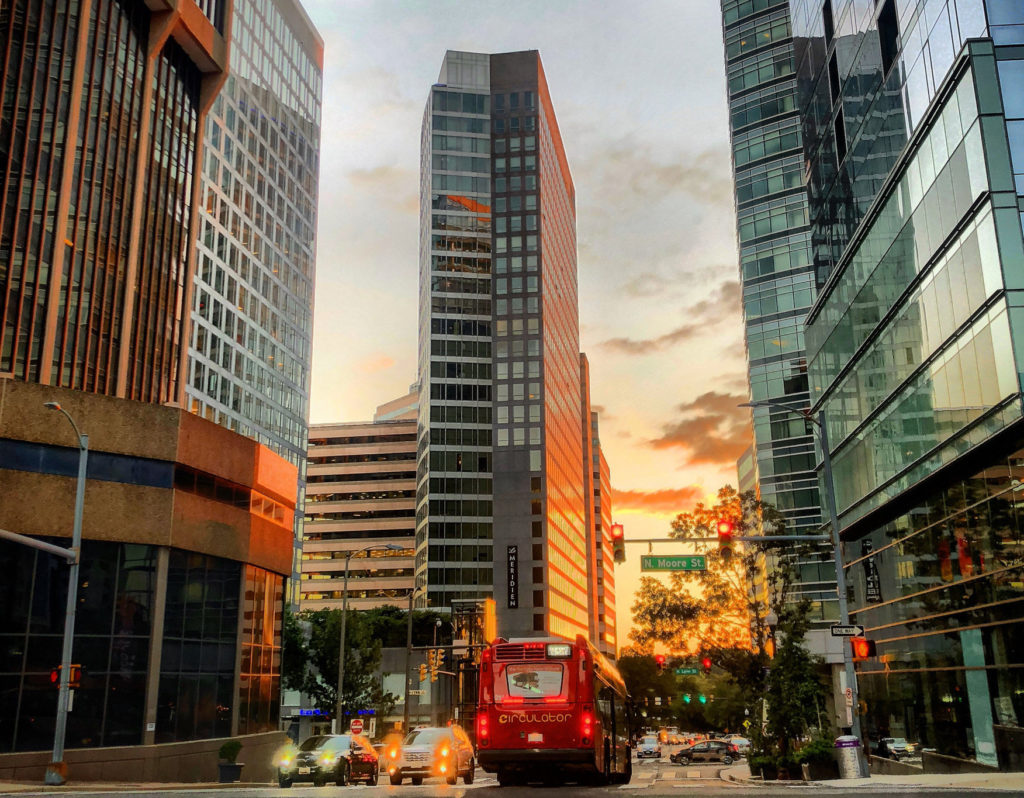
Flickr pool photo via David Giambarresi


The Right Note is a weekly opinion column. The views and opinions expressed in the column are those of the author and do not necessarily reflect the views of ARLnow.com.

Last week, it came to light a memo had been produced in May by someone at Metro outlining the system’s ridership woes and some possible solutions. According to the Washington Post, this memo never made it all the way up to the general manager or the WMATA Board.

From the memo: “The fundamental factors — fares, location, speed, frequency, and reliability — matter most and Metro’s recent actions have put downward pressure on ridership.” And it found the group driving the ridership decline the fastest are those who had used the system the most.

Worsening service at higher prices is driving riders away, especially in a world filled with ride sharing, bike shares and now scooters. Metro is losing long time riders in an increasingly competitive marketplace.

Leaders were surprised that the memo existed, but not necessarily surprised by the findings. WMATA Board Chairman Jack Evans used it as another opportunity to call for more taxpayer funding for the system in order to add back service. The biggest union used it as an opportunity to blame the general manager. All in all, it was a series of predictable responses.

Recently, Christian Dorsey was given a voting seat on the WMATA Board. Now we know it is the intention of WMATA to rotate voting and non-voting board members. At the end of the day, though, it is hard to paint a scenario where the person voting matters. Representatives from the District, Maryland and Virginia and the federal government all seem to have differing approaches and political realities to take into account.

The Board as a whole seems content with the overall strategy of simply asking for more money. No one appears to be committed to a major structural overhaul. So, the memo serves as a reminder that it will be tough to get Metro back on track with the same people making decisions.

A Final Note on Redistricting? 

Over the past few days it came to light that Gov. Ralph Northam backed out of a political fundraiser for a fellow Democrat. Why? The delegate had the audacity to say Democrats in the General Assembly should have worked with Republicans to redraw the district lines.

With Gov. Northam’s veto threat and Democrats in the General Assembly acquiescing to it, the new House of Delegates map will be drawn by the courts. The Democrats are betting on judges to produce a better political map for them than they could get through a compromise with Republicans. So, they decided not to do the jobs they were elected to do.


Progressive Voice is a weekly opinion column. The views and opinions expressed in the column are those of the individual authors and do not necessarily reflect the views of their organizations or ARLnow.com.

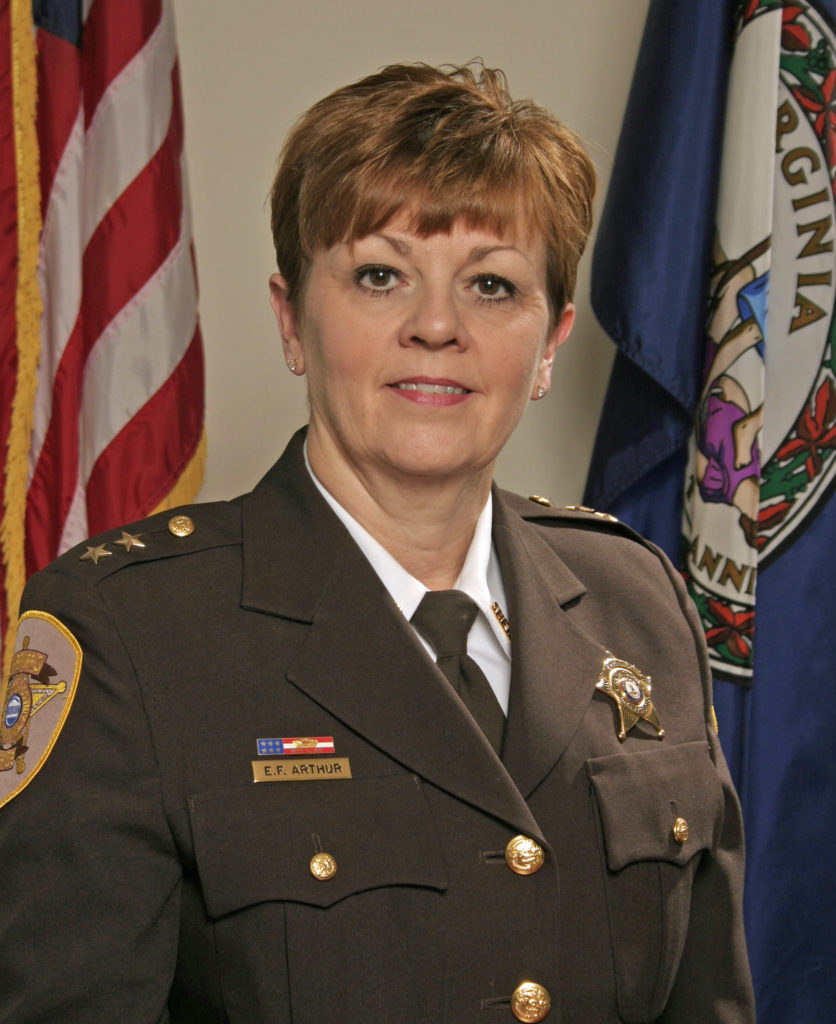
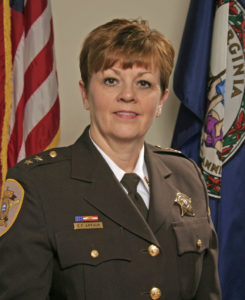
By Beth Arthur, Sheriff

Reentering the community after incarceration is daunting. Imagine being locked up for days, weeks, months or years knowing the stigma society attaches to it. Often, incarcerated individuals are unemployed with drug or mental health issues. They often have no family support and no housing, money or even photo identification when they get out. They may have no idea where to start to get back on their feet.

As part of our evolving and open philosophy to new strategies to ensure the success of inmates, we are concentrating fresh effort on this transition back into the community. This builds on our core responsibilities such as managing the Arlington County Detention Facility (ACDF) and overseeing Arlington’s courthouse/courtroom security (Juvenile, Domestic Relations, County, Circuit and General District courts)/civil process service.

Through 18 years serving as Sheriff for Arlington County, my staff and I have continually looked for better ways to securely serve Arlington’s 230,000 residents and to effectively manage and prepare the inmates for life after incarceration.

One example is the new Community Readiness Unit (CRU), established in May 2018. It focuses intensely on individualized reentry planning, work readiness and programming for substance abuse, mental health and life skills.

“The CRU is producing a steady flow of purpose and promise,” says Inmate Service Counselor Camille Watkin. “Most of the inmates who participate in the re-entry and community readiness classes are also dedicated to participate in GED classes/tutoring, mental health, substance abuse awareness and work force programs in the community.” Watkin added, “This group of inmates are seeking and learning coping skills.”

The CRU builds on early work of the Arlington County Reentry Committee (ACRC), created in 2009 to ensure successful offender reentry, reduce recidivism and enhance public safety for Arlington residents. ACRC’s goal is to assist those incarcerated with supportive services — such as job training or mental health services — so that they may more easily transition from jail to the community and sustain a life that will not lead to repeat offenses.

“After completing the ACT Program (Addictions, Corrections Treatment), I was placed in the CRU,” says one inmate. “In the few weeks I’ve been in this unit, I’ve created a much needed network system and sharpened the tools I need to ensure success.” He added that the CRU “has allowed me to sustain my recovery by participating in NA/AA and the Cognitive Distortion Recognition program. I’m staying positive and productive prior to my reentry to the community in a few days.”

One distinctive of the CRU is that it brought many of the ACRC programs together in one male housing unit for individuals that are eligible. Individuals must be post-sentence 12 to 14 months or less, reside in the DMV area, participate in a formal interview and have no detainers from other jurisdictions. (Reentry services are also available to the one female inmate unit in the detention facility.)

Some of the CRU’s programs may seem surprising, such as Fatherhood, Wellness, Money Management, or Peer Group and Cognitive Distortion Recognition. Yet such topics can be just as vital to a person’s successful transition as programs on Employability Readiness, Individual Re-Entry Planning or Addiction Awareness. All classes are conducted by Sheriff’s Office case managers, Arlington Department of Human Services (DHS) staff, Offender Aide and Restoration (OAR) staff and volunteers.

Our hope is that everyone that reenters the community from the CRU will, like the inmate mentioned above, have a network system and the tools they need for success. The key is helping them identify and eliminate barriers before they get out.

ACRC assists incarcerated individuals with a discharge plan focused on their needs, appropriate resources and referrals to enhance successful reentry to the community. Resources include ID cards, mental health and substance abuse services, shelter, and job placement. Our partners include DHS, OAR, the Public Defender’s Office, and the Adult Probation and Residential Program Center-Shelter.

Inmates returning to the community face many challenges and those who have difficulty adjusting often re-offend. As the sheriff of Arlington County, I am committed to ensuring that individuals who are remanded into the custody of my office receive opportunities to “right” their wrongs and become successful citizens of our community.

Sheriff Beth Arthur was first elected in 2000 and is the first woman elected to a County Sheriff’s position in Virginia. She has served more than 31 years with the Arlington Sheriff’s Office. She is a member of the Virginia Sheriff’s Association Board and served as its first female President from September 2012 through September 2013 and is a member of the Board of Regents for the Leadership Center of Excellence.


View More Stories