
Peter’s Take is a weekly opinion column. The views and opinions expressed in this column are those of the author and do not necessarily reflect the views of ARLnow.com.

Arlington Public Schools (APS) is in the early stages of what is currently envisioned as a very small-scale and limited evaluation of its justifiably controversial 1:1 digital device program.

At the same time:

  • There is accumulating evidence regarding the health, safety, questionable educational effectiveness, and developmental risks of these devices, particularly in the elementary years
  • Superintendent Murphy has announced that APS currently is projecting a $43 million operating deficit in FY 2020.

The latest evidence of the health, safety, questionable educational effectiveness, and childhood developmental risks of these devices is disturbing

The fact that children’s use of digital devices (aka “screen time”) can be harmful isn’t news. We are bombarded almost weekly with mounting evidence that the more time children spend using electronic devices, the greater the risk of physical, psychological and developmental harm.

This evidence may explain why:

  • Silicon Valley parents are raising their children tech-free
  • China’s Department of Education has begun to regulate the sale and use of digital devices marketed to children for noneducational purposes in an attempt to prevent myopia (nearsightedness)

A 2015 study reviewing school IT programs in over 36 countries worldwide (not in the United States) concluded that less is better when it comes to using technology, both for reading scores and particularly for math scores.

A 2017 study used MRI scanning technology to compare functional brain connectivity patterns when children were using screen-based media versus reading a book. It concluded: “brain connectivity is increased by the time children spend reading and decreased by the length of exposure to screen-based media.”

The combination of the questionable educational effectiveness and the costs of the 1:1 program require a thorough and extensive review

Both Arlington County and APS are currently reviewing their budgets to identify potential cuts that will help plug significant budgetary shortfalls. APS should be completely transparent about the total costs and per-pupil costs associated with these devices, including insurance, maintenance and administrative costs. This information is critical to enable Arlington taxpayers to evaluate costs vs benefits.

The public is entitled to a comprehensive and transparent program review to determine the efficiency, educational effectiveness and safety of 1:1. This is the only way for the public to make informed choices regarding our priorities regarding expenditures that provide the best return on our investment.

For example, APS should prepare and seek public feedback on the costs and benefits of transitioning to a:

The currently envisioned APS 1:1 program evaluation should be modified in significant ways to produce a meaningful analysis that can lead to major reforms

It appears that APS has no current plans to seek data or input from parents — and even more to the point, from education and health experts who rely on the most current data and research — to evaluate the efficiency, educational effectiveness and safety of the 1:1 digital device rollout to children as young as 7-8 years old.

Conclusion

APS needs to conduct and share with parents and the entire Arlington community a thorough, complete and objective evaluation of all the costs as well as the benefits of its current 1:1 program. All options must be on the table.
A holiday weekend (for some of us) is here, and the weather is cooperating with some pleasant early-fall temperatures.

Though the forecast heats up heading into next week, temperatures should hover around the 70s for much of the long weekend.

That should be good news for anyone heading out to the Army Ten-Miler race, the Columbia Pike Fall Festival, or any of the other events happening around the county this weekend.

And you can always take a few minutes to catch up on our most popular stories from the past week:

  1. Mt. Vernon Trail Blocked After Construction Equipment Damages Bridge
  2. Body Found Near Base of Antenna Tower Along Lee Highway
  3. Ballston Quarter Wins Approval for Outdoor Seating in New Plaza
  4. Three Restaurants Replacing Clarendon’s La Tasca Now Set for Early 2019 Opening
  5. Artist Emerges for Mysterious Street Art in Pentagon City, Crystal City

Head down to the comments to discuss these stories, your weekend plans or anything else local. Have a great one!

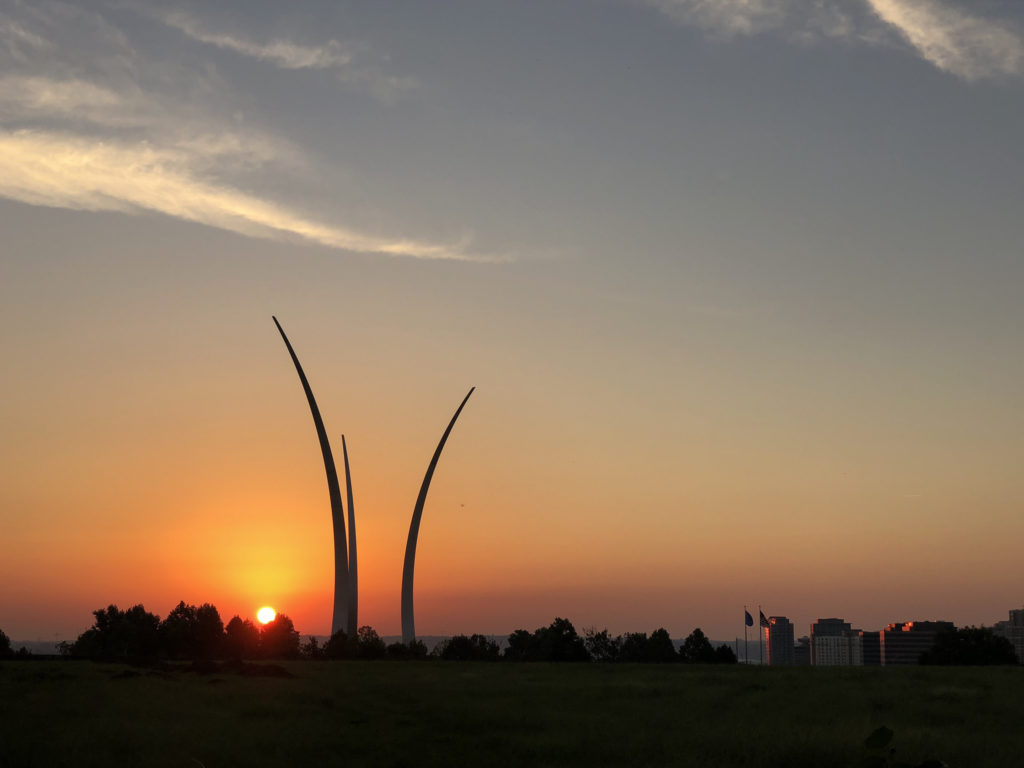
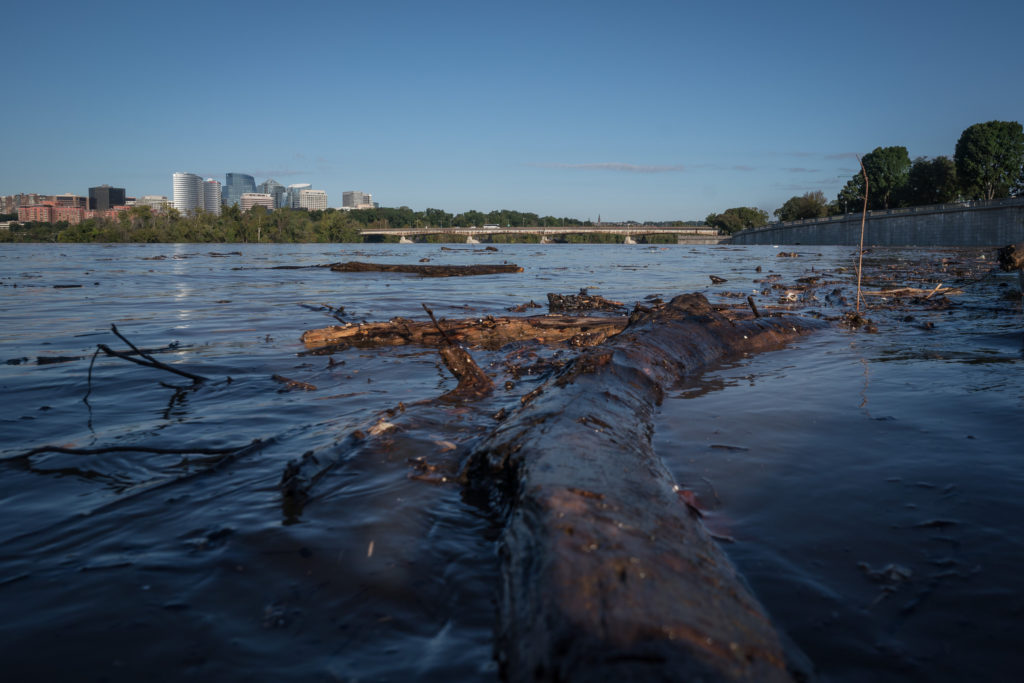
Flickr pool photo via wolfkann


The Right Note is a weekly opinion column. The views and opinions expressed in the column are those of the author and do not necessarily reflect the views of ARLnow.com.

Arlington Public Schools finally released the long-awaited audit of school construction costs. The bottom line from the auditor is that Arlington’s past construction costs are generally in line with other jurisdictions in the area.

However, according to the document, the new Wilson school would cost over $555 per square foot and $130,000 per seat. The per seat number is more than double the per seat cost for recent school buildings in the county. In other words, Arlington should be able to add up to twice as many seats for the money.

In what can only be explained as a purely partisan political move, the Arlington Education Association PAC endorsed Democrat Matthew de Ferranti this week over John Vihstadt. Nothing in the AEA’s endorsement said anything specific about what he de Ferranti would do to support or improve the education of our kids. Here is the endorsement in its entirety:

Matt impressed the interview committee with his deep commitment to social equity and his understanding of the issues facing both employees and students of medium and lower income in their struggle to live and work in Arlington County. Matt demonstrated that he is a leader open to hearing the ideas and concerns of our community.  His voice on the County Board would help make our local government a more effective advocate for all of Arlington’s residents.

Vihstadt was president of the Yorktown PTA and co-chaired a school bond campaign in the county. And by all accounts, has been supportive of education funding while serving on the County Board.

Speaking of purely partisan political moves, Governor Northam this week threatened to veto the latest redistricting plan offered by Republicans in the House of Delegates. When the original plan passed, it had support from both Democrats and Republicans in Richmond. And Democrats in the General Assembly had expressed a desire to help draw the lines again.

Worse than not supporting the current plan, the Governor does not support the House of Delegates moving a plan at all. Instead, he is calling for the courts to redraw the lines.

Northam’s unwillingness to work with Republicans to find a solution without involving the courts demonstrates more than a striking lack of leadership. It is a blatant attempt to get what he believes will be a better political outcome for his party. Voters should remember this next time Democrats talk about the need for bipartisan solutions during a campaign.


Progressive Voice is a weekly opinion column. The views and opinions expressed in the column are those of the individual authors and do not necessarily reflect the views of their organizations or ARL.now.

By Eric Harold

When I emerge from the natural oasis of the Four Mile Run creek bed, I am greeted by an Ethiopian family teaching their son to ride his bike on the Arlington Mill Plaza. Following the spirited African rhythms enjoyed by a group of friends gathering near the bridge, I catch the tempting scents of the Bolivian food truck readying for the lunch crowd. I am reminded why, many years ago, my wife and I quickly fell in love with Columbia Pike — a vital and vibrant corridor with good local businesses, active neighborhood associations and energetic mixed-income communities. Still, we recognized this high potential area was struggling to develop as a valued Metro corridor.

After 20 years, thousands of hours of planning meetings, and many county initiatives later, the Pike appears to be thriving. We had envisioned three legs of a stool that would solidly support Columbia Pike in the future: a streamlined development process, a Pike neighborhoods’ plan with a goal of preserving over 6,000 affordable housing units, and a blueprint for greatly improving the transit system to support expected growth.

So are we where we wanted to be 20 years ago?

While some development has happened, the transportation “leg of the stool” has wobbled. Four years ago, the County Board abruptly canceled the long-planned streetcar, endangering and undermining progress in other areas. Pike neighborhoods were told that transportation investments would continue. What we received was a mediocre transit plan, delayed construction of the transit stations, and no attention to much-needed utility undergrounding.

To be clear, the current growth and development on Columbia Pike was spurred on with the implementation of the Form Based Code, an alternative development process that offered streamlined reviews and approvals for developments that supported our community’s vision and needs, as described in the Code and associated plans. As a result, we are seeing redevelopment of properties along the Pike that is bringing new residents along with some affordable housing and new amenities. We are seeing the development creep west on the Pike, as well.

But with this development comes some significant challenges. New development brings new residents, many with children attending already overcrowded schools. Businesses that were “early adopters” to the Pike, like P. Brennan’s, have shuttered. Storefronts remain empty at key locations along Columbia Pike, while new developments like Centro Arlington and 4707 Columbia Pike will bring more retail spaces to fill.

As we look forward to the next 20 years, the Columbia Pike communities need the County’s focused effort and planning to ensure continued growth along the corridor while addressing the significant weaknesses in the current plan implementation.

What should happen now?

  • Update Transit Plan now: Fast and efficient completion of the current projects outlines in the Multimodal Street Improvements plan will send a clear signal that Columbia Pike remains a critical area of growth for the county. More important, however, should be revising the Transit Plan for Columbia Pike, to include updating capacity projections based on current development and growth patterns.
  • Increase daytime population: Current development has been entirely mixed-use residential and commercial. Commercial vacancies remain high while businesses struggle, primarily due to very low daytime population. The Columbia Pike Revitalization Organization (CPRO) and the County need to provide incentives that will bring offices and other services to the Pike.If we are going to be true to maintaining Columbia Pike as a diverse community, we need to provide spaces and encourage services to support low-income and disadvantaged populations. Clinics, job training services, and other community assistance can fill vacant spaces and increase daytime traffic. Providing incubator spaces, shared work locations, and other office/business development can help improve the mix of development. Combined, this has the potential to make the Columbia Pike corridor a true live-work destination while maintaining the vibrant, mixed-income communities we love.
  • Improve planning with/for Arlington Public Schools: The Career Center property, just a block off Columbia Pike and now in the middle of conceptual planning for new school/community uses and space, is a prime example of the need for better integrated planning between APS and the County. Creative use of spaces along the Pike has the potential to help APS manage student population growth.

Columbia Pike has come a long way in the 20 years that I have lived here. The time is now for the county to aggressively help reinvigorate our plans and processes so that Columbia Pike remains the vital and vibrant community we love.

Eric Harold resides in Barcroft with his wife and four children. He served as president of his civic association, served for 13 years on the Environment and Energy Conservation Commission (E2C2), and now serves on the APS Advisory Council on School Facilities and Capital Projects (FAC).


Peter’s Take is a weekly opinion column. The views and opinions expressed in this column are those of the author and do not necessarily reflect the views of ARLnow.com.

One of the four bond referenda on the November 6 ballot is the so-called “community infrastructure” bond valued at roughly $37 million.

What’s in this bond?

This bond is a grab bag containing a wide variety of seemingly unrelated projects.

The largest dollar components are:

  • $14 million for construction of Fire Station 8,
  • $8 million for facilities maintenance capital improvements (including design and construction of roofs, electrical and heating/cooling systems and other facilities infrastructure) in county libraries, community and recreation centers, and other county buildings.

This bond’s proceeds also will fund:

  • the Nauck Town Square project,
  • assessments, renovations & improvements to other government facilities,
  • Neighborhood Conservation projects and other County infrastructure projects. (The Neighborhood Conservation Program provides funding for a variety of neighborhood-identified capital improvement projects including street improvements (sidewalk, curb and gutter, drainage, paving), traffic management and pedestrian enhancements, park improvements, street lighting, recreational facilities, landscaping, and beautification.)

Enhancing the community’s role

I plan to vote for this bond.

But, the next time around, the County needs a new approach that enhances the role of the community in deciding what community infrastructure investments to make.

Community infrastructure investments should be designed to benefit the community. The community, not the County government, should have the greater say in deciding which community infrastructure investments to make. The community should be extensively consulted at every important stage as to what its priorities are for spending our limited tax dollars.

Discussing how much money is available to spend

Community consultation should begin by sharing and discussing with the community important long-term financial planning information that will determine the total dollars available for all kinds of investments including community infrastructure.

The Arlington County government should develop multi-year financial projections for both capital and operating budget spending, utilizing at least three assumptions: most likely case; optimistic case(s); pessimistic case(s). The results and assumptions should be published and shared with the community.

The community should help to set priorities, including the total amount of money the community would like to spend on community infrastructure.

Capital vs. operating funding

Best municipal financing practices suggest that it is inappropriate to use bond financing to pay for assets with expected useful lives that are significantly shorter than the repayment schedules of the bond proceeds used to purchase those assets. Yet, with respect to a substantial number of the community infrastructure assets that form part of this bond, the assets proposed for purchase have much shorter useful lives than the related bond repayment schedules.

Next time around, we should use operating not capital dollars to pay for assets with these shorter useful lives.

Example of flood mitigation

In several recent columns, I have explained why the county government needs to increase its investments in community infrastructure designed to protect its residents against flood damage.

In Arlington’s Waverly Hills neighborhood, three flood mitigation projects previously included in earlier versions of Arlington’s Capital Improvement Plan were dropped from that plan due to lack of funds.

The community should be given an opportunity to weigh in on whether to increase expenditures for flood mitigation and, if necessary, what other community infrastructure projects should be cut to enable such an increase. 

Conclusion

The community should have a greater say regarding community infrastructure spending. The community should be provided with more of the information it needs to make informed decisions.


At long last, Mother Nature is ready to let up a bit and offer Arlington its first pleasant weekend of the fall.

After a dreary week of rain, the forecast is looking quite promising indeed over the next few days — and that should be quite good news for bars and restaurants hurting from the past few weeks of wet weather.

Fortuitously, there are also plenty of outdoor events planned for this weekend around the county, from the Crystal City Oktoberfest to South Arlington’s ValleyFest. Check out our events calendar for a full look at what’s going on around Arlington.

And if you’re a bit behind on your reading, catch up on our most popular stories from the past week:

  1. Armed Robbers Invade Country Club Hills House
  2. Police: Woman Raped at Columbia Pike Apartment Building
  3. Original Bob and Edith’s Diner on Columbia Pike Listed for Sale
  4. Arlington Cyclist Killed in D.C.
  5. ACPD Arrests Nauck Shooting Suspects

Head down to the comments to discuss those stories, your weekend plans or anything else local.

Flickr pool photo via Michael Coffman


The Right Note is a weekly opinion column. The views and opinions expressed in the column are those of the author and do not necessarily reflect the views of ARLnow.com.

A recent lawsuit on the House of Delegates boundaries resulted in a court order to the General Assembly to redraw the lines by the end of October. A new standard of constitutional review in regards to the consideration of race in determining legislative districts is now being insisted on by the courts.

This week Republicans released a second plan that seeks to meet the requirements of the court. According to the Richmond Times-Dispatch, Democrats say they still want to find a legislative solution. This is encouraging as Governor Northam had previously expressed the view that the courts should just redraw the lines. The same Times-Dispatch article seems to indicate some in Democrat circles were still debating if they should find a compromise or wait to see if they will get a better political outcome from the court.

Nationwide, there is an effort to take the ability to draw legislative district lines out of the hands of the legislative and executive branch and put it in the hands of unelected independent commissions. This is a valid public policy debate that can be voted on by your elected representatives.

More disturbing is the idea that political parties who did not control the redistricting process are running to the courts to overturn the results. And it is not just about the consideration of race. In Pennsylvania, the state supreme court struck down a Republican-drawn Congressional district map simply for being too partisan. A federal court did the same thing in North Carolina.

Turning our attention back to the Virginia House of Delegates map. It would be a complete abrogation of the duty of our elected representatives to simply toss this decision to the courts. The judges are simply not directly accountable to the people for the results.

The original plan was agreed to in a truly bipartisan fashion, with an overwhelming majority of Democrats supporting it. The General Assembly should produce a plan again. When they do, Governor Northam should sign it.


Progressive Voice is a weekly opinion column. The views and opinions expressed in the column are those of the individual authors and do not necessarily reflect the views of their organizations or ARLnow.com.

By Kelley Coyner

Less than a year ago the city of Arlington, Texas, became the first municipal government to deploy an automated transportation service — a cute shuttle named Milo. In a couple of weeks, Arlington, Texas will move ahead with an autonomous vehicle (AV) taxi.

Meanwhile in Arlington, Virginia, we are beginning to look at how to launch similar services. The technology is moving forward quickly, especially for lower speed AVs that mix well with pedestrians and bicyclists. What should we be thinking about this technological game changer?

Money talks: First focus on economic development, job loss and creation, and revenue loss

Our Arlington and its neighbors — including their transportation agencies — need to look at the impacts of AVs (what some people call “self-driving” vehicles) on their revenue. Greater fuel efficiency and shifts to electric vehicles will accelerate the downward spiral of gas tax revenues. Changed ownership models also may undercut personal property tax and rental-car tax revenues. Decreased demand for parking may cut into parking revenues and an anticipated decline in traffic violations will reduce revenue from fines. Secondary impacts include the potential for decreased revenue from transit and toll fares.

Understand equity

AVs can dramatically improve opportunities for blind, older and younger riders — if we consider those travelers in the planning and design. You need only try to find your Lyft or Uber in Clarendon to appreciate that we need to pay attention to the last 50 feet from home or restaurant to your ride. Also, let’s make sure that shared vehicles are universally designed starting with wheelchair access. Meanwhile nationally, job and wage losses could hit transit and taxi drivers, delivery drivers, truckers, bus operators and Lyft/Uber drivers disproportionately, so training programs will need to come into play.

Figure out what you want your place to be like

Over the years, Arlington, Virginia, has given thought and taken action on the intersection between transportation and land use. How might AVs change all this yet again? How might they change our affordable and workforce housing? Is there a new paradigm for transit-rich hubs that also include shared-AV drop-off areas, electric charging stations, and rich networks of walking and bike paths?

What to worry about: Favor safety gains and protect against cyber dangers

There are indeed real reasons to be worried about the vulnerability of automated vehicles to cyber-attack. The answer is to address that risk, not to let it highjack automated technologies that protect occupants and people in the path of the AVs, such as pedestrians, bicyclists and people at bus stops.

That said, I am flabbergasted when anyone is dismissive about the potential of saving a portion of 37,000 lives that are currently lost to human-caused crashes each year. Most traffic accidents are attributable to human error. To be sure we need to take steps to operate AVs safely. Experts such as researchers at Rand note that the sooner we start adopting automated technologies, the more lives will be saved.

Define your principles and set measurable objectives to reach them

Beyond those first four paths I think cities should take, there are still many ways to maximize the safety and environmental benefits while guarding against increased congestion, sprawl, job loss and the further weakening of public transit. Arlington should start by understanding how AVs can help and hurt us and then set a course that allows us to experiment safely with AVs.

We should avoid esoteric debates about obscure hypotheticals, and instead, focus on understanding the implications of an automated mobility. Then pull out all the stops to safely channel the technology revolution on the street where you live.

Kelley Coyner is CEO and Founder of Mobility e3. A Senior Fellow at George Mason University, she advises cities on how to analyze the pluses and minuses of autonomous vehicles. She lives with her family in central Arlington.


The Right Note is a weekly opinion column. The views and opinions expressed in the column are those of the author and do not necessarily reflect the views of ARLnow.com.

The County Board swings back into action this Saturday for its first meeting since July. The agenda is full of interesting items.

Last week I discussed the need to move forward on the Virginia Hospital Center expansion plans. The Board will most certainly approve it eventually, so they should avoid the urge to tinker with the plans for another six months (or longer).

The work on providing a new salt dome for winter road treatment is also on the docket. While area residents were not entirely happy with the process, the structure has been found to be unsafe and beyond repair. A change is necessary.

Also on tap is the elimination of the car tax decal. In the words of an iconic ad campaign, “just do it.”

The Board is also considering a plan to regulate dockless bikes and scooters. There is probably little chance a majority of this Board will resist the urge to regulate. So, let’s hope they take a “less is more” approach to the issue. Also on tap is an expansion of the Capital Bikeshare program, which is the government monopoly program in the region. It would be interesting to know if any of the pushback on the dockless program originated from the vendors who operate Bikeshare.

The other county-wide issue on tap is the cost of implementing Medicaid expansion. Initially, Arlington believes it will cost around $250,000 to add six new county staff to handle implementation for 3,000 Arlingtonians projected to join the program. The Commonwealth of Virginia will add $277,000 as well. Not reflected in those costs is a reduction in funding to Community Service Boards which officials in Richmond believe will not need as much funding as Virginians move onto Medicaid. Over the next two years, Arlington will see a cut of $2.2 million in state funds. While many questions remain about the long term impacts of Medicaid expansion, Arlington has little choice but to make these changes.

A final note on how the Board does business. The Board changed its rules for consideration of the “consent agenda.” Those are the items that pass with a single vote of the Board and without further input from the public. The public used to be able to ask for separate consideration of any item, but the new rules place 30 of the 57 consent agenda items off-limits to Arlington residents. The new consent agenda rules mean that no member of the public can ask for the Board to take testimony on Medicaid expansion or on Bikeshare expansion. You can, however, ask that the Board hear separately on the dockless bike and scooter issue or for the car decals. The hospital and salt dome issues are already scheduled for a public hearing.


Progressive Voice is a weekly opinion column. The views and opinions expressed in the column are those of the individual authors and do not necessarily reflect the views of their organizations or ARLnow.com.

By Cheryl Moore

In August, I travelled to Dilley, Texas, to volunteer for a week with immigrants who are seeking asylum. The South Texas Family Residential Center, 80 miles south of San Antonio, houses 2,400 women and children, most from Honduras, Guatemala and El Salvador, who were apprehended by border patrol agents when trying to cross the U.S.-Mexico border.

I’m not a lawyer, and I don’t speak Spanish very well, but when I heard from an attorney friend about this opportunity, I felt compelled to go. With so many stories in the news about family separation, detention and the cruel treatment of immigrants at the border, this was my chance to “do something,” even if I didn’t know exactly what I would be doing. I wanted to be a witness to what is happening to immigrants coming to the U.S. amidst this unwelcoming political climate.

Along with other volunteers with the Dilley Pro Bono Project, my mission was to help women prepare for their Credible Fear Interview (CFI) with asylum officers. Receiving a “positive” after their interview means they are freed from detention (after paying a bond or submitting to wearing an ankle monitor) and can begin the long process of seeking asylum, as is their legal right under U.S. law.

It was not an easy week. We worked 12-hour days, filled with non-stop activity, noise and, often, tears.

For much of the week, I helped women fill out basic forms. As I showed them where to write their name, date of birth and other details, I learned part of their story. The answers to questions on the forms also offered clues about wrenching decisions some of the women had had to make when deciding to leave their country.

Some mothers asked, “Do I only put the name and birthday of the child who is here with me?” Clearly, many had had to leave another child behind. As a mother myself, I couldn’t imagine making that choice.

Other volunteers spent the week helping women prepare for their CFI by asking them to recount the testimony they would tell the asylum officer. Why did they leave their country? What persecution did they face there? What might happen if they went back home?

The extreme danger and violence our clients described was appalling — gangs, rape, death threats, kidnapping, extortion. We learned more about the culture and government of the countries that these women were fleeing, and about the extreme poverty and inequity that contribute to crime and lawlessness. It was clear that these women were escaping from systems that would never protect them. They were victims, not criminals; yet they were in a detention center.

With many CFI interviews looming toward the end of the week, I was asked to do some CFI preps on my own, working with an interpreter by telephone. Thanks to the in-depth training we received and wise counsel from the Dilley Pro Bono Project legal staff, I was able help two clients. It is not often that I feel I’m holding someone’s fate in my hands, but I did that day.

After I returned home, their faces swam before my eyes as I tried to go to sleep at night. Fortunately, I was able to check on their status and it appears that they both have been released from detention, and presumably are now with family or friends as they proceed through the asylum-seeking process.

While I may have helped some women start a new chapter in their lives, I will never know how their stories unfold. As with all mission work, the difference is in me. The women I met are part of my story now.

Back in Arlington, I will never look at the woman from Central America standing next to me in the supermarket line without contemplating her story. I will wonder what happened to make her leave her birthplace, and I will pray it wasn’t as bad as some of the stories I heard in that Texas detention center.

Above all, my week at the detention center reminded me that immigrant detention and family separation are more than just policy issues. They are human issues.

Cheryl Moore has lived in Arlington for 35 years. She has been a volunteer for Arlington Public Schools, her church, civic association, the Arlington Community Chorus, and many nonprofit organizations serving the Northern Virginia community. She continues to work on her Spanish language skills.


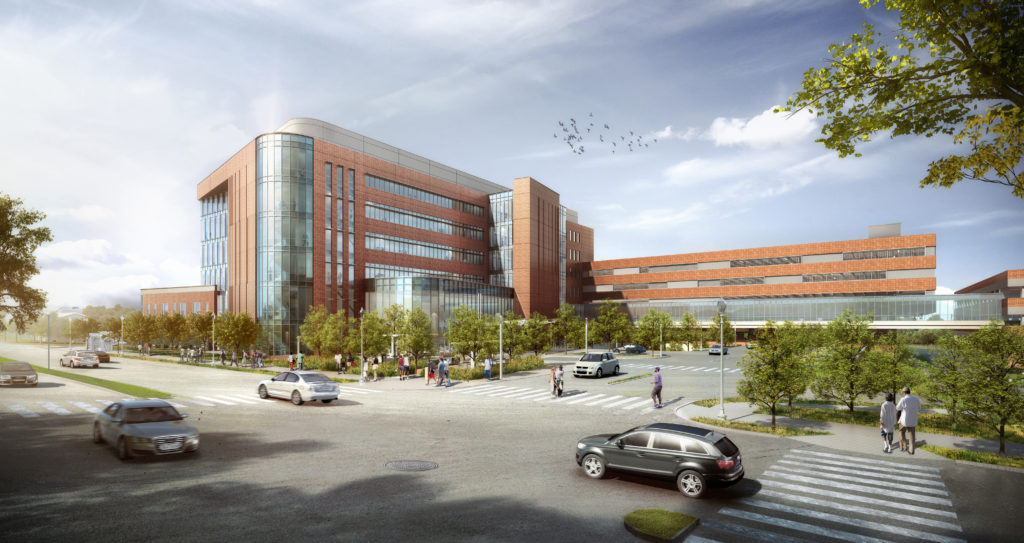
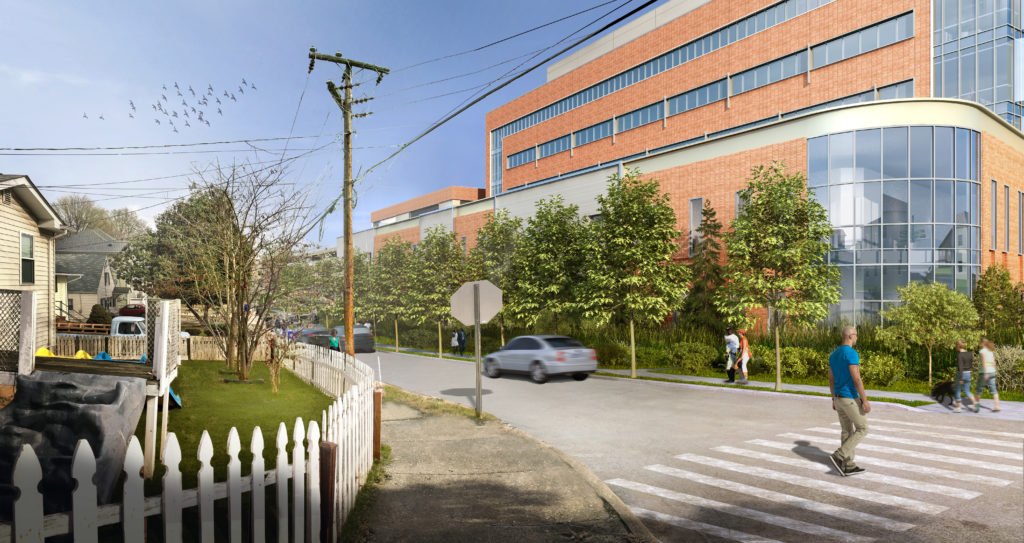
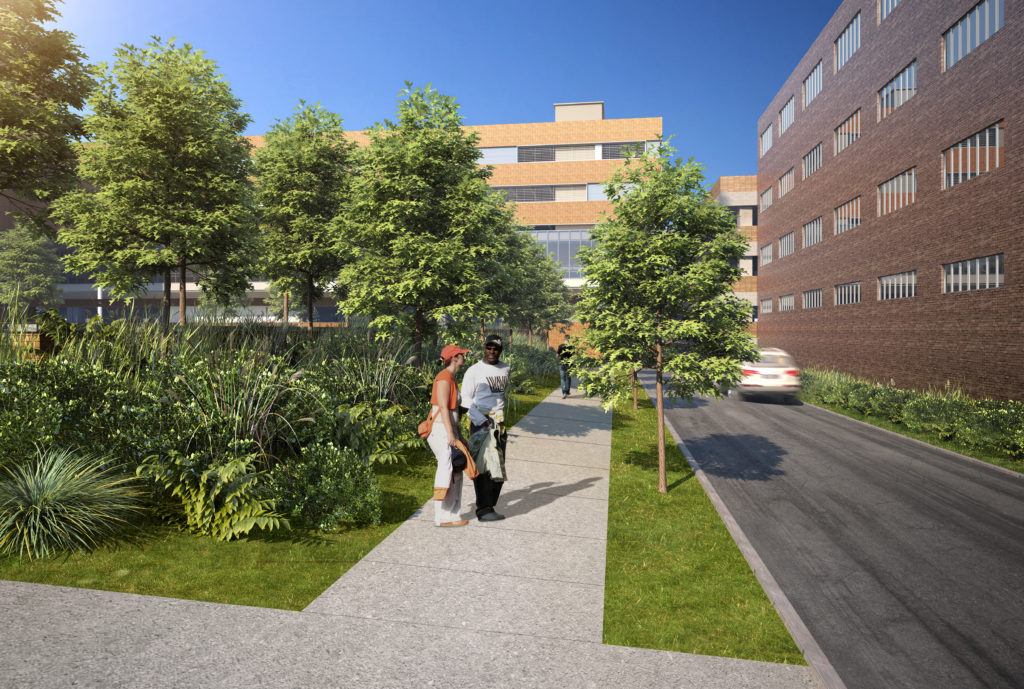
The following Letter to the Editor was submitted by Michael Garcia, a Columbia Pike insurance agent who serves as the board chair of the Arlington Street People’s Assistance Network, a local nonprofit that works with homeless individuals in Arlington. A-SPAN is weighing in on the proposed Virginia Hospital Center expansion, which the Arlington Planning Commission and some residents who live near the hospital oppose in its current form.

I am writing in support of the Virginia Hospital Center expansion project. It is my hope that the County Board recognizes the enormous value that VHC brings to this community and approves the project, as soon as possible.

As Board Chair of the Arlington Street People’s Assistance Network (A-SPAN) and a long-time Arlington resident, I see first-hand the consequences of delayed healthcare visits. The homeless clients at the Homeless Services Center frequently suffer from infections, life threatening reactions to untreated chronic illnesses and other medical conditions. That is why we have the Medical Respite and Nursing Services Program at the Homeless Services Center. For most Arlington County citizens, when a doctor says to go home and recuperate, that’s what they do, but what do you do when you have no home? VHC and A-SPAN through our partnership work together to ensure that these homeless individuals and veterans have a safe, compassionate, high-quality environment in which to recuperate.

VHC staff make every effort to assess and treat patients in a holistic way. When homeless patients are discharged from the Hospital to the Medical Respite Program, A-SPAN is part of the follow-up care plan and clients are referred to VHC outpatient services, as appropriate.

I cannot stress enough the value of a new Behavioral Health Center like the one proposed by VHC. Over 70% of homeless veterans and individuals suffer from some form of mental illness and this condition must be treated. We are fortunate that VHC, an Arlington provider that was recently named one of America’s 100 top Hospitals for the third year in a row, is willing to respond to the community’s need for more outpatient mental health services. Moreover, the VHC has indicated that all patients would be welcome at the new Center, regardless of their ability to pay.

The distinction of VHC being named as one of the 100 Top Hospitals in the nation is an honor benefitting all Arlingtonians by providing excellent care to the community. I am confident that this commitment to excellence will extend to the newly proposed Behavioral Health Center services, as well. VHC is a community partner worthy of support and we hope our elected leaders demonstrate this support.

Sincerely,

Michael Garcia
Board Chair, A-SPAN

ARLnow.com occasionally publishes thoughtful letters to the editor about issues of local interest. To submit a letter to the editor for consideration, please email it to [email protected]. Letters may be edited for content and brevity.


View More Stories