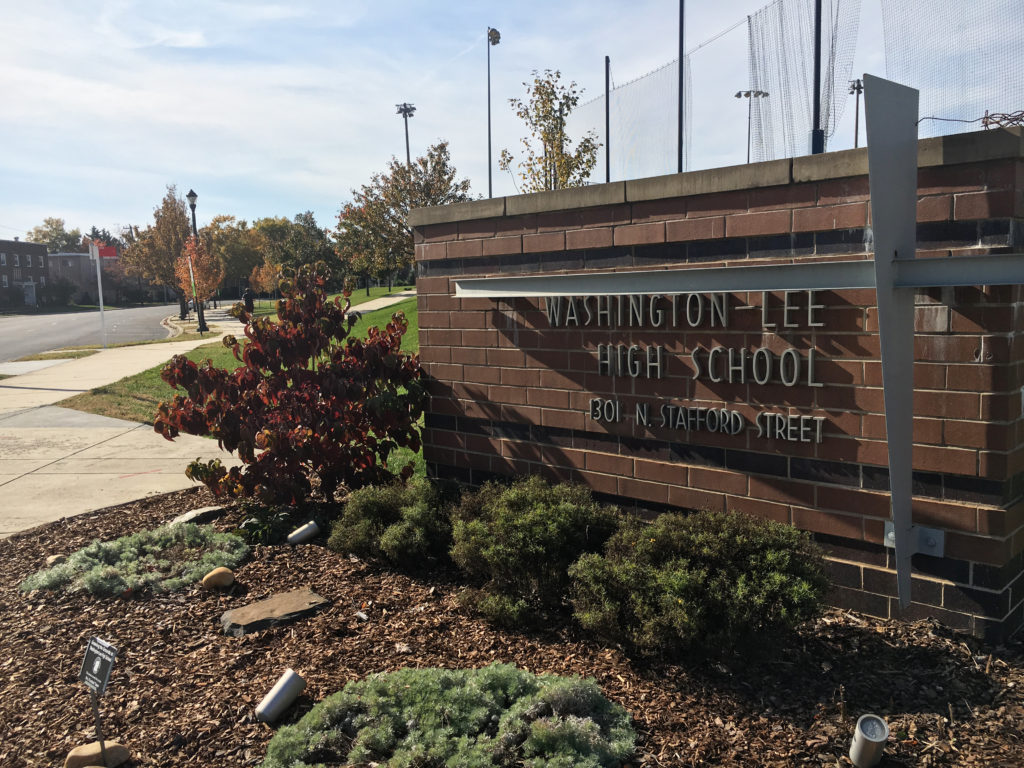
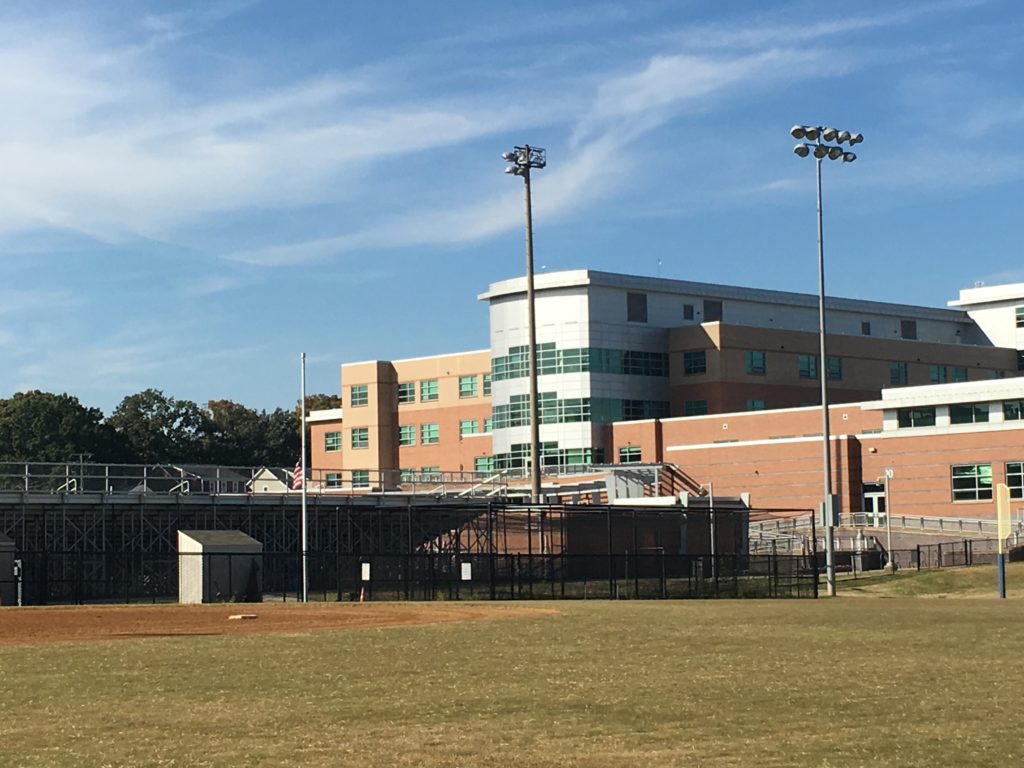
“Washington-Loving” might’ve earned a committee’s blessing as the ideal new name for Washington-Lee High School, but members of the group say the process of reaching that recommendation was anything but smooth sailing.

Two members of the W-L renaming committee even ended up resigning from its ranks, decrying the group’s work to find a new name for the school as a process that was tainted from the time deliberations started this September.

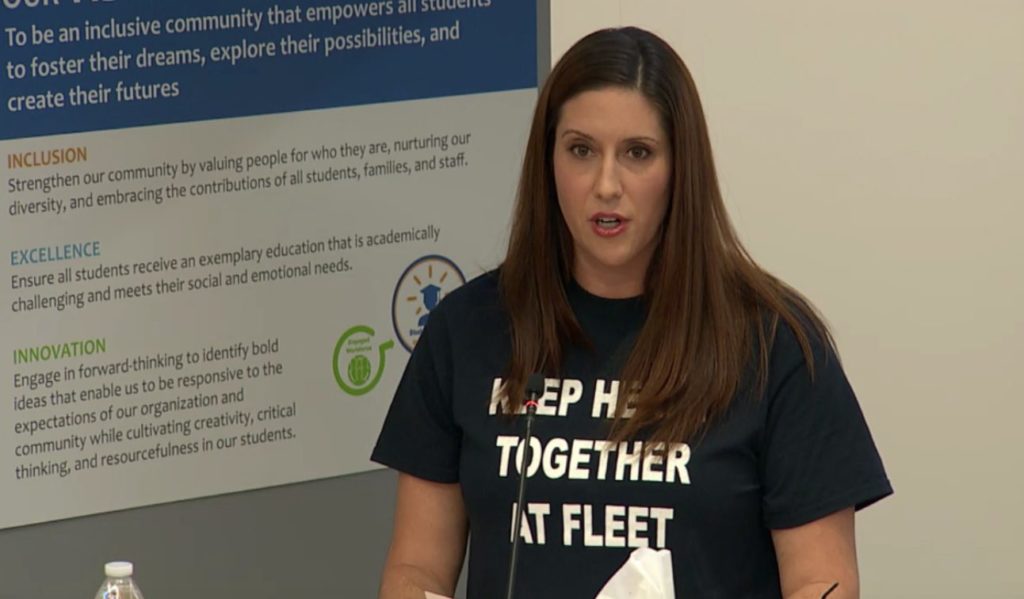
Other members of the committee argue that the group had some passionate disagreements at times, but generally reached a fair consensus on a name for W-L. Regardless of exactly where the truth lies, however, the dispute marks yet another complication in a process that’s been characterized by plenty of fierce debate ever since the School Board’s June vote to strip Robert E. Lee’s name from the building.

“I am departing with disgust about a morally bankrupt process that has been directed, not facilitated,” Patrice Kelly, a W-L parent, wrote in a letter resigning from the committee provided to ARLnow. “Between the chilling of discussions, the manipulative process, the disregarding of solicited public opinion and the pressure to conform to the unstated mandate, I have concluded that this process is a disingenuous attempt to appear that public input was sought.”

The chief concerns of Kelly and Bill Moser, a W-L alumnus who resigned from the committee once it finished its work last week, are that the committee failed to give any consideration of the prospect of keeping the name the same, or finding another historical figure with the name “Lee” as a substitute.

Both were also frustrated that one of their fellow committee members had ties to the school system, albeit indirectly, which they felt showed that the Board was unduly influencing the process. Dana Raphael, the daughter of former Board member Abby Raphael, represented recent W-L alumni on the committee.

“I won’t say that she orchestrated the process… but I do wonder about the whole thing,” Moser told ARLnow.

Raphael, for her part, feels that such assertions are ridiculous. She says she became interested in the battle over the W-L name when the Board was deliberating the issue this summer, particularly because she’s believed that the name should be changed ever since she was a freshman at W-L.

And as for her mother, Raphael says “she’s had no role in the facilities policy or the renaming,” particularly since she left the Board in 2015.

“Her commitment to public service inspired me when I was in high school to take an active role in my community, in politics and in current events,” Raphael wrote in an email. “I applied to join the renaming committee because I wanted to ensure the process considered the history of the school and the legacy of Jim Crow, as well as ensure we centered a conversation about civil rights.”

Raphael also argues that it wasn’t part of the group’s mission to consider the prospect of keeping the name, noting the group had “no authority to ‘overturn’ or ‘nullify’ the School Board’s decision to replace ‘Lee.'” She added that a neutral facilitator brought on by the school system to guide the process made such a point clear “at every single meeting.”

“It was out of our control,” said Chloe Slater, a junior at W-L representing current students on the committee. “The point was to choose a new name, because that’s what the School Board decided. Some people didn’t understand that aspect.”

Even still, Kelly and Moser were frustrated that the committee was directed to ignore comments submitted in public surveys about the process that pushed for the name to stay the same. Kelly even felt that the committee was dissuaded from any consideration of feedback asking the group to pick another “Lee” to honor.

But Linda Erdos, a School Board spokeswoman and a staff liaison to the committee, says the group decided on its own not to move forward with another “Lee” option.

The committee considered people like “Light-Horse Harry” Lee, Robert’s father and a Revolutionary War general, or William Lee, George Washington’s enslaved manservant. Yet Erdos said the group ultimately decided that picking another “Lee” would feel too much like “smoke and mirrors” after the Board’s decision. William Lee, in particular, ended up among the committee’s top choices, but did not advance in the group’s final round of voting.

“We thought, if we’re going to make a change, why not make it be a big one, why not make it be amazing?” Slater said.

Slater, the daughter an interracial couple herself, was quite pleased that the committee settled on a name to honor Richard and Mildred Loving, the couple who managed to successfully challenge Virginia’s ban on interracial marriage in court. It helped, too, that replacing “Lee” with “Loving” meets the desire of many students to keep the “W-L” moniker intact, Slater said.

Raphael said she was willing to consider other names beyond those that would’ve preserved the school’s W-L acronym — abolitionist Harriet Tubman was the lone finalist to be considered whose name didn’t begin with “L” — but she believes “Loving” is a fine choice to honor ‘those who fought for equality and equal citizenship.”

“I would be proud to tell people that I graduated from Washington-Loving High School,” Raphael said.

Moser takes a considerably dimmer view of the committee’s recommendation. He felt the group was too “racially fixated,” primarily submitting African American historical figures for consideration, even though the W-L student body has a large Hispanic population as well.

He also sees the “Loving” name as a “totally inappropriate and ridiculous” and viewed it as “a joke as far as I was concerned,” considering that he doesn’t think much of the Lovings and their fight to end the interracial marriage ban.

“The rationale for them was they wanted to be happy and they were willing to break the law to do so,” Moser said. “These were not people of high stature. They didn’t accomplish anything other than being in an interracial relationship.”

Moser’s skepticism regarding the Lovings aside, Erdos believes the committee’s deliberations were generally quite civil. Given the legal wrangling and political battles that have so far marked the renaming process, she says that was (generally) a pleasant surprise.

“I really was bracing for some difficult meetings,” Erdos said. “But, quite honestly, I was surprised it went as well as it did.”

The Board plans to discuss the name change for the first time on Dec. 20, and vote on Jan. 10.

Arlington school officials recently realized they made a critical error in calculating school enrollment rates as they prepared a final proposal for the redrawing of attendance boundaries in South Arlington, prompting the last-minute introduction of a new map to correct that snafu.

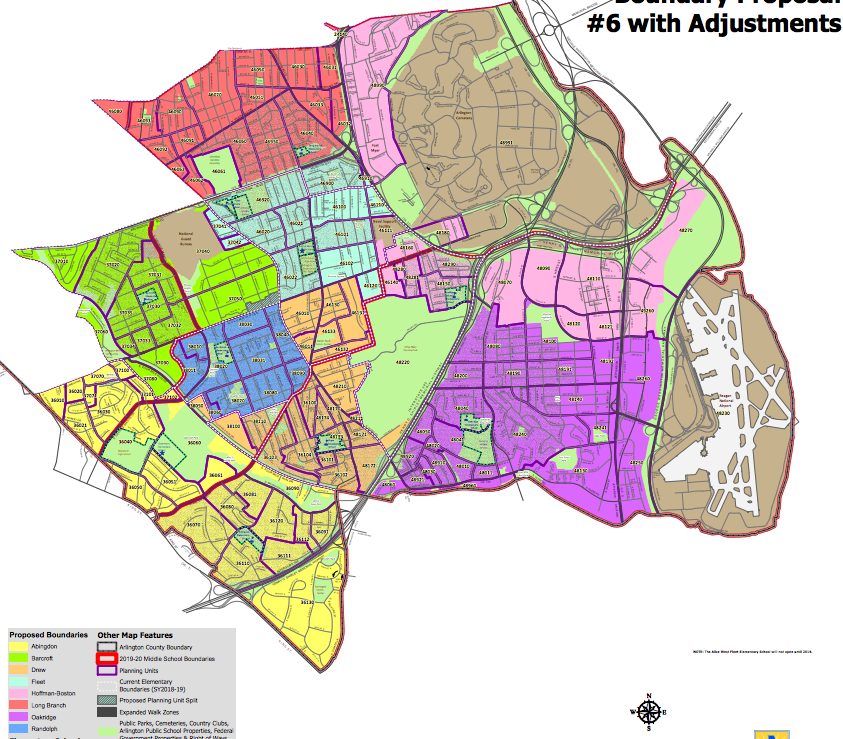
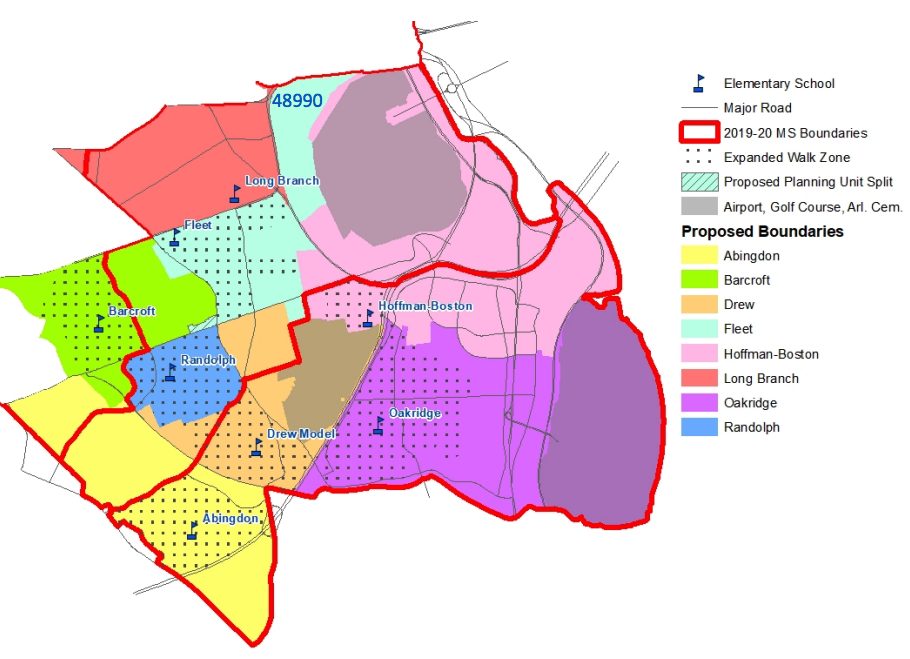
The School Board is gearing up for a final vote this week on boundary changes at eight elementary schools, which will conclude a lengthy, contentious process stretching over the better part of the last six months. Superintendent Patrick Murphy put forward what was meant to be a final proposal last month, but officials then tinkered with that map to better distribute students across the schools involved and reduce overcrowding.

The school system released the result of some of that work last week, with figures initially showing that the new Alice West Fleet Elementary School would open next fall at close to 100 percent of its planned capacity. The school’s opening helped prompt the boundary adjustment process in the first place, and the school system’s methods for determining which communities will head to Fleet have become particularly controversial in recent weeks.

However, staffers soon discovered they’d erred in counting the number of students set to head to the school. The proposal actually would’ve opened Fleet at about 82 percent of its capacity, far below the standard officials hoped to hit.

Accordingly, the Board convened a new work session for last night (Tuesday) to examine a revised map accounting for that mistake. That new proposal would leave Fleet closer to 90 percent capacity instead, largely by redirecting some students currently attending Long Branch Elementary School to Fleet. The Board will ultimately have a chance to vote to approve this newest map, or any of the other six proposals the school system has worked up thus far.

“We’re trying to be as clear as possible here, and we realize there are ongoing confusions about the data and about the process,” said School Board Chair Reid Goldstein. “Unfortunately, there’s not much time for Board members and the community to absorb all this.”

Lisa Stengle, the APS director of planning and evaluation, told the Board that the change won’t pull all that many students away from Long Branch, a process officials hoped to avoid given the last-minute nature of the change.

Instead, the school system discovered that a variety of students attending the Ft. Myer Cody Child Development Center at Joint Base Myer (some of whom are the children of active duty service members) currently attend Long Branch or even Patrick Henry Elementary after receiving a special waiver to do so. Those students would be sent to Fleet instead for the next two years, Stengle said.

“We just need to give Long Branch a little breathing room,” Stengle said. The school will open at about 101 percent of its capacity under the latest plan, down from its current 113 percent.

School officials were optimistic that the change will work out for the best, filling more of Fleet but still allowing for a little bit of wiggle room at the school moving forward. But, given the acrimony that the boundary process has generated everywhere from the Drew Model School to Abingdon Elementary to Henry, Murphy was also quick to acknowledge that this latest error came at an unfortunate time.

“I think we continue to get better at this,” Murphy said. “And I look forward to continuing to refine things in the future.”

Goldstein was similarly conciliatory, particularly after parents at Henry accused him and other school officials of delivering assurances that their community would move as one to Fleet this year. Drew’s Montessori program is set to move to Henry, forcing current students out of the building, and the school system’s latest plans call for about 20 percent of those students to go to schools other than Fleet.

Parents even dug up emails from years ago featuring Goldstein providing such promises, and he expressed plenty of regret for having done so.

“I wish I could go back and keep my mouth shut at the time when it would’ve been a good idea to do so, but I can’t,” Goldstein said. “I apologize for creating an impression two and half years ago that the future would have ironclad certainty… I’ll be much more circumspect about future events as we go forward.”

Board members also addressed a proposal from some Henry parents to convert Drew into a hybrid neighborhood-option school drawing in students from across the county to its STEAM program. Its backers hoped such a change would help keep the Henry community together and build a strong base of support for Drew, but many in Nauck resisted such an effort.

Board member Monique O’Grady pointed out that part of the intent of moving the Montessori program out of Drew was to “give Drew its neighborhood school back,” and she felt the STEAM proposal ran counter to that purpose.

Goldstein praised the proposal, noting that “some parts of it are very intriguing and some parts are attractive.” But he also agreed with his colleagues that it would be too difficult to manage such a change on such short notice, particularly without consulting with the Drew community first.

“We just wouldn’t be able to do this in two weeks,” Goldstein said. “We don’t know yet how to define a future option program, how to identify where we need it and where the optimal location is.”

Even still, Goldstein and his fellow Board members praised the community for being engaged enough on the issue to come up with such a proposal in the first place. And, with the Board set to approve a final map tomorrow (Thursday), O’Grady urged concerned parents to channel that energy into a positive outlet going forward.

“The desire to stay at your current school doesn’t necessarily mean you’re against another school, just that you’re passionate about where you are,” O’Grady said. “We hope you’ll bring that passion to your new school.”


Arlington school officials will soon decide on a name for the new middle school to be built on the site of the Stratford School building in Cherrydale — but the complex history of the building, and its original name, has divided the community over which option is best.

A naming committee settled on three options for the 1,000-seat school in October, ahead of the building’s planned opening next fall. But that collection of parents and community members hasn’t been able to settle on a definitive recommendation as the School Board gears up for a vote on the matter.

The 28-member committee was instead split down the middle on two options for the building: naming it simply “Stratford Middle School,” or dubbing it “Dorothy Hamm Middle School at the Historic Stratford Building.”

The group initially considered “Legacy Middle School at the Historic Stratford Building” as an option, but that choice fell out of favor as the process advanced. The committee even floated the compromise possibility of naming the building “Stratford-Hamm Middle School,” but stopped short of recommending such an option.

The building, located at 4100 Vacation Lane, currently houses the H-B Woodlawn program, but was once the site of Stratford Junior High School. That’s believed to be the first school in Virginia to admit black students following the momentous Brown v. Board of Education Supreme Court decision, lending plenty of historic significance to the site and its name.

But the “Stratford” name itself comes from a considerably darker part of the nation’s past. The name is derived from Stratford Hall, the plantation home of Robert E. Lee and his family in Westmoreland County.

Considering that the school system is in the midst of a contentious process to strip Lee’s name from Washington-Lee High School, any association with the Confederate general has the potential to kick off a new firestorm of controversy in the county. Accordingly, some members of the naming committee championed naming the building after Dorothy Hamm, a civil rights activist who helped lead a court challenge to Arlington’s school segregation policies, leading to the eventual integration of Stratford.

“The event signified the end of massive resistance in the commonwealth of Virginia and dealt a powerful blow to the opponents of racial equality nationwide,” Ellen Smith, the incoming principal of the new middle school, wrote in a letter to the Board. “While Hamm was the community activist at the forefront of the campaign to integrate Arlington Public Schools, she was not the only community activist that was determined to integrate Arlington schools so that all students would have the opportunity to receive an equal education.”

Smith noted in her letter that the committee was determined to see “Stratford” remain part of the name somehow, in order to maintain “the clear connection between the name of the school” and its historic integration. But by including it only as addendum beyond Hamm’s name, Smith wrote that some on the committee fear it will be “dropped from regular use.”

That’s why many would much rather simply name the school “Stratford.” The county’s Historical Affairs and Landmark Review Board endorsed such an option, castigating the school system in a letter for even considering the possibility of a name other than Stratford “without any apparent prior consideration of the uniqueness and the historical and cultural significance” of the site.

A special committee convened by Superintendent Patrick Murphy to debate “Historic Interpretation at the Former Stratford Junior High School” reached a similar conclusion, noting that the school has earned inclusion on the National Register of Historic Places in 2004.

“That the Stratford name comes from the birthplace of Robert E. Lee is an uncomfortable part of the history, but not the most important part,” Susan Cunningham, the co-chair of that committee, wrote in an email to ARLnow. “As community historian Dr. Arnold Taylor reminds us, ‘We have to understand where we are coming from so we can appreciate where we are going’… Names matter. History matters. At Stratford, the civil rights history matters most.”

Smith urged the Board to consider the opinions of both the commission and the review board, but otherwise would not take a firm position beyond suggesting one of the two names.

The Board will discuss naming options for the first time on Thursday (Dec. 6), with a final vote set for Dec. 20.


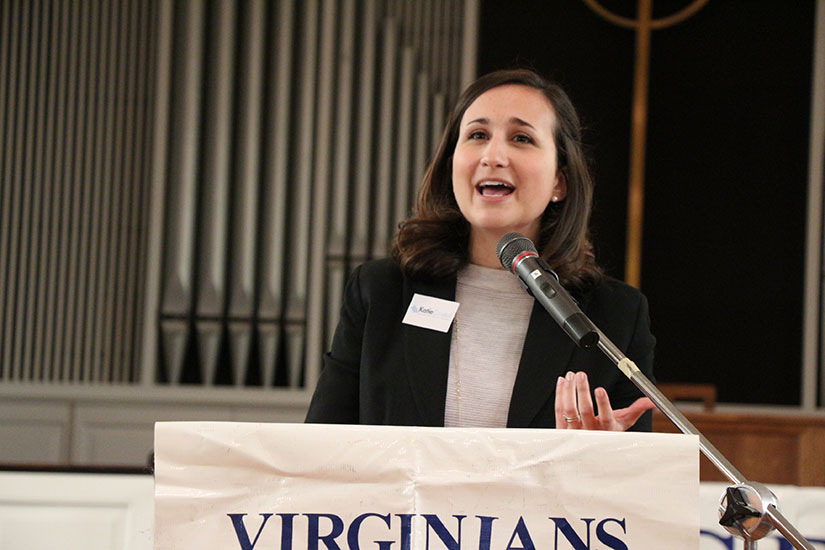
Arlington County Board Chair Katie Cristol is joining a statewide push for more education funding, calling on the General Assembly to send more cash to local school systems.

Cristol, a Democrat, is standing with leaders from 10 other Virginia localities in supporting the “March for More,” a demonstration in Richmond set for this Saturday (Dec. 8). Richmond Mayor Levar Stoney (D) is coordinating the effort and has made school funding a key focus of his administration.

The march is primarily focused on convincing state legislators to reverse cuts to K-12 education funding they made at the height of the Great Recession. Its supporters argue that the state’s failure to restore those funds and keep pace with rising enrollment levels have put a huge strain on local governments, which bear the burden of funding their school systems.

“As a locality that receives the smallest percentage of funds from the state for K-12 education, we’ve watched funding dwindle since the start of the recession in 2009,” Cristol wrote in a statement. “Shifting such a disproportionate burden of educating young Virginians on to the commonwealth’s localities is as inequitable as it is unsustainable.”

For fiscal year 2019, state funds accounted for about 12 percent of the roughly $640 million that Arlington Public Schools took in in revenue, while the county accounted for about 78 percent of that amount. However, there are plenty of factors accounting for Arlington’s small share of state funding — officials dole out money based on each locality’s “ability to pay,” a statistic that the state calculates by evaluating factors like property values, income levels and taxable retail sales. The county performs quite well relative to other Virginia localities on all of those measures.

But the “March for More” advocates point out that state law obligates the General Assembly to fund 55 percent of the costs of meeting the state’s “Standards of Quality,” which govern everything from class sizes to facility maintenance schedules, but Richmond has fallen far short of meeting that standard. As of 2017, the state combined to meet just 43 percent of school funding needs statewide.

Similarly, research from the left-leaning Commonwealth Institute for Fiscal Analysis suggests that state funding is down 9.1 percent per student compared to pre-recession levels.

Arlington officials are particularly interested in a little budget relief, given the county’s current fiscal challenges.

County leaders are considering everything from tax increases to staff layoffs to help meet a projected $78 million budget gap, which is driven in part by a $43 million deficit that the school system is facing. The school system only narrowly avoided increasing class sizes in this year’s budget, and may have to consider such a measure again in fiscal year 2020.


Washington-Lee High School could soon be renamed to honor Mildred and Richard Loving, the Virginia couple who successfully challenged the state’s ban on interracial marriages before the Supreme Court.

A committee tasked with suggesting a new name for the school voted on Thursday (Nov. 29) to recommend “Washington-Loving” as its new moniker, according to School Board spokeswoman Linda Erdos. She added that the committee’s second choice was “Washington-Liberty High School” in passing along recommendations to the Board.

The 23-member group began its work in September, after the Board voted in June to strip Confederate general Robert E. Lee’s name from the building due to his legacy of fighting to preserve slavery. Board members will now have the final say on a new name for the school, which they’re hoping to have in place in time for the 2019-2020 school year.

The renaming effort has been a controversial one throughout the community, with three W-L students suing the school to block the name change, arguing that the Board didn’t follow its own procedures in kicking off the renaming. The Board vigorously denies those charges, and a hearing in that case is set in Arlington Circuit Court later this month.

Other disgruntled alumni also backed Audrey Clement’s unsuccessful School Board campaign this fall in a bid to register their displeasure with the name change.

Nevertheless, the Board is set to debate the matter for the first time at its Dec. 20 meeting, Erdos said. In an email to the school’s staff that Erdos provided to ARLnow, W-L Principal Gregg Robertson expressed confidence that the “Washington-Loving” option would be the ideal option for the Board to consider.

“I don’t like to speculate, but ‘Loving’ holds a strong first place recommendation,” Robertson wrote. “I am so proud that our school community is moving forward in a positive way, while being insightful and thoughtful. I am also proud that we may be the first school in the United States to honor two individuals who looked past race and color and joined in a marriage based on their love and respect for each another. Though at the time, treated very unfairly by the state they loved — they will now hopefully be honored for possessing many of the same attributes we associate with our school, our goals and our vision for a global society.”

Chloe Slater, a junior at Washington-Lee who sat on the committee, agreed that “Washington-Loving” provides a “clear representation” of the school’s values. As the child of an interracial couple herself, Slater says the Lovings’ court battle represents an inspiring example of “how everyday people can accomplish great things.”

“I just really enjoy how we can turn a name with so many negative connotations into something positive,” Slater told ARLnow.

The Lovings, who have both since died, hailed from Caroline County, just south of Fredericksburg. The couple married in D.C. in 1958, but were subsequently convicted under a Virginia law banning interracial couples from returning to the state. The Lovings challenged that sentence in court, and the Supreme Court ultimately issued a unanimous decision in their favor in 1967, in effect striking down all laws banning interracial marriage across the county. The case was also the subject of the film “Loving” in 2016.

The Board had originally hoped to vote on a new name for W-L before year’s end. However, Erdos said it’s currently planning to do so at its Jan. 10 meeting.


The following Letter to the Editor was submitted by Amelia Black, a Nauck resident living within Drew Model School’s attendance boundaries and the mother of two young children.

She penned this note to the Arlington School Board as it weighs a redrawing of South Arlington school boundaries. Parents at Henry Elementary School have proposed converting Drew into a neighborhood school accepting countywide transfers for a “STEAM” program in order to address some of their boundary concerns. The Board has dismissed the possibility of such a proposal, and is set to vote on a final boundary map next month.

My name is Amelia Black, and I am a parent of two children under the age of 5, and I live in the Drew neighborhood walk-zone. The views expressed here are my own.

I am writing because I have been frustrated to learn of the recent proposal by some community members to scrap this whole boundary process and make the new Drew neighborhood school a ‘hybrid option school.’ I thought it was ridiculous on its face, but learned it has been shopped around with all School Board members and even has a full PR campaign complete with ARLnow article and attempts to convince neutral stakeholders like Drew’s principal and PTA president.

I am not sure what you all think about this proposal, but I am hoping it is non-idea for you like it is for me. The school has been an option school for decades and has not had the benefit of a single community rallying around its success like other schools have had. You all know the history of the school, how we all got this point, and I hope that going back now is not considered an option.

I personally support map 6 with some reservation, in particular about filling the school and students not opting out, ultimately delaying Drew congealing into a strong community school. Changes that I hope would be considered 1) all Pre-school seats, including leftover non-VPI seats, should be given to Drew families living in this boundaries so as to encourage families to come into the school 2) Large numbers of students should not be allowed to stay at their former neighborhood school just because it has some extra capacity.

However, I am also formally requesting that you do what you feel is the best long-term solution for all students. The inherent problem with having all us parents constantly engaged in any process like this is that we all would do ANYTHING to prevent real or perceived threats to our children’s’ optimal development.

Parents can pull out charts, spreadsheets, and videos but none of us are objective, and we all want what we feel is the best solution RIGHT THIS MINUTE for our precious children. But often, what is best for those being the loudest right now is not necessarily the best solution for the long-term. We elected you all to gather our input and then make an objective decision that is best for all students, not just the ones who have time and resources to make our voices heard.  I’ve shared my opinion, and I am telling myself I’m objective, but I’m biased like every other parent, and I hope you will each do what you feel is most fair to all involved.

As a final thought, please though there have been many flaws in this process that I hope you will seriously reflect on in making improvements for the future, please do not delay this decision. Please make efforts to pull the band aid off now and make a decision on December 6.  Delaying the decision will only give people more time to creatively combat the inevitably painful acceptance of changes coming next year.

ARLnow.com occasionally publishes thoughtful letters to the editor about issues of local interest. To submit a letter to the editor for consideration, please email it to [email protected]. Letters may be edited for content and brevity. 

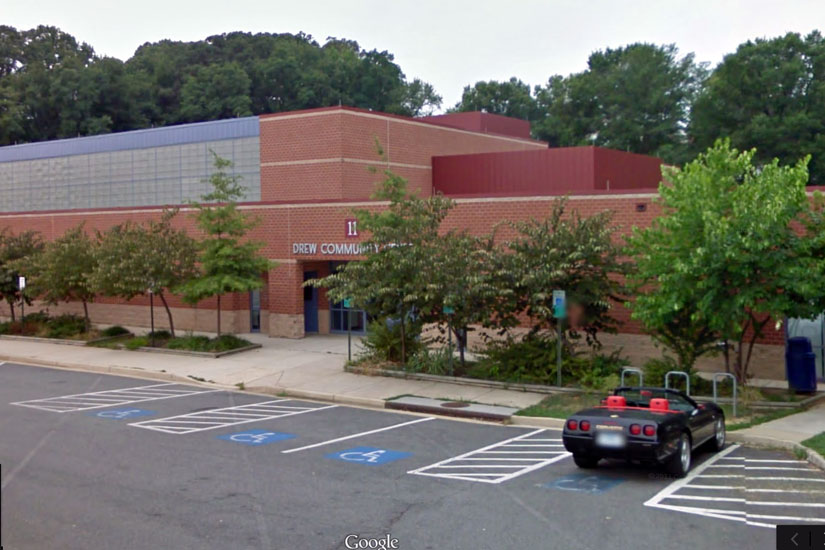
Photo via Google Maps


(Updated at 9:50 a.m.) Many parents of Patrick Henry Elementary School students have expected, for years, that their community would move as one to Alice West Fleet Elementary when it opens next fall.

They believe Arlington school officials have repeatedly promised them as much over the years, as deliberations have progressed over the best way to build a new South Arlington elementary school, then shift Drew Model School’s Montessori program to Henry’s old building. That’s why so many Henry parents are now furious that Superintendent Patrick Murphy’s proposal for a redrawing of school boundaries would send more than a fifth of current Henry students to schools other than Fleet.

School leaders, however, argue they’ve never made such promises about keeping the entirety of the Henry community together. The current boundary process is aimed at better spreading out students across eight different South Arlington elementary schools, and officials argue that it’s likely impossible they’ll be able to please every single parent as they look toward the greater good for the whole school system.

But some parents believe there’s a better way to achieve school officials’ stated goals for the boundary process, which simply involves a little bit of creative thinking. They’d much rather see the school system transform Drew into a science and technology-focused program that accepts transfers from across the county, as a way of simultaneously solving overcrowding issues in the area and avoiding a major breach of trust with the community.

“South Arlington has always been on the back end of receiving support for its schools,” Gary Belan, a parent of two current Henry students, told ARLnow. “But this whole process has not only been a disservice to the kids at Henry, but the folks at Drew. It does a minimal amount to set either up for success.”

After releasing a slightly revised version of Murphy’s map and holding a public hearing on the boundary proposals last night (Tuesday), the School Board won’t approve a final map until Dec. 6. Some early proposals would’ve moved all but a small section of the Henry community to Fleet, though some came at the cost of angering parents in Fairlington by moving students from Abingdon to Drew, and Board members stress that all of the draft maps remain on the table for debate.

Yet some parents who’ve spent years working on committees guiding Fleet’s opening have lost faith that the Board will listen to Henry’s concerns. For instance, Joe Everling, who worked on the Building Level Planning Committee for Fleet, believes the Board “wasted my time” and “co-opted me into this flawed process.”

“The ‘Arlington Way’ is often all about asking for feedback and then doing whatever you want anyway, and that’s what’s happening here,” said Everling, the parent of two kids currently at Henry and a third approaching school age. “They’re talking to us like we’re kindergarteners, telling us we didn’t hear what we heard… We’ve been working with them, not fighting with them. But then they reveal something that doesn’t even reflect what they’ve been promising.”

Yet Arlington Public Schools spokesman Frank Bellavia insists that moving Henry to Fleet was merely a “general plan” developed as the school system began planning for a new elementary school in 2013, and never an explicit promise.

“When APS began this boundary process, the School Board listed eight schools to be included in this process and none were to be exempt from possible boundary changes,” Bellavia said.

School Board Chair Reid Goldstein was even more emphatic during an Oct. 24 work session, arguing that parents were mistaken in assuming that Henry’s student body would move together to Fleet. He even conceded that some school officials, himself included, might have given parents the wrong impression about the matter, and should’ve expressed more uncertainty about the future.

Goldstein went on to explain that he’d requested a correction to an ARLnow article which reported on APS officials reassuring Henry parents that all students would move to Fleet, after several parents mentioned such assurances at an October School Board meeting. He argued that the article was “inaccurate” and “further inflamed” tensions over the matter.

“Staff has attempted to quell this rumor but, unfortunately, it still persists in some places,” Goldstein said. “I’m addressing it here to hopefully, finally, put it to bed.”

But Everling points to a number of school documents delivered to various committees over the years dubbing Fleet “a new school for Henry Elementary.” The Board’s April 2016 motion approving plans for Fleet even refers to it as such; a January 2018 presentation on the school’s design similarly notes that the Board “identified Patrick Henry Elementary as the school community that will occupy the new elementary school.”

And, in a May 2016 email to Douglas Park Civic Association leaders obtained by ARLnow, Goldstein himself looks to quell what he dubs “rumors” that the Henry community will be split up in the move to Fleet.

“To fill up the new building, we need to move all of the Henry students there,” Goldstein wrote. “Removing current Henry students from that new boundary zone is counter-productive to accomplishing this goal.”

(more…)


Arlington leaders now say they’re ready to start studying unpleasant budget measures from tax increases to staff layoffs, as they gear up to confront next year’s hefty budget gap.

The County Board is set to sign off today (Tuesday) on new budget guidance for County Manager Mark Schwartz, as he gets to work on a new spending plan for fiscal year 2020. The memo directs Schwartz to develop a range of possible options for the Board to evaluate next year, including “a range of potential tax increases” and “proposals for program and personnel reductions or eliminations” if Schwartz can’t develop a balanced budget while relying on the existing tax rates.

The Board made a handful of spending cuts in the budget for fiscal year 2019, but opted not to raise any of the county’s tax rates.

Since then, Schwartz has frequently called for the Board to give him the flexibility to pursue such budget measures, given the county’s gloomy near-term financial prospects. Though Amazon’s arrival in Arlington could well pour millions in new revenue into county coffers, officials project that their budget challenges won’t vanish overnight. In all, the county’s combined budget deficit could be as large as $78 million next year.

All on its own, Schwartz expects that the county will need to close a gap of anywhere from $20 million to $35 million, a gap driven by factors including Metro’s increasing expenses, the new raises for public safety workers the Board approved in the 2019 budget and new spending associated with the statewide Medicaid expansion.

But the county school system could tack on another $43 million in unmet needs, as it works feverishly to build new schools and keep pace with the county’s influx of new students. Without any tax rate hikes, staff currently projects that the county will be able to send about $7.7 million to Arlington Public Schools than it did last year. But that increase, driven by rising real estate assessments, likely won’t be enough to solve all of the school system’s funding woes — the School Board only narrowly avoided class size increases last year, and will face similar challenges this time around.

The Board’s budget guidance does identify one program that it hopes Schwartz will be able to protect from budget cuts: the Affordable Housing Investment Fund, a loan program designed to incentivize the construction of reasonably priced homes. The memo to the manager suggests that Schwartz craft a proposal to maintain the $14.3 million in funding the Board sent to the fund last year, and recommends making more of the funding “ongoing” rather than subject to the Board’s appropriation process each year.

The latter change was one championed by Board member John Vihstadt in his losing bid for re-election this year, and the entire Board has emphasized the importance of funding affordable housing programs to prepare for Amazon’s projected impacts on the housing market. As part of its deal to land the tech giant, the county even committed to directing about a third of the money it spends on affordable housing each year to specifically serve the areas around Amazon’s new headquarters in Crystal City and Pentagon City.

The Board is set to vote to approve the new budget guidance today, setting the stage for Schwartz to deliver his proposal to the Board in February. The County Board and School Board are also set to hold a joint work session next Tuesday (Dec. 4) to kick off their initial budget deliberations.


Arlington school officials are weighing a new proposal to give all staff Columbus Day off next year, a move that would end up giving students another day home from school in the process.

The county school system is currently accepting feedback on two options for the 2019-2020 year. One would maintain Columbus Day, which will fall on Oct. 14 next year, as a holiday for students and a “professional learning day” for all year-round employees, with those same workers getting Dec. 26 as a day off.

The other would make Columbus Day a holiday for students and staff alike, and Arlington Public Schools will set aside Oct. 7 for staff training instead. That would mean that students also get that day off, while 12-month staffers would need to report to work on Dec. 26.

The change would result in students having 27 weekdays off from school next year, compared to 26 under the first plan. It would not, however, impact the last day of school for students at any level, or affect the dates of any holiday breaks.

The school system is unique in the county in observing Columbus Day in the first place, as most other county government offices and facilities remain open for the controversial holiday.

School officials are still accepting feedback on those two options, and the final decision rests with the School Board, which has yet to review the new school calendar.

An online APS survey on the matter — asking responders to rate each of the two calendar options — will close by the end of the day today (Monday).

File photo


APS on Two Hour Delay — Arlington Public Schools are opening today on a two hour delay. “The Extended Day program will also open two hours late and morning field trips are canceled,” APS said. [Twitter]

Chain Bridge Closes Due to Ice — Chain Bridge was closed for much of the morning rush hour this morning due to icy conditions on the bridge. Multiple crashes were reported, though the bridge has since reopened. [Twitter, Twitter]

Amazon News Roundup — Per the Washington Business Journal: The neighborhoods around the Rosslyn area might have been rebranded as “Capital View” had it been chosen for Amazon’s HQ2. The retro Americana hotel in Crystal City is hoping to stay put and revamp a bit as Amazon moves in. The Crystal City BID is working to expand its boundaries and, if successful, may be renamed the National Landing BID. Finally, while Virginia is mostly welcoming Amazon with open arms, in the other half of the HQ2 equation, New York City, Amazon is facing protests and opposition from local lawmakers.

Amazonians May Invade Dating Scene — DCist asks: “Will Amazon Bring A Bunch Of Rude Workaholics To The D.C. Dating Scene?” [DCist]

Money Diary of a Local Parent — As part of a money diary feature, Slate asks: “How Much Does a Dad of Two Spend on His Kids During One Week in Arlington, Virginia?” [Slate]

E-CARE This Weekend — The Arlington Environmental Collection and Recycling Event (E-CARE), “a biannual event at which residents can safely dispose of household hazardous materials (HHM), bikes, small metal items and other recyclable items,” is set to happen this weekend at 1425 N. Quincy Street. The event is scheduled for Saturday, Nov. 17  from 8:30 a.m.-1 p.m. [Arlington County]

Flickr pool photo by Jenn Vogel


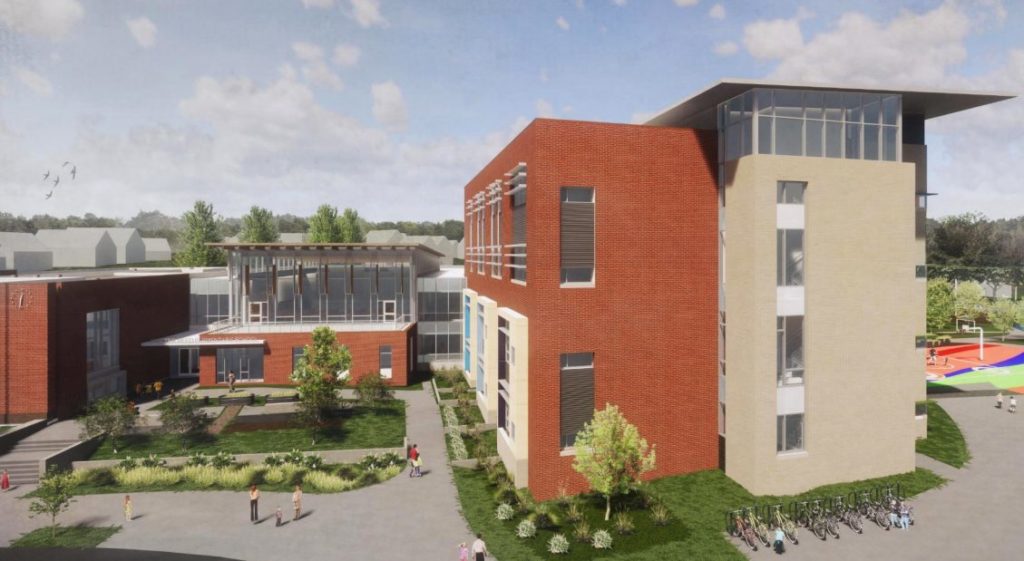
Construction could soon get started on the new elementary school planned for the Reed School site in Westover, as the project looks set to earn the county’s approval this weekend.

The County Board is set to vote Saturday (Nov. 17) on a few zoning and easement tweaks for the property, located at 1644 N. McKinley Road. Arlington Public Schools is hoping to open the building in time for the 2021-2022 school year, and it will serve at least 732 students in all.

The school system’s plans call for the demolition of part of the existing school on the site, in order to allow for the construction of a new “two and four story school building, containing approximately 112,919 square feet, on the northeast side of the existing building,” according to a staff report prepared for the Board.

The School Board signed off on designs for the $55 million project back in August, and the plans have since earned the endorsement of the Planning Commission as well.

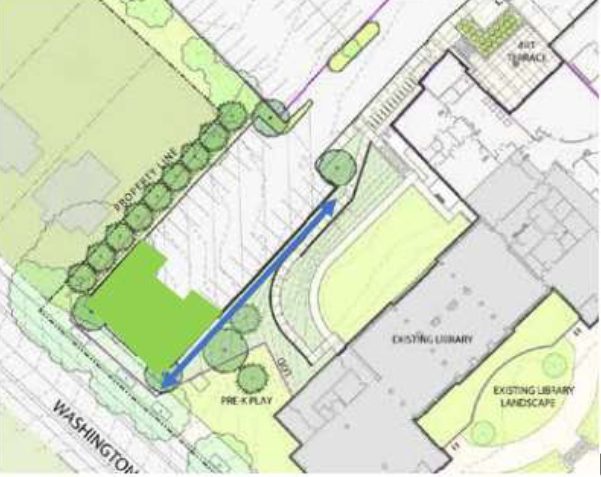
The lone change county planners are recommending is an alteration of a walking path to connect the school to Washington Blvd.

Originally, the path would run through an existing parking lot, up a small slope. But the slope was large enough to prompt some concerns about its accessibility for pedestrians with disabilities.

Accordingly, planners are recommending an alternative design to run the path parallel to the parking lot instead. To do so, the school system will have to cut back on nine parking spaces in the lot (bringing its total down to 133 spaces) in order to keep costs for the project down, a key concern for the School Board.

Both county staff and planners are recommending that the County Board adopt these plans, including the path alteration.


View More Stories