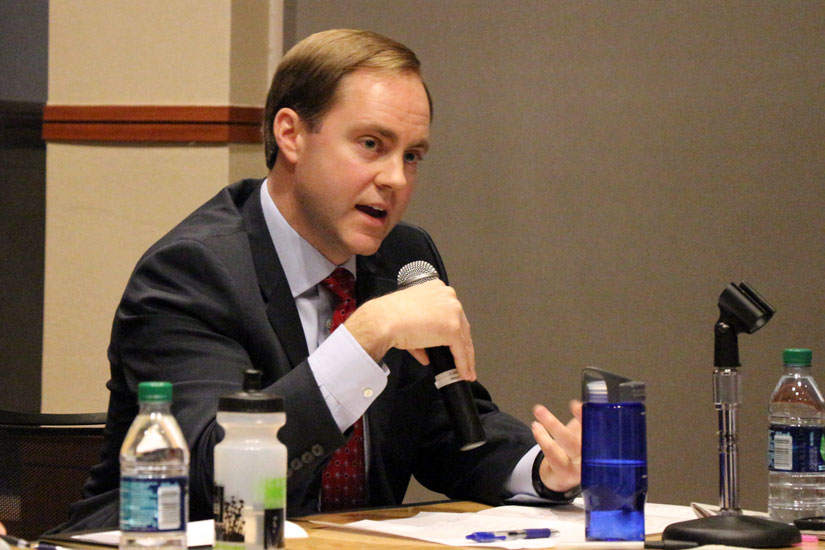
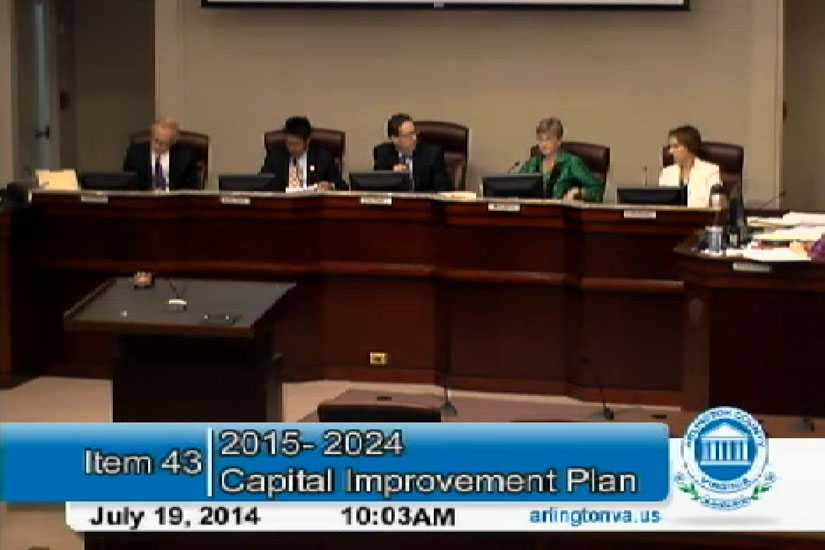
The County Board discusses the CIP 07/19/14The Arlington County Board has approved a plan for $2.7 billion in infrastructure spending — including $485 million for the Columbia Pike and Crystal City streetcar system — over the next 10 years.

Though controversial, the streetcar was just one component of the approved Capital Improvement Plan. The Board also gave a thumbs up to the School Board’s capital plan, a $534 million spending agenda over the next 10 years that includes a $105.8 million bond request that will be put to voters as a referendum.

The school bond will be placed on the Nov. 4 ballot along with $60.24 million for Metro and transportation, $39.9 million for community infrastructure and $13 million for parks and recreation. The county asked the Circuit Court to place its $219 million bond package on the ballot on Saturday, after the meeting, according to the Sun Gazette.

The streetcar was the main impetus behind County Board members John Vihstadt and Libby Garvey’s “no” votes, but the CIP passed 3-2 with Chair Jay Fisette, Vice Chair Mary Hynes and Board member Walter Tejada voting for approval. None of the $485 million in streetcar funds will come from local residential taxes; instead, it will be funded by a mix of state dollars and dedicated transportation funds.

“Regardless of the mix of federal state or local funds, it’s the public’s money after all, and it’s an unwise public expenditure regardless of where the streetcar is,” Vihstadt said. “I cannot vote for a CIP whose single biggest legacy from a funding share standpoint will be a financial and operational albatross for decades to come.”

In addition to the bond referenda, the CIP includes an estimated $28 million for reconstruction the Lubber Run Community Center, expected to occur in 2017-2018. It pledges $1.1 billion to the Metro system over the next 10 years and $25.1 million for a new Fire Station 8 and Office of Emergency Management operations center, the site for which has yet to be determined.

“This CIP reflects the values and goals of our community,” Fisette said in a press release. “The Board’s adoption of this plan comes after months of dialogue with Arlingtonians. Together, we’ve produced a balanced plan that maintains our existing infrastructure and makes strategic investments in our future. This is a prudent, financially sustainable plan that will meet the needs of our growing community and help maintain our triple-Aaa bond ratings.”

One of the biggest ticket items is a substantial increase in funding for street paving and maintenance. The Board approved $128.1 million over the next 10 years for street paving, a $14.1 million increase over the previous CIP. The Board also greenlighted $317.7 million in water and sewer maintenance and $61.3 million for stormwater management.

The changes the Board made to County Manager Barbara Donnellan’s proposed CIP were largely schedule-based. The Board elected to accelerate $1.4 million renovations to Tyrol Hills Park and $1.5 million for the Aurora Hills Community Center. Both projects are now scheduled to begin design and planning phases next year.


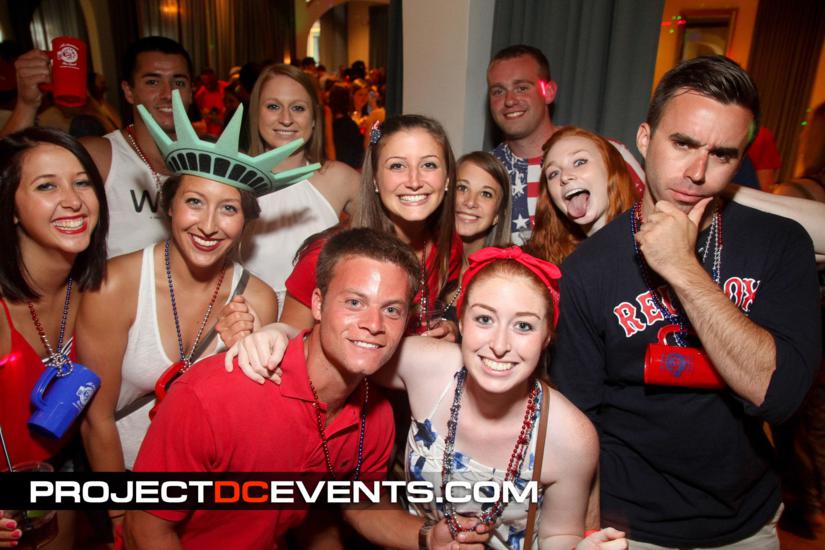
2014 All-American Bar Crawl attendeesBar crawls in Clarendon may be changing after the Arlington County Board approved new event regulations at its meeting on Saturday.

The new regulations will include fees charged to the organizers to recoup the cost of extra police and community resources required to deal with the nearly 5,000 people estimated to attend some of the crawls. The crawls, which have previously been organized without much input from the county, will now need to be approved in advance.

The specifics of how much organizers will have to be and the criteria under which pub crawls will be approved or rejected have not yet been determined. County Manager Barbara Donnellan said she plans to return to the County Board with the full, implemented policy before Halloween, which is expected to be the date of the next major pub crawl.

“We have, I believe, the highest percentage of 25-34 year olds as a percentage of our population than any community in the United States, and we embrace that group,” County Board Chair Jay Fisette said during the meeting. “We embrace their vitality and the energy they bring to our community as a creative class and workforce, and at the same time we request and require that they respect others.”

The approved regulation was seen as somewhat of a compromise between residents who want fewer and smaller crawls and the organizers who want to see the crawls continue on unabated. The Board first discussed amending its special events policy, last updated in 2012, in April during budget discussions. At the time, Donnellan requested $45,000 for police overtime specifically to manage the pub crawls. The Board directed Donnellan to return with an updated policy.

In the meantime, the crawls drew another round of controversy after an attendee in June allegedly stripped naked before leading police on a car chase that ended with a crash in Clarendon. That incident, paired with a women alleging stripping naked at the Arlington Magistrate’s Office during a March bar crawl, helped bring the issue to the Board’s attention.

“It’s two incidents out of thousands of people,” Project D.C. Events co-owner Alex Lopez told ARLnow.com earlier this month. Lopez pointed out that neither happened inside a bar. Project D.C. Events organized both the March and June pub crawls at which the incidents take place, as well as crawls in D.C. that have occurred without public incidents. “You don’t hear about bar crawls in D.C. because nothing happens at them. If you say, ‘oh everything was peaceful in the last bar crawl,’ well, no one is going to read that.”

According to a county press release, about 1,130 people responded to an online survey about how best to manage the pub crawls, but only one member of the public spoke during the comment period: frequent County Board critic Jim Hurysz.

The motion passed 5-0 and the Board generally lauded the police and staff for their work in bringing a “common sense” solution to the issue.

“It’s an evolution to figure out how to satisfy the various kinds of people who live in Clarendon,” Board Vice Chair Mary Hynes said. Hynes lives just a few blocks from the epicenter of the pub crawls in Clarendon. “People don’t want Clarendon’s reputation to be only what happened at that last pub crawl. Business owners want people to come to Clarendon and eat and enjoy all the amenities.”

“We’re going to do this and monitor and see what happens,” Hynes continued, “and if this doesn’t work, we’ll be back here… to see if we need to take any more steps or not.”

Photo via Project D.C. Events


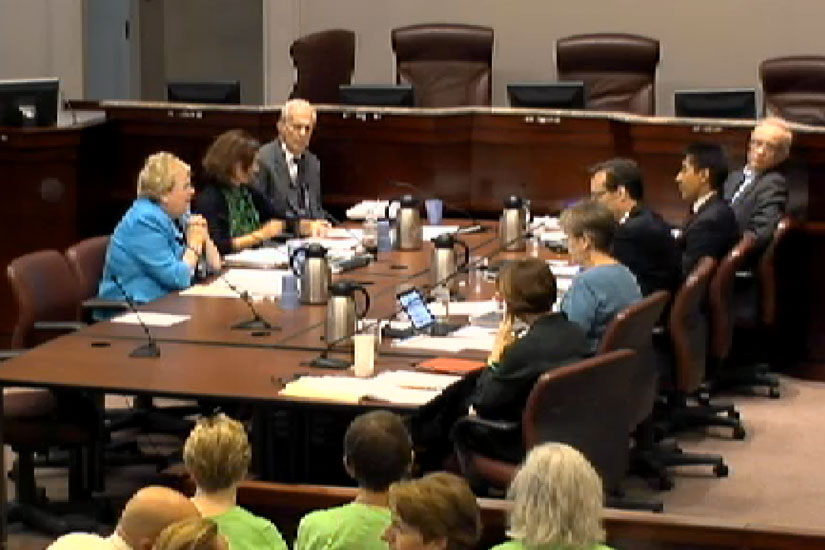
CIP Work Session 07/17/14(Updated at 5:55 p.m.) The Arlington County Board appears likely to vote on a $333 million plan to build the Columbia Pike streetcar system on Saturday.

County Manager Barbara Donnellan presented an alternative streetcar funding plan to the Board this afternoon, one that includes no federal funding, accelerates the project’s schedule by a year and slashes the estimated budget by $25 million.

Board members Libby Garvey and John Vihstadt, the County Board’s two streetcar opponents, grilled county Transportation Director Dennis Leach and other county staff about the reliability of state funds and the county’s projections. Virginia Secretary of Transportation Aubrey Layne announced last week that the state would contribute up to $65 million to the project.

“I was just trying to figure out how sure this money is,” Garvey is, noting words like “anticipate” and “up to” in Layne’s letter. “It seems like you’re very sure about it but it doesn’t sound like you can take it to the bank.”

County Board Chair Jay Fisette issued a strong rebuttal to the concerns, claiming that in his nearly two decades on the County Board, “the state funding in this plan is the most reliable state transportation funding we’ve ever had.”

Fisette and Board members Mary Hynes and Walter Tejada voted to place the alternative funding plan onto the county’s Capital Improvement Plan to be voted on in Saturday’s County Board meeting, while Garvey and Vihstadt voted against it. Vihstadt made six motions to strike the streetcar and all of its allocated and related funds from the CIP, but all of the motions failed, 2-3. In his motions, Vihstadt called the county’s streetcar PR campaign “Madison Avenue advertising,” a charge Fisette described as “offensive.”

Earlier in the work session, Garvey asked whether $2-3 million allocated for bus shelter improvements can be paid out of Transportation Capital Funds, which are currently earmarked for the streetcar. County Attorney Stephen MacIsaac said while it’s a possibility the funds could be used for bus shelters, he said they are intended by law for capacity improvements or building transit.

If the CIP is passed on Saturday, county staff can begin design and engineering on the streetcar project with hopes that it can deliver the system within the next decade. One result of the change in funding sources resulted in staff believing the Columbia Pike and Crystal City streetcar lines can be delivered simultaneously.

The Sierra Club issued a statement today urging the County Board to approve the CIP and move forward on the streetcar.

“The sooner we can get more people riding on a clean Columbia Pike Streetcar and out of their polluting cars the better,” said Rick Keller, Chair of the Sierra Club’s local Mount Vernon Group. The group has supported the streetcar plan since 2007, saying that “only the streetcar will meet the growing ridership needs of the Corridor, promote environmentally sustainable transit oriented development, and ensure the continued availability of affordable housing.”

Other elements approved for inclusion in the CIP on Thursday did not generate the same back-and-forth debate as the streetcar.

When County Manager Barbara Donnellan presented the CIP in May, her presentation about “Public Land for Public Good” drew controversy. Fisette, however, in the beginning of the work session, tabled the discussion on that platform until September, after the Board returns from its August recess.

Other items Fisette placed on Saturday’s CIP, approved unanimously by the County Board, include $1.37 million for Tyrol Hill Park, improvements to Courthouse Plaza and transportation improvements in the East Falls Church neighborhood.


Democratic County Board candidate Alan HowzeDemocratic Arlington County Board candidate Alan Howze is calling for a “broad-based community process” to develop a plan for better utilizing public lands around the county.

Howze is running for a four-year term on the County Board in the general election Nov. 4 against Republican- and Green-backed independent John Vihstadt, who defeated Howze in a special election for the Board seat in April.

The county has promoted its “Public Land for Public Good” platform during its deliberations over the 2015-2024 Capital Improvement Plan. County Manager Barbara Donnellan’s recommendation for moving a fire station to green space near Marymount University and the Arlington School Board’s proposal to build an elementary school on a park next to Thomas Jefferson Middle School (125 S. Old Glebe Road) have drawn criticism for, among other reasons, not including sufficient community input.

“The County Board and School Board have made good faith efforts to address very pressing community needs and their staffs have presented options for some of the most critical of these needs,” Howze said in a press release. “But I share the frustration of community members who feel that key decisions that will affect our community for decades should have more meaningful public input at an early stage as proposals are being developed.”

In his 577-word press release, Howze declines to state a position on any of the specific public land use proposals, simply advocating for more discussion while pointing out the “critical need for school capacity, affordable housing, open space, and public safety and public works infrastructure.”

Vihstadt will have a hand in determining the fate of public land when he and the County Board vote on the 10-year CIP on Saturday. He sent ARLnow.com the following response to Howze’s call for a discussion on the issue:

Land and money are finite. Setting county priorities often requires hard decisions. I heard loud and clear that citizens believe many major decisions made by both the County Board and the School Board too often originate and get settled from the top down rather than from the ground up. As a County Board member, I’m working with my colleagues and communities across Arlington to help ensure that our planning process begins earlier, includes all stakeholders, and truly considers and accommodates the sometimes competing needs and diverse interests of our County.


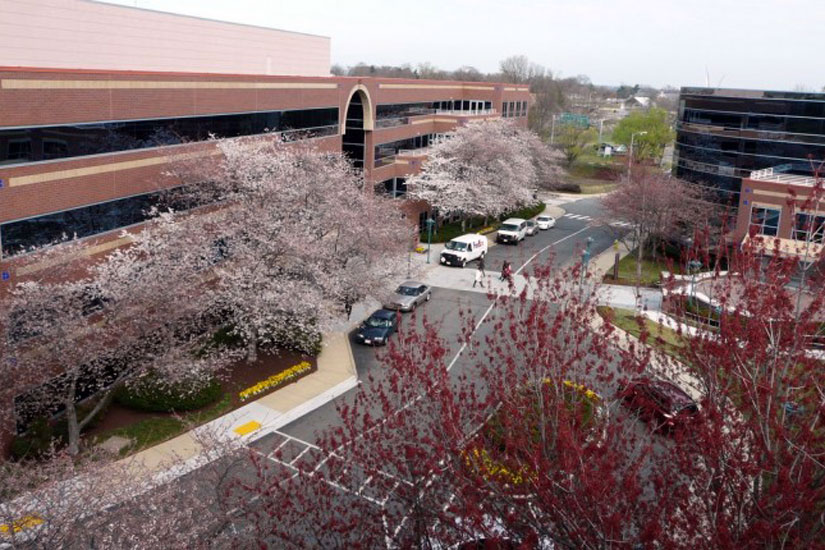
Stambaugh Human Services Center (Photo via Arlington DHS)The Arlington Department of Human Services could consolidate more than 80,000 square feet of existing facilities around the county into its headquarters at Sequoia Plaza (2100 Washington Blvd).

The Arlington County Board will decide next Tuesday whether to approve leasing an additional 72,742 square feet in the three buildings at Sequoia Plaza — 3,469 square feet in Sequoia Plaza Building 1, 10,994 square feet in Building 2 and all 58,279 square feet of Building 3. The county’s lease for this space, in additional to a renewal of the current 144,740 square feet it occupies in Building 1, would run through June 2030.

The additional space will occupy DHS programs currently housed in five buildings around the county, including three within walking distance of Virginia Hospital Center. The buildings and programs are as follows:

  • Clarendon House, 3141 10th Street N.; Community-based rehabilitation of individuals with serious mental illnesses
  • Drewry Center, 1725 N. George Mason Drive; Behavioral Healthcare Division mental health, substance abuse, and psychiatric services
  • Edison Complex, adjacent to Virginia Hospital Center; Emergency services, Crisis Intervention Center of the Behavioral Healthcare Division
  • Fenwick Center, 800 S. Walter Reed Drive; Communicable disease investigation, environmental health, administration for Public Health Division
  • George Mason Center, 1801 N. George Mason Drive; Behavioral Healthcare Division administration and conference rooms

“Moving these programs into Sequoia Plaza will enable DHS to provide most of its services in one place, achieving operating efficiencies and offering convenience to DHS clients,” according to a report from county staff. “Clients in need of services that are provided in different locations currently must commute between the locations. That is highly inconvenient for the many DHS clients who lack vehicles or are disabled.”

Arlington says that despite these programs going from 83,850 square feet to 72,742, the space is adequate because Sequoia Plaza “is laid out more efficiently so that less floor area is required.” The base rent in the first year for the new space adds up to more than $2.2 million per year, which is projected to increase by 3.05 percent through the lease for Buildings 2 and 3 and 2.75 percent per year for the remaining space in Building 1.

The county has allocated $11.6 million for renovations to Sequoia Plaza, but the staff report says the consolidation of departments will “allow the County to avoid significant capital investments at the buildings being vacated.”

Photo via DHS


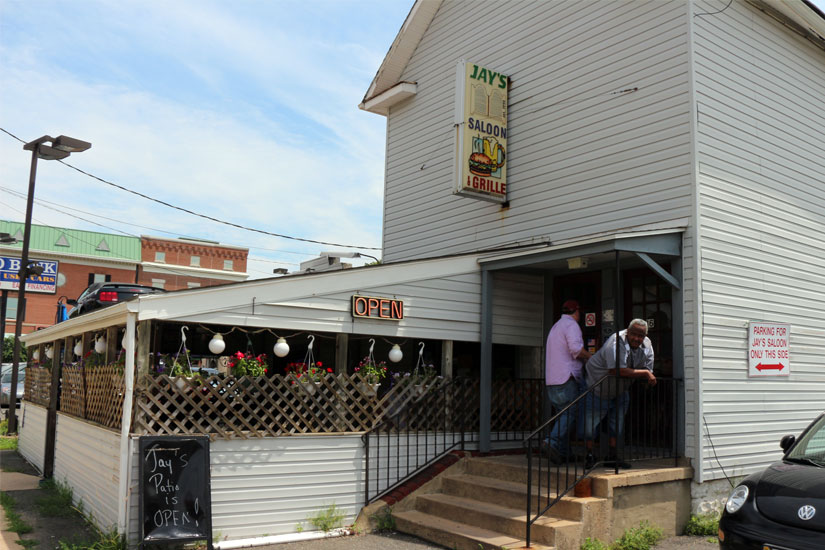
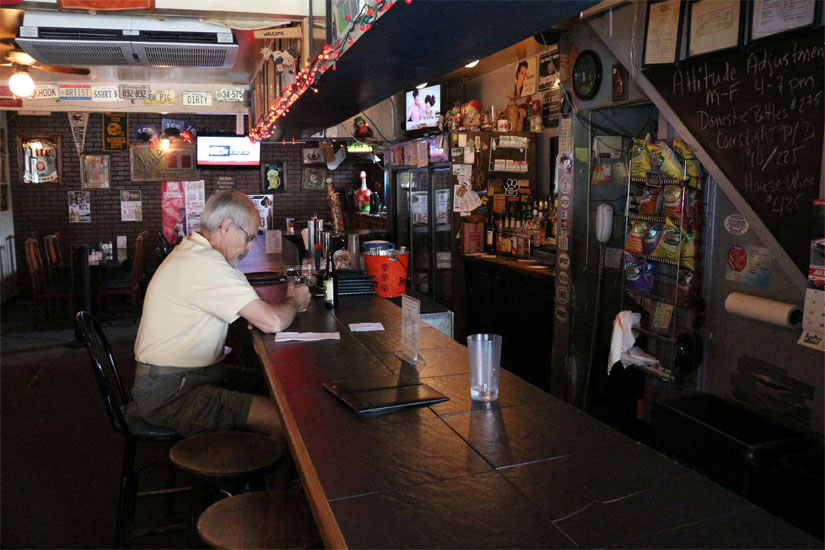
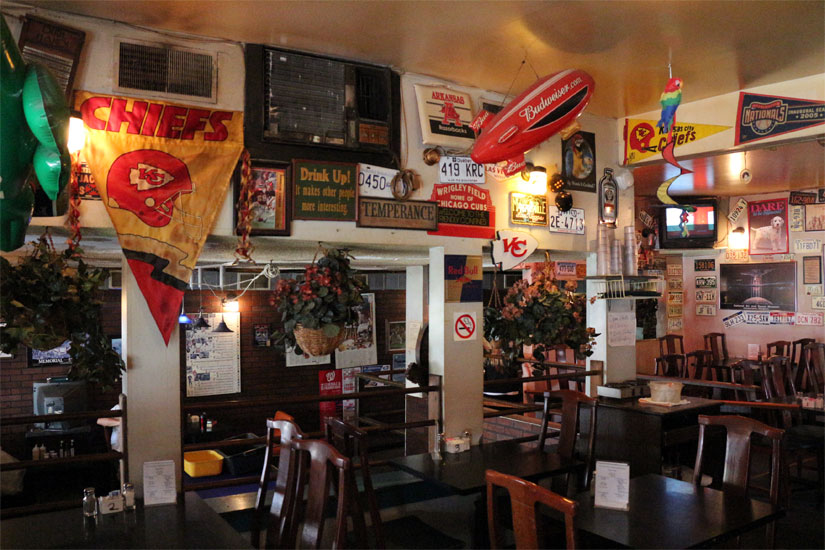
The long-planned development that would knock down Clarendon dive bar Jay’s Saloon and Grille (3114 10th Street N.) and several other businesses could be formally approved by the Arlington County Board this Saturday.

If approved, Jay’s co-owner Kathi Moore, who owns the restaurant with her ex-husband, Jay Moore, told ARLnow.com today that she’s been given until Spring 2015 before she has to close down. Jay’s has been operating with the knowledge they could be closed down for the development since 2011.

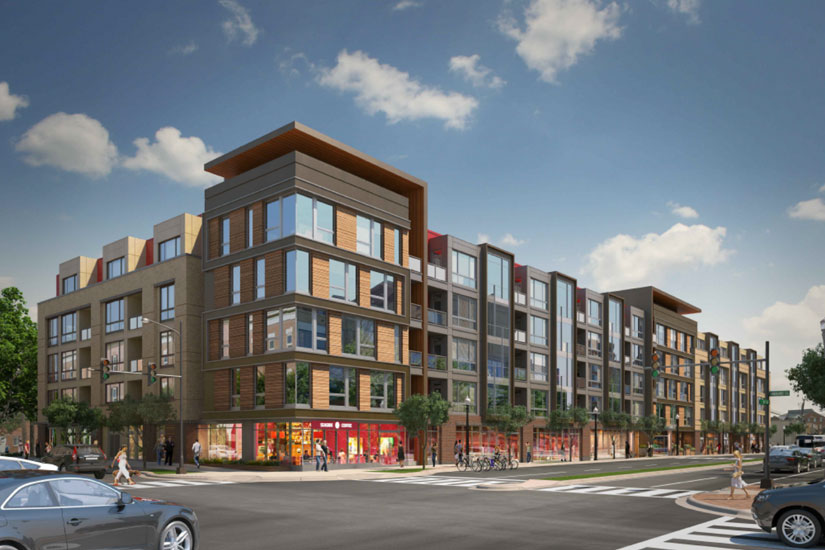
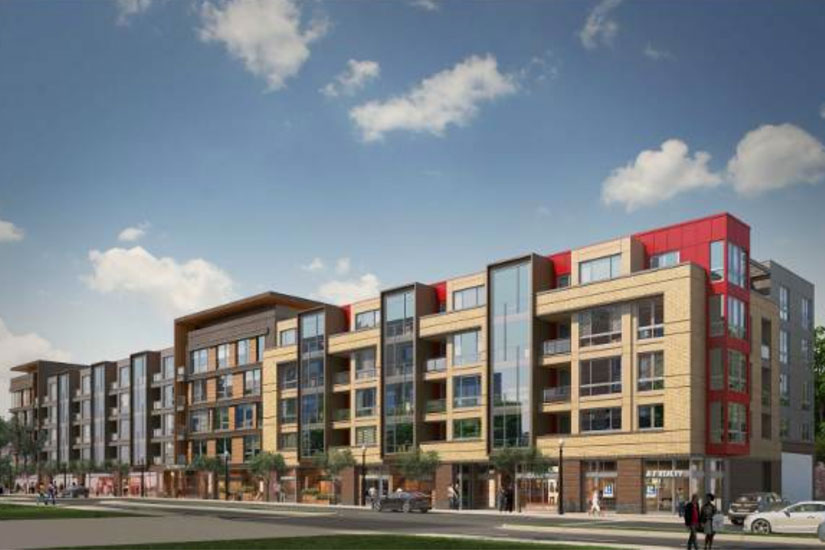
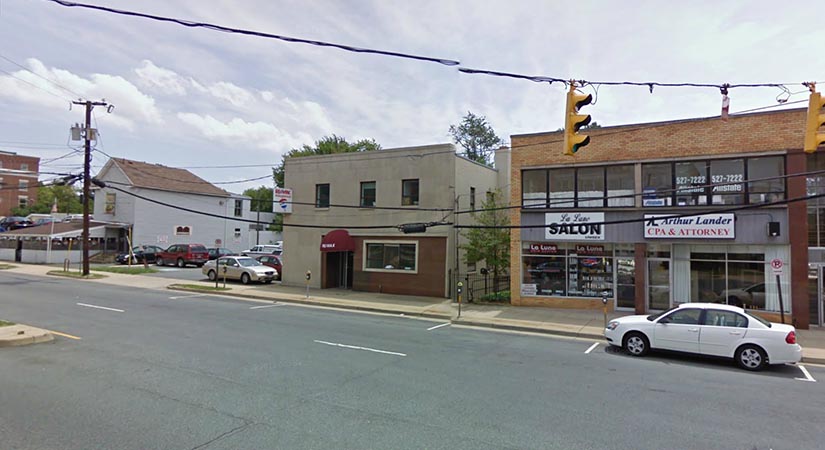
The development on the table is a mixed-use building called 10th Street Flats with 135 residential units, nine live/work units, 3,660 square feet of retail and 4,704 square feet of office space and two levels of underground parking. In addition to Jay’s, the development would also include the demolition of a salon, car dealership and insurance agency on the 3100 block of 10th Street N.

Ballston-based Clark Realty Capital owns the property and is spearheading the development plans, but officials with Clark could not be reached for comment today. The building is proposed as five stories tall, and the live/work units — designed as apartments with a separate office space — could be converted into retail space as market conditions dictate.

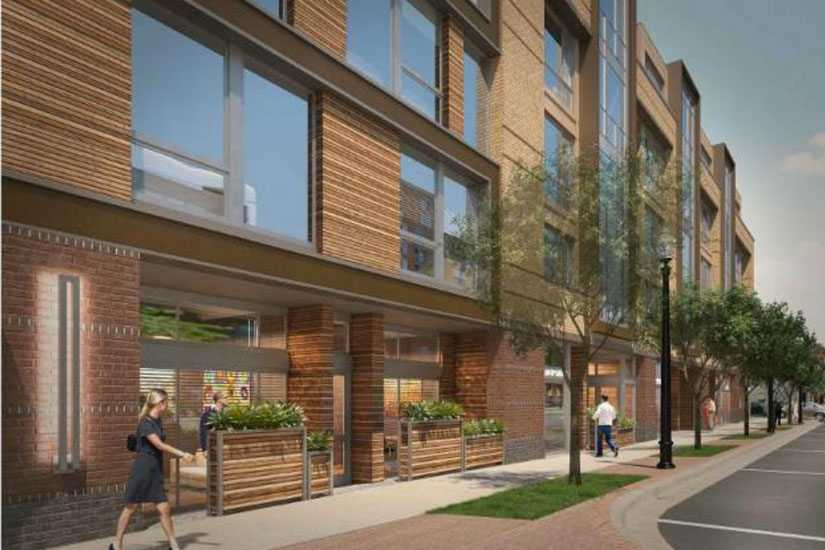
The building would be L-shaped, according to the staff report, with “composite wood panels and composite wood and aluminum trellises to create differentiation on the façade given the project’s long frontage along 10th Street. The ground floor uses masonry, glass, and aluminum and provides for 79 percent transparency.” It would be LEED Gold certified and have dedicated affordable housing units to compensate for density above what is called for in the General Land Use Plan.

In the review process, community members outlined concerns about traffic in the smaller streets surrounding the area, particularly 9th Road N., a residential block. The plans also call for the roof to be accessible to residents as an amenity, which raised the eyebrows of the community and some local officials. County staff is recommending the building’s approval nonetheless, saying the traffic wouldn’t result in an “undue adverse impact” on local traffic and stipulating a buffer area on the roof to mitigate noise.

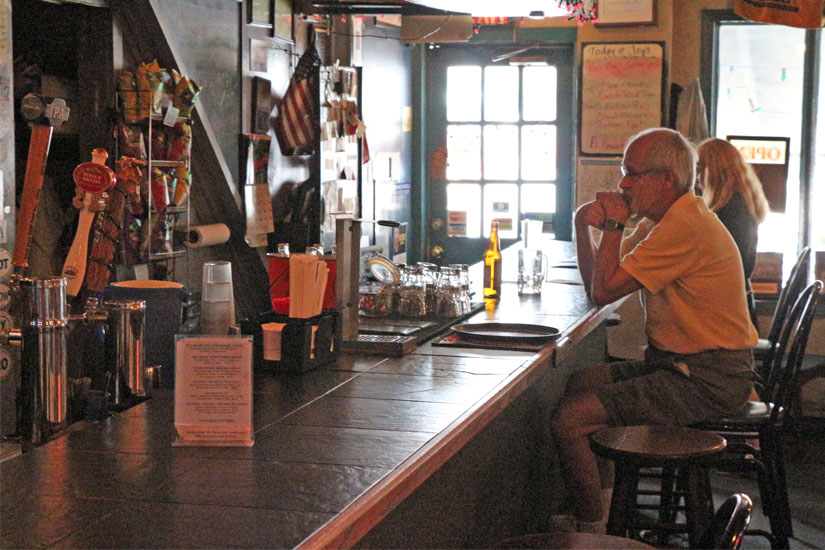
Moore said if she and her ex-husband could have, they would have bought the land along with the restaurant when they opened in 1993, but they “couldn’t afford it then, can’t afford it now.” The restaurant bills itself as “one of the last true ‘dive bars’ in Arlington,” and Moore said her clientele is upset about the closing.

“Both my lunchtime and my nighttime crowd are like ‘what are we going to do?'” Moore said. “My heart goes out to them because we’re not like the rest of Clarendon.”

Like Westover’s The Forest Inn, Jay’s is considered one of the last of a dying breed in Arlington. Local freelance writer Kevin Craft, who has written about Arlington’s dwindling dive bar scene for Arlington Magazine, said there are very few places with as diverse a crowd as Jay’s Saloon.

“I think it’s always important for a place to have a sense of its own history,” Craft told ARLnow.com in a phone interview this morning. “Places like Jay’s are where different generations and professional classes can mix and mingle, and I think Arlington is losing those establishments, unfortunately.”

Moore said she doesn’t believe Jay’s will be moving anywhere else — “20 years is enough here,” she said — but the regulars were glad to find out the saloon will stay open through football season. She purchased some new TVs for the fall, and, when the restaurant does close, plans to hold an auction, including selling all the knick-knacks that line the bar’s walls.

“Our regulars are already asking to take stuff,” she said. When asked what the most sought-after item is, she immediately pointed to the painting of a naked woman hanging over the bar. She then laughed, adding “but that’s not for sale.”


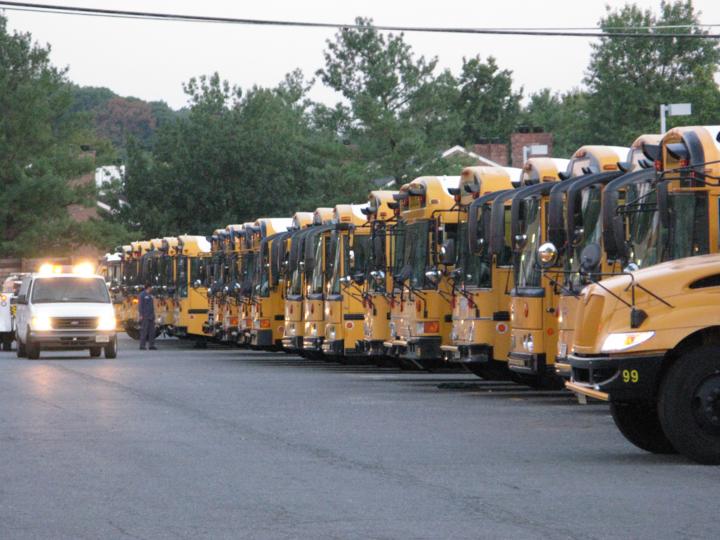
School buses in the Shirlington yard. (File photo)Arlington is looking into installing traffic cameras on the stop arms of its public school buses.

The Arlington County Board will consider advertising a public hearing on the issue at its meeting this Saturday. The proposal follows about six months of work from Arlington Public Schools Security Coordinator Kevin Reardon to develop a plan to install the cameras on 10-20 percent of APS buses with no additional expense to the county.

Virginia passed a law in 2011 that allows municipalities to install cameras on school buses and issue drivers tickets for $250 if they are recorded passing a bus when its stop arm is out. Last fall, Falls Church installed cameras on eight of its 12 school buses, Reardon said. Fairfax County is considering installing the cameras and they are also in use in Montgomery County, Md., where 300 tickets were issued in three months earlier this year.

If the County Board approves the request to advertise, it likely won’t be able to approve the cameras until September, since there is no meeting in August. If it’s approved, APS is expected to seek an outside vendor to install, maintain and operate the cameras. The vendor would receive a substantial percentage of the revenue from the citations as payment, Reardon said.

“In Falls Church, in their first year, the vendor got between 60 and 70 percent of the fine,” Reardon told ARLnow.com today. Another chunk of the revenue will pay the police, who will review the footage and issue the citations.

“I’m sure someone will look at this and say, ‘It’s just the school system trying to make a lot of money,’ and that is not the case. By the time you pay the police and vendor, most of the revenue is gone.”

Reardon said he proposed to earmark the remaining revenue to pay for school safety expenses. The cameras would reduce police expenses, he said, because police will occasionally follow school buses on their routes to ensure drivers aren’t going around the stop-arms.

Falls Church has averaged about one ticket per bus each day, Reardon said, but the citation rate fell essentially every month. Once a motorist is ticketed, a repeat offense is far less likely. He also suggested a 30-day grace period once the cameras are installed — there’s no estimate for when that will happen until the full item goes before the County Board — which would send citations to drivers but not charge them with a fine.

Despite some people’s reluctance to put traffic cameras on the road, Reardon said in his research, reactions to the cameras have been generally positive.

“Most places are very happy with it,” he said. “If you’re passing a school bus on Lee Highway and a child pops out, the child will be hurt severely. Previous to this, the only way we could enforce it is to have the school bus driver jot down the tag and go to court, or the police department is used to follow school buses. Now we’re automating that part of school safety, and we’re going to free the police up to do something else.”

File photo


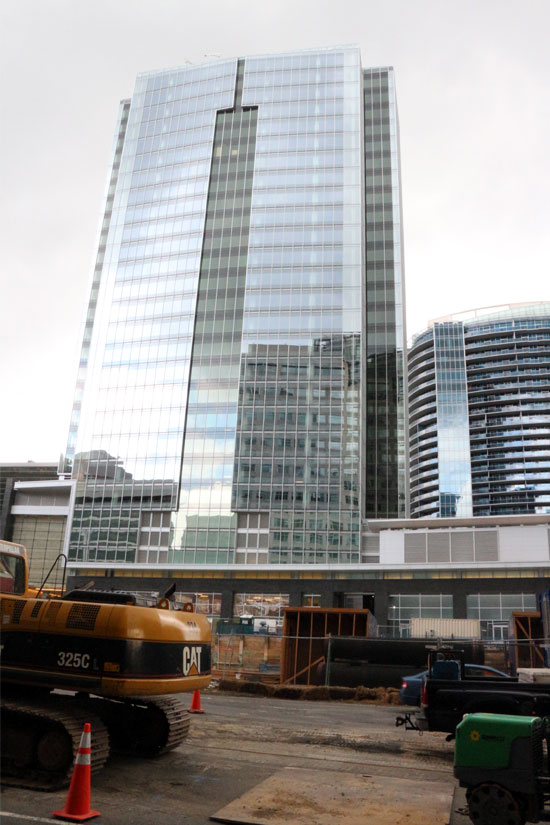
Central Place construction and 1812 N. Moore StreetThe Arlington County Board will decide this Saturday whether to lift a ban on building signs higher than 50 feet for two major Rosslyn developments.

The lifting of the ban — which impacts JBG’s Central Place development and the new, currently vacant office building at 1812 N. Moore Street — could have positive economic implications for the county.

It could help spur construction of the office tower component of the Central Place development (the residential component is currently under construction), and could help Monday Properties in its efforts to find an anchor tenant for its 1812 N. Moore building, which is currently the tallest building in the D.C. metro area.

The Arlington County Board previously banned signs above 50 feet on the buildings as a condition for allowing them to be built taller than otherwise allowed by zoning. County staff has recommended lifting the ban and also redrawing a map used to determine sign regulations in the Rosslyn and Radnor/Ft. Myer Heights area.

Both Monday Properties and JBG Cos. support the measure.

The recommendation is proposed to bring the regulations for that area of Rosslyn in line with the county-wide sign ordinance passed in 2012 that details regulations for signs more than 35 feet high. In addition, it will no longer be required that the developers in question must seek a site plan amendment — a process that can take more than a year in some cases — to erect a sign more than 35 feet high; if approved, those requests can be handled administratively, with more specific guidelines.

“The revised sign regulations include objective standards upon which to base an approval of signage at the roofline,” the staff report states. “Indeed, many of these sign requests can now be addressed administratively. Staff is therefore proposing to remove the specific prohibition on signs above a height of 50 feet within the Central Place area, as there now exists a clearer, County-wide standard for the review and approval of roofline signs that was not in place in 2007 [when the ban was approved].”


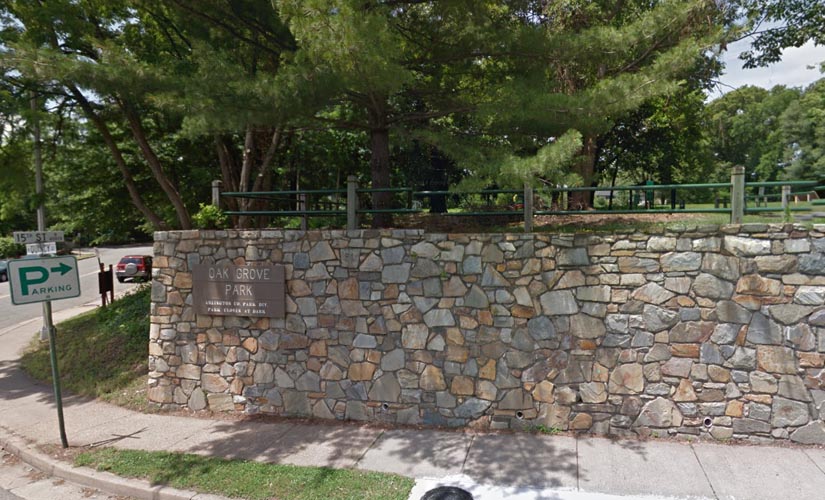
Oak Grove Park (photo via Google Maps)

Oakgrove Park (1606 N. Quincy Street) is slated to get a new entrance, a new trail and other features.

The park, at the southern edge of the Cherrydale neighborhood, has a bit of a visibility problem — it’s not very noticeable from street level. A new entry feature is designed to help, with an artificial, metal tree holding a sculpture of an owl and a sign that says “Oakgrove Park.”

The Arlington County Board is scheduled to vote on a contract for $488,915 with a $48,891 contingency to construct the new entrance on 17th Street N. along with a new circular walking/jogging path on the park’s perimeter, benches, bleachers and bike racks.

The 3.51-acre park’s grass field is planned to be replaced in a separate project, and that work brings the total cost to Oakgrove Park improvements to about $680,000, paid for with 2012 and 2014 pay-as-you-go funds.

The new entrance will give park visitors increased access to the gazebo and “tot lot,” and will have improved ADA (Americans with Disabilities Act) accessibility to the walking trail. There are several mature trees lining the perimeter of the park, and Arlington County Parks and Recreation staff said in their staff report that the trail was designed to have minimal impact to the existing trees.

Photo via Google Maps


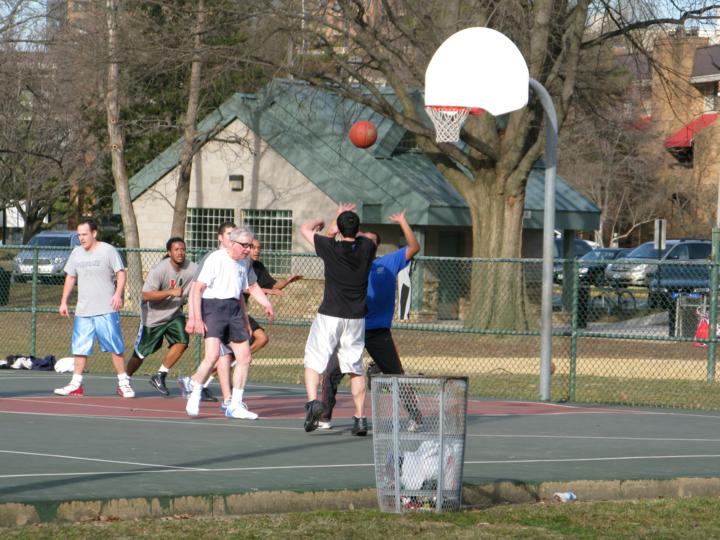
Scenes from Virginia Highlands Park on Sun., March 7, 2010(Updated at 3:45 p.m.) The Arlington County Board could approve nearly $2 million worth of renovations to Virginia Highlands Park near Pentagon City at its meeting this weekend.

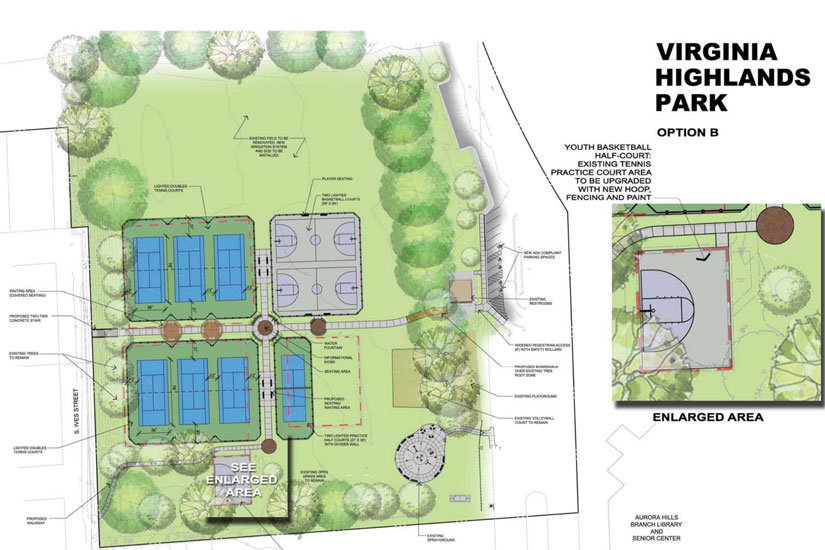
County Manager Barbara Donnellan is recommending the Board approves a $1.83 million contract, with a $183,000 contingency, to replace the park’s six tennis courts, two tennis practice courts and two basketball courts. The money will also fund a new, junior half basketball court, new fencing, new “dark sky” lights for the courts and accessible parking improvements.

The improvements are part of the county’s ongoing effort to completely renovate the recreation facilities at Virginia Highlands (1600 S. Hayes Street), which are some of the busiest recreation areas in the county. Within the last 10 years, the synthetic turf field, playground, restrooms, athletic field lighting and spraygrounds have all been either renovated or constructed.

In addition to new tennis courts — which will replace existing courts that were recently resurfaced — the renovations call for new covered waiting areas outside the courts, along with a drinking fountain and an “information kiosk.”

Virginia Highlands Park renovation rendering (Image via Arlington County)

The junior basketball court will replace the tennis practice courts to the south of the six tennis courts. The court was requested during public input meetings last fall. The community lamented that there was no basketball space to be used specifically by young children.

The basketball courts will be relocated to the north of the current courts.

“Several community members expressed concerns about the proximity of the existing basketball courts relative to the playground area,” county staff said in a report, explaining the relocation.

The remaining park features — the diamond field turf, picnic shelter, gazebo, petanque courts, and front plaza area — are proposed for renovation in 2016.

File photo (top). Image (bottom) via Arlington County. 


Pub crawl organizers should have to obtain a permit for each crawl and reimburse the county for the cost of extra police on the street.

That’s what Arlington County Manager Barbara Donnellan is expected to recommend to the County Board at its meeting later this month. Donnellan will recommend that pub crawls be classified as “special events,” subject to the county’s special events policy, according to county officials.

Arlington’s special events policy was last updated in 2012. The policy is designed to ensure that adequate resources are available for special events while allowing the county to recover its support costs.

Classifying pub crawls as a special event is seen as a compromise, somewhere in between the crawl participants who would like the events to continue unabated and residents who see the crawls as a nuisance and would like them curtailed. The events will continue, but in a more regulated environment, provided organizers can afford the extra costs.

“Organizers would have to get a special events permit and would be required to cover the costs of additional police, fire and trash services — above core services — generated by their event,” Arlington County spokeswoman Mary Curtius told ARLnow.com. “At this point, the Manager’s recommendation does not include any minimum or maximum allowed numbers of pub crawls — the applications will be reviewed as they come in and approved based on the availability of resources.”

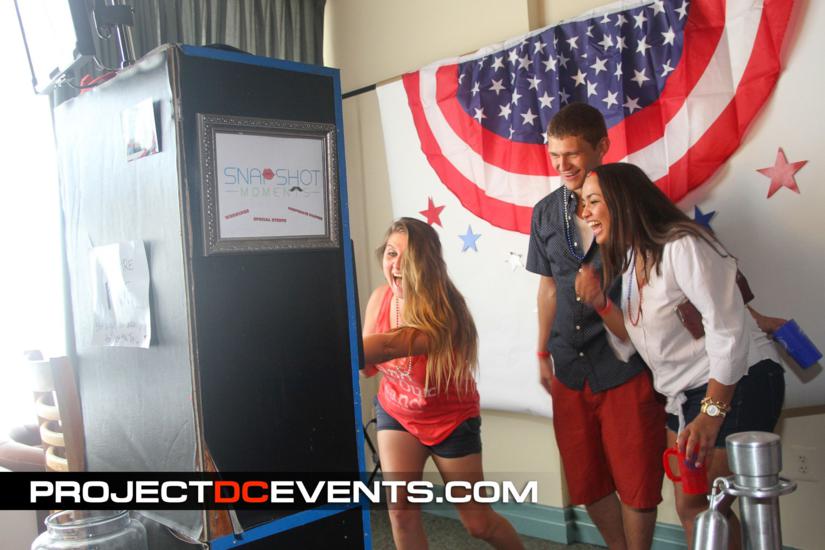
Donnellan’s recommendation is coming less than a month after an attendee at the All American Bar Crawl (photos from the event, above) allegedly stripped naked and led police on a car chase that ended in a crash in Clarendon. In an email to a concerned constituent, County Board Chair Jay Fisette addressed the incident.

“I want you to know that we have no tolerance for this kind of behavior. At the same time I want to stress that this incident was highly unusual,” Fisette wrote. “Our top priority is safety. The Board has concerns about the impacts of pub crawls and in April asked the Manager to research options to address these impacts.”

Fisette went on to say that pub crawls can be regulated, but not banned.

Clarendon is one of our most vibrant and lively areas. We support the businesses there, and we welcome visitors who patronize our many great restaurants, shops and pubs. We want to keep it a great place to live, visit, dine, work and shop. It’s important to know that, under Virginia law, we can’t ban pub crawls. We can, however, regulate pub crawls to ensure that they are safe for all and effectively managed. Part of that regulation must include ways that the County can recover some of the costs associated with the stepped-up enforcement activities during the events, and trash and litter cleanup after the events. In the meantime, as part of the FY15 budget, the Board approved one-time funding ($42,000) for overtime costs in the Police department while a longer term strategy is developed to address the increasing frequency and cost associated with pub crawl events.

In addition to the June incident, a bar crawl attendee made the news in March when she allegedly showed up naked at the Arlington Magistrate’s Office and demanded that she be allowed to visit her husband, who was arrested earlier that day during a St. Patrick’s Day-themed pub crawl.

Both bar crawls were organized by Courthouse-based Project D.C. Events. According to the company, the two events attracted a combined 8,500-9,000 registered attendees.

“It’s two incidents out of thousands of people,” said Project D.C. Events co-owner Alex Lopez, who also pointed out that neither happened inside a bar. Lopez and fellow co-owner Mike Bramson said they work closely with Arlington County Police and with participating bars to ensure there’s plenty of security on hand.

Neither could explain why bar crawls in Arlington have resulted in high-profile incidents and controversy while D.C.-based crawls seem to go off without a hitch.

“We’ve taken the same steps in D.C. as we do in Arlington,” Bramson said.

“You don’t hear about bar crawls in D.C. because nothing happens at them,” said Lopez. “If you say, ‘oh everything was peaceful in the last bar crawl,’ well, no one is going to read that.”

Bramson and Lopez said they and other bar crawl organizers shouldn’t be on the hook for the cost of extra police staffing because the events are already generating thousands in extra tax revenue.

(more…)


View More Stories