On August 28, a 6 to 10 foot steel beam from the World Trade Center will arrive in Arlington to serve as a memorial to those who lost their lives on 9/11.

The steel is a gift from the the Fire Family Transport Foundation, an NYC-based firefighters’ charity, and members of the New York Fire Department. Two years ago a similar donation was made to Shanksville, Pa., the crash site of United Flight 93.

Police cars, 500 motorcyclists and NYFD’s ceremonial Engine 343 (named in honor of the 343 firefighters who died when the twin towers collapsed) will escort the beam from Brooklyn to Arlington. A brief arrival ceremony is expected to be held at the Pentagon Memorial, to be followed by a more elaborate ceremony the next day.

The Arlington Fire Department is still planning the August 29 event, but it will likely take place at Fire Station 5 in Pentagon City, which was the first to respond to the Pentagon after it was hit by American Airlines Flight 77.

At a county board meeting on Tuesday, Arlington fire chief James Schwartz says a final resting place for the beam has not been decided, but said it may be placed next to a piece of limestone from the Pentagon.

Board member Barbara Favola asked if the beam could be converted into a piece of public art and displayed “in a visually attractive way.”

“It really is more like a memorial, and public art and memorials are two different things, I’m told,” Schwartz said.


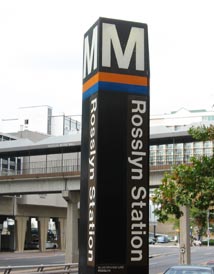
Construction on a new entrance to the Rosslyn Metro station could begin as soon as this fall. Last night the Arlington County Board approved $32.6 million in funding for the project, which will include other safety and access enhancements to the station.

The Rosslyn station, Northern Virginia’s busiest, will be getting three high speed, high-capacity elevators, new fare collection equipment and an underground mezzanine with a dedicated Commuter Store.

The new entrance to the station will be built between North Moore Street and Lynn Street, across the street from the existing Metro entrance. The old station entrance will remain in service even after the new one is completed.

“Arlington is committed to investing in Rosslyn, an evolving commercial and cultural center and a critical transit hub for the County and the region,” County Board Chairman Jay Fisette said in a statement. “The Rosslyn Station project is an important step in a larger effort to revitalize street life in the area and make public improvements to this neighborhood.”

The improvements will be funded by a combination of federal, state and local sources.

See more information on the project from the county’s press release.


Board Approves $250,000 in Art Grants — The county board voted unanimously last night to provide a quarter million dollars worth of grants to 19 Arlington-based arts organizations and three individual artists. The grants range from $44,600 to $1,240. See a list of recipients here.

Fisette Pens Green Jobs Op-Ed in Richmond Paper — In a column for the Richmond Times-Dispatch, Arlington County Board Chairman Jay Fisette compares Thomas Jefferson’s far-sighted and, at the time, controversial Louisiana Purchase to proposed federal spending on clean energy. Fisette argues that investing in green jobs now will pay off in a big way down the road.

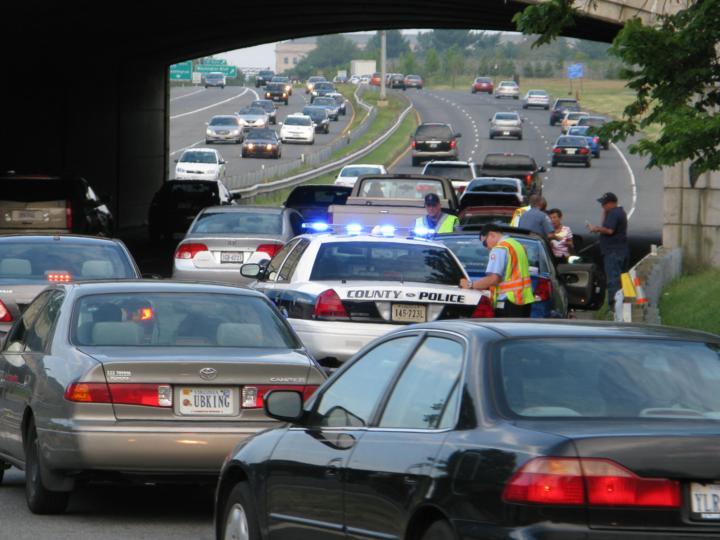
Metrobus Involved in Rush Hour Accident — A Metrobus was involved in a relatively minor multi-vehicle accident that tied up traffic on southbound Route 110 around 5:30 yesterday evening. The accident happened on the ramp from Memorial Drive to Route 110, near Arlington National Cemetery. Two people on the bus were reported to have minor injuries. The accident and the emergency response blocked lanes on the busy thoroughfare, causing delays for traffic coming from Rosslyn. It’s not clear what caused the accident. The Metrobus continued on its way shortly after police arrived.

Flickr pool photo courtesy philliefan99.


For the tenth straight year, Arlington has scored a financial “triple-triple.” All three major bond rating agencies have just affirmed Arlington’s AAA bond rating, the highest rating available.

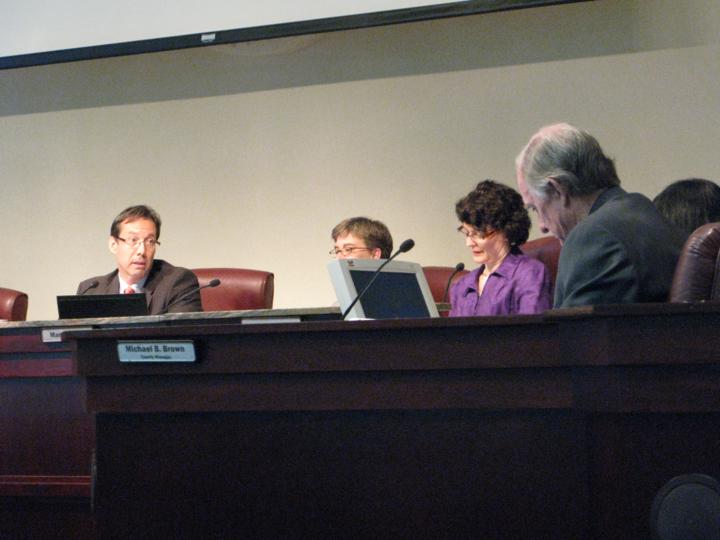
“I think it’s especially important at this time, which is very difficult for the economy, local governments and bond markets,” County Manager Michael Brown told board members while announcing the good news today.

“Not many communities can do that,” said board chairman Jay Fisette, who called the top rating “sacrosanct” and “a source of pride.”

Arlington is one of only 35 counties across the country that has a triple AAA rating. It allows the county to borrow money at the lowest possible rates.

Brown cited the county’s strong economic performance, deep reserves and good fiscal management as reasons for the renewal. The rating was granted despite the county moving forward with a $161 million bond referendum that, if approved by voters in November, will fund a new Wakefield High School, infrastructure improvements at Metro, and other major capital expenditures. Some fear that the larger-than-normal bond issue will hurt Arlington’s AAA status.


In the news business, this is known as a “process” story. On Saturday the county board voted to accept a task force’s plan for development around the East Falls Church Metro Station. The board passed the plan on to county staff, who will review it and make changes while preserving 15 priorities outlined by the board. The board’s action will have no actual, practical consequences. That will come when the final plan is adopted by the board about six months from now, following more revisions and public discussion.

For what was essentially a procedural action, however, there sure were plenty of people who wanted to talk about it. About 25 speakers voiced their opinion on the EFC plan, most of them residents who believe that the addition of transit-oriented, mixed use retail/office buildings and the subtraction of the commuter parking lot would “destroy” or otherwise sully their relatively quiet residential neighborhood.

Passions run high on the EFC issue, and Saturday’s nearly three hour discussion was no exception. At one point, while the board was discussing the plan amongst themselves, board chairman Jay Fisette scolded development opponents for hissing.

Later, in a bit of openness that should give opponents hope, board vice chairman Chris Zimmerman acknowledged a major hurdle that could prevent the development from getting done. The commuter parking lot, which the county wants to convert into a mixed-use development that will act as the “town center” of East Falls Church, is owned by VDOT, which has said it wants the lot to remain.

“Maybe VDOT won’t allow it and it won’t get built,” Zimmerman conceded.

(more…)


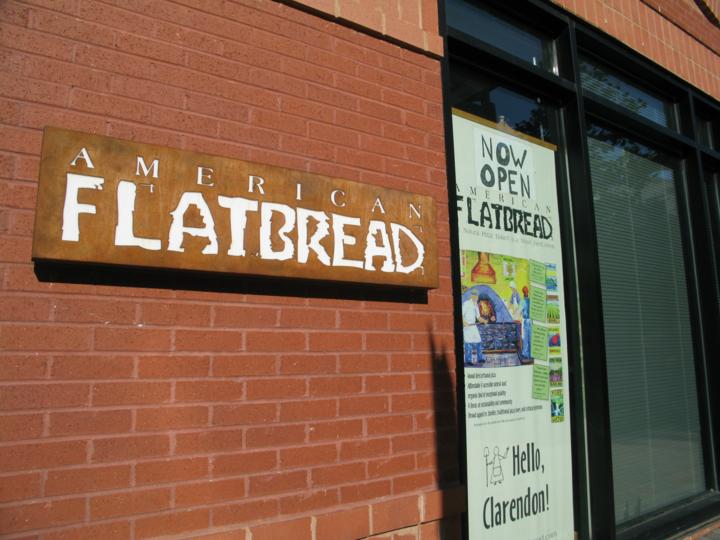
It took nearly three and a half hours for the Arlington County Board to squash any hope of outdoor patio seating at American Flatbread.

Board members repeatedly reassured owner Scott Vasko that Flatbread was exactly the type of business that Arlington County is trying to attract. In the end, however, promises made to local homeowners in 2004 were upheld, and a patio between the restaurant and an adjacent house will remain an undeveloped “buffer zone.”

In a concession to Flatbread, the board granted the more lenient of two possible scenarios for sidewalk seating in front of the Clarendon restaurant. Flatbread will be allowed to set up tables on 25 feet of sidewalk in front of 11th Street North (the other scenario called for 15 feet). Combined with sidewalk seating also approved for North Fillmore Street, Flatbread will likely have a total of four outdoor tables and 10 seats. The patio could have sat 24.

Numerous local homeowners spoke out against Flatbread’s patio request at the board meeting, although most also voiced support for sidewalk seating. Of the dozen speakers on the issue, only 25% spoke in favor of patio seating.

As part of the board’s action, Screwtop Wine Bar was also granted sidewalk seating, which should allow for 3-4 tables outside the restaurant. Like Flatbread, Screwtop is located in the ZoSo building at 1025 North Fillmore Street.

In addition to sidewalk seating, Fillmore Street may soon be getting some signage. To help attract customers to the off-the-main-drag strip of shops and restaurants, the board paved the way for on-building “blade” signs and sidewalk-level sandwich board-style signs to win approval at a subsequent board meeting.

“I am concerned that this small business needs some help in ensuring that enough people use his business,” board member Barbara Favola said. “I’m also concerned that Arlington really balance as well as we can our desire to have some kind of street life to encourage that urban character we talk about. This is an urban area, and I have to admit that people should expect some activity in this part of the county.”

At the end of the discussion, which began at 9:00 a.m. and wrapped up in time for a late lunch, board chairman Jay Fisette lamented that the developer of the ZoSo building didn’t try to set up an area for patio seating before its initial design was approved. Fisette, speaking for himself, suggested that an outside courtyard surrounded by 7 foot walls could have been quiet and unobtrusive enough to pass muster, had it been built into the original plan.

Vasko, Flatbread’s owner, has not responded to a request for comment.


In addition to voting on outdoor seating proposals for American Flatbread and Screwtop Wine Bar, the County Board will considering some proposals with far-reaching consequences.

The board will vote on an initial framework for the East Falls Church development plan, which has attracted quite a bit of controversy. The plan could pave the way for the construction of apartment buildings, retail spaces and other dense, pedestrian-friendly development in what is now a much more single-family-home-oriented area.

Another item under consideration would result in the construction of a new entrance to the Rosslyn Metro station . The $32-35 million dollar project was originally meant to take place concurrent to the construction of the Rosslyn Central Place development, but the development has stalled due to financial complications.

A $159 million bond referendum is also under consideration. The board will decide whether to put the bond issue on the ballot in November. The bonds would fund construction of a new Wakefield High School as well as various Metro, transportation, park and infrastructure projects.

Other items of interest include votes on $249,077 in arts grants, more than $750,000 in equipment for the new Artisphere, and whether to schedule a hearing on a proposal to protect six trees from removal on private property.


Saturday’s county board meeting will pit neighbor against neighbor in a battle over a small outdoor patio space.

In one corner are the supporters and management of American Flatbread, the wood-fired pizza restaurant that bills itself as a “community hearth” and is best known for its locally-sourced, organic ingredients. In the other corner are county planners and a majority of local homeowners (others support Flatbread), who don’t want the restaurant to open an outdoor patio on their relatively quiet section of North 11th Street in Clarendon.

At stake for neighbors is the tranquility of the neighborhood and, possibly, the area’s steep property values. At stake for Flatbread is its viability as a business in Clarendon.

Restaurant owner Scott Vasko, who also owns the popular American Flatbread location in Ashburn, has been trying to get county approval for since he signed the lease last year. He says he has tried to find a compromise with the two main sources of opposition, the Clarendon-Courthouse Civic Association and the homeowner’s association president for the townhouses across the street, to no avail.

Vasko says he has offered to close the patio at 9:00 p.m. on weekdays and 10:00 p.m. on weekends. He would limit the space to 24 seats and not allow larger parties to combine tables. He would pay to extend an adjacent wall and to erect a gate in front of the patio. And there would be no music.

Civic association president Rich Dumas says the group wouldn’t have a problem with Flatbread and another restaurant in the same building, Screwtop Wine Bar, setting up sidewalk seating on the Fillmore Street. He also said that he personally wouldn’t mind the addition of seating that wraps around for 15 to 25 feet on 11th Street, which is one option the county board will be considering on Saturday.

Planning department staff will recommend the option that disallows patio seating but allows seating on Fillmore Street and 25 feet of 11th Street. That will provide outdoor seating for about four tables of two, a county planner told ARLnow.com

But Vasko says the patio seating was a major component of his business plan when he decided to come to Clarendon and without it, “we would honestly have to take a look at whether we could still be a viable entity.”

American Flatbread employs 24 people in Clarendon and pays nearly $40,000 in meals tax revenue to the county, he noted.

The few tables the restaurant would be able to set up on the sidewalk, Vasko said, would be helpful but, perhaps, too little too late. He says he was misled by the building owner, who reportedly recruited American Flatbread to be a tenant with the promise of an outdoor patio.

“We’re just trying to get what was originally offered to us by the building owner as an enticement to come in here,” he said.

(more…)


Arlington spends more per capita on welfare and social services than neighbors Alexandria and Fairfax County. In fact, Arlington spends $455 for every resident in the county, nearly twice the spending of Fairfax.

“Considering the emphasis that the County Board has placed on social services, it’s not all that surprising that this category would be one of the highest per-capita spending items in Arlington,” Budget Director Richard Stevenson told the Arlington Connection’s Michael Lee Pope.

The county spends more on welfare and social services than on law enforcement. The welfare expenditures are greater than Arlington’s spending on parks, libraries, courts, sanitation and building maintenance combined. The only individual category that tops welfare is education, at $1,814 per capita. Taken as a whole, law enforcement and fire and rescue account for $588 spending per capita.

“I think we’re right where we need to be” in terms of budget priorities, County Board chairman Jay Fisette told the Connection.


Arlington’s ART bus system may stop honoring Metrobus passes if WMATA doesn’t start sharing revenue, according to Michael Perkins at Greater Greater Washington.

While regional bus providers like ART are compensated when SmarTrip holders pay for individual rides, so far there is no revenue-sharing agreement for SmartTrip (and paper) “flash passes.”

Arlington County board member Chris Zimmerman, who also sits on WMATA’s Board of Directors, says that the current system is unfair to regional providers.

The county board has given ART the leeway to stop accepting the Metrobus pass if a revenue-sharing agreement cannot be reached. In that scenario, ART would instead issue its own pass, Perkins reports.


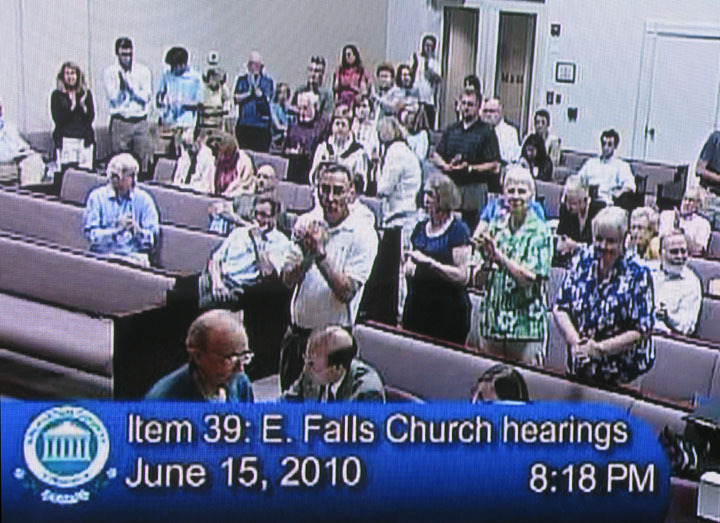
The battle over the future of East Falls Church was well underway before the Arlington County Board spent more than two hours on the topic Tuesday night, but the raw emotion behind the neighbor vs. neighbor conflict became especially clear as about 20 speakers took the podium to voice their opinions.

The East Falls Church (EFC) development plan calls for the creation of a “transit town” of neighborhood-oriented retail and restaurants, six to nine-story mixed-use buildings, and pedestrian-oriented walkable and bike-able streetscapes. Development is inevitable, EFC task force chairman Mike Nardolilli says, since the station will soon become the transfer point to Tysons Corner and the Silver Line. Members of the task force spent three years working on the plan and says it mostly incorporates ideas that most residents welcome, based on a neighborhood survey.

But according to one man, supporters of the plan are “passive sheep,” the task force wants “to limit our freedom,” and the proposed narrowing of Sycamore Street is “idiotic.” That invective, and any other criticism of the plan, was greeted by loud applause from like-minded folks in the audience, who were clearly in the majority.

Critics said they weren’t adequately informed about the planning, complained that development would destroy the character of their largely low-density residential neighborhood, and worried that it would bring maladies like traffic, crime and pollution.

Development is “unneeded and unnecessary,” and the planning that has gone into it is a “sham process” one person said. “We do not want to turn our residential neighborhood into another Ballston,” said another. Several people called for an environmental impact study.

On the other side, one man was so overcome by frustration with the plan’s critics that he was, at one point, literally rendered speechless at the podium. He blasted fellow residents who believe that “everything should stop” when they move to a neighborhood.

He said that when he first moved to Arlington 58 years ago, before Metro and before I-66, East Falls Church had the kind of retail core that the development plan is trying to facilitate. Compared to the building of I-66, he said, “this is a minor change.”

“Over the years I’ve seen Arlington go through many changes and every change is controversial,” the man said. “There is always somebody who’s going to object… This is a good plan, not perfect, but it’s still a good plan.”

Other “smart growth” advocates lauded the plan, while another contingent at the meeting said the plan didn’t go far enough.

Michelle Winters, acting chair of the Arlington Housing Commission, said the plan does not have the density needed to support affordable housing and other the desired retail amenities appropriate for what will soon become the Metro transfer point to Tysons Corner on the Silver Line. She and other development advocates would like to see something more akin to the higher-density Virginia Tech East Falls Church Metro Plan, which was released in 2004.

Despite all the controversy and the raised emotions, the plan — even if approved by the board — is only a “framework,” which would guide development. The board would still have to approve individual developments through its usual process.

“This in no way is going to preclude the very rigorous debate the community will have,” board member Barbara Favola said. “The board will ultimately be able to decide on specific projects that fit within this framework. That’s a very key point.”

And in fact, the real battle may be yet to come. VDOT owns two-thirds of the five acre commuter parking lot that’s at the heart of the development plan. The proposal calls for most of the lot’s several hundred spaces to be eliminated to make way for 450,000 to 600,000 square feet of mixed-use development.

However, VDOT, which is expected to reveal its thoughts on the plan in August, views the lot as “a regional asset for mobility, not just for Arlington but for residents that live along the I-66 corridor,” according to county officials. About 80 percent of the parking is used by people from outside Arlington.

(more…)


View More Stories