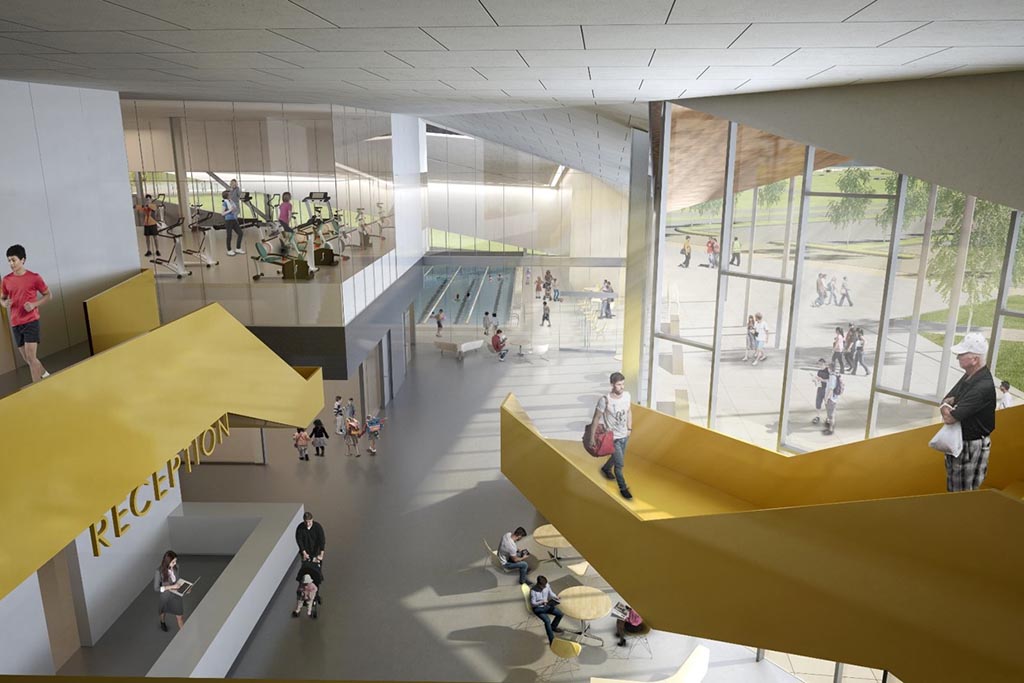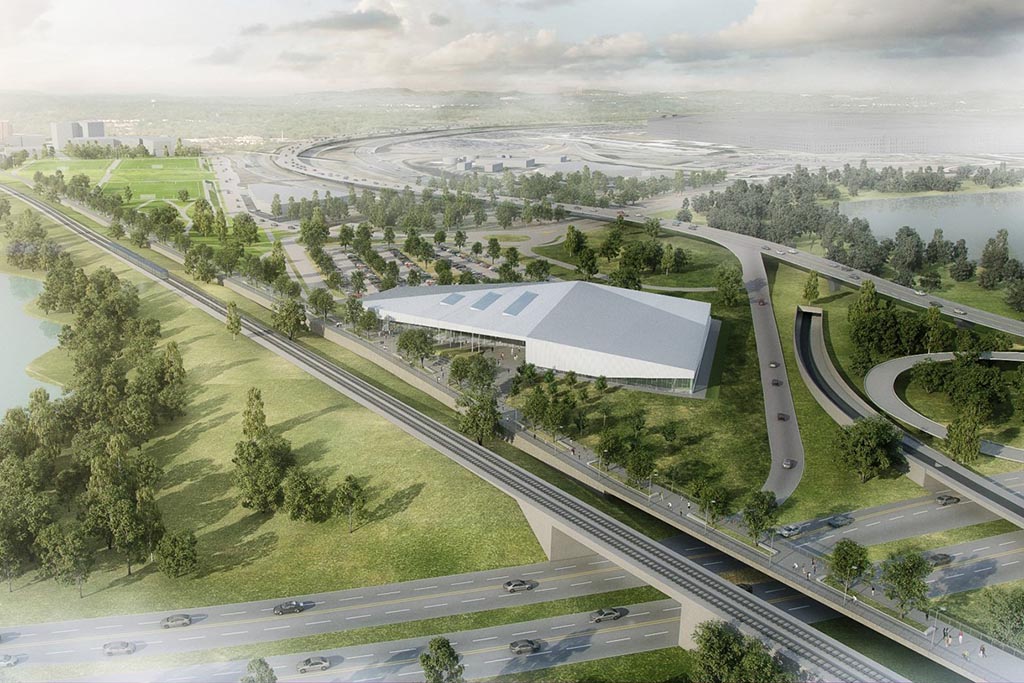
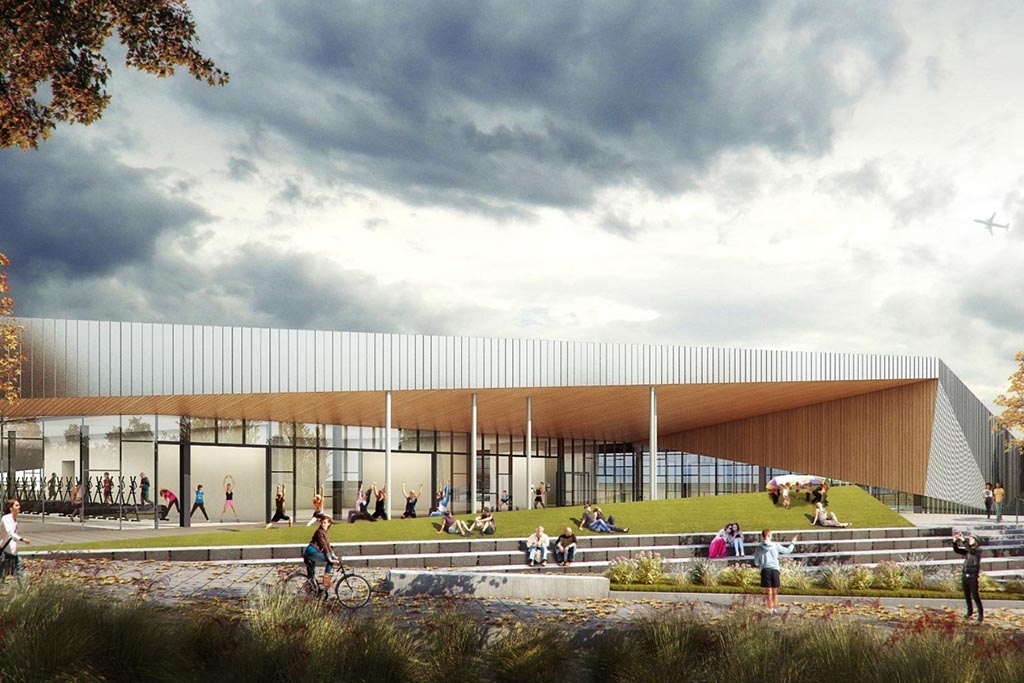
Though the opening of the ever-controversial Long Bridge Park aquatics and fitness center is still a ways off, county officials are gearing up to hire two new staffers set to work at the facility.

County Manager Mark Schwartz set aside $110,000 for the newly created positions as part of his proposed budget for fiscal year 2020. He forwarded along his first draft of the new spending plan to the County Board late last week.

Schwartz is recommending that the Board act now to start the recruitment and hiring process for a general manager and a maintenance technician for the facility, currently expected to open sometime in “early 2021.”

“Hiring these two positions prior to the facility opening will allow the Department of Parks and Recreation to develop standard operating procedures; ensure mastery of all building systems, including specialized aquatics equipment; procure inventory; and develop staff training plans,” Schwartz wrote in a message attached to the budget proposal.

The manager expects that the county will be able to afford the new hires largely through some staff reductions elsewhere across the department. In all, Schwartz is recommending $5.2 million in cuts in his budget, affecting 29 full-time positions and one-part time position across the county government. He’s also proposing a tax hike to meet some of the county’s growing expenses, though the Board opted to explore an even larger tax increase than he originally recommended.

Construction has continued apace on the $60 million Long Bridge project ever since it finally broke ground last summer, following years of debate over its scope and cost. Schwartz added in his budget proposal that he “remains committed” to somehow striking a naming rights deal for the facility to defray some of its costs — the Board decided last year to hire a marketing firm to help the county search for potential sponsors.

“As the project moves closer to completion, we remain optimistic that our efforts will be successful,” Schwartz wrote.

County officials also expect to finalize a fee structure for anyone hoping to use the facility’s pools and gym as part of the upcoming budget process. A working group on the subject recently wrapped up its deliberations and will deliver a proposal with potential fees to the Board in the coming weeks.

According to a Jan. 31 presentation from the group, daily passes for county residents would range from $9 for adults to $5 for children. An annual pass for adults would cost $630 and $350 for kids.

Non-residents would pay a 25 percent premium on daily passes and a 30 percent premium on all other passes, under the working group’s proposal.


Arlington dog owners could soon be able to pay for lifetime licenses for their four-legged friends.

Currently, the county sells one-year or three-year licenses for Arlington’s furriest residents. But a new proposal advanced by the County Board Saturday (Feb. 23) would create a one-time, $30 fee for a lifetime license for local dogs.

If adopted later this year, the new license structure would take effect on July 1. Any dog owners who already have their pets licensed wouldn’t need to pay for the new license right away, however, but the county would only sell lifetime licenses after that date.

County staff argue that the change would eliminate the inconvenience of repeated license renewals, saving time for both the county treasurer’s office and pet owners, and that it would reduce “the amount of dog license taxes paid by dog owners over the course of their pet’s lifetime.”

Staffers proposed the change after state lawmakers passed legislation in 2017 to allow localities to issue lifetime licenses at costs of up to $50, and they noted in a report for the Board that Charlottesville and Hanover, Henrico and Stafford counties have already made the change.

“Arlington County benefits from reduced staff, printing and other costs associated with dog license renewals,” staff wrote about the advantages of making the change.

However, the proposal initially earned some pushback from local animal advocates and even some on the County Board, who feared that removing the yearly license renewal process would mean that dog owners wouldn’t have the same regular reminder to re-up their pet’s rabies vaccines.

The county’s proposal would require that owners prove their dog has received the vaccine in order to earn a lifetime license, but it doesn’t include any additional reminders about new vaccines. Staff reasoned in the report that keeping a pet’s vaccinations current is “something that responsible dog owners do as a matter of course.”

The Board merely authorized a public hearing on the license change for April 4, so members could yet vote down the proposal. If it does make it into law, staff expect a “long term” decrease in revenue from dog license fees, but they note that the program only brings in about $70,000 annually.

Some, including former Board member John Vihstadt, have proposed in the past that the county take the opposite approach and increase dog license fees in order to fund county dog parks.

File photo


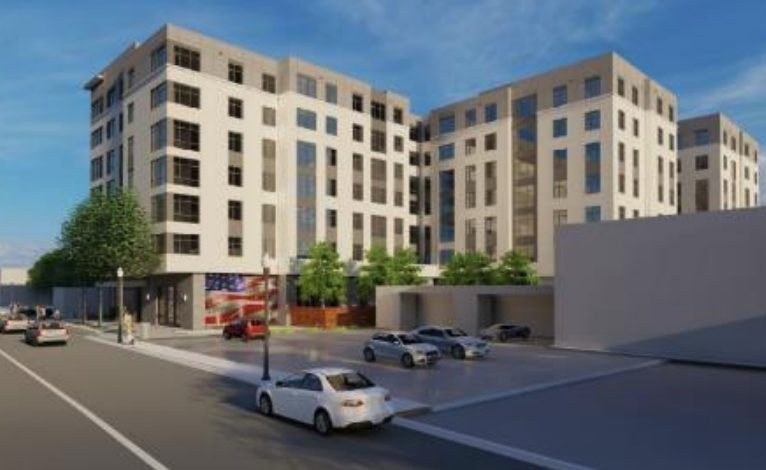
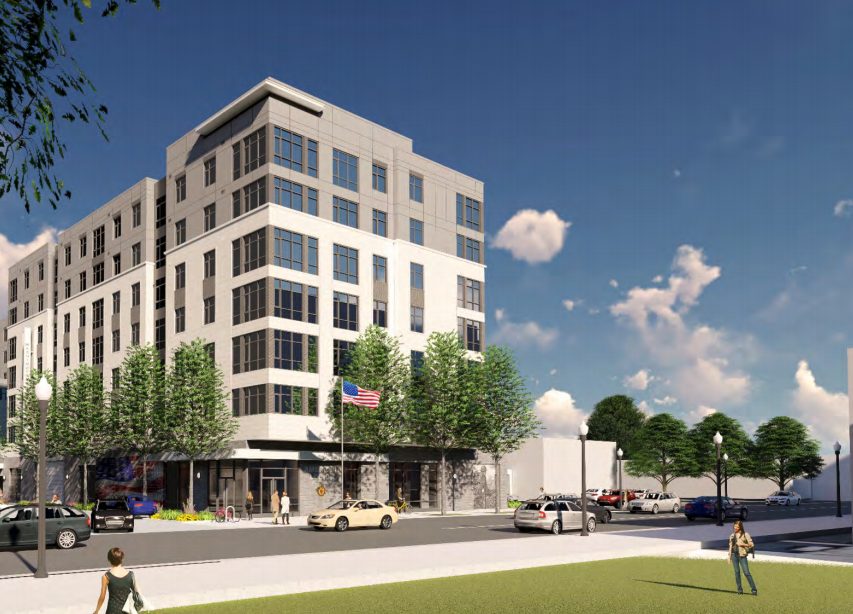
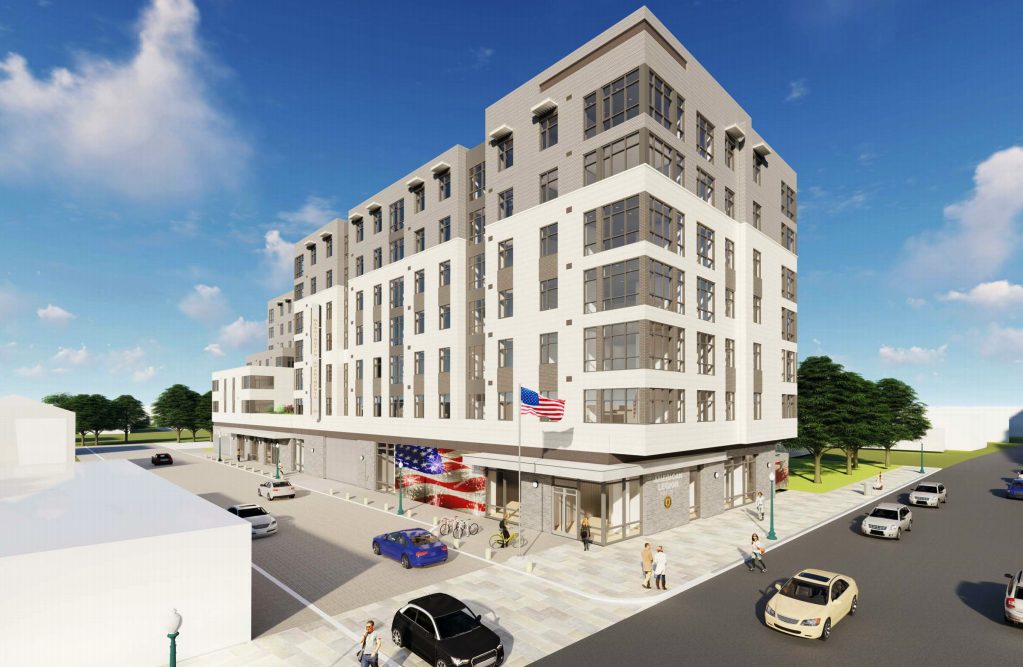
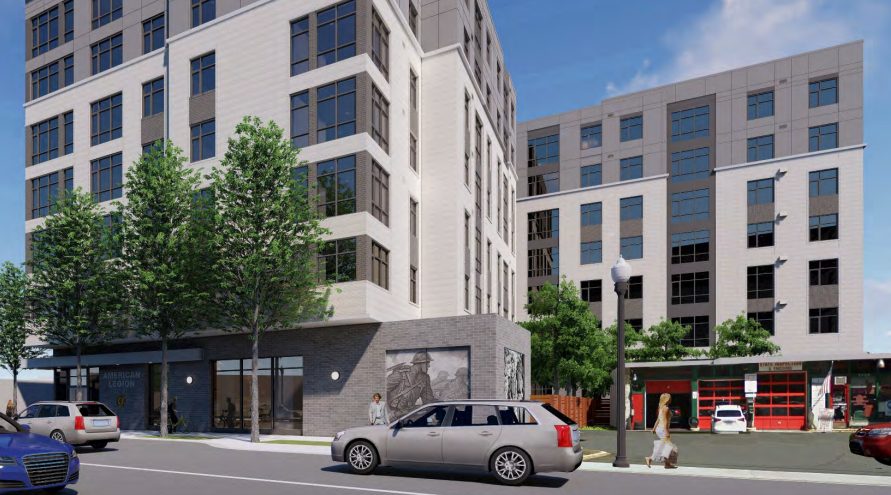
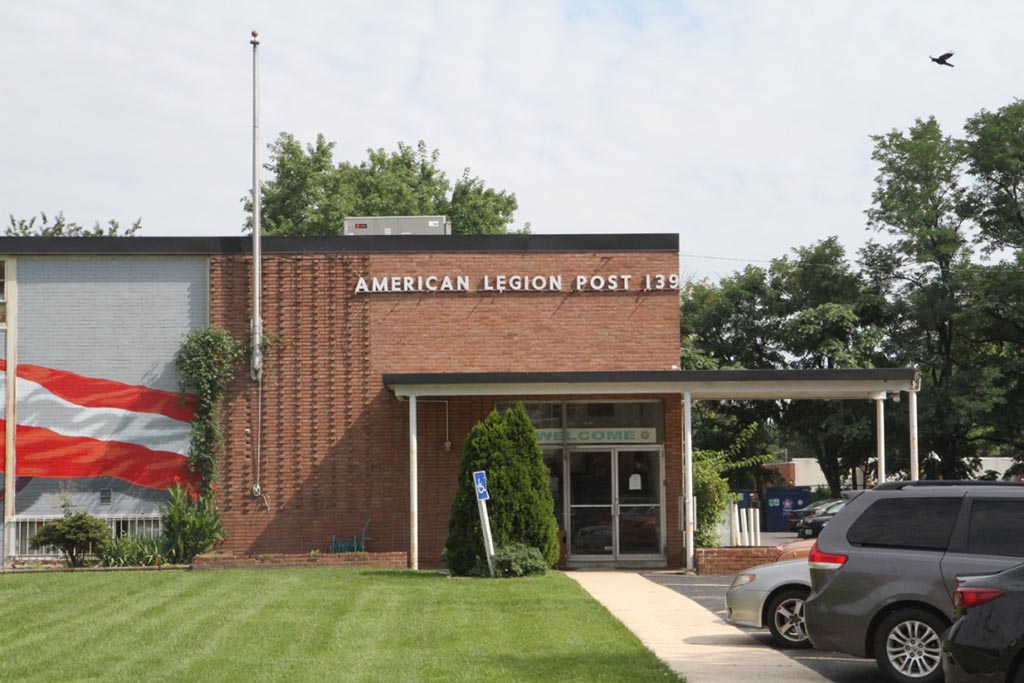
County leaders have now given the green light to plans to redevelop the American Legion post in Virginia Square into an affordable housing complex, a project widely hailed as an innovative effort to provide reasonably priced homes to veterans.

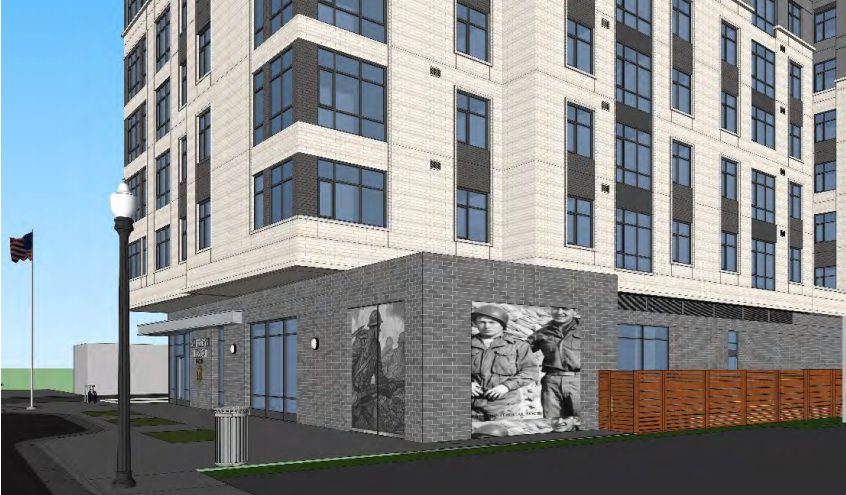
The County Board voted unanimously Saturday (Feb. 23) to approve plans from the Arlington Partnership for Affordable Housing (APAH) to replace the Legion’s current home with a new seven-story structure. The building will have room for 160 apartments — half will be set aside specifically for veterans, and all of them are guaranteed to be affordable to people of more modest means for the next 75 years.

The development, located at 3445 Washington Blvd, will also include 8,000 square feet on its ground floor for American Legion Post 139 to stay on the property. The Legion has owned the roughly 1.3-acre property since the 1930s, but opted to sell it to APAH in 2016 after the nonprofit sketched out plans for a new complex decided to helping local veterans.

“Unfortunately, the high cost of housing has put Arlington out of reach for many,” APAH Board of Directors member Rich Jordan wrote in a statement. “But we are excited that this project, the first collaboration of its kind, will welcome more veterans home to our community.”

The building will include a mix of one-, two- and three-bedroom apartments, all at varying levels of affordability. Most will be designed to be affordable to people making 60 percent or 80 percent of the area median income — that works out to a yearly annual salary of $49,260 and $65,680, respectively.

However, some will be set aside for people making 30 percent of the area median income, a level of affordability that projects around Arlington only rarely achieve. Someone would have to make around $30,000 a year to qualify for the homes.

“We are adding much-needed affordable units to our inventory, and many of them are large enough for families,” County Board Chair Christian Dorsey wrote in a statement.

The project will also include an underground parking garage for residents, with a total of 96 spaces. Of those, 20 would be set aside to serve the Legion post specifically.

That represents a smaller number of parking spaces that the county’s zoning laws would typically allow at a development of this size. But county officials opted to sign off on the plans anyway, reasoning that many people living at the building will likely rely on the area’s Metro station and bevy of available bus stops to get around.

Even still, parking was a key concern for some neighbors. Some local leaders worry that the building’s larger apartments will attract families, who will bring cars and take up street parking in the neighborhoods adjoining the development.

The Ballston-Virginia Square Civic Association and Lyon Village Citizens’ Association both floated the idea of tweaking zoned parking limits in the area — the streets surrounding the development, like N. Kansas Street and 12th Road N., are currently off-limits to people without permits from 8 a.m. to 5 p.m. each day. Some neighbors proposed a 9 a.m. to 11 p.m. limit instead, but county officials weren’t inclined to grant that request.

In a staff report, the county noted that it’s still in the middle of a lengthy review of the residential parking permit program, with a moratorium on most changes to parking zones while that review moves forward.

That’s now set to wrap up sometime early next year, and county staff told the Planning Commission that they’re hesitant to make any zoned parking changes in the area until then — the County Board did, however, roll back some contentious restrictions in the Forest Glen and Arlington Mill neighborhoods earlier this year.

“In the future, if parking increases along 12th Road N. by non-Zone 6 permit holders, the hours of the RPP restriction could be evaluated based on the program’s guidelines at that time,” staff wrote in the report.

APAH also plans to construct a new section of N. Kansas Street running north-to-south between 13th Street N. and Washington Blvd, a move that staff hope will break up the area’s “superblock” feel. The new road will include some dedicated space for pedestrians and cyclists, and the developer is also planning to widen Washington Blvd near the project.

Eventually, the county also hopes to see 12th Road N. extended to provide an “east-west” connection across the property as well, though that will likely be finished only once the adjacent YMCA redevelops that property to allow for a new recreational facility and some new apartments on the site. A developer is also hoping to add 255 new apartments near the intersection of Washington Blvd and N. Kirkwood Road in the coming years.

APAH expects to fund the bulk of the $78.4 million project with federal Low Income Housing Tax Credit cash, though the nonprofit will also work to raise $3 million in private financing.

The Board also approved a $5.79 million loan for the project Saturday from the county’s Affordable Housing Investment Fund, a key tool designed to spur affordable development in Arlington. APAH expects to ask for another $5.375 million loan from the fund next year.


Growing expenses from the county school system and Metro have convinced Arlington officials to propose a substantial tax increase for the new year’s budget, with leaders advancing a tax hike that’s even larger than the one initially proposed by County Manager Mark Schwartz.

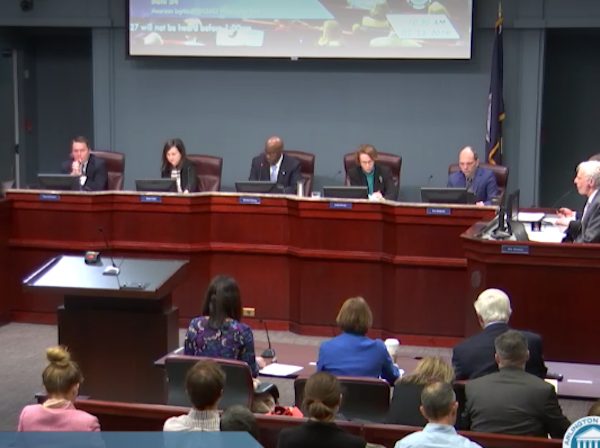
The County Board voted 4-1 to advertise a 2.75-cent bump to the county’s real estate tax rate at its meeting Saturday, nearly double the 1.5-cent increase included in Schwartz’s proposed budget for fiscal year 2020. Board member Katie Cristol cast the lone dissenting vote.

That change would raise the real estate rate to $1.0205 per $100 of assessed value, generating about $21.4 million for the county in all. The average homeowner would pay an extra $360 or so if the rate goes into effect, though most other county tax rates will remain unchanged.

Of course, there’s no guarantee that the Board will end up approving that exact tax bump — the advertised rate merely represents the upper limit of the rate officials can ultimately approve by the time the budget process ends in April, and they can always bring the rate back down if they so choose.

Most Board members said Saturday that they hope to eventually to do just that, but with the exact size of the budget challenges that the county will face still uncertain, leaders opted to post the higher rate to afford themselves some extra flexibility this spring.

“I don’t want to be in the position of erring because of a box we set ourselves in early,” said County Board Chair Christian Dorsey. “I’m comfortable having that [higher rate] to allow us the proper flexibility to make sure that, at the end of this budget season, we don’t end up with regrets.”

The Board was bracing for Schwartz himself to propose a similarly sizable tax hike in his first draft of the budget, given his warnings this fall that the county would need to close a budget gap of anywhere between $20 million to $35 million, without taking the schools’ needs into account.

But a larger-than-expected rise in property values filled up county coffers a bit, prompting Schwartz to propose the 1.5 cent tax increase and $5.2 million in cuts to balance the budget. Yet Schwartz also cautioned that he had no way of knowing quite yet just how much money the school system or Metro will ultimately need, convincing officials of the need for some extra wiggle room.

The extra quarter of a cent on the tax rate above Schwartz’s proposal would be set aside for Metro’s needs, a move championed by Dorsey, who also serves on WMATA’s Board of Directors. The transit system will set its new budget next month, and there’s no telling just how much cash that could demand from localities like Arlington — General Manager Paul Wiedefeld is proposing major service increases designed to increase ridership, but county officials have thrown cold water on some of those proposals.

As for the school system, Superintendent Pat Murphy will present his opening budget proposal to the School Board later this week, but he’s previously estimated that a flood of new students (and the opening of new schools to accommodate them) could put Arlington Public Schools in a budget hole of as much as $43 million.

Accordingly, Board members hoped to add an extra penny to the tax rate beyond Schwartz’s proposal, generating an extra $7.8 million to dedicate specifically to schools.

Board member Erik Gutshall says school leaders have been especially keen on a larger tax increase recently, particularly after the Board decided to hold the tax rate flat last year. Many around the school system felt that the Board promised them that they’d work to address school needs this year instead, and they’re looking to see officials deliver on that pledge.

Josh Folb, a leader of the Arlington Education Association, even argued that a 3-cent tax increase would be the most appropriate step for the Board to take.

“Without that flexibility, the Board will not be able to negotiate in good faith with the schools when they present their budget of needs in the coming days,” Folb said.

Board Vice Chair Libby Garvey, a former School Board member herself, said she’d have favored advertising the full 3-cent increase, but acknowledged she wouldn’t have the votes with her to make that happen.

Indeed, Cristol argued instead for the Board to advertise a 2-cent tax hike. She pointed out that the Board managed to find some extra money for both schools and Metro without raising taxes in last year’s budget, and worried that even advertising the 2.75-cent tax hike would send a poor message to local homeowners.

“Raising it any further undermines our commitment, or way of framing, we have taken to this community, this idea we’ve had softness in the office market and we were committed to doing everything we needed to do to raise that, rather than just balance the cost of our increasing needs on the backs of our residential taxpayers,” said Cristol, who’s up for re-election this fall. “I think that’s really penetrated and allowed us to have much a healthier conversation with most quarters of our community about Amazon’s arrival and why it’s necessary.”

But Cristol was the only Board member to support that proposal, with others arguing that last year’s budget cuts were painful enough that leaders aren’t eager to repeat that process this time around.

“If there’s fat to be found [in the budget], we’ve crossed that bridge already,” Gutshall said. “Last year, we hopefully didn’t cut to bone, but we came very, very close in some particular areas.”

As part of his proposal, Schwartz included an extra $3.4 million in potential cuts that the Board could consider if it doesn’t want to raise taxes at all. Those changes would affect another 19 county staffers, and involve changes like the elimination of library services at the Crystal City Connection and Glencarlyn Library, reductions in county transportation and human services staffing and cuts to some police department programs.

But Schwartz pointedly did not endorse those changes, urging the Board to opt for the tax hikes instead.

The Board will now hold a series of work sessions and public hearings on the budget and tax rates, with a final vote on the new spending plan set for April 23.


High Wind Warning Today — Arlington is now under a High Wind Warning until 6 p.m. today. Gusty winds knocked out power in a number of areas overnight. As of 8 a.m., more than 250 Dominion customers in Arlington were still without power. [Twitter, Weather.gov]

American Legion Project Approved — “The Arlington County Board today approved a redevelopment plan to replace the aging American Legion Post 39 at 3445 Washington Blvd. with a seven-story building that will include 160 affordable units atop a new Post 139. In a related action, the Board allocated a $5.79 million loan from the County’s Affordable Housing Investment Fund to help build the project.” [Arlington County]

Amazon Development Boom Likely — “Arlington County could see the number of major development plans triple with the arrival of Amazon.com Inc.’s second headquarters. At least, that’s what County Manager Mark Schwartz wants to be ready for.” [Washington Business Journal]

Next Step for Child Care Initiative — “The Arlington County Board today ratified advertisements of public hearings on proposed changes to the Zoning Ordinance and local child care Codes aimed at improving the availability, accessibility, affordability and quality of child care in Arlington.” [Arlington County]

Overturned Vehicle on Residential Street — The driver of a Subaru somehow flipped the vehicle on the 2100 block of N. Quantico Street, in the Highland Park-Overlee Knolls neighborhood, Sunday morning. Another vehicle was damaged in the crash, according to photos sent by a passerby. The driver was extricated by firefighters but uninjured. [Twitter]

County Budget Includes Theater Cuts — “The spending plan calls for the closure of the Scenic Studio program and Costume Lab at Gunston…  Remarks range from ‘unbelievable’ and ‘terrible,’ to ‘this is very disturbing that Arlington County may actually be killing local arts programs.'” [WTOP]

Flickr pool photo by Dennis Dimick


Amazon executives say they’re looking forward to becoming “good neighbors” in Arlington, delivering a decidedly optimistic message to local leaders in one of the company’s first public events since tabbing the county for its new headquarters.

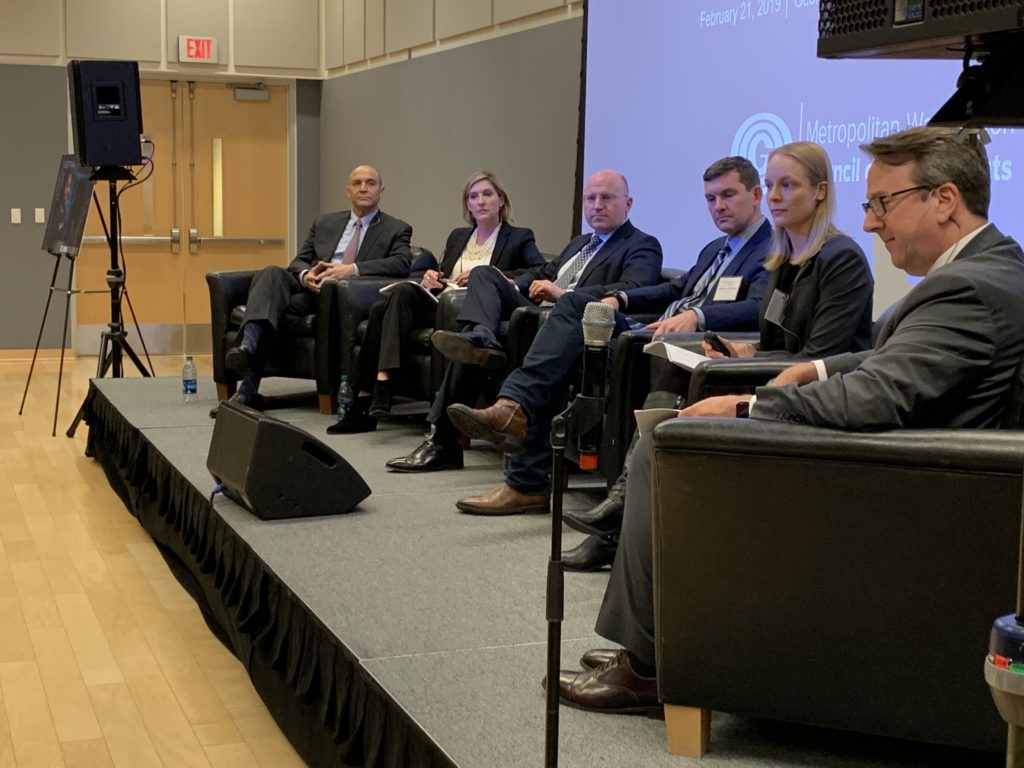
The tech giant’s head of worldwide economic development, Holly Sullivan, assured a crowd of government officials and business executives last night (Thursday) that the company is looking to build a “sustainable long-term partnership” in the region. That presented a stark contrast with Amazon’s recent decision to spurn New York City over concerns that local leaders were insufficiently supportive of a new headquarters there.

The event, organized by the Metropolitan Washington Council of Governments and held at George Mason University’s Virginia Square campus, also came just a few days after Arlington officials and activists expressed concern that Amazon executives haven’t done enough to engage the community as it gears up to move into the area.

Sullivan challenged that idea Thursday, arguing the company plans to be “active in the community” and has “just started our outreach” in Arlington. But only a limited group of Arlingtonians had the chance to hear that message — the event was “invitation-only,” though the COG did offer a livestream for anyone hoping to watch from home.

That stricture prompted some local critics of the project to refuse to attend the event, calling on the company to hold public hearings with community members instead. Many have been especially critical of Arlington’s proposed incentive package for Amazon — if the County Board approves it next month, Arlington would fork over $23 million over the next 15 years to a company owned by the world’s richest man.

On that front, Sullivan was able to offer significantly less reassurance. In response to a rare question from a reporter at the event, she pointedly would not say whether the company would pull the plug on its Arlington plans if the Board rejects the incentive package.

“The talent in the area was the primary driver of this entire process,” Sullivan said. “But incentives are important to us. They give us an opportunity to reinvest in our infrastructure and development opportunities for our workforce.”

Of course, it’s quite unlikely that the Board would take such a step. Even Board members who have expressed some unease with the incentive package have reasoned that it’s a small price to pay for the 25,000 (or more) jobs Amazon hopes to bring to the county.

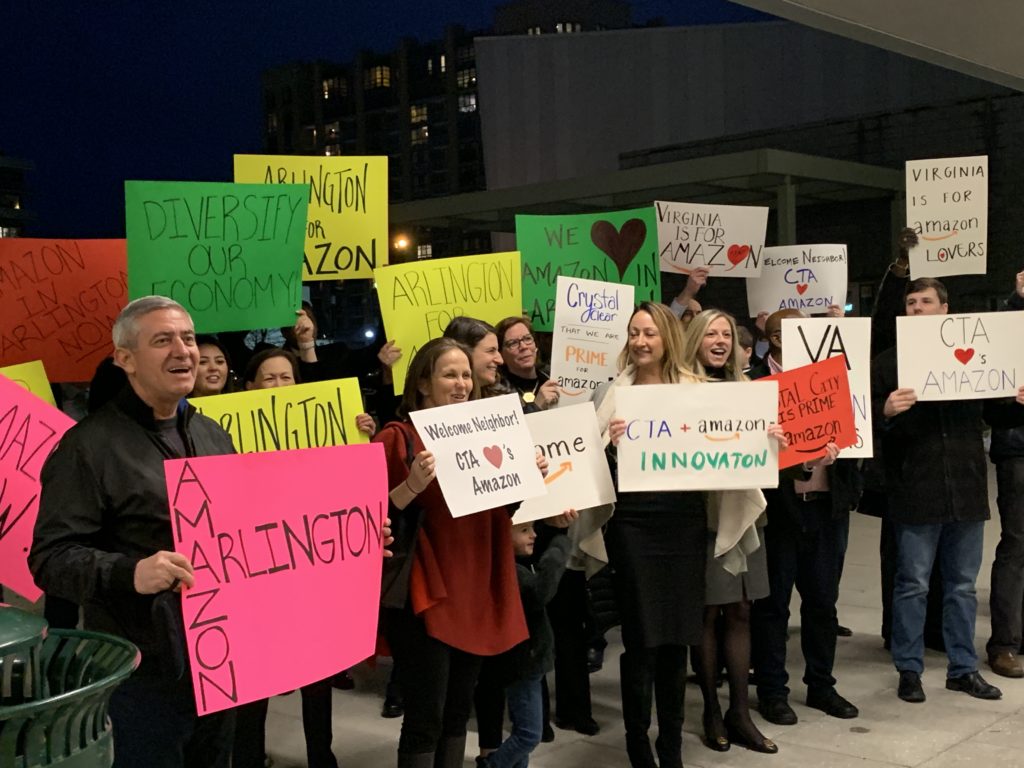
The business community has also been increasingly vocal in support of the project. Not only has the Arlington Chamber of Commerce repeatedly thrown its weight behind the effort, but the Crystal City-based Consumer Technology Association recently joined in the fight as well. The CEO of the tech advocacy group attended the event to welcome Amazon to the neighborhood, and the CTA organized a crowd of dozens of pro-Amazon demonstrators to hold signs outside the gathering.

“We know this is a historic moment, not just for Arlington, but the whole region,” said Victor Hoskins, head of Arlington Economic Development.

To assuage anyone concerned that the company would bring a huge surge of out-of-state workers to jam area roads and pack local apartment buildings, Sullivan stressed that, in a perfect world, company executives “hope to hire all 25,000 workers locally.”

But she followed that up with a laugh, acknowledging that such a possibility is a bit unlikely. However, she is confident that D.C. region has enough highly skilled tech workers to provide a deep hiring pool for Amazon. And it helps, she believes, that the company already has corporate offices in both Herndon and D.C. to draw from too.

“A few people may choose to relocate from our Seattle headquarters, but this is not a relocation of corporate employees from Seattle,” Sullivan said.

Sullivan added that, wherever the company’s employees hail from, Amazon plans to design its offices in a way to “push employees out into the neighborhood to support local businesses.”

While the tech giant is still in the most preliminary phases of designing the office space it plans to lease from JBG Smith in Crystal City and build in Pentagon City, she said the company fully expects to draw from the design principles it used in Seattle.

“We’ll be trying to take the indoors outdoors and vice versa,” Sullivan said. “We want it to feel very much like a neighborhood. There will be no walls around it, no big sign that says ‘Amazon’ on it.”

That includes a focus on welcoming retailers and other restaurants onto the ground floor of the company’s offices. Though JBG has already worked fervently to bring more mixed-use developments to the area, it’s a process the area’s dominant property owner is hoping that Amazon will accelerate, to the whole neighborhood’s benefit.

“Crystal City gets pretty quiet at night, because everyone leaves right after work,” said Andrew VanHorn, JBG Smith’s executive vice president. “It may not be 24/7, but we want to make it more of an 18/7 environment.”

Until the Board signs off on the incentive package and Amazon starts submitting construction plans for its new offices, VanHorn pointed out that any design conversations are quite preliminary at this point.

However, he said JBG is working under the general assumption that the company will move into all of its leased office space in Crystal City by 2020. Then development work on a new building at Metropolitan Park in Pentagon City will run roughly from 2021 to 2025; construction at the former “Pen Place” development will run from 2023 to 2027.

Sullivan stressed that the buildings won’t look too out of step with the existing skyline, saying executives hope to “integrate into what’s already there” in Pentagon City.

Arlington’s notoriously extensive civic engagement process for new developments offers a long road ahead for the company, but Sullivan said she’s looking forward to embarking on it to answer a simple question: “How can we be a better neighbor?”

“We’re all doing this together,” Sullivan said. “We’re going to be neighbors.”


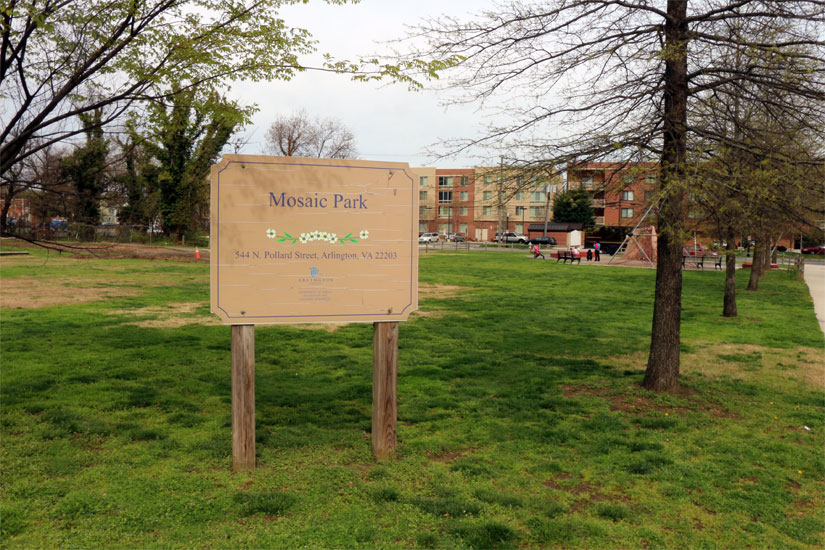
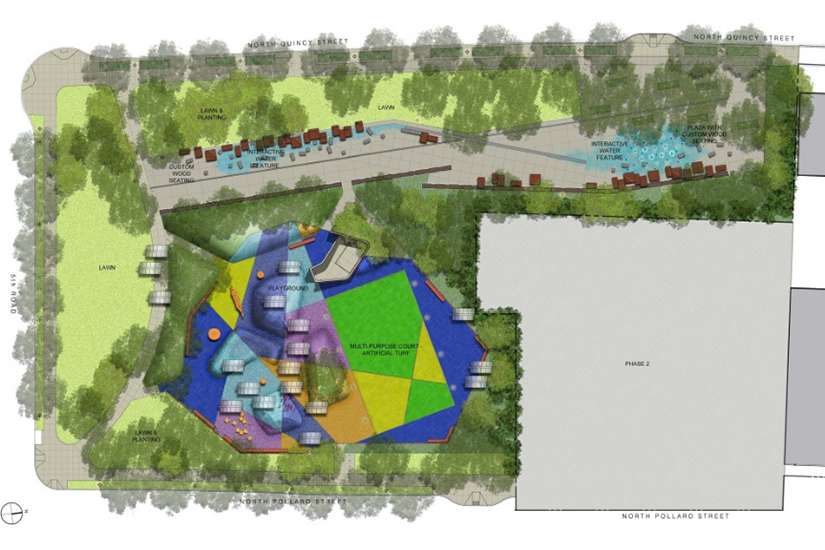
County officials are gearing up to start construction on a long-awaited overhaul of Ballston’s Mosaic Park.

The County Board is set to approve a construction contract of just over $6 million for the project this weekend, ending years of debate over the project.

The county has hoped for years now to spruce up the park, located at 538 N. Pollard Street, just behind the Gold’s Gym parking lot. Officials started planning work as early as 2008, but some cost overruns prompted a series of delays for the construction.

But the project began to gain steam again last spring, after officials decided to scale it back in scope a bit to rein in costs. The county was also delayed because the developer of Ballston Quarter was using Mosaic Park as a staging area to assemble the new pedestrian bridge stretching over Wilson Blvd — workers installed the structure last weekend.

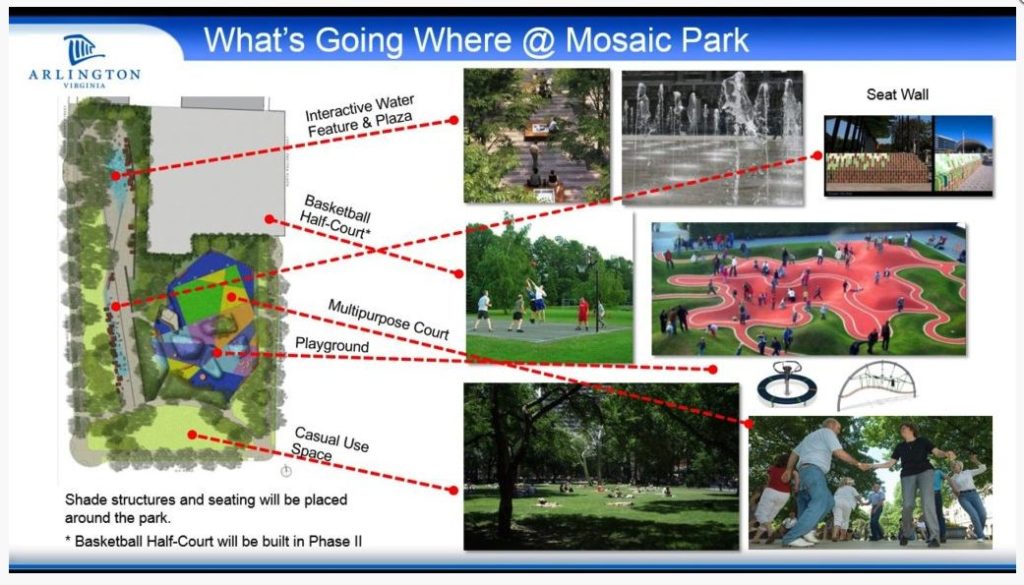
The park is now set to see a new playground, athletic court and water feature installed as part of the renovation work. Gone, however, are plans for solar panels at the site that would’ve powered the park’s lights and some additional landscaping around the park.

The Shooshan Company, which owns some nearby developments, agreed to fund the first phase of the roughly $6.6 million project. The county is also hoping to add a basketball half-court to the site, but that work will come in a second phase of the project, set to move in tandem with the “future redevelopment of the adjacent commercial property,” according to a county staff report.

The Board will consider the project as part of its consent agenda tomorrow (Saturday), which is generally reserved for noncontroversial items passed without debate. If all goes as planned, the renovations will be wrapped up by the end of the year.


Arlington’s top executive is calling for a real estate tax hike and some select staff cuts to meet rising expenses passed along by county schools.

However, County Manager Mark Schwartz’s proposed budget for the new fiscal year is not quite as unpalatable as he’d initially feared.

Schwartz offered a first glimpse at his budget proposal for fiscal year 2020 to the County Board at a work session today (Thursday). The headline number: a 1.5-cent tax increase.

Unlike last year, when the Board opted to keep the tax rate level, Schwartz is envisioning bumping the base real estate rate to $1.008 per $100 of assessed value.

That’s a 4 percent jump from last year, factoring in the increase in real estate assessments, generating an extra $11.7 million for the county on an annual basis and costing the average homeowner an extra $277 annually. Schwartz plans to leave most other tax rates and fee schedules untouched.

In all, the annual tax burden on the average homeowner would reach $8,890, including car taxes and fees, trash collection charges, and water and sewer fees.

Neighboring Fairfax County, meanwhile, is considering holding its tax rate level at $1.15 per $100, while Alexandria’s rate is also likely to be held steady at $1.13.

Schwartz hopes to save $5.2 million by slashing a total of 29 full-time staff positions and one part-time role from the budget. Eleven of those positions are currently unfilled, and Schwartz is characterizing those cuts as ways to reform inefficient programs rather than as painful losses for the county.

The county manager had originally projected doom and gloom for the new year’s budget, predicting that the county would need to close a gap of anywhere between $20-35 million on its own, with the school system tacking on a $43 million deficit too. But Schwartz told reporters today that the county’s budget picture has improved substantially since those initial estimates in the fall, giving him a bit more room to maneuver.

“This budget been a little bit more of a meandering trail than a straight line,” Schwartz said. “I thought I’d be coming to the community proposing a budget with reductions to fundamental services in the county. We’d be doing less maintenance, we’d have fewer programs. That’s not really the case.”

Schwartz chalks up the sudden change partially to property values ticking up a bit more than the county anticipated — assessments saw a 3.5 percent increase this year, while Schwartz says the county projected a 2 percent jump.

That’s not to say that the county is out of the woods, fiscally speaking.

Schwartz says he’s still not sure just how large the school system’s budget gap might be, and the extra $24.8 million he plans to send to Arlington Public Schools next year still likely won’t be enough to meet all their needs. APS is opening three new schools next year, prompting plenty of new expenses, and persistently rising enrollment projections means that the school system will need to keep adding new buildings going forward.

“They still have something of a gap that will require cuts,” Schwartz said. “I can’t really quantify what those cuts would be, but I’m sure we’ll hear from the schools community and the School Board when the [County Board] has to decide what to advertise that my penny [on the tax rate] for them wasn’t enough.”

That tone toward the school system could set off yet another round of wrangling between the county and the School Board, which has repeatedly argued for more cash to fund school construction. School leaders narrowly avoided class size increases last year, but the Board is already warning that they may not be able to do so this time around.

Another potential spot of trouble for the county is Metro. Schwartz plans to spend an additional $45.6 million to support the transit service in FY2020, with only a 3 percent increase in expenses to fund Metro operations specifically. That’s a key figure because the deal to provide dedicated funding to Metro mandates that Virginia localities can’t increase spending on the transit service by more than 3 percent each year, but WMATA General Manager Paul Wiedefeld is courting a bit of a dispute on the issue.

He’s proposing a Metro budget that calls for substantial changes aimed at boosting ridership, which would require localities to blow past that 3 percent spending cap. Wiedefeld argues that he’s crafted a way to avoid violating that stricture — Arlington officials disagree, and Schwartz said he had no desire to push the envelope on this front.

“We had a deal, this is the deal and to the extent that there’s more [money] that has to be added, we can talk about it,” Schwartz said. “But I wasn’t prepared to make the choices on my own right now to defund a county program in order to do something I think might be questionable.”

Aside from Metro, the rest of the budget includes raises of 3.25-3.5 percent for all county employees, including pay bumps of up to 5.5 percent for Arlington first responders, a key part of last year’s budget deliberations.

Schwartz also hopes to add four new staff positions geared around adapting to Amazon’s growing “HQ2” presence, assuming the Board signs off on an incentive package next month to bring the tech giant’s new headquarters to Crystal City and Pentagon City.

(more…)


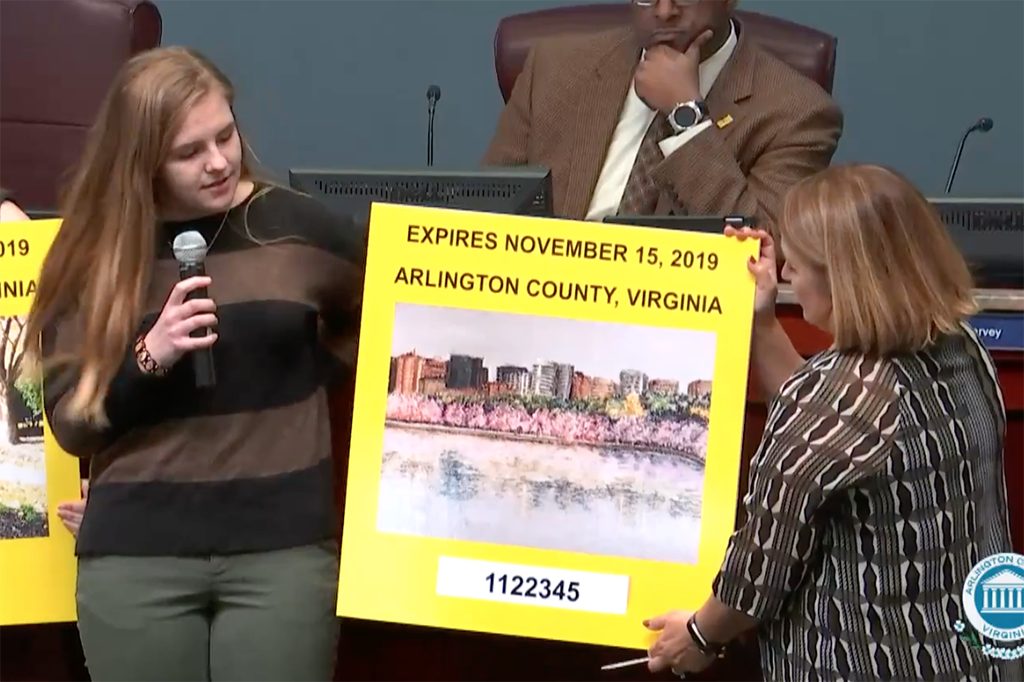
Arlington leaders have already decided to do with away with the county’s car decal program to track personal property tax payments, but they’re still looking to make the change a bit more official before it goes into effect this summer.

Starting July 1, county drivers will no longer need to display the brightly colored stickers on their cars to prove they’re paid up on their taxes. The County Board eliminated the program last year, though the annual fee previously attached to the decals will remain.

Now, the Board needs to make a few tweaks to its existing ordinances to eliminate any reference to the car decals. Members are set to take up the matter for the first time at their meeting Saturday (Feb. 23).

Proposed changes to the county code include the elimination of police officers’ authority to hand out fines for not displaying a valid “license tag.”

However, county workers will still be able to write $50 tickets if they discover drivers haven’t paid that motor vehicle fee, thanks to license plate reader technology increasingly embraced by the county treasurer’s office.

The changes would also clarify that the “motor vehicle license fee” will still be collected alongside property tax payments, even though it’s no longer attached to any decals.

The Board would also stipulate that the annual license fee is “not to be prorated” and is only refundable “when proof is provided that the fee was paid in error” under the proposed alterations.

In order to make the changes official, the Board plans to call for an April 2 public hearing on the matter, then hold a final vote immediately afterward.


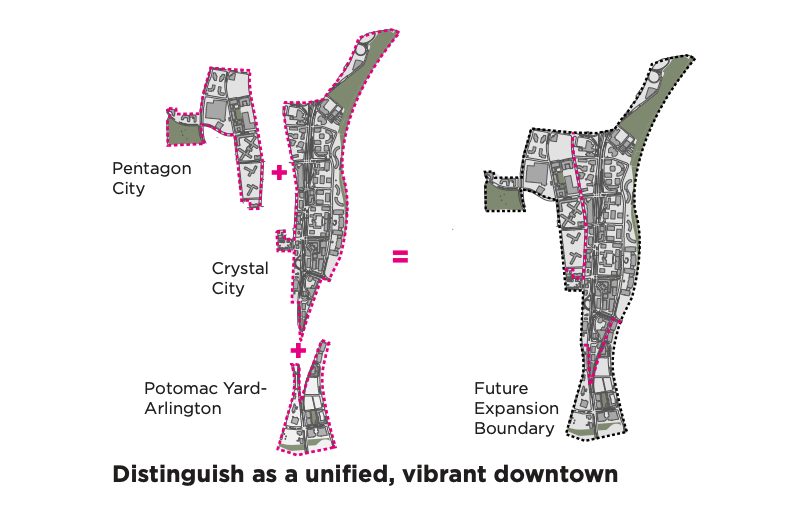
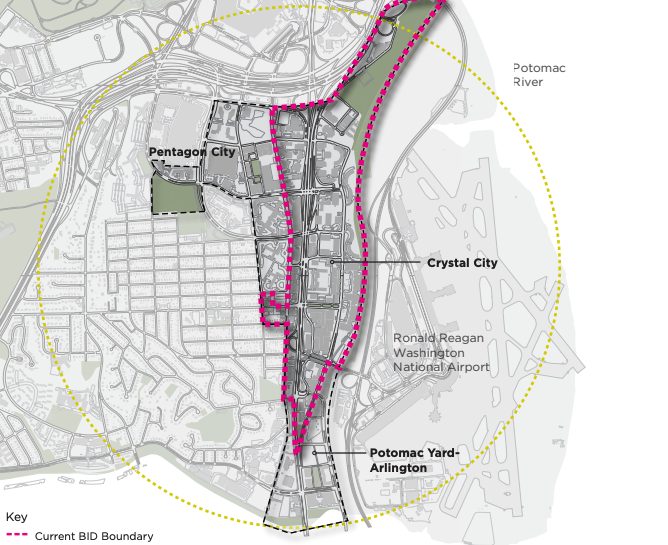
Crystal City’s leading business advocacy group is taking its most concrete steps yet to expand and represent Pentagon City and Arlington’s portion of Potomac Yard as well.

The Crystal City Business Improvement District is hoping to bump out its borders as soon as next year, according to documents submitted to the County Board. The BID plans to spend the next few months working secure the support of businesses in its adjacent neighborhoods, then finalize the change sometime in fiscal year 2020.

The business group, funded via a tax on properties in Crystal City, has been eyeing a potential expansion for months now, and the move took on increased importance once Amazon announced it would be setting up shop across all three South Arlington neighborhoods: the tech giant will have office space in both Crystal City and Pentagon City, and is spurring the creation of a new Virginia Tech campus in Potomac Yard.

The BID has already started to pitch the area to businesses as a cohesive “downtown” for Arlington, and is billing the creation of an “area-wide” BID as a way to “reinforce the complementary nature of these markets” when it comes time to lure new companies and residents to the area.

“In fact, the Crystal City, Pentagon City, and Potomac Yard-Arlington area has a total asset value of over $11 billion and represents a powerful economic engine for Arlington County, the region, and the Commonwealth of Virginia,” the BID wrote in its work plan for FY2020, delivered to the Board ahead of its meeting Saturday (Feb. 23).

The group’s new proposed borders would expand the BID’s reach down Army Navy Drive until it meets S. Hayes Street, putting major developments like Amazon’s future home near Metropolitan Park and the neighborhood’s Costco and Best Buy under the BID’s umbrella. However, the Fashion Centre at Pentagon City mall would not be included under the BID’s current proposal.

On the Potomac Yard side of the things to the south, the BID would extend its borders down Route 1 until it meets Four Mile Run (and the county’s border with Alexandria). That would pull in the large development that includes Lidl’s American headquarters and a Harris Teeter grocery store.

According to its work plan, the BID plans to spend the second and third quarters of the current fiscal year rallying support from business owners in Pentagon City and Potomac Yard. It also plans to move offices later this year, then hire more staff to account for its expanded borders.

The Board will also set the tax rate it imposes on Crystal City businesses to fund the BID as part of its upcoming budget deliberations. The BID is requesting that the tax rate remain stable, and when combined with a 6.8 percent jump in property values in the neighborhood, the group expects to pull in about $2.76 million in revenue this year.


Board Member Wants Lower School Costs — “In remarks to a local service organization, Matt de Ferranti telegraphed the likelihood that Arlington property owners would see a higher real-estate-tax rate this year, in part to pay for higher school costs. But at the same time, he said the days of gold-plated school facilities must come to an end.” [InsideNova]

Arlington No. 5 on ‘Women in Tech’ List — Arlington County ranks fifth on a new list of “the Best Cities for Women in Tech in 2019.” D.C. ranked No. 1. [SmartAsset]

Isabella Restaurant Gear Up for Auction — “Rasmus Auctions is advertising online auctions for kitchen equipment, dining room contents, decor and more at Yona, Pepita and Kapnos Taverna in Arlington until about noon March 13.” [Washington Business Journal]

County Expanding Drug Take-Back Boxes — “In the first calendar year of the Permanent Drug Take-Back Box program, residents safely disposed of 1008 pounds of unused, unwanted or expired prescription medications. Due to the success of the program, an additional permanent drug take-back box has been installed at Arlington County Fire Station #5.” [Arlington County]

AWLA Calls for More Pet Foster Families — “We need your help! Our kennels are full and we are in URGENT need of foster homes for medium-large adult dogs and kittens undergoing treatment for ringworm.” [Facebook]

Falls Church Becoming ‘Un-boring’ — The sleepy City of Falls Church is attracting younger residents amid a development boom, cheered on in an editorial by the little city’s newspaper. [Falls Church News-Press]


View More Stories