Amazon can feel a bit omnipresent around Arlington these days, but, in one key way, local leaders and activists say the company has been missing in action.

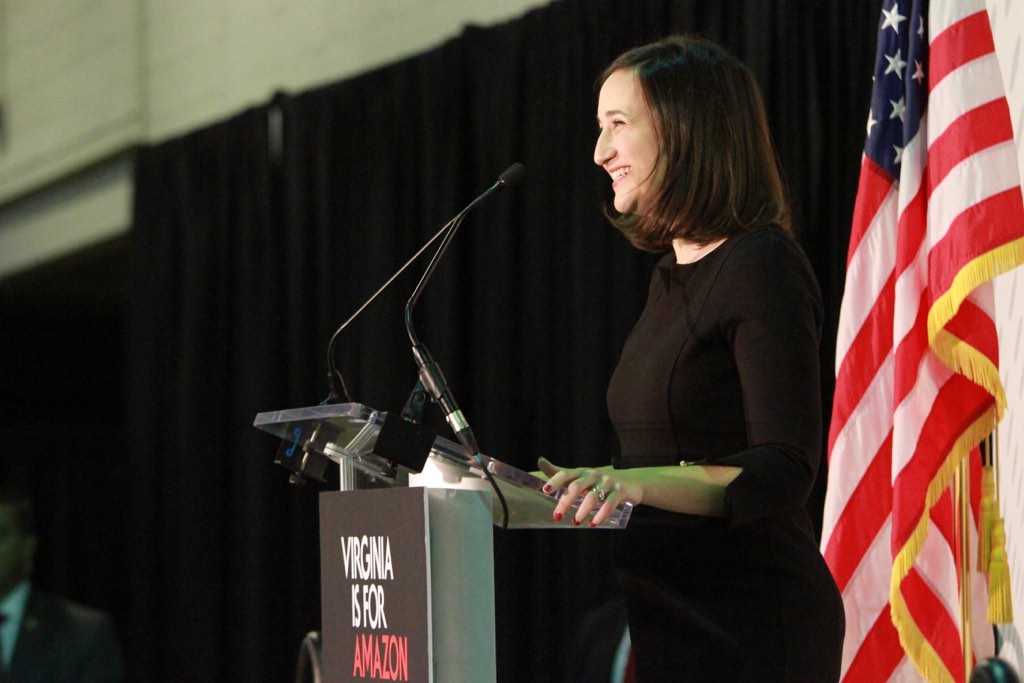
The tech giant sent a few emissaries to Pentagon City in mid-November, as politicians from around the state and the region congregated to hail the company’s massive Arlington expansion. Since then, however, people closely watching the Amazon debate say they’ve seen barely any evidence that the company’s executives have shown their faces in the community.

And in the wake of Amazon’s sudden, splashy decision to cancel plans for a new headquarters in New York City over local opposition to the project, officials see a clear need for the company to build stronger in-person relationships in Arlington.

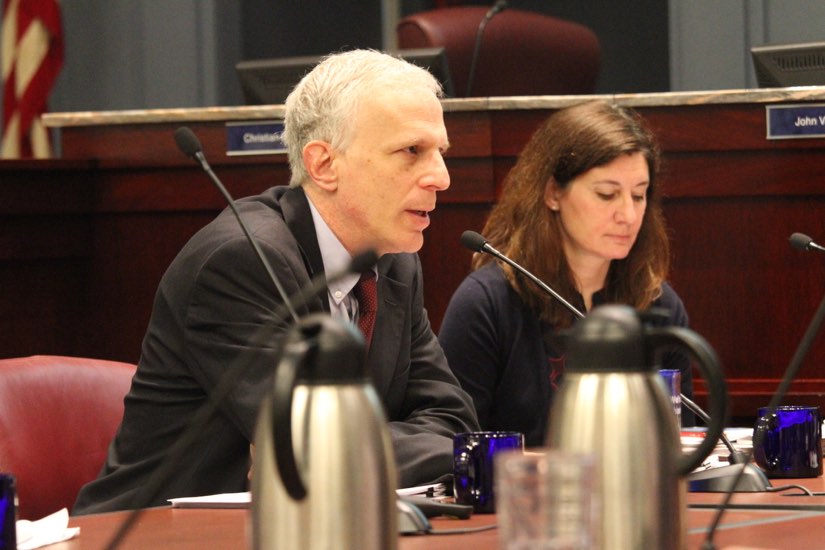
“I don’t really understand why they’re not out here… they need to have their coming out party, if you will,” County Board member Erik Gutshall told ARLnow. “Without some really clear rationale or justification from them, I would be very, very hesitant to vote on the incentive agreement without them having had some meaningful engagement in the community. In fact, I couldn’t see us voting on this without that happening first.”

The Board is set to take up that $23 million incentive package on March 16, after delaying a planned February vote on the matter, leaving just a few weeks for the company to meet those concerns.

“We should have a dialogue with them on this, and the community’s legitimate concerns, and it should be a dialogue soon,” said Board member Matt de Ferranti.

For its part, Amazon says it’s done plenty of work on the ground to build strong partnerships in Arlington. Spokeswoman Jill Kerr said in a statement that the company “has met with stakeholders in the community to discuss plans for our second headquarters in National Landing and we will continue to do so into the future.”

The company has also joined the county’s Chamber of Commerce to work with local business owners. Scott Pedowitz, the Chamber’s government affairs manager, says the company has “been very active since joining” and sent its representatives to a variety of the group’s gatherings.

“Earlier this month, we convened a meeting of over 50 local nonprofit organizations with Amazon’s head of community engagement,” Pedowitz wrote in an email. “It was a great dialogue and we’ve heard directly from several of our local nonprofits about follow-up.”

But activists opposed to the project argue that the company can’t simply work with the business community and Arlington’s professional class, when Amazon’s arrival threatens so many low- and middle-income people in the area. Expert opinions are split on just how much the company’s 25,000 highly paid workers will drive up rent prices in the county, but the changes to the housing market will almost certainly force some people to leave their homes.

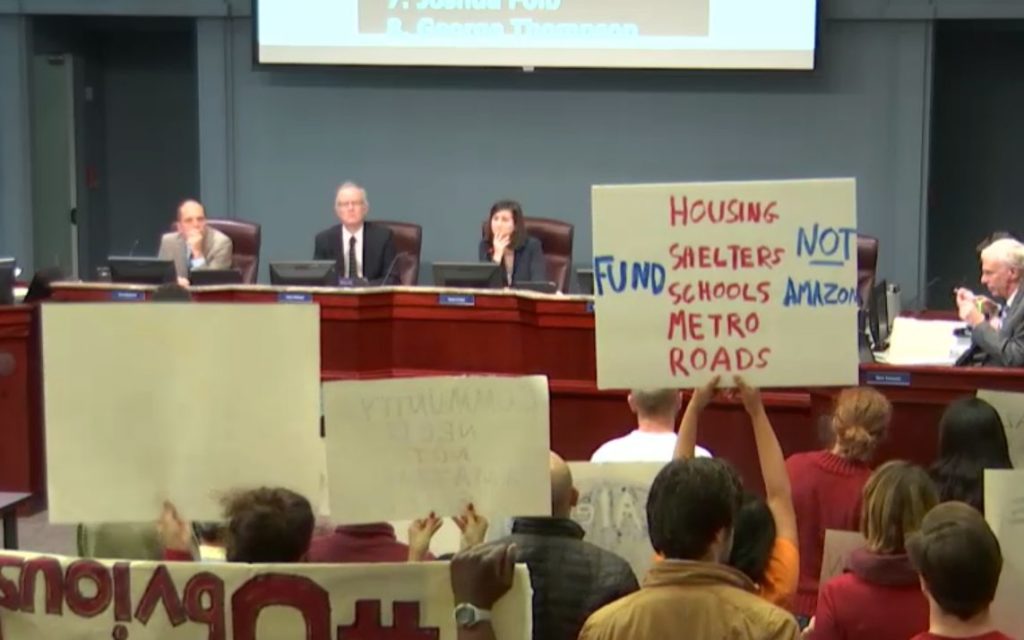
“We’re being sold all this stuff about how Amazon wants to be a good neighbor and they love our community, but they haven’t spent a second with the community,” said Roshan Abraham, a longtime Amazon critic and a leader of the progressive group Our Revolution Arlington. “Maybe they’ve had meetings with the Arlington Chamber, and they think that’s the community. But they haven’t spoken to the rest of us.”

In all of the many community meetings focused on the project he’s attended over the last few months, anti-Amazon organizer Alex Howe points out that “the only time I’ve ever seen an Amazon official is in Richmond.” And that was when state lawmakers were debating a $750 million incentive package for the company, which Gov. Ralph Northam ultimately approved earlier this month.

Gutshall did suggest that perhaps Amazon was “distracted” with the opposition it was facing in New York, where city officials called company executives in for heated hearings on the project. However, Abraham reasons that the company has seen no need to make its case to skeptics in Arlington because local leaders have so aggressively pushed the project on their own.

“They haven’t had to speak to us because the County Board has been doing their work for them,” Abraham said. “In New York, politicians pressured them and Amazon was put in a position where they had to speak to the community. No one’s putting that pressure on them here.”

Yet de Ferranti and Gutshall say they’ve both urged the company to engage in Arlington. Gutshall says his consistent message to Amazon officials has been that “the Board and the community are expecting you to join the community, and if you’re going to do that, you need to show up.”

However, de Ferranti says he is concerned that activists opposed to the company’s presence in the county would turn any community meeting into a “shouting match” rather than a constructive dialogue.

“I want to have a real conversation on this, not a chance for people to demagogue,” de Ferranti said.

Abraham says that sort of stance “totally baffles me,” arguing that the Board “shouldn’t be afraid of how the community might respond to Amazon executives being here.” Gutshall also noted that “even our most contentious town halls on this haven’t been abominable.”

“You don’t have to engage with the only purpose of trying to change somebody’s mind,” Gutshall said. “But if you have a dialogue and if it’s done in a civil way, it’s healthy. It’s not necessarily everyone singing ‘kumbaya’ all of a sudden, but it’s important to have those conversations.”

Gutshall says the company has assured him that it has “imminent” plans to start holding community meetings, even though he’s seen no evidence of specific plans just yet.

Pedowitz points out that the Metropolitan Washington Council of Governments is organizing an event titled “A Regional Conversation with Amazon,” scheduled for George Mason’s Virginia Square campus tomorrow night (Thursday). The event will convene “elected officials, government executives, and business and community leaders” for a meeting with Amazon representatives to “discuss plans to become a bigger part of our diverse, dynamic and growing region.”

But that event is described as an “invitation-only” gathering, and does not appear publicly on the group’s website — a Washington Post reporter tweeting out a link to an internal event description seems to be the first public reference to the meeting.

An organizer of the event did not respond to a request for comment on whether the gathering is open to the public or the press.
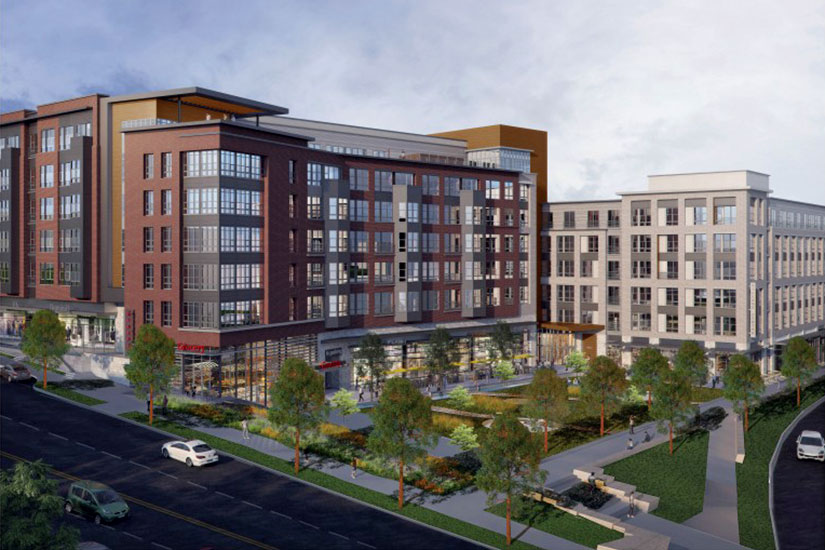
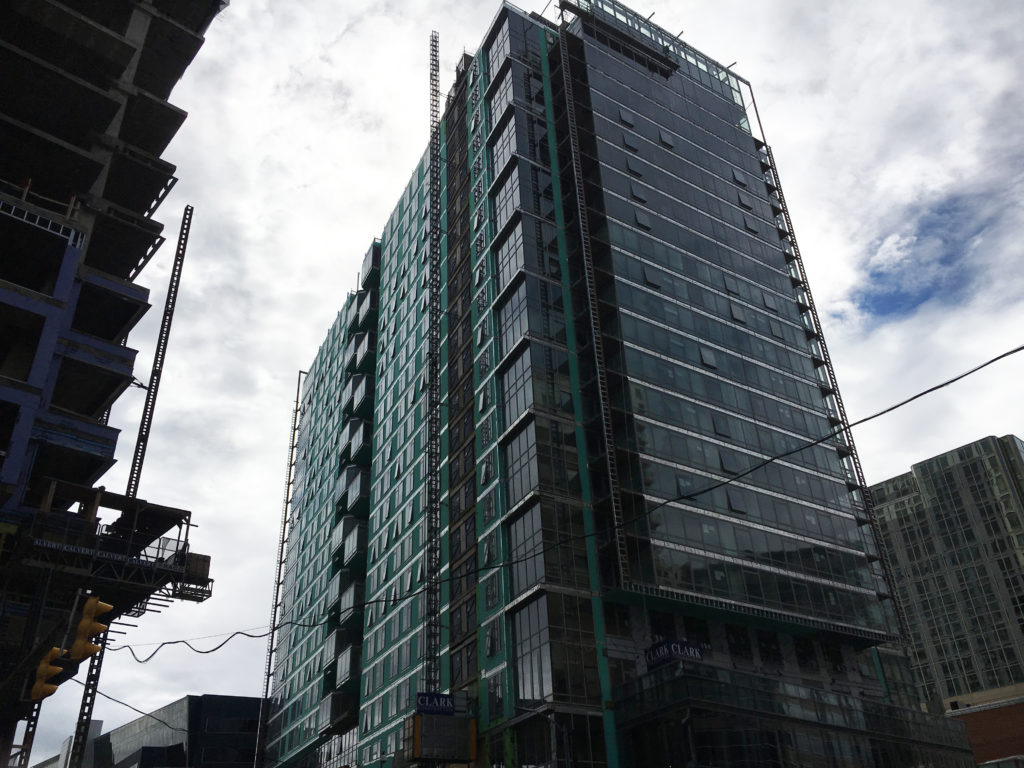

County officials are clearing the way for WhyHotel proceed with its plans to set up temporary hotel rooms in two Arlington apartment buildings: one in Ballston, the other along Columbia Pike.

The startup announced in December that it hopes to bring a total of 325 of its pop-up hotel rooms to the county this year, splitting them between the residential tower attached to the Ballston Quarter development and the “Centro Arlington” project, which is taking the place of the old Food Star grocery store off the Pike.

Since then, the company has been working to secure county approvals for its unusual business model. WhyHotel strikes deals with owners of large new residential buildings to rent out blocks of furnished apartments, helping property owners make some extra cash while they work to find more permanent tenants. The firm also brings along a full on-call staff to handle cleaning and other guest needs to each property, providing customers with a bit more than a simple hotel might offer.

The County Board approved the zoning changes necessary for the company to set up its Ballston Quarter rooms on Jan. 26, and the Planning Commission voted unanimously Wednesday night to recommend that the Board do the same for the Centro Arlington development.

WhyHotel expects to have 175 rooms ready in Ballston by April, with the remaining 150 on the Pike available sometime this summer or fall.

In both cases, the company will have the county’s permission to offer the temporary rooms for the next two years. But WhyHotel executives expect they’ll need much less than that, given the demand for new apartments in Arlington these days.

CEO Jason Fudin told the Planning Commission that the company’s first effort at “The Bartlett” complex in Pentagon City lasted just five months before the building was fully leased out.

“We leave pretty quickly when things go well in Arlington,” Fudin said.

Planning Commissioner Stephen Hughes says the company’s deference to long-term renters eased his mind in considering WhyHotel’s business model. He pointed out that “long-term leaseholders take precedence” in the company’s arrangements with Arlington property owners, which is why WhyHotel tends not to stick around for too long.

“Neighbors, of course, hope to have long-term neighbors,” Hughes said.

But that hesitancy doesn’t mean that county officials are opposed to the idea of short-term guests on the Pike. In fact, Hughes hopes WhyHotel’s stay in Centro Arlington spurs more conversations in the business community about the viability of other hotels in the area.

“The data will now be there for the bankers and investors to see whether a current, flat service parking lot may be a suitable hotel in the future,” Hughes said.


Amazon is showing an increasing willingness to sign a collective bargaining agreement with local unions before it sets to work building new office space in Arlington, perhaps meeting a frequent demand of activists concerned about the tech giant’s labor practices.

Though the company cautions that nothing is set in stone until county officials formally sign off on an incentive deal to bring the tech giant’s new headquarters to Crystal City and Pentagon City, Amazon is sending signals that it’s open to the prospect of striking a “project labor agreement” with construction workers who could someday erect the company’s future home in Arlington.

Should the company someday strike such a deal, commonly known as a “PLA,” the agreement would set out the employment conditions for all workers involved in Amazon’s construction efforts (whether or not they belong to a union) before the company starts accepting bids for the project. The PLA could govern everything from pay rates to workers’ compensation claims, and the agreements are generally designed to ensure labor peace during a major project while also improving conditions for workers.

“We’re definitely open to it,” Amazon spokeswoman Jill Kerr told ARLnow. “But this is all still pretty early. We really have our heads down, focused on working with the community on this initial package for approval before county officials.”

Kerr says that company has already held an initial meeting on the topic with representatives from the Baltimore-D.C. Building Trades, a coalition of unionized construction workers, and JBG Smith, the company’s future landlord at some existing buildings and development partner for other properties.

A spokesman for JBG Smith declined to comment on the deliberations, but Kerr stressed that discussions were “all hypothetical” and remain very much in the earliest possible stages of debate. Amazon plans to both build new offices in Pentagon City and renovate others in Crystal City, and Kerr believes it’s too early to say how any future PLA would apply to that range of projects.

However, Steve Courtien, the D.C. field representative for the building trades, came away from the meeting cautiously optimistic about the prospects of someday striking a deal with Amazon.

During a Feb. 3 town hall on Amazon convened by Arlington Democrats, he said the company seemed generally “positive” about the idea, particularly because the tech firm has worked out PLAs for some of its other projects around the country — Kerr said she was unable to confirm that latter assertion.

As for JBG Smith, Courtien said the idea of a PLA was more of a “mind bend” to them, but he fully expects the development firm to follow Amazon’s lead, given the size of the company’s investment in the area.

“That’s what they have to get past,” Courtien said. “Amazon basically has to tell JBG, ‘this is what we want,’ then they say ‘OK’ and negotiate the PLA with private contractors.”

The County Board is signaling that it’s broadly supportive of those efforts, and members have said in the past that they’ve encouraged Amazon to strike a PLA before moving into Arlington.

But Virginia law prohibits government agencies from requiring PLAs as a condition of allowing new construction (in keeping with the state’s tradition of pro-business, anti-union regulations) and county officials are cautioning that they’ll only have a limited role to play in the discussions.

“I think I speak for the whole Board in saying it’s something we’re all supportive of,” County Board member Erik Gutshall said during the town hall. “But it’s not something we can legally mandate from them.”

Anti-Amazon activists have been similarly enthusiastic about the idea of a PLA for the company’s construction work, considering the frequent concerns raised about how the tech giant treats its warehouse workers.

Stories of employees being unable to take bathroom breaks without risking their jobs or warehouses filled with boiling heat in the summer and freezing cold in the winter have spooked many county residents. Roshan Abraham, a leading Amazon critic as part of his leadership role with the progressive group Our Revolution Arlington, also points out that the company has pledged to oppose any unionization efforts it encounters at its other new headquarters in New York City.

That’s why Abraham believes it will be crucial for Arlington workers to secure a PLA before Amazon comes to town, though he fears it might not be enough to combat the huge company’s power.

“We shouldn’t stop just at a PLA,” Abraham said during the town hall. “We should be pressuring them even further to stay out of their union-busting behavior, which has been pretty well documented elsewhere.”

Ultimately, Abraham is so skeptical of the company’s business practices that he believes it’s a poor fit for Arlington’s values (even though he is “not that deluded” to believe that the county will turn down the company’s new headquarters).

Board members say they have their own concerns about Amazon’s ethics, whether it signs a PLA or not, but they don’t believe they’re substantial enough to justify barring the company from moving in.

After all, Gutshall pointed out that Arlington is also home to Boeing, a major military contractor, and while he may not like that they “manufacture equipment that is designed to kill people all over the world,” he hasn’t tried to chase the company away.

“We’ve not made it a condition of a corporation locating here or a resident locating here to abide by our progressive values for how you conduct your business,” said County Board member Katie Cristol. “Some 10 or 15 percent of Arlingtonians voted for Donald Trump. I’m not a fan of that, but I’m not going to try to kick them out of Arlington County or say they can’t live here.”

Photo via JBG Smith


Four years ago, Arlington officials spent $4.1 million to build a 10-mile fiber optic network aimed at allowing local businesses to get cheaper access to higher-speed internet — since then, the fiber has just sat in the ground, almost totally unused.

At the time, county leaders championed the construction of the “dark fiber” network as a transformative step for Arlington. Though the county is barred by state law from offering internet service itself, officials envisioned smaller internet service providers working with local tech firms to “light” the fiber, providing county businesses with a powerful new option to access the internet at blazing-fast speeds.

But an ARLnow investigation shows that Arlington officials made a series of decisions in designing the program that scared off any businesses interested in leasing the fiber.

A committee of broadband experts convened by the county laid out many of these problems with the network, dubbed “ConnectArlington,” in a thorough report recommending an extensive overhaul of the program’s design. At least one member compared ConnectArlington to the infamous — but never built — “bridge to nowhere” in Alaska.

County officials, including County Manager Mark Schwartz, have now been aware of the group’s conclusions for close to eight months and they say they’re already hard at work to heed some of the committee’s recommendations. The report has even since been forwarded along to the County Board, even though Schwartz had originally hoped to wait to deliver his own recommendations for the program alongside the committee’s conclusions.

Now, it remains an open question how the county will work to address the problems with ConnectArlington, which costs hundreds of thousands of dollars per year for the county to maintain.

“They have this huge amount of fiber in the ground, and not a single strand of it has been leased,” said Chris Rozycki, a member of the Broadband Advisory Committee that studied ConnectArlington. “It’s like they’ve built an interstate, with no on-ramps or off-ramps.”

Fiber frustrations

The Board decided to build the 10-mile network in February 2015, reasoning that it would be a logical extension of the county’s existing fiber network, which connects county facilities, schools, radio towers and traffic signals.

Then-County Board member Jay Fisette touted it to ARLnow at the time as a “competitive advantage over other jurisdictions,” positioning it as a key tool for economic development in the county. It was also designed as a way to provide more competition for large ISPs like Verizon and Comcast — the county’s own research shows that companies at roughly 60 percent of all county office buildings only have one ISP able to offer them fiber-based service.

But the network’s design and the county’s conditions for leasing out the fiber were flawed from the very beginning, according to the broadband committee’s report and interviews with four of the group’s six members.

A chief concern is how the county chose to build out the fiber. Officials designed it as “middle mile” service, meaning it runs along major roadways (along the Rosslyn-Ballston corridor and Columbia Pike, for example) but didn’t initially connect to the buildings along the corridors.

“To be useful, the network must be complete,” the report argues, according to a copy obtained by ARLnow. The report has not been publicly released by the county.

“‘Build it and they will come’ does not always work,” the committee wrote. “Part of the network was built, but not enough to bring the ‘players’ to the game.”

(Read the full report written by the county’s Broadband Advisory Committee.)

(more…)


Longtime Election Director Retiring — “Linda Lindberg, who has served for 16 years as elections chief in Arlington, on Feb. 2 formally announced she would not seek re-appointment and would retire over the summer. The move had been expected, and Lindberg’s service drew praise from members of the Arlington Electoral Board.” [InsideNova]

Northam Signs HQ2 Bill — “Amid fallout over a racist photo, Virginia Gov. Ralph Northam has signed legislation which would carry out the state’s promise to Amazon for up to $750 million in incentives if it creates almost 38,000 jobs at its new Arlington County headquarters.” [Washington Post, Washington Business Journal]

Board Wants Project Labor Agreement for HQ2 — “[Arlington County Board member Katie] Cristol says that Northern Virginia is working on protecting labor during Amazon’s forthcoming development of Crystal City through what’s called a project labor agreement, which is a legal document that establishes the terms and conditions for employment on a construction project before it solicits bids.” [DCist]

Cycling Bill Advances in State Senate — A bill that would “classify cyclists as vulnerable road users deserving special protection under the law” has passed the Virginia State Senate. [Twitter, Virginia LIS]

Road Closures for 5K Race — “The annual Love the Run You’re With 5K will take place in the area of Pentagon City on Sunday, February 10, 2019. The Arlington County Police Department will implement [a number of] road closures to accommodate the race.” [Arlington County]


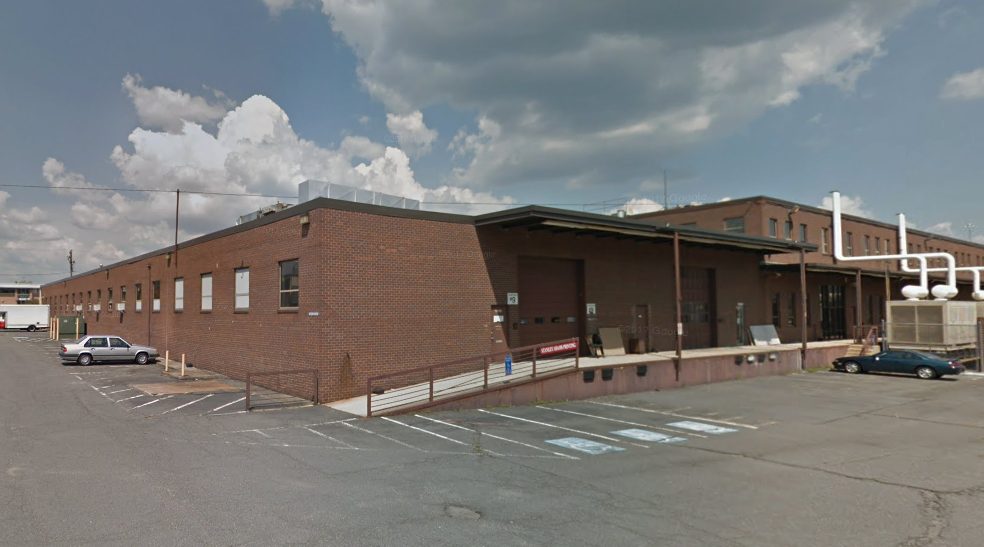
Arlington officials could soon be headed to court to claw back $200,000 the county handed over as part of a since-canceled agreement to buy a two-acre property in Fairfax County.

The County Board agreed back in 2016 to buy several parcels of land along the 6700 block of Electronic Drive in Springfield, with plans to use the property as space for a new maintenance facility for its Arlington Transit buses.

But the Board decided to back away from the $4.65-million land deal late last year, after discovering that the county would have enough space for bus maintenance at another property officials bought in Nauck last summer. Not only did the Board hope to avoid operating a facility outside Arlington, but members expected the move would save the county as much as $10.5 million initially and roughly $900,000 in maintenance costs each year.

Yet the process could come with its own expenses. The Board voted unanimously last week to authorize county attorneys to pursue legal action against the property’s owner, Shirley Investors, LLC, to recover a $200,000 deposit the county sent to the company before the sale was finalized.

Deputy county attorney MinhChau Corr told ARLnow that she couldn’t discuss the details of the case, but that action by the Board does not mean a lawsuit pitting the county against the property owner is a certainty. But Corr did say it’s a sign that negotiations have become acrimonious enough that the county could pursue such a step in the near future.

“There’s some level of conflict that we anticipate could go to litigation,” Corr said. “But that doesn’t mean we’re 100 percent committed. The two sides could work something out before next month’s Board meeting, this just avoids us having to wait until then to ask for permission to file something.”

County court records don’t show any case involving Shirley Investors and the county as currently pending. Neither of the two men listed as contacts for Shirley Investors in the county’s preliminary sale agreement responded to requests for comment on the matter.

It’s unclear what sort of legal argument the county might mount to recover the deposit.

The terms of the land deal say that the county would’ve been eligible to win back its $200,000 if it called off the sale within 90 days of signing the agreement with Shirley Investors — that deadline is long past, however, as the agreement was signed on Dec. 7, 2016.

Furthermore, the agreement describes that deposit as “the sole and exclusive remedy available to the seller” if the deal fell through.

Photo via Google Maps


Arlington leaders agree that Amazon’s impending arrival in the county demands urgent action to address housing affordability — but there’s a lot less agreement on what sort of policy response is necessary to hold down the area’s skyrocketing housing costs.

Some of the changes officials are envisioning are relatively modest ones, expanding on existing efforts that began long before the tech giant announced its plans to bring 25,000 workers to the area. After all, many have argued that the new headquarters set to pop up in Crystal City and Pentagon City won’t prompt the sort of explosion in gentrification that Amazon’s opponents fear.

Other experts see a need for more ambitious tactics, like allowing more development in Arlington to flood the market with more homes. That could well be a politically explosive change in the county, particularly if it means increasing density in Arlington’s oldest residential neighborhoods.

Or perhaps there’s a need for a more creative approach — some progressive activists are championing the creation of a “community land trust,” a strategy embraced elsewhere around the country to allow for the communal ownership of affordable homes.

It presents local leaders with a series of choices that could well define the county’s destiny for decades. And with Amazon’s workers set to start arriving by the thousands next year, officials won’t have long to make up their minds.

‘We should never let a crisis go to waste,” said County Board member Erik Gutshall. “Amazon is bringing a sharp focus to these fundamental issues, and it’s providing us with the opportunity to double down on the sort of planning we’ve done for decades.”

Building on existing efforts

County Board Chair Christian Dorsey agrees that the urgency of addressing housing affordability has been “magnified” since Amazon’s momentous mid-November announcement.

But, fundamentally, he says “the world, as I see it, in terms of housing strategy is not very different than it was” before officials knew they’d won a new Amazon headquarters.

“We’ve identified the tools we’d like to deploy,” Dorsey said. “Now we have to do the hard work of deploying them.”

For instance, the county has long relied on its “Affordable Housing Investment Fund” to provide loans to developers building affordable homes. Those projects often include apartments guaranteed to remain affordable to renters, known as “committed affordable” homes, that are most valuable for people at the lowest end of the income scale.

The County Board allocates cash to the fund each year, and that contribution has recently hovered around $15 million annually. The county is facing a budget squeeze in the coming fiscal year, but as tax revenue from Amazon’s new properties and workers trickles in over the next few years, Gutshall believes the Board should “earmark some of that specifically” for the loan fund.

Similarly, he notes that the Board will also be able to force Amazon to send cash to the program as it builds new offices (most of which will be located in Pentagon City), as developer contributions are the Board’s main tool for seeding the fund with money.

But as market forces persistently push the costs of new development higher, researchers believe the county also needs to preserve the affordable homes it already has.

“Buying up and preserving existing middle-income housing, that stretches public subsidy dollars much further than trying to build stuff from scratch,” said Jenny Schuetz, who studies housing policy with the Brookings Institution’s Metropolitan Policy Program. “The county should be doing more of that preservation work and they should be focusing on that area near the new headquarters.”

The Board has indeed worked to preserve some affordable homes already by setting up “housing conservation districts” to protect older, “garden apartments” designed to be affordable to middle-income renters. Officials first passed the policy in 2017, with plans to eventually allow developers to replace protected homes with even larger affordable developments, but there’s been little movement on the issue since then.

Gutshall argues that the county needs to “accelerate” some of that work, as it seeks to expand “missing middle” housing, commonly understood as homes that fall in between apartments and single-family houses. The Board already loosened some of its regulations for accessory dwelling units, or “mother-in-law suits” on the same property as another home, and Gutshall wants to further tweak zoning rules to allow for more duplexes and small apartment buildings to be built around the county.

“We need to be thinking about how we can keep the character of residential neighborhoods, but still open up housing types and allow for better transitions on the edges,” Gutshall said. “At the same meeting we vote on the Amazon deal, I would love to see a ‘missing middle’ directive… to really identify key areas where think we can make some rapid progress addressing this.”

Touching the ‘third rail’?

Yet the scale of the affordability challenge confronting Arlington has convinced many experts that such changes aren’t enough.

Many observers see a clear and urgent need to ramp up the supply of housing more rapidly, even if that means the construction of the same sort of high-end apartments that are already commonplace in the county. Those homes themselves might not be affordable for low-income renters, but experts argue that any new apartments will have a positive impact on the market as a whole.

“People moving into those new homes come from somewhere,” said Eric Brescia, a member of Arlington’s Citizens Advisory Commission on Housing, who also works as a Fannie Mae economist. “Think of it like the market for cars. A lot of poorer people buy used, not new, at first. New apartments help free up the older stock for people of more modest means.”

But the question becomes where those new apartments will fit, and that leads to some very thorny debates for local leaders.

Anyone walking along one of Arlington’s Metro corridors can see that neighborhoods like Rosslyn and Ballston are already jammed with high-rise developments. Most of the rest of Arlington is reserved for single-family neighborhoods — as much as 87 percent of the county is zoned only to allow for that type of development, according to one recent analysis — but officials might need to reverse that trend as Amazon ramps up the pressure on renters.

“Many people are saying it’s time to look at this exclusive, single-family detached development and how wasteful it is in terms of land use,” said Michelle Krocker, the executive director of the Northern Virginia Affordable Housing Alliance. “But if anything is going to shake communities to their core, this will be it.”

Schuetz points out that these are often wealthy neighborhoods, full of residents “that turn up in large numbers and vote” if they fear encroaching density. But she doesn’t see any choice for the county but examining the prospect of allowing more development in a wider variety of places.

“You have these neighborhoods within a mile, walking distance, of the Metro, but they’re only zoned for single-family homes,” Schuetz said. “It’s just not efficient.”

Dorsey acknowledged that such discussions have always been a bit of “a third rail,” politically, and he understands the impulse of homeowners who might “worry about what more density would look like in their neighborhood.”

“I don’t fault people for wondering if we’re intending for the same density as in Ballston to come to every low-density neighborhood,” Dorsey said. “I get that… that’s why we have to talk about this with real specificity.”

And Dorsey says the Board isn’t considering any sweeping changes to zoning rules across Arlington, even if advocates favor such a move. Instead, he expects a more modest first step is increasing density along some sections of Lee Highway, where the Board is already gearing up an extensive study of its plans for the corridor.

“The potential we have in Arlington is along our major transportation corridors, Lee Highway in particular, where there is more than enough opportunity for substantial amounts of new housing,” Gutshall said. “If we’re able to unlock that, that will carry us through our next 30 to 40 years.”

Following in Bernie’s footsteps?

Beyond these debates about zoning and density, some activists see room for another, very different path for the county to pursue as Amazon looms.

Tim Dempsey has been working with advocates and local leaders on the idea of a “community land trust” since first coming across the idea while reading a bit more about Sen. Bernie Sanders (I-Vt.) during his 2016 presidential bid.

While he was still just the mayor of Burlington, Vermont, Sanders helped create a land trust, among the first of its kind in the nation. In the unusual arrangement, a nonprofit buys up available land, then builds homes atop it.

Anyone can then move in and pay a mortgage on the homes themselves, while the nonprofit retains the ownership of the land. That protects home prices from wild fluctuations, particularly the sort of speculation that could follow Amazon’s arrival in the county, Dempsey said.

“This prevents the land from falling into a speculator’s hands in the first place,” said Dempsey, who sits on the steering committee for the Sanders-inspired group Our Revolution Arlington

And more than just providing low- and middle-income people with a place to rent temporarily, Dempsey believes this method “allows people to have many of the benefits that come with home ownership, like building equity, tax deductions and having very stable housing.”

“They might not get the full value of owning a home, but they probably would never be able to get into homeownership to begin with, otherwise,” Dempsey said. “This could address long-standing social justice issues when it comes to home ownership.”

Without such a model in place, Dempsey fears Amazon will push already skyrocketing home prices higher and force people out of Arlington. That’s why he’s already brought the idea to many Board members and other local affordable housing advocates, where he says it’s largely earned a warm reception.

That’s significant, because Dempsey believes the county has a key role to play in setting up the trust — the county would likely need to provide the cash to get the effort off the ground, and could take a leading role in acquiring land for any future nonprofit.

Dorsey says he’s certainly willing to examine the issue in more detail. But he urged the trust’s proponents to strive for the true “end game” of such a program, rather than getting hung up on setting up a trust, per se.

“I don’t want to get so focused on the prospect of a land trust that we don’t look for the true essence of this opportunity: how do we acquire property that can be made into affordable housing?” Dorsey said. “It could be a land swap, or allowing an entitlement to build something that’s more dense to get a different opportunity elsewhere.”

Where Dorsey and Dempsey can agree is that such a trust would be most effective if it’s a regional effort.

Indeed, with Amazon’s workers expected to settle all throughout the D.C. area, experts of all stripes are unanimous that Arlington can’t hold down housing prices on its own, no matter which strategies leaders pursue.

“Arlington can obviously play a part in this, but housing markets are regional,” Brescia said. “And we need more collaboration across the region.”

File photo


Arlington leaders are doling out raises for County Manager Mark Schwartz and several other senior county employees.

The County Board signed off on modest pay hikes for Schwartz, County Attorney Steve MacIsaac, County Auditor Chris Horton and County Board Clerk Kendra Jacobs at its meeting Tuesday (Jan. 29).

Each one scored 3.25 percent pay bumps on their previous contracts, matching raises the Board handed out last year to the group. All four report directly to county lawmakers.

Schwartz, the top executive in the county government, now stands to pull in just under $262,000 next year. This raise marks the third one he’s earned from the Board since he was hired as permanent county manager in 2016, when he started out with an annual salary of $245,000. His predecessor as manager, Barbara Donnellan, reached a top salary of about $270,000 a year by the end of her five-year tenure.

MacIsaac now pulls in about $253,000 per year, his tenth salary bump since taking over as the county’s top lawyer in 2000. Horton now makes nearly $143,000, earning his second raise since joining the county in 2016.

Jacobs now makes just over $108,000 annually, with the pay bump coming just a few months after the Board hired her to manage meeting materials this past July.

The good news for these county employees, most of whom rank among the highest-paid in the county workforce, comes as Schwartz is warning of some potential bad news for other county workers.

He’s already ordered a hiring “slowdown” to cope with the county’s dire fiscal picture, and has warned layoffs could be in the forecast (alongside tax increases and service cuts) to close a large budget gap in the new fiscal year.

File photo


Arlington County Board member Katie Cristol says she’s running for re-election, becoming the first candidate to jump into the race for two Board seats on the ballot this fall.

The Democrat, who is a fresh off a year rotating in as chair of the five-member Board, told ARLnow that she announced her decision to seek a second term in office to supporters today (Thursday).

Since first winning office in 2015, Cristol believes the county has “started to make progress on the issues I’m passionate about,” but she’s hoping for another four years on the Board because she sees more work left to do on everything from expanding affordable housing options to increasing the availability of childcare in the county.

Cristol says she’s well aware that the next four years will be challenging in Arlington, particularly as the Board copes with some unpleasant budgets and manages Amazon’s arrival in Crystal City and Pentagon City.

The latter topic has drawn more than its fair share of attention to the county, and Cristol in particular, over the last few months, but she plans to embrace the complexities of the company’s impact during her campaign.

“We’ve never been a community where we just let things happen to us, we plan for things,” Cristol said. “But the only way to make sure that happens is to believe in our potential to do that, and elect leaders who are problem solvers, not just problem spotters… There’s been a lot of temptation through all this to say ‘No’ or reject it or find enemies, as opposed to looking to maximize the benefits, which is hundreds of millions in tax revenues to help fund the priorities we care about.”

Cristol points out that, without Amazon bringing its new headquarters to the county, she’d face the similarly unpleasant prospect of running for re-election as the county grapples with a 20 percent office vacancy rate, which became a key issue during Democrat Matt de Ferranti’s successful campaign to oust independent John Vihstadt last year.

Even still, Cristol acknowledged that Amazon won’t be the answer to all of the county’s fiscal challenges as she asks for another four years on the Board. Officials have repeatedly warned that it could take years for the county to see tax revenues from Amazon’s new office space, requiring a mix of tax hikes and service cuts in the new fiscal year to fill a hefty budget gap.

Cristol concedes that “as would any elected official, I’d prefer to be cutting taxes and expanding services in a re-election year.” But she also believes that her chairmanship of the Board last year, when it managed to avoid any tax increases in favor of a handful of spending cuts, demonstrates that she can govern in a “sustainably progressive” manner despite the fiscal headwinds.

“We found a way to work through our budget challenges last year where we made difficult decisions about cuts, but didn’t cut anything to the bone or harm our core priorities,” Cristol said. “And I’m optimistic that’s what we’ll do again this year, even if it will be tougher.”

Though Cristol is the only candidate in the race so far — County Board Chair Christian Dorsey has yet to announce whether he’ll seek re-election — she’s well aware that she could face a more difficult race this year than when she last ran four years ago.

In that contest, Cristol and Dorsey easily triumphed over independents Mike McMenamin and Audrey Clement. But this time around, Cristol could well find herself squaring off against her former colleague Vihstadt, who recently thrust himself back onto the county’s political scene with his renewed criticism of costs of the Long Bridge Park Aquatics Center project.

For her part, Cristol says she doesn’t know whether Vihstadt plans to mount another independent bid. In an election year without any statewide races at the top of the ticket, she says his entry into the race would present an “interesting question” of political strategy, but she’s not spending too much time worrying about it quite yet.

“The message that I’ll run on and what I can bring to the table is going to be the same irrespective of what decision he makes,” Cristol said. “I think I have a fantastic record to really be proud of.”

It’s unclear whether Cristol could face Democratic primary challengers before she even reaches the general — Commonwealth’s Attorney Theo Stamos, state Sen. Barbara Favola (D-31st District) and Del. Alfonso Lopez (D-49th District) have all drawn primary opponents thus far in Arlington’s local races — but any primary would be quite different from the six-way race she won four years ago.

In 2015, Cristol ran as a young newcomer to county politics, beating out some more experienced candidates. This time around, she has a record to defend, but also experience to run on.

“Some of the points I made back then do hold now,” Cristol said. “As a fresher face on the scene, I knew I didn’t have all the answers, so I thought it was important to listen to both longstanding Arlingtonians and those that hadn’t been as included in the past… and if I’ve learned anything in four years, it’s that nobody knows all these answers. That listening will still be at the heart of my campaign.”

Cristol says she’ll make a formal announcement at the Arlington County Democratic Committee meeting next Wednesday (Feb. 6), with a campaign kickoff event later that month.

File photo


Arlington officials could soon advance zoning changes designed to make it easier for more childcare providers to open up shop in the county, as part of a lengthy push to increase access to daycare options for local parents.

County leaders have batted around a variety of potential changes for months now, but they finally seem ready to pass a suite of zoning tweaks impacting both large childcare centers and smaller “family daycare” homes. The proposals will go before the Planning Commission’s Zoning Committee for the first time tonight (Wednesday), and could make their way to the County Board sometime later this spring.

The Board previously approved a “Childcare Action Plan” last summer laying out some potential changes, including a new subsidy to help families afford daycare services. But it has long planned these additional zoning changes to encourage more childcare providers to move to Arlington, initially hoping to vote on them before the end of 2018 and address what officials see as the exorbitant cost of childcare in the county.

Despite the delay, officials now seem ready to advance the proposals, particularly after soliciting feedback from the community via online surveys and public gatherings in recent months. In all, the main potential zoning changes include:

  • Cutting back on parking requirements for new daycare facilities
  • Expanding the maximum number of children allowed in family daycare homes from nine to 12
  • Allowing small family daycare homes to educate nine children “by right,” without extensive county approval
  • Reducing the frequency of county permit reviews for daycare facilities

The parking changes may well prove to be the most impactful alterations that the county is considering, as many childcare providers say Arlington’s current standards make it a bit difficult for them to open new locations along the county’s Metro corridors.

Currently, the county requires that large childcare centers offer one parking space for each employee.

But staff subsequently discovered that many childcare employees aren’t driving to work — a December study by the county found that roughly 40 percent of parking spaces for childcare centers currently go unused, and a survey of local employees found that 36 percent commuted by using public transit, biking, carpooling or walking.

Accordingly, county staff are proposing requiring one parking space for every eight children attending a center, which should cut back on the number of parking spaces each one needs. The average daycare center in the county currently requires about 40 spaces using the employee-based ratio; the new proposal would cut that number back to about 25 spaces per location.

That would put Arlington more on par with parking requirements in Fairfax and Prince William counties, where daycares generally have 32 spaces and 24 spaces, respectively.

Staff are also suggesting that the Board allow additional parking reductions for centers hoping to locate near Metro and bus stations, letting companies apply for less parking as part of the process of earning a use permit from the county. For comparison, Alexandria lets childcare centers have as few as three spaces if they have access to transit options, while D.C. only requires five spaces for all centers.

The transit advocates over at Greater Greater Washington are especially enthusiastic about that section of the plan. The group’s development director, Pentagon City resident Jane Fiegen Green, praised the county for examining parking requirements in a recent blog post, and urged readers of the site to back changes to such “outdated” standards.

While the parking changes would largely impact centers educating dozens of children, many of the other proposed changes are aimed at loosening standards for smaller family daycare homes.

By bumping up the maximum number of children allowed in each facility to 12, the county would come into alignment with the standard outlined in state law. Arlington and Alexandria are currently the only localities in the D.C. area with a cap of nine children, staff wrote in a report for the zoning committee.

“Expanding the maximum number of children will increase Arlington’s potential child care supply, align with the maximum set by the state, provide potential additional revenue for providers and additional child care jobs in homes that are able to increase their capacity, increase opportunities for children to play together and help address the county’s lengthy child care wait lists,” staff wrote.

The recommendations also call for easing permitting requirements on small providers, as many are “intimidated” by the complex process of earning the county’s permission to set up childcare facilities. Staff found that centers with nine children or fewer regularly operate “without significant disruption to their surrounding neighborhoods,” so it would make sense to allow them to open up “by right” without extensive permits.

The proposed changes also include allowing small daycare homes with up to nine children in more dense sections of the county zoned for apartments, which could “expand the number of units eligible to operate a family day care home by approximately 3,220 units in Arlington County.”

So long as the zoning committee signs off on these zoning alterations, the County Board could order public hearings on the matter at its Feb. 23 meeting. The Planning Commission could then take them up on March 4, setting up a final Board vote on March 19.

File photo


Arlington leaders are pushing back their consideration of an incentive package to seal the deal for Amazon’s new headquarters by at least a month.

Ever since the tech giant announced its plans to bring 25,000 workers to the county in mid-November, the County Board has pledged to hold a public hearing and vote on the logistics of its offer to Amazon no earlier than its Feb. 23 meeting.

But officials have begun hinting in recent weeks that they may miss that self-imposed deadline, and Board Chair Christian Dorsey confirmed those intimations at the Board’s meeting yesterday (Tuesday).

“February was the date that was targeted, but it’s not going to be before March that it’s before this Board,” Dorsey said. “We just want to give everyone that comfort and peace of mind.”

It seems the Board plans to use the extra time to convene additional community discussions about the company’s plans to move in to Pentagon City and Crystal City.

New Board member Matt de Ferranti added Tuesday that the Board will soon be extending an invitation to all the county’s civic associations for more community meetings on Amazon. De Ferranti said that each group will be able to request that up to two Board members attend a neighborhood gathering on the subject in the coming weeks.

Thus far, the Board has held just a pair of community “listening sessions” on Amazon. Those gatherings have proven to be contentious ones, with the company’s fiercest opponents using the events as chances to register their concerns about the tech giant’s business practices and potential to further gentrify Arlington neighborhoods.

Others still say they’re deeply concerned about the prospect that state and county officials could soon send hundreds of millions of dollars in incentive money to a company owned by the world’s richest man.

State lawmakers signed off on an incentive package just this week to direct up to $750 million in tax rebates to the company over the next 15 years or so, though the county’s offer is a bit more modest.

Arlington is proposing to send $23 million in grant money to the company over the same time period, with the money to be drawn from a projected increase in hotel tax revenues driven by Amazon’s arrival in the region.

The county would also agree to spend $28 million over a 10-year period on infrastructure improvements around the proposed headquarters, with the money coming from a preexisting property tax levied on businesses across Crystal City, Pentagon City and Potomac Yard. Additionally, Arlington has agreed to help the company build a helipad at the new headquarters, though securing federal approval for that effort could prove to be quite challenging.

The County Board could consider the incentive offer next month during either its March 16 or March 19 meetings, should officials not avoid additional delays.

So long as the Board approves the deal, as is broadly expected, the company would then begin submitting plans for the construction and renovation of several buildings across Crystal City and Pentagon City, requiring additional county approvals.


View More Stories