For people fearful about how Amazon will impact Arlington, a single question tends to rise above all others — will the company’s arrival price me out of my home?

There are certainly plenty of other concerns surrounding the company, and the 25,000 jobs it has promised to bring to its new home in Pentagon City and Crystal City, stemming from its highly criticized business practices to its potential impact on roads and transit in the region.

But concerns about housing affordability have most consistently come to the fore since Amazon’s announcement that it would be setting up shop in Arlington, as renters worry that the company’s army of well-paid workers will set off an explosion in home prices and push them deeper into Northern Virginia’s suburbs.

In selling the proposed deal to bring the Amazon headquarters to the county, officials have argued that these fears are largely overblown. Over the last few months, all manner of local leaders have claimed that the company will arrive slowly enough for Arlington to absorb the new residents, and that the county won’t be forced to house every single one of the workers who will spend their days in the new office space.

And, in general, academics, advocates and real estate watchers around the area agree with that line of thinking. For the most part, the experts surveyed by ARLnow on the issue don’t believe that Amazon will have the sort of apocalyptic impact on housing and gentrification that some skeptics fear.

Yet they also caution that the company will almost certainly still push many people out of the county, particularly those of more modest means living in South Arlington neighborhoods. While the county may not face the same massive disruptive impacts as Seattle, which is still struggling to integrate one of the world’s largest companies into its metro area, observers warn that it would foolish to minimize the size of the challenge Arlington is facing.

“I don’t agree with the view of impending doom that Arlington will become San Francisco due to housing problems, but there are real concerns here to address,” said Eric Brescia, a Fannie Mae economist and a member of Arlington’s Citizens Advisory Commission on Housing.

The case against Amazon panic

Fundamentally, the argument minimizing Amazon’s impacts on the housing market includes the same key points.

First of all, the company plans to bring its 25,000 workers to the new headquarters over the next decade or so, not all at once. And, even then, not all of them are likely to live in Arlington, the thinking goes — many could choose to move to other Northern Virginia suburbs, or even to Maryland and D.C., to take advantage of Arlington’s connection to public transit networks.

Many other employees set to work at the headquarters probably already live in Arlington, considering that Amazon says it chose the D.C. region due to its bevy of “tech talent” already in the area.

That means that county leaders are planning on seeing closer to 15 to 20 percent of Amazon’s workers relocate to Arlington specifically, an influx of (at most) 5,000 people. In fact, a report prepared by George Mason University’s Stephen S. Fuller Institute as part of the state’s courtship of Amazon estimates that more than twice as many of the company’s workers will move to Fairfax instead of Arlington.

“This isn’t based on a wish, but based on our prior experience with other large employers,” said County Board Chair Christian Dorsey. “Can we guarantee it? Of course not… but this is the best we can do in projecting how this investment does and does not look like other investments that we’ve had.”

County Board member Erik Gutshall also points out that the D.C. region as a whole has been in the midst of a massive explosion in growth in recent years, and Amazon could merely feel like a drop in the bucket. Based on regional projections, Gutshall says the company’s is “expected to account for about 5 percent of regional job growth over the next 12 years.”

“That, to me, says this alone is not going to be a major driver of housing affordability problems,” Gutshall said.

Regional observers believe that the broad strokes of that argument are accurate.

Brad Dillman, the chief economist for national real estate developer Cortland, points out that Crystal City and Pentagon City both have slightly higher residential vacancy rates than the D.C. metro area as a whole, leaving some room for Amazon employees moving in.

And Christopher Ptomey, the executive director of the Urban Land Institute’s Terwilliger Center for Housing, notes that it’s hardly uncommon to see large government agencies (or other big companies) move into communities around the Northern Virginia area. Based on Arlington’s own past experiences with such changes, he sees no reason Amazon employees would behave any differently.

“Some people come here and decide Arlington has great schools and is convenient, so they’re willing to pay a little bit more to stay here,” Ptomey said. “Others prefer a bigger house and a wider lot and lighter traffic. I don’t think Amazon employees going to be particularly unique in that way.”

Uncertainties abound

Yet, with so many unknowns about the company’s plans still remaining, experts caution that it’s hard to make too many definitive declarations about the make-up of the company’s workforce just yet. That complicates efforts to make predictions about how they might behave when they arrive.

“We need to know: what’s the age range and family type of these workers?” said Jenny Schuetz, who studies housing policy as part of the Brookings Institution’s Metropolitan Policy Program. “A bunch of 25-year-olds will want to live nearby, but they pay a lot more in taxes than they consume in services. More older families will require more space in high-performing schools, but some will want to live farther out.”

Indeed, Schuetz and other analysts warn that the county shouldn’t offer too much certainty about Amazon’s precise impacts until officials start to see how the company’s arrival changes the region.

Arlington officials have simultaneously downplayed the number of people arriving along with Amazon, while also trumpeting how other high-priced tech companies will likely flock to the area to do business with Jeff Bezos’ firm. Until Arlington can evaluate just how real that downstream impact is, experts say it might be useless to simply study just Amazon’s workforce.

“Will just Amazon come here or is this the beginning of D.C. becoming a major tech hub?” Brescia said. “That’s really unknown.”

But Schuetz notes that research shows, in general, “each new tech job spins off roughly five additional jobs.” That might be good news for the county’s economy, but it also complicates the math of predicting how many people will flow into Arlington.

“We know that big headquarters like this have a multiplier effect,” Schuetz said. “They will need supportive services and restaurants to serve the campus directly.”

However many people associated with the company ultimately arrive in Arlington, analysts point out that they are likely to be quite wealthy. The terms of the state’s proposed deal with Amazon require an average annual salary of $150,000 for the company’s employees, and other tech workers bound for Arlington are likely to pull in similar sums.

Even still, Dorsey believes those salaries “are not out of scale with typical earnings in the area,” minimizing the impact they’ll have on the county’s home prices.

A ‘housing crisis’ for low-income renters?

But critics of the county’s pursuit of Amazon believe that sort of mindset ignores the current conditions in Arlington, which already pose problems for renters. Tim Dempsey, a member of the steering committee for the progressive group Our Revolution Arlington, points out that many Board members (including Dorsey himself) won office based on pledges to combat the county’s pre-Amazon “housing crisis” for low-income people and the middle class alike.

“We already don’t have housing for middle-income earners, whether that’s school teachers, firefighters or policemen,” Dempsey said. “The county never asked the community if it was a good idea to bid for this, and when we raised these issues, we were told it was premature to even talk about this.”

Ideally, Schuetz says that Amazon’s workers and their peers won’t be competing for the same types of housing as the people Dempsey is worried about. In all likelihood, “if they’re displacing people, they’ll be displacing other high-income households” by moving into Arlington’s high-rent Metro corridors.

Dillman also foresees developers adding plenty of new housing around the new headquarters, noting that the pace of development has been especially slow in Crystal City as the area’s office vacancy rate has skyrocketed. That should, in theory, provide plenty of new, high-end homes for Amazon arrivals.

The “danger point” that Schuetz fears is what becomes of the “low-cost, older housing” in neighborhoods elsewhere in South Arlington, particularly along Columbia Pike, or in North Alexandria.

“Those could be the targets for redevelopment, where you could potentially charge higher rents,” Schuetz said. “And that’s the area where we’d see displacement.”

Michelle Krocker, the executive director of the Northern Virginia Affordable Housing Alliance, agrees that the fate of apartments running from the Pike to Bailey’s Crossroads and even Seven Corners is one of her prime concerns. But her research also suggests that observers “shouldn’t assume everyone will jump on the bandwagon and sell.”

“Many of these buildings have been in the same family for generations, going back to 1950s, 1960s,” Krocker said. “That means there can be tax consequences and liabilities if they entertain selling. And, for many, the buildings are cash cows.”

Of course, the county could take additional steps to preserve those sorts of buildings to address the issue. And officials say they’re already mulling all manner of strategies to combat housing affordability challenges.

To Brescia, how the county follows through with those plans could provide the clearest answer for anyone searching for the exact extent of Amazon’s impacts.

“It will all really depend on the policy response to this, across the region,” Brescia said.

Memorial Bridge Potholes — Large potholes made for dangerous driving on the under-construction Memorial Bridge over the weekend, but crews started repairing the bridge’s pockmarked surface Tuesday. [Twitter, Twitter]

Poke Restaurant Coming to Ballston — Local restaurant Poke It Up is expanding with a second location. The restaurant, which first opened in the Pentagon City mall food court, is now planning to open this summer at 4401 N. Fairfax Drive in Ballston, next to a new soup shop, Zoup. [Eater]

Shutdown Costing Local Economy Big Bucks — “About $119.2 million per day is removed from the gross regional product each day the shutdown drags on, according to local economist Stephen Fuller, thanks to lost pay of federal workers, contractors and suppliers and the multiplied economic effects of their lost spending. That daily hit… drops to $46.4 million per day once federal workers are ultimately repaid their lost wages.” [Washington Business Journal]

Overturned Vehicle in Crystal City — A driver managed to flip his or her vehicle in a crash last night on 18th Street S., near the Crystal City Metro station. [Twitter]

Board Set to Endorse VRE Funding — “Arlington County Board members on Jan. 26 are expected to endorse a request by Virginia Railway Express (VRE) for state funding to support construction of a new Crystal City station. The transit agency will seek grant funding from the Virginia Department of Rail and Public Transportation, which if approved could cover up to 70 percent of the cost of construction. VRE will fund the rest.” [InsideNova]

Changes to State Inspection Stickers — “The stickers are smaller, in response to complaints that the new sticker placement on the bottom left of the windshield, which started in 2018, resulted in reduced visibility for drivers.” [Tysons Reporter]

Nearby: Alexandria Warns About Opioids — “The City of Alexandria has responded to four suspected opioid overdoses in the last 72 hours, including two fatalities. While recreational use of opioids is always dangerous and illegal, City officials are urging residents to be aware of the medical safety of the drugs, including heroin, that could be extremely concentrated or mixed with something unusual that is resulting in life-threatening situations.” [City of Alexandria]

Flickr pool photo by Eschweik


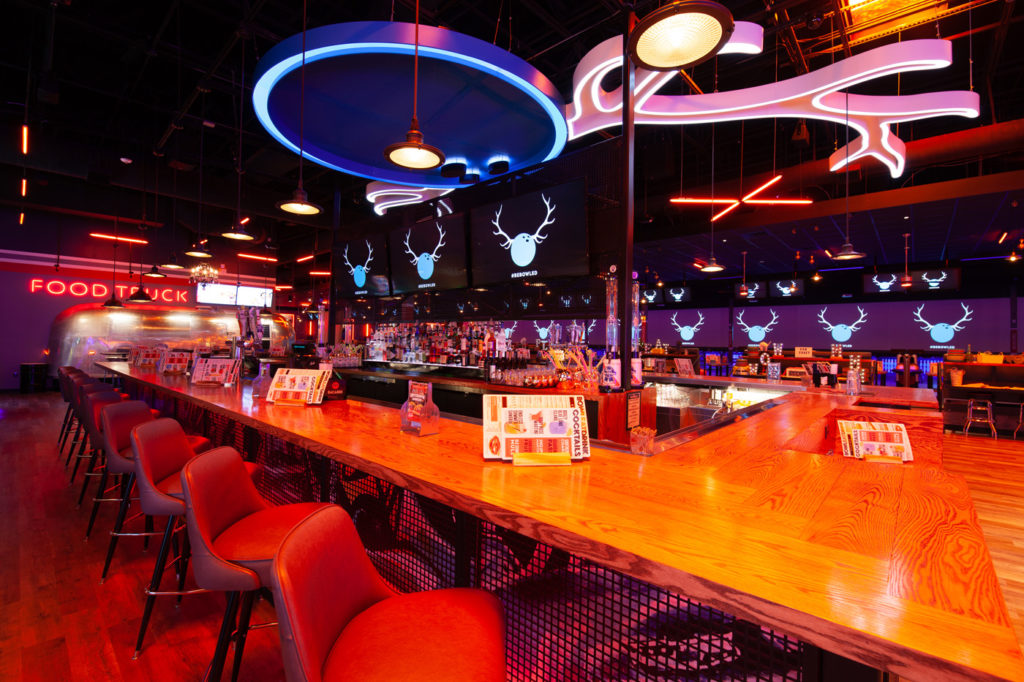
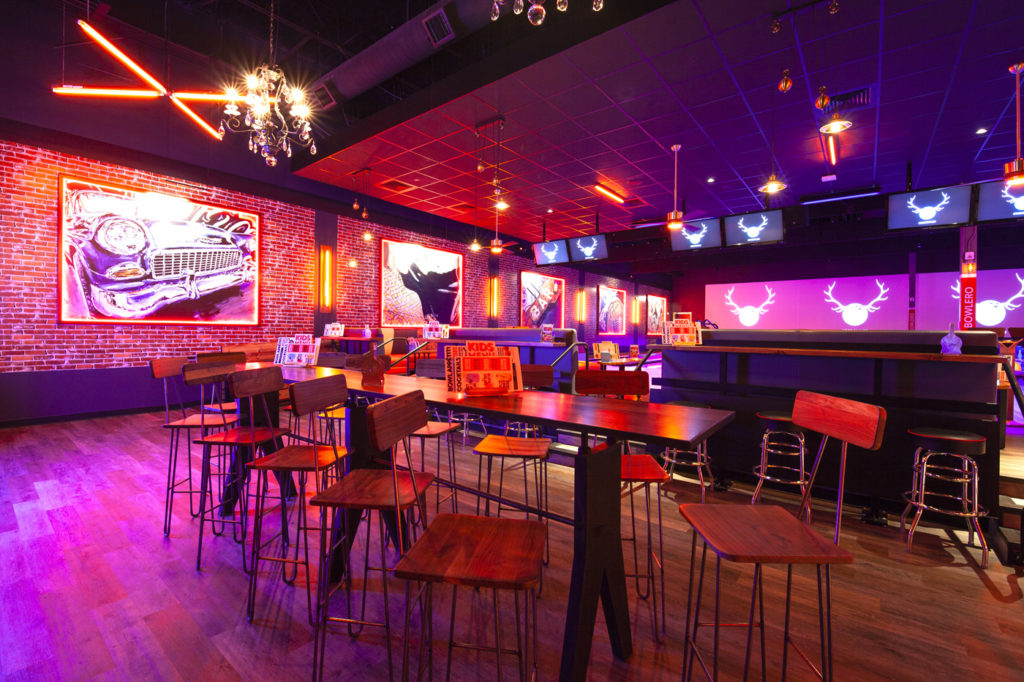
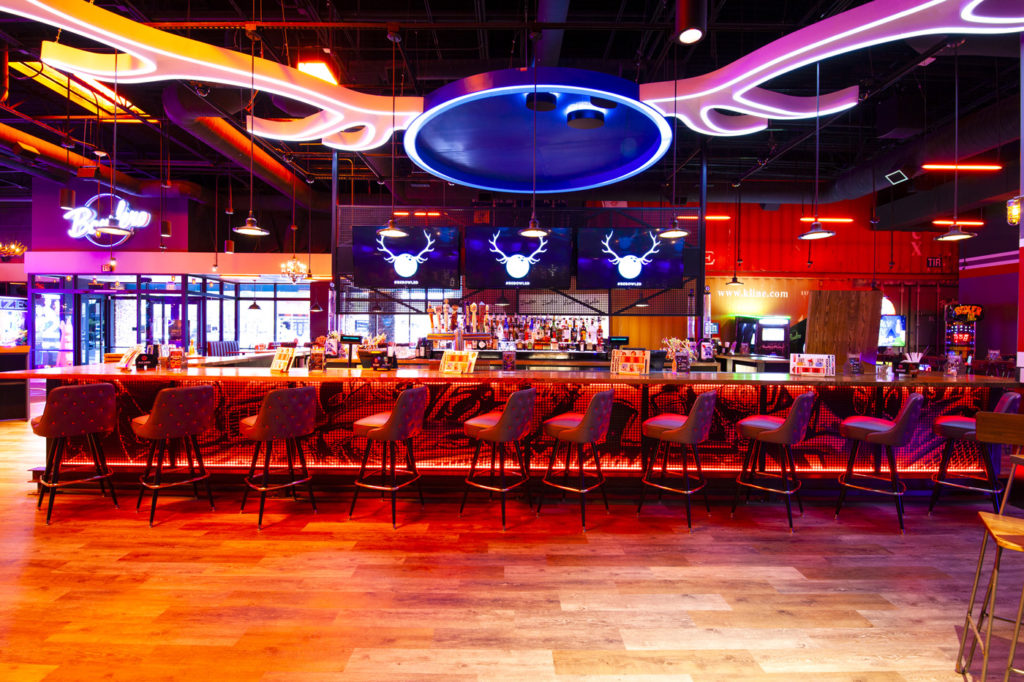
Arlington officials could soon clear the way for a new bowling alley and arcade to set up shop in Crystal City.

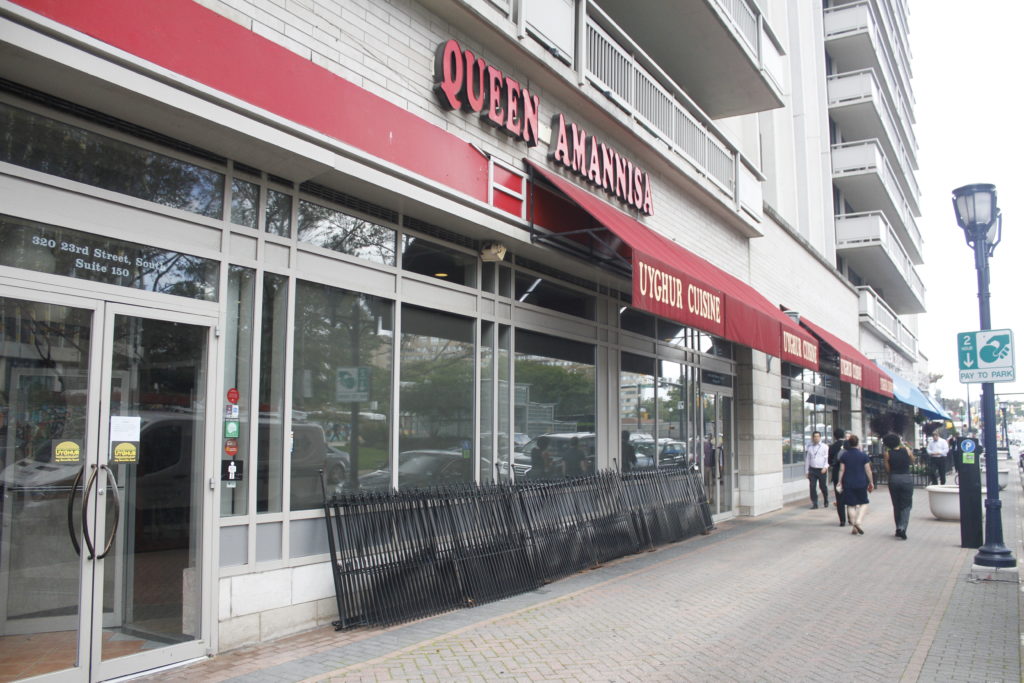
The County Board is set to sign off this weekend on plans to open a new “Bowlero” location in the base of The Buchanan apartment building at 320 23rd Street S.

The bowling alley announced plans to expand to the neighborhood last fall, and is now lining up the permits it needs to convert nearly 52,000 square feet of space into a combination entertainment center and full-service bar and restaurant.

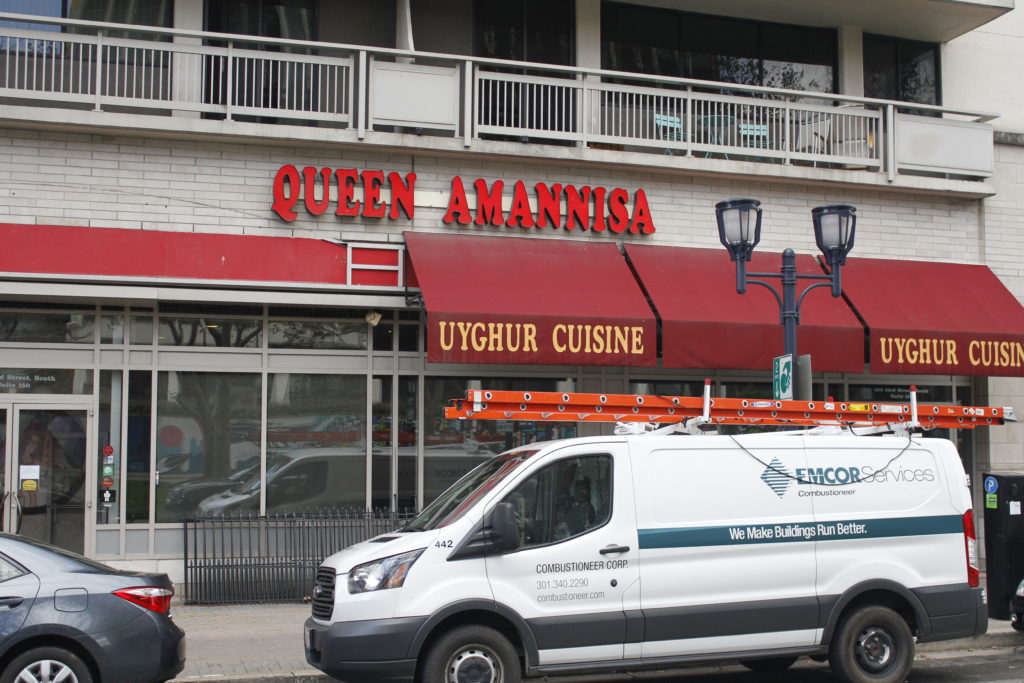
Bowlero is now set to move in next to the existing Bar Louie restaurant and Legal Seafood, taking the place of the tech company GDIT and the Queen Amannisa Uyghur restaurant.

According to plans included in a county staff report, visitors will enter the establishment from 23rd Street S., passing through a large video game arcade space. A full bar will sit at the center of the space with as many as 32 bowling lanes surrounding it, according to the report.

County staff are generally supportive of the company’s plans, writing to the Board that the bowling alley will “increase the livelihood of the area, provide diverse cultural and civic facilities to a vast array of demographics and will be an overall quality addition to Crystal City.”

The Board is set to vote on permits attached to the project at its meeting Saturday (Jan. 26). The matter is slated for the Board’s consent agenda, generally reserved for non-controversial items that pass without debate.

Bowlero previously said it was hoping to open the new location sometime in “mid-2019.” The company also operates locations in Centreville and Leesburg.

Should it win the permission it needs, Bowlero’s addition to the neighborhood will be one in a series of big changes for this section of Crystal City.

Not only have several new restaurants, including Federico’s, Los Tios and Fiona’s Irish Pub, decided to set up shop along 23rd Street S., but JBG Smith is also planning on adding an Alamo Drafthouse and other retail offerings nearby as part of its “Central District” project.


Apartment Fire in Nauck — Firefighters extinguished a fire in an apartment Monday evening. The fire broke out around 5:15 p.m. on the 2100 block of S. Quincy Street, in the Nauck neighborhood. No injuries were reported. [Twitter]

Board Members Reluctant to Give Themselves a Raise — “Rather than seeking higher pay, current Arlington board members might take the opposite route – start scaling back their workload. ‘There is definitely a renewed emphasis on, ‘what is our role?” [County Board Chair Christian] Dorsey said at the Jan. 17 forum, responding to a questioner who suggested board members of recent years are more mired in the nuts-and-bolts of governance than their predecessors.” [InsideNova]

Local Restaurant Delivers Free Pizza to Air Traffic Control — Over the weekend Joe’s Place Pizza and Pasta delivered free pizza to the air traffic control tower at Reagan National Airport, where controllers have been working without during the government shutdown. [Instagram]

Restaurant Week Extended — Winter Restaurant Week has been extended until Sunday, Jan. 27 due to the government shutdown and last week’s snow. [Twitter]

Flickr pool photo by Kevin Wolf


(Updated at 8:25 p.m.) When many Arlingtonians take a look at the sort of impact Amazon has had on Seattle since setting up shop in the city, they can’t help but feel nervous about how the tech giant might transform the county when it arrives.

The city has seen everything from skyrocketing housing prices to nightmarish traffic congestion stemming from Amazon’s rapid growth into one of the largest companies in the world, and leaders there have felt compelled to take new steps to bridge the growing inequality between the city’s tech workers and the rest of its residents.

It all provides plenty of reason to be wary of what lies ahead for Arlington once the company starts bringing its new headquarters to Crystal City and Pentagon City. But local leaders and regional planners are trying to deliver a clear message to quell those concerns — Seattle and D.C. could not possibly be more different.

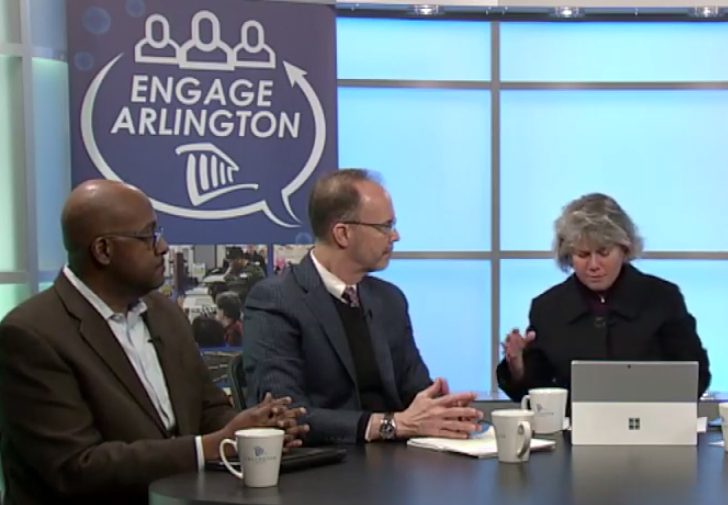
“A lot of people are influenced by the Seattle example… and they think, ‘We don’t want to end up like that, our problems are already bad,'” County Board Chair Christian Dorsey said during an Amazon discussion yesterday (Wednesday) live-streamed on the county’s Facebook page. “But some of these fundamental economics are very different. I’m not saying we’ll have no problems, but I’m pretty confident we won’t have Seattle’s problems.”

For one thing, it helps that the D.C. region is quite a bit larger than Seattle and its suburbs. Chuck Bean, the executive director of the Metropolitan Washington Council of Governments, estimates that the D.C. metro area is “about 40 percent bigger” than Seattle’s, so there’s “a lot more absorptive capacity” for the workers Amazon will bring here.

It doesn’t hurt either that Bean believes has the region has “an advanced, mature transit system that Seattle didn’t have,” giving people the ability to live a bit further away from the headquarters without necessarily relying on a car.

“Perhaps it’s a bit too mature, but we’re working on that,” Bean said, in a reference to the lengthy efforts by local leaders to get Metro working properly again.

Amazon has pledged to deliver 25,000 new jobs at its new headquarters, but officials have consistently reiterated that only a small portion will likely live in Arlington itself, and many already live elsewhere in the region. The way Dorsey sees it, the county is only likely to see about 20 percent of Amazon’s workers live in Arlington, equivalent to about 5,000 people in all.

In a county of 230,000 people or so and a broader region of millions more, he hopes that such an addition won’t be nearly as disruptive as it was in Seattle. Bean also points out that Amazon’s 25,000 jobs is just a drop in the bucket compared to the 1.1 million jobs his group believes the region will add over the next 20 years.

“Their population grew by 40 percent from when Amazon was founded to about two years ago,” Dorsey said. “That’s a tremendous amount of growth in a short period of time for any community to sustain. They’re not going to have anywhere near that impact, based on that path of growth here.”

Dorsey also notes that Amazon’s employees “earned significantly more than other Seattle workers,” especially when the company was first growing in size. Based on the tech firm’s projections, Dorsey expects that Amazon’s workers will earn “about what the typical higher wage employees in this area already earn” — as a condition of the state’s deal with Amazon, the average salary of the company’s workers needs to be at least $150,000 per year, with that amount increasing each year.

Dorsey acknowledges that there is the chance that adding more wealthy workers will drive up prices around the region, particularly for rent. But Eric Brescia, a member of Arlington’s Citizens Advisory Commission on Housing, says it’s not that simple.

“Intuitively, when you bring more high-income people in, it creates more demand to drive up prices,” Brescia said. “But the price of housing is not only just a function of what the demand is, it’s how does the supply compare to the demand.”

To demonstrate the difference, Brescia drew a comparison between how San Jose managed the explosive growth of Silicon Valley and Charlotte shepherded growth in its financial services sector.

Brescia, an economist for his day job, pointed out that Charlotte has since a 40 percent boost in jobs over the last two decades, while San Jose saw just a 17 percent bump. Nevertheless, home prices in Charlotte only rose by 18 percent in that same period, while they rose by 160 percent in San Jose — adjusted for inflation.

In his mind, the difference comes down to housing production — Charlotte and its suburbs added 400,000 new homes over the last 20 years, while San Jose managed just 100,000.

“This is an illustration that the presence of high-paying jobs does not inherently make housing unaffordable if we’re nimble enough to build housing to accommodate that,” Brescia said. “And I think this region as a whole is really going to have to be thinking of land use policy, transportation policy to determine where these homes are going to go.”

For Dorsey, who once drew headlines for proclaiming that the county should not “protect” certain neighborhoods from density, that illustrates the County Board’s challenge in the coming years.

He points out that Arlington is currently dominated by large swaths of neighborhoods with only single-family homes, particularly in the areas outside of Arlington’s Metro corridors. As county Housing Director David Cristeal noted, the majority of the homes in Arlington are apartments, but the majority of the square footage is occupied by single-family homes.

As more Amazon workers move in, Dorsey expects that officials will need to do something to confront that trend and avoid “inefficient sprawl.”

“Our community has to embrace a conversation about what it really means to grow the supply,” Dorsey said. “Our community in Arlington, and our region in general, devotes a lot of its housing to one house per lot. And if we think about equitable growth, growth that’s diverse and inclusive, that can’t be the sole way we do it.”

That could mean everything from expanding the county’s previous efforts to allow more “accessory dwelling units” on single-family lots, or encouraging the redevelopment of some single-family homes into duplexes.

But Dorsey also admitted that some more drastic changes could be necessary in terms of increasing density throughout the county. If officials don’t embrace that mindset, Brescia fears Arlington could wind up facing some of those Seattle-sized problems it hopes to avoid.

“If some more flexibility isn’t gradually allowed in more regions of the county, we’re increasingly going to be single-family neighborhoods with $2 million dollar homes versus people in very small apartments near the transit corridors, and really nothing in between,” Brescia said. “Some people get scared when you talk about those things, but the question is how to gradually grow so you don’t have that divide.”

Photo via Facebook


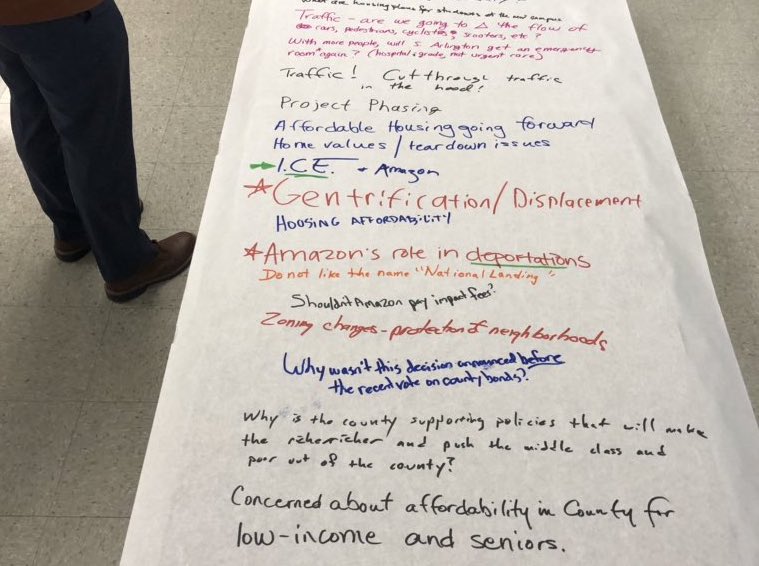
Arlington leaders are convening their second “community listening session” on Amazon’s new headquarters in Ballston tomorrow (Saturday).

The event is set to run from 9:30-11 a.m., held at the National Rural Electric Cooperative Association building at 4301 Wilson Blvd and designed as a chance to let county residents air their concerns about the tech giant as it prepares to move into space in Crystal City and Pentagon City in the coming months.

County spokeswoman Jennifer Smith says officials are closely “watching the forecasts,” but they currently expect they’ll be able to squeeze the event in before the weekend’s snow storm hits.

The County Board and other local officials last convened a similar gathering on Dec. 17 at Gunston Middle School, as part of a broader push to accept community feedback on Amazon in person. The first meeting largely centered on debates over the company’s impact on housing, transportation and the labor force in the coming years, all concerns raised by supporters and opponents of the tech firm alike.

Since then, the county has attracted some criticism for its handling of the town halls, particularly when it comes to making meeting materials available in Spanish and offering translators at each event.

https://twitter.com/roshabra/status/1080918326786719744

https://twitter.com/roshabra/status/1081012972380717056

However, the county’s meeting advisory does say that language interpretation services will be available upon request.

Saturday’s listening session could well be the last chance for the Board to hear directly from the public on Amazon before it holds a vote to approve an incentive package (hammered out largely by state officials) that helped convince the company to choose Arlington for the new offices.

Board members have long planned to vote in February on the topic, no sooner than the group’s meeting on Feb. 23, though the debate is largely expected to be a mere formality. State lawmakers will also sign off on other elements of the incentive package over the next few weeks, during the current General Assembly session.

Photo via @SURJ_NoVa


Crews Pre-Treating Roads — Arlington County crews are pre-treating arterial streets with brine ahead of expected snow this weekend. The forecast currently calls for “light to moderate snowfall,” with perhaps 3-4 inches of accumulation. [Twitter, Capital Weather Gang]

Long-Time Resident Marries in Family’s Cemetery —  Austin Thomas, an 11th generation Arlingtonian, wed real estate agent Justin Kafka last summer in the rose garden of Arlington’s Columbia Gardens Cemetery, which Thomas’ family owns. [Arlington Magazine]

County Unveils New Visitors Guide — “The Arlington Convention and Visitors Service introduced the 2019 Arlington Visitors Guide, Meeting Planner Guide and tear-off pad map Tuesday, distributing initial supplies to attractions as well as the County’s 45 hotels and residential buildings in several neighborhoods. With a sleek, magazine-style cover featuring Arlington’s newest attraction, The Observation Deck at CEB Tower, the guides highlight ‘The New View from Arlington.'” [Arlington County]

‘Meet the Chair’ Event Next Week — “Leadership Center for Excellence in conjunction with co-host George Mason University, and supporting partner, Arlington Chamber of Commerce, will hold its annual Meet the Chair event on Thursday, January 17” from 6:30-8 p.m. at GMU Founders Hall at 3351 Fairfax Drive. “This free event will be one of the first opportunities for community members to connect with newly elected Arlington County Board Chair, Christian Dorsey.” [Leadership Center for Excellence]

Dorsey Elected COG Vice Chair — “Arlington County Board Chair Christian Dorsey today was elected vice chair of the Metropolitan Washington Council of Governments (COG) Board of Directors. COG, an independent, non-profit association, brings together 300 elected officials from 24 local governments, the Maryland and Virginia state legislatures, and the U.S. Congress to develop solutions to regional challenges.” [Arlington County]

Flickr pool photo by Kevin Wolf


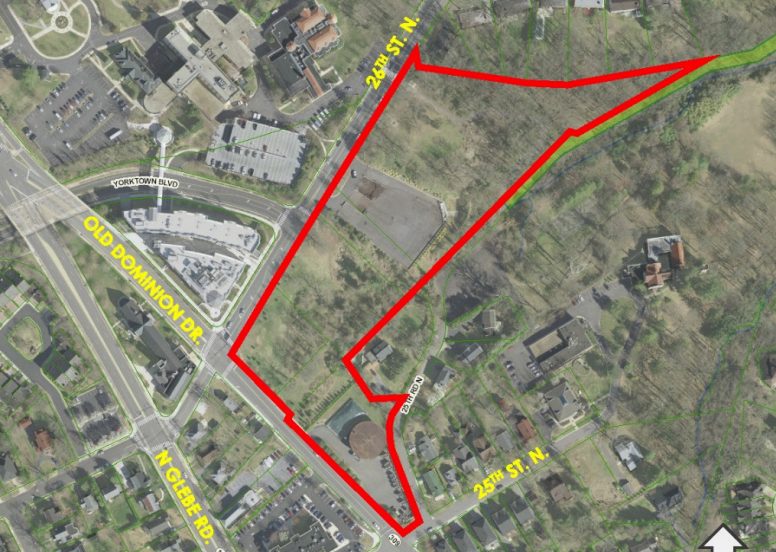
County planners are now kicking off work to chart out the future of the former home of Arlington’s “Salt Dome,” the site of so much community consternation this past summer.

A task force convened by the County Board to study the 7.6-acre property, at the intersection of 26th Street N. and Old Dominion Drive and adjacent to Marymount University’s campus, is planning a “community roundtable” on the matter Saturday (Jan. 12). The meeting will be held at Arlington Central Library (1015 N. Quincy Street), starting at 10 a.m.

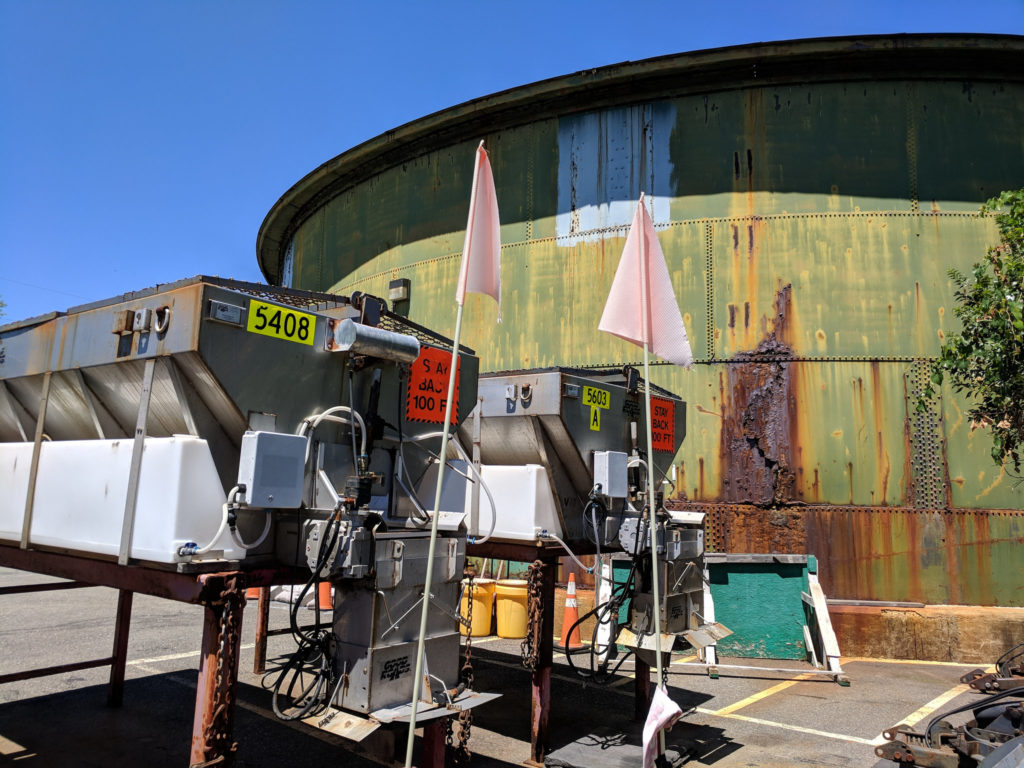
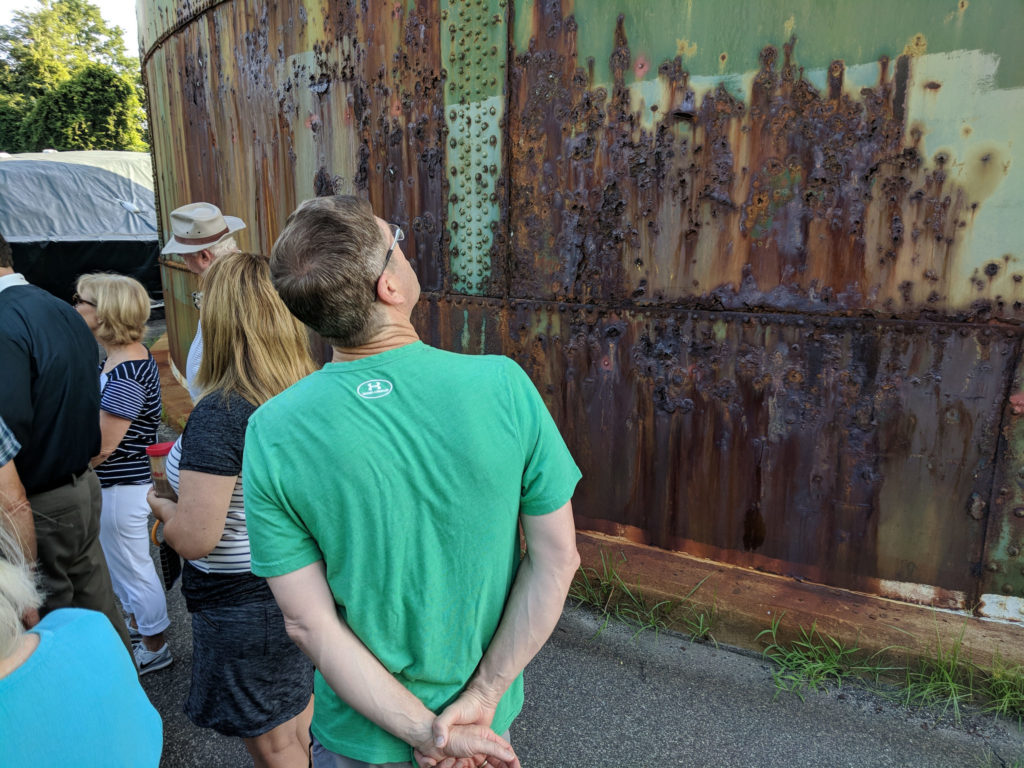
For about 90 years, the property was home to a large metal “dome” storing road salt and served as the base of operations for salt trucks in the northern half of the county. But county staff discovered in July that the structure was on the verge of collapsing, and they took rapid steps to secure the Board’s permission to tear down the dome and build a temporary storage facility in its place.

The process took months to complete, but many neighbors still felt blindsided by changes that failed to follow Arlington’s notoriously extensive community engagement guidelines. In particular, some worry that the temporary facility would eventually become permanent, even though people living nearby had hoped for years to see the land transformed into a park or some sort of other community amenity.

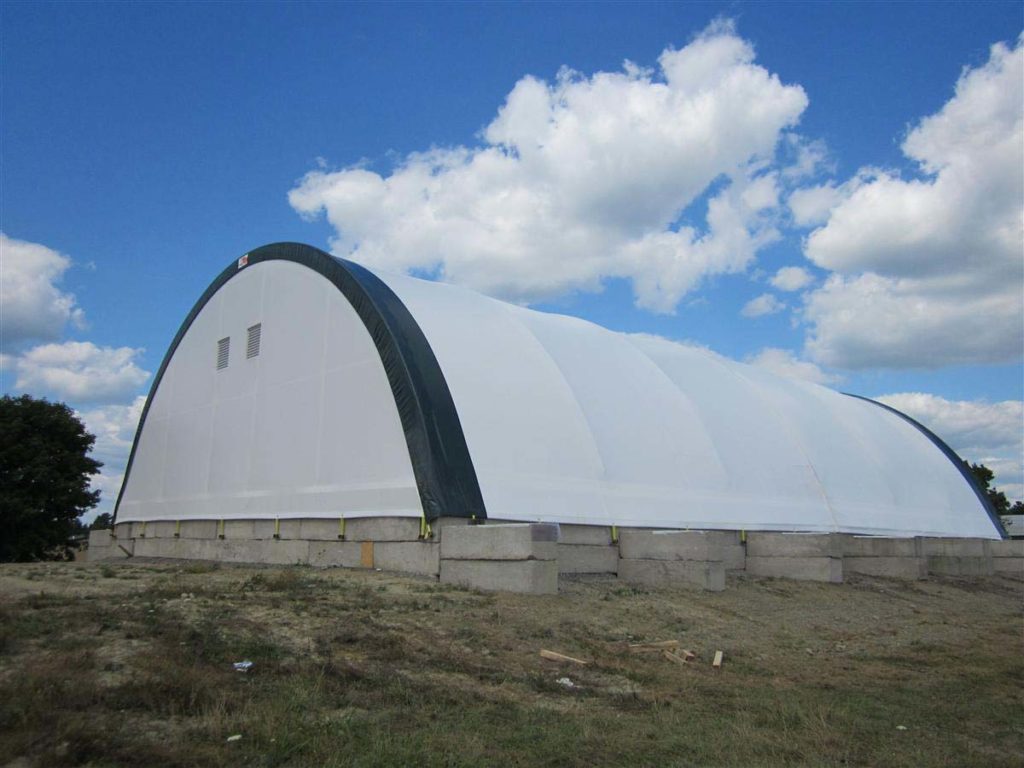
County workers removed the old dome just last week, standing up a structure designed to hold about 4,500 tons of road salt in its place.

The Board has since issued a variety of mea culpas for its handling of the issue — new Chair Christian Dorsey even singled the process out as a “failure” during his Jan. 2 speech taking the Board’s gavel — and agreed to kick off a planning process for the property in part to rebuild trust in the community.

The “Master Planning Task Force” could eventually recommend one of all manner of new uses for the property, most of which sits empty. However, county staffers agree that they’ll need to maintain most of their existing operations on the site, from winter storm response to leaf and mulch storage.

As for the rest, there are plenty of possibilities being batted about. The county’s Joint Facilities Advisory Commission, a group dedicated to finding space for public facilities around Arlington, is recommending that some sort of park or other public space must be created or maintained on the site, according to November meeting documents.

JFAC is also suggesting that the property could have room for an “elementary or secondary school,” at a time when land for new schools is a particularly acute need for the county, or for vehicle storage for police or school bus drivers.

Additionally, Marymount University is pitching the prospect of striking a deal with the county to build a “multi-use” athletic field on the site for its sports teams, alongside a one-acre park and playground to meet the community’s wishes.

The task force is set to meet again on Thursday (Jan 10.) and hopes to eventually deliver a report to the County Board with recommendations for future sites uses by April.


(Updated at 8:15 p.m.) Arlington officials are gearing up to erase parking restrictions on several streets in the Forest Glen neighborhood, angering some residents there but meeting the demands of others in nearby Arlington Mill.

The County Board is set to consider a resolution later this month ending zoned parking restrictions along the following the roads, per county spokeswoman Katie O’Brien:

  • 6th Place S.
  • 7th Street S.
  • 7th Road S.
  • S. Florida Street
  • S. Greenbrier Street
  • S. Harrison Street (north of 7th Street S.)
  • S. Illinois Street
  • S. Jefferson Street

All of those streets are currently covered under “Zone 24” of the county’s residential permit parking program, barring unauthorized cars from parking there between 9 p.m. and 6 a.m. each day.

The Board has generally avoided any changes to the program recently, after declaring a moratorium on applications for new parking restrictions while members weigh potential reforms to the county’s entire zoned parking system. Board members and some community leaders have started to doubt that the current program, originally designed to keep commuters out of D.C.-adjacent neighborhoods, is working as intended.

But the Board could soon make these changes in Forest Glen all the same, given the loud complaints from people in Arlington Mill.

According to a letter sent to Forest Glen residents from the Board, and provided to ARLnow, people in the neighborhood have “experienced great difficult with curbside parking” since the parking restrictions went into effect a few years ago. County staff have worked for months to find an “interim solution” to the dispute, without success, pushing the Board to take this step.

It doesn’t help matters either that staff believe the parking restrictions “depart from the program’s original intent and place an undue burden” on surrounding streets, the letter reads. The Board has since concluded that “the determination for the restrictions deviated from standard staff practices, including data collection and verification,” spurring the need for the change.

“The County Board is unwilling to allow restrictions to the public right of way continue considering the fundamental discrepancies in establishing the eligibility of the above streets for the RPP program,” Board members wrote.

But one Forest Glen resident, who requested anonymity for this article, claimed that neighbors had “myriad reasons” for requesting the parking restrictions in the area. Those ranged from concerns over “out of county parkers, unregistered and abandoned vehicles” to “crime” and “blocked driveways,” all of which, this person believes, meet the standards of the county’s parking rules.

The Forest Glen resident further argues that the Board would be taking an “unprecedented and historic” step by removing the parking restriction, which will “put all other RPP areas in Arlington at risk of being removed.”

“The removal of Forest Glen’s zone parking represents an unprecedented intervention by the County Board into administrative decisions of county government,” they wrote in an email. “Additionally, every RPP area now faces the increased likelihood of removal.”

O’Brien stressed in an email, however, that the Board’s proposed resolution “only applies to these streets in zone 24 and will not impact any other neighborhoods or zones.”

The Board is set to consider the matter at its Jan. 26 meeting, and plans to hold a community meeting on the subject tonight (Tuesday) at 7 p.m. in the Arlington Mill Community Center (909 S. Dinwiddie Street).

Meanwhile, the county is hoping to wrap up its review of the parking program sometime by the end of the year, or in early 2020, according to county spokeswoman Jessica Baxter.

Photo via Google Maps


As Arlington leaders gear up to confront a yawning budget deficit in the new fiscal year, the county’s business community is delivering a message to officials holding the purse strings: cut spending, but don’t raise taxes.

The Arlington Chamber of Commerce recently staked out a series of local policy positions as 2019 gets rolling, and one of its biggest asks this year is that the “county government seek and adopt additional savings and economies of scale before considering any increase in the real estate tax burden.”

Such a request may well be a futile one — the County Board has already asked County Manager Mark Schwartz for proposals on what various tax rate hikes might look like for fiscal year 2020. Schwartz has also warned that a mix of service cuts, layoffs and tax increases will likely be necessary to cope with a budget deficit that could prove to be as large as $78 million, as Arlington anxiously awaits Amazon and its projected boost to county coffers.

But the chamber is, perhaps predictably, urging the Board to instead embrace its strategy from a year ago, when members opted to avoid any tax rate increase in favor of some targeted cuts.

The business group is even asking the Board to conduct “a local study of comparative tax rates between Arlington and surrounding jurisdictions to discover specific tax rates and impact fees that put the county at a competitive disadvantage in attracting and retaining certain segments of the business community,” which could prompt additional rate and fee cuts.

The chamber would much rather see the Board focus on attracting more businesses to boost revenues instead, urging leaders to make economic development the Board’s “chief policy priority” this year.

That means the business group wants the county to continue its use of “competitive incentives, tied to strong benchmarks, both to attract and to retain businesses” — Arlington officials long disdained such measures, but the county’s soaring office vacancy rate has convinced leaders to use incentives to lure companies from Amazon to Nestle in recent years.

Naturally, the chamber says it also backs the county’s proposed incentive package for Amazon itself, set to include a mix of investments in transportation improvements around the new headquarters and a chunk of the new tax revenues generated by the company’s arrival in the area. The chamber previously backed the county’s pursuit of Amazon even before the exact details around the incentives became public in November; the Board will formally vote on the deal this winter, as will the General Assembly.

With Amazon on the way, the group also urged the Board to embrace the “addition of mass transit systems (bus-rapid transit or similar) in the Crystal City/Potomac Yard and Columbia Pike corridors.” The county is set to extend the Crystal City-Potomac Yard Transitway to Pentagon City in the coming years, while the idea of bus-rapid transit for the Pike has been batted around ever since the notorious streetcar’s cancellation.

Other transit projects on the chamber’s wishlist include “second entrances at the Crystal City and Ballston Metro stations, and a new Rosslyn tunnel.” The Crystal City second entrance is set to be constructed as part of the Amazon improvements; the Ballston and Rosslyn projects will require a considerably more tricky funding lift from the county.

And when it comes to ways to beef up the county’s supply of affordable housing to cope with Amazon’s projected impact on home prices, the chamber stressed that “providing developers and property owners with incentives is the best, perhaps only, way to obtain substantial additional units that are affordable to a broad part of the community and to preserve existing housing stock.”

The chamber also did not pass by another opportunity to lament the “ill-advised” nature of the county’s development of new “housing conservation districts” in 2017.

Some property owners felt ambushed by the county’s work to freeze the redevelopment of affordable homes, and the chamber is pushing for a more “open process that includes suggestions and comments from the business community” as the Board charts out the next phase of policies governing the districts.

File photo


With newly reshuffled leadership on the Arlington County Board, local officials are pledging a focus on equity as Amazon arrives this year, particularly when it comes to housing in the county.

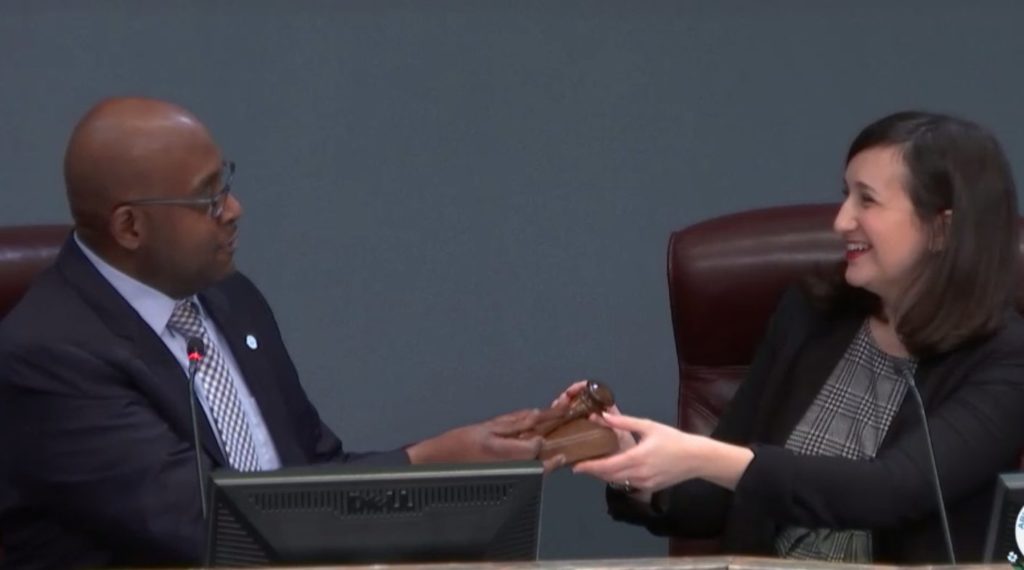
The Board’s annual organizational meeting came with little in the way of procedural surprises last night (Wednesday). Vice Chair Christian Dorsey earned unanimous approval take the chair’s gavel, replacing outgoing Chair Katie Cristol, while Libby Garvey was elevated to take his place.

But the meeting still represented a major turning of the page in the county. Not only was the gathering the Board’s first since Matt de Ferranti’s swearing in, returning the Board to unified Democratic control for the first time since 2014, but it was a chance for Board members to sketch out a vision for how they plan to confront what looks to be a difficult year.

Naturally, Amazon proved to be the elephant in the room as officials delivered their annual New Year’s remarks. In kicking off the Board speeches, Dorsey framed his upcoming year-long chairmanship as one that will have “an emphasis on equity,” especially when it comes time to “expertly manage” Amazon’s growth.

Dorsey noted right away that he’s “only the third person who looks like me to ever serve as chair” of the Board — he joins Charles Monroe and William Newman, now the chief judge of Arlington Circuit Court, as the only black men to hold the gavel in the county’s history.

Accordingly, he said that history will guide his focus on “ensuring that Amazon’s gradual growth here benefits our entire community,” especially as the county prepares to confront some tough budget years while it awaits a projected revenue boom from the tech giant’s presence.

“Taken together, budget gaps today, and significant investment and commercial growth in the near term, present us with the dual responsibility of ensuring that today’s austerity doesn’t disproportionately burden the marginalized and most vulnerable, and that better times don’t leave those same people behind,” Dorsey said.

Board members agreed that a key area focus for leaders on that front will have to be changes to the county’s zoning code, as officials work to allow different types of reasonably priced homes to proliferate around Arlington. Cristol and Board member Erik Gutshall both praised the Board’s past work on housing conservation districts as a good first step, but both emphasized that the county needs to do more to meet its own goals for creating new affordable homes each year.

“Amazon’s arrival has focused our community energy on protecting our middle class from being priced out permanently,” Cristol said. “We can’t squander the opportunity to tackle this hard and important zoning reform work in the year ahead.”

De Ferranti agreed that the county should be fighting for a “significant public and private investment in affordable homeownership and rental housing” as it finalizes its incentive package to bring Amazon to Arlington.

But he and Gutshall also emphasized that a commitment to environmental equity should guide the county’s negotiations with Amazon, arguing that officials should work with the tech company to ensure its new campus in Crystal City and Pentagon City is “net-zero energy,” meaning that Amazon’s buildings generate as much energy as they consume. Gutshall even went a step further, proposing that the county join the growing calls for a “Green New Deal” from some of the newest Democrats heading to Congress, arguing that the “trade-off between the environment or the economy is a false one.”

Yet Board members pledged to keep a more local focus as well, particularly when it comes to Amazon’s impacts on the county’s already crowded classrooms.

Officials are hopeful that county schools will able to handle the gradual arrival of Amazon employees and their families, but Gutshall and Cristol both called for renewed long-range planning efforts for new school buildings.

De Ferranti was even more specific, saying the Board should build future budgets to “put the county in a position to fund the building of another high school” — the School Board is currently in the midst of hashing out plans for new high school seats at the Arlington Career Center, but whether or not that facility will provide the equivalent of a fourth comprehensive high school for county students remains an open question.

Through all of these difficult discussions, however, Garvey urged everyone — from local officials to activists — to strike embrace “civility.” The year-long debate over Amazon has already promoted plenty of tense meetings and raised voices, and the new vice chair argued that “Arlington Way has gotten rather frayed around the edges” in recent months.

“People sometimes jump to the assumption that intent is nefarious, or are all too quick to take offense when no offense was intended,” Garvey said. “We have to set some basic standards, and then follow through by not allowing people to violate those standards and stay in the discussion, or at least not to dominate the discussion so that everyone else decides to leave.”


View More Stories