Flood Watch in Effect — Expect periods of rain today. The National Weather Service has issued a Flood Watch for much of the region through late tonight. “Excessive runoff from already saturated soils will cause the potential for streams and creeks to rise out of their banks as well as flooding in low lying urban areas,” forecasters say. [Weather.gov, Twitter]
Arlington Doesn’t Want to Pick Fight Over J-D Hwy — “The Arlington County government’s efforts to rename its portion of Jefferson Davis Highway could face familiar legislative roadblocks in 2019. But County Board members say they have no interest in forcing a confrontation with the General Assembly on the matter.” [InsideNova]
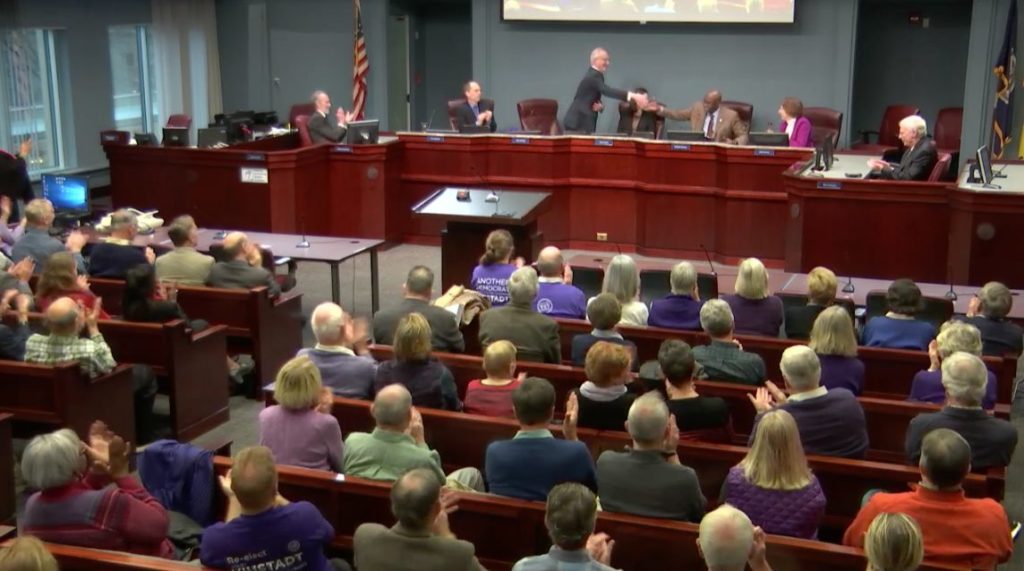
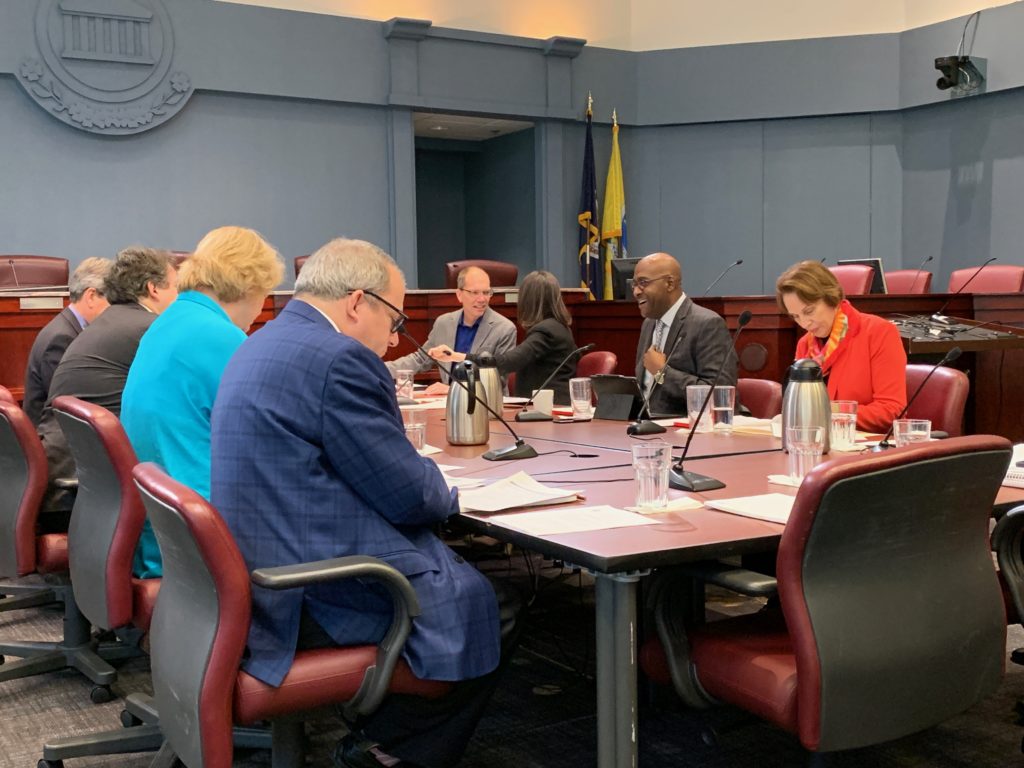
New Year’s Meeting Scheduled for Jan. 2 — Next week, what used to be a New Year’s Day organizational meeting for the Arlington County Board will again be held on Jan. 2 instead. The Board will elect a new Chair and Vice Chair at the meeting. [Arlington County]
Developer Buys Wilson Blvd Property — “The Meridian Group has picked up its next value-add Arlington County office building as it… closed Wednesday on its acquisition of 2500 Wilson Blvd. and several adjacent parcels from an affiliate of TH Real Estate for a consideration amount of nearly $39 million, or roughly $373 per square foot, according to Arlington County land records.” [Washington Business Journal]
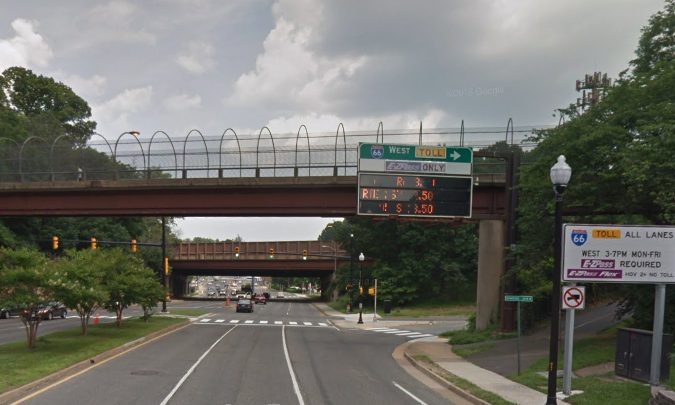
Dulles Toll Road Rates Rising — “Starting Jan. 1, prices are scheduled to go up for those driving on the Dulles Toll Road. The cost to passenger vehicles will increase from $2.50 to $3.25 at the main toll plaza and from $1 to $1.50 on ramps.” [Tysons Reporter]
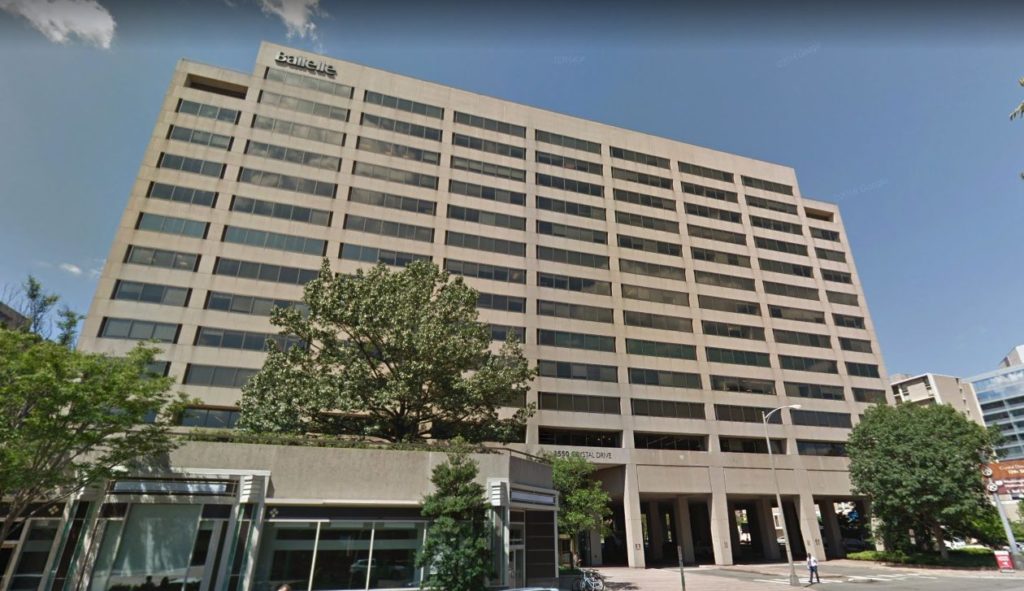
An office building at 1550 Crystal Drive (via Google Maps)
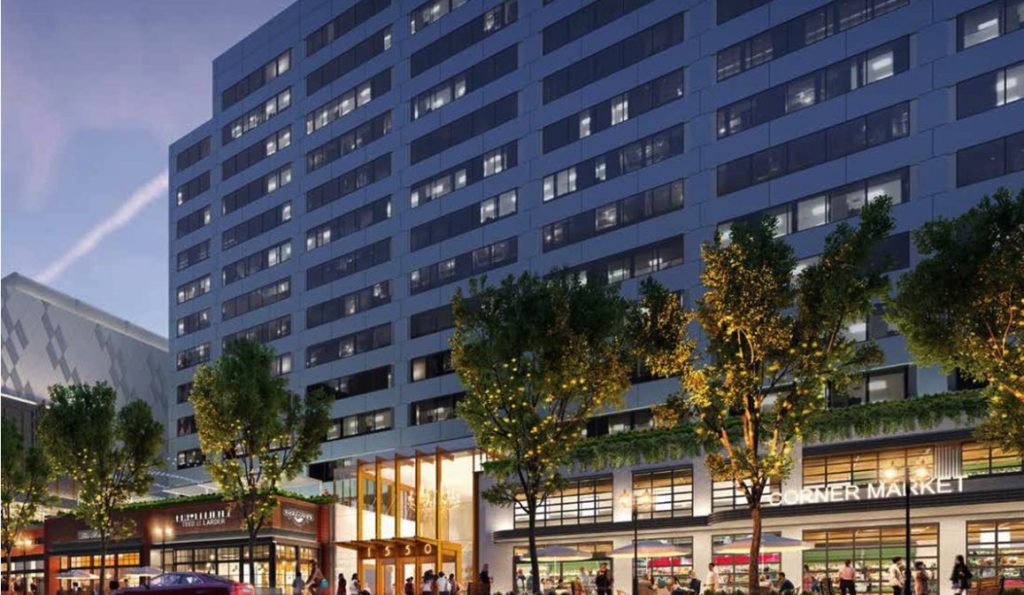
A rendering of plans to overhaul 1550 Crystal Drive (via JBG Smith)
The March of Dimes is officially moving its headquarters to Crystal City, now that county leaders have signed off on a $150,000 incentive package to lure the nonprofit to Arlington.
The County Board approved a deal with the research and advocacy organization at its meeting Saturday (Dec. 17). The March of Dimes will now move its main offices from White Plains, New York to an office building at 1550 Crystal Drive, bringing 80 jobs to the county in the process.
The nonprofit primarily focuses on advocating for the health of mothers and babies, and was founded by President Franklin D. Roosevelt in 1938. It currently has an office with 12 employees in Arlington, but it ultimately agreed to a full relocation to the county back in May.
“This organization’s work and legacy is inspiring, and we are honored that the strength of our community, as well as our proximity to the nation’s capital, led the March of Dimes to choose Arlington for its new home,” County Board Chair Katie Cristol wrote in a statement. “We look forward to a long-term and mutually beneficial relationship.”
However, the relocation wasn’t official until the Board could formally lend its approval to a deal with the nonprofit supplying it with $150,000 in incentive grants to be handed out between now and 2021, contingent on the group meeting certain targets.
The organization will have to occupy at least 25,000 square feet of office space in the county — its new lease at the JBG Smith-owned property calls for the company to occupy about 28,000 square feet of space — maintain at least 80 jobs, and “hold at least one regional or national event drawing at least 150 people from outside the region to Arlington County each of the three years of the performance agreement,” under the terms of the deal.
County staff estimate that the nonprofit will generate about $1.25 million in tax revenue for Arlington’s coffers over the next decade, justifying the incentive money, which has become an increasingly controversial tool since Amazon first started eyeing the area.
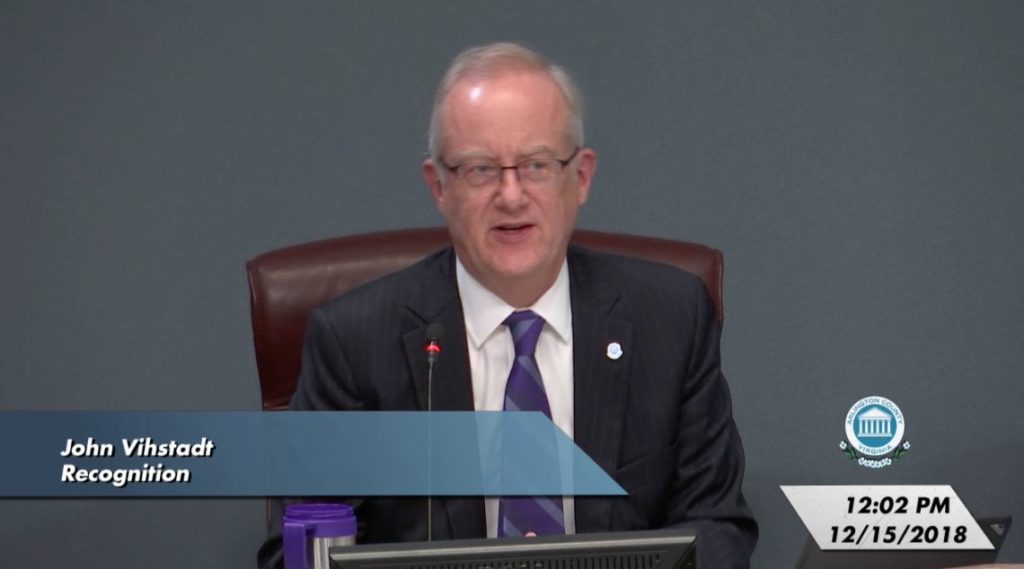
John Vihstadt being honored at the Dec. 15, 2018 Arlington County Board meeting
John Vihstadt being honored at the Dec. 15, 2018 Arlington County Board meeting
Outgoing Arlington County Board member John Vihstadt said goodbye, at least for now, to public office on Saturday.
A ceremony was held at Saturday’s County Board meeting to honor Vihstadt and his four years of service on the Board. Fellow Board members and members of the public spoke glowingly of Vihstadt’s work ethic, commitment to serving constituents and ability to find common ground amid disagreement.
Vihstadt, an independent, was defeated by Democrat Matt de Ferranti in the November general election. De Ferranti will take office in January.
After more than an hour of comments from Arlington officials and the public, Vihstadt spoke at the meeting. A transcript of his prepared remarks is below, after the jump.
Arlington is gearing up to ask for millions in I-66 toll revenue to fund a series of changes along Lee Highway, including the creation of a dedicated bus and HOV lane along the road during rush hours.
The County Board is set to sign off this weekend on funding requests for six transportation projects, totaling $6.9 million, four of which focus on reducing traffic along Lee Highway as it runs from Rosslyn to East Falls Church.
The Northern Virginia Transportation Commission doles out a portion of the revenues collected through the year-old I-66 toll program to localities, in order to help afford road improvements along the corridor inside the Beltway. Accordingly, Arlington is looking for cash for the following efforts along Lee Highway, per a county staff report:
Metrobus Route 3Y Service Improvements — $520,000 per year for five years, total request $2.6 million
This project will increase morning peak hour frequency and provide running time improvements for better on-time performance on the subject Metrobus route that connects the East Falls Church Metrorail Station with the Farragut Square and McPherson Square areas in the District of Columbia via Lee Highway and a short section of I-66 from Rosslyn to the Theodore Roosevelt Bridge.
Intersection Improvements at Lee Highway and Washington Boulevard — $400,000
This project will add a second left turn lane from northbound Lee Highway to westbound Washington Boulevard and provide pedestrian improvements at the intersection north of the bridge over I-66, which is 0.25 miles from the East Falls Church Metrorail Station.
Enhanced Vehicle Presence Detection on Lee Highway — $20,000 per intersection for 15 intersections, total request $300,000
This project will install forward looking infrared (FLIR) video cameras at key intersections along Lee Highway. FLIR technology uses thermographic cameras that improve the accuracy of vehicle, pedestrian, and bicycle detection in all lighting and weather conditions, and in turn improve optimal signal, intersection, and corridor operations and performance.
Design and Construct Peak Period, Peak Direction HOV and Bus-Only Lane on Lee Highway from just east of N. Kenmore Street to N. Lynn Street — $1.5 million
This project would convert the outside lane of Lee Highway to an HOV and bus only lane through pavement treatment, restriping, and signage. The lane would operate eastbound during the morning peak period and westbound during the evening peak period only; at other times it will continue as a general purpose travel lane.
The final project on the list is one that the county initially considered back in 2016 as an effort to prepare for Metro’s “SafeTrack” schedule disruptions, and the new lane would’ve run from Court House to Rosslyn. However, county transportation spokesman Eric Balliet says that lane was never constructed, and the new proposal calls for it to run from Cherrydale to Rosslyn instead.
The county expects a new lane would be particularly impactful along that section of the highway because about “25 loaded buses per hour” drive along it during peak period, and they often run into heavy delays near the highway’s intersection with N. Lynn Street in Rosslyn, according to the report.
In addition to the Lee Highway changes, officials are also hoping to earn $750,000 to add a new traffic light to the Washington Blvd entrance to the East Falls Church Metro station, as well as crosswalks and other pedestrian improvements at the intersection.
Finally, the county plans to ask for a total of $1.3 million over the next three years for “enhanced transportation demand management outreach” along the corridor, educating commuters about public transit and other strategies for getting cars off the road.
The Board is set to approve these funding requests at its meeting on Saturday (Dec. 15), and the NVTC will accept applications through Jan. 16. The organization plans to hand out $20 million in funding across the region through the program next year.
Arlington officials managed to create or preserve 515 homes guaranteed to remain affordable to low-income renters this year — but the size of that number masks the fact that the county still isn’t meeting its own affordable housing goals.
In a report released this week evaluating Arlington’s progress toward fulfilling the standards of its “Affordable Housing Master Plan,” county housing staffers trumpeted the 221 new “committed affordable” units officials helped developers build in Fiscal Year 2018.
The county also managed to preserve another 294 existing homes to ensure their rent prices remain low enough to be deemed “affordable.” Though the term may seem subjective, officials define it to mean that a home’s monthly rent or mortgage, plus utilities, is “no more than 30 percent of a household’s gross income.”
The combined total of 515 units is down slightly from the 556 the county created or preserved last year, though up from 2016’s total of 322 homes.
But the master plan, adopted by the County Board in 2015, calls for Arlington to be making a bit more progress in this area by now.
The document sets a goal that 17.7 percent of the county’s available housing should be affordable by the time 2040 rolls around, meaning that the county will need to create or preserve 15,800 committed affordable units before then. That means the county needs to generate 585 net new affordable homes each year, a standard that Arlington hasn’t been able to hit since passing the master plan three years ago.
And with Amazon on the way, and fears about housing affordability growing, advocates see this latest report as yet more clear evidence that the county needs to take more aggressive steps to solve the problem.
“The county has been off-pace for meeting its AHMP goals since the beginning,” Michelle Winters, the executive director of the Alliance for Housing Solutions, told ARLnow via email. “They need to ramp up the pace in order to meet their own goals.”
Winters also points out that the 2018 numbers may be a bit misleading in considering the county’s progress toward its goals. The 294 affordable homes that the county preserved came courtesy of a loan at the “Park Shirlington” development in Fairlington, which Winters points out “is only guaranteed affordable for three years until the developer comes back with a proposal for long-term affordability (which may include fewer affordable units in the end).”
Of course, Housing Director David Cristeal notes in the report that the “desirability” of Arlington as a community has “made it much harder to find modestly priced housing, which lags behind demand,” complicating any effort to preserve affordable homes. The county has taken some steps to address that issue in recent years, particularly by creating new “Housing Conservation Districts” to protect older homes, and the Board has mulled expanding that program moving forward.
Yet Winters has often urged the county to use those districts to incentivize property owners toward affordable redevelopments, upping the number of affordable homes on the same property. Her group and others on the Board, including newly elected member Matt de Ferranti, have agitated for increased contributions to the county’s Affordable Housing Investment Fund as well, increasing Arlington’s ability to hand out loans and promote affordable developments.
Without taking more drastic steps now, Winters fears that the county will become even more unaffordable for low-income renters. She points out that the report also shows that the number of small, two-bedroom homes in the county continues to decline in favor of new single-family home construction, and that’s before the development boom most observers expect that Amazon will kick off in the area.
“This is evidence of our disappearing, older, more modest and previously affordable homes, replaced by larger high-end new construction,” she wrote.
Arlington officials are calling off plans to buy a two-acre site in Fairfax County for a new bus maintenance facility, a move they expect will save the county millions over the years.
The County Board voted unanimously Friday (Dec. 7) to cancel its contract to spend $4.65 million on a site along the 6700 block of Electronic Drive in Springfield, originally designated as the future home of a “heavy maintenance facility” for Arlington Transit buses.
The county agreed to the land deal in December 2016, over concerns that it wouldn’t have enough space to store and maintain its growing fleet of ART buses. ART currently leases a storage yard in the Alexandria section of Fairfax County for the purpose, but the county managed to open a new maintenance facility in Crystal City last year and buy another property in Nauck for more space this summer.
County board Chair Katie Cristol told ARLnow that the latter purchase is what convinced the Board to abandon its Springfield plans.
Initially, the county planned to use that property, located on the 2600 block of Shirlington Road, as both bus storage and the home of a new ART “operations center.” But Cristol says that, once county engineers got the chance to examine the site more closely, they felt the property would have enough room to accommodate the maintenance functions planned for the Springfield site as well.
“Locating our maintenance operations outside the county was always among the best of no good options as we looked for more space for our buses,” Cristol said. “But once we discovered that the Shirlington Road site was large enough for maintenance as well, colocating things just made so much more sense.”
In all, Cristol expects cancelling the Springfield contract will save the county $10.5 million right off the bat, counting the purchase price and site preparation costs. She also estimates that the change will do away with another $900,000 in annual upkeep costs for the new property, which certainly qualifies as “good news” during the county’s current budget crunch.
County officials had eyed the Shirlington Road site for years before finally buying it for $23.9 million in July. ART once leased a section of the site for bus storage, but made the move to buy the entire property once it earned some state grants and other regional transportation money to defray the cost.
With Amazon coming to town, Arlington leaders believe the time is ripe to finally change the name of Jefferson Davis Highway — and some of their allies in Richmond are ready to hit the gas on that effort, even as others look to pump the brakes.
Once again, the County Board plans to ask the General Assembly for the authority to remove the former Confederate president’s name from its section of the state-owned Route 1. Alexandria leaders have already taken a similar step, but state lawmakers have repeatedly refused to grant Arlington the permission to make such a change over the years.
But with a socially conscious tech giant planning to set up shop in Crystal City and Pentagon City, the very neighborhoods where signs currently honor Davis’ legacy, the Board hopes skeptical legislators might be a bit easier to convince. Board members held a joint work session with six of the county’s representatives in Richmond Friday (Dec. 7), in order to underscore the importance of the switch ahead of the start of the General Assembly’s session on Jan. 9.
“We should be clear that this is an effort to elevate white supremacy and honor Confederate leaders on our highways,” said Board Vice Chair Christian Dorsey. “A nongovernmental company choosing our area to locate underscores how we should be thinking about things differently.”
While all in attendance could agree that the name of the highway needs to change, preferably to match Alexandria’s newly adopted moniker of “Richmond Highway,” there wasn’t much in the way of consensus on how to achieve that goal.
Some lawmakers urged patience, noting that the upcoming 2019 elections could flip control of both the House of Delegates and the state Senate to Democrats for the first time in nearly two decades — Republicans hold one-seat majorities in both chambers, following last year’s wave election for Democrats in the House.
Until that happens, however, most lawmakers aren’t willing to spend political capital battling on the issue, particularly considering that the upcoming legislative session will last less than a month.
State Sen. Barbara Favola (D-31st District) carried legislation to spur the name change this year, only to see it narrowly die in committee on a party-line vote, and she’s already sworn off interest in renewing that effort. Sen. Adam Ebbin (D-30th District) has backed other such bills in the past, but he expressed similar skepticism about the legislation’s prospects next year.
“The only way I’m putting it in is if we have any hope of passing it,” Ebbin said. “I’m polling some Republicans on the prospect of that… but I’m not introducing it unless can we can get a very narrow bill together.”
Ebbin suggested that the Board might have more success if it secured some allies in the business community for that effort, urging officials to solicit support from groups like the Arlington Chamber of Commerce or the Crystal City Business Improvement District. Representatives from both groups did not immediately respond to requests for comment on whether they’d be interested in supporting such a bill.
Other lawmakers suggested that Amazon itself might provide a powerful push, considering the company’s robust lobbying efforts and its growing importance to the state’s economy. But, after speaking with the company’s representatives about just such a prospect, Ebbin is less than optimistic.
“I don’t think Amazon will be taking active political positions until after things cemented in,” Ebbin said, noting that state lawmakers and local officials still need to formally sign off on Gov. Ralph Northam’s proposed deal with the company. That isn’t set to happen until early next year, meaning that Amazon likely won’t have much of a say in the upcoming legislative session.
Del. Mark Levine (D-45th District) was similarly pessimistic on the prospect of his Republican colleagues taking action on any name change legislation in 2019, but he believes the county shouldn’t wait on Richmond.
He argued that Arlington could act immediately to remove any road signs referencing Davis, even if the county doesn’t formally change the name. After all, Levine pointed out that the highway is known by all manner of other names as it winds its way throughout the state.
“There is zero Virginia law that requires that highway to have those street names,” Levine said. “If the question is: ‘can you change the street signs?’ Of course you can change the street signs. If it has some name in a dusty book somewhere, that’s fine.”
Levine argued that the county should go directly to the Commonwealth Transportation Board, the executive agency overseeing all of Virginia’s road and transit operations, to ask for such a change. He suggested an appeal to Northam, a Democrat, might help that effort, considering that “we have a very friendly governor right now, and we have a much less friendly General Assembly.”
County Board Chair Katie Cristol noted that Arlington officials have had some conversations with the CTB about such a prospect, but have not come away with the clarity that Levine sees in the law. A spokesman for the CTB did not respond to a request for comment on the issue.
Cristol also pointed to an advisory opinion from Attorney General Mark Herring suggesting that the county might not be able to make such a change, which Levine waved away quickly as having “no force of law.”
Still, Dorsey and his colleagues argued that they’d much rather pursue a more cautious path, in order to avoid unnecessarily ruffling feathers in Richmond.
“In the absence of universal certainty, we’re not interested in figuring out what think we can get away with,” Dorsey said. “This is not about if we can somehow figure out if we can do it and somehow not suffer adverse consequences. That’s a risk we’re not willing to take.”
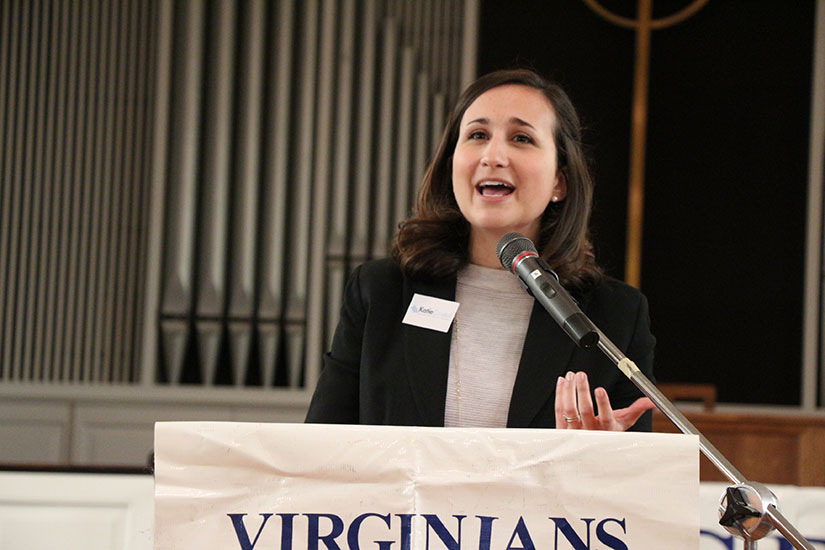
Arlington County Board Chair Katie Cristol is joining a statewide push for more education funding, calling on the General Assembly to send more cash to local school systems.
Cristol, a Democrat, is standing with leaders from 10 other Virginia localities in supporting the “March for More,” a demonstration in Richmond set for this Saturday (Dec. 8). Richmond Mayor Levar Stoney (D) is coordinating the effort and has made school funding a key focus of his administration.
The march is primarily focused on convincing state legislators to reverse cuts to K-12 education funding they made at the height of the Great Recession. Its supporters argue that the state’s failure to restore those funds and keep pace with rising enrollment levels have put a huge strain on local governments, which bear the burden of funding their school systems.
“As a locality that receives the smallest percentage of funds from the state for K-12 education, we’ve watched funding dwindle since the start of the recession in 2009,” Cristol wrote in a statement. “Shifting such a disproportionate burden of educating young Virginians on to the commonwealth’s localities is as inequitable as it is unsustainable.”
For fiscal year 2019, state funds accounted for about 12 percent of the roughly $640 million that Arlington Public Schools took in in revenue, while the county accounted for about 78 percent of that amount. However, there are plenty of factors accounting for Arlington’s small share of state funding — officials dole out money based on each locality’s “ability to pay,” a statistic that the state calculates by evaluating factors like property values, income levels and taxable retail sales. The county performs quite well relative to other Virginia localities on all of those measures.
But the “March for More” advocates point out that state law obligates the General Assembly to fund 55 percent of the costs of meeting the state’s “Standards of Quality,” which govern everything from class sizes to facility maintenance schedules, but Richmond has fallen far short of meeting that standard. As of 2017, the state combined to meet just 43 percent of school funding needs statewide.
Similarly, research from the left-leaning Commonwealth Institute for Fiscal Analysis suggests that state funding is down 9.1 percent per student compared to pre-recession levels.
Arlington officials are particularly interested in a little budget relief, given the county’s current fiscal challenges.
County leaders are considering everything from tax increases to staff layoffs to help meet a projected $78 million budget gap, which is driven in part by a $43 million deficit that the school system is facing. The school system only narrowly avoided increasing class sizes in this year’s budget, and may have to consider such a measure again in fiscal year 2020.
How might lowly local officials be able to bring one of the world’s largest companies to heel?
That’s the prime question on the minds of many Arlington and Alexandria residents worried about how Amazon might soon reshape their communities.
And while county and city leaders are optimistic that the tech giant will prove to be a reliable partner in the region, they’re also admitting that they don’t have all that many tools to push Jeff Bezos and company around.
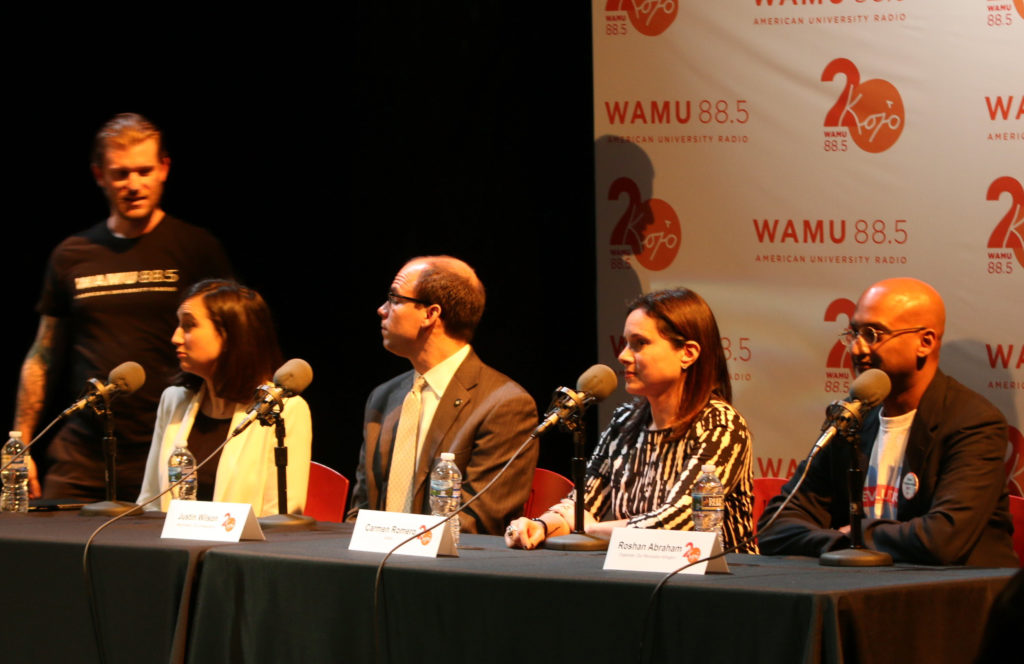
“We have to focus on using the policy tools that we do have,” said County Board Chair Katie Cristol at an Amazon-focused town hall in Crystal City’s Synetic Theater last night (Monday).
Public speakers at the event, which was hosted by WAMU 88.5’s Kojo Nnamdi Show, fretted over how localities might address everything from the company’s labor practices to its commitment to hiring a diverse workforce.
Leaders in attendance sought to reassure nervous neighbors that localities will be able to extract community benefits from the company as it builds new space in Pentagon City and Crystal City. County Board member Libby Garvey even expressed optimism that “Amazon is going to affect us, but we’re going to affect Amazon too” when it comes to changing the company’s culture.
But concerns abound that Amazon’s status as the new economic engine for the area will give it unprecedented bargaining power in any dispute with local leaders.
“The County Board works really hard and wants to do the best they can for us, but Amazon, at any point, can say ‘No,'” said Roshan Abraham, an organizer with Our Revolution Arlington, a progressive group that has opposed the county’s pursuit of Amazon. “They always threaten to pack up and leave, it’s what they always do… We have very little leverage, particularly at the political level.”
Part of the problem for local leaders is that state law limits their ability to pursue some of the most aggressive pro-worker measures favored by Amazon skeptics. Virginia’s legislature, long dominated by Republicans, has adopted a series of measures designed to make the state more business friendly — perhaps most notably, Virginia is a “right to work” state, limiting the ability of unions to charge workers fees for representing them.
Several members of local unions urged officials to press Amazon to sign “project labor agreements” ahead of any new headquarters construction, or a contract with a union to lay out the working conditions for a project before construction gets started.
But Virginia has laws on the books designed to limit government agencies from requiring such agreements, and Cristol pointed out that “the state has made it very clear that we can’t use those” in many situations.
However, she did pledge to urge Amazon to work with unions and offer fair working conditions on its construction sites — and the question gave her a chance to underscore just how meaningful it might be if her fellow Democrats seized control of the General Assembly in next year’s elections.
Other attendees were similarly nervous that the county won’t be able to force Amazon to fork over cash to spur the development of more affordable housing, particularly as the arrival of the company’s planned 25,000 workers strain the region’s housing market.
On that front, however, Arlington officials are confident that they’ll be able to use their existing development process to require Amazon to chip in more money for its Affordable Housing Investment Fund, a loan program designed to incentivize reasonably priced development. Of course, that will have to wait until the company starts building new facilities, which could take years yet.
In the meantime, housing advocates are optimistic that the tech giant is committed to the issue of housing affordability, and could agree to some select contributions on its own.
Carmen Romero, vice president of real estate development with the Arlington Partnership for Affordable Housing, said both Amazon and its major landlord in Arlington (JBG Smith) have told her they “want to be at the table” when it comes to discussions about creating new affordable developments. She even suggested that JBG could agree to donate some small portion of the large swaths of land it owns in Crystal City and Pentagon City to a nonprofit like her group, allowing for new affordable homes in the immediate vicinity of the headquarters.
“It’s very fair to ask Amazon to join us at the table as part of the philanthropic community,” Cristol said. “If they’re going to be a major player here, we’re very interested in seeing a big commitment from them.”
Alexandria Mayor-elect Justin Wilson added that the mere fact of Amazon’s interest in the region has already changed the conversation at the state level. He noted that state lawmakers were previously reticent to commit to major affordable housing funding, despite Northern Virginia leaders “banging our heads against the wall in Richmond,” but officials agreed to send an additional $15 million to the Virginia Housing Development Authority as part of the offer to Amazon.
“This was important to Amazon,” Wilson said, drawing a few laughs from skeptics in the audience. “But we were able to make the argument to the state government that this was something that had to be part of the package to help us attract a major employer.”
For Amazon opponents, however, it’s not enough that the company and state might voluntarily agree to measures to offset the impending impacts on the county.
Abraham’s group is pushing the concept of a “community benefits agreement,” a deal that a coalition of neighbors would strike directly with the company to ensure it invests in the community’s priorities, as an alternative to government officials haggling on their behalf.
It may not be enough to answer all their concerns, but he expects it may be a better path to pursue than hoping local politicians can win battles with a company owned by the world’s richest man.
“If we get Amazon to make these commitments to our community now, that, I believe, is the best way we have of protecting ourselves,” Abraham said.
County Manager Mark Schwartz is calling for a “hiring slowdown” for Arlington’s government, choosing to leave dozens of positions vacant while county officials mull how to cope with a yawning budget deficit.
Schwartz told the County Board last Tuesday (Nov. 27) that he isn’t planning a full hiring freeze for the county workforce, but he will nonetheless direct 10 department heads to hold off on hiring across 45 different positions for the foreseeable future.
The county’s budget picture for fiscal year 2020 is still coming into focus, but Schwartz projects that the county and its school system could combine to face a $78 million budget gap next year. That means that some mix of tax increases, staff layoffs and program cuts are likely in the offing, after the Board declined to raise taxes this year, and Schwartz is working to get ahead of some of those unpleasant measures with this slowdown.
“It may not be immediately noticeable to people, but we will see increased caseloads for some employees,” Schwartz told the Board. “It’s not something that, unless you’re going around and really trying to appreciate it, you’d notice.”
Schwartz said that the positions left unfilled include roles like librarians, code enforcement and housing inspectors and cultural affairs staffers with Arlington Economic Development. He added that the county generally has roughly 200 positions left unfilled at any given time, out of its workforce of about 3,500 employees, and he’d like to leave some spots open in case the Board does indeed pursue layoffs.
“We want to keep some positions vacant for some employees who might be affected by any reduction in force,” Schwartz said.
At the same meeting, the Board did direct Schwartz to present it with options for both layoffs and tax increases as he develops a proposal for the new budget. Even with Amazon’s impending arrival, and the tax windfall the company’s expected to generate for the county, Arlington leaders are gearing up for what Board member Libby Garvey termed “the toughest budget I’ve had to deal with in my 24 years in elected office.”
“We are looking at a path toward a resolution for a long-term structural budget deficit… so our outlook is so much better than it was even just a few weeks ago,” said Board Chair Katie Cristol. “But this will still probably be one of largest gaps between revenues and needs we’ve seen since the Great Recession.”
The county is indeed projecting that Amazon won’t generate substantial new tax revenues for several years yet, leaving Arlington officials with some lean budgets in the meantime. Schwartz projects that new expenses associated with the statewide Medicaid expansion, to the tune of about $1.2 million a year, and rising costs to fund Metro service, with expenses nearing an additional $10 million this year, will put a particular strain on county coffers.
“This is just a different situation than the county has faced before,” Garvey said.
Schwartz is set to present his first budget proposal to the Board in February.
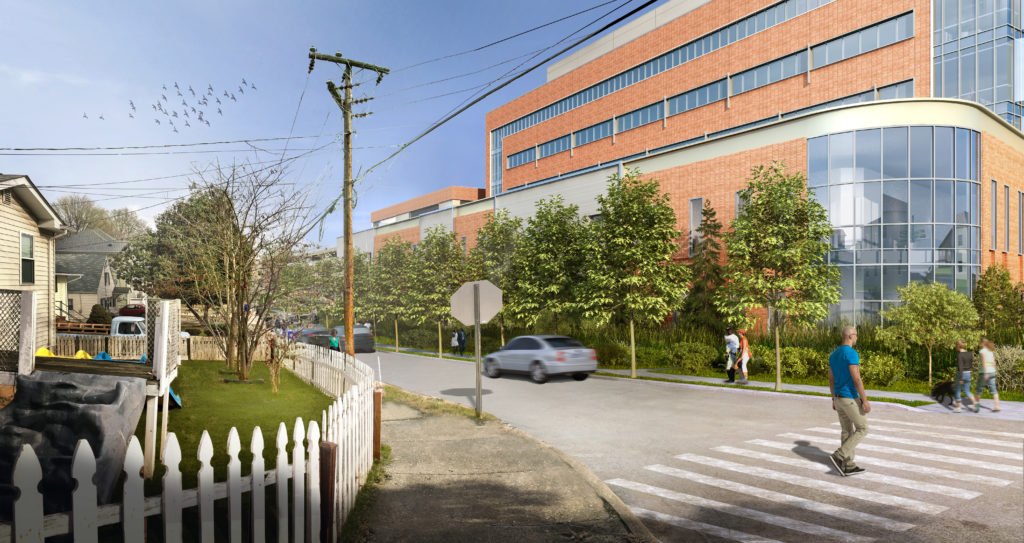
A new rendering of the Virginia Hospital Center expansion, as seen from 19th Street N. (via Arlington County)
A new rendering of the Virginia Hospital Center expansion, as seen from 19th Street N. (via Arlington County)
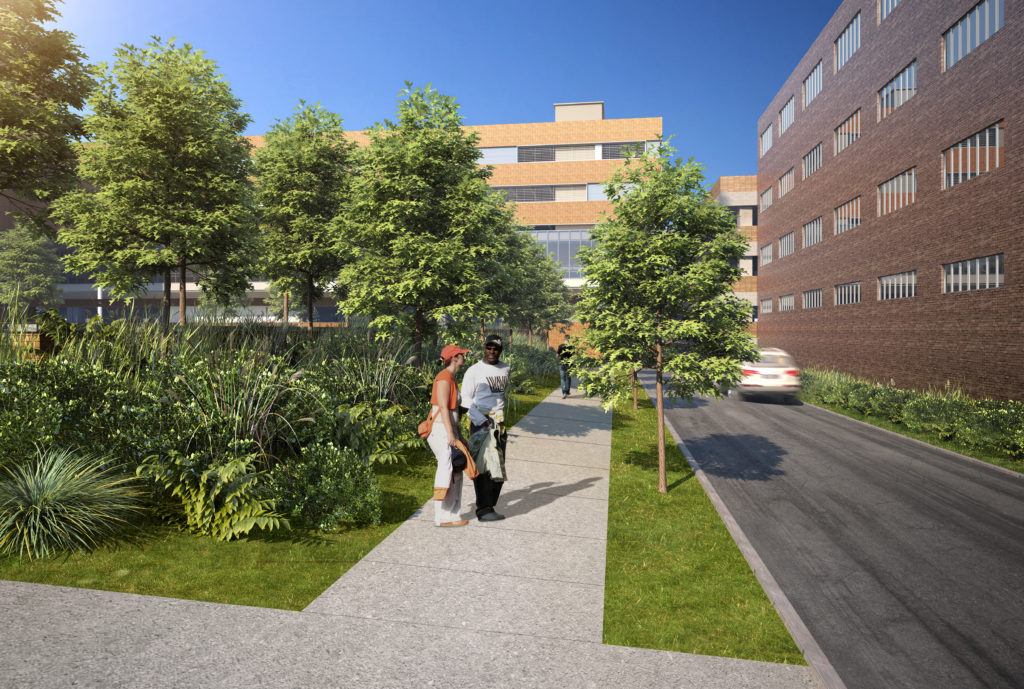
A new rendering of the Virginia Hospital Center expansion, as seen from a garden near N. George Mason Drive (via Arlington County)
A new rendering of the Virginia Hospital Center expansion, as seen from a garden near N. George Mason Drive (via Arlington County)
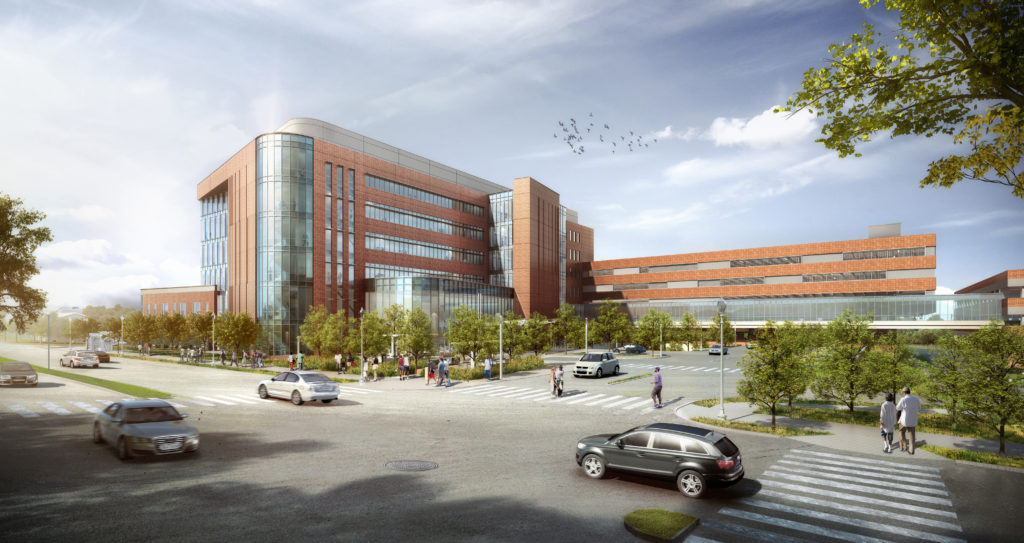
A rendering of the planned Virginia Hospital Center expansion (courtesy photo)
A rendering of the planned Virginia Hospital Center expansion (courtesy photo)
A rendering of the planned Virginia Hospital Center expansion (courtesy photo)
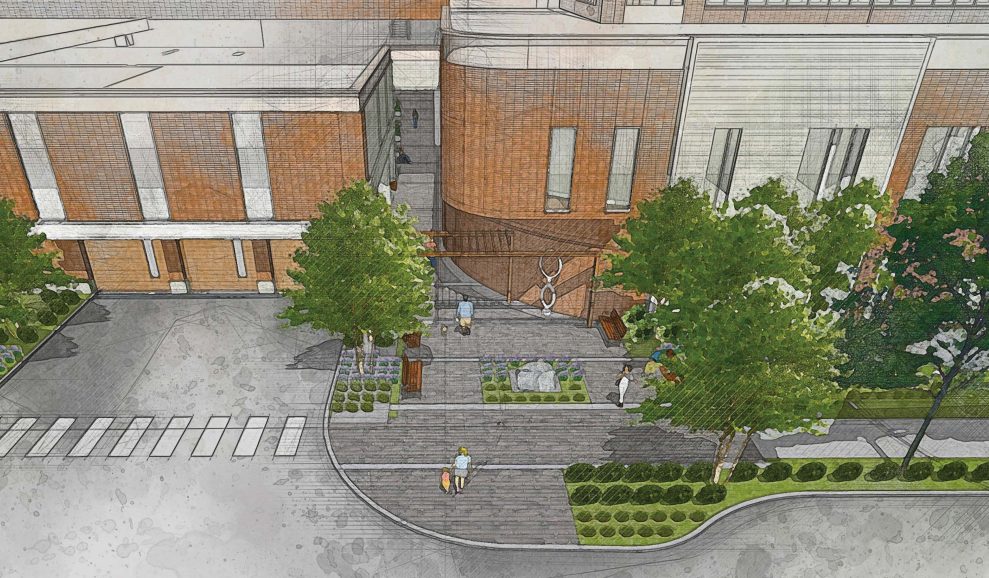
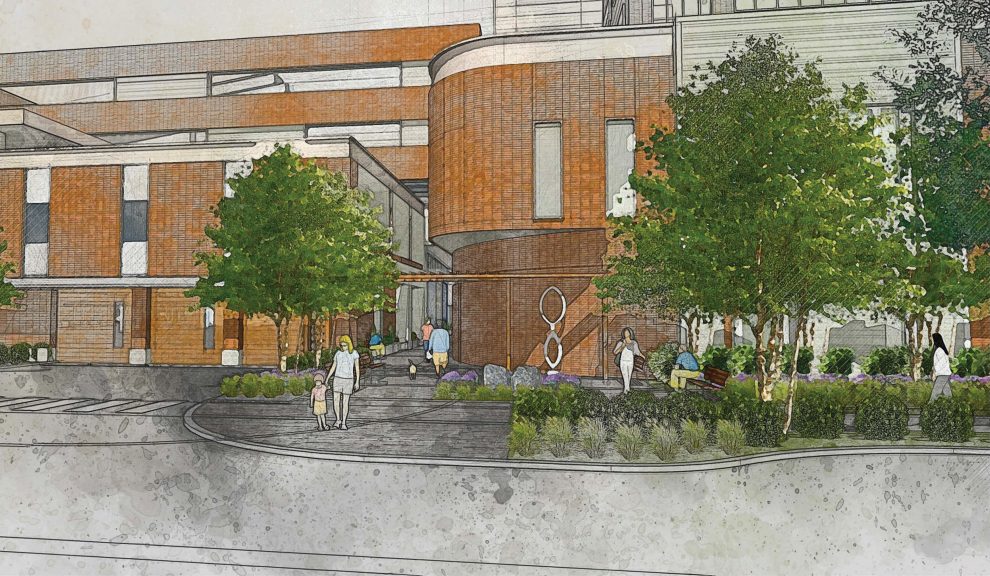
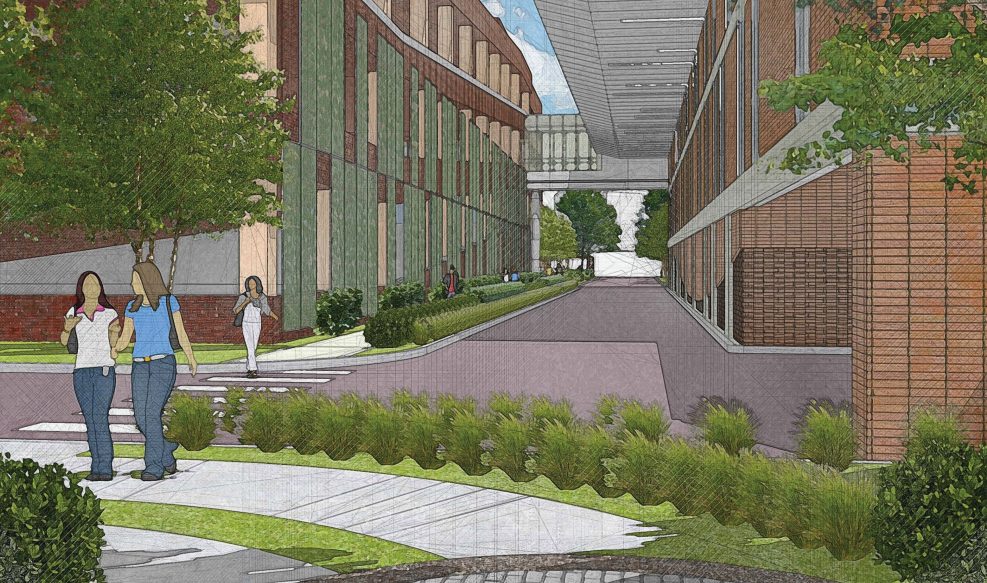
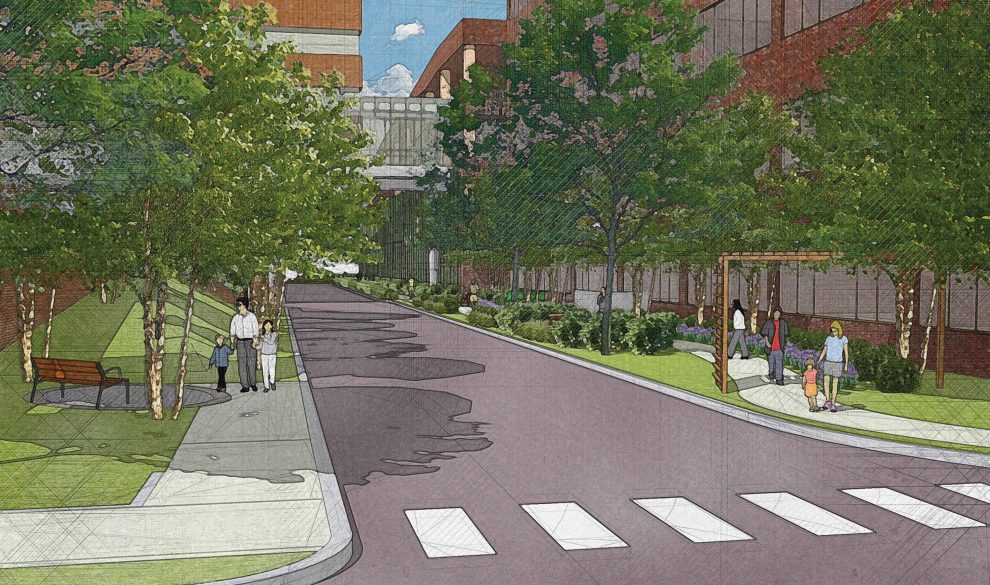
The Virginia Hospital Center might’ve finally won the county’s approval on designs for a hefty new expansion of its North Arlington campus, but officials have months of work left to do before neighbors will start seeing any construction in the area.
Years from now, the hospital will add a seven-story outpatient facility and a 10-story parking garage to its property at 1701 N. George Mason Drive, after the County Board narrowly approved plans for the $250 million project on Tuesday. The expansion will ultimately help the county’s lone hospital add 101 new beds, in a bid to match rising demand in the area.
But VHC officials say they won’t be able to put shovels in the ground just yet. First, they need to complete a land swap with the county to make the expansion possible.
Arlington officials and the VHC agreed last year that the county would send the hospital a property adjacent to its campus at 1800 N. Edison Street in exchange for one at 601 S. Carlin Springs Road. However, the swap was contingent on the Board signing off on the expansion plans in the first place.
Community concerns over the project’s design meant that the Board repeatedly delayed its consideration of the VHC proposal, but with that green light finally given, hospital executives will now turn to finalizing the terms of the land swap. Adrian Stanton, the hospital’s vice president for business development and community relations, says that process will wrap up around next “May or June” at the latest, teeing up construction to start soon afterward.
“It’s been a good three years we’ve been involved in this process, so absolutely it was a sigh of relief when we got the approval,” Stanton told ARLnow. “We wanted to be in front of the Board back in May because we need the beds today… and there a lot of specifics involved, and a lot left to happen.”
Some of the process of sorting out the details of the land swap agreement are fairly mundane, like basic site inspections. Others are a bit more fraught — for instance, the county and the hospital will have to agree on the Edison Road property’s value.
The terms of the agreement call for the hospital to pay either $12.56 million or the property’s appraised value to acquire the site — it all depends on which amount is larger. County records show the property was valued at about $8.9 million this year. By contrast, the S. Carlin Springs Road land the hospital will send to the county was valued at $38.8 million.
Stanton says that the process of hashing out the land swap could wrap up more quickly than they’re expecting, but the hospital is tentatively planning on kicking off construction by “somewhere around June or July 2019” in his most conservative estimate of the timeframe.
Once that happens, Stanton says the hospital will likely need another approval from state regulators before it can wrap up the construction. VHC previously earned a “Certificate of Public Need” from the Virginia Department of Health, certifying that enough demand exists in the area to add more beds to the facility.
The catch is that state officials only allowed VHC to add 44 beds, rather than the full 101 it’s planning. Stanton says that’s because the state only examines demand in five-year increments, while the hospital is projecting a need for 101 beds by looking at a 10-year timetable.
“We agreed to that smaller number with the acknowledgement that we will be back asking for more,” Stanton said. “Our intent is to be able to get the additional beds we feel we need, and do that before construction is complete.”
As for the construction timeline, Stanton says the hospital’s “guesstimate” is that the new garage will be open by the first few months of 2021. Then, he hopes the new outpatient facility will be ready by the second quarter of 2022.
Once that new “pavilion” is ready, the hospital will begin moving its existing outpatient equipment over to the new facility, opening up space for the 101 new beds. However, Stanton cautions that process will require some complicated renovation work, so it’s difficult to know when it will be ready.
“It shouldn’t take as long [as the new construction], but we’ll be doing construction in the existing patient tower,” Stanton said. “It’s not as easy a construction project because we’re working around our existing operations. So it’s by no means easy.”
Looking even further down the line, hospital leaders eventually hope that this expansion will lay the groundwork for the full redevelopment of the campus. However, Stanton’s “best guess” is that work on that process won’t start for at least 15 years or so.
Stanton hopes that hospital officials can use that time to rebuild trust with the surrounding community.
The expansion’s design process became an acrimonious one at times, with neighbors accusing the hospital of ignoring their concerns or even walling off the surrounding community with its new facilities. And Stanton admits to no small amount of frustration that the process turned so contentious.
He argues that the hospital’s initial outreach to the community was “largely positive,” before the county’s formal site plan review process got started. He believes that VHC officials managed to build plenty of consensus around the project, back when neighbors formed their own ad hoc committee to work with the hospital.
“I thought we had a very strong connection with those communities,” Stanton said. “It doesn’t mean were always in agreement, but we felt we, and the County Board, were getting positive reviews from the community about conversations with the hospital. But that seemed to change when we went through formal process with the county, which was really frustrating to me.”
Accordingly, Stanton is pledging “continual communication” between the hospital and its neighbors, to try and recapture the spirit of those early days of planning the expansion, leading to much more harmonious community conversations around any future redevelopment.
“I would only hope that relationship and communication can be just as good, if not better, than before we started this process,” Stanton said.