Lubber Run Project Budget Boosted — “Arlington County Board members on Sept. 22 agreed to add about $1.4 million to the budget for rebuilding Lubber Run Community Center, which will push the construction cost to $41.14 million and the management fees to $4.11 million.” [InsideNova]
Clarendon Circle Construction Begins — “Things will start looking different in Clarendon and not because of too many cosmos at Don Tito’s. The long-awaited Circle intersection improvements project kicks off today.” [Twitter]
Neighborhoods Want in on W-L Name Discussion — “The president of the Buckingham Community Civic Association thinks Arlington school leaders may need some remedial work in geography. Bernie Berne used the Sept. 20 School Board meeting to complain that his community had been shut out of the committee set up to suggest new names for Washington-Lee High School, even though it is closer to the school than another civic association that has been included on the panel.” [InsideNova]
Fire at Columbia Pike Building — On the 5100 block of Columbia Pike: “First arriving units found a fire contained to an appliance. The fire was extinguished. All occupants are safe & accounted for.” [Twitter, Twitter]
Tree Advocates Increase Pressure — “Another month has brought another round in the ongoing dispute between tree activists and the Arlington County Board – and much of the give and take on both sides is beginning to sound familiar to the point of repetitious. Activists in support of expanding the county’s tree canopy were among a number of advocacy groups that descended on the Sept. 22 County Board meeting. Among their chief complaints: The county government hasn’t done anything to prevent the removal of trees during an upcoming expansion project at Upton Hill Regional Park.” [InsideNova, Twitter]
Fox News Highlights Lucky Dog — Arlington’s Lucky Dog Rescue continues to get national attention for its work rescuing dogs from areas flooded by Hurricane Florence. Over the weekend Fox News broadcast from Shirlington to bring attention to the dogs that are now available for adoption. [Yahoo]
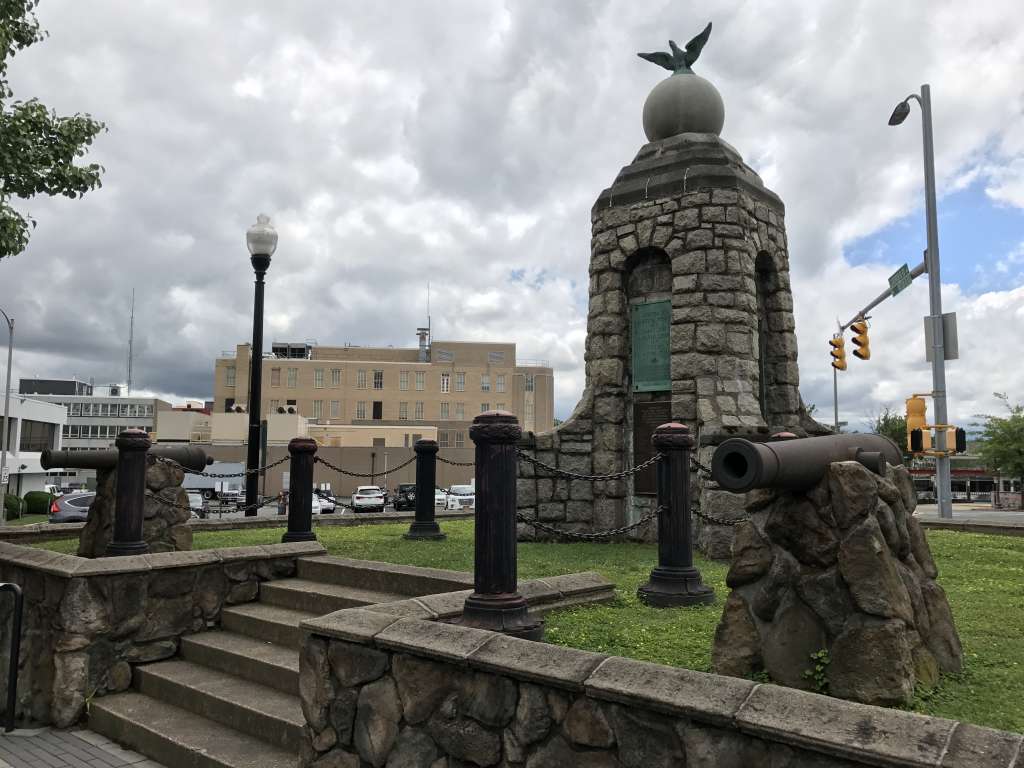
The Clarendon War Memorial, which honors Arlington residents killed in major armed conflicts, is getting new signs to explain its significance and context.
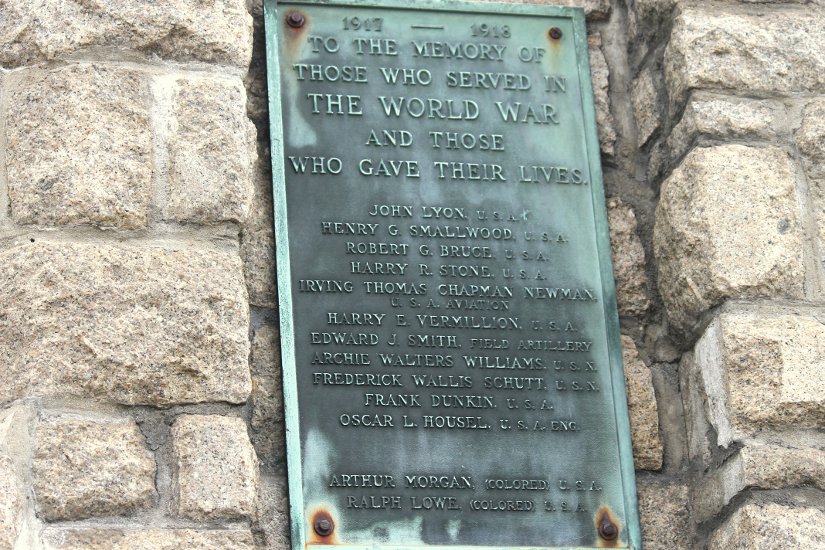
The memorial, located on the opposite end of Clarendon Central Park from the Metro station entrance, has generated some controversy in recent years due to it separately listing the two “colored” troops from Arlington killed during World War I.
On Saturday the Arlington County Board voted to accept a $2,000 grant from the U.S. World War I Centennial Commission to fund new interpretive signs.
“The original 1931 plaque on the memorial lists the names of the 13 Arlington servicemen who died in WWI, and segregates the names by race,” said county spokeswoman Gina Wimpey. “A main goal of this interpretive project will be to provide historic context for the segregation of the names, as well as information about Arlington during each of the time periods and conflicts represented on the memorial.”
The new interpretive signs will ring the memorial. The first is expected to be unveiled later this fall.
“The proposed interpretive panels related to the Clarendon War Memorial will be installed in phases, with the first panel focusing on the history of the memorial itself,” said Wimpey. “That panel is planned (pending the final fabrication and installation schedule) to be unveiled at a Centennial Armistice Day event to be held Nov. 11 and hosted by the American Legion, in partnership with Arlington County and Arlington’s WWI Commemoration Task Force.”
Some have called for the original plaque to be removed and replaced due to its segregation of African American service members, though task force member (and former county treasurer) Frank O’Leary argued on the 26 Square Miles podcast earlier this year that it would have been considered progressive at the time for the way it was designed.
WeWork Coming to Rosslyn — Another coworking space is coming to Rosslyn. WeWork is reportedly coming to three floors near the top of the new CEB Tower. [Washington Business Journal]
Board Passes Four Mile Run Plan — Despite some dissatisfaction among those who live in a nearby community, the Arlington County Board voted unanimously to adopt as-is the proposed Four Mile Run Valley Park Master Plan and Design Guidelines, which includes “a comprehensive Master Plan for Jennie Dean Park and Shirlington Park, with short and mid-term recommendations for maintaining and improving Shirlington Dog Park.” [Arlington County]
Memorial Bridge Closure Rescheduled — Due to high river levels, work on and the closure of the Arlington Memorial Bridge has been rescheduled to this coming weekend. [Twitter, National Park Service]
Salt Storage Structure Approved — “The Arlington County Board today voted to allow the County to build an interim salt storage structure before winter sets in, on County-owned property on Old Dominion Drive, between 25th Road N. and 26th Street N.” [Arlington County]
Scooter Injury in Crystal City — A woman on a motorized scooter reportedly suffered a dislocated elbow after she accidentally ran into a wall in the Crystal City area Friday evening. The safety of the electric rental scooters has been questioned both locally and nationally. [Twitter]
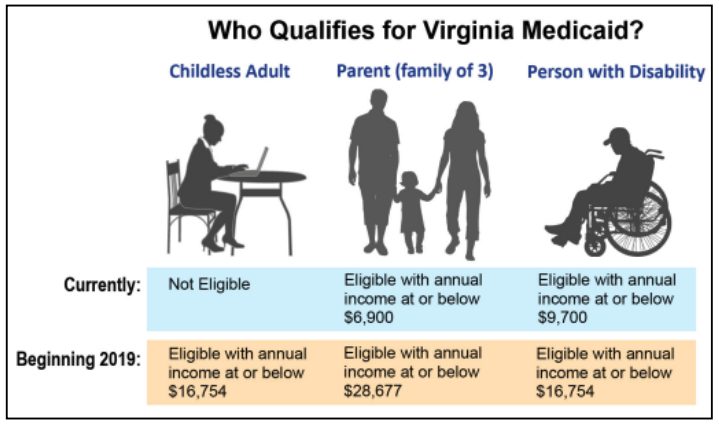
Coming ‘Flood’ of Medicaid Applicants — “The Arlington County Board today voted unanimously to accept state funding that will help pay for additional staff needed to process an expected flood of new applications for Medicaid under the state’s expanded program, Cover Virginia… ‘Under the expanded program, we expect 3,000 more County residents will qualify. Childless low-income adults with no disabilities, a group previously excluded, and families and persons with disabilities whose income previously was not considered to be low enough to qualify will now be eligible for coverage.'” [Arlington County]
Packer Drops By Clarendon Day — Green Bay Packers running back Aaron Jones, in town for Sunday’s game against the Redskins — the local team ended up upsetting the visitors 31-17 — dropped by Clarendon Day on Saturday. He also posed for a photo with Arlington County police. [Twitter]
APS Wires 40 Schools for Fiber Connection — “Arlington Public Schools (APS) is kicking off the 2018-19 school year with a brand-new connection–ConnectArlington. Thanks to a yearlong collaboration, 40 Arlington school facilities are now up and running on the County’s own fiber optic network. APS made the switch from a commercial provider to take advantage of ConnectArlington’s high-speed, dedicated network for digital telecommunications and broadband services.” [Arlington County]
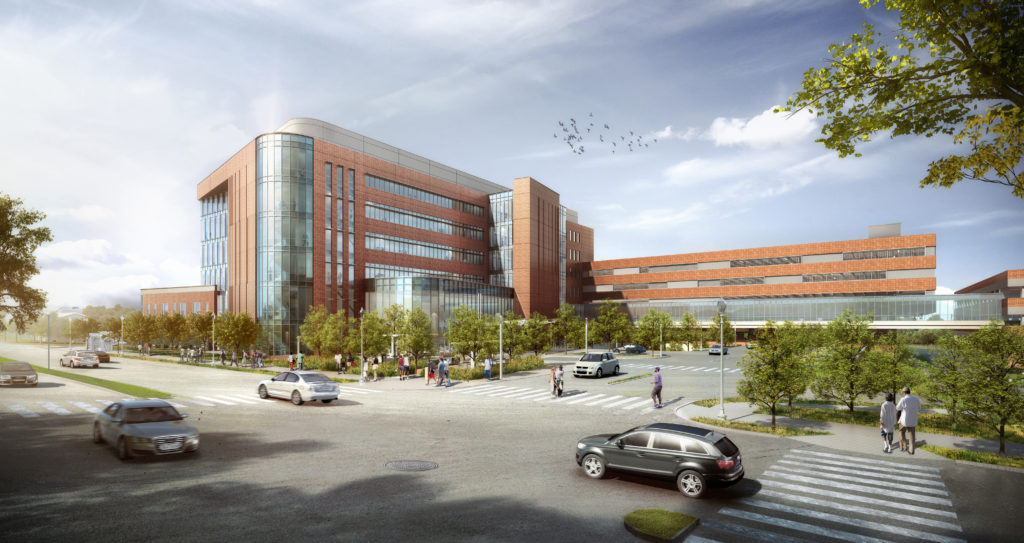
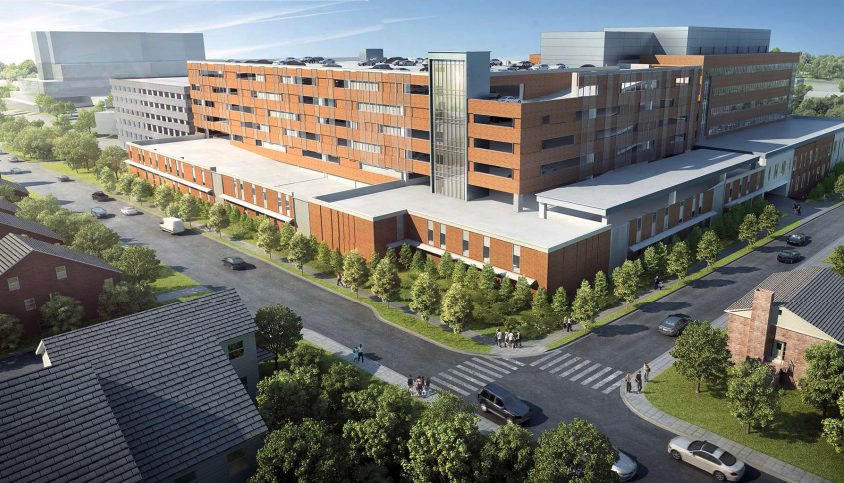
A rendering of the planned Virginia Hospital Center expansion (courtesy photo)
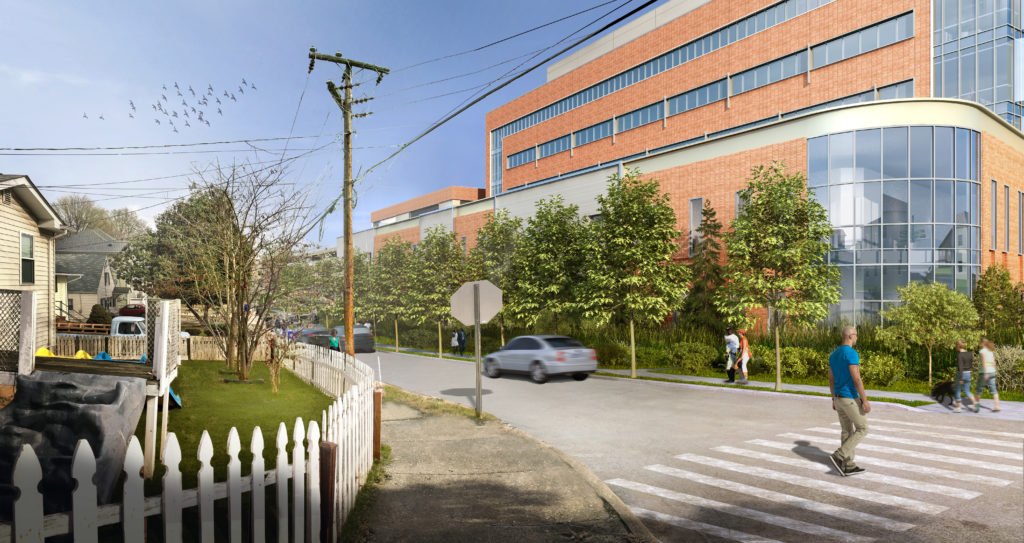
A rendering of the expanded Virginia Hospital Center (via HDR)
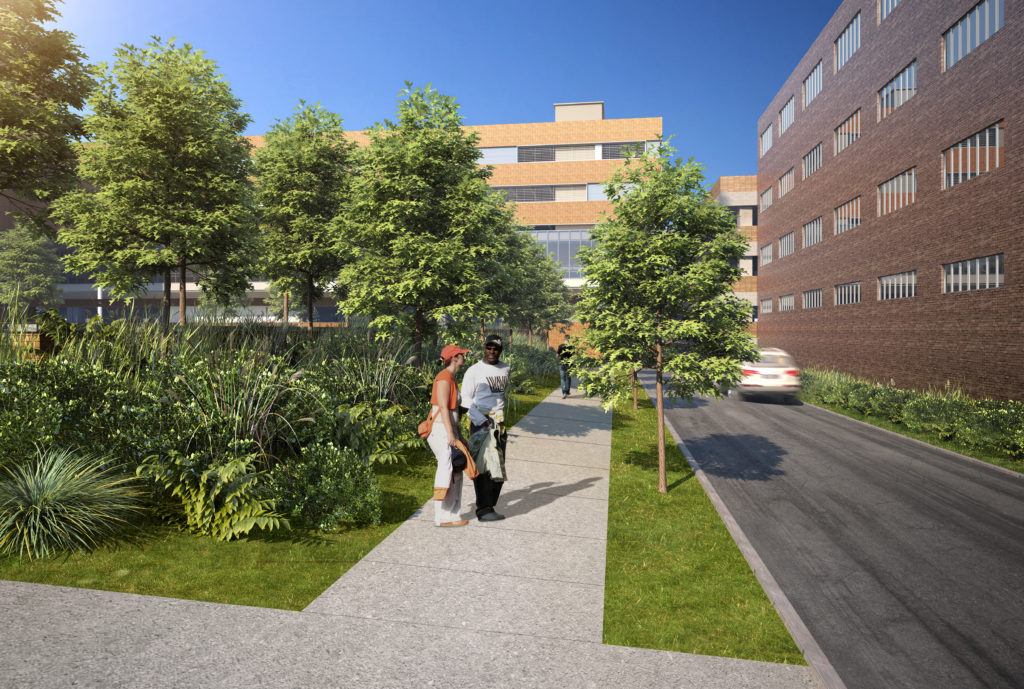
A rendering of the planned Virginia Hospital Center expansion (courtesy photo)
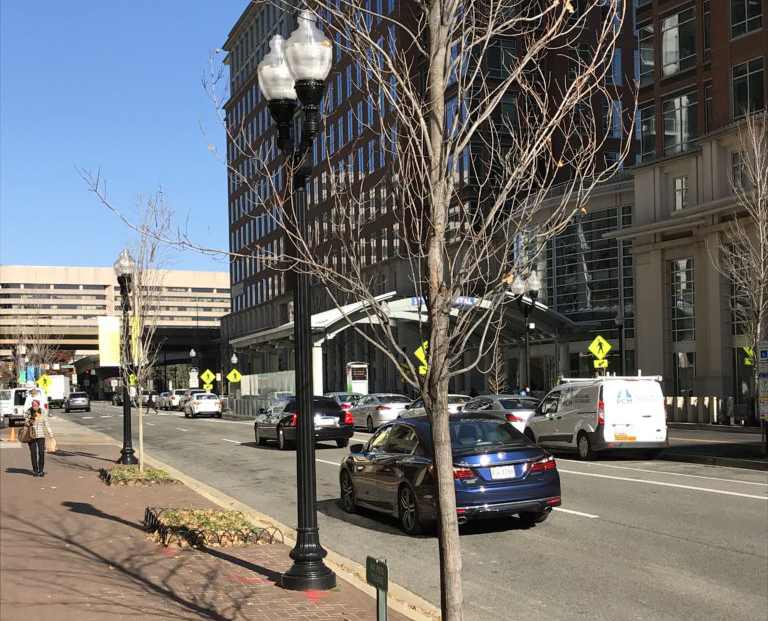
A rendering of the planned Virginia Hospital Center expansion (courtesy photo)
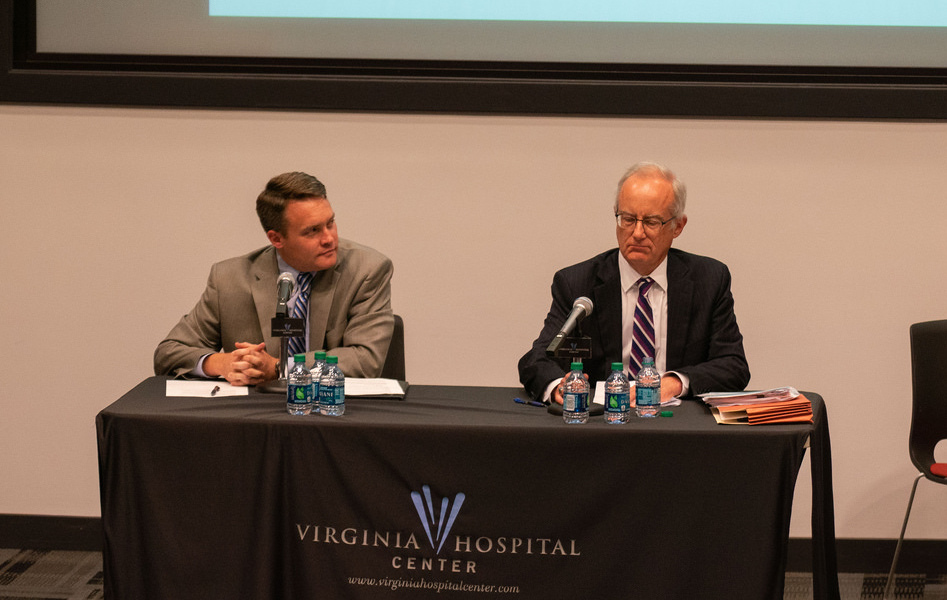
Officials from Virginia Hospital Center left Saturday’s Arlington County Board meeting without the approval they were seeking for the hospital’s expansion plans.
Instead, following a unanimous vote, consideration of the plans will be delayed another three months.
Board members asked VHC to go back and find a way to address the concerns of homeowners who live around the hospital. The charge specifies that the size of the proposed buildings is fine, but improvements are needed to improve exterior decor, pedestrian walkways, and traffic flow.
More from an Arlington County press release:
After hearing hours of public testimony, the Arlington County Board today voted unanimously to defer consideration of Virginia Hospital Center’s proposed expansion plan to its December 2018 meeting, saying the center needs to do more to address neighborhood concerns.
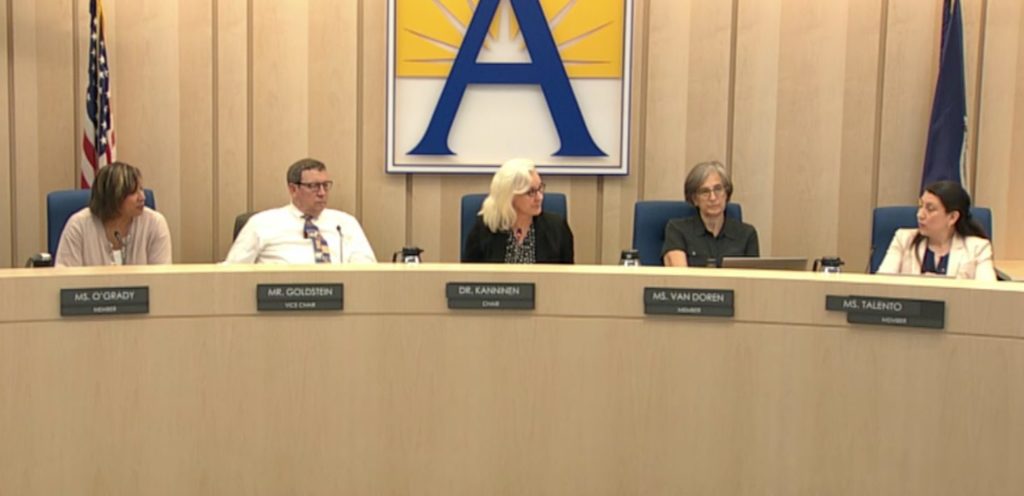
“Virginia Hospital is an asset to our community and the region,” Arlington County Board Chair Katie Cristol said. “We view the continued success of this major health center as important to everyone in Arlington, both for the high-quality medical care it provides, and the economic benefits it brings to the community. But it is also important that the expansion is designed in a way that respects the basics of good planning and design that have allowed Arlington to grow while still maintaining high quality of life for residents. We are not seeking a fundamental re-design, but rather, specific and concrete adjustments that can address some of the concerns.”
The Board’s action came after dozens of people spoke both for and against VHC’s expansion plan during a public hearing.
VHC’s expansion plan would grow its N. George Mason Drive campus onto the adjacent site at 1810 N. Edison Street to build new in-patient and out-patient facilities, a medical office building and a parking garage. The County approved a purchase agreement with VHC for the Edison site in 2015. It is requesting a rezoning, a Site Plan amendment and a Use Permit County sealamendment.
Under its proposed expansion plan, VHC plans to replace existing buildings on the Edison site with a new seven-story outpatient building and a six-story parking garage. VHC also proposes converting 120,000 square feet of medical offices on its current campus to hospital use.
The proposed plan also calls for an ultimate build out of 101 more beds on the hospital site. Existing outpatient uses would be relocated to the new outpatient building on the Edison site, freeing up space in existing buildings for the hospital expansion. The proposal is the hospital’s first step in its longer-term plans to focus inpatient care on the south side of its campus and outpatient care on the north side.
The Board noted that it accepts the height and massing of the buildings proposed by VHC as necessary to meet the center’s “programmatic needs.” It asked that VHC improve the connections to and through the site; enhance the proposed parking garage facades to add visual interest through awnings, hanging planter boxes or other architectural features; provide a pedestrian connection between 19th Street N and the proposed terrace overlooking the sunken garden on the first floor of the outpatient building; and make other changes related to providing safe, well-lighted, accessible pathways on the site.
While the public hearing now is closed, and changes made to the proposed design will not be subject to further formal County advisory commissions, the Board communicated its expectations that VHC will continue to engage with the surrounding neighborhood on improvements before the proposal comes back to the Board for consideration.
To read the staff report, and view presentations on the proposed expansion plan, visit the County website. Scroll to Item No. 58 on the agenda for the Saturday, Sept. 22, 2018 Regular County Board Meeting.
In December 2015, the County Board approved an agreement granting VHC an option to purchase the County-owned land at 1800 N. Edison Street. The agreement included the possibility of a land swap between the County and the Hospital. In July 2017, the Board voted to notify VHC that the County intends to acquire the hospital’s property at 601 S. Carlin Springs Road as part of the purchase price for the Edison site. Approval of VHC’s expansion site plan is required prior to closing the purchase agreement.
VHC’s site plan underwent an extensive public review process, including six Site Plan Review Committee (SPRC) meetings, and SPRC walking tour and additional community meetings held by the County before and after the SPRC process.
County staff also met with civic association representatives and other community members, tracked and posted community comments and answered frequently asked questions for the project website.
Virginia Hospital has served Arlington and the region for more than 70 years. Over the years, the hospital has expanded to meet the needs of the growing Arlington community.
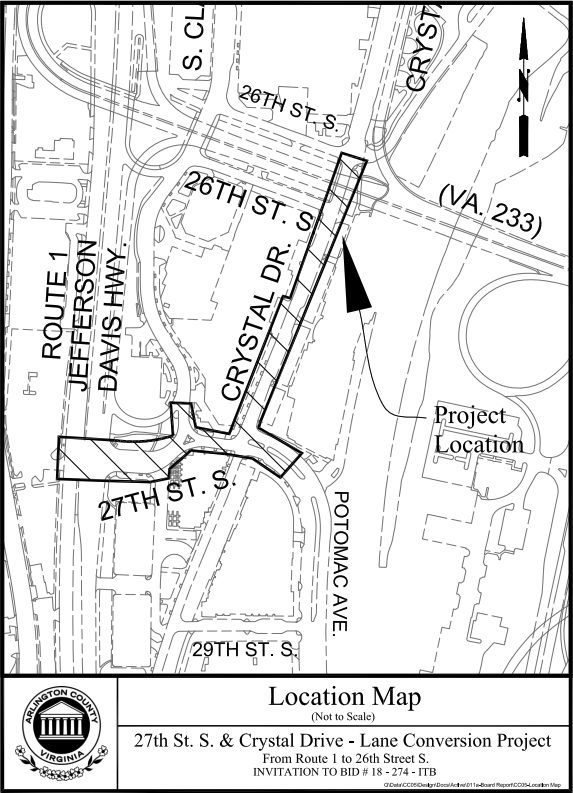
If approved at tomorrow’s (Saturday) County Board meeting, a portion of one of Crystal City’s thoroughfares will receive a substantial upgrade and a speed limit downgrade.
Crystal Drive is currently a one-way street between 26th and 27th streets, but as part of an ongoing conversion project it will be turned into a two-lane roadway. The project will also add a right turn lane at the northbound intersection of Crystal Drive and 26th Street S., a left turn lane at the westbound intersection of Crystal Drive and 27th Street S., and bike lanes and sidewalk improvements.
The two-lane expansion in other sections of Crystal Drive occurred in 2013. The two-lane conversion between 26th and 27th Streets S. will be the third and final phase of the street’s conversion to an almost entirely two-way road.
At tomorrow’s meeting, the County Board will vote on a contract for the $1.2 million project.
At the same meeting, the Board will also vote on whether to authorize a public hearing on lowering the speed limit along Crystal Drive from 30 to 25 mph.
The county’s Transportation Master Plan recommends 25 mph as the standard speed limit on arterial streets in Arlington’s downtown districts where there are high volumes of pedestrians and high density land development. A study of the local traffic was conducted at the request of the Crystal City Business Improvement District and determined that Crystal Drive qualified for a speed limit reduction.
If approved, the speed limit reduction will be considered at the Board’s Oct. 20 meeting.
The School Board is warning of more tough budget times ahead for the county’s school system.
In a memo to Superintendent Patrick Murphy to be discussed at the group’s meeting tonight (Thursday), the Board urges Murphy to be wary of the fact that the county’s planned revenue transfer to Arlington Public Schools “is not sufficient to meet our critical needs” as “cost pressures” for the system only continue to increase.
The school system only narrowly avoidedclass-size increases as it set its last budget, thanks to the County Board finding some additional money to keep classes at their current levels. But as APS gears up to start the budget process for fiscal year 2020, the Board expects that, as the school system opens five new schools and programs over the next two years, the change will “increase baseline operating costs significantly.”
“We anticipate that, as budget deliberations continue, additional funding for APS’s critical needs will be a top funding priority,” members wrote.
As Murphy works up his new budget, the Board is also directing him to “if possible” avoid additional class size increases, and find funding for other cuts the school system was prepared to make if the county hadn’t come through with the additional revenue last year.
“No new, major initiatives should be presented,” the Board wrote.
The Board expects that its decision this year to cut back on devices offered to second graders will save some money, and it’s also directing Murphy to “explore longer-term strategies for efficiencies, such as collaboration with the county on swimming pools reimbursement and Transportation Demand Management funding.”
County Board members have frequently spoken about their commitment to finding more money for schools, yet the county’s own tight budget picture, brought about by complications stemming from the Metro funding deal and persistently high office vacancy rates, will likely complicate the debate. County Manager Mark Schwartz has repeatedly warned that more tax hikes will likely be on the table in 2020 and beyond.
(Updated at 12:25 p.m.) Arlington is rolling out its promised pilot program to guide the use of dockless vehicles, clearing the way for more companies to offer electric scooters and bikes in the county.
County officials have been mulling how best to regulate dockless vehicles since Bird started offering its scooters in Arlington this June without any warning to the local government. Now, the County Board is set to approve a program requiring companies to register with the county to avoid similar surprises, while also capping the number of vehicles they can deploy in Arlington.
The nine-month program limits companies to operating a total of 350 vehicles each within county limits. Under its terms, any business looking to deploy dockless scooters or bikes will have to pay the county $8,000 for an operating permit, and would then be able to operate a fleet of 200 vehicles. The companies could then apply to increase the size of the fleet by 50 vehicles each month, up to the 350 cap, so long as it can demonstrate that each vehicle is recording at least six trips per day.
Those strictures are similar to D.C.’s own strategy for managing dockless vehicles, which the District put in place last year and caps companies at 400 vehicles each. Transportation advocates in the region have been especially critical of those limits, with some companies ditching D.C. due to the caps, and county staff noted in a report prepared for the Board that the county’s own Transportation Commission “recommended that the demonstration refrain from capping numbers of devices.”
.@ArlingtonVA's shared mobility pilot program which is on the Board's "consent agenda" on Saturday (for non-controversial items) would more than halve the # of scooters @BirdRide can have in the County from what it has now. https://t.co/lSJl2oXOit
“This proposal retains what staff considers a reasonable cap, reflecting other community input,” staff wrote. Bird started off its deployment in Arlington with 50 scooters, staff wrote, but the company has declined to release exact numbers on how many vehicles it’s since brought to the county.
Staffers added in the report that county officials consulted with some “vendors” last month to gauge their thoughts on the design of the program. Lime, in particular, has spent months working with local business leaders to ensure a more favorable regulatory environment in the county, while Skip, the third dockless scooter company operating in D.C., has also signaled an interest in expanding to Arlington.
Staff also wrote that they fully expect that this pilot program could encourage the remaining dockless bike companies operating in D.C. — Spin and Jump — to start operating in the county as well.
Additionally, the program clarifies that there is no helmet requirement for scooter riders, the county plans to bar anyone younger than 16 from using the scooters, and that the scooters can’t be used on county sidewalks, without some policy tweaks. The policy also adds that both scooters and electric bikes won’t be permitted on county trails.
“While there is enabling authority for localities to ban electric scooter riding on sidewalks, it does not grant localities authority to affirmatively allow such riding,” staff wrote. “Thus, to enact an ordinance authorizing electric scooter riding on sidewalks would require a legislative change.”
The county is also planning on collecting community feedback on all manner of dockless vehicle issues, and will require the companies themselves to regularly turn over ridership data, which can then be released publicly.
The Board first has to sign off on the policy at its meeting Saturday (Sept. 22). It’s currently slated to be considered as part of its consent agenda, generally reserved for non-controversial items to be approved as a block, though it can be pulled from the consent agenda at the request of Board members.
Democrat Matt de Ferranti managed to raise more cash over the last two months than independent incumbent John Vihstadt, who he’s challenging for the lone County Board seat on the ballot this fall.
From July 1 through Aug. 31, de Ferranti raised just over $39,900, according to campaign finance documents released today (Wednesday). Vihstadt pulled in about $26,900 over the same time period.
The independent’s largest donation was a $5,000 check from a political action committee representing Arlington’s firefighters’ union, which endorsed Vihstadt in late July. De Ferranti’s biggest contribution was a donation of the same amount from Mark Johnson, a co-founder of the D.C. investment firm Astra Capital Management.
Yet the incumbent, the lone non-Democrat to sit on the Board since 1999, has spent considerably less than de Ferranti, leaving him with a roughly $70,000 advantage in cash on hand. As of Aug. 31, Vihstadt reported having nearly $123,800 in the bank, to the Democrat’s roughly $53,400, and shelled out just under $3,000 compared to de Ferranti’s $19,500 in expenses.
De Ferranti faces a formidable opponent in Vihstadt, who managed to win a pair of sweeping victories over Alan Howze in 2014, but he’s benefitted from the fundraising support of prominent state Democrats like former Gov. Terry McAuliffe and Attorney General Mark Herring. He’s also set to welcome Lt. Gov. Justin Fairfax for a fundraiser later this month.
Even still, Vihstadt looks on pace to out-raise de Ferranti, just as he did Howze — de Ferranti has raised roughly $106,100 since launching his campaign in January, compared to Vihstadt’s nearly $139,000 over the same time period.
However, de Ferranti does stand to benefit from the support of the Arlington County Democratic Committee, which is looking to return the Board to unified Democratic control. The party has only reported contributions through June 30, when it recorded having just over $101,800 in the bank.
Candidates will next deliver more details on their finances on Oct. 15.
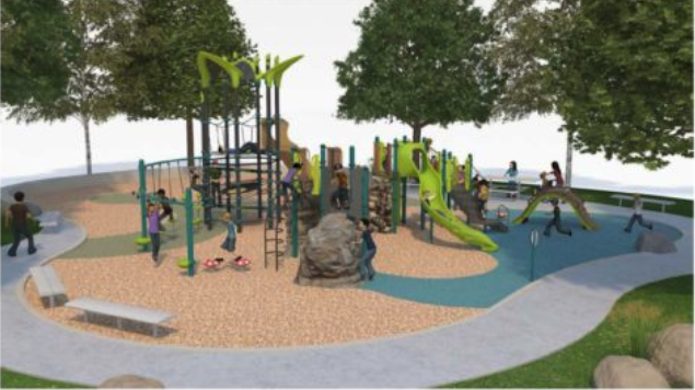
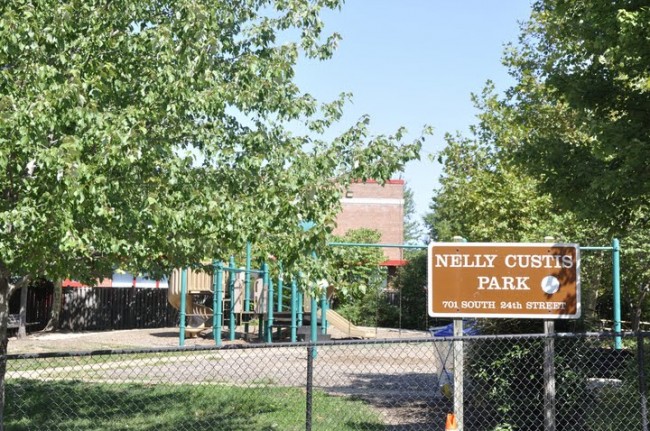
Renderings of Nelly Custis Park changes (via Arlington County)
Existing park (Image via Arlington County)
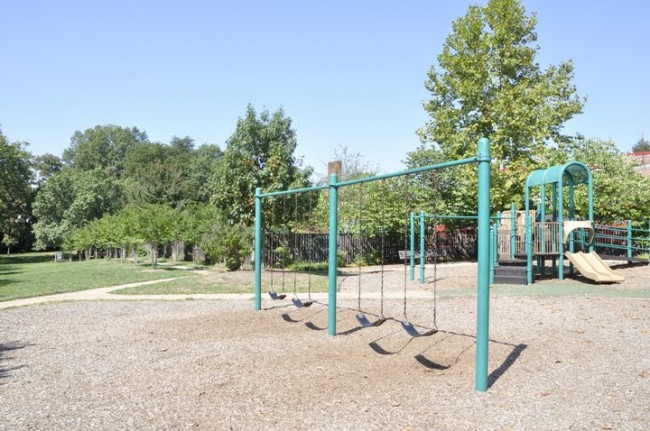
Existing park (Image via Arlington County)
Work could soon get started on the once-controversial overhaul of Nelly Custis Park in the Aurora Highlands neighborhood.
The County Board is set to approve a $643,000 contract for construction at the park, located at 701 24th Street S., at its meeting this weekend. Changes will include some fixes to the park’s drainage problems, new plantings and fresh playground equipment.
The latter feature attracted the most community scrutiny two years ago, with a group dubbed the “Friends of Aurora Highlands Parks” doing battle with neighbors over the utility of adding more playground space to the park. Opponents argued the playground was unnecessary, as it was the third playground in just over one block, and took up green space at the small park, which is just under one acre in size.
The spat ultimately led to county officials issuing a public apology for their handling of the situation, and the county ultimately convened a neighborhood working group to refine the project’s scope.
The current construction plans call for “a play space designed for ages 5-12 in addition to non-structured casual space” and replacements for “outdated” playground equipment, per a staff report prepared for the Board. The project will be funded as part of the county’s “Neighborhood Conservation” program, a fund set aside for minor neighborhood infrastructure improvements that could see big cuts and other changes in the coming years.
So long as the Board approves the contract Saturday (Sept. 22), the county hopes to begin work on Nelly Custis Park before the year is out and wrap it up by summer 2019.
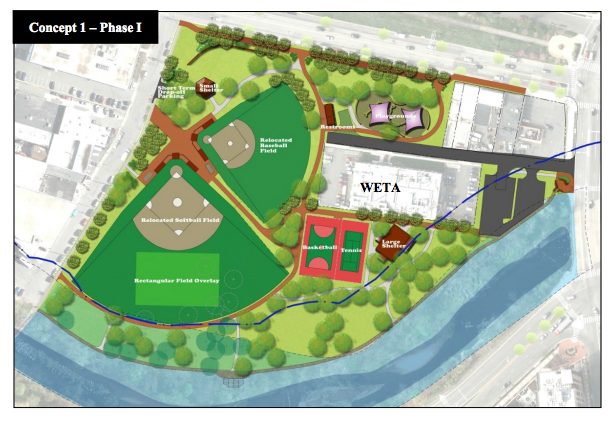
Jennie Dean Park rendering, with field alignments approved by the County Board
Rendering of the renovations to Jennie Dean Park, with field alignments previously approved by the County Board (Image via Arlington County)
As Arlington officials continue to chart out the future of the Four Mile Run valley, some community leaders in Nauck feel their concerns are being ignored by the county and are demanding a louder voice in the proceedings.
The county’s worked since 2016 to craft new planning documents for the area, primarily located in Nauck but touching Shirlington and other South Arlington neighborhoods as well, in a bid to guide the gradual transformation of the valley’s parks and business district. The County Board passed a “policy framework” to provide a roadmap for that process in May, and is set to sign off on a “parks master plan” for the area at its meeting this weekend.
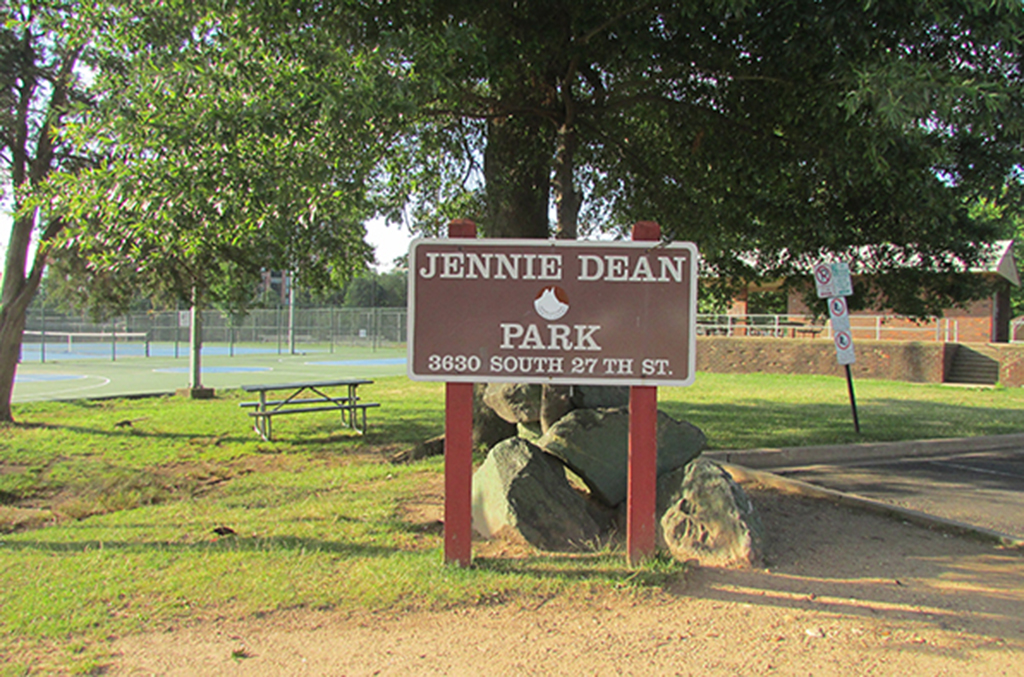
But even with a slew of community meetings on the subject and a working group dedicated to the valley, some Nauck leaders remain frustrated by how the county’s handled their input. While they have gripes with some policy specifics — the re-design of Jennie Dean Park, in particular — their broader concern is that residents are being left out of the process of determining their own neighborhood’s long-term outlook.
“It is confounding when the community that’s most impacted by the Four Mile Run valley is blocked from county communication,” Robin Stombler, a Nauck resident and vice chair of the Four Mile Run working group, told ARLnow. “There’s been a history of exclusion and marginalization of this community, and the county’s current actions don’t correct that history.”
As Stombler points out, the community’s roots as a historically black neighborhood add an extra level of tension to any discussion of how the county engages with people in Nauck. Even with the Board’s frequent commitments to remedying historic inequities in the community as part of the planning process, some residents can’t help but feel suspicious that Nauck’s past is still influencing its future.
“This community has been ignored repeatedly by the Arlington County Board while the requests and desires of several other, predominantly white, Arlington neighborhoods are being placed ahead of those of the people who live here,” Nauck resident Renee Greenwell wrote in an email. “It takes a lot for a historically marginalized community to speak its mind, [and] for Arlington County leaders and staff to patronize us and ignore our opinions is despicable.”
Arlington officials dispute that they’ve ignored any community involved in the planning, let alone Nauck. For his part, Board member John Vihstadt, the Board’s liaison to the Four Mile Run working group, says he’s done his best to “understand and appreciate the sometimes varied perspectives of all stakeholders in our planning process, especially those from Nauck.”
County parks department spokeswoman Susan Kalish also touted the “enormous amount of community outreach” involved in the process, noting that the county has held a total of 65 meetings on the valley as well as creating “an online forum for those who could not attend” those gatherings.
Nauck Civic Association President Portia Clark, however, says the county’s “engagement process was lousy from the beginning.” While she says the county has indeed held plenty of meetings, it’s the quality of those meetings that concern her.
For instance, Clark says she invited parks officials to a civic association meeting last Monday (Sept. 10) to have a broader conversation about the parks master plan. Despite repeated requests, Clark and Stombler both say the county ultimately only sent one representative to the meeting, who couldn’t discuss the plan in the detail they were looking for.
“Where were the other county folks behind the parks plan?” Clark said.
Kalish acknowledges that the county was invited to that gathering, but noted that other officials had just held an “open house” on the parks plan on Sept. 5, calling it “robust and distributive.”
“We heard from a variety of people, including residents from Nauck and the surrounding communities,” Kalish said.
But Clark claims the meeting was sparsely attended, coming so soon after Labor Day, with county officials outnumbering community members by a hefty margin.
“How engaging is that?” Clark said. “We recommended from the beginning that they contact every household… It just went on deaf ears, because they weren’t listening.”
Clark feels that the county instead came into the process with “certain things in mind that they wanted,” and then refused to change based on community input.
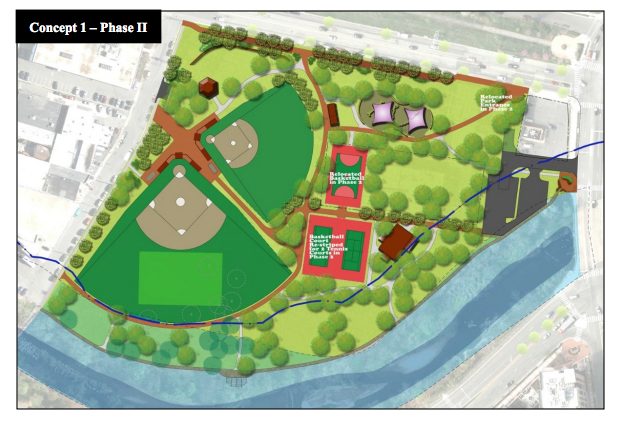
Among her biggest concerns are the plans to revamp Jennie Dean Park. Eventually, the county envisions acquiring the WETA building next to the park, relocating a baseball field and adding new tennis courts to the area.
The Board ultimately endorsed a plan to move the field closer to the intersection of 27th Street S. and S. Nelson Street, even though Clark’s civic association and the county’s Park and Recreation Commission backed an option that would’ve left a bit more open space at the front of the park by locating the field elsewhere. But county staff endorsed the former alternative, reasoning it would be easier to build and maintain, and the Board is set to formalize that selection when it votes on the park master plan Saturday (Sept. 22).
To Clark, the dispute represents the perfect example of the county not listening to Nauck’s input, even though the neighborhood hosts the park itself.
“We’re concerned it will be a border to the community, and about the noise levels, what will project out into the neighborhood,” Clark said. “We just have to live with that now.”
Vihstadt noted that “Board members and staff are in continued communication with a variety of communities as we approach our Saturday vote,” and said the county is working to “build as much consensus and mutual understanding as possible” on the plan.
But Stombler is already looking a bit beyond the parks plan to what she thinks the county can take away from this whole dust-up moving forward.
“I think we need an assessment of how this process has proceeded, so future engagements are more collaborative and understanding of the community,” she said.
Arlington officials expect as many as 3,000 more people will be able to earn health insurance through the Medicaid expansion passed by state lawmakers this year — and now the county needs new staffers to sort through the paperwork.
The County Board could soon accept just over $277,000 in state funds to hire six new workers to process Medicaid eligibility applications, anticipating that Arlington will see up to 7,000 requests for coverage through the program when changes officially take effect next year.
The General Assembly approved the expansion this spring, after Democrats’ sweeping gains in the legislature set the stage for a compromise on an issue that had long roiled state politics. Now, Arlington and other localities around the state are preparing for an influx of applications from low-income and disabled workers looking to earn healthcare coverage under the program for the first time.
Starting Jan. 1, 2019, Medicaid benefits will be available for childless, able-bodied adults for the first time, so long as they earn no more than $16,754 a year. The income cap will be raised to the same level for adults with disabilities, up from $9,700 a year, while income limits will also be bumped up for families with anywhere from three to eight children.
Under those new standards, county officials project at least 2,904 additional people in Arlington will be eligible for the program, and staff fully expects that evaluating the incoming flow of applications will overwhelm county workers.
While income is one measure Medicaid officials will examine in determining if someone is eligible for benefits, the program will also require many recipients to hold down a job — Republicans insisted on including the work requirements as a condition for approving the plan, though it will likely entail complex reporting requirements.
Accordingly, hiring six new staffers would help the county better distribute work among its employees and “contribute to reducing the error rate and processing time for application and recertification processing,” staff wrote in a report prepared for the Board.
In all, the county expects to spend about $527,000 annually to afford those staffers moving forward, with the state covering just over half that amount. Staff are hoping to pay for the remaining $249,000 or so with its own money, then evaluate in future budget years if the county needs to maintain those positions.
The Board is set to sign off on the new hires at its meeting Saturday (Sept. 22).