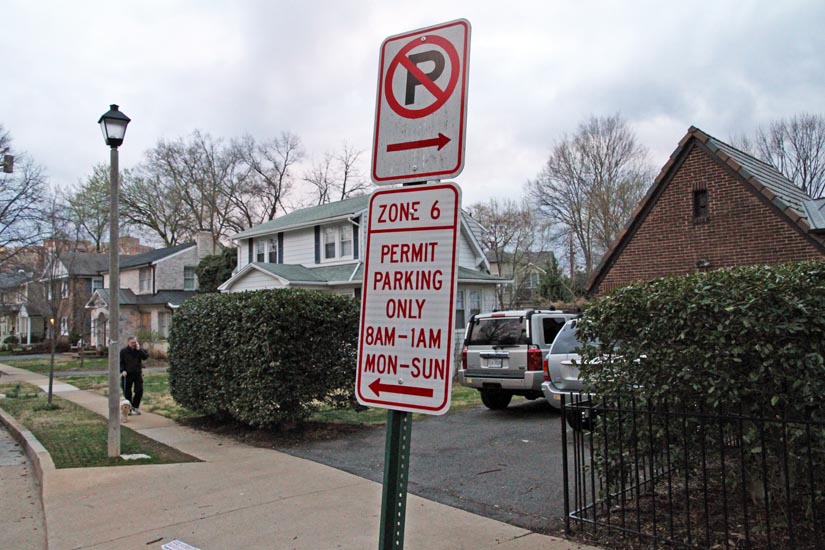
If you live in the right type of home in the right place, Arlington County will reserve street parking for you and your neighbors for much of the day.
But the Residential Permit Parking program is under review and a county staff recommendation on whether it should continue as currently conceived is expected soon.
The review has dragged on since it was launched in 2017, when the county put a moratorium on approving new permit parking zones, and was further delayed by the pandemic. County officials, however, now say they’re going to skip holding more public engagement meetings on the topic, either virtual or in-person, and move forward with the aim of County Board action in January.
Meetings had been planned for the spring, but were cancelled due to health concerns. A county spokeswoman says county staff decided against additional meetings due to equity concerns.
“Staff looked into holding the dialogues online but decided that holding online dialogues would not be an adequate replacement,” Arlington Dept. of Environmental Services spokeswoman Kathryn O’Brien told ARLnow. “There are tools for holding the dialogues online, but there are challenges to bringing together a diverse group of Arlingtonians for a meeting of three hours or more online.”
“An inclusive group of participants at the dialogues would be especially necessary because residents are divided on the RPP program,” she continued. “The County could have waited until in-person public meetings resume but continuing to delay the RPP Review increases the chance that decision-makers will see the feedback currently captured as out-of-date. Delaying the review also continues the moratorium on petitions for new or modified restrictions.”
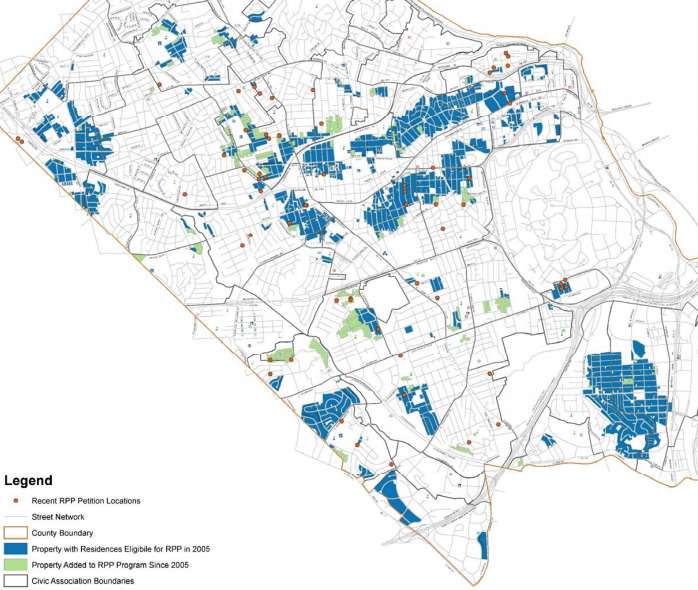
There are few issues that raise local passions like parking, and the RPP program has sharply divided residents.
The program started in the early 1970s, when Aurora Highlands residents successfully petitioned the Arlington County Board to approve restrictions that would keep Crystal City commuters from parking in the neighborhood. The county won a Supreme Court challenge to the restrictions and gradually expanded the program to other neighborhoods.
Eventually, residents of new apartment buildings and condos were excluded from the program, as access to street parking became a sticking point with neighbors of proposed new developments. And neighborhoods well away from Metro stations and office districts started getting approved for restrictions.
The tide started to turn against the program a few years ago, as more neighborhoods sought to add parking restrictions, raising questions about the fairness of reserving increasingly large portions of the public road network for the vehicles of certain residents.
Last year, the County Board repealed some RPP restrictions in the Forest Glen and Arlington Mill neighborhoods, which apartment residents said made it difficult to park in the neighborhood for those who do not work a traditional 9-5 job. The decision was contentious, however.
A recently-released report on the RPP review process includes comments from surveys that further reflect the divide.
“It doesn’t seem fair to me who is eligible now. Higher density homes with less curb space should be eligible as single family homes,” said one resident quoted in the report.
“The County should NOT make apartment, condo, and townhouse residents eligible for parking permits because it will encourage more cars and further overcrowd parking resources,” said another.
The report notes that the population eligible for RPP skews whiter and more affluent than those who are not eligible. White residents are 84% of the population in RPP zones, compared to 76% of the population outside of RPP zones. Households making $200,000 or more are 32% of the population in RPP zones, compared to 19% in non-RPP zones.
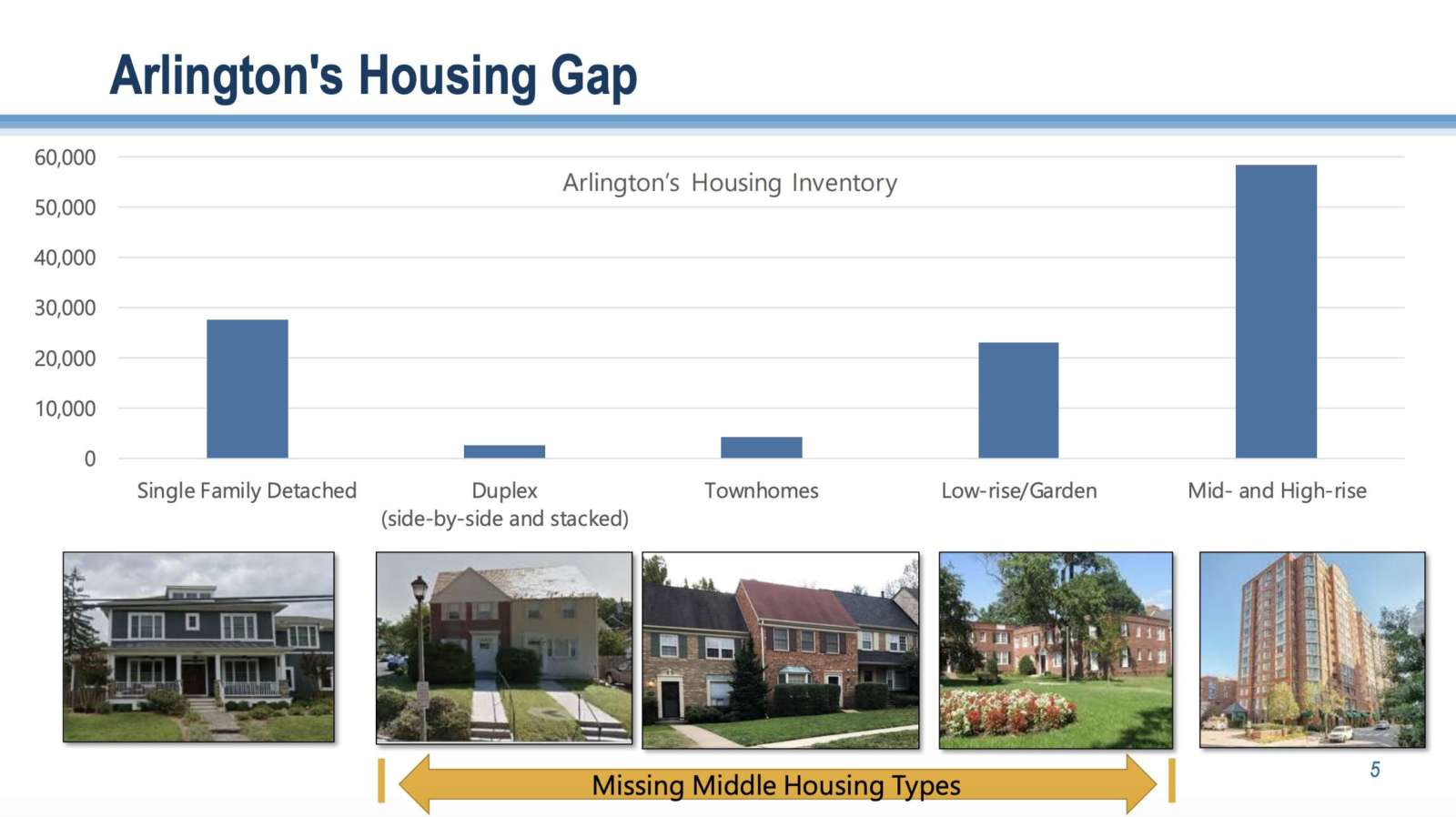
Furthermore, only 25% of those enrolled in RPP live in multifamily buildings like apartments and condos; by comparison, 71% of Arlington’s overall population lives in multifamily housing.