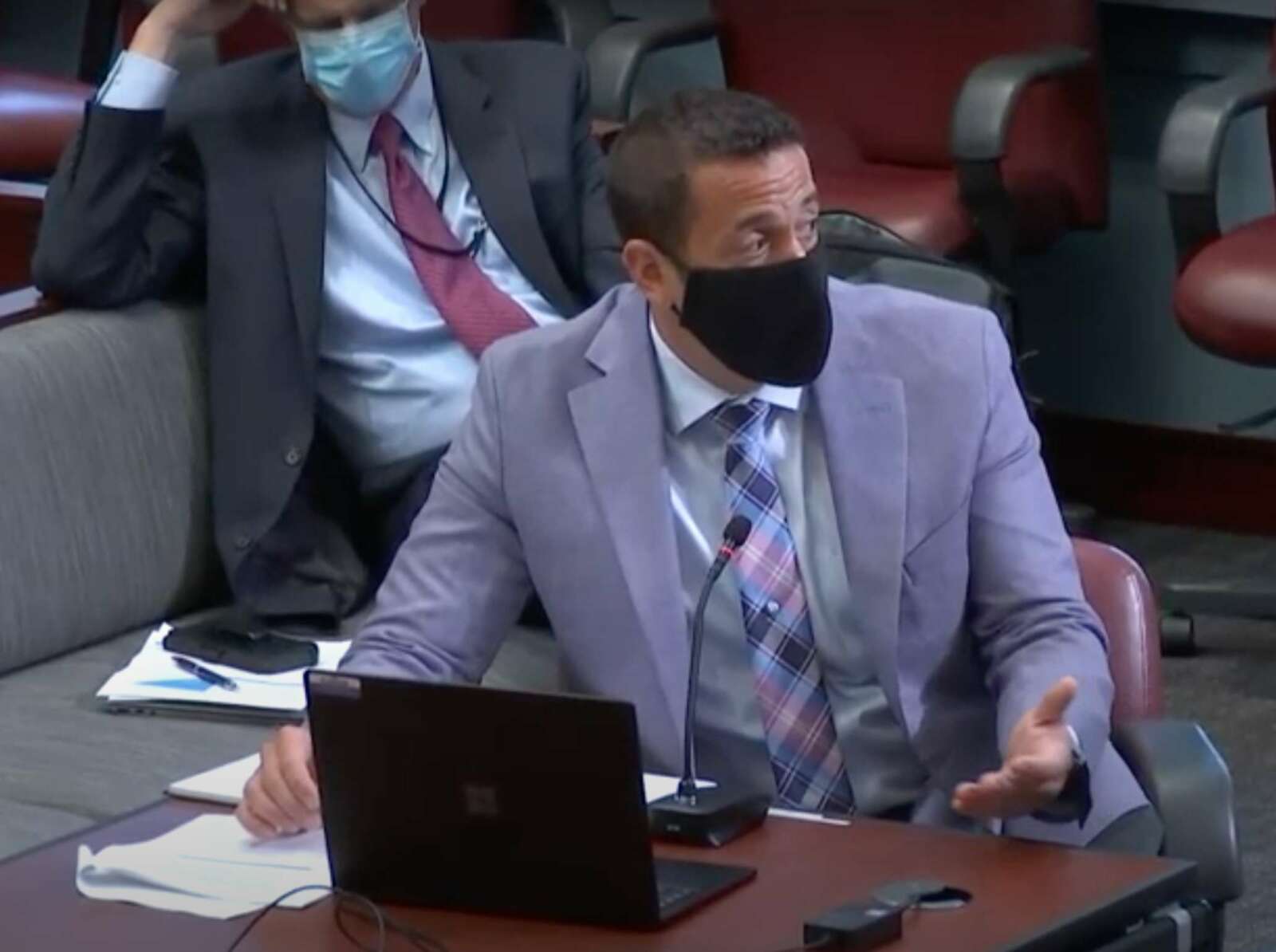

Independent County Board candidate Adam Theo (courtesy photo)

Last week, we invited the four candidates running in the general election for a seat on the County Board to write a post about why our readers should vote for them next Tuesday (Nov. 2).

Here is the unedited response from Adam Theo:

Hello, I’m Adam Theo (aka “Theo”), an independent progressive libertarian running for Arlington County Board.

I’m an 8-year resident of Arlington currently living in Ballston, where I’ve enjoyed our excellent parks, access to transit, and how safe the county is. I’m proud to serve my community as Secretary of the Ballston-Virginia Square Civic Association as well as voting delegate to the county Civic Federation. Since 2018, I’ve been the Chair of the Libertarian Party of Northern Virginia where I’ve more than tripled the active volunteer base, expanded the organization into Loudoun County, and lead the establishment of dedicated teams for communications and policy task forces.

I’ve been an avid hiker, cyclist, computer nerd, photographer, fan of good historical biographies, and have an undeniable weakness for Reese’s Peanut Butter Cups. As a fairly straight-to-the-point, fiscally responsible, policy-wonk kind of person I have lot of criticisms of the current County leadership and local politics.

My background and experience bring a unique experience to Arlington’s politics. I would be the only veteran on the county board, with 9 years in the Air Force Reserves as a structural civil engineer. I’ve also lived both sides of law enforcement, with 9 years as a communications consultant within the Department of Homeland Security working alongside police and other first responders across the country but had also served 4 months in county jail down in Florida during 1999/2000 when, as a teenager, I got into a lot of foolish trouble for myself. Finally, I’ve been homeless twice — first for a few months during a Florida summer in my 20’s, then again in a DC winter through the “Snowmageddon” of 2009.

This time in the criminal justice system is where I first saw problems and became an advocate for reform including ending the “War on Drugs”, abolishing Qualified Immunity, providing greater civilian oversight of law enforcement, and de-militarizing our police forces. And while experiencing homelessness I saw firsthand there’s no single root cause — but instead dozens (if not hundreds) of factors — each requiring their own solutions.

There is no “silver bullet” for any of our community’s problems, but there are proven ways to improve them. That’s why as a county board member — in addition to the above police reforms and taking on homelessness — I’d also push for:

  • Smarter spending that prioritizes public safety, helping local businesses, and our environment over luxury amenities or tax breaks to Fortune 500 companies.
  • Zoning and permitting reforms for “Missing Middle” housing as well as change how we handle affordable housing by using Community Land Trusts.
  • Accountability and transparency of our government by fully funding, empowering, and expanding the County Auditor’s office while adopting changes to how local officials are elected.
  • Protecting our parks and environment with better market incentives for green development, solar programs, and park expansion.

I’m Adam Theo – an independent progressive libertarian for Arlington County Board. Find and follow me at TheoForArlington.org and as @TheoForARL on Facebook, Twitter, and Instagram. Be sure to join my email list to get key information first. I’m using 2021 to establish my campaign’s organization with needed infrastructure and to introduce myself to the residents of Arlington that I’ve not yet met. I will then be running in 2023 or 2022 to finally bring much needed independence to the County Board.
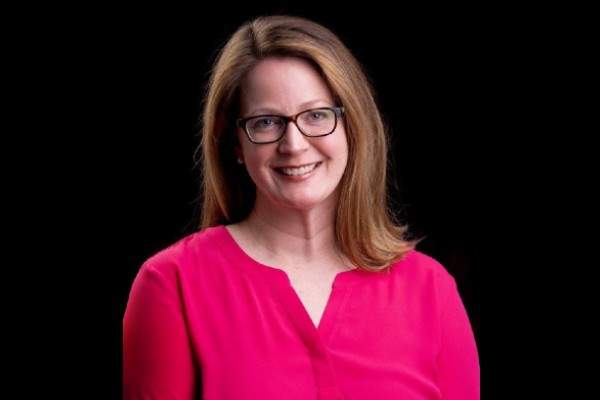
Last week, we invited the four candidates running in the general election for a seat on the County Board to write a post about why our readers should vote for them next Tuesday (Nov. 2).

Here is the unedited response from Audrey Clement:

I’m Audrey Clement, Ph.D., Independent candidate for Arlington County Board. As a 17-year Westover resident, long time civic activist, and former member of the Transportation Commission, I’m running for County Board because it has pushed harmful policies resulting in:

  • overcrowded schools,
  • gentrification,
  • loss of green space, and
  • a 10-year average annual effective tax rate increase that is more than double the rate of inflation.

The pandemic has challenged residents’ ability to make ends meet, with many businesses shuttered and people out of work or facing eviction. In response other Northern Virginia jurisdictions reduced their tax rates earlier this year. Not so Arlington County Board, which adopted a tax package that together with rising assessments increased the effective real estate tax rate by 6 percent. (See FY 2022 Adopted Budget, Revenue Summary, p. 114)

https://budget.arlingtonva.us/wp-content/uploads/sites/18/2021/07/FY22A-Revenue-Summary.pdf

Another Board priority that I oppose is its push for so-called “missing middle” housing–multi-family dwellings in single family home neighborhoods. Contrary to what the County says, “missing middle” is a euphemism for up-zoning that will not make housing more affordable. Instead, it will inflate land values, resulting in higher housing prices, overcrowded schools, more traffic congestion, loss of tree canopy, increased runoff and more air pollution.

The County under my opponent’s leadership has packaged up-zoning as the solution to racial inequality despite the fact that few minorities will qualify for mortgages on up-zoned lots.

Finally, while I agree with the police reforms recently adopted by the General Assembly, I oppose symbolic gestures. The fact that Lee Highway has a new name and the County has a new logo, means nothing to people of color facing inferior employment, housing or educational opportunities.

Changing the name of W&L High School in 2019 did not close the minority student achievement gap. In fact, it helped hide the dirty little secret that the County was investigated by the Justice Department in 2018 for discriminating against English language learners.

The inequitable policies pushed by Arlington County government are the direct result of the fact that it has been controlled by the same political party for decades. Some have criticized the fact that I’m a repeat candidate for public office. I’m proud of my record of challenging the political machine that runs this County, and I solicit your support in defeating it.

If elected, I pledge to:

  • Seek immediate tax relief for residents and businesses.
  • Say YES to affordable housing and NO to “Missing Middle” up-zoning.
  • Preserve Arlington’s cultural heritage. Stop permitting the destruction of historic structures like the Rouse estate that was demolished in March, 2021.
  • Save our parks, streams and tree canopy. Stop clearcutting wooded areas along Potomac tributaries in the name of stream bed restoration.
  • Say YES to real social justice reforms and NO to symbolic gestures.
  • Promote real democracy. End one party rule in Arlington County.

If you share my agenda, then:

  • Spread the word about my candidacy.
  • Donate to my campaign.
  • Help make the “Arlington Way” more than an empty phrase.

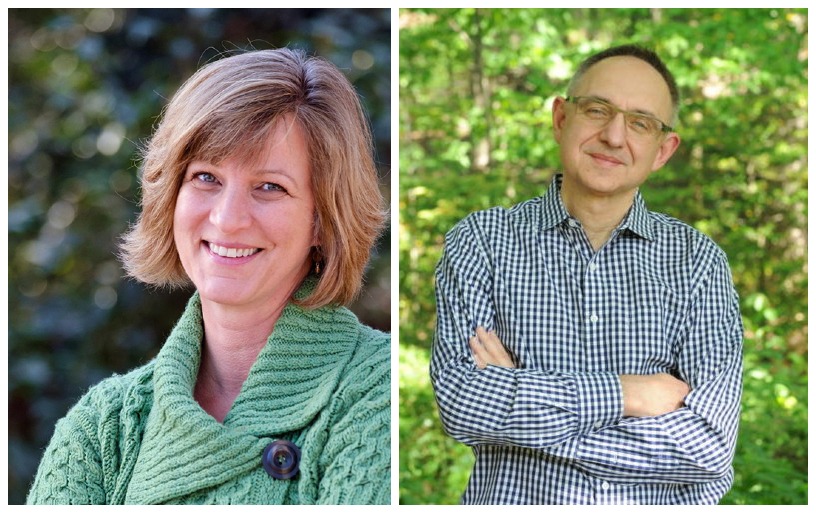
Democrat-endorsed School Board candidate Mary Kadera (left) and Democrat nominee for County Board Takis Karantonis (right)

Progressive Voice is a bi-weekly opinion column. The views expressed are solely the authors’. 

The editors of Progressive Voice believe a core value of progressive government is for leaders to self-examine, strengthen and innovate to enhance opportunity for every person. In that vein, we explored Democratic candidates’ approaches to leadership and decision-making as we interviewed Mary Kadera, candidate for Arlington School Board, and Takis Karantonis, candidate for Arlington County Board. The two interviews have been edited and condensed.

Mary Kadera

PV: On the election trail, what have voters told you they want in a leader?

Kadera: Some of the messages I am getting loud and clear are these:

Accountability. There is a sense on the part of many, rightly or wrongly, that there’s not a tremendous amount of accountability in terms of the School Board asking hard questions, or taking ownership of hard problems. People want to see a School Board leader asking critical questions, not in the sense of setting fire to everything the staff is doing, but the injection of healthy skepticism.

Willingness to admit missteps. It has felt to some that we talked about our school system as our jewel, and that there were no flaws in this stone. For many people, their lived experience didn’t match that, and particularly families of our English-learners or students with disabilities… parents of gifted students…it runs across a range. …Being honest about the reality is the first step to improving.

PV: What would demonstrate effective leadership, in your view?

Kadera: On a micro level, that I have taken the time to engage with someone, and I voted in a way they didn’t like, and they said, ‘I don’t agree with the decision you made, but you explained why you did that, and you heard me, and handled this is a responsive and responsible manner.’ On the macro level, it would be people having a higher level of trust in the School Board. We’re in an environment now where …it’s kind of a gotcha moment, and ‘when you do wrong, I’m going to go on social media and blast you,’ and that’s not healthy. It’s essential that the public have healthy skepticism, but also that we feel that we’re partners in improvement, and that feeling is lacking right now.

PV: Hundreds of kids did not come back to APS this year. They had the choice, and the means, to do something else. How do you balance competing needs and priorities so that we have a school system that really does “work well for every single family”?

Kadera: I’ve talked with families that made the decision to pull their kids… one category was students with disabilities, either there were medical/safety concerns, or they felt interventions their kids were getting in private school worked better than when they were in APS. The second was parents of kids who were identified as gifted, or academically high performing, and they were worried that APS would be so necessarily focused on addressing learning loss that the more advanced students wouldn’t have enough of a challenge, enough attention paid to them. To me, equity is about making sure every student has the right level of support and challenge…it has to be everybody. We are in a dangerous situation if we communicate, either intentionally or unintentionally, that public education only works for certain ‘kinds’ of students; then that’s a slippery slope to a situation where we find ourselves in the land of vouchers and privatization of education.

(more…)


Michelle Winters (courtesy Alliance for Housing Solutions)

The head of a local nonprofit that advocates for affordable housing is stepping down after five years at the helm.

Michelle Winters announced Friday that effective Nov. 30, she will no longer be the executive director of the Alliance for Housing Solutions (AHS).

“I am inspired by your dedication to the well-being of Arlington’s lower-income residents and to creating a more welcoming, affordable, and inclusive Arlington for Everyone,” referencing a set of AHS principles. “I’m proud of the many successes we have accomplished together, although I know there is still so much critical work to do.”

According to the alliance’s Board Chair Jenny Lawson, the board is “undertaking an active search for a new executive director.”

The nonprofit, founded in 2003, works to increase the supply of affordable housing in the county and Northern Virginia through education, policy development and advocacy.

Since Winters joined AHS in May 2016, she notes, the county has taken a number of steps to preserve and build affordable housing, including one in which AHS was closely involved: expanding opportunities to build Accessory Dwelling Units.

During this time, the alliance has also supported affordable housing developments throughout the county.

The nonprofit maintains discussion groups, hosts events and educates residents about Arlington’s housing efforts, from the Missing Middle Housing Study to its Affordable Housing Investment Fund. Last year, amid the national reckoning on race, it produced a video on race and housing in Arlington.

AHS has a fairly modest budget to do this work, tax records show. During Winters’ tenure, AHS’s annual donation base increased from $85,000 to nearly $148,000 in 2019. Filings indicate a good chunk is spent on employee compensation, operational costs and office maintenance for its space at 3100 Clarendon Blvd.

Winters earned $55,946 in reportable compensation in 2019, for 20 hours per week of work, according to the nonprofit’s IRS Form 990 filing.

Some of the biggest donors to AHS are local affordable housing developers AHC, Inc. and Arlington Partnership for Affordable Housing, as well as and Virginia Housing, a state-created nonprofit that helps Virginians attain housing.

The alliance’s Board of Directors praised Winters’ work.

“She has been a thoughtful and dedicated champion for affordable housing during years of significant growth and transition, generously sharing her policy expertise, partnership skills, and wisdom with those seeking to maximize opportunities for safe, decent, and affordable housing for everyone in Arlington,” the directors said. “Because of her dedication and commitment to our mission, AHS is strong and well-positioned to continue its work, and we will miss her many contributions and wish her well in her future endeavors.”

Lawson thanked the departing executive director “for her readiness to assist with transition issues now and later.”

Winters, who served on Arlington’s Housing Commission from 2007-10, says she will continue being “an active voice for change in Arlington, across Virginia, and nationwide on housing policy.”

AHS will highlight her accomplishments during its upcoming 2021 Bozman Awards on Nov. 14.

Winters has also worked on housing policy at the national level, working for the Fannie Mae Foundation and leading initiatives at two of the country’s largest affordable housing organizations, NeighborWorks America and the Local Initiatives Support Corporation.


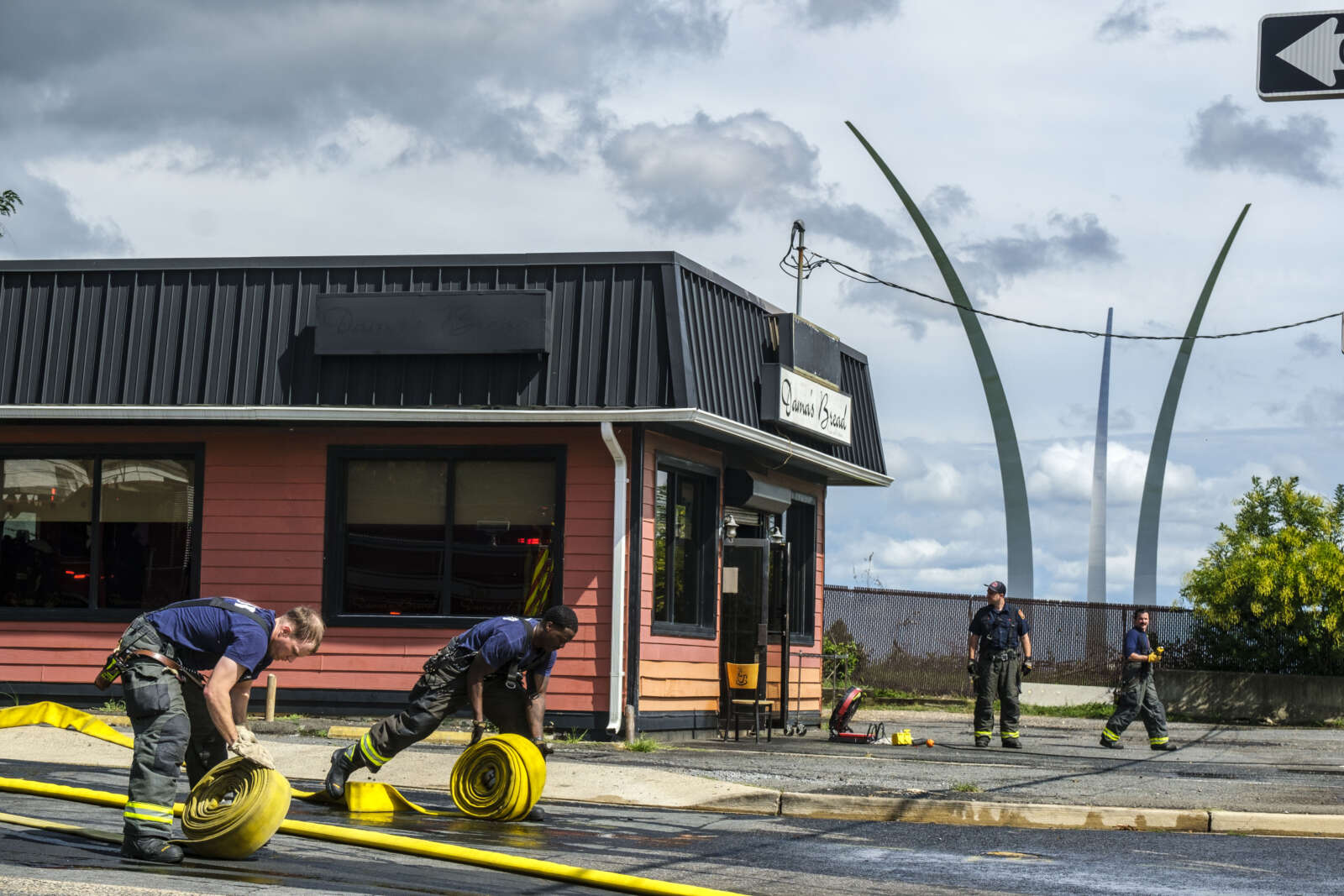
Arlington County Fire Department on the scene of a kitchen fire at Dama on Columbia Pike on Thursday (staff photo by Jay Westcott)

(Updated at 6 p.m.) It’s a Friday afternoon and the start of what promises to be a gorgeous, basically perfect early fall weekend.

Here’s wishing lots of sunshine and quality time out of the house for our readers over the next couple of days.

If you are headed out tonight to grab dinner, there is a possible restaurant closure to be aware of.

Portabellos, the Langston Blvd (formerly Lee Highway) restaurant, was set to close tomorrow. But a Nextdoor post from the owner, since deleted, said that that landlord locked him and the restaurant out today. Police were also dispatched to the restaurant earlier today for a report of an escalating dispute between the owner and the landlord, according to scanner traffic. The restaurant’s phone line was disconnected and we were unable to reach the owner to see whether Portabellos would get its last hurrah or not.

Separately, the phone line at Dama on Columbia Pike rings to a perpetual busy signal, after its kitchen fire yesterday, but we’re now told the pastry shop and Ethiopian restaurant is open “with normal operations.”

Now, without further ado, here are the most-read ARLnow articles of the past week.

  1. Viral Video Shows Marines Helping Stranded Driver During Thursday’s Flooding
  2. Marine Corps Marathon Canceled Again
  3. Police Ask for Help Finding Fugitive Accused of Clarendon Stabbing
  4. Morning Poll: What Do You Think of the New County Logo?
  5. Arlington Firefighters Are Also Sounding the Alarm on Pay
  6. Rider Fell onto Tracks While Walking Between Metro Trains in May
  7. Arlington Sees Sustained Drop in Covid Cases
  8. County Board Adopts Plastic Bag Tax, Joining Fairfax County and Alexandria
  9. What $500,000 Can Get You in Northern Virginia Real Estate
  10. Does the ‘Missing Middle Housing Study’ Need a New Name?
  11. ACPD and Dept. of Human Services Plead for Funding Boost Amid Staff Exodus
  12. APS Staff Say Virtual Learning Program Needs ‘Drastic’ Improvements

Feel free to discuss those stories or anything else of local interest in the comments. Have a great weekend!


For nearly one year, Arlington County has studied whether the zoning code should be rewritten to allow low-to-moderate density housing types like duplexes in more neighborhoods.

The initiative is dubbed the “Missing Middle Housing Study.” It refers to mid-sized housing types, such as duplexes, triplexes, quads and townhomes, which are denser than a single-family home but smaller than an apartment or condo building.

The county says adding homes in the “Missing Middle” could tackle a local housing shortage. Since its launch, the study has been debated in panels and County Board candidate forums and referenced in discussions about changing zoning ordinances that have hurt some duplex owners.

But something simple may be hindering public perception of the study: the name.

“Everybody assumes it has to do with affordability… and they hang their own viewpoints on that,” said Jim Lantelme, who chairs the Planning Commission.

Speaking on behalf of himself as a resident, Lantelme says a name change may help people disassociate “Missing Middle” and affordable housing, which are separate (but related) issues. He presented this idea to during a joint Planning Commission-County Board meeting last week.

“Missing Middle, for whatever reason, people have a negative reaction right off the bat,” he tells ARLnow. “Why go off a name that’s closing off minds, rather than one that encourages dialogue — one that people have an open mind toward? By renaming it, we might have a better dialogue without having to overcome misapprehensions.”

The county is primarily examining whether different forms of housing can blend into existing, single-family home neighborhoods. The goal is a greater variety and supply of housing, including units that are less expensive than single-family homes but not necessarily affordable to those making well below the area median income in the same way as dedicated affordable housing.

Whether “Missing Middle” housing can be purchased by people in different income brackets depends on size, location and market forces, says Elise Cleva, a spokeswoman for the Department of Community Planning, Housing and Development.

To uncouple “Missing Middle” and affordability, Lantelme suggested names that clarify the study’s exploration of form. He pointed to “Low-Rise,” the name Los Angeles gave to its effort to add more low-rise multi-family buildings to the city.

“Why hobble yourself at the front, when you can try to get a term that is more accurate, that doesn’t have the connotations that people seem to be associating Missing Middle with, which is affordability,” he said.

Cleva said CPHD is also picking up on a disconnect. Over the next few months, during targeted engagement with members of harder-to-reach populations, she said CPHD will debut a clarifying tagline.

“In our interactions with them, we’ll be using a new tagline for the study, ‘Expanding Housing Choice’ and also continuing to articulate that the term ‘Missing Middle’ describes the size and type of a home — in the middle of a spectrum of housing options ranging from single detached homes to mid- and high-rise apartments and condos,” Cleva said.

She says CPHD is trying to address some misconceptions that resulted from a lack of engagement with certain populations.

“Basically, while we’ve reached many people, our engagement data thus far shows that there are many we have not reached, especially among renters and populations that have historically had less access to participate in planning processes,” she said. “It follows then that people we have not had a chance to dialogue with about the study may be unclear about its purpose and scope.”

On the question of renaming the study, Cleva said it’s not out of the realm of possibility.

“[We] remain open to the possibility of renaming the study, should we continue to receive feedback about the name causing confusion,” she said.


Good morning, Arlington. Jo here. It’s Tuesday, September 21: National Chai Day and Stephen King’s 74th birthday.

This post is exclusively for ARLNow Press Club members. Not a member? Join here.

Members can sign in here.


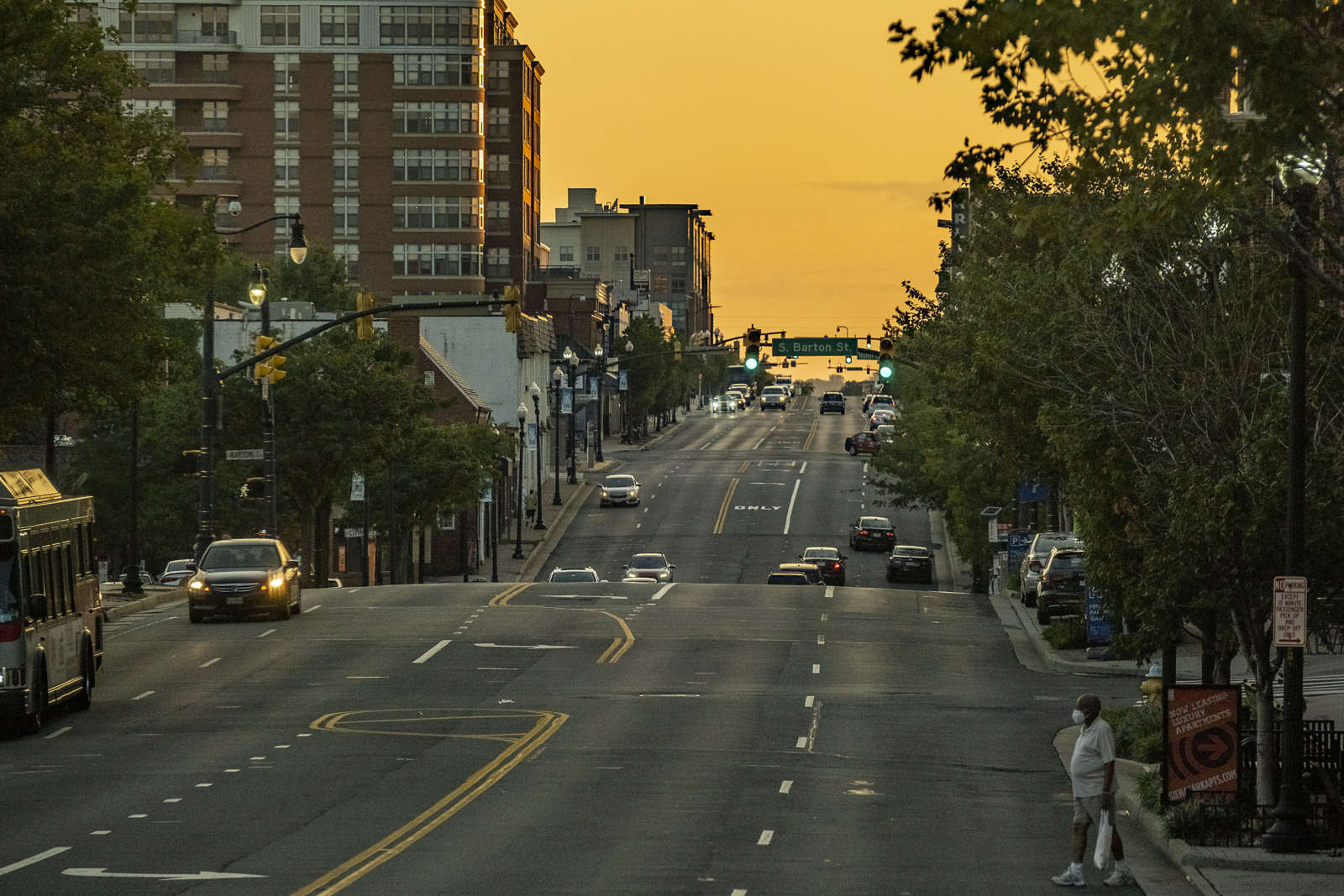
Columbia Pike at sunset on Monday night (Staff Photo by Jay Westcott)

An earlier version of this feature article was published via email for members of our ARLnow Press Club, whose support makes more in-depth reporting like this possible. Join the Press Club here.

The past, present, and future of Columbia Pike is rather easy to see.

Cross Glebe Road and there’s the Broiler, first opened in 1959 and, today, still slinging cheesesteaks. Right by the ramp to I-395, the historic Johnson’s Hill neighborhood (also known as Arlington View) remains home to a number of the same residents that have lived there for decades.

Drive the Pike from Washington Blvd to where it crosses Leesburg Pike in Fairfax County and you’ll see a number of low-slung businesses and massive apartment complexes that were built during the Eisenhower administration.

But, over the last decade, the Pike has seen plenty of change. There’s now modern shopping plazas, cavernous parking garages, and gleaming new apartment complexes. Sure, there’s no streetcar, but in frequent intervals buses go up and down the Pike, pausing at a million dollar bus stop (and, soon, numerous upgraded but less expensive stops).

The Pike has continued to have a reputation for being one of the more affordable areas to live in Arlington and, with that, a diverse neighborhood has thrived. The Pike — and its corresponding 22204 zip code — is often referred to as a “world in a zip code.”

At the same time, the future is nearly here and it may bring changes that not everyone is happy with — or could afford. Redevelopment of decades-old shopping centers, forcing the closing of long-time legacy businesses. Garden-style apartments are being turned into 400-unit buildings. Mixed-use projects are set to replace under-used parking lots.

Not to mention, just a few miles away, Amazon is building a headquarters which is likely to bring more people and development to the Pike.

Today, about 41,000 people live along the Pike corridor, according to county data. That’s more that a 10% increase compared to a decade ago. Over the next thirty years, much of Arlington’s population growth is expected to be concentrated along the Pike.

Officials are looking to adapt to these changes by turning Columbia Pike into what the county calls a “vibrant… walkable, lively ‘Main Street’, an effort that first began more than 30 years ago.

In 1986, the Columbia Pike Revitalization Organization formed in response to the Arlington County Board providing a $50,000 grant towards economically reviving the Pike.

The grant and the formation of CPRO would be, as the Washington Post described at the time, “the first step in what some see as a 10-year effort to coordinate improvements that could lead to revitalization of the highway as well as a return of community pride.”

That was followed over the next decade plus by a number of revitalization plans, policy changes, and initiatives – including in 1990, 1998, and 2002 — all in an attempt to bring more businesses, “revitalize,” and create a more “vibrant” Pike.

But one of the most consequential shifts in what the Pike would look like going forward was the Board’s approval of the Columbia Pike Form-Based Code for commercial centers in 2003 and, a decade later, for residential areas.

“It really gave us a bit of a blueprint on how we were going to move forward,” CPRO Executive Kim Klingler tells ARLnow.

The purpose was to standardize how new buildings along the Pike were physically going to look and integrate into the community.

“It focuses on the form of the building, which is a little different from the way that other zoning codes work,” says John Snyder, Chair of CPRO’s board. “Like, how tall is the building? What’s the shape? [How many] setbacks from the street? How many stories should it be? [The code] puts together all the rules about that… it’s all set in advance.”

The intent was to “foster a vital main street” with mixed-use buildings that had shops, cafes, and other commercial uses on the ground floor and residences and offices above. It also encourages more sidewalks, trees, and public spaces (like Penrose Square).

The hope is to create a more dense, pedestrian, and public transportation-friendly community.

“A walkable community, like a traditional downtown,” says Snyder.

The plus of following a form-based code for the community is that it is known what new buildings are going to look like and avoids a potential years-long battle with a developer over details like height and design.

For the developer, adhering to the code provides incentives like more density and less red tape.

When first adopted, the county was one of the first jurisdictions in the country to use this strategy to redevelop existing, older neighborhoods.

For the most part, proponents say it has worked. While developers can choose whether they adhere to the code, more than 90% of the new buildings along the Pike were developed with it according to Snyder.

“We’ve gotten 12 or 13 new projects, gained some plaza areas we didn’t have before, and we got ground floor retail,” he says. “We got economic revitalization.”

But with economic revitalization, comes other challenges.

With more amenities, a neighborhood becomes more attractive and vulnerable to natural market forces.

“The whole idea for a building like Centro was to build one that has amenities like you’d expect on [Metro’s] Orange Line, except cheaper,” says Snyder. “Because it is close to everything… it drives prices up. And that puts pressure on the affordable apartments.”

While the county has made efforts to preserve and increase affordable housing along the Pike, not all of their proposals have been embraced by the public as good enough.

It isn’t just about rental units, either. Economic revitalization can drive up housing costs and potentially prevent those in the middle-income brackets from buying homes in the community.

While there are a lot of reasons why the Arlington housing market is hot right now, the redevelopment of Columbia Pike is a factor.

“[Housing] prices are definitely up and… can change the tone of a neighborhood,” says Snyder.

The county’s Missing Middle Housing Study is diving into how to address this challenge, but solutions may be hard to come by even if everyone wants to preserve a community that’s accessible for all.

“The goal has always been for the Pike to be a very diverse community — culturally, socioeconomically, and generationally,” Klingler told ARLnow. “We still want to make Columbia Pike a place for all people.”

But is that even possible? Some certainly don’t think so.

(more…)


Arlington’s planning department is stretched too thin and cannot take on a bigger workload, its director told the County Board this week.

At full strength, the 30-person staff of the Department of Community, Planning and Housing Development shepherds a myriad development projects and permit applications through county processes, from cafés seeking to renew their outdoor dining permits to developers planning large-scale projects. It also helps to produce the lengthy planning documents that guide the future development of neighborhoods.

Right now, with a flurry of activity underway in the wake of the arrival of Amazon’s HQ2, seven major long-range planning studies are in process. The department anticipates overseeing 10 major development applications while working through more than 400 minor development and administrative approvals, CPHD Director Anthony Fusarelli, Jr. told the Planning Commission and the County Board during a joint meeting.

“To have this number of ongoing planning efforts and engagements at one time… truly represents a substantial volume of ongoing work being managed by the division, also requiring time energy and resources by other county staff and the community,” Fusarelli said during his presentation. “Collectively, these ongoing efforts command a significant amount of staff resources, leaving little if any capacity to add new work and initiate additional projects at this time.”

Once major projects are done or big milestones reached, he said staff will be freed up to start new initiatives or address new county priorities.

While deferential to the hard work of CPHD, Planning Commission and County Board members had a few ideas for work CPHD should undertake in the near future, from changing how the county evaluates the environmental impact of developments to not losing sight of deferred projects such as implementing the plan to enliven Four Mile Run Valley.

One potential change could save CPHD time and resources, argued Planning Commission Chair James Lantelme. Currently, renovations to “non-conforming” duplexes, townhouses and low-rise multifamily buildings go through the same lengthy approval process used for major developments, known as Site Plan Review. He suggested instead that these folks, who want relief from zoning regulations, go through the Board of Zoning Appeals, which hears similar requests from those on single-family residential lots.

“I’m assuming we’re going to be seeing more of these small things coming before us, and we think we really need to deal with this,” Lantelme said. “It’s a waste of the Planning Commission’s time, it’s a waste of staff time. We have a huge amount of consequential work, and to have a Site Plan for one duplex…  there’s no value added by doing that. It’s not appropriate, and in fact, it’s contrary to what our comprehensive plan is advocating for, for affordable housing — for housing period — and for equity.”

It’s likely on his mind because the commission oversaw one such project, a request to build out the deck of a townhouse, which recently received County Board approval, and members are now reviewing another, a duplex renovation proposed by the owner. The approvals feature televised, public meetings and detailed presentations created by planning staffers.

The townhome was in a “legacy district” used for a few developments in the 1970s, while duplex sits on a smaller-than-standard lot that had been grandfathered into a zoning district. Both owners proposed increasing the footprint of their home, tipping them into the Site Plan Review path, which requires lawyers, experts, and Planning Commission and County Board approvals.

“If it was a McMansion, it would go through BZA,” Lantelme said. “You have to go through more time, expense and uncertainty in order to have a duplex, which is what we want in these areas… It would really save us time money and staff resources if we could get this addressed.”

(more…)


Good morning, Arlington. Dana here. It’s Friday, September 17: National POW/MIA Recognition Day and quarterback Patrick Mahomes’ 26th birthday.

This post is exclusively for ARLNow Press Club members. Not a member? Join here.

Members can sign in here.


Adam Theo, independent candidate for the Arlington County Board (courtesy photo)

In heavily-blue Arlington County, independent candidate Adam Theo faces an uphill battle to pry local voters away from the incumbent Democrats in favor of his libertarian platform.

Theo said his multi-year campaign strategy has a pretty simple tactic at its heart: showing local progressives they have more in common with him than with the current County Board members.

Theo is a freelance communications consultant and media producer who is running for the County Board right as he finishes his nine-year contract with the Department of Homeland Security. He is on the general election ballot this fall with incumbent Takis Karantonis and independent candidates Audrey Clement and Mike Cantwell, but Theo said his real plan is to use this year to set up the groundwork for a full run in 2022 or 2023.

“It is really getting off to a start here,” said Theo. “I’m using 2021 as an opportunity to launch my organization website and start meetings. In 2022 or 2023 I’ll be running for a seat on the County Board. Even if that’s next year: i’ll be ready with a good campaign and solid foundation.”

Independent and Republican candidates typically get trounced in Arlington elections, where 80.7% of voters last year voted for Joe Biden and 71.6% voted for incumbent Democrat Libby Garvey. Theo said he’s taking inspiration from one of the few times in recent memory an independent successfully wrested a local seat from the Democrats in Arlington: when John Vihstadt won a special election in early 2014.

(Vihstadt went on to hand local Democrats a defeat that fall in the general election before ultimately losing his reelection bid in 2018.)

“[John] Vihstadt really set the precedent in winning two elections,” Theo said. “I think there is an appetite for the right kind of candidate.”

Arlington in 2021 is a different political landscape in many ways than 2014, though, and Theo and Vihstadt himself both said there are several factors that will make it more difficult for an independent to repeat that 2014 victory. In 2014, the proposed half-billion-dollar streetcar project for Columbia Pike became a rallying cry for locals concerned about the County Board’s spending habits.

Theo admitted he doesn’t have as convenient a campaign centerpiece.

“Right now in the county there are a bunch of issues people are concerned about and angry over,” Theo said. “First and foremost is response and recovery from COVID. In many ways, Arlington is doing well with vaccination rates, but barely so. We need to be doing a hell of a lot better with getting people vaccinated, getting people back into schools. Small businesses have suffered and affordable housing is not doing well. It’s not one issue like it was with the streetcar, it’s many issues. The challenge that I have is to build a coalition, to build a campaign around.”

Vihstadt said another challenge independent candidates face in 2021 is the looming specter of Donald Trump.

“It was certainly kind of an unusual alignment of the stars for me in 2014 when I won the special election, and then a full four year term that November,” the former County Board member told ARLnow. “I had issues on the overspending and projects that were nice to have but not essential, like the streetcar and the Artisphere, and people were concerned about insular group thinking. The chemistry today is a little different. Part of the problem today is that Donald Trump, who I never supported and spoke out against in 2016, has so polarized the electorate.”

Vihstadt said he’s hopeful that as the memory of Trump fades and the state works on bipartisan redistricting, independents could be back in vogue.

Theo said, for his part, distancing libertarians from the GOP is part of that.

“There’s an ideological preference for Democrats in the county,” Theo said. “That’s why the GOP continues to dwindle and do poorly election cycle after election cycle. It’s largely with ideology. The good thing with libertarians is we have a lot of overlaps with democrats, liberals and progressives. We fight for civil liberties and civil rights, and affordable housing. The whole zoning battle and the missing middle, is where the libertarians have a lot of overlap with progressive warriors in the county. I don’t think it’s an impossible task. I’m not going to pretend it will be easy, it’s the fight of a lifetime.”

Theo’s vision for affordable housing reform, though, looks somewhat different from the vision expressed by incumbent Democrats.

(more…)


View More Stories