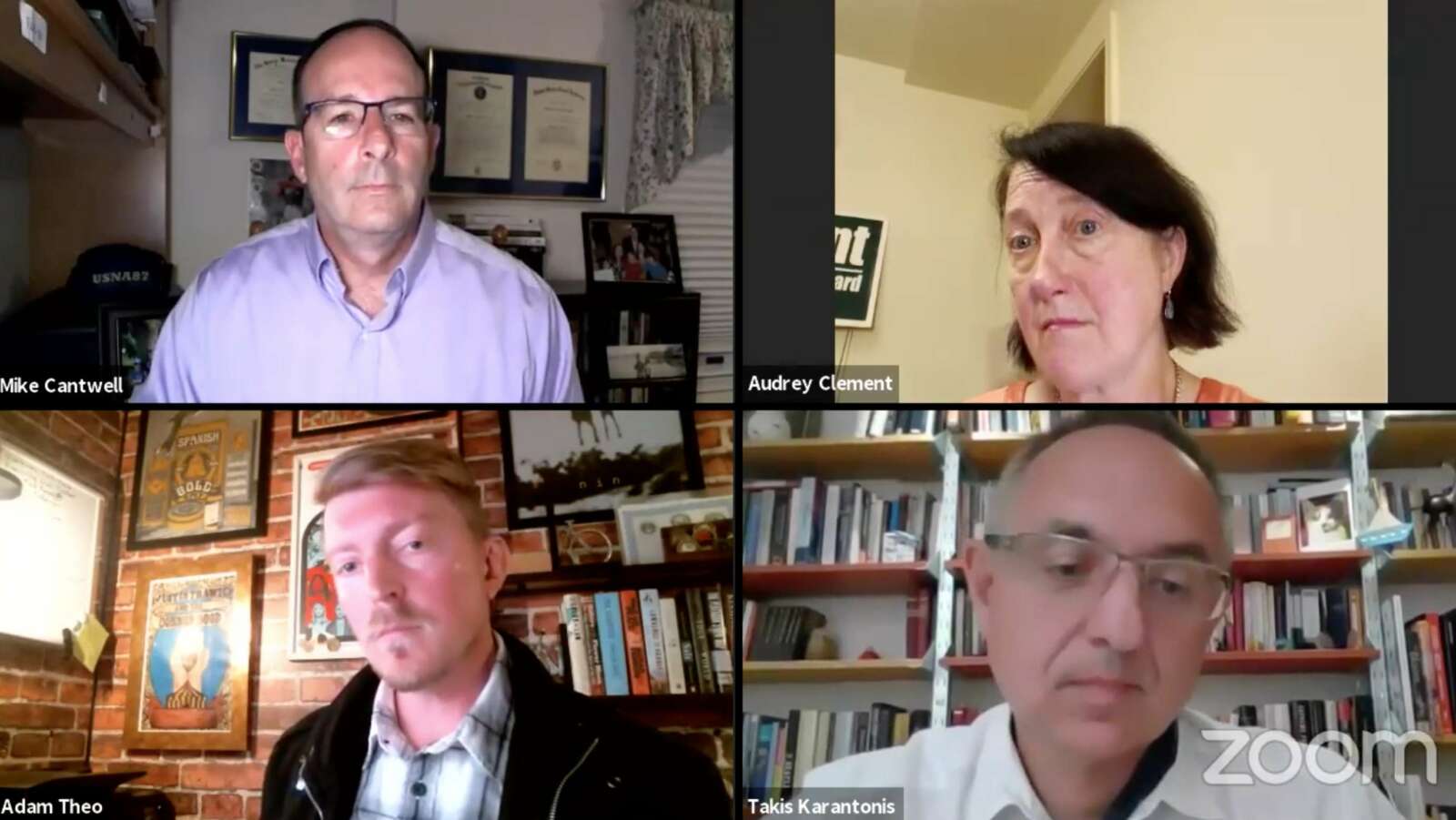
A screenshot of the four candidates for the County Board (via Arlington Committee of 100/Facebook)

Ranked-choice voting is supported by all four candidates for County Board, according to their comments at an Arlington Committee of 100 candidate forum held last night (Wednesday).

The event was the first candidate forum of the fall general election season.

Support is strong among the three independent candidatesAudrey Clement, Mike Cantwell and Adam Theo — who want to unseat Democrat incumbent Takis Karantonis. He won a special election in 2020 and his seat is now up for a full four-year term. Theo, a Libertarian, is the most recent addition to the ballot after officially launching his campaign this week.

While all four support ranked choice voting, the reform would not be ready for the upcoming Nov. 2 election, as the county is still hammering out the logistics of the system. Dismayed at the pace of implementation, the independents said the reform would reveal public support for candidates like them and add political diversity to the County Board.

“I’ve spent a lot of my free time promoting ranked choice voting in Virginia,” said Cantwell, who became the vice president of Fair Vote Virginia, which advocates for ranked choice voting in Virginia, in 2019. “I went to Richmond in February 2020 and lobbied to bring it to Virginia. At that time, to the surprise of many, the legislature passed bills 506 and 1103, which allowed it in [Arlington] and the rest of Virginia. Since that time, [the county has] taken very little action to implement that new law.”

Theo also criticized the lack of movement on implementing the new voting system and educating voters about it.

“It would’ve been awesome to have the logo-picking determined by ranked choice voting,” he said. “That would’ve been a great way to educate the public. Here we are, waiting for the county to proceed and provide results. I have a lot of skepticism for the County Board’s real willingness to push forward real reform. It puts their own positions, jobs, in jeopardy.”

Karantonis said he is on the record supporting ranked-choice voting and voted to fund an initiative to test it out.

“I put money where my mouth is,” he said. “I think this is a great improvement in democracy.”

During the forum the four candidates articulated their positions housing and on Arlington County’s goal of carbon neutrality by 2050. Both Karantonis and Theo said “affordable housing” is the biggest issue facing Arlington.

“I’ve been a housing advocate from day one,” Karantonis said. “The first thing my wife and I experienced [when moving here] was not being able to find housing, not having choices… Arlington is a community that looks back to a solid record of planning carefully for housing, of matching development with assets like transportation, schools and natural resources. We need to bundle these to support the creation of new housing choices because displacement is a real thing.”

Theo agreed.

“[Housing affordability] poses the problem of pricing out the elderly, low-income, immigrant and disabled people who are clinging on as it is already,” he said. “The number of housing units built in this county is horrifyingly low.”

But he took a jab at the County Board for talking about affordable housing and posing for photos at new developments, while not doing more to prioritize affordability. He spoke favorably of the Missing Middle Housing Study, a county-led effort to see if single-family home areas should be rezoned for more types of moderate-density homes, as a means to increase housing options for the middle-class.

Cantwell said he worries about affordability both in terms of housing and taxes.

“I think the biggest problem facing Arlington is runaway spending and taxes and lack of accountability in county government, [which] stems from lack of political competition,” Cantwell said. “I’m for affordable housing, but I question the outcomes of $300 million spent on a government-run affordable housing program… I think most Arlingtonians are interested in finding a market rate affordable housing place to live in, but not that many are interested in being part of government run program, where they have to submit tax returns, W-2s [and other] bureaucracy.”

Clement said the Missing Middle Study will create more housing, but nothing truly affordable, predicting people will continue to get priced out of their neighborhoods. She added that it won’t promote racial equity, citing a study from New York University that found between 2000-2007, upzoning in New York City “produced an influx of whites in gentrified areas, even as white population plummeted.”

“A far better solution is to repurpose unrented luxury units in the Rosslyn-Ballston corridor to moderate income housing,” she said.

(Another NYU study found little link between neighborhood gentrification and displacement of low-income residents, at least in New York City.)

(more…)


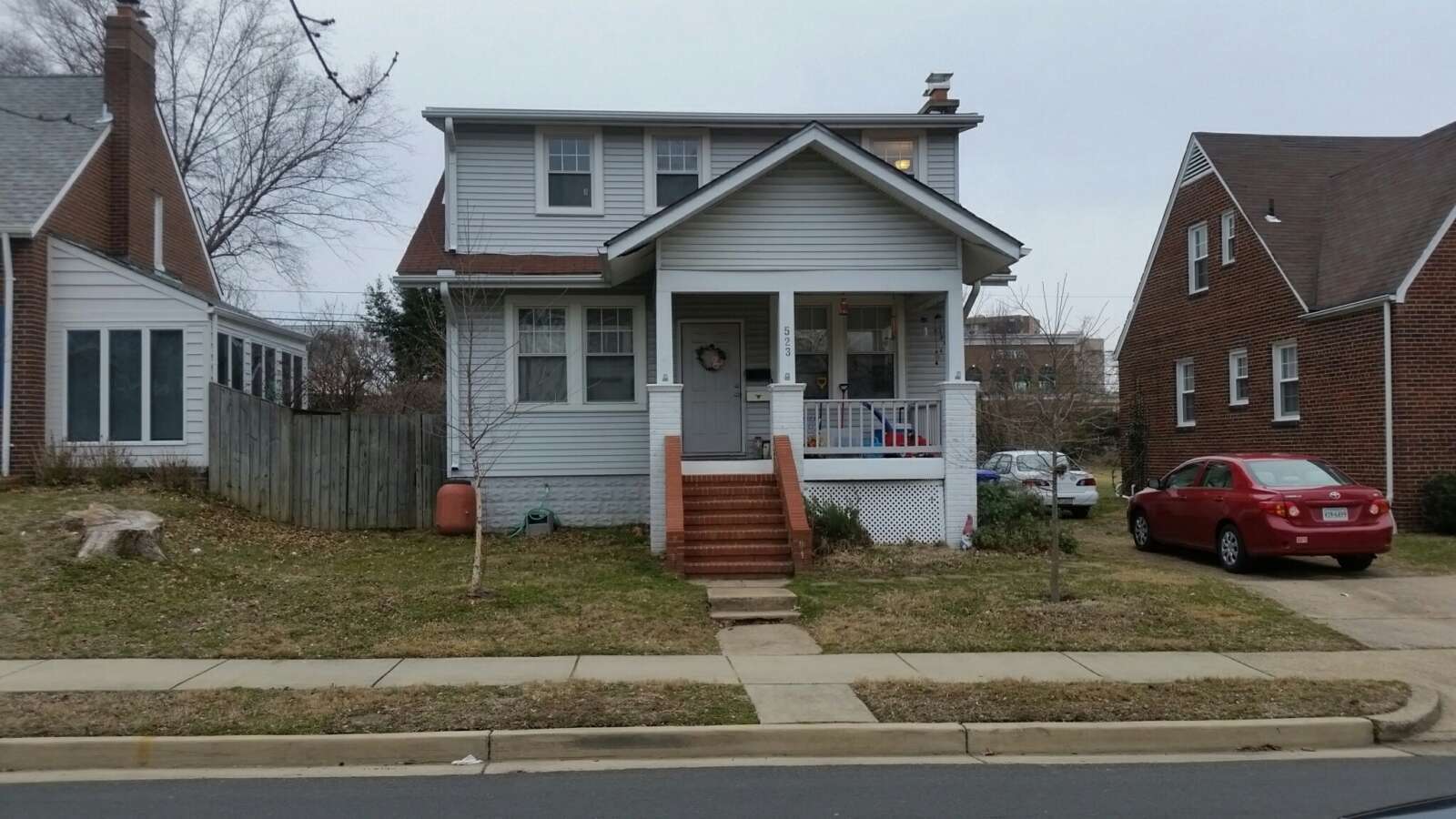
The Garrison residence at 523 24th Street S. (courtesy of Les Garrison)

(Updated at 6:15 p.m.) Seven years ago, Les Garrison bought a two-family home in the Aurora Highlands neighborhood so that his son’s family could live in one half and the other could be rented out.

He had always intended to renovate the home near Crystal City, which consists of two apartments, each with two bedrooms and one bathroom. He also wants to modernize it, making it accessible to people with disabilities and adding solar panels.

Garrison tells ARLnow he wants to provide an affordable housing option to his son, a county employee, and people like his other tenants — two women over 60, a barista and a graduate student.

“My son… he can’t afford to live in this neighborhood, unless we have revenue coming in from the house,” Garrison said. “That’s what this is about: allowing him to stay in Arlington.”

He expected to get approvals in 2017 and start construction in 2018. Instead, his plan to enlarge and modernize the house will require approvals from the Planning Commission and the County Board as part of a more complex county permitting track that even features a county webpage devoted to the project.

The Garrison’s Site Plan Review process, which involves more scrutiny and more revisions to attain the green light to start construction than an administrative approval typical for single-family homes in Arlington, has also put him out nearly $100,000 in permitting fees, and payments to lawyers, architects and arborists.

Although dates have not yet been set for County Board approval, the Garrison residence would be the second duplex project to go before the board this year. Members approved construction at a Ballston duplex at 1201 N. Vernon Street in May. Meanwhile, from January through June, the county has administratively approved construction of 66 single-family detached homes and construction started on 27 similarly-approved townhouses.

This disparity has drawn criticism from some members of the Planning Commission, who are the last to provide input before sending a project to the County Board for a virtual rubber stamp, as well as housing advocates, who say this reflects a “broken” zoning code.

County staff, meanwhile, say that changes Garrison is proposing require community input. But, they said relief for duplex homeowners in similar situations could come in the future, if zoning standards are changed for lower-density multifamily housing types as part of the in-progress Missing Middle Housing Study.

That might put homeowner renovations of duplexes that don’t confirm to current zoning on the same regulatory playing field as the tear-downs that have become commonplace across the county.

“Right now, a builder can put up a 3,000 square foot house and sell it. It’s pretty much that simple — no public meetings, no expensive lawyers, no neighborhoods weighing in on, I don’t know, whether your driveway pavers should be beige or gray,” said Daniel Weir, who is the vice-chair of the Planning Commission. “Split that exact same building in half — same amount of driveway, same amount of parking, same lot lines — try and build literally almost the exact same building, and all of a sudden everyone in the county gets to have a say.”

(more…)


Editor’s Note: We’re testing publishing our ARLnow Early Morning Notes email on the homepage for members to read and comment on. Let us know what you think.

This post is exclusively for ARLNow Press Club members. Not a member? Join here.

Members can sign in here.


Making Room is a biweekly opinion column. The views expressed are solely the author’s. 

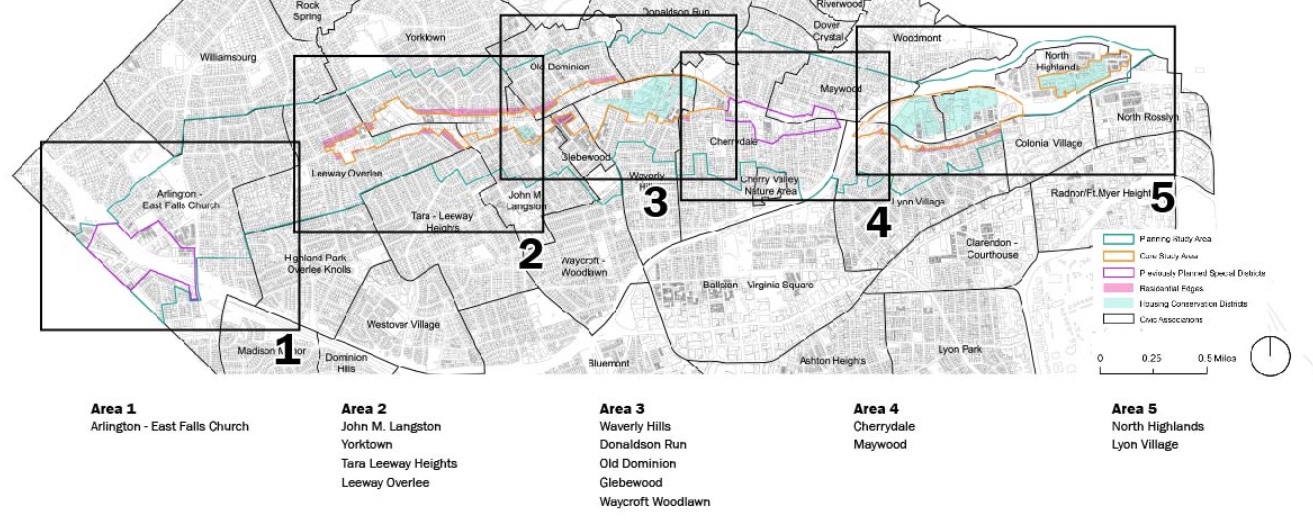
The Langston Boulevard Corridor (formerly Lee Highway) runs along the southern portion of Arlington’s most expensive and exclusive neighborhoods.

The lots are large, the homes cost a fortune and rental options are few. Arlington County is considering zoning changes along Langston Boulevard that would allow new types of housing, including duplexes, triplexes and small apartments that would be attainable as rental or ownership for moderate-income Arlingtonians.

If you want Arlington staff to take an important step forward by allowing transitional zoning, including missing middle housing, at the edges of the Langston Boulevard Corridor, let them know by August 3.

The Plan Lee Highway process is a revisioning of several neighborhoods surrounding the existing commercial nodes to create more walkable communities, increase the development opportunity, and form a new sense of place. The Plan Lee Highway Concept Plan will come out in the fall.

Langston Boulevard is an ideal place to showcase the benefits of Missing Middle housing. As Arlington’s northern-most arterial road, with regular bus service and a Metro station on each end, it can easily accommodate more residents while allowing people to drive less. To become a modern Main Street, new and existing businesses need more customers to live and shop near their homes. Duplex, triplexes and small multi-family dwellings will provide less expensive homeownership opportunities and more rental units in an area that is financially out of reach to most Arlingtonians.

Missing middle benefits all types of Arlington residents. Young families have more options for their starter home. Senior citizens can find something nearby when they want to downsize. Homeowners have more options if they want to redevelop their property. Gentle density makes our neighborhoods more vibrant, which supports more local businesses and nearby amenities and services. North Arlington has the least affordable housing in Arlington because it has the largest homes, the largest lots, and the fewest rentals. Let’s allow landowners to build the types of housing that fit existing market needs.

Langston Boulevard already has a smattering of small multi-family housing, some of which is now considered “nonconforming” because zoning laws became more restrictive after they were built. Changing the zoning will enhance the existing neighborhood character. Increased density around the East Falls Church Metro Station is especially important because the station has low ridership and was considered for closure by WMATA in a recent budget proposal. Putting more residents within walking distance of the Metro makes good use of this public asset.

Unfortunately, staff have received significant negative feedback from neighbors who are resistant to change. Positive comments about new housing options show our leaders that Arlington is full of people who are looking toward a future of Arlington that is inclusive and sustainable. That means allowing more people to live in opportunity-rich neighborhoods like those along Langston Boulevard.

The Arlington Way is designed to heighten the feedback of older, wealthier, and more established Arlington residents, not to achieve a representative sample of our community (which is 60% renters), or to highlight the perspective of those most in need. “Eternal vigilance is the price of low density,” County Board Member Leo Urbanske said in 1962 when he voted to dissuade “lower income people” from coming to the county by banning three-story walk-ups. Sixty years later, this attitude still holds sway in the county.

Those of us who embrace density, who want housing options for renters and non-millionaires, and who want a place for newcomers, people aging in place and everyone in between, need to show this same vigilance by sharing feedback with the County Board and staff at every opportunity. Please send your comments in favor of missing middle zoning along Langston Boulevard to [email protected] by August 3!

Jane Fiegen Green, an Arlington resident since 2015, proudly rents an apartment in Pentagon City with her family. By day, she is the Membership Director for Food and Water Watch, and by night she tries to navigate the Arlington Way. Opinions here are her own.


Lyon’s Legacy is a limited-run opinion column on the history of housing in Arlington. The views expressed are solely the author’s.

Lyon’s Legacy was a series that ran for the last four months on ARLnow, telling a story of the history of housing and racism in Arlington, and putting forward a suggestion for one way we could end the regime of economic exclusion that has dominated most of our county for the last century. As the series ran, some eagle-eyed readers kindly identified a few mistakes in the historical research.

In this follow-up article, I’ll address and hopefully correct those errors. You can read the whole essay, with these corrections incorporated, here.

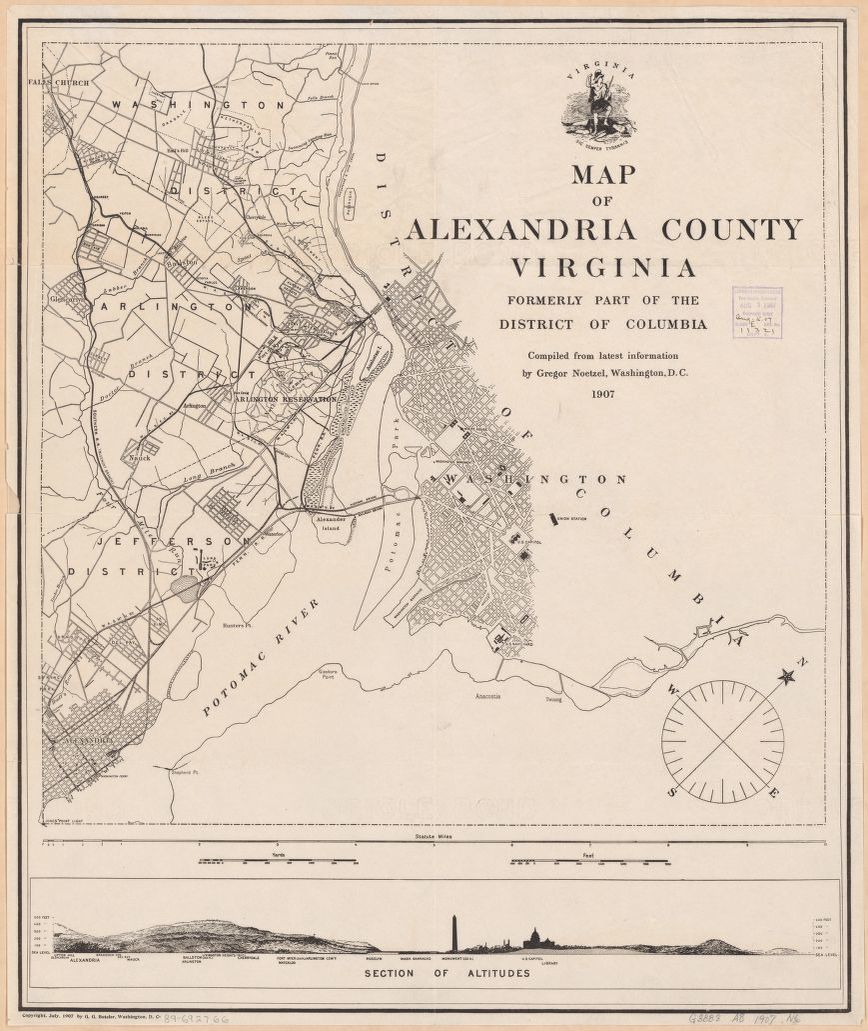
Arlington (Alexandria) County before the development of the 1920s and ’30s. (via Library of Congress)

All of these errors are significant, in the sense that any factual error in a piece of historical writing is significant. But correcting these errors does not change Arlington’s history of racial exclusion through single-family zoning and does not change our responsibility to end this exclusion by legalizing multifamily housing county-wide.

I offer my apologies to readers for my failures in research and my gratitude for those who helpfully corrected my mistakes.

1. My description of Freedman’s Village failed to mention that residents were subject to labor requirements — a major omission. Nonetheless the Village was a better place for Black people to live in the 1870s than most of the rest of the South, as proven by their commitment to staying there until they were evicted in the winter of 1887. An imperfect attempt at racial inclusion would still make a fine symbol for our county.

2. Crandal Mackey’s raid on Rosslyn was not solely motivated by white supremacy. I failed to mention that one of the primary victims of the raid, Eddie Heath, was white; I underemphasized the extent to which violent and non-violent crimes did indeed take place in Rosslyn; and for the sake of the narrative I didn’t mention the same-day raid in Jackson City (another relatively unsegregated community).

Mackey was also a prohibitionist, and it may well be that he saw alcohol, rather than Black people, as the more significant barrier to Arlington’s development. But prohibition and racism were closely intertwined, and it’s worth remembering that drugs are still used as an excuse for selective enforcement and police brutality today.

3. Arlington did not institute segregation districts in 1912. Virginia passed a law in 1912 permitting localities to institute such districts, and five years later the law was deemed unconstitutional. During that five years, Arlington did not take advantage of its power to segregate. This detail is pretty much irrelevant to the history of segregation after 1917.

4. When touching on the history of economic racism in America, I referenced median household wealth. This can be a misleading indicator because it doesn’t account for variation in age, family size, etc. But my argument wasn’t meant to be nuanced — I was only trying to show that there exists a large historical racial wealth gap in our country. This inequity is real, and it can be illustrated by any number of more nuanced indicators.

No matter how it’s measured, the racial wealth gap has a major bearing on people’s ability to buy single-family homes in Arlington.

5. I failed to tell the stories of other racial and ethnic groups besides Black and white Arlingtonians. A major portion of our county today is Hispanic or Latino, and we boast sizable populations from countries all around the world. Those are fascinating, important stories, and they deserve to be told well in their own articles.

(more…)


Arlington County is looking to restart an initiative aimed at helping condominium owners stay in their condos that was halted by the pandemic.

The Condominium Initiative, which is part of the county’s Housing Arlington program, is focused on strengthening condo associations. A series of workshops this fall will include information on when capital improvement assessments should be performed and who should do them.

“We are currently working with the City of Alexandria, with whom we had co-sponsored the previous workshops, to schedule more events,” said Elise Cleva, the acting spokeswoman for Arlington’s Department of Community Planning, Housing and Development.

County staff involved with the Condo Initiative are considering some ideas such as small loans to help low- and moderate-income and elderly condo owners pay for repairs and assessments.

“No specific program has been developed and no funding source has been identified,” Cleva said. “Instead, staff is focusing on outreach at this time, with a goal of becoming more familiar with the issues that are of greatest concern for condominium developments; particularly those that are considered ‘affordable’ homeownership.”

Condo affordability and safety have been on County Board member Christian Dorsey’s radar since 2019 — but the issues have been on the back-burner due to other Housing Arlington initiatives, such as the ongoing study of “Missing Middle” housing stock, which will examine how Arlington can increase the supply of townhomes and duplexes, among other issues.

Dorsey tells ARLnow the county needs to get the ball rolling on its condo initiative if it wants to get ahead of problems that are bound to befall aging condos later on. The issue took on a greater sense of urgency after news broke of a condo building collapsing in the Miami area late last month.

Dorsey said he is not worried about a disaster of that scale happening in Arlington, but he is worried about deferred maintenance. Condo owners are responsible for regular assessments and for maintenance, but when the costs become too great, the work often gets put off. Eventually, it compounds, he said, and people opt to sell rather than fix their building.

“I think it’s an emerging problem — one thing that doesn’t reveal itself to you until it becomes catastrophic,” Dorsey said.

In 2016, the county sent surveys to 134 condo association contacts. Of the 16 that responded, 11 were deemed “potentially affordable,” with sale prices less than $500,000. According to a survey summary, one building was less than 20 years old and three were less than 50 years old, and the most common capital needs were aging or deteriorating roofs, structural issues and old mechanical systems.

At the time, however, the 16 respondents expressed “minimal interest” in workshops or technical assistance, and only one development said it did not have the money to make repairs, the summary said.

“These results suggest the need to intensify efforts to contact condo associations and engage them in identifying needs and interests and planning for a program of services, activities and financial assistance,” the summary said.

But conditions have changed since that survey, Dorsey said. Over the last couple of years, the County Board has received a growing number of accounts of deferred maintenance in certain condo communities, a trend that he predicted will continue as wages stagnate and fees climb.

He added that the work should start now because sustainable solutions will require federal policies, which could take a few years to hammer out, he said. The board member said he wants monthly fees and assessments to be tax deductible just as interest on mortgages for homes is tax deductible.

“The reason I think the federal government has a role here is first, equity — not disadvantaging by homeownership type — and second, the level of government subsidy that would be required is significant,” he said.

Federal low-interest loans — such as those done during natural disasters — could also help condo associations pay for assessments, he said.

(more…)


Fewer COVID-19 cases. Lower unemployment. Higher hotel occupancy rates. These and other signs point to Arlington County’s continued recovery, according to Board Chair Matt de Ferranti.

During the annual State of the County address, the chair said Arlington County is well on the road to economic recovery but it has a ways to go before it enters into a period of renewal. The event was hosted virtually yesterday morning (Tuesday) by the Arlington Chamber of Commerce, with a Q&A moderated by ARLnow founder Scott Brodbeck.

“We’re growing, but not as fast as at the start of 2020, before the pandemic, when our prospects seemed truly bright,” he said. “If we’re honest, recovery is not all we’re looking for at this moment. The state that we have not reached — that we must create — is renewal.”

Reaching renewal will mean supporting small businesses, working to eliminate inequities and increasing housing options, he said.

Recent data show the health of Arlington County residents has stabilized, with a 0.6% COVID-19 test positivity rate and about one case per day over the last two weeks. Unemployment is down, as well, from 7.2% this time last year to 3% today, he said. As vaccination rates rise, tourism is recovering, with hotel occupancy rates up to 40% from a low of 20%.

The county has also retained organizations with an Arlington footprint, including the State Department, while attracting new companies, from Microsoft to shipping company ZeBox‘s startup incubator. All along, Amazon continues to meet its occupancy and hiring goals while supporting businesses, he said, and will present its second phase of its HQ2 to the Board later this year.

Plus, new development is continuing.

“The County Board has approved numerous office and residential projects that will drive economic growth… and strengthen our economy in Arlington,” de Ferranti said. “We’re hearing from commercial real estate brokers that there is significant pent-up demand from [office] tenants who delayed real estate decisions in the pandemic. We expect to see these deals come forward in the fall of this year.”

Still, the office vacancy rate is a lingering concern for de Ferranti, who noted that it was 18.7% in the first quarter, up 2.1% from the same time last year.

“Part of the reason I sought this office was to bring down the vacancy rate so that we could invest in schools, housing, transit, transportation and the things that make Arlington a great place to live,” he said. “Our economic development projects show promise, our pipeline is strong, so I’m confident we can bring down the rate over the coming years.”

The county will need to engage with companies already here and those eyeing Arlington while adapting to 21st-century office needs through measures such as office-to-apartment conversions, he said.

“We saw before Amazon that there was a time when we got a touch complacent working on our office vacancy rate,” he said. “That’s no one’s fault but we do need to stay focused on it.”

While it’s mostly larger companies that help to fill Arlington’s office towers, small businesses in Arlington need help, de Ferranti said, so Arlington Economic Development is preparing a grant program using American Rescue Plan funds. It follows up on a similar program last year that helped 393 businesses.

The county still has work to do to fix bugs with the online permit system and improve the customer service experience for businesses — lessons learned from the roll-out of temporary outdoor seating areas, or TOSAs, the chair admitted.

(more…)


Progressive Voice is a bi-weekly opinion column. The views expressed are solely the author’s.

By Josh Kaplowitz

This middle-aged corporate lawyer, with a family of five and a recently renovated single-family home deep in suburban Arlington, is here to tell you that my neighborhood — and probably yours — needs more housing and density.

This issue landed at our doorstep recently when Arlington County presented scenarios that might allow roughly 5-to-7 story mixed-use development along my stretch of Lee Highway (which is likely to soon be renamed the more friendly Langston Boulevard) and smaller multi-family dwellings, including duplexes, triplexes, and townhouses, on the surrounding blocks.

I believe it will make my street just off Lee Highway — and all of the County — a better place to live. And I call on my friends and neighbors to consider what we would gain from spreading gentle density across the county, and what we would lose if we acquiesced to the status quo.

Change can be daunting, especially when it affects your home. And I know folks have concerns about the impacts of increased density on parking, traffic, schools, and noise. But in a growing region like ours, change is a constant. We can either decide to manage the change, or we can allow it to overwhelm us in unwanted ways. The Lee Highway Plan and the Missing Middle Housing Study are both examples of how we can thoughtfully manage the change and growth that is already coming to Arlington, while being welcoming to a range of newcomers.

A thoughtful increase in density will benefit our neighborhood in myriad ways. A lively, walkable commercial district would replace the auto-oriented mix of strip malls, parking lots, and gas stations that has remained mostly unchanged since the 1950s.

In exchange for allowing taller buildings, the County can require developers to include public green space, green roofs, and other stormwater mitigations that will mitigate the climate-fueled floods that increasingly inundate the surrounding neighborhoods. More density results in more people, and as density increases, the likelihood of using public transit increases, supporting the case for more rapid bus service along Lee Highway and other corridors. Such amenities could be attractive to an increasingly climate-conscious generation who will — ahem — buy our houses when we age out of them.

A more diverse housing mix, which could include dedicated affordable units, could make our neighborhood and schools, and those across the county, more inclusive, as people of varying incomes might be able to afford to live here — including teachers, police officers, firefighters and small business owners who serve our community. In so doing, we can also begin to undo Arlington’s racist legacy of exclusionary land use policies. And diverse housing options allow more older adults to right-size and age in place.

New market-rate apartments, condos, townhomes, triplexes, and duplexes could still be relatively expensive. Yet maintaining the status quo, where 73% of the residential land in the county is zoned for single-family, is almost guaranteed to result in extremely expensive housing. Arlington is desirable, and its original modest housing stock is quickly being swapped for enormous 6+ bedroom homes that sell for more than $2 million. If we fail to allow more diverse housing, most of Arlington will likely become an enclave for the uber-wealthy.

(more…)


Lyon’s Legacy is a limited-run opinion column on the history of housing in Arlington. The views expressed are solely the author’s.

“A racist policy is any measure that produces or sustains racial inequity between racial groups. An antiracist policy is any measure that produces or sustains racial equity between racial groups. By policy, I mean written and unwritten laws, rules, procedures, processes, regulations, and guidelines that govern people. There is no such thing as a nonracist or race-neutral policy. Every policy in every institution in every community in every nation is producing or sustaining either racial inequity or equity between racial groups.” 

– Ibram X. Kendi, How To Be An Antiracist

This is the penultimate part of Lyon’s Legacy, a biweekly series on ARLnow (you can read the whole thing, with citations, here). Until now we’ve been looking back into history, trying to understand the part racism played in Arlington’s transformation into a suburb. This time we’ll see what antiracism could do in the transformations of today. This time we’ll face the Missing Middle Housing Study, and you’ll learn what you can do to make your voice heard.

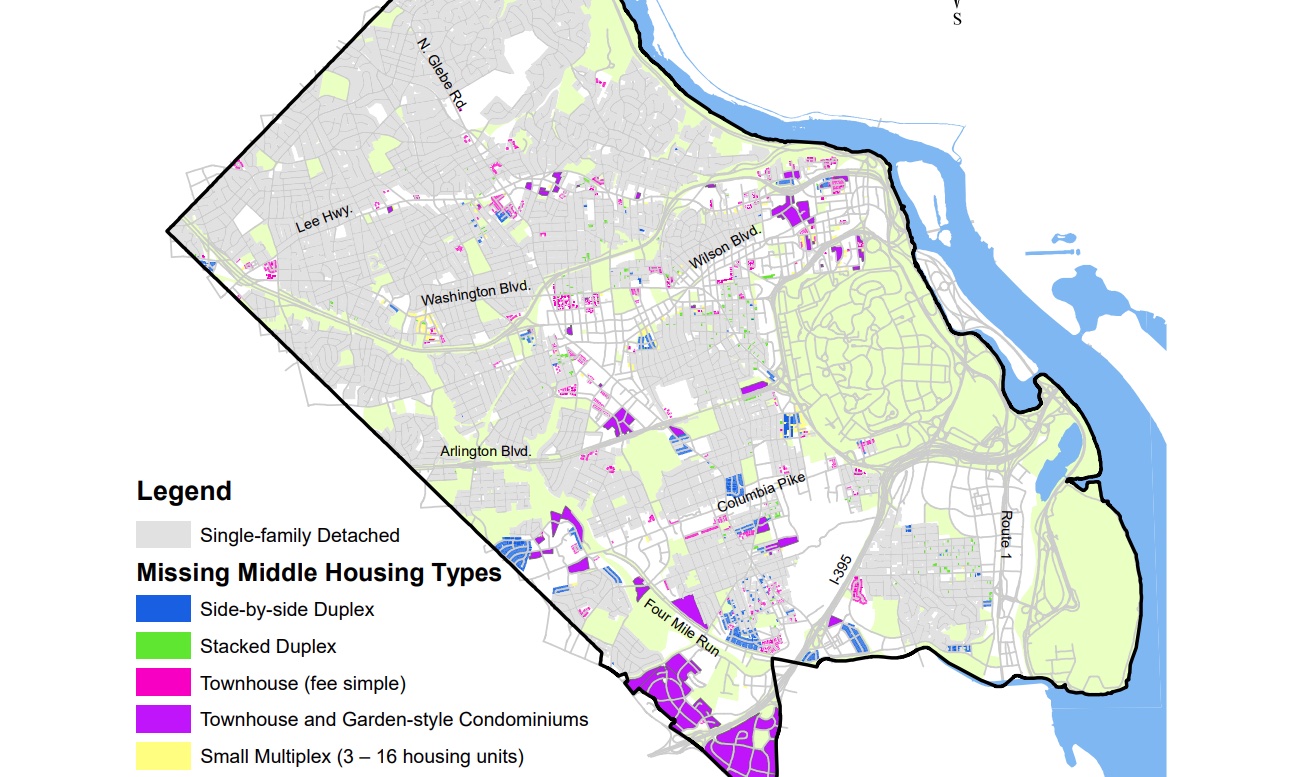
‘Missing-middle’ housing is anything denser than a single-family detached house but smaller than a high-rise tower. The ‘white-washed, one-and-a-half story duplexes’ of the Freedman’s Village were a form of missing-middle housing. So are the rowhomes of Georgetown, the triple-deckers of New England, the five-story canal houses of Amsterdam, the eight-story city blocks of Paris. A century ago, Frank Lyon and people like him made them illegal in Arlington. In most of our county, our zoning still bans them today.

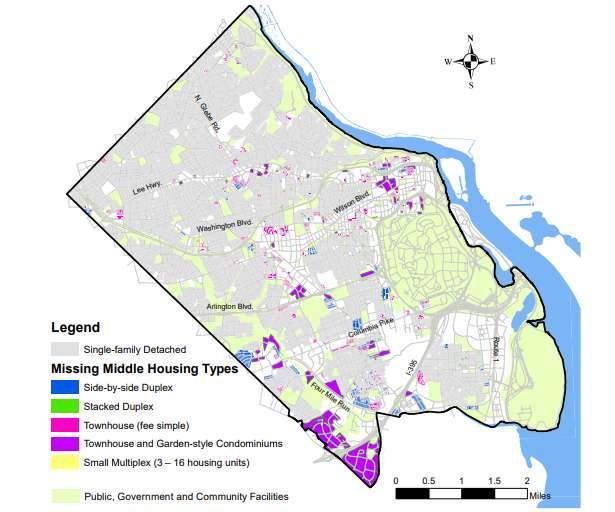
In Arlington, the overwhelming majority of residential land is zoned in a way (grey in the map) that excludes missing-middle housing. Image by Arlington County Department of Community Planning, Housing, and Development.

By setting aside three-quarters of our land for single-family homes, our zoning code artificially inflates the supply and deflates the cost of high-end houses, while doing the opposite to apartments and condos. Our zoning code privileges the wealthy.

Over the next two years, the ongoing Missing Middle Housing Study could legalize some forms of more affordable housing. The question is whether it will legalize enough. The math is clear: wealth inequality is so extreme that legalizing duplexes alone won’t make Arlington the inclusive county we say we want to be. We have to legalize apartments.

The median income for Black households in the greater Washington area is about $75,000 per year, while the median income for white households is $124,000. A home is affordable when the sale price is no more than roughly 4.5 times the family’s annual income, so a median-income Black family can afford to buy a home costing up to about $340,000.

Existing houses in Arlington cost an average of $959,000, up by over $100,000 since 2018 alone. But for new single-family detached houses with five or more bedrooms in Arlington, which are by far the most common kind of new house in our county, buyers are willing to pay an average of over $1,600,000. The gap between what Black families can buy and what our zoning code produces, the gap between $340,000 and $1,600,000 — that gap is Lyon’s legacy.

The gap between $340,000 and $1,600,000 is also the first thing we need to know in order to undo Lyon’s legacy. It tells us that duplexes, like the ones in Freedman’s Village, won’t be enough. Half of $1,600,000 is $800,000, and $800,000 is still too much.

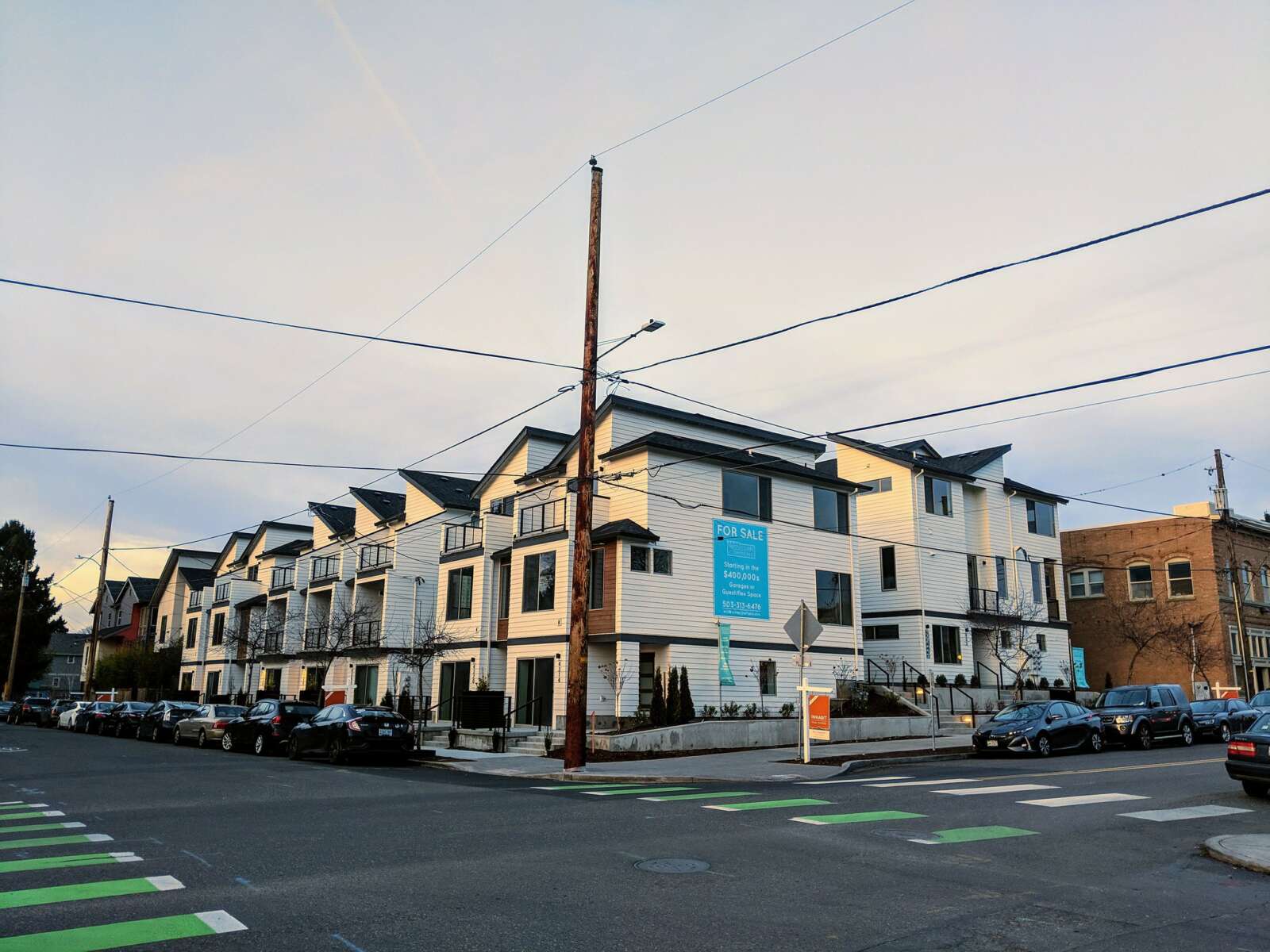
So what kind of housing would median Black families be able to afford in Arlington? Assume it costs $2,000,000 per lot to replace an old single-family home with a new missing-middle one. This is almost certainly an underestimate, so it’ll underestimate the density required. $2,000,000 divided by $340,000 is about six. Six is the magic number for the Missing Middle Housing Study. If we make it legal and feasible to build six-unit buildings on any plot, then landowners will be able to build housing that is dense enough to be racially inclusive while also being profitable enough to compete with the demand for single-family homes.

You can see the details in your own neighborhood by using a model I’ve assembled using data from across the county. The economic reality is more complicated, yes, but the model is a first-order place to start.

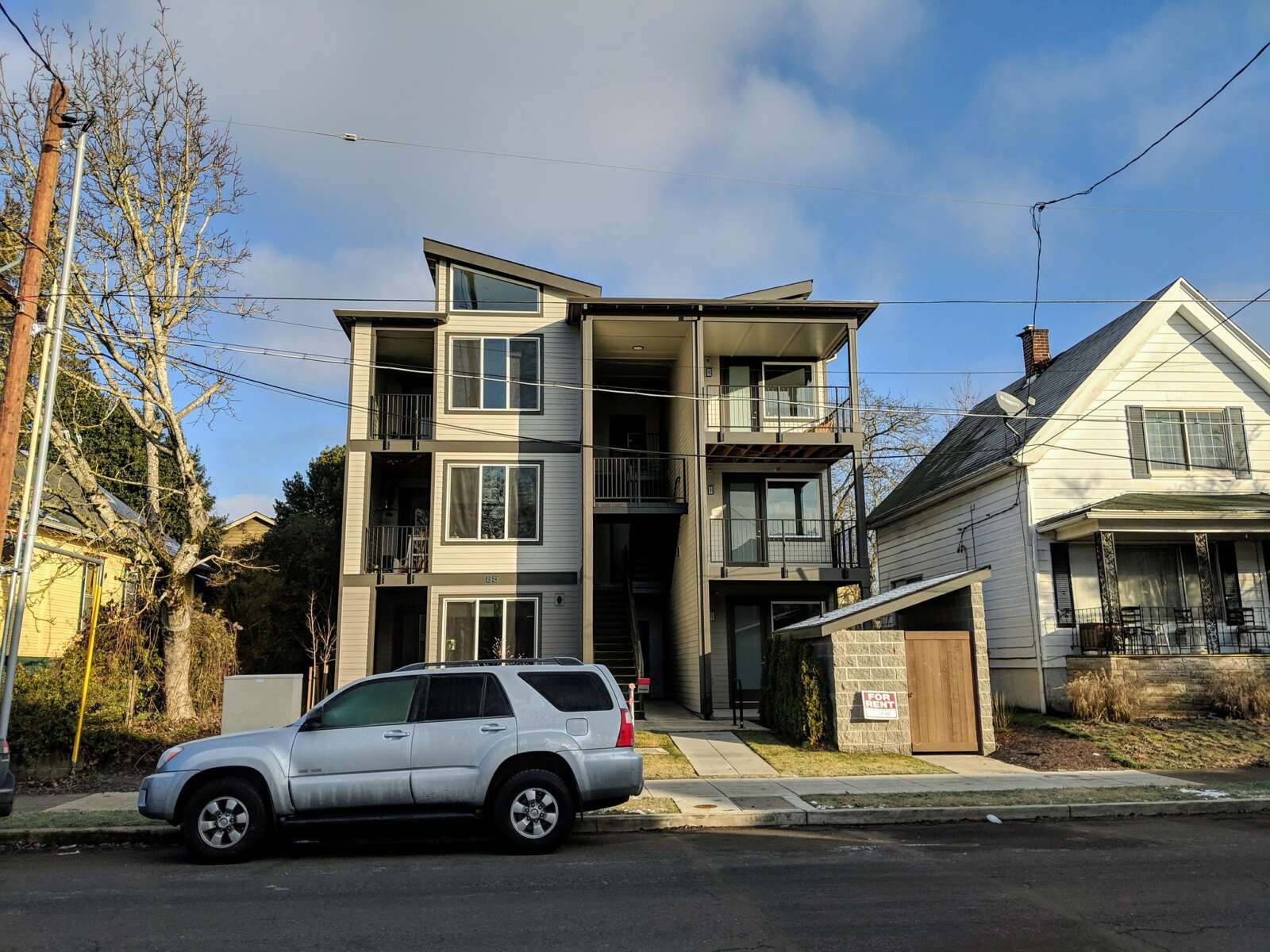
A six-unit apartment building in Oregon. Image by Sightline Institute.

To make apartments and condos feasible, we have to do more than make them legal. Today, single-family detached houses are required to have ‘setbacks’ — yards in front, in back, and on both sides, and they must have parking spaces. There are also height restrictions. We must remove those onerous requirements. Two years ago, Minneapolis legalized three-unit buildings in every neighborhood. But they didn’t change any setback or parking requirements. The reform didn’t work: you can count the number of new three-unit buildings since then on one hand. In addition to removing setback, parking, and height restrictions, these new buildings must also be legal for anyone to build, without a costly review process: we must have a rezoning rather than a GLUP change.

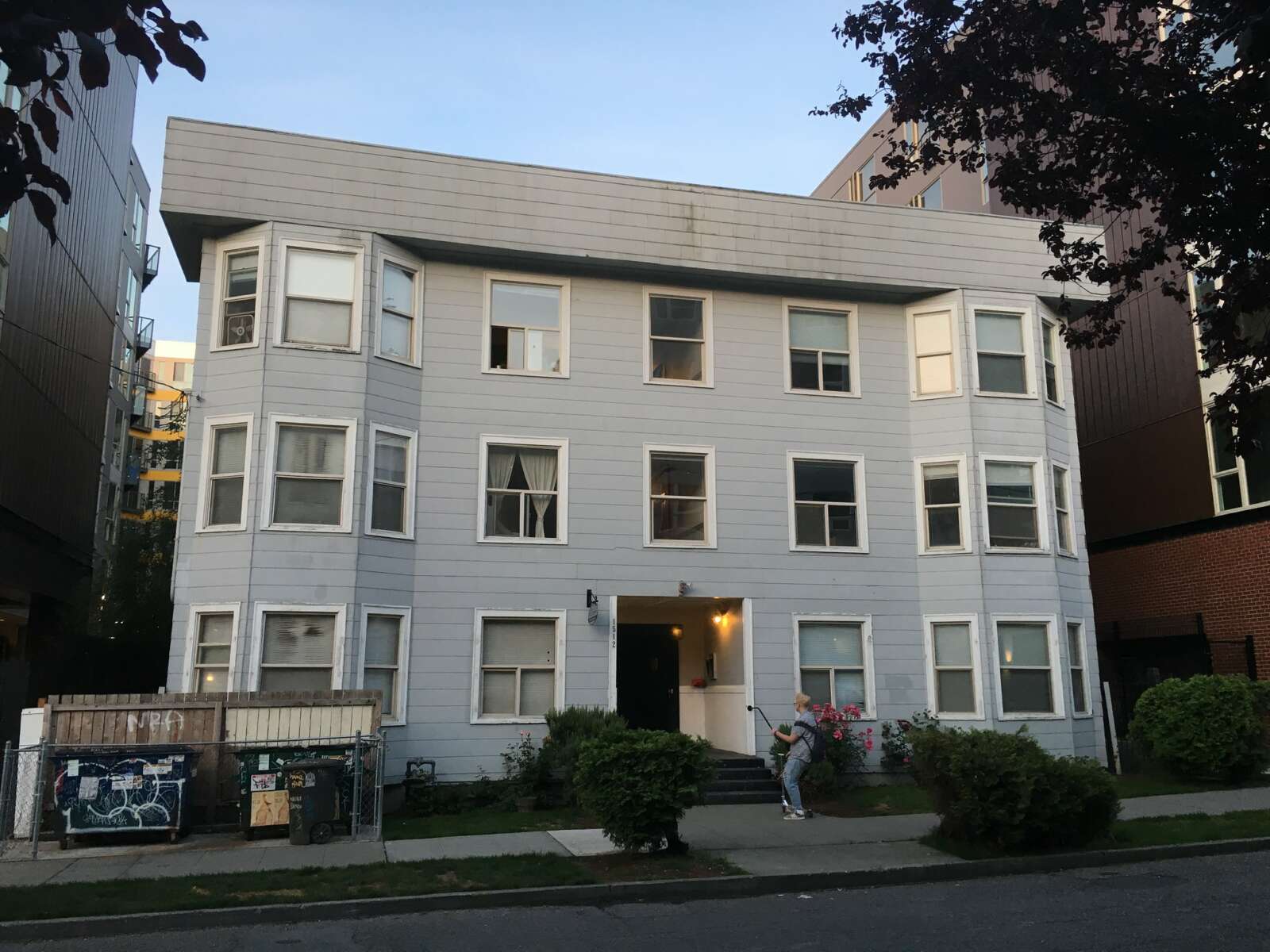
A small apartment building in Capitol Hill, Seattle. Image by Sightline Institute.

This kind of zoning isn’t insanity. It won’t tear Arlington apart. Similar reforms have already been adopted in Sacramento, CA and Portland, OR. Many others, including Charlotte, NC, are considering the policy. These cities haven’t transformed overnight, but they’re gradually starting to see more affordable homes being built.

Dense rowhouses in Mississippi. Image by Sightline Institute

Legalize apartments, anywhere in Arlington. These could include subdivided houses, garages and sheds turned into studios, or new homes built in backyards. They could be mixed-use, with homes above cafes, restaurants, corner stores, or bakeries. Somewhere, neighbors might consolidate their lots to build together. Elsewhere, someone with a large lot might subdivide it, selling their backyard and keeping their home.

(more…)


Lyon’s Legacy is a limited-run opinion column on the history of housing in Arlington. The views expressed are solely the author’s.

The H-B Woodlawn Secondary Program is housed today at 1601 Wilson Boulevard, a hundred-million-dollar building located not far from the place in Rosslyn where, a little over a century ago, a posse fired at a fleeing Black man because white landowners wanted to make the county more profitable for real-estate development.

But when I was a student at the H-B Woodlawn Secondary Program, it was housed at 4100 Vacation Lane. That building had once been Stratford Junior High School, and on February 2nd, 1959, it was the first school in the Commonwealth of Virginia to be racially integrated.

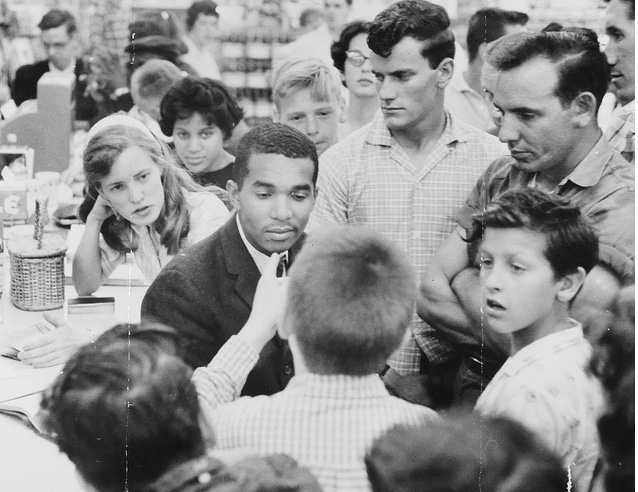
When I skipped class for pizza, my slices came from the same shopping strip where, in 1960, Howard University students faced off against the American Nazi Party in sit-ins that desegregated eateries across Arlington, Alexandria, and Fairfax. We studied that history with pride during my four years at H-B. We may even have studied the 1968 Supreme Court decision that made racially-restrictive covenants — Lyon’s bluntest tool — illegal across the nation.

Dion Diamond, Joan Trumpauer, and Ethelene Crockett face harassment at the Cherrydale Drug Fair during their sit-in on June 10, 1960 (photo via washington_area_spark/Flickr)

But somehow, despite Arlington’s proud history of civil rights activism, my H-B graduating class of perhaps 90 students included only three or four who were Black. The number of other racial and ethnic minorities, and of low-income white students, was also disproportionately small. We studied school integration, sit-ins, and voting rights at H-B Woodlawn. What we did not study were the ways that implicitly-racist policies, like exclusive zoning, survived that activism and remain with us today.

This is the sixth part of Lyon’s Legacy, a biweekly series (you can read the whole thing, with citations, here). This series is not intended to claim that Frank Lyon or his developments are uniquely responsible for Arlington’s present problems. Rather, the particular story of Lyon is meant to illustrate the broader history of how economically-exclusive zoning, established a century ago in an atmosphere of white supremacy, still dominates our county and our nation today.

In Frank Lyon’s time, just decades after Emancipation, Black Americans usually — though of course not always — had less money to spend on housing than white Americans did. By creating large lots and banning missing-middle housing, developers of the time ensured that their homes would be so expensive that low-income people, including most Black people, couldn’t afford them.

That was the beginning of a two-handed strategy that keeps Black families out of places like Arlington to this day. With one hand, as we saw two weeks ago, local and federal governments adopted the technique, pioneered by Lyon and his peers across the country, of economic exclusion through car-oriented, low-density land use. With the other, the same governments limited financial and employment opportunities for Black people, trapping many in a cycle of poverty. By the time that explicitly-racist policies were curtailed in the 1960s and ’70s, the damage had been done, and most Black people were priced out of most suburbs.

(more…)


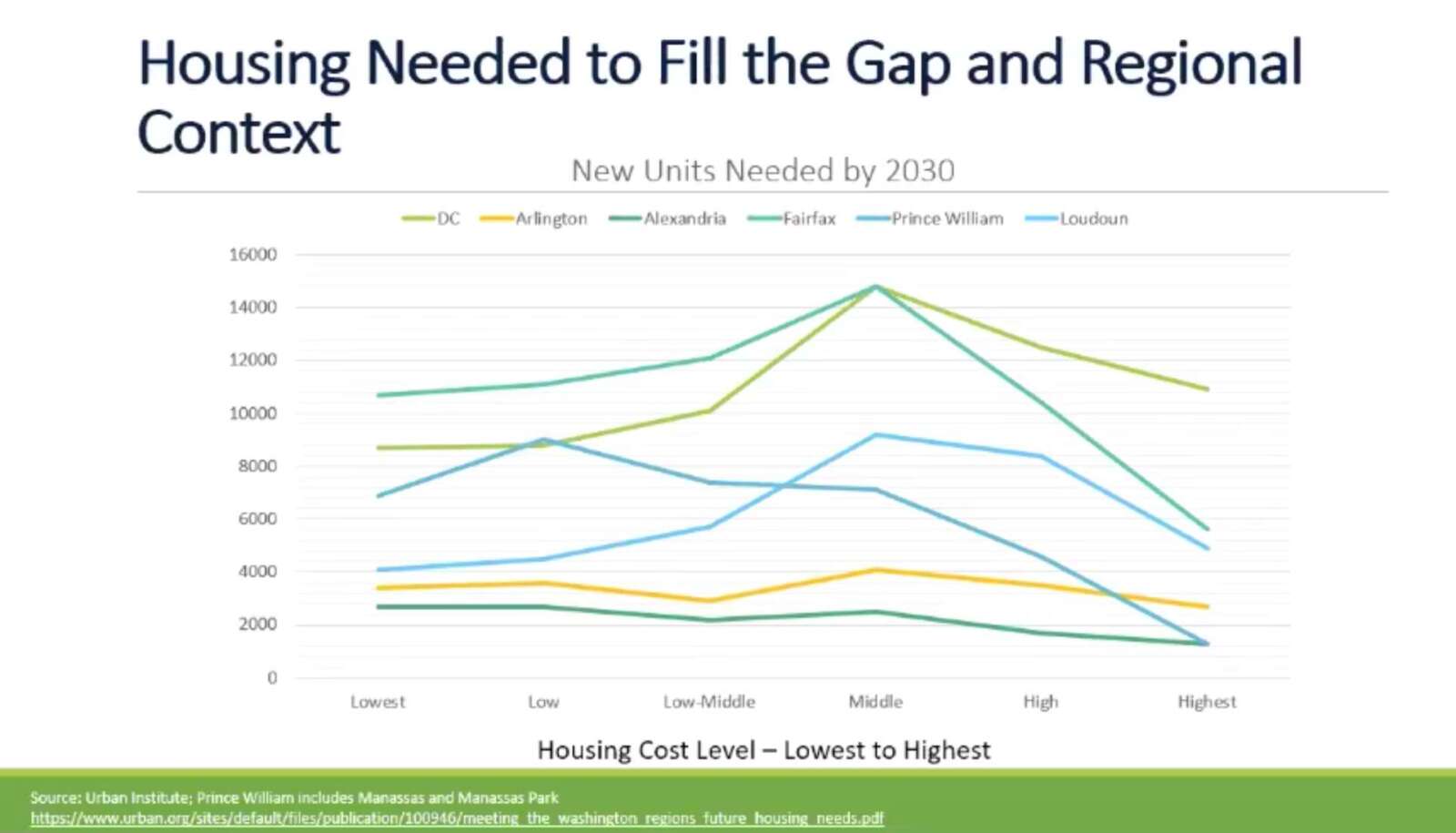
Arlington’s lack of affordable townhomes, duplexes and other housing types has a ripple effect across the D.C. region, housing experts say.

How Arlington tackles that deficit, they said, could help stem the tide of urban sprawl and its social, economic and environmental impacts — with more options, lower- and middle-income households are better able to stay in their communities, be near their jobs and access established transit areas.

“Leadership [in Arlington] is still needed,” said Michael Spotts, President of Neighborhood Fundamentals, during a recent Arlington Committee of 100 webinar on Missing Middle Housing. “This is an important issue and Arlington can’t solve it on its own, but it’s something that we should do because it’s good for the county and the region.”

With the multi-year “Missing Middle Housing Study,” Arlington County is examining whether the county should allow housing types that have been typically prohibited from many neighborhoods to reverse housing shortages. If approved, rewritten ordinances would not be implemented until 2022 or 2023.

The county recently published the results of six months of community engagement. Priorities include a greater supply and wider array of housing options, at lower costs, while concerns include the impact that would have on property values, school capacity and the environment.

Now, the county is asking people what kinds of housing options should be explored. Through June 8, respondents can choose from 10 options, including multiplexes, cottage clusters, townhouses and small-lot homes currently excluded from some neighborhoods.

Providing those options locally will help address a regionwide problem that panelists say is currently driving urban sprawl, which is harming the environment.

“We’ve seen more development in outlying counties, and significant losses in impervious surface,” Spotts said. “We are downstream from some of these locations and that has an impact on Arlington’s environment. By limiting development [here], we may be able to save trees but at the expense of much larger acreage of forest loss in other jurisdictions.”

It also contributes to higher greenhouse gas emissions in those outlying counties, since many drive to work in Arlington and D.C., he said.

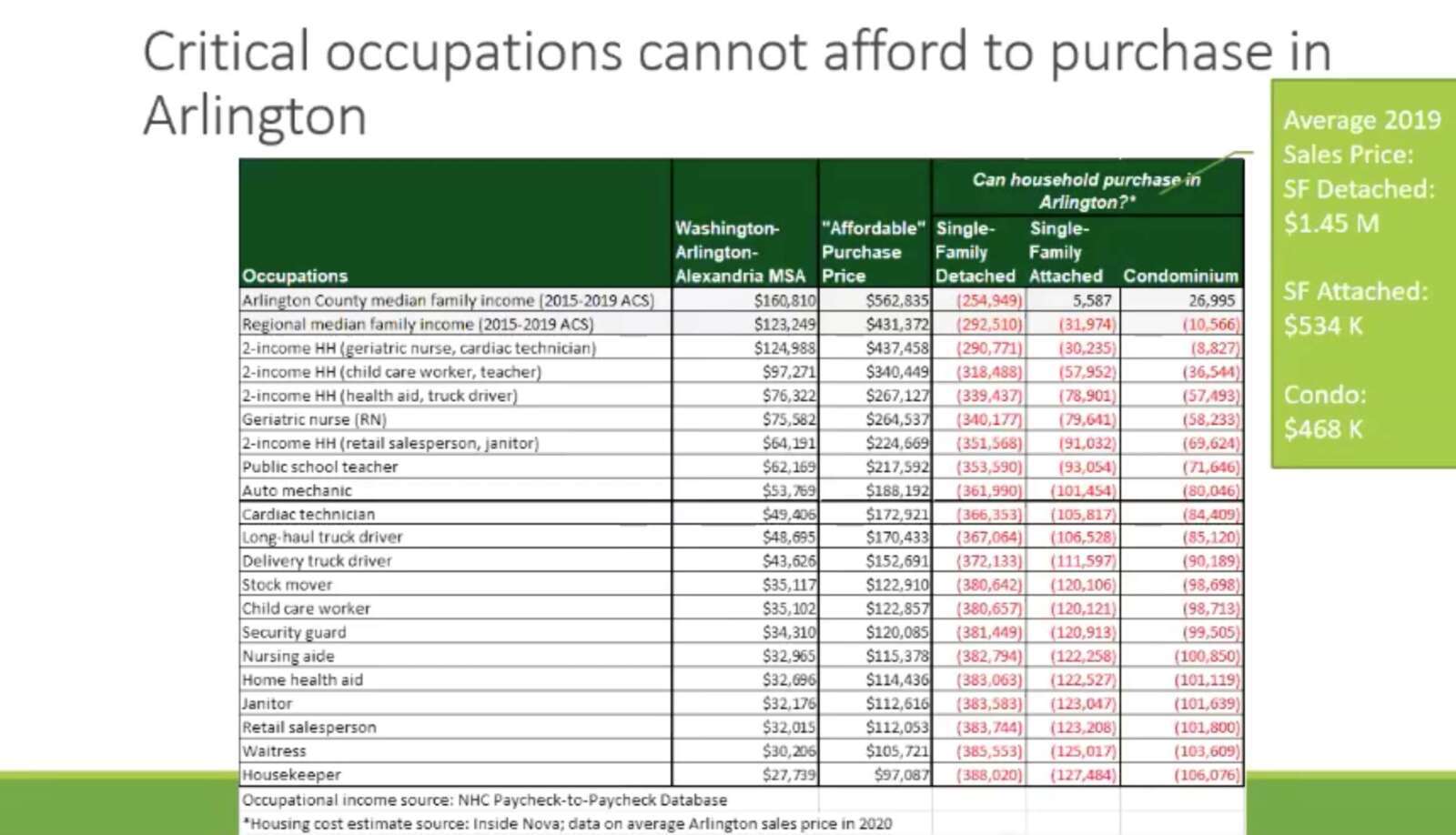
With the average costs of homes in Arlington ranging from $500,000-$1.5 million, depending on type, that prices out many professions like teachers, mechanics, security guards and so on.

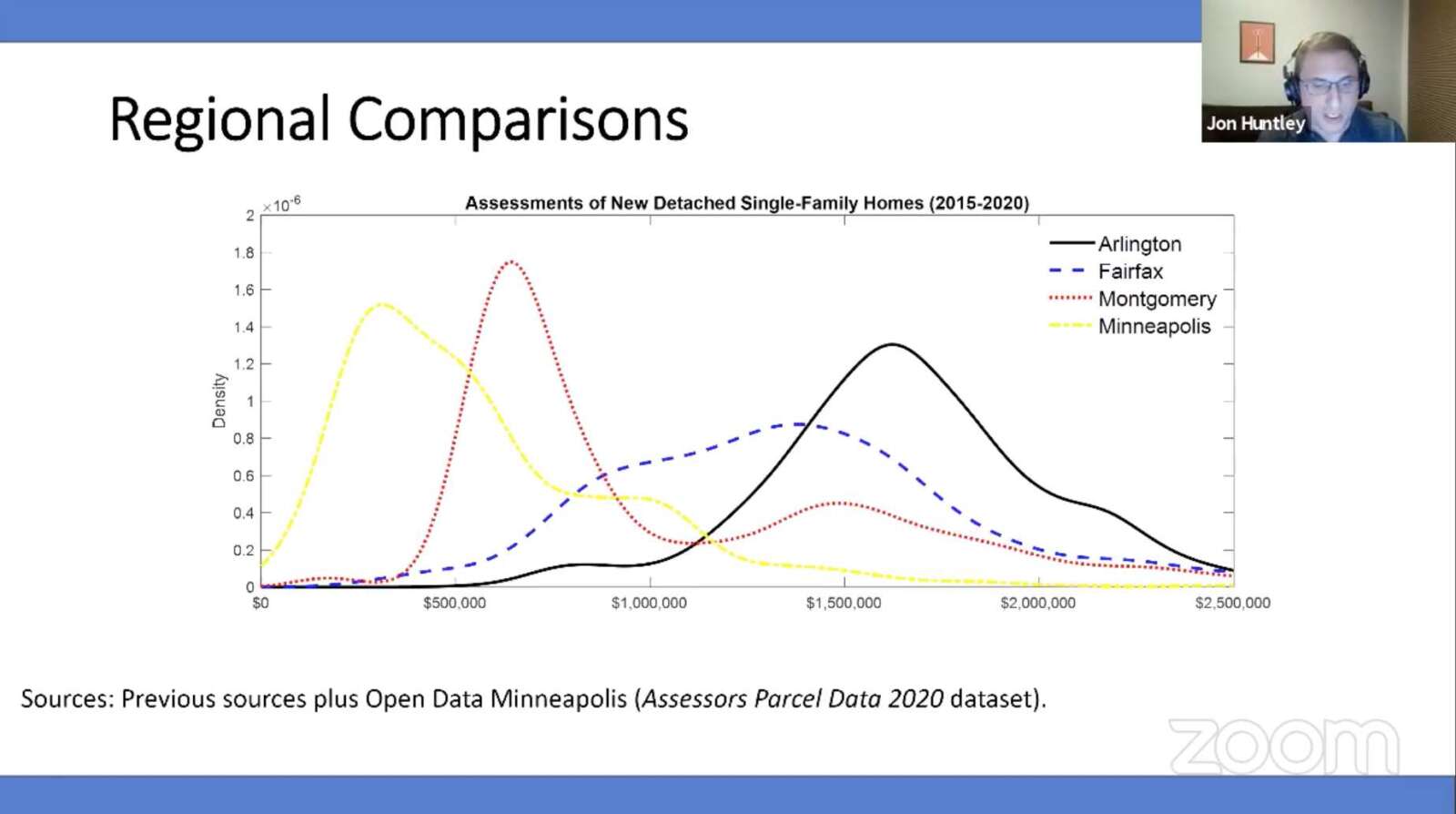
Instead, they go where the average price is lower than in Arlington, said Jon Huntley, a senior economist at the Penn Wharton Budget Model who also runs the website Arlington Analytics.

High land costs set a minimum price for any new Missing Middle construction, however, and more stock may not solve the affordability problem anytime soon given Arlington’s housing shortage, according to Huntley.

“The prices of new Missing Middle properties will have to reflect that alternative [to build very expensive single-family detached homes],” he said.

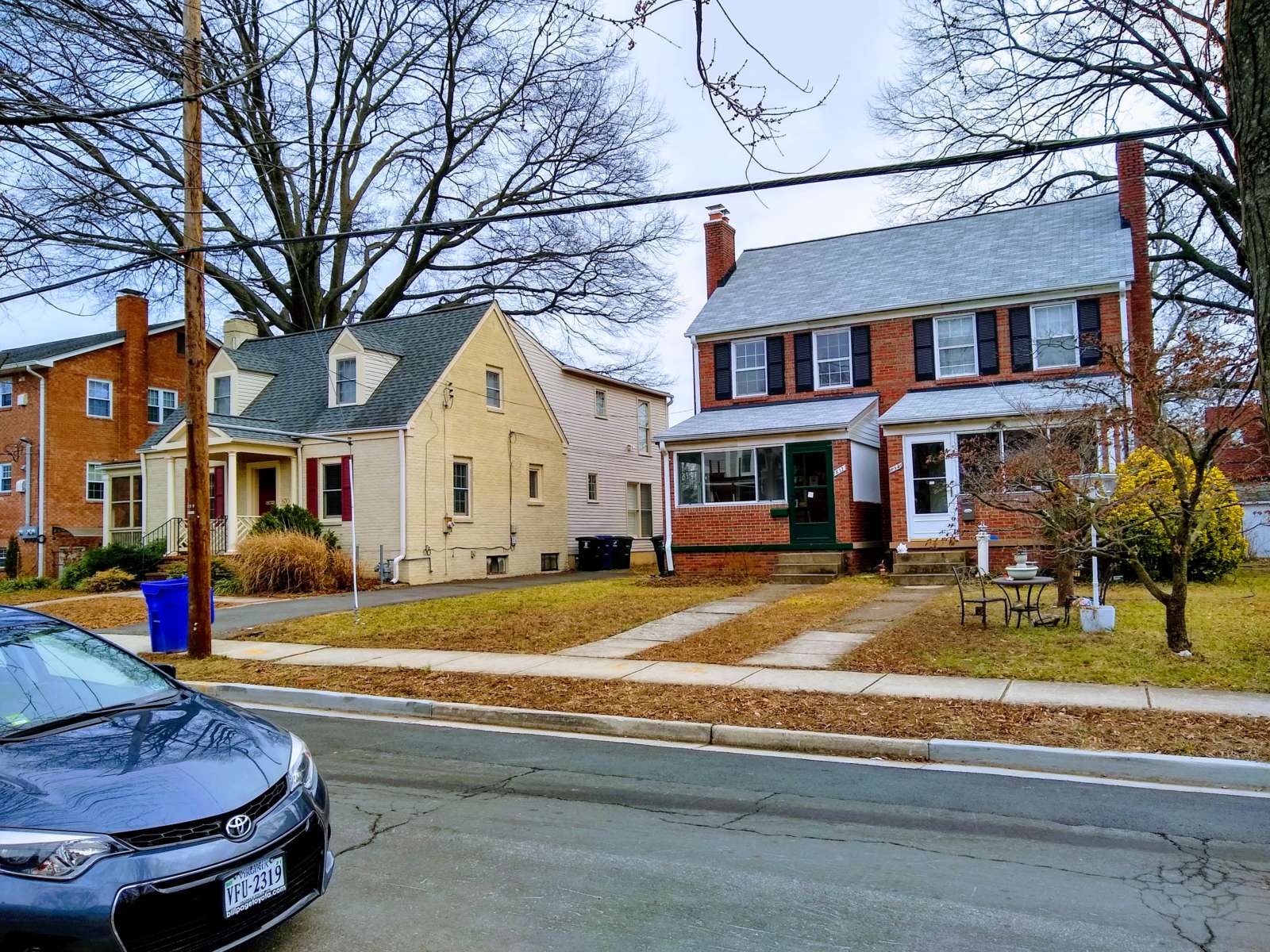
Since 2017, Huntley said Arlington has built 58 brand-new townhomes with an average selling price of $1 million. There were only eight duplexes built — for an average price of $1 million — and 35 stacked condos that went for up to $840,000.

“Townhomes and other missing middle properties will definitely become more affordable, but unless something dramatic happens this effect will happen in a timeframe measured in decades,” he said.

(more…)


View More Stories