Community Matters is a biweekly opinion column. The views expressed are solely the author’s.

The Network NOVA Friday Power Lunch recently focused on how little lies, or misinformation, can grow into bigger lies if they go unchecked.

Lowell Feld, editor of Blue Virginia, noted that the Washington Post made the case that one fifth of Democrats were being challenged by far left challengers in the 2021 House of Delegates primaries.

After analyzing the data, he found that there were only four challengers who were running to the left of the incumbents. He asserted that there is a common refrain in the media that the Democratic Party is at war with its “left wing/progressives” and this story fit the narrative. This “misrepresentation” can help shape a false narrative and impact other issues.

He also mentioned the idea of false equivalencies. For example, lies and misinformation spread through the radical conservative community and led to the January 6 insurrection on the U.S. Capitol. Furthermore, a ridiculous comparison was made between the attack and the earlier Black Lives Matter (BLM) protests. The police response was much different for the BLM protests, and included tear gas, detentions and multiple arrests, which likely falsely fueled the public perception of the intent of the protestors.

When one side promotes racial justice and one side promotes white supremacy, we have to be clear that one is right and one is wrong. Yet, they were presented as if they were two equal sides of an issue, which also means that we feel we have to give them equal time and attention.

If gone unchallenged, this cycle changes how we think of the issue, and fuels supporters on the side of the “wrong” issue. It makes it harder for those on the side of the truth to recognize that they are in fact supporting the truth, and not just the opposite of the other side.

It’s obviously not always simple. For example, similar to any cause, there are some rogue Black activists who have strayed from the original BLM mission. Highlighting the few bad actors on any issue is a misrepresentation. It changes public perceptions, our individual conversations and thinking, and muddles policy.

Arlington is debating several issues as a community. We have already made a concerted effort to engage community voices as we reform our police practices, and are in the process of selecting a new police chief.  I challenge us all to remember why we are talking about police reform now, and push back if we see the coverage or conversations switch to a different narrative. We have also recognized a need to reform zoning laws through the Missing Middle Housing Study. Due to the history of housing discrimination and links to systemic racism, we know some may want to hold on to a system which has allowed them to thrive. As we continue to discuss these and other issues, it is important for us to check the facts, and challenge how views are presented in all forums.

The manner in which we handle each conversation, in addition to the outcome we seek, helps define who we are. A part of that process is expressing our views in a number of ways including through traditional media, social media, events, speeches and informal dialogue. We should all be aware of false equivalencies and misinformation that have insidiously shaped the narrative and coverage, and do our part to root out all lies, whether they are “sweet little lies”, or not.

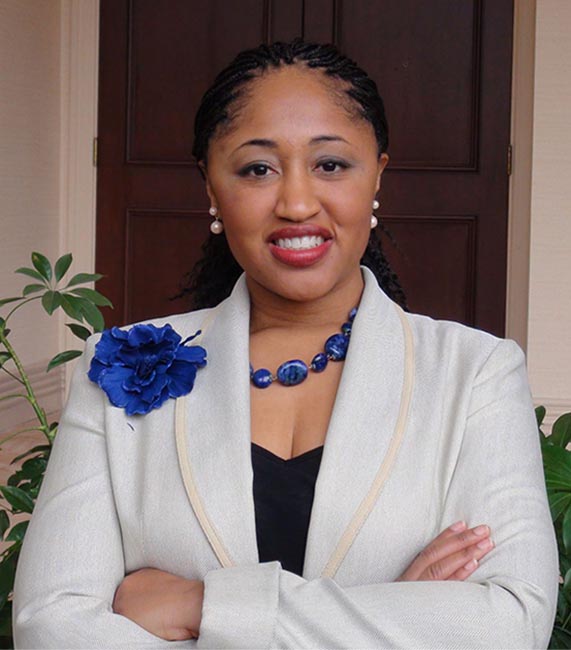
Krysta Jones has lived in Arlington since 2004 and is active in local politics and civic life. This column is in no way associated with or represents any person, government, organization or body — except Krysta herself.


Making Room is a biweekly opinion column. The views expressed are solely the author’s. 

If the last year has taught us anything, it is that half measure never provide real solutions to our most pressing problems.

In the realm of housing, our leaders should be taking bold action to address affordability and ensure a sustainable future. This means being courageous in championing an end to exclusionary zoning and embracing policies that will allow multifamily housing throughout the County.

Housing affordability and the terrible legacy of exclusionary zoning are making national headlines. In recent weeks, this has been spurred by a proposal within President Biden’s American Jobs Plan to “eliminate state and local exclusionary zoning laws.” National opinion writers have clarified that restrictive zoning policies are antithetical to both progressive values of inclusivity and conservative values of the free market.

As the national conversation moves toward acceptance of inclusive and open zoning, advocates at the local and state level have succeeded in pushing elected officials to act. Communities across the country are making news by taking bold steps to add housing, in the name of racial justice, as well as economic necessity.

The City Council of Berkeley, California, voted to eliminate single-family zoning, a century after it was the first city to establish the practice. This is a symbolic but significant step, recognizing the racist legacy of exclusionary zoning. Other cities in California have made similar moves, including Sacramento and San Jose. This follows Minneapolis’s transformative zoning change in 2018, and statewide zoning liberalization in Oregon in 2019.

Why isn’t Arlington making news on this front?

We were the beneficiaries of the biggest economic development decision of the past decade when National Landing was selected as the location for Amazon’s second headquarters. This decision made news across the country. The anticipated, and ongoing, challenges to housing affordability, displacement, and tenant advocacy also made news.

But Arlington County is not making news with its policy response. Instead, we are taking miniscule steps, deferring to entrenched interests at every point. Everything is undertaken from the perspective of an incumbent landowner who demands a low-density, car-centered neighborhood blocks away from corridors rich with opportunity.

Arlingtonians pushing for affordable and attainable housing, as well as safe streets and reduced car traffic, face a gauntlet of public meetings. It takes hours of our lives to get a half mile of protected bike lane or an extra unit of housing on a single-family lot.

The Vernon Street Duplex is a proposal for a two-unit dwelling on a corner lot along Washington Blvd. Because of zoning rules, the builder must go through the same site plan review process that the County has for large-scale apartment or office buildings. “Missing middle” housing will never be attainable for middle-income families if it is forced to incur onerous planning processes.

(more…)


With COVID-19 cases trending down, vaccines being distributed and restrictions loosening, County Board Chair Matt de Ferranti says his focus is starting to shift toward Arlington’s economic and social recovery.

“There is more work to do on the pandemic but recovery has already begun,” he said.

And Arlington County, by his assessment, is in a fairly strong place financially — in some ways, he said it is in a better place than when numerous federal agencies and military offices decamped from Pentagon City and Crystal City starting around 2005.

Arlington will receive $23 million this year and next year through the federal American Rescue Plan, some of which will be used to return funding for affordable housing and hunger prevention programs that had been on the chopping block from the 2022 budget. The new budget, as passed, boosts spending by 3.5% despite the economic turmoil caused by the pandemic.

In addition, Amazon’s presence is contributing to Arlington’s stability. De Ferranti said the e-commerce giant’s arrival is and will continue attracting talent and businesses of all sizes, strengthening the county’s commercial office base. And, for now, the county has been spared from making incentive payments to Amazon.

The county’s incentive package for Amazon stipulated that Arlington would share a cut of the revenue generated from an increase in hotel stays if Amazon met its hiring goals. Since the economic impact of the coronavirus also included dramatically fewer hotel stays, Arlington has not been on the hook for these payments.

If any of these things weren’t true, de Ferranti said he “would be more worried about the fiscal outlook in 2023, 2024 and 2025.”

This moment — when the county’s financial outlook is strong but there’s still significant need in parts of the community — is exactly when the government needs to step in, he said. Keeping people who are at risk of eviction in their homes, fighting hunger and providing grants and loans to small businesses will have big economic returns later on, the chair said.

The county has learned a number of financial lessons from the coronavirus, de Ferranti noted. Arlington will need to invest more in public health staffing and is considering a rainy-day fund for future public health emergencies. When the American Rescue Plan funding dries up, the county may need to increase its support, through grants and loans, for small businesses as well as its investments in hunger and eviction prevention.

While the county has been focused on the pandemic response, it has held back on certain equity-focused work. Some community engagement in land-use changes to address Missing Middle housing was pushed back due to the pandemic, as have investments in multimodal transit and workforce development.

“Arlington is committed to equity, but it has been hard,” de Ferranti said.

And while Amazon is economically propping up the county in some ways, Arlington Public Schools’ budget will not be feeling the returns as directly. The county will need to do more work with the School Board and administration to address APS’s systemic budget deficits, he said.

(more…)


Making Room is a biweekly opinion column. The views expressed are solely the author’s. 

The following was written by guest columnist Kaydee Myers.

Over the next two years, the Arlington County Board and the Arlington School Board have the opportunity to create a more integrated community through four concurrent planning efforts.

Arlington County started its Missing Middle Housing Study and Affordable Housing Master Plan Review, while also drafting a plan for (the soon to-be-renamed) Lee Highway. Meanwhile, the School Board will adopt comprehensive elementary school boundaries in Fall 2022.

If the Boards coordinate these efforts, they could institute multi-family zoning in a portion of the area assigned to each neighborhood elementary school, leading to more mixed-income housing in neighborhoods currently lacking these options.

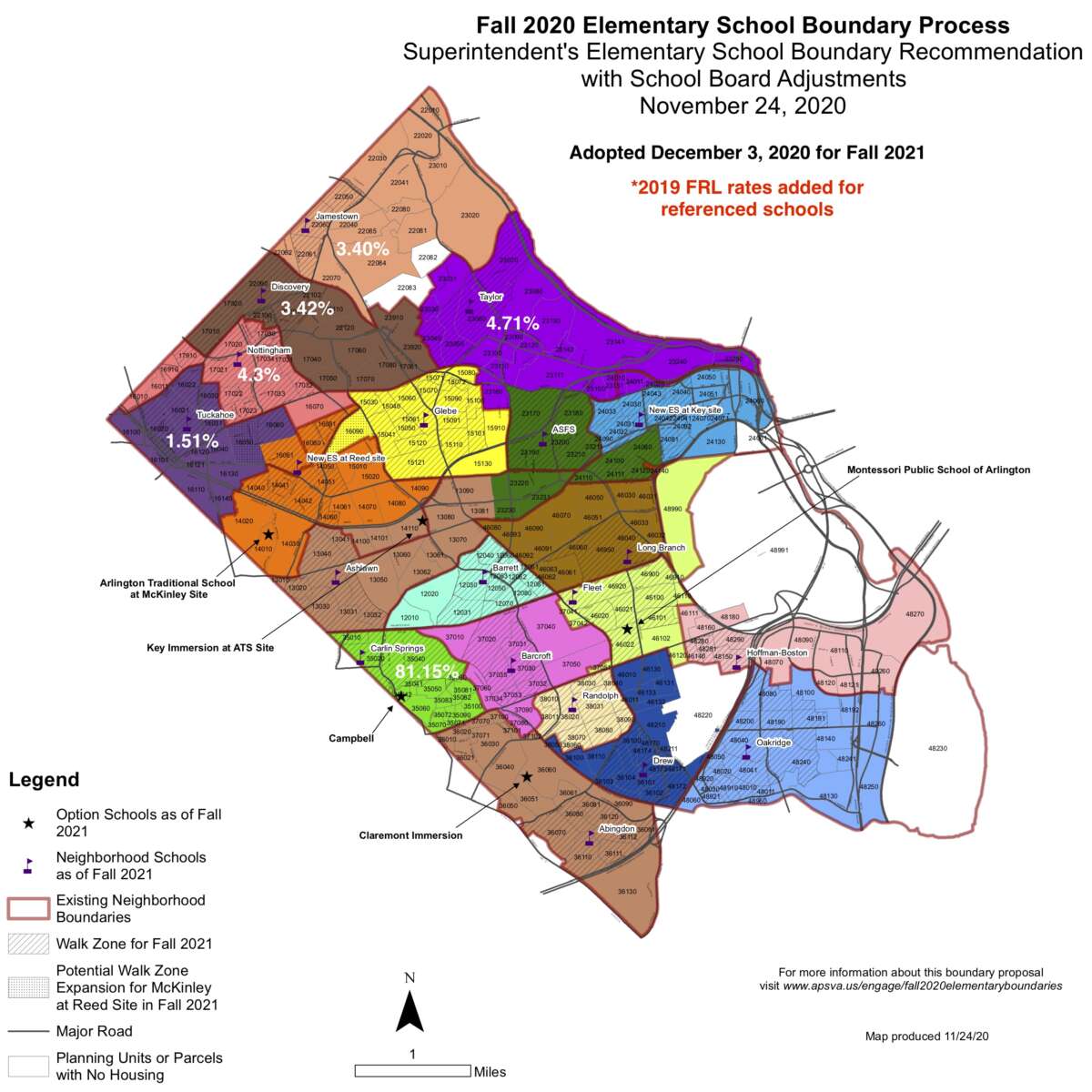
As in most public school districts in the nation, Arlington operates neighborhood schools, where most kids go to school based on where they live. Similarly, like most urban areas, Arlington County housing patterns reflect ingrained racial, ethnic, and economic segregation after years of discriminatory government policies and coordinated racist real estate practices. Our schools reflect this housing framework.

Past efforts, such as busing for integration, have fallen out of favor with parents, elected officials, and the courts. Other efforts, like option schools, are models for integration, but are not widespread enough to change the system. Plus, APS reports that Arlington parents voice a strong preference for walkable neighborhood elementary schools, and there are valid economic, environmental, and health benefits for promoting this walkability.

With this backdrop, APS is unlikely to challenge the status quo. However, APS can increase integration with intensive joint planning with the County Board to address school segregation where it starts — its neighborhoods. Many community members, including School Board member Reid Goldstein have called for this joint planning. But, despite being one of the 10 people in the County able to implement this collaboration, Mr. Goldstein didn’t elaborate on how to get started.

The most promising opportunity to improve integration within APS is the County’s Plan Lee Highway initiative. By reimagining Lee Highway as a walkable urban boulevard, a rezoning effort could add mixed-income housing in the northernmost quarter of Arlington — neighborhoods with the highest median incomes, which flow to elementary schools with the lowest poverty rates in the County.

(more…)


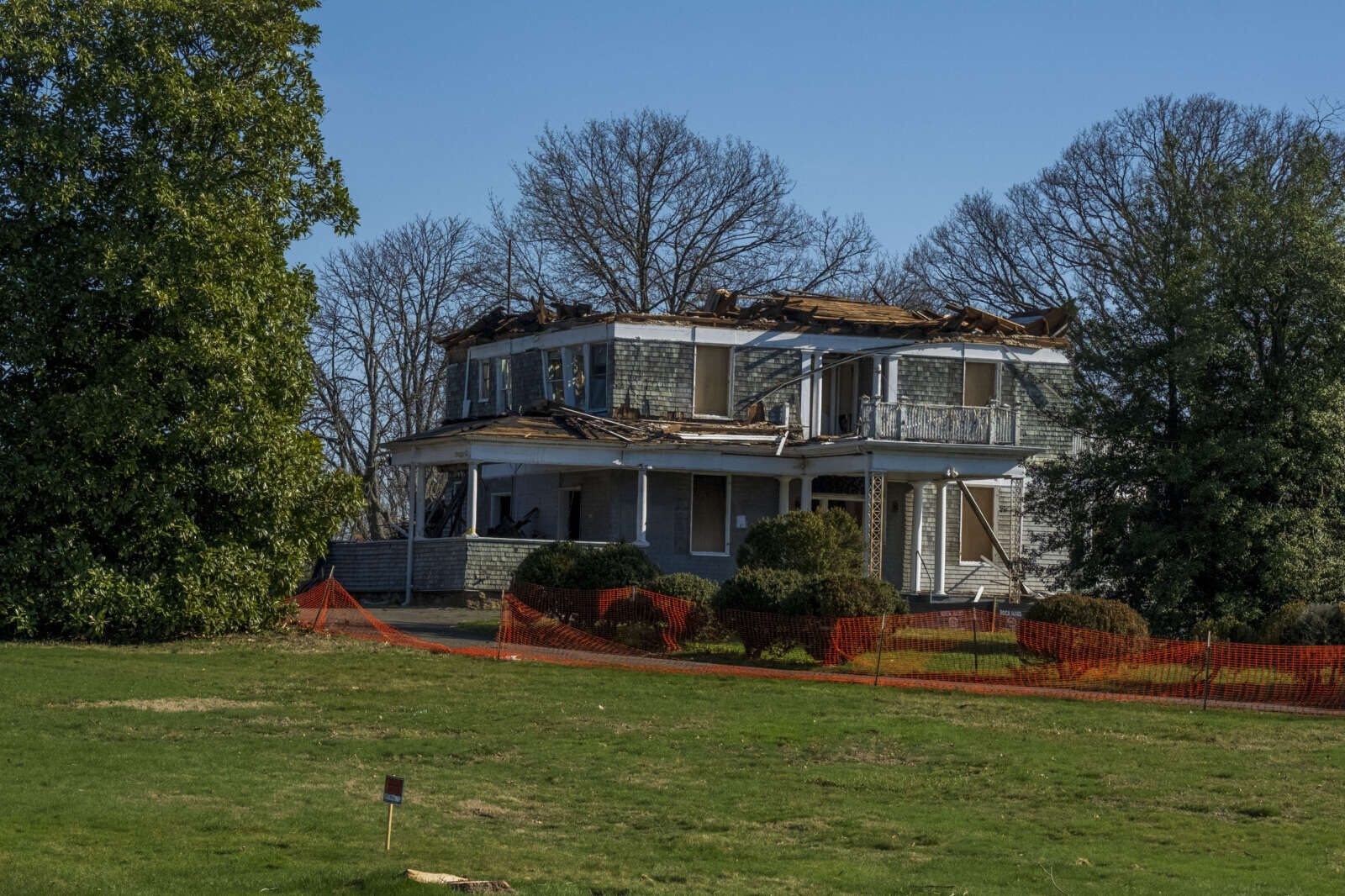
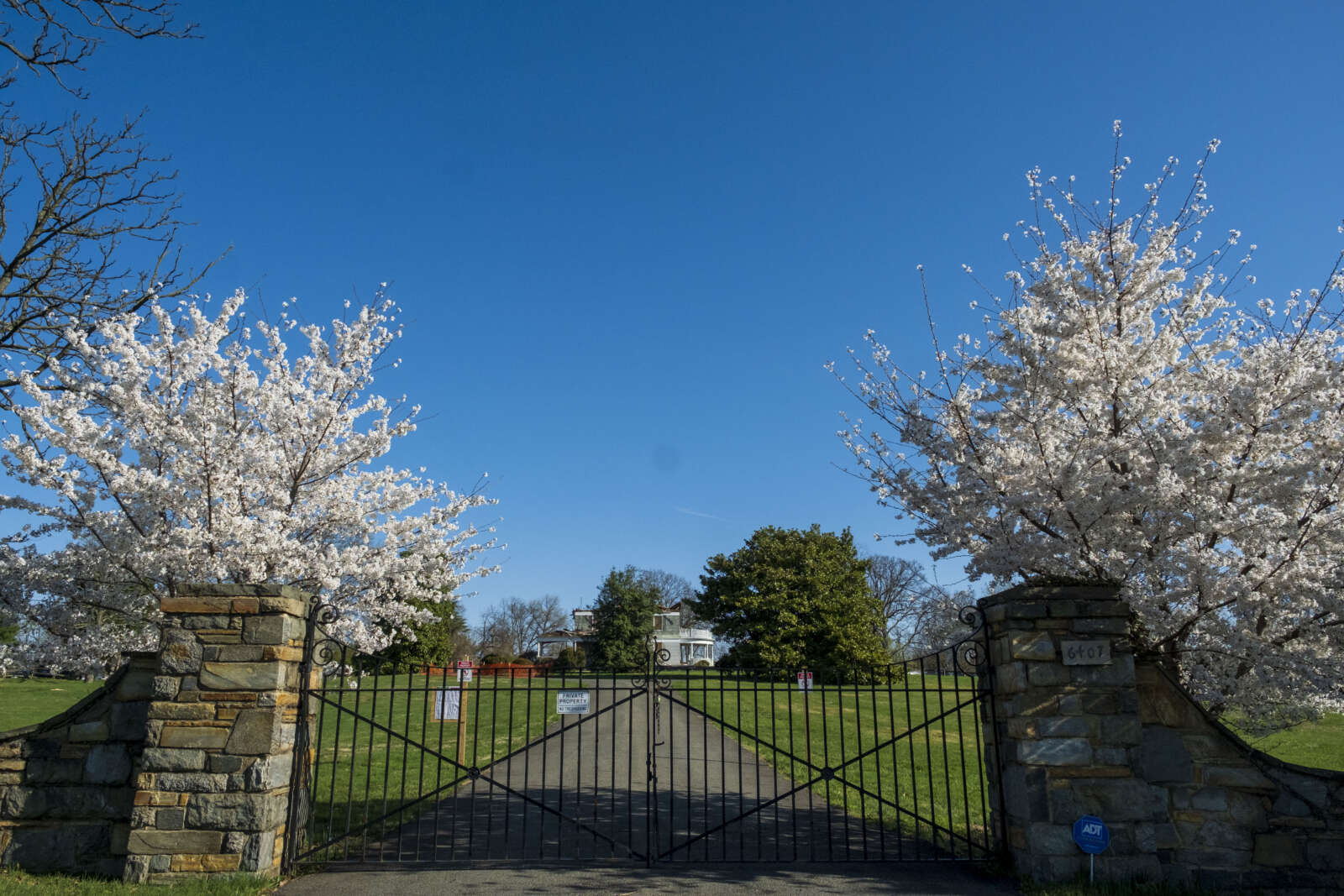
Brian Hannigan just lost a battle he’s been fighting for the better part of a decade, and all that’s left now is to hope the end result isn’t too detrimental to his neighborhood.

Hannigan, president of the Dominion Hills Civic Association, has been one of the voices for years telling Arlington County that it should purchase the nine-acre Febrey-Lothrop House, at 6407 Wilson Blvd, when it became available.

Formerly home to businessman Randy Rouse before his death in 2017, the property is also known as the Rouse estate. While the house has undergone numerous renovations and expansions over the years, portions of it are believed to date back to before the Civil War.

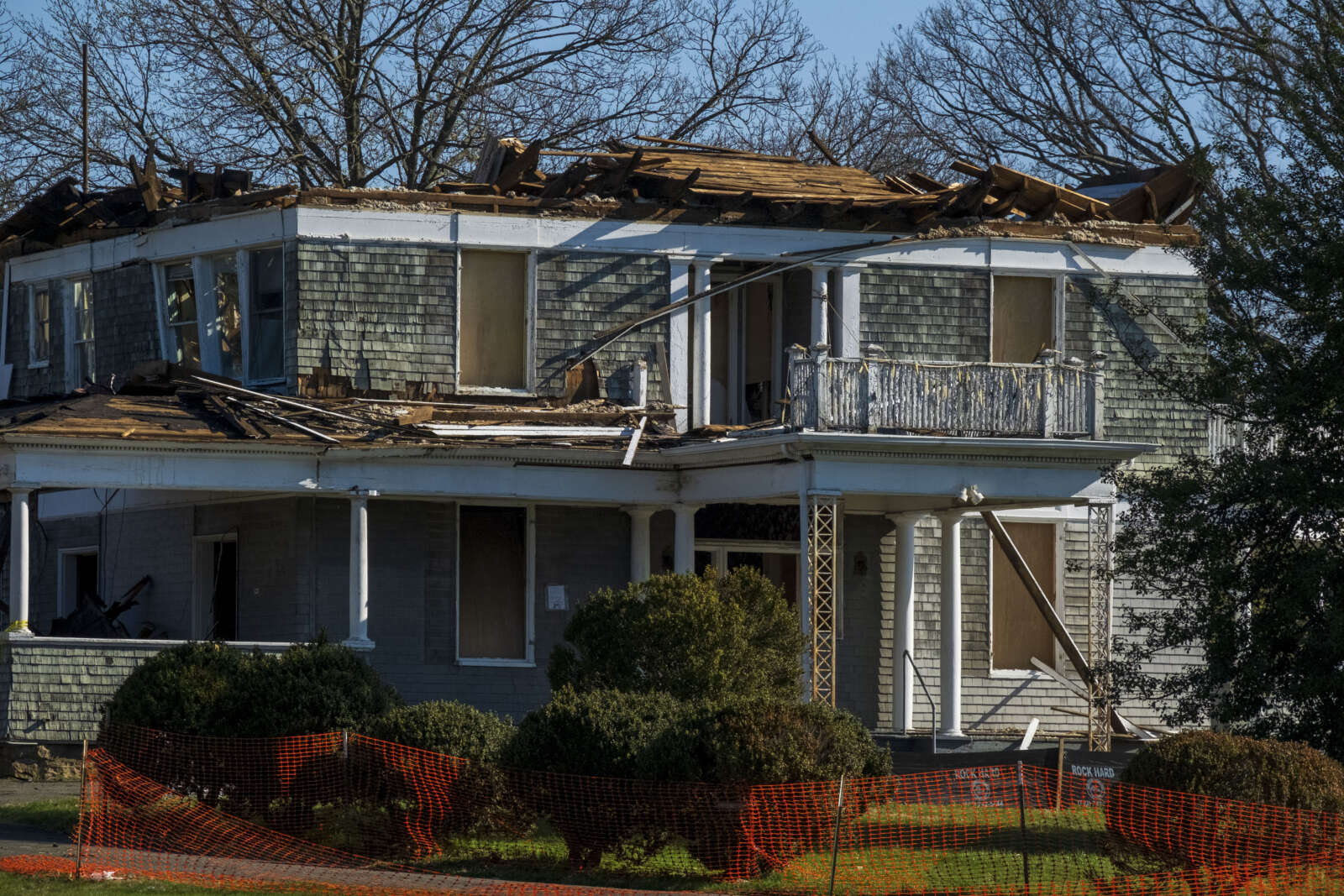
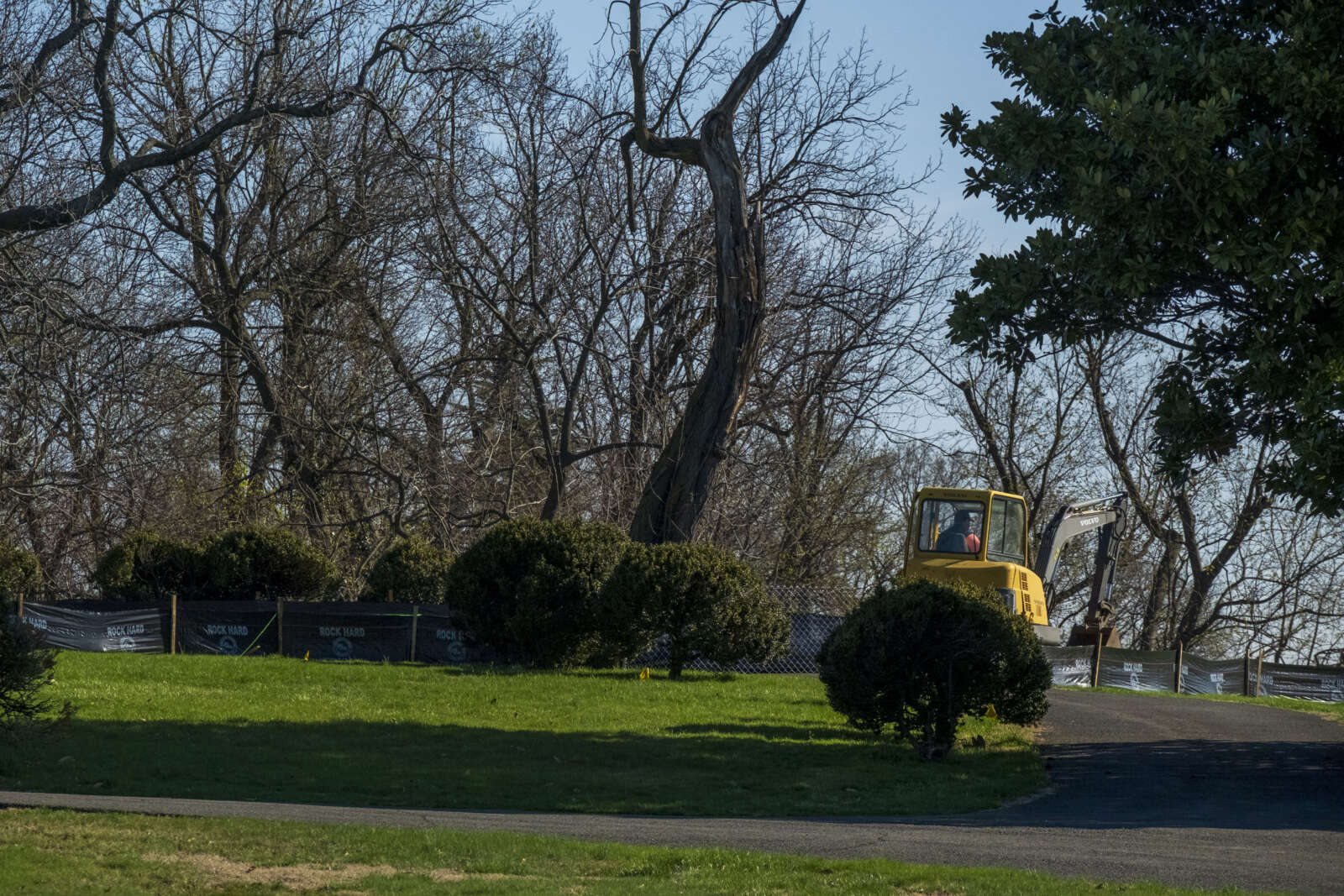
It’s now being demolished, in anticipation of expected single-family-home development on the site.

The County Board took up the question of whether to designate the property as historic, requiring preservation or, at least, greater archeological efforts and documentation to be performed before development could occur, but the discussion was too little, too late, and a demolition permit for the house was approved administratively before any historic preservation designation could be enacted.

Though disappointed, Hannigan says he’s at least hopeful that the site won’t be up-zoned for denser development.

“I think it’s a done deal,” said Hannigan. “We received assurances from the trustee, the owner, that they have no interest in pursuing a sale that would involve rezoning.”

The potential historic designation is still on the books for discussion at meetings in April, but the house is already partially torn down.

According to the county website, Arlington County Historic Preservation staff were able to access the property prior to demolition. Hearings on the historic designation of a portion of the property are expected to proceed as scheduled at the Planning Commission and County Board, despite the home’s demolition.

It’s unclear what would be targeted for preservation if approved, though some on the County Board previously said possibility of pre-Columbian artifacts on the site, based on records of Native Americans activity in the area, was more compelling than any historical aspects of the house itself.

The designation is scheduled to be discussed at a Planning Commission meeting on Monday, April 5, and at the County Board on Saturday, April 17.

“I’m disappointed Arlington County didn’t step up,” Hannigan said. “Personally, been advocating for the county to target this land and acquire it for years, but those pleas have fallen on deaf ears. Two years ago county did put the site on the Parks Master Plan as generational and unique opportunity for acquisition. The language they used was appropriate, that if it goes on the market it’s gone forever. Well, that’s what happened.”

Hannigan said he hoped the land would be acquired by the county and preserved as open space, but now those hopes have shifted warily towards advocating against any potential rezoning.

(more…)


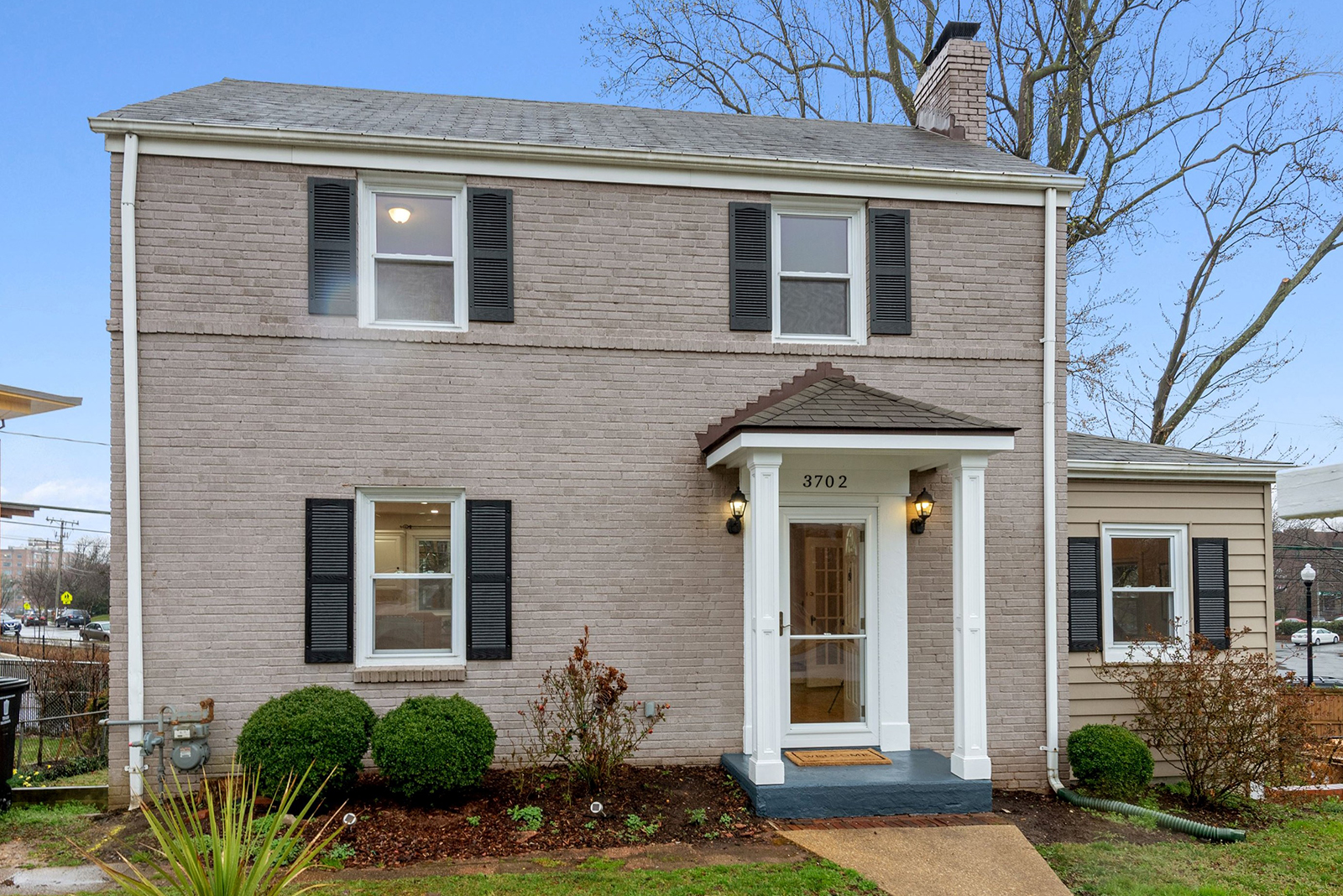
Address: 3702 Arlington Blvd
Neighborhood: Arlington Heights
Listed: $675,000
Open: Saturday, March 27, and Sunday, March 28, 1-4 p.m.

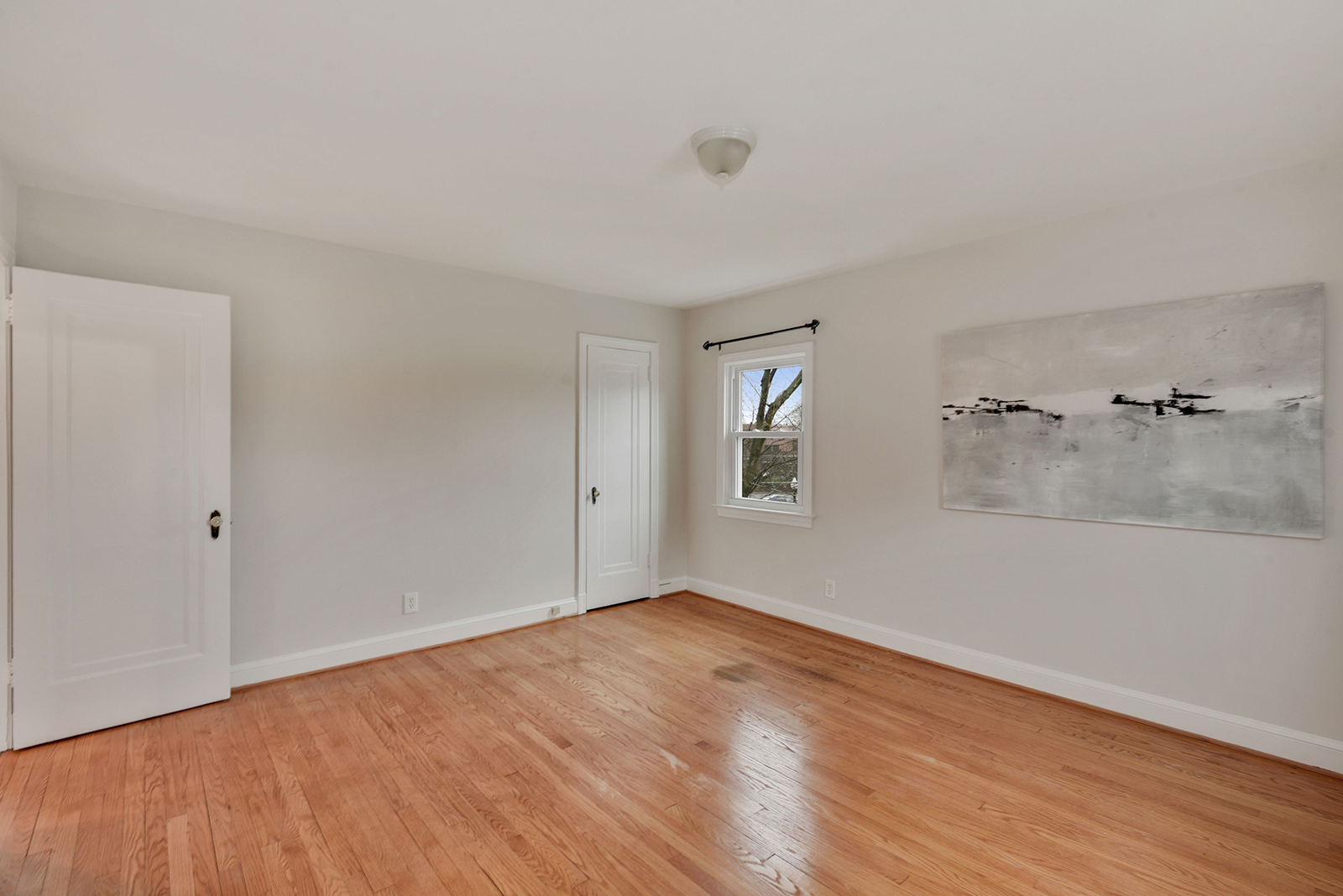
Polished, buffed and ready for you to enjoy spring cookouts on the large deck with steps to the back yard for your summer garden…

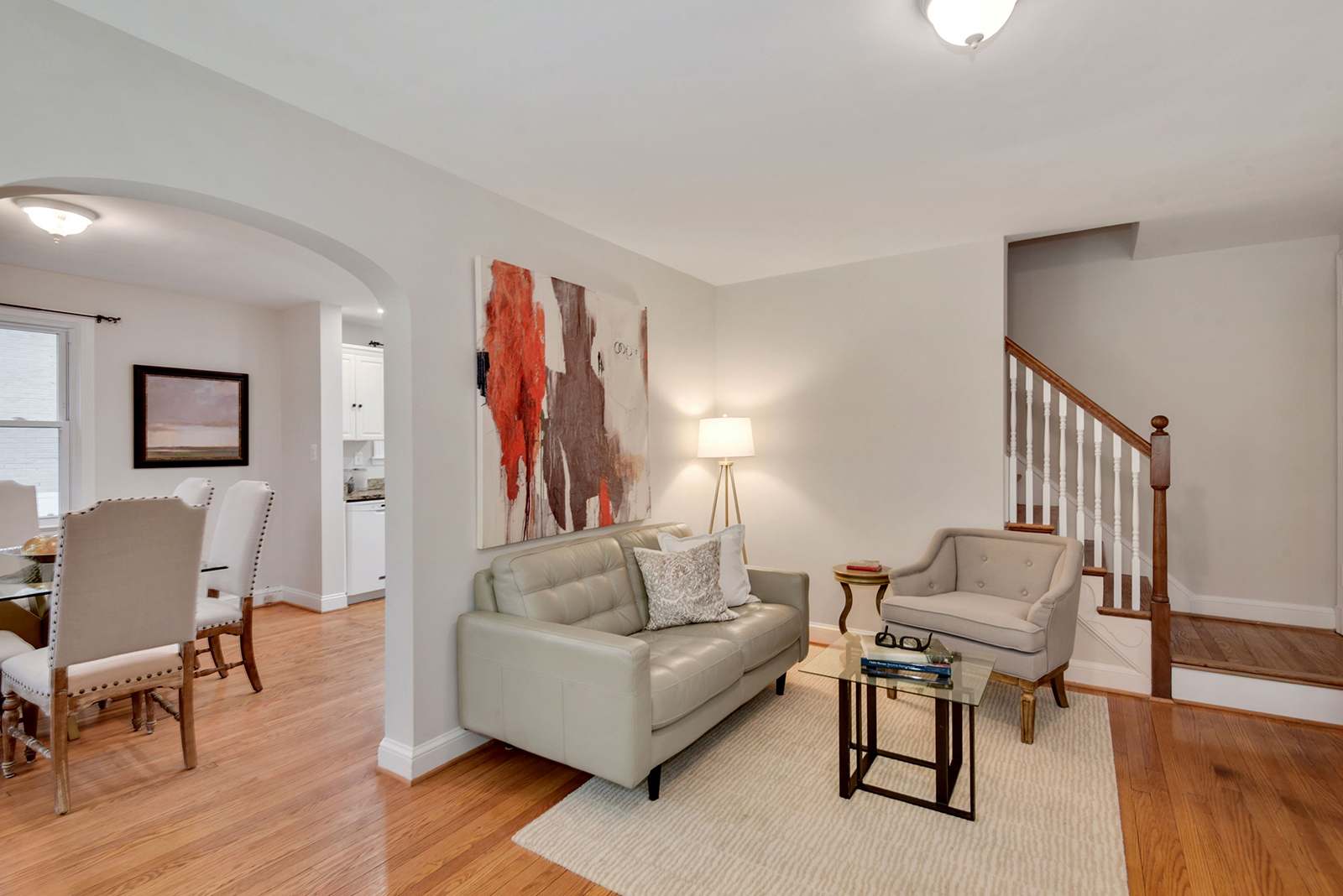
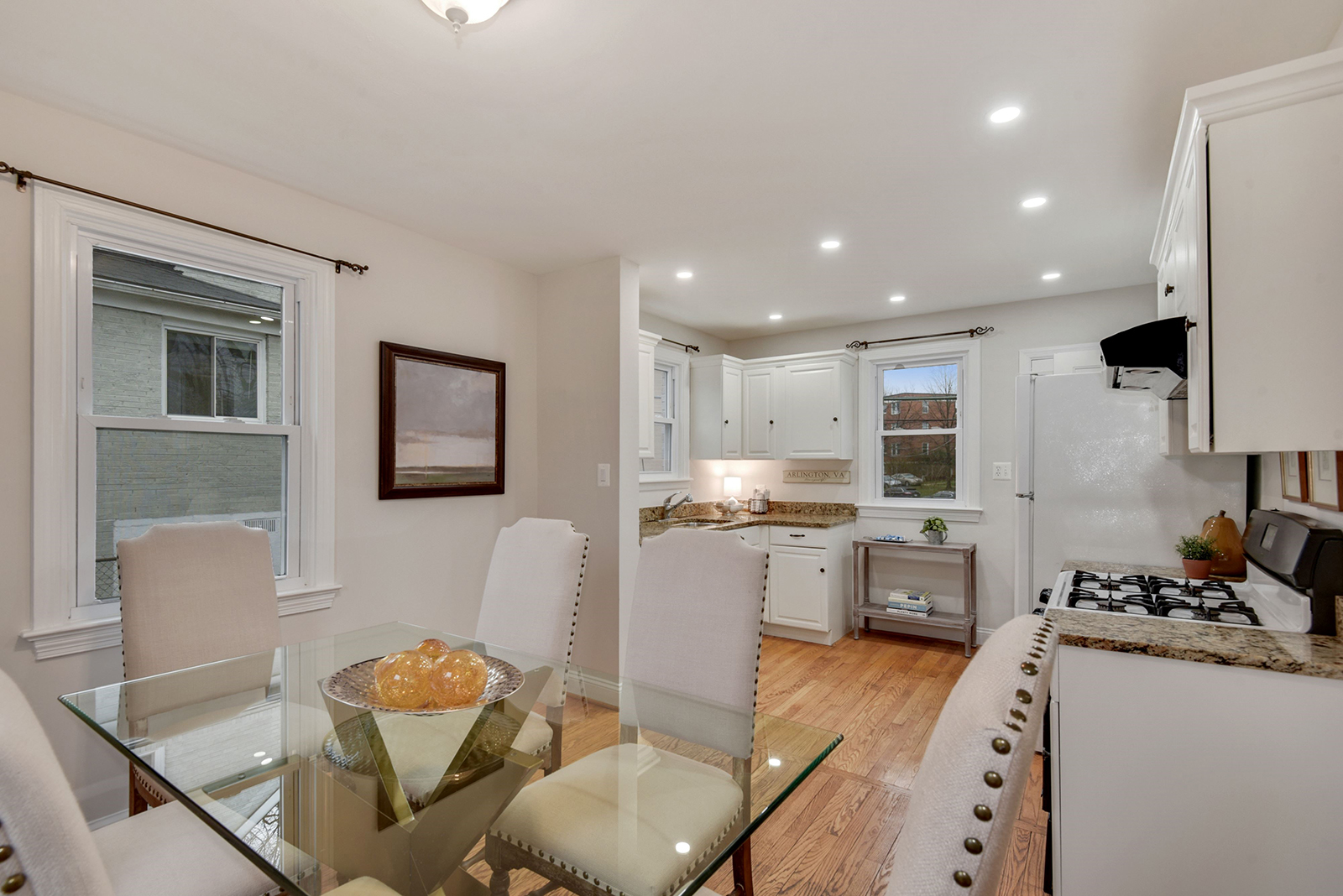
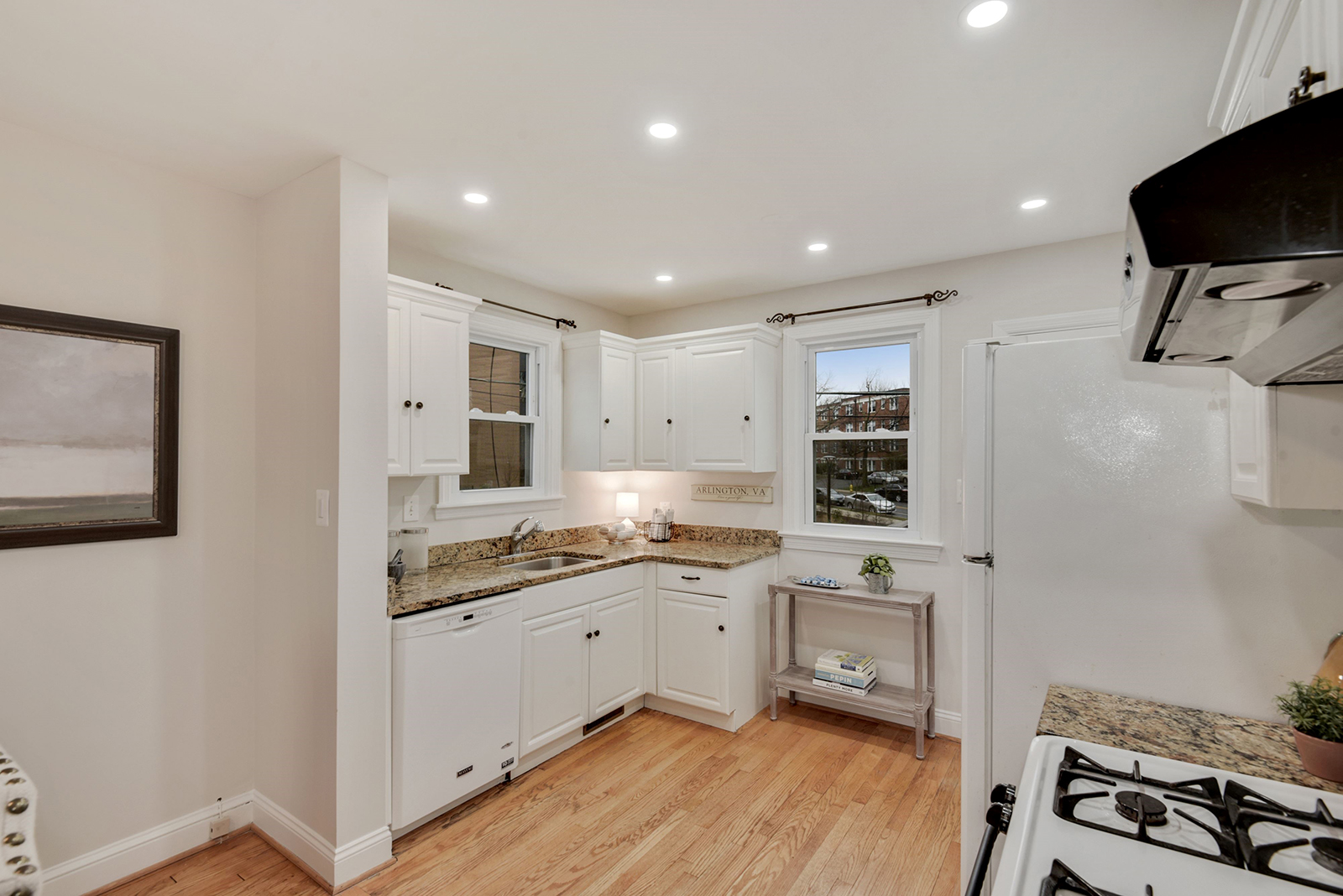
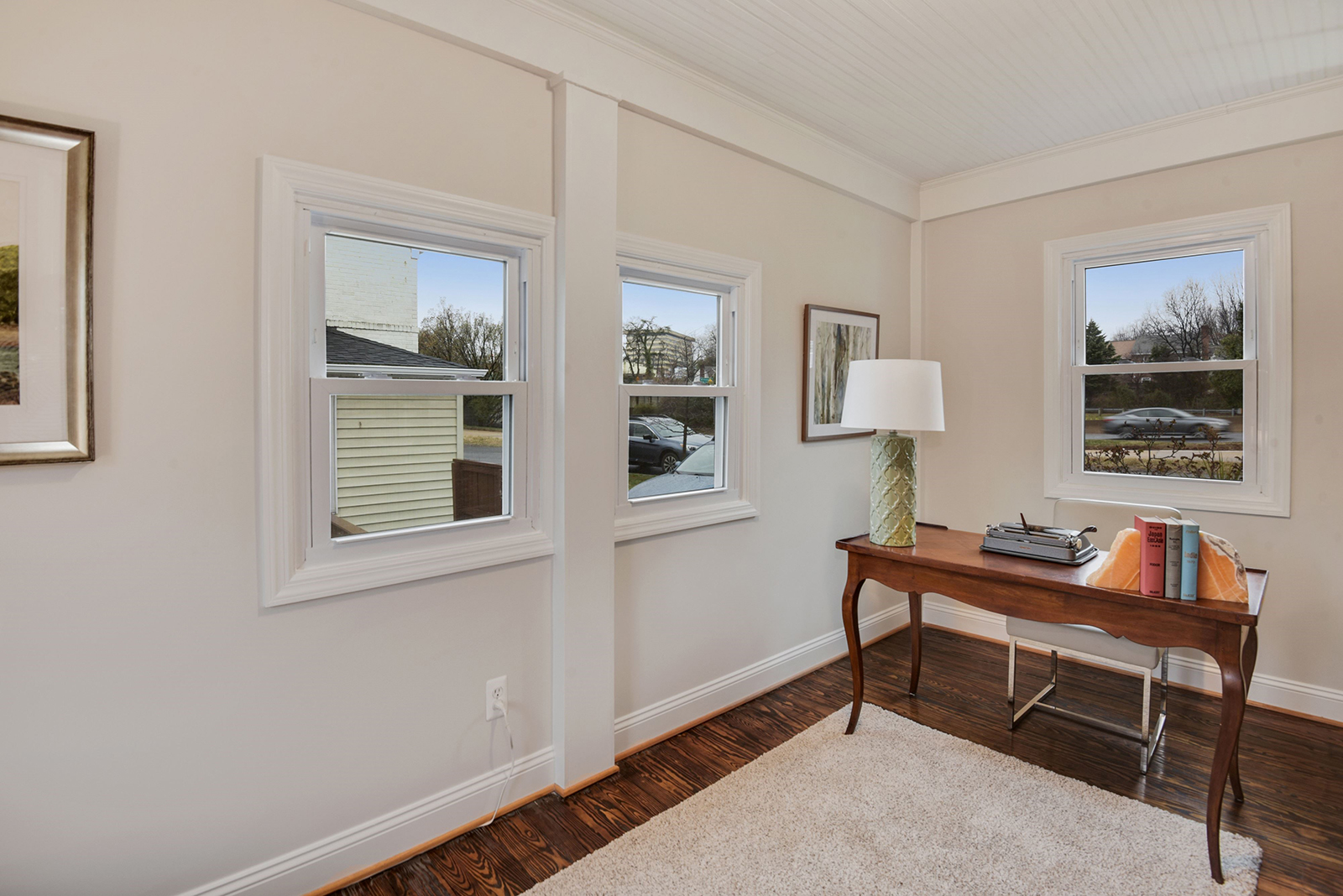
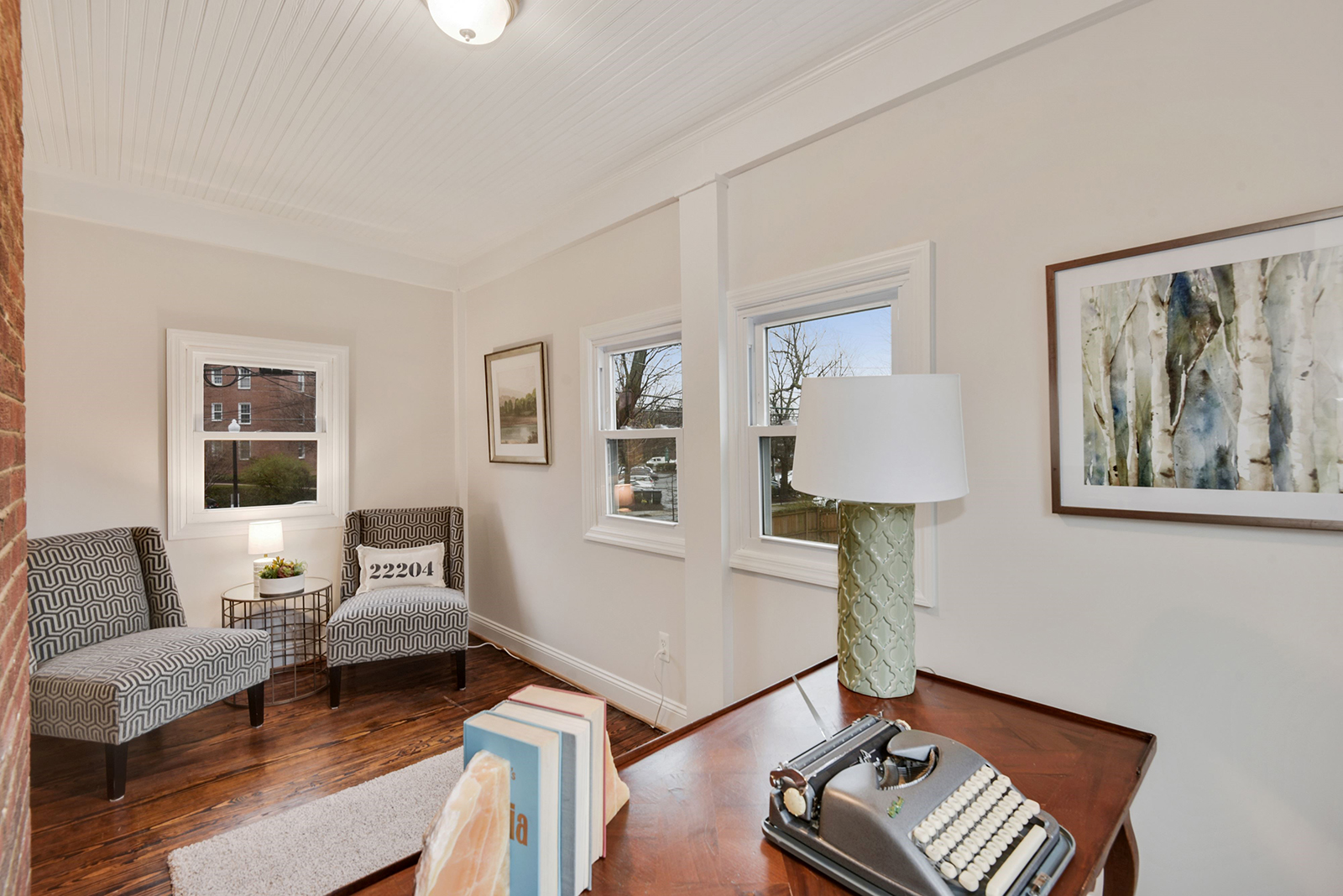
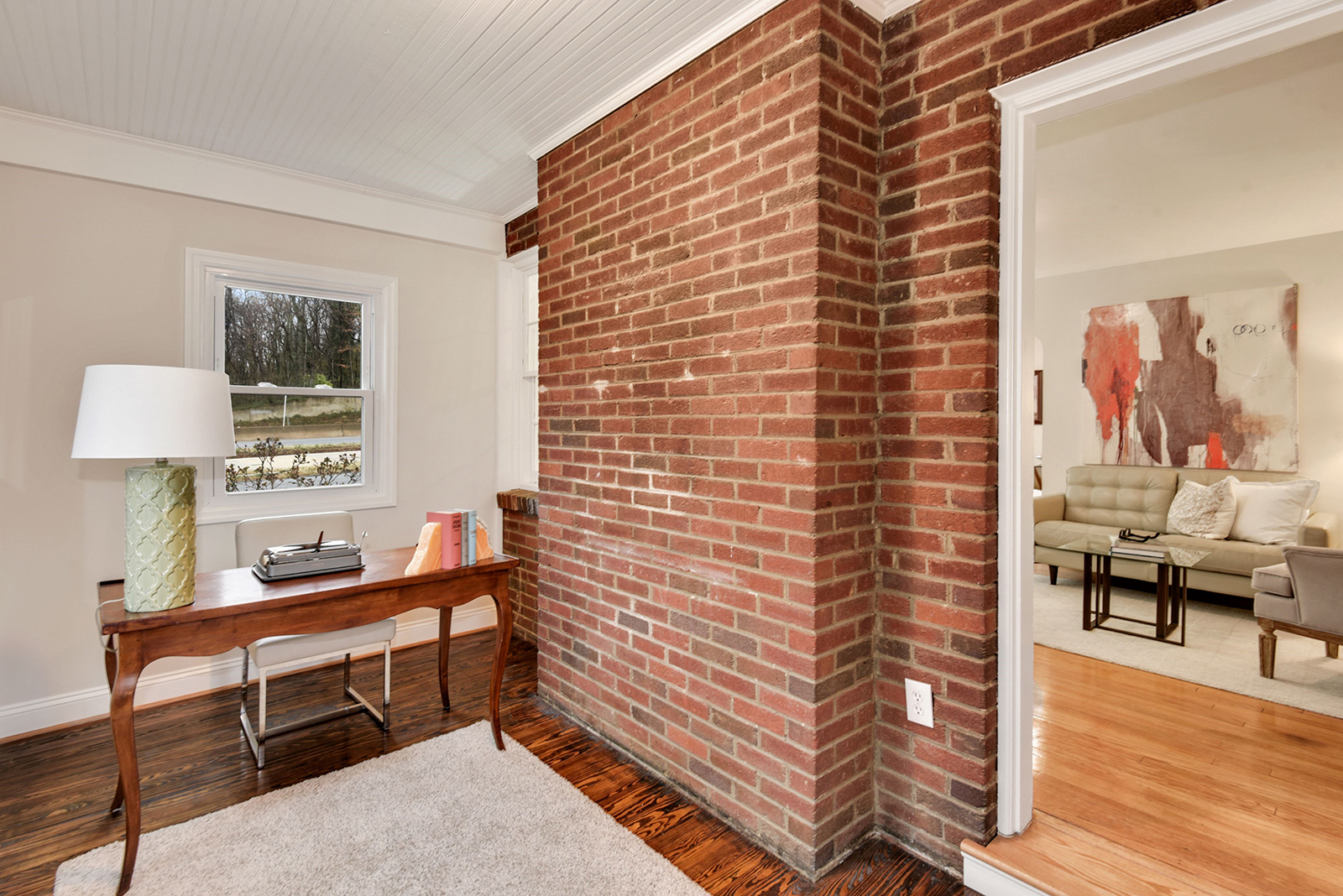
This two-bedroom two-bathroom home offers a wood-burning fireplace in the living room, a sunny den or office with windows on three sides, and a dining area open to the kitchen. Crisp white cabinets and appliances, granite tops and gas cooking will please cooks who have mastered either air-frying or carryout menus. A door from the kitchen leads to the deck, yard and garden shed, perfect for storing bikes, sports and yard equipment.

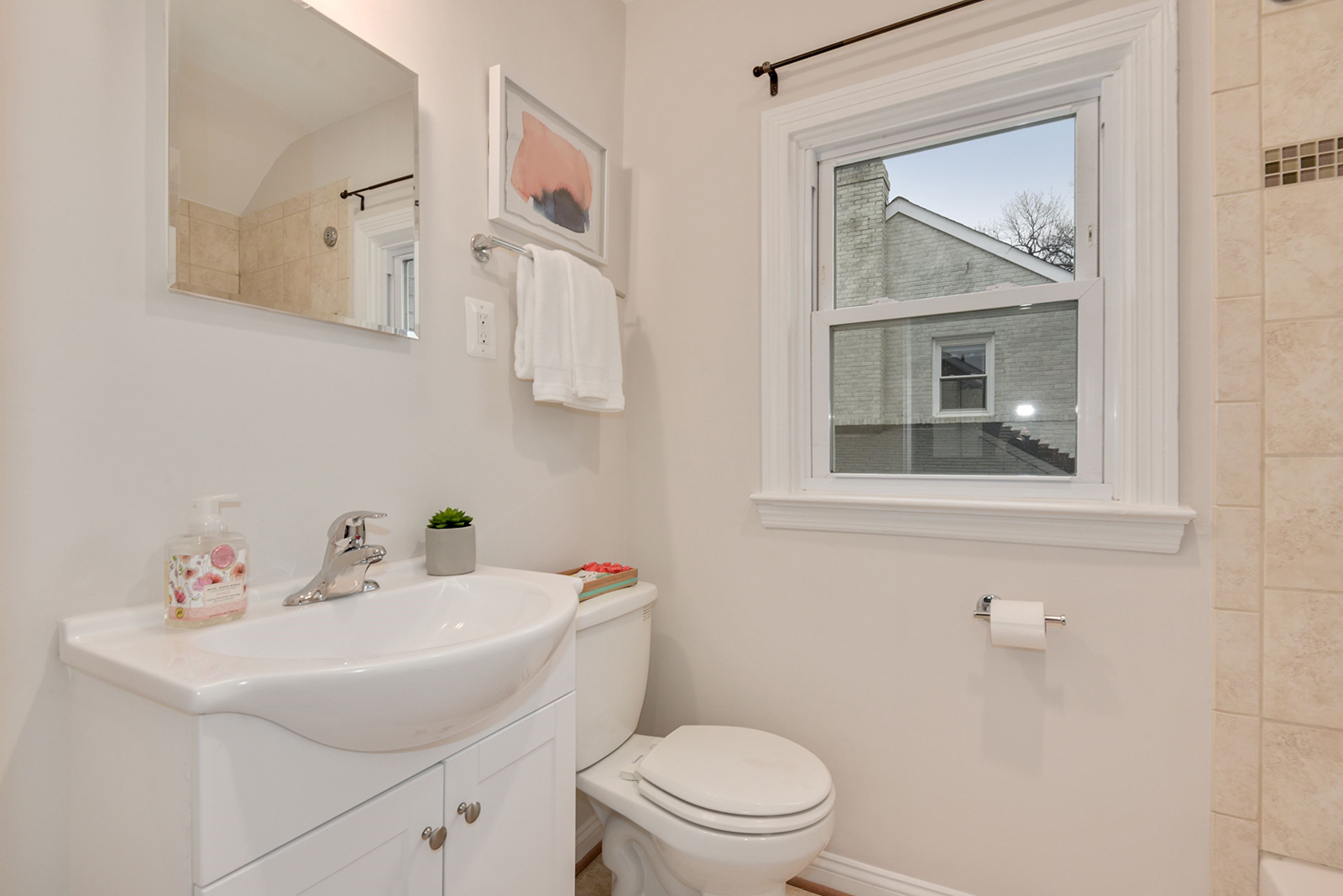
Upstairs, the primary bedroom has space for a desk or sitting area and a rare walk-in closet. The second bedroom has a deep closet and double windows for now relevant cross-ventilation. An updated bathroom and linen closet complete this floor.

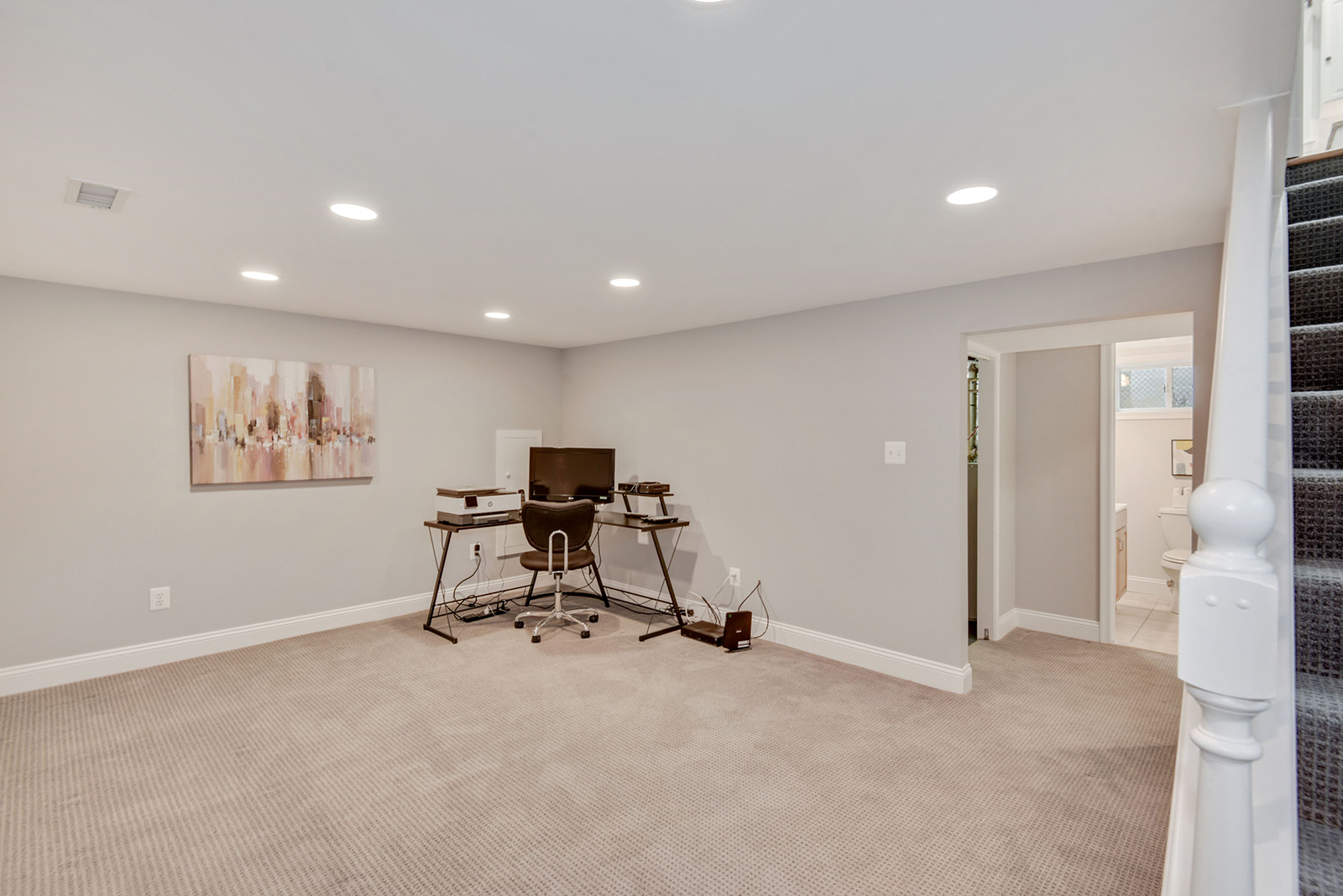
The lower level rec room features recent carpeting, recessed lighting and a closet. With a door to the outside and a full, updated bath on this level, the space is ideal for a guest, roommate or the eventual return to outdoor gatherings. The large, clean laundry and utility room provides even more storage. To ensure year-round comfort, the home is equipped with a Generac natural gas generator.

Walk to Thomas Jefferson Community Center for basketball and tennis courts, playground, and a return to many Arlington County rec programs. Ruthie’s All Day is nearby for breakfast to dinner, and Columbia Pike features restaurants with a broad range of cuisines, shops and services. It’s an easy commute to Washington, Fort Myer/Henderson Hall, Pentagon, Rosslyn-Ballston business corridor, Pentagon and Crystal City at National Landing.

A missing middle gem awaits the savvy homebuyer.

Listed by:
Betsy Twigg
McEnearney Associates
703-967-4391
[email protected]
www.betsytwigg.com


The Right Note is a biweekly opinion column. The views expressed are solely the author’s.

As the pace of vaccinations accelerate and we anticipate a return to a more normal way of life, the County Board and School Board are making budget decisions for the upcoming fiscal year.

Here are seven recommendations for our elected officials as they move forward:

1. Arlington Public Schools should stay on track for five days per week, in-person learning this fall. The academic and mental health needs of the kids are abundantly clear and vaccinations are on track to alleviate the virus concerns.

2. The School Board should consider creating a blue ribbon panel to bring forward recommendations to improve academic achievement. The panel should not consider buildings or school boundaries, but how to put instruction plans in place to raise the level of achievement for all students within the current, robust, budget. And this should not be a report that simply goes up on a website. The School Board should require themselves to take an up or down vote on those recommendations.

3. The County Board should meet in person again as soon as possible. As soon as the board and a handful of key county staff receives vaccinations, they should be able to end their emergency meeting procedures and resume in person meetings. This would show leadership as we all look toward getting back to normalcy.

4. At the same time, the County Board should adjust its rules to allow for virtual public comment on an ongoing basis. This hybrid approach would allow maximum public participation in a process using technology that is already available to us.

5. The County Board should scrap any notion of a pay raise this year. Last year, the Board originally planned to boost their salaries by $10,000. Then they almost, inadvertently according to county staff, put a smaller one in the budget last Spring. If they want to resume discussions of an appropriate pay scale moving forward, 2022 is the year to have that discussion.

6. The County Board should scrub the budget for unnecessary spending items, like the implementation of rank choice voting, and look for a way to cut the property tax rate. (The Board will not cut the tax rate, but if they want to help the community get fully back to work as quickly as possible, they should.)

7. The County Board should add a family pass back into its residential parking program. Any family with a live-in grandparent or adult child living at home should be allowed to purchase at least one extra street parking pass. This plan would alleviate concerns about a rental house full of unrelated people putting four cars on the street while accommodating families who are essentially being told to suck it up by county staff.

And finally, our elected officials should challenge themselves to get through an entire meeting without using buzz words. “Equity” and “missing middle” come to mind. Instead, please focus on explaining in concrete terms what you mean, what you plan to do it about it, and how it will impact the average household.

Mark Kelly is a long-time Arlington resident, former Arlington GOP Chairman and two-time Republican candidate for Arlington County Board.


Peter’s Take is a biweekly opinion column. The views expressed are solely the author’s.

Arlington residents’ lives have been upended by COVID-19: parents have struggled to juggle virtual schooling and work responsibilities; many restaurants, hotels and small businesses have disappeared. The County budget has been battered. Yet, County government has been moving full speed ahead to help builders and developers of high-end housing fatten their bottom lines.

Arlington’s Missing Middle (MM) Housing study is a heavily subsidized County government initiative pre-ordained to reach a “solution” to a non-existent problem. The housing types on which this study focuses already are plentiful in Arlington. Many more already can be built by right.

As my colleagues at Arlingtonians for Our Sustainable Future (ASF) demonstrate, up-zoning to enable construction of even more of this MM housing will NOT provide affordable housing for those most in need.

Missing middle housing is high-end, not affordable, housing

County staff have abandoned earlier claims that their MM study will yield affordable housing. Cloaking themselves in the language of civil rights advocates, they now argue these MM housing types are “under-represented.” A current Green Valley project demonstrates why increasing the representation of MM housing will boost the supply of high-end housing while accelerating the loss of racial, ethnic, and economic diversity, exacerbating our long-term budget deficit, and further damaging our environment. County Board members should renounce these bad community outcomes.

Dr. Jon Huntley of Arlington Analytics (along with ASF’s Mary Glass) recently completed a study of the Towns of 24th townhomes project in Green Valley. This project will provide townhome units in two fourplexes, replacing two single-family homes valued at $675,000 each. Marketing materials show each luxury townhome “starting at $800,000,” meaning owners will need to make $138,977 per year to get a mortgage.  

The County — with no factual evidence to support its claims – says MM homes will be a pathway to diversity. Yet consider 2014-18 U.S. Census data cited in Arlington’s Missing Middle Research Bulletin #2, which shows these Arlington average annual household incomes:

  • African-American – $58,878/year
  • Hispanic – $77,743/year
  • Non-Hispanic white – $134,723/year

Based on these averages, Towns of 24th owners are more likely than not to be white, and in any event, wealthier persons of any race/ethnicity whether relocating from within or outside Arlington. Other data show the townhome price range falls well above income levels of current residents who are over 65, occupy federal or county government jobs, or who are single parents or immigrants.

In higher income or more expensively priced areas either in South Arlington or North Arlington, the market values of new MM housing will require owners to have much higher incomes than the $138,977 in the Towns of 24th example.

By contrast, analyses presented to County staff as part of the current 5-year review of Arlington’s Affordable Housing Master Plan, demonstrate that Arlington’s greatest need for affordable housing is for those who earn 60% or less of Area Median Income (AMI). Sixty percent of current AMI is $68,040 (Slide 8).

Arlington lacks long-term infrastructure financing plans

Arlington has forecast that about 63,000 new residents will move here between 2020 and 2045 under existing zoning. As documented in an ASF presentation (Slides 2-5), Arlington has failed to develop long-term plans to pay for the new infrastructure needed to support these anticipated new residents, let alone the additional residents beyond the 63,000 who would be newly enabled to live here under MM up-zoning.

Arlington lacks long-term environmental impact plans

Arlington also lacks long-term plans to address the severe impacts on our environment of the current hyper-development that ASF’s Anne Bodine describes, let alone the incremental adverse environmental impacts of the arrival of 63,000, or even more, new residents.

Conclusion

Missing Middle housing is high-end housing not affordable housing. MM housing will accelerate gentrification, but will not help those in greatest need.

Before proceeding further, the County government first must:

  • Perform site-specific fiscal impact analyses for new, multi-unit residential projects
  • Release all existing long-term operating budget forecasts
  • Prepare these three sets of County forecasts comparing current zoning with any and all proposed MM up-zoning: (1) Long-term operating budget; (2) Long-term environmental impact; (3) Long-term household income by quintiles, showing projected disparities among different household groups compared to the national average

Peter Rousselot previously served as Chair of the Fiscal Affairs Advisory Commission (FAAC) to the Arlington County Board and as Co-Chair of the Advisory Council on Instruction (ACI) to the Arlington School Board. He is also a former Chair of the Arlington County Democratic Committee (ACDC) and a former member of the Central Committee of the Democratic Party of Virginia (DPVA). He currently serves as a board member of the Together Virginia PAC, a political action committee dedicated to identifying, helping and advising Democratic candidates in rural Virginia.


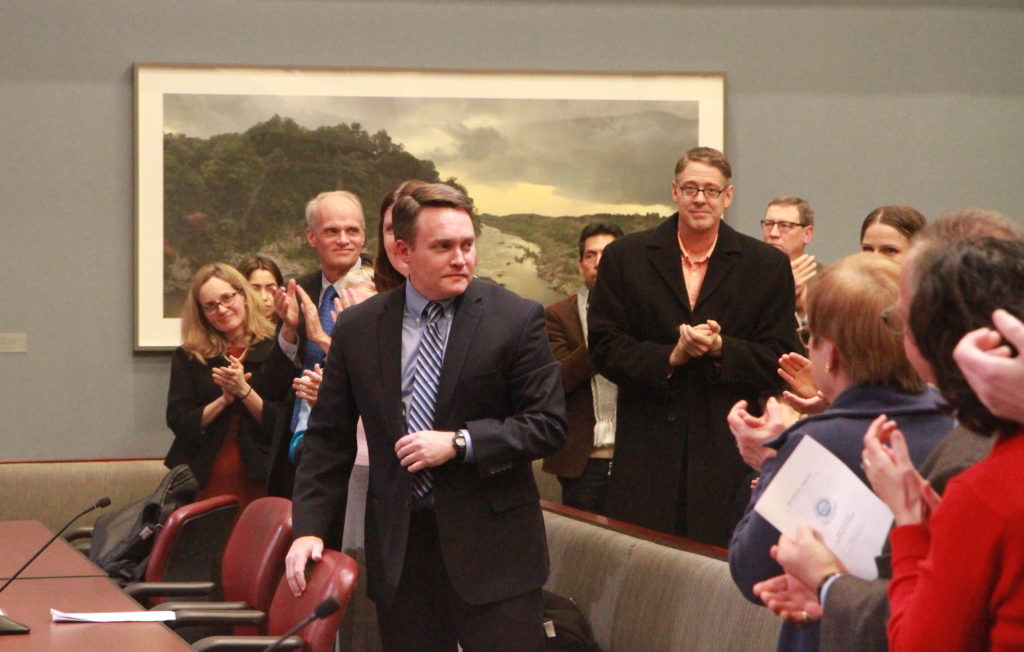
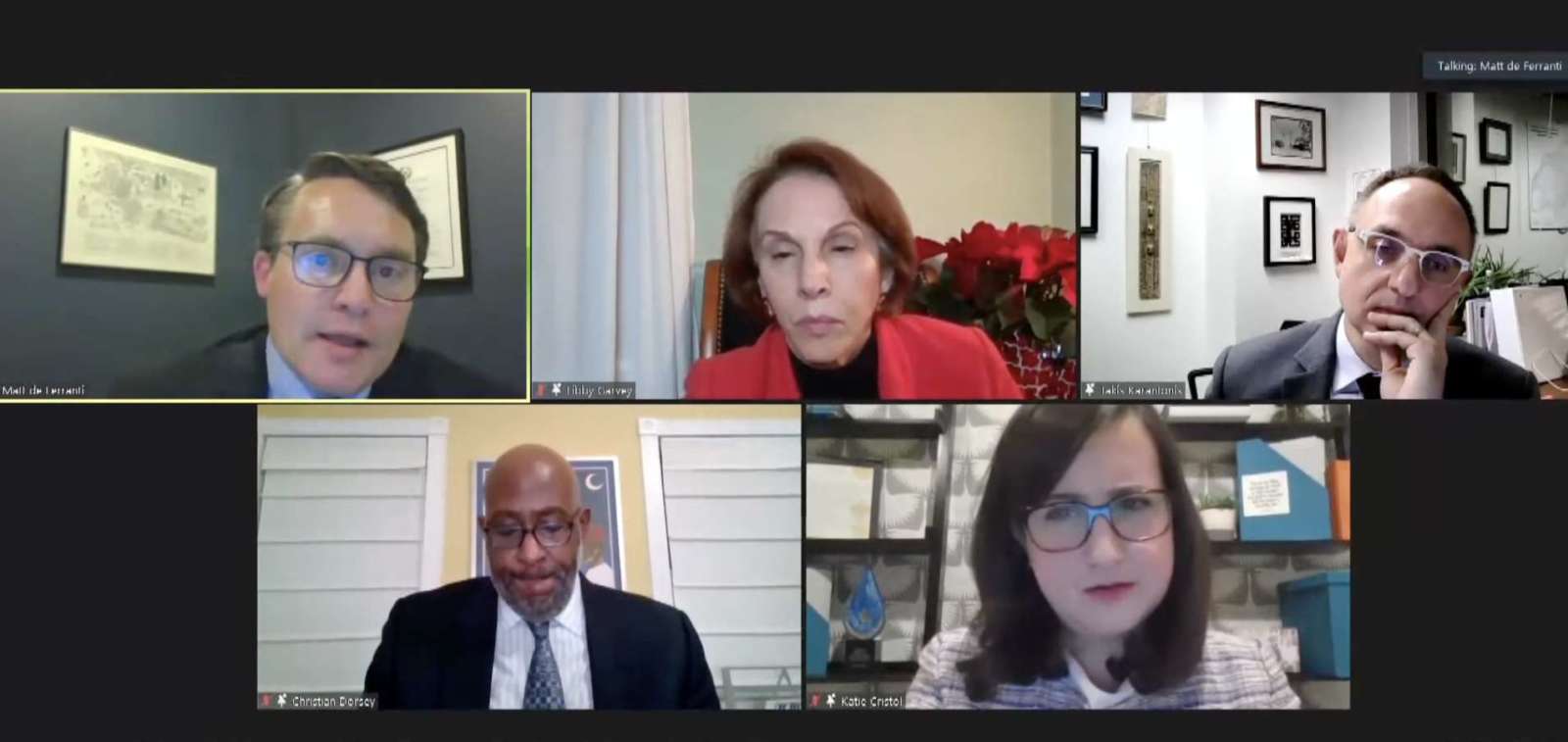
The Arlington County Board unanimously elected Matt de Ferranti as its Chair and Katie Cristol as its Vice-Chair during a virtual meeting on Monday.

Elected in 2018, de Ferranti is serving as Chair for the first time, succeeding Libby Garvey. During the year that he occupies this role, he will set the Board’s meeting agendas and preside over the meetings. The first regular Board meeting of 2021 will be held on Saturday, Jan. 23.

Colleagues heaped praise on the new chair.

“One of the most under-sung attributes in an elected official is earnestness, [and] our colleague, Mr. de Ferranti has earnestness in spades,” Cristol said. “[With] a pandemic, a reckoning over racial injustice, it is a moment that calls for a chair like Mr. de Ferranti.”

Cristol, elected in 2015 and a former Board chair, fills a role that was vacated in April, when then Vice-Chair Erik Gutshall resigned after doctors discovered a brain tumor. He died shortly after, and his successor, Board Member Takis Karantonis, was elected in July.

Board member Christian Dorsey lauded Cristol for her activism for accessible, affordable childcare and her work with regional partners on transportation in Northern Virginia.

Dorsey said he nominated Cristol “with great confidence that she will not only be able to perform the role of Vice-Chair, but that she will join Mr. de Ferranti in a dynamic duo for leading Arlington.”

During the meeting, de Ferranti and Cristol commended Arlington for coming together during the pandemic, and outlined their visions for recovery. The new Chair said in his remarks that recovery efforts must focus on stabilization, recovery and a systematic commitment to racial and economic equity.

“Our response to COVID-19 is the biggest test we face as a community,” he said. “As difficult as this winter is and will be, spring will come: More and more will be vaccinated and a new Biden administration will lead our nation’s recovery.”

De Ferranti’s other stated priorities for 2021 include addressing hunger and food insecurity, preventing evictions, and boosting the production of missing middle housing.

“Without changes in our housing supply the 60% of Arlington residents who currently rent cannot realistically save up to buy a place,” he said. “We risk becoming as unaffordable as San Francisco if we do not plan for replacement of existing moderately priced housing and grow in a thoughtful, managed way.”

In her remarks, Cristol said that like 2020, the new year will be characterized by the coronavirus, as cases continue to surpass the peaks seen in March. With the vaccine, however, comes a chance to reimagine Arlington, the Vice-Chair said.

“Rebuilding after this once-in-a-century pandemic is a unique opportunity to think afresh about what future we want for ourselves and our children in our County,” she said.


This regularly-scheduled sponsored Q&A column is written by Eli Tucker, Arlington-based realtor and Arlington resident. Please submit your questions to him via email for response in future columns. Enjoy!

Question: I need more living space and single-family homes are out of my budget, so I’ve been searching for townhouses in Arlington, but finding that the options are limited. Can you provide some guidance on what the townhouse market in Arlington looks like?

Answer: I spend a lot of time digging into the condo and single-family home markets but not much time on the townhouse/duplex market. Why? Because townhouses and duplexes make up such a small part of our housing inventory. According to a Missing Middle study, townhouses and duplexes make up just 5.9% of Arlington’s housing inventory (3.7% are townhouses).

Fortunately (for some), we’ve recently had an unusual surge in new townhouse developments hit the market including:

  • Arlington Heights: 27 townhouses developed by NV Homes, walking distance to the East Falls Church Metro, ranging in price from about $1.1M-$1.4M
  • Trenton Square: 19 townhouses developed by Madison Homes, near the intersection of Rt 50 (north side) and Glebe and a short distance to Ballston, starting at around $1M
  • Morrison Hill: 17 townhouses developed by Beazer Homes, near the intersection of Columbia Pike and George Mason (across from the new Harris Teeter), ranging in price from about $800k-$900k+
  • Towns of 24th: 8 townhouses built by Evergreene Homes, in the Green Valley neighborhood situated between Shirlington and Columbia Pike, starting in the mid-$800s
  • Park Nelson: 3 townhouses developed by District Line Development, in the Green Valley neighborhood situated between Shirlington and Columbia Pike, ranging from $900k to $935k
  • Townes at South Glebe: 16 townhouses across two sites developed by Christopher Companies, off of South Glebe between Columbia Pike and Shirlington, with prices starting in the upper $800s

Explanation of Data

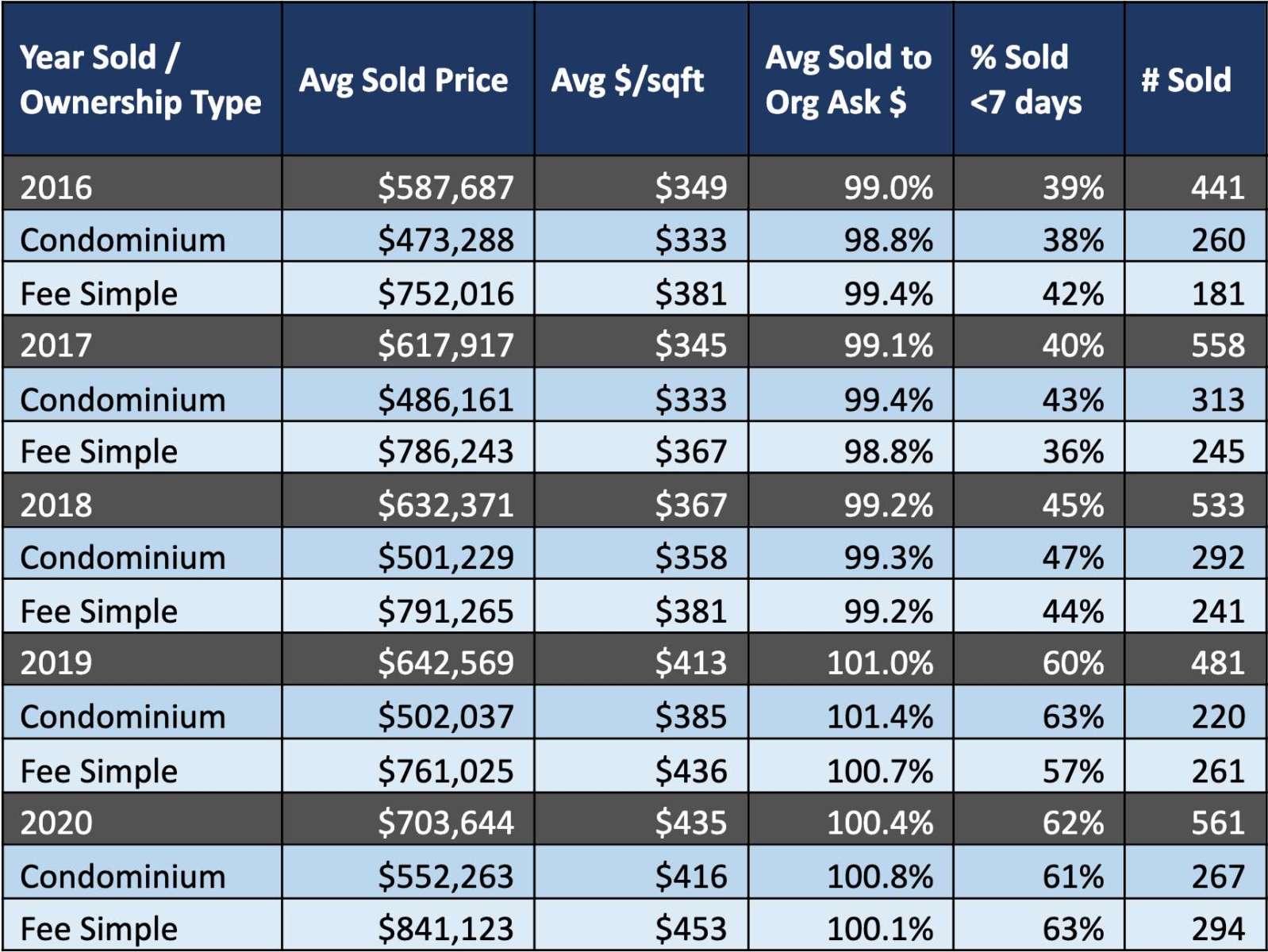
For the data below, I looked at sales of townhouse and duplex properties over the past five years (except the last chart). I decided to separate these properties into ownership type: Condominium and Fee Simple.

Condominium ownership is generally used in multi-family buildings (apartment-style) but was popular in many of South Arlington’s townhouse communities in the mid-1900s. In condominium ownership, the HOA is generally responsible for what’s outside the walls of the home (roof, fencing, some plumbing, etc.), and HOA fees are therefore (significantly) higher.

Fee Simple ownership means you own the entire structure and the land your home sits on. The HOA fees are usually much lower because there’s less common ownership.

Over the past five years, we’ve had a nearly 50/50 split between condo and fee simple townhouse/duplex sales.

5-Year Townhouse Market Performance

Unsurprisingly, the townhouse/duplex market has followed the same general trends as the rest of the housing market, with a strong 2018, followed by a white hot 2019 and 2020, where the average townhouse/duplex sold for more than the asking price and 60% or more of homes listed sold within the first week.

Here are a few highlights from the data below:

  • There are a few ways of looking at appreciation here, but overall, the data suggests the townhouse/duplex market has appreciated ~20% in the past five years, with most of that coming in the last two years.
  • The apparent drop in market value, by average sold price, of Fee Simple in 2019 is a misrepresentation of the market ,and due to the difference in the distribution of sales (more inexpensive/fewer expensive listings), the $/sqft tells a more accurate story for 2018-2019 Fee Simple pricing.
  • The ~10% appreciation of the Condominium townhouse/duplex market (smaller, older and less expensive than the Fee Simple market) in 2020 is likely due to buyer demand shifting away from similarly priced apartment-style condos in buildings towards private entry townhouse/duplex living with easier access to outdoor space (COVID related).
  • Although quite different in size, price, age and HOA fees, the Condominium and Fee Simple styles of townhouse/duplex ownership generally move in close parallel.

(more…)


A new report released by three local civic associations says tenant protections, more housing options and community amenities would make the 22202 zip code livable.

But significant barriers — including a history of exclusionary zoning to a lack of political will from leaders — are holding the area back, the neighborhoods say.

The report was produced by Livability 22202, a coalition of the Arlington Ridge, Aurora Highlands, and Crystal City civic associations.

“We want to ensure our neighborhood reflects the vision of an inclusive community and that residents’ voices are heard in a rapidly changing environment,” the report’s authors wrote. “By learning from the past and planning for a realistic future, we can ensure our shared values and visions as a 22202 community hold a promise that all are welcome to find a home here.”

The report coincides with heavy redevelopment and the construction of Amazon’s permanent HQ2 in Pentagon City. It also comes as Arlington County studies the lack of “middle housing” — duplexes and other smaller-scale multifamily housing — and sponsors discussions on the effects of race-based policies in County’s past.

“We believe that the adoption of our policy solutions, together with other livability objectives, will contribute to making our neighborhood an even better and more inclusive community to live and work in,” said Susan English, of the Arlington Ridge Civic Association, in a statement.

The report affirms the same solutions housing advocates have called for as the Missing Middle Housing Study takes shape.

“As the County embarks on a process to overhaul its policies and practices to fill the housing ‘missing middle,’ our report and its recommendations provide a comprehensive roadmap for change,” said Tarsi Dunlop, of the Crystal City Civic Association, in a statement.

The authors predict Amazon and the other commercial and residential development will displace existing residents, and recommend assistance and policies at the local and state level for renters and owners.

Ben D’Avanzo, of the Aurora Highlands Civic Association, said the report’s findings of “explicit racial restrictions and redlining” will supplement Arlington’s race and equity dialogues.

The Livability 22202 members said the group will now push for their recommendations to be adopted.

In a statement to ARLnow, Arlington County Board Chair Libby Garvey said she appreciates the hard work and the recommendations, many of which are consistent with the County’s goals.

“The County, too, wants to avoid displacement, increase the housing supply, and diversify housing choices,” she said.

In response to the assertion in the report that the County lacks political will to remove housing barriers, Garvey said county staff and the County Board are working with the community to do so while avoiding political backlash that could set them back.

“We are building political will,” she said. “The Board sees increasing the housing supply and access to housing as critical to Arlington’s long term sustainability and success as a community.”

The report is the result of workshops with renters, homeowners, experts and historians, as well as a study of the history of zoning and land use in the area and current barriers to adequate housing.

In addition to housing-related recommendations, the report also makes recommendations aimed ad strengthening local community cohesion.

Those recommendations include “creating both physical and digital spaces for community building, including a full-scope community center,” and “developing policies and processes to better include renters in the community, particularly addressing barriers to information sharing with residents of high-rises.”


View More Stories