 Making Room is a biweekly opinion column. The views expressed are solely the author’s.
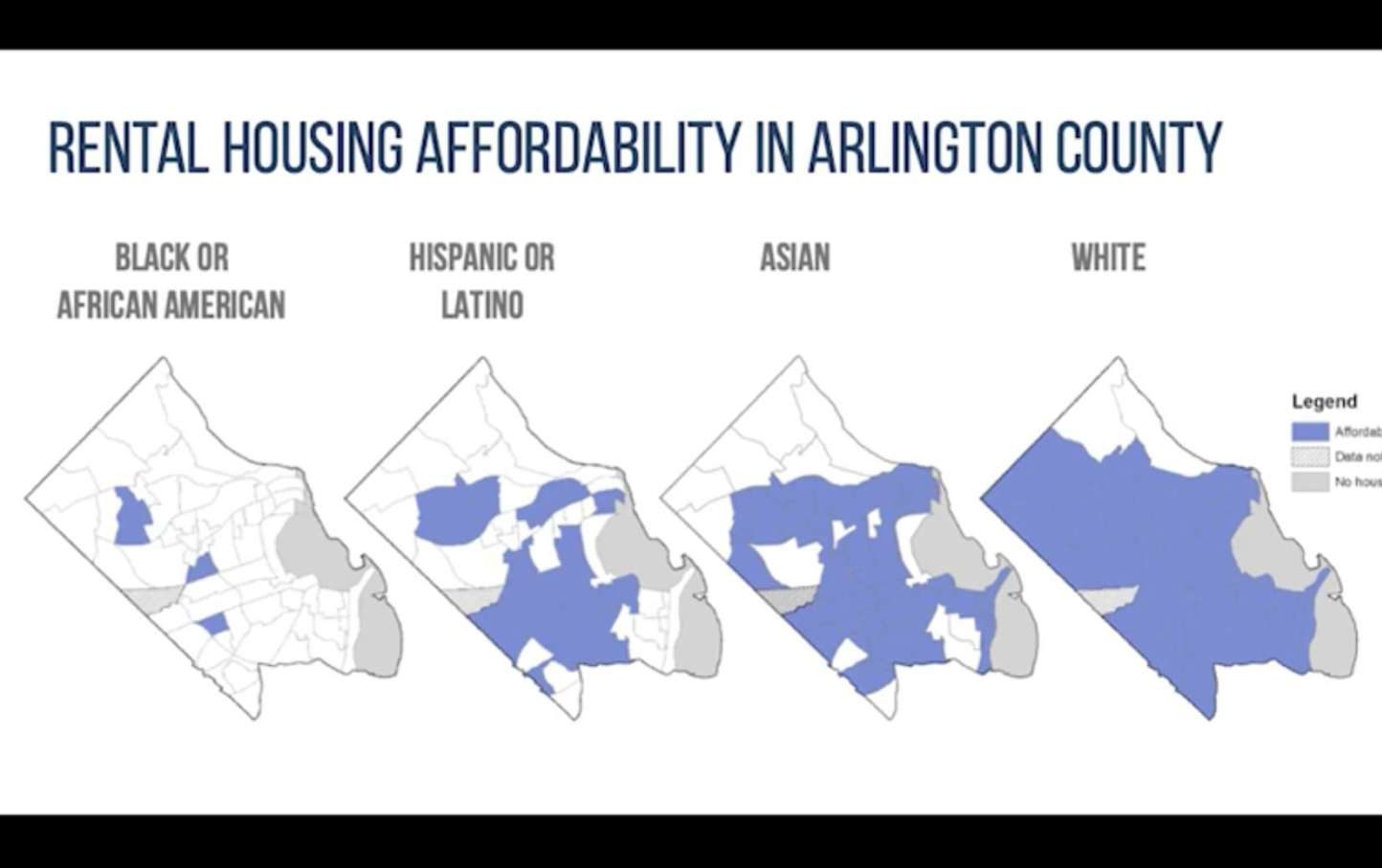
What are the consequences of Arlington’s housing shortfall?
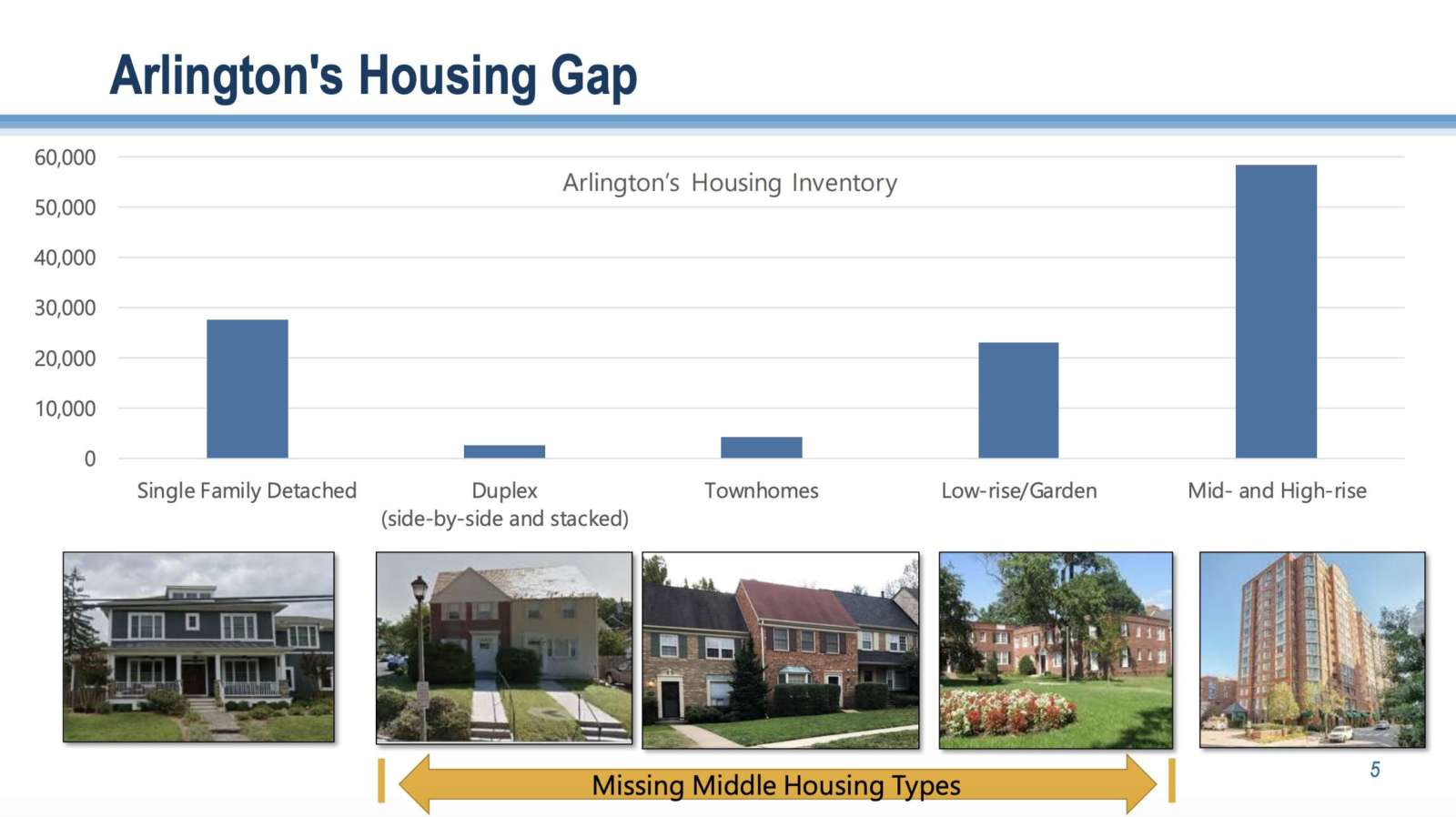
What housing options are missing in Arlington’s neighborhoods?
What are the characteristics of your neighborhood that you most value?
These are some of the questions that Arlington County is asking as part of its Missing Middle Housing Study. And these seemingly innocuous questions are already generating heated opposition. In order to address Arlington’s housing shortage, we need to overcome the vitriol when it comes to talking about zoning.
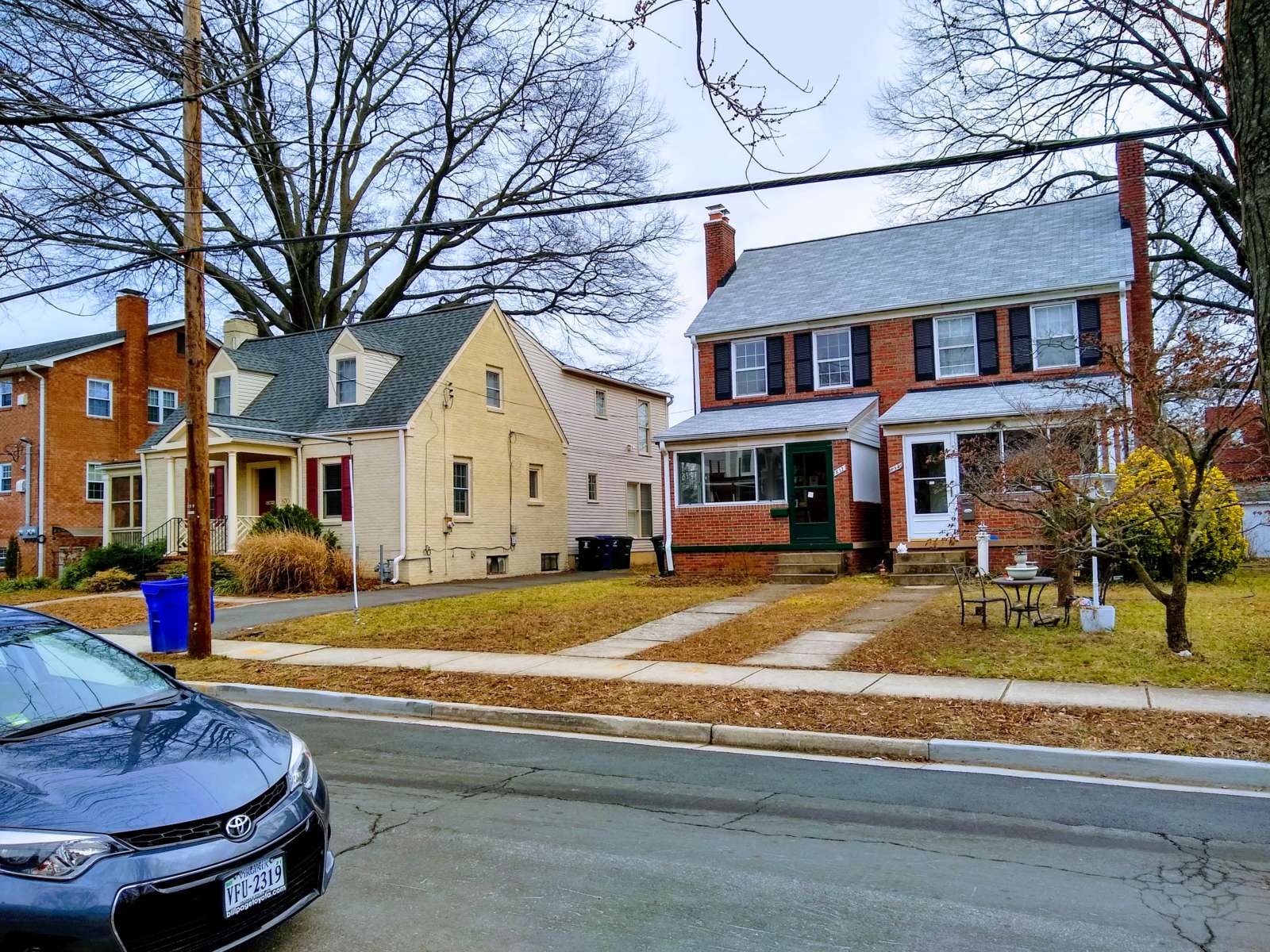
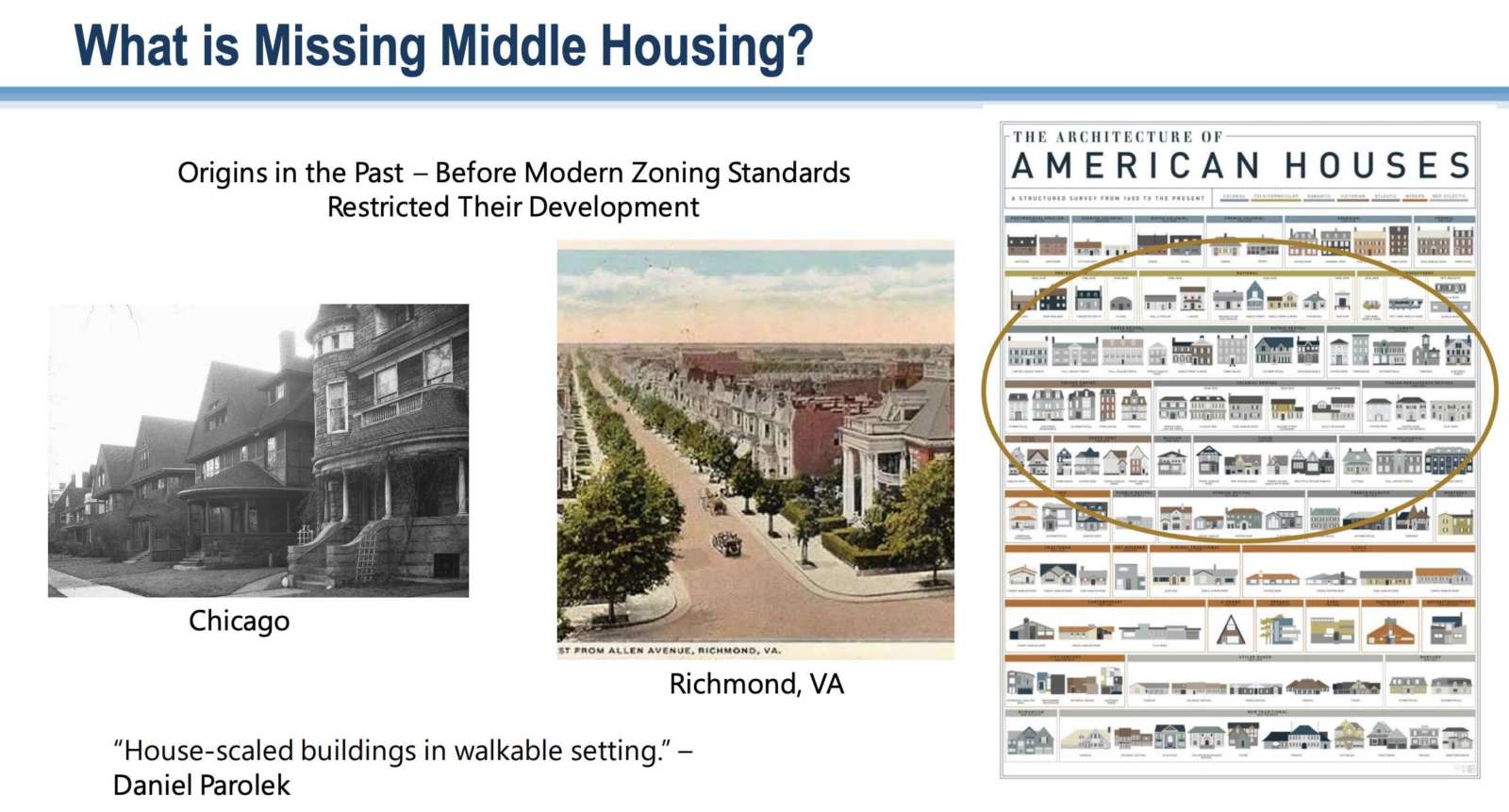
“Missing Middle” housing, a phrase coined by Daniel Parolek, refers to small, multi-unit dwellings that allow multiple families to split the cost of land. Historically, duplexes, quadplexes, and rowhouses were common and legal to build in residential neighborhoods. Over the past century, zoning has restricted the types of housing allowed on most land – large apartment buildings in narrow corridors, detached single-family homes everywhere else.
Before Arlington staff make any recommendations about zoning ordinance or policy changes, they are charged with “building a common understanding” among County residents about the problem of housing affordability and distorted supply in Arlington.
If the rhetoric at public meetings, to say nothing of the comments section of this site, is any indication, we are a long way off from consensus about the health of Arlington’s housing market, the County’s capacity for more residents, or the impact of allowing more types of housing in more places.
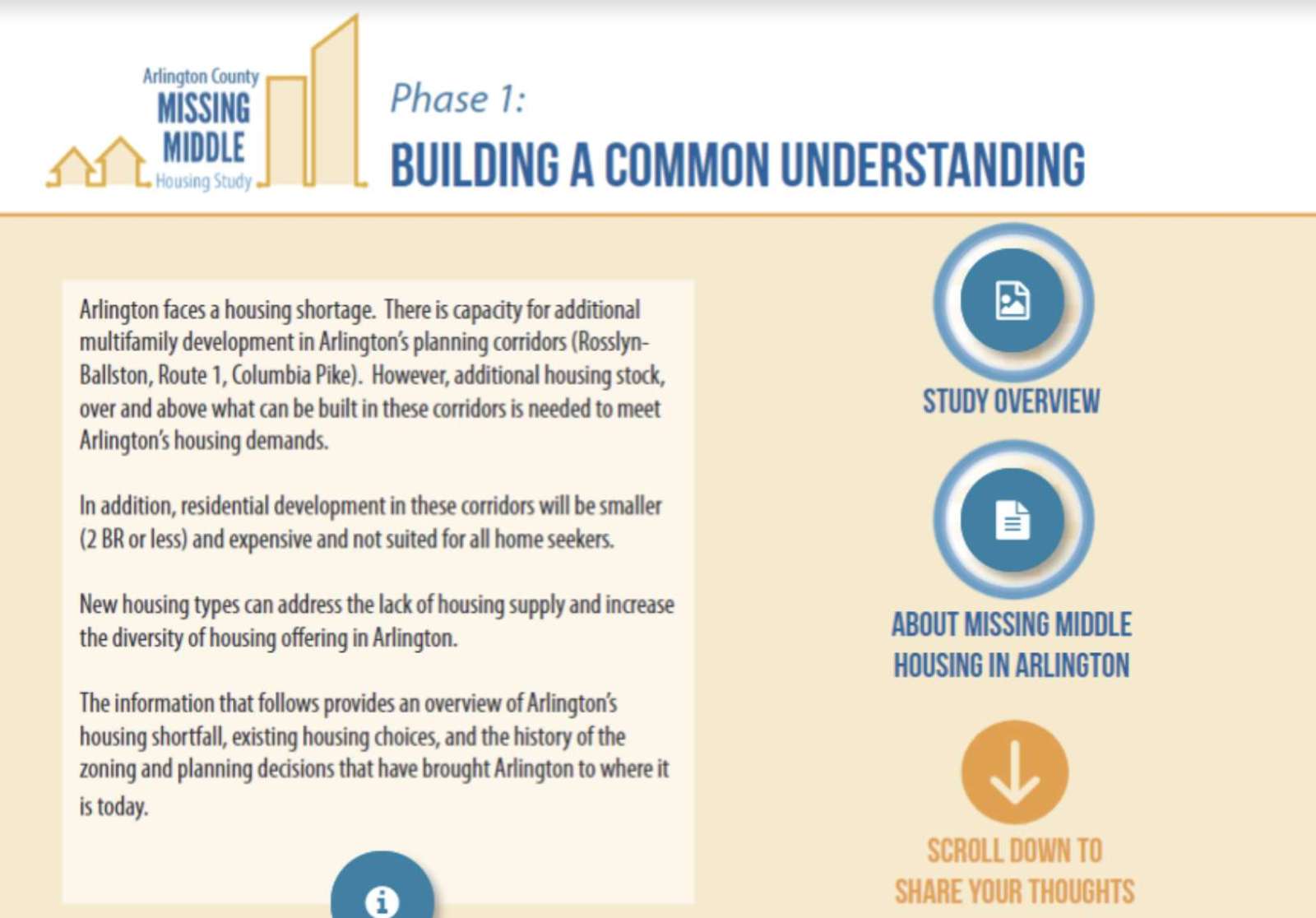
The first step toward “common understanding” is a community survey that walks participants through data about the current state of Arlington’s housing market. The goal is to educate residents about the facts: our housing supply is constrained, and the types of housing are limited. At each point, participants can give feedback about their own experience and share what they see as the biggest impacts or concerns related to recent housing trends.
Some residents will be upset when confronted with the reality of our housing crisis and the history of Arlington’s development. Changes to zoning can seem like a threat to financial security and assumptions of what a residential neighborhood looks like. But for many people in Arlington, the current market is impossibly out of reach and new choices are the only way to gain a foothold in the County.