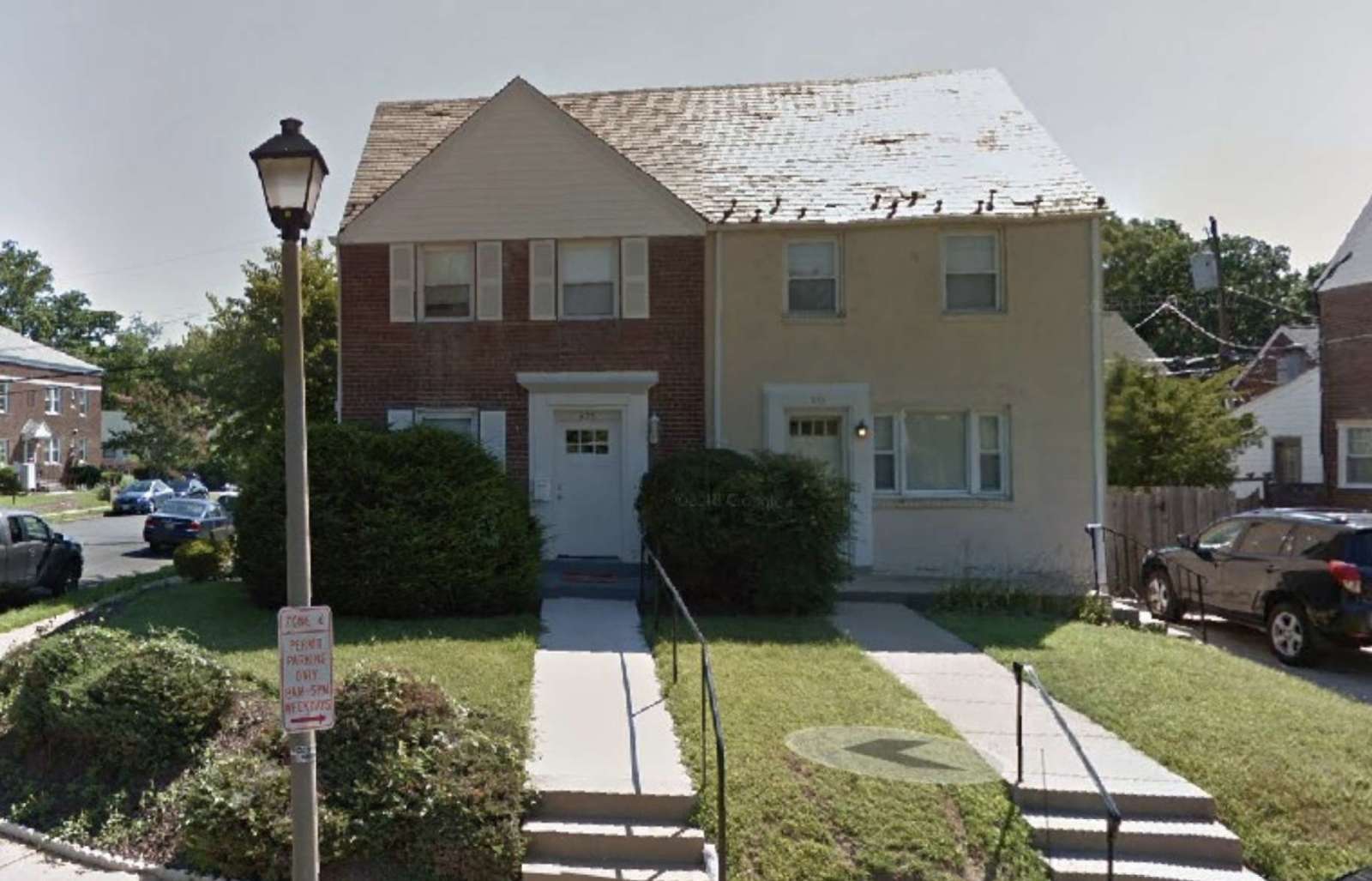
(Updated at 11:30 p.m.) The County Board over the weekend approved a zoning change that will make life a bit easier for owners of a few hundred duplexes in Arlington.

The change affects “non-conforming” duplexes in certain zoning districts, which under existing zoning code were prohibited from any exterior change or expansion without permission of the county’s Board of Zoning Appeals. Single-family home owners in the same districts are allowed to make such changes by right, without a zoning variance.

County staff and Arlington’s Planning Commission recommended giving those duplex owners the same exterior modification rights as single-family home owners. That will allow “by-right opportunity for reinvestment in aging housing stock, consistent with flexibility provided to single-family homes,” according to a staff presentation.

The County Board approved the change unanimously. More from a county press release:

The Board approved a change to the Zoning Ordinance that will allow by-right expansions and additions to nonconforming duplexes in multi-family districts. There are some 432 such duplexes, located in 14 civic associations across Arlington. Non-conforming buildings do not meet current zoning requirements.

Currently, owners of nonconforming duplexes in multi-family districts must seek a variance from the Board of Zoning Appeals to make such changes. They must demonstrate that the nonconformity is unreasonably restricting the utilization of the property and that the variance would alleviate a hardship. The amendment furthers the goals of the Affordable Housing Master Plan, which called for reinvestment in existing housing stock that contributes to the overall diversity of housing countywide and preserves and supports existing affordable housing.

Following a discussion of large, luxury homes being built, the Planning Commission also voted to recommend that county staff study “requiring use permit or site plan approval for construction of new ‘single-family’ dwellings,” in areas zoned primarily for residential apartments.

This fall Arlington is kicking off a Missing Middle Housing Study that will examine whether duplexes, triplexes and other types of lower-density multifamily housing should be allowed in more parts of the county. According to a recent study, 73 percent of the land zoned for residential use in Arlington is zoned exclusively for single-family detached housing.

Making Room is a biweekly opinion column. The views expressed are solely the author’s.

One recurring argument against upzoning is that Arlington needs single-family zoning to protect affordable starter homes from expensive redevelopment.

Without restricting lots to one unit, the thinking goes, a developer would be willing to pay a substantial sum to demolish small homes and replace them with multiple units, reaping the profit.

But this argument assumes that Arlington has any remaining starter homes left to protect, and that we could keep them from being torn down and rebuilt as McMansions. The reality is that our land value makes any detached home more expensive than a middle-income family can afford, even if they are not redeveloped.

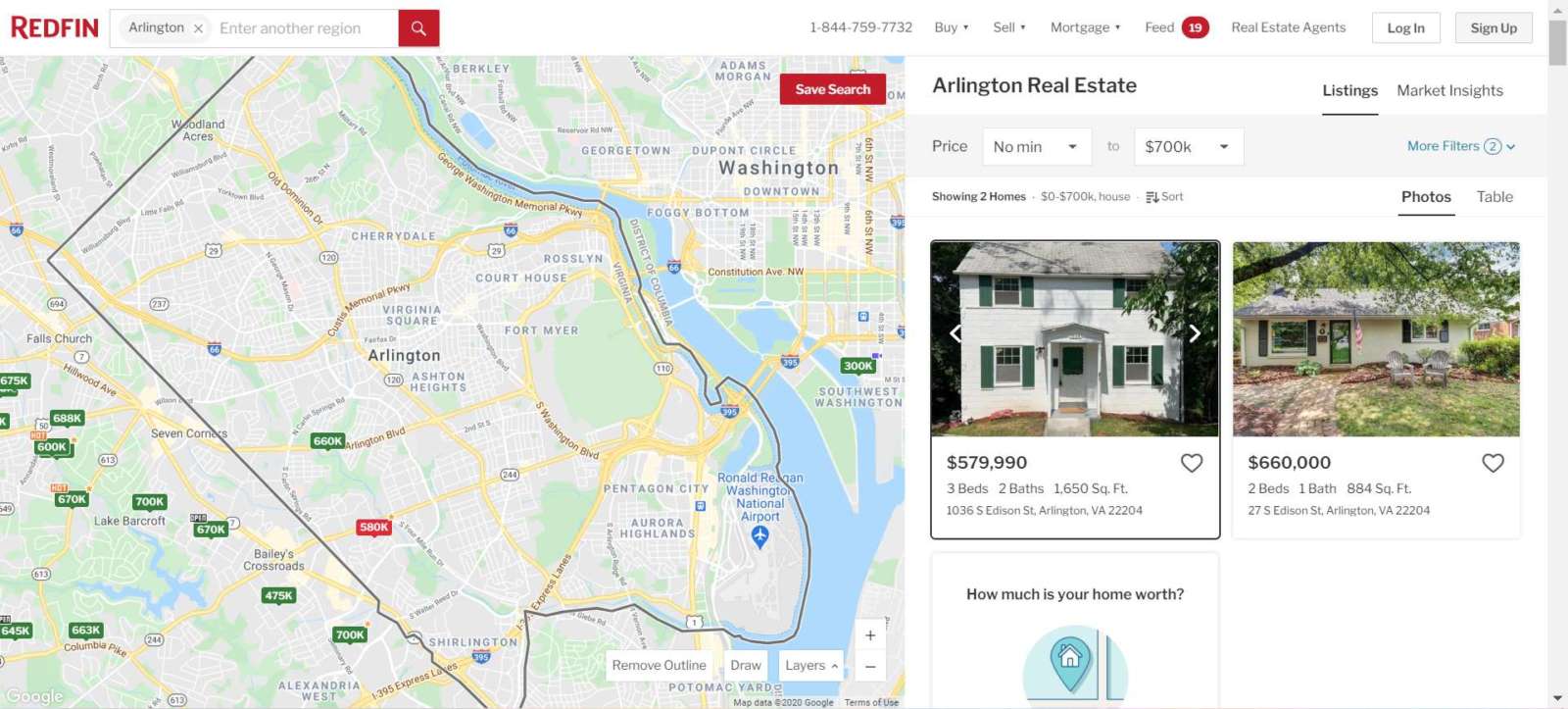
A basic search on Redfin (conducted this past Saturday) yields only two detached homes in Arlington that are less than $700,000. For a family making 120% of the area median income, maybe one of these would be affordable. Older detached homes in Arlington average $1 million, which means they are unaffordable to all but the wealthiest Arlington families.

As expensive as these detached homes are, restrictive zoning can actually subsidize their prices. Rather than keeping starter homes affordable for middle-class families, single-family zoning serves as a barrier to homeownership. It prevents a group of people from pooling their resources to overcome high land costs and share a desirable residential lot.

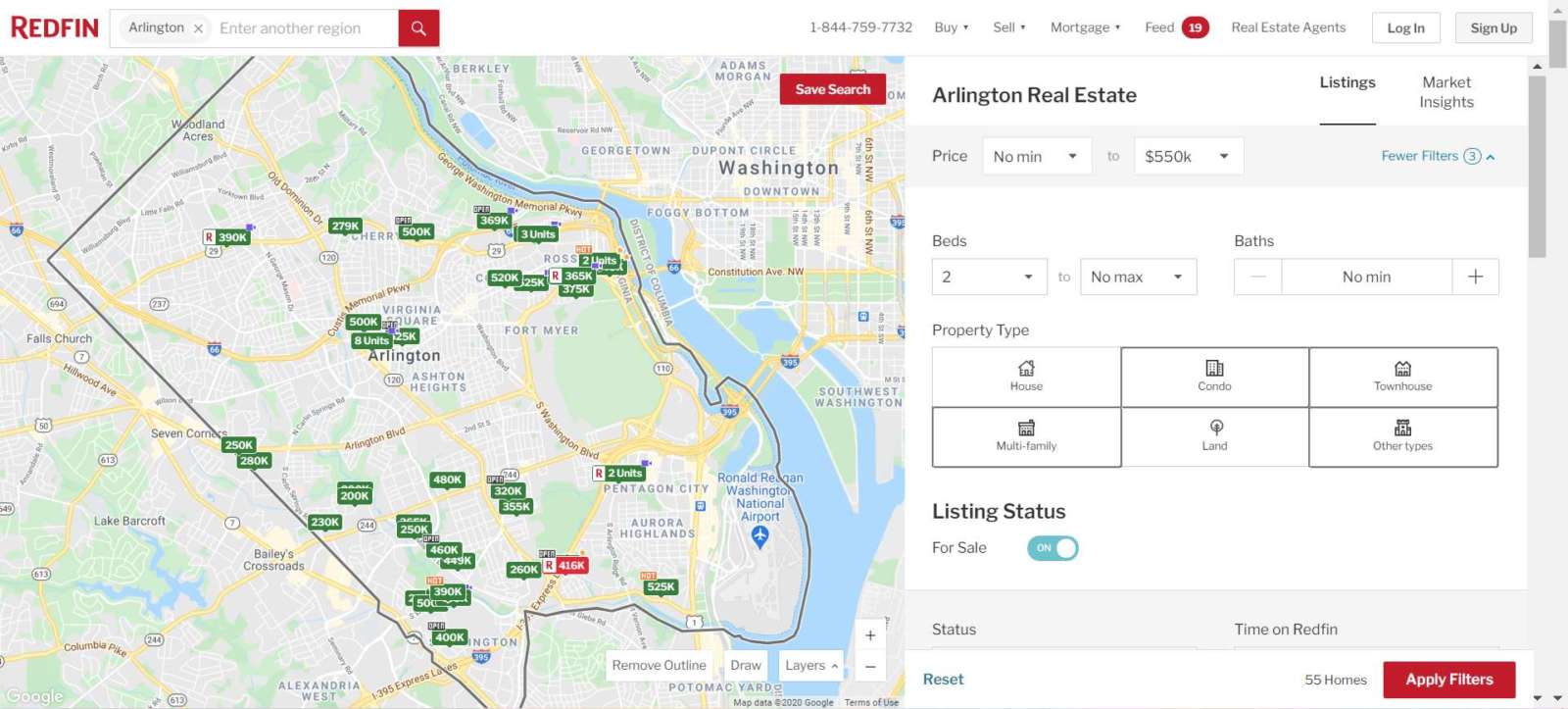
The best chance for starter homes in Arlington comes from multifamily buildings. My same Redfin search yielded 55 duplexes and condos with 2+ bedrooms available at $550,000 or less (I set a lower price to account for condo fees). These attached housing forms are the bedrock of middle-class ownership opportunities in desirable places like Arlington. We need many more of them. Without an increase, the next generation of Arlington families will be locked out of the housing market, unless they are willing to move further away.

Contrary to some opinions, there is no single route to upzoning. Research by Emily Hamilton shows that zoning for the number of units is only part of the equation. To achieve affordable, small-scale development, we also need to address lot size, building size, and parking requirements.

Recent examples of upzoning throughout the country have taken many different forms. Last year, Minneapolis’s plan to allow triplexes on all residential lots made waves. This summer, Portland approved missing middle zoning that restricts the size of single-family homes to 2,500 square feet — effectively banning McMansions — and allows 4- to 6-unit buildings up to 3,500 square feet.

Arlington has an opportunity to chart its own course toward re-legalizing multi-unit dwellings. If you want to learn more about Arlington’s Missing Middle Study, please join a webinar with the authors of the five Research Compendiums that provide data on Arlington’s housing stock. This event will take place on Wednesday, September 2 from 7-8:30 p.m.

The demand for housing in Arlington has reached the point that single-family zoning functions to prevent opportunities for middle-class homeownership. If you either have a high income or bought your detached home when it was an affordable starter, congratulations! No one is going to take it from you. But when it comes to your neighbor who wants to sell, let’s use the opportunity to create a new generation of starter homes.

Jane Fiegen Green, an Arlington resident since 2015, proudly rents an apartment in Pentagon City with her family. By day, she is the Membership Director for Food and Water Watch, and by night she tries to navigate the Arlington Way. Opinions here are her own.


Changes Proposed for Rosslyn Development — “The Dittmar Co. is tinkering with it plans for the redevelopment of the Holiday Inn in Rosslyn, shrinking the size of a planned hotel and adding more residential to account for Covid-19’s impact on the hospitality industry. The developer filed revised plans for the project with Arlington County earlier this month, outlining its new designs for a 326-room hotel and a 523-unit apartment building” [Washington Business Journal]

Rainstorm Leads to Vivid Rainbows — “For such an awful year, 2020 has lots of rainbows. This one continued into the grass below me.” [@STATter911/Twitter, @RosslynVA/Twitter]

County Stats on Missing Middle Housing — “So, just how missing is this missing middle? 6%. That’s the percentage of Arlington’s 116,000 homes that the county estimates are townhomes, side-by-side duplexes, or stacked duplexes. If you count low-rise multifamily apartments as missing middle, the percentage increases to a little less than a third of the county’s current housing stock.” [Greater Greater Washington]

Mulch Available for Arlington Residents — “Free wood mulch for pickup is available for the first time since March. Get it while it’s hot. The stuff doesn’t grow on … nevermind.” [@ArlingtonDES/Twitter, Arlington County]

Lebanese Taverna Owners in Beirut — “Monday’s kitchen at full swing from @WCKitchen HQ’s over 11k meals between 9 total kitchens with amazing committed partners and volunteers! Thankful to @lebanesetaverna Abi-Najm family for showing up in person and supporting Beirut operation financially #ChefsForBeirut” [@chefjoseandres/Twitter]

Rep. Beyer’s GOP Challenger — “Jeff Jordan has his work cut out for him. The Republican supports President Donald Trump, and he’s running an uphill battle against Rep. Don Beyer for Virginia’s 8th Congressional District seat, which has remained solidly in Democratic hands for the last 30 years.” [ALXnow]

Hockey: W-L Defeats Yorktown — “It took nearly five months and some intricate planning. Then at last, the popular and annual all-Arlington ice hockey high-school club match between the Washington-Liberty Generals and Yorktown Patriots was played Aug. 1. The Generals won, 5-3, at the Medstar Capitals Iceplex. The season-ending rivalry match was originally scheduled for March 13, but was postponed because of the COVID-19 pandemic.” [InsideNova]

Online Home Lighting Discussion — Sponsored — “Olson Weaver Lighting Design & is hosting a Q & A session to answer lighting questions from designers/architects, contractors, & homeowners” on Friday from 6:30-7:30 p.m. [Eventbrite]


Making Room is a biweekly opinion column. The views expressed are solely the author’s.

The McMansion is the universal punching bag for housing politics in Arlington.

It is a symbol for both pro-growth and anti-growth advocates of everything that is wrong with our land use and zoning policies.

For those who fear growth and decry upzoning, the McMansion is a threat to the suburban Arlington of yore, when a couple of middle-class public servants could afford a three-bedroom home on a tree-lined street. “Greedy developers” snatch up these modest bungalows and bulldoze them to make way for a monstrosity, leveling trees in the process.

For those who embrace growth and welcome upzoning, the McMansion is a failure to accommodate our growing population, allowing access to a single, affluent family, rather than allowing 2 or more families the same opportunity. Restricting density in popular neighborhoods limits our ability to create walkable urban places that are vibrant and full of opportunity for people at all income levels.

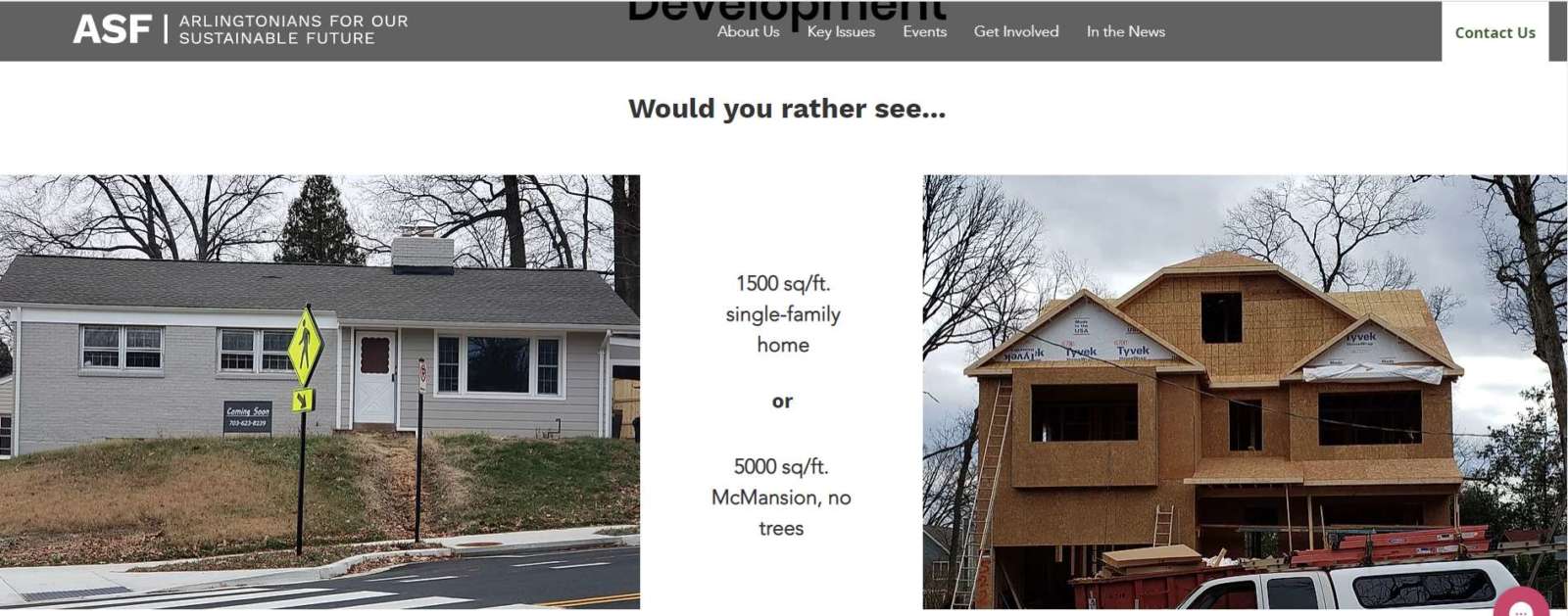
While I harbor no ill-will toward anyone who lives in a newly-constructed, 5,000 sq. ft. million+ dollar home, the prevalence of this type of dwelling signifies a failure of our housing market to meet the demand of our residents. If we conclude that McMansions are a symptom of a problem, perhaps we can agree on a solution.

In the first “research compendium” published as part of the Missing Middle study, Arlington County staff lay out the impact that single-family redevelopment has had on our housing supply.

Much of Arlington was developed in the 1930s through 1950s, which means many of our homes are older stock, roughly 1,500 square feet with 2 or 3 bedrooms. In just the past ten years, 8% of all of Arlington’s single-family detached homes have been either been torn down and replaced or substantially renovated. The newly-constructed replacement homes average 4,750 sq. ft. and cost an average of $1.7 million dollars.

Overall, Arlington County analysis shows that “the average sales price for a detached single-family house increased 45% between 2010 to 2019.”

With the increasing price of single-family homes, middle-class Arlington families have few opportunities to buy. At an average of $1.7 million dollars, a McMansion is only affordable to a family making $485,000 per year, which is more than three times the income of the average Arlington family of four.

McMansions are also outsized for the needs of most families. Data shows that the size of a typical household is decreasing, while the size of new homes continues to rise. In the last fifty years, the average square feet of living space per person has nearly doubled.

(more…)


This regularly-scheduled sponsored Q&A column is written by Eli Tucker, Arlington-based Realtor and Arlington resident. Please submit your questions to him via email for response in future columns. Enjoy!

Question: I’m prepared to make a strong offer in Arlington’s hyper-competitive market, but I can’t even find a house to make an offer on! Why is every home on the market either old and too small or new and too big??

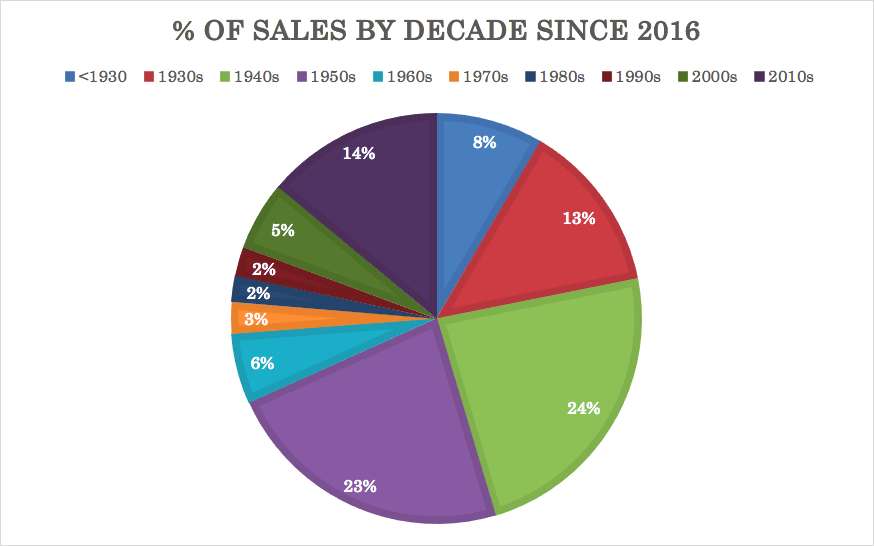
Answer: While debates about Missing Middle and tear-downs continue, I thought it would be helpful to look at why Arlington is such a difficult place for most families to find good housing options. Most of Arlington’s single-family housing problems stem from when the majority of homes were built — before 1960 and within the last decade. Only 17.8 % of single-family homes sold since 2016 were built between 1960 and 2009!

Too Old, Too New

According to Arlington’s 2019 Profile, there were 28,500 single family detached homes in the County and according to public records, ~80% of those homes were built prior to 1960 or since 2010. Why is that a problem?

Many homes built prior to 1960 are functionally obsolete for most families (“the reduction of an object’s usefulness or desirability because of an outdated design feature that cannot be easily changed”) and homes built since 2010 have an average price of nearly $1.8M over the last 18 months.

Most homes built in Arlington in the 1940s and 1950s (with the original footprint) are plagued by 2-3 small bedrooms with small reach-in closets sharing one small bathroom, small enclosed kitchens, and small basements with low ceilings. They also lack the openness desired by most families in today’s market. Unfortunately, there’s very little one can do to bring these older homes up to today’s standards without extensive/expensive remodeling and/or expansion.

The economics of building a new home in the last decade doesn’t support the construction of a more modest homes (3,000-4,500 sq. ft.) so most new homes are built with 5,000-6,000+ square feet and are priced well above most budgets.

Just Right

It wasn’t until the 1980s and 1990s that Arlington homes were consistently built with designs more suited to today’s buyer including things like attached garages, master suites and combination kitchen/dining spaces. While these 1980s-1990s designs may not be perfect, it makes for more reasonable compromises at prices many more Arlington families can afford.

Unfortunately, over the last four years, there have been fewer single-family homes for sale that were built during the 1980s and 1990s (4.3% combined) than any other decade until the 1910s.

Housing Changes Over Time

I put together some charts to highlight how home sizes have changed through each decade as well as how the average cost of a home changes by the decade it was built. These charts are based on Arlington single-family detached sales since 2016.

Note: Older homes that have been remodeled/expanded and sold are included in this data so the average size, bedroom and bathroom count for older homes is higher than what you would expect from the original designs. Most pre-1960 homes were built with three bedrooms, one bathroom and under 2,000 sq. ft.

Note: Total finished square footage includes any finished basement space.

(more…)


Jane Green writes a biweekly opinion column. The views expressed are solely the author’s.

On May 6, a select group of Arlington Democrats voted to endorse Takis Karantonis as their candidate in the special election to fill the seat vacated due to the tragic illness and death of Erik Gutshall.

(Full disclosure: My husband was a member of the closed caucus and I serve with Takis Karantonis on the board of the Alliance for Housing Solutions.)

Erik was an advocate for Missing Middle housing during his campaign for the County Board in 2017. Following that race was what first brought me into local politics as a relatively new Arlingtonian. Erik also clearly understood the connection between housing and other zoning regulations and transportation policy, such as the role of residential parking requirements.

As Arlington’s population grows in the urban corridors, both those along Metro lines, but also along Columbia Pike and Lee Highway, the County Board will benefit from Takis’s direct experience with economic development in Arlington. (Although I am personally disappointed that we won’t have a renter on the Board.)

In their endorsement, Greater Greater Washington acknowledged Karantonis’s “long record of fighting for less fortunate people and an area of the county that has not gotten the planning or transportation investments it needs.” (I no longer work for Greater Greater Washington and I had no role in making the endorsement.)

In answering the candidate questionnaire released by the Alliance for Housing Solutions, Takis emphasized the specific, practical tools that he sees available for the County to expand the diversity of our housing options, while also creating affordable homes for low-income residents.

Takis recognizes that many types of housing are “compatible with the gentle transition from our commercial corridors to our established neighborhoods.” He sees the Form-Based Code model is a good way to provide a “level of predictability” for adding “missing middle” housing types into residential areas that border commercial zones – including micro-units, stacked flats, duplexes and triplexes.

As for committed affordable housing, Takis wants to use tools such as the recent zoning amendment “to incentivize the creation of more onsite affordable units on the land being developed.” Recognizing that our high housing costs are due to the high cost of land, he would explore land banking, Transfer of Development Rights, Tax Increment Financing, and Transit-Oriented Affordable Housing as opportunities to produce more affordable units. I am looking forward to learning more about his policies in the next two months.

Currently, two other candidates have stepped forward for the July 7 special election. Susan Cunningham also wants to emphasize planning in Arlington’s non-Metro corridors. Based on her candidate statement, she is interested in “selective upzoning to enhance business viability and housing choice and affordability.” She emphasized “long-term planning” to balance growth with facilities investment, open space, and County spending.

The Arlington Republican Party has also announced a candidate. While Bob Cambridge does not have a campaign website at the time of this writing, the Arlington GOP platform states a commitment “to maintain an ample supply of market-rate affordable housing, to avoid the need for housing subsidies.” Additionally, they support job creation in the County and “fair and reasonable zoning” — although what that means specifically remains to be seen.

It will be impossible to fill Erik Gutshall’s shoes, and it will be up to Arlington voters if they want an equally passionate advocate for diverse and affordable housing on the County Board when we vote on July 7. Regardless, the election will shape our County during this critical time, when we can look outward and be welcoming of new residents, or be insular and closed off. I hope everyone follows the campaigns and makes their voice heard. You can request an absentee ballot online here.

Jane Fiegen Green, an Arlington resident since 2015, proudly rents an apartment in Pentagon City with her family. By day, she is the Membership Director for Food and Water Watch and by night she tries to navigate the Arlington Way. Opinions here are her own.


Peter’s Take is a biweekly opinion column. The views expressed are solely the author’s.

The Rouse property is a 9-acre parcel of privately-owned land, located in the Dominion Hills neighborhood at 6407 Wilson Boulevard (corner of N. McKinley Road). On March 4, ARLnow.com reported this property might be for sale for “around $30 million” (roughly double the current assessed value):

“The property is listed as a ‘generational’ site in the county’s Parks Master Plan (page 162).”

Columnist Charlie Clark reported on April 27 that the owner is evaluating a serious offer. If the County loses the strategic opportunity to acquire this unique property, that represents a serious leadership failure.

Declining parkland to population ratio

Arlington comprises only 26 square miles, significant portions of which are controlled by the federal government. We are the smallest U.S. county.

As approved in April 2019, the Parks Master Plan included a public commitment to acquire 3 acres of open space per year for the next 10 years. Honoring this commitment is vital because of the continuing decline in Arlington’s ratio of parkland to population.

A comprehensive 2016 report by the Arlington Civic Federation (“Civ Fed report”) documents this decline (at p. 5):

“As of 2015, Arlington County had 1,784 acres of parkland within its borders. Of those 1,784 acres, 949 acres were owned by Arlington County, 700 acres were owned by the National Park Service (most of which is Arlington Cemetery), and 135 acres were owned by the Northern Virginia Regional Park Authority.

“In 1995, Arlington County had 10.8 acres of parkland per 1,000 residents. By 2014 the County’s population had grown by over 43,000 residents, and the parkland to population ratio had declined to 7.9 acres of parkland per 1,000 residents.

“By contrast, Washington, DC, has 13.2 acres of parkland per 1,000 residents, and Fairfax County has 28.3 acres of parkland per 1,000 residents.”

Arlington’s ratio of parkland to population certainly has continued to decline since 2016, as Arlington’s population has surged, enabled by repeated County government decisions to accelerate development and to authorize even more density.

An Arlington Profile 2019 report projects that Arlington’s population will rise by about 50,000 people by 2040. Without adding more parkland inventory, our ratio of parkland to population will continue to degrade.

As explained by my colleagues at Arlingtonians for our Sustainable Future (ASF), many public uses for this land — if not developed for market-rate residential housing — include parkland, flood maintenance and/or a community land trust for affordable housing (e.g., see here) If the last, some affordable housing units could be built, carefully blended into the parkland setting.

Despite the Parks Master Plan’s commitment to acquire 30 acres of open space over the next 10 years, the County’s current (pre-COVID-19) Capital Improvement Plan (CIP) contains zero dollars to acquire open space. Acquiring the uniquely large Rouse property, and devoting all or significant portions of it to parkland, would be a major down payment on this commitment.

Even in these challenging budget times, the County still could afford to make this acquisition because of the flexibility provided by the County’s ample cash reserves.

(more…)


Making Room is a biweekly opinion column. The views expressed are solely the author’s.

It is impossible to follow Virginia’s “stay-at-home” order if you do not have a home.

The emerging economic crisis across the country, as layoffs skyrocket, could leave millions of people with unaffordable housing, or even homeless. It goes without saying that increased homelessness and crowding within homes puts our community at risk for an even worse outbreak than we are already experiencing. For this most obvious reason, the County Manager’s proposed budget for FY 2021 puts a high priority on funding acute housing needs during the COVID-19 pandemic.

Arlington’s FY21 budget had to undergo a complete makeover in the past month, given the expectation of lower tax revenue and higher costs from the COVID-19 pandemic. However, the County Manager has wisely prioritized support for housing in the coming year. This includes:

  • Maintaining the Affordable Housing Investment Fund (AHIF), Arlington’s revolving loan program for creating and preserving long-term housing for low-income families, at its FY 2020 level of $16 million.
  • Increasing the funding for Arlington’s housing grants, which provides rent vouchers to eligible low-income residents.
  • Increasing the funds for permanent supportive housing, which helps residents coming out of homelessness.

The County Manager also introduced a new contingency fund to address emerging needs in the wake of the coronavirus pandemic. Crucially, this fund designates $2.7 million “to ensure that the basic needs of food and shelter are met for our residents, particularly those who have lost their jobs.”

This is a critical area of need that will not only help residents in the greatest need, but support overall public health by giving vulnerable residents a home to shelter in during the pandemic. In the original FY 2021 budget, the County Manager proposed an increase the Affordable Housing Investment Fund. However, shifting this money to address acute needs is prudent giving the current crisis.

It is unfortunate that this budget does not include new funding to support the Housing Arlington initiative, that held promise for addressing the systemic issues limiting our housing supply and prohibiting moderate-priced housing. We must increase our production of housing, both market-rate and subsidized, in order to keep people in housing that is affordable at their income. An ample supply of housing at all price points is a public health priority.

Disease spreads in conditions of crowding, not density. And while programs like the Missing Middle Study cost money now to fund staff time and community engagement, they could lead to new tools for increased housing affordability without county funds, such as reducing permitting burdens and updating zoning regulations.

In the immediate term, however, we need to help people stay in the housing they already have. That is why the County also needs to consider expanding the qualifications for the Housing Grants program. Restrictions on these funds prevent them from assisting some of Arlington’s most vulnerable residents.

The County should work with the Department of Human Services and other relevant stakeholders to find ways to include immigrant households that lack documentation and individuals who have never had a prior lease in their name, which could include young people aging out of foster care or people experiencing domestic violence.

Jane Fiegen Green, an Arlington resident since 2015, proudly rents an apartment in Pentagon City with her husband and son. By day, she is the Development Director for Greater Greater Washington and by night she tries to navigate the Arlington Way. Opinions here are her own.

Housing is critical to public health. Arlington needs to be judicious with its funds and continue to look for ways to support housing for our neighbors in the midst of this pandemic. The Arlington County Board will vote on the FY 2021 budget on Thursday, April 30. Let us keep everyone housed and beat the virus together.


What’s Next with Nicole is a biweekly opinion column. The views expressed are solely the author’s.

It has been a strange few weeks. While life seems to stand still, so much is happening in our community.

Close Street Lanes

Maintaining your mental health during these odd times cannot be understated. Getting in regular exercise to kickstart your endorphins is important and recommended by the Centers for Disease Control and Prevention.

Whether you are running, pushing a stroller, or walking with a loved one, sometimes our sidewalks are just not wide enough to keep a distance of 6 feet. A majority of people are trying to make enough space but it is oftentimes near impossible.

I would propose closing one lane of traffic in each direction where there are two lanes available in major corridors.

These connective roads could include: Wilson Boulevard, Walter Reed Drive, Glebe Road, George Mason Drive, Lee Highway, and more.

Traffic has decreased significantly and this would not be an undue burden on travelers.

Provide Unemployment Filing Hotline Help

It would be helpful if the Arlington Employment Center or another relevant entity could help residents with phone assistance while the state phone lines are being overwhelmed. While this is not normally a service that Arlington would provide, it would be of great public benefit.

The online filing form for unemployment in Virginia and Washington, D.C. is not set up for shift or gig workers. I add D.C. to this because many Arlington residents’ last job was in D.C. and would thus file for unemployment there. There are case-specific questions that don’t make sense and if answered incorrectly can delay vitally important payments.

About 150,000 filed for uninsurance in Virginia last week, and Governor Northam has stated that the helplines are overwhelmed. If localities can provide their own hotline help this might alleviate some stress on the system and get more people properly filed. (more…)


Arlington County is in the midst of a “Missing Middle Housing Study,” to determine whether legalizing additional housing types in certain areas could  “address the shortage of housing supply in Arlington.”

So what is “missing middle housing” anyhow?

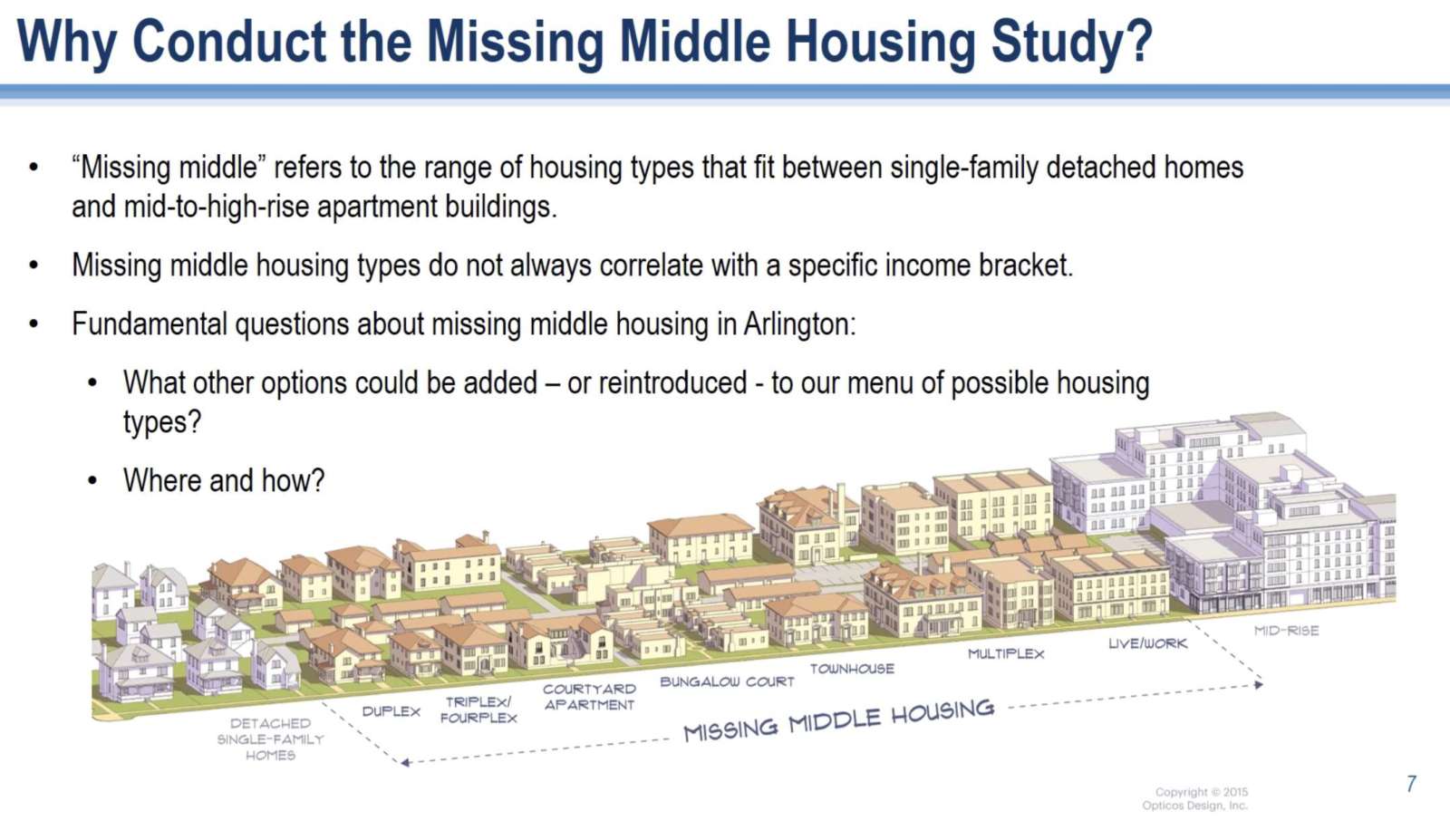
It’s described by Opticos Design, whose founder claims to have coined the term, as “a range of multi-unit or clustered housing types — compatible in scale with detached single-family homes — that help meet the growing demand for walkable urban living.”

Alternately, Wikipedia describes it as “multi-unit housing types such as duplexes, fourplexes, bungalow courts, and mansion apartments that are not bigger than a large house, that are integrated throughout most walkable pre-1940s neighborhoods, often [on] blocks with primarily single-family homes, and that provide diverse housing choices and generate enough density to support transit and locally-serving commercial amenities.”

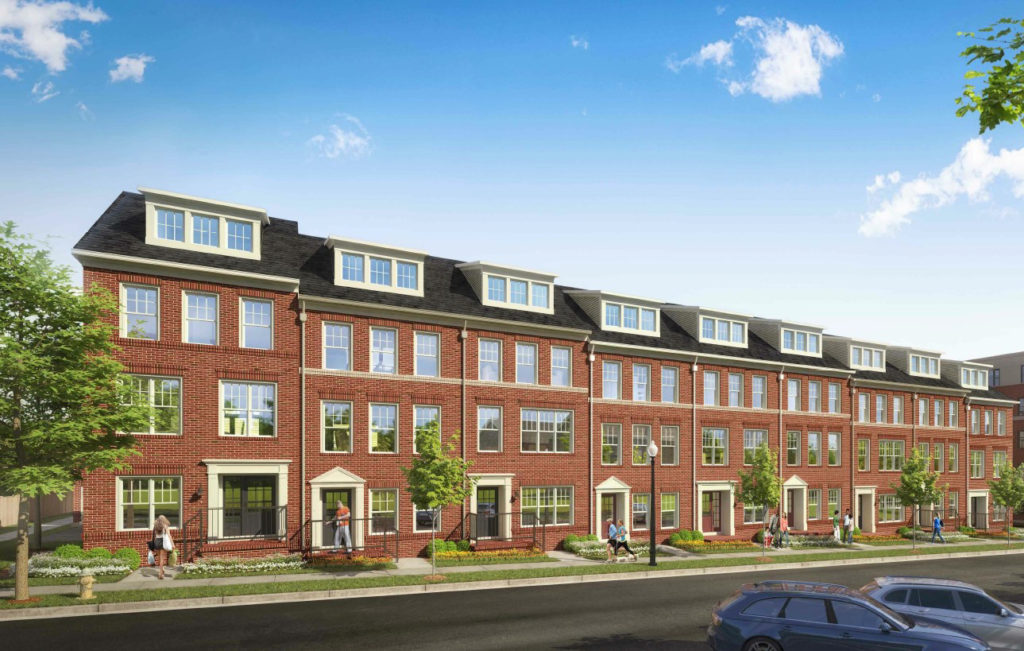
In a nutshell, missing middle housing is what’s between single-family detached homes and mid-rise apartment buildings, including duplexes, townhouses and fourplex apartments. And Arlington County is studying zoning changes that would allow it in certain places, to increase housing supply and provide alternatives to moderate-income households that can’t afford pricy detached homes (median sale price in 2019: about $950,000, compared to $575,000 for townhouses and duplexes.)

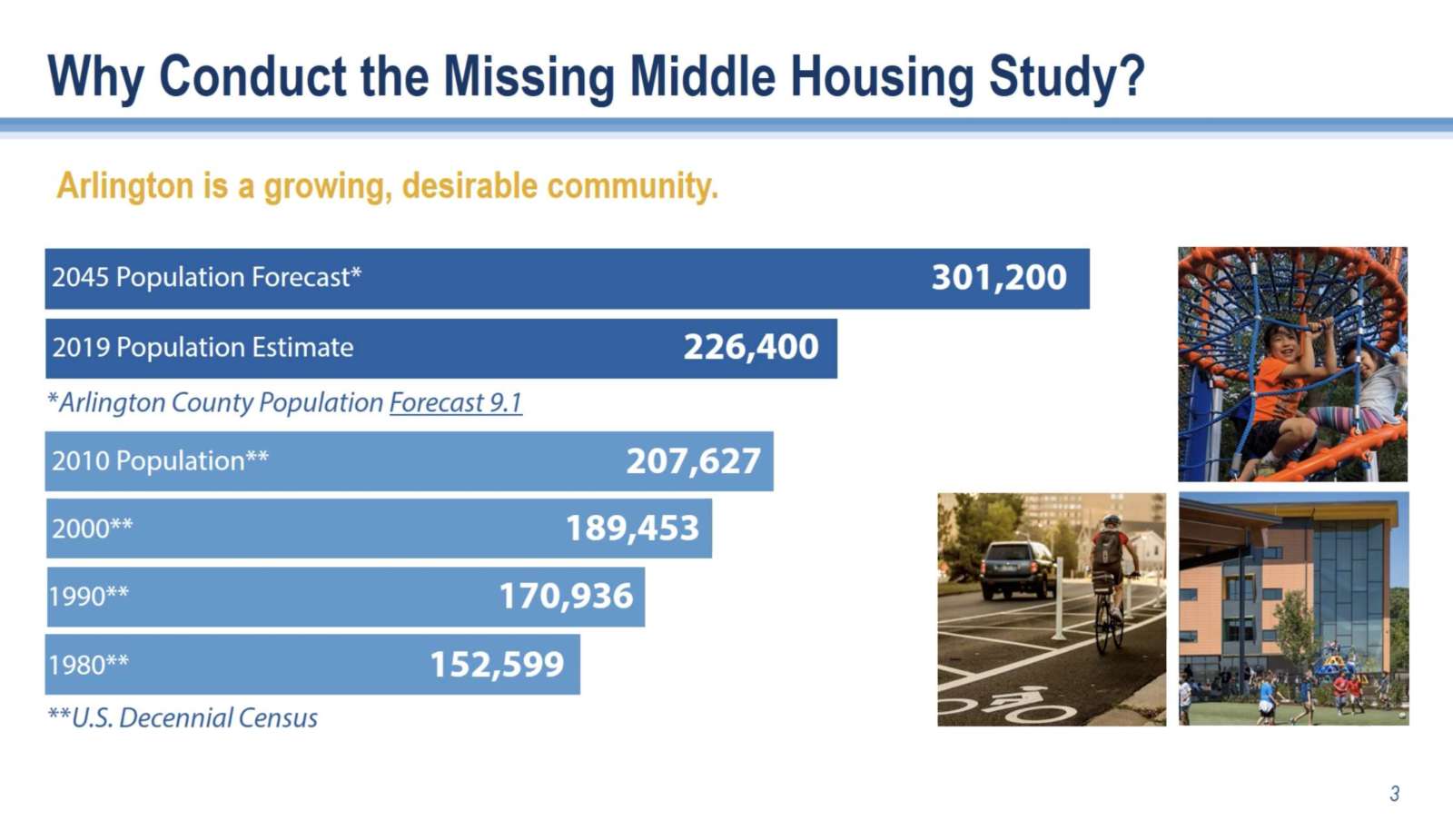
In a recent webinar, below, county staffers said the study is being conducted as housing costs rise and the county’s population is expected to exceed 300,000 by 2045.

Without finding ways to increase the housing stock and the types of housing in the county, the webinar suggested, Arlington will become more expensive and less diverse.

Current building trends, according to the presentation, are skewed toward the replacement of smaller, older homes with large, luxury houses in single-family home neighborhoods, while developers build small one- and two-bedroom apartments and condos along Metro corridors.

Neither are good options for a family of moderate means.

“We have a gap in housing options here in Arlington,” the presentation said. “Arlington’s Metro corridors offer smaller apartment and condo units in medium to high density buildings, however that style of housing does not suit everyone’s needs. Other neighborhoods offer single-family homes or townhomes and only a very limited quantity of other housing types.”

“If we do nothing to address these challenges, the existing housing stock will continue to get more and more expensive while existing mid-sized homes will continue to be replaced by large single-family homes and very little else,” the presenter continued. “Arlington’s vision to be diverse and inclusive will become less and less attainable. Our lowest income households are at home risk of being squeezed out, while moderate income households will also be at risk, further burdened with rising housing costs and potentially unable… to stay here.”

The webinar went on to explain the history of Arlington’s zoning ordinance, which echoes the history of such zoning decisions in many other communities. Currently, the zoning ordinance prevents duplexes and triplexes in most neighborhoods.

“A recent study found that 73 percent of the land zoned for residential use in Arlington is zoned exclusively for single-family detached housing,” the presenter said. “These zoning restrictions originated in early 20th century decisions that required the separation of different housing types. This enabled patterns of racial and economic segregation and the repercussions of that persist today.”

(more…)


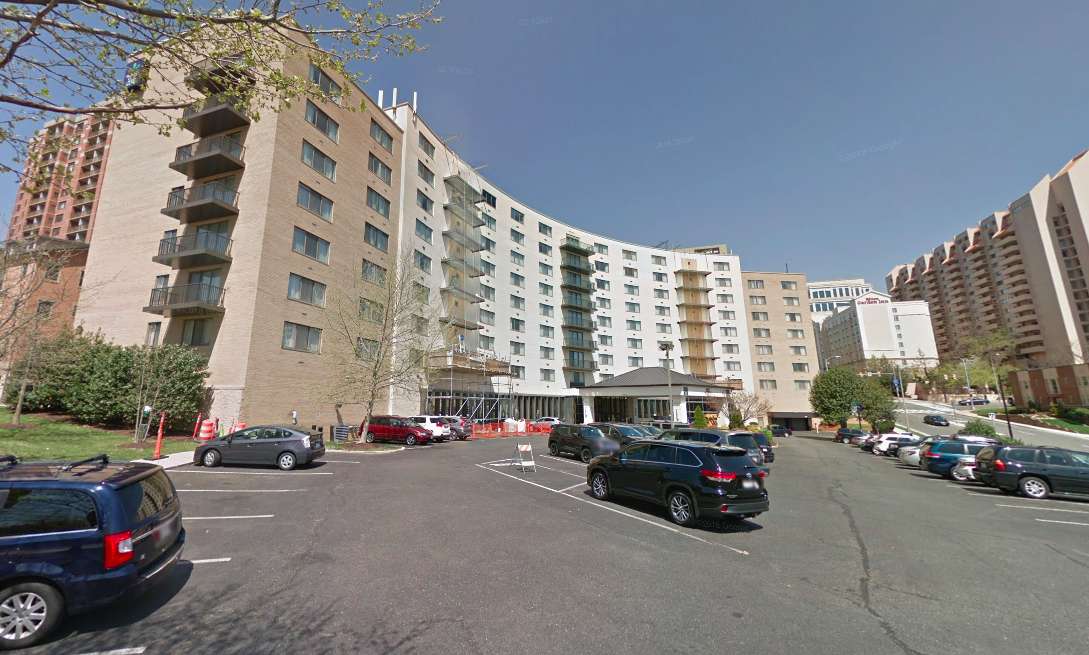
A plan is currently in process to transform the Arlington Court Suites hotel into an apartment complex, but at a Transportation Commission meeting last week the project hit a small snag as commissioners unanimously agreed the project might have too much parking.

The plan would convert the 187 hotel rooms in the Arlington Court Suites into a 180-unit residential property called Park Arlington at Courthouse. The current plans do not call for any major demolition work and staff said the proposed residential units would likely be less expensive than new construction at the same site.

The applicant could maintain as hotel use, staff said, but this project would help meet the demand for mid-rise housing at a middle-income level.

While the project is only two blocks south of the Court House Metro station, the parking ratio would increase in the new plans. Currently, there are 153 parking spaces and the proposal would elevate that to 171 spaces. Many of those would be located on a surface parking lot, with the rest in a garage under the building. The plan also calls for 76 bicycle parking spaces.

Transportation Commission member Audrey Clement, who earlier in the meeting had expressed opposition both the Veitch Street redevelopment and the Missing Middle housing study, shared her general support for the Park Arlington project, with one main objection.

“I really do support this project,” Clement said. “This is right up my alley. It does not involve the demolition of an existing property… I’m very impressed with this project, but in one respect it is not consistent with County policy, and that is the parking ratio.”

In 2017, the county adopted a new policy that said the parking ratio should be reduced from one space per unit to as low as 0.2 spaces per unit in certain areas near Metro stations.

“I do believe this project would be more consistent with county policy if it reduced the number of parking spaces and what I’m particularly interested in is the surface parking. Has the developer considered replacing some or all of the surface parking with green space? This would be a benefit to the residents of this facility.”

“It is a huge parking lot and the only way to get into the building is through the parking lot,” said Transportation Commission member Jim Lantelme. “It’s still way too auto-oriented… This parking lot is just enormous and it really doesn’t work for me. There’s nothing like this site anymore. If we’re going to have adaptive reuse, we have to adapt it to the current requirements.”

The agreement on the Transportation Commission took some of the members by surprise.

“I never thought I would hear myself say this, but I 100% agree with everything you just said,” said Transportation Commission member Richard Price. “I never thought I would hear myself say this, but Commissioner Clement hit it right on the head… All I see is ugly surface parking and I’m glad you’re going to address it. There are lots of sites that all you have to get the front entrance is walk through a parking lot. That is disturbing and that needs to change, and it needs to start changing now.”

Others said that along with the parking lot reduction, the sidewalk needs to be widened.

The developer said that an alternative plan could eliminate the surface parking, but more market research needs to be done. If the building winds up as condos, the developer said there would be a higher demand for parking. The developer noted that the widening the sidewalk on N. Courthouse Road, however, is complicated by things like utilities and a retaining wall.

Photo via Google Maps


View More Stories