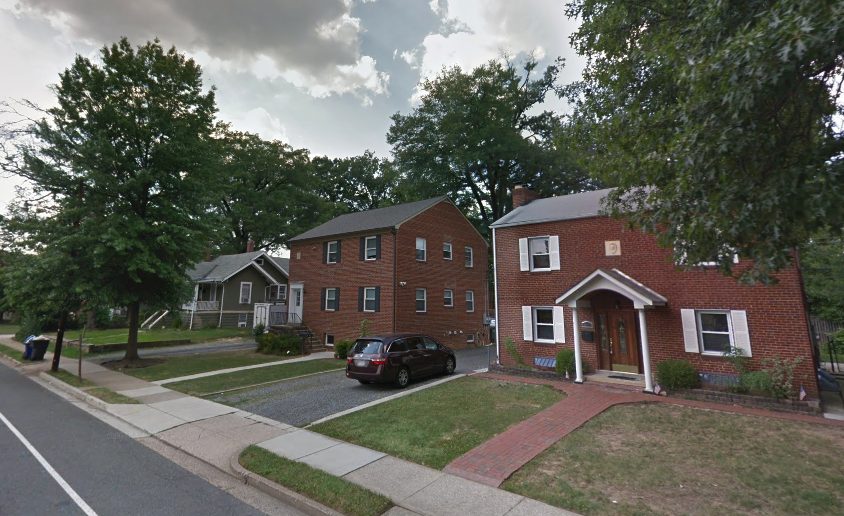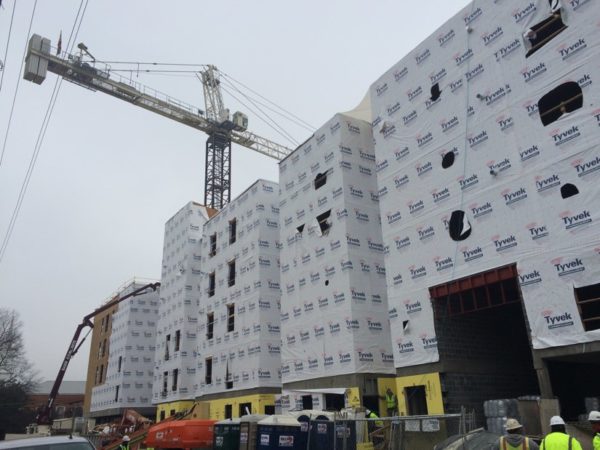
Arlington County is currently working through a plan to add more options for housing through zoning changes, but there was disagreement during a recent Transportation Commission meeting over whether greater diversity of housing types will actually help with affordability.

Staff at the Transportation Commission noted that what’s being built these days are typically either condos and apartments or huge single-family homes. Townhouses and smaller, “starter” homes are more rare, resulting in a shrinking supply of housing accessible to young families.

“Neighborhoods are changing,” staff said. “Even without any intervention that will continue to change. New construction is either very large homes or smaller units in Metro corridors. Only 6% are three bedrooms or more, and that creates some tension as people seek to find housing for growing families.”

While affordable, mid-size units are in demand, the most lucrative options for developers are the higher-priced, luxury housing. Without some sort of intervention, staff said the neighborhoods will continue to become more expensive.

A framework for the Missing Middle Housing Study released in late December said the goals of the plan are:

  • A shared definition for the term “missing middle housing” for Arlington
  • A set of policy options to support preservation of existing Missing Middle housing stock and production of new Missing Middle housing types for County Board consideration
  • Identification of additional considerations relating to the Comprehensive Plan and other County policies and practices to be further reviewed in support of the goals of this process
  • The ability for new housing type alternatives to be built that meet Arlington’s definition of ‘missing middle housing”, offering greater affordability and design that is complementary and compatible with the scale and style of their intended neighborhoods

Part of that framework also dealt with “locational factors” for missing-middle housing.

“Building more housing… where people shop and work and have easy access to transit is one of the few things we can do in a small community to lessen our carbon impact,” said Transportation Commission member Chris Yarie. “Really drive the pedal down on that a lot, please.”

Transportation Commission member Audrey Clement was more wary of the plan, saying that it calls to increase types of housing but says nothing about affordability or equity. Instead, Clement echoed concerns of some in Arlington that the plan is an effort to quietly curtail single-family zoning.

“This is about the densification of the county and further gentrification of the county,” Clement said. “Given that is implied in the goals, to implement such a plan would require upzoning. Therefore it is disingenuous to say this is not about upzoning because that’s precisely what would be required to increase housing in residential neighborhoods.”

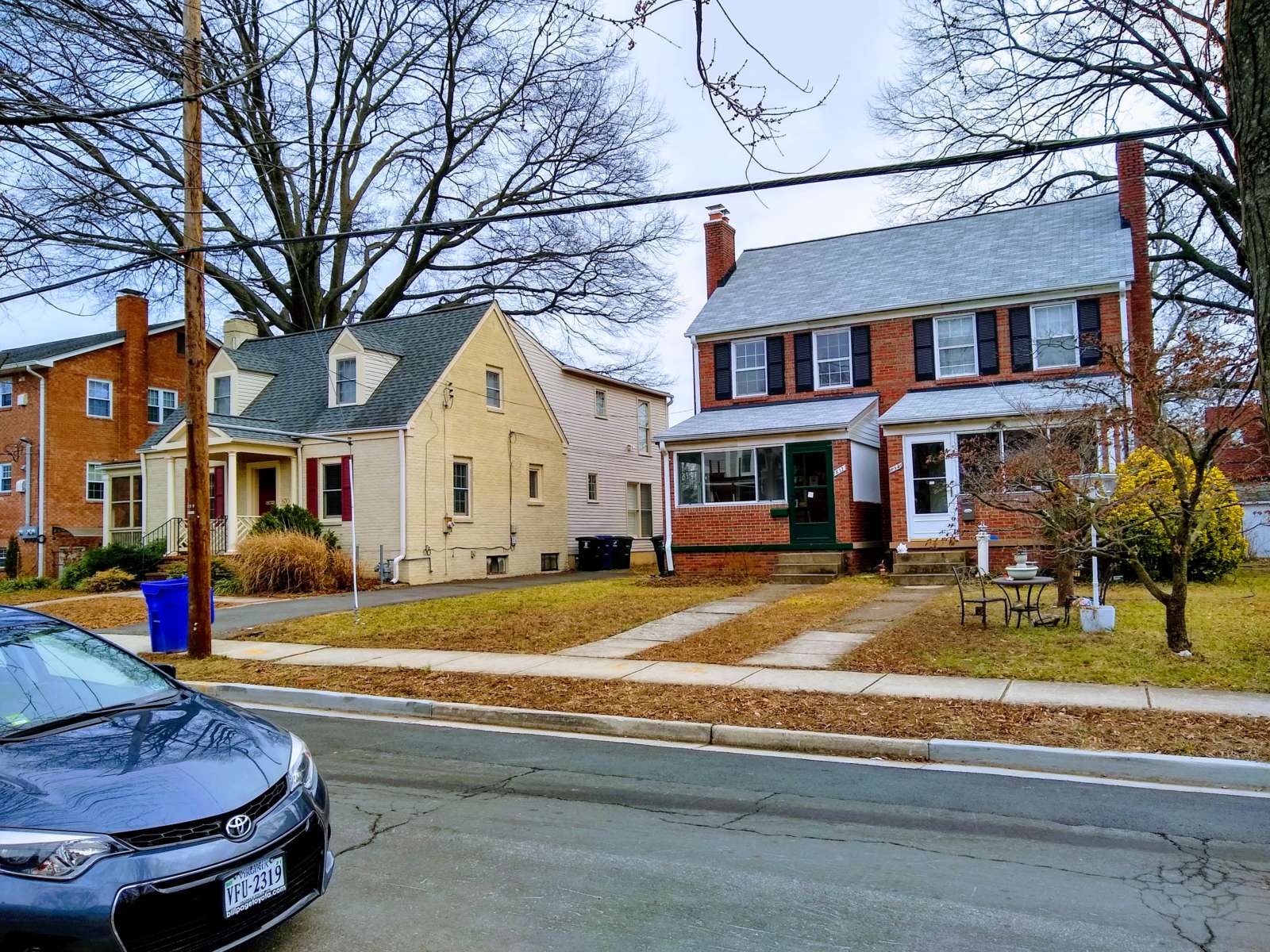
Clement pointed to the Veitch Street home to be replaced by several townhouses, discussed earlier in that same meeting.

“We’re really replacing every million-dollar home with up to seven million-dollar homes on residential lots,” Clement said. “That will serve the purpose of densifying the county, but it won’t provide more affordable housing and it’s a misnomer to call this a Missing Middle plan.”

Clement’s concerns are echoed by Arlingtonians for Our Sustainable Future, a group “concerned about Arlington County’s accelerated population growth and density” and its effect on water infrastructure, schools and transportation systems.

(more…)


Making Room is a biweekly opinion column. The views expressed are solely the author’s.

On January 23, the Land Use subcommittee of the Virginia House of Delegates considered two bills from Delegate Ibraheem Samirah (D-Fairfax) to remove the restrictions of single-family zoning from Virginia neighborhoods.

HB 151 would have overridden local bans on accessory dwelling units and HB 152 would have forbade local authorities from banning duplexes on residential lots.

Unfortunately, but not surprisingly, these bills failed to launch out of their subcommittees. We need to build support now so they will have better luck next year.

The report on the hearing from WAMU called the proposal “ambitious,” but Delegate Samirah’s bills were very minimal interventions into local housing policy. They would simply allow two units on residential land currently limited to a single unit. This would have permitted smaller, lower-cost, and more land-efficient homes throughout the state, especially in more urban areas where housing costs are increasing rapidly.

But other regulations, such as setbacks and parking requirements that inhibit “missing middle” housing, would have remained.

These bills have something for both liberals and conservative. Democrats can take a stand for affordable housing and neighborhood diversity, as well as sound environmental policy. Republicans can claim a victory for individual property rights. It should be a win-win. My colleague at Greater Greater Washington, Alex Baca, spoke in favor of the bill, as did Emily Hamilton, representing the conservative Mercatus Center.

Yet, as we’ve seen many times, housing policy debates do not fall along party lines. Instead, incremental changes, which actually re-legalize housing types that were common in urban neighborhoods a century ago, are victims of suburban identity politics. It doesn’t help that the Land Use subcommittee has no voting members from Northern Virginia, where the housing shortage is most acute.

But despite the widespread yearning for a yard and your own four walls, I simply don’t understand why anyone would object to a duplex next door. Duplexes can look just like a single-family home. Instead of razing an older home to construct a 6,000 square foot McMansion, the same lot could have two 3,000 square foot homes.

In the urban environment, detached homes are the only hope for middle-income families to purchase a “starter home.” Many desirable neighborhoods, such as Del Ray, already have duplexes and small apartments interspersed with single-family homes. This form of density is necessary for creating walkable neighborhoods with retail, restaurants, and other amenities. An none of this prohibits single-family homes from being built.

I hope more delegates from Virginia’s dense cities and counties, especially delegates who represent Arlington, will help champion Delegate Samirah’s bills when they come to the legislature in 2021. Opening all residential land to duplexes, when the property owner desires, is a simple, modest, and easy step toward addressing the state’s housing shortage.


(Updated at 1:40 p.m.) Construction on a row of new townhomes is expected to start this spring in the Buckingham neighborhood.

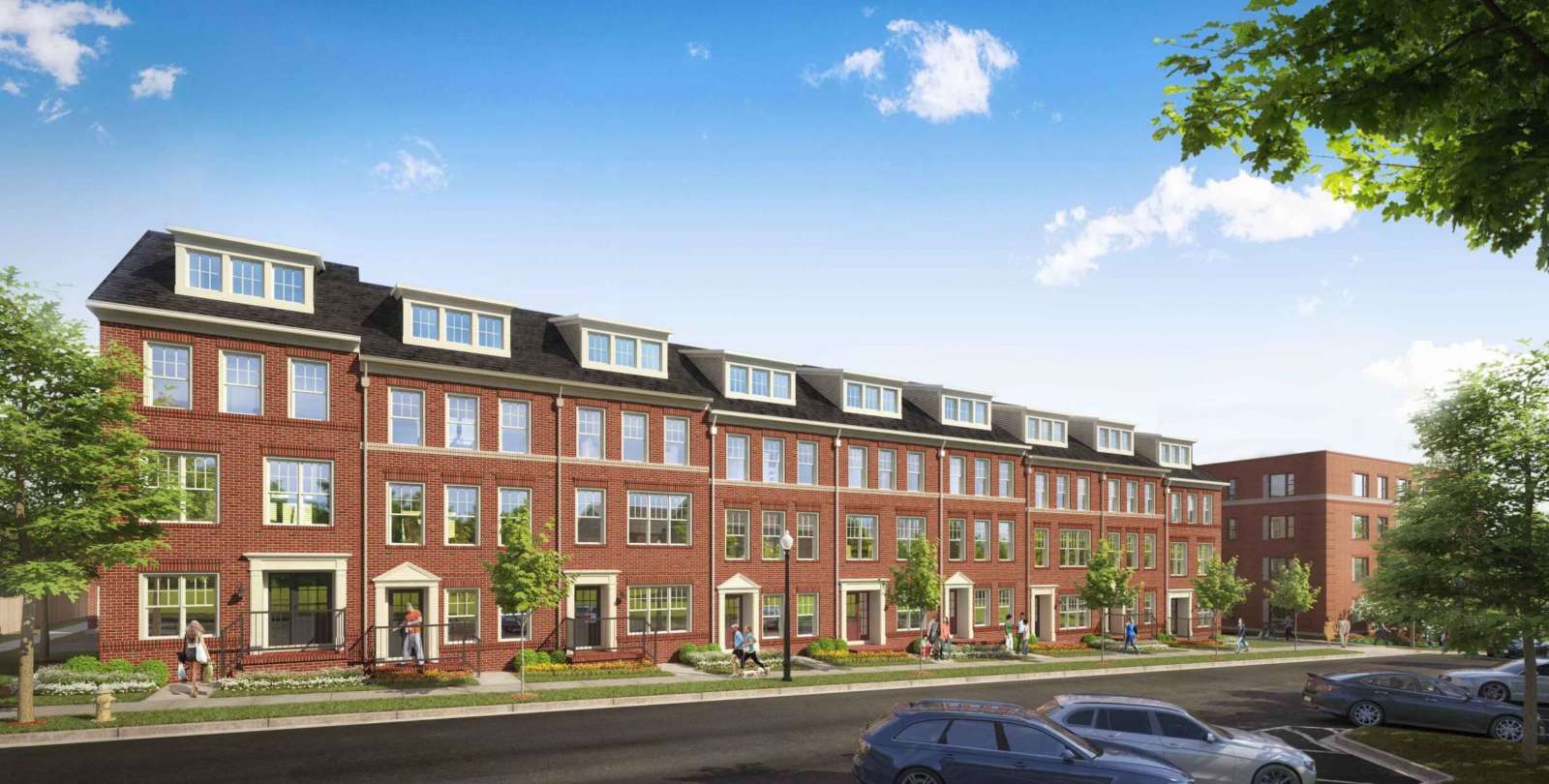
Los Angeles-based Resmark Companies and Tysons-based Madison Homes is developing “an upscale enclave of 19 single-family townhomes” at 19 N. Trenton Street, a half block from Route 50.

“The project is fully entitled with construction on the first homes expected to start in spring of 2020,” the companies noted in a press release. “Designed in a traditional style, the four-level townhomes at Trenton Square will sit on a tree-lined street, just over three miles from Washington, DC.”

The townhomes will each be just over 2,000 square feet, with 3 bedrooms and 3.5 baths, as well as a two-car garage and a “walk-out terrace” on the fourth floor. Construction on the first nine homes is expected to wrap up by the end of the year, with the other 10 expected to be built by the summer of 2021.

Also in the press release, the developer touted proximity to Ballston and to Amazon’s HQ2.

“Positive economic and demographic trends in the greater D.C. region continue to drive demand for new for-sale housing in Northern Virginia,” said Resmark’s Stephen O’Neil, Vice President, Investments. “Trenton Square enjoys an exceptional infill location in Arlington and provides easy access to employers in the District and Tysons, and to future Amazon offices in National Landing,” he added. O’Neil also noted that future homeowners at Trenton Square will be a mile from the Ballston Metro and diverse shopping, dining and entertainment options at Ballston Quarter.

Andrew Rosenberger, Vice President of Madison Homes, stated that Trenton Square is anticipated to be one of the only townhome communities to be actively selling in Arlington County during 2020. “There is strong pent-up demand for new home communities in this coveted area. The Ballston submarket, along with other Rosslyn-Ballston Corridor submarkets, have experienced considerable economic growth in the last decade, yet the housing supply hasn’t kept pace. We’re thrilled to have Resmark as our partner on this project.”

The lack of new townhomes for sale in Arlington, referenced in the quote above, is notable as officials consider ways to add more “missing middle” housing in the county. Housing advocates have urged Arlington County to facilitate the production of more townhomes, duplexes and other small-scale forms of multi-family housing, to provide more affordable housing options that meet the needs of residents looking for something in-between apartments and traditional single-family detached homes.

The townhouses will be replacing a pair of aging, single-family homes. The project is part of the redevelopment of the adjacent Red Cross site, which will also build affordable apartments along the Arlington Blvd service road.


(Updated at 11:35 a.m.) Could legalizing duplexes and triplexes in certain areas be a way to provide more affordable, middle-income housing in Arlington?

That’s what Arlington County will trying to determine with a new “Missing Middle Housing Study.”

In announcing the study, the county pushed back on the assertion — made by some activists —  that it was looking to eliminate single-family zoning entirely, as was done in Minneapolis. Instead, county staff said that “neither an across-the-board rezoning, nor an elimination of single-family zoning, would be the right fit for Arlington.”

The study will explore whether allowing more types of housing could “address the shortage of housing supply in Arlington” and will determine where the new housing types could be allowed so as to be “compatible with existing neighborhoods.”

The study — part of the overall Housing Arlington initiative — is expected to begin in 2020.

Meanwhile, a statewide missing middle housing bill has been proposed. HB 152, introduced in the Virginia House of Delegates by a Northern Virginia legislator, proposes requiring “all localities to allow development or redevelopment of ‘middle housing’ residential units upon each lot zoned for single-family residential use.”

The press release on the Arlington County housing study is below, after the jump.

(more…)


It has been a big year for affordable housing in Arlington, from the county initiative “Housing Arlington,” to zoning changes, to new studies.

Heading into the new year, with Amazon’s HQ2 taking shape, two local advocacy groups plan on continuing to push officials on the issue. But one believes more density is the solution, while the other claims increasing the housing supply would wreck community character and the environment.

Peter Rousselot, Arlingtonians for Our Sustainable Future (ASF) 

In April, Peter Rousselot — a board member of the Together Virginia PAC and ARLnow columnist — founded Arlingtonians for Our Sustainable Future, a group working to advocate against zoning changes and accelerated density in Arlington. Rousselot previously formed a similar group, Arlingtonians for Sensible Transit, to oppose plans for a streetcar along Columbia Pike.

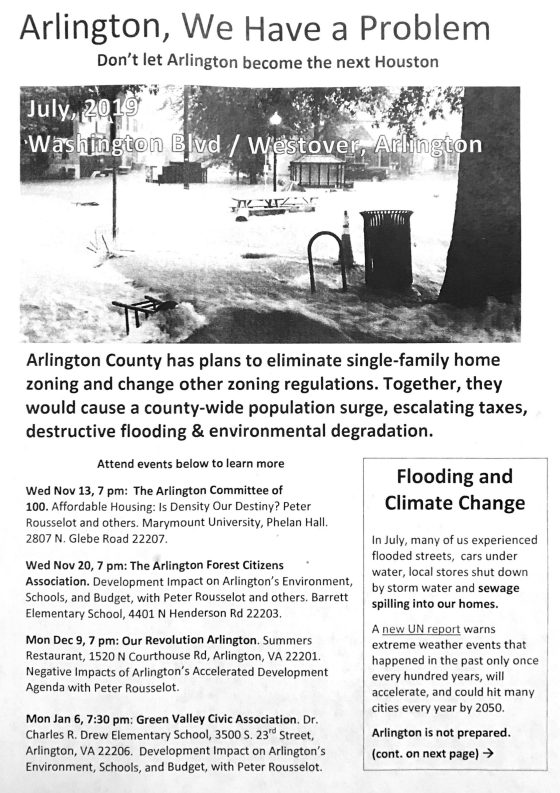
In recent months, flyers spotted across Arlington from ASF argue that “Arlington County has plans to eliminate single-family home zoning and change other regulations” — changes that “would cause a county-wide population surge, escalating taxes, destructive flooding and environmental degradation.”

The flyer cites damage caused by July 8’s historical flooding as evidence that increased development has caused environmental damage.

“Don’t let Arlington become the next Houston,” the flyer says.

“We believe there shouldn’t be any significant further changes in zoning until we have the right planning tools,” Rousselot told ARLnow.

While ASF does not have a website, a copy of its platform provided to ARLnow argues that the county needs the following before implementing zoning changes:

  • A flooding and land use plan utilizing an accepted floodplain management tool
  • A ten-year projected county operating budget for different population and revenue scenarios
  • Community planning tools to assess costs and benefits of different development scenarios

Per the ASF platform, eliminating single-family zoning and adding more density would “transform Arlington from an urban village to a paved metropolis — [affecting] our schools, environment, trees, infrastructure, flooding, taxes, housing affordability, and county budget.”

“Our approach to housing affordability is that we don’t want to see this approach [where the county] accelerates the development of hundreds of new market-rate units in order to create a small number of affordable units,” said Rousselot.

“What we would like to do is redirect county taxpayer money to enable people to afford to live here,” said Rousselot. “That we decide as a community to help them to get the money directly in their hands though things like rental vouchers and housing grants.”

According to Rousselot, there are now more than 100 members in ASF.

Michelle Winters, Arlington for Everyone/Alliance for Housing Solutions 

Founded in 2003, Arlington for Everyone is a public education campaign from the non-profit organization Alliance for Housing Solutions (AHS).

The mission of the group is to “make Arlington a place where people from all walks of life are welcome and can afford to live,” per the organization’s website.

(more…)


This regularly-scheduled sponsored Q&A column is written by Eli Tucker, Arlington-based Realtor and Arlington resident. Please submit your questions to him via email for response in future columns. Enjoy!

Question: I recently saw a home listed in Arlington for almost $30M. Are there neighborhoods in Arlington with ultra-expensive homes like this?

Answer: We hear a lot about the “missing middle” in Arlington housing, but there’s another market that Arlington struggles to support that nobody is talking about… the super-rich. Sure we have plenty of homes that sell for $1M-$2.5M (457 sold in 2019) but in 2019 there were only seven sales over $2.5M and just one over $3M (and that was a sub-dividable lot). So what gives with everybody calling Arlington “expensive” if we can’t support the super-rich? Where do they live? (I hope my sarcasm is coming across…)

Arlington’s Most Expensive Homes

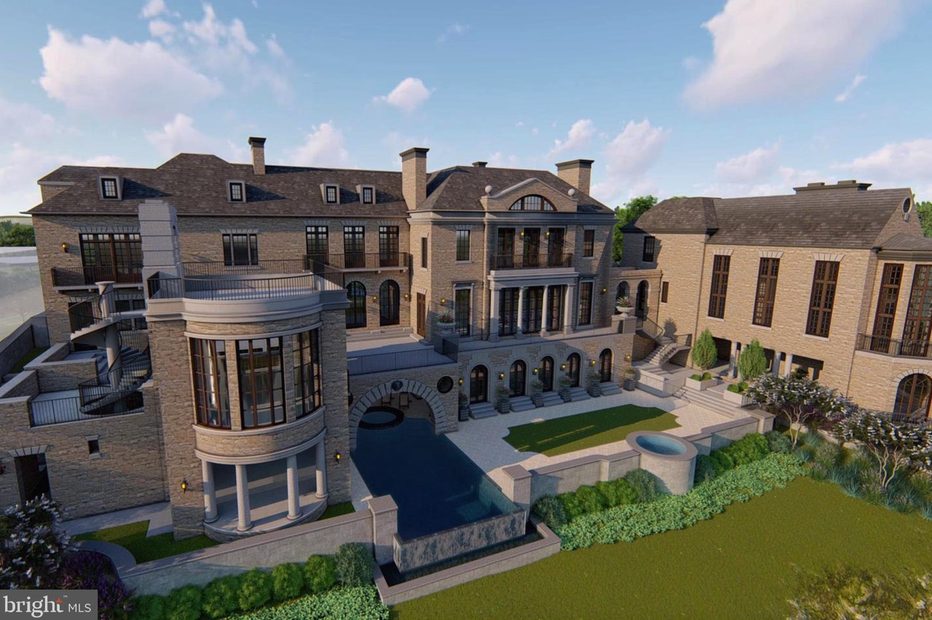
The recently listed $28.5M home, by Mark Lowham of TTR Sotheby’s, on the Potomac River side of Chain Bridge Road is an anomaly in Arlington. Outside of the prestigious Country Club Hills neighborhood and Turnberry Tower penthouse-level condos, sale prices in Arlington rarely eclipse the $3M mark and even in those communities the handful of $3M+ sales historically top out at $4M. And then you have a very small pocket of ultra-luxury homes at $5M+ along the Potomac, off Chain Bridge Road, which fall within Arlington County, but actually have a McLean mailing address and zip code (22101).

Note: There are dozens more homes in Arlington worth $3M-$5M that just haven’t been sold. Many are custom built in the last 10-15 years with the original owners still occupying them. There are also a handful of private sales that aren’t entered into the MLS because they were sold off-market.

Why Doesn’t Arlington Have Ultra-Expensive Homes?

So with so much wealth and close proximity to D.C., why doesn’t Arlington have more ultra-expensive homes? The answer is lot size.

For anybody that has looked for a home with a little elbow room/privacy in Arlington, you’ve reached the unfortunate conclusion that it’s very difficult to find anything with more than ¾ acres (even ½ acre is highly coveted) and there are just a small handful of properties with more than 1.5 acres. Smaller lots make it difficult to build enough house to justify a $5M+ price tag.

Where To Spend $5M+?

So where do people with $5M+ to spend on a home live? In Northern Virginia, most of those homes are in McLean or Great Falls, as well as further west in Loudoun County’s horse/wine country. D.C.’s most popular ultra-expensive neighborhoods are Georgetown and Kalorama, with a spattering of other neighborhoods west of Rock Creek Park. In Maryland you’ll find the most expensive homes in Potomac along River Road, as well as Chevy Chase and Bethesda.

Enjoy Some Photos

For those of you who are here just for the pictures, here you go! I’ve linked to $5M homes either for sale or sold in the last few years in the area:

Whether or not you’re looking for a $5M home or $50k parking spot, feel free to reach out to me at [email protected] to schedule a meeting to discuss your real estate plans!

If you’d like a question answered in my weekly column or to set-up an in-person meeting to discuss local real estate, please send an email to [email protected]. To read any of my older posts, visit the blog section of my website at www.EliResidential.com. Call me directly at (703) 539-2529.

Eli Tucker is a licensed Realtor in Virginia, Washington D.C., and Maryland with Real Living At Home, 2420 Wilson Blvd #101 Arlington, VA 22201, (202) 518-8781.

Photo via Mark Lowham, TTR Sotheby’s


Making Room is a biweekly opinion column. The views expressed are solely the author’s.

In one of its first concrete votes under the Housing Arlington umbrella, the County Board will consider a proposal on November 16 to revise its incentive zoning program that gives developers additional density in exchange for community amenities, particularly affordable housing or community facilities.

Within this admirable proposal to increase density, however, is a small but troubling indication that County staff may not trust the market to deliver housing for middle-income households.

Currently, developers can earn up to 25% additional density and up to 6 additional stories by including affordable housing or a community facility in their project. The County staff wants to remove the 25% cap on bonus density, but also eliminate the option to earn additional height.

This means that the County Board could approve buildings with higher density, if the height fits the zoning district or applicable adopted plan. The goal is to encourage more affordable housing and community facilities through site plan developments, while maintaining the height maximums that neighborhoods have come to expect.

The decision to lift the cap on bonus density is laudable, but removing the option for bonus height will not give our land use policies the flexibility to meet current market conditions. Much of Arlington’s land is governed by outdated zoning codes that don’t recognize or accommodate the current housing crisis. This change would perpetuate the “grand bargain” that allows height in narrow Metro corridors but restricts it even in other transit-heavy neighborhoods.

Planning staff want their planning process to take the lead, but this can mean years of work, managed through a community process that over-represents the most affluent, housing-secure residents.

However, more concerning is the less-discussed component of this proposal to modify the definition of “low- to moderate-income” used to determine whether affordable housing in a site plan is eligibility for bonus density. Currently, a project can receive bonus density for housing that is affordable to households making 60% Area Median Income (AMI), or $72,000 for a family of four, for rental units and 80% AMI ($97,000/year) for ownership. Given the emphasis on “missing middle housing,” staff wants to loosen these definitions and explore offering bonus density to projects that offer ownership units affordable to households making up to 120% AMI ($140,000/year).

Arlington County clearly lacks affordable ownership housing for middle-income households, especially those seeking family-sized units. However, the County Board should not use incentive zoning to create housing for families making $100,000 to $140,000 per year. We should allow missing-middle options by-right and let the market provide housing for these relatively affluent households. When we use incentive zoning to achieve housing for higher-income people, we limit the opportunity to produce housing stock that assists lower-income households who are not served by the market.

Expanding the upper income range for zoning incentives tells me that the County may be unwilling to push for market reforms that would make this housing a regular development. Housing for middle-income families is not a gift that developers give us. We should permit the density and housing forms throughout the county that will make this housing profitable to build without any special encouragement. If we can’t get housing for 120% AMI without using these tools, then our zoning is wrong.

Jane Fiegen Green, an Arlington resident since 2015, proudly rents an apartment in Pentagon City with her husband and son. By day, she is the Development Director for Greater Greater Washington and by night she tries to navigate the Arlington Way. Opinions here are her own.


Progressive Voice is a weekly opinion column. The views and opinions expressed in the column are those of the individual authors and do not necessarily reflect the views of their organizations or ARLnow.com.

By Matt de Ferranti

Last year, Arlington voters gave me the opportunity to serve. I am deeply grateful and am working my heart out. Here’s how:

On January 2, I laid out two issues for my first six months: Amazon and the FY 2020 Budget. I also spoke about my five priorities: growing our economy to benefit all of us, building the schools we need, housing affordability, 100% renewable electricity by 2035, and ending child hunger here by 2022.

Amazon

I voted for the targeted, performance-based incentive agreement for Amazon. I believed then and now that it will help grow our economy, bring down our office vacancy rate, and help us afford the investments we need. I admit, however, that the housing affordability issues that impact our community will require more commitment and creativity. My thoughts on Amazon: HQ2.

The FY 2020 Budget

I am also proud, on balance, to have voted for the FY 2020 budget. Helping Arlington Public Schools open five new schools this year and investing in the services our community needs via a 2-cent increase in tax rates was the right balance, all priorities and constraints considered.

My Five Priorities from Last Year

I believe we are moving in the right direction on the priorities I promised to work on. The office vacancy rate is down to 16.6% from over 18% last year and, though there are costs, the net additional revenue due to economic growth will make our budgets steadily easier, though by no means a cakewalk.

On 100% renewable electricity by 2035, we voted on September 21, 2019, to put this goal into policy in the Community Energy Plan. I am very proud to have pushed for the strongest plan possible.

On housing affordability, the Housing Grant and Affordable Housing Investment Fund (AHIF) investments this past year were a start, but I am eager to follow up and follow through in a thoughtful, equitable way on the ideas that Housing Arlington has and will bring forward. That means finding additional funding to help the 9,000 households in Arlington who live on less than $36,000 a year and addressing missing middle housing types to provide more options for middle-income households.

On building the schools we need to educate every child well, the annual budget plays a role, but next year’s Capital Improvement Budget (CIP) will be critical. I am working on this through the Joint Facilities Advisory Council.

On ending child hunger in Arlington by 2022, I have made the least progress on this important goal. I am hopeful that the Equity Resolution that the Board passed on September 21, 2019, will serve as a catalyst for the work I and we must do to help the more than 4,000 children who face food insecurity.

What’s Next? Stormwater and Housing Affordability

The July 8, 2019 flood brought to light stormwater issues that we must address. Walking through the homes damaged by the worst flood we have seen since 2007 brought tears to my eyes. The flooding was caused by many contributing factors, including the most rainfall ever recorded in Arlington in an hour period; policies from the 1930s through ’80s that undergrounded streams; and, to a lesser extent, recent growth, among other reasons. Two truths drive my thinking: we cannot and will not fix this overnight, and we must work diligently and with urgency to build a better stormwater system.

On housing affordability, we had big challenges before I took office, but the changes to the housing market that Amazon has accentuated cannot be ignored. We must bring forward new, Arlington-specific solutions to help make homeownership affordable and better serve renters in need. Those solutions will require that we evolve and apply our values to this new challenge. But, to be clear, we must and will invest in housing affordability in a smart, fiscally sound way.

As a whole, I am proud of and love the work we are doing together.

Matt de Ferranti was elected to the Arlington County Board in November 2018. He currently works as Senior Legislative Counsel for the National Indian Education Association. Before de Ferranti joined the Board, he served on Arlington’s Housing Commission, as Chair of the APS Budget Advisory Council, and on the Joint Facilities Advisory Commission (JFAC).


Arlington officials now look set to further loosen rules around the creation of “accessory dwelling units” sometime this spring, changing some zoning standards to allow more property owners to build the homes on their land.

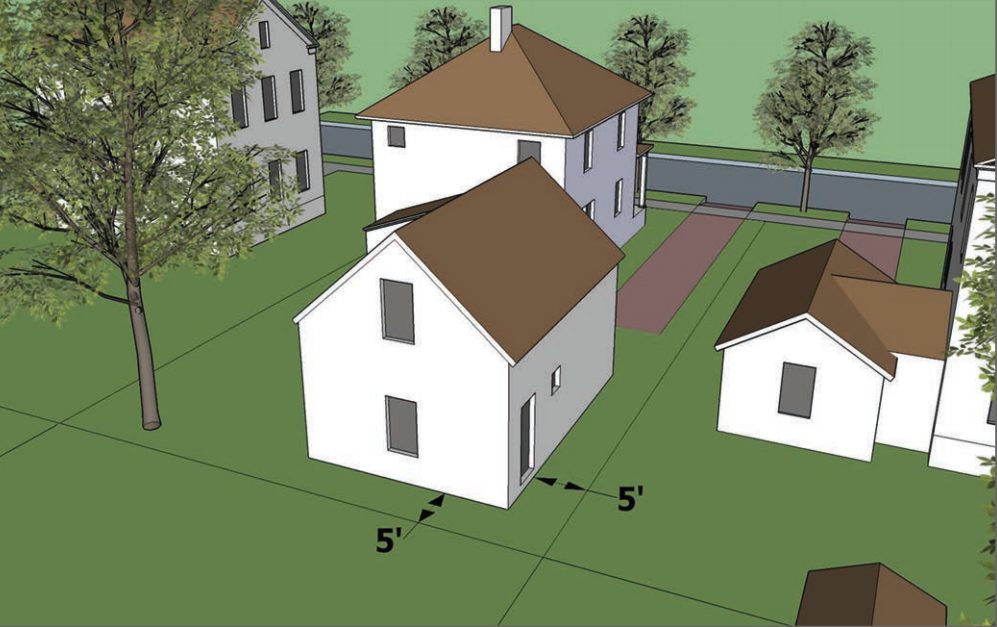
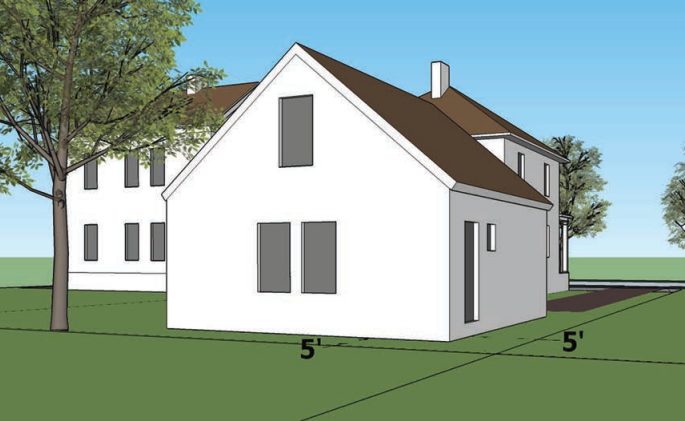
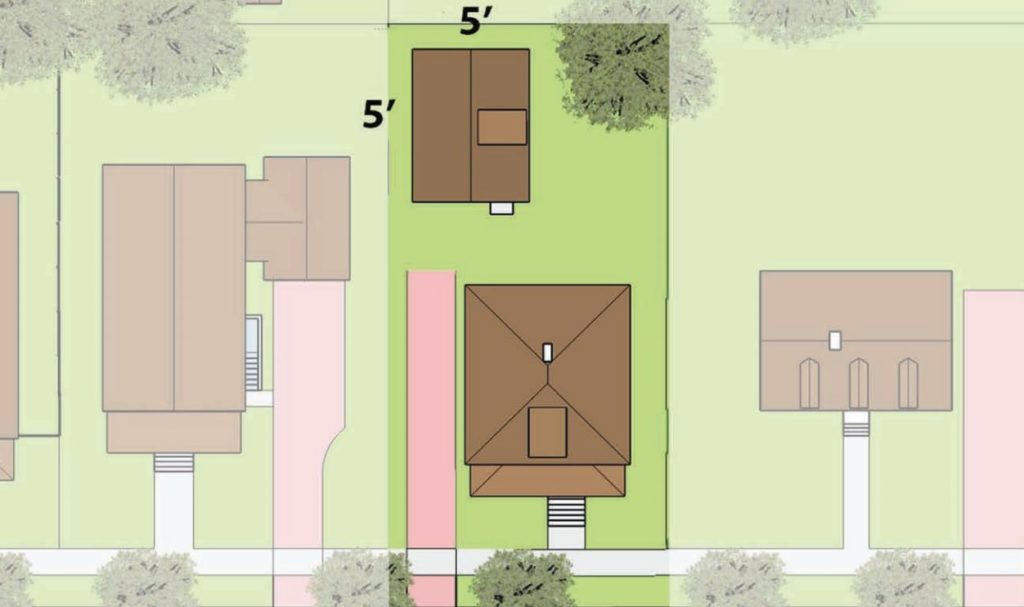
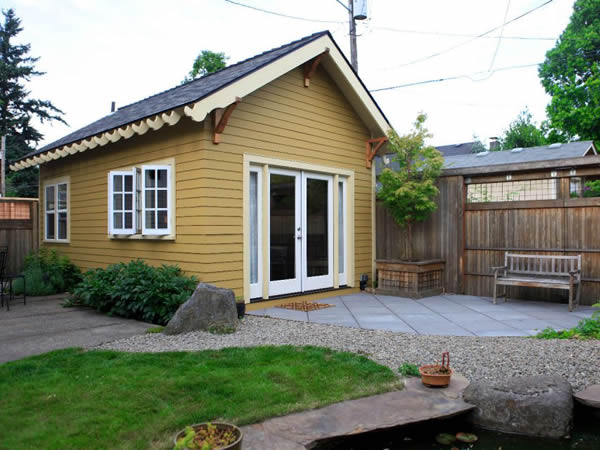
County staff are now circulating a draft policy recommending that local leaders allow property owners to build the homes, commonly known as “mother-in-law suites,” with a five-foot setback from the street and property lines.

The County Board has long sought to see more people build “ADUs” around Arlington, viewing them as low-cost way to beef up the county’s housing options. Officials have become especially interested in the homes as they’ve debated ways to improve access to “missing middle” housing, or homes that offer rent prices somewhere in between new, luxury apartments and subsidized affordable homes.

The Board worked in 2017 to loosen regulations on ADUs and expand their creation in Arlington, but those changes only impacted apartments to be created within a single-family home, like in a garage or attic. The rule tweaks also allowed property owners to convert existing detached buildings on their lots into ADUs, but they did not allow anyone to build new ADUs unattached to other buildings on the property.

This latest proposal would change that. County staff examined the potential for one-foot, five-foot and 10-foot setback requirements, and they settled on the middle option as the best way to balance competing priorities.

“The five-foot setback balances privacy and separation concerns, design flexibility and the county’s housing goals regarding increasing housing options,” staff wrote in documents presented at an open house earlier this week.

Staff estimate that altering the setback requirements in that way would allow the owners of 42 percent of all homes in residential zoning districts to build new ADUs. They expect that a five-foot setback would allow some space between property lines and ADUs, and create enough room for direct sunlight to flow into all buildings on a given property.

Officials declined to side with a one-foot setback requirement, noting that it would allow for considerably less privacy, with buildings right up against property lines. Yet they found that it would only slightly increase the number of properties where ADUs could be built — 44 percent of residential properties would be eligible, staff estimated.

They also found that buildings so close to property lines are subject to more stringent fire safety-related building requirements, whereas buildings five feet away are not, “potentially decreasing the cost of construction for the owner.”

As for the 10-foot setback option, staff found it would substantially decrease the percentage of eligible properties — they calculated about 37 percent would qualify — while also creating the potential for buildings on sites to feel more clustered together, creating “the perception of greater massing on the site.”

It helped, too, that staff found that other, similarly sized localities around the country use the five-foot setback standard.

Staff found that Charlottesville, Seattle, Santa Cruz, California and Los Angeles County all use a similar guideline — only Portland uses the 10-foot standard, while no other localities staff examined use the one-foot setback. D.C., however, allows ADUs to be built right up to the property line, as the city has gone through its own efforts in recent years to expand access to the homes.

Staff plan to convene a series of additional meetings on the setback proposals in the coming weeks, with plans to send them to the Planning Commission for debate by May 6. The County Board could then take action by May 18.


After months of work, Arlington officials are gearing up to advance a new round of regulatory changes designed to encourage the creation of accessory dwelling units around the county.

The county plans to hold an open house on the new regulations tonight (Tuesday), specifically on policies governing how far the homes can be set back from the street.

Commonly known as “ADUs,” or “mother-in-law suites,” the homes can include everything from basement apartments to those located above a house’s garage. The County Board passed a series of revisions to Arlington’s ADU regulations in 2017, in a bid to prompt more people to create those units and beef up the supply of reasonably priced homes in the county.

Those changes were primarily targeted at allowing homeowners to more easily create ADUs within existing structures, rather than building new ones. The rules changes also allowed property owners to create an ADU in an existing structure detached from a single-family home, like a garage, but they could not build any new structures on properties for such a purpose.

Still, the Board vowed to subsequently consider rules changes allowing people to build free-standing ADUs on properties. The homes are broadly seen as a key way to provide “missing middle” housing, or homes that fall in between luxury apartments and subsidized, affordable homes, and advocates have long championed additional ADU rules changes.

But, to allow for any new construction, officials would need to change the “setback” requirements, which stipulate how far the homes can be located from the street. County Manager Mark Schwartz has been developing proposals for such rules changes, but has yet to unveil them in a public setting.

That is set to change later this afternoon. The exact shape of the proposals remains unclear, however — a county spokeswoman could not immediately provide details on the proposed regulations. Michelle Winters, the executive director of the affordable housing advocacy group the Alliance for Housing Solutions, also said she was unsure when the county will release the details of the proposal publicly.

The ADU meeting is set for the Ellen M. Bozman Government Center (2100 Clarendon Blvd) in conference rooms C and D from 4-8 p.m. Any zoning changes discussed there would likely need to be scrutinized by both the Planning Commission and County Board before they go into effect.

Courtesy photo


Arlington leaders agree that Amazon’s impending arrival in the county demands urgent action to address housing affordability — but there’s a lot less agreement on what sort of policy response is necessary to hold down the area’s skyrocketing housing costs.

Some of the changes officials are envisioning are relatively modest ones, expanding on existing efforts that began long before the tech giant announced its plans to bring 25,000 workers to the area. After all, many have argued that the new headquarters set to pop up in Crystal City and Pentagon City won’t prompt the sort of explosion in gentrification that Amazon’s opponents fear.

Other experts see a need for more ambitious tactics, like allowing more development in Arlington to flood the market with more homes. That could well be a politically explosive change in the county, particularly if it means increasing density in Arlington’s oldest residential neighborhoods.

Or perhaps there’s a need for a more creative approach — some progressive activists are championing the creation of a “community land trust,” a strategy embraced elsewhere around the country to allow for the communal ownership of affordable homes.

It presents local leaders with a series of choices that could well define the county’s destiny for decades. And with Amazon’s workers set to start arriving by the thousands next year, officials won’t have long to make up their minds.

‘We should never let a crisis go to waste,” said County Board member Erik Gutshall. “Amazon is bringing a sharp focus to these fundamental issues, and it’s providing us with the opportunity to double down on the sort of planning we’ve done for decades.”

Building on existing efforts

County Board Chair Christian Dorsey agrees that the urgency of addressing housing affordability has been “magnified” since Amazon’s momentous mid-November announcement.

But, fundamentally, he says “the world, as I see it, in terms of housing strategy is not very different than it was” before officials knew they’d won a new Amazon headquarters.

“We’ve identified the tools we’d like to deploy,” Dorsey said. “Now we have to do the hard work of deploying them.”

For instance, the county has long relied on its “Affordable Housing Investment Fund” to provide loans to developers building affordable homes. Those projects often include apartments guaranteed to remain affordable to renters, known as “committed affordable” homes, that are most valuable for people at the lowest end of the income scale.

The County Board allocates cash to the fund each year, and that contribution has recently hovered around $15 million annually. The county is facing a budget squeeze in the coming fiscal year, but as tax revenue from Amazon’s new properties and workers trickles in over the next few years, Gutshall believes the Board should “earmark some of that specifically” for the loan fund.

Similarly, he notes that the Board will also be able to force Amazon to send cash to the program as it builds new offices (most of which will be located in Pentagon City), as developer contributions are the Board’s main tool for seeding the fund with money.

But as market forces persistently push the costs of new development higher, researchers believe the county also needs to preserve the affordable homes it already has.

“Buying up and preserving existing middle-income housing, that stretches public subsidy dollars much further than trying to build stuff from scratch,” said Jenny Schuetz, who studies housing policy with the Brookings Institution’s Metropolitan Policy Program. “The county should be doing more of that preservation work and they should be focusing on that area near the new headquarters.”

The Board has indeed worked to preserve some affordable homes already by setting up “housing conservation districts” to protect older, “garden apartments” designed to be affordable to middle-income renters. Officials first passed the policy in 2017, with plans to eventually allow developers to replace protected homes with even larger affordable developments, but there’s been little movement on the issue since then.

Gutshall argues that the county needs to “accelerate” some of that work, as it seeks to expand “missing middle” housing, commonly understood as homes that fall in between apartments and single-family houses. The Board already loosened some of its regulations for accessory dwelling units, or “mother-in-law suits” on the same property as another home, and Gutshall wants to further tweak zoning rules to allow for more duplexes and small apartment buildings to be built around the county.

“We need to be thinking about how we can keep the character of residential neighborhoods, but still open up housing types and allow for better transitions on the edges,” Gutshall said. “At the same meeting we vote on the Amazon deal, I would love to see a ‘missing middle’ directive… to really identify key areas where think we can make some rapid progress addressing this.”

Touching the ‘third rail’?

Yet the scale of the affordability challenge confronting Arlington has convinced many experts that such changes aren’t enough.

Many observers see a clear and urgent need to ramp up the supply of housing more rapidly, even if that means the construction of the same sort of high-end apartments that are already commonplace in the county. Those homes themselves might not be affordable for low-income renters, but experts argue that any new apartments will have a positive impact on the market as a whole.

“People moving into those new homes come from somewhere,” said Eric Brescia, a member of Arlington’s Citizens Advisory Commission on Housing, who also works as a Fannie Mae economist. “Think of it like the market for cars. A lot of poorer people buy used, not new, at first. New apartments help free up the older stock for people of more modest means.”

But the question becomes where those new apartments will fit, and that leads to some very thorny debates for local leaders.

Anyone walking along one of Arlington’s Metro corridors can see that neighborhoods like Rosslyn and Ballston are already jammed with high-rise developments. Most of the rest of Arlington is reserved for single-family neighborhoods — as much as 87 percent of the county is zoned only to allow for that type of development, according to one recent analysis — but officials might need to reverse that trend as Amazon ramps up the pressure on renters.

“Many people are saying it’s time to look at this exclusive, single-family detached development and how wasteful it is in terms of land use,” said Michelle Krocker, the executive director of the Northern Virginia Affordable Housing Alliance. “But if anything is going to shake communities to their core, this will be it.”

Schuetz points out that these are often wealthy neighborhoods, full of residents “that turn up in large numbers and vote” if they fear encroaching density. But she doesn’t see any choice for the county but examining the prospect of allowing more development in a wider variety of places.

“You have these neighborhoods within a mile, walking distance, of the Metro, but they’re only zoned for single-family homes,” Schuetz said. “It’s just not efficient.”

Dorsey acknowledged that such discussions have always been a bit of “a third rail,” politically, and he understands the impulse of homeowners who might “worry about what more density would look like in their neighborhood.”

“I don’t fault people for wondering if we’re intending for the same density as in Ballston to come to every low-density neighborhood,” Dorsey said. “I get that… that’s why we have to talk about this with real specificity.”

And Dorsey says the Board isn’t considering any sweeping changes to zoning rules across Arlington, even if advocates favor such a move. Instead, he expects a more modest first step is increasing density along some sections of Lee Highway, where the Board is already gearing up an extensive study of its plans for the corridor.

“The potential we have in Arlington is along our major transportation corridors, Lee Highway in particular, where there is more than enough opportunity for substantial amounts of new housing,” Gutshall said. “If we’re able to unlock that, that will carry us through our next 30 to 40 years.”

Following in Bernie’s footsteps?

Beyond these debates about zoning and density, some activists see room for another, very different path for the county to pursue as Amazon looms.

Tim Dempsey has been working with advocates and local leaders on the idea of a “community land trust” since first coming across the idea while reading a bit more about Sen. Bernie Sanders (I-Vt.) during his 2016 presidential bid.

While he was still just the mayor of Burlington, Vermont, Sanders helped create a land trust, among the first of its kind in the nation. In the unusual arrangement, a nonprofit buys up available land, then builds homes atop it.

Anyone can then move in and pay a mortgage on the homes themselves, while the nonprofit retains the ownership of the land. That protects home prices from wild fluctuations, particularly the sort of speculation that could follow Amazon’s arrival in the county, Dempsey said.

“This prevents the land from falling into a speculator’s hands in the first place,” said Dempsey, who sits on the steering committee for the Sanders-inspired group Our Revolution Arlington

And more than just providing low- and middle-income people with a place to rent temporarily, Dempsey believes this method “allows people to have many of the benefits that come with home ownership, like building equity, tax deductions and having very stable housing.”

“They might not get the full value of owning a home, but they probably would never be able to get into homeownership to begin with, otherwise,” Dempsey said. “This could address long-standing social justice issues when it comes to home ownership.”

Without such a model in place, Dempsey fears Amazon will push already skyrocketing home prices higher and force people out of Arlington. That’s why he’s already brought the idea to many Board members and other local affordable housing advocates, where he says it’s largely earned a warm reception.

That’s significant, because Dempsey believes the county has a key role to play in setting up the trust — the county would likely need to provide the cash to get the effort off the ground, and could take a leading role in acquiring land for any future nonprofit.

Dorsey says he’s certainly willing to examine the issue in more detail. But he urged the trust’s proponents to strive for the true “end game” of such a program, rather than getting hung up on setting up a trust, per se.

“I don’t want to get so focused on the prospect of a land trust that we don’t look for the true essence of this opportunity: how do we acquire property that can be made into affordable housing?” Dorsey said. “It could be a land swap, or allowing an entitlement to build something that’s more dense to get a different opportunity elsewhere.”

Where Dorsey and Dempsey can agree is that such a trust would be most effective if it’s a regional effort.

Indeed, with Amazon’s workers expected to settle all throughout the D.C. area, experts of all stripes are unanimous that Arlington can’t hold down housing prices on its own, no matter which strategies leaders pursue.

“Arlington can obviously play a part in this, but housing markets are regional,” Brescia said. “And we need more collaboration across the region.”

File photo


View More Stories