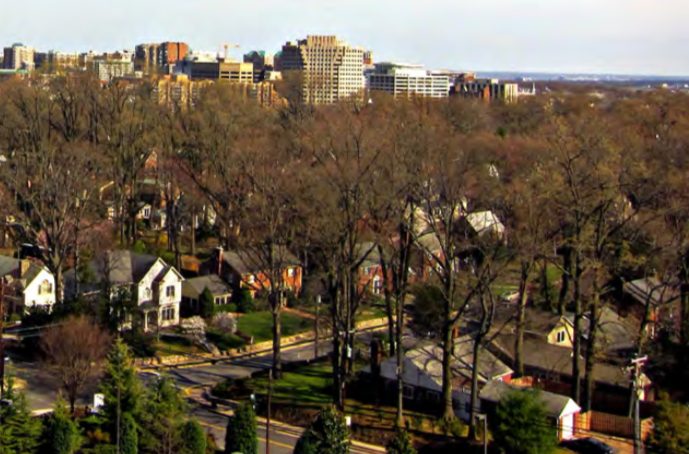
The vast majority of land in Arlington is reserved for the construction of single-family homes, and affordable housing advocates argue that’s going to have to change if the county wants to adequately handle the region’s looming, Amazon-inspired population influx.

A new report released by the Northern Virginia Affordable Housing Alliance last week argues that Amazon’s decision to bring 25,000 jobs to Arlington in the coming years “should create a regional sense of urgency and commitment to address our housing supply and affordability gap,” a sentiment broadly shared among local and state leaders following the company’s momentous announcement. But where the advocacy group strikes a starker tone than other observers is in its policy prescriptions for meeting that challenge.

The NVAHA’s researchers point to data showing that about 86.7 percent of land in Arlington is zoned exclusively to allow new single-family homes, compared to just under 12 percent where multifamily development, like apartment buildings, is permitted.

They believe that sort of zoning scheme not only chokes off the county’s ability to add more housing, and meet its current supply pressures, but also cuts off the potential for people of more modest means to ever move into the county’s more affluent neighborhoods.

Accordingly, the group sees the clear potential for “allowing more diverse housing types in detached single family neighborhoods,” reversing the current paradigm where the “path of least resistance” for developers is simply to build ever-larger single-family homes in those areas.

“It should be noted that efforts to increase density and flexibility in use have been controversial, both within the region and across the country,” the group wrote. “Awareness of the socioeconomic bias that shaped low-density and exclusionary zoning is not widespread, and the predominance of the neighborhood form in many urban and suburban areas has created strong consumer demand for such communities, making discussions of regulatory reform more politically contentious. However, these barriers are not insurmountable and the moral imperative of breaking down exclusionary barriers justifies the effort.”

The NVAHA acknowledges that there is indeed a role for local governments to subsidize the creation of housing that is guaranteed to remain affordable in order to reach the poorest renters, or to prioritize the preservation of existing affordable homes.

But the advocates also stress that the “disproportionate number of higher-income earners” moving into the area means that market realities will make it difficult for county officials and other leaders to build enough housing on their own. That means relying on more private development, they say, while working to ensure that developers don’t only build high-end apartments that are out of reach for people in lower income brackets.

“By-right development should be liberalized to streamline the costly entitlement process and promote more naturally affordable building types and development scales,” the researchers wrote.

They suggest that duplexes, townhomes and other small apartment complexes could be housing options for the county to consider, and they do note that the county has done some work in this area with its strategies to promote the creation of “accessory dwelling units.” Arlington officials did take some steps to allow smaller apartments attached to larger homes, commonly known as “mother-in-law suites,” but the NVAHA sees room for more bold changes on the issue.

The researchers note that discussions around creating more “missing middle” housing, to fill the gap between subsidized affordable units and luxury homes, often concentrate that the new homes “around transportation corridors or the areas near existing mid-density or mixed-use neighborhoods.” Instead, they see a need for more “diversification” of new housing types all across the different regions of the county.

“A broad-based approach diffuses demand over a wider area,” the group wrote. “If demand for such units is not limited to a small number of neighborhoods by government fiat, any potential impacts on roads, school capacity, and neighborhood form are more likely to emerge gradually, enabling adequate planning and preparation.”

Of course, the advocates would concede that Arlington won’t be able to solve the housing affordability problem on its own, particularly as officials expect that Amazon’s workers will choose to live around the entire region. Accordingly, they urged leaders from across D.C., Maryland and the rest of Northern Virginia to confront the issue together.

“These discussions need to happen in Bowie and Bethesda, as well as Arlington and Alexandria,” NVAHA Executive Director Michelle Krocker wrote in a letter introducing the report. “Regional benefits equal regional responsibilities… Will our elected officials put jurisdictional differences aside and respond for the good of the region?”

Flickr pool photo via NCINDC

Amid persistent concerns that Amazon’s army of new workers will displace low-income Arlingtonians, county leaders plan to redirect their existing investments in affordable housing to better serve the areas impacted by the new headquarters — but the county won’t be upping its financial commitment to spurring the construction of reasonably priced homes.

While critics of Arlington’s decision to court Amazon’s HQ2 have focused on everything from the headquarters’ potential impact on county schools to its transportation systems, the tech giant’s impact on housing prices has perhaps drawn the most scrutiny of all.

The D.C. region has already seen a housing crunch in recent years, and all manner of experts have theorized that the arrival of Amazon’s thousands of highly paid workers will only worsen the county’s challenges. Accordingly, Virginia’s offer to Amazon includes a frequent emphasis on the region’s commitment to addressing local housing woes, and it touts a $150 million investment in affordable housing by Arlington and Alexandria over the next decade. The state has also pledged massive investments in existing programs through its Virginia Housing Development Authority.

But the details of the proposal contain a bit more nuance. The county won’t achieve that affordable housing investment by increasing its annual contributions to various housing-focused programs; rather, it will earmark about a third of those funds for projects creating affordable homes in Crystal City, Pentagon City and along Columbia Pike.

“We’re hoping that will help us create 1,000 new committed affordable units in that area,” County Board Chair Katie Cristol told ARLnow. “And that’s joined by the new commitment from the state, so we’re clearly making this a priority.”

The county currently sends about $21 million to affordable housing efforts each year, county economic development spokeswoman Cara O’Donnell said. That includes just over $14 million to the Affordable Housing Investment Fund, a loan program designed to encourage affordable developments, and contributions to other loan repayment programs for low-income renters.

That means about $7 million each year will be dedicated to housing affordability programs impacting the neighborhoods surrounding Amazon’s new headquarters. Cristol also hopes to increase that amount as new tax revenues from the company flow into county coffers, though Arlington will need a few years to truly feel those revenue impacts.

Michelle Winters, executive director of the Arlington-based Alliance for Housing Solutions, was hoping to see the county step up its total commitment to affordable housing funds immediately, not simply move money around. She points out that, even with the county’s existing efforts, Arlington has seen dramatic declines in its “market rate” affordable homes, which are designed with prices to match the current housing environment. The number of “committed affordable” homes, where housing prices are controlled, has also not kept pace with growth, she points out.

“It’s going take additional analysis to determine if this will actually be enough to meet the needs arising from Amazon and other growth in the region,” Winters said.

More intense Amazon skeptics, however, believe that anything short of a full-court press from the communities surrounding the new headquarters will spell disaster for renters in the area. State Del. Lee Carter (D-50th District) fully expects that Arlingtonians priced out of the county will soon flock to outer suburbs like his Manassas-area district, causing a ripple effect throughout the Northern Virginia region.

“I live in a one bedroom apartment in Manassas; my rent’s going to go up, and I’m going to get priced out of my own district,” Carter said. “It speaks to the flawed conventional wisdom around economic development. It says that more jobs are always good: but at what cost?”

County officials don’t see the situation as being quite so dire, however. They note that up to 20 percent of the workers Amazon plans to hire likely already live in the area, and that employees will arrive gradually in Arlington over the next few years, not simply show up all at once and disrupt the housing market overnight.

Arlington leaders also believe they’ll have more tools at their disposal to address housing affordability by the time Amazon starts truly ramping up its hiring.

One key way the county earns money for the Affordable Housing Investment Fund (AHIF) is by forcing developers to make contributions to it as they win local approvals for massive new projects. Amazon won’t be building much in Arlington right away, choosing to move into some existing space in Crystal City to start — that’s an outcome affordable housing advocates feared, as the company won’t be required to chip into the AHIF until it starts sketching out construction plans.

But County Board member Erik Gutshall points out that Amazon has big plans for future construction in the area, which will eventually result in “straight contributions” to the AHIF. Amazon has already purchased large tracts of land in Pentagon City from developer JBG Smith, and could opt to fully re-develop some of the existing buildings it’s leasing someday.

“Over time, everything is going to be new,” said Board Vice Chair Christian Dorsey. “They’re not just going to stay in existing 1960s buildings. Permanently, they’re building new stuff.”

Yet Winters argues that programs like the AHIF can only do so much to create new affordable housing in the county. She credits the county for some of its work to preserve some older, moderately priced homes, but urged officials to do more, with greater urgency.

“While additional subsidy and investment is absolutely needed, it’s not the only thing that it’s needed,” Winters said. “We absolutely need to ramp up the pace housing is added to the county.”

Other urbanists are willing to call for even more transformative changes to make that happen, now that Amazon has arrived.

Cristol acknowledged that “the one thing we can’t address through public policy is speculation in the market,” and early estimates suggest that speculation will be no laughing matter — McEarney Associates, a group of Northern Virginia realtors, released a report estimating that overall home prices will rise anywhere from 20 to 30 percent in the wake of Amazon’s announcement, with appreciation rates “north of 15 percent” in the immediate vicinity of the new headquarters.

Accordingly, Cristol does see a need to “meet the supply challenge,” but she’d prefer to double down on some of the county’s existing efforts to loosen zoning rules for “accessory dwelling units” or allow more renovations to older duplexes, rather than pursue more dramatic changes.

“We need to increase our urgency in expanding housing options among that ‘missing middle’ housing stock,” Cristol said.


Arlington could soon make it easier for owners of older duplexes and townhomes to renovate the buildings or tack on additions.

Plenty of Arlington homeowners looking to make a change to a home built before the 1940s have encountered a vexing conundrum in the county’s zoning ordinance; the building could well be deemed “nonconforming” with Arlington’s zoning rules, as it wasn’t built to match the standards the county’s been using since 1942. That means any sort of renovation or addition to the home would require extensive county review, and could ultimately be prohibited, restrictions that have persistently frustrated property owners over the years.

But the County Board is weighing a change to loosen some of those restrictions on two-family homes in some sections of the county.

Not only could the change result in less headaches for homeowners, but county staff expect it would help preserve more affordable housing around Arlington, a key conundrum officials have looked to address in recent years.

“Staff finds that the proposed amendments… allow for reinvestment in existing housing stock that contributes to the overall diversity of housing countywide,” staffers wrote in a report prepared for the Board ahead of its meeting this weekend. “These proposed changes are intended to remove zoning barriers that have existed for decades that limit the type of reinvestment and renovation activities for nearly all of the county’s supply of two-family, and some one-family, dwellings.”

County staff estimate that the change, targeted at homes zoned “R2-7,” would affect as many as 1,488 structures around the county, giving those homeowners the chance to make a range of changes “by right” instead of pursuing county approval first.

Staff noted that the Board of Zoning Appeals, which hears requests from the owners of nonconforming homes, has reviewed 12 cases involving “R2-7” homes over the last two years alone. In all, they believe the bulk of such homes are concentrated “along Lee Highway, Columbia Pike, Wilson Boulevard, and in Nauck.”

The county also doesn’t expect that these “proposed amendments will significantly alter existing neighborhood character where these one- and two-family dwellings occur,” a fear frequently cited by zoning officials reviewing previous cases.

Staff added that the county will “consider opportunities to encourage development of new, two-family dwellings” in the future, noting that officials could someday commence a more detailed study of “missing middle” housing in the county, or homes falling in the price range between affordable housing and luxury apartments.

The county’s ongoing review of “housing conservation districts” to promote the preservation, and perhaps redevelopment, of older apartments and duplexes will also offer more clarity on the matter in the coming months.

The Board will take up these zoning changes at its meeting Saturday (Oct. 20).

Photo via Google Maps


Progressive Voice is a weekly opinion column. The views and opinions expressed in the column are those of the individual authors and do not necessarily reflect the views of their organizations or ARLnow.com.

By Erik Gutshall

In the 1990s Eastman Kodak dominated the world of photography and held the patent for the world’s first digital camera — yet by 2012, it was bankrupt. Kodak’s failure to respond fast enough to the rapidly changing world around it would forever redefine the once ubiquitous “Kodak moment.”

As the speed of life continues to accelerate, Arlington, perched atop the summit of many “best of” lists, should heed the caution of Kodak’s tale by striving to meet our current challenges with deliberate speed and gusto. While our current success was built on innumerable extensive multi-year community efforts, we must now embrace a more agile model — employing an iterative test-learn-tweak-grow rapid deployment methodology.

Whether the sudden arrival of dockless electric scooters, redevelopment pressure on Lee Highway, or the daily exit of valued Arlingtonians frustrated by housing costs, the urgency for the county to respond to a multitude of threats and opportunities is evident. Unfortunately, our ability to respond is too often hampered by our “bandwidth,” including a lack of staff resources and the time and energy for the requisite citizen engagement process.

Budget constraints render hiring more staff and consultants not feasible. Further, simply pushing more decision-making through our current lengthy civic engagement framework will only backfire with increased frustration from both staff and citizens worn thin by inefficient and tiresome processes.

Kodak’s leaders effectively sealed their fate by insisting they could keep doing what they had become very good at doing their first 100 years. Arlington need not make that mistake. Just as social media re-invented how we share “Kodak moments” with each other, we must re-invent how we engage in decision-making, while embracing three essential priorities:

1.     Smaller pilot projects first instead of grand comprehensive plans.

2.     Streamlined quality of civic engagement, not exhaustive quantity.

3.     Strengthening community trust.

Pilot projects by their nature, define a problem, test ideas, gather reactions and analyze results as a road to permanent solutions. They offer ample opportunity for community input, but without bogging down in multiple rounds of gestation. County staff engender trust in quality civic engagement by sharing information early, widely and completely. Likewise, Arlington’s new agile approach demands a citizenry willing to avoid “paralysis by analysis” and to move forward, even in the face of vocal minority opposition.

There will still be a place for major processes to develop such things as a Lee Highway Corridor Master Plan, but whenever possible, we can break larger issues down into more manageable components for trial-and-error prototyping. No longer untouchable monumental documents adopted at contentious County Board meetings, our major plans will be living documents whose values guide incremental evolution as we pilot-evaluate-modify-expand — always solving real-world problems for real people.

Beyond doubt, robust innovation in county government will produce occasional failure. But if Arlingtonians embrace each failure as a necessary component of continual improvement instead of assigning blame, we will assuredly find greater success than our current sluggish approach.

This new, iterative approach is ideal for a “Missing Middle” initiative to pilot new planning, zoning, and financing tools to create innovative neighborhood-scale housing forms for the middle class. We know the status quo is failing to deliver housing other than high-rise condos for anyone who can’t afford a single-family home. We don’t know yet exactly what will work. We could spend five years studying and talking about it, certainly hardening opinions yet without really gaining much more confidence. Or we could invite developers and citizens to propose what they think would work, pick one or more limited sites for pilot, learn from that experience, adjust and expand.

The County Board can pounce on an early win for rapid deployment by quickly enacting a handful of zoning ordinance amendments to correct technical errors and process noncontroversial amendments consistent with adopted policy.

In Fortune magazine’s eulogy of Kodak’s demise, they observed, “It is the more nuanced story of how easy it can be to get things wrong, even when trying with the best of intentions to do everything right. It’s a cautionary tale of the need for deeper understanding of what innovation really means, and how it is infinitely more vital than most people think it is, even as it isn’t about any single product or widget or technology.”

Arlington would be wise to define our moment — and our future — with an embrace of iterative rapid deployment innovation.

Erik Gutshall is a member of the Arlington County Board elected in 2017 and former Chair of the Planning Commission. A small business owner, he lives in Lyon Park with his wife, Renee, and their three daughters.


Arlington officials plan to unveil their long-awaited overhaul of the county’s childcare policies next month.

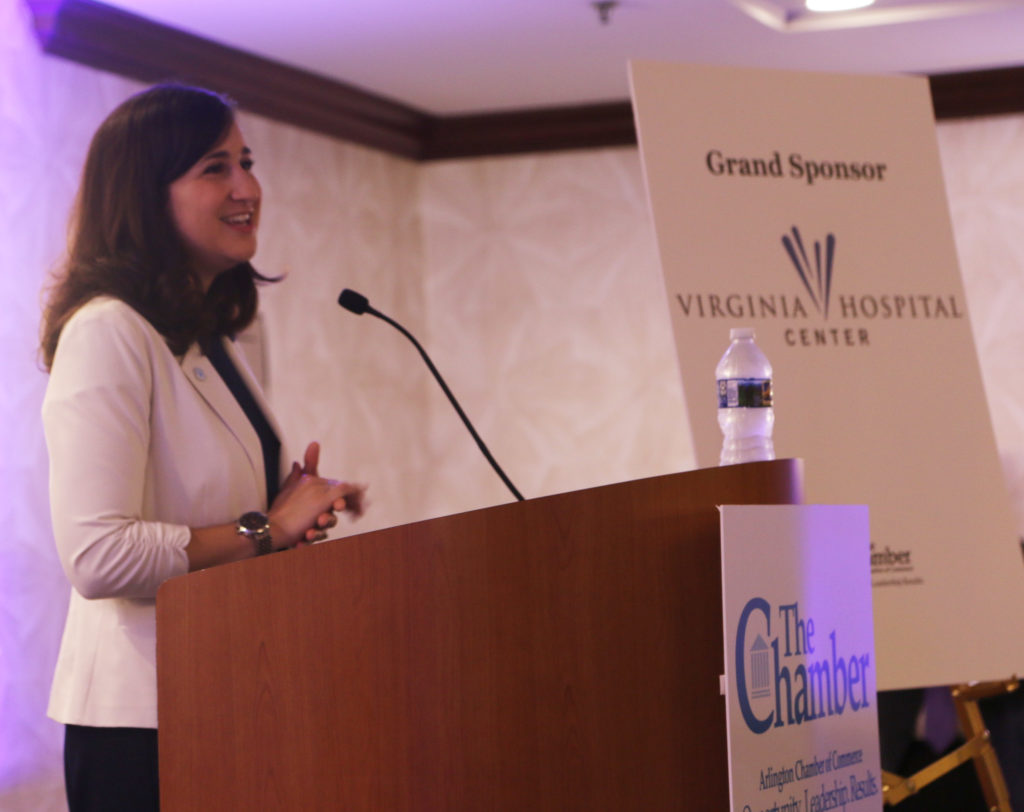
County Board Chair Katie Cristol announced those plans her first “State of the County” address today (Thursday) while speaking to the Arlington Chamber of Commerce in Crystal City. The overhaul is a substantial step forward in the debate over how to improve the availability and affordability of daycare in the county.

While Cristol said she was broadly “optimistic” about the county’s future, she stressed that the Board needs to take action to bring down the cost of childcare and ease the financial burden on working families. County leaders have been examining a “draft action plan” to tackle the issue since December, and Cristol says the Board plans to unveil a final product and debate it in full at a July 24 work session.

“For many families, child care can cost more than rent,” Cristol said. “In just a few weeks time, the Board will consider a detailed plan to address this… including a new set of land-use strategies, public-private partnerships and more.”

She noted that county staff and a host of community partners have been studying the issue since early last year, and will finally be able to present a path forward in some “granularity” next month.

Some items will be able to put into motion immediately, while others will require more Board debate, particularly if they involve zoning changes.

Cristol also stressed the childcare plan would be just one of the Board’s priorities as it moves into the back half of 2018. Following the “Big Idea Roundtables” the county convened to spark conversations among county residents, Cristol said she’s newly hopeful that the Board will be able to revisit its zoning policies to increase Arlington’s supply of market rate affordable housing.

Specifically, she’s interested in tackling the problem of the county’s “missing middle,” or homes available for county residents who might make too much money to qualify for dedicated affordable housing but still can’t afford detached single-family homes or high-priced luxury condos.

Cristol is hoping to find new ways to encourage the development of duplexes, moderately-priced townhouses or even “accessory” homes small enough to fit on another single-family home’s property. The county has already loosened its rules for such construction, known as “accessory dwelling units,” but she believes there’s more work still to do.

“We cannot lose sight of affordability as the fundamental challenge of Arlington’s future,” Cristol said.

She expects that the “overdue” kickoff of planning along the Lee Highway corridor, which the Board found new funding for this year and will start in earnest in the coming months, will have some role to play in that conversation.

Cristol would acknowledge, however, that the specter of Amazon’s arrival in Arlington hovers over any discussion of affordable housing or any other pressing issue in the county.

She declined to “break any news” on that front, but would say that she felt the county’s pursuit of the tech giant’s HQ2 “will make the county stronger.”

“Whatever choice Amazon makes on HQ2, it means the national spotlight has found our county,” Cristol said.


Progressive Voice is a weekly opinion column. The views and opinions expressed in the column are those of the individual authors and do not necessarily reflect the views of their organizations or ARLnow.com.

By Takis Karantonis

Four major corridors cut across Arlington — Columbia Pike, Crystal City-Route 1, the Rosslyn-Ballston (R-B) corridor and Lee Highway. “Corridor development” has been at the core of Arlington County’s growth strategy. Our “Main Streets” have merited dedicated policy focus and resources, starting with the development of Metro in the 1970s along the R-B corridor and Crystal City.

But it’s time to look anew at whether these corridors are all meeting their potential and all getting the resources they need. Corridors don’t occur “organically.” They emerge as products of community vision, policy, planning and timely public and private investment decisions.

Attention has been lavished on the corridors close to Metro, and understandably so, since Metro drove their commercial development. But it is time for Columbia Pike and Lee Highway to get the same kind of purposeful attention and long-term investment from the County.

Given the rising challenges in our local and regional economy, it is time to give our corridors a more urgent priority.

Twenty years ago, the Arlington County Board launched the Columbia Pike Initiative, a plan to revitalize Arlington’s most populous non-Metro corridor. A key aspect of that decision was the recognition that:

  • Corridors connect our neighborhoods and business districts, thus forming a county-wide network on which economic activity occurs. Arlington’s potential for a thriving economy will continue eluding us until the pockets of inequality that dot our community are addressed by effectively developing all our corridors.
  • Corridors are business-friendly and economically diverse. This is where small businesses start and often have the best chance for survival and growth. Big businesses prefer to locate here as they are optimally suited to make the most of a dense ecosystem of resources.
  • Corridors provide the environment to address scarcities, such as housing and transportation.

At this year’s 20th anniversary of the Columbia Pike Initiative, we can list accomplishments, such as jumpstarting development after a three-decades-long doldrums and upgrading transit, both of which bring us closer but still not near to our development goals.

Lee Highway has been languishing and despite citizen volunteer work through the Lee Highway Alliance for more than five years, the County-staff-led planning process has been rather slow in delivery.

In the upcoming County budget, let’s show renewed focus and commitment to our corridors.

Let us re-invest fully in our urban partnerships (CPRO, the Clarendon Alliance and the Lee Highway Alliance) in ways that give them actual agency and leverage to act as true partners in advancing already stated stakeholder and community goals.

These organizations are the glue that holds business, neighborhoods, residents and local government together. They have a proven record of steering and aligning, with beneficial and tangible results for public and private interests in their respective areas.

(more…)


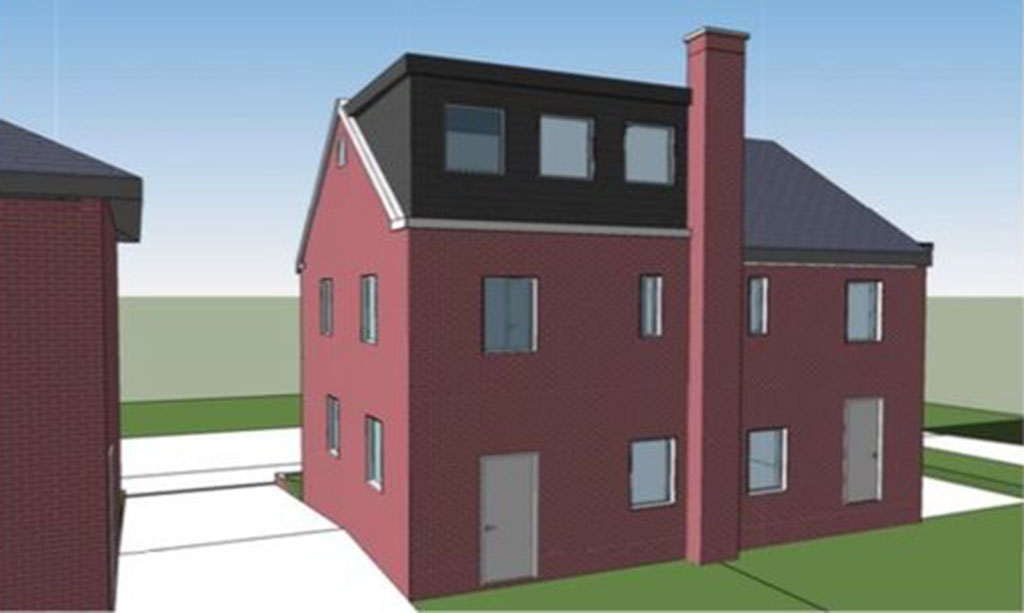
Two residents have launched a petition to try to change the Arlington County Zoning Ordinance after the Board of Zoning Appeals denied their plan to add a story to their home.

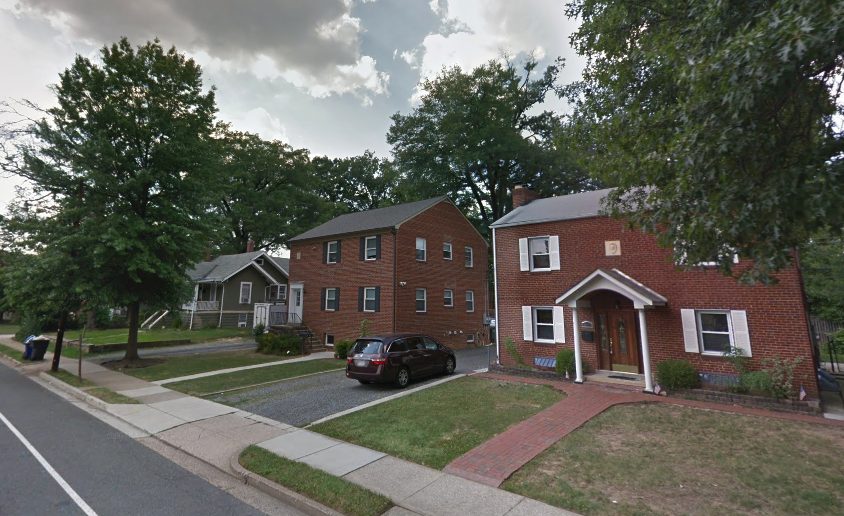
John and Gina Quirk, who live on 20th Road N. in the North Highlands neighborhood north of Rosslyn, had an application to convert an unused attic at their duplex home (pictured above) into a third-story bedroom rejected by the BZA late last year.

John Quirk said the “minimal” addition to make more room for their expanding family had the support of all their neighbors. It also had the support of some BZA members, who said at their December meeting that the fact that it stayed within the property was laudable.

“I think this is a really wonderful attempt to gain more space without increasing the footprint, and if we don’t grant these kinds of variances, then we’re faced with variances where they want to expand with the footprint,” said BZA member Charles Smith. “I think this gives developers and builders a [really] good model on how you can gain more with less.”

But the BZA voted down the proposal by a 3-2 margin on the grounds that the R2-7 zone for the property, a residential zone for townhouses and two-family homes, does not allow for such expansions by homes that were built before the Zoning Ordinance took effect. This home was built in 1939.

Such extensions are allowed for homes in other, similar residential zones, but in the Quirks’ zone it requires a special exception from the BZA.

In denying the extension, BZA members urged the Quirks to petition the County Board to change the Zoning Ordinance to allow the extensions in the zone where their home is.

“There’s hundreds like you, so maybe it could be a worthwhile community project for you to be the poster child for,” said BZA member Peter Owen, who also said the Zoning Ordinance is “broken.”

So the Quirks have done just that, and launched an online petition that has 91 supporters so far. The pair said their efforts could help the county address its lack of affordable housing and help people not be priced out of the county when they need more space.

“New county initiatives champion Missing Middle Housing as a strategy to support walkable, urban neighborhoods,” they wrote. “Duplexes are a perfect example of Missing Middle Housing if they can be improved to be compatible in scale to single family homes.”

Image via John and Gina Quirk


Progressive Voice is a weekly opinion column. The views and opinions expressed in the column are those of the individual authors and do not necessarily reflect the views of their organizations or ARLnow.com.

By Katie Cristol

The following is an abridged version of remarks delivered at the Arlington County Board’s January 2nd Organizational Meeting. The full text, with specific proposals and further details on each of these themes, is available online.

“Tell the old story for our modern times. Find the beginning.” 

(The Odyssey, in a new 2017 translation by Emily Wilson)  

In 2018, what does it mean to translate Arlington’s history, our community’s values, and even our foundational texts – planning documents, rather than literary – for our modern times?

For example, “to tell the old story” of Arlington is to tell of the fight for inclusion: Defiance of Massive Resistance and integrating our schools; waves of immigrants and refugees shaping the County’s culture and economy. In our current national political moment, Arlingtonians have risen to affirm that history, and those values. Inclusion is why housing affordability – an issue given structure and a policy agenda in the 2015 Affordable Housing Master Plan – continues to be such a bedrock issue for us all. What this community looks like, and who calls it home, is in part a function of the cost of its housing.

Last year, I described my hope that our 2017 Zoning Ordinance amendments regarding accessory dwellings could be a springboard to a broader community discussion about the themes of “Missing Middle Housing.”

My goal — building on and with the ideas advanced by our new colleague, Erik Gutshall, and other community leaders — is to more substantively and specifically engage this “Missing Middle” conversation in 2018, producing a few examples of what it means in Arlington. The Lee Highway Planning effort and the development of Housing Conservation District tools ahead both represent opportunities to explore these forms, and to translate our values of inclusion into housing policy.

Childcare accessibility similarly speaks to the foundational values of Arlington County.

On January 25, we will launch an Action Plan, drafted by a multi-agency partnership, with parents, providers and neighbors. As the action plan proceeds, I anticipate that long-awaited steps will be before the Board soon, such as a potential re-examination of our local codes for alignment with the Commonwealth’s; potential zoning changes to decrease barriers to entry of childcare centers; and new partnerships to increase the supply of trained childcare workers.

2018 is a critical year for restoring and supporting Metro, achieving a sustainable source of funding for Metro, and engaging constructively with the many reform proposals for its governance and operations. The regionalism of the 1950s and 1960s is our map here: Arlington will be most effective in partnership with our fellow Northern Virginia jurisdictions.

Christian Dorsey’s leadership on the Metro board will be essential to representing Arlington’s interests in any reforms adopted this year, and to establishing a more effective system. In collaboration with colleagues from Northern Virginia’s Metro jurisdictions, and from jurisdictions like Prince William, Fredericksburg, and Stafford, I will be leading legislative efforts on behalf of NVTC and the Virginia Railway Express.

We must present a common vision from the region to the General Assembly as they deliberate on dedicated transit funding in the biennial budget.

Returning Metro to sound footing is a necessary but not sufficient step to turning around our commercial vacancy rate, which will continue be a priority for 2018. We are wrestling with anticipated budget gaps: Significant ones in FY19, growing greater in the out years. The only way we get out of painful choices that pit our priorities – a moderate tax rate, quality schools, transportation, parks – against one another is growth in the commercial sector. This year, we must continue aggressive pursuit of expanded and new commercial tenants.

None of these objectives will be without controversy. So to translate the Arlington Way for our modern times, it’s time to return to these big conversations, and talk more directly to one another as neighbors. To do that, we need more citizen leadership of the public dialogue. I look forward to launching, with our Commissions, a series of “Big Idea Roundtables,” that will provide constructive venues for residents to discuss the big questions about the County’s future with each other.

I’m also looking forward to the implementation of County Board and County Manager efforts to improve the customer service experience of those interacting with their local government in 2018.

Finally, in 2018, we will need to be steady in the face of federal instability: Still-unknown implications of the new tax reform law; continued deportation threats to our young people if and as DACA expires; threatened cuts to the funding streams our safety net depends upon. Through it all, however, Arlington will be made sturdier by our proud history and by our striving to constantly live and evolve our values.

Katie Cristol was elected to the County Board in November 2015 and elected by her colleagues as County Board Chairman for 2018. She has been a community advocate and public policy professional during her time living in Arlington.


Last week we asked the three Arlington County Board candidates to write a sub-750 word essay on why our readers should vote for them in Tuesday’s election.

Here is the unedited response from Democratic candidate Erik Gutshall:

I’m Erik Gutshall, life-long Democrat, proud father of three wonderful girls, an award-winning small businessman, and the current chair of the Arlington County Planning Commission.  I am focused on the future, and I am asking for your support to be the next member of the Arlington County Board.

Arlington has a storied tradition of meeting challenges with inclusive collaboration between the community, elected officials, county staff, and the private sector.  I have joined in this tradition as a civic association president, non-profit board member, and member of our Transportation and Planning Commissions.  Working side-by-side with you to solve complex challenges for the last 15 years has ingrained in me the Arlington values of inclusiveness, collaboration, and long-term vision.  While the successes of our past are remarkable, running a small business has taught me that if we don’t innovate, we will stagnate.  Our success has brought new challenges; and while our values haven’t changed, our solutions have to.  While some argue that our success is the problem and plot a course of retreat, I see the challenges of today as opportunities to remake our vision for the next generation, and I’m asking you to join me.

Our outdated zoning has created a difficult choice between increasingly unaffordable single-family homes and high-rise living, and many of our friends and neighbors have simply moved elsewhere.  We must not throw up our hands and accept this as inevitable. To keep Arlington affordable for the middle class, I will use my planning and zoning experience to create market-driven, neighborhood-scale  “Missing Middle” housing along our transportation corridors so that young families starting out, seniors aging in place, and everyone in-between can afford to live here.

Solving the school capacity crisis is critical to Arlington’s future.  The fact that more and more families are invested enough to put down roots here despite the high cost of housing speaks volumes about the community we have built, but pitting community needs against each other is a recipe for failure.  The School Board and County Board must work together to squeeze the most out of our limited space and dollars.  I will champion the work of the Joint Facilities Advisory Commission (JFAC) to find innovative solutions for the school and community facilities we need, while balancing the preservation and expansion of parks and open space.

As a small business owner, I passionately believe that the future of Arlington’s prosperity is in the hands of our entrepreneurs and innovators.  Our small businesses are the “heart and soul” of our community with deep roots as they hire locally and invest locally.  My first priority to restore Arlington’s reputation as a great place to start and grow a business will be to foster a “Get to Yes” culture of customer service so that our businesses can spend more time on their customers, and less time dealing with frustrating bureaucracy.

Inclusive, transparent, and collaborative problem-solving guided by progressive values yields innovative, durable solutions.  That is the secret sauce of Arlington’s success.  I’ve been working with you for the last 15 years, and with your support, I’ll be honored to do it for the next four as your board member.  For detailed issue statements on my focus on the future of Arlington, please visit Erik4Arlington.com.  Find your polling place and photo ID requirements at ARLVotes.com and please vote for me, Erik Gutshall, on Tuesday, November 7.


Arlington Startup to Appear on Shark Tank — SmartGurlz, an Arlington-based company that makes “a line of dolls that ride robotic scooters, controlled by an app built to teach girls to code,” is set to appear on an episode of ABC’s Shark Tank next month. At least one other Arlington startup has pitched investors on the show, successfully: Zoobean received an investment from Mark Cuban after appearing on the show in 2014. [Washington Business Journal]

Pop-Up Food Venue to Open in Crystal City — What was once an unassuming concession stand in the Crystal City Water Park on Crystal Drive has been renovated and is reopening on Wednesday, Nov. 1 as “The Stand,” featuring a “rotating lineup of pop-ups from the hottest local food vendors.” Among the vendors expected to take up temporary residence are La Columbe coffee, Cookie Dough & Co., B Doughnut, Capital Chicken & Waffle, Timber Pizza Company and Pinch Chinese dumplings. [Eater, The Stand]

Arlington Launches New Tourism Website — Arlington County has relaunched its tourism website. Per a press release: “The new website has the latest features, including responsive design… an enhanced regional events calendar integrating community events from Virginia.org and EventBrite; persistent mapping tied to local business listings; intuitive social media integration; HTML5 full-screen video and more.” [Arlington County, StayArlington]

Gutshall Endorsed by GGW — The urbanist website Greater Greater Washington has endorsed Democrat Erik Gutshall in the upcoming Arlington County Board general election. “Erik isn’t just for smart growth, he has deep experience and a strong track record from his time on Arlington’s Planning Commission and Transportation Commission,” the website wrote. “He’s a strong advocate for missing middle housing, bike infrastructure and transit-oriented development.” [Greater Greater Washington]

Clement Supports ADUs at Board Meeting — Independent County Board candidate Audrey Clement spoke in favor of loosening regulations on Accessory Dwelling Units at this past weekend’s Board meeting. “As a tenant in one of the few remaining affordable garden apartments in Westover Village, I welcome the prospect of moving to an ADU as opposed to a flat in an outlying suburb once my building is demolished,” Clement said. [Audrey Clement]

‘Breakfast With the Chief’ — Arlington County Police Chief Jay Farr will be hosting a breakfast for member of the local business community Monday morning in Rosslyn. “The event will provide information on the police department’s engagement with the business community to resolve public safety concerns, crime prevention and safety tips and a presentation by the FBI Cyber Security Task Force,” said ACPD. [Arlington County]


This month, the three candidates for the Arlington School Board faced a series of questions at a forum hosted by the Arlington Committee of 100.

Like the three Arlington County Board candidates earlier this week, they then faced additional unanswered questions from the audience — due to time constraints — that ARLnow collated and emailed to them.

Two candidates’ unedited responses are below. (A third candidate, Mike Webb, did not respond.)

1. How do you plan to deal with the exploding student population in Arlington schools?

Alison Dough:

The simple and easiest answer would be to build more schools. If land is not available – build schools up. Ashlawn Elementary is an example of a school that recently and successfully built-up to address the increase in students.

I think that the school board needs to partner with the county board on this issue as it economically impacts both boards and together we should be able to work towards a possible solution that resolves the need for overcrowding in the schools and classrooms.

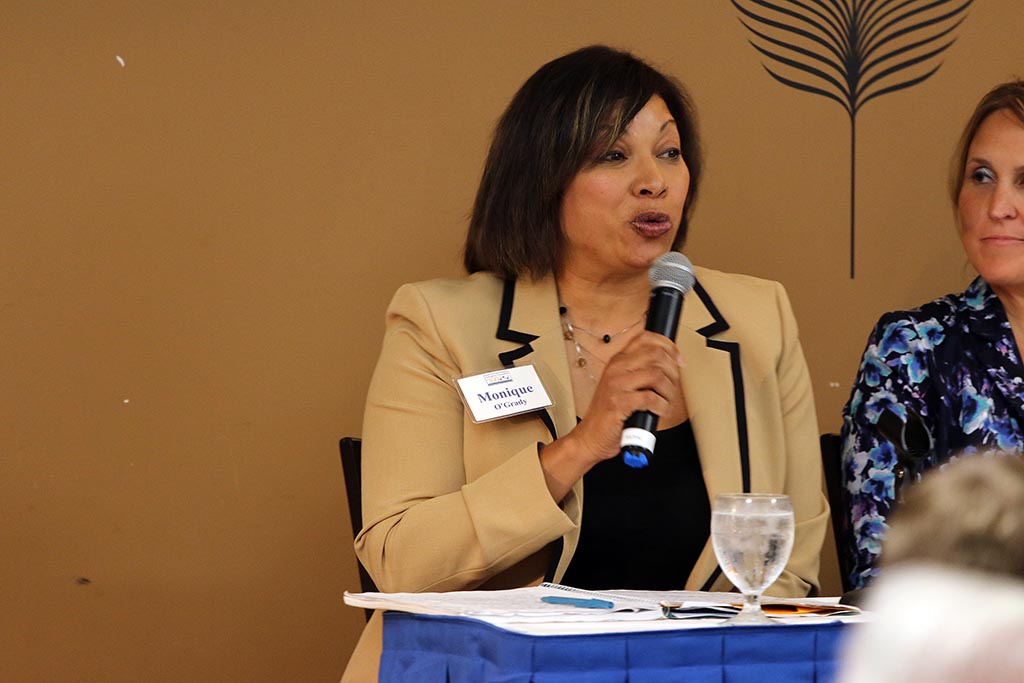
Monique O’Grady:

APS must get in front of its capacity crisis with better planning and a strategy on how to effectively provide seats for all of its students. As a member of the school board, I will work with my colleagues to plan with members of the county board to make best use of our limited dollars, limited space, and limited time. Through this collaborative effort we can reach decisions that will not only best serve our students, but also make efficient use of Arlington tax dollars.

2. Do you think a career teacher should be paid enough to afford to live in Arlington?

Dough:

Perhaps we need to consider housing-vouchers for teachers that make a very good case for the need to live in Arlington County. I work for a non-profit in Arlington and I know many of my coworkers would rather not commute in from Fairfax, Alexandria, Loudoun, eastern Maryland, Baltimore – but they do because they cannot afford to live in Arlington.

O’Grady:

Yes. Arlington should continue to find ways to support middle class residents who are at risk of being priced out of living in Arlington. This “missing middle,” as County Board candidate Erik Gutshall calls it, is an essential and invaluable component of our community and workforce. Teachers want to be able to live where they work. It fosters a closer connection between educators and their students as well as between educators and the larger community; this connection assists teachers with their work, making them even more effective in their jobs. Therefore, it makes sense to look for ways to attract the best and brightest teachers, including supporting policies that make it easier for our teachers to make Arlington home.  This will help recruit and retain teachers – one of the current strategic plan goals.

3. Identify the area of waste you would like to eliminate if elected.

Dough:

I propose looking at areas that do not directly impact the children. We should first take a look at administrative costs and other overhead.

O’Grady:

As a new member of the school board I would welcome an emerging practice that gives APS the ability to consider three different plans for new school buildings. Plans will be offered that show a design using the minimum budget, a mid-range budget, and maximum budget. This policy would seek avenues to eliminate waste, yet not at the expense of essential, quality services.

I also welcome more collaboration between the school board and county board. I think collaborative planning will help eliminate wasted time, eliminate wasted dollars with consultants and contractors, and will lead to more efficient use of our tax dollars and limited county- and school-owned land. 

4. If elected, would you support changing the name of Washington-Lee High School?

(more…)


View More Stories