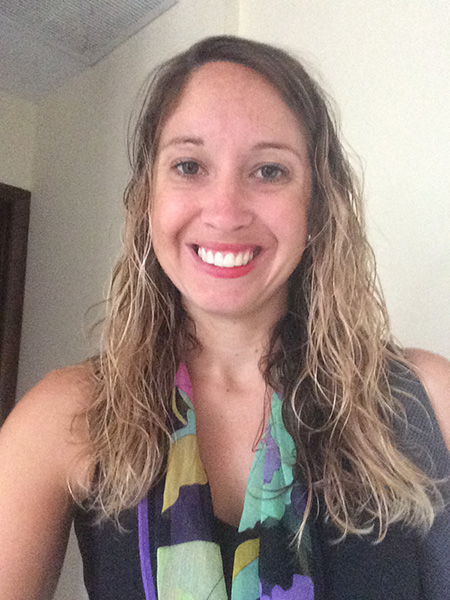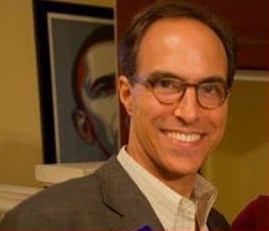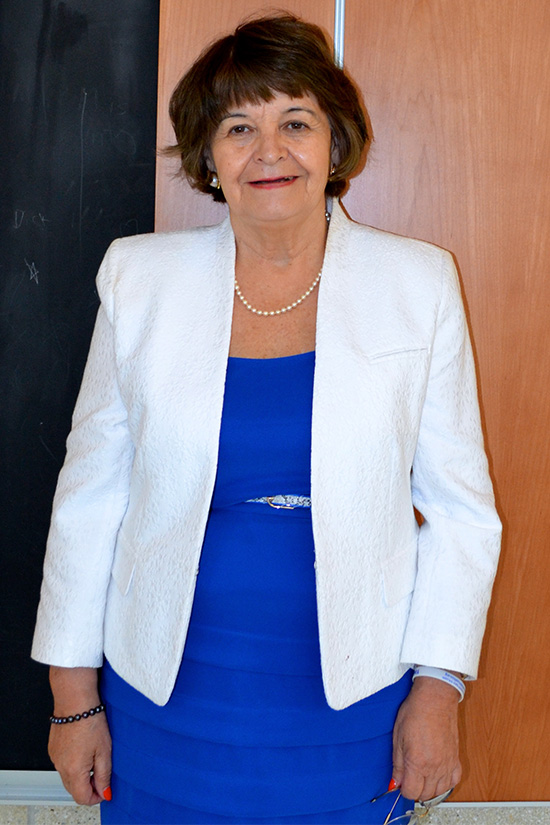

Joe WholeyProgressive Voice is a weekly opinion column. The views and opinions expressed in the column are those of the individual authors and do not necessarily reflect the views of their organizations or ARLnow.com.

This year’s County Board election is the most important in many years.

It is vitally important that Arlington voters take the time to vote.

It is equally important that they cast two votes for the County Board and that those votes go to Katie Cristol and Christian Dorsey.

The alternatives in this year’s election will put into jeopardy many great things that make Arlington the community we love. Indeed the County’s longstanding vision and values are at risk if we do not vote for Katie and Christian.

Their opponents want to cut taxes, focus only on ill-defined “core services” and cut school funding. If Arlington were to elect even one of their opponents, we could lose many good things that make Arlington Arlington.

Katie and Christian are policy-oriented people who will bring fresh perspectives on protecting the County’s core values and moving the County forward.

They will make sure that the County’s fiscal resources are spent wisely and prudently.

They are very personable and dynamic – able to engage and listen – to make sure that the voices of residents are heard in the County’s planning and decision-making.

They also understand that Arlington did not become the place so many people want to live by shortchanging its future or by pitting people and priorities against each other in a hostile and harmful way.

From my experience on the County Board, I know that we can and must deliver core services in an effective, efficient, and cost-conscious way.

But I also know from that experience that much of what has made Arlington special is our decades-long commitment to long-range planning, effective innovation and partnerships, and smart strategic investments.

We have always looked beyond what is standard to make Arlington a truly remarkable place that attracts and keeps people who want something better.

And I learned from that experience that we can’t solve our problems by promising every group that they will get their priorities addressed to the exclusion of others. Rather, we must work together to find solutions that advance a range of County priorities simultaneously – good government with sound finances and a reasonable tax structure, outstanding schools, good libraries, fine parks and recreation programs, attractive transportation options, economic development and competitiveness, human services programs, and affordable housing programs, among others.

These priorities are not mutually exclusive. Indeed, they can and do build upon each other to create a greater whole. Our residents are fully capable of coming forward with good ideas for making it all work.

For those of us who remember the accomplishments of Arlingtonians for a Better County – I say that Katie Cristol and Christian Dorsey are our best hope for a Better Arlington.

They deserve your votes and your support.

I am heartened to know that a newer generation of Arlington voters sees this election in a similar way. Progressive Voice columnist Harrison Godfrey is a member of the Millenial Generation who was raised in Arlington and wants to make it his long-term home.

Here is Harry’s take on this year’s County Board election:

“It’s not by accident that Arlington has the highest percentage of Millennials of any county in the United States. Smart planning, a welcoming, cosmopolitan culture, and a vibrant economy – especially in the midst of the Great Recession – have made it an attractive destination for young professionals. That’s great news for our County as small non-profits and large companies alike look for an educated, engaged workforce when deciding where to locate.

“Unfortunately the attributes that have attracted young professionals to Arlington aren’t guaranteed. Federal budget sequestration, for instance, is dampening area job growth and raising commercial vacancy rates. At the same time Arlington’s attractive features have helped push home prices beyond the reach of many first-time buyers and winnowed the stock of affordable rental units.

“To meet these challenges, it’s more important than ever that we have a County Board that upholds Arlington’s tradition of smart planning. Katie and Christian will — with a particular focus on housing affordability, education, and economic competitiveness.

“It’s also critical that we have a Board that represents the demographic, geographic, and economic diversity of our County. The addition of Christian and Katie will ensure that.”

Please join Harry and me in voting for Katie Cristol and Christian Dorsey on November 3.

Joe Wholey is former three-time Chairman of the Arlington County Board. Harrison Godfrey is a former White House legislative aide who works on clean-tech policy at the state and Federal levels.
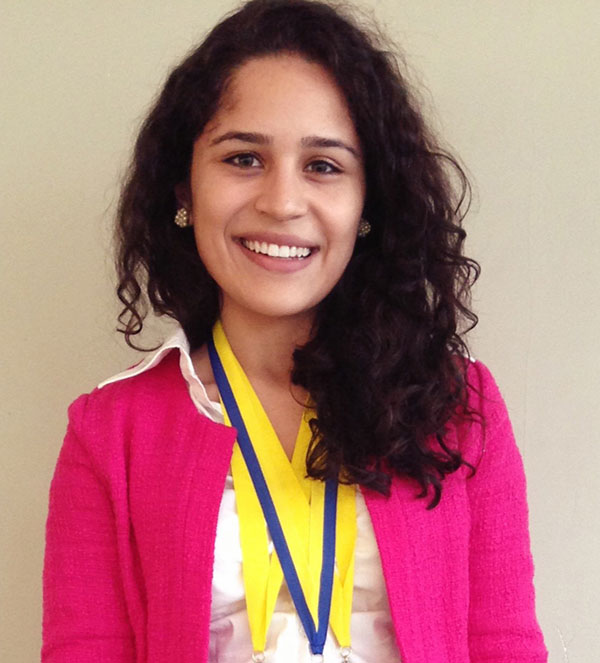
Ally-head-shot-(1)Progressive Voice is a weekly opinion column. The views and opinions expressed in the column are those of the individual authors and do not necessarily reflect the views of their organizations or ARLnow.com.

On Oct. 6, the Arlington Partnership for Affordable Housing (APAH) held its Annual Fundraiser Celebration at the Clarendon Ballroom. The event supported APAH’s mission to develop, preserve, own and advocate for quality affordable housing in Arlington, and to promote opportunity for its residents through partnerships and programs.

At the event, APAH honored Bill Fogarty of Walsh, Colucci, Lubeley & Walsh, P.C. and Mark Silverwood of Silverwood Companies for their contributions to affordable housing in Arlington.

The importance of APAH’s mission was captured in the following remarks delivered by Allyson Suria, who lives in one of APAH’s affordable housing communities:

My name is Allyson Suria, and I am 19 years old. I am an APAH resident and a member of Mi Voz Cuenta. You may remember me from the County Board meeting where I shared my testimony in support of the Affordable Housing Master Plan.

I came to Arlington from El Salvador in 2004. I attended Barcroft Elementary School, Kenmore Middle School and Washington-Lee High School. Coming from a low-income family, I was a FARM (Free and Reduced Meal) student until graduation. Although I did not have as many resources as many classmates, through support from both my family and my teachers I was able to succeed in school.

I was excited to learn and tried my best to be an exemplary student. By age 10 in 5th grade, I was completely integrated with the rest of the English-speaking students and quickly became an honor student.

My family valued the education my brother and I were receiving from the Arlington Public Schools (APS). So as rent prices rose, we moved all across Arlington — a total of 11 times.

Despite the frequent moves, I continued to excel and my teachers recognized this. I was student of the quarter and semester several times, I was invited to attend youth summits, and received several awards during my APS years.

At Washington-Lee, I took AP courses, IB courses and dual enrollment courses; was president of clubs, a leader in my community, and graduated with an advance diploma.

Currently, I am pursuing an education major at Marymount University where I am a member of the Education School’s honor association and the Dean’s List. Additionally, I am president and founder of Marymount DREAMers — a club for immigrant youth and our allies.

For the past three years our family has lived in an affordable housing property and it has improved our lives by adding much necessary stability.

It has also helped us feel a part of the community. After living in apartments we had no personal connection to, we now live in an apartment we call home and we consider ourselves a part of the neighborhood. I feel motivated to participate more passionately in my community. I now invite others to become civically engaged so they too can enjoy such a feeling.

My brother and I continue to excel in school because we have affordable housing.

My parents always say “We know in the future you will be able to do more than we have in our lifetime.” I believe them. Thanks to my stable home and to my academic efforts, perhaps in the future I will no longer be an affordable housing resident but rather an Arlington home-owner.

This is why affordable housing is important to me. I want our future generations to have better access to economic mobility. In order for students to excel and become successful professionals they need two very important things: 1) a stable home like the one I am blessed to have thanks to APAH; and 2) a world-class education just like the one I feel so privileged to have received from APS.

On behalf of all the families who live in the APAH properties, I would like to give a sincere thank you to all the employees, the donors, volunteers, and board members at APAH. Your contributions to this great organization truly improve our lives and make Arlington our home.

Allyson Suria is a Marymount University student and Arlington resident.


Ann FelkerProgressive Voice is a weekly opinion column. The views and opinions expressed in the column are those of the individual authors and do not necessarily reflect the views of their organizations or ARLnow.com.

Arlington’s dignified new Homeless Services Center (HRC) opened Oct. 1 — ironically, on a day that would cause only the strongest of us to stay outside.

Steady, storm-driven rain had begun as over 400 guests took the elevator to the second floor of the new facility in the Courthouse area.

A-SPAN (Arlington Street People’s Assistance Network) is contracted to run the facility, and A-SPAN’s staff, board members and CEO Kathy Sibert, hosted the long-awaited opening with gusto. Greeting the first invited guests were cheerful paint colors, crisply made beds, fully functional showers, a complete kitchen and laptops and desks in a classroom. Six local restaurants donated trays of tasty refreshments to extend the hospitality.

Local elected officials from County Board Members to Richmond legislators, who had all worked to bring the project to completion, participated in a heartfelt ceremony to congratulate the dedication of County staff, A-SPAN staff, and neighborhood leaders in helping make HRC a reality.

But mostly, the service center, a dream of A-SPAN’s founder, Lora Rinker, bustled with Arlingtonians who have believed in the work of Arlington Street People’s Assistance Network since Lora started serving bagged meals and soup to the homeless from a location beside the Clarendon Post Office more than 20 years ago.

Tucked inside the renovated office building are service facilities that will complement those well-thought-out living amenities. Dedicated caseworkers will now provide support services for all homeless in cubicles that allow respect for the client’s privacy and welfare.

The classroom will facilitate invaluable lessons in how to live inside and how to get and keep a job. A bright dining room assures that all residents will eat healthfully while a commercial kitchen will both allow meals to be served at the proper temperature and, eventually, become another classroom for job skill preparation.

A permanent nurse practitioner now has an office to monitor health and hopefully avoid illness in a space where 50 people live and 30 more work. Homeless people, released from the hospital, will be able to recover “inside” thanks to the inclusion of five respite rooms fitted out with beds donated by Virginia Hospital Center.

Homeless folks have their own treasures and keepsakes, so there is a locker area where valuables can be stored and a clothing closet for upgrading wardrobes.

There was no nostalgia for the former shelter facility or the remote, though aptly named, “Opportunity Place” located in Shirlington. New beginnings mean new hope for both residents and staff.

The reality is that not all of the homeless of Arlington will be housed in the Homeless Services Center. The cohort that remains outside will continue to receive enhanced A-SPAN assistance based on the new, and fully accessible facility. More showers and washing machines are just the material evidence of the continuum of services the HRC allows.

While the HRC will be a professionally run operation, there is still plenty of need for the extensive crew of dedicated ASPAN volunteers to continue specific, day in and day out help — serving street meals (come rain or come shine), sorting donations, supporting office staff, and more.

The new classroom offers a potential for others to share expertise. For more information about the volunteering, contact Amanda Mark: [email protected] or 703-228-7813.

Much of the funding for A-SPAN’s work comes from federal, state and local grants, but local charitable donations are an important source, too. Participate in a mini-walk, provide a new mattress for a “welcome home” event, donate an old car, become a Friend of A-SPAN. Check out the website for the latest news.

After all reception guests departed last week, the first residents moved across Courthouse parking lot to their new quarters. The brightly colored walls, comfortable but sturdy furniture, and even a well-stocked bookshelf send the message that this space will be a friendly place to stay while on the road to something better.

A-SPAN’s Mission Statement clearly declares that “Ending Homelessness in Arlington” is the goal of all activity in the building and on the street…. this convenient, welcoming space is intended to stimulate and prepare everyone to move into a place called HOME. In between, A-SPAN and the HRC provide dignity as a catalyst.

Ann Felker is a long-time resident of Arlington who has participated in many education, community service and faith activities in the County. She is a former member of the A-SPAN Board of Directors. Ann’s photo is courtesy of her granddaughter, Kenna Geary.


Krysta Jones

Progressive Voice is a weekly opinion column. The views and opinions expressed in this column are those of the individual author and do not necessarily reflect the views of the author’s organization or of ARLnow.com.

“When women succeed, America succeeds.

Women play an instrumental role in the U.S economy. Forty percent of American households with a child under the age of 18 depend on a woman’s salary as the sole or primary source of income.  Women are estimated to make more than 70 percent of all retail purchasing decisions, and women investors are the fastest growing sector making investments on Wall Street.

Just-released findings by McKinsey and Company note that efforts to advance women’s economic equality could improve global Gross Domestic Profit by $12 trillion. Since the 1970s, female labor participation has accounted for fully a quarter of the United States’ total GDP growth.

Yet, nearly a century after women earned the right to vote, America still has a gender pay gap. Women of all races and ethnicities working full time, year round in the United States earned an average of only 78 percent of what white men earned in 2013. For black women, it was 64 percent. For Latina women, it was 54 percent. These disparities have a detrimental effect on our families and communities.

On Oct. 10, Rep. Don Beyer will host his first “Women Driving the Economy” conference, aimed at helping women in Northern Virginia acquire the skills needed to succeed professionally, build critical relationships with their peers, and learn valuable lessons from leadership experts.

The event’s keynote speaker is U.S. Small Business Administration (SBA) Administrator Maria Contreras-Sweet, a pioneer in establishing women in leadership roles in the economy as a public and private sector manager and philanthropic champion. As of 2014, it is estimated that there are nearly 9.1 million women-owned businesses in the United States, generating over $1.4 trillion in revenues and employing nearly 7.9 million people.

Administrator Contreras-Sweet’s keynote delivery will be followed by a plenary panel moderated by Megan Beyer with Judith Warner from the Center for American Progress and author of the 2005 New York Times best-seller “Perfect Madness: Motherhood in the Age of Anxiety,” local small business owner El Brown and Rebecca Shambaugh, a leadership trainer for women in the workforce.

Following the panel discussion, participants will choose leadership training sessions on a number of topics, including:

  • Interview skills with Mary-Claire Burick, President of the Rosslyn BID;
  • Image and Branding with Sonya Gavankar, Journalist and Co-Founder of HerExchange.com;
  • Resume building with Sonja Henderson and Virginia Lyon of the HR Certification Institute;
  • Social Networking and Career Advancement with Dagny Evans, a senior operations and technology leader;
  • Strategies for Financial Security with Laurie J. Blackburn, CFP® and First Vice President – Investments with the Speck Caudron Investment Group of Wells Fargo Advisors;
  • Salary Negotiation Strategies with Barbara Mitchell, Managing Partner of The Mitchell Group;
  • Mindfulness Exercises with Patrice Winter, Assistant Professor in the Department of Global and Community Health at George Mason University.

This event is free to the public and will be held at George Mason University-Arlington campus, from 8 a.m. to noon.  The address is 3351 North Fairfax Drive and public transportation to and from the Arlington campus is available. Child care is also available. Attendees must register online at https://beyer-womendrivingtheeconomy.eventbrite.com.

Although it is important to cite statistics and talk about the barriers facing women’s economic empowerment, it is even more important to try to do something to help women overcome those barriers. By providing a forum for discussion, fostering networks and developing key skills, we can help women — and America — succeed.

Krysta Jones is founder and CEO of the Virginia Leadership Institute, and in 2014 was named by Leadership Arlington as a Top 40 Leaders Under 40 awardee.


Larry Roberts

Progressive Voice is a weekly opinion column. The views and opinions expressed in this column are those of the individual author and do not necessarily reflect the views of their organization or ARLnow.com.

Medical evidence trumped ideology in Richmond last week when the state Board of Health voted to scale back regulations that had threatened to put many abortion providers out of business.

By a 9-6 vote, the Board took a major step forward in rolling back medically unnecessary restrictions on women’s health clinics.

The Board approved recommendations from the state’s Health Commissioner to rescind regulations requiring Virginia’s abortion facilities to comply retroactively with standards designed for construction of new hospitals. The Board’s vote included approval of key amendments by former State Senator from Arlington (and now Board of Health member) Mary Margaret Whipple to clarify and strengthen the Commissioner’s proposal.

These changes grandfathered existing facilities, eliminated hospital transfer agreement requirements, and ensured that regulations applying to existing, expanded and new abortion facilities would be limited to those focused specifically on patient health and safety.

Sen. Barbara Favola, who succeeded Mary Margaret Whipple and represents Arlington in the Virginia Senate, applauded the vote against “ideologically driven and medically unnecessary TRAP regulations” as a “decision of the Board [that] reflects the triumph of reason over politics.”

The TRAP (Targeted Regulation of Abortion Providers) regulations to be eased under the new rules were put in place by a Board of Health dominated by appointees of former Governor Bob McDonnell – only after then Attorney General (and staunch anti-abortion activist) Ken Cuccinelli threatened to withhold legal representation in the event Board members voted against his wishes and were sued.

There was no medical evidence that the TRAP regulations were necessary to protect women’s health. Indeed, abortion services are among the safest of medical procedures. When the Department of Health conducted an exhaustive two-year study of abortion facilities, it found no evidence of violations resulting in harm to patients at clinics that had performed tens of thousands of first-trimester abortions.

By contrast, there was plenty of evidence that TRAP regulations placed enormous economic burdens on women’s health centers – leading to a further reduction in Virginian’s limited access to reproductive health services. Already, many women must travel 100 miles or more to reach the closest clinic.

This is not just a “downstate” problem. In recent years, a clinic in Fairfax City closed and another in Manassas recently announced that it would be closing.

The process for undoing the unnecessary and burdensome TRAP regulations began with a lawsuit filed in Arlington County Circuit Court to stop the regulations from taking effect. Although former Attorney General Cuccinelli moved to have the lawsuit dismissed, the Court rejected his request.

The lawsuit was put on hold after Governor McAuliffe issued an Executive Directive in May 2014 ordering an expedited review of the TRAP regulations by the Board of Health. In addition, most facilities in Virginia received temporary waivers of the TRAP regulations that allowed them to remain open while the review was being completed.

In May 2015, Attorney General Herring issued an opinion that the previous administration had provided incorrect legal advice to the Board of Health and intervened in a process that is supposed to be driven by medical professionals.

There are more steps in the process before the TRAP regulations are finally taken off the books, but the Board of Health’s actions take immediate pressures off the remaining healthcare centers in Virginia that provide abortion services.

This is a victory for Arlington and the entire Commonwealth. As Governor McAuliffe concluded in his statement last week: “This Commonwealth should be a leader in bringing people together and building a new Virginia economy – not in partisan crusades against women’s rights. I applaud the Board of Health for ending this disturbing chapter in our history and for heeding the advice of experts, medical professionals, and Virginia women about the best way to provide safe access to health care.”

Arlington also has a role to play. As advocated by a candidate in this year’s County Board election, Arlington should ensure that its zoning practices are friendly to the establishment of women’s health centers in the County.

Larry Roberts is an attorney in private practice. A resident of Arlington for over 30 years, he also spent four years in Richmond as Counselor to the Governor. He has represented the Falls Church Healthcare Center in litigation and regulatory matters.


Harrison GodfreyProgressive Voice is a weekly opinion column. The views and opinions expressed in the column are those of the individual authors and do not necessarily reflect the views of their organizations or ARLnow.com.

This Saturday, the Arlington County Board will consider whether to adopt the proposed Affordable Housing Master Plan (AHMP) and accept an Implementation Framework (IF).

Together, these documents represent the best of Arlington’s values and an important first step towards addressing housing affordability. Board members should adopt them.

The AHMP represents years of studying the changing Arlington housing landscape. Its goals — to preserve and grow the supply of affordable housing, make our community more accessible, and promote sustainability — were developed through inclusive community dialogue. The IF lays out public policy tools to achieve these goals and, by 2040, return the affordable housing stock to the levels present in Arlington in 2000.

A key goal of the AHMP is preserving and restoring the rental housing stock affordable to low-income families. This is a critical challenge. Since 2000, Arlington has lost roughly 13,000 affordable units to rent increases and redevelopment.

Addressing this challenge is morally just and economically wise. The loss of affordable rental housing has forced low-income Arlingtonians to relocate, imposing additional costs on those who can bear them least. The resulting labor scarcity makes it harder for business – especially small businesses like restaurants, dry cleaners and hardware stores – to operate. That is one reason why the Chamber of Commerce and the Economic Development Commission have endorsed the AHMP.

Moreover the AHMP also looks beyond this immediate crisis to broader housing challenges. Over the next 25 years, Arlington needs to add 2,700 new homes affordable to families below 120 percent of the area median income so they can stay in Arlington. Yet, the County’s own analysis shows that without public policies to stimulate the production of these homes, there won’t be enough.

This is an acute issue for Arlington’s young professionals. We love the County’s robust job market, great transit options, restaurants and culture. Perhaps that’s why the County’s Millennial population has skyrocketed. Today, 25- to 34- year olds make up roughly 27 percent of Arlington’s population.

However, as the population of young professionals has grown over the past 15 years, home prices have almost doubled — far exceeding wage growth. The median sale price of an Arlington home, including townhomes and condos, is now above $550,000. Many of us are renting and just making ends meet. While the most fortunate amongst us may be able to buy, most young public servants, artists and entrepreneurs are left to wonder: “Can I afford to stay?”

Growing Arlington’s stock of affordable ownership units is key to preserving Arlington’s cultural and socioeconomic diversity. Keeping Millenials in Arlington will relieve congestion by reducing commutes into and through Arlington from outer jurisdictions. And it is essential to the county’s economic future. As Patricia Sullivan, long-time reporter for the Washington Post recently wrote:

“Keeping as many of these highly educated and tech-savvy residents as possible is a critical factor, experts say, if the County wants to attract employers and build its’ tax base” Given the commercial vacancy rates in Rosslyn and Crystal City resulting from federal cutbacks and facing a burgeoning school-age population, attracting employers and building the tax base are “must do’s” for the County.

Fifteen years ago, when the last affordable housing plan was developed, these demographic and economic issues did not exist. Addressing changing realities is a key reason why the Board should adopt a new AHMP.

Nor are Millennials alone. Changing realities facing older Arlingtonians impact affordable housing too.

I was prompted to write about housing affordability because of my mother’s journey. Almost 40 years ago, she moved to central Arlington and bought a home. Over ensuing decades, the rise in home prices in Arlington – while posing an obstacle to new residents – has served my parents well.

However, like many Boomers looking towards retirement, my parents are faced with the same quandary as many young professionals: “Can we afford to stay?” The AHMP acknowledges this demographic shift. Alongside affordable rentals and home ownership, it makes “Aging in Place” a priority, with new policies aimed at affordability and accessibility for older residents.

The bottom-line is this: our community faces a unique and unprecedented set of economic and demographic realities. By and large, they’re good news. Arlington is younger, more diverse, and more prosperous than most of America. But those same realities leave us facing distinct challenges, like housing affordability. If we’re to remain the vibrant and appealing community we’ve become, we need to face and respond to those challenges.

The AHMP is an important step in doing just that.

Harrison Godfrey is a life-long Arlington resident and Democratic precinct captain for the Ashton Heights neighborhood. A graduate of William & Mary and former White House legislative aide, Harry works on clean energy policy at the state and Federal levels.


Michelle WoodsProgressive Voice is a weekly opinion column. The views and opinions expressed in the column are those of the individual authors and do not necessarily reflect the views of their organizations or ARLnow.com.

Labor Day is the traditional start of campaigns in Arlington, and the time between now and Election Day will be full of candidate debates, forums, joint appearances and neighborhood events.

Arlington County is attractive to many because of its history of smart growth, walkable urbanism, a population with the highest levels of educational attainment, and an unemployment rate half the size of the nation’s average.

At the same time, however, Arlington can be a transient location for millennials, young couples looking to start a family and families headed by single women, due to steep housing prices and other high costs of living.

I believe 2015 will be a year in which issues that resonate particularly with women will be an important feature of the campaign season. These issues involve some of the greatest opportunities to improve the welfare, quality of life and advancement of Arlingtonians.

We all need to work together to ensure a safe community. A recent series of attempted sexual assaults in Arlington show us we cannot take safety for granted. The three different failed attempts reported by Arlington County Police Department in July have made many women in Arlington, like myself, reconsider our everyday decisions about how to most wisely travel from location to location.

In addition to greater mindfulness about risks and supporting the efforts by law enforcement officials and officers on the street to deter assaults and apprehend those who have committed assaults, we should address gaps in justice for survivors of sexual violence.

One important priority is ensuring the availability in Arlington of SAFE kits and SANE programs, and reducing backlogs in the processing of rape kits.

Another priority is supporting and monitoring the County’s work with nonprofit organizations to extend the County’s 24-hour domestic violence hotline services to sexual violence hotline and companion services. We also need to ensure sufficient staffing of our Violence Intervention Program.

Quality of life for women and families in Arlington is about more than safe communities.

Economic opportunity for women often depends on access to affordable and stable housing options, quality schools and lifelong learning opportunities for their children and themselves, and sensible child care options.

Housing stability is a key consideration for women and men of all ages in Arlington. Rising rents and home prices create concerns that people will be forced out of their communities. Our economic vibrancy, and our capacity to attract business and employers, depends on the continued economic and generational diversity of our residents.

Renters, young people and older residents seeking to “age in place” share common cause in preventing displacement and ensuring that we continue to proactively and innovatively address the issue of housing affordability and the continued presence of affordable units.

While child care in Arlington sets the quality standard in Virginia, our young families are bearing the burden of very high costs for that care. These costs often drive young families, and single mothers in particular, from our community.

Arlington childcare costs, like much of Northern Virginia, are a quarter to a third higher than in the rest of the Commonwealth. This issue is a result of a supply gap. Without sacrificing quality, we can find ways to reduce costs and address the child care supply gap by pursuing flexibilities in zoning to attract new child care centers.

Finally, Arlington should continue to pursue progressive values that help make it such an attractive place to live and a model community in many respects. For that reason, we should continue to build on our emerging collaboration with statewide reproductive choice advocates to ensure our zoning practices are friendly to the location of women’s health centers closest to our community.

We have much to be proud of and much to accomplish in Arlington. We can continue to address important priorities for women in ways that are innovative, cost effective, and both family-friendly and taxpayer-friendly.

I look forward to hearing more from our candidates on these important issues.

Michelle Woods is the Women’s Caucus Chair of the Arlington Young Democrats.


Larry Roberts

Progressive Voice is a weekly opinion column. The views and opinions expressed in this column are those of the individual author and do not necessarily reflect the views of their organization or ARLnow.com.

Over the past two weeks, many Arlington families have taken their daughters and sons to college for the start of the fall semester. As the home to university campuses and education centers affiliated with colleges and universities, Arlington also welcomed many students arriving for the new school year.

Arlington’s public schools have demonstrated over the years that they provide excellent preparation for success at colleges and universities in Virginia and across the country.

Yet success in the classroom is not the only important component of a successful college education. We have seen ever stronger evidence of the prevalence of unwanted sexual advances on college campuses. We are gaining greater knowledge of the impact of binge drinking. And we are making advances in identifying and working with students suffering from depression.

Fortunately, very few parents will ever experience losing a loved one on a college campus.

However, in one of the darkest days in the history of our Commonwealth, 32 families lost loved ones at the hands of a mentally disturbed gunman. More than two dozen others were wounded or seriously injured that day in April 2007 in Blacksburg. Many of the victims and survivors were from Northern Virginia.

The loss felt by the victim’s families and the impact on the survivors was profound.

Despite their losses, however, the families were determined to make a positive and lasting tribute to the 32 who were killed — through programs designed to help colleges and universities be safer and more secure.

As Counselor to the Governor, I worked closely with many of the families in developing a comprehensive settlement of their potential claims against Virginia Tech and the Commonwealth of Virginia. Part of that settlement was the establishment of a VTV Family Outreach Foundation.

In that effort, I came to admire the families for their desire to honor their loved ones through insuring that survivors received the health care they needed to recover from their injuries, through applying lessons learned in how to work effectively with grieving families, and by joining together to uncover all of the dimensions of campus security.

Over the past several years, the VTV Family Foundation has laid the groundwork for a new integrated approach to improving campus safety.

In August, the 32 National Campus Safety Initiative was unveiled in a moving launch event at George Mason University’s Center for the Arts. We heard from a family member of a student victim, a student who survived three bullet wounds, law enforcement personnel, national leaders in school safety, and deans of students at participating universities that include George Mason and the University of Florida.

The Initiative creates a forum where national experts can develop best practices and resources with the guidance of survivors and victims’ families.

To improve campus security in a positive, proactive way, the 32 NCSI also provides a free, confidential, self-paced program of that provides colleges and universities with a new resource to better assess themselves in areas such as alcohol and drug use, campus public safety, emergency management, hazing, mental health, missing students, physical security, sexual violence, and threat assessment.

The determination of the VTV Family Outreach Foundation to prevent another tragedy of the magnitude of the one that took place in April 2007 is a testament to the human spirit and the determination of good women and men to selflessly help students and their parents feel a greater sense of security.

The Foundation will need additional private and public support to expand its mission. I encourage parents of college students and Arlingtonians generally to learn more at www.vtvfamilyfoundation.org or www.32NCSI.org.

Larry Roberts is an attorney in private practice. A resident of Arlington for over 30 years, he also spent four years in Richmond as Counselor to Governor Tim Kaine. As Counselor, he was tasked with leading the Commonwealth’s ongoing response to the tragedy at Virginia Tech.


Frederico Cura

Progressive Voice is a weekly opinion column. The views and opinions expressed in this column are those of the individual author and do not necessarily reflect the views of their organization or ARLnow.com.

Arlington’s progressive voters played a significant role in electing Democrats to all five of the Commonwealth’s statewide offices – U.S. Senators Mark Warner and Tim Kaine, Governor Terry McAuliffe, Lt. Governor Ralph Northam, and Attorney General Mark Herring. All five won highly competitive races that reflect Virginia’s highly competitive political environment. Arlington’s vote margins mattered.

Yet progressive policies favored by a large majority of Arlington voters, set forth in Arlington County’s legislative agenda and advanced by Arlington’s representatives in the General Assembly and in Congress are very often opposed and killed by strong Republican majorities that do not reflect the composition of Virginia voters or the overall partisan breakdown of national votes for House of Representatives candidates.

These majorities do not reflect the values or competitive nature of Virginia’s electorate, but result from Republican redistricting decisions in the General Assembly in Richmond — packing Democratic voters into districts in Northern Virginia and in majority-minority districts in order to create many more safe Republican districts.

The impact on Arlington from this district packing is that political priorities for Arlington requiring legislative approval – and they are many – face a steep uphill battle in a House of Delegates that has a 67-32 Republican majority.

Packing of Democratic voters into strongly Democratic districts dilutes the political strength that Arlington shows in statewide races.

Recently, a federal court ruled that Virginia’s Congressional districts were drawn improperly (with a similar suit pending that challenges the Delegate districts drawn by Republicans in the House of Delegates).

Governor McAuliffe called the General Assembly into special session to fix the problem with Republican gerrymandering of Congressional seats, but the General Assembly took no action.

How did that happen? Why did it happen? What can Arlingtonians do about it?

During the recent special session, Republican legislators in Richmond turned their backs on Arlingtonians and fellow Northern Virginians who bear the brunt of irresponsible gerrymandering that has gone on -by both parties over the years — for too long.

One example occurred in the House Privileges and Elections Committee.

“We’re no longer in session, so we can no longer take your testimony.”

With these words, Committee Chairman, Mark Cole (R-Spotsylvania) interrupted the testimony of a woman’s rights leader and essentially sent home the 19 scheduled speakers at a critical public hearing on how to respond to the federal court order that Virginia fix the Republican-created districts.

Indeed, Republican legislators who control the General Assembly did not even introduce a new map for consideration. With these and other actions and inactions, the Republican legislators failed to meet a unique opportunity for their party to show the world that it stood for strengthening freedom and democracy, and not for undermining the right to vote of many Virginians.

My brother and I were raised by a single mother in South America. My caring, resilient and talented mother made something clear from the get go: if you break something, you take responsibility for it and you go out of your way to fix it. The House Republicans certainly failed my mother’s test.

The key reason why nothing happened is that legislators like the notion of legislators choosing their constituents rather than constituents choosing their political leaders through a fair and equitable redistricting process.

Indeed, “Virginia is ranked as one of the most gerrymandered states in the country both on the congressional and state levels based on lack of compactness and contiguity of its districts,” according to OneVirginia 2021, a Richmond-based multi-partisan organization advocating for fair redistricting in the Commonwealth. Throughout the Commonwealth, counties and cities are being broken up in half or into multiple pieces to create heavily partisan districts.”

What can Arlingtonians do about the need for fair redistricting? An important first step is supporting the efforts of OneVirginia 2021.

Another step is to be vigilant about what happens in the General Assembly and voice your concerns to legislators across the state.

The bottom line: our constitutional right to vote is sacred – it’s our voice. People should pick their political leaders, NOT the other way around. A GOP truly committed to freedom and democracy would support nonpartisan redistricting, which is gradually taking hold in several states and should become the law nationwide. Electoral districts should be compact, contiguous, and grounded on the principles of equal representation. Nonpartisan redistricting should be a moral imperative for all of us and we should demand it from our leaders now.

Federico E. Cura is a strategic communication trainer, outreach specialist and grassroots organizer. He spent years as a K-12 educator teaching Spanish and ESOL, and served on the Arlington County Transportation Commission.


Emma Violand-SanchezProgressive Voice is a weekly opinion column. The views and opinions expressed in this column are those of the individual author and do not necessarily reflect the views of their organization or ARLnow.com.

The Arlington Public Schools’ mission is to instill a love of learning in students and to prepare them to be responsible and productive global citizens.

To help achieve that mission, APS develops a six-year strategic plan with staff and community involvement. Our 2011-2017 Strategic Plan has helped guide our schools to significant successes. We look forward to building upon those successes in the upcoming school year and to addressing capacity issues that arise, in part, from our achievements.

As Chair of the School Board, I am asking our community to focus particular attention this year on Goal 5 of the APS Strategic Plan, “Meet the Needs of the Whole Child.” In pursuing this goal, we commit to nurturing students’ intellectual, personal, social, physical and emotional development and to providing learning environments that are safe, healthy, engaging and responsive to student needs.

With nearly four decades of experience as an educator, I have come to believe that this goal, to support the Whole Child, is the most important. If our students do not feel safe, are not healthy, and do not feel engaged, they will struggle to learn. I believe the ultimate goal in education is, at its heart, a call to care and support our students so they can succeed.

National and local studies, such as the 2014 ASCD/CDC report, “Whole School, Whole Community, Whole Child” substantiate the need for this increased emphasis on the Whole Child. The Arlington Partnership for Children, Youth and Families reported in its 2014 Community Report Card that one quarter of Arlington children entering kindergarten are obese or overweight. Both reports note that children who are physically active and receive proper nutrition are better learners.

For this reason, I am asking that we, as a community, put greater emphasis on compassion and caring, on the promotion of the overall physical and mental well-being of our students. We need to change the conversation about accountability. We need to expand our definition of success beyond test scores to include a focus on the development of the Whole Child, making sure each student is healthy, safe, engaged, and supported by caring adults.

In this regard, I believe we must look at enhancing physical, mental health and wellness services in our schools, community and county. We must collaborate and align resources with the child’s needs at the center. Families, educators, community organizations and county services must provide the solid network of support essential for student success. We have so many resources here in Arlington. We now need to make sure they fully work to support our students.

The result will be students who are prepared for college, career and citizenship as well as the full breadth of experiences that their multifaceted adult lives will bring. We will continue to look to test scores as one indicator of our children’s success and well being. In this measure, Arlington students do better and better each year, as APS’ recent release on SOL scores reports.

During the new school year and beyond, we can continue to improve both academically and in our support for the Whole Child. To do so we must work collectively to address our students’ needs. We all must share responsibility for our students and their success. With this focus on the Whole Child, our students will be knowledgeable, emotionally and physically healthy, civically active, and ready for the world beyond APS.

Emma Violand-Sanchez is Chair of the Arlington County School Board. She joined the Board in January 2009 and previously served as Chair during the 2012-13 school year. She is a career educator and has lived in Arlington since 1978.


Larry Roberts

Progressive Voice is a weekly opinion column. The views and opinions expressed in this column are those of the individual author and do not necessarily reflect the views of their organization or ARLnow.com.

This week, the United States Court of Appeals for the 4th Circuit turned down former Virginia Gov. Bob McDonnell’s request for a rehearing en banc (by all of the Circuit’s judges) of his conviction on public corruption charges. McDonnell now has only one hope left for overturning his conviction – the U.S. Supreme Court. The Supreme Court hears only a small fraction of the requests it receives.

In all likelihood, the former Governor will soon begin serving his two-year sentence in a federal prison. One might expect that as a Democrat, I would be pleased to see Bob McDonnell’s fall from a potential Vice Presidential candidate to a likely federal prisoner. I am not.

Certainly I don’t condone the actions that led to McDonnell’s conviction and I do not quarrel with the unanimous jury verdict.

And I have had major disagreements with many of McDonnell’s issue positions during his career as an elected official and actions he took as Attorney General and Governor.

Yet I had a chance to work closely with McDonnell and his senior staff while he was in statewide office and found that it was possible to find common ground to move Virginia forward and serve the interests of the Commonwealth’s residents.

As Counselor to the Governor, one of my roles was to serve as liaison to the Office of the Attorney General. We worked across party lines on a range of issues of importance to Virginia – among them were budgeting, transportation, criminal justice/law enforcement, restoration of rights, matters affecting the military and veterans, mental health reforms, immigration, and the Commonwealth’s response to the tragedy at Virginia Tech.

In some instances, the Governor and Attorney General were largely in agreement. In others, their positions were very different.

Yet no matter the situation, we found that the Commonwealth was better served if we looked for as much common ground as possible, worked through our differences to understand each other’s positions, aired our differences with respect for each other and the offices in which we served, and made sure that once decisions were made by the executive, legislative or judicial branches that we worked to implement those decisions as effectively and efficiently as possible.

We worked closely together – even through differing legal interpretations of the Governor’s powers — to help insure that the Commonwealth did not suffer a government shutdown during a budget and possible constitutional crisis in 2006. That crisis was averted by the signing of a budget on the last possible day before a shutdown began. Many residents in Arlington and across Virginia would have suffered had we failed.

Also, we worked together on a 2007 transportation package that put in place many funding sources that are beginning to have an impact of transit and other transportation improvements in Arlington and throughout Northern Virginia. Although regional funding pieces of that package were thrown out by the Supreme Court of Virginia, many were corrected and put back in place as part of McDonnell’s landmark 2013 transportation package.

McDonnell and his team were also allies in Governor Kaine’s successful effort to secure federal funding and develop a construction plan for Phase I of the Silver Line that began operation in 2014 with significant transit and economic benefits for Arlington and across Northern Virginia.

We also worked together in responding to the terrible tragedy on the Virginia Tech campus in April 2007. The Commonwealth’s response included a creative and comprehensive settlement with families who suffered the loss of loved ones and surviving victims, mental health reforms, closing a loophole on the acquisition of guns by those found mentally incompetent, developing improved protocols for first responders, and developing more effective campus security measures.

While McDonnell and I disagree – often strongly — on what government should do, we have agreed that what government does it should do so effectively and efficiently. He was not a conservative who was happy when government failed to do its job.

It is not easy to know how and why some leaders put themselves in harm’s way. Yet in watching McDonnell’s fall, I also want to remember ways in which he served the Commonwealth well.

Larry Roberts is an attorney in private practice. A resident of Arlington for over 30 years, he also spent four years in Richmond as Counselor to Governor Tim Kaine and chaired successful statewide campaigns in 2005 and 2012.


View More Stories