
Progressive Voice is a weekly opinion column. The views and opinions expressed in this column are those of the individual author and do not necessarily reflect the views of ARLnow.com.
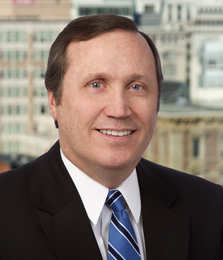
Larry RobertsThis week marks the second meeting of the Arlington Facilities Working Group, a diverse group of 24 Arlingtonians putting together the “Arlington Community Facilities Study — A Plan for the Future.”

The group and its charge were developed jointly by the County Board and School Board. The County (Mary Hynes/John Vihstadt) and School (James Lander/Nancy Van Doren) Boards designated members to interact with the group throughout 2015.

In addition, the group has a resident forum to promote monthly two-way communication between the group and Arlington organizations that designate forum members and alternates.

This collaboration by the two boards, while maintaining their respective and traditional roles, provides common ground to help solve classroom capacity needs and is an important step forward for Arlington. Addressing the high priorities of school capacity and instruction will require resources that neither board has on its own.

The School Board is facing a lack of land, limited debt capacity, and no independent access to tax revenues. The County has some available land, some ability to address debt capacity, and must determine how to balance the revenue needs of the Arlington Public Schools with the needs of those who rely on county government services in a time of increasing demand and limited support for additional taxes.

Arlington faced somewhat similar challenges in the 1970s and 1990s and in each instance the county came together to develop solutions that have moved Arlington forward.

In light of the continuing work of the 2015 working group and the upcoming formulation by County Board candidates of their platforms and priorities, we return to our interview with Joe Wholey, who chaired the mid-1970s initiative known as the Long Range County Improvement Program (“LRCIP”). Through that initiative, a divided County achieved a consensus that guided Arlington’s revitalization, growth and development through successive periods of Democratic-endorsed, Republican, and Democratic County Boards.

Progressive Voice: Did the LRCIP adopt a formal report?

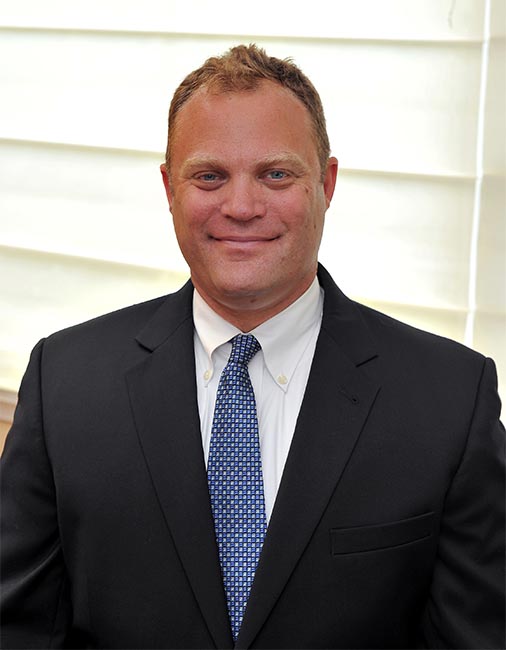
Joe WholeyJoe Wholey: The committee on the Long Range County Improvement Program put forth recommendations, but it was the County Board that adopted the Long Range County Improvement Program. Board hearings about our work resulted in changes to the committee’s recommendations. I remember that Lyon Village residents were upset about tall buildings that would block the sunlight in the area. The County Board did not adopt what we recommended in the Clarendon area, but opted instead for less intense — and what turned out to be slower — development.

Clarendon would have been more like Ballston. The process showed that the committee did not have all wisdom. Citizen input led to the great restaurants and nice shopping that we have in Clarendon with a lot of pedestrian traffic at all hours. Results like that showed that the blend of analytical work and citizen input were both quite important to what the Board finally adopted.

Our work, and the Board report with regard to land use, led to sector planning. It became the foundation for what later came to be called Arlington’s “smart growth policy.” But also, we had never had a long-term capital budget before it was recommended by LRCIP. We also never before had a historic preservation ordinance.

The Board began implementing the report in 1976-78. After a new county manager took office and even after changes in control of the Board through elections, the plan remained in effect. New boards kept on implementing the plan over the years and decades. The County Board’s report based on LRCIP’s work and citizen input had staying power as a community consensus. (more…)

Progressive Voice is a weekly opinion column. The views and opinions expressed in this column are those of the individual author and do not necessarily reflect the views of ARLnow.com.

Gillian BurgessParked in my garage, I have a car and a bike. When I need to go somewhere, I have a choice of which to take, and I want to ride my bike. When I choose the bike, I’m happier, I’m healthier and I’m an active part of the community.

I stop to chat with neighbors. I shop at local stores. I see things that are out of the ordinary — the guy that is lost, the dog that escaped from its yard, the smoke coming from that empty house — and I can stop to help. Plus, I usually get a prime parking spot.

Biking is awesome for me, but what does it matter to you, if you’re in a car?

When I choose the car, I am another car in front of you at that stop light. My car will take that prime parking space right in front of where you’re going. I will be driving another car past your house, making your neighborhood a little less safe for the kids playing outside. My car will make that annoying pot hole just a little bigger and will spew more fumes into the air you breathe.

I will do what I can to figure out how to bike. Over the past two winters, with tips from BikeArlington, I’ve mastered biking comfortably in the cold and safely in the snow. With the help of Kidical Mass and the family biking community, I’ve figured out how to bike with two toddlers and a big pregnant belly.

But the primary factor to whether I will choose the bike — or whether I will choose the car and be in your way — is whether I can get where I need to go safely. This is where the community comes in.

When Arlington invests in safe routes for people who bike and maintains those routes, I will bike. What is a safe route? Trails are great, although they must be wide enough and designed to handle the traffic they get. Most neighborhood streets in Arlington work well. Protected bike lanes, like the ones Arlington installed on S. Hayes and S. Eads Streets, are also a great choice, especially when they are accompanied by the signage that we see in Pentagon City.

On the other hand, narrow bike lanes that offer only paint to separate vulnerable bikes from fast moving cars, like the ones on Wilson Boulevard, N. Quincy Street and Fairfax Drive, are not a good option. Sharrows and signs that “Bikes may use full lane” on busy roads like George Mason offer no protection — and with my toddlers and pregnant belly, I am not willing to risk it. Arlington needs to invest in making these routes safe.

Maintenance is also a key issue. For these safe routes to be usable, they need to be clear of snow and have smooth pavement. For a fraction of what Arlington spends fixing potholes and clearing snow from the main roads, Arlington could maintain all of its trails and protected bike lanes. The snow clearing on trails that started this year must be made part of the regular budget, and Arlington must develop a reliable system to maintain the pavement on our trails. (more…)


Progressive Voice is a weekly opinion column. The views and opinions expressed in this column are those of the individual author and do not necessarily reflect the views of ARLnow.com.

Mike LiebermanArlington occupies only 26.5 square miles — a geographic fact that looms larger and larger as we confront the challenges of a growing community on the doorstep of Washington.

Our school population is growing — projected to exceed 30,000 students in five years. More than 20 percent of our business office space is vacant, hit hard by sequestration, BRAC, GSA cutbacks, and other government spending cuts. And development has exploded and property values have increased, creating unprecedented challenges to affordable housing and the neighborhood feel of Arlington.

That’s why I believe that it is so important now that the County Board and School Board have formed a Community Facilities Study Committee — which meets for the first time this week — to analyze our current financial resources and physical assets, discuss our infrastructure challenges, and make recommendations for our community to move forward.

In some ways, the premise of the committee is unimpeachable — of course there is value in knowing what assets we have and planning for where we are going. But there are aspects of the committee that I believe make it particularly well-suited to the task at hand.

For one, it represents a collaborative effort between the County Board and School Board. All too often, the County Board and School Board have felt siloed. To be sure, there have been cooperative efforts among board members and initiatives that have broken through these walls, but in general, the School Board has focused on schools, and the County Board has tended to focus on other community needs.  The Community Facilities Study Committee will bring both boards into the same conversation.

Similarly, the committee is structured to bring all community groups to the table. County interests are represented by current members and veterans of several county advisory bodies. School interests are represented by members of school advisory councils and PTAs. And neighborhood interests are represented by members of civic associations from across Arlington. This diversity of views will help ensure that all interests have voice as the committee divides limited land and budget resources.

Finally, the committee represents a bipartisan effort premised on community engagement — the so-called “Arlington Way.” This will begin with monthly “resident forums,” and it will continue as the diverse views of committee members are heard and factored over the course of a year of discussion.

In 1975, the county plans that served as the foundation of our vibrant Rosslyn-Ballston corridor were the product of extensive community discussion and engagement. The Community Facilities Study Committee rightfully recognizes that that same model is needed for Arlington’s next chapter.

To be sure, even with the right structure, the committee faces no easy task. There is no shortage of strong viewpoints in Arlington, and no shortage of constituents willing to voice them. (more…)


Progressive Voice is a weekly opinion column. The views and opinions expressed in this column are those of the individual author and do not necessarily reflect the views of ARLnow.com.

Krysta JonesOur community and our society are becoming more aware of and educated about the issue of sexual assaults. This is, in part, due to high-profile cases that have drawn increasing press attention, including national media stories involving the military, college campuses and the National Football League. This issue is a difficult one, with many facets. But it is one that we must address fully and fairly.

According to whitehouse.gov, “Young women… face the highest rates of dating violence and sexual assault. In the last year, one in 10 teens have reported being physically hurt on purpose by a boyfriend or girlfriend. One in five young women have been sexually assaulted while they’re in college. While men compromise a smaller number of survivors, male survivors are no less important.”

Locally, Arlington data shows there were 201 sexually related offenses with reported victims in 2011. As is generally true, victims of sexual offenses in Arlington have been predominantly female.

As a single woman living in Arlington, it is something I think about a lot. A few years ago there were disturbing incidents on Arlington’s recreation trails, one by my home. I made the difficult decision to alter my exercise routine, but was pleased with how the county and citizen groups came together to respond to the incidents and address the broader safety issue.

As many of these crimes are not reported, it is hard to know for sure whether there has been an increase or decrease in assaults from year to year. Yet one thing is clear: in 2015, it is imperative that Arlington’s progressive values guide our work in preventing, raising awareness, and addressing sexual assault.

Fortunately, Arlington County has a history of addressing difficult community concerns, and it is responding to the issue of all-too-frequent instances of sexual assault. For example, during my term (2011-2014) on the Arlington Commission on the Status of Women, one of our top priorities was addressing sexual assault and rape.

One priority was establishing a local hotline for sexual assault incidents. Before now, the county’s only hotline for sexual assault incidents was the Virginia Domestic and Sexual Violence Action Alliance in Richmond. Although answered 24/7, the hotline’s location prevented those in urgent need of an immediate response from being connected with a County Violence Intervention staff person for assistance.

In Arlington’s FY 2015 budget, funding was included for a hotline in Arlington. As chair of the Commission on the Status of Women, I was proud to join organizations like Project Peace in supporting an Arlington-based hotline.

According to the county website, Arlington’s Violence Intervention Program (VIP) provides survivor services including safety planning, hospital accompaniment, or support when contacting law enforcement. The VIP program is also committed to preventing abuse from occurring by providing programs to a broad range of adults and adolescents. The VIP also offers consultation and training to allied professionals on the issue. (more…)


Progressive Voice is a weekly opinion column. The views and opinions expressed in this column are those of the individual author and do not necessarily reflect the views of ARLnow.com.

Karen DarnerArlington lost a pillar of progressive strength on Jan. 8 when Charles Washington Rinker Jr. passed away.

Fortunately, before his passing, Charlie and his wife Lora (co-founder and longtime Executive Director of the Arlington Street People’s Assistance Network or A-SPAN) were honored at a reception hosted by AHC “for their leadership and devotion to the Arlington community and their contributions to affordable housing and community development.”

At the reception, state Sen. Barbara Favola presented resolutions from the Virginia General Assembly honoring the life’s work of Charlie and Lora.

Charlie’s legacy was captured in the following remarks delivered by Karen Darner, former Virginia House of Delegates, at the Celebration of the Life of Charlie Rinker held at Rock Spring Congregational UCC on Jan. 18.

Remembering Charlie

Fifty years ago Charlie and I attended a quadrennial conference of the Methodist Student Movement in Lincoln, Nebraska. I only realized that when I re-read my notes from the conference 20 years later and told Charlie. Small world!

The Rev. Martin Luther King Jr., was the keynote speaker and Charlie was to introduce him. Another Movement officer wanted to have that honor, so Charlie deferred to her — sounds like him, doesn’t it?

So he may have deferred to another that day, but we all know that when it came to civil rights and social and economic justice here in Arlington, Charlie never gave up until the job was done. Advocacy was his middle name.

Charlie was involved in a number of activities in Arlington, and even ran for the County Board. I think Mary Margaret Whipple said it best — “We may have lost the election, but we won the campaign.” Yes, Arlington began to learn more about this gentle man who brought people together to find real life practical solutions to problems the county would face.

The immediate problem became housing.

Arlington’s “location, location, location” made it ripe for extraordinary redevelopment and our apartment stock quickly began disappearing from the rental category. The community that prided itself on living and working in Arlington was losing the “living” component because of rising rents and decreasing units. It happened to tenants everywhere and tenants were afforded very little respect. Charlie, by contrast, exuded respect for everyone. Moreover, the diversity Arlington championed as a treasure was slipping away. That was unacceptable.

The easiest way to summarize what Charlie and others instigated is to look at the organizations that have been requested as beneficiaries in lieu of flowers. If an organization has the word “housing” in it, Charlie’s fingerprints are all over it.

I like to think of all of them as the Home Team. Their names say it all…

The Arlington Housing Corporation — now AHC — produces, preserves, manages and finances affordable rental and owner-occupied housing. It offers educational services to strengthen residents’ economic and social stability. The latter helps to ensure people can continue to live in their new housing.

Arlington Home Ownership Made Easier — or A-Home — seeks to increase the number of low and moderate income and minority households that are able to purchase homes here.

Buyers and Renters Arlington Voice — or BRAVO — has a significant mission of empowering renters: giving them a voice, and often in several languages.  (more…)


Progressive Voice is a weekly opinion column. The views and opinions expressed in this column are those of the individual author and do not necessarily reflect the views of ARLnow.com.

Larry RobertsAs Arlington County embarks in 2015 upon the “Arlington Community Facilities Study — a Plan for the Future,” there are echoes to two past Arlington initiatives that charted successful paths forward that served the County for decades, brought the community together, and provided opportunities for Arlington residents to learn more about their County and become more involved in civic life.

The Arlington Public Schools Futures Planning Process of the early 1990s identified a set of community values to guide our public school system. In addition to setting out those values, the Futures Report built upon the notions that: to pursue a high quality education, students require appropriate classroom space; and we must ensure that all Arlington students receive high quality instruction.

Arlington’s blend of urban corridors and strong residential neighborhoods resulted from a mid-1970’s initiative known as the Long Range County Improvement Program (“LRCIP”). Through that initiative, a divided County achieved a consensus that guided Arlington’s revitalization, growth and development through successive periods of Democratic-endorsed, Republican, and Democratic majority County Boards.

LRCIP Committee Chairman Joe Wholey, who served three times as County Board Chairman, remains an Arlington resident active in community life.

Our interview with Joe will form the basis of a series of Progressive Voice columns during this year when County residents again have the opportunity to work together on charting a successful path forward for our County.

Progressive Voice: Why was LRCIP organized?

Joe Wholey: Joe Fisher (then a County Board colleague and later elected to the U.S. House of Representatives) and I wanted to look beyond the day-to-day government activities. We wanted a process that would set realistic goals and attend to likely costs and revenues. By calling it the Long Range County Improvement Program we meant that anything you could do in the next budget was not eligible; rather, we looked at a 2-20 year planning horizon.

PV: What motivated you to consider LRCIP?

Joe WholeyJW: Metro was coming. Arlington had already decided to align new high-density development with the Metro stations and preserve most of the rest of the County pretty much as it had been. We looked at what we could do within walking distance of those stations. Our supporters were slow growth or no growth people. That was an option we explored. We also explored development under existing zoning; intensive commercial development (office buildings and hotels); and intensive residential development (high-rise apartment buildings). Arlington was losing population in those days, commercial areas like Parkington (now Ballston) were going under and people were shopping instead in Fairfax County. We had problems, but with Metro coming, we had the opportunity to explore how best to respond to diminishing population, shrinking school enrollment, and declining commercial areas.

PV: How did your Committee gather input?

JW: We had 10 committee members who worked with long-range planning staff dedicated to the committee, consultants, and other resources to put before the public a set of facts and realistic projections. By the spring of 1975, we had already started publishing “The Citizen,” and we devoted an entire issue to information on community services and public needs; land use trends; housing prices and rents; population trends; school enrollment; employment; transportation; tax levels; and costs for public services and capital improvements. We announced a series of over 50 community meetings to let people know what was going on. We also provided ways for residents to get additional information and provide input over a two-month period.

We then completed a draft report. After the County Board held public hearings, we revised the program in response to citizen input. For example, the Board scaled back some proposed development in the Clarendon area. The County Board adopted the program later in 1975.

PV: What do you see in the County making it worthwhile to try something similar now?

JW: We need to come back together even where we disagree. I think that is attainable. After all, our supporters at the time were slow growth/no growth people but came to see the wisdom of intense development near the Metro stations to produce new revenues and thereby restrain taxes on existing residences. I applaud the idea of trying to get a fractured community — advocates for schools, parks, affordable housing, business and other causes — back together to move the county ahead. They are all good people and we can accommodate their goals if we work together, keep an open mind, and explore our options creatively in a time of limited resources.

Joe Wholey is former three-time Chairman of the Arlington County Board. His interviewer, Larry Roberts, is former Chair of the Arlington County Democratic Committee and also served in state government as Counselor to the Governor.


Progressive Voice is a weekly opinion column. The views and opinions expressed in this column are those of the individual author and do not necessarily reflect the views of ARLnow.com.

Dakotah SmithMany parts of our region have experienced a renaissance since I moved here six years ago. Neighborhoods once viewed as stagnant and neglected are being reimagined and revitalized. We see new destinations for employers and employees — around new transit stops or in areas where land is cheaper and road networks available.

New “it” places to work, live, meet friends and even to start families are coming onto the scene each year. Shaw, the D.C. neighborhood where I used to live, is but one of many examples. Young adults living in these neighborhoods are becoming engaged in their communities and putting down roots.

Will Arlington be able to keep pace? We have depended on a strong commercial sector to create great schools, fund popular services, build a safety net for those in need, and balance corridor growth with desirable neighborhoods.

I love Arlington, chose to live here, and have become a true advocate. Yet my enthusiasm for our diverse, enjoyable and convenient way of life is increasingly met with skepticism by colleagues who choose to remain downtown. And young adults who want to move outside of the District are increasingly looking beyond Arlington.

They will meet my enthusiasm for Arlington with remarks like “You’re just trying to rationalize” or “Why would I want to live there when there are so many other cool options?”

Whether we like them or not, these opinions matter. These are young people who are starting businesses, buying homes, energizing community organizations, and spending money at local shops, restaurants, and bars. They are the human capital upon which a county’s success is dependent.

Even as Arlington has attracted millennials over the past decade, we are now at risk of losing out to increasing successes of our surrounding jurisdictions. We’re surrounded by aggressive competition on all sides for business and employees — not just the hip D.C. scene but also Fairfax, Loudoun, and Prince George’s County. Tysons Corner alone will expand dramatically over the next few decades with a vibrant, livable downtown based on transit-oriented and pedestrian-friendly development.

Similarly, our neighbors in Alexandria just secured a $50 million loan from the Commonwealth to build a new Potomac Yard Metro station that will support up to 26,000 new jobs within a quarter-mile of the station.

What drives the growth in each of these places is vibrant economic development that meets the needs of growing new companies and a workforce that places greater emphasis on mobility, flexibility, social responsibility, connectivity, and convenience.

These economic and social drivers motivate people of all ages and backgrounds to build communities that celebrate inclusion, opportunity, innovation and diverse interests.

In these changing times, we can no longer bank on our location near the District, lower rents, and reliability of federal and government contractor jobs as the keys to success. With reduced federal spending leading to commercial vacancies, we must be more creative in diversifying our economy, much as Gov. Terry McAuliffe is doing at the state level.

Our county leaders recognized this new economic reality in their January statements. We need them to take this problem very seriously and to tackle it aggressively. (more…)


Progressive Voice is a weekly opinion column. The views and opinions expressed in this column are those of the individual author and do not necessarily reflect the views of ARLnow.com.

Larry RobertsArlington has come through a year of divisive political rhetoric no closer to addressing the key challenges that face our county. Hopefully, we will see in 2015 a renewed commitment to tackling those challenges through a united community and not a divided one.

These key challenges exist outside of political party, the neighborhood one lives in, and one’s preference on the mode of transit for the economically-challenged corridor from Potomac Yard to Skyline through Arlington.

The challenges are not the result of current county policies, county spending priorities, or county politics.

And many of the challenges are due to our successes and not our failures.

More often than not, they are a result of the increasing number of people who choose to live in Arlington because they value our schools, parks, services, cultural amenities, neighborhoods, transit-oriented development and transportation options, diversity, and overall quality of life. They also result from increasing residential property values due to the steady demand for Arlington residences. And they result from growing numbers of families with children in Arlington, something most would consider a sign of success.

At the same time, these challenges arise due to forces beyond Arlington’s control, including a dampening of county revenues and a weakening of Arlington’s commercial tax base — through cutbacks in federal spending (and the job security of federal workers), federal BRAC and sequestration actions that have moved jobs out of Arlington and reductions in federal office space, and state budget cuts. This is in addition to increasingly effective competition from the District of Columbia and other Northern Virginia jurisdictions for businesses, workers and entrepreneurs.

Due to their nature, I believe addressing these challenges requires looking beyond the divisive issues of the moment and overemphasizing the importance of county government operations.

These challenges will not be solved by government only and cannot be solved merely by scrutinizing government performance. While it is important to focus on county government spending, we would face the same challenges even if we could succeed in wringing out every last efficiency from county government.

We will instead solve them by focusing on enhancing our competitive advantages and advancing core values that make Arlington an attractive place to live — not just the important core services of public safety, education and transportation, and sound financial practices — but also recreation, parks, human services, environmental stewardship, housing affordability (not just for lower income people but also for workforce housing and helping people stay in Arlington as housing prices rise), arts and culture, and diversity.

Success in tackling our challenges must involve moving Arlington forward or we will inevitably fall back. Many have fond memories of a past Arlington they may prefer to the challenges of today, but I arrived in a 1970s Arlington with schools closed due to declining overall population and student population, businesses leaving, services declining, and weak economic performance.

Fortunately, Arlington had already made wise and forward-looking land use, transportation, and investment decisions that positioned it to take advantage of increases in defense spending, a recovering economy, a technology boom, and the growing importance of Northern Virginia. (more…)


Progressive Voice is a weekly opinion column. The views and opinions expressed in this column are those of the individual author and do not necessarily reflect the views of ARLnow.com.

The following is an excerpted version of a statement delivered at the Arlington County Board’s January 1 Organizational Meeting. The full text will be available on the County web site – countyboard.arlingtonva.us/county-board-members.

Mary HynesThe past year was a time of change in our community. Today is a day for reflection and making resolutions. I resolve to build upon our community values and to listen carefully to Arlington’s many voices as we strive to make Arlington an even better place for us all.

A challenge we face in 2015 as a community is how we move beyond our recent discord on key issues and work together to ensure that our County has the resources to meet our residentsfacilit yneeds while remaining the high-quality, caring community each of us has chosen to make our home?

We are always better when we listen to each other, seek to understand the breadth of the challenges we are facing, and work together to adjust our course.

So, in 2015, the County Board will work in partnership with our community to begin writing a new chapter in Arlingtons story. Joined by our School Board colleagues, supported by our many advisory commissions, the Civic Federation, civic associations, and PTAs as well as members of the business community, we are launching today the Arlington Community Facilities Study — a Plan for the Future. 

The Study Committee will be composed of Arlington residents and business leaders charged with developing a consensus framework to address our communitys need for additional schools, fire stations, and vehicle and other storage facilities in the context of our long-term economic and demographic growth. This Study is intended to give both Boards information needed to make critical decisions leading to adoption of an updated Capital Improvement Plan in July 2016.

This process will allow the community to address several key questions head-on: What are our facility needs for schools, fire stations, recreation, and transportation vehicle and other storage and how do we pay for them? What criteria should we use to decide their location? What opportunities and challenges are there in our aging affordable and workforce multi-family housing stock? What do changes in the Federal government presence and the residential and private commercial marketplace mean for County revenues?

The consensus framework the Study Committee will create, working with the larger community, will answer these questions as informed by our realities:

  • Arlington is small; no new land is being created.
  • We must use what we already have thoughtfully and equitably to serve Arlingtonians throughout the County.
  • Significant new funding is unlikely.
  • We must examine facility needs strategically and maximize use of available revenue.
  • We must have a sensible long-term financial plan for the County.

Our framework will acknowledge: change is unavoidable as our population grows; challenges loom as we reinvigorate our economy; and our available physical space limits some possible solutions.

Later this month at a joint public meeting with the School Board, the County Board will adopt the charge for this Study. The two Boards will stay involved. I am pleased to announce that John Vihstadt has agreed to join me as County Board liaison to the process.

Two especially important issues will intersect with the Study Committee’s work: housing affordability and business vibrancy.

Housing affordability — Some have wondered why housing affordability requires local government investment.  Simply put, a variety of home choices offers more opportunity to stay in the community. Those who live and work in Arlington share in the value that their work helps to create — rooting them firmly in the community. Through their work, volunteerism and engagement, they strengthen and enrich our community’s civic life.

Business Vibrancy — Arlington is experiencing unprecedented vacancy rates in our commercial sector. To help address the challenges facing the business community we will have on board a new Economic Development Director and we will host a quarterly Chairmans Breakfast with Business Leaders, joined by our County Manager. Thanks to the Chamber of Commerce for its support of this activity.

Good ideas can come from anywhere.I am grateful for the time so many have taken to share their views with me.  At the beginning of my year as Board Chair, now more than ever, I hope ideas will keep coming from all quarters of our community.

In a very real sense, government in Arlington is informed and driven by dialogue.

  • Dialogue within our neighborhoods, among friends, at PTAs, civic associations and other community meetings.
  • Dialogue among citizens involved in advising the County Board on the full range of issues.
  • Dialogue between citizens, businesses, the County Board and the County Manager and her staff.

It is this on-going, informed dialogue that makes us a better community.  Lets keep it going.

Mary Hynes will serve as 2015 Arlington County Board Chair. She was elected to the County Board in 2007. She previously served for 12 years on the Arlington School Board, including three times as Chair.


Progressive Voice is a weekly opinion column. The views and opinions expressed in this column are those of the individual author and do not necessarily reflect the views of ARLnow.com.

MaxBurnsThis has been a year marked by a constant stream of contested political campaigns in Arlington that resulted in the election of new members of the School Board, County Board, House of Delegates and Congress.

During that time of intense internal political focus in Arlington, I also had a chance to participate in the University of Virginia’s Sorensen Institute for Political Leadership — a program that promotes the values of trust, civility and respect in its graduates through direct engagement with communities around Virginia.

Over the course of 2014, as it has for 20 years, the Sorensen Political Leaders Program brought together each month professional, civic and political leaders and future leaders — Democrats, Republicans and Independents — from every region of the Commonwealth. The Sorensen Institute has long worked to provide meaningful conversation and consideration of the issues facing our localities and our Commonwealth. It stresses open dialogue, looking beyond surface and party/ideological differences, and clear, fact-based thinking about policy challenges we face.

My Sorensen experience has given me a broader perspective in which to view the eventful 2014 in Arlington. As we near the end of the year, it may also be worthwhile for our progressive community to step back and analyze the current political situation in our county.

It’s been a challenging year for the Arlington County Democratic Committee. We faced an unexpectedly strong challenge with John Vihstadt’s candidacy for the County Board. We struggled against the image of a local party so used to victory that no other outcome was possible.

Also, few political groups have to contend with normally dry discussions about membership bylaws and steering committee procedures becoming front-page news. Yet, ACDC found itself in that place this year when senior party officials decided to endorse and campaign for a non-Democrat contrary to national, state and local party rules. That difficult situation played out in a very public way.

While the rules were clear, we fell short in building understanding in the community about the way that party rules and ACDC procedures work, why those rules exist, and how few people they affect directly.

We now know that Arlington — like other parts of the country in 2014 — faced a shake up and increased skepticism about politics, elected officials and institutions generally.

Regrettably, this led to instances when civility broke down within ACDC and also within broader community conversations about the County Board, its policies and the 2014 election.

One of Sorensen’s most valuable lessons for me is that, difficult as it can seem, we are better served moving past our knee-jerk responses and exploring issues more deeply — even if the end result isn’t as self-validating as we’d hoped.

That is why I believe “The Arlington Way” deserves better than increasing derision in the community. While criticized as an empty buzzword, it does have the benefit of urging us to approach disagreements with civility and respect as we strive to make Arlington a better community.  Those core principles underpin good government regardless of party or candidate.

It’s time we reinvigorated the phrase and recommitted to building a community that takes seriously the input of a broader range of Arlingtonians, whether they are political activists or choose to spend their time contributing in other ways. How we conduct ourselves as we strive to build better schools and more responsive public services is every bit as important as the quality of schools and services we provide. So let’s set an example. (more…)


Progressive Voice is a weekly opinion column. The views and opinions expressed in this column are those of the individual author and do not necessarily reflect the views of ARLnow.com.

Andrew Schneider(Updated at 2:50 p.m.) The week of Nov. 17 was a busy one in Arlington.

On Monday, the County Board voted to cancel further work on the Arlington/Fairfax streetcar project after more than a decade of community planning and involvement. This decision, like the streetcar itself, has proven to be controversial — for some in terms of outcome and for others in terms of process. Both streetcar supporters and advocates for alternatives saw reasons to be disappointed.

Most people, whatever their streetcar views, were caught by surprise. Many wondered about a clear path forward to address congestion on Columbia Pike and grow our commercial tax base to support services that remain a reason so many people find Arlington an attractive place to live. The element of surprise suggests we still need to be aware of ways in which county leaders and Arlington residents can be better connected.

The evening after the streetcar announcement, over 100 Arlington residents from four Civic Associations gathered for nearly two hours at the Langston Brown Community Center to discuss their views on the future of Lee Highway. In my four years as Yorktown Civic Association President attending many meetings, this was one of the most positive representations of civic engagement I’ve seen.

How to reconcile these events? The streetcar announcement suggests a major change in direction for our county. The community meeting indicates that the “Arlington Way” — shorthand for deliberative community involvement and inclusion — is alive and well. Having talked with many leaders of all types and vantage points across the county, I hear from many that the process is broken and from many others that the process is alive and well. My conclusion is that we have entered a new era that will take time to sift through.

I believe that Arlington is alive and well. Our schools are strong, our economy is still bolstered by proximity to Washington and forethought of Arlington’s leaders in previous generations. We have an active and engaged citizenry. Yet, something has changed and we are at a pivot point.

Schools consume half of the county’s budget, yet too many residents question whether we have the efficiency, transparency and consistency we should expect from a $500 million entity.

Our commercial sector has historically high vacancy rates and faces competitive pressures not seen recently. With the downsizing of the federal government and competition from Tysons, Reston, Alexandria and other locations, Arlington is facing questions about how we can better attract businesses and make sure they stay in Arlington once they are here.

This is important because nearly 50 percent of real estate property taxes are commercial and nearly 60 percent of the county’s operating budgets come from real estate taxes.

These challenges come when there are questions about how different communities and “regions” of Arlington relate to one another and there are significantly different perceptions about what our county needs or should look like — even though we need greater county unity to meet the challenges we face.

How best to succeed in such an environment? I have recently been reading a book titled “Citizenville” by California Lt. Gov. (and former San Francisco Mayor) Gavin Newsom. Newsom addresses how governments can better connect with residents through innovation and technology. Newsome would likely applaud how much Arlington has done right — embracing and using technology and innovation in ways that most communities would envy and be wise to emulate. (more…)


View More Stories