Progressive Voice is a weekly opinion column. The views and opinions expressed in this column are those of the individual author and do not necessarily reflect the views of ARLnow.com.
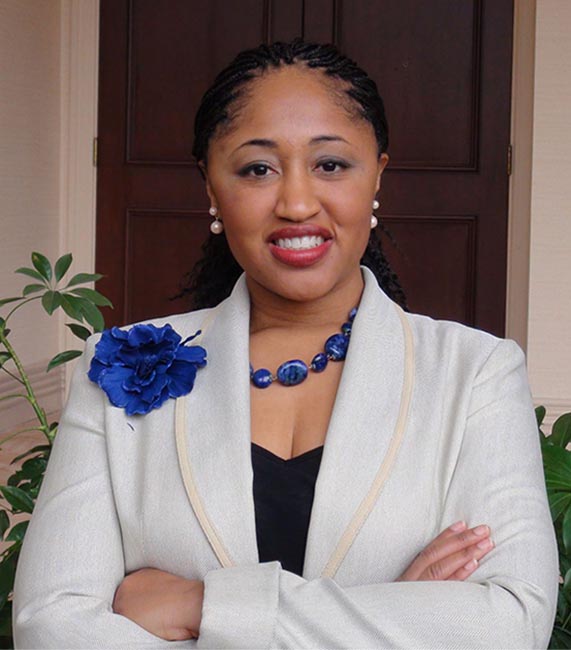
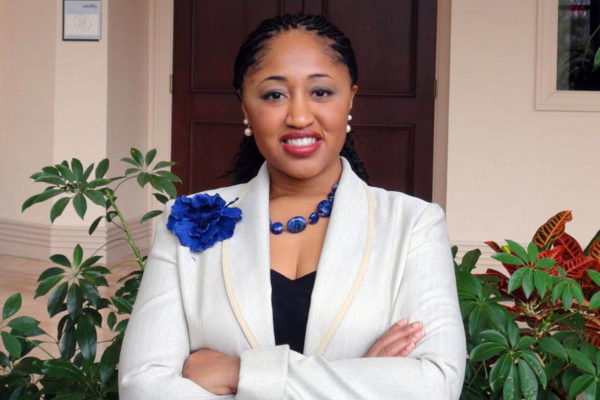
Krysta JonesArlington is grappling with issues common to communities with urban areas. We can remain inclusive and value diversity as we progress and seek to remain competitive, but we must consider the importance of affordable housing as part of that competitive edge.

The need for affordable housing evokes different images — providing shelter for families in need; allowing lower-income workers to live closer to their jobs and to transit, promoting economic activity without adding to congestion; encouraging greater diversity and inclusion; aging in place without having to give up one’s home as real estate prices rise; strengthening and stabilizing communities; and, for some, housing “projects” and crime.

Arlington has attempted to maintain affordable housing as the cost of living has increased. In 1975, AHC, Inc., began working as a nonprofit affordable housing developer. In 1989, the Arlington Partnership for Affordable Housing was founded to develop and preserve quality rental communities for individuals and families earning approximately $20,000-$60,000 per year.

Housing is considered affordable when rent or mortgage, plus utilities, is no more than 30 percent of a household’s gross income. Across the nation, an estimated 12 million renter and homeowner households pay more than 50 percent of their annual incomes for housing. In 2012, average rents in Arlington increased to $1,999.

One must make generally make 60 percent or less of the area median income to qualify for affordable housing, which in Arlington is $45,180 for a single person.

Arlington County provides affordable housing by expanding the supply of Committed Affordable Units (CAFs) for low-income residents, and offering Market-Rate Affordable Units which are owned by the private market and tend to have higher monthly rents.

According to a 2011 literature review by the Center for Housing Policy, “the development of affordable housing increases spending and employment in the surrounding economy, acts as an important source of revenue for local governments, and reduces the likelihood of foreclosure and its associated costs.”

In 2012 the County commissioned a three-year task force to create a shared community affordable housing vision, but not everyone is happy with the direction of affordable housing in Arlington.

  • Although it ultimately failed, in 2013 the Arlington Green Party (AGP) spearheaded a ballot initiative to create a low income housing authority. In a 2013 Washington Post article, AGP chairman Steve Davis noted, “…a housing authority would raise funds more easily, lower administrative costs, and provide more affordable rental units.”
  • The County offered developers more density for their projects if they preserved 6,200 units of affordable housing on Columbia Pike as a part of the Columbia Pike Revitalization Plan. It is unclear whether developers will still be interested in building and preserving affordable units in light of the recent streetcar project cancellation.
  • Under the Public Land for Public Good program, the county identified three to five publicly owned sites with the greatest potential for affordable housing development in the next 10 years. Yet, the Long Range Planning Committee of the county Planning Commission recommended that the program be “set aside” and the Arlington County Civic Federation is asking the County to start over — both citing a need for more public input.
  • Additionally, Columbia Heights West, the civic association that encompasses the new Arlington Mill Residences, is an advocate for more affordable housing in Arlington, but questions the high concentration of affordable housing in some neighborhoods. Early drafts of the Affordable Housing Working Group study included a provision to ensure more affordable housing throughout the county, but it was deleted by the Long Range Planning Committee.
(more…)


Progressive Voice is a weekly opinion column. The views and opinions expressed in this column are those of the individual author and do not necessarily reflect the views of ARLnow.com.

Ginger BrownAs Arlington faces challenges that are not easy to resolve, it is important to take note of a recent success story about Arlingtonians working together to build consensus around a dynamic vision for the future of a neighborhood.

During a two-year process driven by resident input and feedback, the Waverly Hills Civic Association (WHCA) developed the Waverly Hills Neighborhood Conservation Plan (NCP) — a document that fosters a more closely knit community, identifies citizen-driven capital improvement projects, and lays out a dynamic vision for the future of our neighborhood.

Last Saturday, the WHCA’s hard work resulted in a unanimous vote by the Arlington County Board to approve the NCP. The WHCA members’ consensus building efforts are a testament to the power of grassroots, citizen-led planning and to the trust placed by the County in the NCP process as a way to improve neighborhoods and help them thrive.

The creation of the WHCA’s NCP was an exercise in community building. Different generations with varying needs came together to forge an updated vision for Waverly Hills. All of us who participated received an education about the neighborhood’s rich history, its connections to Lee Highway, and its perceived strengths and weaknesses. Long-time residents listened to the concerns of newcomers, and vice versa. Neighborhood residents built shared understanding and trust through well-attended brunches, bake sales, and happy hours.

Through its process, the WHCA identified several capital improvement projects that would be beneficial to the neighborhood and around which consensus had developed, focused principally on Woodstock Park and pedestrian safety.

Woodstock Park — like most parks in Arlington — is a valuable resource. WHCA reached a consensus that the park should be more than just a children’s play area; it should be place for all ages to enjoy. A section of the park was identified as a top-priority capital improvement project, which will result in the addition of recreational uses primarily for adults such as a formal garden area for reading, chess tables, and a place for yoga classes.

The WHCA NCP also included spending recommendations for sidewalks and other pedestrian safety projects. Waverly Hills is within walking distance of Lee Highway and Ballston, both of which are major transportation and shopping hubs. We are also proximate to three schools — Glebe Elementary, Washington-Lee High School and the H-B Woodlawn Secondary Program — that are experiencing the capacity challenges that come with increased enrollment. Because sidewalks are expensive, the WHCA prioritized projects that connect residents to transit, shopping, schools, and parks.

The WHCA NCP also addresses critical issues confronting seniors in our community. Seventy percent of Waverly Hills’ residents expect to retire in the neighborhood. This has prompted a community goal of creating a comprehensive aging-in-place strategy, including supporting the “Villages” concept, expanding senior housing options so that seniors can stay in the neighborhood, and ensuring that the local hospital has the capacity to keep up with the coming wave of healthcare demands.

This vision for Waverly Hills is ambitious, but it is also workable and affordable. Hopefully, the successful implementation of the NCP will help create bonds within the neighborhood and restore faith in the ability of Arlingtonians to work together in a fiscally responsible manner to enhance the quality of life for our residents and to improve a neighborhood that is rich in history and tradition.

Ginger Brown is the immediate past president of the Waverly Hills Civic Association. She is a co-founder of the Lee Highway Alliance and currently serves on the Arlington County Planning Commission.


Progressive Voice is a weekly opinion column. The views and opinions expressed in this column are those of the individual author and do not necessarily reflect the views of ARLnow.com.

Mike LiebermanRight before last week’s election, David Letterman’s said in his nightly monologue:

“Take a look at this: gas under $3 a gallon. Unemployment under 6 percent, whoever thought? Stock market breaking records every day. No wonder [President Obama] is so unpopular.”

In three short lines, Letterman encapsulated thoughts of Democrats around the country.

By many metrics, the country is better off than when Barack Obama took office. To Letterman’s metrics, I would add a resurgent American auto industry, millions more Americans with health insurance, extricating ourselves from wars in Afghanistan and Iraq (albeit with an escalating military presence against ISIS), and expanding access to higher education and quality jobs.

And yet, on Election Day, Democrats across the country took a drubbing.  Even in Virginia, once-invincible Mark Warner eked out only a narrow victory.

Many Democrats wonder how is it, given what is going right, that people could still be so dissatisfied?

The answer, I believe, is simple. People are not necessarily upset with any one metric, one issue, or even with the state of our country generally. They are upset with the dysfunction of our government, which has muted these successes. On Tuesday, people voted against the party in control of the White House and Senate — or in many cases, they didn’t vote at all.

In recent years, the tone of discourse in Washington has been toxic. There is rarely a day without reports about one party attacking the other. Mitch McConnell’s No. 1 legislative goal was to thwart President Obama’s political agenda. President Obama blamed Republican obstructionism for a lack of progress. The media exacerbates this problem by scorekeeping on who’s up and who’s down after each round of finger pointing. And the public is simply left to throw up its hands.

It wasn’t supposed to be this way. In 2008, voters turned out in record numbers for Barack Obama on the promise of a post-partisan Washington — where the parties could come together to hash out compromise on tough issues. Younger voters in particular responded to this positive message.

Yet six years later, little in Washington has changed. If anything, the tone is worse. The 2008 voters are therefore left to question why they should even participate in elections at all.

Political inaction on tough issues simply feeds this narrative. Indeed, all too often our government shirks tough decisions in the interest of perceived political expediency.

For example, on immigration reform, both Republicans and Democrats agree that our current system isn’t working, that immigrants have a role to play in our economy, that we would benefit from more security on our borders, and that the growing influx of immigrants on our southern border has created an unsustainable humanitarian crisis. Though there is disagreement about how these factors should be prioritized in an immigration “fix,” the seeds of compromise should exist.

Yet rather than undertake the tough negotiations needed to reach agreement, both sides were content to let the issue lapse and instead trade barbs over who was to blame. This is not governing, and it is not what we send our representatives to Washington to do.

Last Tuesday, voters took out their frustrations on Democrats. Now that Republicans control both the Senate and the House, I believe they will face the same voter backlash if they do not change their approach. Mitch McConnell’s statement immediately following that election that he wants to “work together [with President Obama] on issues where we can agree” is a good — albeit tepid — start, as was President Obama’s similar overture. (more…)


Progressive Voice is a weekly opinion column. The views and opinions expressed in this column are those of the individual author and do not necessarily reflect the views of ARLnow.com.

Krysta JonesArlington is a community that has strong tradition of women in leadership positions — in businesses, government, nonprofits and electoral politics.

Carrying on that tradition is something that we cannot take for granted. Fortunately, our community creates opportunities to promote leadership and career opportunities for women.

Recently, the Arlington Commission on the Status of Women, Ballston Business Improvement District, Living Vicky and the Arlington chapter of the National Organization for Women held the 2014 Women in Business Conference titled “Women in Non-Traditional Careers.”

It was a good opportunity to network and listen to panelists in nontraditional careers for women: financial services, law enforcement, entrepreneurship, and corporate executive positions.

Moderated by Maureen Bunyan of ABC7, the panel engaged the audience with personal experiences, words of advice, and thoughts on encouraging women to pursue nontraditional careers.

I believe that we can learn those lessons at a young age. My father tells a story about when I was 2 years old. One minute he was watching me in the front yard and the next minute I was gone. He soon found me at a playground we frequented down the street. Although he helped me to understand risks, he also encouraged me to want to get back to that playground!

I imagine all of the dynamic women panelists have similar childhood stories of independence, taking risks and setting goals, just like I did in wanting to get to the playground.

The event ended with a raffle for an “Entrepreneur” Barbie. Despite her faults, the Mattel doll introduced in 1959 has had nontraditional and empowering careers — astronaut, politician, surgeon, and football coach. In that admirable way, Barbie has been a model for girls and boys to be open to and comfortable with seeing women in all types of careers.

Fortunately, I grew up at a time when women were increasingly encouraged to explore all careers. That helped me decide to go into the “nontraditional” career of politics. In 2014, fewer than 25 percent of elected officials at the federal level, in statewide office, and in state legislatures are women, and only 40 percent of all school board members are women.

A 2013 Huffington Post article cites Census Bureau reports that the leading occupations for women in 1970 were secretaries, bookkeepers, and elementary school teachers. In 2006-2010, the leading occupations, similarly, were secretaries and administrative assistants, cashiers, and elementary/middle school teachers. Leading jobs for men were also similar in 1970 (miscellaneous managers, truck drivers, and production supervisors) and today (truck drivers, miscellaneous managers, and freight, stock, and material movers).

Moderator Bunyan noted that her profession — journalism — has seen increasing numbers of women over time. She remembers when sexual harassment and discrimination were acceptable behavior. Today, Title VII of the Civil Rights Act offers protection to individuals encountering gender-based discrimination such as sexual harassment and direct requests for sexual favors, as well as workplace conditions that create a hostile environment for men or women.

According to Norma Carr-Ruffino, an expert on women in management, economic need drove many women to work. She credits affirmative action for redefining the cultural acceptance of working women and giving people an opportunity to “experience women and minorities in roles that they thought they could never be good at.” (more…)


Progressive Voice is a weekly opinion column. The views and opinions expressed in this column are those of the individual author and do not necessarily reflect the views of ARLnow.com.

Alfonso LopezAs a member of Arlington’s General Assembly delegation and long-time resident of neighborhoods along Columbia Pike, I have been a strong advocate for implementation of the Columbia Pike Neighborhood Plan adopted after many years of planning and community involvement — a fundamental component of which is a modern streetcar system.

I am pleased that our governor, after receiving broad approval (nearly 72 percent) from Arlington voters as a candidate, has strongly supported key transit projects like the streetcar.

Virginia’s Transportation Secretary has repeatedly praised the streetcar as a sound example for leveraging transportation investments to enhance economic competitiveness, noting that implementation of a seamless streetcar system between Columbia Pike and Crystal City will provide significantly more mobility benefits than enhanced bus service.

Just this past week, Virginia’s Director of Rail and Public Transportation told the Washington Post that the state remains “fully committed” to providing $65 million from a state funding stream dedicated solely to fixed guideway rail projects. This brings the total state streetcar investment to more than $200 million.

Why is the Pike Neighborhood Plan and streetcar component important? It is how we will:

  • accommodate anticipated growth along Columbia Pike;
  • protect Pike neighborhoods and affordable housing units;
  • create important links to Crystal City/Pentagon City on one end of the Pike and Bailey’s Crossroads on the other;
  • create a “main street” feel with appropriately scaled buildings and dining/retail options;
  • provide street-level transit options for people to visit restaurants, libraries, community centers, shopping outlets, and office buildings;
  • and generate economic development and tax revenues we will need to build schools and acquire open space.

The streetcar system will not just create additional commuting options. It will foster livable and healthy communities with robust businesses, create destinations easily accessible to Arlingtonians and revenue-generating tourists, and improve our quality of life.

I am disappointed that the carefully-planned and long-needed investments along Columbia Pike are now being treated as a political football. That is why I oppose the Garvey-Vihstadt plan announced on ARLnow.com that would cause Arlington to forfeit millions of dollars of state funding.

And I am disappointed that the Garvey-Vihstadt plan would similarly renege on commitments that Arlington County has made to help revitalize Crystal City after the poorly-planned federal decision to move thousands of military jobs to Mark Center and Fort Belvoir with the attendant losses of many more private sector jobs.

In the name of saving some unspecified amount of money on the streetcar by using inferior bus service, the Garvey-Vihstadt plan suggests that we can instead fund major Metro improvements. That makes no financial sense.

The Metro expansion projects alluded to in the Garvey-Vihstadt plan would, according to the long-range strategic plan released last year by Metro, cost many billions of dollars — many times the streetcar’s cost. A new Rosslyn Metro station — $1 billion. A second Potomac tunnel — $3.3 billion. An Orange/Silver express track to a second Rosslyn Metro station — $2.3 billion.

These may all be worthy projects, but suggesting that even Arlington’s share of the cost would become feasible merely by killing the streetcar is irresponsible. (more…)


Progressive Voice is a weekly opinion column. The views and opinions expressed in this column are those of the individual author and do not necessarily reflect the views of ARLnow.com.

Kathleen McSweeneyIn Arlington, we benefit from great schools, transportation options, unique neighborhoods, urban amenities, community centers, open space and recreational facilities. Many of us were drawn to Arlington because of these community assets.

They did not happen by accident, but from careful planning, wise investments and sound decisions less focused on the passions of the moment and based instead on longer-term thinking and a vision of positive changes to last a generation and more.

Having benefited from those investments and decisions, we now face a new set of generational choices needed to keep Arlington vibrant, diverse and livable.

Housing, schools, transportation, open space — all are inextricably linked. Arlington has lost 15,000 units of market rate affordable housing in the past decade, and with it many working families that helped build this community. Schools are over-crowded. Indications are that the Class of 2027, this year’s kindergarten class, will require more than an additional high school’s worth of seats. Arlington has several master plans — land use, transportation and open space — but not a master plan for new schools.

We need to seize this generational opportunity and have a broad-based conversation about how best to use and invest in public land in Arlington; how best to balance competing needs and functions; how best to accommodate the needs of schools, recreation, public safety, and affordable housing options for all incomes while protecting — and hopefully expanding — open space.

Fortunately, that discussion is starting to happen. I recently joined about 100 Arlington residents to provide comment on the County’s Affordable Housing Study — http://housing.arlingtonva.us/affordable-housing-study/. A key topic was the Public Land for Public Good site evaluation process that is open for public comment until Oct. 31.

Most participants wanted to explore solutions where park land is not lost, while recognizing the demand for community centers, health facilities, libraries, fire stations, parking lots, affordable housing and new schools.

I have also attended Working Group sessions considering whether an elementary school should be built on a portion of County-owned land abutting the Jefferson Middle School and Thomas Jefferson Community Center — http://projects.arlingtonva.us/plans-studies/land-use/thomas-jefferson-site-evaluation/tj-working-group/. This well-defined and run process has frustrated some because APS named TJ as the preferred elementary school site, seeming to preclude a conversation about whether other South Arlington sites projected to have the greatest population increases in the next 10-20 years.

My participation convinced me to urge a more comprehensive look at our needs and how best to address them from a land use perspective.

That is why I was pleased to see Alan Howze, Nancy Van Doren and Barbara Kanninen issue a joint press release calling for a “… broadly, inclusive community process to examine how best to use public land in Arlington to meet our community’s needs.”

They emphasized the responsibility to our children to provide a great education, to residents to protect and enhance neighborhoods, and to taxpayers to be frugal and make prudent investments. (more…)


Progressive Voice is a weekly opinion column. The views and opinions expressed in this column are those of the individual author and do not necessarily reflect the views of ARLnow.com.

Rick KellerThe Sierra Club of Virginia has endorsed Alan Howze for Arlington County Board in this November’s election.

Although the streetcar system (which the Sierra Club supports) is often cited as the determining factor between the two candidates, the Sierra Club does not endorse based on one issue or position. Instead, we look for the best environmental candidate across a range of issues, including clean air, energy efficiency, open space, recycling, smart growth as well as transportation as a whole.

Before endorsing Alan, we looked at Alan’s written statements, interviewed Alan, and reviewed his environmental work. Based on that review and his impressive accomplishments, we chose to endorse him.

We previously endorsed Alan when he was one of two 2010 Democratic primary candidates (together with current Del. Patrick Hope) we supported for the then open 47th District seat.

Since 2010, Alan has continued to work for sound environmental initiatives — ones we believe will make him a Board member who will make decisions to support a more sustainable Arlington.

For example, Alan has actively supported expansion of the Arlington ART bus service and Capital Bikeshare stations, both adding to residents’ transportation options. As a member of Arlington’s Fiscal Affairs Advisory Committee, he supported the Complete Streets program that makes Arlington streets accessible for pedestrians, bikes and vehicles.

Alan has spoken out about the need to address global warming and the threat that it poses to Arlington, including critical infrastructure such as National Airport and the Water Pollution Control plan. He knows Arlington can’t solve this issue on its own — but that we can take concrete action in our community to reduce carbon emissions and make our community more resilient.

Professionally, Alan has participated in a number of initiatives evidencing to the Sierra Club his deep environmental commitment.

Alan started his own energy audit firm to help homeowners make decisions that benefit the environment and save money. He worked on IBM’s Smarter Planet program, which helps the public sector create energy efficiency systems. He has worked for Virginia’s Natural Resources office and on the implementation of the Kyoto Protocol.

Alan understands the need for smart growth and the importance of matching smart growth with policies to protect and expand committed affordable housing. The Sierra Club has guidelines for local activists on affordable housing and neighborhood redevelopment to help guard against gentrification. Alan demonstrated a commitment to helping retain affordable housing and replacing market-rate affordability with committed affordability that protects those units for the next 20 or 30 years. Making sure people living in the affordable units have adequate public transit is part of our guidelines.

The local Sierra Club group (named the Mount Vernon Group, but consisting of members in Arlington, Alexandria, Falls Church and eastern Fairfax and Prince William Counties) endorsed in 2007, and continues to support, the planned streetcar system that will include Arlington, Fairfax County and, eventually, Alexandria. We expect that the system will ultimately be part of a broader regional system.

Our 2007 streetcar review led us to believe that a streetcar system starting at Bailey’s Crossroads and running down to and through Crystal City was the best long term transit option for the growth that was sure to take place on the Columbia Pike and Route 1 corridors. (more…)


Progressive Voice is a weekly opinion column. The views and opinions expressed in this column are those of the individual author and do not necessarily reflect the views of ARLnow.com.

Larry RobertsThis week, Arlington lost one of its finest community leaders — Dr. Talmadge Williams.

While others were closer to Talmadge and will offer fitting tributes about his many fine attributes and accomplishments, he and I shared many experiences and values. I believe it is fitting for a column titled Progressive Voice to honor someone like Talmadge Williams, who worked tirelessly, humbly and effectively to promote progressive values in Arlington and to promote Arlington County as a progressive community that seeks constantly to move toward Lincoln’s “More Perfect Union.”

Talmadge and I got to know each other through community activities and a shared interest in politics and education. He knew that I was the son and brother of educators and of my roles as an officer and director of a national civil rights organization, helping to elect pioneering African-American elected officials Charles Monroe and Frank Wilson, and working to ensure that Democratic Party organizations at the local and state level reflected the important roles played by African Americans in our County and our Commonwealth.

I knew that Dr. Williams had been pursuing similar efforts far longer, more effectively, and with great passion, skill and grace.

When I reached out to Talmadge to ask him to help me with some of my efforts, he could not have been more encouraging, empowering, and inclusive. Not only did he open doors (literally and figuratively) to homes, churches, and organizations, but he honored me by asking me to help him achieve goals that he was pursuing and participate in organizations he was leading or in which he was an integral figure.

Over the years, Dr. Williams offered advice and wise counsel on an array of issues and community concerns and opportunities. He traveled successfully in so many circles in Arlington that his insights were incredibly valuable and helped move many conversations forward toward solutions. The trust he engendered across the board allowed important dialogues to take place that led to greater understanding and accomplishments.

Though he was humble, Dr. Williams was forceful and firm in his beliefs. His work as president of the Arlington branch of the NAACP showcased his ability to move people to achieve objectives, insist on accountability, and constantly move forward with purpose.

As a proud ambassador for Arlington in regional, state and national organizations, Dr. Williams showed that, in the words of Craig Syphax “his commitment to Arlington County was complete and unequivocal.”

Never one to be satisfied, Talmadge pushed throughout his nearly 40 years in Arlington to move the County to honor its proud legacy — especially, but not limited to, African-American accomplishments — and to build bridges among communities. He pushed Arlington to invest in its future, to govern well, to constantly seek to improve, to achieve justice and fairness, and to create both opportunity and security for all of its residents with a particular emphasis on those in need and those who had faced discrimination.  (more…)


Progressive Voice is a weekly opinion column. The views and opinions expressed in this column are those of the individual author and do not necessarily reflect the views of ARLnow.com.

Gillian BurgessArlington is on the cusp of the most formative decision-making process of recent history: the master planning process for our school system, through which we will create more schools.

The outcomes will impact everyone in the community. We will see reduced or increased congestion on our streets, a wise use of Arlington County’s resources or wasteful spending, and either increased access to services for everyone or only concentrated benefits.

Because of the importance of this process to all of Arlington, the best outcomes will occur through close cooperation between Arlington County government and Arlington Public Schools . Before us is a once-in-a-generation opportunity to come together to both meet the urgent capacity needs of today and lay the foundation for the next generation of Arlington families.

A new, collaborative planning process should make use of both the County’s award-winning expertise in transportation and smart development and our school system’s award-winning expertise in educating children. I am confident that active involvement by our talented APS and County staffs, elected officials and interested residents in developing this new process will lead to success. A broad, inclusive public process will work.

Arlington is a great place to raise a family. It has incredible parks, bike paths, charming neighborhoods, and some of the best public schools in the nation. These characteristics are no accident, but rather the result of decades of award-winning planning and smart development by the County and APS.

It is for these reasons that I have chosen to raise my family here. And I am not alone. Arlington’s public schools are bursting at the seams and continue to grow rapidly. As this growth has overwhelmed school system capacity, the processes we have relied on to plan school capacity in the past are no longer sufficient.

In the past, long-range planning by APS and County government have largely been separate efforts with different time horizons. The County’s long-range planning considers how corridors or study areas are used over 20 or 30 years. Schools, on the other hand, base their planning efforts on shorter-term projections, and are focused more on the classroom.

In the face of a shortage of public land and our rapidly-growing population, we must do a better job of integrating these processes. We must plan, locate, fund, and build school facilities to serve the long-term interest of all our children and community members. We need to look at the system as a whole rather than ad hoc discussions that consider only one location or need.

Our historically separated planning processes have resulted in historically separated budgets. As we consider the schools’ master planning process, it will be important to look at costs and benefits to Arlington as a whole, whether expenditures are going to be part of the APS budget or the County’s budget.

For example, if a particular school location would require many buses that would increase maintenance costs for our roads, those costs should be considered when evaluating that site. We should also consider costs and benefits not immediately quantifiable that we know will have a significant impact on County and APS budgets over time.

This new, improved collaborative master planning process should be guided by shared values and solid principles. Here are some values and principles that I believe should guide the process. (more…)


Progressive Voice is a weekly opinion column. The views and opinions expressed in this column are those of the individual author and do not necessarily reflect the views of ARLnow.com.

Max BurnsWhen the 8th Congressional District first sent Alexandria Mayor Jim Moran to Congress in 1990, Arlington could count the population of young people in single-digit percentages. Nearly a quarter century later, nearly half of our population is between the ages of 18 and 36.

That’s the main finding of a study on young professionals in Arlington released by Arlington Economic Development and based on research questions developed by Southeastern Institute of Research.

But there’s much more to the story of Arlington’s young taxpayers — this influx brings a host of opportunities and challenges for defining the Arlington of the future.

It’s no secret that young people come to Arlington because of our low unemployment rate in a competitive job market. We draw some of the most educated, accomplished young professionals in the country into private sector and government service. We also offer a county that prioritizes green space, walkability, safety and ease of transportation in return. It’s a compelling offer, and one of the reasons I chose to pursue my college work in Northern Virginia nearly a decade ago.

The County Board deserves credit for the long-term plan that built Arlington into a destination for talented, next-generation employees able to contribute to Arlington’s economic vitality. As the “millennials” study shows, the R-B Corridor is a focal point for young professionals interested in dining and nightlife.

What the report doesn’t say is that public planning decades in the making built the R-B Corridor into a mixed-use, open space that serves as a social hub for our young community and creates a strong tax base that helps protect neighborhoods and social services.

The initial Arlington draw may be about well-paying jobs and a safe, well-planned community, but intangibles keep young people around. Many young people learn the value of Arlington’s neighborhoods and their importance to our future. We see young people hoping to build up the resources to buy a home in Arlington and to consider putting down roots and starting a family.

This does not happen by accident. Arlington County has found ways to involve young professionals meaningfully in the mechanisms of managing a municipal space. Our County boards and commissions are dotted with young faces new to policy alongside those longer-term residents who have helped build Arlington into a modern magnet for growth. Institutional knowledge isn’t hoarded — it’s shared between generations to develop new and capable civic leaders.

That extends to our politics as well. I have the privilege of serving as President of the Arlington Young Democrats and working with some of the most intelligent, focused young people I’ve ever met. They’re interested not just in winning elections, but in doing good for Arlington County and shaping the dialogue around what our home will be in years to come. They hope that the county will not retreat from the sound policies that have made Arlington such an attractive place to live for people of all ages.

It is also a privilege to compete respectfully with my counterpart in the Arlington Falls Church Young Republicans, Matthew Hurtt. While we don’t agree on every policy or proposal, our shared hope for Arlington’s continued success breeds a mutual respect often lacking in other communities. (more…)


Progressive Voice is a weekly opinion column. The views and opinions expressed in this column are those of the individual author and do not necessarily reflect the views of ARLnow.com.

Larry RobertsOn Sept. 11, 2001, I was an attorney working with a law firm in offices a few blocks from the White House. I also was serving as Chair of the Arlington County Democratic Committee.

At the end of that tragic day, I prepared an email to Arlington Democrats describing my thoughts about that day and how we might respond to the tragedy.

Each year on the anniversary of the tragedy, I look back on that email to remember what I felt at the time. I remain proud of my words that day:

Dear Arlington Democrats,

Our nation has endured a vicious attack directed at symbols of its financial and military might. The attackers succeeded in destroying the World Trade Center, damaging the Pentagon, and bringing grief to countless families, friends and colleagues of the victims of the attack. The attackers failed miserably, however, in their primary objective — destroying the very fabric of our democratic society.

We have shown our ability as a nation and as Americans to face up to catastrophic circumstances and respond with the best we have to offer.

People gave up their lives to help others to survive. Countless Americans donated blood, food, and other needed supplies. Schoolteachers and administrators kept a sense of calm in our schools and among our children. Journalism rose to meet the challenge of keeping us informed with factual information and avoiding speculation and sensationalism. Our public officials provided the necessary and appropriate leadership and words of comfort.

Leaving the District and returning to Arlington by Metro, I was struck by the poignant conversations of people coming to grips with a tragedy that had struck too close to home. Everyone was calm, respectful of those around them, and purposeful.

As I left the Rosslyn Metro station and walked to the Courthouse area, cars made their way in an orderly way along Wilson Boulevard. Arlington’s diversity was reflected among the many, many people who walked along the same road to their residences. The sense was that we were all Americans — no matter our race, ethnicity or religion — and that we all were preparing ourselves for the challenges ahead without the hysteria and scapegoating that can accompany such trying times.

As I returned home, I saw on television the dramatic footage of what was taking place at the Pentagon and the Virginia Hospital Center — Arlington. I was proud that our Arlington emergency personnel (police, fire and rescue), our Arlington health care providers, and our County government had responded so quickly, persistently, and effectively to what was a situation of national and international importance. We saw the leaders of our state, region and nation rise to the occasion.

I think our political and civic leaders made the right choice in canceling activities and campaigning yesterday and last night. That was a time to focus on the situation at hand and to put aside our partisan differences.

As we know, life must go on. Were it not to go on with some semblance of normalcy, the terrorists would be victorious. They will not achieve such a victory.

Still, each of us must come to grips with these extraordinary events in our own way and in our own time. For some of us, there will be losses to deal with that are personal and severe. Others of us will be ready to get back to the campaign trail as soon as possible — perhaps as a way to reach out for comfort from friends in our Arlington Democratic family.

Let us respect those who need some time off and let us also respect those who are ready to get back to the business of electing our leaders of tomorrow.

As campaigners, let us be sure to respect the sensitivities of those of our Arlington residents who choose not to focus on the campaign just yet.

As these events unfold, we will once again see the importance of those who serve as our leaders, and the importance of electing leaders who appeal to and serve our better instincts and values.

That is why it is so important for us to engage in the electoral process and to work together as Arlington Democrats.

I look forward to seeing all of you soon. Take care and keep in our thoughts and prayers those who are helping others, who are leading us, who are in need, who are grieving, and who have lost their lives.

Larry Roberts is an attorney in private practice and served as Counselor to Governor Tim Kaine. On September 11, 2001, he was Chair of the Arlington County Democratic Committee.


View More Stories