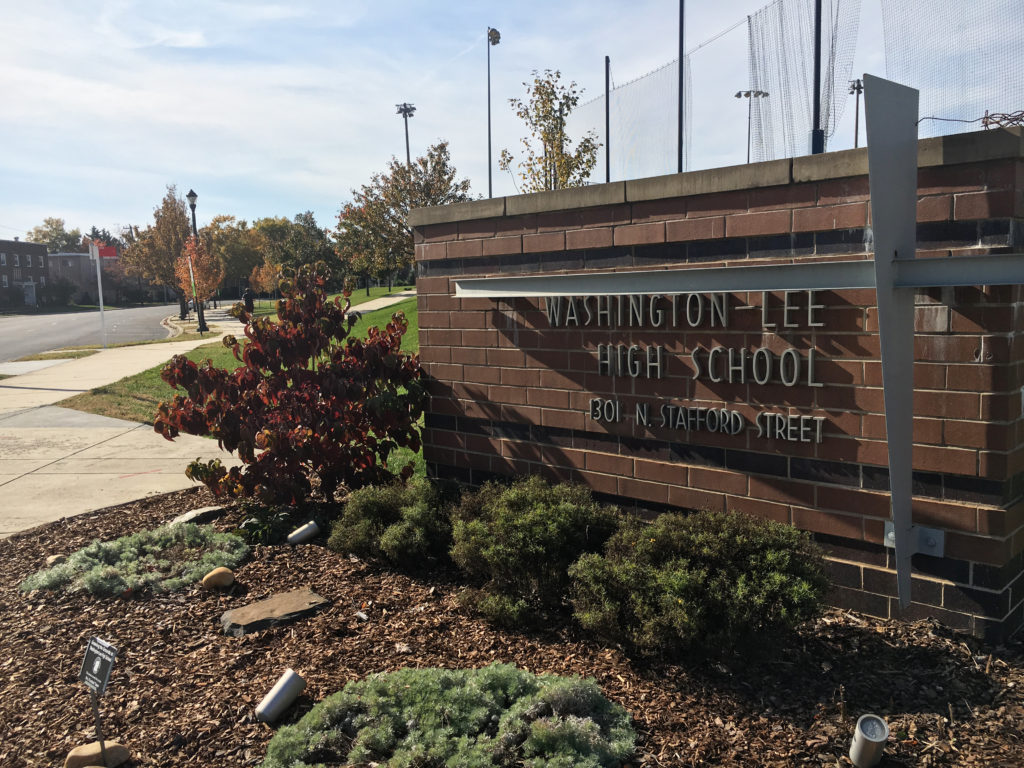
(Updated at 10:15 a.m.) Washington-Lee High School will soon be known as “Washington-Liberty High School” instead, now that officials have finally wrapped up the contentious process of stripping Robert E. Lee’s name from the building.

The Arlington School Board voted unanimously on the new moniker for W-L during a lengthy meeting last night (Thursday), about seven months after deciding to rename the school. Washington-Lee has borne the name of the Confederate general ever since it opened back in 1925, but the white supremacist violence in Charlottesville in 2017 convinced school leaders to reevaluate W-L’s name.

“There are those that worry that by changing the name of our high school, we will lose our history,” said School Board member Monique O’Grady. “Rest assured, the history of Robert E. Lee will not be forgotten in Arlington Public Schools. It will continue to be part of our curriculum, and thus a topic for students to explore, debate, learn and, yes, even be tested on. As for General Lee, amid the smoldering scars of the Civil War, he urged us to move forward and refrain from erecting symbols that might cause division. With our vote today, we do just that.”

A committee convened to suggest new names for the school recommended “Washington-Loving” as its first choice for the Board, in reference to Richard and Mildred Loving, the couple who successfully challenged the state’s ban on interracial marriage before the Supreme Court.

But a narrow, 3-2 majority on the Board rejected that name in favor of the “Liberty” option, arguing that the moniker was better suited as to match the school system’s aspirations toward equality. O’Grady and Board member Nancy Van Doren cast the dissenting votes.

“I hope we can name something for Richard and Mildred Loving going forward,” said Board member Barbara Kanninen, who chaired the Board when the renaming effort first launched in earnest last year. “But the concept of liberty is woven throughout our history, and I find that there’s a clear, logical and organic story and narrative that we can build from that name… I don’t think there’s a point in our American history where liberty was not central to the discussions of our time.”

The new names mirrors the Fairfax County’s School Board to rename a high school bearing another Confederate general’s name “Justice,” opting for an abstract concept over drawing a name from history. Loving supporters like Van Doren believe the name could’ve represented “the progress America has made since the Revolution,” but found “Liberty” to be a fine second choice, considering that the renaming committee recommended it as an alternative option.

Some on the renaming committee also proposed substituting in William Lee, George Washington’s enslaved manservant, to leave the name mostly unchanged. That option was even backed by some prominent W-L alumni and former teachers at the school, who made a late push to see it considered instead.

But O’Grady argued that naming the school after a former slave could send the wrong message and run “counter to our [Arlington Public Schools] values.”

“He suffered from a life fraught from opportunity gaps,” O’Grady said. “We will never know the legacy William Lee would’ve left if not for the institutional bias that existed at that time — exactly what we hope doesn’t happen in our school system.”

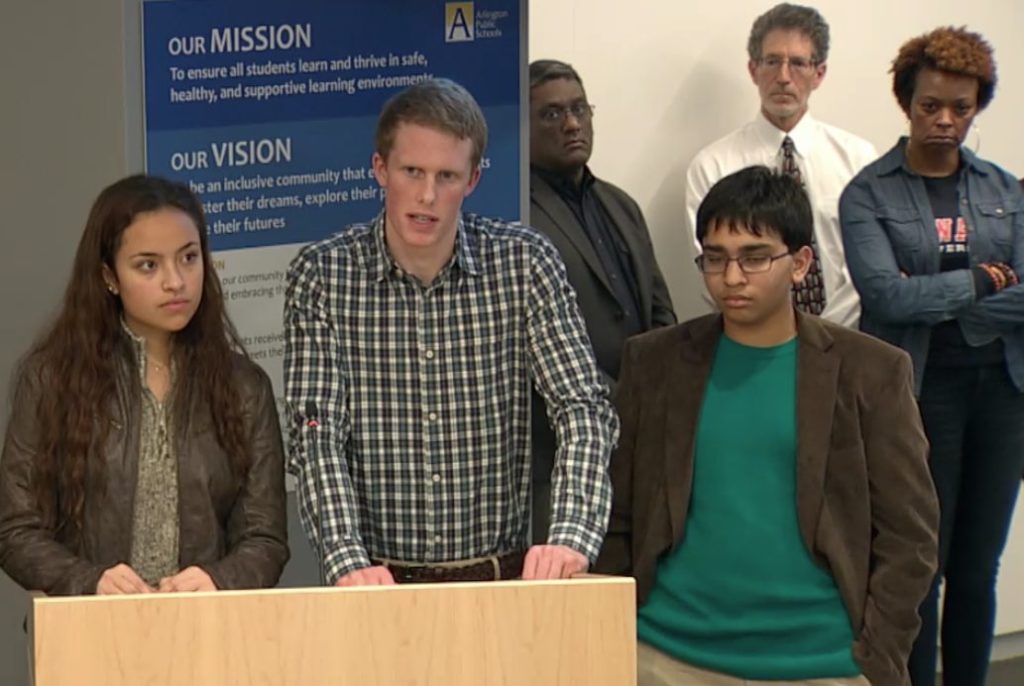
Of course, support for the name change was far from unanimous. Many of the school’s older alumni fiercely opposed the name change, and have spent the last few months working to block the move — some even backed a legal challenge by three current W-L students, but a judge struck that lawsuit down on procedural grounds in December.

Tempers also flared on the renaming committee itself, with three members ultimately resigning in protest and claiming they were inappropriately barred from debating the possibility of leaving the name the same. And through the entire process, alumni have claimed that the Board misled the community about how they planned to conduct the change.

“You should all be ashamed of yourselves,” said Dean Fleming, vice president of the W-L Alumni Association and a vehement name change opponent. “There’s a much better way to do this.”

But the Board has long vigorously defended its methods, and Kanninen took time to once again stress that members followed “a proper procedure and process.”

School officials hope to have the name change fully in place by the time the 2019-2020 school year kicks off, and W-L staffers say they’ve already been hard at work identifying which signage and uniforms will need to change now that the new name is ready.

But with the final vote finally cast, the school system will now embark on the task of smoothing over hurt feelings and preparing the community for the switch. Board Chair Reid Goldstein assured all in attendance that the switch is “not going to change your diploma, it’s not going to change your education, it’s not going to change you as good citizens or representatives of Arlington Public Schools and the high school you went to,” but many feel the process of reconciliation will be a tricky one.

“You should make use of this opportunity to educate W-L students, parents and alumni,” Thornton Thomas, a freshman at W-L who served on the renaming committee, told the Board. “And if you do that, you might find people are much more accepting of the decision that you make.”

Board members are well aware of the challenges they’ll face on that front, and they’re hoping that even name change opponents can pitch in to start doing a little healing.

“There has been a great deal of emotion on all sides around this renaming,” Van Doren said. “It’s time to come together and remember this is still a great community, a great school with great students and great alumni… Let’s come together now and move forward together.”

Arlington’s School Board is set to pick a new name for Washington-Lee High School next week, putting an end to the simmering debate over how to best strip Robert E. Lee’s name from the building.

The Board voted in June to remove the Confederate general’s name from the school’s moniker, kicking off months of squabbling over potential new names and even a failed lawsuit seeking to block the change. A renaming committee has recommended “Washington-Loving” to honor the Virginia couple who successfully challenged the state’s ban on interracial marriage, while “Washington-Liberty” earned the support of some committee members as a secondary recommendation.

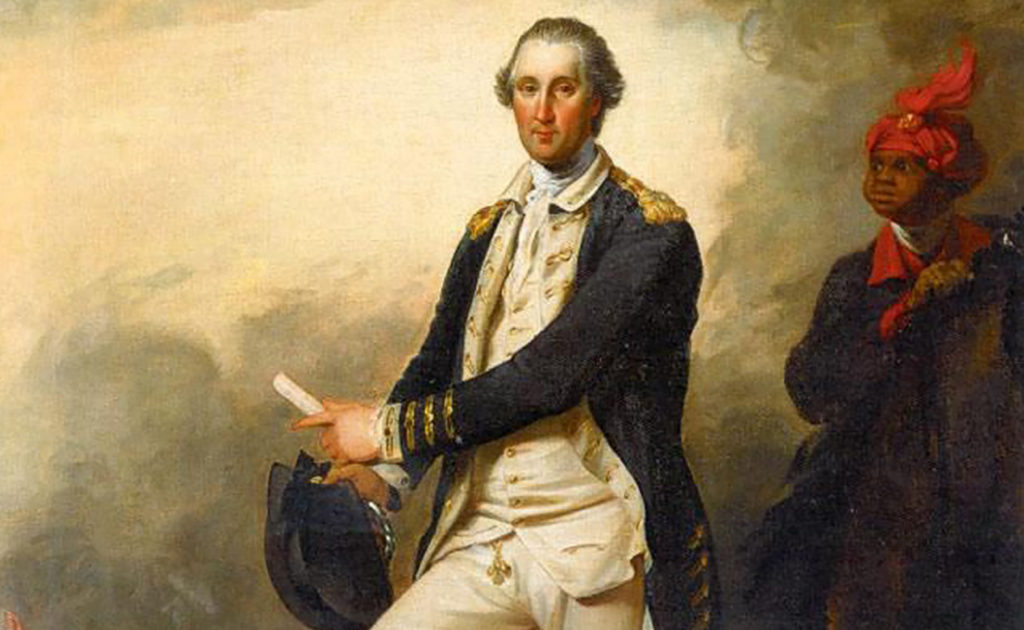
Others still supported swapping in one Lee for another, particularly William Lee, George Washington’s enslaved manservant. The following letter to the editor comes from a coalition of W-L alumni, former faculty members and even one of the original four black students to integrate the school in support of that option. 

The letter writers argue that the Board should delay its vote on Thursday (Jan. 10), and pursue a more “unifying solution” than its current options.

We are alumni and community stakeholders who care deeply about Arlington and the legacy of its oldest high school, Washington-Lee High School. We also support one of the renaming committee’s five finalist names, Washington-Lee High School, in honor of the African American Revolutionary War patriot William Lee.

A school that figures so prominently in Arlington’s history deserves a name that will inspire an understanding of our nation’s complex past and how it can move us forward. The clumsy attempts to retain the school’s nickname with the current Washington-Loving and Washington-Liberty proposals, however well-intentioned, do not meet that high standard. The name William Lee best “aligns with or reflects the APS mission, vision, and core values and beliefs” as stated in Policy F-6.1 Naming of Facilities.

William Lee, who served alongside Washington throughout the Revolutionary War, has long represented the contributions of the country’s “neglected patriots,” enslaved African Americans who fought in the Revolutionary War for their country and their own personal freedom. These patriots and heroes will soon be honored by the National Liberty Memorial on the National Mall in Washington, D.C. Congress has approved a location for the memorial which, poetically, could be the last site on the Mall across from the Washington Monument. Their contributions, previously shunned, are among the most important in our nation’s history. Moreover, because of the intimate connection between the two men, Lee’s influence on Washington, his abhorrence of slavery, and our country’s founding are of profound importance. A newly renamed W-L could be a powerful impetus that redefines history and imbues our diverse community with a common purpose and pride.

Unfortunately William Lee had not been properly considered by the committee due to historical inaccuracies in its brief biography of his life and an incomplete assessment of his legacy. Regarding Mildred Loving, there are serious questions over how she viewed her own black heritage. While it is laudable a member of the Arlington Historical Society was appointed to the committee, historians and other experts should have been consulted as history is often more complex than it appears on the surface. Moreover, the significant number of resignations from within the committee further cloud the process. As the legacy of a school and county hangs in the balance, it is critically apparent that the five finalist namesakes need to be more thoroughly researched.

With a postponement of the Jan. 10 vote on a new name, the School Board could rectify these fundamental shortcomings. Moreover an extension would help build a bridge to alumni who have felt sidelined throughout the entire renaming process, which has lacked the transparency and public discourse typical of the Arlington Way. Hopefully, William Lee would then be fairly vetted by all stakeholders and the School Board. Alternatively, since Lee is one of the five finalist names chosen by the committee, the Board could opt to choose among all of those names on Jan. 10. Notably, many alumni who had been divided over the name change are now embracing the William Lee name as the school’s best opportunity to educate and inspire future generations of students.

The process is an understandably difficult one, made more painful by missteps that could have been avoided. We feel without reservation that the name Washington-Lee High School in honor of William Lee would be the most unifying solution, and one that will likely ensure continued alumni support that has been invaluable over the past 90-plus years. Most importantly, the school would have a dignified name and inspiring new namesake with an unmistakable connection to one of our country’s earliest African American heroes who helps us to better understand Washington and his extraordinary nature.

Sincerely,

Duy Tran, Ann Felker, Bill Sharbaugh, John Peck, Carmela Hamm, Kim Phillip, Maurice Barboza, Anne Ledyard, Anthony Varni, Peggy Jeens, Janeth Valenzuela, Charles Augins, Leonardo Sarli, Sally Mann, Max Golkin, Lauren Hassel, Margaret Jackson Bartolini, Betsy Debevoise Staz, Tom Dickinson, T.W. Dickinson, Betty Settle, Geraldine (Dresser) Frank, Marcia Bourkland Pauly, Fred Grover, Alfred Greenwood, John Dobson, Dana Gandy Croyle, Rebecca Mimms, Chris Fleet, Yolanda McDonald, Nancy Roberts, Gail Zucker Braunstein

We are a group of alumni, alumni faculty, and stakeholders. Many of us have contributed to local civic and cultural affairs over the years and devoted thousands of hours to support the excellent educational opportunities at Washington-Lee and APS. Our names are listed in no particular order. Bill Sharbaugh was the principal of Washington-Lee High School from 1976-1999. Maurice Barboza is CEO of the National Mall Liberty Fund, a non-profit that supports the establishment of a memorial to African American contributions to liberty during the Revolutionary War. Charles Augins is one of the four students who integrated Washington-Lee in September, 1959.

ARLnow.com occasionally publishes thoughtful letters to the editor about issues of local interest. To submit a letter to the editor for consideration, please email it to [email protected]. Letters may be edited for content and brevity.

Photo via Mount Vernon


Though the process of renaming Washington-Lee High School has been marked by controversy and acrimony at every turn, the vast majority of those involved in the effort to find a new name for the building are reassuring school leaders that they’re ready to see some action on the issue.

The School Board is gearing up for a vote on a new name for the school next month, putting an end to a process that kicked off in earnest in September 2017. But between a lawsuit challenging the decision to strip Robert E. Lee’s name from the building, and accusations of misconduct surrounding a committee convened to come up with name suggestions, the Board’s faced its fair share of headaches leading up to that momentous meeting.

At the Board’s meeting last night (Thursday), however, members of the renaming committee sought to convince officials that their work to find a new moniker for Washington-Lee was thorough, thoughtful and fair.

While roughly a dozen people still spoke in opposition to the name change, most participants in the renaming process told the Board that they’d done their due diligence in proposing new name options and are ready to see a final decision.

“I’ve been part of bringing together stakeholders in Congress, the EPA, all sorts of places… and this was one of the best processes I’ve seen put together,” said Nikki Roy, who represented the Lyon Park Citizens Association on the naming committee.

The committee’s final recommendation was that the Board name the school “Washington-Loving High School” to commemorate Richard and Mildred Loving, the Virginia couple who successfully challenged the state’s ban on interracial marriage before the Supreme Court. A close second choice was the more generic “Washington-Liberty High School,” which committee members also presented supporting materials for Thursday.

Board members generally didn’t tip their hands on which option they might end up favoring in the end, instead using the meeting as a chance to better understand how the committee conducted its deliberations.

Committee members were certainly quick to acknowledge that the process got heated at times — three representatives ended up resigning from the committee by the time its work was completed, largely over complaints that they were pushed by Arlington Public Schools officials to ignore community feedback urging them not to change the name.

“Instead of honoring these opinions, we were told to dismiss them,” said Julia Crull, a representative of W-L alumni on the committee who eventually resigned from the group. “It should send a message to you when three people out of 21 members resigned for the same reason; we could no longer represent those we were chosen to represent.”

Yet Allan Gajadhar, a representative of the Cherrydale Citizens Association on the committee, stressed that the group did give weight to those views. However, he reiterated that the committee kept coming back to the fact that the Board had already decided to change the name, and it wasn’t within the group’s purview to overturn that decision.

John Holt, a senior at W-L serving on the committee, added that his surveys of current students found that “very few” cared about keeping Lee’s name on the building. While older alumni have largely led the charge to preserve the Confederate general’s name on the school, Holt said maintaining the school’s acronym was more important to most of his peers.

“Almost everyone wanted to keep W-L, but not many wanted Washington-Lee,” Holt said.

Thornton Thomas, a W-L freshman on the committee, also said that some of his classmates remained a bit confused about the “rationale” of changing the name in the first place. Though the Board’s discussions of the name change, kicked off in the wake of the white supremacist violence in Charlottesville last August, have attracted plenty of publicity, Thomas urged the Board to do a bit more outreach to students themselves about the process.

However, all involved seemed quite satisfied with the committee’s eventual recommendations.

Board member Barbara Kanninen questioned why the committee opted against advancing the recommendation for “Washington-Lincoln,” even though the option did become one of the group’s top five suggestions. In particular, she suggested that there was a “bit of incongruity” in matching Washington with either a pair of more contemporary figures or an abstract concept like “Liberty.”

But committee members argued that the Lovings proved to be an attractive option particularly because they weren’t as “heroic” as someone like George Washington.

“It was that humility, that lack of heroic statue that lends the gravity and weight to what they did and achieved,” Gajadhar said. “These were people just trying to live their own lives and be happy, yet they had a significant impact on us. It wasn’t necessarily symmetrical, but I consider it quite balanced.”

Some Board members expressed some consternation that embracing the “Loving” name might make it a bit difficult for the school to maintain its current mascot: the Generals.

But W-L Principal Gregg Robertson assured the Board that staff and students were already brainstorming ways they might change the school’s mascot, or even colors (currently blue and gray). Because the committee was anxious to see the “W-L” acronym remain, Robertson added that he was optimistic that any name change wouldn’t prove to be too disruptive otherwise, allowing the school to leave many signs and murals untouched.

Nevertheless, the proposed new names certainly won’t make everyone happy. Many W-L alums remain frustrated with how the Board managed the renaming process, and pledged to keep working to block the change ahead of the Board’s Jan. 10 vote on the matter.

“You violated my trust as a parent, and as a voter who helped put you on the board to represent me,” Toni DeLancey told the Board. “Simply stop this illegitimate process. Let’s start over and listen to the community.”


(Updated at 11:15 a.m.) Arlington’s School Board will name a new Cherrydale middle school after civil rights activist Dorothy Hamm, opting against including any reference to the historic Stratford School on the new building’s site.

Following the Board’s unanimous vote yesterday (Thursday), the school will open next year as “Dorothy Hamm Middle School.” It’s set to be located at 4100 Vacation Lane, the former home of the H-B Woodlawn and Stratford programs, and should hold about 1,000 students.

Though the process of naming the building hasn’t drawn quite as much controversy as the renaming of Washington-Lee High School, the debate has nonetheless raised familiar questions about how the county grapples with its history. The “Stratford” name presented a particularly thorny option for the Board to consider, as it has a bit of a complex legacy.

Many people around the community hoped to see the Stratford name stay attached to the new school, considering its significance in the civil rights movement in Virginia. The original Stratford Junior High School (which remains on the site) was the first school in the state to admit black students following the momentous Brown v. Board of Education decision, marking the beginning of the end of Virginia’s policy of “massive resistance” to desegregation.

Yet the original school was named after Stratford Hall, the childhood plantation home of Confederate general Robert E. Lee, making some uncomfortable with the name’s connection to Lee’s legacy of defending slavery. After all, the Board voted just a few months ago to strip Lee’s name from W-L over similar concerns.

Accordingly, Hamm emerged as an alternative choice, given her role in fighting to integrate Stratford. Her children attended the school soon after its desegregation, and Hamm also supported a series of other court challenges to Jim Crow-era laws in Arlington.

“What I really love is that this was a story of the moms of Arlington, who heard from their children,” said School Board member Barbara Kanninen. “They wanted to know why they couldn’t attend this school. That’s why they stood up and fought. By naming this building after Dorothy Hamm, we’re honoring the fight, rather than the place. I think it’s going to be a terrific message that we’re sending to the students of that school, and I think that’s something to be excited about.”

But in ditching the Stratford name entirely, the Board cast aside the recommendation of an advisory committee convened to offer recommendations for the school’s moniker. The group suggested either naming the building simply “Stratford Middle School” or the lengthier “Dorothy Hamm Middle School at the Historic Stratford Building” to ensure a reference to the “Stratford” remained.

Board Vice Chair Tannia Talento proposed that the Board accept the latter option, but Kanninen made a motion to remove the “Historic Stratford Building” section of the name. That passed, but only on a narrow, 3-2 margin, with Talento and Board Chair Reid Golstein dissenting.

“I find it a bit incongruous that we all like the Dorothy Hamm name because we’re lauding the significant, dynamic and historic actions of Dorothy Hamm in the desegregation activity and, at the same time, setting aside the Stratford name, which is equally a part of the significant desegregation history here,” Goldstein said.

Dean Fleming, a friend of the Hamm family who has also been active in organizing opposition to the W-L name change, also told the Board that Hamm’s daughter, Carmela, is “not interested in having her mom’s name on school.” Dorothy Hamm herself passed away in 2004.

Instead, Fleming said her daughter suggested creating a “hall of honors” at Stratford to honor the family’s legacy, while preserving the original name of the building.

Yet Board member Nancy Van Doren argued that the school system has already sketched out an extensive plan for creating an “interpretative trail” and other memorials on the new school’s grounds to ensure that the full history of the Stratford building is available to students.

Though some historic preservation groups around the county have protested any removal of the Stratford name, Van Doren believes the new building will not lack for commemorations of its integration history.

“Those will all be up at the time the building opens,” Van Doren said. “And because it will all be physically there, on the site, I don’t think we need the ‘at the Historic Stratford School’ section of the name.”


A judge has struck down a lawsuit challenging plans to rename Washington-Lee High School, though name-change opponents are holding out hope that they may yet convince a court to block the process.

Three current W-L students were hoping to reverse the School Board’s vote to strip Confederate general Robert E. Lee’s name from the building, arguing that the Board misled the public and failed to follow its own established procedures in making the decision back in June.

But Arlington County Circuit Court Chief Judge William Newman ruled today (Wednesday) that the students didn’t have grounds to challenge the vote, and that the Board didn’t commit any errors egregious enough to warrant the legal action.

Though he stopped short of tossing the case out of court or barring the students from adjusting their claims, he also granted a motion by School Board attorneys to dismiss the case, throwing up a key legal roadblock for the suit.

“Even though I can see things could’ve been done differently here, I can also see that, under the statute, there’s nothing wrong here,” Newman said.

For W-L alumni upset with the name change, about a dozen of whom watched the proceedings Wednesday afternoon, the result isn’t necessarily unexpected, but is disappointing nonetheless. Many have spent the months since the renaming vote aggressively pleading their case, with some even backing an independent challenger to one of the Board members who supported the name change.

Dean Fleming, one W-L alum who’s helped marshal opposition to the name change, told ARLnow that the ruling won’t deter those efforts, as it merely gives opponents “another bite at the apple.” Jonathon Moseley, the attorney representing the students, was a bit more hesitant, however.

“We do have the ability to rewrite [the suit],” Moseley said after the proceedings. “But we will have to think about whether a rewrite will cure what the judge saw to be a problem.”

Chiefly, Newman agreed with many of the procedural arguments raised by the Board’s attorney, John Cafferky.

Moseley and the students claimed that the Board erred when it first voted to change its policy governing the names of all Arlington Public Schools, then decided to initiate a name change for Washington-Lee immediately afterward, citing Lee’s “principal legacy” as a soldier for the Confederacy and defender of slavery.

Yet Cafferky pointed out that the Board largely followed the process it laid out in September 2017 to govern the name change deliberations. Though the Board did circulate some other possible guidelines in January that would’ve called for another round of community engagement before a name-change vote, Cafferky noted that the Board never formally adopted that change, and stuck with its initially established procedures.

“Everyone knew darn well that renaming the school was a possibility,” Cafferky said. “It wasn’t a surprise, because by that point, there had been all kinds of engagement for the past nine to 10 months.”

Moseley argued that it would’ve made more sense for the Board to “go back to the community, talk to them, advertise and then have a vote” before changing W-L’s moniker. But Cafferky also charged that it was within the Board’s discretion to guide how the process was managed, noting that “renaming procedure is not a provision of law.”

“The school could hold an essay contest to change the name or take nominations from the floor during a meeting,” Cafferky said. “They have a great deal of flexibility here.”

Procedure aside, Moseley and the students claimed that the school’s name was “part of their community experience,” and changing it would force them to shell out cash to change the names of uniforms and clubs. Yet Cafferky argued that such negative impacts on the students were “speculative,” considering that Washington-Lee won’t actually receive a new name until the Board votes on the matter next month.

Similarly, he pointed out that the Board is considering “Washington-Loving” and “Washington-Liberty” as the new names for the school, which could avert the need for any cumbersome logo or uniform changes by maintaining the “W-L” acronym.

With Newman’s ruling, the Board’s renaming work is set to move ahead (though it has not been without additional controversy). The Board will review new name proposals for the first time tomorrow (Thursday), then is set to vote on the matter on Jan. 10.

Moseley said his clients may well file an amended suit before that vote, though the impending holidays could complicate scheduling.


(Updated at 3:35 p.m.) In Arlington’s long fight to regain control of its school calendar, one of the county’s representatives in Richmond finally sees some reason for optimism.

School leaders have hoped for years now to wrest control of the calendar from state officials, giving Arlington Public Schools the chance to start classes before Labor Day each year. State law generally bars school systems from starting any earlier unless officials can demonstrate a compelling reason to push up the calendar, like the threat of winter weather, in what has long been referred to as the “King’s Dominion Rule.”

The theme park helped convince state lawmakers to take control of the school calendar in a bid to boost the state’s tourism industry back in 1986, and the company has frequently fought attempts by school systems to adjust their own calendars since, over fears that doing so would cut into the park’s pool of low-wage summer workers. But the park’s ownership has softened its opposition to the change as time has gone by, and dozens of school systems have managed to obtain “waivers” to the state law to set calendars as they please.

Even still, the General Assembly has repeatedly stymied efforts to hand control back to all the state’s school systems, including Arlington, despite the mounting pressures of standardized tests on the final months of the school calendar. But this year, however, state Sen. Barbara Favola (D-31st District) has hope.

She’s crafting legislation that would specifically give all Northern Virginia localities the power to set their own school calendars. Some, like Fairfax and Loudoun counties, already have waivers to start before Labor Day, but she’s hoping that such narrowly tailored legislation to sweep in counties like Arlington might prove more palatable to her Republican colleagues.

“We have so many jurisdictions under the waiver already, it’s ridiculous,” Favola told ARLnow. “We don’t have control over when SATs or SOLs start… and after those are done, students just aren’t energized. I’m hoping this will finally give Arlington the chance to start earlier.”

The state Senate has killed similar efforts plenty of times before, and this year was no exception. Even though a bill giving all school systems calendar control passed overwhelmingly in the House of Delegates this session, it died narrowly in a Senate committee.

But Favola says she’s heard that some Republicans in the chamber are “not opposed” to the bill she’s planning, and even gotten “positive feedback” from others. During a work session with Arlington’s County Board on Friday (Dec. 7), Favola said she’d heard specifically from Sen. Steve Newman (R-23rd District) that he could support such legislation — that’s notable because Newman chairs the Senate’s Education and Health committee, the very group that killed the school calendar bill this year.

In an interview after the meeting, Favola declined to elaborate on Newman’s support, or put other Republicans “on the spot” who might support the bill. Through his legislative aide, Newman said he will “look forward to reviewing Sen. Favola’s legislation again this year, and will give it every consideration.”

“As you may know, I have been working to get a Labor Day exemption into the budget over the past few years that would cover much of Virginia,” Newman wrote in a statement. “We will continue to move this important endeavor forward in the 2019 General Assembly Session.”

Despite her optimism, Favola would concede that it’s no sure thing that her legislation will succeed. Even though King’s Dominion has not been as vocal in lobbying against such legislation in recent years, she said the company is “still saying there’s a need” for student workers ahead of Labor Day weekend.

That’s where she hopes the legislation’s provision targeting only “Planning District 8” — which includes Arlington, Alexandria, Falls Church, Fairfax, Loudoun, Prince William, Manassas and Manassas Park — can provide some reassurance to the theme park, and the legislators who may be swayed by King’s Dominion’s concerns. Since the park sits roughly an hour-and-a-half down I-95 from Northern Virginia, it stands to reason that it doesn’t draw many workers at all from the area’s schools.

However, Favola’s bill would leave some large and influential localities without calendar control, including Virginia Beach, Chesterfield, Henrico and Richmond.

That means her legislation will likely need to compete with other bills designed to give all the state’s school systems control — Sen. Amanda Chase (R-11th District), and a representative of some suburban Richmond communities a bit closer to the park, has already introduced just such a bill.

The General Assembly is set to reconvene for a one-month-long session on Jan. 9.

File photo


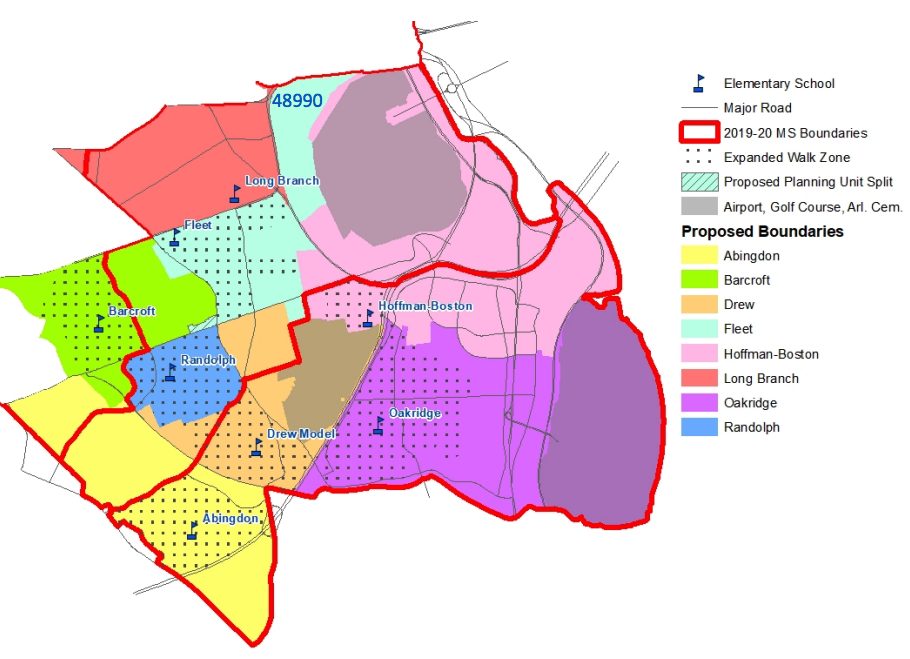
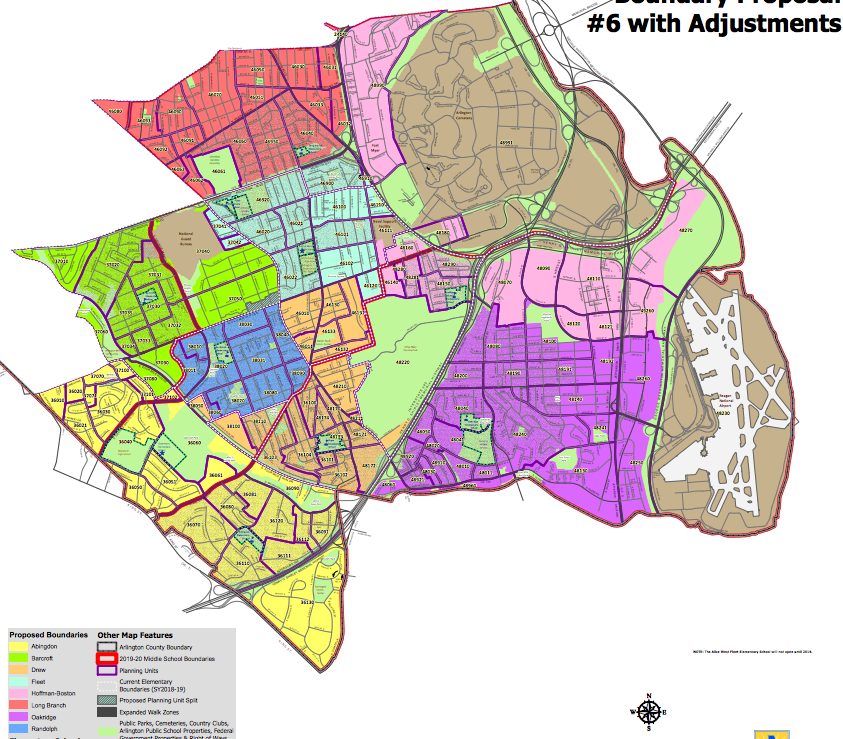
Eight South Arlington elementary schools will soon see changes to their attendance boundaries, now that the School Board has signed off on a final map and put an end to a contentious, messy debate over boundaries that roiled several school communities over the last few months.

The Board voted unanimously last night (Thursday) to approve a boundary map drawn up by school officials just a few days ago, a move that could send as many as 413 elementary students to new schools starting next year.

Arlington Public Schools officials designed the boundary process to meet a series of different concerns. Not only is the school system facing rising enrollment numbers across all of its schools, but officials needed to account for the opening of Alice West Fleet Elementary School next year. The school system is also gearing up to convert Drew Model School into a “neighborhood” school, drawing its attendees primarily from the communities surrounding the Nauck building, and move its Montessori program to the building currently serving as Patrick Henry Elementary.

Accordingly, the process involved drawing new boundaries for both Drew and Fleet, while shifting some students primarily from Oakridge and Long Branch to those schools, as well as Hoffman-Boston.

But APS leaders and Board members have come under fire from virtually all sides as they’ve managed this complex series of moves.

Many parents at Henry felt betrayed by proposals that would send roughly a fifth of the community to Drew instead of Fleet, even though they felt school officials had long promised to avoid such a change. Others at Drew fretted that the boundary changes wouldn’t do enough to even out demographics at each South Arlington school, while Abingdon parents were alarmed by a prior proposal to move some students in Fairlington to Drew instead.

Even still, Board members expressed confidence that the map they’ve approved will best serve the needs of the entire school system, despite the acrimony that marred the process.

“It’s a solution we need to have happen at this point because of our rising enrollment,” said Board Chair Reid Goldstein. “This boundary change is not perfect. No boundary change is perfect.”

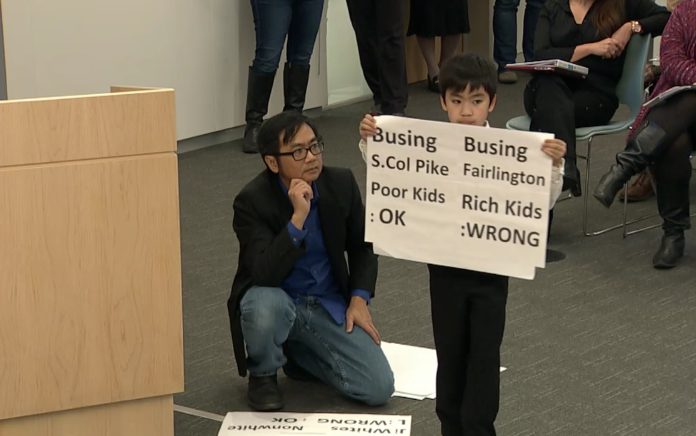
Yet plenty of parents arrived at Thursday’s meeting to decry the entire process, with many lamenting that the Board has managed to break their trust that future efforts will be managed competently.

“You’re failing Drew and Fleet,” parent Susan Hampton told the Board. “I don’t know why you’d willfully increase economic segregation… I’ve lost my faith in the process.”

Notably, even some Board members expressed regret that they couldn’t do enough to better spread out students eligible for free and reduced price lunch (a key indicator of their family’s economic means) across the eight schools. While the new map will reduce FRL rates at some schools, Barcroft, Drew and Randolph will all still have at least 50 percent of their student bodies eligible for free and reduced lunch.

“I certainly didn’t meet all the goals we laid out for this,” Goldstein said.

But Board member Monique O’Grady argued that the new map still took major steps toward addressing racial inequality in the county, primarily with how it will transform Drew’s future. She noted that the Nauck community has long hoped for a “single-focus neighborhood school,” though students there have been constantly bused away from the area, dating back to the days of the Jim Crow era.

While some parents at Henry proposed transforming Drew into a countywide “option” program as one way to avoid more boundary changes elsewhere, O’Grady stressed that converting Drew into a pure neighborhood school is the best way to meet the community’s needs.

“Now Drew will follow in the footsteps of Oakridge and Abingdon… which now enjoy huge support from the families they serve,” O’Grady said. “I believe Drew will enjoy similar success.”

Other parents were similarly pleased that the Board’s map will keep the entirety of the Fairlington community together at Abingdon, even though it will leave the school a bit overcrowded for now. The Board chose to leave some schools a bit under-capacity — including Fleet and Drew — to allow for growth over the years, and avoid more boundary changes. Then, it hopes to address any remaining issues in the 2020 boundary drawing process.

“[This map] acknowledges that our neighborhoods continue to fill with elementary-aged children who want to take advantage of our excellent schools, and gives our county and our kids room to grow,” said Claire Rosenberger, an Abingdon parent.

But many remain nervous that the 2020 changes will proceed similarly turbulently, and warned parents to be vigilant moving forward.

“Successful civic engagement does not require that everyone agree with end result, but it does require transparency and accountability,” said Joe Everling, a Henry parent who has been fiercely critical of the Board’s process. “To my utter amazement, that has not happened here… there is no oversight for this board, except for the citizen voter.”


Some parents are fuming over the school system’s decision to charge them for damage to school-issued laptops and tablets this year, arguing that officials shouldn’t pass along the costs of a mandatory program for students.

The School Board agreed to a policy change ahead of this school year, stipulating that parents could be charged if officials see any “intentional or negligent” damage to a student’s device. All county elementary and middle school students are currently issued iPads, while high schoolers receive MacBook laptops, as part of the “1:1 device” program the school system first kicked off in 2014.

Arlington Public Schools still takes responsibility for “routine maintenance or standard repairs” to school-owned devices, under the terms of its “acceptable use” policy. But the school system does reserve the right to charge parents hundreds of dollars for substantial repairs, or replace a lost device.

“People were concerned about the expense at first, but everyone told us: don’t worry, you’re not going to be liable for these,” Danielle Werchowsky, the parent of a sophomore at Yorktown High School, told ARLnow. “A lot of us didn’t ask for these pieces of equipment… but APS chose this path and they should have to figure out how to fix it and how to pay for it, not charge us.”

APS spokesman Frank Bellavia points out that the Board approved such a change back when it was still setting a new budget back in May, in order to “reduce the number of devices being damaged.” The issue has bubbled up now, however, largely thanks to an email from the Yorktown Parent Teacher Association sent out Monday (Dec. 3) laying out the exact cost of repairs.

Werchowsky says many parents were completely unaware of the size of these fees until that email went out (though they are posted on the APS website), and they felt a bit of sticker shock. A “complete replacement” of laptop could cost anywhere from $634 to $734, for instance, while an iPad would cost a family $279.

“I just got a bill for $100 for repairs to my son’s iPad,” Val Steenstra wrote in a Facebook post on the matter. “He pulled it out of his backpack and the screen was glitching. No discussion of fault. No questions about if he did something to damage it. Just a bill.”

“These kids have their laptops for four years, but there’s no depreciation taken into account here, you’re still paying $700,” Werchowsky added. “These aren’t like a home computer where it’s in one spot… And their frontal cortex aren’t necessarily fully developed, they lose things. My son would forget his coat if I didn’t remind him.”

Yet Bellavia notes that only 3 percent of all the school system’s devices are lost, stolen or damaged each year — and even then, “the most common occurrence” is a lost charger. For iPads, replacements for those cost $27: for MacBooks, it’s $53.

Bellavia adds that APS is “self-insured,” so the school system is only charging parents “the actual costs APS pays to have the repairs made.” Given the tight budgets the school system has been facing recently, officials are particularly eager to find ways to defray any costs they can.

“The self-insurance covers the costs to repair accidental damage and situations where the families are unable to pay the full cost of the repair,” Bellavia wrote in an email.

But Werchowsky and many of her fellow parents argue that any fee is too high, considering that they harbor serious concerns about using the devices in the first place, making the potential costs all the more frustrating. Some Arlington parents have managed to collect hundreds of signatures on a petition urging APS to to cut back on how often young students are exposed to the devices — the Board itself has even considered moving to a “2:1” or “4:1” device policy for elementary students, as a strategy to control costs and reduce screen time for younger kids.

“It’s not that I’m anti-computer, but I just don’t think a lot of it has been well thought out,” Werchowsky said. “You really can’t opt out, even if you have screen addiction concerns.”

Yet Bellavia notes that concerned parents do have some options, even if the devices will remain a key component of APS curricula moving forward.

“During the school day, teachers build lesson plans with the knowledge that every student will have their device to use as appropriate to support their learning,” Bellavia said. “Families which have concerns that the device might be damaged outside of school hours can request that the device be kept at school.”

File photo


“Washington-Loving” might’ve earned a committee’s blessing as the ideal new name for Washington-Lee High School, but members of the group say the process of reaching that recommendation was anything but smooth sailing.

Two members of the W-L renaming committee even ended up resigning from its ranks, decrying the group’s work to find a new name for the school as a process that was tainted from the time deliberations started this September.

Other members of the committee argue that the group had some passionate disagreements at times, but generally reached a fair consensus on a name for W-L. Regardless of exactly where the truth lies, however, the dispute marks yet another complication in a process that’s been characterized by plenty of fierce debate ever since the School Board’s June vote to strip Robert E. Lee’s name from the building.

“I am departing with disgust about a morally bankrupt process that has been directed, not facilitated,” Patrice Kelly, a W-L parent, wrote in a letter resigning from the committee provided to ARLnow. “Between the chilling of discussions, the manipulative process, the disregarding of solicited public opinion and the pressure to conform to the unstated mandate, I have concluded that this process is a disingenuous attempt to appear that public input was sought.”

The chief concerns of Kelly and Bill Moser, a W-L alumnus who resigned from the committee once it finished its work last week, are that the committee failed to give any consideration of the prospect of keeping the name the same, or finding another historical figure with the name “Lee” as a substitute.

Both were also frustrated that one of their fellow committee members had ties to the school system, albeit indirectly, which they felt showed that the Board was unduly influencing the process. Dana Raphael, the daughter of former Board member Abby Raphael, represented recent W-L alumni on the committee.

“I won’t say that she orchestrated the process… but I do wonder about the whole thing,” Moser told ARLnow.

Raphael, for her part, feels that such assertions are ridiculous. She says she became interested in the battle over the W-L name when the Board was deliberating the issue this summer, particularly because she’s believed that the name should be changed ever since she was a freshman at W-L.

And as for her mother, Raphael says “she’s had no role in the facilities policy or the renaming,” particularly since she left the Board in 2015.

“Her commitment to public service inspired me when I was in high school to take an active role in my community, in politics and in current events,” Raphael wrote in an email. “I applied to join the renaming committee because I wanted to ensure the process considered the history of the school and the legacy of Jim Crow, as well as ensure we centered a conversation about civil rights.”

Raphael also argues that it wasn’t part of the group’s mission to consider the prospect of keeping the name, noting the group had “no authority to ‘overturn’ or ‘nullify’ the School Board’s decision to replace ‘Lee.'” She added that a neutral facilitator brought on by the school system to guide the process made such a point clear “at every single meeting.”

“It was out of our control,” said Chloe Slater, a junior at W-L representing current students on the committee. “The point was to choose a new name, because that’s what the School Board decided. Some people didn’t understand that aspect.”

Even still, Kelly and Moser were frustrated that the committee was directed to ignore comments submitted in public surveys about the process that pushed for the name to stay the same. Kelly even felt that the committee was dissuaded from any consideration of feedback asking the group to pick another “Lee” to honor.

But Linda Erdos, a School Board spokeswoman and a staff liaison to the committee, says the group decided on its own not to move forward with another “Lee” option.

The committee considered people like “Light-Horse Harry” Lee, Robert’s father and a Revolutionary War general, or William Lee, George Washington’s enslaved manservant. Yet Erdos said the group ultimately decided that picking another “Lee” would feel too much like “smoke and mirrors” after the Board’s decision. William Lee, in particular, ended up among the committee’s top choices, but did not advance in the group’s final round of voting.

“We thought, if we’re going to make a change, why not make it be a big one, why not make it be amazing?” Slater said.

Slater, the daughter an interracial couple herself, was quite pleased that the committee settled on a name to honor Richard and Mildred Loving, the couple who managed to successfully challenge Virginia’s ban on interracial marriage in court. It helped, too, that replacing “Lee” with “Loving” meets the desire of many students to keep the “W-L” moniker intact, Slater said.

Raphael said she was willing to consider other names beyond those that would’ve preserved the school’s W-L acronym — abolitionist Harriet Tubman was the lone finalist to be considered whose name didn’t begin with “L” — but she believes “Loving” is a fine choice to honor ‘those who fought for equality and equal citizenship.”

“I would be proud to tell people that I graduated from Washington-Loving High School,” Raphael said.

Moser takes a considerably dimmer view of the committee’s recommendation. He felt the group was too “racially fixated,” primarily submitting African American historical figures for consideration, even though the W-L student body has a large Hispanic population as well.

He also sees the “Loving” name as a “totally inappropriate and ridiculous” and viewed it as “a joke as far as I was concerned,” considering that he doesn’t think much of the Lovings and their fight to end the interracial marriage ban.

“The rationale for them was they wanted to be happy and they were willing to break the law to do so,” Moser said. “These were not people of high stature. They didn’t accomplish anything other than being in an interracial relationship.”

Moser’s skepticism regarding the Lovings aside, Erdos believes the committee’s deliberations were generally quite civil. Given the legal wrangling and political battles that have so far marked the renaming process, she says that was (generally) a pleasant surprise.

“I really was bracing for some difficult meetings,” Erdos said. “But, quite honestly, I was surprised it went as well as it did.”

The Board plans to discuss the name change for the first time on Dec. 20, and vote on Jan. 10.


Arlington school officials recently realized they made a critical error in calculating school enrollment rates as they prepared a final proposal for the redrawing of attendance boundaries in South Arlington, prompting the last-minute introduction of a new map to correct that snafu.

The School Board is gearing up for a final vote this week on boundary changes at eight elementary schools, which will conclude a lengthy, contentious process stretching over the better part of the last six months. Superintendent Patrick Murphy put forward what was meant to be a final proposal last month, but officials then tinkered with that map to better distribute students across the schools involved and reduce overcrowding.

The school system released the result of some of that work last week, with figures initially showing that the new Alice West Fleet Elementary School would open next fall at close to 100 percent of its planned capacity. The school’s opening helped prompt the boundary adjustment process in the first place, and the school system’s methods for determining which communities will head to Fleet have become particularly controversial in recent weeks.

However, staffers soon discovered they’d erred in counting the number of students set to head to the school. The proposal actually would’ve opened Fleet at about 82 percent of its capacity, far below the standard officials hoped to hit.

Accordingly, the Board convened a new work session for last night (Tuesday) to examine a revised map accounting for that mistake. That new proposal would leave Fleet closer to 90 percent capacity instead, largely by redirecting some students currently attending Long Branch Elementary School to Fleet. The Board will ultimately have a chance to vote to approve this newest map, or any of the other six proposals the school system has worked up thus far.

“We’re trying to be as clear as possible here, and we realize there are ongoing confusions about the data and about the process,” said School Board Chair Reid Goldstein. “Unfortunately, there’s not much time for Board members and the community to absorb all this.”

Lisa Stengle, the APS director of planning and evaluation, told the Board that the change won’t pull all that many students away from Long Branch, a process officials hoped to avoid given the last-minute nature of the change.

Instead, the school system discovered that a variety of students attending the Ft. Myer Cody Child Development Center at Joint Base Myer (some of whom are the children of active duty service members) currently attend Long Branch or even Patrick Henry Elementary after receiving a special waiver to do so. Those students would be sent to Fleet instead for the next two years, Stengle said.

“We just need to give Long Branch a little breathing room,” Stengle said. The school will open at about 101 percent of its capacity under the latest plan, down from its current 113 percent.

School officials were optimistic that the change will work out for the best, filling more of Fleet but still allowing for a little bit of wiggle room at the school moving forward. But, given the acrimony that the boundary process has generated everywhere from the Drew Model School to Abingdon Elementary to Henry, Murphy was also quick to acknowledge that this latest error came at an unfortunate time.

“I think we continue to get better at this,” Murphy said. “And I look forward to continuing to refine things in the future.”

Goldstein was similarly conciliatory, particularly after parents at Henry accused him and other school officials of delivering assurances that their community would move as one to Fleet this year. Drew’s Montessori program is set to move to Henry, forcing current students out of the building, and the school system’s latest plans call for about 20 percent of those students to go to schools other than Fleet.

Parents even dug up emails from years ago featuring Goldstein providing such promises, and he expressed plenty of regret for having done so.

“I wish I could go back and keep my mouth shut at the time when it would’ve been a good idea to do so, but I can’t,” Goldstein said. “I apologize for creating an impression two and half years ago that the future would have ironclad certainty… I’ll be much more circumspect about future events as we go forward.”

Board members also addressed a proposal from some Henry parents to convert Drew into a hybrid neighborhood-option school drawing in students from across the county to its STEAM program. Its backers hoped such a change would help keep the Henry community together and build a strong base of support for Drew, but many in Nauck resisted such an effort.

Board member Monique O’Grady pointed out that part of the intent of moving the Montessori program out of Drew was to “give Drew its neighborhood school back,” and she felt the STEAM proposal ran counter to that purpose.

Goldstein praised the proposal, noting that “some parts of it are very intriguing and some parts are attractive.” But he also agreed with his colleagues that it would be too difficult to manage such a change on such short notice, particularly without consulting with the Drew community first.

“We just wouldn’t be able to do this in two weeks,” Goldstein said. “We don’t know yet how to define a future option program, how to identify where we need it and where the optimal location is.”

Even still, Goldstein and his fellow Board members praised the community for being engaged enough on the issue to come up with such a proposal in the first place. And, with the Board set to approve a final map tomorrow (Thursday), O’Grady urged concerned parents to channel that energy into a positive outlet going forward.

“The desire to stay at your current school doesn’t necessarily mean you’re against another school, just that you’re passionate about where you are,” O’Grady said. “We hope you’ll bring that passion to your new school.”


Arlington school officials will soon decide on a name for the new middle school to be built on the site of the Stratford School building in Cherrydale — but the complex history of the building, and its original name, has divided the community over which option is best.

A naming committee settled on three options for the 1,000-seat school in October, ahead of the building’s planned opening next fall. But that collection of parents and community members hasn’t been able to settle on a definitive recommendation as the School Board gears up for a vote on the matter.

The 28-member committee was instead split down the middle on two options for the building: naming it simply “Stratford Middle School,” or dubbing it “Dorothy Hamm Middle School at the Historic Stratford Building.”

The group initially considered “Legacy Middle School at the Historic Stratford Building” as an option, but that choice fell out of favor as the process advanced. The committee even floated the compromise possibility of naming the building “Stratford-Hamm Middle School,” but stopped short of recommending such an option.

The building, located at 4100 Vacation Lane, currently houses the H-B Woodlawn program, but was once the site of Stratford Junior High School. That’s believed to be the first school in Virginia to admit black students following the momentous Brown v. Board of Education Supreme Court decision, lending plenty of historic significance to the site and its name.

But the “Stratford” name itself comes from a considerably darker part of the nation’s past. The name is derived from Stratford Hall, the plantation home of Robert E. Lee and his family in Westmoreland County.

Considering that the school system is in the midst of a contentious process to strip Lee’s name from Washington-Lee High School, any association with the Confederate general has the potential to kick off a new firestorm of controversy in the county. Accordingly, some members of the naming committee championed naming the building after Dorothy Hamm, a civil rights activist who helped lead a court challenge to Arlington’s school segregation policies, leading to the eventual integration of Stratford.

“The event signified the end of massive resistance in the commonwealth of Virginia and dealt a powerful blow to the opponents of racial equality nationwide,” Ellen Smith, the incoming principal of the new middle school, wrote in a letter to the Board. “While Hamm was the community activist at the forefront of the campaign to integrate Arlington Public Schools, she was not the only community activist that was determined to integrate Arlington schools so that all students would have the opportunity to receive an equal education.”

Smith noted in her letter that the committee was determined to see “Stratford” remain part of the name somehow, in order to maintain “the clear connection between the name of the school” and its historic integration. But by including it only as addendum beyond Hamm’s name, Smith wrote that some on the committee fear it will be “dropped from regular use.”

That’s why many would much rather simply name the school “Stratford.” The county’s Historical Affairs and Landmark Review Board endorsed such an option, castigating the school system in a letter for even considering the possibility of a name other than Stratford “without any apparent prior consideration of the uniqueness and the historical and cultural significance” of the site.

A special committee convened by Superintendent Patrick Murphy to debate “Historic Interpretation at the Former Stratford Junior High School” reached a similar conclusion, noting that the school has earned inclusion on the National Register of Historic Places in 2004.

“That the Stratford name comes from the birthplace of Robert E. Lee is an uncomfortable part of the history, but not the most important part,” Susan Cunningham, the co-chair of that committee, wrote in an email to ARLnow. “As community historian Dr. Arnold Taylor reminds us, ‘We have to understand where we are coming from so we can appreciate where we are going’… Names matter. History matters. At Stratford, the civil rights history matters most.”

Smith urged the Board to consider the opinions of both the commission and the review board, but otherwise would not take a firm position beyond suggesting one of the two names.

The Board will discuss naming options for the first time on Thursday (Dec. 6), with a final vote set for Dec. 20.


View More Stories