
Startup Monday header

Editor’s Note: Sponsored by Monday Properties and written by ARLnow.com, Startup Monday is a weekly column that profiles Arlington-based startups, founders and funders. The Ground Floor is Monday’s office space for young companies in Rosslyn. The Metro-accessible space features a 5,000-square-foot common area that includes a kitchen, lounge area, collaborative meeting spaces, and a stage for formal presentations.

Hopsak Founder Josh ChaoJosh Chao has a passion for clothing, fit and retail. When working as a consultant for Booz Allen Hamilton in D.C., he grew more and more aware of what a hassle it was to get clothes to fit well.

Chao started his company, Hopsak, last summer after taking a class at Georgetown University during his studies for an M.B.A. He wanted to get involved with something with retail, and after consulting with his professors, he started to narrow his focus on tailoring.

“I wanted to apply a small problem, figure out how to solve it and build a solid foundation,” Chao said while sipping from an iced coffee at Buzz Bakery in Ballston last week. “I took the problem that I’ve experienced in my own life, getting clothes that fit right.”

With that in mind, Chao set out to build a company that is “kind of like Uber for tailors,” although Chao said he’s hesitant to advertise the business as such because it’s not a perfect comparison. At Hopsak, a customer goes online and enters in alterations he or she would like to have, includes his or her measurements, and mails the clothes to one of Hopsak’s six tailors in its network. The tailor then mails it back — shipping is free both ways — and the customer has a tailored outfit without having to leave the house.

Chao knows that the large majority of people won’t trust their own measurements, despite a tutorial the website will include when it launches — planned for the end of August — and the opportunity to email tailors directly for help.

Mockup of Hopsak's consumer product“There’s a lot of intimidation when taking your own measurements,” he said. “People like things to be smooth. When there are a lot of steps in it, it creates a barrier for action.”

To reduce the steps, Chao broke the tailoring down into four basic actions: lengthening or shortening sleeves or pant legs and taking a garment in or out. The vast majority of basic tailoring work, Chao said, are those four actions, and they’re also the easiest to measure.

No startup founder would willingly admit its consumer-facing product might be too intimidating to generate enough traction to support the company, but Chao devised a separate product aimed at retailers that he sees as the main revenue-generator for the company.

“We always knew that retail partnership would be our bread and butter,” Chao said. “For retailers, it’s an opportunity for those without the demand for a tailor on-site… A lot of retailers are having a hard time competing in today’s market, so we feel this is a tool for a better experience for this customers.”

The retail product works largely the same as the consumer version, except store employees can be trained to take customer’s measurements and send swaths of orders to tailors, as opposed to one at a time. The retail version is currently live and in a private beta version with a Georgetown suit maker.  (more…)

Startup Monday header

Editor’s Note: Sponsored by Monday Properties and written by ARLnow.com, Startup Monday is a weekly column that profiles Arlington-based startups, founders and funders. The Ground Floor is Monday’s office space for young companies in Rosslyn. The Metro-accessible space features a 5,000-square-foot common area that includes a kitchen, lounge area, collaborative meeting spaces, and a stage for formal presentations.

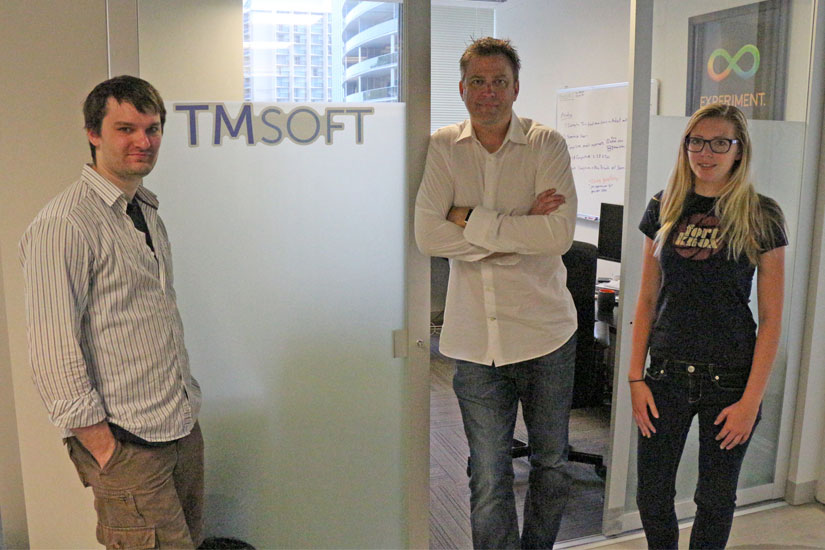
The TM Soft team(Updated at 2:20 p.m.) Mobile applications have become a major sector of the technology industry in the last few years, but when TM Soft Founder Todd Moore got his start, there was no book, no blueprint on how to run a successful app company.

Moore was working as a software developer in federal contracting when, in 2008, he decided he would try and build an iPhone app to help him sleep. This was in the early days of iPhones, when they were running iOS 2.0, the first iteration to include the app store.

“I was teaching myself how to create apps late night weekends and just doing it for fun,” Moore told ARLnow.com from a conference room in Rosslyn’s UberOffices. “Then I was making games and useful apps, and when I published White Noise, it became the No. 1 free app on iTunes overnight.”

Considering the massive amounts of code and time it takes to launch some apps today, Moore’s app was relatively low-tech; he went around his house and yard in Arlington recording noises, like a fan, crickets and rain. He put the app on the store, and a month later he began charging $1.99 for it and created a separate, free app with advertisements. The switch enabled him to quit his job and devote his energy full-time to maintaining White Noise and building new apps.

Screenshot of TM Soft's White Noise Lite app“It only took me a weekend to build the first [White Noise app],” he said. “It only looped eight different sounds. It was simpler times back then. Times have changed, now these phones are like personal computers.”

To date, White Noise has been downloaded more than 20 million times, allowing Moore to eventually grow his company to five full-time staff members. The ongoing success of the app has allowed him to experiment, and fail, with more ambitious apps. He said he’s launched more than 20, but only four have turned into high-volume downloads.

“It’s nice to be able to come into work and be able to say ‘this is what we’re going to do,'” he said. “If I have some wacky idea I want to try, we can try it. It’s total freedom.”

After White Noise became his meal ticket, Moore changed tack and started building more games and tools. He developed Card Counter, a game that teaches its users how to count cards at a blackjack table. Moore said he developed it after reading “Bringing Down The House,” a story about how MIT students learned to county cards and made millions of dollars at Las Vegas casinos.

Card Counter was in the top 20 of iTunes apps after casinos issued a warning about card counting apps. Puzzle app Compulsive is at around 2 million downloads. Moore is in production of another puzzle game that has social competition aspects and multiple levels.

“That’s something I’m spending a lot of time on,which is risky,” Moore said. “The longer it takes you to finish your app, the riskier it is.” (more…)


Startup Monday header

Editor’s Note: Sponsored by Monday Properties and written by ARLnow.com, Startup Monday is a weekly column that profiles Arlington-based startups, founders and funders. The Ground Floor is Monday’s office space for young companies in Rosslyn. The Metro-accessible space features a 5,000-square-foot common area that includes a kitchen, lounge area, collaborative meeting spaces, and a stage for formal presentations.

SevaCallManpreet Singh doesn’t need a long, explanatory speech to explain what the tech startup he founded with his brother, Gurpreet, does. All he needs is a phone call.

The Singhs are co-founders of SevaCall, based in Crystal City’s Crystal Tech Fund. In his demonstration, Singh goes to his company’s website and gives you an example of a service you may need. He pulls up “plumber,” inserts a location, time for the appointment and specific problem.

Within 90 seconds, the customer receives a call from, as in his example, the plumber, and the two can discuss terms. Fifteen seconds after Singh inputs the criteria, his phone rings with the test call, and he has the option to take the call — and pay SevaCall’s fee — or ignore it. Customers pay nothing, the merchants don’t receive the access to the customers’ information and, if the initial merchant and the customer don’t agree to terms, there will be two more waiting as backup.

“Finding a service provider is not efficient at all,” Singh said. “But with us, you literally can have three companies that have chosen to work with you, and you can be done with your task in 15 minutes.”

SevaCall has more than 50 “verticals,” Singh said, including heating and cooling, roofing, computer repair, auto repair and dentists. So far, the company has had requests in 8,000 zip codes nationwide, fielded 900,000 calls and interacts with more than 1,000 businesses a week.

Screenshot of SevaCall's website

The company was founded in the fall of 2011, when Gurpreet Singh was operating his last business, Geeks on Site, and fielding a substantial number of phone calls from customers out of his service area. He had the idea to connect companies with their customers more efficiently, and the University of Maryland computer science grad started to build the beta.

“Many of the ways small businesses had to advertise were very inefficient,” Manpreet Singh said. “You don’t know who’s seeing what ad, and there’s never a good way to measure your return on investment.”

Manpreet Singh was working as an investment banker when his brother asked him to join his company full-time in 2012 when the website launched. In the beginning, getting companies to join the website — and customers to use it — was a struggle. Cold-calling companies asking them to sign up was both inefficient and ineffective, so the Singhs decided to use a composite ranking of location, quality based on social media and web ratings, and mined data from the webs.

“We have a two-sided marketplace, which is really challenging,” Singh said. “We started to mine our data and just put companies in our database, giving them their first call for free. The businesses were so happy they would call us right back after hearing the customers tell them where they heard about them. After that, we were able to build our network a lot faster.”

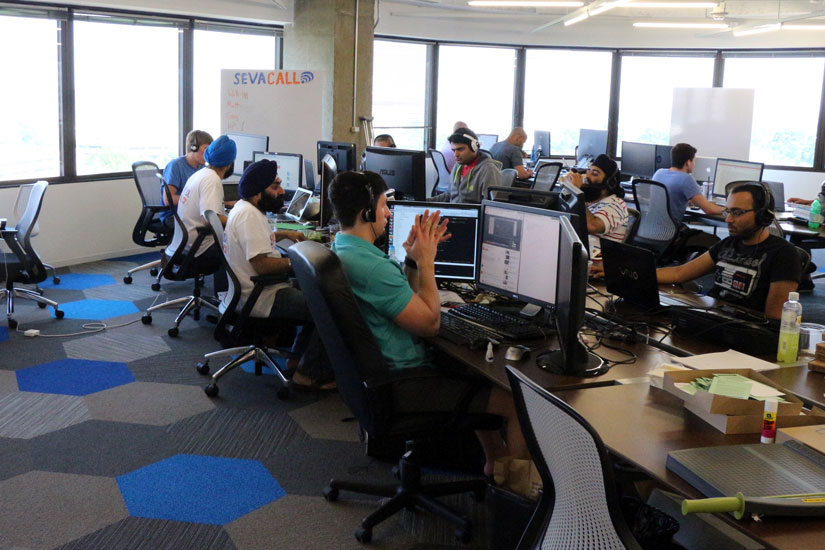
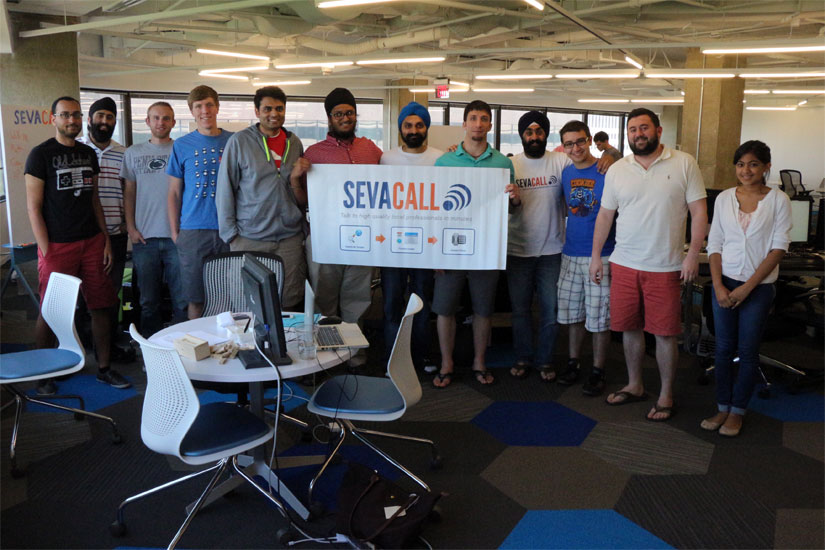
The SevaCall teamFor the first six months of SevaCall’s existence, the founders funded it themselves before working on raising a $1.3 million seed round of funding. A new round of “significant” investment from Crystal Tech Fund and others is expected to be finalized soon, Singh said.

The company is currently developing a mobile app with voice-based technology that Singh said will increase repeat customers. The company has seven full-time employees among 16 workers including interns and contractors. After the next round of investment, Singh expects to grow even more, despite the fact that his company isn’t quite profitable yet.

“We expect to go to about 20,000 zip codes,” he said. “We think we can be engaging 10,000 people a week. I want to blanket the entire country.”


Startup Monday header

Editor’s Note: Sponsored by Monday Properties and written by ARLnow.com, Startup Monday is a weekly column that profiles Arlington-based startups, founders and funders. The Ground Floor is Monday’s office space for young companies in Rosslyn. The Metro-accessible space features a 5,000-square-foot common area that includes a kitchen, lounge area, collaborative meeting spaces, and a stage for formal presentations.

A Better Health BoxSubscription delivery boxes have become in vogue in the past few years, with companies like Birchbox, NatureBox, BarkBox and Bike Loot delivering small troves of goodies every month to their members.

But, to hear Better Health Box founder Michael Slage tell it, none of the other subscription boxes on the market provide what his company, which he runs out of his Pentagon City home, do: healthy, tasty snacks targeted at specific populations with an educational focus.

Slage has worked at the intersection of healthcare and technology for 20 years, starting with “telemedicine” for NASA, in which he assisted doctors diagnose and treat astronauts on the International Space Station and other missions outside of Earth’s orbit. He is also the founder of Healthengage a health data analytics company that specializes in global diabetes data.

Despite his resume, Slage said his newest company — which he started last year as a diabetes box at Healthengage before spinning it off into a separate company — is important to him because of its direct, personal impact.

“[My previous jobs] were helping people, but it was all numbers and electronics,” Slage said. “It was helping people, but it wasn’t the same. This just means more. We’re literally sending care packages every month. It really makes a difference in people’s lives.”

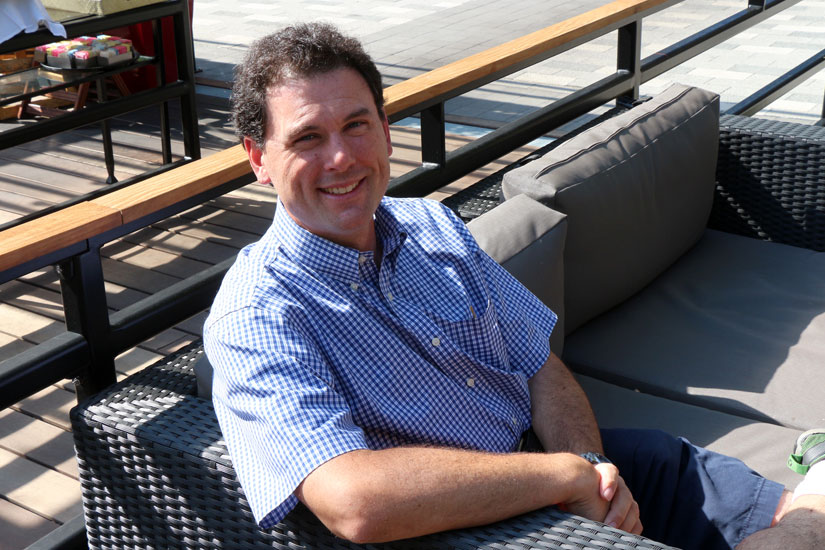
Better Health Box Founder Michael SlageBetter Health Box costs $30 a month and includes three-to-five products, depending on their size, in each box. There are five different subscriptions available: for diabetes, general health, children, brain health and focus and sexual health, “which was a popular request,” Slage said.

“We try to do a mix of things that are unique that maybe people have never thought to try,” Slage said. “There are all these great companies making products people have never heard of, and all these people who desperately want to eat smarter and healthier. There seemed to be a need to matchmake.”

Slage, who has also worked for the Russian space program, said a key component of his company for the future will be expanding globally, both in the products it offers and the customers it serves. Since it’s a home-based company, Slage said he can’t ship globally yet despite demand for Better Health Box overseas.

“I believe in using multiculturalism to find solutions,” he said. “We want to use food and drinks from other countries that we don’t know about here, because if it works there, it will work here. Everybody’s human.”

Slage said each product is tested before it goes into any boxes — which his 9-year-old son helps him pack and coordinate. The testing process is key, he said, because “sometimes these healthy things are so foul-tasting.” For that reason, he thinks the educational component is just as important as the products themselves.

“Health education has really declined in this country,” he said. “A lot of people just eat what’s in front of them. Having a chronic condition makes knowing what’s in what you’re eating really important. That’s why we have doctors helping us to make sure each product is safe for the customers.” (more…)


Startup Monday header

Editor’s Note: Sponsored by Monday Properties and written by ARLnow.com, Startup Monday is a weekly column that profiles Arlington-based startups, founders and funders. The Ground Floor is Monday’s office space for young companies in Rosslyn. The Metro-accessible space features a 5,000-square-foot common area that includes a kitchen, lounge area, collaborative meeting spaces, and a stage for formal presentations.

Virginia's Center for Innovative TechnologyIt’s nearly impossible to be around the startup industry in Arlington without hearing about which companies the Virginia Center for Innovative Technology is investing in.

CIT Gap Funds is the program that invests in Virginia-based, early-stage technology, life science and “cleantech” companies. According to Gap Funds Managing Director and founder Tom Weithman, the Gap Funds program is a 501(c)3 nonprofit that receives between $3 million and $4 million annually from the state to invest. With a portfolio of 113 companies, it’s widely believed to be the most active angel investor in the D.C. area.

CIT owns equity in 13 Arlington-based companies: Airside Mobile, CirrusWorks, Encore Alert, LiveSafe, uKnow, PerformYard, Speek, Veenome, Zoobean, Power Supply, Wealthengine, DistilIT and Loop88. CIT also has pledged an investment to Rosslyn-based Ostendio, but Ostendio has yet to close its seed funding round.

For at least some of those companies, the CIT Gap Funds investment spurred their move to Arlington. Zoobean, which was featured on ABC’s Shark Tank this spring but secured investment before the episode aired and CIT knew who had invested from the show. When the episode aired, Zoobean co-founder Felix Brandon Lloyd and his wife and cofounder, Jordan Lloyd Bookey, could finally spread the word that Mark Cuban had invested $250,000 in their company. They’re now headquartered in Rosslyn’s ÜberOffices.

The CIT investors knew “there was a major opportunity coming,” Lloyd said, but decided not to wait and helped facilitate and gather investors for the company’s $980,00 funding round, completed in April.

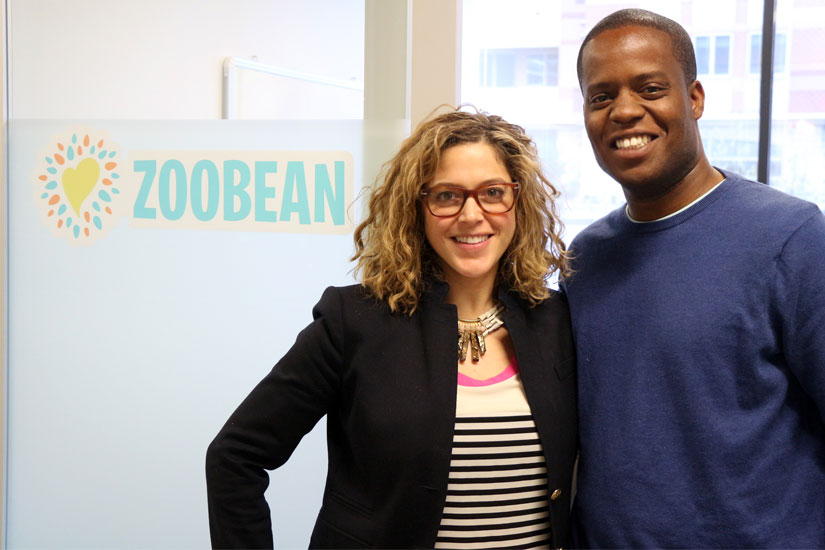
Jordan Lloyd Bookey and Felix Brandon Lloyd of Zoobean“They agreed to do the legal work and diligence and to tell other investors that they were the lead investors,” Lloyd told ARLnow.com. Zoobean had been headquartered in D.C.’s 1776 accelerator. “They told me we’d have to move to Virginia, I told him we were open to that… I think it was one of the things in my [investment] deck, you anticipate what things they may ask. I made it clear that we understood what it meant so they didn’t have to sell us.”

Most Arlington companies interact with CIT’s Dan Mindus, who is a founder of venture capital firm NextGen Angels. Lloyd initially met Mindus for coffee and advice, and in their conversation, Mindus broached the idea of pursuing a CIT investment, Lloyd said.

“I knew nothing about CIT at the time, I was sincerely asking him for advice,” Lloyd said. Mindus would sponsor Zoobean to CIT’s investment board, which gave Zoobean pointers after an “initially negative” response. When Lloyd came back, after working with Mindus and CIT, the fund eventually agreed to invest $100,000 with a $50,000 reserve available.

Weithman said CIT typically invests between $100,000 and $200,000 in a company, but its primary mission is to catalyze future investment. Similar funds in other areas, like on Lloyd had been a part of with his previous company in Pittsburgh, invest money to create jobs. That’s not what the Gap Funds are necessarily intended to do.

“Company growth and profitability are the ultimate arbiter of success in this early stage investment,” Weithman said. “We consider investment by the private sector to be a highly validating process metric of what we do. If we invested for job growth, that could send you down a number of unusual paths. High-growth techonology companies develop other innovation and contribute to Virginia’s economic ecosystem.” (more…)


Startup Monday header

Editor’s Note: Sponsored by Monday Properties and written by ARLnow.com, Startup Monday is a weekly column that profiles Arlington-based startups and their founders. The Ground Floor, Monday’s office space for young companies in Rosslyn, is now open. The Metro-accessible space features a 5,000-square-foot common area that includes a kitchen, lounge area, collaborative meeting spaces, and a stage for formal presentations.

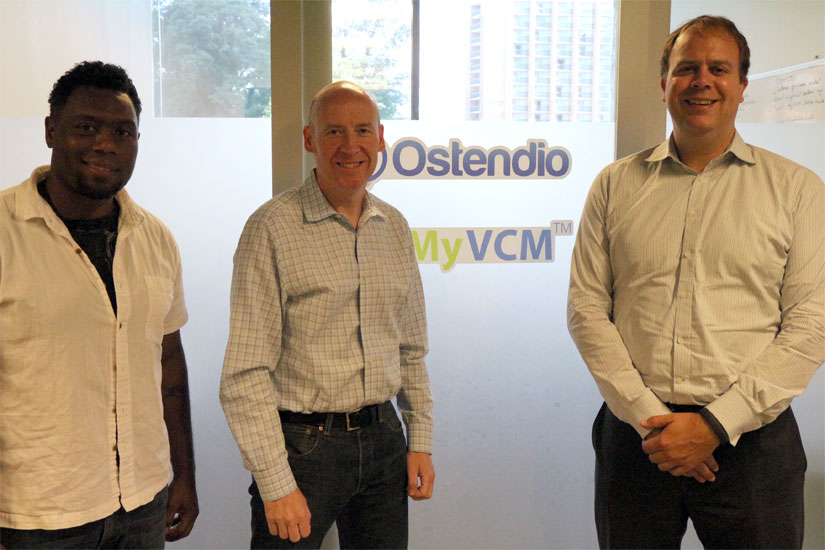
The Ostendio team “I’m an operations guy,” Grant Elliott, Founder and CEO of Ostendio, which specializes in I.T. compliance and security, said in a conference room at ÜberOffices in Rosslyn last week. “I laid out a plan and we’ve [grown] to that plan. Only when I started talking to people did they say how fast we were [growing]. I laid out what I thought was a conservative plan, but it turns out people think it was very aggressive.”

Elliott founded Ostendio last September after working for eight years and the chief operations officer for a health information technology company called Voxiva. It took six months for Elliott, co-founder Jermaine Jones and a third co-founder who chose to remain anonymous to build the platform, My Virtual Compliance Manager (MyVCM), that helps bring small- to medium-sized business into federal safety compliance with their data.

In the three months since the product launch, Ostendio has brought on more than a dozen clients.

Last week, Ostendio was one of 20 companies to present to potential investors at TechBuzz, a semi-regular tech event for D.C.-area companies. Elliott had to present a four-minute pitch to investors, which he said was nerve-racking since I.T. compliance isn’t as “sexy” as a new social media platform.

Perhaps because Elliott’s company isn’t operating in one of the attention-grabbing tech startup sectors, and that this is his first-time as a CEO, fundraising has been frustrating, even though it has borne some fruit early on.

Ostendio's platform, My Virtual Compliance Manager

“Fundraising takes longer than I expected,” he said in the heavy accent of his native Scotland. “What’s surprised me is it’s less about the business model and more about the dynamics of fundraising.”

The business model, Elliott says, is the reason that Ostendio has already agreed to investment with Virginia’s Center for Innovative Technology and from D.C.’s 1776, which also counts Ostendio as a member. Ostendio has been bootstrapped thus far, but is seeking $500,000 from its first round of funding.

Ostendio targets companies with between five and 100 employees in “a regulated market” like healthcare, Elliott said. In healthcare, where most of Ostendio’s clients operate, “HIPAA [Health Insurance Portability and Accountability Act] regulations are a dark cloud hanging over” small businesses.

“They see compliance with federal regualtion as a huge task, which is partly true,” he said. “Small companies unfortunately have the same regulations as a larger company. Our platform actively manages compliance for our customers. We also provide training and audit functionalilty.”

Because of the boom in cloud computing and mobile devices, Elliott said, more and more small tech companies can innovate in a space like healthcare, but large medical providers like hospitals and insurance companies need to ensure that any technology that is brought on is compliant with HIPAA regulations and the patients’ data will remain secure.

(more…)


Startup Monday header

Editor’s Note: Sponsored by Monday Properties and written by ARLnow.com, Startup Monday is a weekly column that profiles Arlington-based startups and their founders. The Ground Floor, Monday’s office space for young companies in Rosslyn, is now open. The Metro-accessible space features a 5,000-square-foot common area that includes a kitchen, lounge area, collaborative meeting spaces, and a stage for formal presentations.

Power Supply meal of steak skewers with kale, sweet potato, bacon and blueberry saladAs the craze surrounding Crossfit and the Paleo diet has grown over the past handful of years, so have the businesses that support those trying to maintain that lifestyle. One such business is Power Supply, a food company that takes chef-made meals and delivers them to gyms around the D.C. area.

In late 2010, Power Supply was born after founder Patrick Smith and co-owner Robert Morton had started trying Crossfit and the Paleo diet, each having major success, but getting frustrated with the limitations on the food available to them.

“Eating really well is some combination of super boring, very difficult or very time consuming, or often all three,” Morton told ARLnow.com. “Patrick found that doing the cooking to a different diet compliance was tough, and being the three-time entrepreneur that he is, he set about thinking, ‘How could I make this easier?'”

Smith had already founded software companies called Assist Match and Market Hardware, the latter of which he sold, before taking up his new diet and exercise regime. When Smith, an Arlington resident, found his next venture idea, he paired up with a private chef named Rachelle Slotnick, owner of the former Little City Gourmet in East Falls Church. He then started taking orders in advance and delivering them to his home gym, Trident Crossfit in Alexandria.

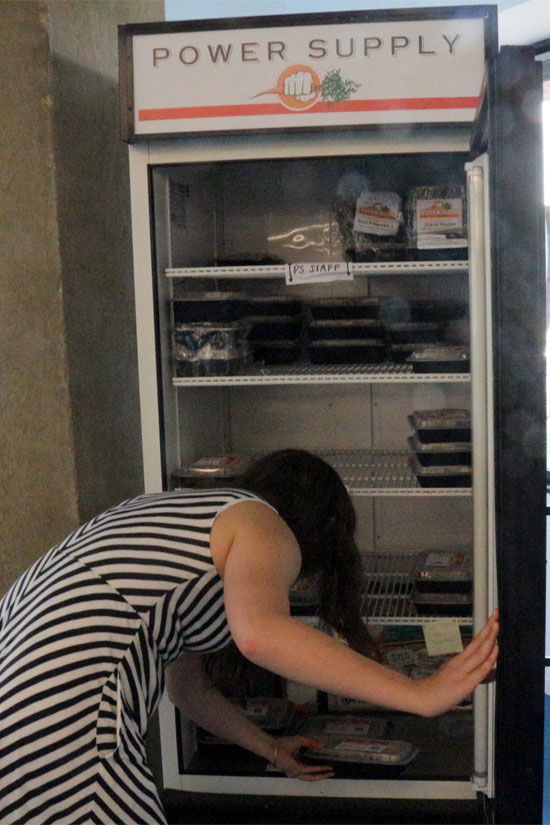
A power supply fridge, this one in Power Supply's Crystal City officeSoon, Smith was selling meals in Patriot Crossfit on Lee Highway in Arlington while Slotnick was growing the menu. Today, Power Supply is in more than 75 gyms in the D.C. area, Morton said, and has a network of seven chefs preparing not only Paleo meals, but also vegetarian and “mixitarian,” which is vegetables and meat like the Paleo diet, but mixes in some grains and legumes. A year ago, Power Supply merged with Mindful Chef, which connected chefs with yoga and pilates studios, and now runs Power Supply’s chef network.

“[Smith] figured that there was a real combination with food that tastes really good, is healthy for people to eat and is convenient for people to pick up,” Morton said. “What’s been most interesting to us is we started from Crossfit and Paleo, and they are both ideas and ways of eating and moving differently, but we’ve already said we don’t want to be confined by that. What’s been exciting for us is the expansion in the food that we’re offering and, with it, the audience has expanded.”

Among the meal choices Power Supply offers is steak skewers with a kale, sweet potato, bacon and blueberry salad — which Morton said was wildly popular — spaghetti squash with andouille sausage sauce and Cuban pulled pork with cabbage slaw and guava sauce. The standard meal size — a 5-ounce cooked protein and a roughly 16-ounce meal — costs $12.50 per meal. Paleo eaters can get a smaller meal for $9.50 or a larger one for $15.50.

Customers can order meals online the week in advance (the orders close on Thursday night) and pick them up at their local gym on Mondays and/or Thursdays. Among the Arlington gyms that participate are Potomac Crossfit in Courthouse, Mind the Mat pilates and yoga studio in Clarendon and Energy Club in Shirlington.

“What’s been most interesting and helpful is [the gyms] are activated communities where people are getting together to do move differently and eat differently,” Morton said. “It’s hard, it’s fun, in places like Crossfit and yoga and pilates, more and more people are not what the typical image looks like. There’s a positive community element in places where people are succeeding where they haven’t before.” (more…)


Startup Monday header

Editor’s Note: Sponsored by Monday Properties and written by ARLnow.com, Startup Monday is a weekly column that profiles Arlington-based startups and their founders. The Ground Floor, Monday’s office space for young companies in Rosslyn, is now open. The Metro-accessible space features a 5,000-square-foot common area that includes a kitchen, lounge area, collaborative meeting spaces, and a stage for formal presentations.

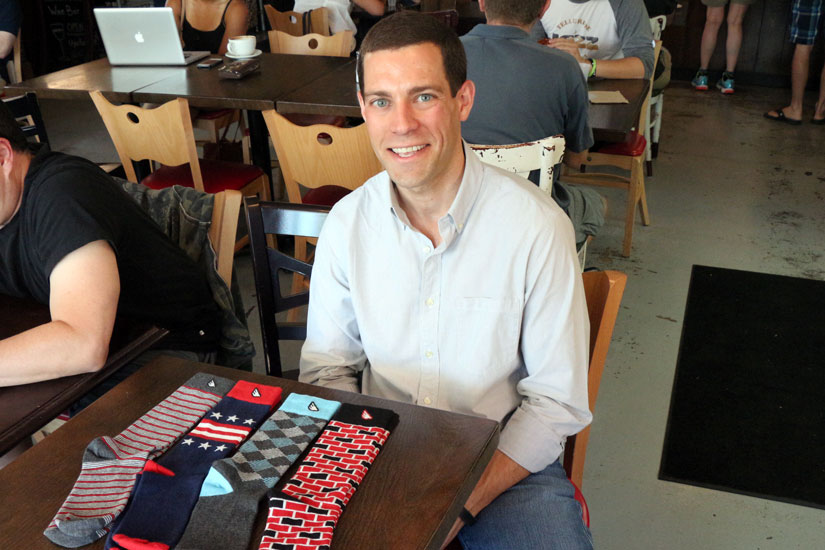
Boldfoot Founder Brad Christmann(Updated at 12:40 p.m.) Brad Christmann was yearning to start a company when he graduated from business school in 2012, but he could not think of a viable idea.

That’s when his brother reminded him of an idea he had as a 9-year-old for reversible socks. Christmann quickly recognized the reversible idea wasn’t going to work, but the idea of a sock company stuck in his head.

This morning, Christmann launched the Kickstarter for his startup, Boldfoot, selling $12 pairs of American-made socks with eclectic designs.

“I really wanted to do something in the startup space, but didn’t have an idea I loved,” he said. That’s when his brother reminded him of his sock idea. “Socks are endlessly creative. It’s a nice, low-cost product with limited risk to test it out with a bunch of different patterns.”

The socks aren’t reversible, but Christmann said they are all made in the U.S., with a cotton, nylon and spandex blend in a manufacturing plant outside of Philadelphia. He’s banking that the designs — which he created himself — the material and what the company stands for will resonate with Kickstarter investors and, one day, customers.

Along with being made in the country, Christmann plans to donate a dollar from every purchase to a charity dedicated to helping homeless veterans with jobs, training and housing. His full-time job is in digital marketing for Capital One, and he’s applying many of the principles he learned there, and in business school, to Boldfoot.

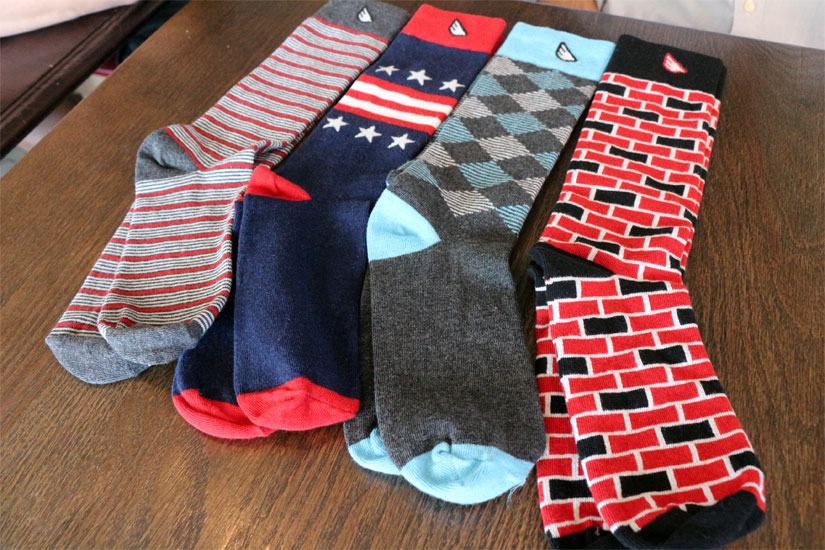
Some sample socks by Boldfoot“I tried to build the company around passion points,” he said. “It’s American-made, they’re designed in school and team colors, and we’re pro-veteran. It’s about finding how to promote your company in a very targeted way.”

Originally, Christmann said he was “adamant I wasn’t going to use Kickstarter. I wanted to do it the old-fashioned way.” He took several of the designs he created to different manufacturers, all of whom told him his company and his orders would be too small for them to produce.

He said the reality check of the difficulties of finding a manufacturer was something he expected, but not to the degree he experienced.

“I didn’t know the manufacturing was going to be that tough,” he said. “It was like they’ll work with me when they have nothing better to do. It wasn’t until I shelled out two grand to make some samples I had any sort of agreement.”

The designs for the samples Christmann made came from random places of inspiration. He would walk down the street and see a brick pattern on a building and take a photo to turn it into a sock (far left in the above picture). Because of the patriotism imbued in his company, he made sure to have several red, white and blue designs.

“I had a three- or four-month period where everywhere I went, I saw patterns,” he said. “I’ve never had any formal design training, but I’m good enough at Photoshop to be dangerous.” (more…)


Startup Monday header

Editor’s Note: Sponsored by Monday Properties and written by ARLnow.com, Startup Monday is a weekly column that profiles Arlington-based startups and their founders. The Ground Floor, Monday’s office space for young companies in Rosslyn, is now open. The Metro-accessible space features a 5,000-square-foot common area that includes a kitchen, lounge area, collaborative meeting spaces, and a stage for formal presentations.

TeeBoxPro Founder Ryan BoothRosslyn resident Ryan Booth knows golf is “an old school game,” but his technology startup venture hopes to take the leisure sport into the modern era.

Booth is developing TeeBoxPro as combination handicap tracker/social network for golfers. He graduated from business school at George Washington University last month and works full-time in finance for the General Services Administration, but he’s been devoting nights and weekends to building his product.

The germ of the idea began when Booth was taking a class called “e-entrepreneurship,” and he had to come up with an idea for a new tech business. He had already worked with the U.S. Olympic Committee during the 2012 London Olympics, and knew he wanted to do something sports-related. He started thinking about the Google Doc he and his friends use to update and compare each other’s golf scores.

“My friends and I are always trying to figure out how well each other are doing and what courses we’re playing,” he said, noting several members of the group are spread out across the country. “I realized there was really nothing out there to make golf social online. There’s a void in the marketplace.”

At first, TeeBoxPro was designed as a golf social network, but as the idea and the designs evolved, it has turned into a much more powerful tool. When the product launches — which Booth expects to happen in the fall — it will have a handicap tracker built off the algorithm of the U.S. Golfers Association, which tracks official handicaps. Golfers can usually only find out their handicap by being a member of a country club or paying for a service online, but TeeBoxPro plans for the service to be free.

In addition, the handicap tracker will be rolled into a ranking system, not unlike those used by fitness apps like Nike+ or MapMyRun, for competing among friend circles. It will also have social functionality, with users being able to check in at golf courses, upload photos and video and, Booth hopes, earn promotions from golf courses that sponsor the app.

TeeBoxPro Handicap tracker“There is currently a void in the golfing market for a tool this integrated,” Booth said. “There are tracking apps like GolfLogix, and it has a social component, but it’s terrible. Nobody uses it. Golf is a competitive sport, but it wouldn’t be unless you’re in a foursome or a tournament.”

Booth said he’s done weeks of on-the-ground market research, talking to golfers old and young at courses around the D.C. area, like Hains Point, Bull Run and Top Golf in Alexandria. He said he plans to return to these places with an app, and letting those golfers beta test it, as well as encouraging courses to partner with TeeBoxPro.

Booth said he hopes to be testing the product “by the tail end of golf season” and to have a full “MVP” product in “no less than six months.” Booth knows his company’s biggest challenge will be getting users, which is why he doesn’t plan on selling TeeBoxPro as a “new golf social network.”

“We’re going to market this is a free handicap calculator,” he said. “We’re going to get a lot of people testing it, get them to feel it out, and hopefully we’ll be able to use their feedback to improve.” (more…)


Startup Monday header

Editor’s Note: Sponsored by Monday Properties and written by ARLnow.com, Startup Monday is a weekly column that profiles Arlington-based startups and their founders. The Ground Floor, Monday’s office space for young companies in Rosslyn, is now open. The Metro-accessible space features a 5,000-square-foot common area that includes a kitchen, lounge area, collaborative meeting spaces, and a stage for formal presentations.

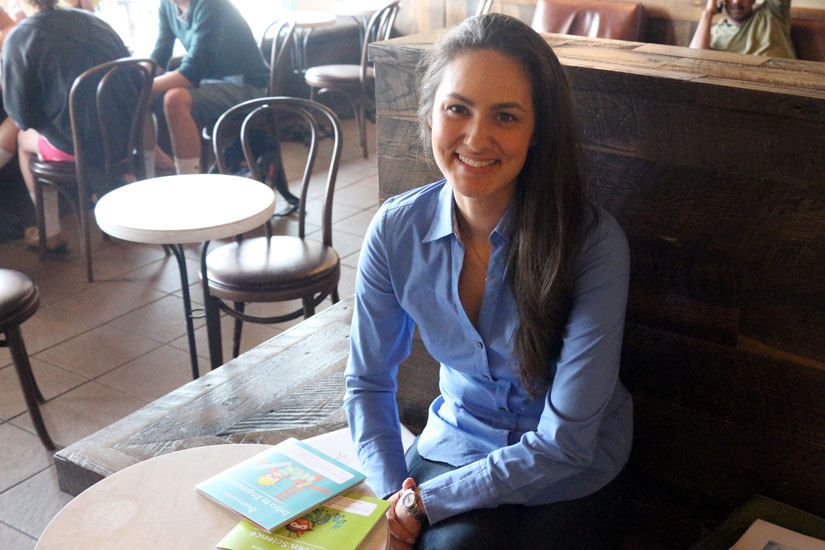
Appleseed Lane co-founder Cynthia Marbley(Updated at 5:20 p.m.) Cynthia Marbley was a teacher at Tuckahoe Elementary when her son was having a playdate with her neighbor’s child.

She and her neighbor were discussing how working mothers could have a more active role in their children’s education when they got the idea for Appleseed Lane.

Appleseed Lane is a monthly, subscription-based company that sends parents a kit for a project that encourages STEM — science, technology, engineering and math — education in children between 4 and 8 years old.

“We want our kids to be exposed to learning in a way that’s dynamic and organic,” Marbley told ARLnow.com from the Starbucks in the Lee-Harrison Shopping Center. “The kids can get their hands dirty. Science has to be hands-on for kids to have that ownership and engagement.”

Marbley and her neighbor got to work quickly on what those kits would look like, how they would change from month-to-month and every other detail creating a service from scratch entails. Marbley decided last summer to leave her teaching job and devote herself to Appleseed Lane full-time, and the company launched its first box in October 2013.

An Appleseed Lane kit with materialsThe kits have a different theme every month and include projects with simple, colorful instructions. The theme for June is Sports Science; it is a collaboration with Shawn Marion, an NBA player for the Dallas Maverick and, Marbley said “an old friend.”

Each kit includes every material needed, with the exception of household items like scissors, and include lesson plans led by Professor Caterpillar; lesson plans aligned with National Science Education Standards, Marbley said.

“The boxes are research-based and aligned with what schools are doing,” Marbley said. “We got teachers and education experts to weigh in on the design and lesson and we have a ton of kids test it.”

Subscriptions cost $23.95 for one month, $21.95 per month over six months or $19.95 per month over a year, with shipping included. Each kit is roughly the size of a shoebox.

“My 5-year-old son is one of my official testers,” Marbley said. “He enjoys it because it’s also uninterrupted time with me. It’s an ongoing education and it’s also about relationships. The parents do each project with their child and they can engaged and not on their phones while they’re doing it.”

Appleseed Lane instructionsSince launching in October, Marbley said Appleseed Lane has grown 500 percent and is now firmly profitable. The company is bootstrapped outside of friends and family money, and it is shipping nationally.

Appleseed Lane will soon offer parents the ability to purchase a series of lesson plans at once, as opposed to simply receiving one per month, to make it possible to use as homeschooling material. The company is focused on growing nationally and building partnerships, and not yet on offering a wider variety of services like older education or kits focused outside of STEM.

“We want to focus on kids who can develop a love for STEM early on,” Marbley said. “We want kids to get excited about STEM as soon as possible when they’re naturally curious.” (more…)


Startup Monday header

Editor’s Note: Sponsored by Monday Properties and written by ARLnow.com, Startup Monday is a weekly column that profiles Arlington-based startups and their founders. The Ground Floor, Monday’s office space for young companies in Rosslyn, is now open. The Metro-accessible space features a 5,000-square-foot common area that includes a kitchen, lounge area, collaborative meeting spaces, and a stage for formal presentations.

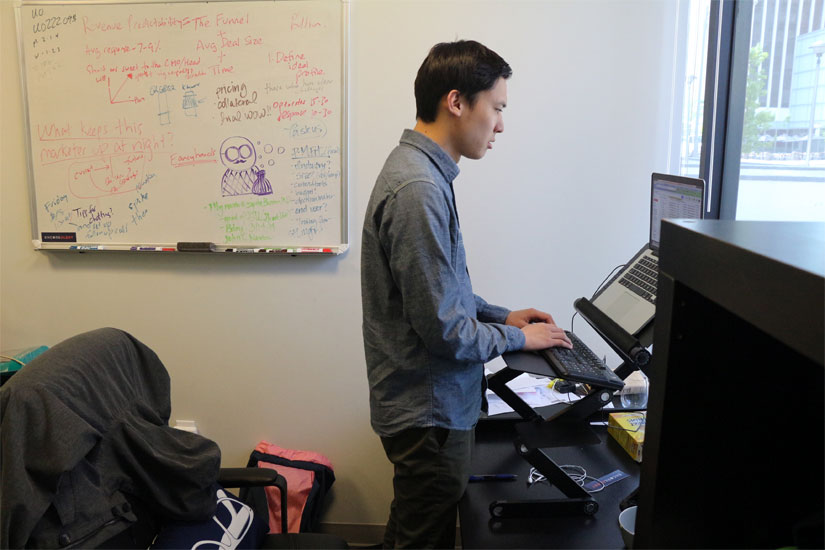
Encore Alert Founder/CEO James LI works at his UberOffices workspaceWhen most early 20-somethings are getting ready to graduate college, they can usually be found furiously sending out job applications, cramming for final exams and enjoying their last few months until “real life” starts.

Encore Alert founder James Li, however, was preparing to take his seed of an idea for a business and supercharge it after he was accepted into Acceleprise, a technology startup accelerator in downtown D.C. that gives companies $30,000 and access to its mentors in exchange for a 5 percent stake.

He and his cofounders, Tammy Cho and Felipe Lopez, were originally accepted for their idea for an email newsletter platform for nonprofits right after Li graduated from Georgetown last year. (Cho, although full-time with the company, is a sophomore.) In August, they hit the “reset” button and launched Encore Alert as it is today: a tool that tells social media marketers when to tweet, how often, and about what, all in real time, all in email alert form.

“We talked to a lot of chief marketing officers,” Li said about his company’s reset, “and they told us a lot of the social media dashboards out today have become overkill, and they don’t enable the typical social media marketer to take action every day.”

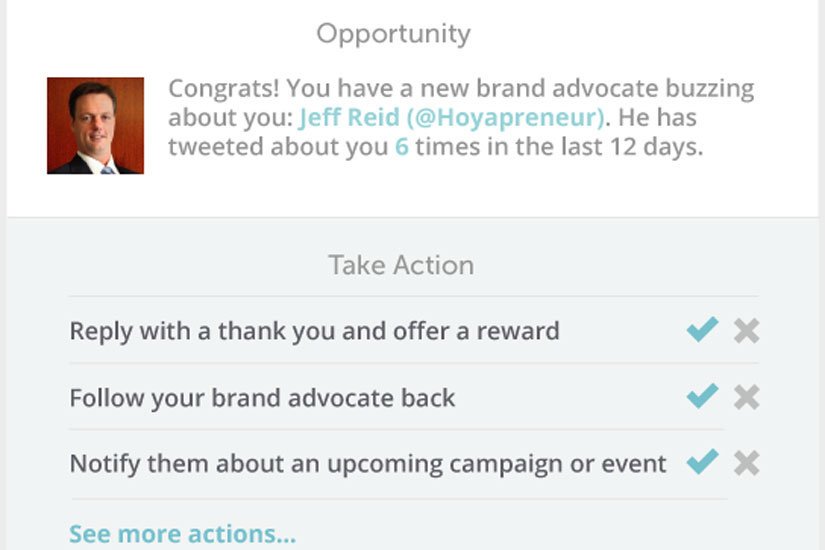
Encore Alert’s system takes all tweets related to a company, including Twitter mentions, relevant articles or trending topics, and distills them into “action items.” It recommends when the social media marketer should reply to a tweet, link to an article, or try to jump on a hashtag, for instance. Encore Alert’s current clients include Georgetown University, Consumer Electronics Association and Wedding Wire.

An example of an Encore Alert emailEncore Alert boasts that it has parsed through more than 12 million tweets for its customers, and narrows it down into five to seven recommended actions the Twitter account should take. Li describes it as a “social media assistant,” whose job it is to be looking at Twitter 24/7 and giving reports to the marketing manager.

“The goal is to have all the work done before the marketer touches it,” Li said. “They can sit back and let the information come to them.”

Encore Alert moved into Rosslyn’s ÜberOffices last month after completing a $460,000 seed funding round. One of Li’s investors was the Virginia Center for Innovative Technology, which is why Encore Alert moved from Acceleprise to Arlington. The company now has six full-time employees, but, Li says they’re currently in “hiring and sales mode.”

That’s a shift for Li, who spent most of the early months of his company in meeting after meeting with mentors, advisers and, most of all, potential investors. His goal is still to get to a Series A funding round, but recently he’s been able to do what he envisioned doing when he launched his company: “sit down and execute.”

“It’s definitely a mixed bag,” Li says of the life of the CEO. “You’d rather be sitting and executing, and meetings tend to be a big distraction. But if we didn’t fundraise, we wouldn’t have these great advisors throwing their weight and advice behind us.”

(more…)


View More Stories