
Startup Monday header

Editor’s Note: Sponsored by Monday Properties and written by ARLnow.com, Startup Monday is a weekly column that profiles Arlington-based startups and their founders. The Ground Floor, Monday’s office space for young companies in Rosslyn, is now open. The Metro-accessible space features a 5,000-square-foot common area that includes a kitchen, lounge area, collaborative meeting spaces, and a stage for formal presentations.

Control A+ demo viewMatthew Fischer has had asthma all his life, but it wasn’t until helping a friend who was diagnosed with the respiratory disease in her 50s that the career entrepreneur had the idea to help asthmatics everywhere.

Fischer was helping his friend — and future co-founder — Barbara inspect her home for environmental triggers of asthma attacks. He was in the middle of a master’s program at Virginia Commonwealth University in brand strategy, but realized he could take his first-hand knowledge and passion for helping asthma and turn it into a business.

Thus, Control A+ was born. The company takes three devices — an indoor environmental monitor, a breathalyzer/inhaler device he calls the “flute,” and a smartphone or tablet to view the other device’s data — and creates a system that lets parents and doctors monitor their asthmatic child/patient’s symptoms and risk factors to make their daily lives both safer and happier.

“There are so many triggers for asthma attacks, and parents always say ‘no’ to asthmatics,” Fischer told ARLnow.com over a plate of mango sticky rice at Urban Thai near Crystal City. “A lot of asthmatics feel helpless. We’re mainly focused on empowering individuals to control their asthma and connecting it with the things they do in their everyday life.”

The data each device compiles can tell parents whether the child is safe to go outside and play, or whether to avoid physical activity. It analyzes risk factors for asthma attacks, and functions as “respiratory therapy,” encouraging young asthmatics to build up lung function at safer times. Fischer said he had never run a mile before he was 25 years old for fear of an attack.
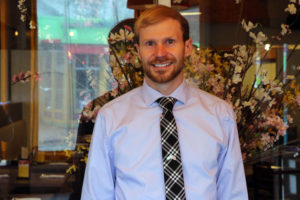
Control A+ Founder Matthew Fischer

Once he started running, he learned how he could safely push himself until he got to the point where he was competing in triathlons.

“Going across that finish line was one of the greatest moments of my life,” he said. “Imagine if kids 10 years old can experience something like that.”

Fischer had his idea over winter break in 2012, and immediately brought his idea for the devices to patent attorneys, a decision he learned from starting multiple companies before, from a fence and deck restoration company in Utah to a data visualization company called Data Illustrate. Fischer also consults for startups in the area.

After spending months refining the product and patenting it, Control A+ announced itself last October, and entered itself in the Verizon Powerful Ideas contest, where it finished in the Top 10 in the healthcare category.

Since the contest, Control A+ has used Verizon as both a mentor — it’s a member of Verizon’s Innovation Program — and as a tool, integrating its network into Control A+’s products. If Fischer’s company had finished in the Top 5 in its category, it would be fully funded.

That distinction is what puts Fischer’s company at a crossroads. He’s worked with designers and developers from cities all over the country, but Control A+ is in a holding pattern until it can raise some money, which Fischer said he’s pursuing now. (more…)

Startup Monday header

Editor’s Note: Sponsored by Monday Properties and written by ARLnow.com, Startup Monday is a weekly column that profiles Arlington-based startups and their founders. The Ground Floor, Monday’s office space for young companies in Rosslyn, is now open. The Metro-accessible space features a 5,000-square-foot common area that includes a kitchen, lounge area, collaborative meeting spaces, and a stage for formal presentations.

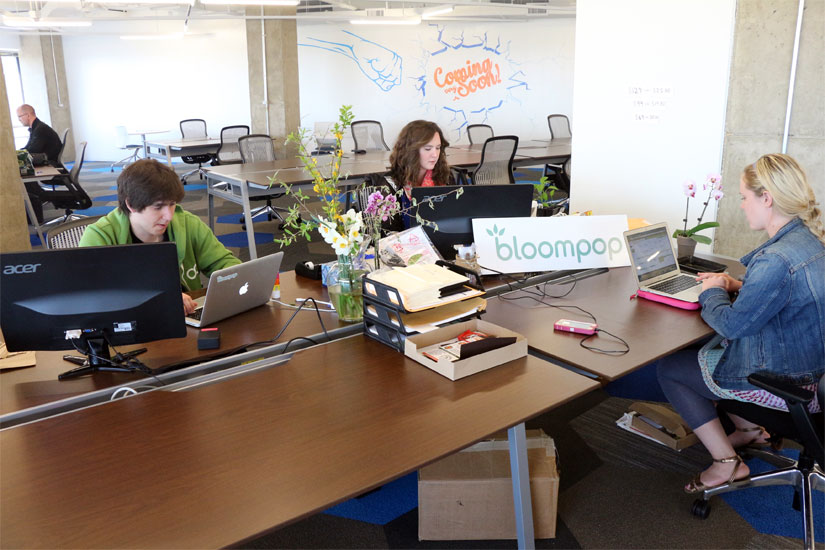
The Bloompop team at its Crystal Tech Fund workplace(Updated at 1:30 p.m.) Shavanna Miller has always loved flowers, and has a passion for supporting local businesses. Until last year, those were merely interests and hobbies.

Today, those interests and hobbies have spawned Bloompop, an e-commerce platform that lets customers browse and purchase flowers from some of the best local florists in their city. Miller said she was tired of seeing local florists struggling while national flower delivery companies delivered inferior products.

“It’s always clear the difference between a local florist and a big national chain,” Miller said. “It’s a much better value and the difference in quality is incredible.”

Miller originally had the idea when she was working in community develop New York City for Meetup six years ago. It wasn’t until late in 2012 — when she was in charge of U.S. digital sales for Rosetta Stone in Rosslyn — when a friend of hers gave her an angel investment to chase her dream. Her last day at Rosetta Stone was Dec. 31, 2012.

Miller hired a developer last March and a designer a month later. By the summer, Bloompop was in beta mode, helping deliver flowers around the D.C. area, but before that, Miller had to convince local florists to partner with her, despite having no product to show them and no customers yet on board.

Screenshot of Bloompop's website“Florists have been screwed over for years by different entities,” Miller said. “Getting the first one or two well-known florists was helpful. If you’re a florist in D.C., you know who the other good florists are.”

Bloompop’s first partner was Ultraviolet Flowers in D.C. “I basically had to speak with them four or five times to convince them to sign up,” she said.

Once the first florist or two was on board, Miller and Bloompop formed a system for dictating which florists to choose. She goes on multiple online review sites and only selects those with four- and five-star ratings, and considers florists that have creative arrangements and are willing to work with Bloompop’s universal pricing structure: every arrangement costs $69, $99 or $129, and the delivery fee, no matter where the recipient is, is a flat $10, even for same day delivery.

“A lot of the complaints in the flower industry is how non-transparent the price is,” she said. “A flower website will run a $30-for-roses sale, but after delivery, convenience and other fees, you wind up paying $70. With our site, you can easily compare what you’re getting from different florists because the price points are consistent.”

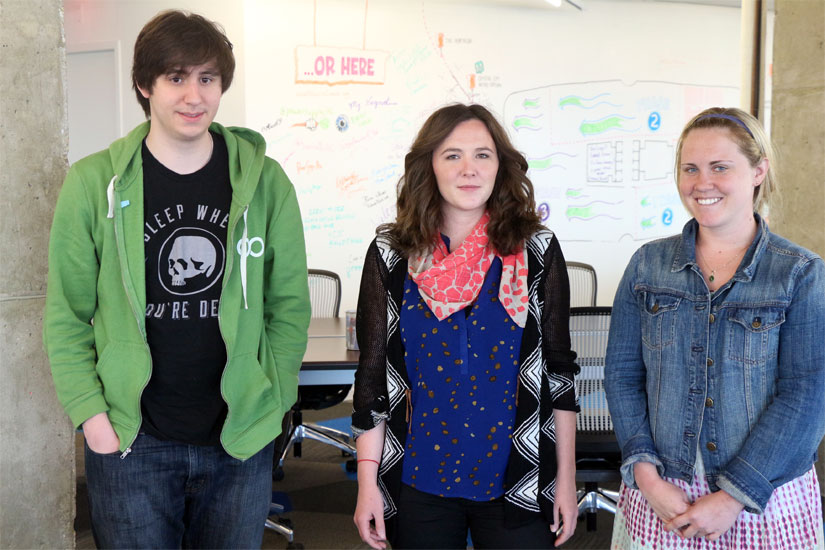
The Bloompop teamBloompop’s official launch was in September, by which time the company was based in D.C.’s 1776 incubator. Now, Miller and her small team have a workspace in the new Crystal Tech Fund in Crystal City, although they are the one company there that hasn’t yet reached $1 million in annual revenue. Miller said Bloompop was accepted into Crystal Tech Fund because its founder/investor, Paul Singh, sees promise in the company.

Miller said the company set a sales goal before it looked into expansion, and hit that goal within three months. Now, Bloompop is either launched, or soon will be launched, in New York City, Chicago, Atlanta, Kansas City, Mo., and Sarasota, Fla.

(more…)


Startup Monday header

Editor’s Note: Sponsored by Monday Properties and written by ARLnow.com, Startup Monday is a weekly column that profiles Arlington-based startups and their founders. The Ground Floor, Monday’s office space for young companies in Rosslyn, is now open. The Metro-accessible space features a 5,000-square-foot common area that includes a kitchen, lounge area, collaborative meeting spaces, and a stage for formal presentations.

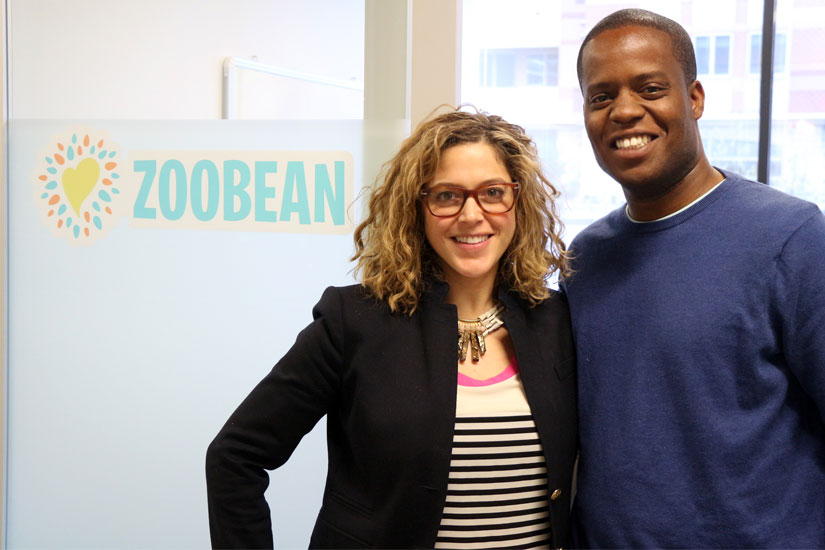
Felix Brandon Lloyd and Jordan Lloyd Bookey of Zoobean on ABC's Shark TankFelix Brandon Lloyd and Jordan Lloyd Bookey founded their company, Zoobean, as a Pandora-like service for curating and delivering children’s books personalized to each child’s needs. Six weeks later, they were invited to go on the ABC investment reality show Shark Tank.

Their episode aired Friday night (watch it online here), but the company today is vastly different from the one they sold in front of the five sharks when the episode was filmed last July. Back then, the company was simply a curation engine for children’s books, where parents could subscribe and get delivered a book every month based on their preferences.

Since then, Zoobean has grown into a more powerful tool, creating complex recommendations for books and expanding into recommending early childhood education smartphone apps. Despite the early stage of their company when they presented it to the Shark Tank investors, Lloyd and Bookey were able to get Dallas Mavericks owner and dot-com billionaire Mark Cuban to invest $250,000 for a 25 percent stake in the company.

Zoobean on Shark TankIt’s the same thing about Netflix,” Cuban told his fellow “sharks,” who passed on the company, saying it wasn’t unique enough to compete with Google or Amazon. “Netflix, at the beginning, had a recommendation engine and it started with nothing. This has to build too. This is a very binary business. It’s either a home run or it’s a strikeout. If they hit it, it’s enormous.”

The company’s recent transformation came largely based on Cuban’s input, Lloyd told ARLnow.com from their office space in Rosslyn’s ÜberOffices.

“A lot of what he said in the last episode, taking it beyond books and the platform being interesting,” Lloyd said, “we immediately began moving in that direction by curating apps and making it available as a list service. All of that was fueled by the Shark Tank experience. [Cuban] had a lot of input in how to price it and market.”

In the months since, Zoobean has completed its round of $980,000 in investment, and Cuban’s stake has settled in at about 16 percent, while Zoobean’s “Chief Dad and Chief Mom” retain a controlling majority stake in their company.

Jordan Lloyd Bookey and Felix Brandon Lloyd of ZoobeanThe couple started their careers as teachers. Lloyd was the Washington, D.C., Teacher of the Year in 2000-2001 when he was a middle school social studies teacher at The Seed School before leaving education to found a company called Money Island in 2006, which was purchased in 2010. Bookey was a teacher before getting her M.B.A. from Wharton Business School, then became the head of K-12 education for Google.

They got the idea for their company when they wanted a book for their 2-year-old son that explained what it was like to be a big brother, since the parents were expecting their second child.

“We were having trouble finding the right book for being an older brother,” Lloyd said. “It pointed out the problem of being a parent finding the right book for a child. We wanted to create something that was useful and had a human touch. It’s not just an algorithm.”

Zoobean uses data to recommend books and apps that fit each child; “Pandora for books,” as Lloyd calls it. But the products are pre-selected by a group of 15 curators — mostly librarians and educators — who write recommendations and blurbs explaining why each book or app is worth purchasing or downloading. (more…)


Startup Monday header

Editor’s Note: Sponsored by Monday Properties and written by ARLnow.com, Startup Monday is a weekly column that profiles Arlington-based startups and their founders. The Ground Floor, Monday’s office space for young companies in Rosslyn, is now open. The Metro-accessible space features a 5,000-square-foot common area that includes a kitchen, lounge area, collaborative meeting spaces, and a stage for formal presentations.

Green Spoon founder Hanson ChengA couple of years ago, Hanson Cheng, equipped with a love of gourmet food borne in his father’s restaurants, was in “the worst shape of his life.”

All of the decadent food he’d been eating had caught up to him. He admits he didn’t know much about nutrition before joining a Crossfit gym. It was there he learned about the Paleo diet, and the pounds started dropping fast.

That transformation is what inspired Cheng, who lives in Ballston, to found his startup The Green Spoon. The Green Spoon is a food delivery service that takes online orders in advance and delivers chef-prepared, locally sourced organic, gluten-free food.

Here’s how the concept works: at least a week before the customers want the meal, they order it online from The Green Spoon’s website. They can choose which day they want it, and which meal. Lunches are $12.95, dinners are $16.95 and kids meals are $8.95.

Chicken and zucchini waffles by the Green SpoonAfter the orders come in, Cheng and his partners talk to their farm partners, who deliver the fresh produce to the chef a couple of days later. The chef, Donn Souliyadath, then cooks the meals and Cheng is usually the one personally delivering them on the day they were requested.

“I wanted a gourmet meal service with healthy options, but around here you either need to eat salads or go to restaurants and order the same things again and again,” Cheng told ARLnow.com while sitting outside Buzz Bakery in Ballston, where Cheng spends many of his days running the company. “Our menu rotates every day. People can eat healthy and not have it the same way all the time.”

Cheng is 33 years old and said he was “entrepreneurial from the get-go,” starting his own financial consulting business immediately after graduating from Virginia Tech. At the start of the recession in 2008, he said he left that job the begin flipping houses, which turned into a multi-million dollar business with dozens of properties a year and several investors.

Steak and sweet potato mash from the Green Spoon“At the end of last year, I had enough capital to start something I was really passionate about,” Cheng said. “I initially wanted to launch in March, but there was a lot of buzz around my friends and family, so I did a soft launch in December and it was very successful.”

Cheng said he interviewed a dozen chefs before deciding on Souliyadath, who he found through a Craigslist ad. Souliyadath was working as a personal chef in Great Falls, for a catering company and in a restaurant when Cheng brought him on full-time. Now the two work together to build a menu of, Cheng hopes, 40-50 menu options for each meal.

“A lot of talented young chefs work their asses off under big-name chefs in restaurants without recognition,” Cheng said. “Chefs are like artists, they want to create their own meals, their own recipes. Donn figured out what I wanted and we work together well.” (more…)


Startup Monday header

Editor’s Note: Sponsored by Monday Properties and written by ARLnow.com, Startup Monday is a weekly column that profiles Arlington-based startups and their founders. The Ground Floor, Monday’s office space for young companies in Rosslyn, is now open. The Metro-accessible space features a 5,000-square-foot common area that includes a kitchen, lounge area, collaborative meeting spaces, and a stage for formal presentations.

HumanGeo's executive teamWhen launching a service-based technology startup, it helps to be able to walk into a meeting and own the room.

Al DiLeonardo and Abe Usher, the co-founders of HumanGeo, rarely have to worry about that. The two met in 2007 when DiLeonardo, working for the U.S. Army Special Ops Command (SOCOM) visited Google’s D.C. headquarters to try to recruit technology talent for a new data project.

Sitting in their new office conference room on the top floor of a Ballston startup, DiLeonardo shrugs and admits he might be the only person to have walked into a Google office hoping to lure people away. Most of the employees laughed it off, but Usher — a graduate of West Point and former NSA cryptologist — chased DiLeonardo down in the parking lot and accepted the job.

“Abe became known in special command as Google Boy,” DiLeonardo, the CEO, says with a chuckle.

In 2011, DiLeonardo retired from SOCOM and, soon after, Usher left with him to launch HumanGeo, which takes much of what the two were doing for the military — using geospatial technology and big data analytics to gain strategic advantages — and privatized it.

HumanGeo screenshot“We work with digital human geography, which is understanding the intersection of people and location,” Usher, the chief technology officer, says. “We’re trying to derive insights from data and the most simple way to do that is from location. We maximize the geospatial aspects of data.”

One of HumanGeo’s first clients was the government of the United Kingdom in 2012. HumanGeo was hired to ensure the London Olympics — which generated controversy because many locals were opposed to hosting the games — could operate smoothly.

Since then, HumanGeo has grown exponentially. Half of its business, DiLeonardo says, comes from the Department of Defense, primarily in the area of disaster relief and security; DiLeonardo declined to get into further specifics of HumanGeo’s various defense contracts. The other half is designing tools to let large companies — from banks to video game makers — make sense of vast amounts of data.

“Where we excel is identifying where there’s a problem and building applications to solve that problem,” DiLeonardo said. “For banks, one of the services we offer is using internal and external data to make sense of why a client leaves the company so the bank can offer better services.”

HumanGeo's Ballston officesHumanGeo is completely bootstrapped and profitable, DiLeonardo said. Within a year of launching, HumanGeo had a team of 10 members and an office in Clarendon. Now, HumanGeo has 45 employees and even has a spinoff company in New York called Signifier, which is tasked with taking some of HumanGeo’s products and “going big with them in social media.”

While HumanGeo was initially launched as a technical services company, it’s since grown in a number of directions, but with one common factor: data. Vast amounts of it.

“The government needs to derive more value from the data they have,” Usher said. “They’re looking for more data-driven decision-making. That’s why even as government spending on the whole may be reducing, expenditures in data are growing.”

DiLeonardo is also a former NSA cryptologist — his path and Usher’s never crossed until that day at Google — and the fact that HumanGeo’s two founders came from NSA had venture capitalists in Silicon Valley “practically throwing money” at them, DiLeonardo says while chomping on beef jerky from a giant bag.

HumanGeo screenshot

“Game knows game,” DiLeonardo said, quoting a line he heard Ice-T say in a Jay Leno interview. “That’s how we’ve gotten to where we are. We’ve become known, liked and trusted in the government space  and we’ve been able to attract a great team because we’ve had interesting work.”

The CEO says locating in Arlington has been a key to securing both talent and clients. Most of HumanGeo’s 45-person team was recruited through word-of-mouth, and DiLeonardo and Usher gush about how talented the people they work with are.

“About a year ago, an Ivy League graduate who has an engineering degree from Stanford and is a woman asked for a job,” DiLeonardo said with a huge grin before leaning forward and slapping his hand on the table. “That’s how I knew we’d arrived.”


Startup Monday header

Editor’s Note: Sponsored by Monday Properties and written by ARLnow.com, Startup Monday is a weekly column that profiles Arlington-based startups and their founders. The Ground Floor, Monday’s office space for young companies in Rosslyn, is now open. The Metro-accessible space features a 5,000-square-foot common area that includes a kitchen, lounge area, collaborative meeting spaces, and a stage for formal presentations.

Members of the PerformYard teamEvery worker, from entry-level to executive, in a small, medium or large company has had to deal with a performance review. To many, they include an exchange that is far from comfortable or transparent. For others, the reviews simply get lost in the shuffle.

Ben Hastings had worked for years as a management consultant and continued to see a divide between human resource practices, management techniques and supportive technology. At the end of 2012, he launched PerformYard, a technology-driven management company to try to close that divide.

“In every business I’ve worked with, there was this gap between what executives and management understand about who’s doing well and what the employees see,” Hastings told ARLnow.com. “There was this feedback gap. It was all tied to a stodgy annual review process. I really wanted to solve that problem.”

Hastings recruited his co-founder, John Malpass, to join him a month after he struck out on his own. The company was fueled early on by their “joint desire to build a software company that drives year-round engagement.”

PerformYard goals screenshot

Hastings said PerformYard, which is headquartered in The Ground Floor in Rosslyn, takes HR and eliminates it as a separate entity from operations. Progress reports on employees are consistently filed and updated automatically. Employees documents, payment info and title updates are all woven into the same system, and it leaves space for direct feedback.

The component of PerformYard that Hastings is most excited about hasn’t even launched yet: a strategy execution platform. Hastings said it launches in two months.

“Every time an executive looks how they’re doing, to evaluate his or her performance, they’re looking at a database,” Hastings said. “We’re going to tie corporate objectives to what people do every day. There’s nothing that really does that in the market now.”

Hastings said a tool like that can — and will — be sold directly to executives, instead of sold to the HR division and approved by a CEO. After the product launches, PerformYard hopes to sign “a couple hundred” clients by the end of the year.

PerformYard's offices in the Ground Floor in RosslynHastings didn’t just choose the convergence of human resources and technology as the industry for his startup because of his experience; in fact, he may have chosen it despite his experience. He said he wanted to choose a market where his company “could massively disrupt huge incumbents.”

In fact, to ensure that the company would be viable long-term, he deliberately avoided using contacts in his network as investors or clients early in the company’s growth.

“We want to scale this business to thousands of customers,” Hastings said. “That needed to be done outside of my network. I wanted to build something I could sell to people I don’t know for 10 years. That was my goal.”

For that same reason, Hastings said he’s avoided a major round of financing. He described the company as “basically bootstrapped,” having self-funded the company for a year after launching and having raised just under $1 million since.

It’s difficult for Hastings to continue thinking small when his ambitions are so large. Despite the fact that one of PerformYard’s linchpin products has not yet launched, he thinks his business has universal appeal because it’s “taking well-known business processes and executing them in a way that’s simple and easy.”

“In five years, I’d love to see our company with eight-figure revenues,” he said. “The goal is to continue growing more than 100 percent a year like we’ve done… I want us to be more than $10 million in annual revenue and still growing. Then we’ll be able to really chart our own growth.”


Startup Monday header

Editor’s Note: Sponsored by Monday Properties and written by ARLnow.com, Startup Monday is a weekly column that profiles Arlington-based startups and their founders. The Ground Floor, Monday’s office space for young companies in Rosslyn, is now open. The Metro-accessible space features a 5,000-square-foot common area that includes a kitchen, lounge area, collaborative meeting spaces, and a stage for formal presentations.

uKnow's office at ÜberOffices in RosslynSteven Woda is the founder of buySAFE, a company pioneered online shopping security when it was founded in 2000. He and his brother, co-founder Tim Woda, considered themselves experts in Internet safety. Until 2008.

That year, Tim’s son, a 14-year-old lacrosse player, was pursued through social networks by a child predator who had molested dozens of children before he was eventually arrested.

“We realized the world had changed fast and parents were way behind,” Steven Woda said. “We were Internet security experts, so if it could happen to us, it could happen to anybody.”

That incident was why, after selling buySAFE in 2009, Steven Woda founded uKnow with the stated mission of “powering smart tools to protect and connect digital families.”

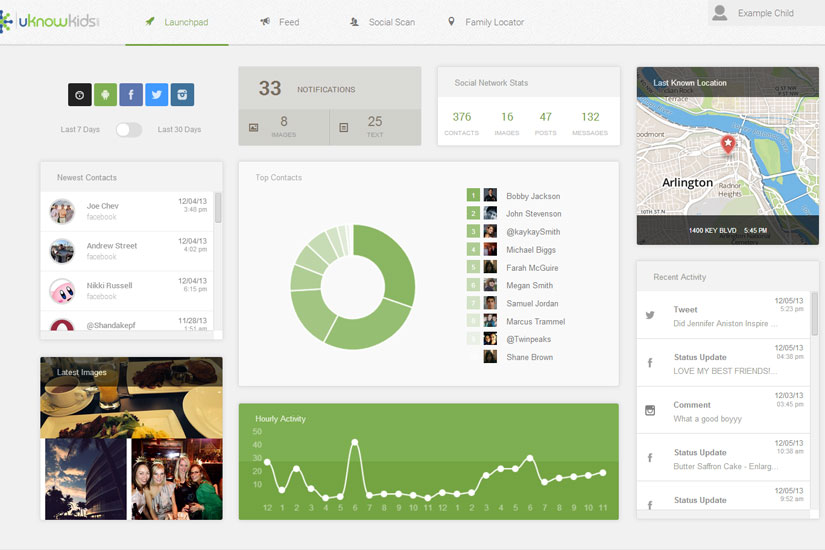
uKnow's LaunchpaduKnow provides comprehensive support for parents who are hoping to protect their children — and themselves — against the dangers of the Internet. Its flagship product, uKnowKids, allows parents to monitor their children’s activity on their smartphones and social media to engage with their children at the level parents of previous generations did.

“When I was a kid, kids would have to knock on the door or call the house and ask ‘can Steve come out to play?'” Woda said from his space in ÜberOffices in Rosslyn. “Now, kids get a text, hop down the stairs, say ‘I’m going out,’ and the parents have no idea what is going on.”

Among the ways uKnowKids operates is pulling data from the cloud; even if a child has web aliases, uKnow can “crawl the deep web” and search for similarities to find those profiles. Parents can install the uKnow app on their children’s phones and monitor trends in texting — if their child is texting one person 70 percent of the time one month and stops texting them the next, the parent can know if something is wrong.

Just as important as their technological tools is uKnow’s efforts to educate parents. Woda says uKnow writes articles daily about the technology market, new trends in what kids are doing online and parenting advice.

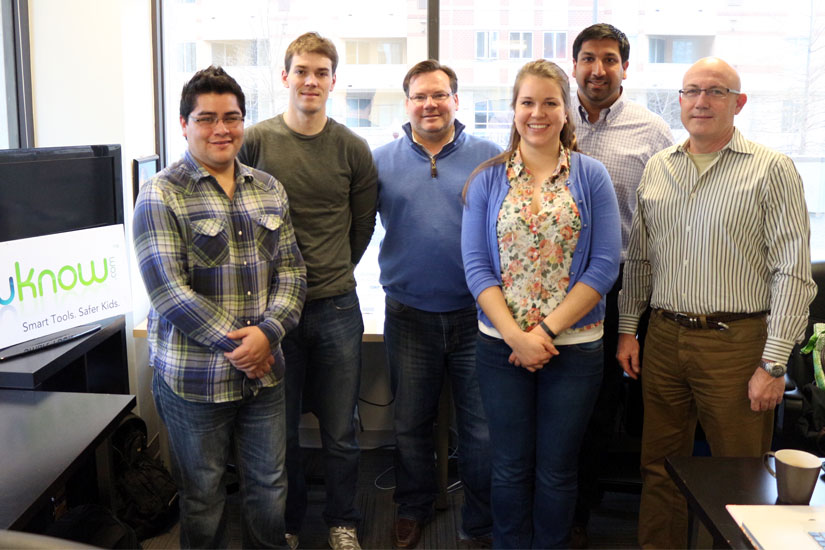
The uKnow team“Most parents don’t understand what the issues actually are,” Woda said. “Parents really want to know what the difference is between Vine and Snapchat, for example. They want to know how their kids are using it and who they’re talking to. We can tell them who the top 10 people are in their child’s digital world. It’s a way to engage your kids, and what parents want most is to be involved.”

uKnow has a team of 12 working out of two different spaces in ÜberOffices. Whereas buySAFE was founded with lots of venture money — and was sold for $30 million, which is when Woda left — uKnow took a different strategy. The company was close to bootstrapped, raising just enough capital to survive leanly every month.

“We wanted to be disciplined and slim before we had a complete business model,” Woda said. “Now, I know what my model looks like, and that’s something that investors like.” (more…)


Startup Monday header

Editor’s Note: Sponsored by Monday Properties and written by ARLnow.com, Startup Monday is a weekly column that profiles Arlington-based startups and their founders. The Ground Floor, Monday’s office space for young companies in Rosslyn, is now open. The Metro-accessible space features a 5,000-square-foot common area that includes a kitchen, lounge area, collaborative meeting spaces, and a stage for formal presentations.

Mindseye Chief Strategy Officer Jeff Fehrman, left, and CEO Bob KrantzBob Krantz, Elliot Nierman and David Shedd worked for years for a legal services company, finding information in troves and troves of documents for law firms and corporations preparing them for litigation. Like many startup founders, they were working long hours, doing tedious work and thinking, “there has got to be a better way.”

That’s why the three left their jobs and founded Mindseye in 2008 as a next-generation tool for eDiscovery, giving law firms and corporations the ability to save heaps of time scouring electronic files for documents.

“eDiscovery refers to the preservation, collection and analysis of relevant information for litigation,” Chief Strategy Officer Jeff Fehrman said. “People get careless with email. They let their guard down. But finding what’s really relevant is like finding a needle in a haystack.”

Krantz and his co-founders bootstrapped the company, and they remain self-funded. Because Mindseye didn’t have investors, proving the technology worked was a struggle at first, but the trade-off was well worth it.

“Giving up say is not always the most attractive way to change an industry the way we were trying to,” Krantz said in his office along Columbia Pike. “We knew what we wanted to do and the biggest potential for creating an impact.”

Mindseye logoBefore they left their jobs, they offered their company — which is now called Integreon — the chance to develop the software. Integreon declined and, in 2009 when Mindseye launched Tunnel Vision, its flagship product, Integreon became Mindseye’s first client.

Krantz admitted that most companies that launched, self-funded, in 2008 have probably bitten the dust by now, especially those with business plans that required big companies to spend money on new products.

However, in the current era, every bit of new technology has added a multitude of new levels of data. That fact, paired with the Edward Snowden leaking scandal, has made big companies — and big law firms — highly aware of the power of sifting through data efficiently.

“The Snowden thing really helped us in driving the point home,” Krantz said. “With our technology, you could see who you speak with, when you talk and what you’re talking about without any keyword search. We don’t look through individual emails or correspondences, we’re trying to find patterns.”

Mindseye's Columbia Pike officeAlthough Mindseye would seem applicable as a vehicle for government contracting, the economies of scale, Krantz said, keep them to working just with law firms and private companies. Mindseye currently has almost 20 employees and more than 40 clients.

“Within its first year as a client, we saved a Fortune 50 company almost $1 million,” Fehrman said. “Anyone we’re selling to has a need for this technology. They have a lot of investigations, litigation or regulation. We basically try to understand the challenges each of them face.”

Despite starting the company working on different co-founders’ couches, Mindseye has consistently grown, and despite lofty ambitions, Krantz said they are laser-focused on staying true to their initial mission.

“The biggest challenge for us, and our biggest strength, is focus,” Krantz said. “You can see things out there that can open up new arenas for business. But when you lose focus on what you’re doing, you fall apart.”

While Mindseye is staying in its lane, Lehrman has big visions for how much that lane can widen in the next few years.

“In five years, if we’re not working with more Fortune 100 companies and government clients,” he said, “we’d be disappointed.”


Startup Monday header

Editor’s Note: Sponsored by Monday Properties and written by ARLnow.com, Startup Monday is a weekly column that profiles Arlington-based startups and their founders. The Ground Floor, Monday’s office space for young companies in Rosslyn, is now open. The Metro-accessible space features a 5,000-square-foot common area that includes a kitchen, lounge area, collaborative meeting spaces, and a stage for formal presentations.

nClass screenshotGaurav Malik sat in Northside Social last week with a clicker that some colleges use for in-class participation. He said he showed it to a college student and her reaction was one of the reasons he built his tech startup, nClass.

“She said ‘this is horrifying,'” he said with a smile. “Students now expect to use one device for everything. Why wouldn’t you use the mobile phone instead of the clicker?”

Malik got the idea to incorporate phones into the classroom in the summer of 2012 when he was in an executive MBA program. Working for a cloud computing starting and coming from an IT background, Malik saw boundless potential for incorporating technology that wasn’t being tapped into.

It took Malik, his co-founder who’s no longer with the company, and a small team of interns and contractors both local and in India a year before nClass launched a pilot program in fall 2013 in several local universities, like Georgetown, George Washington and George Mason. The bootstrapped company built apps for iPhone, Android and for use on laptops.

“From an institution’s standpoint, they want to use the right technology and improve the student’s experience,” Malik said. “The professors want to keep students engaged, and the students want to be able to use their devices and not pay for additional hardware.”

There are several ways Malik designed nClass to be used in the classroom. Initially, Malik was just thinking about an attendance app for smartphones, but the idea grew and grew. Plus, he said, attendance “is a polarizing topic” among college professors, many of whom never call roll.

nClass allows teachers to give quizzes with students answering on their phones or computers, it allows teachers to take a “pulse check” in the middle of the lecture, to see who is grasping the material, paying attention, and who has checked out. It also allows students to submit questions electronically, which can help some who are too shy to participate still engage with the material.

nClass founder and CEO Gaurav Malik“The class could be discussing something controversial where the professor really wants honest input,” Malik said. “By using the phone, and allowing questions to be submitted anonymously, the professor can solicit more opinions.”

Malik said he’s not hoping to replace “face-to-face teaching” with his app, simply trying to improve and quantify the classroom experience. He admits that nClass would be most useful in large lectures where professors don’t have time to build relationships with individual students. It’s also useful to help professors grade participation in classes where it would normally be impossible.

“It broadens participation, but it also gives you an alternate way to collect class participation data,” he said. “A lot of discussion takes place in class, but there’s no record of it unless you’re an excellent notetaker. Because of this technology, we can now capture that data for later use.” (more…)


Startup Monday header

Editor’s Note: Sponsored by Monday Properties and written by ARLnow.com, Startup Monday is a weekly column that profiles Arlington-based startups and their founders. The Ground Floor, Monday’s office space for young companies in Rosslyn, is now open. The Metro-accessible space features a 5,000-square-foot common area that includes a kitchen, lounge area, collaborative meeting spaces, and a stage for formal presentations.

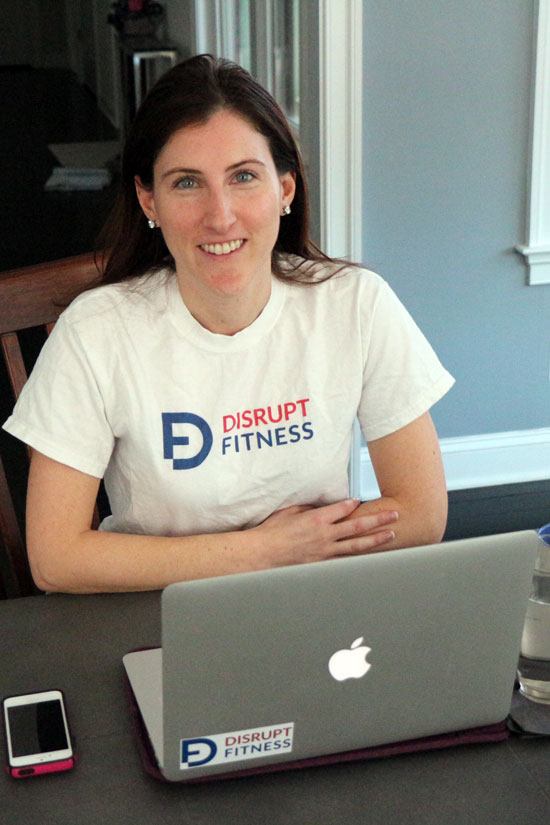
Disrupt Fitness CEO Cameron KilbergWhen the former Virginia assistant secretary of technology left her job in January after former Gov. Bob McDonnell’s term ended, her friends expected her to stay in politics, or take a lucrative IT job.

Just two months later, Cameron Kilberg is the CEO of a new startup, Disrupt Fitness, that’s trying to change the way the personal training industry operates.

“I went completely the opposite direction,” Kilberg told ARLnow.com from her home in Lyon Park. “At the governor’s office, we were focused on IT, cloud computing and cybersecurity. Now, it’s hard for people to understand a nontraditional D.C.-area company.”

Kilberg founded the company with her partner — and physical trainer — Fareed Stephens. Stephens had trained Kilberg out of a gym before he started training on his own, and during one of their sessions, he was telling her how challenging it was as an independent trainer.

That was in July, when Kilberg knew that her job in the McDonnell administration was coming to an end in January. By Labor Day weekend, she said, the two already had a business plan for Disrupt Fitness and hired two developers from Bulgaria, whom they found through their participation in the 1776 incubator in Washington to help build their website.

As Kilberg and Stephens were building the website, they had to decide how exactly they would serve trainers.

“Lots of trainers struggle to manage their business,” Kilberg said. “Either they don’t have the business background or they don’t have enough time. [Stephens] was training 40 hours a week, and there’s just not enough time in the day to manage everything.”

The non-training parts of the business — managing financial documents, taxes and finding clients — is where Disrupt Fitness wants to help. The company officially launched at the beginning of February with a fully realized website.

“We enable the trainers to focus on what they love and we manage the rest for you,” Kilberg said. “We handle all of that.”

Disrupt Fitness logo

Even though Disrupt’s services are also offered by gyms that keep trainers in house — and provide equipment and space for the trainers — Kilberg said trainers will prefer Disrupt because while gyms give trainers well below 50 percent of the hourly rate, trainers keep almost all of Disrupt’s fees: $80 an hour for one-on-one training, $60 an hour for groups of two-to-five, and $17 for a larger class.

Kilberg, who has also worked as a lawyer and sold handmade hand bags out of her home in previous careers, said the Disrupt platform offers more diversity of fitness options than your typical gym class schedule. Clients can choose yoga instructors, pilates and barre classes as well as, when the weather improves, outdoor boot camp training.

“There’s no one who’s doing what we’re doing,” she said. “You can come online and get one-on-one training, and get the most diversity.” (more…)


Startup Monday header

Editor’s Note: Sponsored by Monday Properties and written by ARLnow.com, Startup Monday is a weekly column that profiles Arlington-based startups and their founders. The Ground Floor, Monday’s office space for young companies in Rosslyn, is now open. The Metro-accessible space features a 5,000-square-foot common area that includes a kitchen, lounge area, collaborative meeting spaces, and a stage for formal presentations.

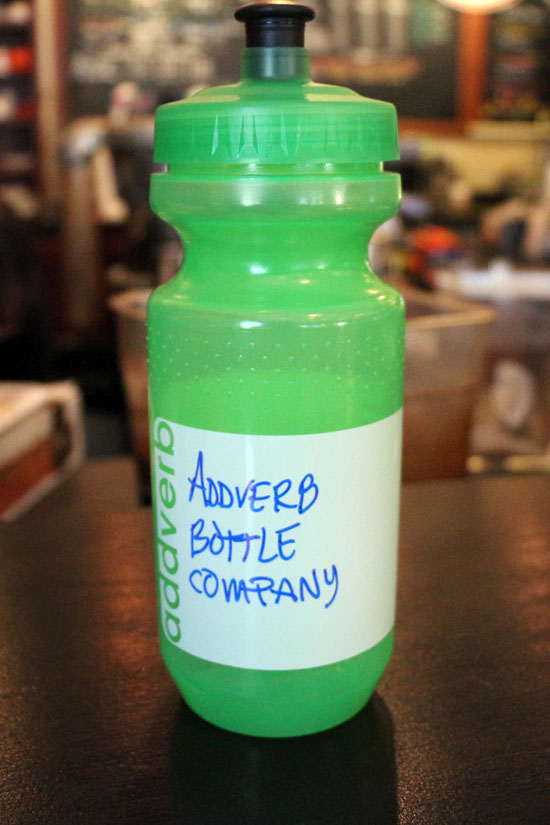
Addverb Bottle Company's 21-ounce bottleNathan Cristler’s startup idea was born in a hospital bed.

Cristler had been training for a marathon when, after a 17-mile training run, he was hospitalized for dehydration. He resolved to carry a water bottle with him wherever he goes. When he started training for triathlons and doing elaborate swimming workouts, he needed a place to write the steps down.

“I thought, ‘how am I going to remember this?'” Cristler told ARLnow.com last week at BeanGood Coffee Pub, a few blocks from his house near Rosslyn. “So I wrote it down on a piece of paper and stuck it onto my water bottle and covered it with clear plastic tape.”

That day was in January 2013. Cristler didn’t do anything to pursue the idea until he went on a trip to South Korea — he’s a patent and trademark attorney by day — and started brainstorming a way to turn it into a business. When he returned from Korea in November, he hit the ground running, and the result is Addverb Bottle Company.

Addverb sells two bottles — a green, 21-ounce model for $9.99 and a blue 24-ounce model for $10.99 — as well as cleaning wipes and accompanying Sharpie pens. On each bottle is a white space for its owner to write workouts, reminders, motivational messages on.

It’s a simple idea, but Cristler researched it and saw an opening.

“Really, I wanted one,” he said with a grin. As for why he decided he was the right person to build the product, he said, “I seemed to be consuming a lot instead of creating. I had the idea around the same time that I wanted to be more of a creator. This is the first idea I thought where I have all the parts to produce what’s in my head.”

Cristler is bootstrapping the company, buying bottles directly from Specialized Water Bottles and buying special alcohol wipes for the best possible clean erase of the Sharpies. As demand has increased, he’s hired a delivery service because the trips to the post office were getting more and more frequent.

For a first-time entrepreneur with a full-time job, Cristler is passionate about his product but realistic about the future of Addverb.

(more…)


View More Stories