
Startup Monday header

Editor’s Note: Sponsored by Monday Properties and written by ARLnow.com, Startup Monday is a weekly column that profiles Arlington-based startups and their founders. The Ground Floor, Monday’s office space for young companies in Rosslyn, is now open. The Metro-accessible space features a 5,000-square-foot common area that includes a kitchen, lounge area, collaborative meeting spaces, and a stage for formal presentations.

Renovisor Founder Asif Virani in the kitchen that inspired his businessAsif Virani was a construction manager for 14 years, so when he wanted to remodel the kitchen of his Arlington Ridge home four years ago, he figured it would be easy.

After all, he was in construction, used to building office buildings and retail spaces. It’s not as if he wanted an industrial oven, or anything else too fancy, and the kitchen seemed like a simple project. Months later, he was confused, frustrated and looking for an easier solution.

“It was a challenge even for me,” he said. “So I thought, ‘what does someone who doesn’t have experience do?'”

That’s why Virani launched Renovisor, an online service that connects homeowners with consultants to get advice for every step of the renovating, remodeling and redecorating process. Virani said he did research on the market for similar products and came up empty handed.

“There wasn’t anything that could hold your hand and guide you through the process,” he said. “You could hire a construction consultant, but for someone doing a kitchen remodel, it just doesn’t make sense. We’ve got to give access for small to medium projects without breaking the bank.”

Renovisor screenshot

The Renovisor platform helps homeowners in two steps: first, it allows homeowners to upload pictures and videos of their current home and ask for advice on interior decorators and remodelers on which paths to take. Second, when homeowners accept bids from contractors, Renovisor connects them with consultants who can explain in plain English what each bid entails, and why the price estimates are so high or low.

Virani said one thing Renovisor doesn’t do is find contractors for homeowners. Since it’s a young site, he decided it would focus on those two areas first. Eventually, he hopes Renovisor can be a big part of every step of a home remodel or renovation.

“We want to expand our platform,” he said. “We want the customers to have turnkey solutions. We would be the online construction manager for the home from soup to nuts. We want to take away as many pain points as possible for the homeowner.”

Customers pay for the consultations, the costs of which Virani said are well below market rate. The consultants are typically retirees in the home construction, renovation or decorating fields, or stay-at-home parents looking for some extra work without a huge time commitment. Most of the fees go to the consultants, while Renovisor takes a small cut.

Virani started the company, which is still bootstrapped, as a part time job until he left to go full-time a year ago this week. He brought in outside designers and developers to help make his vision a reality. In the year since he left Renovisor full-time, he’s brought in another employee, has a two-man team of tech consultants and is readying to take on his first intern.

(more…)


Startup Monday header

Editor’s Note: Sponsored by Monday Properties and written by ARLnow.com, Startup Monday is a weekly column that profiles Arlington-based startups and their founders. The Ground Floor, Monday’s office space for young companies in Rosslyn, is now open. The Metro-accessible space features a 5,000-square-foot common area that includes a kitchen, lounge area, collaborative meeting spaces, and a stage for formal presentations.

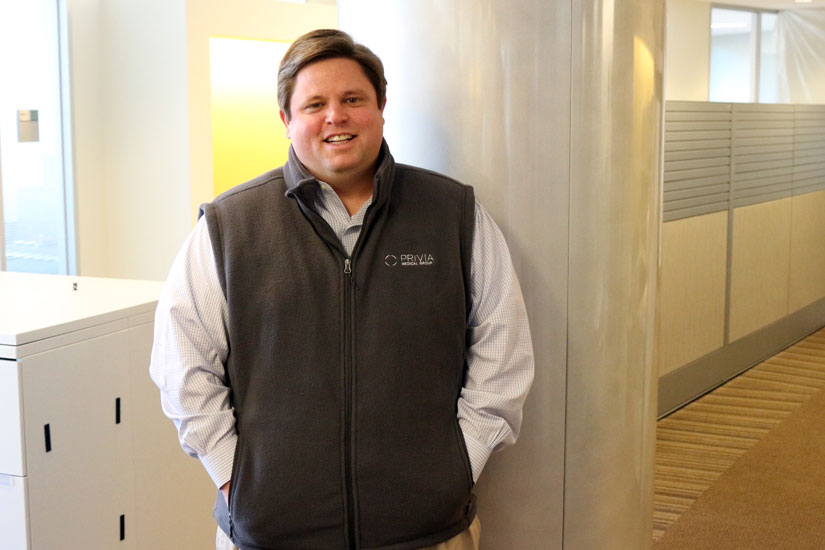
Privia Health CEO Jeff ButlerPrivia Health, a 5-year-old healthcare company located in Ballston, developed its business plan and technology in reverse.

Privia founder and CEO Jeff Butler previously founded BroadReach Healthcare, a company dedicated to bringing healthcare and HIV/AIDS relief to South Africa and other African countries, through, originally, a $100 million U.S. State Department grant. The company was focused on connecting independent and spread-out doctors to each other so the health of the population could be managed at a scale.

Many businesses develop their business plan and technology, make a substantial profit, then donate money or services to help the less fortunate. Butler launched Privia Health in the D.C. area to bring the model of BroadReach — which is now based in Rosslyn — and its business to American healthcare.

“Having doctors directly engaged their patients, we decided there was a market for that in the U.S.,” Butler said. “We thought if we could develop a health plan we could get into some innovative models.”

Privia Health is split into two businesses, Privia Quality Network and Privia Medical Group. Privia Quality Network is a data-sharing platform and “care management system” that helps small-to-medium-sized physician’s practices manage the health of their clients as a population, and keep updated with their care between visits.

Privia Medical Group is a network of more than 140 doctors in smaller practices, bringing the tools of Privia Quality Network to work directly for patients who want to be treated by some of the region’s best doctors, Butler said.

Privia logo“We’re creating a ‘top doctor’ network, layering in our technology, care teams and management approach,” Butler said. “We anchor in the doctor-patient relationships. Great doctors attract great patients.”

Butler said Privia interviews and does its “due diligence” when considering which doctors to include in its network. He called it “sort of a dating process.”

The medical group is the business Butler was hoping to launch at first, but he acknowledged “the market wasn’t ready for it at that point.”

“About a year ago, after talking to physicians, we found the market had caught up to what we were doing,” he said. “Employers have seen premiums skyrocket. The question is ‘how do doctors come together to better manage the health of their patients?'”

The network rewards doctors for delivering better treatment to their patients, Butler said. After a patient has a visit, they’re called by a care manager and they can schedule appointments with nutritionists, physical therapists, personal trainers, and all the data is shared throughout the network. (more…)


Startup Monday header

Editor’s Note: Sponsored by Monday Properties and written by ARLnow.com, Startup Monday is a weekly column that profiles Arlington-based startups and their founders. The Ground Floor, Monday’s office space for young companies in Rosslyn, is now open. The Metro-accessible space features a 5,000-square-foot common area that includes a kitchen, lounge area, collaborative meeting spaces, and a stage for formal presentations.

The Mytonomy at UberOffices in RosslynVinay Bhargava has a master’s degree in electrical engineering, an MBA from MIT’s Sloan School of Management and seven years of experience working in negotiations and partnerships for Google. Today, Bhargava’s mission is to help teenagers figure out what college they want to go to.

That may sound like a fall from grace, but Bhargava’s startup, Mytonomy, is flourishing. The negotiator just inked a deal last month with the College Foundation of North Carolina, which is a national standard-bearer for preparing high school students for college, to provide services to every high school student in the state.

Mytonomy produces videos of recent high school and college alumni giving advice on different processes related to a student’s future, such as applying for college, writing the college essay and choosing a major. It’s called a “near-peer” advice model, allowing students to get counseling from those who have just been through the same process, as opposed to a guidance counselor or college guide book.

Bhargava, 43, got the idea from conversations with his friend and cofounder, Sean Burke, a guidance counselor at Thomas Jefferson High School for Science and Technology in Fairfax County. After two years in Google’s D.C. headquarters, Bjargava was ready to “focus on something with a social impact.”

Mytonomy's advice dashboard

“We felt there was a lack of awareness among young people about what jobs are actually out there,” Bhargava said. “There was a need to explain what some of these abstract careers are… there is an information problem with young people in making decisions about their future.”

So, in 2011, he and Burke founded Mytonomy. They started with focus groups and pilot programs at Burke’s high school to find out exactly what students thought would be helpful to them. They settled on creating videos, which can be made by alumni, counselors, teachers or, for college students and young professionals, young college graduates at the next step on a particularly career path.

Near-peer mentoring and “inter-generational advising” became the vehicle for Mytonomy’s products. Bhargava said LinkedIn was part of his inspiration; high school students can’t really use LinkedIn because they have no contacts, he said.

“What about high school kids?” Bhargava asked from Mytonomy’s space in Rosslyn’s UberOffices. “They don’t know anyone, but they have the greatest need. We wanted to create an advising platform that reaches kids today.”

That starts with teachers and counselors, who are the primary contributors to Mytonomy’s current pilot client: Arlington Public Schools. For the 2013-2014 school year, Mytonomy and APS have partnered to try to get Arlington high school students to engage and learn about their future.

(more…)


Startup Monday header

Editor’s Note: Sponsored by Monday Properties and written by ARLnow.com, Startup Monday is a weekly column that profiles Arlington-based startups and their founders. The Ground Floor, Monday’s office space for young companies in Rosslyn, is now open. The Metro-accessible space features a 5,000-square-foot common area that includes a kitchen, lounge area, collaborative meeting spaces, and a stage for formal presentations.

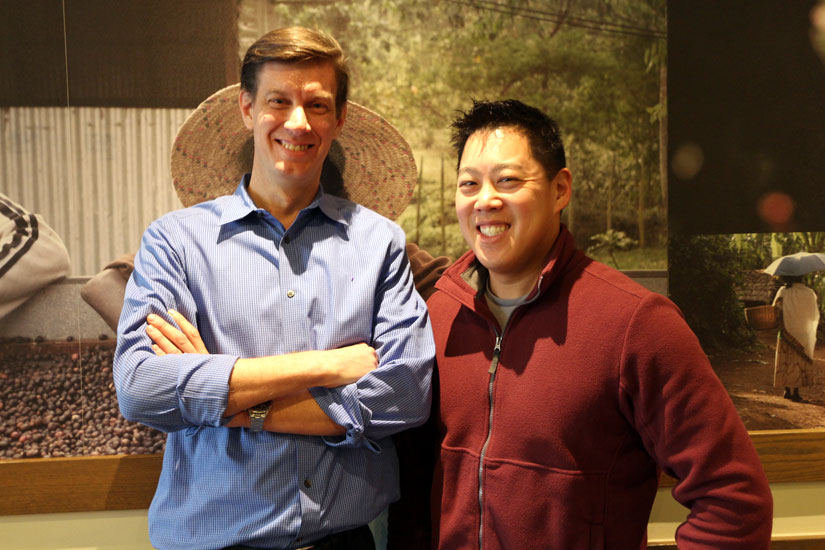
Airside Mobile co-founders Hans Miller, left, and Adam TsaoHans Miller and Adam Tsao had a multi-million dollar deal signed with one of the world’s biggest credit card companies in 2010 that would have launched their fledgling startup into the stratosphere.

Three weeks later, the deal was dead, and it was back to the drawing board in Miller’s Arlington home on Lorcom Lane.

Such is life for startup founders trying to make an impact. Miller and Tsao are the cofounders of Airside Mobile, which develops mobile apps to make peoples’ lives easier in airports. The two worked at the Transportation Security Administration and were key members of the team that invented the mobile boarding pass before leaving the agency to start their own company in 2009.

Airside Mobile has already developed B4 You Board for Bethesda-based HMSHost, which operates restaurants in airports all over the country. B4 You Board allows users to order food delivered to their gate or place orders while in security to be picked up at the restaurant when they arrive. It’s already live in Chicago O’Hare International Airport as well as the international airports in Phoenix, Minneapolis-St. Paul, Minn., Sacramento, Calif., and Salt Lake City.

Miller, the CEO of Airside Mobile, and Tsao, the COO, met after the Sept. 11, 2001, attacks while helping on security issues for the government. After eight years of working at TSA, the duo decided that while their work was rewarding and gratifying, they were ready to move on.

“Life in the TSA is tough,” Tsao said. “You’re ‘on’ 24/7. It takes a lot out of you. You’re constantly on guard.”

“There’s stuff going on in airports that would make your skin crawl,” Miller added. “It’s a tough, draining place to work, but it’s awesome. You have so many chances to impact people’s lives.”

B4 You Board screencap

When the two were reaching the decision, they sat down at a table and, as Tsao tells it, wrote down ideas on what to do next on a piece of paper and passed it back and forth. They “kept coming back” to the mobile boarding pass they helped invent. So they launched Airside Express, a mobile boarding pass for Apple’s App Store and the Android Market that allowed users to sort through passes from five different airlines.

They moved temporarily to California to find developers and even took a meeting with Apple. The app launched, but the airlines, which included American, United and Delta, kept changing their boarding security procedures, making it impossible for such a small company to keep up. The app is now defunct, effectively killed off when Apple introduced their proprietary boarding pass app, Passbook.

“At any moment, it was like ‘we made it,'” Tsao said. “We’re up, and then we’re down. The highs in this business are dizzying, and the lows are depressing.”

The app flamed out, but Tsao and Miller kept plugging away. Because of its initial success, “folks within in the airport community liked the concept,” Miller said, which is how they linked up with HMSHost. B4 You Board will expand its footprint vastly across the country. “A hundred airports are in play,” Miller said.

They’re working on a Starbucks prototype that allows users to order their drink, customize it — with skim milk, an espresso extra shot, etc. — and have their phone’s GPS tell the baristas when to make it so it’s ready right when the user arrives.

Airside is also preparing to launch its biggest innovation yet: a mobile app that allows passengers to fill out customs forms on phones and tablets. Users will then have access to an express lane for going through U.S. Customs, a process that sometimes would otherwise take hours.

(more…)


Startup Monday header

Editor’s Note: Sponsored by Monday Properties and written by ARLnow.com, Startup Monday is a weekly column that profiles Arlington-based startups and their founders. The Ground Floor, Monday’s office space for young companies in Rosslyn, is now open. The Metro-accessible space features a 5,000-square-foot common area that includes a kitchen, lounge area, collaborative meeting spaces, and a stage for formal presentations.

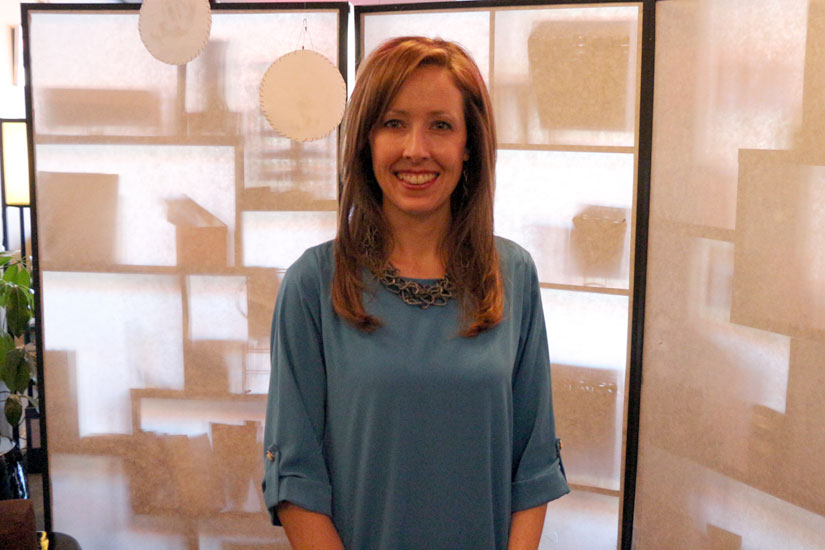
MainST Founder Shana LawlorShana Lawlor had already founded one Arlington business, Alainn Exporting, when she founded Arlington Small Business Day in 2012. Small Business Day grew and has led to her to start a new business: a shopping social network.

After growing up in a small town in Vermont, Lawlor wanted to experience a community of small businesses, where everyone knew each other and helped each other out.

“There wasn’t anything that met my needs,” she said. “I wanted businesses looking to cross-promote each other. I came up with holding an event, like a fair, where you can meet small businesses you haven’t been aware of. There are such a great number of small businesses here in Arlington, and it’s such a great community.”

MainST screen shot

After the first year was a deemed a success — 80 businesses participated, and President Obama shopped at one of the stores, One More Page Books — Lawlor, 36, saw an opening. Customers flooded businesses, but, once they were at their store of choice, they didn’t know where else to go. She set about fixing that by designing an app that allows customers to see small businesses in their area, discover who sells what, and even see promotions in real time.

She called the app MainST (pronounced Main Street), and started designing the prototype in May. The prototype is complete, and she expects to launch the beta app in April. Her exporting business, started in 2007, serves clients like Sony, Macy’s and Costco, but she left last month to work full-time on MainST after receiving an angel investment — after her first pitch meeting.

“Every startup founder needs to make the decision at some point to go full time,” she said. “It’s tough because I loved my business, my clients and the travel. It was rewarding building something from scratch. Arlington Small Business Day grew my connection with the community and the amount of awesome small businesses that are here. It’s fun to be able to walk in and know the owner and know that you’re supporting them.”

That’s the motivation behind MainST. It’s a way for those inclined to support small, local businesses in a social way. Lawlor designed the first prototype with the help of a developer she found on CoFoundersLab — she’s now looking for a marketer on the same site — and by using Arlington Economic Development’s Entrepreneur in Residence program, consulting with Will Fuentes and Cary Scott of Lemur Retail.

Lawlor took the initial prototype around to some Arlington businesses, which led to some changes. The app was originally designed so businesses fill out their information and do most of the work, but now the app derives most of its content from consumers.

“Now we’re a consumer-driven model,” Lawlor said. “We’re asking consumers who already support the small business to take it one step further by sharing with the MainST community. They can get on the app, find the business, share it with their friends and take pictures of the things they’ve seen.”

(more…)


Startup Monday header

Editor’s Note: Sponsored by Monday Properties and written by ARLnow.com, Startup Monday is a weekly column that profiles Arlington-based startups and their founders. The Ground Floor, Monday’s office space for young companies in Rosslyn, is now open. The Metro-accessible space features a 5,000-square-foot common area that includes a kitchen, lounge area, collaborative meeting spaces, and a stage for formal presentations.

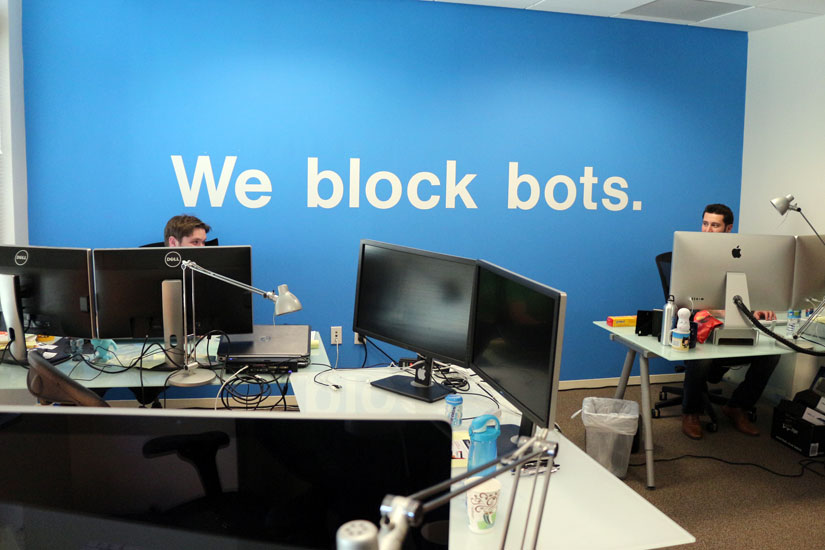
The Ballston office of Distil Networks“If we let our guard down, the bots win.”

That’s the attitude of Distil Networks Founder and CEO Rami Essaid, and it is what has driven his company from something he built while living with his parents and crashing on his co-founders’ couches in 2011 to a thriving business with hundreds of clients and millions of dollars in funding and revenue.

Distil started out as a web scraping prevention company. Essaid was selling cybersecurity for a Northern Virginia company — he declined to say which one — when he realized that almost every company he was dealing with was having its content stolen by web scrapers. Seeing no company out there preventing scraping, in early 2011 he decided to quit his job, sell some of his possessions, rent out his apartment and move in with his parents in order to start his new company.

It’s not the first time Essaid had tried to launch a startup. Soon after Apple launched the App Store, Essaid and some friends began building a mall directory app. As Essaid put it, they “missed the Black Friday deadline.” He said an app with a worse design and smaller database launched on Black Friday, Apple featured it, and, selling for $3.99 each, it made hundreds of thousands of dollars almost overnight.

A few of his other ideas came close to turning into a business, but never quite made it over the finish line.

Theft Bot from Distil Network's websiteEssaid and his two co-founders, Engin Akyol and Andrew Stein, are all computer engineers. Once they had an idea of what kind of product to build, the building part was relatively free of speed bumps. The other side of the business — raising money and finding clients — was a different story.

“We didn’t know anything about being a venture-backed company,” Essaid said. He approached his first potential investor with his company not incorporated and without a lawyer; two requirements if a company wants to raise large sums of capital. “I thought if you just built a product, people are going to give you money. It was a rude awakening.”

Essaid said he was batting “about .010” in venture meetings, but raised $400,000 at the end of December 2011, another $300,000 in July 2012 before completing a $2.1 million round of investment in December 2012. Distil will do another round of fundraising in 2014, Essaid said.

Distil Networks has grown beyond just preventing web scraping, expanding to four different products blocking different types of bots. Essaid calls each system a “vertical,” and there’s one to prevent online merchants from having their prices scraped by competitors. Another prevents fraud bots, which can drive up the price of online banner advertisements and clog servers. There is a vertical to prevent bots from stealing data, and another that shifts a company’s website onto Distil’s servers, increasing the website’s speed and performance.

“People kept asking us to help with problems tangential to the services we offered,” Essaid said, so Distil grew into a more diverse company.

(more…)


Startup Monday header

Editor’s Note: Sponsored by Monday Properties and written by ARLnow.com, Startup Monday is a weekly column that profiles Arlington-based startups and their founders. The Ground Floor, Monday’s office space for young companies in Rosslyn, is now open. The Metro-accessible space features a 5,000-square-foot common area that includes a kitchen, lounge area, collaborative meeting spaces, and a stage for formal presentations.

Everylog life log charts

What would it look like if you could track your mood over the past year? What do you think you would see if every workout you’ve done were placed on a line graph? What if every beer you’ve drank were poured into a virtual swimming pool?

This is the concept behind Everylog, a “quantified self” web app founded by Joe Zaczyk. Users can log every aspect of their life and turn it into a data set, or compete against other users. The sound of tracking one’s every move may certainly not appeal to some, but Zaczyk says he doesn’t want those people to use Everylog.

“I know that it’s not for everyone,” Zaczyk says. “It’s for ‘Type A’ organized people. I want to cater to the people who need this. I want to help those people.”

A decade ago, Zacyck was working for Deloitte and felt out of place. A self-described “hippie” who “made my own clothes,” working for a giant corporation and following strict instructions didn’t feel right. Ten years ago, he joined up with CustomInk, a custom T-shirt company now based in McLean, as an accountant.

At the time, only about a dozen people worked at the startup, and the attitude around it — casual, loose and ambitious — spoke more to Zaczyk’s personality he said. Today, he’s CustomInk’s controller and the company is approaching 1,000 employees and $200 million in revenue and just took in a major round of investment from Ted Leonsis and former AOL CEO Steve Case.

“I was charged with a lot of responsibility and handling everything with the business,” he said. “It was fun building things the way I wanted to build it. It’s fun to be thrown into something and trying to figure it out.”

It was when Zaczyk went home for the holidays when the seed of the idea that would become Everylog was planted. His father puts a line of masking tape on everything, and writes down every time he uses it to gauge if it was worth the purchase. Zaczyk said that was when the lightbulb went off.

Everylog founder Joe Zacyzk

“I’ve always wanted to track and quantify all the things in my life,” he said. He went to Quantified Self conferences and discovered like-minded people and ideas, but nothing that touched on exactly what he wanted. “There’s a universe of people out there that want to do this.”

He incorporated Everylog in 2010 out of his apartment near Shirlington, but has run into several roadblocks. He hired a developer to help him build the initial product, but “had to fire him” eight months later, so the project sat on the shelf for a while. Eventually, he brought on a co-founder, Joey Merz, who helped him finish with the technology, but Merz left the company in May this year.

Outside of personnel, Zaczyk also made a decision with the business he now regrets: building a website — which went live in November 2012 — instead of a mobile app.

“In retrospect, we should have gone mobile first,” he said. “This needs to be mobile, but hindsight is 20/20.”

(more…)


Startup Monday header

Editor’s Note: Sponsored by Monday Properties and written by ARLnow.com, Startup Monday is a weekly column that profiles Arlington-based startups and their founders. The Ground Floor, Monday’s office space for young companies in Rosslyn, is now open. The Metro-accessible space features a 5,000-square-foot common area that includes a kitchen, lounge area, collaborative meeting spaces, and a stage for formal presentations.

StayAtHand screenshotJohn K. Hart didn’t really want to start his own company.

The former software engineer, U.S. Army Reserve infantry officer and world geography teacher at Swanson Middle School was in charge of I.T. learning for Marriott International when he came up with the idea for a travel site that lets customers search for prices at hotels without having to enter a date.

Hart told a coworker about the idea the next day. He says she came to him the day after with eyes red, telling him, “I couldn’t sleep last night thinking about your idea.” He told other coworkers, all agreeing that it was an idea to hold on to. Hart told his wife, expecting to be shot down. She encouraged him to go for it.

He told his family, which gathered and told him they would support him financially. Hart told a friend who was a graphic designer; she was on board. He told another coworker at Marriott who could help build the technology; sign me up, he said.

“I was looking for people to tell me it was a bad idea,” Hart said. “I didn’t have the courage to initiate. Eventually, I was too scared not to do it. I was thinking ‘I’m going to regret this for the rest of my life.'”

In July 2012, Hart and his cofounders — Kathy Carbonetti, the graphic designer, Tim Kosmider, now the company’s “cloud architect,” Humberto Chacon and Andy Stewart — incorporated Imagine If. Last Monday, they publicly launched StayAtHand, the travel app they think will revolutionize the hotel-booking industry.

Imagine If's team in its Clarendon office

The app — available only on iPhones and iPads for the moment — allows users to search rates for cities without having to enter a date. They can also select a rate for a particular hotel and have the app notify them when a room comes available at the rate, even when the user is offline.

“We’re your eye in the sky,” Hart said. “We’re checking for you.”

The app is just one-third of Imagine If’s business. Another third is the cloud infrastructure largely build by Kosmider, which fuels the app as well as Imagine If’s third — and potentially most intriguing — component, from a business standpoint: a design browser.

Those offline user price requests will soon be “aggregated and anonymized” and shown to hotels, the only customers who can access the demand browsers. Hotels can, for a flat fee, look through the demand browser to see exactly how much customers are willing to pay for a room in a city, or even their hotel specifically.

“The demand browser at the hotel level is the really exciting part,” Hart said. “We think the whole product can go really big. We’re going for the moonshot by building the space station first.”

(more…)


Startup Monday header

Editor’s Note: Sponsored by Monday Properties and written by ARLnow.com, Startup Monday is a weekly column that profiles Arlington-based startups and their founders. The Ground Floor, Monday’s office space for young companies in Rosslyn, is now open. The Metro-accessible space features a 5,000-square-foot common area that includes a kitchen, lounge area, collaborative meeting spaces, and a stage for formal presentations.

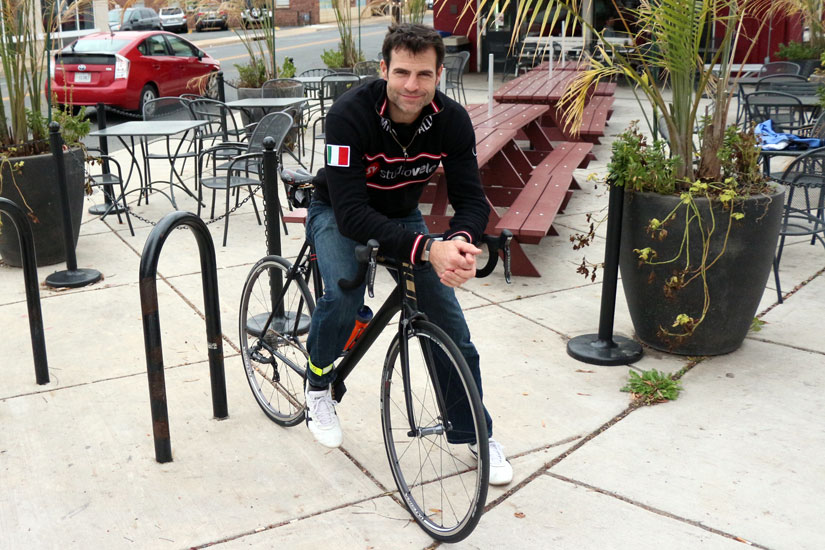
Race Dots founder Jason BerryFrom the Tour de France to the Clarendon Cup, from the Marine Corps Marathon to a local 5K, there’s one thing all races have in common, and one thing Jason Berry wants to replace.

Safety pins.

Berry has spent the past 10 years in Arlington making films about cycling — he directed BikeArlington’s documentary BikeSwell, as well as several award-winning documentaries — and has been a competitive cyclist for even longer. He’s poked countless holes in his expensive gear and suffered hundreds of pinpricks when this spring he just snapped.

“I had just gotten a brand new jersey with my team for race season, and the night before the race, I just couldn’t bring myself to poke a hole in it,” he said. “My sister had just gotten me these cat magnets for Christmas, so I decided to see if they’d work instead.”

The next day, he raced with cat magnets on his back. Rather than draw insults and mockery, Berry’s impromptu idea was the subject of praise and jealousy.

“I wouldn’t have given it much thought,” he said, “but when I heard someone say, ‘can I buy these?’ It was like ‘ding, ding, ding!’ I was off and running.”

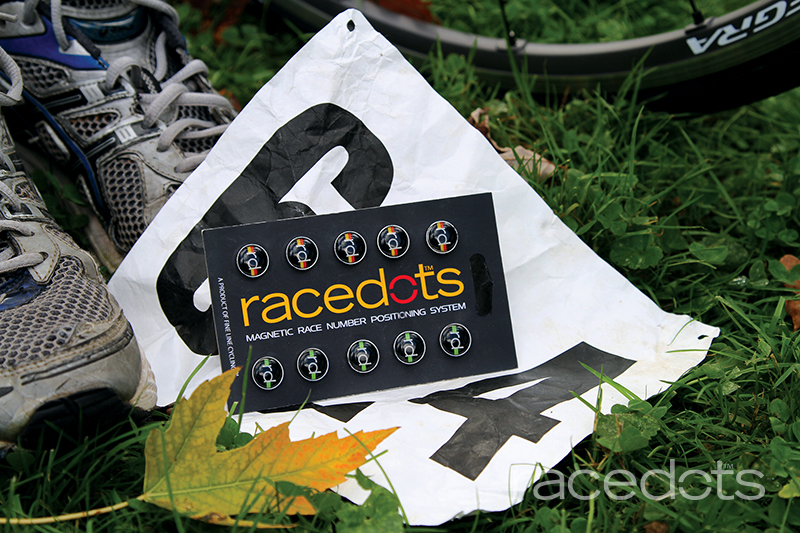
On Nov. 18, Berry officially launched his new venture, Race Dots. The dots are rare-earth magnets, the strongest permanent magnets available, and have an interlocking design — patent pending — to stay in place on a cyclist or runner’s shirt. The metals required to make the magnets are only available in China, so that’s where they come from; a disappointment to Berry, but worth it.

“I really wanted it to all be made in America,” he said. “But the only mine in the country is controlled by the military.”

Race Dots

The first time he affixed a racing bib to his shirt with a magnet was just a few months ago, this spring. In June, he started buying magnets from Home Depot, seeing which worked best. None of them did. Some were too small or too weak. Others were strong enough but would break when they snapped together.

Berry went through about 15 different prototypes, designing new systems of interlocking sides, new designs for their tops and sending his orders to a manufacturer he found in China.

“I’m a filmmaker, not an industrial designer,” the 44 year old said with a laugh over coffee. “I’m in very new, uncomfortable territory, but it’s exciting. My life might be totally different now.” (more…)


Startup Monday header

Editor’s Note: Sponsored by Monday Properties and written by ARLnow.com, Startup Monday is a weekly column that profiles Arlington-based startups and their founders. The Ground Floor, Monday’s office space for young companies in Rosslyn, is now open. The Metro-accessible space features a 5,000-square-foot common area that includes a kitchen, lounge area, collaborative meeting spaces, and a stage for formal presentations.

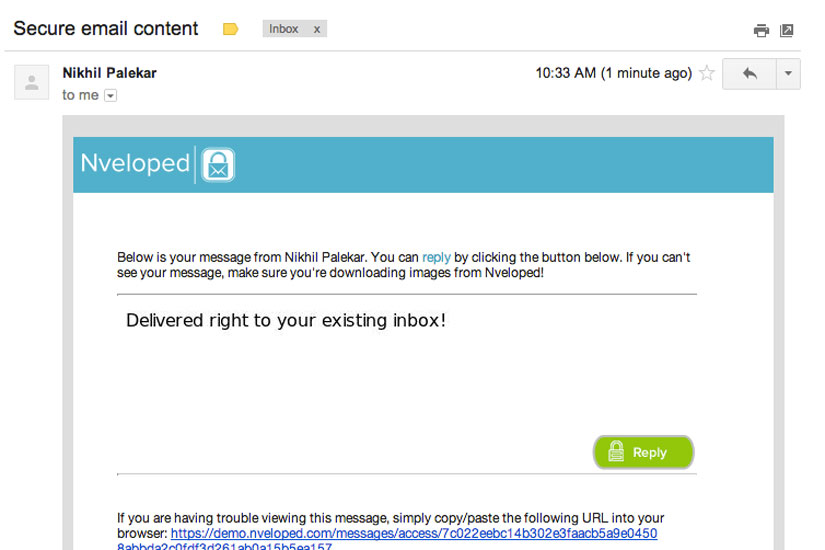
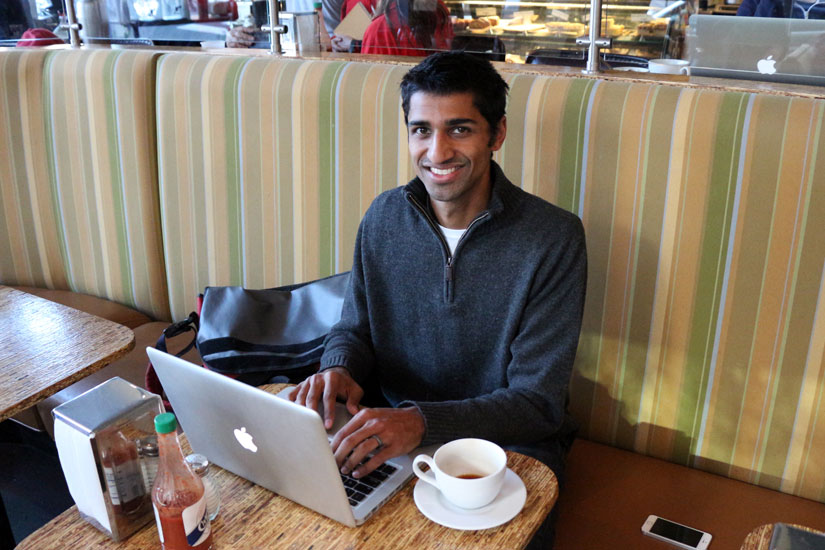
Nveloped's secure email deliveryNikhil Palekar’s angel-funded startup was born with a fax.

A few years ago, Palekar had to send some files to his doctor, and because email wasn’t secure enough for medical records, Palekar had to send a fax. Living in a one-bedroom apartment as a student in law school, he had no fax machine, but he didn’t see why there wasn’t a way to securely send files — or information — from his Gmail account.

“It seemed like there was a need for the service,” Palekar said. “I didn’t know why there couldn’t be an easy way to send stuff like this over email.”

Palekar had a background in computer science before he decided to attend law school, so he set about thinking of how to create a secure email service. After graduating law school and taking a job as a patent lawyer in Washington, D.C., Palekar started develop prototypes for his eventual product. In 2011, he left his job and started working full-time to launch Nveloped.

Nveloped founder and CEO Nikhil Palekar

Palekar has a practiced explanation for how Nveloped works. Normal email, he says, gets sent from one address, copied numerous times and delivered to the recipient. With Nveloped, clients instead send email recipients the equivalent of “an empty container.”

“When you open the message, that’s when we deliver the content,” Palekar said. “We provide access to that content dynamically.”

Before Palekar built anything, he said he had to look holistically at the problem he was trying to solve.

“It was trying to understand the deficiencies of regular email, which is really coming to light these days,” he said. “The first step was fully understanding why it was broken. The next step was how do you solve this in a way that’s easy for the sender and the receiver. Preserving a pleasant user experience was very important.”

In the summer of 2012, Palekar moved from his Arlington apartment for three months to Seattle to grow Nveloped at TechStars, a technology accelerator that provided Palekar with mentorship and connections that have proven vital.

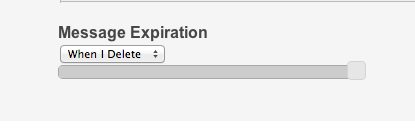
Nveloped email expiration optionHe’s since moved back to the area, and with the help of people he’s met through TechStars, as well as the D.C. area startup community, Nveloped has raised $400,000 in angel funding and he said he has 10-20 clients. Palekar is the only full-time worker for the company, but he does have part-time and contract help for his growing business. He’s in the process of looking for a coworking office space in Arlington or D.C.

Most of Nveloped’s clients are in healthcare and financial services, and there are also clients with proprietary content — think of a news site that charges for its content — who wouldn’t want its subscribers forwarding email anyone could open without paying.

Despite TechStars’ reputation — it has accelerators in a half-dozen cities around the country — Palekar said finding clients who entrusted him with their email security was a challenge, but perhaps not as difficult as some would expect.

“The early stages are difficult, but there are people who know they need a solution to this problem,” he said. “Part of this process was giving people context for your product and showing them its value.”

Even though Palekar was already in the D.C. area, he said this is the best city in the country for his particular tech startup. His clients are from all over the country, he said, but as he takes on new business it’s likely it comes more from this region.

“D.C. is really growing as a startup community,” he said. “As things develop further, there are going to be areas where D.C. is very strong, and cybersecurity is one of them.”


Startup Monday header

Editor’s Note: Sponsored by Monday Properties and written by ARLnow.com, Startup Monday is a weekly column that profiles Arlington-based startups and their founders. The Ground Floor, Monday’s office space for young companies in Rosslyn, is now open. The Metro-accessible space features a 5,000-square-foot common area that includes a kitchen, lounge area, collaborative meeting spaces, and a stage for formal presentations.

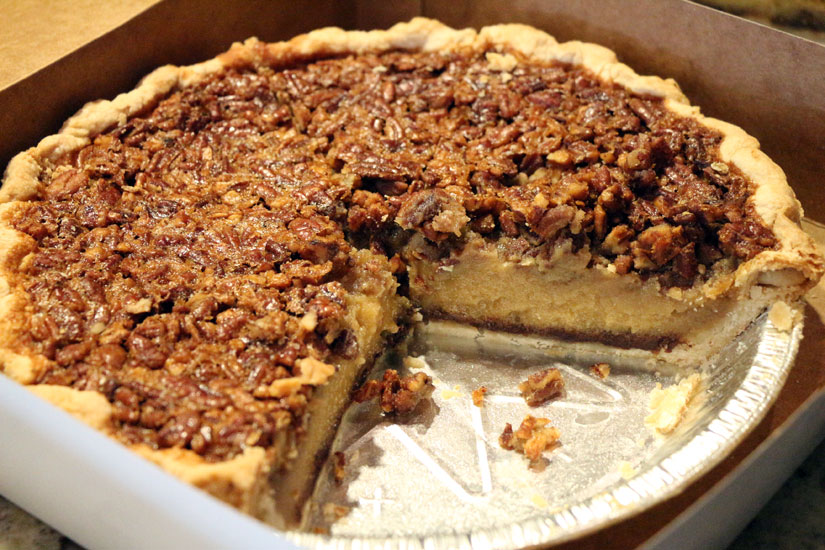
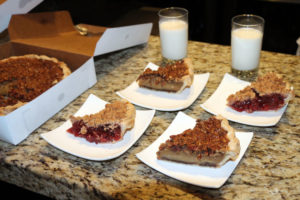
Acme Pie Co.'s Pecan Maple Syrup with Belgian Chocolate pieAfter working in the kitchens of restaurants for 20 years as a pastry chef, Sol Schott had lost why he decided to make a career out of baking in the first place.

Two months ago, after eight years of baking for the five restaurants in Open City‘s restaurant groups, Schott quit and struck out on his own. He started Acme Pie Co. and began selling pies wholesale to local restaurants, as well as taking online orders from customers.

“I’d gotten away from the reason I wanted to be a pastry chef: making food that makes people smile,” Schott told ARLnow.com last week in Twisted Vines, where he rents the kitchen. “At restaurants, you worry about making the numbers, and I got burnt out.”

Before he started baking for high-end restaurants and cafés, in his first job after culinary school, Schott sold cheesecake and biscotti to small cafés and coffee carts around the University of Florida in Gainesville, where he used to live. He used that model to inform his business this time around.

Acme Pie Co.'s Sour Cherry pie with Streusel topping

Although he had restaurant industry connections and a reputation from the kitchens in which he worked, he said he tried not to lean on those too much.

“My business plan was to make the best pie I can make, charge enough to make a living,” he said. “I missed being directly involved with customers, and I just didn’t want to work for anybody else anymore.”

Schott arrives at his Columbia Pike workspace at 3:00 a.m. every day and starts baking immediately. The next seven or so hours are spent crafting his seasonal, locally sourced pie recipes. He’ll call his clients at about 11:00 a.m. and start making deliveries at about 1:00 p.m.

He currently offers five pies: baked coconut custard, pumpkin with candied ginger, vegan apple cranberry, and the two pictured here and sampled by ARLnow.com, sour cherry with streusel topping and pecan, maple and belgian chocolate.

The most obvious question to ask of Schott is “why only pies? Why not other desserts or pastries?”

Slices of pie from Acme Pie Co.

“I wanted to get back to my roots,” he said. His great grandmother taught him to bake and both his grandmothers were bakers. “When you think of pie, I think of home and my childhood… you don’t just eat things with your mouth. It’s an emotional experience. As Americans, pie is our homey food.”

Schott sells to local restaurants like Java Shack (2507 N. Franklin Road), Luna Grill & Diner (4024 Campbell Ave.) and Copperwood Tavern, among other locations. Westover Market carries full pies, as does Stachowski’s in Georgetown. He also ships pies — at a two-pie minimum for each order — and can arrange spots to have customers pick up the pies locally.

(more…)


View More Stories