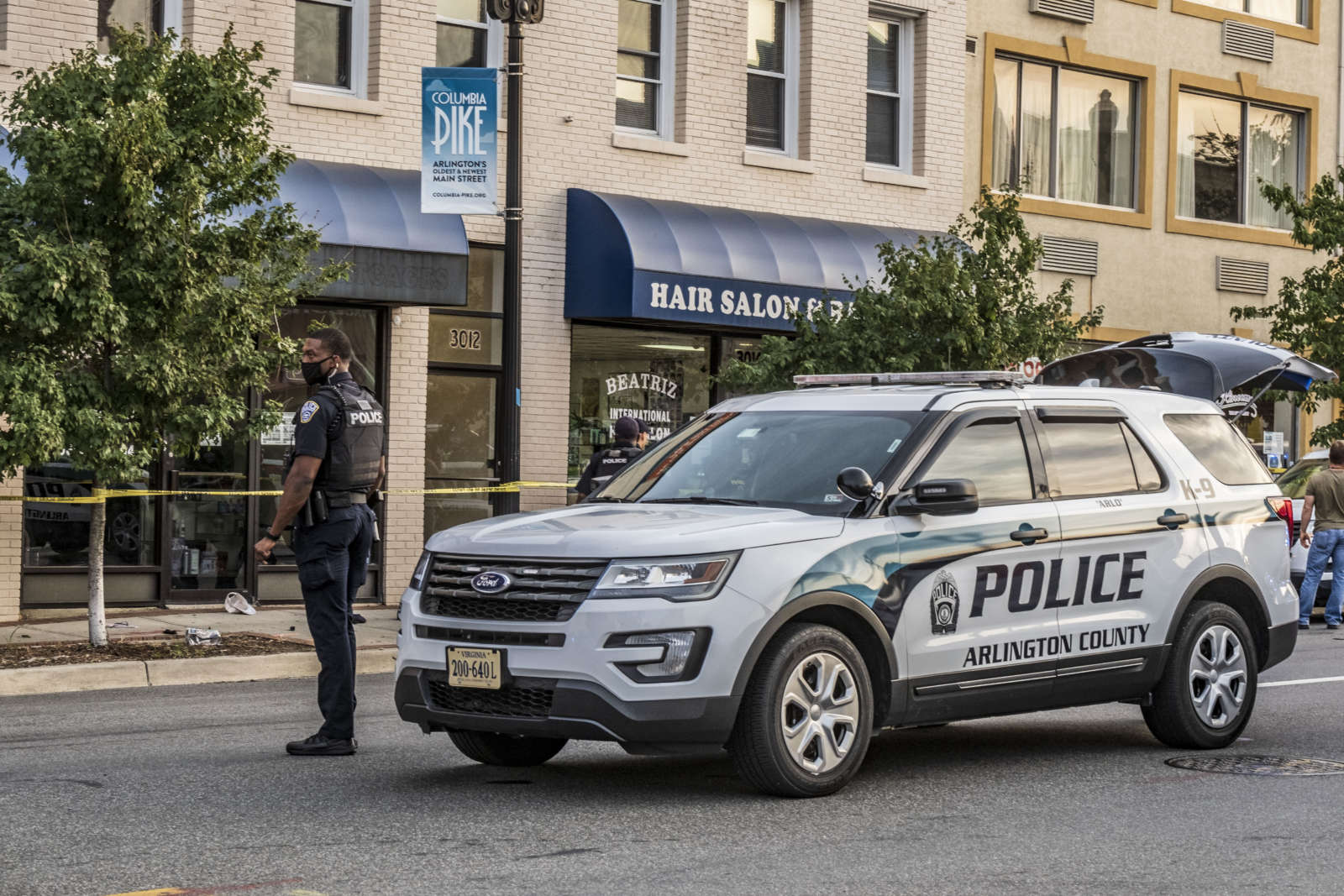
(Updated 05/25 at 1 p.m.) The Arlington County Board voted 4-1 last night (Tuesday) to consider establishing a Civilian Review Board for the Arlington County Police Department.

Now the county will advertise a draft ordinance that, if approved in the summer, would outline the roles and responsibilities of this review board. Board member Takis Karantonis dissented.

“As we discuss and debate this ordinance over the next two months, we must both recognize that our community has an interest in additional accountability and transparency related to law enforcement and respect the diligent efforts of our public safety personnel,” said Matt de Ferranti, Chair of the Arlington County Board, in a statement.

What the civilian review board would look like was discussed by the Police Practices Work Group over the last year, which in February presented myriad ways to reform the police department. Some of the powers it suggested the board should have are included in the ordinance.

As written, Arlington’s civilian review board would be able to receive complaints about police conduct, review the police chief’s disciplinary decisions, as well as review finished police investigations, data, policies and the ACPD budget. It would also be able to recommend policy changes and conduct hearings and community outreach.

But it would not have the ability to independently and concurrently investigate officers, which the PPG recommends but County Manager Mark Schwartz does not.

Karantonis said last night the proposed ordinance is deficient in many ways, particularly because the authority to independently investigate a police officer is not baked in. He supported deferring the motion.

“Not a single person who testified for the advertisement of the ordinance as submitted,” he said. “In my inbox, I don’t see a single email in support.”

Fifteen PPG participants, community members and advocates told the County Board to defer action so the ordinance could be rewritten to allow for independent investigations.

“The Black and brown community is telling you that we need a civilian review board with teeth,” said community member Wilma Jones.

Minneapolis’s weak review board allowed Derek Chauvin to remain an officer despite multiple complaints of misconduct before he killed George Floyd, said Michelle Woolley, of Arlington for Justice. Meanwhile, the review board in St Louis, unable to investigate police shootings concurrently with police, had to wait more than five years to evaluate 21 shootings.

Public defender Brad Haywood said in a letter to the county that review-only models found in Virginia Beach and Fairfax are seen as “rubber stamps for police internal affairs.”

“The review bodies rarely recommend corrective action, and so far as I know they have never brought about proactive measures to address broader institutional problems, such as racial disparities in traffic enforcement or over-policing of misdemeanor conduct,” he said.

After the meeting, Julius D. Spain, Jr., the president of the Arlington branch of the NAACP, told ARLnow the board needs to revise the ordinance’s “admitted defects.”

“This current version of the CRB is not equitable and will not hold up in the long term to engender trust by our community in the public safety system,” he said. “The voices of communities of color need to be centered in this conversation.”

The public can provide direct feedback throughout June and at the July meeting. After the Board votes in July, assuming the ordinance is approved and not deferred, members of the review board would be appointed in the fall.

In a report, the county articulated many reasons not to include investigative powers.

(more…)


Arlington Public Schools is apologizing for how it handled the news that it would have to restrict summer school eligibility. 

At first, the school system expanded summer school eligibility to students with disabilities, English learners, and those struggling to achieve passing grades. That was until it turned out that there are not enough teachers to support them. 

Last Monday, APS told parents and teachers that “despite having offered financial incentives to teachers to teach summer school, there are fewer applicants than the number of students who are eligible for summer instruction at the elementary level, making it impossible for APS to offer summer strengthening support to all eligible elementary students.”

Teachers and parents decried the news, which dropped last Monday. Teachers said it sounded like they were being blamed for the reduction in eligible students. Arlington Parents for Education, a group that has pressed for a faster reopening, said APS “pulled the rug out” from under parents banking on summer school to help their kids recover from learning loss. 

Bridget Loft, the assistant superintendent for teaching and learning, apologized for the first sentence of her communication during a town hall on summer school last night (Monday). The sentence was also removed from the original announcement

“It was poorly worded and did not accurately represent the fact that our teachers have worked tirelessly to support our students throughout this school year,” she said. 

One teacher who spoke with ARLnow said a similar retraction was sent to teachers but noted that the apology was not shared with the larger community. 

“In a time when every teacher is truly learning how to do something new daily, it was seen as if teachers were thrown under the bus,” the teacher said. 

APS offered a $1,000 bonus for certified teachers and a $500 bonus for support staff to attract more personnel to participate in the summer program. But after a challenging year, that incentive did not produce the response APS was hoping for.

“I did not hear from a single teacher who said that the $1,000 was enough to sway those who were uninterested in summer school off the sidelines,” the teacher said. “For those who were going to do it anyway, it was a nice perk.”

This is a phenomenon happening across the nation. Education Week reports that throughout the U.S., school districts face staffing shortages because teachers have worked nonstop during the pandemic and need a break. 

“Summer school staffing always seems like challenge and the pandemic makes it much worse,” the APS teacher said. “The best word to describe most teachers is ‘done’ for this year. Most want to start fresh in the fall.”

Loft repeated those sentiments during the town hall. 

“Most of our teachers have given their all,” she said. “I would be loath to say it’s burnout: They are human they need time to rest and recharge.”

More than 5,000 elementary-level students were identified as potentially eligible for summer school this year, but APS only has enough staff to enroll some 1,900 students, Loft said. Now, the school system is drumming up supplemental materials and at-home lessons for about 3,000 previously identified students.

In a normal year, between 2,000 and 2,500 elementary-age students are identified for summer school. 

APS has hired 175 summer school teachers for the elementary level and is still hashing out eligibility and staffing at the middle and high school levels, staff said. 

So what will summer school actually look like? 

The elementary students who are still eligible will be in-person or online five days a week, for four hours a day, during the month of July. They include rising kindergarteners in APS’s Pre-K program, certain students with disabilities, English-language learning students, and those with the lowest levels of English proficiency. 

The rest will have access to self-guided lessons taught by state-certified teachers and supplemental programs through their electronic devices, Loft said. 

As for the middle and high school level, Director of Secondary Education Tyrone Byrd projects having enough staff.   

“Right now, we’re envisioning we’ll be able to support students who sign up,” he said. 

Image via Arlington Public Schools


(Updated on 10/21/21) Construction on the final phase of a long-awaited residential redevelopment in Clarendon could begin in the fall if the county approves new changes from the developer.

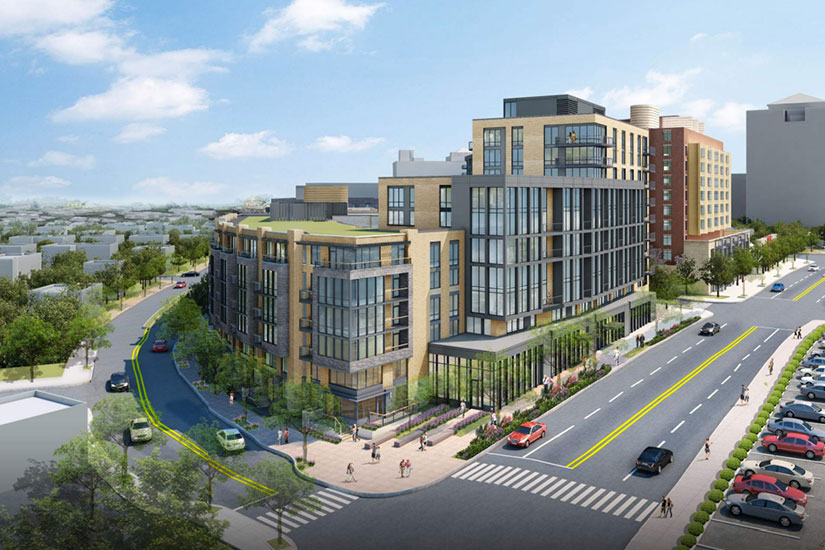
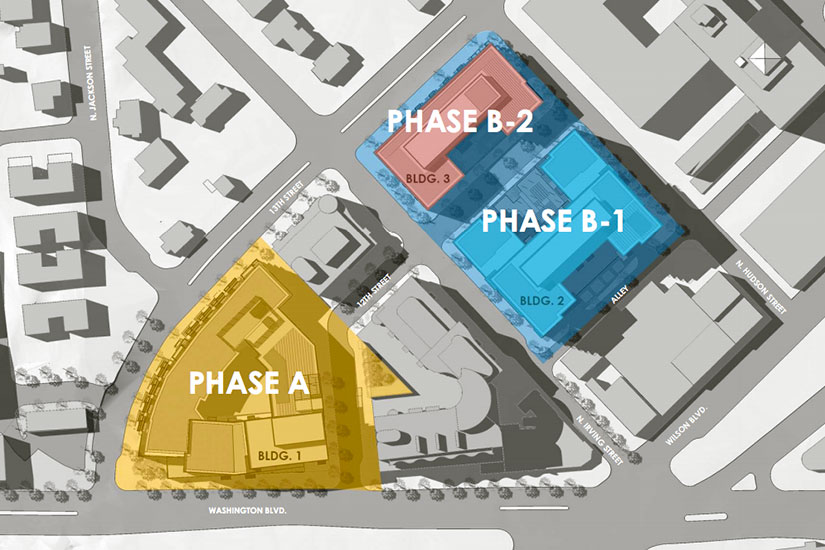
Five-and-a-half years ago, the Arlington County Board approved a three-building mixed-use development called Clarendon West from Arlington-based developer Shooshan Company. It will replace the old Red Top Cab headquarters and dispatch center, and two small commercial buildings.

The developer tells ARLnow there is a timeline for construction for what Shooshan calls “Building 1,” the second phase of the project. Shooshan and co-owner Trammell Crow Residential completed the first phase — the second and third buildings with a total of 333 units — in the spring, and the pair of buildings were sold in July. (An earlier version of this article incorrectly flipped the order of the two phases.)

“We expect to start construction this fall and anticipate the project to deliver in 2023,” CEO Kelly Shooshan said.

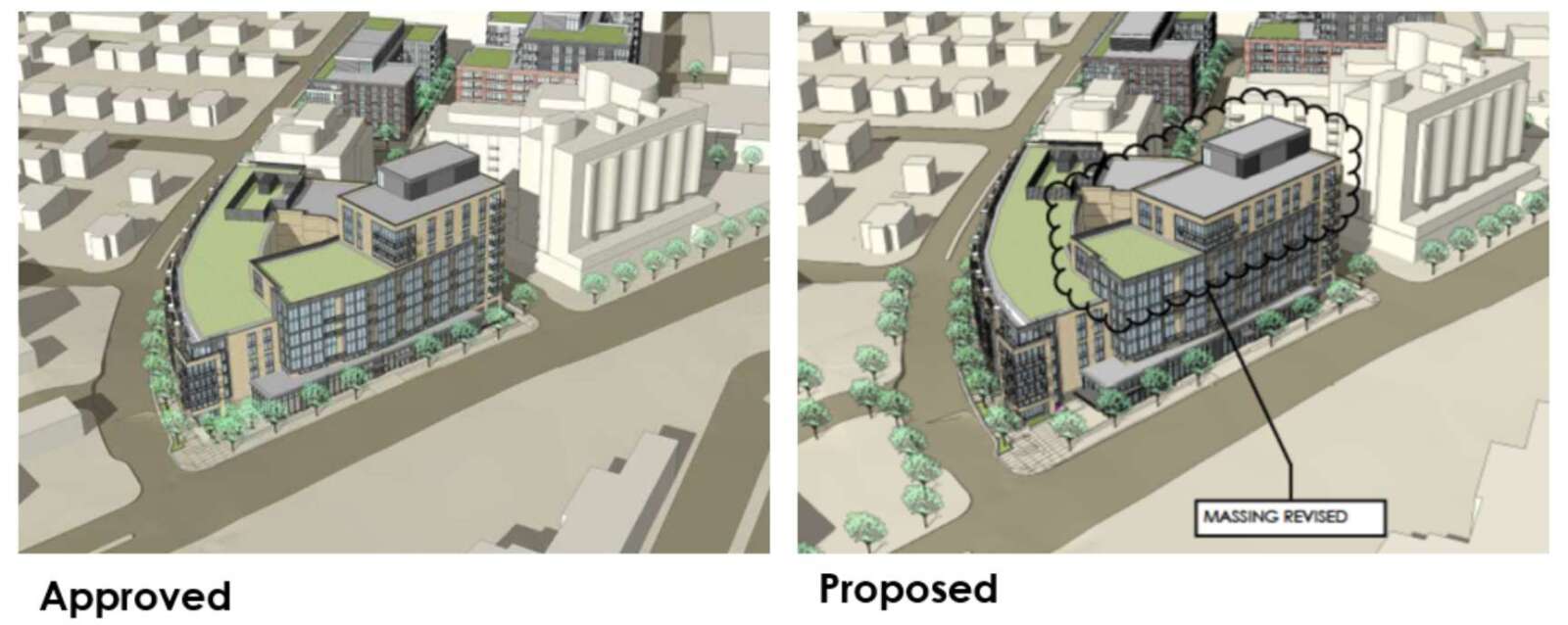
The timing emerged after the County Board approved public hearings that could allow Shooshan to change the appearance of the last of the three apartment buildings. The Planning Commission and the County Board are slated to hold the hearings during their respective meetings in June.

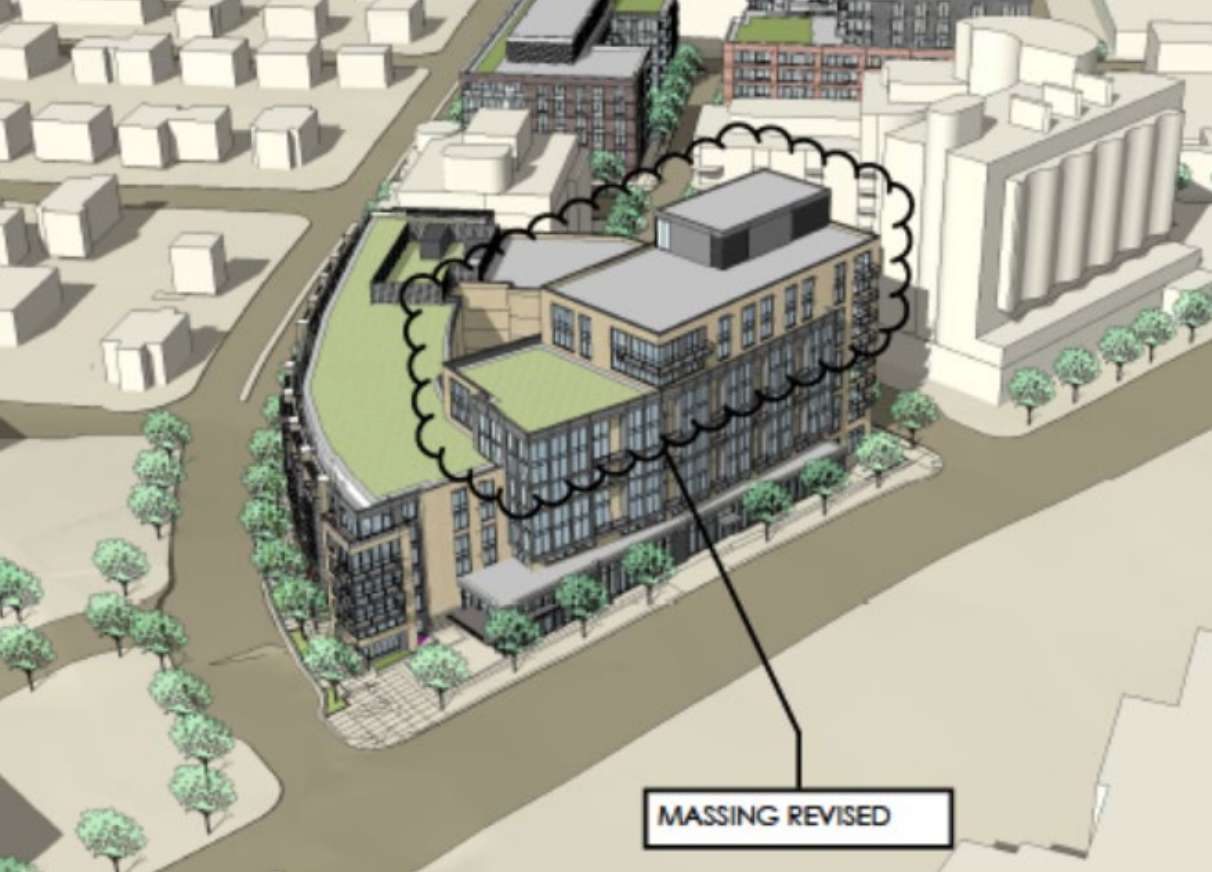
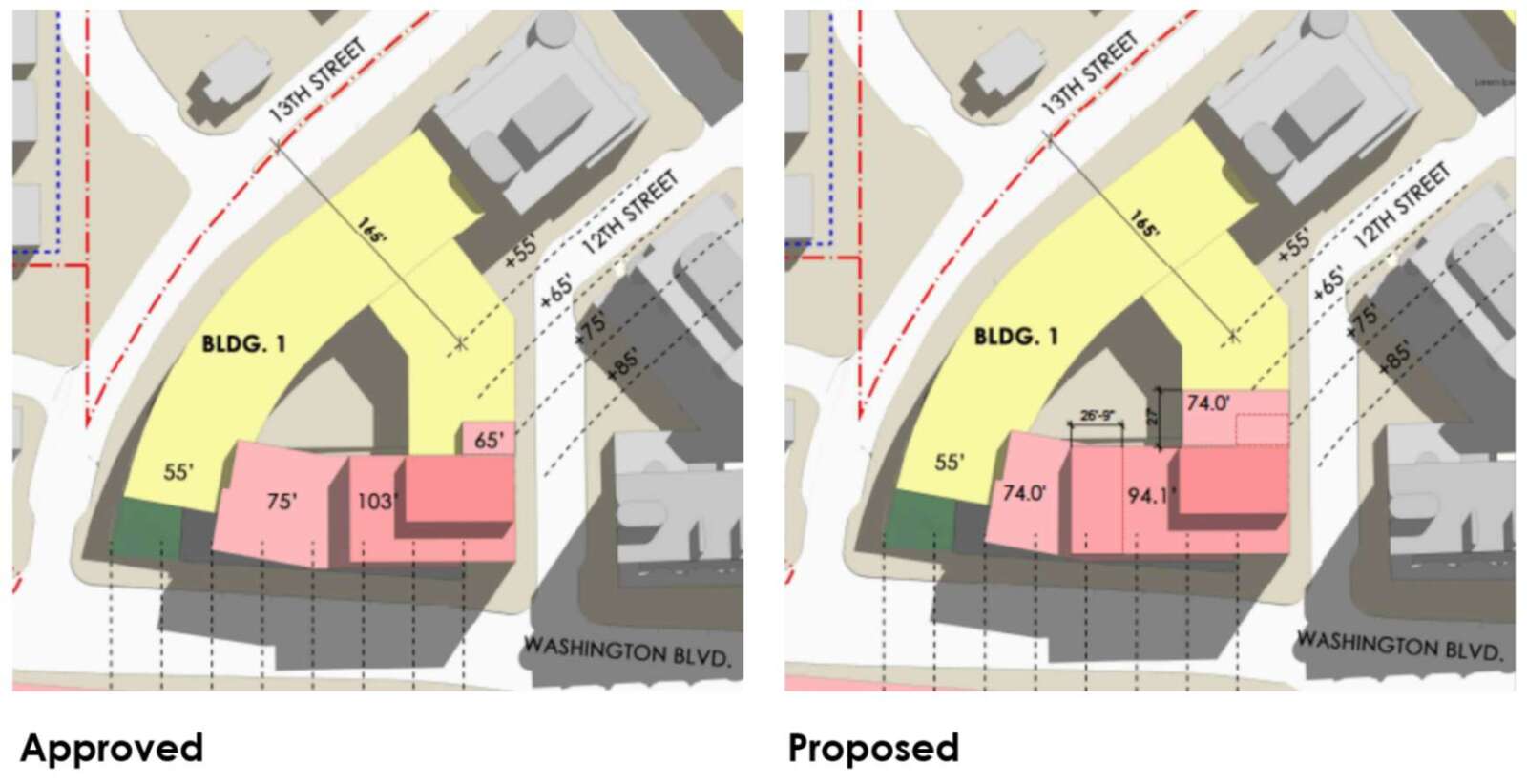
Shooshan’s revised building is shorter but it now exceeds tapering requirements for the Clarendon Revitalization District, according to a county report. The developer is requesting the map of the area be modified to fit the new specifications of the building.

The approved building height was set to start at 55 feet, stepping up to 75 feet and ending at 103 feet. Now, Shooshan is proposing a maximum height of 94 feet with a step down to 74 feet and then 55 feet. The length of the two steps has also been adjusted.

“These proposed changes create more gradual height transitions with the surrounding neighborhood and do not increase the total gross floor area” of one of the buildings, the report said. “Staff generally supports the proposed reduction in height and modified taper.”

The changes will also result in more units being added to the building, according to a staff memo. Filings indicate the number of units would increase from 247 to 269, DC Urban Turf previously reported.

When asked why the company is making the changes, Shooshan said “we are simply adjusting the height as part of our design development now that we are focused on the final phase of the Clarendon West project.”

Members of the Long Range Planning Committee expressed support for the proposed amendment, according to another report.

Shooshan also returned to the County Board in 2018 to request a decrease to the proposed parking ratio. At the time, the Lyon Village Civic Association expressed concern about how spillover parking would be mitigated.

The May report summarizing the Long Range Planning Committee meeting indicates the civic association maintains those concerns.

Images (1, 4-5) via Arlington County


(Updated 4:55 p.m.) At 10:50 p.m. on Friday, Patrick McNair and his wife Danielle were getting ready to bed when they heard a crash. In a few seconds, the power went out.

Outside their home along the 4800 block of Old Dominion Drive, near Marymount University, they saw a mangled car starting to smoke.

“I put shoes on and ran as quickly as I could,” Patrick tells ARLnow.

By the time he got there, the car was so full of smoke he could not see in and no response came from inside when he knocked on the window. The door would not budge.

As he was bracing himself to break the window with his hand, he remembered his son’s baseball bat was in his car. Danielle unlocked the car and Patrick retrieved the bat and broke the window. He described the driver as unresponsive, with cuts, scrapes and what appeared to be a broken leg.

Another neighbor, Roger Casalengo, arrived and the two men managed to get the driver out of the car. They set her down 25 feet away and she revived enough to tell them no one else was in the car.

“At this point, the entire front of the hood is on fire, and all under the hood is on fire,” McNair said. “By the time she was laid down, the car was engulfed in an inferno and the tree was on fire.”

Looking back, McNair said if he and his wife had just walked to the car, or waited for the police to arrive, “she would have absolutely been burned alive.”

Arlington County Police Department spokeswoman Ashley Savage said police were dispatched to the 4800 block of Old Dominion Drive at about 10:51 p.m.

“Upon arrival, it was determined that the driver was traveling westbound on Old Dominion Drive when she allegedly lost control of the vehicle and collided with a fire hydrant, utility box, tree and utility pole,” Savage said.

She confirmed the role the two men played in saving the girl and said Arlington County Fire Department extinguished the vehicle.

“The driver was transported to an area hospital with injuries considered non-life-threatening,” Savage said.

After an investigation, the driver — who was under the age of 18 — was charged with driving after consuming alcohol.

On Saturday, McNair said he connected with the driver’s mother, who updated him on the two nights her daughter spent in the hospital, recovering.

“She was just in tears and very thankful for our efforts that we were able to save her daughter,” he said. “It was a very crazy event but we were thankful and happy to have gotten her out of there.”

Photos courtesy Patrick McNair and Michael Lindsay


Sponsored by Monday Properties and written by ARLnow, Startup Monday is a weekly column that profiles Arlington-based startups, founders, and other local technology news. Monday Properties is proudly featuring 1812 N. Moore Street in Rosslyn.

Online secondhand shopping is taking the U.S. fashion market by storm and one Arlington startup is helping traditional retailers adapt.

Recurate — co-founded by CEO Adam Siegel, who lives and works from home in Rosslyn — allows retail brands to host resale platforms where customers can sell their used items directly from their purchase history.

The company manages the shipment from the seller to the buyer, and the seller is compensated with in-store credit or cash once the product is delivered.

“Every brand has lost revenue and customers to the resale market,” CEO Adam Siegel tells ARLnow. “Sites like Poshmark and ThredUp have made it cool to buy pre-owned products, and brands’ customers are flocking to those sites to buy branded pieces.”

The market for used clothing and accessories is projected to more than triple in value in the next decade, from $28 billion in 2019 to $80 billion in 2029, Fast Company reports. In 2019, it expanded 21 times faster than conventional apparel retail.

“We’re confident that branded ‘recommerce’ will become mainstream in the next couple years, and brands realize that they need to sell both new and pre-loved items in order to address their customers’ desires,” Siegel said.

Many consumers are switching to secondhand clothing to avoid supporting “fast fashion,” the moniker encompassing international retailers such as Zara and H&M, which sell trendy, inexpensive clothing made in sometimes unsafe factories by workers earning a few dollars a day.

Siegel said he and his business partner Chief Operating Officer Wilson Griffin founded Recurate by drawing on their long histories in sustainable retailing.

Griffin worked in The Gap’s sustainability team for the last six years, addressing issues like energy reduction, renewable energy generation, and waste reduction.

Siegel said he built and led the sustainability and ethical production programs for the Retail Industry Leaders Association, the trade association that represents the largest retailers.

Those experiences led them to found Recurate and expand resale opportunities to retail outlets.

“It was clear that the secondhand market was growing, and given our collective experience, we knew that buying used is the most sustainable way to shop,” Siegel said.

The company, founded in early 2020, just before the pandemic, announced it recently raised $3.25 million in seed funding. Recurate intends to use the funds to continue to expand operations and its business reach.

This is the second round of funding, following up on a pre-seed round last summer, Siegel said.

The company recently announced it is partnering with La Ligne, Mara Hoffman, and Peak Design. Siegel said brands find Recurate through mutual connections and online events.

“We are fortunate to have so much interest from such wonderful — and industry-leading — brands,” Siegel said.

Photo courtesy Adam Siegel


Arlington County has taken another step toward developing a county-owned and maintained waterfront park in Potomac Yard.

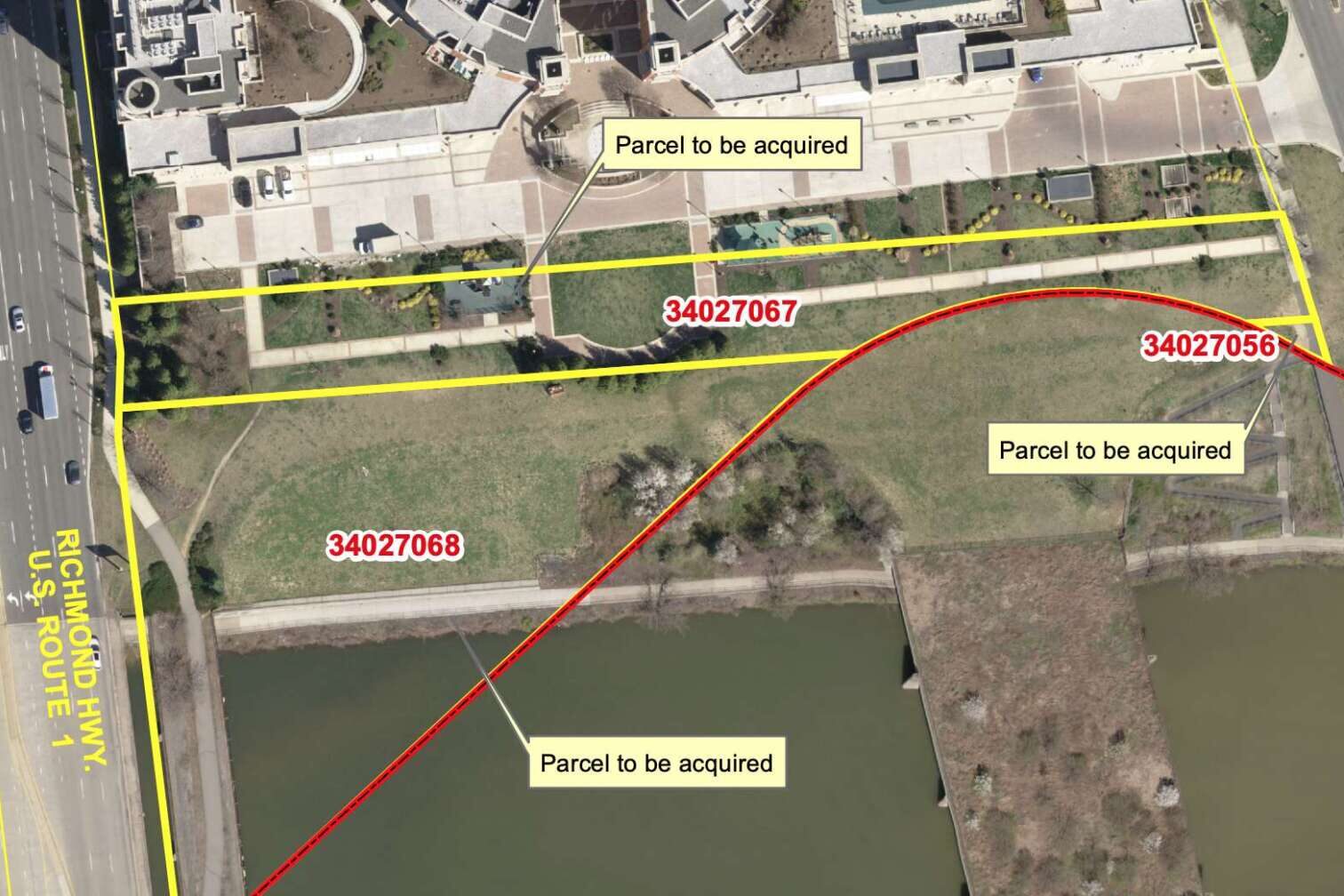
On Saturday, the County Board approved an agreement with the Arlington Potomac Yard Community Association to accept a gift of three parcels of land within the boundaries of Short Bridge Park. The park is located across Four Mile Run from the Potomac Yard shopping center, along Route 1.

The property “is used by the public as an open space but is privately owned and maintained,” according to a staff report. “[It] has concrete paths, landscaping, a public ‘tot lot,’ open grass, trees, and irrigation.”

Since 2015, the county has had a public access easement over the property, the report said. When the land is turned over to the county, it will cost about $44,000 to maintain annually.

Acquiring the land gets Arlington closer to turning Short Bridge Park into a county park. Although the 3.5-acre open space was created through the Potomac Yard Phased Development Site Plan, adopted in 2000, it remained privately owned by the association and the Eclipse on Center Park condominiums.

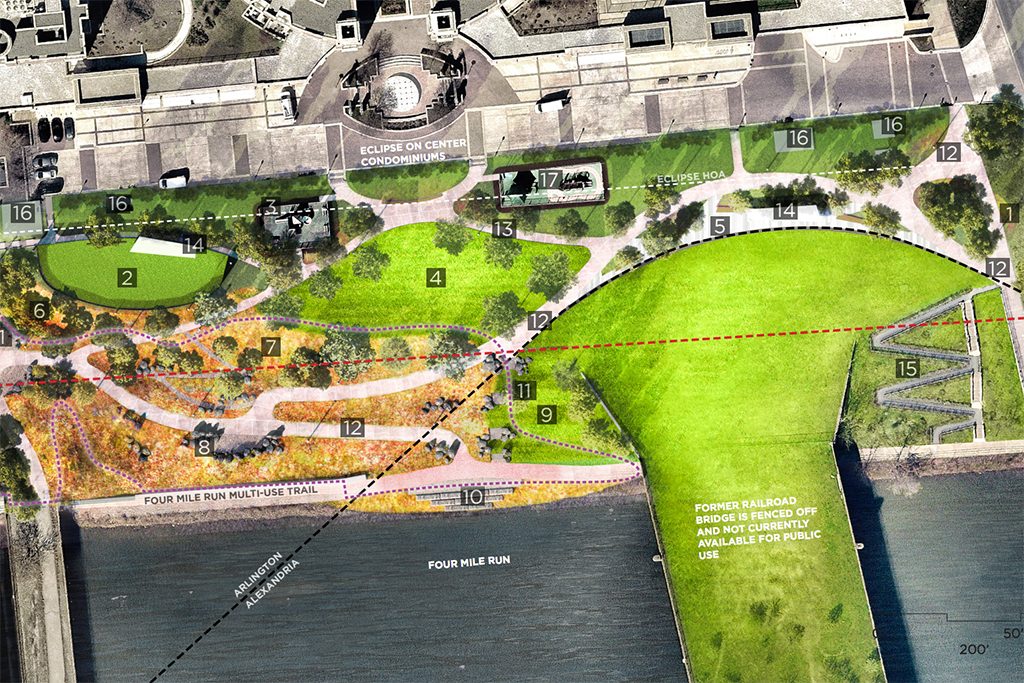
That process includes two phases of construction to realizing the vision of the Short Bridge Park Master Plan, adopted by the County Board in January 2018.

(That was also when the name changed from its informal moniker, South Park.)

The existing park amenities were constructed by a developer.

“These improvements were intended as interim improvements until Arlington County funds were available to develop a Park Master Plan and implement permanent park improvements,” the master plan said. “The developer-constructed improvements are minimal and lack typical County park amenities such as trash cans, seating, signage, and Americans with Disabilities Act accessible pathways.”

It will take a few years, however, before the master plan’s vision for the park is implemented.

“The first phase includes a trail connection that links Richmond Highway to the Four Mile Run trail and is estimated to begin construction in late 2021,” a county staff report said.

The trail project is funded through a federal grant and 20% county match, according to the report.

“The second phase of the park master plan will construct the rest of the park and is dependent on Capital Improvement Plan (CIP) funds,” the report said.

As of now, the adopted CIP plan — which schedules out county projects through 2028 — identified construction funding for phase two “in the out-years” or the 2023-24 fiscal year, the county said.

According to the master plan, this phase includes a dog run, a riverfront overlook and an “interpretive plaza.”

Image via Arlington County


Virginians who are fully vaccinated can ditch their masks for most indoor and outdoor situations effective tonight at midnight, Gov. Ralph Northam announced this afternoon (Friday).

He also moved up the end date for all distancing and capacity restrictions to Friday, May 28. Virginia was already preparing to ease some restrictions tomorrow (Saturday), but as of today, all distancing and capacity restrictions will end on Friday, May 28 — two weeks earlier than planned.

“This is a tremendous step forward,” Northam said in a video message. “Virginians have been doing the right thing, and we’re seeing the results.”

As of today, Virginia has administered nearly 7 million vaccine doses and 63% of adults have received at least one dose, the governor said in his announcement. In Arlington, nearly 200,000 doses have been administered and over 60% of the adult population has received at least one dose.

COVID-19 case numbers, meanwhile, have fallen to levels Arlington and the Commonwealth have not seen since last summer.

Northam’s announcement comes on the heels of new guidance from the Centers for Disease Control and Prevention. Yesterday (Thursday) the CDC said fully vaccinated Americans will no longer need to wear a mask or physically distance in any setting, except where required by federal, state, local or tribal laws, or business and workplace guidance.

There are some exceptions to the new masking guidance. Businesses can still require coverings and masks will also still be required in schools, he said.

“It’s very simple: It’s either a shot or a mask,” Northam said. “It’s up to you.”

Between now and May 28, Northam urged every eligible Virginian — now anyone ages 12 and up — to get vaccinated and join the two-thirds of Virginia adults who have received at least one shot.

“The vaccines are clearly working and they are saving lives,” he said. “We have plenty of shots available. It will protect you better than anything else.”

Image via Gov. Ralph Northam/YouTube


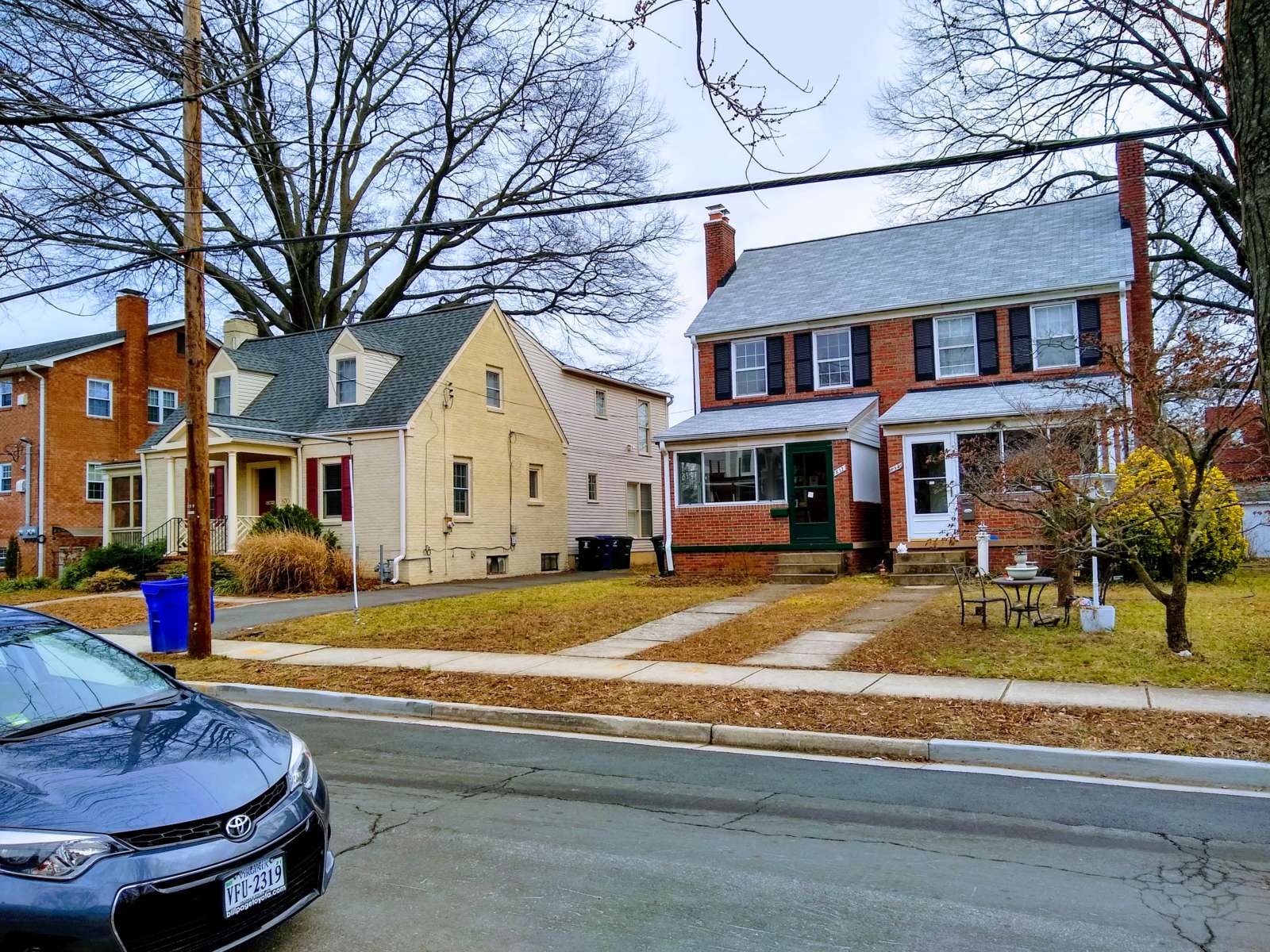
Arlington’s lack of affordable townhomes, duplexes and other housing types has a ripple effect across the D.C. region, housing experts say.

How Arlington tackles that deficit, they said, could help stem the tide of urban sprawl and its social, economic and environmental impacts — with more options, lower- and middle-income households are better able to stay in their communities, be near their jobs and access established transit areas.

“Leadership [in Arlington] is still needed,” said Michael Spotts, President of Neighborhood Fundamentals, during a recent Arlington Committee of 100 webinar on Missing Middle Housing. “This is an important issue and Arlington can’t solve it on its own, but it’s something that we should do because it’s good for the county and the region.”

With the multi-year “Missing Middle Housing Study,” Arlington County is examining whether the county should allow housing types that have been typically prohibited from many neighborhoods to reverse housing shortages. If approved, rewritten ordinances would not be implemented until 2022 or 2023.

The county recently published the results of six months of community engagement. Priorities include a greater supply and wider array of housing options, at lower costs, while concerns include the impact that would have on property values, school capacity and the environment.

Now, the county is asking people what kinds of housing options should be explored. Through June 8, respondents can choose from 10 options, including multiplexes, cottage clusters, townhouses and small-lot homes currently excluded from some neighborhoods.

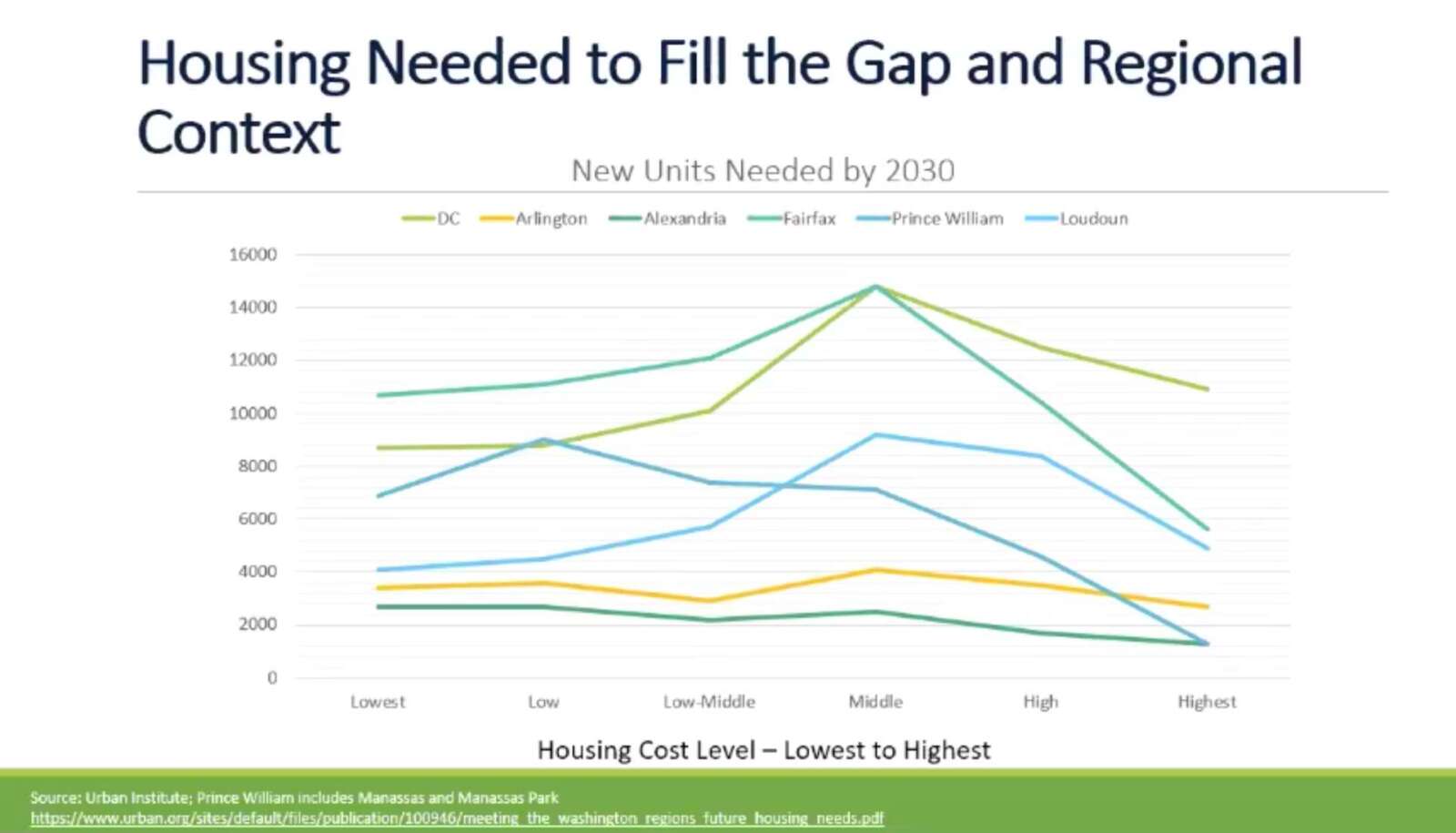
Providing those options locally will help address a regionwide problem that panelists say is currently driving urban sprawl, which is harming the environment.

“We’ve seen more development in outlying counties, and significant losses in impervious surface,” Spotts said. “We are downstream from some of these locations and that has an impact on Arlington’s environment. By limiting development [here], we may be able to save trees but at the expense of much larger acreage of forest loss in other jurisdictions.”

It also contributes to higher greenhouse gas emissions in those outlying counties, since many drive to work in Arlington and D.C., he said.

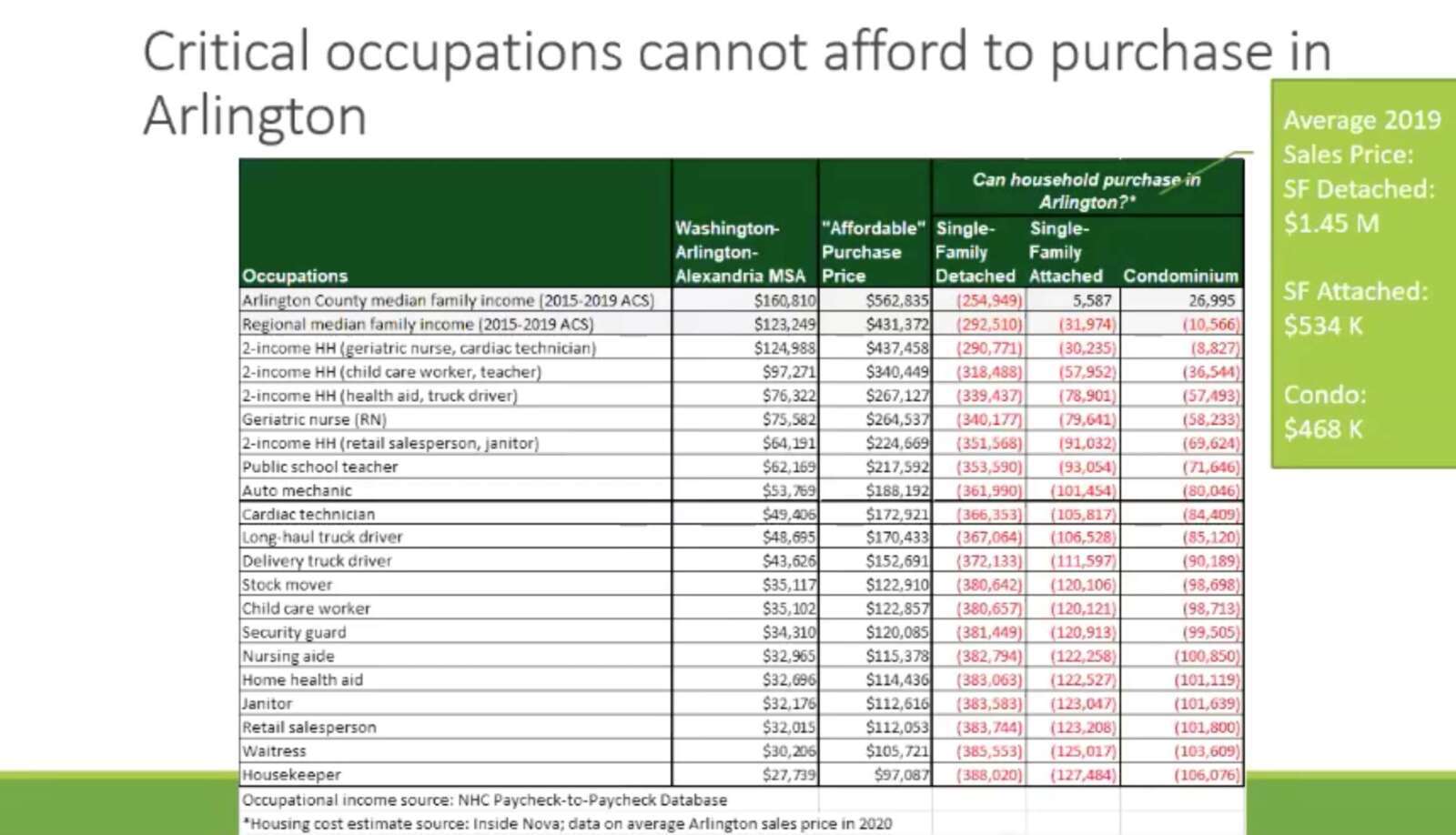
With the average costs of homes in Arlington ranging from $500,000-$1.5 million, depending on type, that prices out many professions like teachers, mechanics, security guards and so on.

Instead, they go where the average price is lower than in Arlington, said Jon Huntley, a senior economist at the Penn Wharton Budget Model who also runs the website Arlington Analytics.

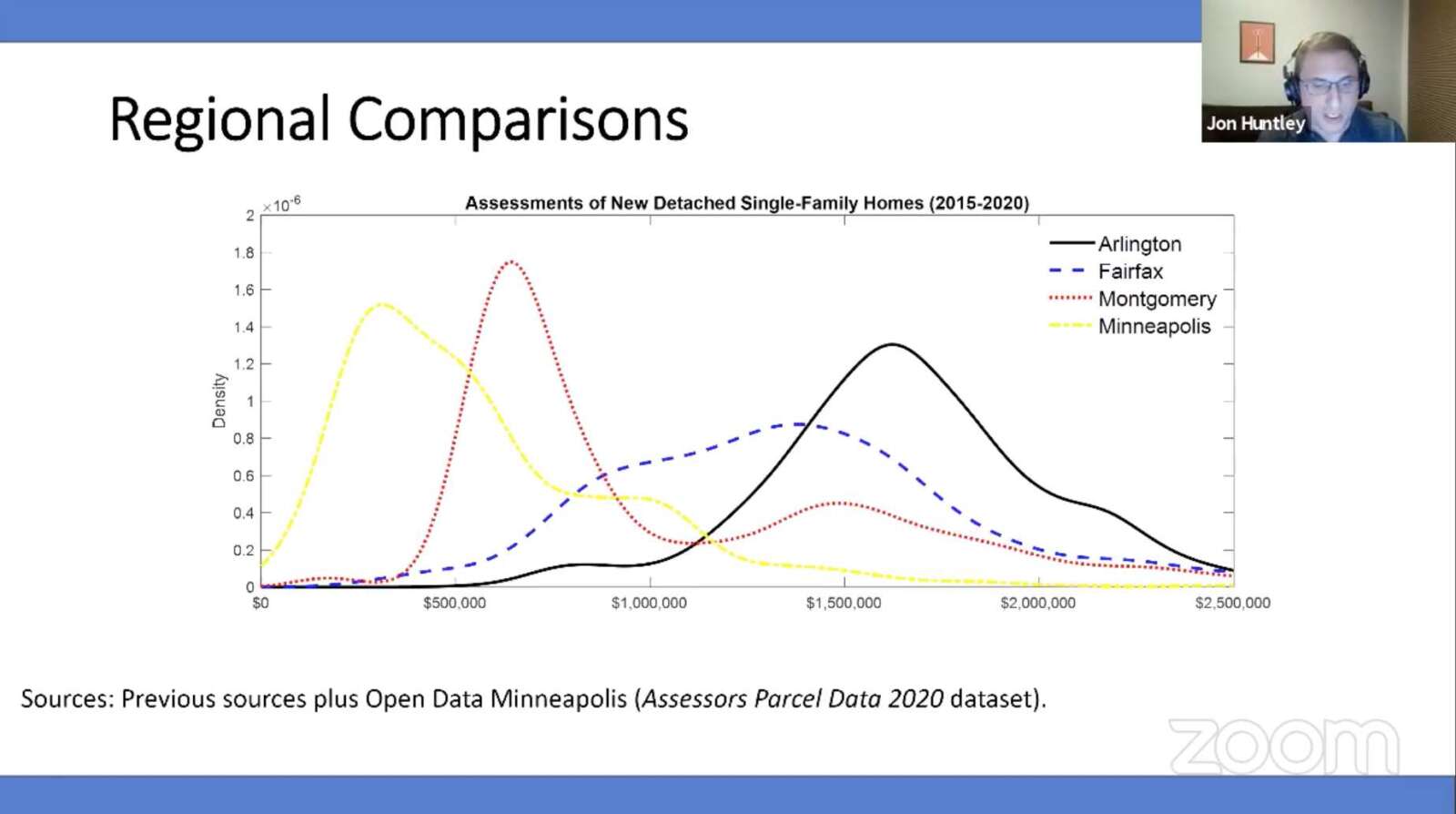
High land costs set a minimum price for any new Missing Middle construction, however, and more stock may not solve the affordability problem anytime soon given Arlington’s housing shortage, according to Huntley.

“The prices of new Missing Middle properties will have to reflect that alternative [to build very expensive single-family detached homes],” he said.

Since 2017, Huntley said Arlington has built 58 brand-new townhomes with an average selling price of $1 million. There were only eight duplexes built — for an average price of $1 million — and 35 stacked condos that went for up to $840,000.

“Townhomes and other missing middle properties will definitely become more affordable, but unless something dramatic happens this effect will happen in a timeframe measured in decades,” he said.

(more…)


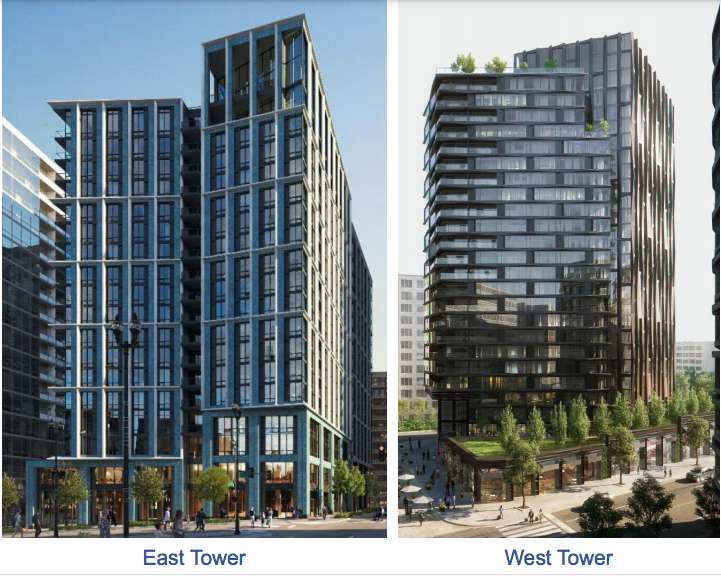
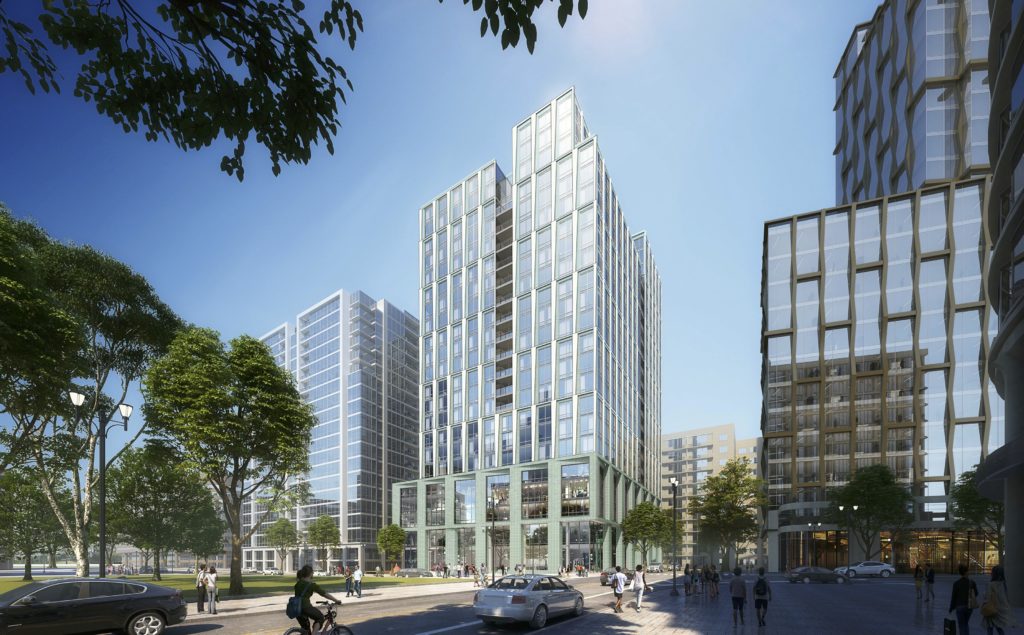
(Updated at 2:40 p.m.) After months of public review, a proposal for two mixed-use towers in Crystal City from JBG Smith is slated for County Board approval this Saturday.

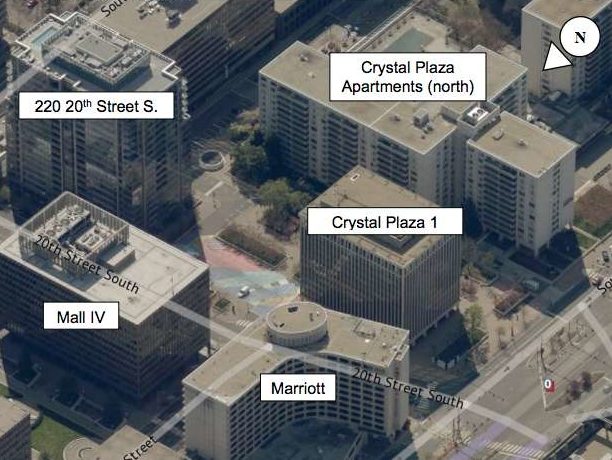
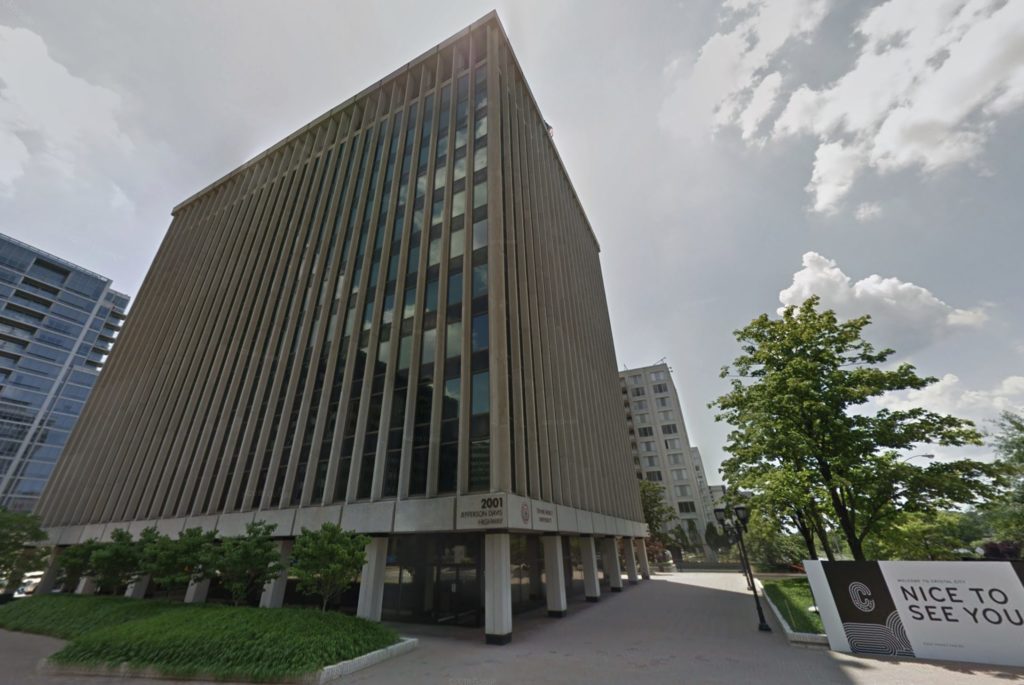
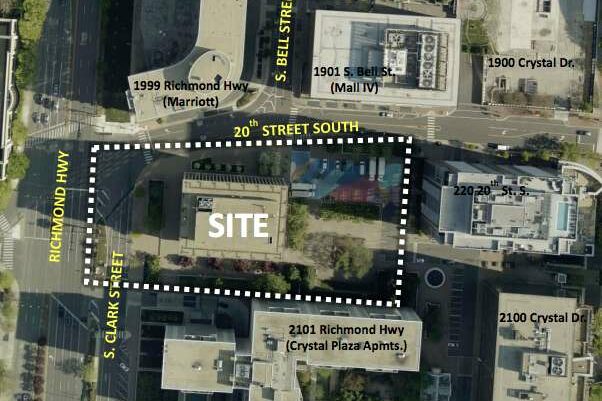
The 2.4-acre site is located at the intersection of Richmond Highway and 20th Street S., just north of the Crystal Plaza Apartments. As part of the project, initially filed in 2019, the Bethesda-based developer proposes demolishing an existing office building and surface parking lot, and shifting S. Clark Street to the east to create a new S. Clark-Bell Street.

It its place will be two towers with more than 750 residential units.

JBG Smith has made some changes in response to criticism from members of the Crystal City Civic Association, as well as a few transportation and pedestrian commission members.

In January, some criticized the width between the two buildings, separated by the new S. Clark-Bell Street, for being narrower than the width called for in the Crystal City Sector Plan. Residents also said a proposed — mostly cement — pedestrian plaza should include more “trees, gardens and benches,” and worried that a proposed underground garage would have interfered with a network of tunnels known as the “Underground.”

Some plans have changed since then.

The pedestrian plaza “took a great step in the right direction to become something much more green, much more biophilic,” said principal planner Adam Watson during a Planning Commission meeting earlier this month.

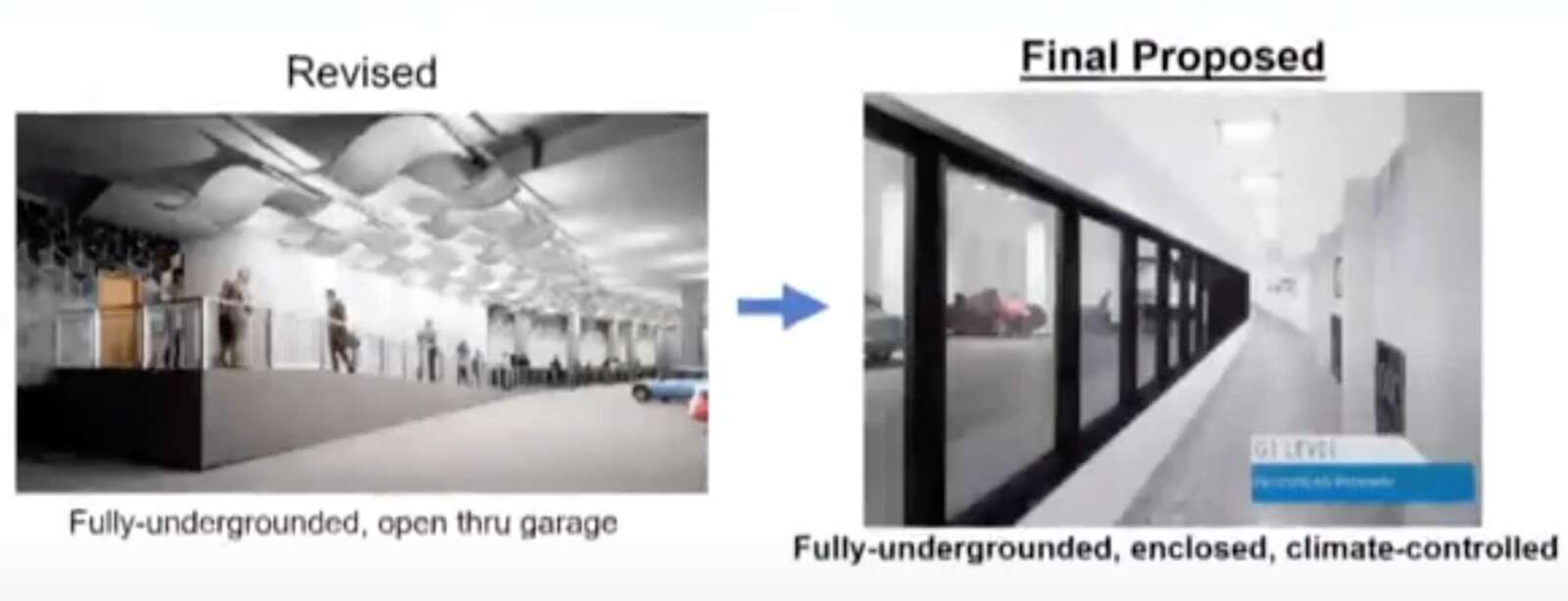
As for the “Underground,” JBG Smith is now proposing a “fully enclosed, fully undergrounded, climate-controlled connection” from 12th Street S. to 23rd Street S., Watson said. A previous iteration had the tunnel open up when it connected with the garage.

The final proposals for the above-ground plaza and underground tunnel “evolved over the course of the public community engagement process,” Watson said.

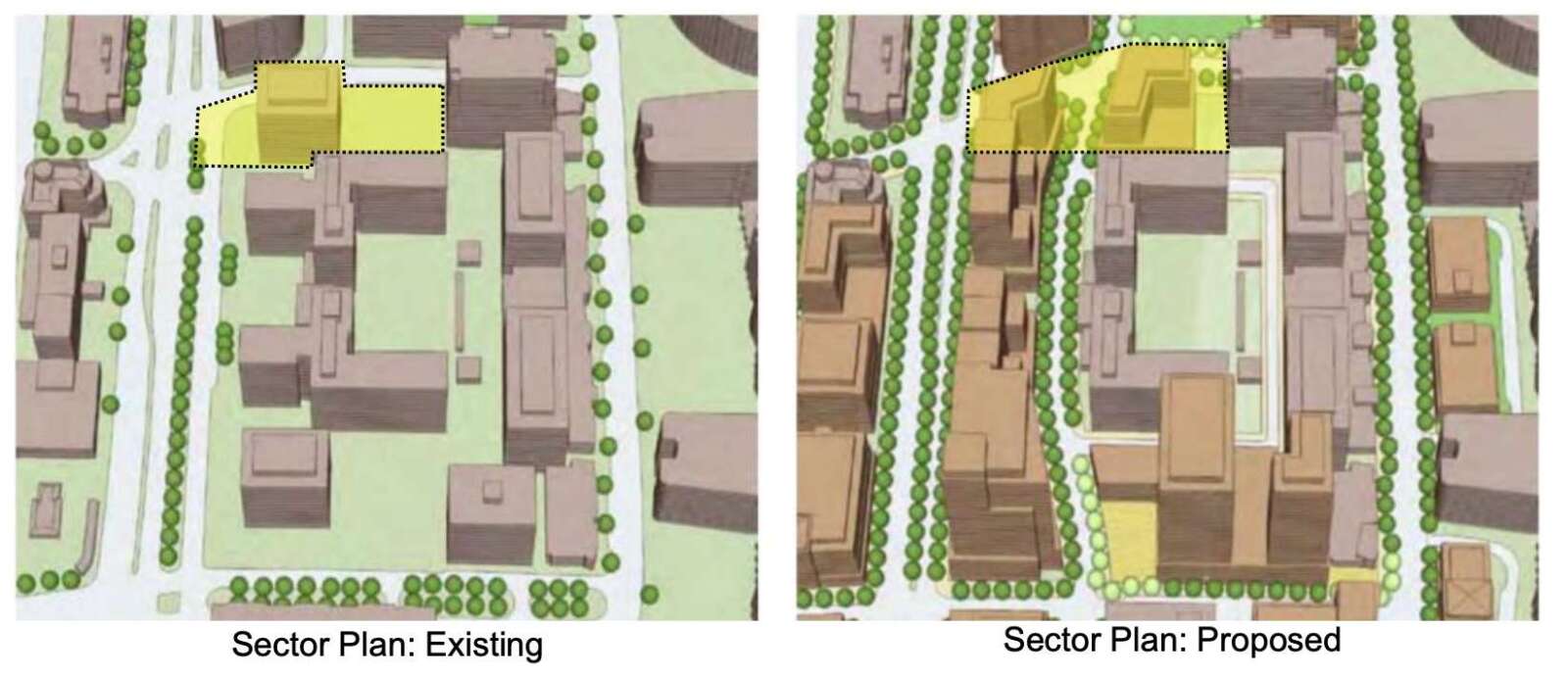
The space between the two buildings, separated by the new S. Clark-Bell Street, still falls a few feet short of the Crystal City Sector Plan but the county is giving this deviation a pass.

“Staff finds the proposed street segment will provide sufficient functionality to support all modes of transportation,” according to the county.

JBG Smith is proposing a space of 76.5 feet between the two buildings, compared to the sector plan’s recommendation of 80 feet. Although 3.5 feet narrower, the street will accommodate two travel lanes southbound, one travel lane northbound, and a buffered bicycle lane in each direction.

S. Clark Street would shift east and — south of the buildings — tie into the existing S. Clark Street, according to the county report.

“The northern end will align with S. Bell Street, north of 20th Street S. and create a new four-way signal-controlled intersection and remove the existing intersection with 20th Street S.,” the report said.

The density of the towers has also decreased slightly. While they are the same height, both have less ground-floor retail space and fewer residential units.

The West tower (2000 S. Bell Street) now has the following specifications:

  • 367,040 sq. ft.
  • 338 units
  • 12,244 square feet of commercial or retail space
  • 250 feet tall

The East tower (2001 S. Bell Street) now has the following specifications:

  • 334,061 sq. ft.
  • 420 units
  • 10,006 square feet of commercial or retail space
  • 200 feet tall

There will be 247 parking spaces for residents and 10 visitor spaces, along with 45 spaces for retail users. Additional parking will be available in existing garages.

(more…)


Anthony Fusarelli, Jr., Arlington County’s new planning director, has watched the county transform over 15 years from within the Department of Community Planning, Housing, and Development.

When he arrived in Arlington, the Department of Defense was preparing to leave a gaping hole in Crystal City and Pentagon City that Arlington would, in effect, fill a decade later with Amazon’s HQ2.

Elsewhere, he watched as housing market forces and county regulations together drove the redevelopment of single-family homes for contemporary tastes at higher price points.

And in some corridors, he saw the county realize a decades-old vision for transit-oriented development, while others retained their suburban, auto-focused flavor.

Fusarelli will assume his role in early June but he is already imagining the next 40 years of development in Arlington County. Future planning will have to accommodate Arlington’s increasing population and flourishing tech industry, fueled by the arrival of Amazon’s HQ2, as well as the changing nature of work.

All of those things are moving targets, and to meet them, the plans that Arlington uses to guide development will need to allow for a variety of uses to meet the changing needs of the community, he said. That is a lesson he learned from the pandemic.

“I’m looking forward to working with our team to think more about what we can do to better absorb future disruptions and shockwaves as a complete community,” he tells ARLnow.

What that looks like, he said, “is the million-dollar question.”

Practically speaking, he said construction projects need to be adaptable by design: Parking garages that can turn into housing, or apartment buildings with co-working spaces for tenants working from home.

“We have to recognize that our planning work and decisions about buildings inform places that are going to be here for decades,” he said. “The more they can be flexible and adapt with changing times, the better off Arlington will be.”

In many ways, he said, “the possibilities are endless,” but they will involve rewriting regulations and updating county plans guiding development.

Present efforts to refresh these planning documents are focused on Clarendon, Pentagon City and along Lee Highway. Later this year, his department is set to deliver an update to the western end of the Clarendon Sector Plan.

But the Pentagon City and Lee Highway updates will be more comprehensive, he said.

Forty-five years after the Pentagon City Phased Development Site Plan was approved, most of the development it envisioned has been exhausted, he said. The biggest contributor was the 2019 approval of the first phase of Amazon’s HQ2, Met Park.

The second phase — the iconic glassy double helix that’s currently under review — will nearly complete the development called for in the 1970s, he said.

Now, the county is stepping back to imagine a more flexible plan to guide Pentagon City’s future growth, he said. And next door in Crystal City, Amazon plays an equally vital role.

“In many ways, Amazon’s arrival can really serve as a catalyst for a lot of the envisioned development that the county had imagined through the Crystal City Sector Plan,” said Fusarelli, who spearheaded the creation of the 2010 plan.

Meanwhile, future planning for Lee Highway benefits from the work to redevelop Columbia Pike from an auto-oriented shopping center into a more urban, walkable corridor.

“We still have work ahead of us,” he said.

And like Columbia Pike, the county will have to pay attention to how future development “can effectively and harmoniously transition down to low-density residential neighborhoods,” he said.

The county also has a lot of work to do to ensure a diverse range of people can live in Arlington’s more residential neighborhoods. That work will likely require changes to zoning ordinances while keeping racial equity and inclusion top of mind, he said.

“Arlington is challenged by high land values,” he said. “We need to look at other tools, such as zoning regulations, to see if they need adjustments to help us get on track.”

Courtesy photo


View More Stories