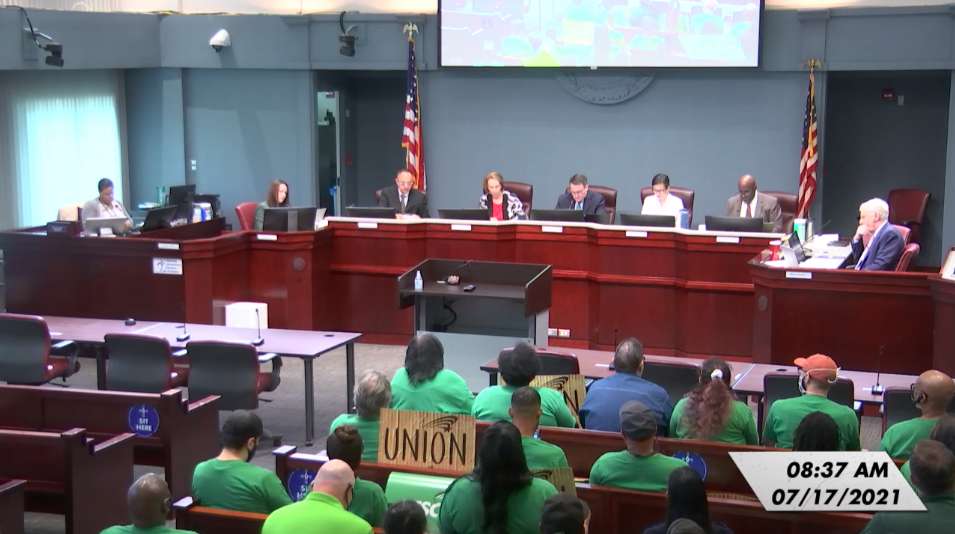
Pro-union county employees attend the in-person County Board meeting held on Saturday (via Arlington County)

For the first time since the 1970s, municipal employees in Arlington will be join unions and negotiate employment conditions.

The Arlington County Board restored collective bargaining with its unanimous approval of revision to county code during its meeting on Saturday. The county will soon allow employee associations to enter into collective bargaining with the county over compensation, benefits, working conditions and other issues.

The change responds to a state law passed by the General Assembly in 2020 that went into effect in May.

“Elections have consequences,” Board Chair Matt de Ferranti said. “We would not have this authority if we did not change the legislature in 2019. Let’s not let other people speak for us. We know that in any community, and in the United States, many already have a voice, but making sure that you have a voice — and it’s a majority voice — is critical.”

The first collective bargaining agreements are expected to go into effect in the 2024 fiscal year. Approximately two-thirds of county employees will be eligible to join one of five collective bargaining units in the ordinance.

These five units are police; fire and emergency medical services; service, labor and trades; office and technical; and professional employees.

Board Vice Chair Katie Cristol said she would like to see the decision for public employees ripple into the private sector.

“I challenge the General Assembly to tackle with the same alacrity they took on collective bargaining some of the anti-union provisions that still govern the private sector here in Virginia,” she said, which received applause from attending meeting members.

She reiterated her support for the move on Twitter.

But not everyone is enthused with the changes. Collective bargaining could result in tax increases for Arlington residents, opined Mark Kelly, a opinion columnist on ARLnow.

“Constraining our county budget with an unfavorable labor contract is not only a lazy way to address compensation, it can cause other long term issues,” he wrote in a recent column. “One only has to look at the financial troubles of Metro to understand just how quickly maintenance and other needs can get pushed aside as personnel costs grow out of control under a labor agreement.”

With a second unanimous vote, the Board adopted a policy that will increase wages for tradespeople working on government-contracted projects. The change follows passage of a state law giving local governments the option to implement prevailing wage programs for public works contracts exceeding $250,000.

The new policy applies to contracts solicited on or after Oct. 1 of this year.

“This proposed program design is intended to serve as an initial phase, which would be revisited in the future based on the County’s learned experience and anticipated clarification to the State’s enabling legislation,” the county’s press release said.

Like the issue of collective bargaining, Kelly said this decision will also burden taxpayers, who will not enjoy more public amenities in return.

“Over the course of a 10 year capital improvement plan, the increased costs will approach $100 million,” he said. “By way of comparison, this is equivalent to a new high school building or two aquatics centers. But taxpayers will not get new buildings or other infrastructure in return.”
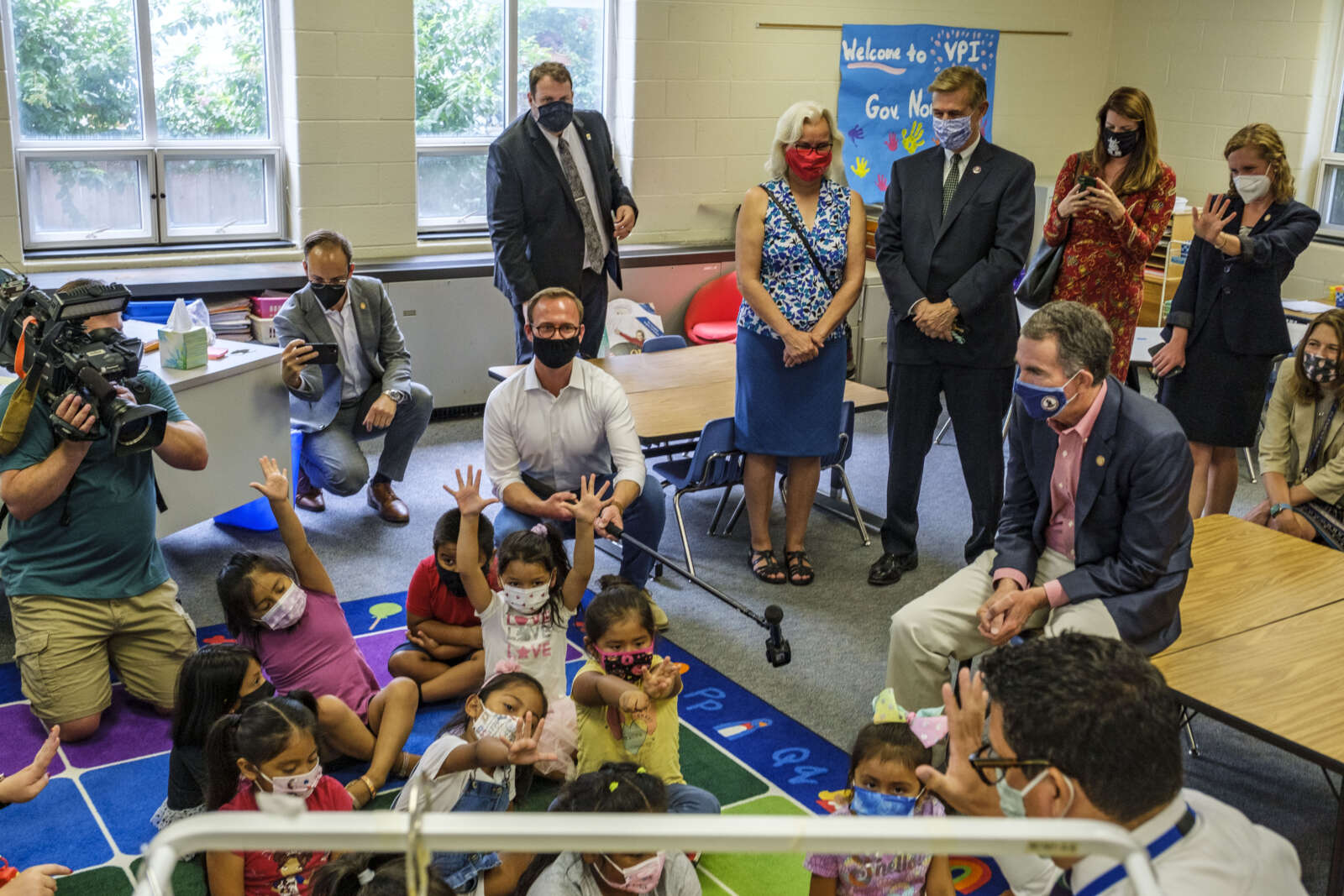
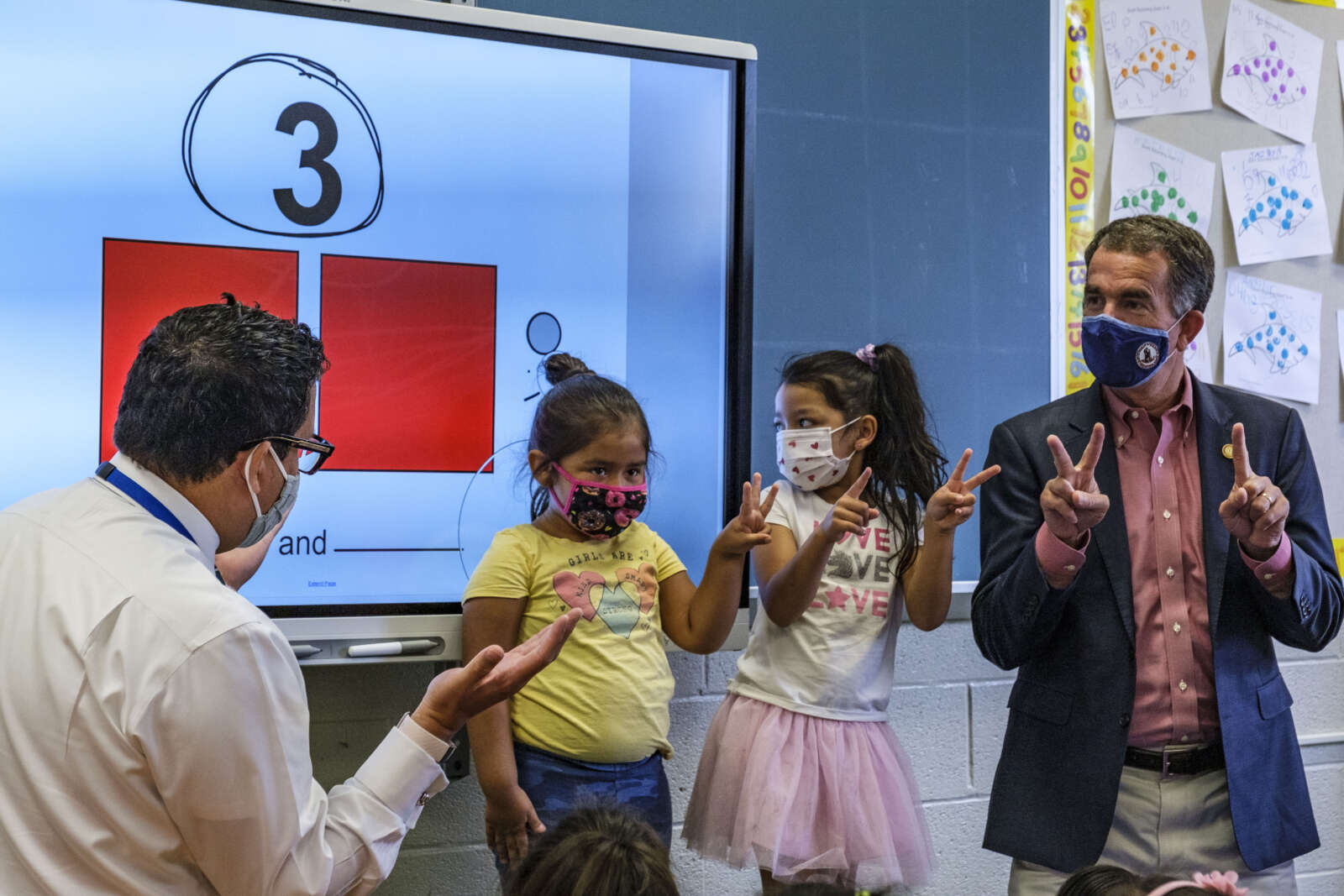
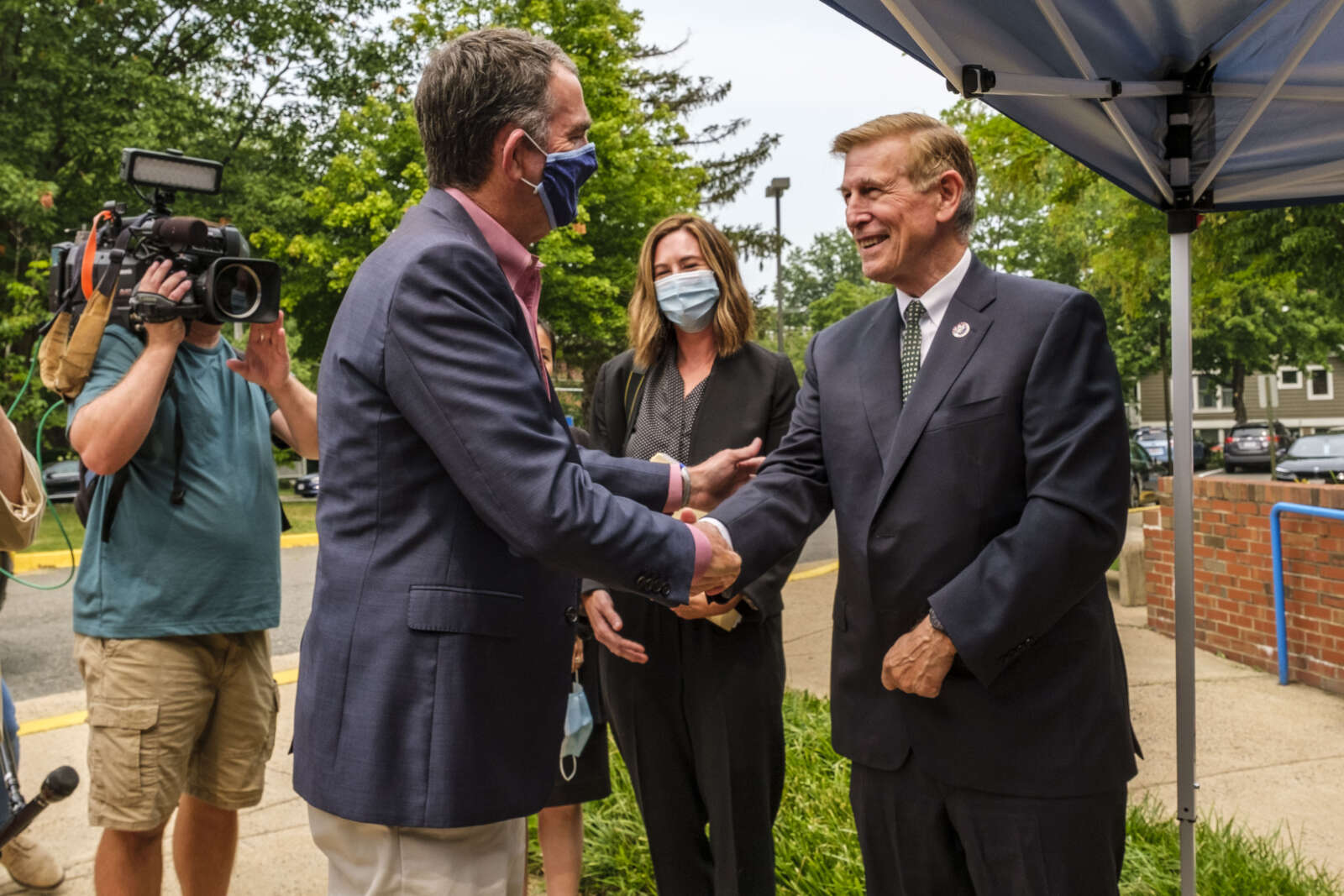
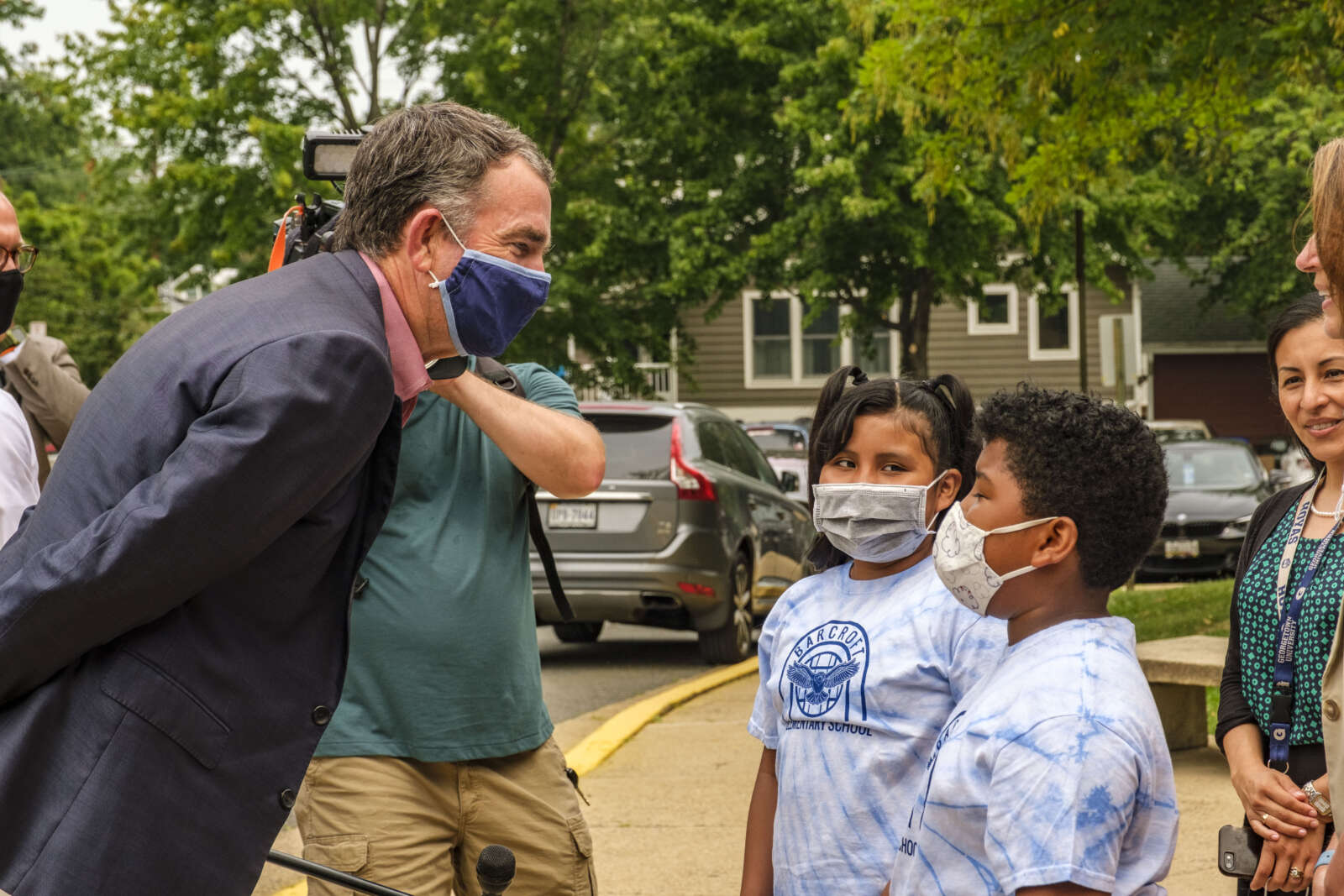
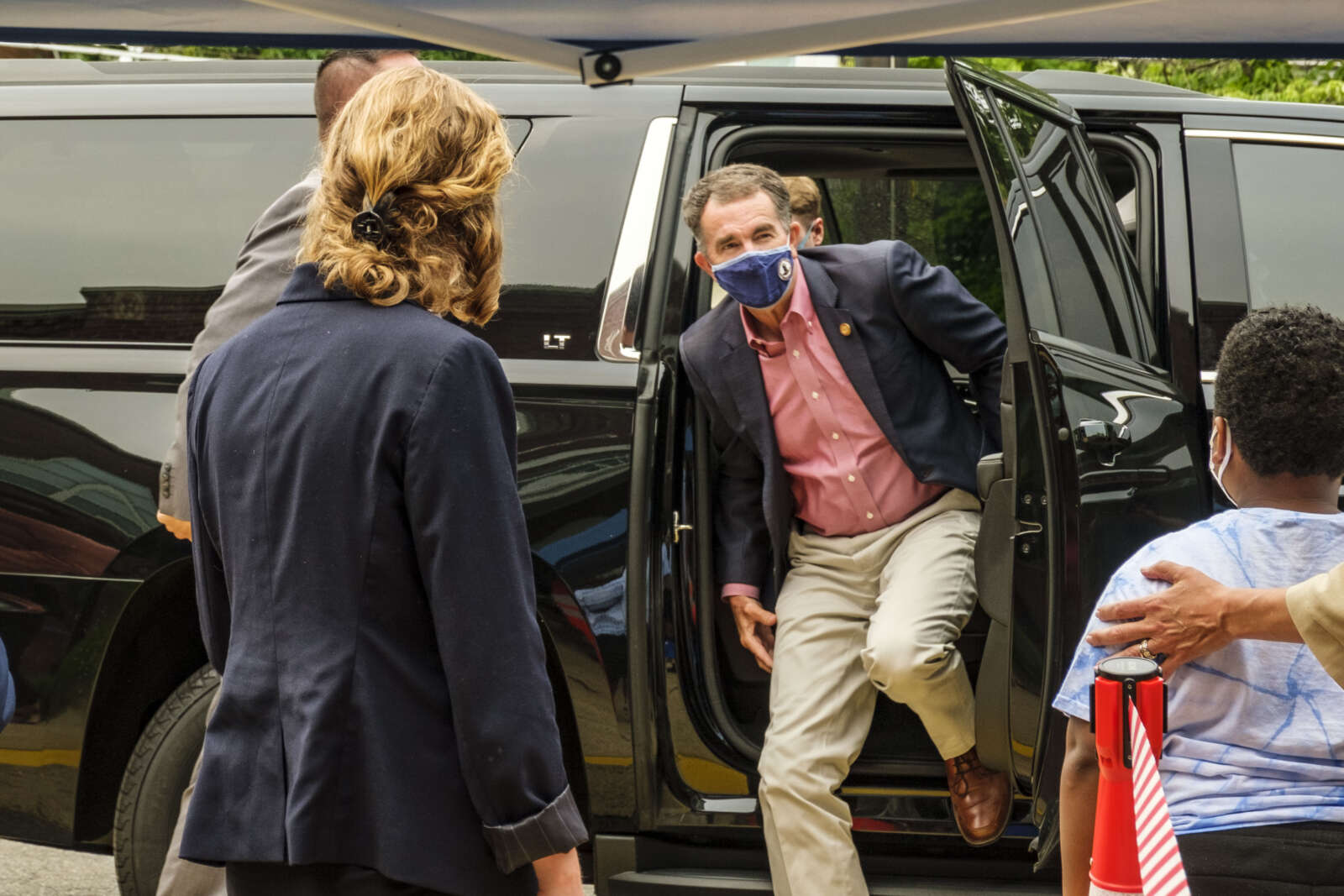
Gov. Ralph Northam and Virginia Secretary of Education Atif Qarni visited Barcroft Elementary School today (Monday) to get a glimpse of summer learning opportunities in Arlington Public Schools.

The visit is part of a tour of Virginia schools offering summer learning to select students in most need of academic support after a year of virtual learning. In Arlington, more than 4,600 students are enrolled in summer learning, of whom nearly 3,500 are attending in person.

“It’s been amazing… seeing kids happy to be in the classroom, seeing teachers and staff so enthusiastic,” Northam said. “Our future is in good hands.”

At Barcroft (625 S. Wakefield Street), 100 students are enrolled in summer learning, which is focused on strengthening math and reading skills, said Catherine Ashby, a spokeswoman for APS. The school system has an additional 480 elementary students participating in a new program, available for those who initially qualified for summer school but were deemed unable to participate.

Initially, APS had expanded eligibility requirements for summer school to reach more students. Citing teacher shortages, however, it later contracted eligibility. This summer, 850 teachers and staff are providing instruction to certain students with disabilities and who are learning English, as well as some regular-education students with failing grades or who need a core class to graduate high school.

Inside the classroom, students and teachers wore masks. The governor is preparing to release new mask guidelines this week in light of rising cases of the coronavirus. The new guidance will replace the executive order governing mask wearing, which is set to expire on Sunday (July 25).

As cases climb and the more contagious Delta variant spreads, and with most children unable to receive the vaccine, the American College of Pediatrics — of which Northam is a member — recently recommended that all kids should wear masks while indoors. Northam said the new state rules will likely be aligned with recommendations from the Centers for Disease Control and Prevention.

“We will definitely have guidelines before the weekend,” he said.

Virginia is reporting about 250 to 300 new cases per day, due in part to the rise of the Delta variant. Northam said he encouraged parents to vaccinate their children 12 years old and older with the Pfizer shot. About 35% of eligible children in the Commonwealth have received their first dose, he said.

Still, state officials said they want children attending school in person.

“We have had a lot of unfinished learning,” Qarni said. “We do know the best place to learn is in person.”

APS officials have pledged that the school system will be fully in-person this fall. For the first four weeks of school, APS will be focused on social-emotional learning and academic assessments, Ashby said, as it tries to make up for lost learning last school year.

At Barcroft, Northam also saw a new literacy program at work.

Principal Judy Apostolico-Buck tells ARLnow the school formally implemented the program — which focuses on teaching the mechanics of reading — last year. This approach, called structured literacy, will be implemented across elementary schools in Arlington this fall to improve reading proficiency rates.

“We need something that guarantees literacy proficiency for all students,” she said. “It’s been a big shift, but the research unequivocally shows that this is what we need to do.”


Sponsored by Monday Properties and written by ARLnow, Startup Monday is a weekly column that profiles Arlington-based startups, founders, and other local technology news. Monday Properties is proudly featuring 1515 Wilson Blvd in Rosslyn. 

Fifteen Arlington startups will be recognized this Wednesday during an event highlighting “red hot” startups in the D.C. area.

Event company DCA Live selected more than 40 companies to recognize, including Courthouse-based data privacy startup Wire Wheel and Ballston-based GoTab, which facilitates to-go and in-person, contactless ordering.

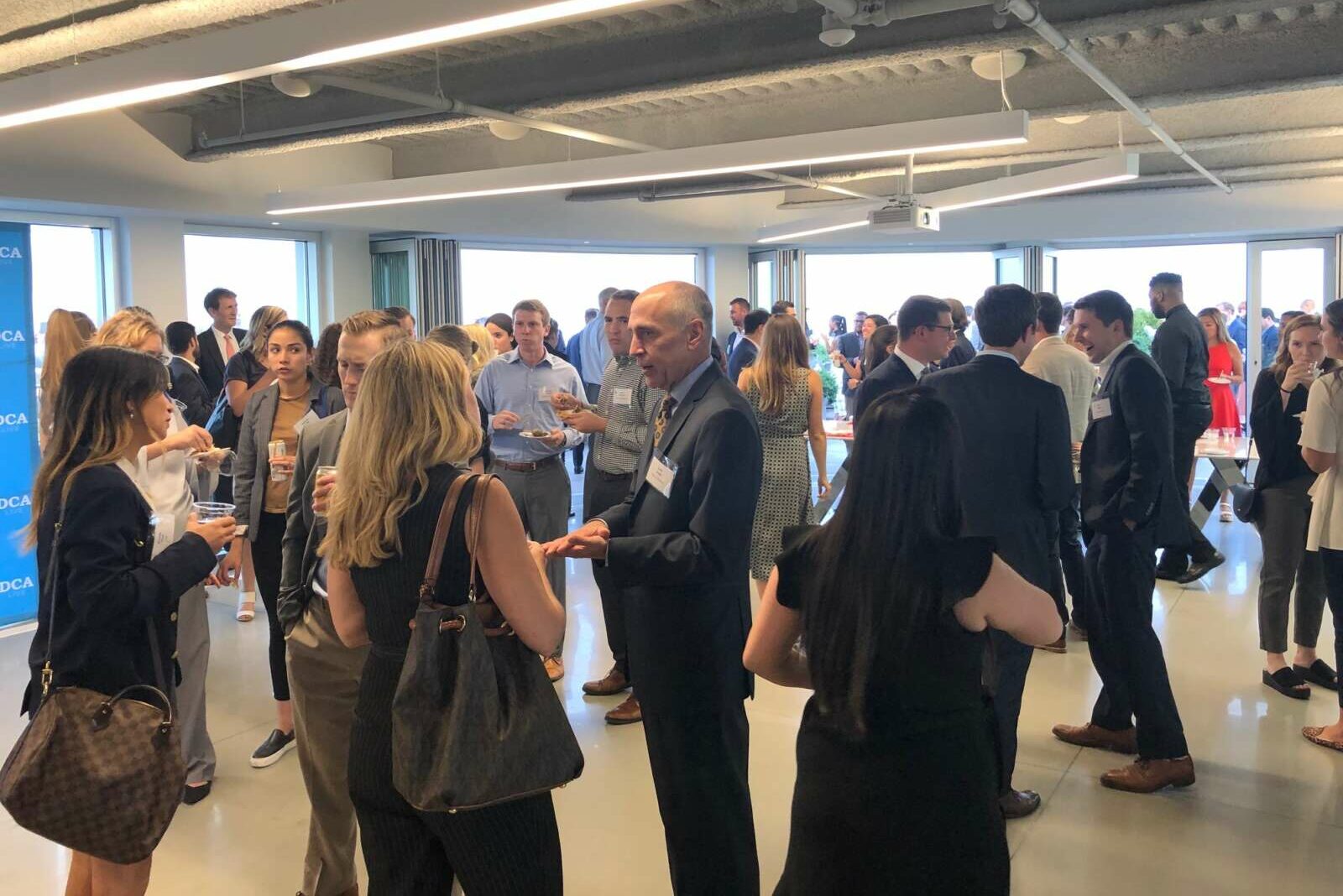
Red Hot Companies,” which will be held in Rosslyn, is the first large-scale, in-person event that DCA Live has been able to host since D.C. and Virginia reopened, according to company founder Doug Anderson. After 16 months of virtual offerings, he expects a big crowd — upwards of 400 people — for the sixth annual event.

“I didn’t move into the shallow end with a 100-person event,” Anderson said. “There was an opportunity for us to be first mover in returning to live events.”

Forty-four startups will be recognized, and the ceremony and networking opportunity at Sands Capital Management (1000 Wilson Blvd) will celebrate how the D.C. area tech sector survived the pandemic, he said.

“I think we’ve come out of this pandemic much stronger than we entered it,” Anderson said. “About half-way through the pandemic, it became clear one of the big winners would be tech businesses. They had the infrastructure, and they enabled the world to continue.”

These companies also found ways to use the pandemic to accelerate their business plans and the demand for their products, he said.

“They had to really focus on what their true value proposition was, who their true customer was and how to serve them,” he said.

A previous DCA Live ‘Red Hot Companies’ event (courtesy of Doug Anderson)

Anderson is recognizing a number of new companies as well as a few established ones. Most are smaller cybersecurity and financial technology companies, but a few are unicorns: privately held startups valued at more than $1 billion.

He picked the companies after soliciting nominations, evaluating them and consulting with people who have a pulse on the D.C. tech startup scene.

“I try to do a fresh look every year,” he said.

The event will draw out strong Arlington startups, including Brazen, Ostendio, CareJourney and C3, he said. Arlington Economic Development and property owner/developer Monday Properties are sponsors.

“It’s got a big Arlington angle to it,” Anderson said. “Arlington is a great place to start a company and host an event.”


A cosplayer at the 2019 Blerdcon, which takes place in Crystal City (via Blerdcon/Youtube)

Nerds of all backgrounds are reveling in their geekdom this weekend in Crystal City.

BlerDCon — an anime, gaming, comics and sci-fi convention — has returned to the Hyatt Regency Crystal City (2799 Richmond Hwy), one year after the 2020 convention was canceled due to the pandemic. It’s taking place today through Sunday, July 18.

BlerDCon will feature a food truck rally, cosplay contests and music, but there will be pandemic precautions: Guests will be required to wear a mask and bring a vaccination card.

The event is not just for Black nerds, or “blerds.” The website said the “universally inclusive fan convention” welcomes people of color, the LGBTQ community and people with disabilities.

Other highlights include a maid cafe, a comedy show, gaming and a “Blerdfunk Concert.”

There will be a number of special guests, according to the website: “Rupaul’s Drag Race” star Dax ExclamationPoint, comedian Roxxy Haze, and actress Karan Ashley, who was the Yellow Ranger on the hit kids show “Mighty Morphin Power Rangers.”

Tickets for BlerDCon are $55.

Cosplay costumes and dancing, featured below, are two hallmarks of the Crystal City event.


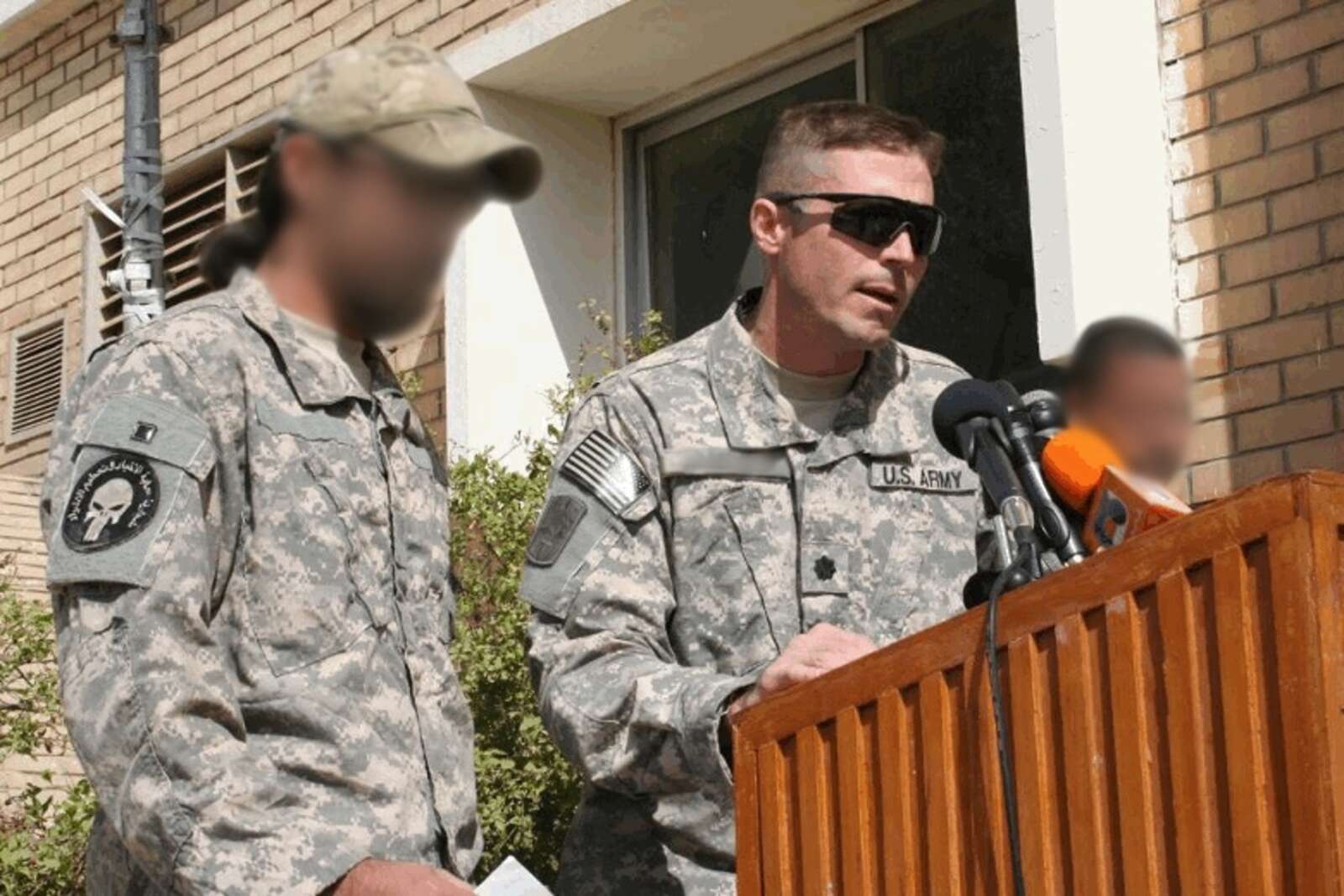
Retired U.S. Army Col. Steve Miska speaks during an Iraqi press conference with help from an interpreter (courtesy of Steve Miska)

A retired colonel who helped Iraqi interpreters flee Baghdad will be speaking in Arlington a few days after the government said it will evacuate Afghans who helped the U.S.

While on his second of three tours in Iraq, Col. Steve Miska (U.S. Army, Ret.) aided dozens of interpreters trying to flee Baghdad before state militias could kill them for treason. Now retired after a 25-year career, he has written a book about the “underground railroad” he helped to establish, which led interpreters to safety from Baghdad to Amman, Jordan before ending in the U.S.

In retirement, Miska has been vocal about the need to protect interpreters, and now his cause is in the news. This week, the Biden administration announced it will expedite visas for Afghans who, having worked with the U.S. military, could face revenge attacks by the Taliban.

Miska will discuss his book, “Baghdad Underground Railroad: Saving American Allies in Iraq,” and how it relates to current events this Sunday at Clarendon United Methodist Church. The event at 606 N. Irving Street will take place from 7-8:30 p.m. It is free but registration online is required.

National news outlets have recently featured the retired colonel, who calls the current plight of interpreters “one of the most significant human rights issues of the Global War on Terrorism.”

“The mostly young men and women who embraced American idealism risked their lives to support U.S. service members in countries where understanding the language, the people, and the contours of the culture are often a matter of life and death,” his event page reads. “Yet, according to recent estimates, more than 100,000 interpreters and at-risk family members remain in Iraq and 70,000 remain in Afghanistan, each in grave danger.”

He told the Washington Post that leaving interpreters behind would betray both the interpreters and American soldiers.

“We need to evacuate now,” he told CNN in May. “The Taliban have been hunting our interpreters in Afghanistan for 20 years. It’s only intensifying with the withdraw. As we near the end, it’s only going to get worse.”

Proceeds from the book will support the United States Veteran Artists Alliance, a nonprofit that helps veteran writers and artists.

Miska’s visit is something of a reunion, as CUMC’s Pastor Tracy McNeil Wines used to serve at a church he attended.


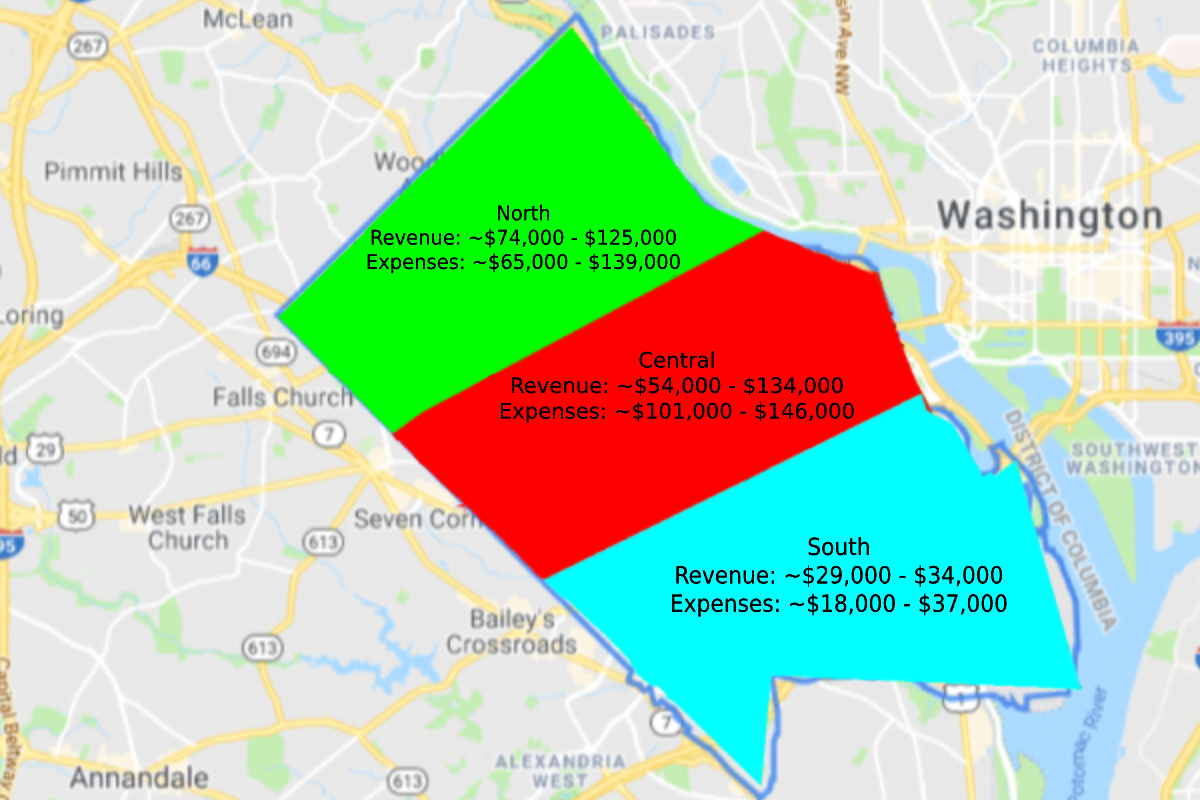
Arlington PTA budgets for the 2018-19 school year, by region (by Hannah Foley)

Parent-Teacher Associations are how students get new spirit wear or go ice skating with their class. They host staff luncheons during Teacher Appreciation Week and help to pay for classroom supplies.

These independent organizations play a pivotal role in the kinds of enrichment opportunities to which students, primarily elementary schoolers, and teachers in Arlington Public Schools have access.

And a PTA’s ability — or lack thereof — to pay for these activities varies dramatically by zip code. Some PTA leaders tell ARLnow that they know the money their organizations raise can exacerbate existing inequities among Arlington’s schools, and are trying to raise awareness and effect change.

“We already have schools that are unequal and on top of that — like really thick icing on a cake — it’s making disparities bigger,” said Emily Vincent, a member of the Arlington County Council of PTAs.

ARLnow requested and obtained copies of the 2018-19 budgets from a sampling of elementary school PTAs in northern, central and southern portions of Arlington. Individual PTA revenues ranged from $30,000 in South Arlington to more than $125,000 in North Arlington. PTA expenditures ranged from $18,000 to $139,000, a nearly eight-fold differential

While t-shirts and luncheons form the bread-and-butter of PTA expenses, other common expenditures improve the school through new furniture and books, or add to the curriculum with outdoor education and field trips.

Many PTAs did not respond to our requests for comment or for a copy of the budget.

Vincent said she saw similar discrepancies in the 2017-18 school year budgets she collected. PTA revenue at individual schools ranged from $20,000 to $200,000, and as a whole, Arlington PTAs spent $2 million. About 75% of that spending happened north of Route 50, she said.

(Northern Arlington neighborhoods are generally more affluent than those south of Route 50, which have higher poverty rates and lower household income levels.)

The Arlington County Council of PTAs is trying to tackle these entrenched discrepancies among its chapters. For about six years, the council has operated a grant fund: PTAs donate to the program and those who need extra funding apply for a grant. A 2019 report on the fund said most recipient schools use the money to pay for books, furniture and field trips.

But the grant fund can only go so far, especially because the requests are outpacing donations, Vincent said. Establishing a new policy could help address systemic inequities, particularly around PTA purchases that — if they were borne by APS — would result in a fairer distribution of resources, she said.

“We’re hoping for a culture shift,” Vincent said. “I do think a lot more of our PTA leaders understand that their decisions are not limited to their school.”

No school is an island

Over the last decade, outgoing Tuckahoe Elementary School PTA president Allison Glatfelter said APS has transitioned from a federation of schools that operated quasi-independently to a united school system. That transition, she said, revealed the extent to which some PTA budgets support school operations.

It was common for schools to improve their grounds through PTA funding without going through APS, she said. Budgets indicate that some associations have laid down track, installed sun shades or repaved their courtyards. Tuckahoe’s PTA once paid for a pond that the parent organization continues to maintain, she said.

Nowadays, she said wealthier PTAs spend money “on things that are hard to see.”

The budgets ARLnow reviewed indicated large expenses such as teacher training or, in the case of Jamestown Elementary in the 2015-16 school year, a dedicated horticulturalist.

PTAs get funding from donations and membership dues, but the bulk comes from fundraisers: from “no frills” fundraisers to auctions to restaurant nights in which a local eatery donates a percentage of sales.

According to the budgets that ARLnow obtained, the wealthier PTAs in north and central Arlington set aside tens of thousands of dollars for educational opportunities and capital improvements. Not all of that money gets spent, meaning the same schools have reserves exceeding $100,000.

Tuckahoe, for its part, is trying to change its relationship to fundraising and maintaining reserves, Glatfelter said.

“We definitely pared down fundraising. We don’t need the extra things that we were spending money on. Our kids don’t need extra field trips to places to which we can take them on weekends,” she said. “None of our schools should have giant budgets because we are an excellent school system with a lot of money.”

Vincent said she is not sure APS understands how much PTAs can contribute to school budgets. A policy that caps fundraising or redistributes donated furniture could equalize student experiences and ensure administrators keep tabs on school budgets that rely heavily on their PTA, she said.

(more…)


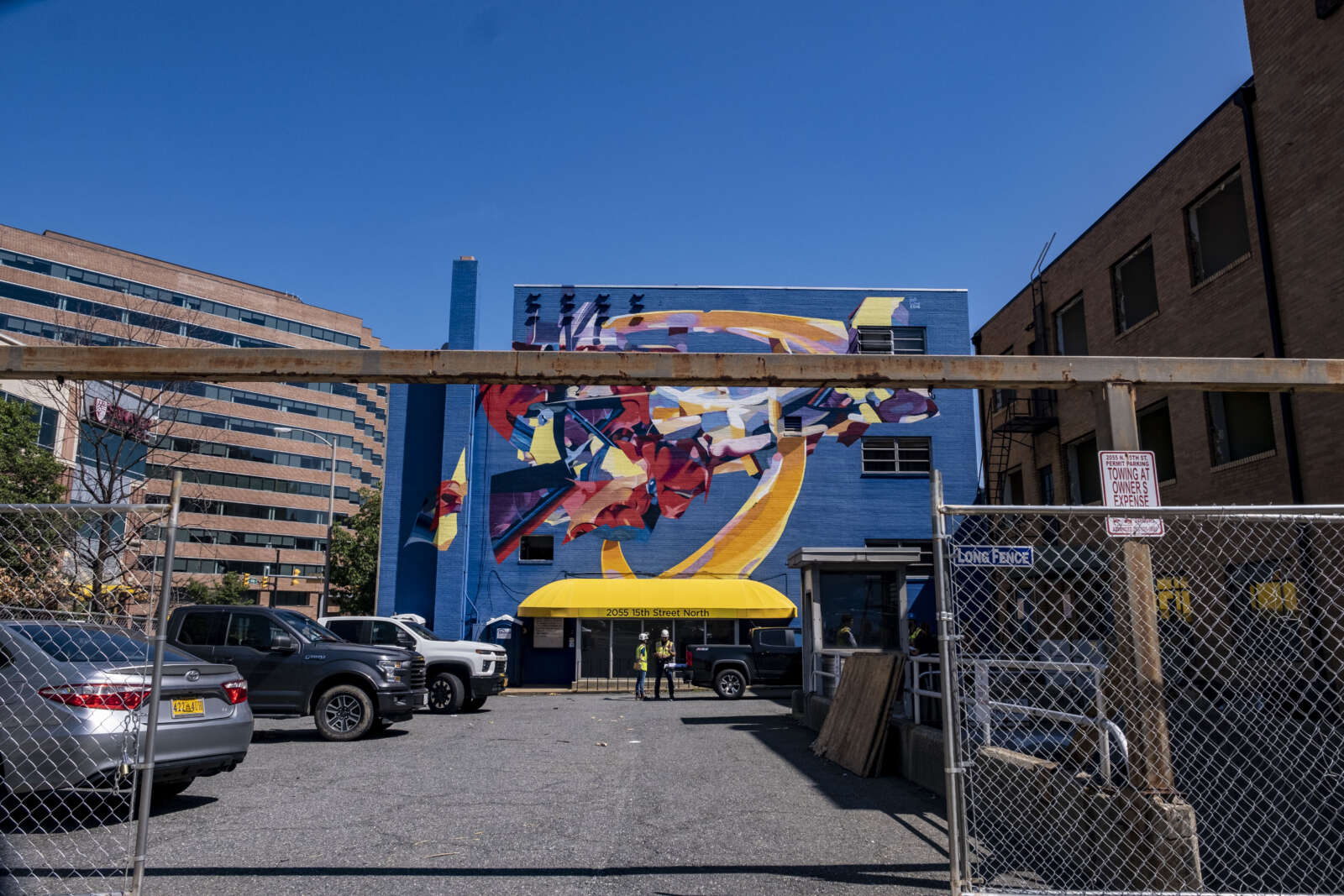
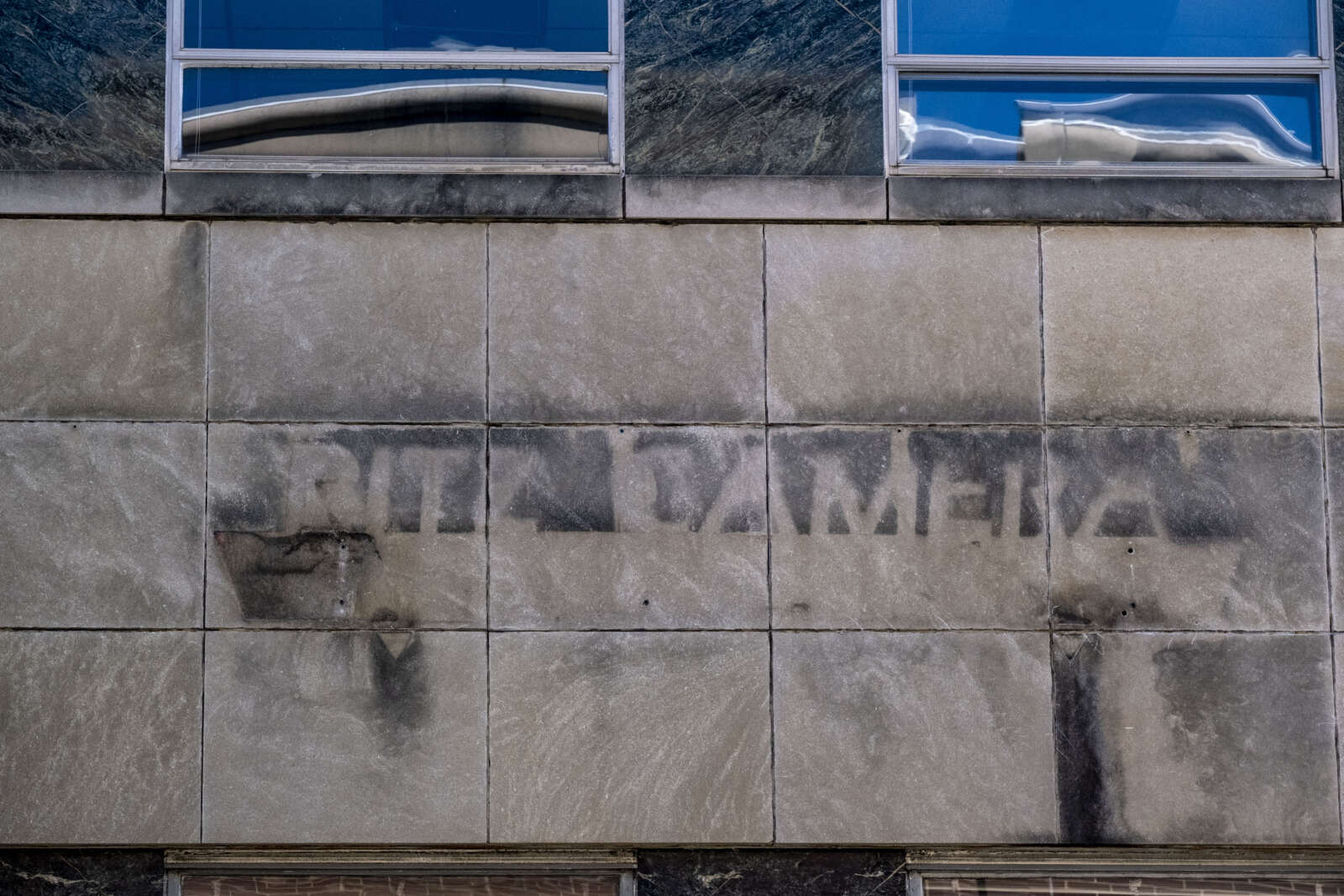
The “revolution” in urban living set to take place in the Landmark Block in Courthouse is currently being fomented.

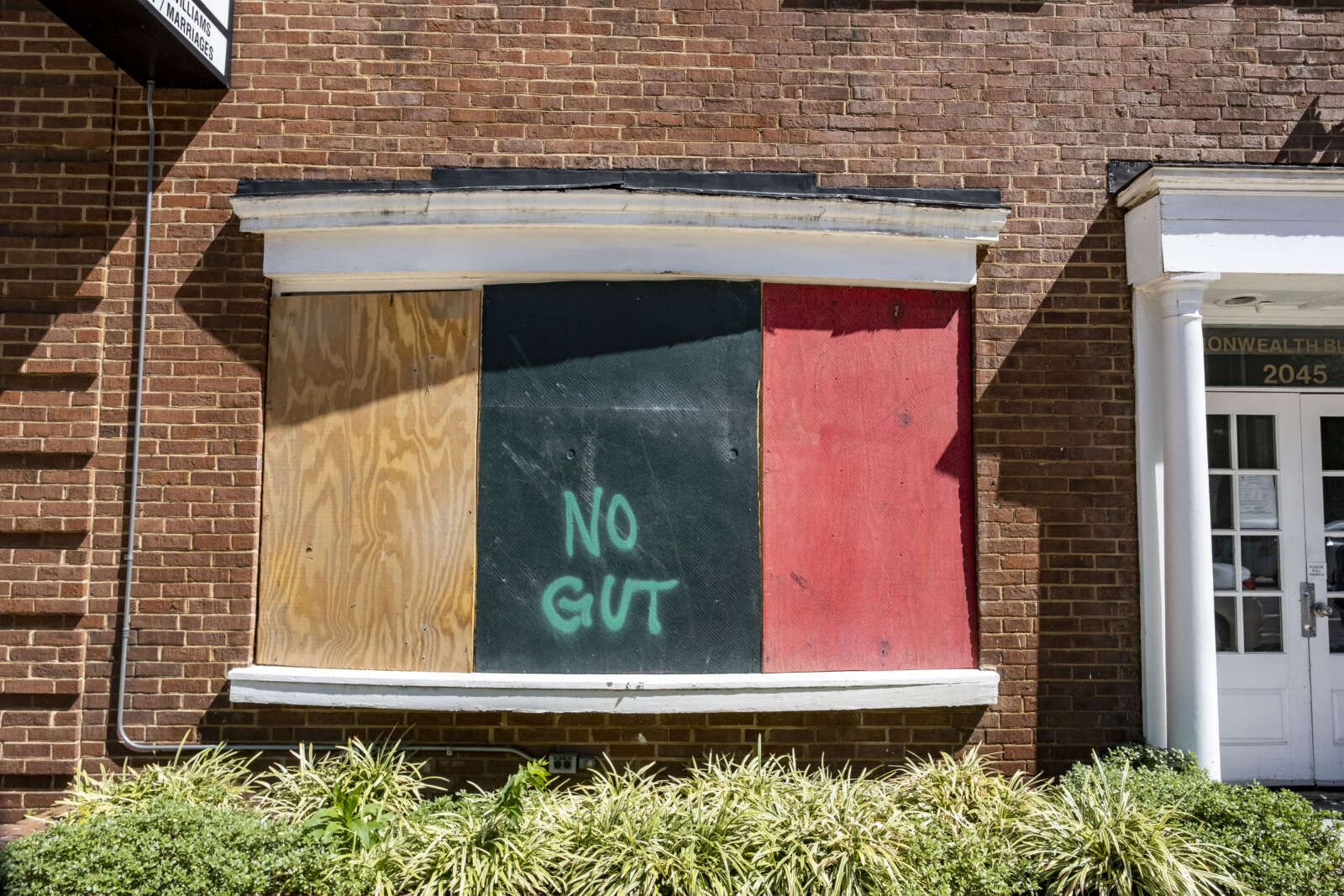
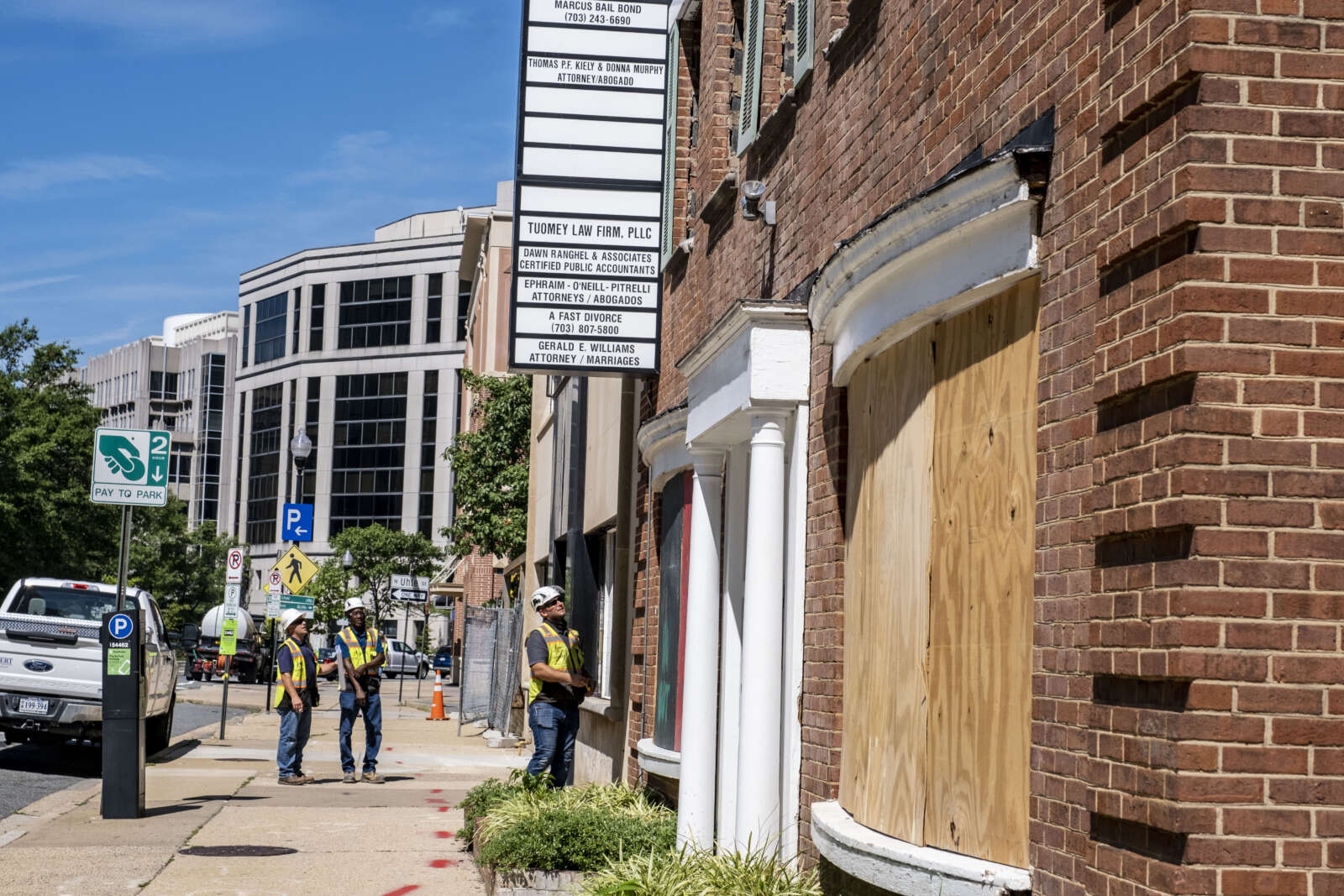
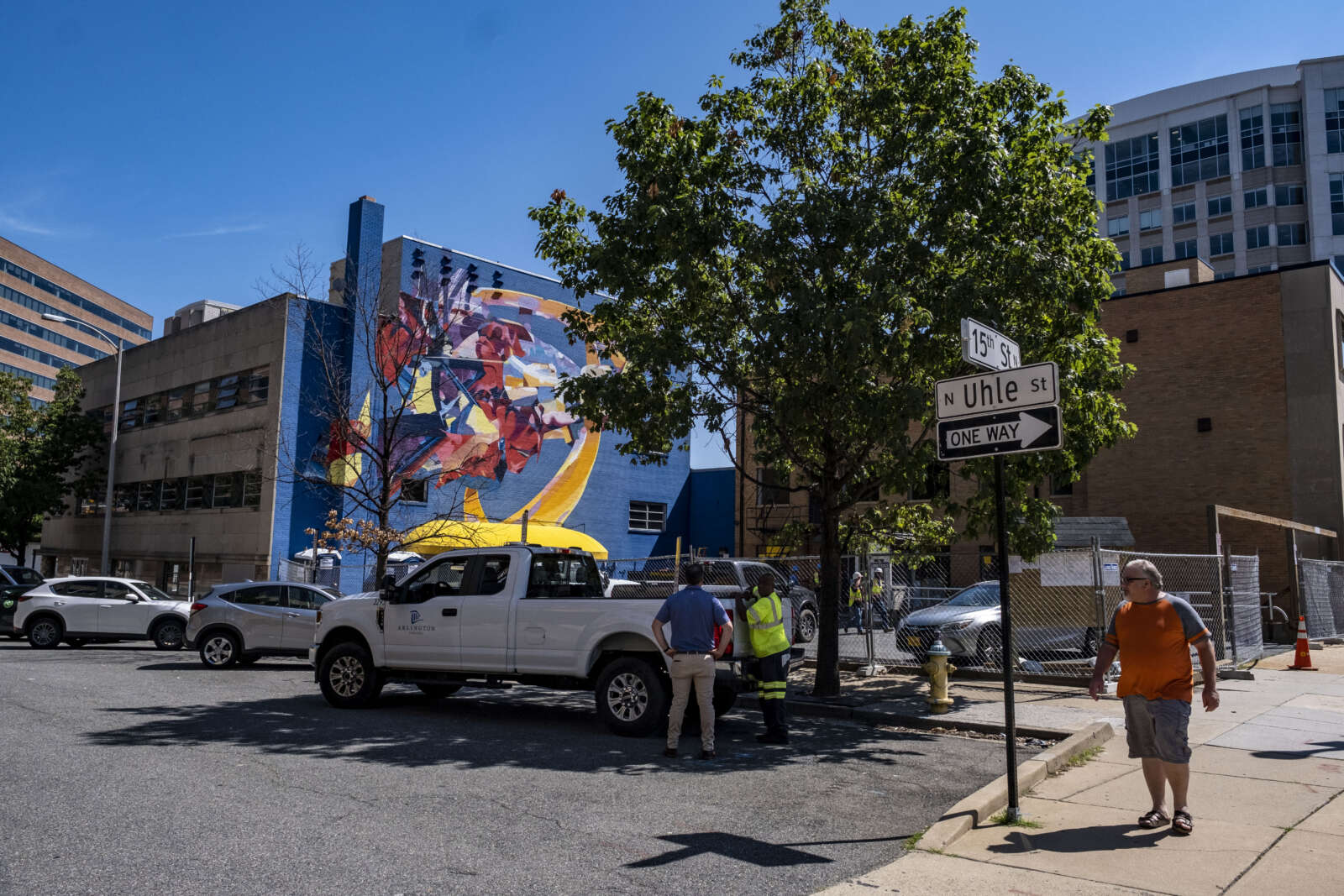
Residents who pass the site near the Courthouse Metro station can see preparations underway to tear down some of the low-slung retail buildings along the 2000 block of Wilson Blvd.

Demolition work is starting on the site’s aging brick retail buildings, as Bisnow reported earlier this week. John Clarkson, the managing director Greystar Real Estate Partners, told the site that work began last week, and the developer aims to deliver a 20-story apartment building by the third quarter of 2023.

The Landmark Block site is one of two projects — the other is a 220-unit building on the vacant Wendy’s lot — that Greystar is overseeing in Courthouse. Clarkson said the developer is focused on this neighborhood because it has the demographics, schools and walkability that make Clarendon attractive but less of the growth.

“We really want to establish a sense of place,” Clarkson tells Bisnow. “With some real density, some real scale it will feel like we have filled in that hole in the doughnut between Rosslyn and Clarendon, so we’re very excited about [the] upside of that submarket.”

Seven commercial buildings on the Landmark Block site will be demolished, including the former Summers Restaurant. The façades of the First Federal Savings and Loan Building (2050 Wilson Blvd) and the Investment Building (2049 15th Street N.) will be preserved, according to the county. The buildings, constructed in 1946 and 1948 respectively, are identified as “important” on the county’s Historic Resources Inventory.

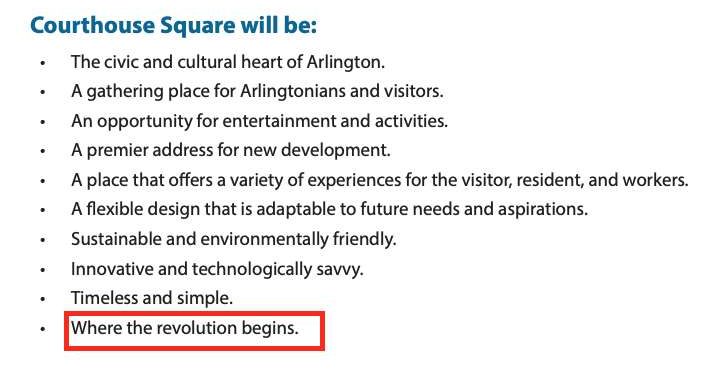
The County Board approved the project at 2050 Wilson Blvd, featuring 423 apartment units, ground-floor retail and an underground parking garage, back in March. For proponents, the building and accompanying community benefits will make Courthouse Square “the civic and cultural heart of Arlington,” and will be “where the revolution begins,” as phrased in a county planning document.

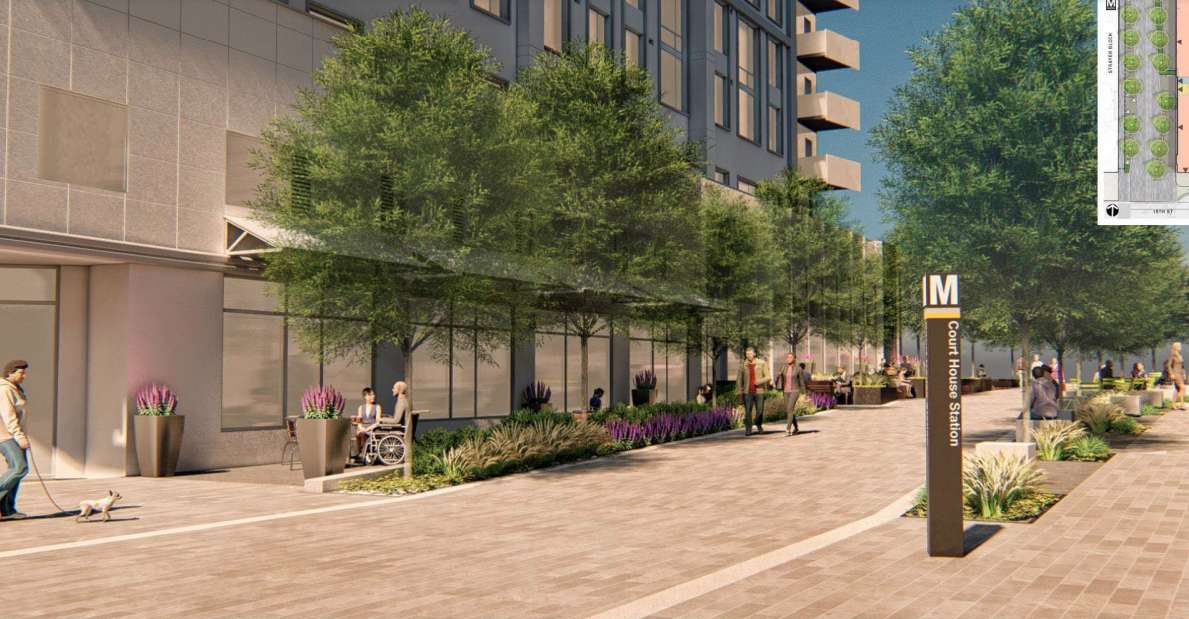
One of the features the county said will usher in changes for Courthouse is a pedestrian promenade.

“The promenade was one of the addendum’s top recommendations for the area around Landmark Block,” the county said in March. “The N. Uhle Street promenade…will be lined with trees, and offer retail shops and plenty of space for community gatherings.”

Greystar will provide a portion of the Courthouse Square promenade that is envisioned in the Courthouse Square Addendum to the Courthouse Sector Plan. The full promenade would run between Wilson Blvd and 14th Street N. along N. Uhle Street.

An architect’s rendering of the pedestrian promenade on N. Uhle Street (Image via Arlington County)

The county said the promenade will be “the main gateway from Clarendon Boulevard into Courthouse Square.”

Meanwhile, the long-vacant Wendy’s site will no longer look on while other sites are developed around it. Greystar’s plans for the triangular site at 2025 Clarendon Blvd are going through entitlements, Clarkson tells Bisnow.

The developer expects to break ground on the 220-unit building by the second quarter of 2022. For the last two years, construction crews have used it as a staging area while building a condo project across the street at 2000 Clarendon.

The old Wendy’s site has sat vacant since it was demolished in 2016 for an office building that never came. Greystar acquired the property from Carr Properties in January, according to real estate firm JLL.


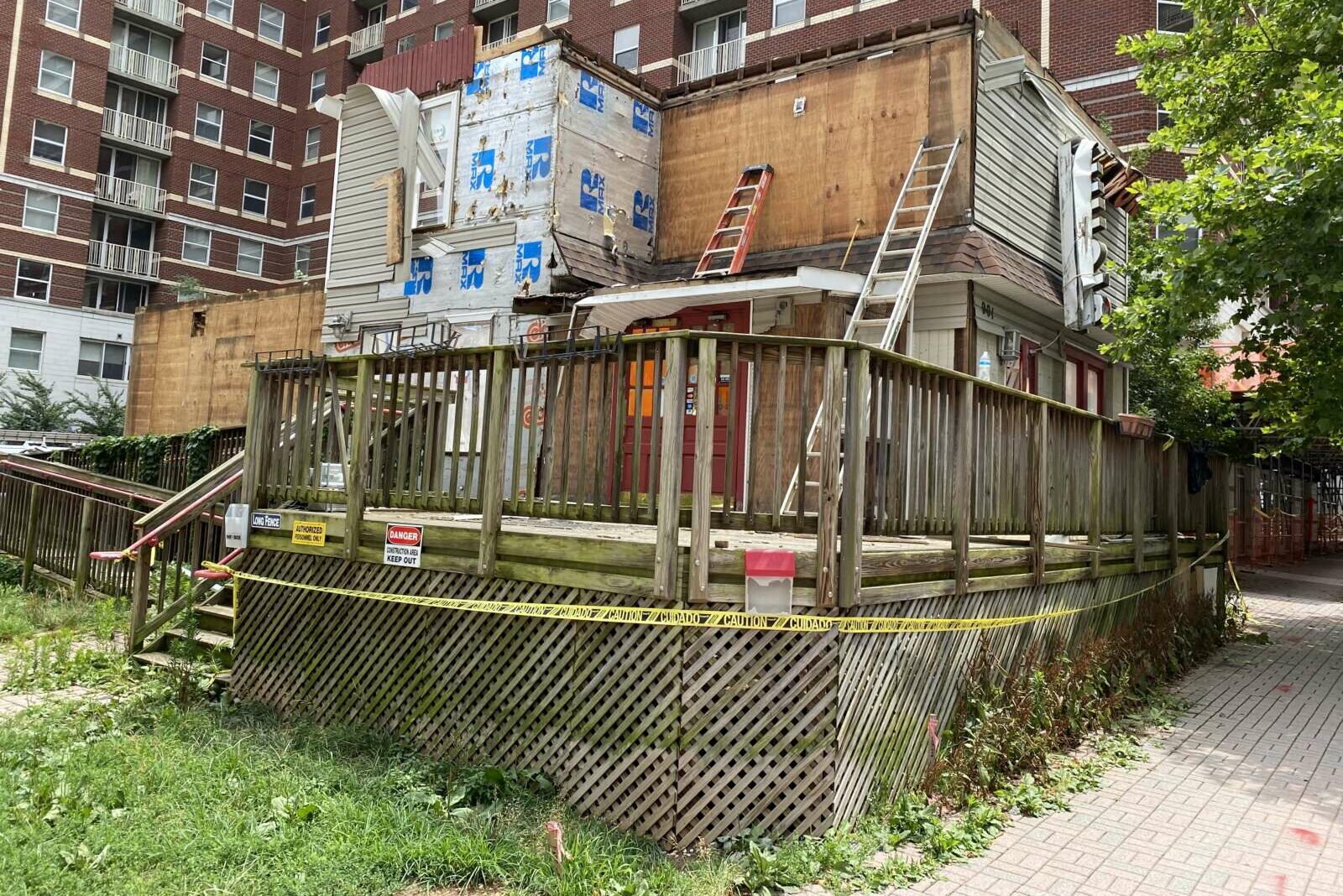
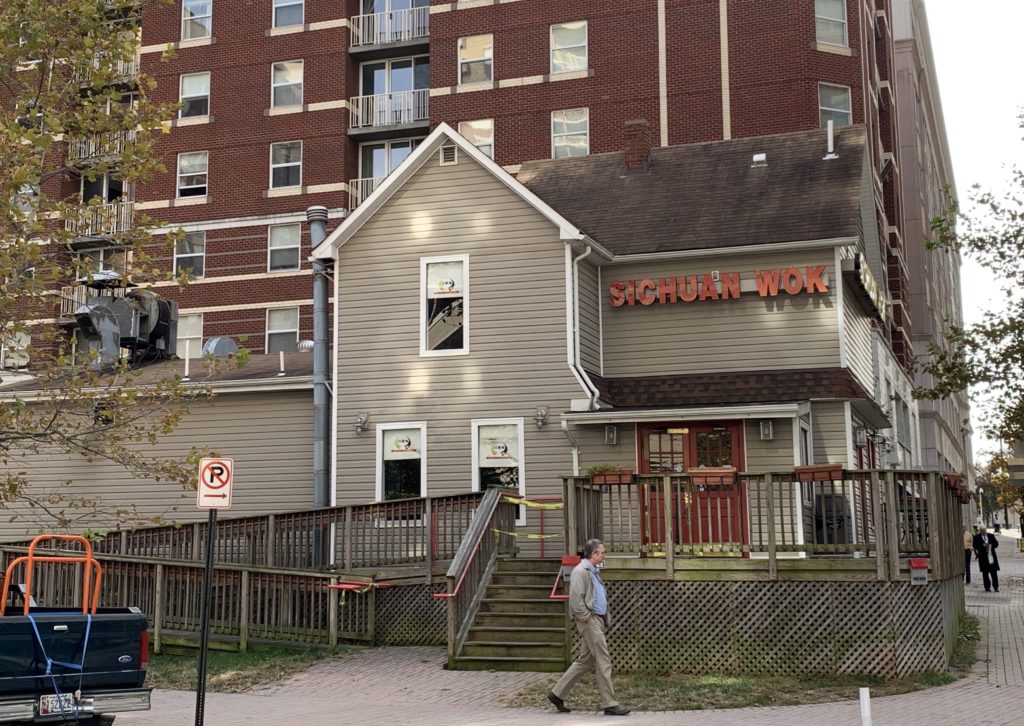
A commercial building that looks like a house, but was once a restaurant, is under construction in Ballston.

Owner Arash Hosseinzadeh tells ARLnow the former Sichuan Wok building at 901 N. Quincy Street, which is nestled among large apartment and office towers, will “be converted to a day spa with many great services to offer.”

After the restaurant closed in 2018, the building at 901 N. Quincy Street went on the market in the fall of 2019 for an asking price of $3.2 million. By October 2020, the building was sold for $3 million.

As for a construction timeline, Hosseinzadeh said it all depends on whether back-ordered construction materials, weather and county approval processes cause delays.

“Hopefully, we can have our grand opening for December, [but] this is very approximate,” he said.

Permits suggest that the construction will involve building some sort of an addition.


A new timeline from Arlington County tracks how local policy decisions in the 20th Century disadvantaged people of color, particularly Black residents.

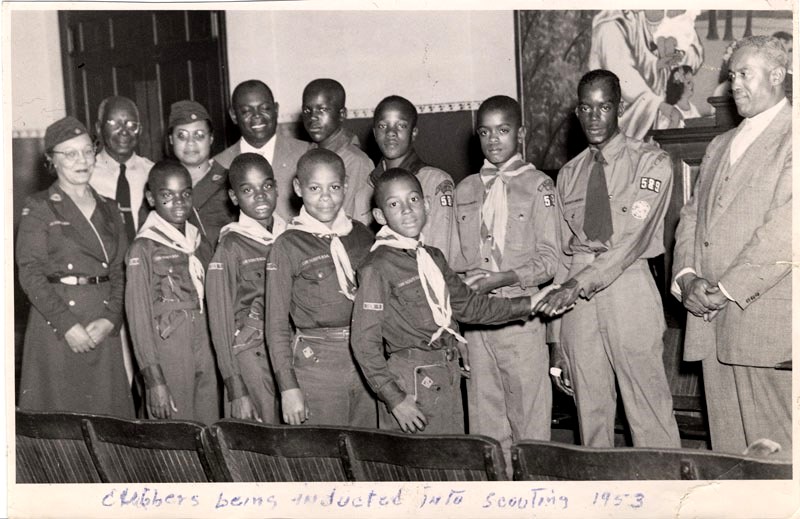
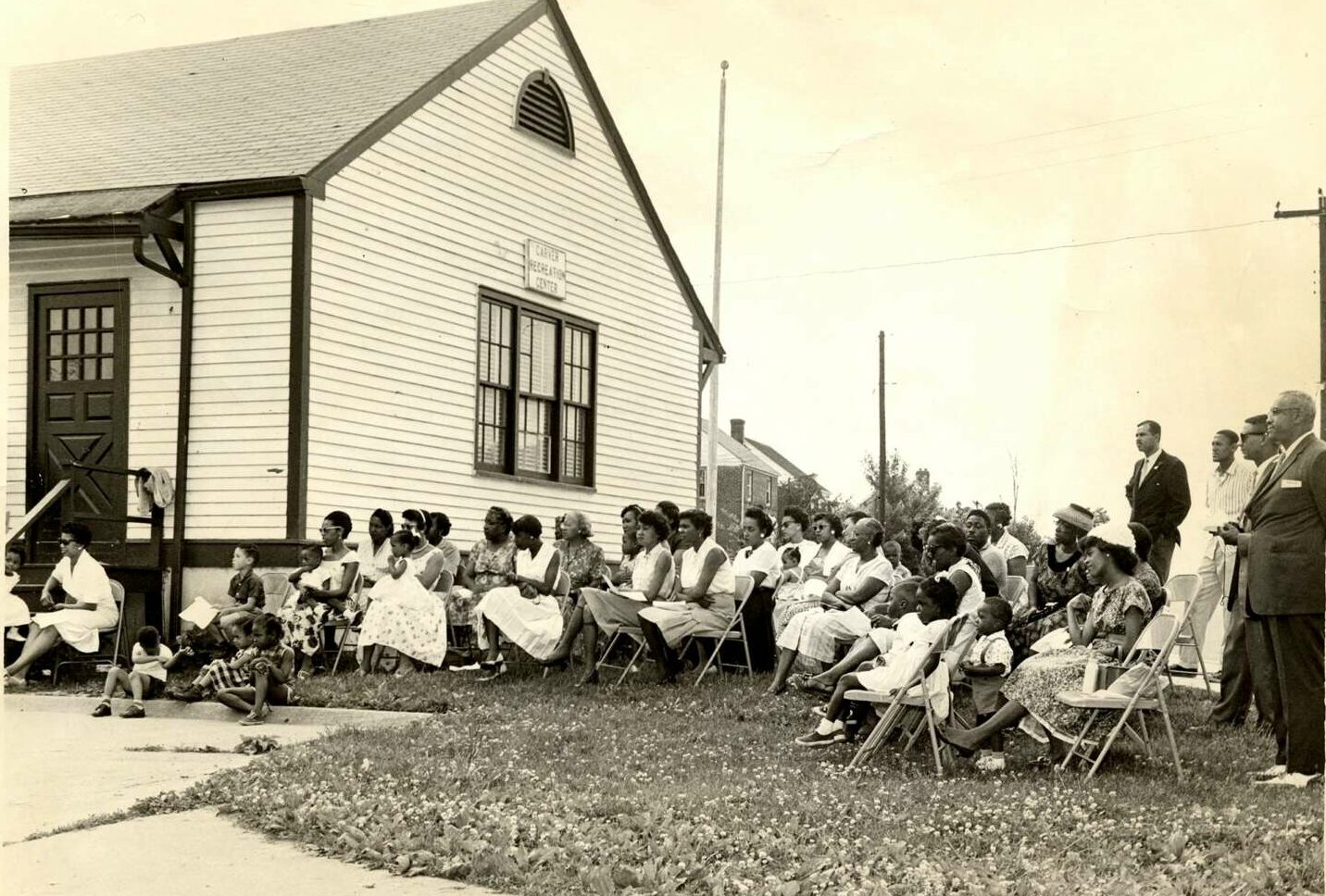
The county has released two timelines, spanning 1930-45 and 1946-60, which recount how policies and projects — touching on housing, education, transportation, planning and infrastructure — segregated Arlington. It also chronicles how Black residents responded by investing in their communities, getting into local government, protesting and going to the courts.

“This timeline will allow us to take inventory of who we are, where we have been, and how we are growing and evolving as we normalize, organize and operationalize racial equity,” said Arlington’s Chief Race and Equity Officer Samia Byrd. “It will help ground us in facts, communicate the importance of why we lead with race in addressing systemic inequities as a government, and remind our community that racism is real and why it matters.”

Once complete, the historical resource will span from the early 1600s to present day. For now, here are some of the important events that the county included from 1930-45:

  • 1930s: The Hall’s Hill “Segregation Wall,” separating the majority-white neighborhood of Woodlawn and the majority-Black neighborhood, goes up.
  • 1931-32: Route 50 is built and the streetcars between Washington D.C. and Mount Vernon are shut down, cementing the county’s racial divides.
  • 1932: Hoffman-Boston Junior High School opened and would later become a high school. Up until this point, Black students’ education ended after primary school.
  • 1932: After switching from an appointed County Board to an elected one, Dr. Edward T. Morton, the county’s first Black physician, became one of the first Black Arlingtonians to run for office. (It took 55 years for a Black candidate to win a County Board election.)
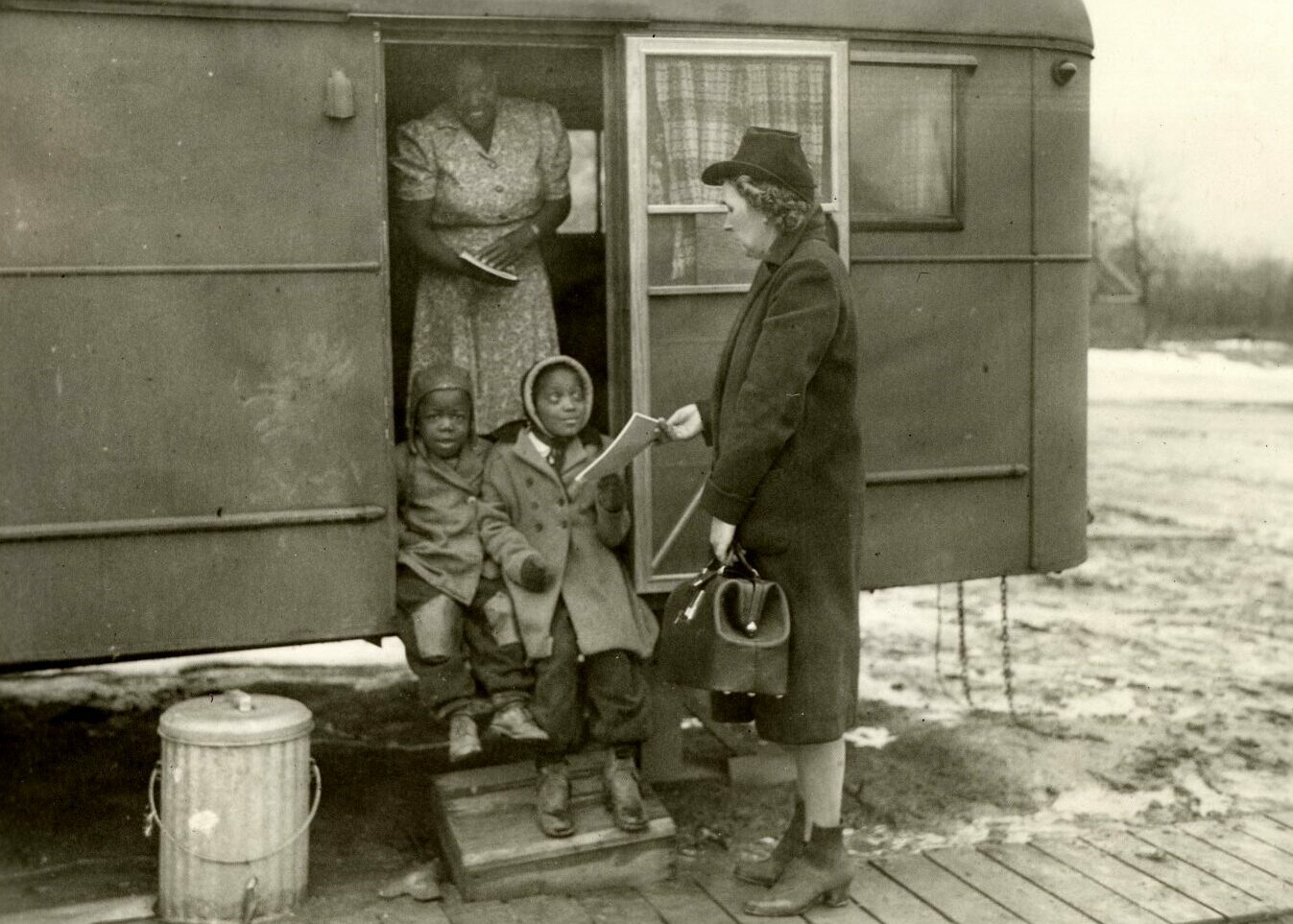
  • 1940s: Pentagon construction displaced 225 African-American families, or 810 people. They were relocated to two trailer camps near Columbia Pike and in Green Valley.
  • 1943: Without public transit, and with lower rates of car ownership, Black residents founded Friendly Cab in Green Valley and Crown Cab in Hall’s Hill to connect their communities to the region.

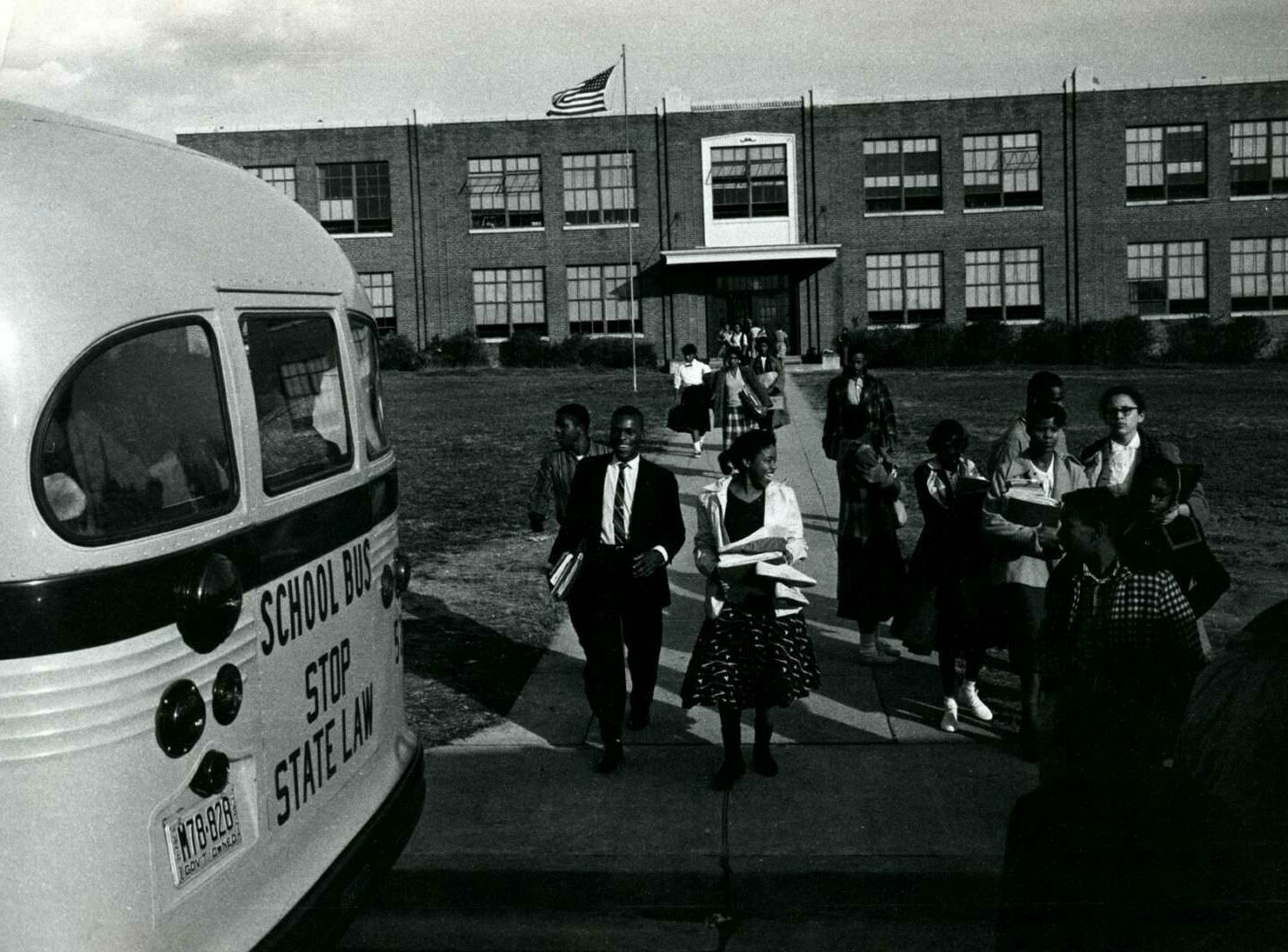
While Arlington recently honored the story of four students who desegregated Stratford Junior High School in 1959, the road to desegregating schools, mired in lawsuits and bureaucracy, began more than a decade prior and continued after their first day.

From 1946-60, here are some significant moments related to the struggle for an equal, integrated Arlington:

  • 1946: D.C. ruled that Arlington students attending D.C. schools would have to pay tuition. Many Black Arlingtonians sent their kids to D.C. schools because they had more resources than the county’s segregated public schools.
  • 1947: Constance Carter sued the Arlington School Board because facilities at the all-Black Hoffman-Boston High School were unequal to those at the all-white Washington-Lee High School.
  • 1950: A federal judge reversed the district court’s ruling in favor of the School Board. The county was forced to invest in segregated Black schools and Black teachers were given the same salary as white instructors.
  • 1951: Fire Station 8, the all Black-volunteer fire station that served Black communities, received its first county-paid firefighter — 10 years after the other stations.
  • 1953: The Veteran’s Memorial YMCA pool opened, serving “non-white” residents barred from other county facilities. The county opened its first integrated community center at Lubber Run Park in 1956.
  • 1960: A sit-in at the People’s Drug Store in Cherrydale protesting segregated lunch counters kicked off a month of sit-ins. Woolworth’s store in Shirlington was the first to announce it was desegregating; 21 lunch counters followed suit.

The county will host a discussion next Wednesday (July 21) via Facebook Live at 7 p.m. called “Race Matters: Anticipating our Future, Examining our Past.”


A small splash of green space in Rosslyn may become the prototype for similar installations, or “parklets,” across the county.

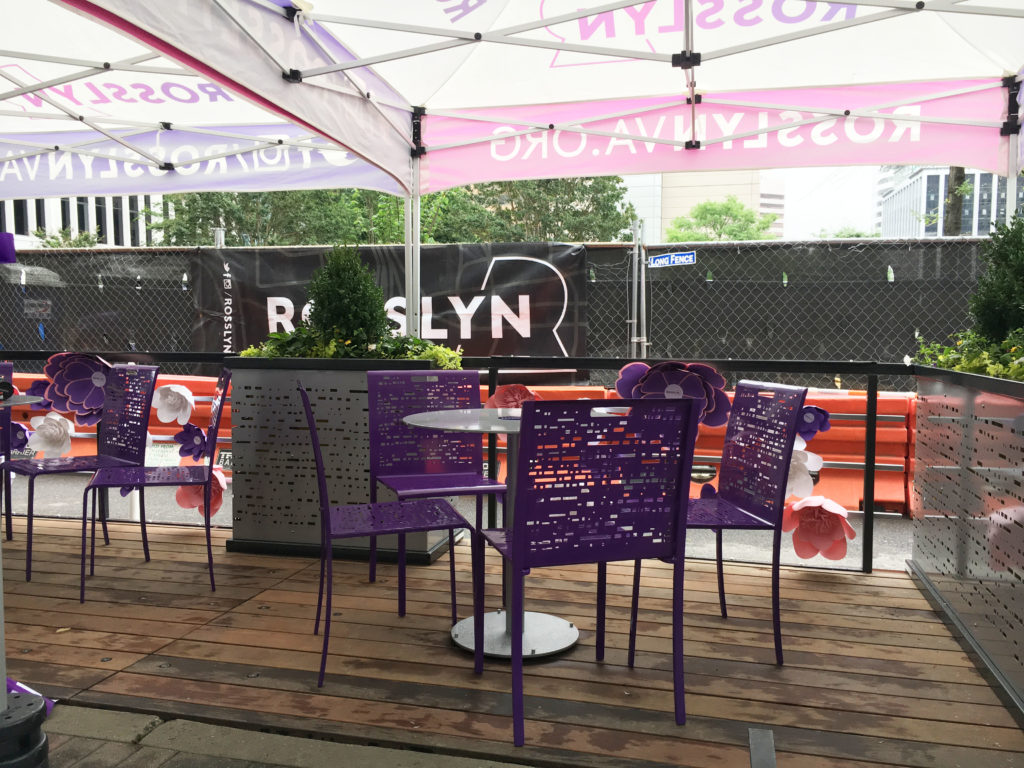
In 2018, Arlington County and the Rosslyn Business Improvement District unveiled this parklet, about the size of two parking spaces, on the northwest corner of N. Oak Street and Wilson Blvd. The county and the BID, which maintains the seating spot, installed it as an experiment to see if parklets could be a new tool for adding open space to urban areas.

After observing how people used the mini-park, the county has prepared a formal process for adding more micro oases to help compensate for the county’s dwindling supply of available land for open spaces. The County Board is slated to review the “parklet program” this Saturday.

“Parklets are publicly accessible to all and serve as extensions of the sidewalk by converting curbside parking spaces into vibrant public spaces,” according to a staff report. “Parklets are social platforms for the community and are often developed through a partnership with the county, local businesses and neighborhood organizations.”

When the prototype was installed, then-Board Chair Katie Cristol said she expected to see a plan for adding more parklets included in an update to the Public Spaces Master Plan. The update, approved in 2019, recommends the creation of a “parklet program.”

“Despite their size and atypical location, parklets can contribute to the public space network and overall sidewalk experience by providing places to sit, relax, or socialize,” the report said. “Future installations of parklets can increase social activity and enhance the pedestrian experience in the urban corridors throughout the county.”

The county would lose money on these micro-parks. Each parklet removes two parking meters, which together generate about $6,150 per year, staff estimate.

The county has found a new source of revenue, however. A new parklet application would cost $2,100 and annual renewals, $500. These fees are intended to cover the time required to review these applications, and not to recoup parking revenue, the report said.

A number of county commissions have weighed in on the program, according to the report.

Responses were “[overwhelmingly] favorable, with comments favoring the potential for an increase in outdoor public spaces, especially in Arlington’s commercial and urban centers where public space is limited,” it said.


Swim meet at the Dominion Hills pool in 2013 (photo courtesy Dennis Dimick)

The swim and dive teams at the Dominion Hills Pool are ditching the “Warriors” team name and moving away from Native American motifs.

The Dominion Hills Area Recreation Association Board of Directors started soliciting suggestions from swimmers, divers, coaches and families on Friday, according to an email to team families, shared with ARLnow.

“We decided to stop using Native American imagery at our pool and the name ‘Warriors’ for our swim and dive teams,” the board tells ARLnow in a statement. “While the name ‘Warriors’ has several meanings and by itself is unobjectionable, the teams have used it in connection with Native American themes. The Board decided to solicit ideas from the members for a new name and mascot.”

It started de-emphasizing the use of the name this season, according to an email to team families. The pool’s board is open to a name that would permit members to use existing gear, which bears a feather illustration.

“We recognize that there may be some disappointment as we make this transition but we are excited to select a new team name and mascot,” the email said. “Team names that would be appropriate to use with a feather mascot have the added practical benefit of allowing us to continue using the feather on existing team gear.”

A committee of team representatives and board members will review the submissions and recommend a new name to the full board, which aims to announce the new name at a banquet on Saturday, July 24, according to the email.

The Washington Football Team — which nixed its former name one year ago — is making a similar play as it narrows down options for a new name and logo, to be chosen early next year.

“Feedback from across communities we engaged clearly revealed deep-seated discomfort around Warriors, with the clear acknowledgment that it too closely aligns with Native American themes,” WFT president Jason Wright explained in a blog post.


View More Stories