A decline in year-over-year student enrollment at Arlington Public Schools has resulted in staffing adjustments at some schools.

The official APS 2025-26 student count of 27,589 is down 311 students — or 1.1% — from a year before, Superintendent Francisco Durán reported to School Board on Thursday.

The figure represents the total number of enrolled students as of Sept. 30, and was submitted to the Virginia Department of Education. By grade level, the data reflects the following fluctuations:

  • Pre-kindergarten enrollment was up 4.9% to 914
  • K-5 enrollment declined 2.6% to 12,270
  • Enrollment in grades 6-8 was up 2% to 6,205
  • Enrollment in grades 9-12 was down 1.8% to 8,200

The lower enrollment allowed the school system to reduce overall staffing by a net 17.5 full-time-equivalent positions for a savings of about $2 million compared to the adopted fiscal 2026 budget plan. Durán’s presentation did not suggest any current staff had to be laid off to accomplish the reductions.

Decisions on staffing changes were made over the summer and during the early weeks of the school year. Durán said his staff looked at class sizes on a “case-by-case, school-by-school” basis in determining where tweaks were needed, and attempted to make sure staffing levels were appropriate without the cuts being draconian.

“We wanted to leave some room” for potential student-population increases during the year, the superintendent said. “We didn’t want it to be too tight.”

While overall enrollment was down, some schools experienced increases, and in those cases, additional staffing was brought in to lower class sizes.

During the discussion, School Board member Miranda Turner praised the nimbleness of the effort, but said she hoped the process would be standardized in future years so the Board and community understand how staffing decisions are being made.

“We’re working on” more standardization, Durán said.

Budget rollout will revert to a two-step process: Having a single budget proposal from both Superintendent Durán and the School Board appears to have been a one-year experiment that is not being repeated.

As a result, the fiscal year 2027 budget process will follow earlier practices, with Durán proposing his budget in late February 2026 and the School Board following with its own budget proposal “a little bit later in the spring,” School Board Chair Bethany Zecher Sutton said at the Oct. 9 School Board meeting.

“We all look forward to working closely together throughout the budget process,” she said.

For the $845 million FY 2026 budget that was adopted in the spring, a single budget combining input from staff and Board members was presented to the public. It represented a change to longstanding practice, which traditionally saw the superintendent propose a staff budget, followed by public input, then the School Board budget proposal with more public input before final adoption.

At the Oct. 9 meeting, Board members also voted 5-0 to provide budget direction to Durán and staff for the upcoming year.

Board members also took a first look at the school system’s proposed 2026 General Assembly priority package, which seeks a variety of budget-related actions in Richmond.

The legislative package will be adopted in coming weeks. The 2026 General Assembly session is slated to start Jan. 14 and run 60 days.

Schools receive state funding for security upgrades: APS will receive $96,349 in funding as part of a $12 million statewide initiative bringing upgrades in school-security equipment to 433 schools across 99 divisions.

Funding was announced Oct. 9 by the Virginia Department of Education.

State criteria give priority to schools most in need of modern security equipment, schools with relatively high numbers of offenses, schools with equipment needs identified by a security audit, and schools in divisions least able to afford security upgrades.

Arlington schools receiving funding are:

  • Abingdon Elementary
  • Alice West Fleet Elementary
  • Arlington Science Focus School
  • Arlington Traditional
  • Barcroft Elementary
  • Barrett Elementary
  • Campbell Elementary
  • Carlin Springs Elementary
  • Escuela Key Elementary
  • Gunston Middle
  • Hoffman-Boston Elementary
  • Innovation Elementary
  • Jamestown Elementary
  • Kenmore Middle
  • Montessori Public School of Arlington
  • Tuckahoe Elementary and Wakefield High

Arlington Public Schools leaders hope that a new “adopt-a-school” partnership model will increase schools’ formal partnerships with business and civic groups.

Noting that 30% of Arlington’s public schools have no such partnerships, APS staff outlined plans to increase opportunities for volunteerism at a School Board meeting yesterday (Thursday). They focused primarily on relationships with the business community.

Partnerships “benefit above and beyond the work we can do within our four walls,” Superintendent Francisco Durán told School Board members.

“We need support, and we’re getting that support,” he said.

There is always room for improvement, school officials acknowledged.

“The majority of schools … reported they would benefit from dedicated partners to support school facilities needs, beautification and mentoring or after-school programming, particularly for low-income students and families,” school officials learned in a survey of principals presented to School Board members.

About 60% of respondents reported being “very interested” in the adopt-a-school initiative.

Currently, businesses, nonprofits, civic groups, faith-based organizations and institutions of higher learning work with individual schools, sometimes on an ad hoc basis. The new effort aims to formalize the partnership process.

At the School Board meeting, Board member Miranda Turner said she hopes new partnerships and volunteers will also spur creative thinking to “help us take ideas and see if they are worth running with, and then running with them more quickly.”

“We certainly have lots of highly educated people who want to contribute,” she said of the local community.

The adopt-a-school effort is among several proposals coming out of a working group set up by APS in October 2024, addressing concerns that not enough is being done to connect schools with those wanting to offer support.

According to school leadership, some of the concerns raised by members of the working group were:

  • Unclear definitions on how to engage and who to contact
  • Inconsistent screening requirements for volunteers and partners
  • A lack of clarity on how to donate money or supplies
  • The need for a standardized process and agreement forms
  • Needing improvement on school and system-wide needs to guide potential donors/partners
  • The lack of a clear measurement process and rubric for gauging partnerships’ success

Nearly all APS schools — 95% — have successfully recruited volunteers that support students and teachers, according to county data.

A survey of 38 schools found that 89% use volunteers to support events; 68% for beautification and facilities upgrades; 49% for classroom support; and 32% for mentoring and tutoring.

Currently, the school system has more than 11,700 active volunteers in its database, with more than 4,000 volunteer applications approved during the 2024-25 school year. Of those in the database, only about 15% volunteer on a recurring basis, based on sign-ins to the APS volunteer-management software.

“That’s the big gap we are working toward” closing, said Catherine Ashby, the school system’s director of school and community relations.

Ashby said restructuring the school system’s administration of volunteer programs will assist efforts.

“Our team is really excited about this work,” she said.

Volunteers seem eager to help when called upon for specific initiatives. More than 190 signed up in two weeks after the school system announced a new pilot program — called Readers Rise — being launched at Barrett, Long Branch and Hoffman-Boston elementary schools.

At the meeting, School Board Chair Bethany Zecher Sutton praised all volunteer efforts as benefiting the overall learning environment.

“We’re grateful for all of the volunteers and all of the partners and all that goes into enriching student learning,” she said.


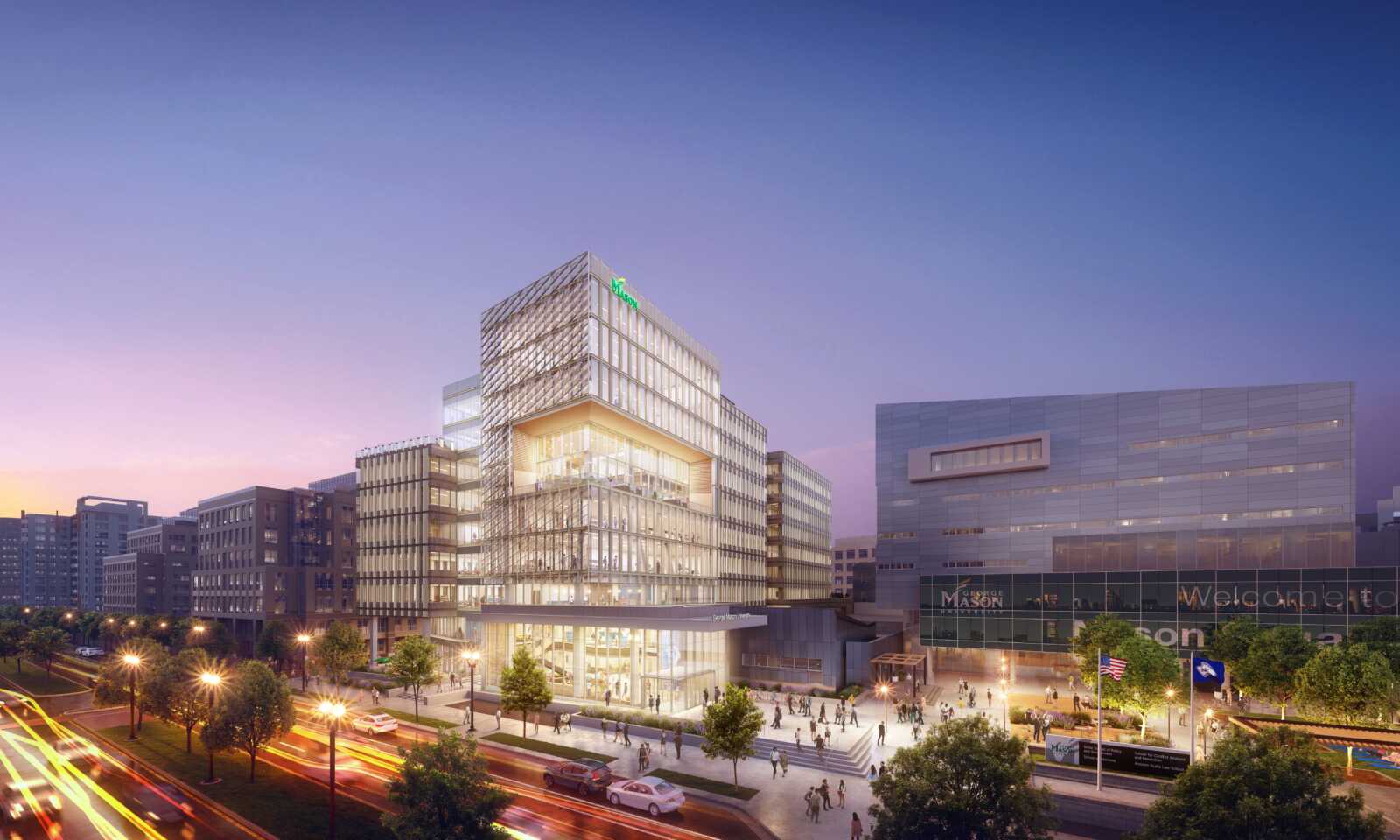
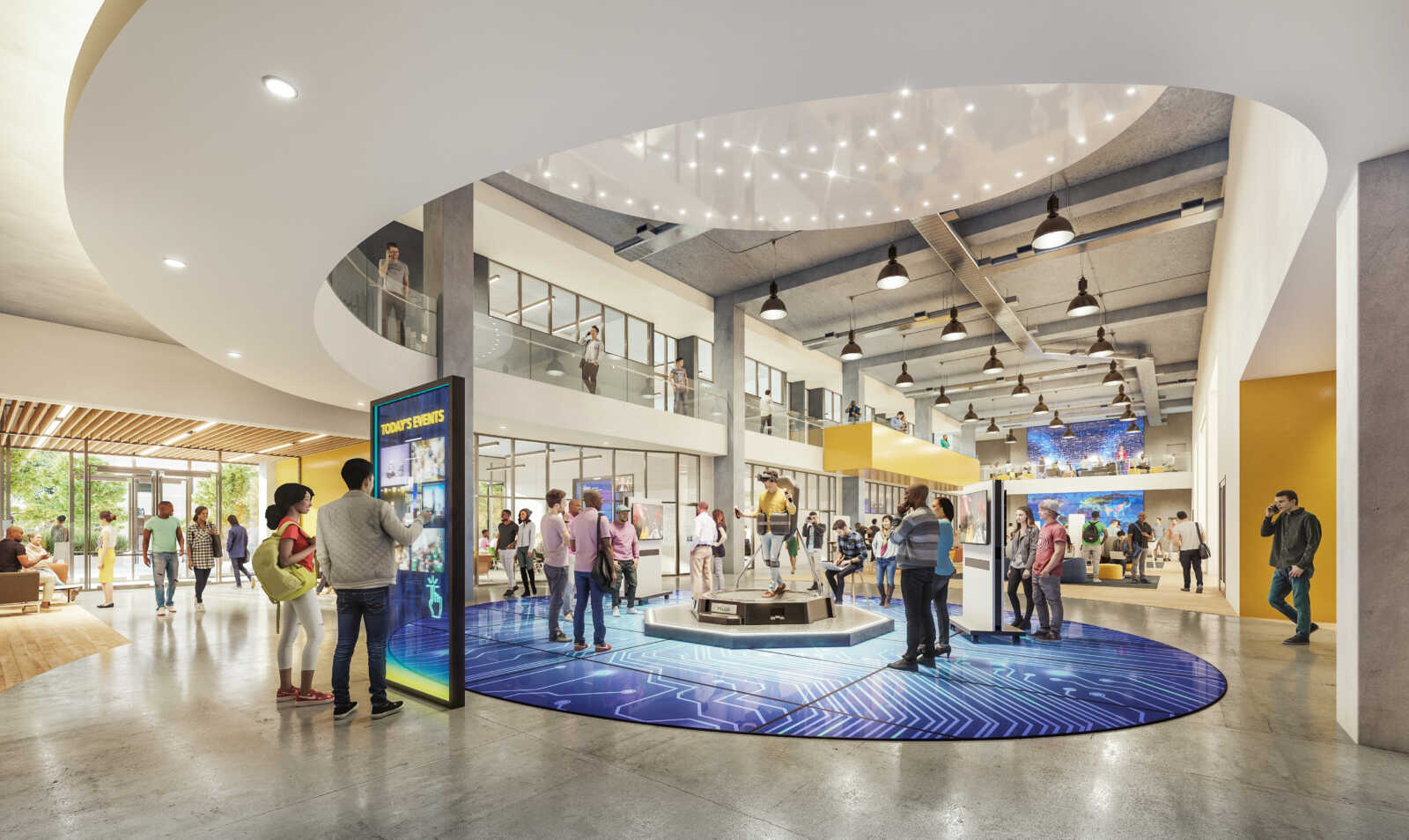
The outer structure of George Mason University’s $235 million expansion project in Arlington is complete.

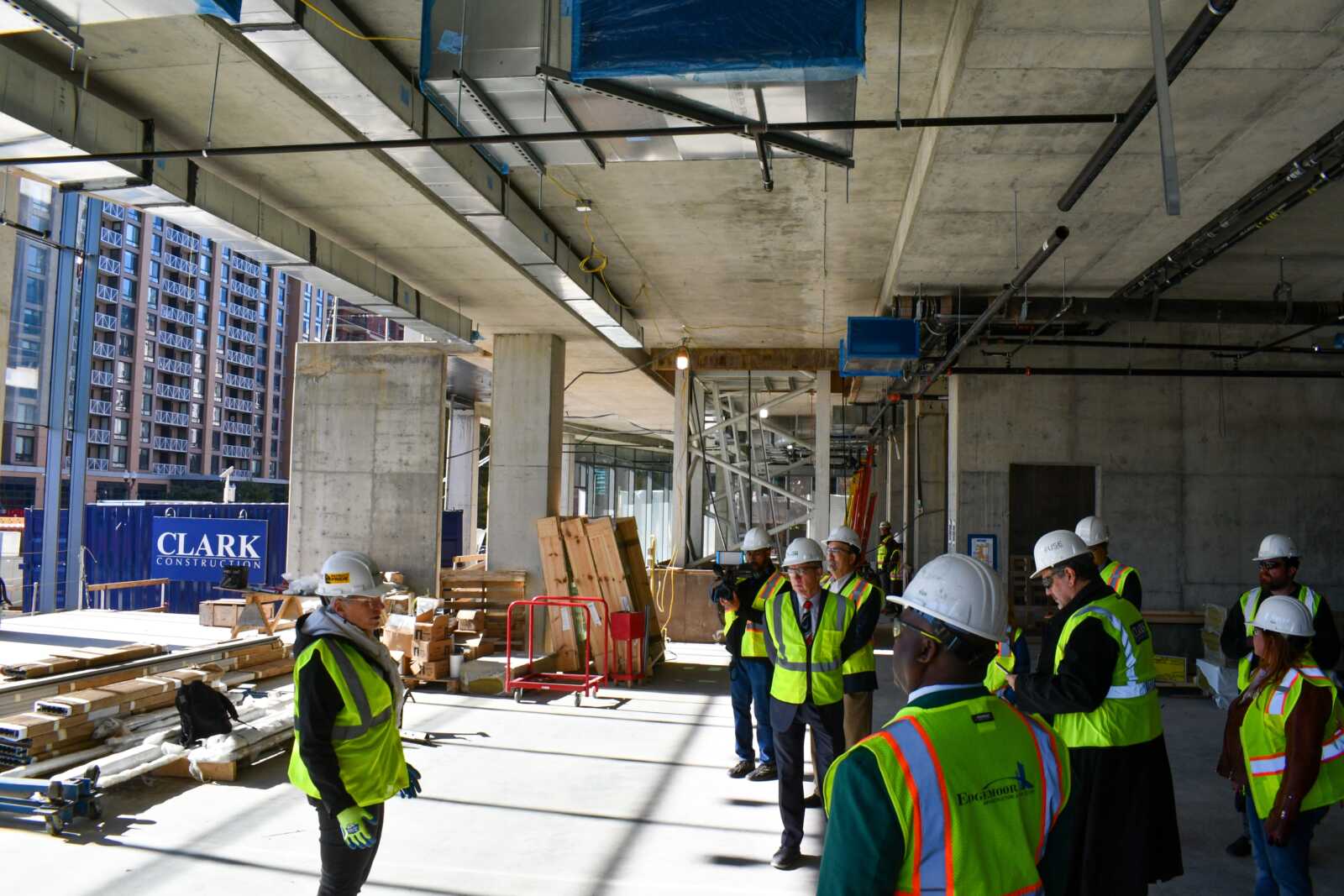
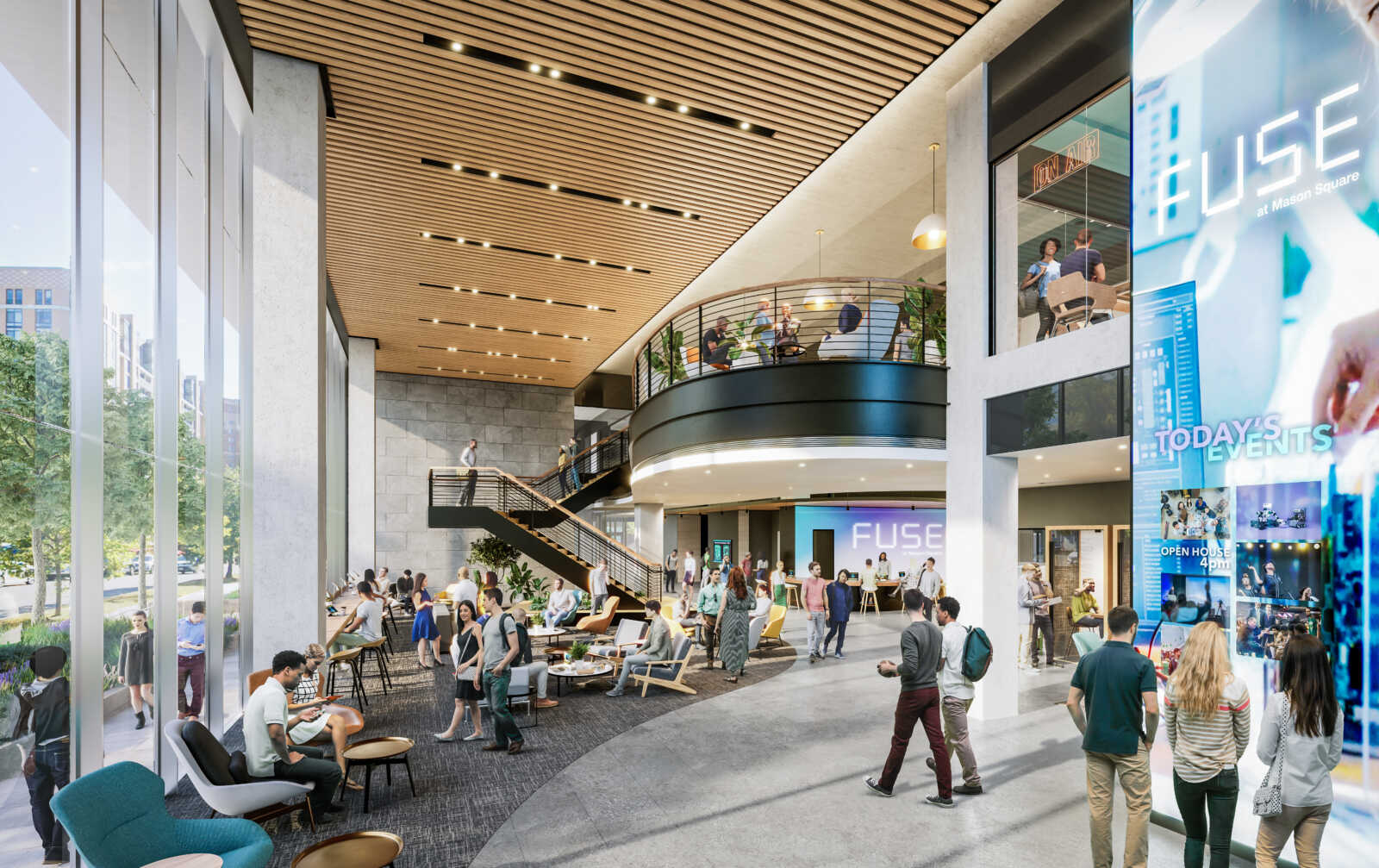
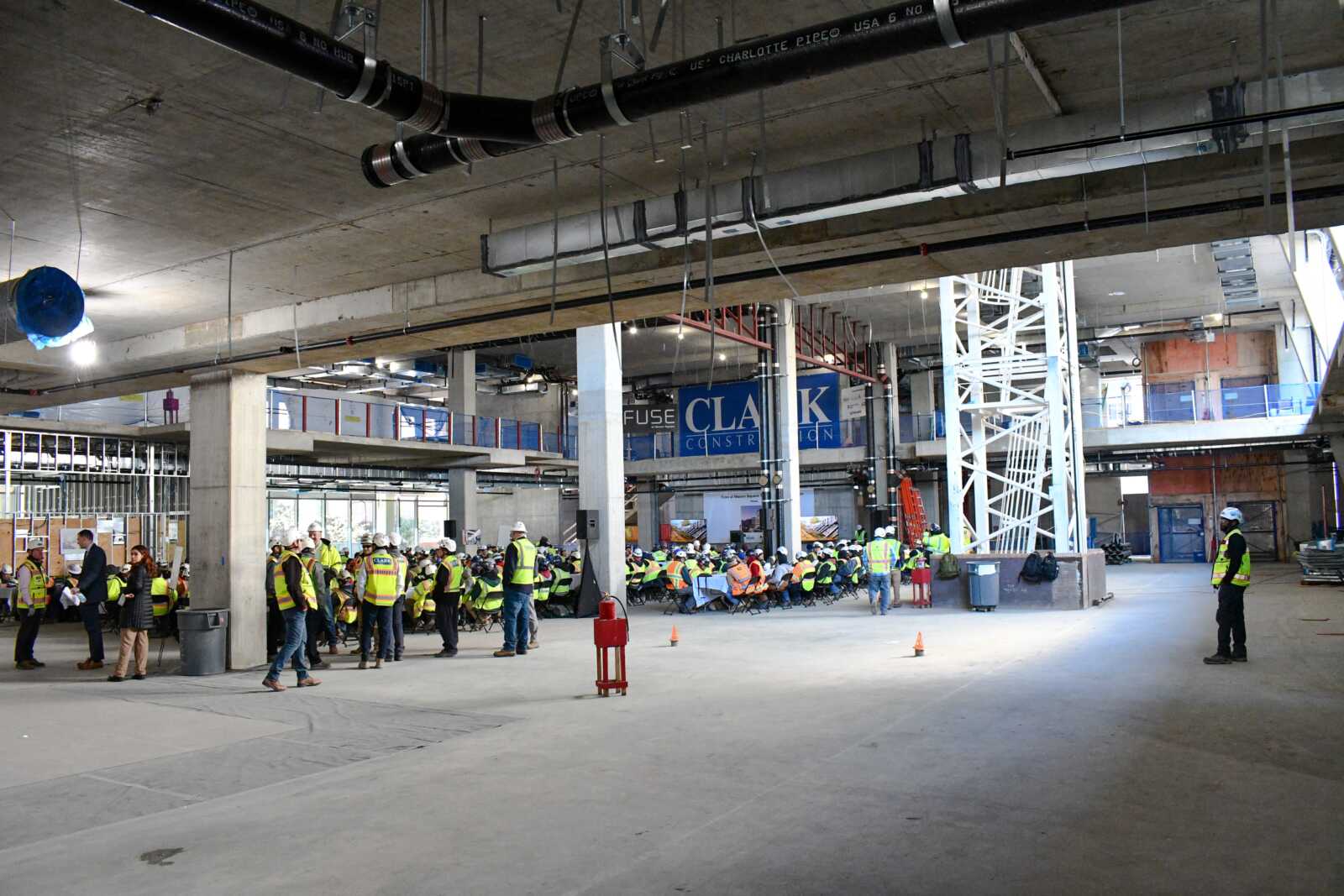
The university celebrated the “topping out” milestone last Friday with tours of the under-construction FUSE at Mason Square structure on its Virginia Square campus.

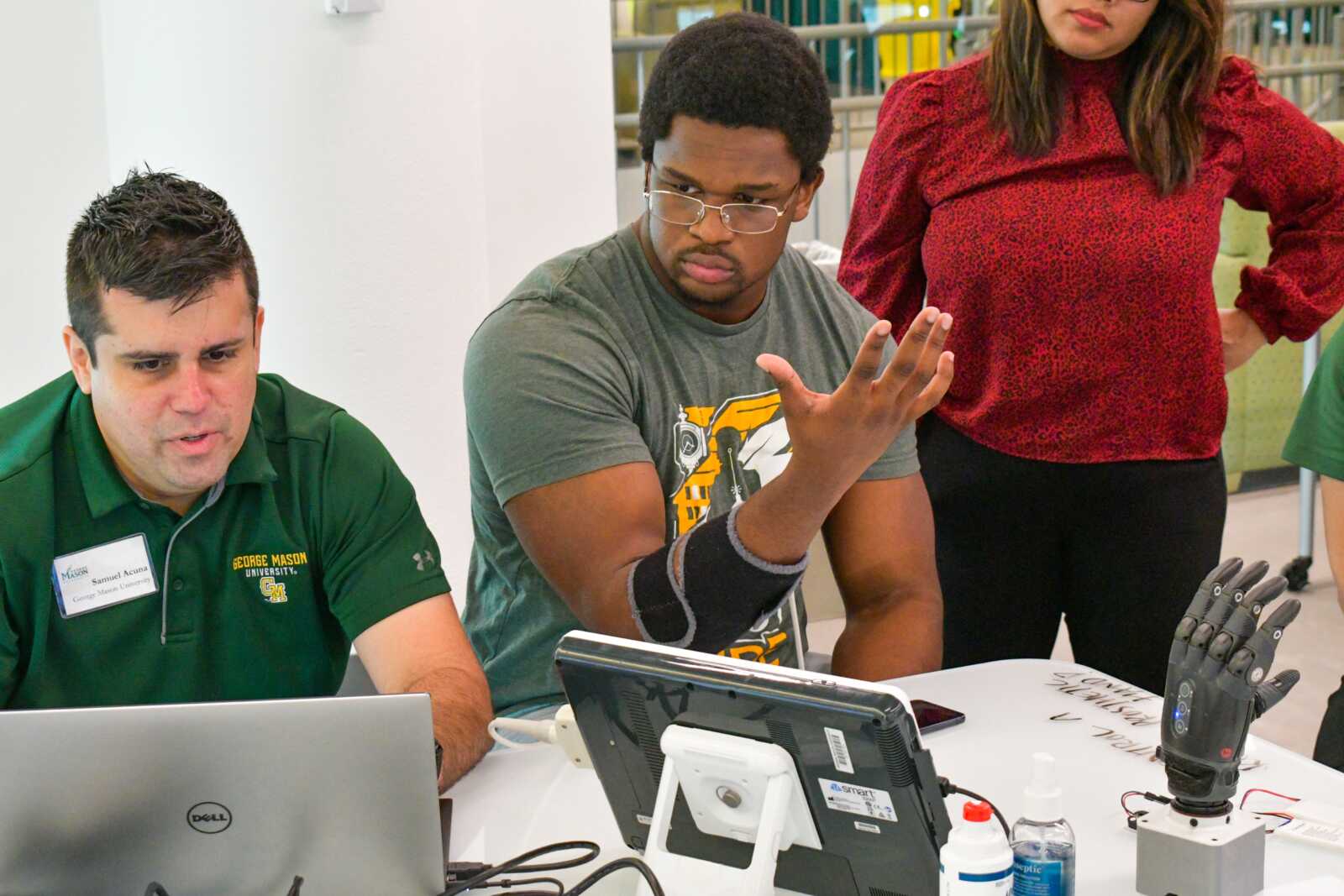
During the event, students and faculty showcased the types of work the new, tech-oriented facility will house, including the development of robotic limbs and disaster simulation research.

The university broke ground on the 345,000-square-foot building at 3351 Fairfax Drive in January 2022. Previously, the site was home to the old Kann’s Department store, which was demolished in March 2021.

Construction is expected to be completed by the end of 2025. The new facility is expected to serve 750 students initially and up to 2,000 students within the next five years, according to a GMU spokesperson. It will dedicate 60% of its space to university programs and lease the remaining area for retail and private office use.

The building will house GMU’s Institute for Digital Innovation and the newly minted School of Computing, which will offer courses in artificial intelligence, data analytics and cybersecurity.

The Arlington campus is already a hub for several of GMU’s schools, spanning policy, law, conflict resolution and business.

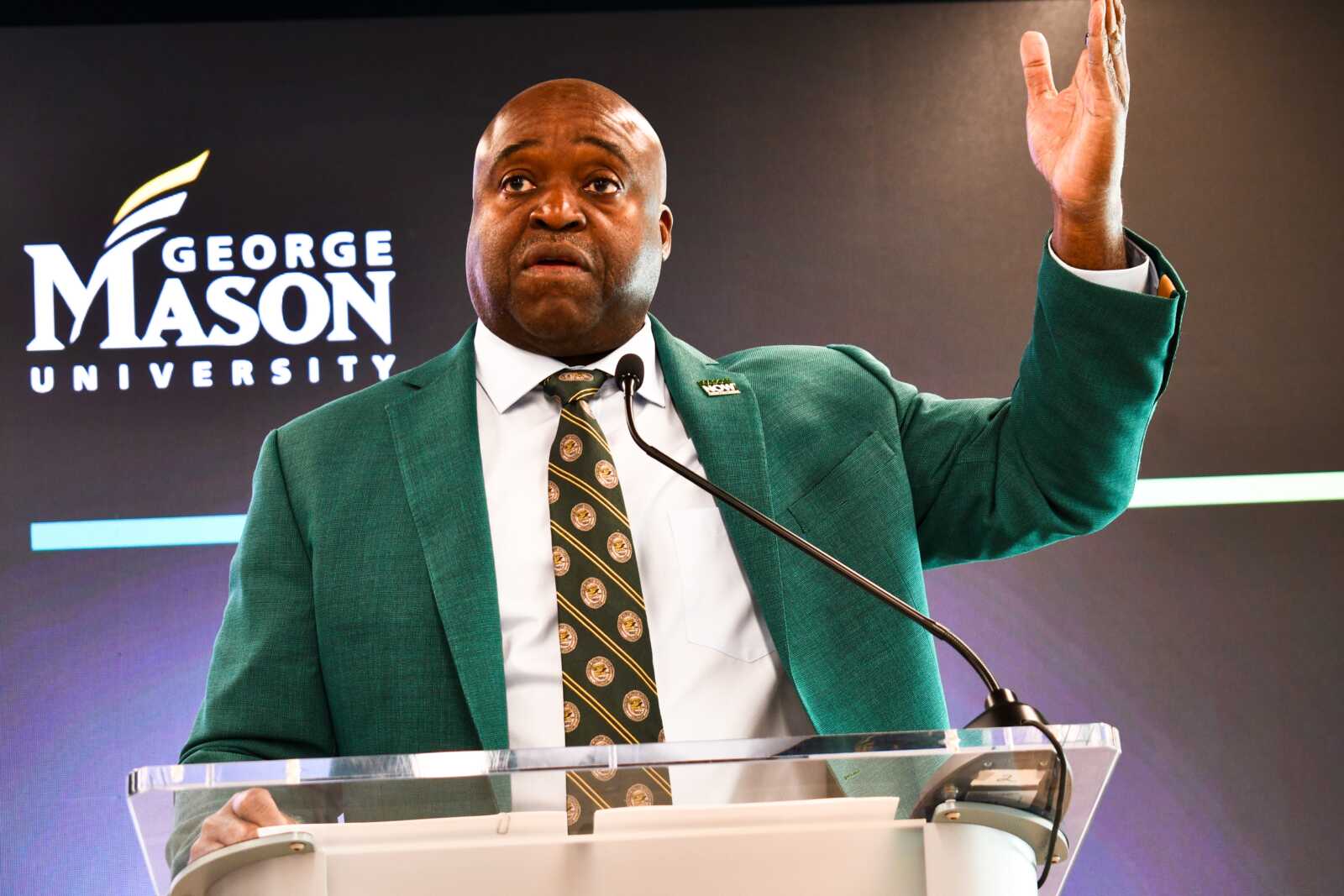
The university’s president, Gregory Washington, told ARLnow that housing technology and social science disciplines under one roof will improve how society adopts new technologies, such as artificial intelligence.

“Engineers alone can’t do it. You need humanists. You need social scientists, and you need business people. We got all of them here working together on the next generation of problems,” he said. “That’s the difference you will see here that you don’t see many other places,”

Washington is also betting on the new facility in Arlington attracting talent that might otherwise choose bigger-name research institutions, such as the Massachusetts Institute of Technology.

“If you go to MIT, what you’ll find is that the facility we’re building is… better than 95% of the facilities they have,” he said.

During the event, Arlington Economic Development Director Ryan Touhill highlighted the potential for the new facility to energize the local tech sector, which has grown rapidly in recent years, particularly with the arrival of major tech companies like Amazon.

“This project can’t be coming online at a better time,” he said. “We’re really focused in Arlington County and regionally on growing our homegrown tech sector. And that’s part of our long-term economic growth strategy.”


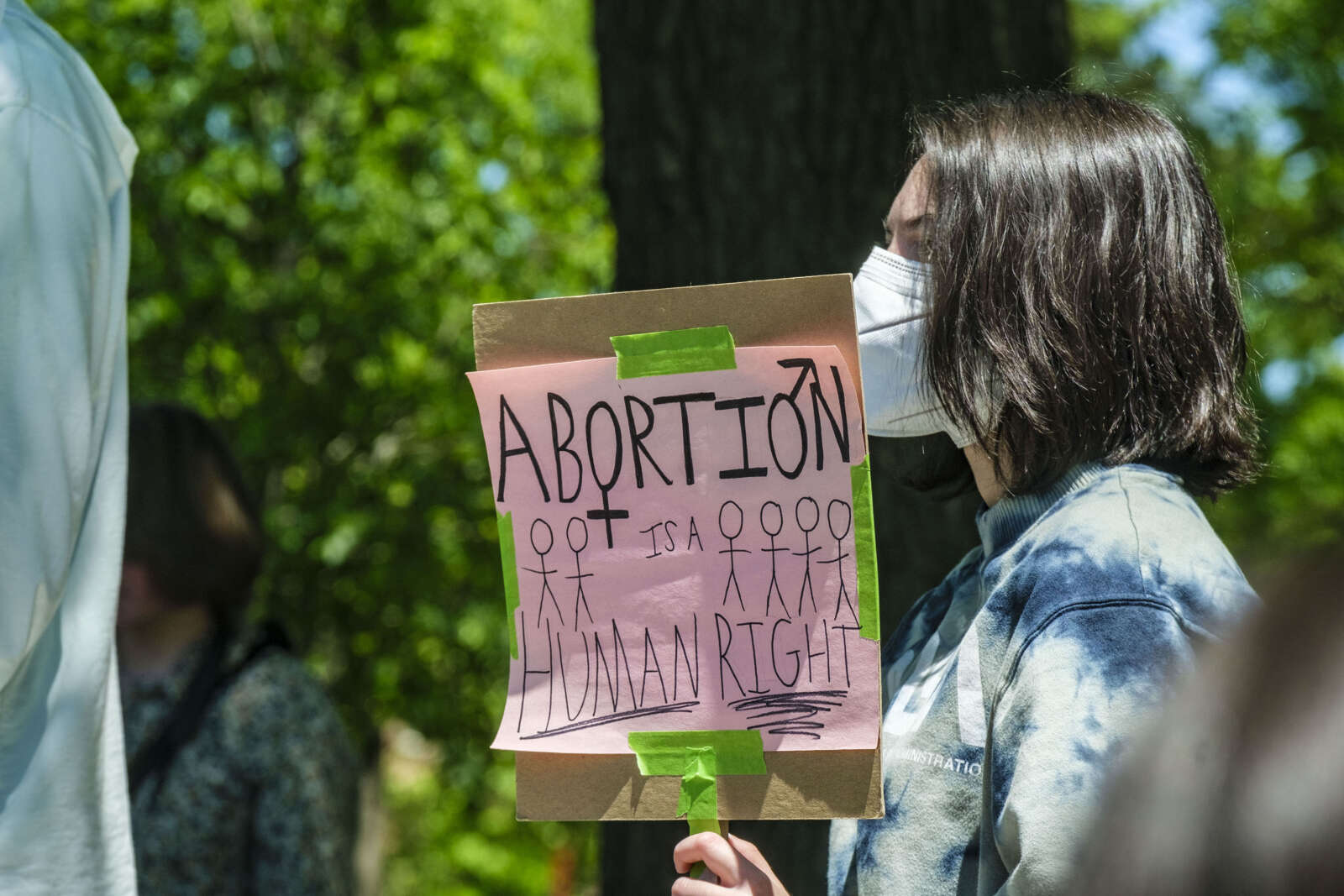
(Updated at 4:40 p.m.) While Arlington has tended to be a Democratic stronghold, two of its incumbent state Senators who are up for re-election are still feeling the urgency of this election where abortion is concerned.

Sen. Barbara Favola is up against Republican David Henshaw for the newly redrawn 39th District and Sen. Adam Ebbin is up against Republican Sophia Moshasha for the 40th District.

With the election season coming to a close, ARLnow asked about their top priorities. For Favola and Ebbin, that starts with blocking GOP attempts to limit abortion access and raising wages for teachers. Henshaw and Moshasha both zeroed in on enshrining parental rights in schools and crime and safety, with Henshaw also supportive of lowering the cost of living through lower taxes.

Favola says her first priority is ensuring that access to abortion care under the Roe v. Wade framework “remains safe and legal.”

“This important healthcare decision must remain between a woman and her doctor,” Favola said. “The government should have no part in this personal decision and recent proposals by Governor Youngkin to criminale providers should an abortion ban be adopted are not acceptable. Arlington voters overwhelmingly believe that bodily autonomy should be a protected right. I will work to bring a state constitutional amendment before the voters regarding the right to bodily autonomy.”

But Henshaw says Democrats are pushing for abortion policies that go beyond what the average Virginia voter thinks is reasonable.

“I think they’re out of touch with most Virginians,” he said.

He pointed to a 2021 poll showing that 65% of Americans surveyed say abortions should be illegal in most or all cases. The same survey found Republicans and Democrats alike support abortions if the mother’s life is endangered, if the pregnancy results from rape or incest, or if the child has a life-threatening illness.

“They’re still pushing for full abortion all the way up to 40 weeks,” he said, referencing a 2019 attempt to loosen restrictions on third-trimester abortions.

At the time, then-Gov. Ralph Northam tried to explain why third-trimester abortions typically occur, such as when the baby has a severe deformity or is not going to survive. In these cases, he said a mother would deliver the child and the child would be “kept comfortable” while a “discussion ensues between the physicians and the mother.” Some Republicans later interpreted his comments as supporting infanticide.

Ebbin says abortion is one of many issues threatened if Republicans take the Senate and enact a “full-on MAGA agenda.”

“If Republicans were to take control of the legislature, they would criminalize abortion, that’s been clear,” he said. “They would roll back the progress we’ve made on gun safety — getting rid of red flag laws and background checks — based on what they’ve introduced in years past and passed in the House.”

He says it is important for Arlingtonians to elect Democrats to prevent Gov. Glenn Youngkin from “running amok” and “weaponizing his incompetence,” pointing to $201 million less in public school aid that was lost due to a state error.

By contrast, Ebbin says, Democrats led an initiative to give teachers a 12% raise.

“We have to commit more money for teacher and law enforcement salaries to fill the gaps in both public service sectors,” he said.

(more…)


Author Art Spiegelman and the cover of his graphic novel about the Holocaust, “Maus” (via Arlington Public Library)

Arlington Public Library says it is taking a stand against book banning across the U.S. and in Virginia, declaring itself a “book sanctuary.”

“Everyone should read whatever they want, whenever they want and however they want,” said Library Director Diane Kresh in an announcement on social media this week.

As part of that commitment, Kresh plans to host a panel discussion featuring Pulitzer Prize-winning author Art Spiegelman, who is no stranger to the issue of book banning.

Last year, a Tennessee school board banned Pulitzer Prize-winning author Art Spiegelman’s graphic novel “Maus: A Survivor’s Tale,” which uses animal characters to portray his father’s experiences during the Holocaust, citing claims of inappropriate language and lewd images.

Spiegelman later criticized the decision, arguing the need to confront difficult aspects of history to prevent whitewashing.

Spiegelman’s visit serves as an early kick-off to Banned Books Week, a campaign by the American Library Association and Amnesty International. The library director tied this year’s campaign, which runs from Oct. 1-7, to recent attempts to ban books across the country and the state.

“In recent months, events have moved closer to home in the Commonwealth of Virginia, as libraries have been threatened with removal of books by certain members of the community,” Kresh said. “They’ve been subjected to personal assaults in person, at public meetings and on social media.”

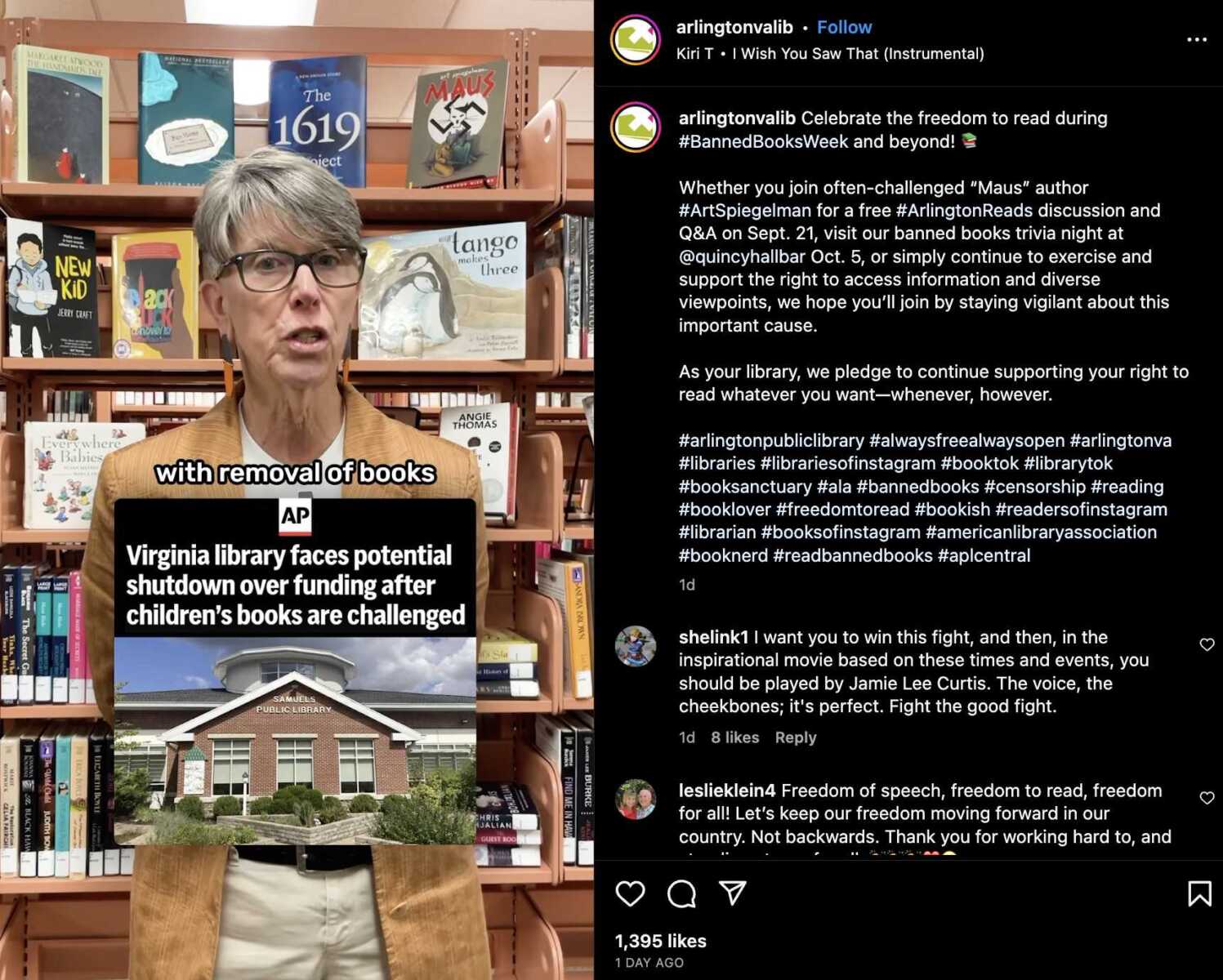
Arlington Public Library Director Diane Kresh discusses Banned Books Week on social media (via Arlington Public Library/Instagram)

Several neighboring school systems — including those in Fauquier and Prince William counties — have faced book challenges from both parents and administrators. These challenges generally revolve around concerns that students are being exposed to “sexually explicit material.”

Last year, the Virginia Department of Education implemented new model policies requiring all school districts to notify parents when instructional material containing sexually explicit content will be taught. Schools are also required to provide alternative curriculum for students if requested by their parents.

While these model policies are designed to strengthen what is commonly referred to as “parental rights,” some school systems, such as Hanover and Spotsylvania counties, have taken used the policies as a basis to remove certain books from schools altogether.

“Upholding the freedom to read requires vigilance and action taken by all of us to ensure that a multiplicity of views and diversity of opinion is housed in each library,” Kresh said.

Several banned books are prominently displayed behind Kresh in her Instagram video this week, including “The 1619 Project.” The book’s author, Pulitzer Prize-winning writer Nikole Hannah-Jones, came to Arlington last year for Banned Books Week.

The discussion between Spiegelman and Kresh will take place at Kenmore Middle School auditorium tomorrow (Thursday) at 6:30 p.m., followed by an audience Q&A session. The event will be streamed and in-person attendees can buy signed copies of Spiegelman’s book.


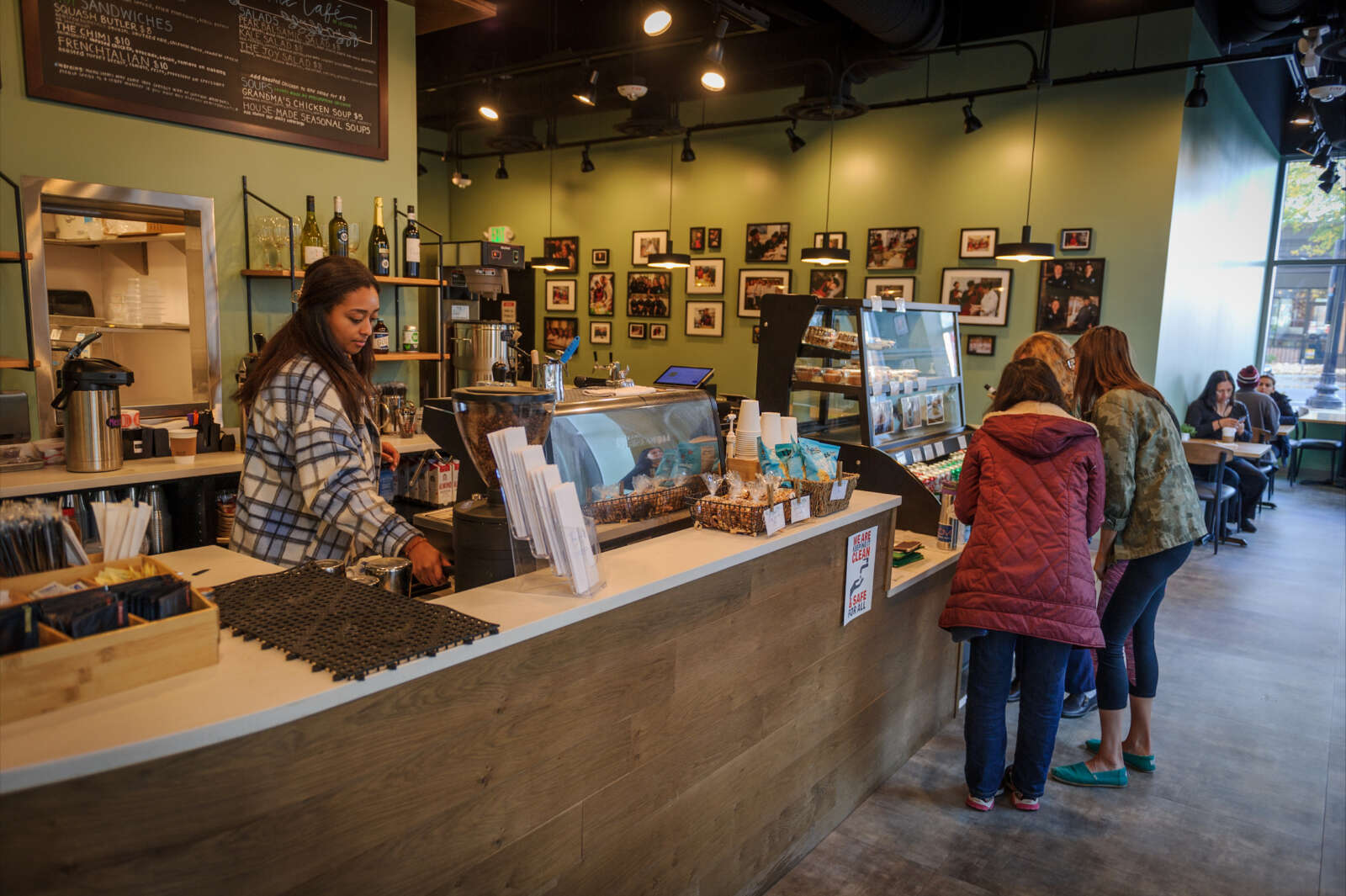
The Kitchen of Purpose café at 918 S. Lincoln Street along Columbia Pike (courtesy photo)

Changes are happening within the Columbia Pike-based nonprofit La Cocina VA.

Since its inception in 2014, the nonprofit has provided culinary job training to Spanish-speaking immigrants and donated the meals made by trainees to people in low-income housing and shelters.

Over time, it widened its focus to help immigrants, refugees and unhoused people from all backgrounds. Founder Paty Funegra tells ARLnow the nonprofit was renamed Kitchen of Purpose last month to recognize that shift formally. She also gave a heads-up of some other changes slated for the new year.

Kitchen of Purpose will be putting an $80,000 grant from longtime supporter Bank of America to use to address food insecurity and support workforce development. Meanwhile, the nonprofit will be updating the menu and adding outdoor seating to the café it operates out of its facility at 918 S. Lincoln Street in a bid to attract new customers. Kitchen of Purpose moved into the facility in 2020.

Funegra says the name change was a years-long process that wrapped up last month.

“It didn’t take too long until we had applicants to our program from other ethnicities, immigrants from other places, Americans who speak good English who were interested in food service as career opportunities,” she said.

While La Cocina VA began offering classes in English by 2018, “we were always labeled as ‘La Cocina only serves the Hispanic community,'” Funegra said.

She says many of Asian, Middle Eastern and Eastern European descent — mostly women — have applied to Kitchen of Purpose’s small business incubator program.

“They already utilize food as not only a way of gathering families, but creating something,” she said.

Bank of America’s $80,000 grant will increase the number of meals Kitchen of Purpose can provide to people in affordable housing and homeless shelters, to senior residents and public schools children during the summer. A portion will support the nonprofit’s workforce development program that helps unemployed people get jobs and training in food service and hospitality.

“It definitely is a large contribution,” she said. “We project this is around 10,000 meals that we can provide our clients, using part of this grant.”

With the new name comes a “relaunch” of the café on S. Lincoln Street, which doubles as an incubator for other restaurants, including RAMMY-nominated fried chicken spot Queen Mother’s.

Starting in February, customers can order from the new food menu, with international flavors, Sunday brunch, plus beer, wine and cocktails. The interior will be redesigned and, by the spring, there should be outdoor seating.

“We want to bring more attention to the café,” Funegra said. “Like any other establishment, we’re surviving the pandemic… Some people know about us, but we want to come out with a new look, new name and new personnel to bring clients and raise awareness about us.”

It’s a far cry from where she started: a 167-square-foot kitchen in a church basement. To help small business owners make similar kinds of moves, she says in the near future she wants to provide microloans. That way, they can start building credit and eventually qualify for bigger loans.

“They have the talent, knowledge and passion, but because of their condition, they face barriers to obtain a small seed capital loan,” she said. “We’re exploring opportunities to create a fund that would allow us to inject capital — $5,000 to $10,000 loans — to these entrepreneurs so they can start generating business.”


June Prakash, president of Arlington Education Association (via Arlington Public Schools)

Teachers who are part of the Arlington Education Association say there has been a communication breakdown since the School Board authorized collective bargaining in May.

Arlington Public Schools became the second school district in Virginia to do so, after the General Assembly in 2020 repealed a ban on school employees bargaining collectively.

Before that, AEA advocated for public school employees but could not guarantee benefits through legally binding contracts. This month, organization members told the School Board that its approval of the collective bargaining resolution shut out staff, and since then, communication has worsened between employees and APS’s top leaders.

“The collective bargaining resolution that passed in May does not create a fair process,” Arlington Career Center employee Javonnia Hill said at the School Board meeting on Oct. 13. “It is not what you thought it would be.”

As of now, only school administrators have chosen a bargaining unit and elected a representative. Two other employee groups are taking more time to review the resolution language. In the interim, AEA members report not being able to raise concerns directly with Superintendent Francisco Durán and his deputies.

June Prakash, AEA’s new president, said she was prevented from discussing “troubling trends and concerns” with leadership last month because employee groups are still choosing representative bargaining units. She said APS told her that staff should be going to their supervisors or Human Resources instead.

That is not the process AEA members are accustomed to, according to teacher Josh Folb.

“For AEA members, bringing concerns to their union president, who gathers that list to calmly discuss those concerns with the superintendent’s cabinet was the way that we would resolve employee concerns,” Folb said during the meeting. “It prevented the airing of dirty laundry in the public forum.”

He asked the School Board about the appropriate forum to discuss a substitute shortage at the high school level — one so acute that teachers are asked to use their planning periods to teach other courses.

Prakash, who took the helm after AEA’s executive board was ousted following two years of financial difficulties and a drop in membership, said she turned to the Board’s public comment period because of the walls APS put up.

“Did you know our bus drivers, who are required to wear a uniform, are rationed two T-shirts for a five-day work week? Did you know that summer school staff didn’t have keys to the classrooms they were in, leaving our students vulnerable in the event of a lockdown?” she asked. “I look forward to sharing so much more in the coming years. I will not be deterred… I will not fail our members, employees or students.”

APS counters that the collective bargaining resolution was forged with ample feedback, that employees need to move forward with standing up bargaining units, and that employees should discuss concerns with supervisors or Human Resources.

“APS remains committed to working with the Arlington Education Association. AEA continues to voice concerns over the collective bargaining resolution wherein APS met on numerous occasions with AEA and the Virginia Education Association (VEA) to discuss concerns that were brought forth from the associations prior to the final resolution being passed in May 2022,” APS spokesman Frank Bellavia said. “More than half of the requests from AEA/VEA were implemented into the approved resolution.”

Longtime teacher Danielle Anctil told the School Board that its vote in the spring has effectively shut employees out.

(more…)


The title page of the report published by Black Parents of Arlington

Black students in Arlington Public Schools still see lower passing rates and are more likely to be suspended than white students, an advocacy group found, as detailed in a new report.

Black Parents of Arlington, a local group founded in 2019 to advocate for the interests of Black students in the county, published “APS in Black: Measuring Educational Opportunities for Black Students” this past weekend.

The report highlighted “long standing inequities between Black and white students in APS,” according to a press release.

The organization claims that APS was “unable to dismantle the systemic racism within its foundation,” and failed to create an environment in which Black students can “thrive academically” or are given sufficient opportunities outside the classroom.

There was an approximately 20 percentage point difference in pass rates in Virginia’s Standard of Learning test between Black and white students in the 2018-2019 school year, according to the report. Black students had an around 70% pass rate in both math and reading, while white students had an around 90% pass rate across all APS schools.

Although the disparity in pass rates vary significantly in different elementary, middle and high schools, most schools showed more than a 10 percentage point gap between Black and white students in math and reading pass rates between 2017 and 2019.

Slide from BPA report (via Black Parents of Arlington)

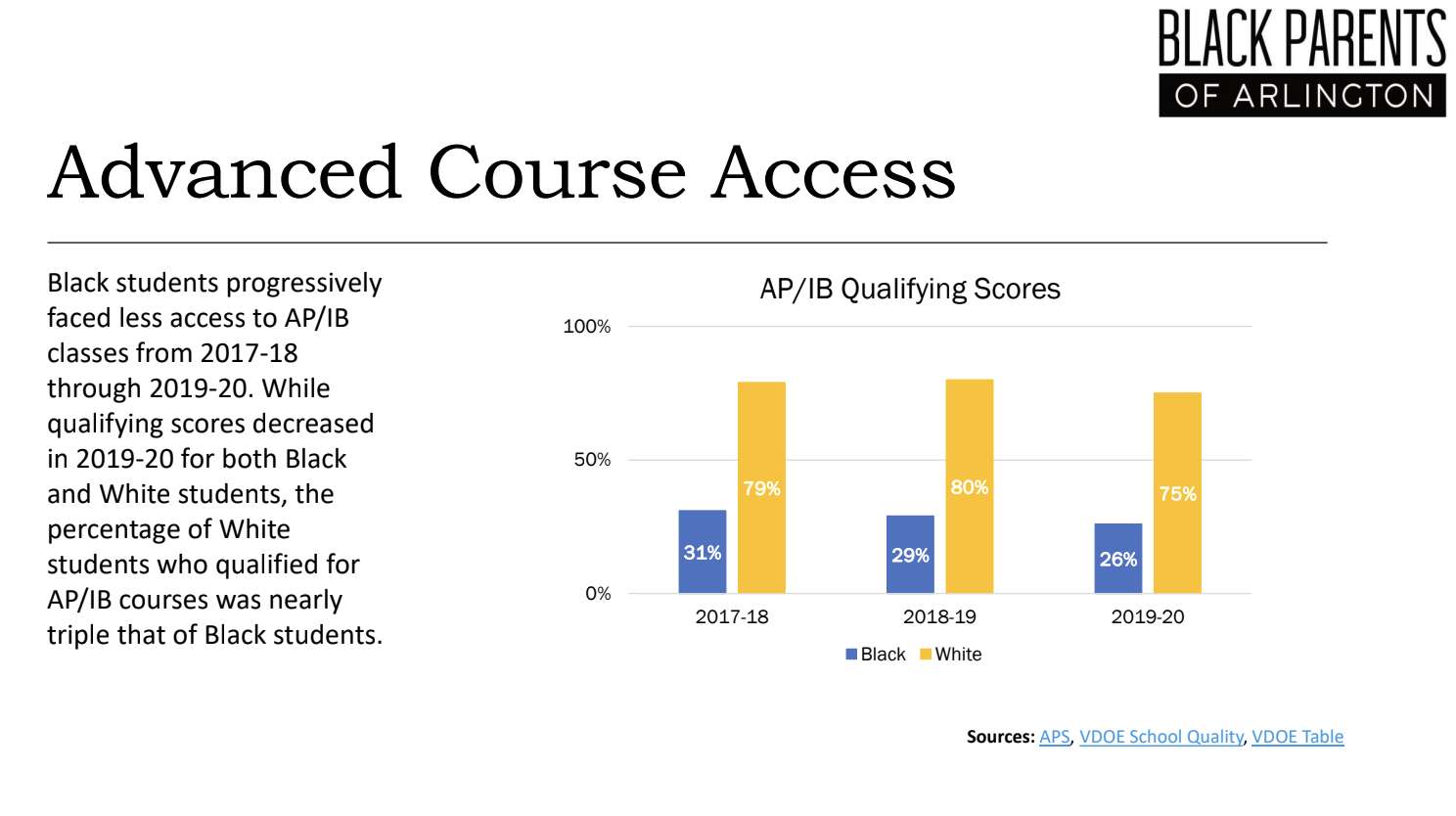
While three-fourths of white students qualified for advanced courses such as AP and IB classes, only 26% of Black students did in the 2019-2020 school year, according to the group’s report.

Additionally, Black students only made up 20% or less of the population in APS middle and high schools, but were more likely than white students to be suspended in most schools, the report said.

One reason for these disparate outcomes was because of the mismatch between the demographics of teachers and that of the students, co-founder of the organization Whytni Kernodle asserted.

“Many of the African American workers in Arlington Public Schools are in central office, which means what they’re not is in front of children teaching them how to read, teaching them about algebra, teaching them about history,” she said.

As of September 2020, 44.8% of students in APS were white, while 10.2% were Black, 28.4% were Hispanic, and 8.8% were Asian, according to data from the school system.

APS needs to invest more in training and other resources to address the disparities, and to avoid entrenching the “status quo,” Kernodle said.

“If you need to change the culture of a situation or an organization, you have to use bold tactics and you have really look at who you have on the ground who’s there that should be there and who needs to be shown the door,” she said.

As of publication time APS has not offered a response to the report.

The full press release from Black Parents of Arlington is below.

(more…)


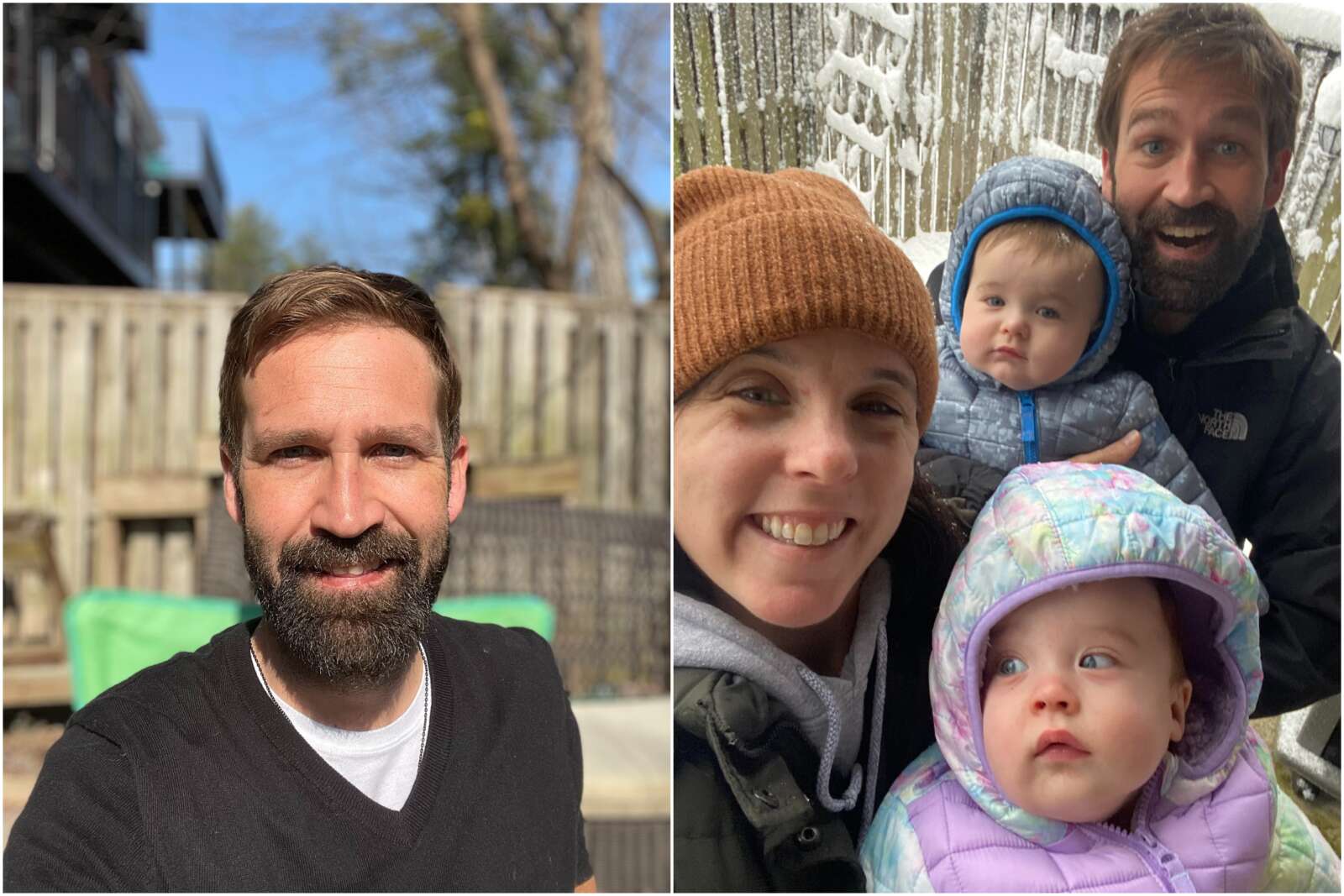
Arlington School Board candidate Brandon Clark (left) and the Clark family (right) (courtesy of Brandon Clark)

A candidate for the Arlington School Board has withdrawn his name from the Democratic endorsement process.

Brandon Clark, a teacher at Gunston Middle School, said he decided to remove himself from consideration this week so he could run independent of party affiliation. He realized the partisan process did not align with his beliefs, he said.

“The more I thought about it, the more I was like, wait, this shouldn’t be part of the process,” he told ARLnow. “Education shouldn’t be a partisan issue.”

The caucus “represents a small microcosm of Arlington County,” Clark said. ‘It’s not up to the Arlington Democrats to decide who the School Board member’s going to be.”

The Arlington County Democratic Committee will now vote in June on whether to endorse Bethany Sutton, the only remaining candidate seeking the party’s endorsement, ACDC Chair Steve Baker said.

Clark had been steered in the direction of going through the Democratic Committee’s voting process when he decided to run in the otherwise nonpartisan election, he said.

“Because as a family, both of us being teachers, we don’t have a lot of disposable income to spend on a campaign, so I was told this is the only way you’re going to win,” he said. “It shouldn’t have this air of like, ‘this is the process where you win the race.’ No, the people need to decide and that happens on Election Day.”

Clark thanked the volunteers who began to lay the groundwork for the four-day caucus that will no longer take place.

James Vell Rives IV is also running without a party affiliation. Rives and Clark are the only two candidates who have qualified to be on the ballot so far, according to the Arlington elections office.

The Democratic endorsement process has been scrutinized for its overrepresentation of white, affluent Arlington residents, and discouraging participation in the general election while potentially making nonpartisan officials beholden to a political party, among other concerns. Calls for reform were ultimately defeated.

Clark said he hadn’t realized there were groups criticizing the caucus until he started going through the process.

“But I’m seeing now why these organizations have the grievances that they do,” he said. “In my opinion, it seems like a very insider kind of process.

This past weekend, before he pulled his name from endorsement consideration, he criticized local Democrats for selling a “Russian named vodka” at their Blue Victory Dinner, saying it “speaks to being out of touch on what our community might regard as tasteless and, although seemingly insignificant to others, [and] represents tacit support for Russia.”

He said as a teacher, he encourages his students to look at all sides of an issue to make well-informed decisions, so he didn’t think it was appropriate to align himself with a political party.

“In the future, I hope this process is more inclusive and more open and that there is a support for individuals who are trying to run,” Clark said.


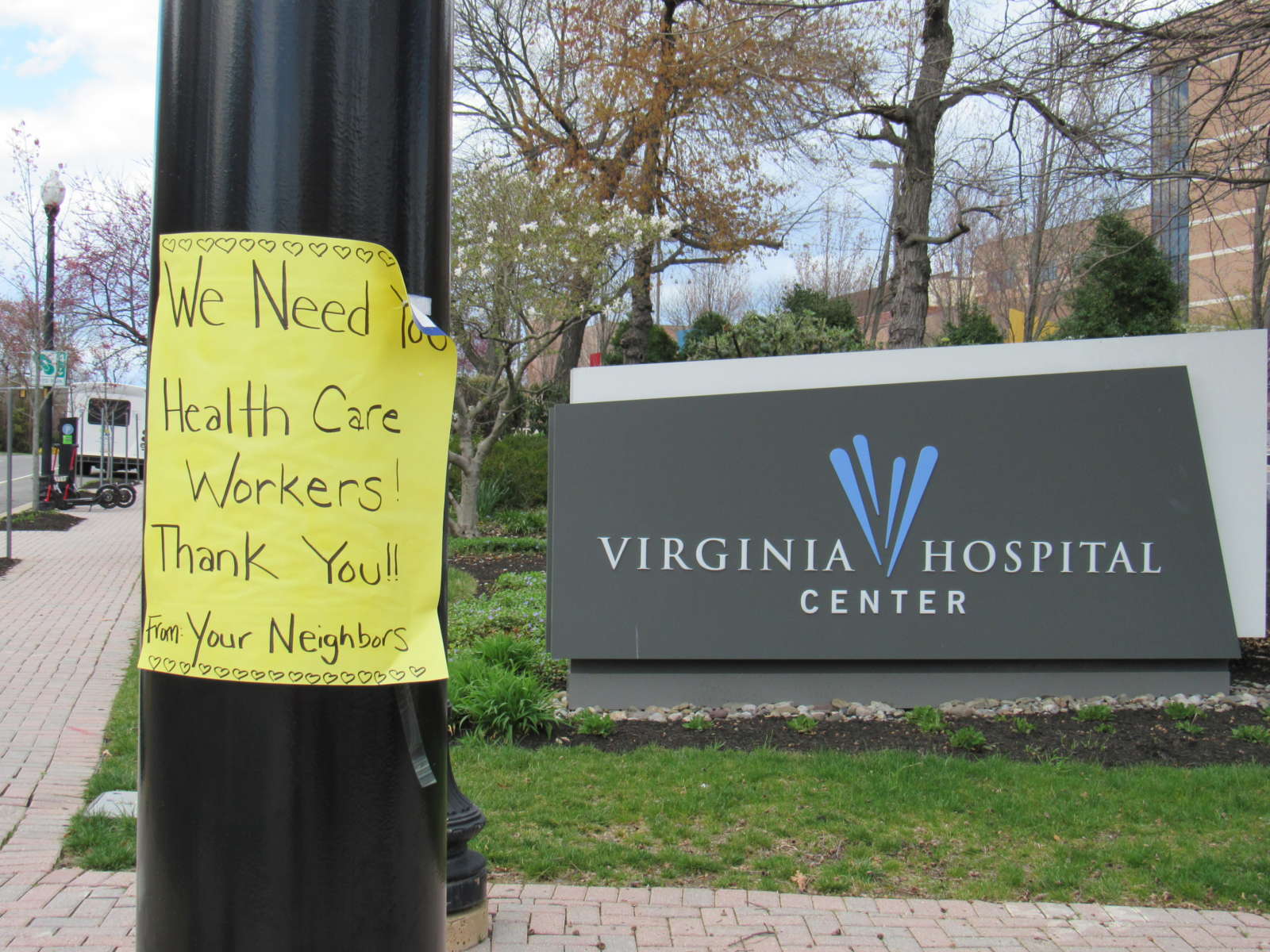
Sign outside of Virginia Hospital Center (photo courtesy Adam Dunham)

A pair of bills proposed by an Arlington lawmaker in the General Assembly could help bolster the ranks of health care workers and teachers stretched thin during the pandemic.

The bills introduced by state Sen. Barbara Favola (D-31) expedite the licensure process in both industries, allowing workers with licenses in other states to begin work upon being hired. The bills passed the Virginia Senate uncontested and will be considered in the House after the crossover deadline on Feb. 15.

Health care and education industries have dealt with staffing shortages during the pandemic as Covid patients filled hospital beds and teachers have dealt with cases in schools.

If Senate Bill 317 becomes law, hospitals, nursing homes and dialysis facilities would be able to hire workers who have licenses in other states as they await a Virginia license.

“Our facilities right now are having a very hard time staffing up, it is a quality of care issue when you don’t have enough nurses on your floor, our patients are not getting the attention they need,” Favola said to the Education and Health Subcommittee on Health Professions.

Similarly, Senate Bill 68 would allow teachers who are licensed to teach outside the United States to begin working under a provisional license for up to three years. The Department of Education would review the application and the individual could then start in classrooms, Favola told the Education and Health Subcommittee on Education.

“This is an effort to enable those who really have the ability and the interest and the talent to teach in an area that we right now are suffering incredible shortages,” she said. “Our school systems are struggling to keep teachers.”

Several educational associations spoke in favor of the bill, as well as someone who worked with refugee resettlement.

“We did have some concerns in the beginning but [Favola] addressed all those concerns, specifically with verifying those credentials… so we are in support of it,” said Shane Riddle, with the Virginia Education Association.

Favola confirmed there would be confirmation of licensure before they would be hired.

Sen. Ghazala Hashmi, chair of the subcommittee, said she hopes SB 68 will be a step toward addressing the shortage but also “be able to take professionals who come in with the skills and the knowledge, the credentials and be able to participate readily within our own school system.”

The health care licensure bill would put into state law what existed under emergency orders former Gov. Ralph Northam put in place last year. Gov. Glenn Youngkin has since also issued an emergency order, set to expire Feb. 21, that also allows a health care practitioner with a license and in good standing in another state to practice in Virginia.

Under the bill, the health care worker would work on a provisional license and within 90 days the Bureau of Health Professions would issue a Virginia license, Favola said. If the license is not issued within 90 days, there can be an extension of 60 days.

It would also allow for professionals practicing in states surrounding Virginia to get expedited requests for state licensure if their state enters a reciprocal agreement. The bill would take effect as soon as it becomes law.

Hospitals are in a staffing crisis and it isn’t going away anytime soon, said R. Brent Rawlings, Senior Vice President of the Virginia Hospital and Healthcare Association, in testimony before the subcommittee.

“We’ve had people leave the workforce and we need to have every tool in our toolbox to try to get folks at the bedside as quickly as possible and this would allow that to happen,” he said.


Sponsored by Monday Properties and written by ARLnow, Startup Monday is a weekly column that profiles Arlington-based startups, founders, and other local technology news. Monday Properties is proudly featuring 1515 Wilson Blvd in Rosslyn. 

(Updated 4:25 p.m.) Symplicity, a Clarendon-based company that helps college students find jobs and internships, is expanding its international presence.

This month, the company announced its third international acquisition in five years: Canadian company Orbis, a technology platform that connects university students with job and internship opportunities. Symplicity bought Australia-based CareerHub, an online career services platform, in 2017 and Brazil-based Contratanet, the country’s largest network of job portals for students, in 2018.

“It’s a wonderful opportunity,” CEO Matt Small tells ARLnow. “Together, we have most of the universities in Canada.”

Small oversaw all these acquisitions, which add to Symplicity’s growing career services platform — one of its eight solutions for institutions that range from student conduct to academic advising. In the last five years, he says, the company has simplified and improved the quality of these solutions and boosted sales to and renewal rates with universities. Today, the company has more than 2,000 college and university clients in more than 35 countries.

“We’ve been growing by leaps and bounds and have ben wonderfully successful,” he said.

That growth is happening amid a reportedly unsteady job market for college graduates due to the pandemic. Small says more colleges and universities are making employability a top priority, as hiring rates still flag for Gen Z graduates and as student loan debt deepens. He adds that institutions leaned on Symplicity in new ways when universities, and all the services they provide, had to go virtual.

But the chief problem for graduates and universities alike — a skills gap between higher education and industry — predates and has been exacerbated by the pandemic, Small says. When polled, he says, universities would say their students were ready for work, while heads of student recruiting would say students weren’t ready.

“They weren’t talking to each other: employers preferred three years work experience, so they didn’t have to train workers in the actual job,” he said. “Having right major and good grades wasn’t enough to do the job.”

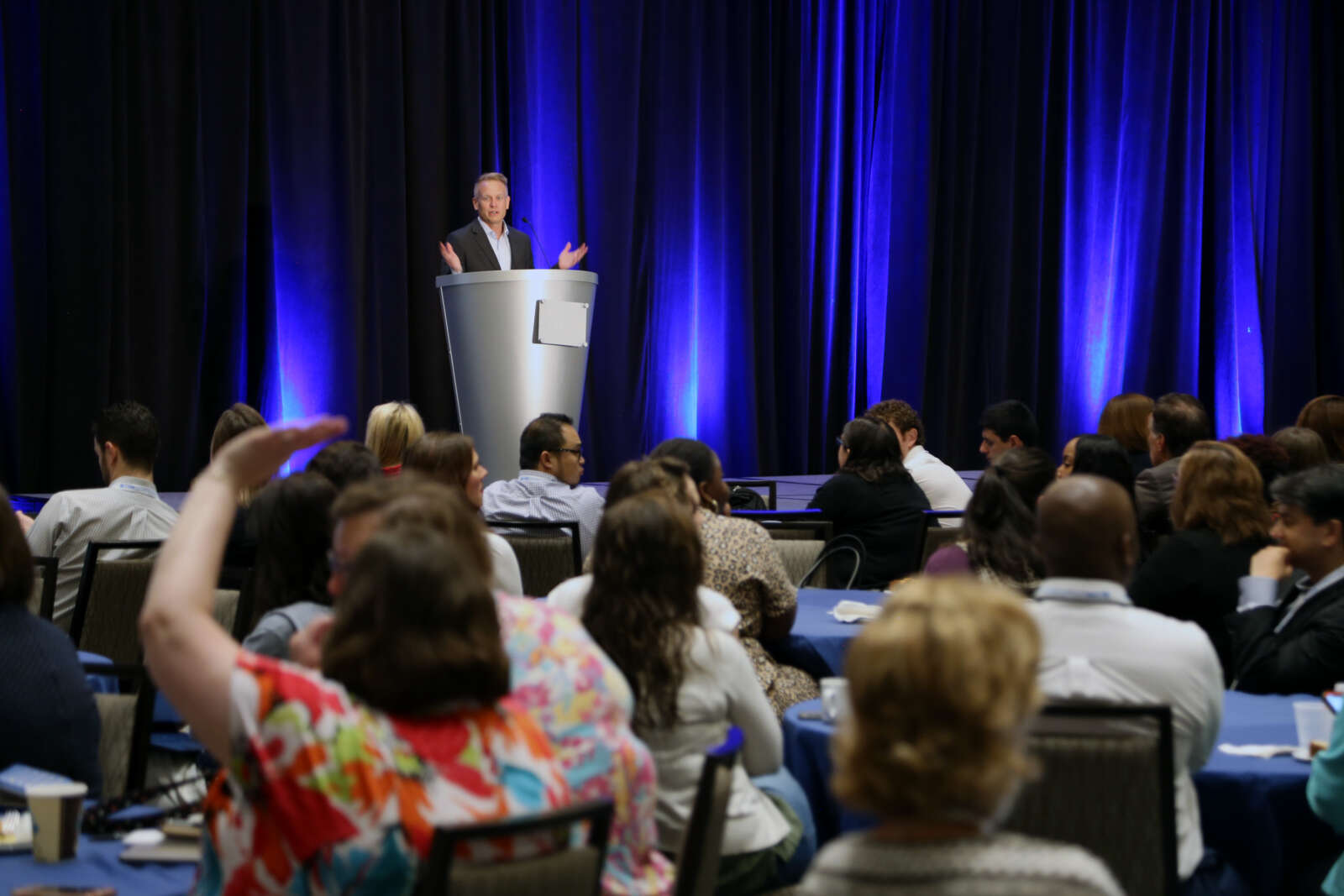
Symplicity CEO Matt Small speaks at a conference (courtesy photo)

He tells students to get to the career center “early and often” to map out what work studies, internships or volunteer programs they can complete and which technology platforms they can master concurrent to their four years of classes. Symplicity placed 450,000 students in internships in the last 12 months.

“It just makes you much more marketable when you graduate,” he said.

Small was tapped in 2016 to work for Symplicity after Miami-based H.I.G. Capital purchased the company. At the time, he was the president of Blackboard International. Symplicity attracted a number of other Blackboard employees and executives, he says.

“I would say we came in and fully professionalized the company and made big product enhancements,” he said.

Two years before Small came on, Symplicity’s founder and then-CEO Ariel Manuel Friedler pleaded guilty to federal computer hacking charges after gaining access to his competitors’ computers in order to steal customer and product design information. Former President Donald Trump pardoned him in February 2020. Symplicity was not charged in the case.

Under the new leadership, Symplicity has also swelled to 300 employees, about a third of whom work from the Clarendon headquarters (3003 Washington Blvd, Suite 900), says Small. The company is actively hiring talent in the software industry.

“I joke that we’re the Ted Lasso of the software industry — everyone here is that level of caring and committed,” he said, referencing the TV show about a college football coach whose charm and optimism win over the English soccer team he is unexpectedly hired to coach.

“We work really hard, but it’s a fun, vibrant culture and a personable place,” he added.


View More Stories