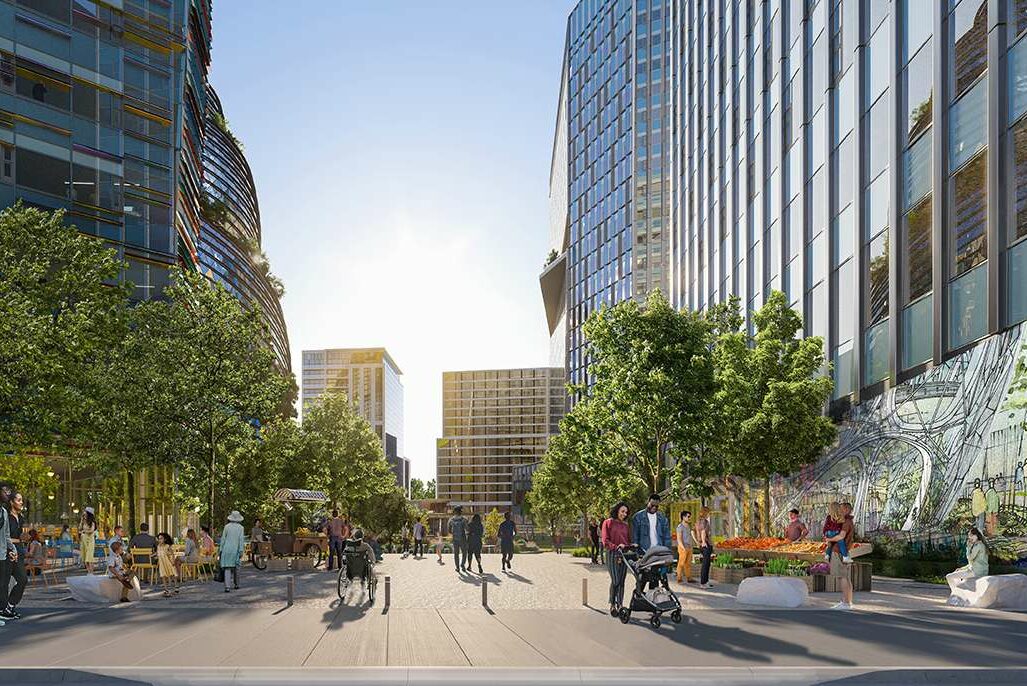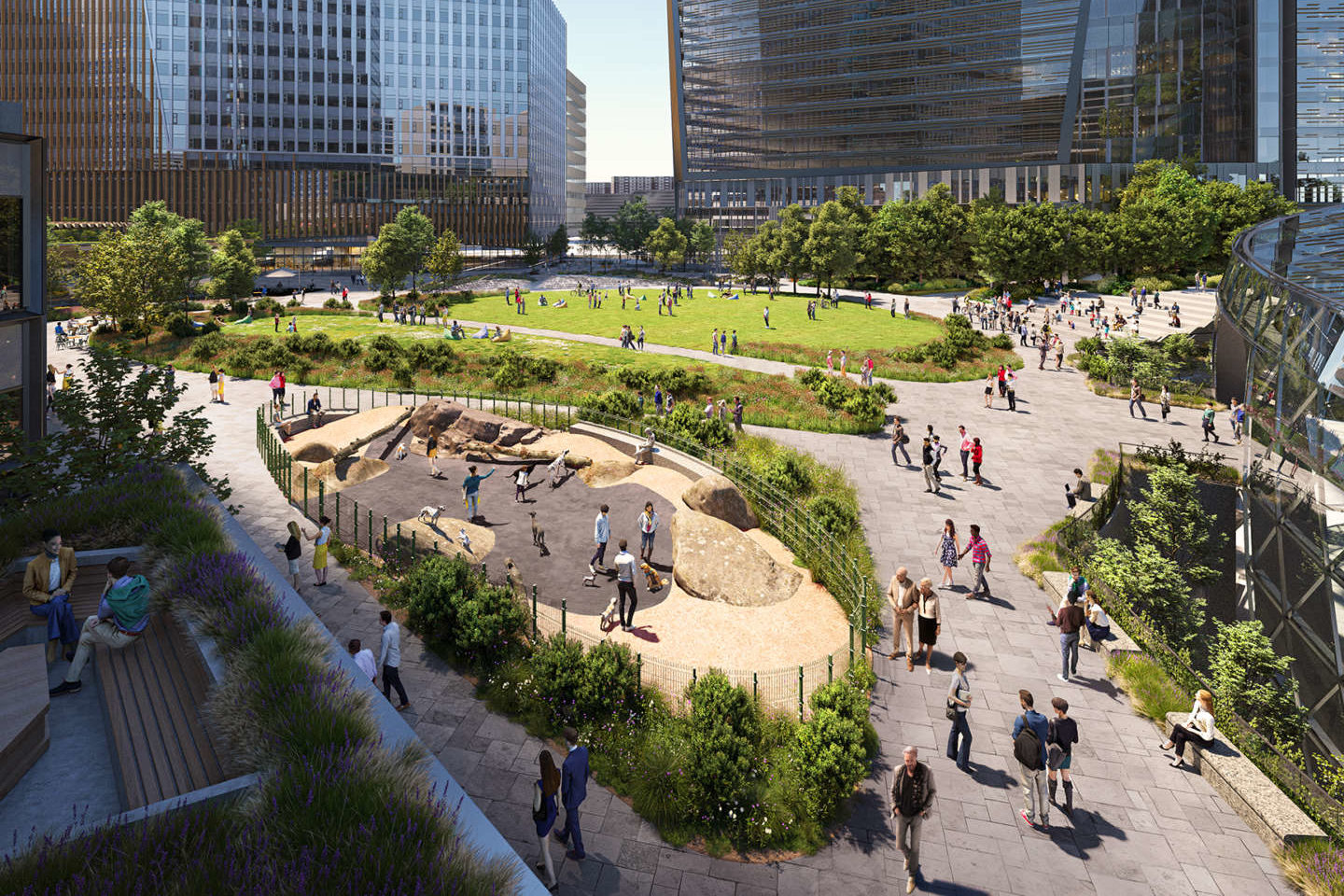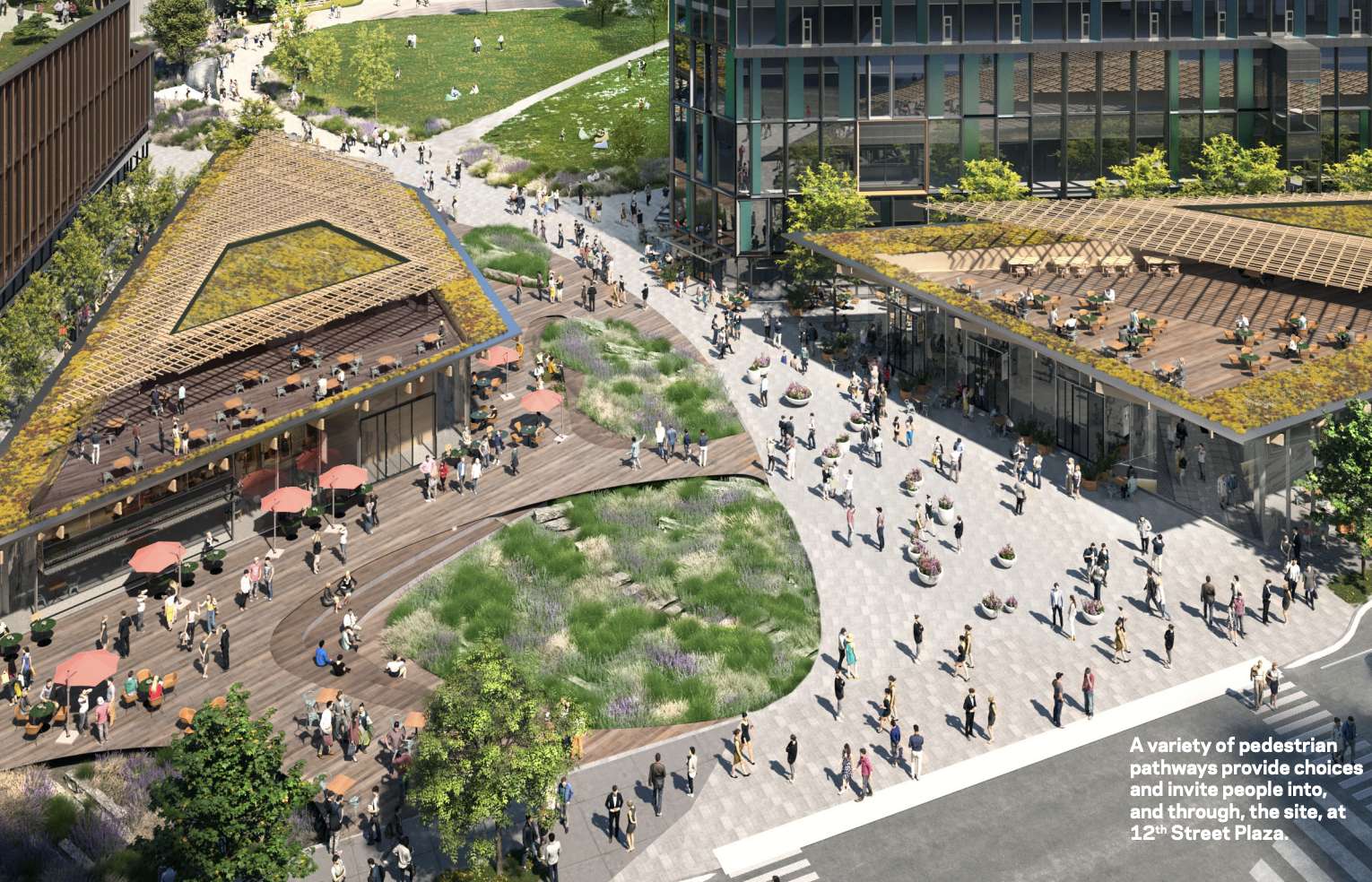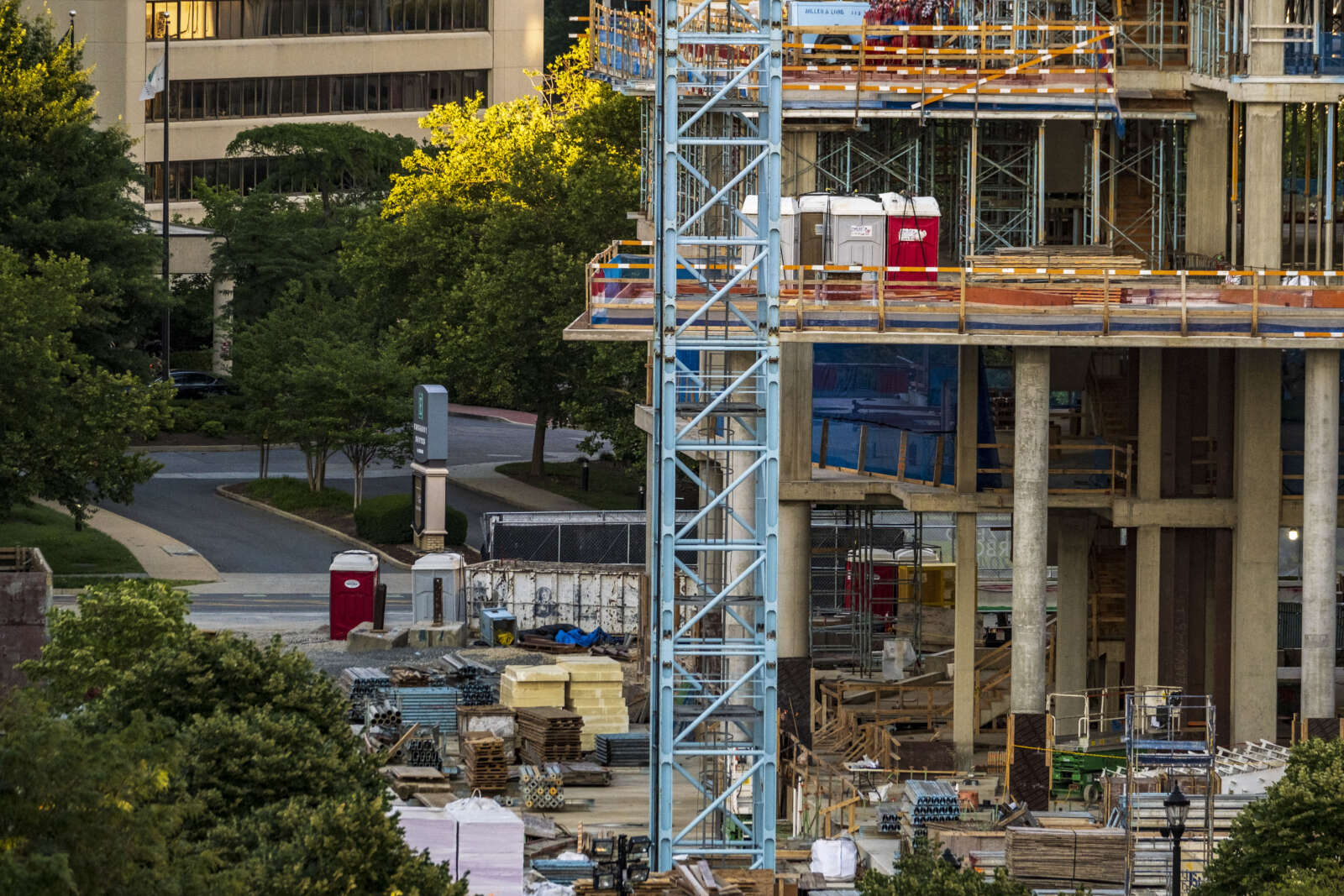
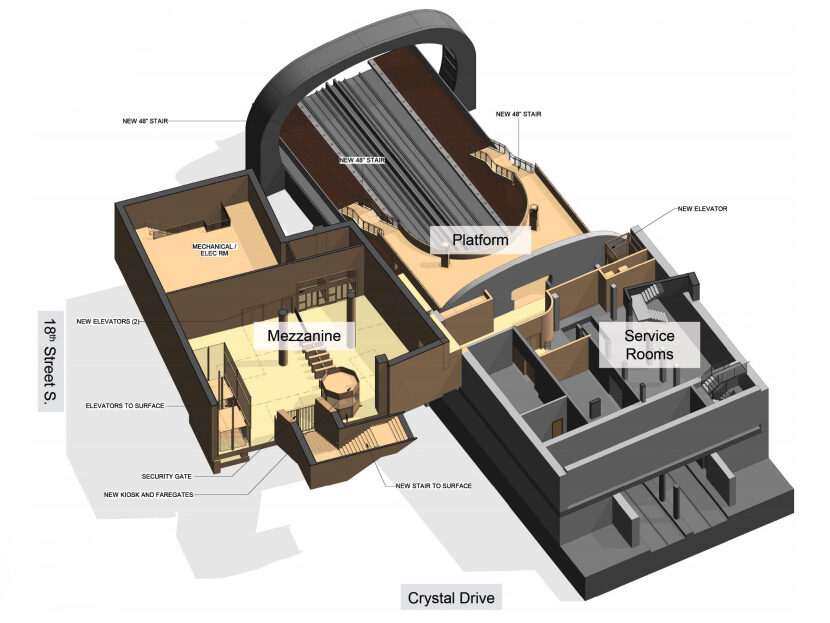
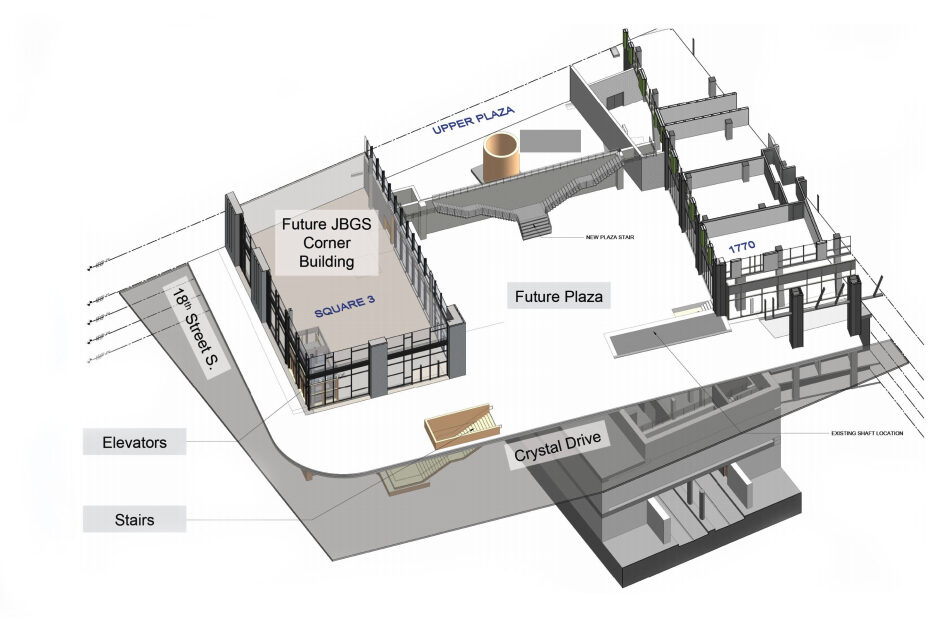

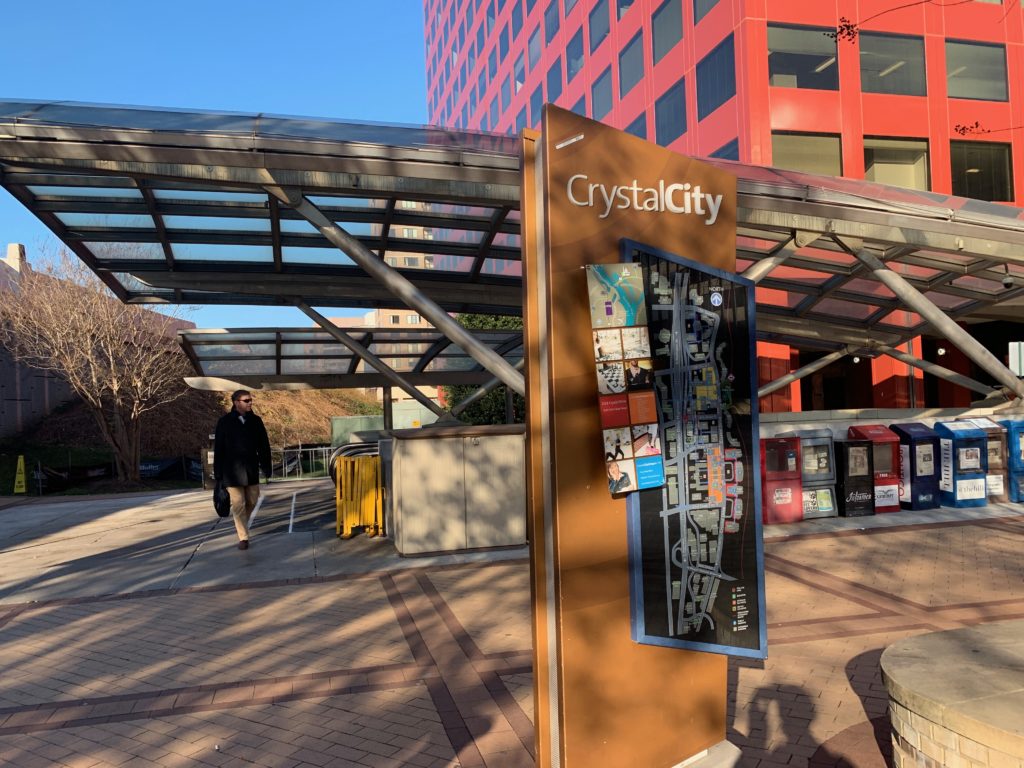
(Updated at 2:05 p.m.) Plans to build a second entrance to the Crystal City Metro station are a third of the way to completion, and the public has a new window to comment on them.

The second entrance set for the corner of 18th Street S. and Crystal Drive will be the product of a public-private partnership with developer JBG Smith, the preeminent property owner in Crystal City. The County Board approved the partnership last summer.

When complete, the nearly $95 million project — financed by the county and various grants — will improve connectivity and accessibility in the area and partially fulfill the state’s commitment to Amazon to invest in transportation infrastructure, according to transportation planner Robin McElhenny.

People can learn more about the project next Wednesday during a pop-up event at the station. WMATA will hold a public hearing on Tuesday, July 13 and people can submit public comments to the transit agency until Friday, July 23.

The public can expect more detailed versions of the designs, which are about 30% complete, in September, McElhenny said during a Transportation Commission meeting last night (Thursday). That is when staff aim to present the project to the County Board, she added.

Meanwhile, staff are hammering out agreements with JBG Smith and WMATA regarding roles and responsibilities during the project’s next phase, which includes finishing the designs and completing construction, she said. These agreements could be voted on by the County Board in December.

“This is somewhat optimistic — there are a lot of milestones that need to be reached between now and December — but it’s something we’re seriously working toward,” the transportation planner said.

After this point, construction could take two and a half years, she said. Budget documents indicate the county expects the project to be ready in the fall of 2023.

The project will connect transit users to the Virginia Railway Express station — also set to be expanded and relocated — as well as bus services and cycling trails, she said. It will also meet accessibility needs, as the station has one elevator and Metro requires stations to have two, and relieve congestion.

“This will be an important investment to mitigate any crowding,” she said.

Transportation commissioners voiced their support for the project.

“I’m really happy to see it moving forward,” Transportation Commission Chair Chris Slatt said. “I think there’s really huge opportunity for this to be a multimodal hub.”

He urged staff to consider protected bike lanes, predicting unprotected ones will get clogged up by pick-up and drop-off activity.

“This is a great project and I wholeheartedly support it,” Commissioner Jim Lantelme said. “It’s one of the keys to this area continuing to develop in the good way that it is.”

This current design phase is being funded by a $5 million grant from the  Northern Virginia Transportation Authority.

Arlington County has estimated costs of about $95 million for the project, some of which will come from federal, state and regional grants.
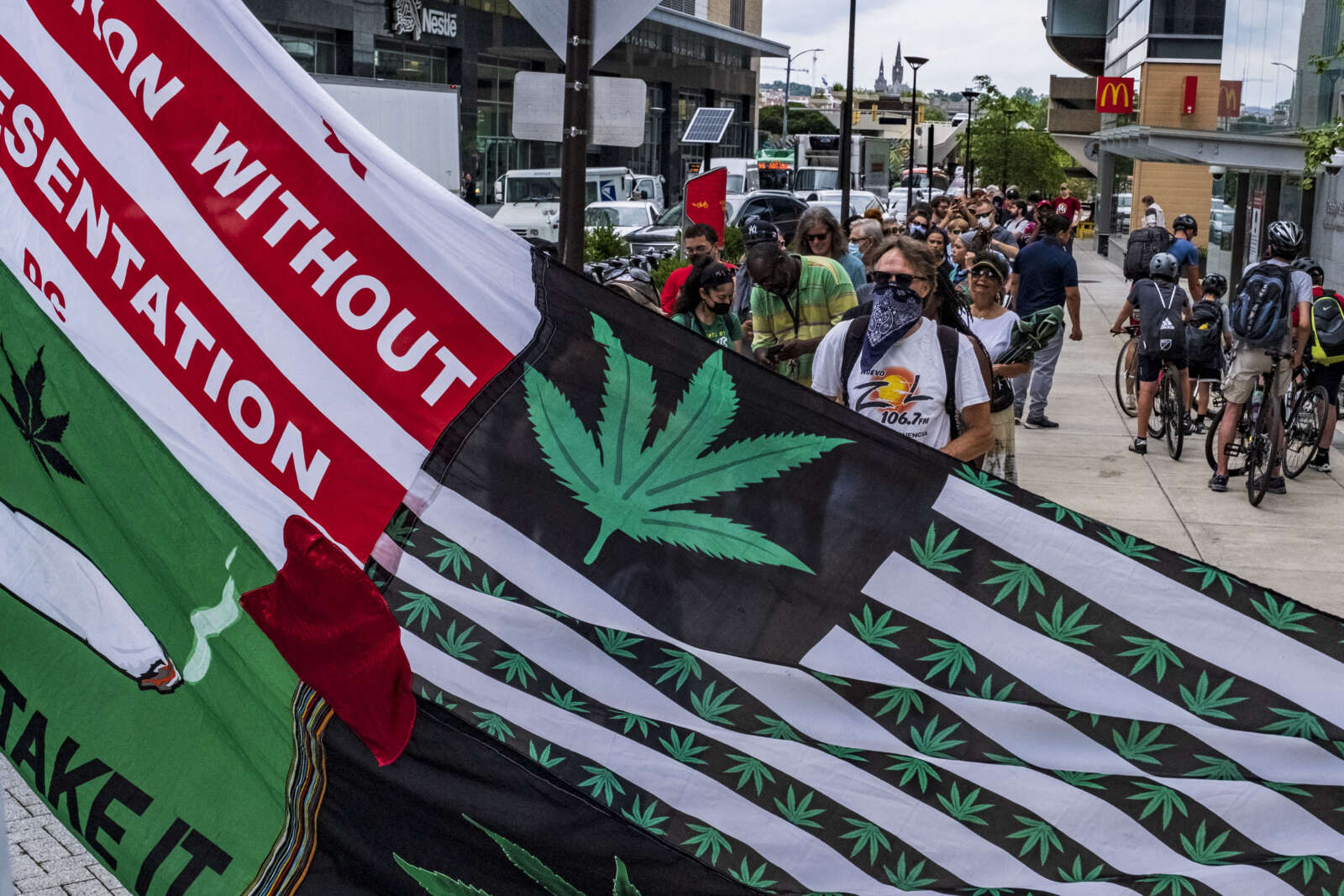
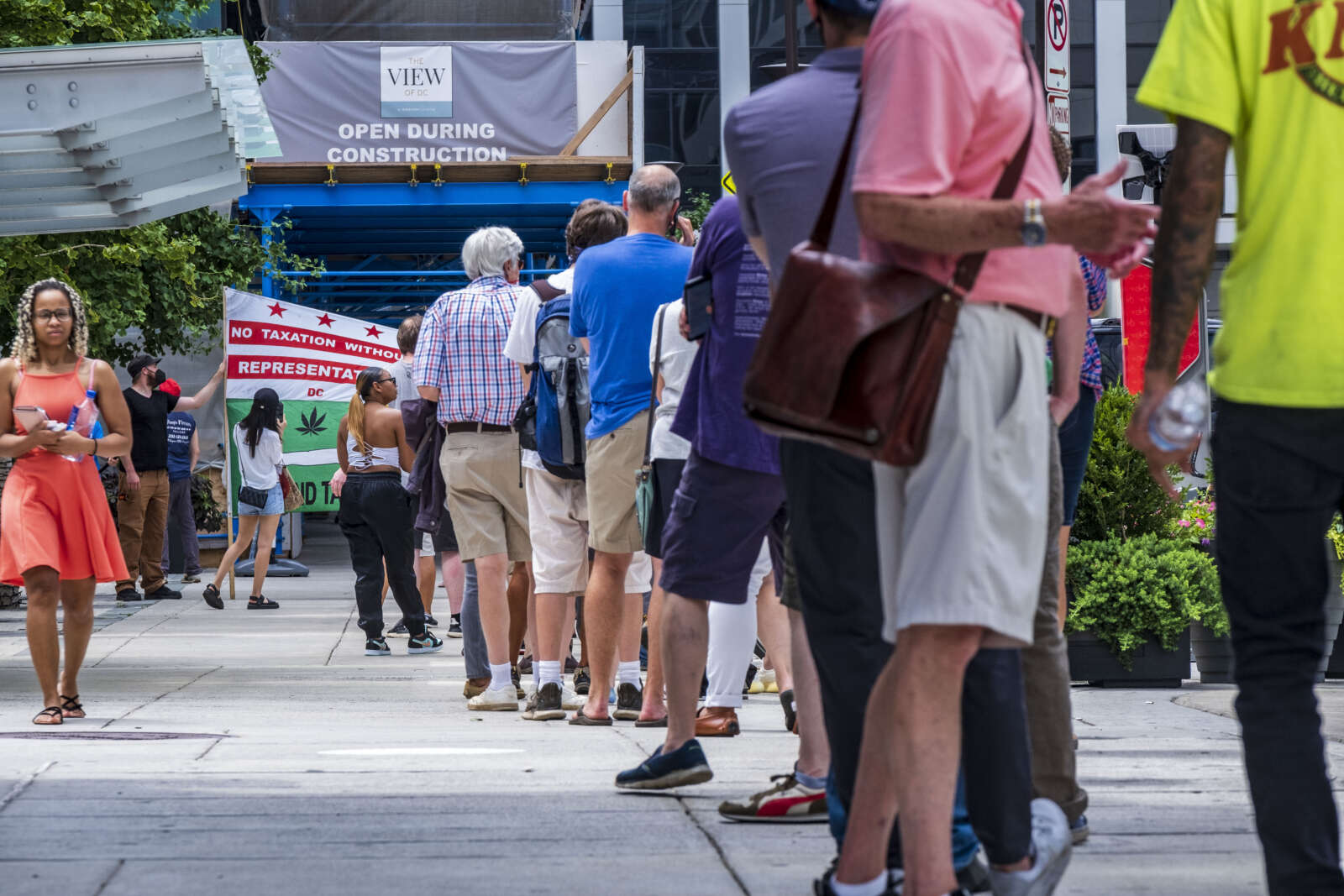
This afternoon near the Rosslyn Metro station, Bob Marley was playing and a flag featuring a joint and the words “Come and Take It” was flying.

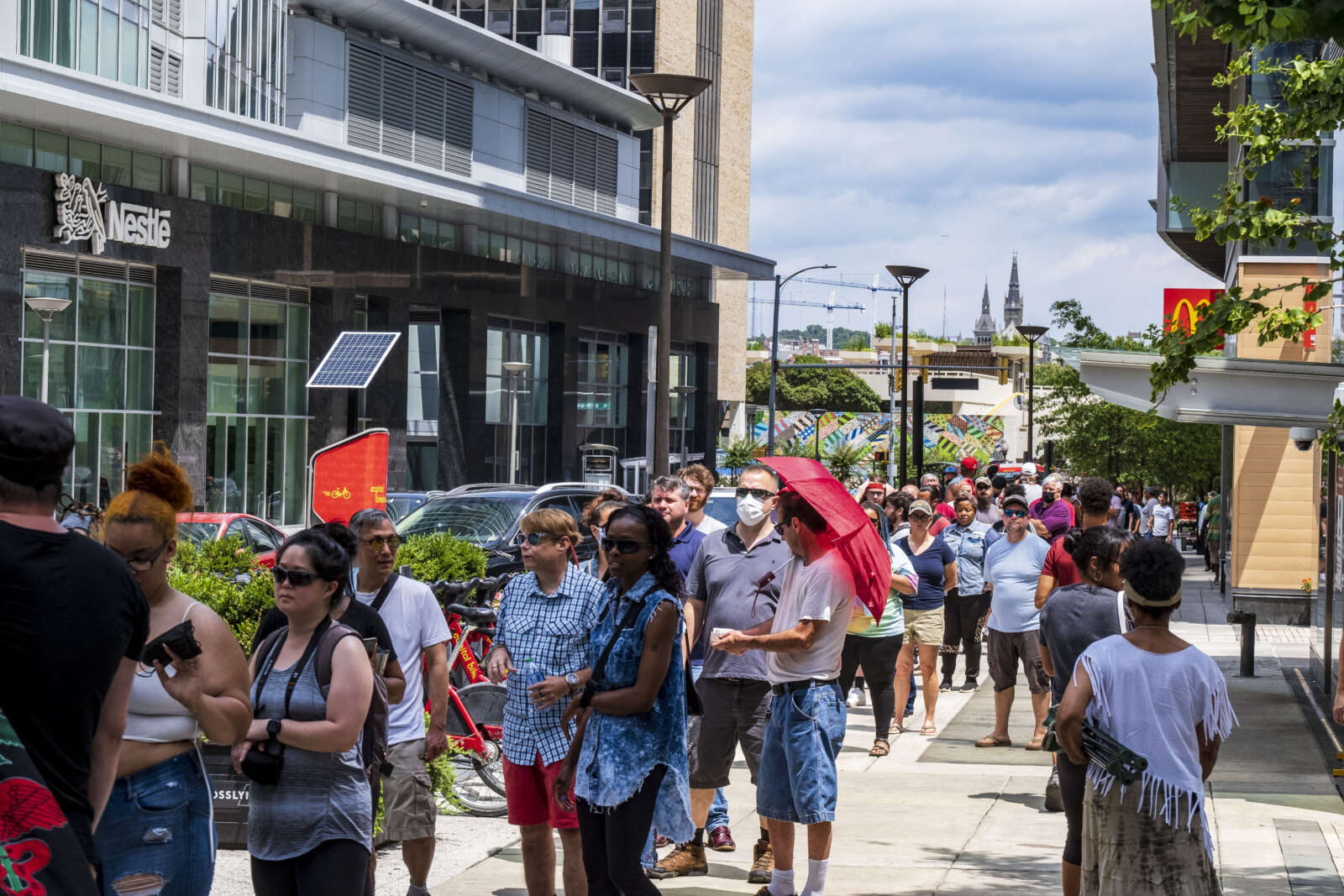
The event was the legalization of marijuana in Virginia and a giveaway that attracted a line of some 100 people.

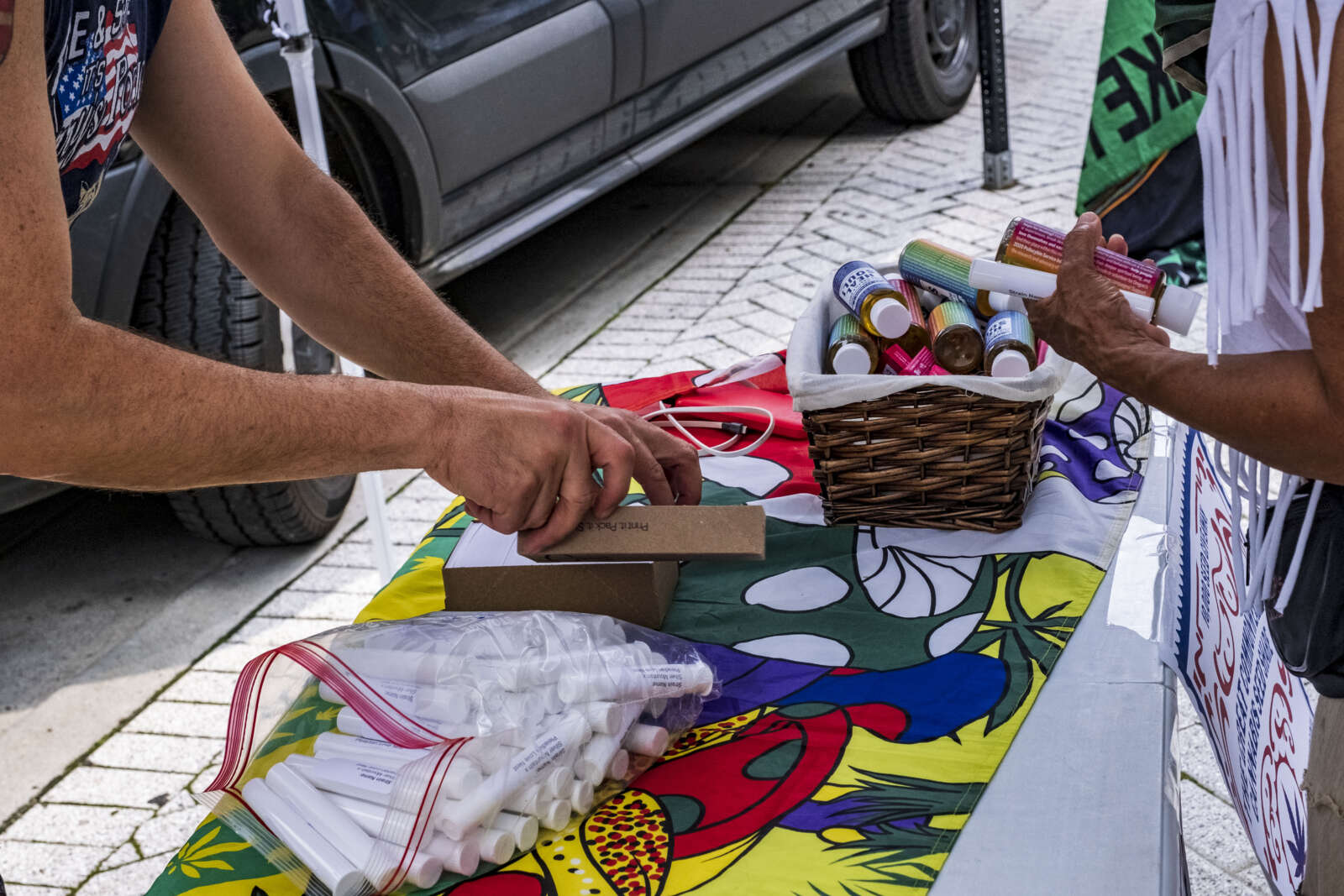
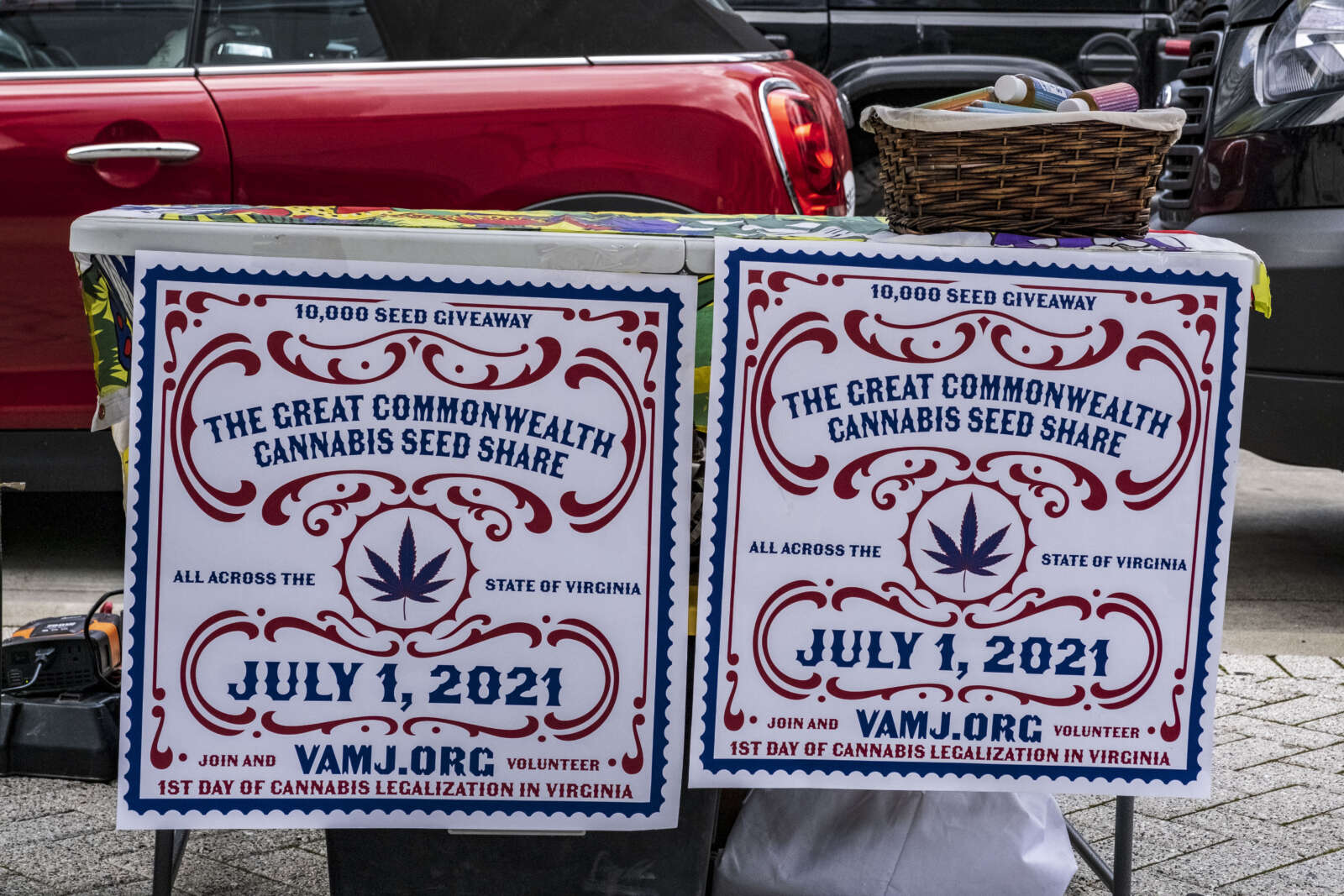
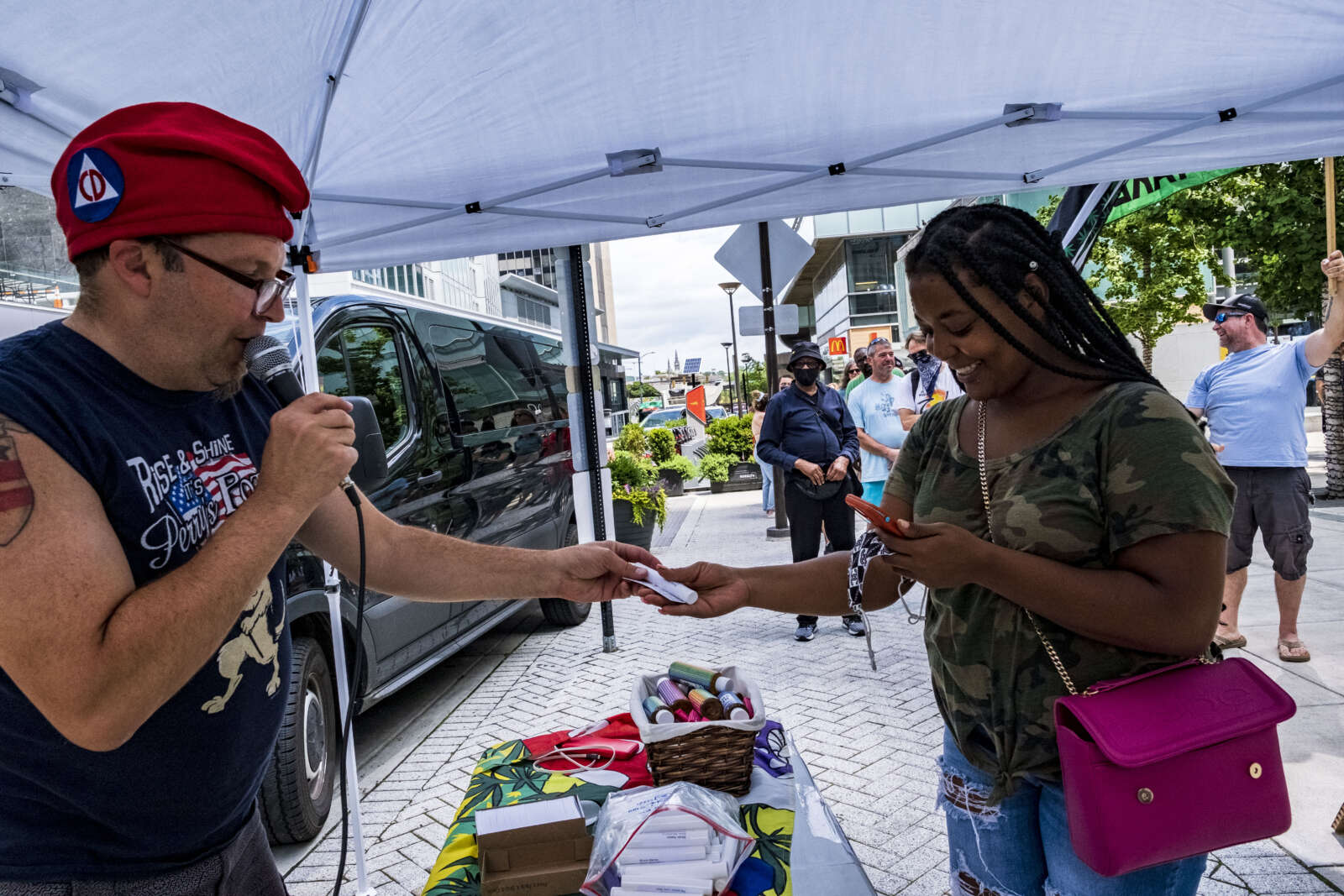
Those in line were waiting to receive six marijuana plant seeds — tokens to commemorate the first day of legalized cannabis possession on this side of the Potomac River. The seeds are from Virginia Marijuana Justice, an advocacy group celebrating legalization today with “The Great Commonwealth Cannabis Seed Share.”

Virginians 21 and older can now possess, consume and grow small amounts of the plant, but unless a doctor has signed off on a prescription, there’s no legal way to buy it, the Virginia Mercury reports. Lawmakers aim to begin recreational retail sales in 2024, giving the Commonwealth three years to establish a Virginia Cannabis Control Authority to regulate the market.

Outside the Rosslyn Metro station was one of four locations where volunteers with VAMJ gave out seeds. The Arlington seed share lasted from 12-2 p.m. and among the four sites, more than 20,000 seeds were distributed, said organizer Adam Eidinger.

“We are very happy on this historic day,” Eidinger said. “All four locations in Virginia had long lines and are giving away all the seeds we raised. Authorities were only concerned with large numbers of people, not the cannabis.”

The organization’s celebration started last night on the Key Bridge.

Chinara and Maurice, who only gave their first name, were among the crowd standing in line this afternoon.

Maurice said he was there “to partake in this transition that’s occurring,” saying he is glad “there is more acceptance for things that are natural.”

Despite the crowd’s size, Chinara said the line moved quickly. The R&B and Neo Soul singer-songwriter said she appreciates marijuana because “it makes me feel like I’m able to interact more smoothly with people.”

VAMJ gave out the seeds to people 21 and older with a valid ID. Organizers reminded participants to be patient, let senior citizens go first in line and make friends. They also reminded people that the law only permits four plants in a home.

The giveaway finished about 45 minutes before the thunderstorms rolled in.

Although the mood this afternoon was joyous, advocates say work remains to be done.

Chelsea Higgs Wise, the leader of a parallel Virginia-based group, Marijuana Justice, said the new law has a lot of gaps and she is skeptical that Black and Brown people will actually be treated equally for possessing the plant.

Her group is advocating for next year’s legislature to “repeal, repair and [make] reparations.” It has formed a Legalize It Right coalition to discuss the new Virginian law and how to tackle these goals.

Specifically, the group wants the legislature to remove an open container law that punishes people for possessing the plant in anything but the original manufacturers’ container. The group wants to see public consumption legalized — right now Virginians can only partake at home — and zero tolerance policies on college and university campuses removed.

In addition, Marijuana Justice wants records for marijuana-related crimes expunged and reparations for people arrested and convicted for committing such crimes.

VAMJ also wrote in a blog post that the fight is not over.

“Just because you can grow your own cannabis, doesn’t mean that the war on drugs is won,” the post said. “We still have a lot of work to do to ensure not only local legalization, but legalization across the country, to benefit all interested parties. There are still friends and family members in jail for cannabis in Virginia. We need to demand their immediate release.”


(Updated 4:05 p.m.) Arlington restaurants can now apply to increase the number of diners they are permitted to serve indoors and outdoors, according to Arlington Economic Development.

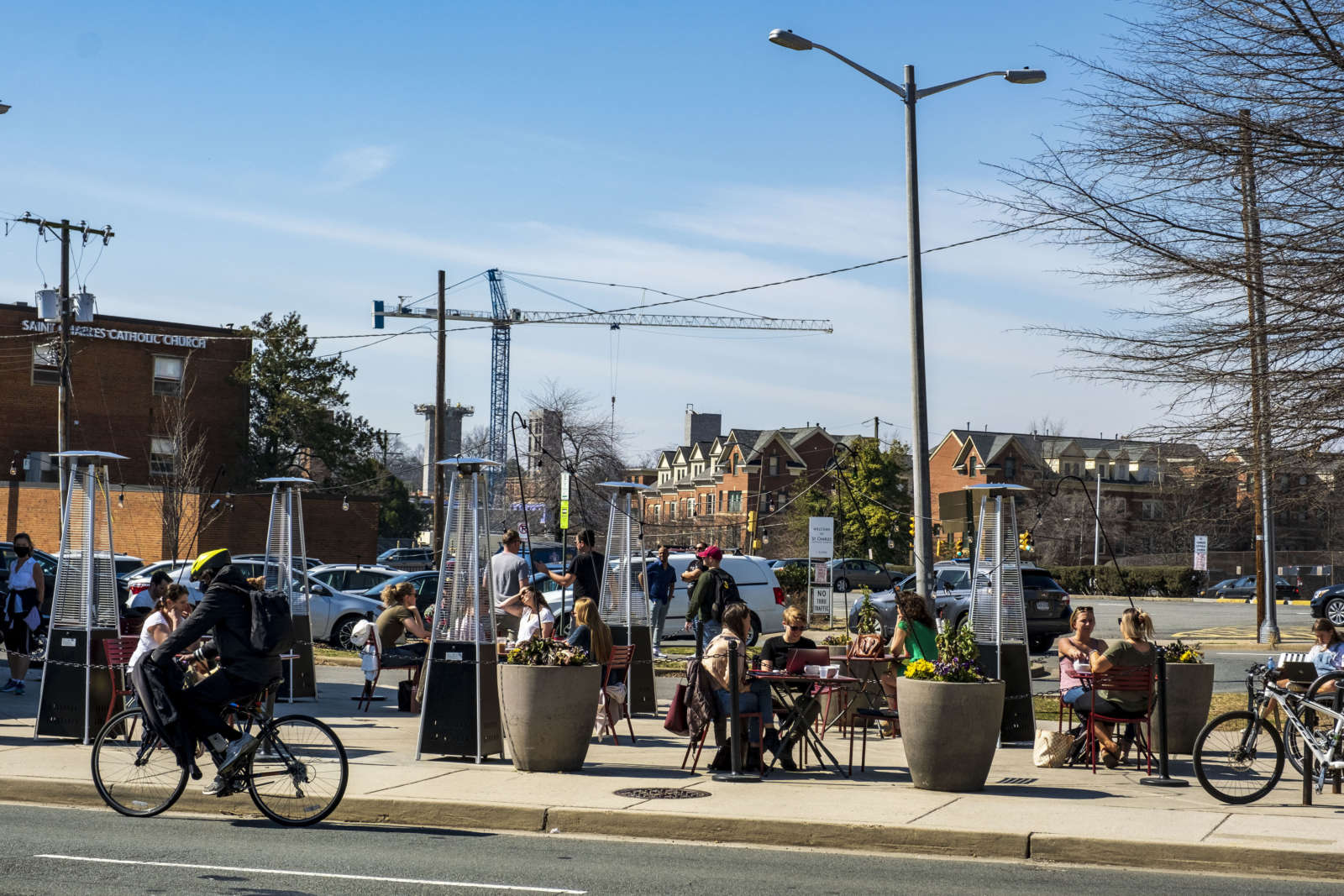
The county is allowing restaurants to temporarily up their maximum capacity so that the eateries can keep using — and possibly expand — their pandemic-era temporary outdoor seating areas (TOSAs), even as indoor capacity restrictions have lifted, the AED newsletter to local businesses said.

Kate Bates, President and CEO of the Arlington Chamber of Commerce, praised the decision.

“The Chamber of Commerce applauds the county for moving forward to extend TOSAs in way that works for restaurants and the community,”  Bates said. “We shared this with our member restaurants, and they are very pleased. Some made big investment in TOSA areas and they’re able to use that to draw in more customers.”

When restaurants prepared to reopen last summer, they needed outdoor dining to make up for the space they lost inside to social distancing requirements. Additionally, the format had a lower risk of transmission than indoor dining.

So in May 2o2o, the Arlington County Board approved a process through which restaurants could obtain a permit to set up these seating areas, provided that they met fire and safety codes. In December, the board granted restaurant and bar owners the ability to set up in common areas, such as plazas.

One year later, capacity restrictions governing Virginia restaurants have lifted. In Arlington, that means restaurants still using their TOSAs could technically exceed their permitted occupancy maximums. So the county is allowing restaurants to request a temporary certificate of occupancy (TCO) for their TOSAs, which will allow them to operate these seating areas while also operating at full capacity indoors.

The TCOs will expire with the TOSAs, which will remain in operation at least through 2021. The seating areas are permitted by the county’s Continuity of Government Ordinance, which will run for six months beyond the declared end of the pandemic.

“We really can’t emphasize enough that, even though TOSAs were helpful, restaurants still faced incredible losses and decimation,” Bates said. “In 2021, restaurants still need support from the losses over the last 16 months.”

But restaurant owners can’t run out and set up more outdoor seating just yet. Inspections, permits and amendments will be required to make these changes, according to AED.

Those interested in getting a temporary occupancy permit should schedule a free code consultation with the county, the economic development agency said.

“To ensure the safety of all restaurant staff and patrons, the Virginia Building and Fire Prevention Code regulates capacity limitations,” said AED. “For this reason, the ability to obtain a TCO for a TOSA will depend on a restaurant’s individual circumstances and existing indoor and/or outdoor capacity.”

Those interested in expanding their TOSAs must also submit an amendment to the Virginia Alcoholic Beverage Control Authority, which regulates liquor sales in these seating areas, the newsletter said. TOSAs approved for liquor sales will be able to serve drinks at least for through the end of 2021.

But the processes put in place last year did not work for all restaurants. The owner of Summers Restaurant said delays in TOSA permitting are one reason why the establishment closed last year.

And Medium Rare owner Mark Bucher said application troubles and fire codes made it impossible to seat his Arlington guests outside and keep them warm — without breaking the law.

Going forward, Bates said the Chamber wants to see the county “make it work” for restaurants facing extra hurdles, rather than coming up reasons for barring them from participating. The process needs to be a streamlined “not just on paper but in practice,” she said.

Eventually, the Chamber would like to see these outdoor seating areas become permanent parts of local codes, she said.

“This is community-building,” Bates said. “Outdoor dining makes Arlington vibrant and promotes other community interactions.”


Amazon wants its employees to bike to work so much it will pay them to do it.

The e-commerce and cloud computing giant announced today it will be paying employees $350 a month to HQ2 employees to cover the costs associated with cycling, from rentals to maintenance to parking at public transit stations.

The news comes as the company prepares to return its still-remote employees to in-person work. In Arlington, Amazon is currently leasing a number of office spaces in Crystal City while the two phases of its forthcoming permanent campus in Pentagon City, Metropolitan Park and PenPlace, continue to take shape.

As of May Amazon had more than 1,600 Arlington employees and was in the process of hiring for 1,900 new positions in a variety of technical and non-tech roles.

More from the bike announcement on then Amazon blog:

“We are looking forward to welcoming our employees back to our offices and want to encourage them to rethink the way they get to and from work, so we’re creating new incentives to pick a greener way to commute — even if it is just one to two days a week,” said John Schoettler, vice president of Global Real Estate and Facilities. “Reducing our carbon footprint is a multifaceted effort that includes building urban and well-connected campuses, designing buildings that use renewable energy, and making it easy for employees to choose public transportation over their single-occupancy vehicles.”

Amazon employees who bike to work will receive a subsidy to cover associated costs, including:

  • Bike leases: Employees can lease a take-home bike, including e-bikes, for a monthly fee eligible for reimbursement.
  • Bike share: Employees can expense costs for dockless or docked short-term, app-based rental bicycles.
  • Maintenance: Employees can take advantage of two complimentary tune-ups each calendar year.
  • Bike parking: Employees can access bike parking at public transit facilities or offices without Amazon bike cages.

These bike benefits are available to all employees who haven’t signed up for ongoing parking in an Amazon parking garage.

The plans for HQ2’s two phases include a number of bike and transit-friendly facilities.

Each office building will have dedicated street-level bike entrances, and the campus will feature one-quarter mile of new protected bike lanes and more than 950 on-site bike spaces.

The bike subsidy announcement notes that other bicycling amenities are included at Amazon offices.

“In addition to offering bike cages for employees to store their bikes, most of Amazon’s corporate offices also have showers for bikers to get ready at work,” the announcement said.

On social media, local cyclists were generally complimentary of the new benefit, though with some reservations.


For Dr. Andrew Wu, summertime normally means he’ll see more kids with sunburns, insect bites, poison ivy, stomach viruses and dehydration — all related to being outside.

But this summer, the pediatrician affiliated with Virginia Hospital Center said he and his colleagues are seeing an uncharacteristic number of respiratory viral illnesses unrelated to COVID-19. Specifically, doctors are seeing “a sharp uptick” in the number of cases of the common cold, croup and respiratory syncytial virus, or RSV, he said.

The trend is playing out elsewhere, particularly in the South and Southwest, as COVID-19 cases recede, the Washington Post recently reported. In Arlington, where nearly 61% of adults are fully vaccinated, the seven-day average of net coronavirus cases is zero, according to the Virginia Dept. of Health.

Earlier this month, the Centers for Disease Control and Prevention issued an advisory alerting clinicians and caregivers and encouraging broader testing for RSV, which causes cold-like symptoms but can lead to bronchial infections and pneumonia in children younger than one.

These illnesses typically peak in the fall and winter when children return inside and to school, Wu said. Last year and into this spring, however, many pediatricians saw few cases of the flu, RSV and the common cold. While this summer surge is likely a side effect of the pandemic, he says families ought not to worry — provided their kids are vaccinated against the more serious, and potentially lethal, bacterial and viral illnesses.

“Fitting the trend this past year and a half, during which nothing has been typical, respiratory virus season seems to have come out of hibernation about six months late,” he said. “I suspect that the current out-of-season increase stems largely from two factors: Many virus-naive children coming out of isolation and rejoining the larger world in daycares and preschools, and the general loosening of social restrictions by public health officials.”

So, what should parents do to protect their children?

Wu, a parent himself, said he empathizes with parents who are worried about sending their children back to preschool and daycare, knowing that their child will likely develop a few respiratory illnesses in the first couple of months.

But he encouraged parents to send their kids to daycare or preschool anyway — and not just for the benefits of quickening development, increasing socialization and improving emotional skills.

“I tend to think of introduction to childcare the same way we approach food allergies. Namely, early introduction is better than late introduction, but not too early,” he said. “While no one wishes illness on a child, these illnesses tend to be minor and provide opportunity for a child’s immune system to do what it was designed to do: fight infection.”

Extending the analogy, Wu said the longer that parents voluntarily withhold potentially allergenic foods from their young children, such as peanuts, the more likely the child is to develop an allergy to that particular food.

“A child’s immune system could become dysregulated if not provided enough opportunities to fight infection, and could respond by developing moderate to severe allergies or autoimmune conditions,” he said.

Arlington County Public Health Department spokeswoman Jessica Baxter said “it’s not surprising” to see a rise in the common cold, with masks coming off and gatherings and travel increasing the spread of germs.

She also advised making sure kids and adults are up to date on recommended vaccines, and taking other basic preventative measures.

“We encourage Arlington residents to practice healthy habits that prevent the spread of all diseases — such as washing your hands often, staying away from others when sick, and covering coughs and sneezes,” she said.


A new affordable housing community is officially open in Rosslyn.

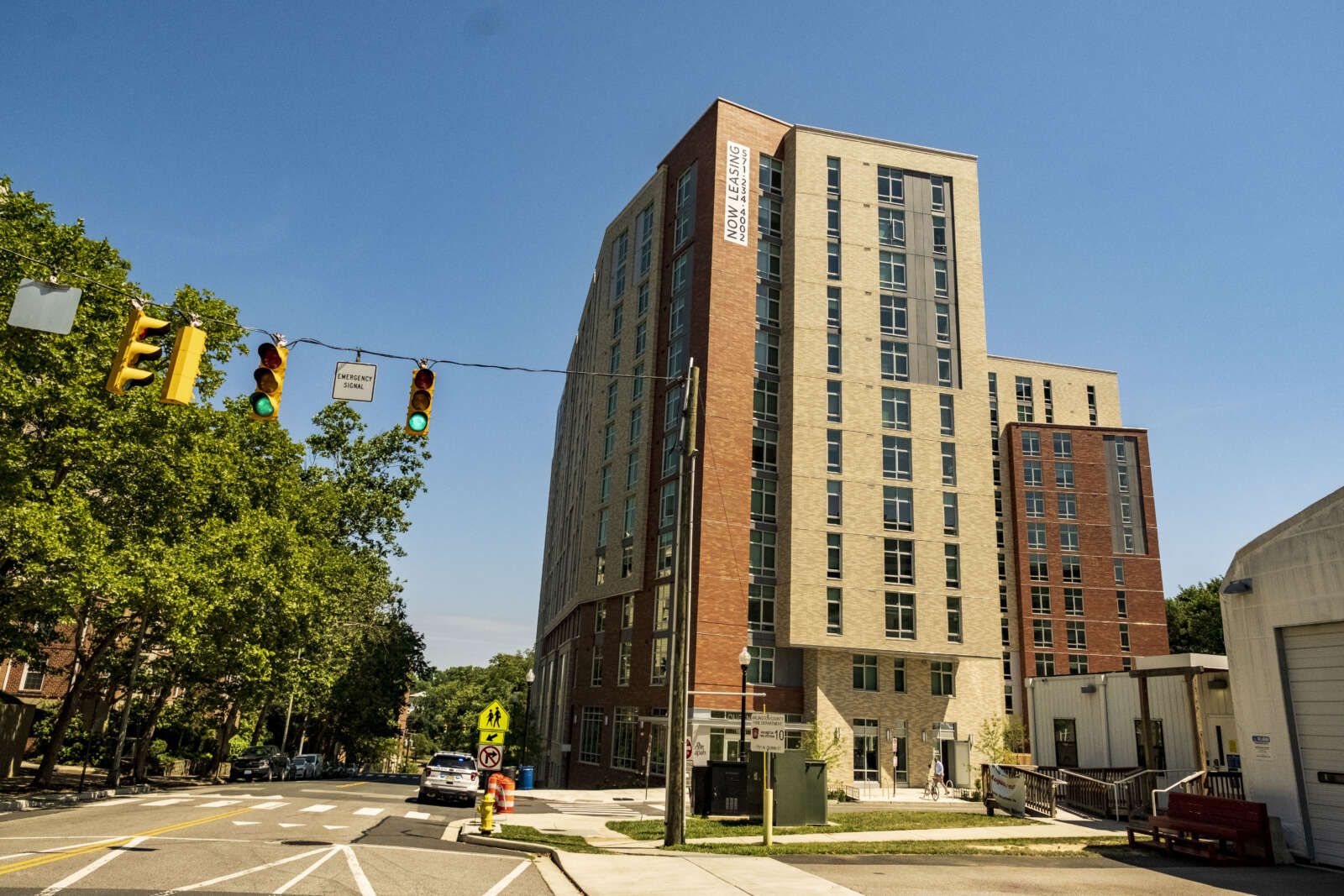
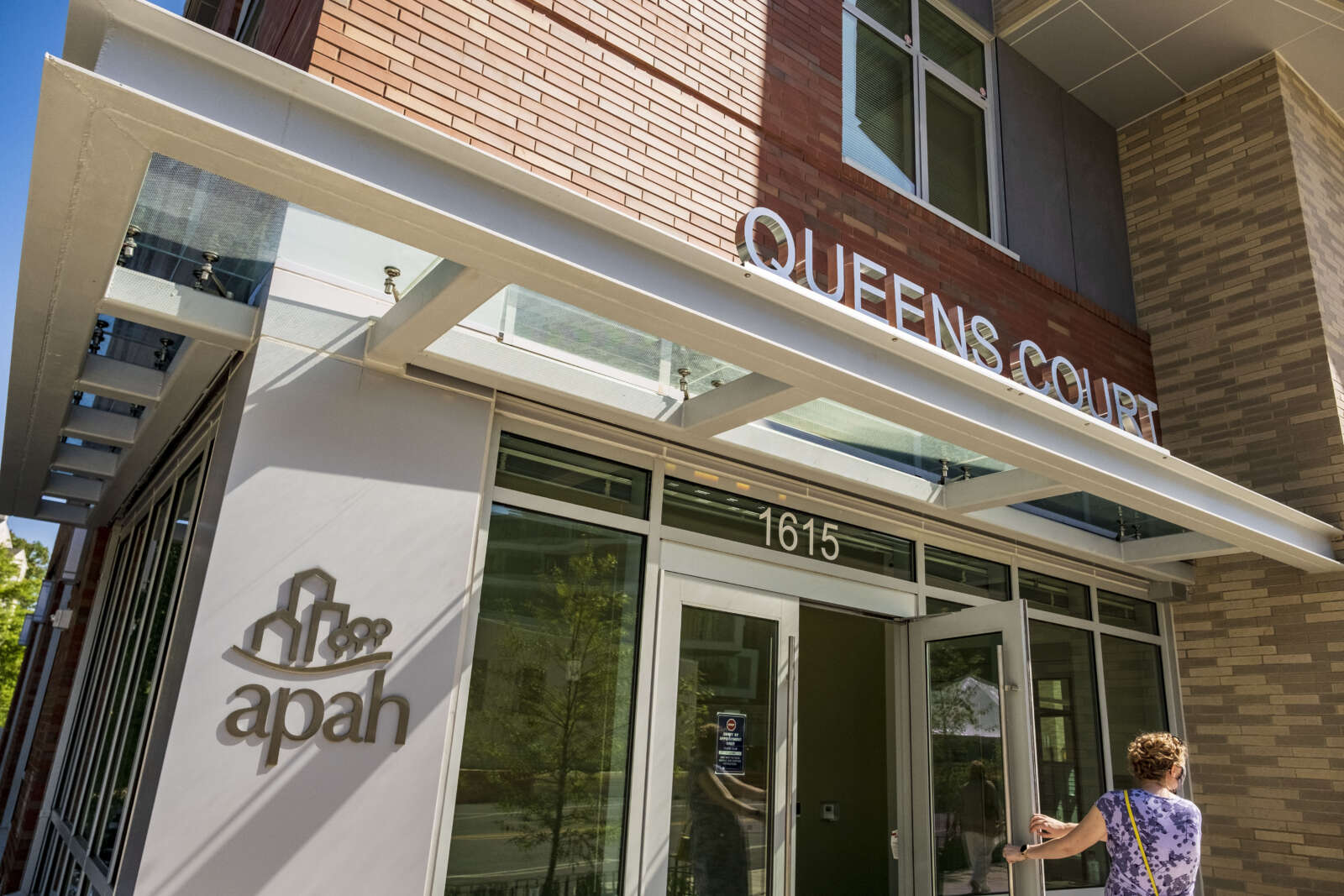
Queens Court Apartments at 1615 18th Street N. is a 12-story, 249-unit apartment building within a quarter mile of the Rosslyn and Courthouse metro stations. The complex is made of two towers, one with 90 units and the other with 159 units, with a mix of studios and 1-, 2- and 3- bedroom units, which will remain affordable for the next 75 years.

The Arlington Partnership for Affordable Housing’s $107 million project, which has amenity spaces, community rooms and local art, was delivered under budget and ahead of schedule by construction company Donohoe, according to APAH. The complex replaces 39 garden apartments that were built in 1940.

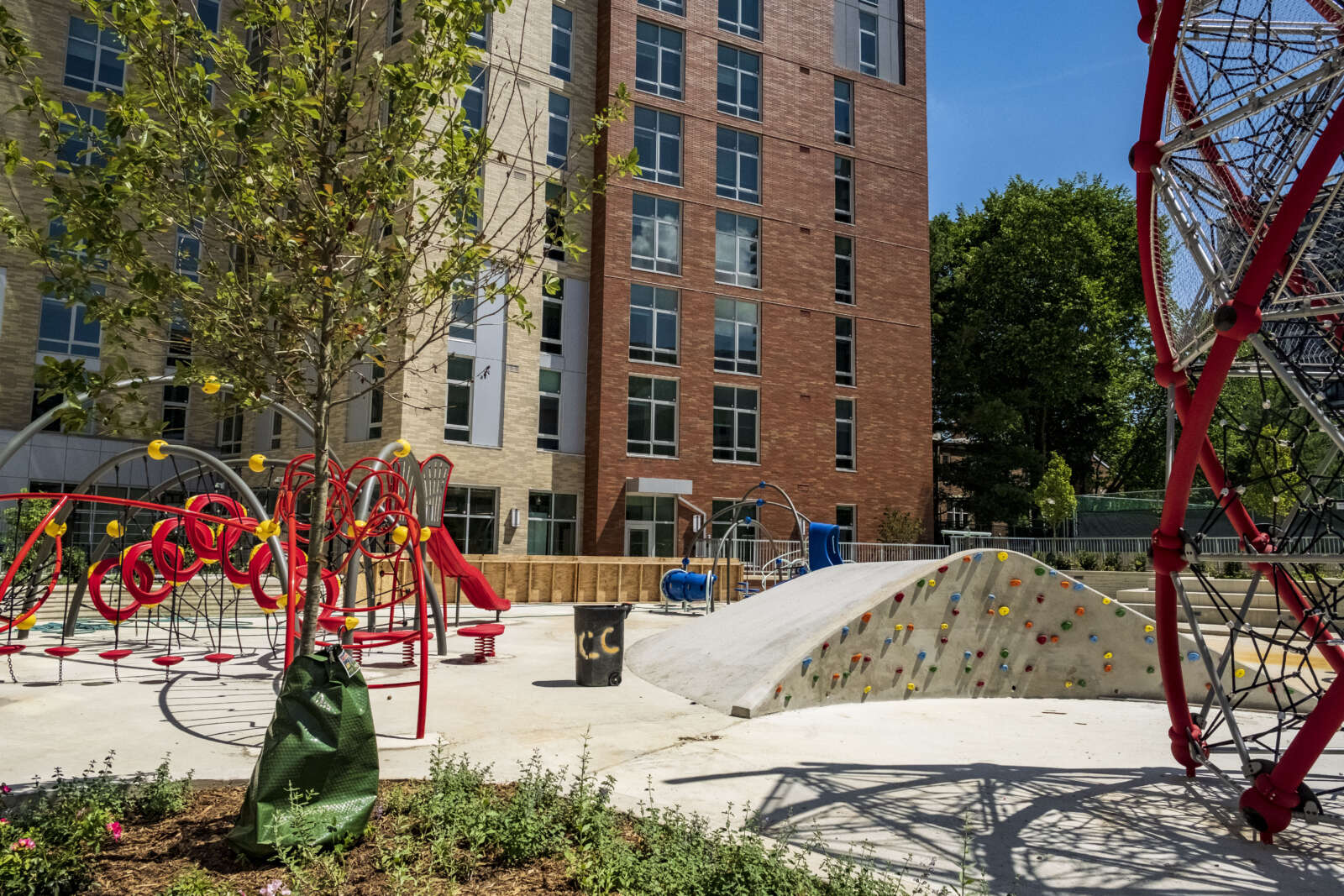
Queens Court Apartments, APAH’s sixth new development, is part of an array of changes coming to the Rosslyn area this year. Across the street, developer Penzance is set to finish three apartment buildings and a new Fire Station 10 this summer and fall, as well as the Rosslyn Highlands Park this winter. APAH today unveiled a 9,000 square-foot playground on its property that is a northern extension of the forthcoming park.

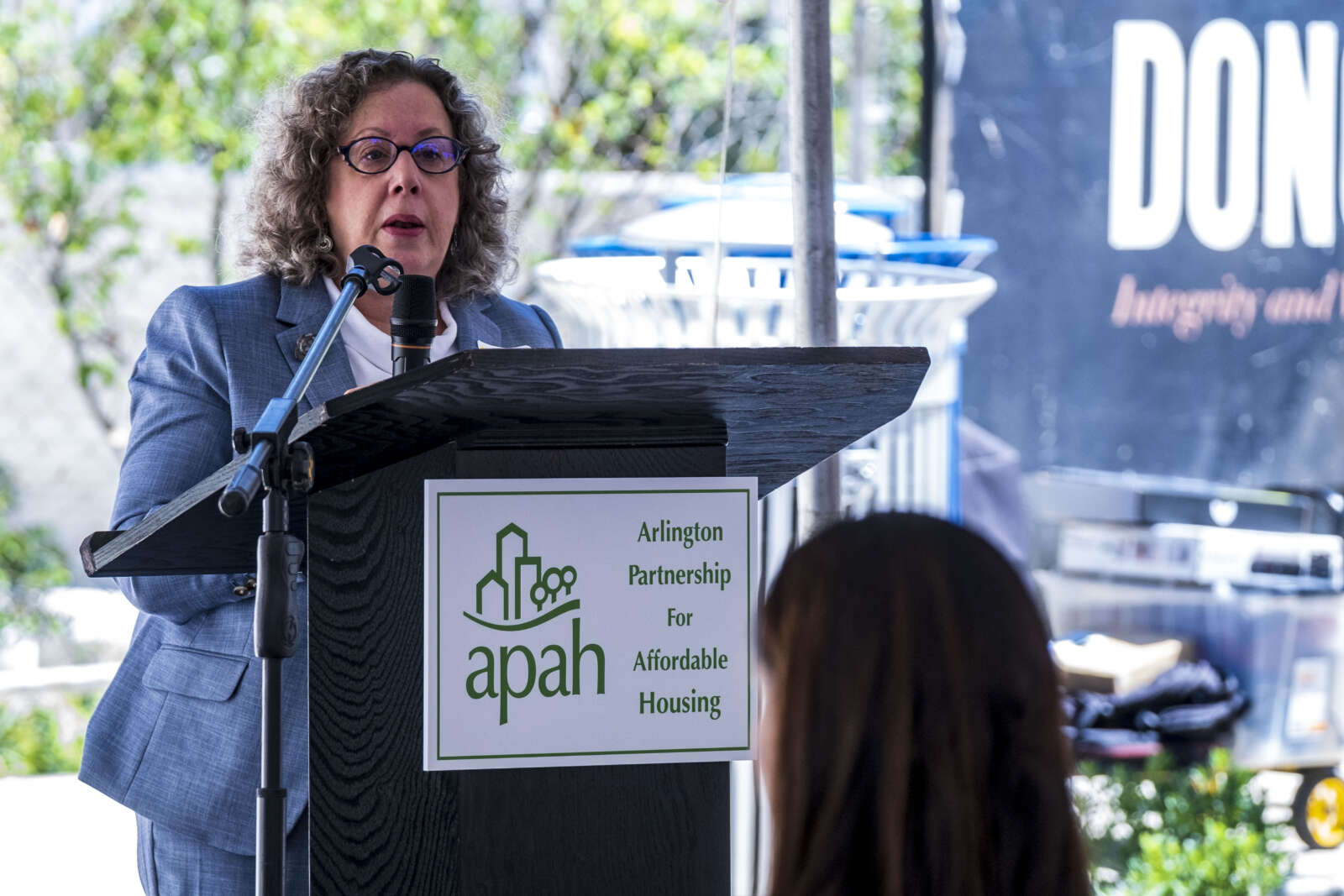
“We are excited to be cutting the ribbon, signifying a new chapter in the lives of 249 individuals and families who will call this community home,” said APAH president and CEO Nina Janopaul, who is stepping down this week after 14 years with the nonprofit.

She said the development — “our largest and most ambitious project to date” — will make “a significant dent in meeting the area’s affordable housing goals and provides beautiful, affordable homes to essential workers, seniors, and so many others earning 60% or less of the Area Median Income.”

That also includes nine units are set aside for adults with disabilities, according to Our Stomping Ground, a nonprofit that fosters community among adults with disabilities living independently.

The project drew on a $16.7 million loan from Arlington County’s Affordable Housing Investment Fund (AHIF), as well as loans and tax credits from Virginia Housing, Bank of America and other sponsors.

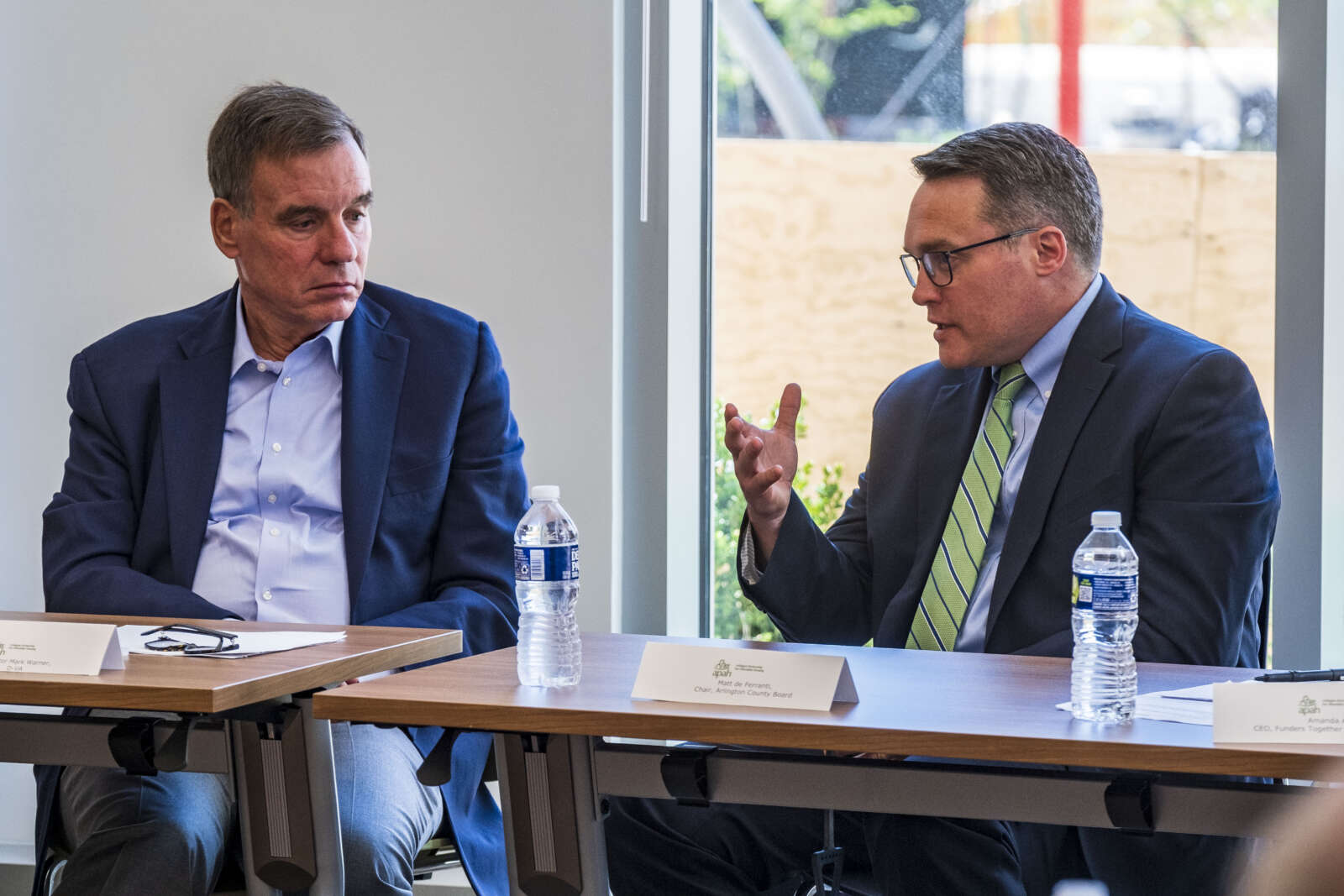
“Quality affordable housing units are in high demand in Arlington. This project adds to our supply of units and does so in a needed area of Rosslyn,” County Board Chair Matt de Ferranti said in a statement. “We are proud to support this project to help fulfill a critical goal we share with APAH: housing affordability for years to come in a location that is accessible and will help the neighborhood, residents, and our community thrive.”

The Queens Court project was included in the Western Rosslyn Area Planning Study, which the County Board kicked off in 2015.

APAH’s Executive Vice President and incoming CEO, Carmen Romero, participated in the study planning process. She said the original study included goals for new market rate housing, a fire station, a new school, and recreation and open space, but APAH pushed for the inclusion of affordable housing.

“APAH worked relentlessly to ensure affordable housing was a strategic addition to the plan, and fought to secure rezoning approval that would allow us to take a creative approach in maximizing density on the site,” she said.

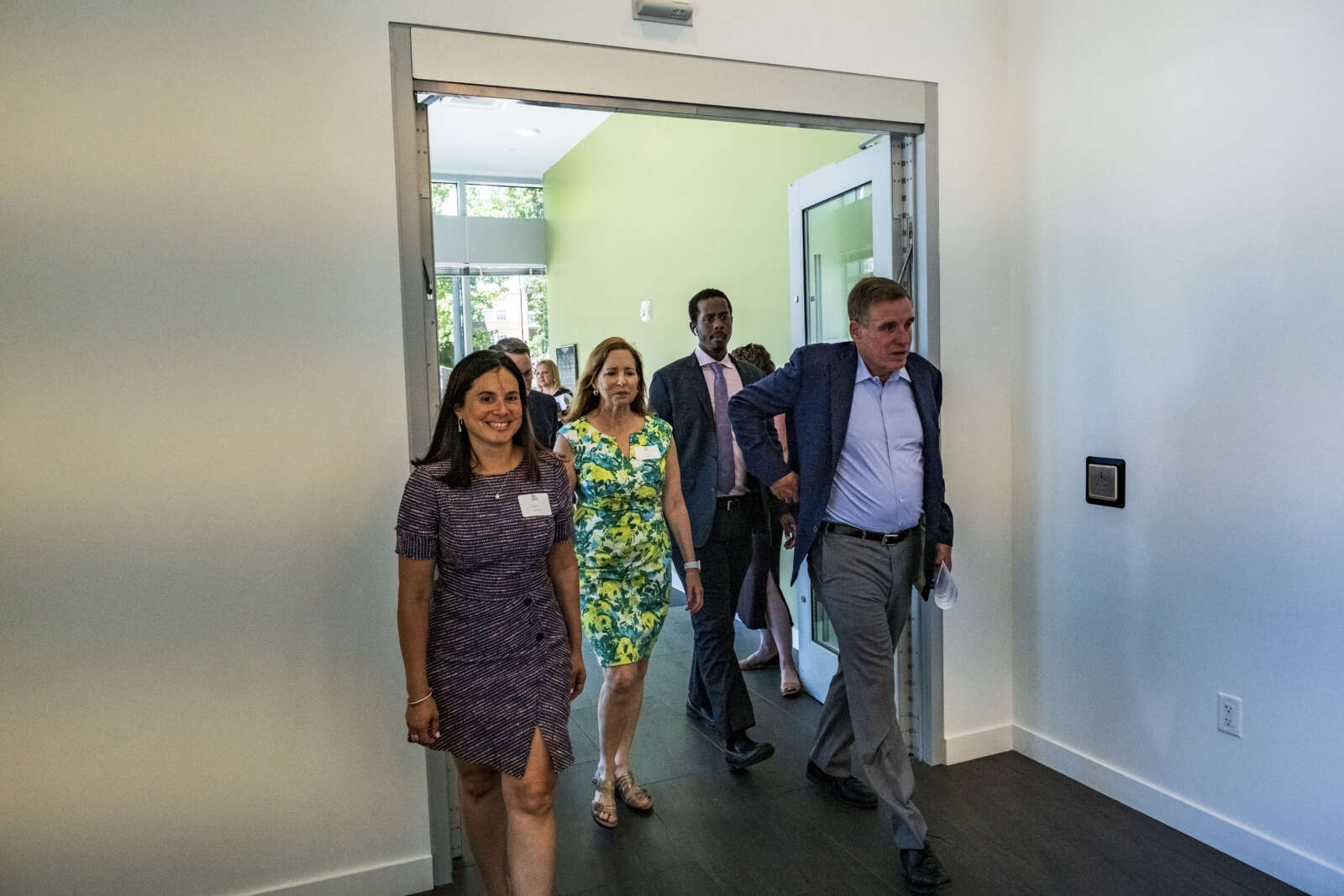
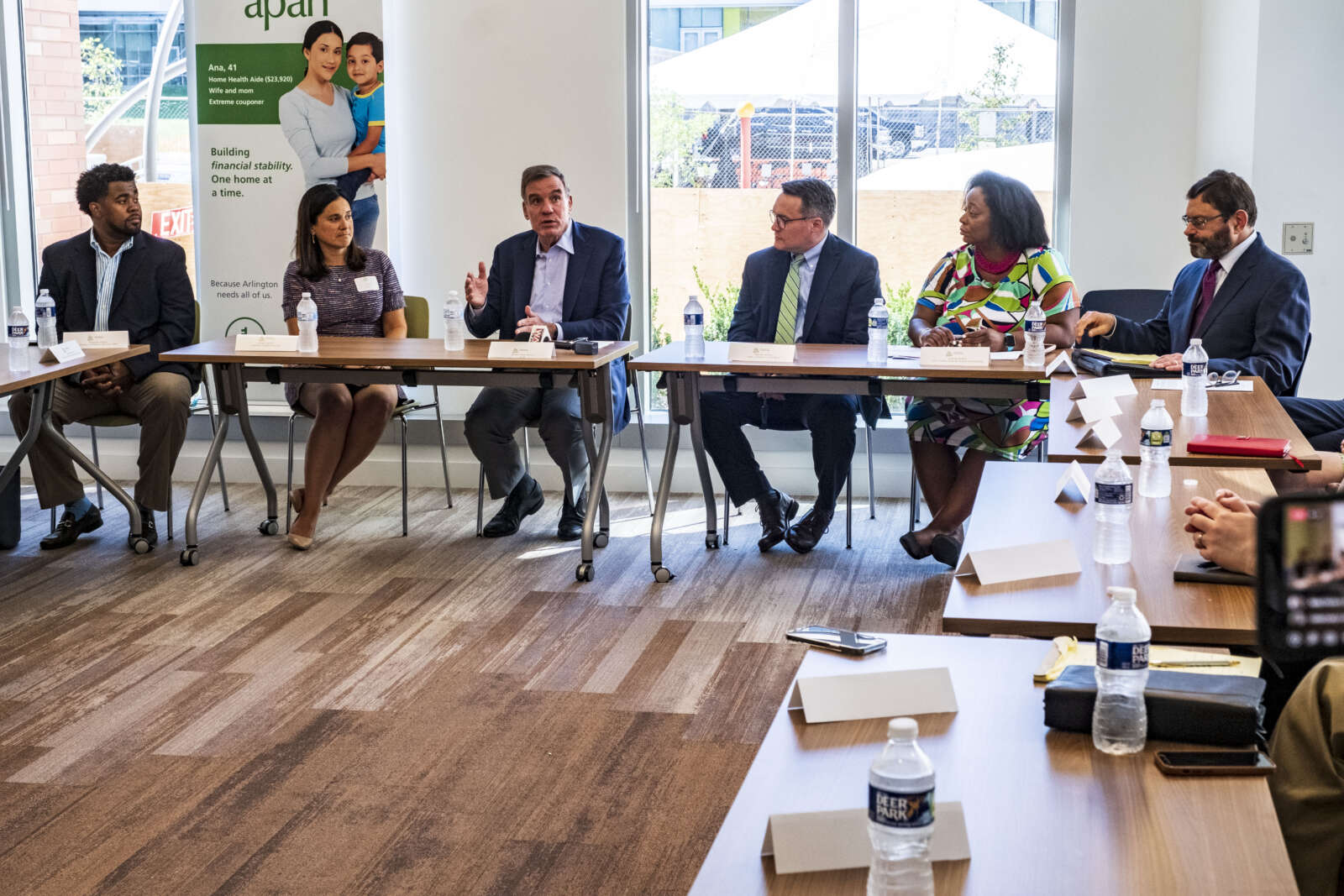
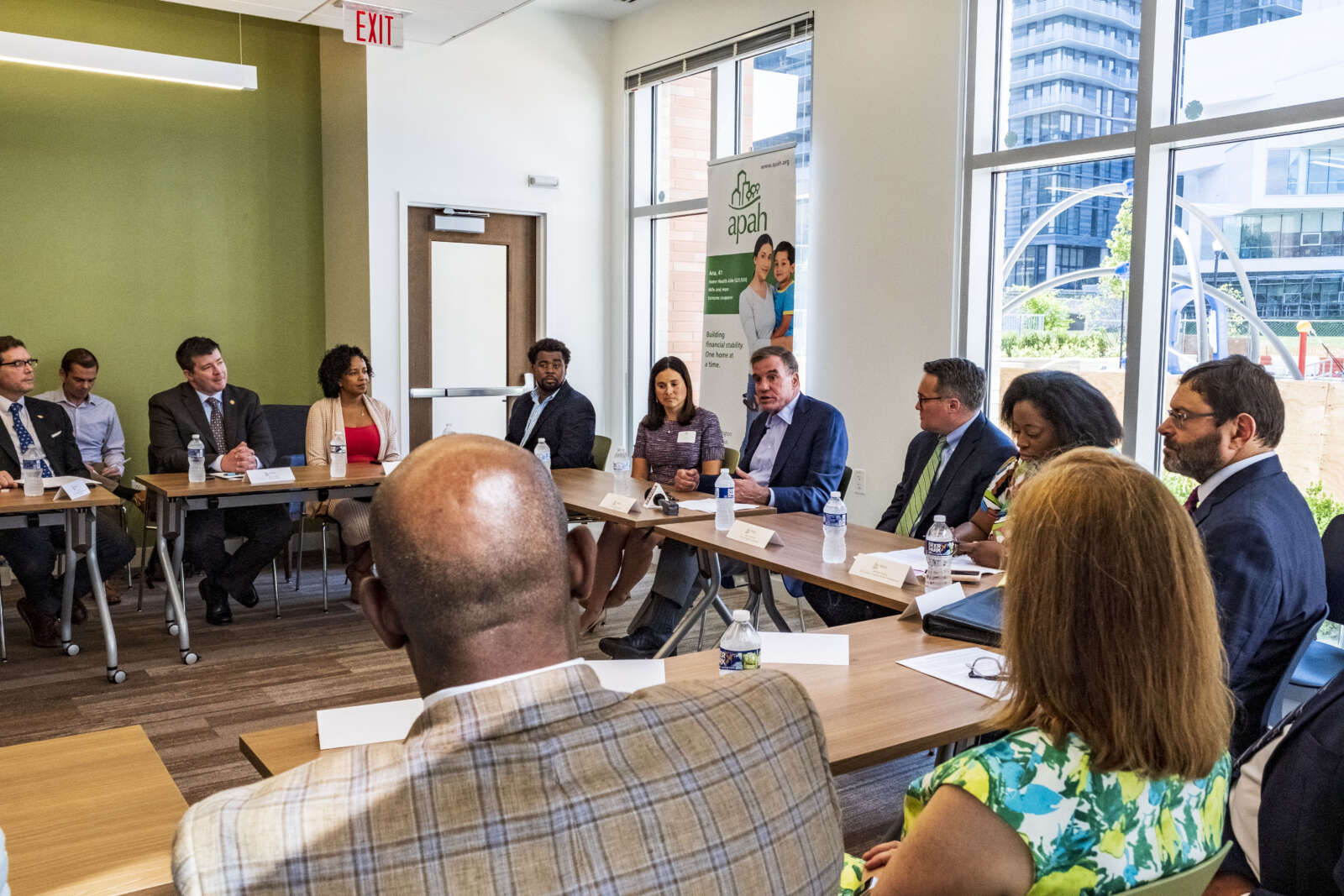
Sen. Mark Warner (D-Va.) and Susan Dewey, CEO of Virginia Housing praised the project.

“With affordable housing continuing to be a challenge all across the country, these new apartments will help attract more folks to live, work, and raise a family in the Commonwealth,” said Warner, who toured the newly-built complex yesterday during a grand opening event.

Queens Court “will pay dividends in this community for years to come,” Dewey said.


After a spike in opioid overdoses this weekend, the Arlington County Police Department is urging residents to take advantage of local substance abuse resources.

On Sunday, ACPD investigated two fatal overdoses and one overdose that left another person in critical condition, according to a news release.

Police said they suspect the overdoses are linked to heroin and prescription painkillers mixed with fentanyl.

“This is a dangerous and potentially life-threatening situation,” the release said. “Due to the severity of these incidents, members of the public who may be affected by addiction or opioid use are urged to take steps to protect themselves and others through available resources in Arlington.”

This year, Arlington first responders have administered nasal Naloxone, also known as Narcan, 31 times to reverse an overdose from prescription painkillers or heroin, according to ACPD.

“Narcan is available over the counter without a prescription,” the release said. “Arlingtonians can request free Narcan and REVIVE (Narcan) training by emailing the Department of Human Services.”

In January, Arlington County received more than $1 million in state and federal grants to help fight the opioid epidemic with more staff and treatment options, as well as more Naloxone kits.

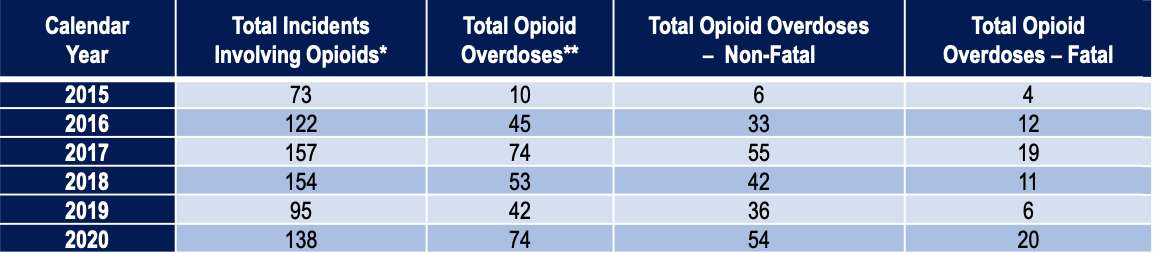
The epidemic continues to ravage Arlington County. After a downturn in 2018 and 2019, last year saw a resurgence in opioid-related overdoses, according to a new ACPD report. The dozens of reported overdoses in 2020 matched the number (74) reported at the peak of the opioid epidemic in 2017.

Officers investigated 20 fatal overdoses and 54 non-fatal overdoses in 2020, more than any other year since it began actively tracking incidents involving opioids in 2014, the report said.

Opioid overdoses in Arlington County (via ACPD)

Officials previously told ARLnow that the pandemic is likely to blame for much of the resurgence.

“There are a lot of reasons why people have relapses,” said Suzanne Somerville, the bureau chief for Residential and Specialized Clinical Services in DHS. “A lot of it does have to do with employment. A lot of our clients… work in the service industry and a lot of them lost their jobs.”

While the battle against addiction continues within the county, Arlington is suing dozens of businesses it alleges are key players in the epidemic. The suit, which seeks $150 million plus punitive damages of $350,000 per defendant, is currently mired in a squabble over where the case should be tried.

More information on overdoses, from the press release, below.

Signs of an Overdose

If you observe someone experiencing the following overdose symptoms, call 9-1-1 immediately:

  • Slow or shallow breathing
  • Dizziness or confusion
  • Cold or clammy skin
  • Vomiting or gurgling
  • Blue lips and/or fingernails
  • Not responsive or sleeping and cannot be woken up
  • Deep gurgling or rattling snore

Overdose Reversal

Arlington County first responders carry Nasal Naloxone (also known as Narcan®), a safe and effective medication that can reverse an overdose from prescription painkillers or heroin. Narcan is available over the counter without a prescription. Arlingtonians can request free Narcan and REVIVE (Narcan) training by emailing the Department of Human Services.

Key Contact Information

Emergency: 9-1-1
DHS Substance Use Warm Line: 571-302-0327
Report Information on Narcotics Distribution

Programs and Services

If you or someone you know is struggling with addiction, there are numerous treatment resources available in Arlington and through the Department of Human Services. Assistance is also available through Operation Safe Station, a designated safe environment where individuals wishing to seek help with their drug use can self-report and receive services, without fear of prosecution and incarceration. Community members are also encouraged to prevent medication misuse or overdose by safely disposing of unused, unwanted or expired prescription medication in one of Arlington’s four permanent drug take-back boxes or by requesting a free deactivation bag.


(Updated 2:45 p.m.) Two Arlington County police officers have been decertified due to a new state law that expands the kinds of offenses for which officers can be permanently banned from law enforcement work in Virginia.

The Arlington County Police Department found the two had lied during an internal affairs investigation. They were officially taken off the streets on May 12, according to the Virginia Department of Criminal Justice Services’ master list of 94 officers who have been decertified since 1999.

No other Arlington officer appears on that list, but the list does not include all the decertifications documented on paper between 1994 — when the Virginia State Crime Commission recommended a decertification process — and 1999, per a DCJS staff member.

Lying is one of two offenses punishable with decertification under the new law, which went into effect on March 1, the Prince William Times reported. These reforms were backed by the Virginia Association of Police Chiefs, which particularly supported a truthfulness clause.

The new law allows DCJS to ban officers from law enforcement work in Virginia if they were found to have lied or used excessive force.

Seven officers have lost their ability to work in Virginia under the new criteria: Six were decertified for making untruthful statements or providing untruthful documentation and one for using excessive force.

The law also closed a loophole that allowed officers to avoid this fate if they resigned during a decertification proceeding. This allowed officers to find a new job with another law enforcement agency.

“The decertification process is independent of ACPD’s internal investigation and audits process,” said Ashley Savage, the spokeswoman for ACPD. “Accountability is the basis from which we operate and we are committed to holding ourselves accountable to the highest standards of professional law enforcement.”

ACPD notifies DCJS of “sustained allegations which compromise an officer’s credibility, integrity, honesty, and where officers are convicted of a felony or certain misdemeanors, failed a drug test, or did not maintain their training requirements,” she said.

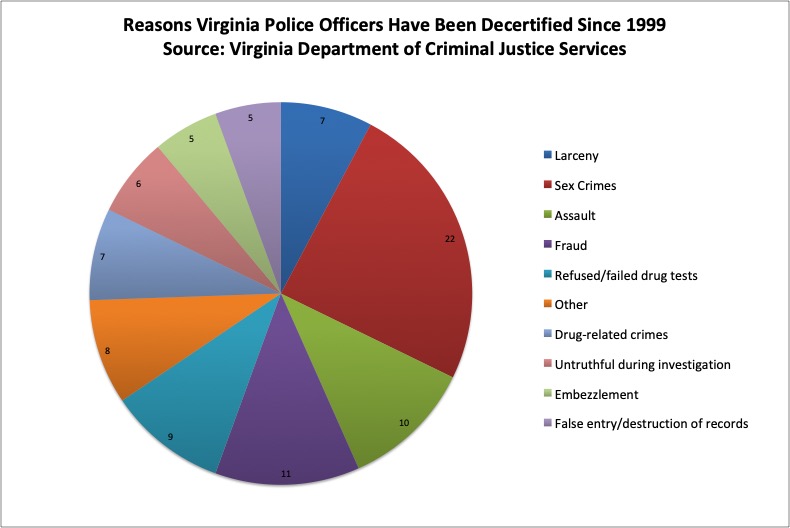
Prior to the new legislation, officers could be decertified for being convicted of a felony or certain misdemeanors, failing a drug test or not maintaining training requirements. Since 1999, the most common reasons for decertification included sex crimes (22), fraud (11), assault (10), refused or failed drug tests (9), larceny (7), and destruction or falsification of records (5).

The number of police officers decertified annually in Virginia hovered between five and seven for a number of years, but picked up in 2018 and 2020, the records show. DJCS determined 15 and 19 officers were unfit for duty, respectively, during those years.

Before reaching out to DCJS, ACPD’s Office of Professional Responsibility performs internal audits on all allegations of misconduct and any concerns of use or misuse of equipment, personnel or training, Savage said.

“We constantly monitor and investigate all complaints made against members of the agency,” she said. “When employee actions are not consistent with Arlington County policies and procedures, appropriate corrective measures are taken to ensure that type of incident does not occur in the future; this includes disciplinary action, up to and including termination. Failure to report an incident and/or misconduct by any member of the department is not tolerated.”

File photo


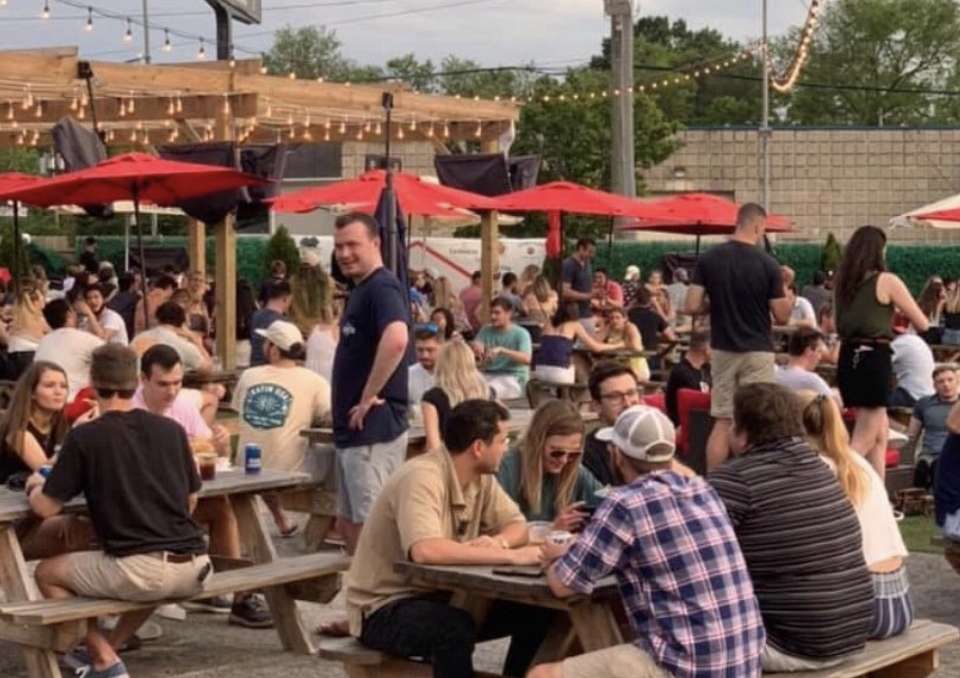
Crowd at The Lot beer garden on May 29, 2020 (via Twitter)

From Clarendon bars to crowded gyms, unmasked store clerks to house parties, Arlingtonians asked the county to investigate more than 1,000 reported cases of COVID-19 non-compliance.

The reports came in through a form that Arlington County launched last year to report lax social distancing and masking.

ARLnow obtained the full list of reported instances from a resident who acquired the list with a Freedom of Information request. After removing incomplete or abusive requests, about 1,175 remained. Of those, around 200 were filed in 2021, with the rest — just shy of 1,000 — filed in 2020.

The entries provide a snapshot into the kinds of activities that worried Arlingtonians the most during the height of the pandemic. People reported facilities operating without authorization, restaurants allegedly exceeding 50% capacity and large religious gatherings, as well as crowded non-essential businesses, parks and county facilities. A final category, “other,” included home gatherings and complaints about little masking enforcement in apartment buildings.

Referencing a rowdy house party, one reporter asked the tip line, “can we lock everyone under 30 in a closet until this is over?”

Of the nearly 1,200 submissions, about 370 referenced restaurants exceeding 50% capacity.

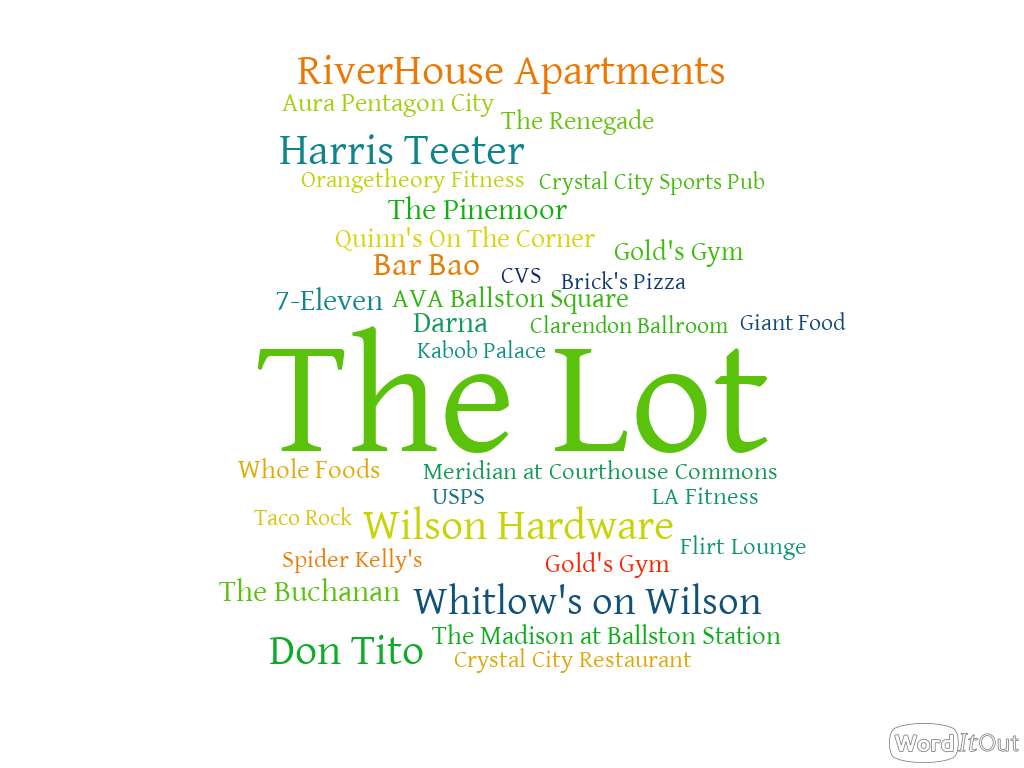
Far and away, the most frequently reported establishment was The Lot beer garden near Clarendon, which racked up at least 100 reports. Many of these came the Friday (May 29, 2020) that The Lot reopened along with other non-essential businesses permitted to reopen with additional precautions.

The word cloud shows Arlington businesses that have been reported at least four times for not complying with COVID-19 guidelines. The size of each name depends on how frequently they were reported (via WordItOut.com)

The opening day went viral when Democratic strategist Adam Parkhomenko posted a photo showing a large crowd outdoors, with none wearing masks. The bulk of the tips came that weekend.

“People packed in like sardines. Minimal masking. Shut it down,” wrote one.

Board member Katie Cristol retweeted the photo, suggesting The Lot was out of compliance and included a link to the hot line. She later apologized for the suggestion in a tweet. Outdoor settings were later found to be much safer than indoor settings in terms of virus spread, though not without risks.

Some complaints about Clarendon’s day-drinking and nightlife continued into the fall and winter. In October a tipster said the crowding happens “every night.”

“Surely someone should be policing this — for years you have had extra police in Clarendon for the bars, so why not assign someone here?” the tipster wrote. “The line at the farmers market is better policed by volunteers than this one.”

Behind restaurants were “other” violations (about 330) and reports of public outdoor facilities not following guidelines (nearly 300). Of these, the most common were reports of social gatherings and complaints about enforcement in apartment buildings and gyms.

One tipster said their management company took four months to post signs saying masks were recommended and was not doing any enforcement: “I would estimate fewer than 50% of residents wear face covering in halls and elevators.”

A gym-goer said the building’s fitness center was “full of people” and “no one was wearing a mask except me.”

(more…)


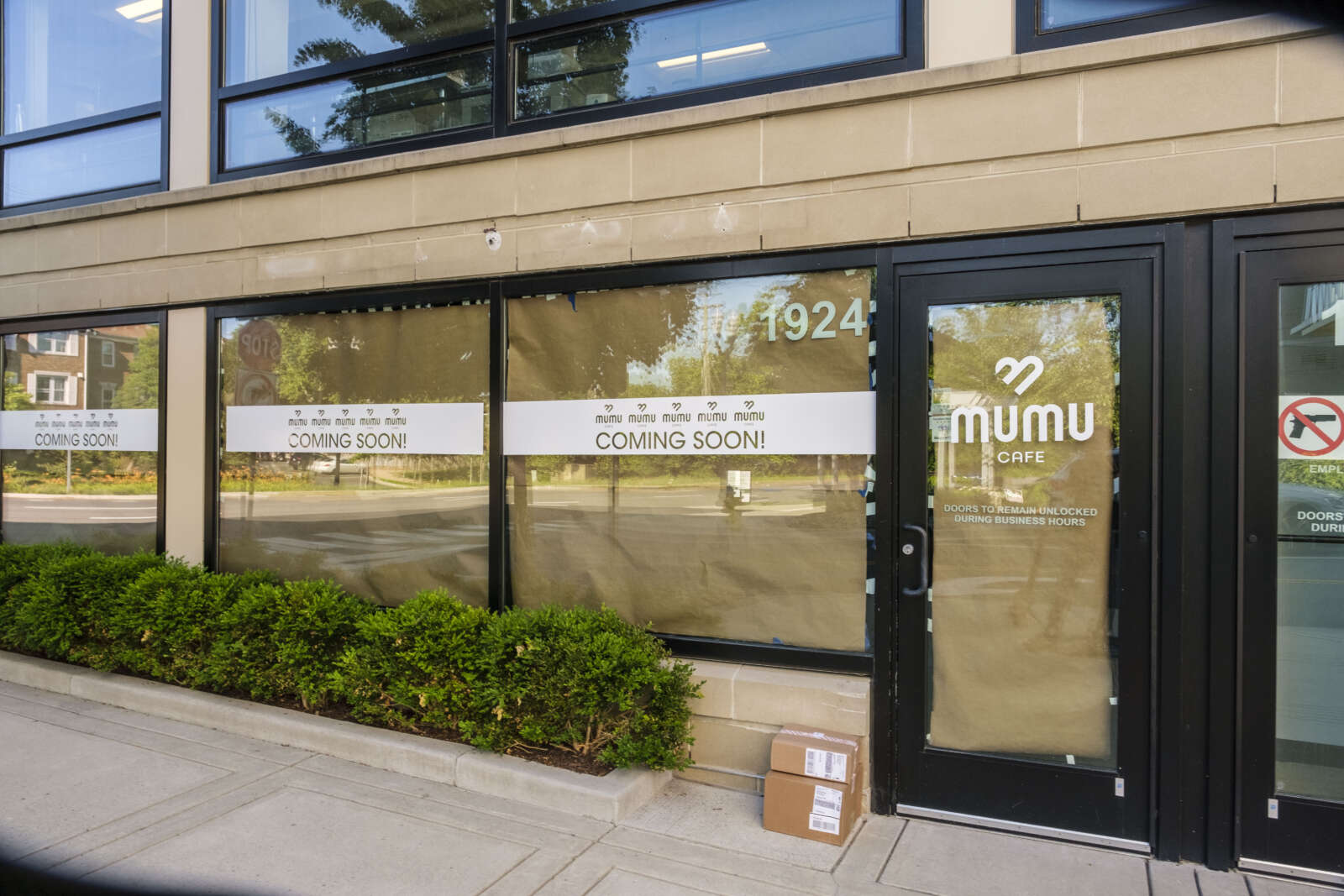
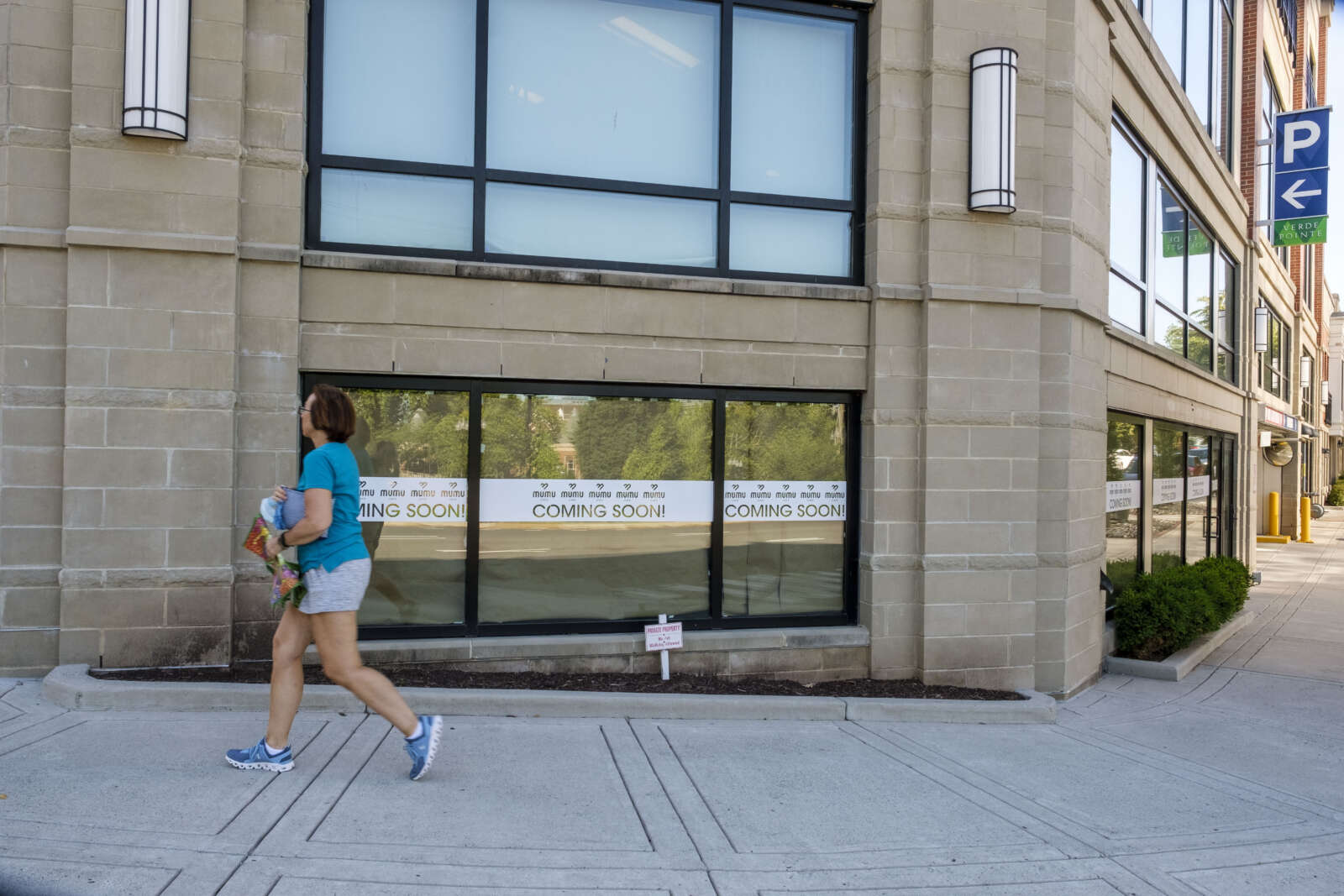
A new eatery called Mumu Cafe is set to open in August in the space underneath MOM’s Organic Market near Courthouse.

The forthcoming eatery is located at 1924 N. Uhle Street in the Verde Pointe development along Lee Highway, which is within walking distance to the Courthouse Metro station. Owner Jermaine Williams said the soft opening for is set for Aug. 2.

“The cafe promotes a fast-casual themed service where customers can come and get something made-to-order or grab something quickly from our grab-to-go station,” he said.

In the morning, Mumu Cafe will serve freshly made doughnuts, pastries, bagels and breakfast sandwiches, as well as smoothies, açaí bowls, drip coffee, cold brew and espresso drinks. After 11 a.m., the cafe will offer lunch and dinner options, such as hot sandwiches and flatbreads.

Mumu Cafe will take over the spot that was vacant since Naked Lunch, an organic vegetarian and vegan eatery closed almost exactly two years ago. It opened on Lee Highway with MOM’s Organic Market in 2015

The addition is right in Williams’s backyard, as he lives in the apartment building connected to the café. When he saw the “for lease” sign go up last year, he got in touch with MOM’s, which leases the space and agreed to let him set up shop there.

Williams brings to his venture years of experience in the hotel business, managing food service.

“I’ve been in hospitality for over 10 years,” Williams said. “The last five years, I have been in a hotel as a banquet manager in Rosslyn, which was cut short last year because of the pandemic.”

Mumu Cafe’s hours are currently set for 7 a.m. to 8:30 p.m. Monday through Saturday and Sunday from 7 a.m. to 1:30 p.m.


Arlington School Board Chair Monique O’Grady during the June 24 meeting (via Arlington Public Schools)

The Arlington School Board voted during its meeting last night (Thursday) to remove School Resource Officers (SROs) from school buildings.

As part of the vote, SROs — a unit of sworn officers within the Arlington County Police Department — will be moved off-site and will still provide services like driving and substance abuse education, as well as law enforcement support on an as-needed basis.

Officers will get a new title to reflect their new role, such as “youth resource officers,” Superintendent Francisco Durán told the board.

He told the board his recommendation to retain the relationship but relocate the officers is grounded in recommendations made by an APS workgroup that was convened last year to examine the role of SROs after the Arlington branch of the NAACP called for their removal. The local NAACP cited disparities in juvenile arrests in Arlington, in the wake of the death of George Floyd at the hands of police and the conversation nationwide about race and policing.

“I want to thank my colleagues for their support for moving this piece of historic leadership forward,” Board Chair Monique O’Grady said during the meeting.

Board Vice-Chair Barbara Kanninen commended O’Grady for her work bringing this to fruition.

“I especially want to make clear to the community that this was a priority for you as chair,” she said. “This was the one item, other than dealing with the pandemic, that you committed to, argued strongly for, and now we’re here.”

Over the next two months, Arlington Public Schools will be hammering out a new Memorandum of Understanding with the Arlington County Police Department to prepare for the start of school this fall, said APS Chief of Staff Brian Stockton.

“The last one took nine months this time we’re going to try and speed it up,” he said.

The decision comes nearly two months after a School Resource Officer helped to secure Wakefield High School in response to a call from a staff member, who alleged a student was making threats and had what was described as a bulletproof vest.

Funding for SROs, a total of $3 million, comes from Arlington County and is a gift to APS, Stockton said.

Some speakers argued for reinvesting the $3 million in mental health services.

Among them was rising Washington-Liberty High School junior Benjamin Portner, who told board members about his experience with SROs in elementary school and how still today, he carries “a great deal of nervousness when they pass me in the hall or even when they try to speak friendly manner.”

“Having them on and off-campus is a constant reminder to these students, and really all students, that the potential for violence remains in schools,” he said.

Board Member Cristina Diaz-Torres said she agreed with his sentiments and those of other speakers who asked for the $3 million to be reinvested in mental health services, but concluded that it is not a possibility at this time.

“[The vote] is a step forward, but it is certainly not the end of the journey: There is so much more that needs to be done,” she said. “We need to do to beef up the mental health resources for our students, so we can ensure that any student in crisis has the resources they need and they never have to interact with an SRO or the criminal-legal system at all.”

APS is the second district in the region to remove SROs from schools.


View More Stories