
The Right Note is a biweekly opinion column. The views expressed are solely the author’s.

Around this time each year, I remind readers that county officials annually underestimate revenue and overestimate spending. The result is tens of millions of taxpayer dollars spent each November in the closeout process with little public input.

Despite county officials making the case earlier this year that the County Board had no choice but to raise our tax rate in the face of “tough budget times,” this year’s closeout process is essentially a repeat of last year.

Last month the County Board allocated a total of $24.7 million from FY 2019 to the schools after all the accounting was complete. The schools received $7.8 million from excess tax revenue Arlington collected and received back $18.4 million in unspent funds. In other words, despite making the community believe times were tight, the school system did not spend nearly 3% of its budget.

The County Board also decided on what to do with $23.2 million in discretionary funds for the rest of the county budget. The good news is they set aside $13.9 million for the FY 2021 budget process. The bad news is they provided the unelected County Manager with another $2 million slush fund to spend as he sees fit.

The taxpayers received nothing except guidance that there might not be another rate increase next year. This of course does not take into account that real estate assessments are expected to rise by as much as 4% beginning in January which means the average homeowner will probably be paying over $250 more in 2020.

In the words of Board Chairman Christian Dorsey, get ready to “scrub your family budget” to find 4% more for the county on top of the 5% last year.

What the County Board should have done was to set aside $31 million for FY 2021 and committed to cut the real estate rate by at least one of the two cents they raised it last year. The full two cents would be better — and the Board could do it if they scrubbed the county budget — but we have to start somewhere.

In this scenario, the schools still would have received nearly $17 million, leaving them in a solid financial position headed into next year when they are slated to receive a bigger share of county revenue. And the County Board still would have over $20 million to use for next year’s budget.

The net result of this plan is that next November the County Board might have less revenue to spend in the closeout process. And maybe the County Manager would not get his slush fund. But taxpayers would be better off.
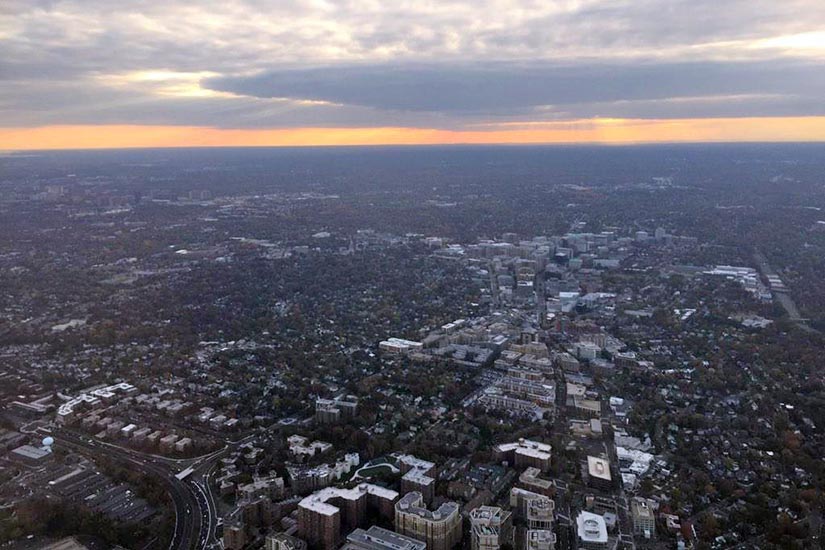
An editorial in the Arlington Sun Gazette newspaper last week, on the topic of single-family zoning, seems to suggest that renters are ill-informed and should have less of a say than homeowners.

Those who live in Arlington’s single-family neighborhoods traditionally have dominated the direction of local governance. They are the ones who have controlled the selection of local officials and then, through activism, ensured public policy proceeds the way they desire.

But if Arlington’s 2019 election season taught us anything, it was that – given enough cash to barrage apartment-dwellers with campaign mailers of questionable veracity – it’s possible to sway those folks (who often have short-term interests in a community they do not plan to live in forever) to get out and vote in races that previously had been of purely local import.

“Be prepared: The ‘woke’ culture that was swayed to enact purported criminal-justice reform will be gunning for others – perhaps even single-family neighborhoods – next,” the editorial concludes.

The debate over whether the “Arlington Way” — the catch-all term for the county’s system of community engagement — advantages certain types of residents over others occasionally flares up in the halls of local government.

Generally, the most engaged tend to be homeowners, older residents and people outraged about a particular proposal. Renters, younger residents, those who are generally satisfied with local government but not passionate about it, and those busy with work and/or family are less likely to serve on commissions or wait to speak at Saturday morning County Board meetings.

In a democratic election, one vote counts as much as the other, but once elected, officials are able to set their own priorities. As seen in the Sun Gazette editorial, some feel that those who have invested in a community — homeowners — should generally be given more of a voice than those who haven’t put down roots.

What do you think?

Photo courtesy @dcaman


Progressive Voice is a biweekly opinion column. The views expressed are solely the author’s.

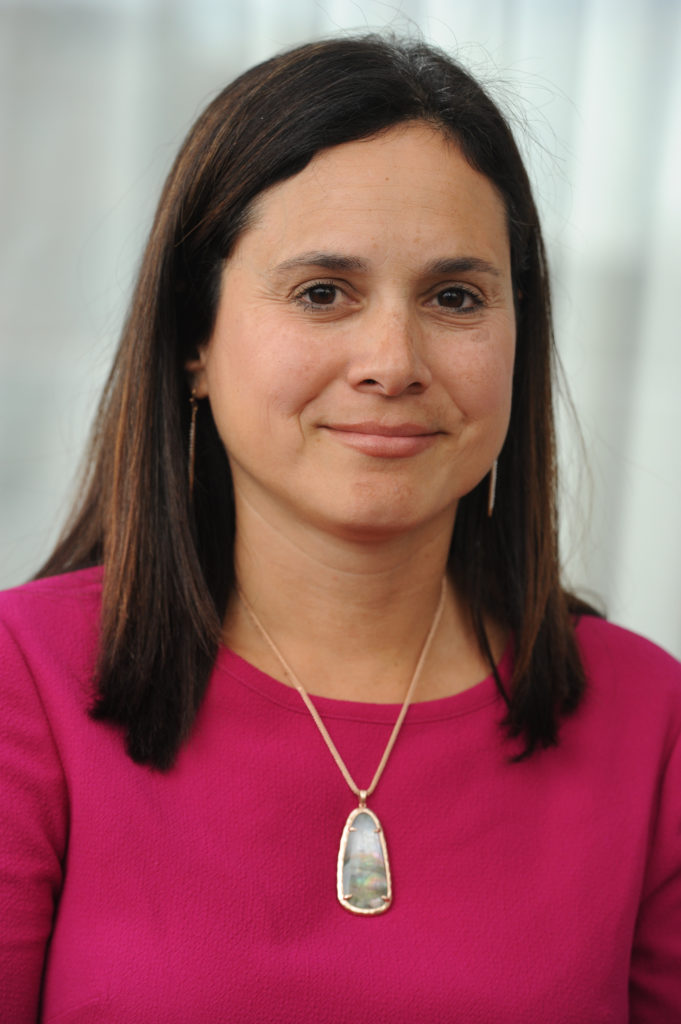
By Carmen Romero

As a 20+ year resident of Arlington and an affordable housing developer, I am often asked by neighbors, “What does affordable housing mean?” often followed by, “How can we help?”

In stark terms, here’s an example of the “affordable”* housing situation. The average apartment rent in Arlington in 2018 was $1,918 per month.* Yet a minimum-wage working family would need to work 154 hours a week to rent a one-bedroom apartment in Arlington.

Many people in the private and public sectors are putting in the hard work to combat this situation. Unfortunately, we are falling short on own stated community goals of seeing 17% of our housing stock be affordable* by 2040. As of Fiscal Year 2018, we were closer to only 8.8% (or 10,200 units) of our 115,400 housing units being affordable.

So, to the question: how can “we” help? Arlington has the benefit of excellent planning, transportation, a supportive community, and economic prosperity that comes with being one of the nation’s top technology economies. If we harness innovation and hold ourselves accountable, we can pull the pieces together to make it happen.

What do bold steps and innovation look like?

  • Approving a one-time bond issue. Bold financial commitments from the local and state level could help capitalize new solutions. We have a once-in-a-generation opportunity with the Amazon HQ2 economic engine to create new tools to promote large-scale preservation and new construction. Arlington could choose to fully capitalize our affordable housing plan through a one-time bond issuance supported by some of the economic growth anticipated from the arrival of HQ2. Local government could also reduce the development and operating costs for building affordable homes, including expediting zoning and permitting approvals, reducing real estate property taxes, and streamlining of site plan conditions.
  • Rethinking Arlington’s zoning and land use rules. This could help ensure we have the flexibility to create more housing at all levels, but especially for those for whom the rent burden is most acute. Because Arlington is land-scarce, this has often meant more density and height, especially near transit. Given our land scarcity, it is critical to promote non-profit partnerships, such as the Arlington Partnership for Affordable Housing’s (APAH) partnership with the American Legion Post 139 in Virginia Square to develop affordable housing with a preference for veterans.
  • Connecting more low-income and diverse people to our region’s technology and entrepreneurship economy pipeline. This summer, APAH began brainstorming with several local universities and a large technology partner around a vision to create a “resident impact incubator” with onsite technology classes and instructors/mentorships for young children through senior learners. This envisioned the use of technology as a bridge for low-income residents, instead of a divide. APAH recently opened Gilliam Place, an affordable housing development with 173 homes collocated with a ground-floor home for Arlington Presbyterian Church and a café and business incubator with La Cocina, the Zero-Barriers training and entrepreneurship center.

(more…)


It’s time to batten down the hatches and get ready for your tryptophan coma: a windy Thanksgiving is upon us.

While we take a brief holiday break (we’ll have a lighter than usual publishing schedule Friday), feel free to discuss anything of local note in the comments.

Happy Thanksgiving from ARLnow!


Progressive Voice is a biweekly opinion column. The views expressed are solely the author’s.

By Karen Darner

Leadership in public service makes a difference. I want to share a true story of the School Board appointments made by the Arlington County Board in 1976. (This was before we returned, in 1994, to electing School Board members.) And then I want to reflect on some challenges facing our leaders today.

In 1976, there were two School Board vacancies to be filled. I was the new president of the educators in the Arlington Education Association, and sent each candidate a questionnaire so a candidate endorsement might be possible.

There were many candidates in this race. I had heard many good things about one candidate, Mary Margaret Whipple. Another candidate was Tom DeScisciolo, father of a Washington-Lee senior. Mr. DeScisciolo worked for the National Labor Relations Board in DC. As Mr. DeScisciolo and I talked one day, I was impressed by his interest in many questions and how we, as educators, developed our own positions on issues. I was a novice on the workings of our collective bargaining agreement with the School Board, but knew it was the cornerstone to discussion and compromise among our members, and eventually with the School Board for our contract.

AEA’s political arm reviewed all candidates’ answers and reached an endorsement decision for the County Board to appoint Mrs. Whipple and Mr. DeScisciolo. When I arrived at the County Board meeting for the decision, I slipped into a seat next to Mr. DeScisciolo and his daughter. He then explained to me how he came to apply to become a School Board member.

Earlier, he had been helping his daughter research the process for becoming a School Board member for a report of one of her classes. He himself became interested in serving, and felt he had the motivation to become a valued member. And now it came to be: The County Board appointed him and Mrs. Whipple to the Arlington School Board.

I am aware of the extraordinary value of Mary Margaret Whipple’s tenure on the School Board, County Board, and eventually the Virginia State Senate on behalf of Arlington and Virginia residents. Her knowledge and integrity are incomparable, and we are very fortunate.

Tom DeScisciolo’s leadership is less well known, but he stood up for what was right. In January 1977, the Virginia Supreme Court ruled that the collective bargaining process practiced in Arlington by the County Board and by the School Board was unconstitutional, and was to end. Arlington’s superintendent at the time saw this as an opportunity to break the contract with the educators, and said so publicly.

This is where Tom DeScisciolo’s presence became most valuable. He reminded the Board and Superintendent about collective bargaining, and that all parties had negotiated our contract “in good faith.” I will never forget his passionate message–“‘good faith’ means it is your word.” The School Board voted to reaffirm its contract with its employees.

Sometime afterward, Tom DeScisiolo was diagnosed with a malignant brain tumor. He had completed about 18 months of a 4-year term, yet his Board presence was a gift of “the right person at the right time.”

Today we still need leaders who can make wise decisions–benefitting the whole county–while negotiating the thicket of competing demands. (As a former state legislator, believe me I do understand how hard this is.) We need leaders who can look long-term and not get stuck on what works for just today, or on who yells or lobbies the loudest. I say all this not as a reflection on any particular elected official, but more to guide us all going forward. Leadership in public service makes a difference. And the right kind of leaders especially matters.

Karen Darner served her community as a speech therapist in the Arlington Public Schools for over 35 years and represented part of Arlington in the Virginia General Assembly for 14 years. She loves it here.

Editor’s note: A few Progressive Voice columns will be publishing outside of the new biweekly schedule, following our column changes earlier this fall.


Anecdotal as it may be, it seems that the Thanksgiving holiday has already started for a lot of local folks.

On the way to ARLnow’s office in Ballston during the peak of the morning rush hour, the usual backups on eastbound Wilson Blvd at N. Glebe Road were gone. So was the usual line at a certain chain coffee shop near the Ballston Metro station.

Ballston wasn’t a ghost town by any means, but there just seemed to be a modest reduction in the usual delays and hubbub. The same couldn’t necessarily be said for post-Express Lanes traffic on I-395, however.

That has us wondering just how early does Thanksgiving break start for our readers — when is the first day you’re taking off for the holiday?


A rainy and windy weekend is on tap ahead of Thanksgiving week.

Assuming you haven’t already left for your holiday travels — or if you have an internet connection on your plane, train or bus — here are the most-read articles of the week on ARLnow:

  1. Two Arlington BBQ Spots Rank in Top 5 of New WaPo Rankings
  2. Ask Eli: The Missing Ultra High-End in Arlington
  3. Residential Parking Changes On the Way: “It’s Going to be a Doozy”
  4. County Rolls Out New Snow Plow Map
  5. Morning Poll: Is ‘Happy Endings’ An Inappropriate Name for a Food Hall?
  6. Ballston’s Tallest Tower Set to Open Soon
  7. First Look at New Bob and Edith’s Diner on Lee Highway
  8. What’s Next: Shut Down Arlington’s Juvie Facility
  9. Crystal City Restaurant Owners, Residents Sound Off On Parking Changes

Feel free to discuss any of those stories, your travel plans, or any other topic of local interest in the comments. Have a nice weekend!


What’s Next is a biweekly opinion column. The views expressed are solely the author’s.

(Updated at 3:40 p.m.) “There was a single light on that I couldn’t turn off. I didn’t sleep while I was there.”

Below I will detail a discussion I had with someone, who for the purpose of this column I will refer to as “Alex,” about their time three years ago in the Northern Virginia Juvenile Detention Center, located in Alexandria. The facility houses children and adolescents from Arlington, Alexandria, and Falls Church.

Alex was sent to the Juvenile Detention Center after two run-ins with the law. First, they were caught possessing less than an ounce of weed, and then another incident where they blew a .05 on a breathalyzer after being pulled over while on probation.

I will not go through the merits of Alex’s admittance to the facility, but rather detail the torturous conditions that Alex and hundreds of other Arlington children and teens have endured.

“After I got in the building through two cages with wire fencing, I was stripped, showered, and searched. My cell was completely concrete on all four sides and probably the size of a walk in closet. My thin mattress was built on concrete too and almost touched the joined toilet and sink. There was a slit of a window, but it was so high I couldn’t see out of it at all. There was a closed slit on the door that the guards gave me food through.”

For comparison purposes, in federal maximum security prison ADX Florence, also known as the “Alcatraz of the Rockies,” inmates have more amenities than this facility. They are able to see out of a window facing outside, have a door window, as well as a personal radio, television, and the Bible. ADX holds Al-Qaeda terrorists, the Boston Marathon bomber, organized crime members, and mass murders. The Northern Virginia Juvenile Detention Center holds children who sell weed and have “juvenile DUIs”.

“We had one hour of recreation where I played basketball and one hour in a social area where they gave us lemonade. The rest of the time was spent back in the cell. Since the walls are thick concrete you couldn’t knock or talk to neighbors. I was very isolated. The guard barely walked by. If I had a health problem it wouldn’t have been good because they couldn’t even see in.”

If you are doing the math in your head, that is 22 hours in a cell alone. We define solitary confinement as being in a cell for 22 or more hours without human contact.

Now imagine being in solitary confinement in a maximum-security prison while being tortured with a light that doesn’t turn off. This year Arlington kids collectively spent 2,893 days in this facility between January and September.

Luckily, the City of Alexandria has proposed a study to regionalize our juvenile detention facilities — but not for the reasons that you might think. This study was not started because of the torturous conditions, but rather, that it isn’t being filled. The study is called the Cost-Benefit Analysis of the Use of the Northern Virginia Regional Juvenile Detention Center and Alternatives.

There is a public meeting TONIGHT from 7-8:30 p.m. at the Arlington Central Library auditorium (1015 N. Quincy Street). There is also an online survey you can take here.

(more…)


Peter’s Take is a biweekly opinion column. The views and opinions expressed in this column are those of the author and do not necessarily reflect the views of ARLnow.com.

Democratic victories in the November 5 Virginia legislative elections provide new opportunities to enact excellent legislation. These are a few of the laws that should be enacted relating to women’s rights, gun safety, and voting rights.

Women’s Rights

Virginia should pass the Equal Rights Amendment (ERA). Passage of the ERA is an important statement of our aspirations for equal rights for women.

There is a critical need to repeal various extreme provisions in current Virginia law and
regulatory policy that seriously and adversely affect women’s health and bodily autonomy.
These are among the highest priorities for repeal.

  • 24-hour waiting period

Current Virginia law requires a 24-hour waiting period between a request to terminate a pregnancy and that procedure. This provision should be repealed.

  • TRAP

As NARAL pro-choice Virginia explains  (TRAP) laws are burdensome, medically unnecessary regulations designed to shut down reproductive-health-care clinics and make it more difficult for women to access abortion.” These laws should be repealed.

  • vaginal ultrasound

Current Virginia law requires that women undergo an ultrasound before an abortion and be shown an image of the fetus. This law should be repealed.

Given the present uncertainty surrounding whether the U.S. Supreme Court will overrule its decision in Roe v. Wade, Virginia should enact a law guaranteeing a woman’s right to terminate a pregnancy. That law should be as broad as or broader than the rights currently guaranteed by Roe.

Gun Safety

These are examples of common-sense gun safety legislation that should be enacted.

  • expanded local options to prohibit guns in public buildings

Virginia localities like Arlington have very limited powers to regulate the use of guns. An
analysis of the current law is here. Virginia law should be amended to give localities the option to limit the possession of guns in public buildings to only certain categories of owners (e.g., police officers).

  • universal background checks

Virginia law should be amended to require private sellers to conduct background checks
through a central law enforcement agency that has access to federal and state databases of
prohibited purchasers; to maintain records of all firearms transfers for a lengthy period, and to report all transfers to state and local law enforcement.

  • red flag law

A red flag law permits police or family members to petition a state court to order the
temporary removal of firearms from a person who may present a danger to themselves or
others. Even Donald Trump has endorsed red flag laws. Unlike 17 other states, Virginia doesn’t have a red flag law. Virginia law should be amended to include one.

  • One-a-month limits.

Virginia used to have a one-gun-a-month law. But Virginia repealed that law in 2012 at the request of the NRA. That law should be re-enacted.

Voting Rights

  • re-districting

Like many other states, Virginia currently has a partisan redistricting system. Even though Democrats will control all three branches of state government starting in 2020, we should resist the temptation to redraw district lines on a partisan basis.

With strong bi-partisan support, Virginia enacted a 2019 law that will lead to a less partisan redistricting system.

An overview of this proposed new Virginia redistricting system is here. The new system establishes an advisory redistricting commission to draw the district lines. The new system is not perfect, but it’s much better than the current system.

In 2019, Virginia legislative leaders assumed that the new system could only be adopted by amending Virginia’s Constitution. Such amendments require three steps: (1) pass a law in one legislative session; (2) pass the identical law in the next legislative session, and (3) voters approve that law in a referendum.

We have accomplished  number (1). Now we need to pass the Constitutional amendment again without changing so much as a comma, and convince voters to vote for it in November 2020.

  • other voting reforms

Virginia also should enact Election Day voter registration, no-excuse voting by mail, further expansion of early in-person voting, automatic restoration of voting rights for ex offenders, and ranked-choice voting.

Conclusion

Let’s take advantage of this great opportunity to create a better Commonwealth by enacting this new legislation relating to women’s rights, gun safety, and voting rights.

Peter Rousselot previously served as Chair of the Fiscal Affairs Advisory Commission (FAAC) to the Arlington County Board and as Co-Chair of the Advisory Council on Instruction (ACI) to the Arlington School Board. He is also a former Chair of the Arlington County Democratic Committee (ACDC) and a former member of the Central Committee of the Democratic Party of Virginia (DPVA). He currently serves as a board member of the Together Virginia PAC-a political action committee dedicated to identifying, helping and advising Democratic candidates in rural Virginia.


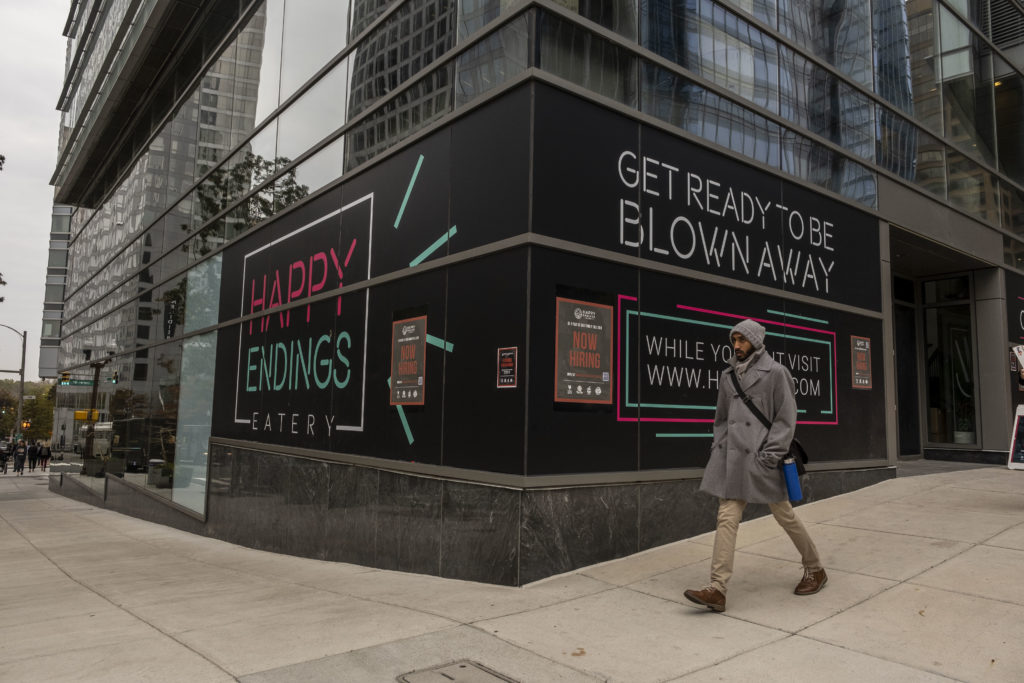
In Rosslyn, the owners of Chasin’ Tails, Tea’n You, and Lei’d Hawaiian Poke are opening a new food hall called Happy Endings Eatery. This time around, however, the double entendre name is generating some controversy.

The trio of Vietnamese-American brothers behind the successful restaurant group — two of whom are successful former poker players — may have just had their naming luck run out in the post-#MeToo era.

The names intended to reflect a light-hearted vibe — “we’re goofy people and we like to have fun,” one brother told ARLnow in 2015 — are now being questioned.

It doesn’t help that “Happy Endings,” which is also the name of the restaurant group itself, makes one suspicious of the big posted signage in Rosslyn announcing that Happy Endings Eatery is “coming soon” and “get ready to be blown away.” (The now hiring signs are more innocuous.)

From a Washington City Paper article published Tuesday:

Safe Bars Director Lauren R. Taylor had a strong reaction to the name of the forthcoming food hall. Her D.C.-based organization works to make bars, restaurants, and clubs safe and welcoming spaces.

“It diminishes massage body workers, it diminishes sex workers, diminishes women in general,” Taylor says. She believes the “jokey” innuendo contributes to “the dehumanization of all of those groups of people I mentioned before, especially women. It’s really not OK. Personally I wouldn’t even feel comfortable going there even though they probably have the greatest food in the world.”

“We do not support the exploitation of people in any way,” a statement from the company to the City Paper said. “Our name is meant to be lighthearted, memorable, and positive in the same way that a children’s fairytale has a happy ending.”

Some seem to be saying that the fairytale explanation, however, is just that — a fairytale meant to explain away an obviously bad name.

One Rosslyn resident who reached out to ARLnow suggested that Happy Endings has taken things too far.

“Its signage says in big letters get ready to be blown away,” the resident said in an email, while asking where he could file a complaint. “It’s all quite inappropriate.”

It won’t get much better inside, once Happy Endings opens: the food hall will focus on Vietnamese food, with food stalls sporting names like Roll Play and Pho Play.

What do you think about the name controversy? Should the food hall’s name be changed?


The Right Note is a biweekly opinion column. The views and opinions expressed in the column are those of the author and do not necessarily reflect the views of ARLnow.com.

Much has been made of Christian Dorsey’s post-election day revelations that he not only declared personal bankruptcy, but that he also used campaign funds to pay his wife and that he accepted a $10,000 contribution from Metro’s main union without disclosing its receipt in a timely fashion.

On Saturday, Dorsey offered a few words at the beginning of the meeting about what he called “unwelcome new” surrounding his bankruptcy, saying he was “deeply humbled” and assuring voters that it would”not impinge”  on his ability to find solutions to the County’s challenges. Chairman Dorsey inexplicably did not address the campaign payment to his wife or the ethical lapse surrounding the union contribution on Saturday during his remarks.

Dorsey started off the year suggesting that some of his colleagues on the County Board may be making him look bad by working too hard. Dorsey made the comments as part of a discussion about pay raises, concluding at that meeting it was not the time to give himself and his County Board colleagues a salary increase. He reversed course just a few months later.

After making no attempts to scrub the county budget to avoid a 5% tax increase in April, Dorsey gave an interview and told Arlingtonians who were wondering how they would pay for it to “scrub their family budgets.” Dorsey left out the suggestion of declaring bankruptcy.

During his brief remarks Saturday, Dorsey acknowledged that many people are “frustrated, disappointed, and even angry” that he did not disclose his bankruptcy before the election. Dorsey should know people have many of the same feelings about the ethical questions surrounding his campaign activities.

During Chairman Dorsey’s time on the WMATA Board, he has consistently resisted calls for that system to make major reforms. Instead, Dorsey consistently supported calls for finding new streams of revenue as the solution and was rewarded with a campaign check for $10,000 — a check he then failed to disclose within 10 days of receipt as required.

But what does all of this really mean?

Christian Dorsey is under no obligation to resign. Although if he really thinks he could make enough money to afford his chosen lifestyle by not being on the County Board, it might be the right thing to do for his family.

Arlingtonians could submit thousands of petition signatures to the Circuit Court asking for his removal. However, judges in Virginia have been rightly reluctant to overturn elections in this manner.

So, it raises the question: is it time for a new state law that allows for recall elections?

While the Democrats have other priorities with their new majority in Richmond, creating a recall election statute with a high bar for petition signatures is at least worthy of debate. It certainly might be argued that Chairman Dorsey’s actions would not rise to the level of a recall. However, if elected officials knew that they could be recalled by the voters, it might positively impact their actions by adding a new layer of accountability.

Mark Kelly is a 19-year Arlington resident, former Arlington GOP Chairman and two-time Republican candidate for Arlington County Board.


View More Stories