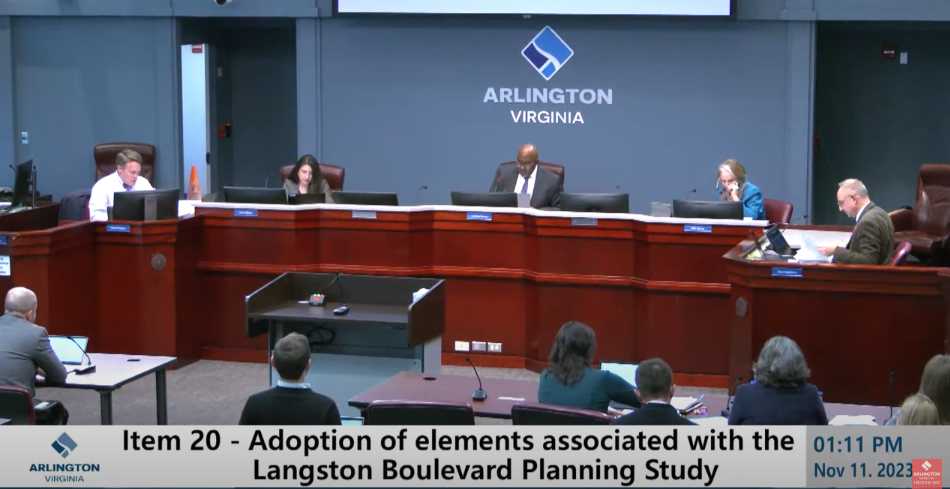
(Updated at 4:55 p.m.) A plan guiding the future of Langston Blvd was approved on Saturday.
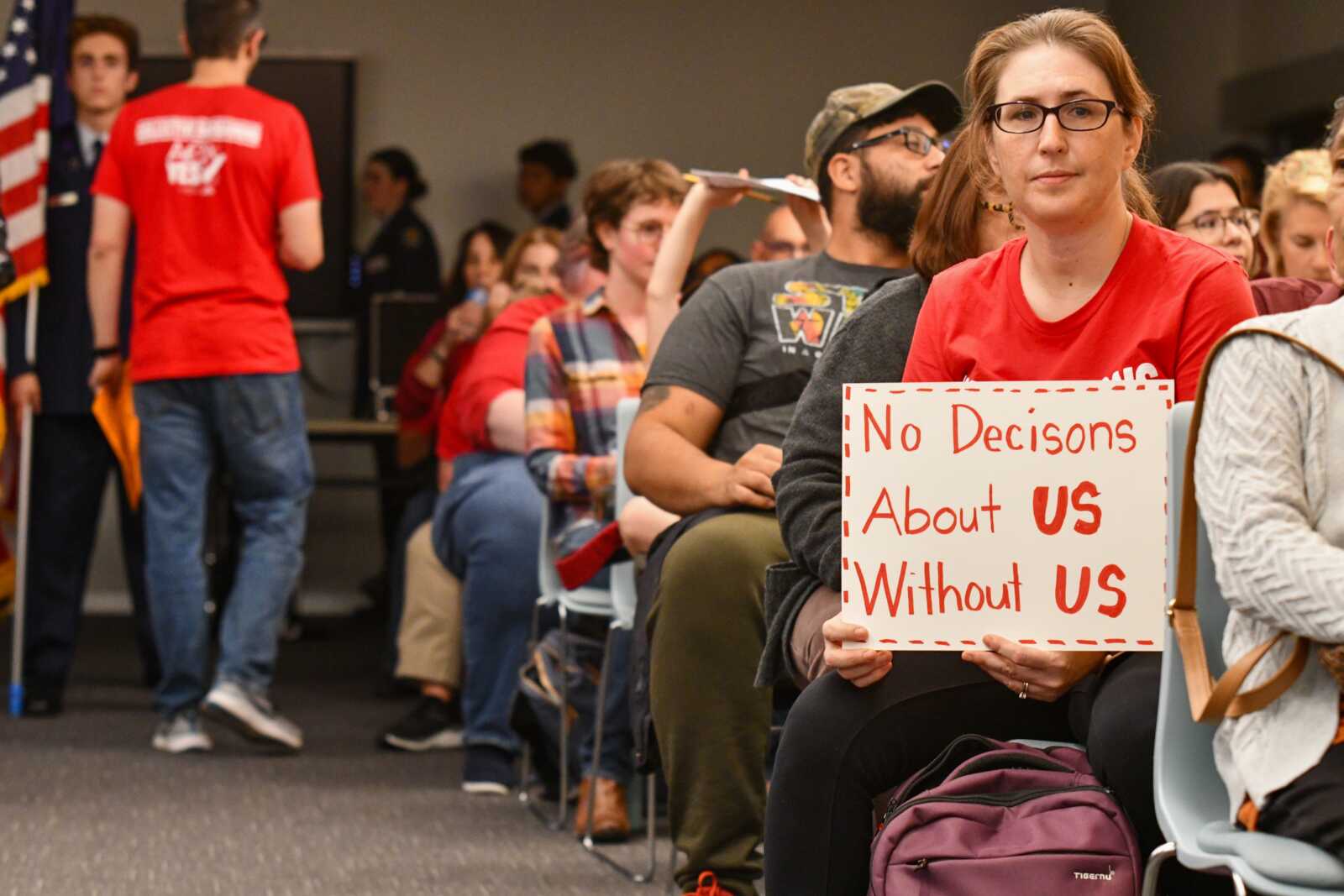
After hearing from some three dozen speakers, the Arlington County Board passed the plan — with some broad wording changes and neighborhood-specific tweaks that respond to months of public comments, including those made in the days leading up to the vote.
The county said in a press release that the newly adopted plan will help turn the 4.5-mile-long, car-oriented commercial and residential corridor into a “green, mixed-use main street that provides safe and multimodal access and is rooted in environmental resiliency, economic sustainability, and equity.”
“I am proud of the new vision for a resilient and equitable Langston Boulevard that was developed through years of work with the community,” Board Chair Christian Dorsey said in a statement after the vote.
“The plan’s land use framework and design guidelines will shape the new development in this corridor by helping expand the housing supply and its commercial base, improving its transit network and the connectivity of its public spaces, and strengthening the overall climate resiliency of the corridor by managing stormwater effectively, adding quality green spaces, and improving energy efficiency,” he continued.
Board members added and removed language in an attempt to firm up commitments to more aggressive affordable housing goals and county investments in better infrastructure. They added language intended to ensure privately owned public spaces — the bedrock of new green space envisioned on the boulevard — feel as accessible as their government-owned counterparts.
Some changes were tailored to specific neighborhoods and sites, made by individual community members and property owners. For instance, height transitions were lowered from five stories to four along 22nd Road N., a narrow road populated with single-family homes that abut commercial properties along Langston Blvd, including Moore’s Barber Shop.
Board members also lowered maximum heights from five stories to four, and transitional heights from four stories to three near the Calloway United Methodist Church in the historically Black neighborhood of Halls Hill/High View Park. For some supporting Board members, this vote was done with the neighborhood’s history in mind, as it was once segregated from a development for white residents by a wall.
Interim Board member Tannia Talento says lot size and street widths increase on the formerly “white” side of the segregation wall.
“What [the Halls Hill neighborhood is] asking for is not to feel locked in again,” she said. “Based on the history and recognizing and acknowledging mistakes made in the past, it’s important to hear the community, respect our history, respect what the request is, recognize that we have generational families who experienced that segregation.”
Board member Matt De Ferranti said he listened to John M. Langston Civic Association president Wilma Jones explain the rationale for her request in a recent ARLnow podcast. He said these concerns led him to support the amendment.
“Until I have next to me a 7-Eleven, I shouldn’t over-talk about [density],” he said.
Dorsey opposed the vote on the grounds it could create unintended consequences.
“We have made it more likely to develop by-right, providing no community benefits,” he said. “While I know you are all quite sincere to bring an equity lens and support historically Black communities, I don’t think they’re asking us at this point to deny them the opportunity to receive community benefits from redevelopment, which could be a consequence of this action.”
Board members also softened tree canopy requirements around the Lyon Village Shopping Center, which requested relief, saying the 35% canopy requirement would be impossible to meet if the property owners were to redevelop. They struck a recommendation to extend 25th Road N. west to connect with N. Harrison Street, instead adding language to suggest increasing pedestrian and bicycle connectivity between these two streets.
The Board also included a directive to the County Manager ensure that conversations move forward with the Virginia Dept. of Transportation and WMATA about redeveloping land these agencies own near the East Falls Church Metro station. De Ferranti says he would like to see staff directed to assess “re-zonings that lead to more affordable housing as fast as we can reasonably and appropriately do so.”
More about the plan’s passage, below, from a county press release.