
Amid ongoing fears about the coronavirus outbreak, Arlington Public Schools is barring recent visitors to China from schools.

The action is in line with Centers for Disease Control and Prevention recommendations. In a letter to parents last night, APS said any student who has returned from mainland China since Feb. 2 will need to wait at least 14 days before returning to school.

“APS will provide support to any student who is unable to attend school by providing take-home educational materials,” the school system said. “Please contact your child’s school to receive these materials by mail.”

One parent who contacted ARLnow questioned why parents were only being notified of the policy now, saying APS should have implemented the CDC-recommended, 14-day quarantine earlier.

Currently there are no known cases of coronavirus in Virginia, D.C. or Maryland.

The full letter is below.

Dear APS Staff and Families:

We have received inquiries from families about our procedures for students who may be returning to the United States from China.

The Centers for Disease Control and Prevention (CDC) recommends that all travelers returning from Mainland China (excluding Hong Kong and Macau) to the US after 5 pm on February 2, 2020, should remain at home for 14 days after their return date to the US. Therefore, APS students returning from Mainland China after the date above will not be allowed to attend school for 14 days. This will help us reduce the possible risk of coronavirus spread in our schools.

APS will provide support to any student who is unable to attend school by providing take-home educational materials. Please contact your child’s school to receive these materials by mail.

Based on Arlington County Public Health Division guidance, APS continues to take the following effective steps to prevent students and staff from becoming ill in schools:

Cleaning and disinfecting touched objects and surfaces frequently with materials that meet the criteria recommended by the CDC and the Environmental Protection Agency (EPA) for control of coronavirus.
Reinforcing the following effective behaviors in schools with students and employees:Wash hands often with soap and water for at least 20 seconds.Use an alcohol-based hand sanitizer only if soap and water are not available.
Avoid touching eyes, nose, and mouth as much as possible.
Cover mouth and hands with a tissue or your sleeve (not your hands) when coughing or sneezing.
Stay home when sick – and only return to school when children and staff are symptom free for 24 hours.
Keep their distance from people who are sick – and encourage sick people they encounter to go home and seek care as needed.
Avoid non-essential travel.
To further protect all our students, our employees, and our community, we need your help to reinforce the messages above. Have your student(s) practice these behaviors at home – it will make it easier to follow these same recommendations in school.

APS will continue to work with Arlington County Public Health Division and the School Health Bureau as the situation evolves. This is a rapidly developing situation, and we will publish updated guidance as warranted.

For up-to-date information about the coronavirus, visit www.cdc.gov/coronavirus/ 2019-ncov/about/index.html.

Cintia Johnson
Interim Superintendent
Arlington Public Schools

Reuben K. Varghese, MD, MPH
Health Director and Arlington County Public Health Division Chief

Photo via CDC


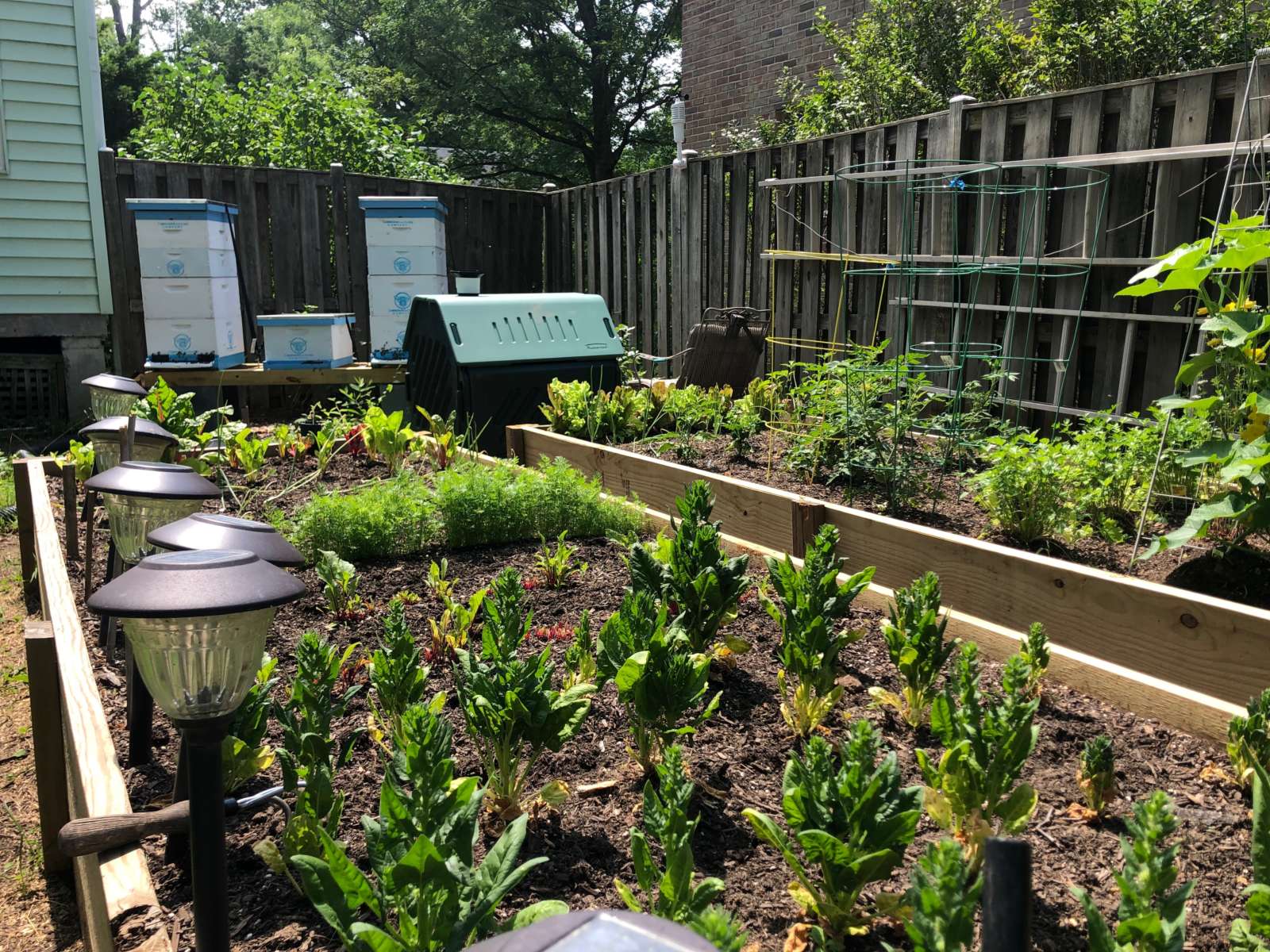
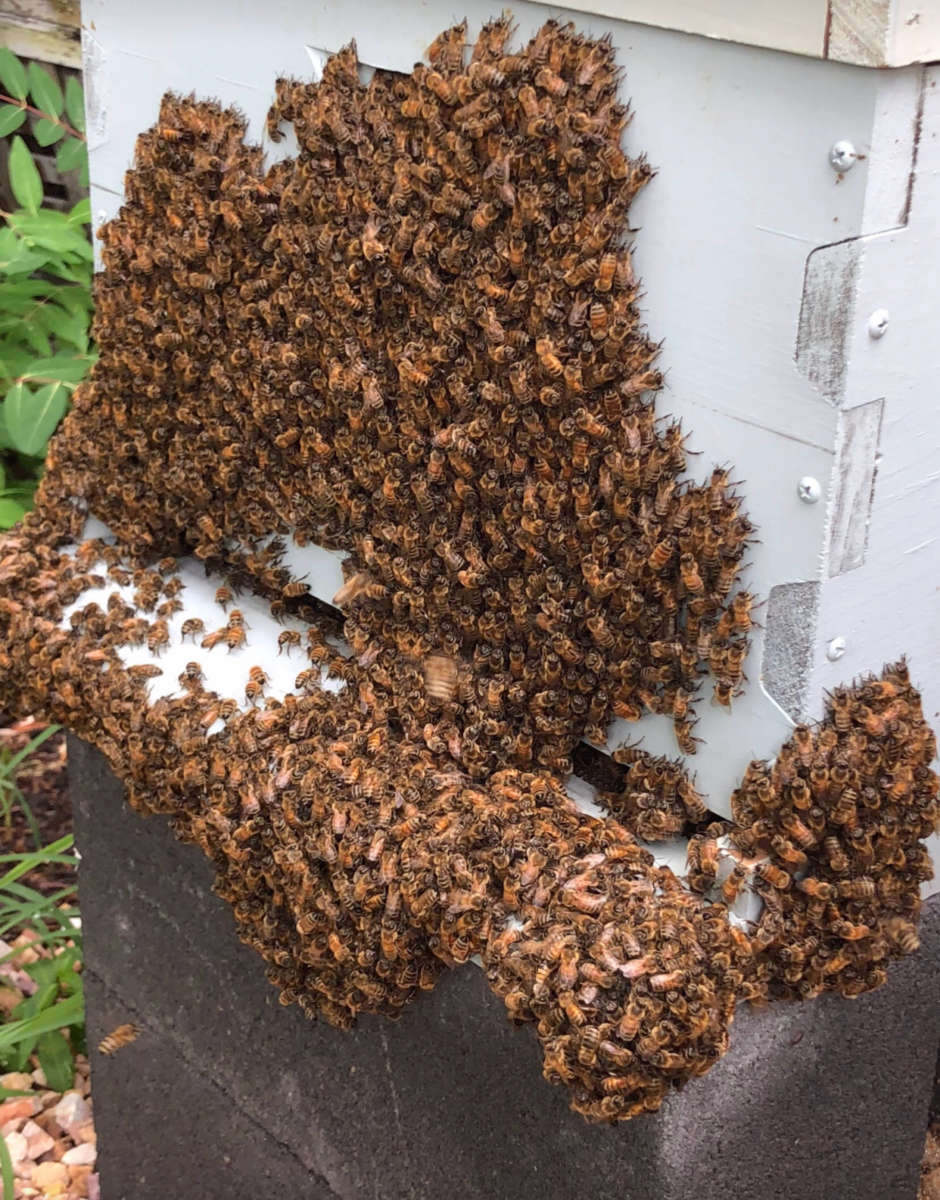
Local beekeeper Brad Garmon says raising a new generation of farmers is vital to keeping the budding urban apiary industry alive, and it starts in Arlington County.

“If you talk to anyone involved in this space, [they’ll tell you] the need for young minds and younger people getting involved is dire,” Garmon said.

Committed to backing up that buzz, Garmon is hosting a class early next month to introduce students around the 5th grade age range to bees and beekeeping. The class is part of Arlington Public Schools’ Youth Enrichment Program, a new set of classes offered for local students in late-elementary school and middle school to gain new experiences.

“The Youth Enrichment Program course is not so much a technical course on managing the hives, it’s about understanding the importance of bees and getting people to realize that we have a responsibility to be good environmental stewards and the importance honeybees have,” Garmon said.

Raul Matos, coordinator for APS’ Arlington Community Learning program, said the Youth Enrichment Program started this past September. Matos said many of the programs, like the Help the Honeybees class, are aimed at children who’d rather be in a classroom for their out-of-school enrichment activities.

“It got started because we discovered that not all children, when it comes to enrichment, want to be outside playing soccer or being in the pool,” Matos said. “Some want to be in the classroom, in classes like Japanese and video film editing.”

Matos said students don’t need to be Arlington Public Schools students; homeschool students, students enrolled in private schools, and kids outside of Arlington Public Schools can also take classes.

The Help the Honeybees class is $39 for a 90-minute workshop on March 12. The class is from 4:30-6 p.m.

“There’s a lot of misinformation around honeybees, like when people say ‘my kid was playing baseball and got stung by one,'” Garmon said. “So we look at honey bees vs. wasps and yellowjackets. That way when kids are walking around their yard and see a honey bee on a flower, they’ll know it’s not an aggressive insect. It gets them to go back out to their kids and their parents and teach them what they learn.”

Beyond just an elementary apiary education, Garmon said there’s life lessons for kids to learn from the hive. One honey bee only makes one-twelfth of a teaspoon of honey, and Garmon said there are a lot of kids can learn about the power of collaboration through that.

“There’s a lot of biomimicry,” Garmon said. “These insects only live a couple weeks, but what they live their entire life doing is serving to benefit their community. You can parallel that to these kids, who may feel small and insignificant. They get little straws and run around ‘pollinating flowers.’ Bring some of that nectar back to the hive. Even though these are small droplets of water, the end result is much bigger than themselves.”

Garmon said he hosted an initial class when the Youth Enrichment Program started in the fall and it filled up quickly. There’s only a few slots open left in the March session, but Garmon said he hopes to host another one in May.

Other classes being offered over the next few months include an animation class and a guide to making fascinators. Matos said he’s particularly excited about the math strengthening classes, but those are currently full. This summer, Matos said the Youth Enrichment Program plans to offer STEM-related classes like “Programming through Minecraft” and “Building Fortnite Games.”

Photos courtesy Brad Garmon


Local Crossing Guard Honored — “Zeleke Taffesse, a crossing guard serving Taylor Elementary School in Arlington, was one of four crossing guards statewide named tops in their field as part of the Feb. 10-14 commemoration of Crossing Guard Appreciation Week.” [InsideNova, Twitter]

Inexpensive Condos Still Exist in Arlington — “There are still some bargains to be had in Arlington, particularly if you’re willing to downsize to an older condo. For example, Unit 49 in the Lorcom House Condo at 4401 Lee Hwy. in North Arlington is priced at $225,000. The monthly condo fee of $552 includes all utilities as well as trash and snow removal.” [Washington Post]

Hope’s Instant Runoff Bill Advancing — “A proposal that would allow, though not require, Arlington to elect its County Board members by ‘instant-runoff’ (also known as ‘ranked-choice’) voting has cleared its first hurdle in Richmond, but still faces an uncertain future. The measure, by Del. Patrick Hope (D-Arlington), won passage in the House of Delegates on a 68-30 vote and was forwarded across the hall for consideration by the state Senate.” [InsideNova]

Beyer Holds ‘Real ID’ Event — “Congressman Don Beyer partnered with the Virginia Department of Motor Vehicles (DMV) Saturday to host a REAL ID application event for constituents of the 8th District at Wakefield High School in Arlington… Beginning October 1, 2020, U.S. residents who want to board a domestic flight or enter a secure federal facility using their state-issued driver’s license or ID as identification must have a version of the credential that is REAL ID compliant.” [Press Release]


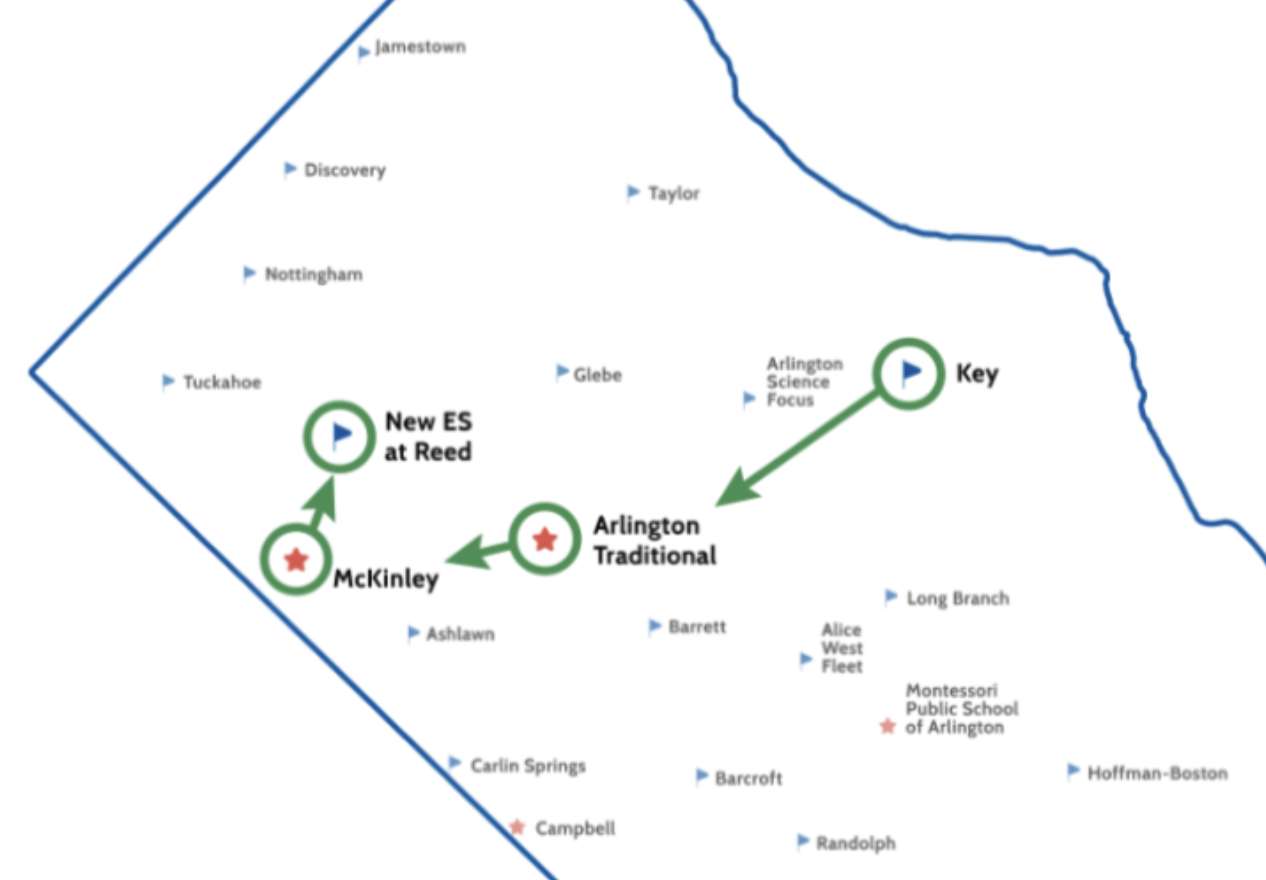
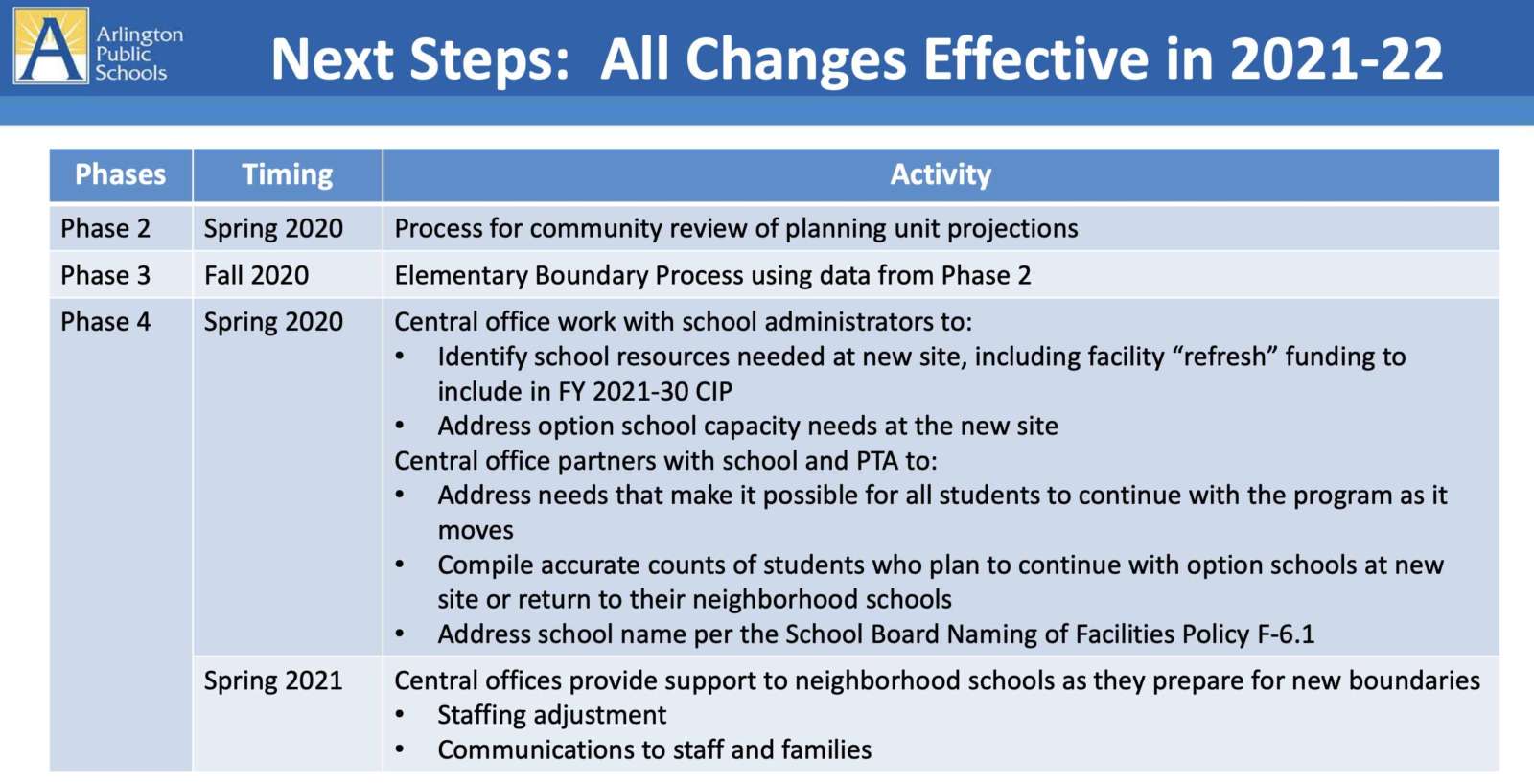
Students and staff at three North Arlington elementary schools will be moving to new buildings, starting in the fall of 2021.

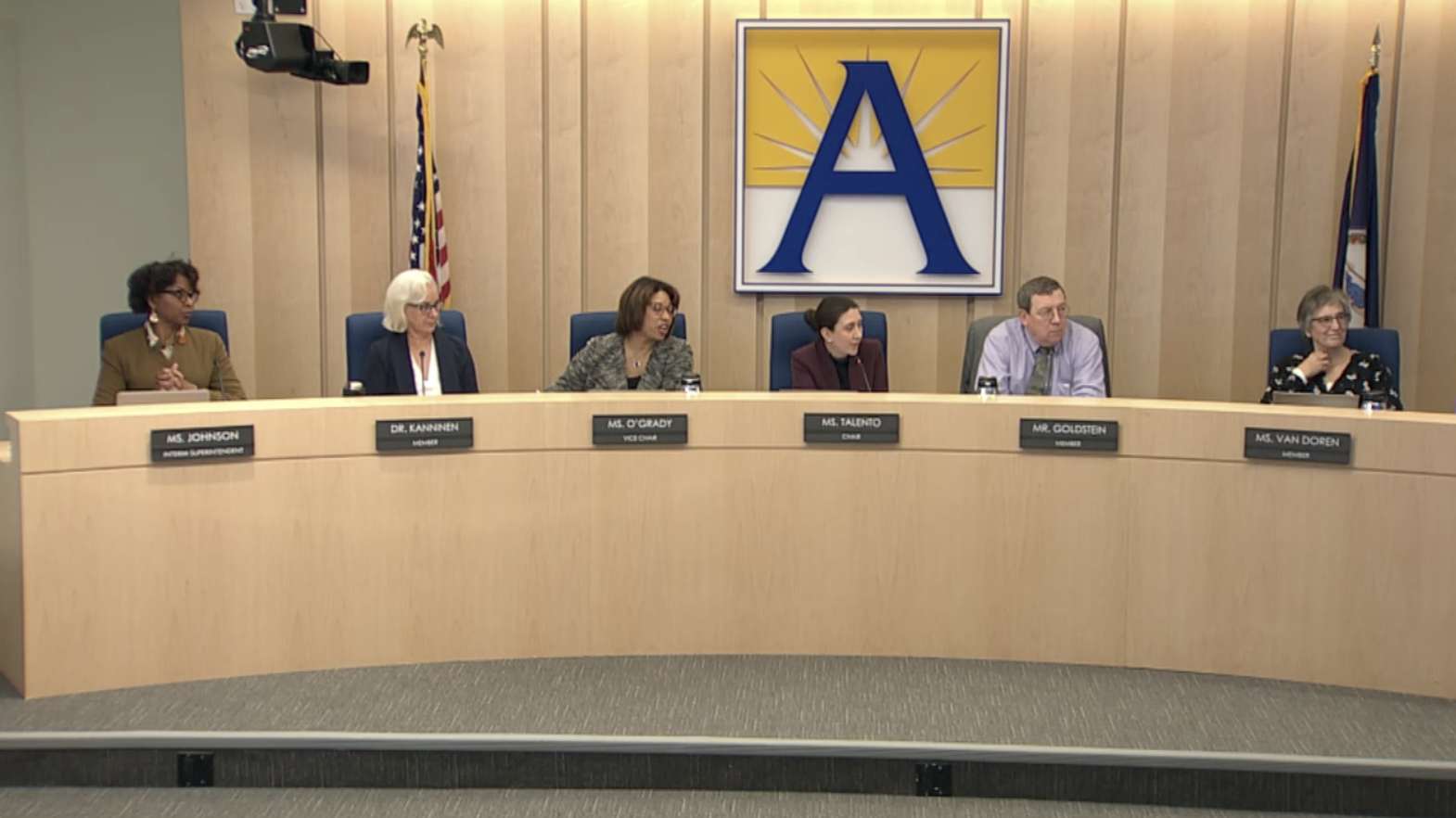
The School Board voted 4-1 Thursday night to approve the controversial school swap, despite vocal opposition from parents, including a petition against it that received more than 2,000 signatures. As with last night’s school calendar vote, Reid Goldstein was again the lone vote against the proposal.

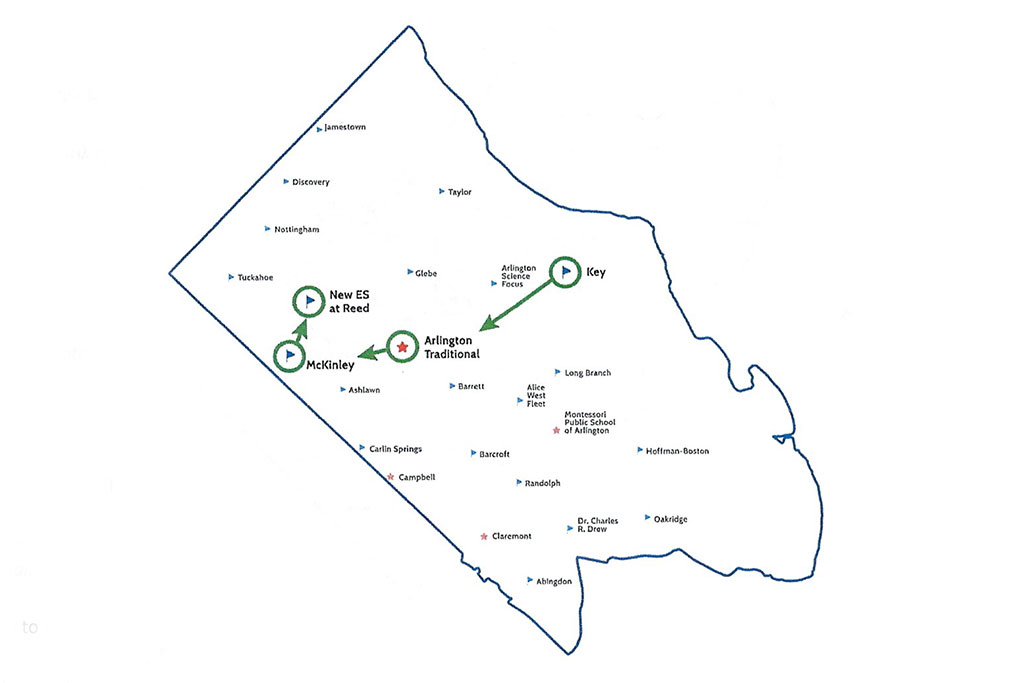
Under the superintendent’s recommended school moves, the following will happen:

  • “Majority of McKinley students move with principal and staff to Reed site”
  • “All of Arlington Traditional community can move to McKinley site”
  • “All of Key Immersion community can move to ATS site”
  • “Key site becomes a new neighborhood school”

Those against the moves expressed concerns about longer drives to school, breaking up school communities and making it more difficult for those from disadvantaged backgrounds to stay at their current schools.

“Taking away a Spanish-speaking families’ choice to send their children to [the Key Spanish immersion school] removes a primary life line for support and in many cases for survival,” said one parent. School administrators argued that moving the Key program to ATS actually puts it closer to more Spanish-speaking families.

“The numbers don’t even work,” said another upset parent. “You’re proposing to move 758 students from McKinley schools to 725 seats in the new Reed school. The numbers don’t add up.”

There were also speakers in favor of the moves, including a father whose young kids will soon be entering Arlington Public Schools. He argued that the moves make sense, despite some short-term pain for current parents, and are better than the alternatives presented by APS.

Administrators said about twice as many students would be assigned to new schools under boundary changes alone, compared to the adopted school swaps. That’s in part the result of population growth along the Orange Line corridor, near Key Elementary.

“Approximately 4,000+ or 38% of all neighborhood elementary students would be reassigned to a new school” without the school moves, APS said.

Some School Board members were apologetic in voting yes on the proposal.

“I’m so sad that as we all come together to figure out how to handle our boundary issues we wound up having so much hurt over trying to figure out how to fill our new schools,” said Monique O’Grady.

“I am making the difficult decision that I believe is right for the whole county,” School Board Chair Tannia Talento said. “This is the best decision we can make at this time… ensuring that there is minimal impact on all schools.”

“I know this is hard and I’m sorry it’s not turning out as many of you would like,” Talento said.

There’s more hard work ahead for the School Board. Next up, the Board will tweak elementary school boundaries to balance enrollment at other schools, and will create new neighborhood attendance zones for some of the schools involved in the swap.

The full Arlington Public Schools press release about the decision is below, after the jump.

(more…)


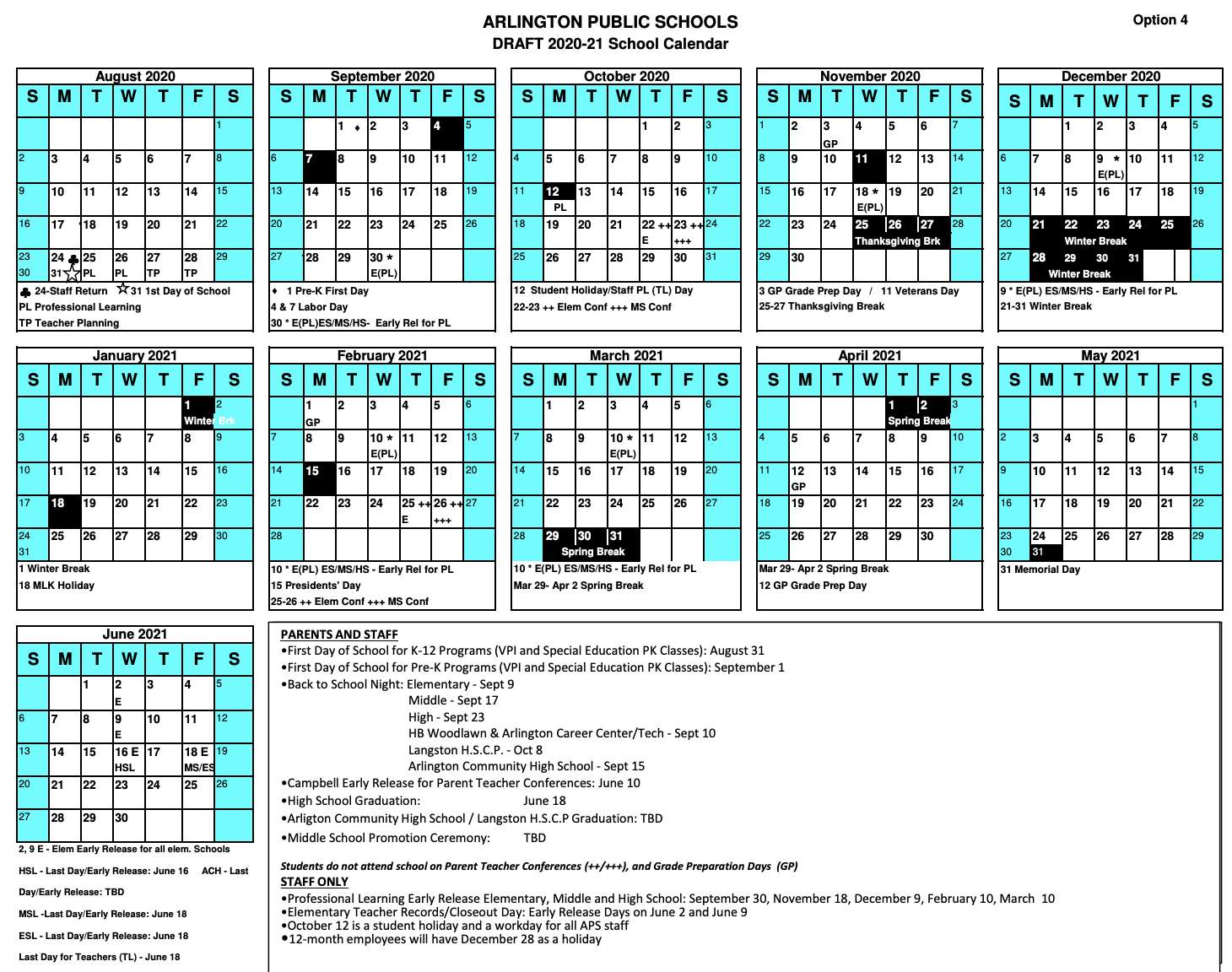
After some back-and-forth, the Arlington School Board last night approved a new pre-Labor Day start for the next school year.

The board voted to approve the interim superintendent’s recommended Aug. 31 start date, with a bit of a caveat. The 4-1 vote followed discussion about what to do about families that have already made travel plans that will now be impacted by the earlier start date.

Reid Goldstein was the lone ‘no’ vote. He previously moved to adopt a calendar that maintained a post-Labor Day start, on Sept. 8, but the motion failed. He said the board was voting too late on a change that will affect families.

“The calendar consideration cycle started later than it should have, and now it’s concluding later than it should and [later than] is convenient for communication,” he said.

Another motion, to instruct the superintendent and principals to be lenient with students missing the first week of school, also failed. The motion from School Board member Tannia Talento would have also instructed administrators to ensure that the first week of school would be light on instruction, so students with existing vacation plans do not miss too much.

Talento’s motion failed after it was asserted that existing APS policy would call for excused absences and efforts to help students catch up under such circumstances.

In supporting the superintendent’s recommendation, School Board member Barbara Kanninen noted that based on mixed feedback from parents, students and school staff, “we clearly have community members who have completely different feelings.” The Aug. 31 start was the result of school staff working “to find common ground,” she said, and wouldn’t unduly shorten the summer break thanks to this year’s late Labor Day holiday, on Sept. 7.

Under the new calendar, students will have a four-day weekend for Labor Day, after four days of school. The school year will end on June 16 for high school students and June 18 for elementary and middle school students.

As previously reported, the proposed calendar also calls for a two-week winter break, a one-week spring break, three weekdays off for Thanksgiving break, Columbus Day and Veterans Day off, and no school on Election Day in November, which will be a telework “grade prep” day for teachers, among other off days.

The neighboring jurisdictions of Falls Church, Fairfax County, Loudoun County, and Prince William County have approved pre-Labor Day start date — between Aug. 24-27 — for the next school year. Among suburban Northern Virginia public school systems, only Alexandria is sticking with a post-Labor Day start date of Sept. 8, at least for now.

Arlington Public Schools had been considering a pre-Labor Day start after state law changed last year to allow it.


After an extended period of contemplation, which led to some parent complaints, the Arlington School Board is set to vote on the 2020-2021 school calendar tonight.

Arlington Public Schools has been considering a pre-Labor Day start after state law changed last year to allow it. Since then, the neighboring jurisdictions of Falls Church, Fairfax County, Loudoun County, and Prince William County have approved pre-Labor Day start date — between Aug. 24-27 — for the next school year.

Among suburban Northern Virginia public school systems, only Alexandria is sticking with a post-Labor Day start date of Sept. 8, at least for now.

Seeking to balance the desires of parents to keep their late summer vacation plans, and those who want school to start earlier, Arlington’s interim superintendent is recommending a Monday, Aug. 31 start date, followed four days later by a four-day Labor Day break, from Friday to Monday.

The superintendent’s recommendation calls for a June 16 last day of school for high school students and a June 18 last day for elementary and middle school students.

The proposed calendar also calls for a two-week winter break, a one-week spring break, three weekdays off for Thanksgiving break, Columbus Day and Veterans Day off, and no school on Election Day in November, which will be a telework “grade prep” day for teachers, among other off days.

A staff presentation released ahead of Thursday night’s School Board meeting refers to 2020-2021 as a “transition year,” perhaps paving the way for an earlier start date in future years.

The presentation also gives the School Board the option of voting on a school calendar with a post-Labor Day start, on Sept. 8, and a June 23-25 last day of school.


Small Apartment Fire in Waverly Hills — “At approx 2 p.m. units were called to the 2000 blk of N. Woodrow St. Firefighters quickly extinguished fire in kitchen with minimal fire spread. Occupants escaped unharmed, not expected to be displaced. No firefighter injuries. Cause of the fire is under investigation.” [Twitter]

Parents Anxiously Waiting for APS Schedule — “Some Arlington parents are frustrated school leaders have not confirmed when school will start this fall. ‘We all like to plan ahead,’ said Arlington parent Meghan Thomas who is trying to plan her family’s summer travel and her kids sports schedule. ‘It is very frustrating not knowing right now what the August schedule is going to be.'” [WJLA]

Home Maintenance in Historic District May Get Easier — “Residents of Maywood soon may find it less onerous to make rudimentary changes to their properties. County Board members in coming months are expected to approve a change in rules governing the community’s local historic district, shifting some of the workload from the Historical Affairs and Landmark Review Board (HALRB) to county historic-preservation staff.” [InsideNova]

More on ARLnow’s Anniversary Party — “On Wednesday night, Jan. 29, a large crowd gathered at Bronson Bierhall in Ballston to help… celebrate ARLnow’s 10th anniversary. ‘We have had the privilege of continuing to serve the community for 10 years, and I’m just blown away,’ [founder Scott] Brodbeck said about the party.” [Patch]


Public-Private Partnership for Pentagon City Planning — “County Board members on Jan. 25 approved a memorandum of understanding with the coalition of property owners in [Pentagon City], which will guide planning efforts and allocate $1.5 million – about two-thirds of it from the county government, the rest from landowners – to complete it. County Board Chairman Libby Garvey said the aim was a coordinated strategy for redevelopment of the target area, which totals about 85 acres.” [InsideNova]

APS Investigating Swastika Incident — “School officials launched an investigation this week after a student drew a swastika on a piece of paper and handed it to a classmate at a Northern Virginia middle school. The incident took place Tuesday at Thomas Jefferson Middle School in Arlington, according to a letter that Principal Keisha Boggan sent parents Wednesday. The hate symbol was later reported to Arlington County police.” [Washington Post]

Industry Supporting Glass Drop-Off Program — “Glass Packaging Institute (GPI) members are partnering to create a circular economy for high quality recycled glass in Northern Virginia. O-I Glass, Inc. (O-I Glass) and Strategic Materials are teaming up to create strong markets for glass in the region through a new glass recycling drop-off program.” [Press Release]

Thanks, Arlington — Thank you to everyone who came out to our 10th anniversary party at Bronson Bierhall in Ballston last night. It was a packed house and we are incredibly grateful to have that kind of support from members of the community, local institutions like the Arlington Chamber of Commerce, local government, and our advertisers — who help support ARLnow and keep our local news free for all. We also met a few commenters and a few soon-to-be commenters last night (you know who you are). Finally, a big thank you to our current and former employees, whose tireless work has helped us reach this anniversary while growing to serve other communities in Northern Virginia.


Parents opposed to a proposed four-school swap, set for a School Board vote on Feb. 6, are ramping up pressure to scuttle the plan.

A new coalition calling itself “No School Moves” has gathered more than 1,700 signatures on a Change.org petition launched earlier this month, calling for the School Board to vote “no.”

The group opposes an Arlington Public Schools plan, endorsed by the interim superintendent, to move Key elementary students and staff to the Arlington Traditional School building, while moving Arlington Traditional students and staff to McKinley and McKinley students and staff to a new elementary school building in Westover. That would free up the Key school building near Courthouse, currently used by a Spanish immersion choice program, to become a neighborhood school as the elementary-aged population in that area continues to grow.

People who signed the petition, however, are not buying the APS rationale for the moves, which would reportedly result in more than 2,400 students moving to a new building.

“Moving schools is not creating more seats,” said one. “It’s a temporary bandaid and there is no data to support these moves.”

“These changes can have profound effects on students who get moved to new schools, and the current process is so flawed,” said another. “It could easily lead to even more rounds of redistricting in the near future.”

In addition to objections to the process, an alleged lack of supporting data, and inadequate communication from school staff, opponents say the moves would make diversity in the schools “more difficult to maintain.”

Per the petition:

The school move proposal exacerbates the county’s broader struggle with diversity. As in other communities, Arlington’s historic housing patterns have effectively segregated low-income and minority families, and its schools reflect those same patterns of segregation. Yet despite repeated requests from PTAs and parents across the county — and in the immediate aftermath of a recent settlement between Arlington Public Schools (APS) and the Justice Department over English language learners — APS staff has not performed any detailed analysis of how proposed school moves would affect the demographics of those school populations.

In a recent survey, more than 60% of Spanish-speaking families currently part of the Key Immersion school community have said they won’t be able to move with the program to its proposed new location. APS argues that Key Immersion would draw more native Spanish speakers if it were in a more central location — but their evidence for this is entirely anecdotal.

What’s more, moving the Arlington Traditional School and its VPI preschool program to the McKinley building would adversely affect low-income families who rely on public transit. Families trying to reach the school on a Metrobus could double their commute time. This would discourage enrollment for families without cars, negatively impacting the diversity of a school that has demonstrated results in closing the achievement gap for high-needs students.

Arlington Public Schools is planning to hold a public hearing on the plan on Thursday, Jan. 30, at the Syphax Education Center (2110 Washington Blvd) at 7 p.m., ahead of the scheduled Feb. 6 School Board vote.


Progressive Voice is a biweekly opinion column. The views expressed are solely the author’s.

By John Giambalvo 

Student enrollment projections by Arlington Public Schools (APS) impact all Arlington residents, and have a direct impact on spending for new schools, school bonds and debt service, parking and traffic, for example — which directly affect quality of life, property values and taxes. With Arlington’s population growing for the foreseeable future, APS must have accurate projections for effective school construction planning.

APS and Arlington County have made strides recently in sharing information to improve projection accuracy. For example, the county now shares residential construction information with APS that not only improves aggregate projections, but also helps APS understand where the growth will likely take place and which schools it will affect.

However, despite all the data analysis, these projections remain part art. The latest projections anticipate about 3,200 fewer students for 2028-29 than were projected in Fall 2018; and this significant difference potentially affects the school system’s new Capital Improvement Plan (CIP). The CIP is a project and financial planning document covering a 10-year period and is updated every two years.

APS now estimates enrollment will grow to about 31,000 students five years from now and then level off over the subsequent five years (versus continued steady growth as previously projected), despite an estimated 1,400 housing units coming online annually in the next decade. This odd stalling of student growth — despite robust residential construction–is based on a lower projected birth rate. While the lower birth rate is based on expert input, I believe we must be prepared if this does not come to pass and thus student population grows more than anticipated or grows in areas where we are already struggling to provide sufficient school seats. But how?

Continued improvement in information-sharing between APS and the county will help, as more data generally yields better accuracy. But, this needs to then go one step further.

The county is a critical partner. It controls policy and development decisions that directly impact APS, and over which APS has no control. Approving new residential housing, especially with increased density, is a County Board function as is attracting Amazon and other businesses to the county. APS must be able to successfully educate the additional students arising from new housing units and businesses. The best way to do this is for the county to be even more explicit and comprehensive in weighing how its decisions on housing and economic development could impact student growth.

(more…)


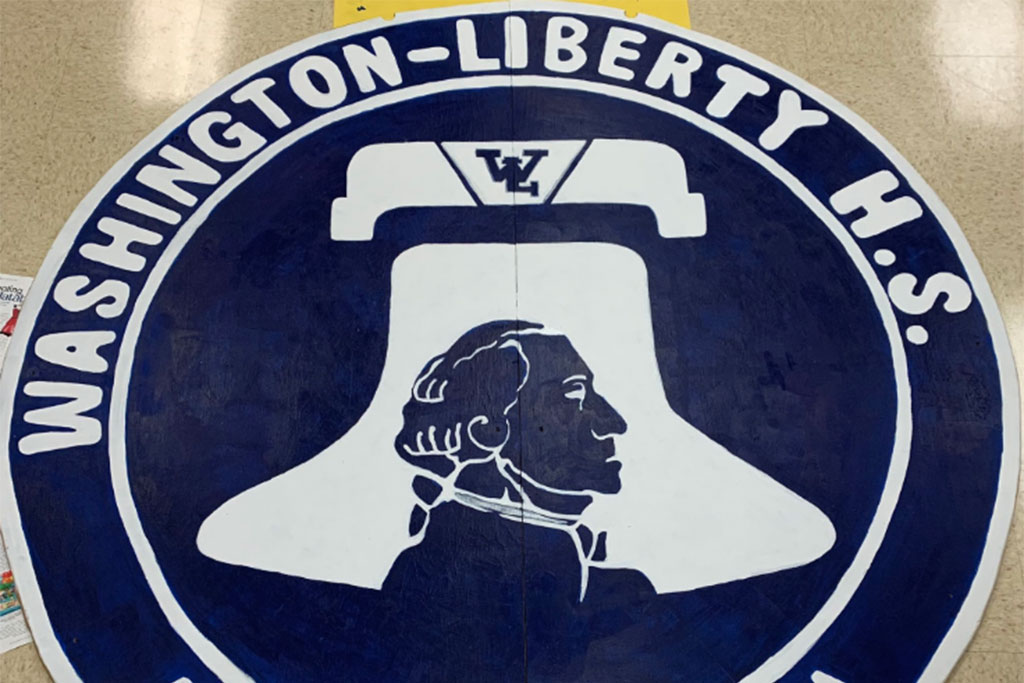
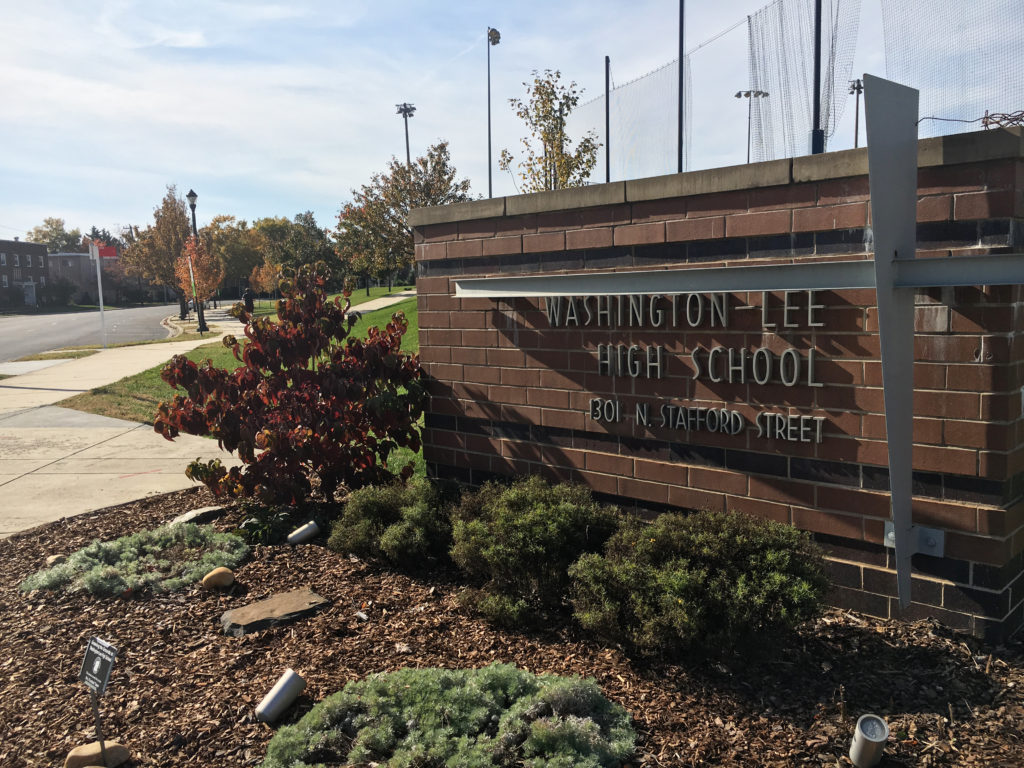
The Washington-Lee High School Alumni Association filed suit against the Arlington School Board last week, alleging that changing the school’s name to “Washington-Liberty” was done unlawfully and is causing harm to the association.

The 48-page suit, filed in Alexandria federal court, can be found here in PDF form. Arlington’s current interim superintendent, former superintendent and former deputy superintendent were also named as defendants, in their official capacities.

In the suit, the Alumni Association alleges that school administrators “deceived” the public by conducting a “sham process” that was predetermined to remove Confederate General Robert E. Lee’s “prestigious” name from the school.

This is a case where politicians and their associates actively deceived their constituents, including the Alumni Association and its members, in order to deprive them of their opportunity to comment on changes that would greatly harm their educational reputations. Specifically, these politicians conspired to impose their own political values on the community by changing the prestigious, century-old name of Washington-Lee High School to Washington-Liberty High School, without concern for the fact that the students and alumni would no longer have the prestige of the original name.

Defendants knew that the public would not support such changes, and sought to actively stymie public debate on this issue. To that end, Defendants repeatedly and falsely promised their constituents that there would be a lengthy comment period later in the year where members of the public could weigh in on whether the school’s name should be changed. Then, instead of providing the promised comment period, Defendants suddenly and without warning made the decision to change the school’s name.

Alumni were denied Constitutionally-protected due process by school officials, the suit says, detailing how dissenting voices were allegedly shut out of the name change discussion.

As a result of Defendants’ strong-arm tactics, three Committee members resigned in protest of the sham process. These resignations included two of the three non-Board-affiliated Washington-Lee alumni. As a result, the version of the Naming Committee that delivered the “recommendation” to the Board contained only one Washington-Lee alumnus other than the daughter of the former Board member who had campaigned for the name change.

Although Defendants had promised that this time period would be designed to facilitate public commentary, Defendants banned members of the public from making any comments at the Naming Committee’s meetings. Instead, public comment was limited to a suggestion box that only allowed very brief statements. Moreover, comments in that suggestion box were subject to screening by Defendants and their agents before the Naming Committee could see them. Ultimately, the Naming Committee rarely discussed any of the public suggestions, in contrast to Defendants’ earlier promises that this phase existed to obtain public feedback.

The suit claims that the Alumni Association is suffering financial and membership losses as a result of the name change.

These actions have greatly harmed the Alumni Association and its members by, among other things, causing confusion in the Alumni Association’s operations, causing the Alumni Association to suffer financial loss and a decline in membership, and causing the Alumni Association’s members to lose the prestige associated with the school’s original name.

The association might have to shut down if the name of the school is not changed back to Washington-Lee, the suit suggests.

(more…)


View More Stories