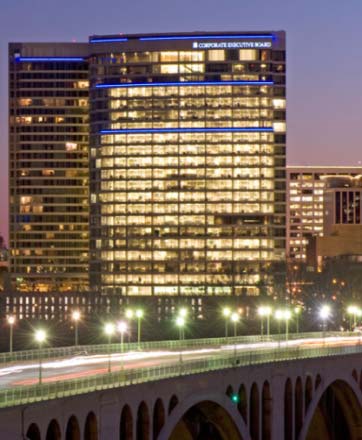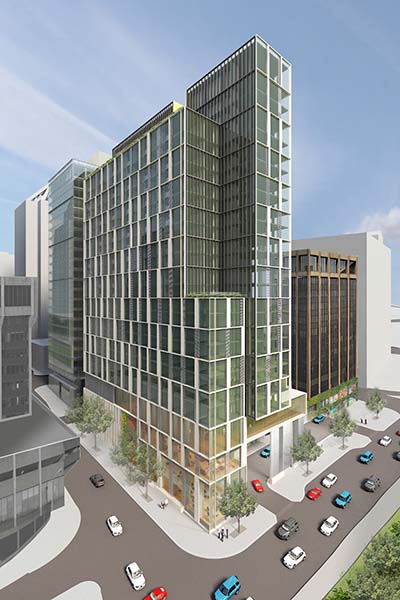
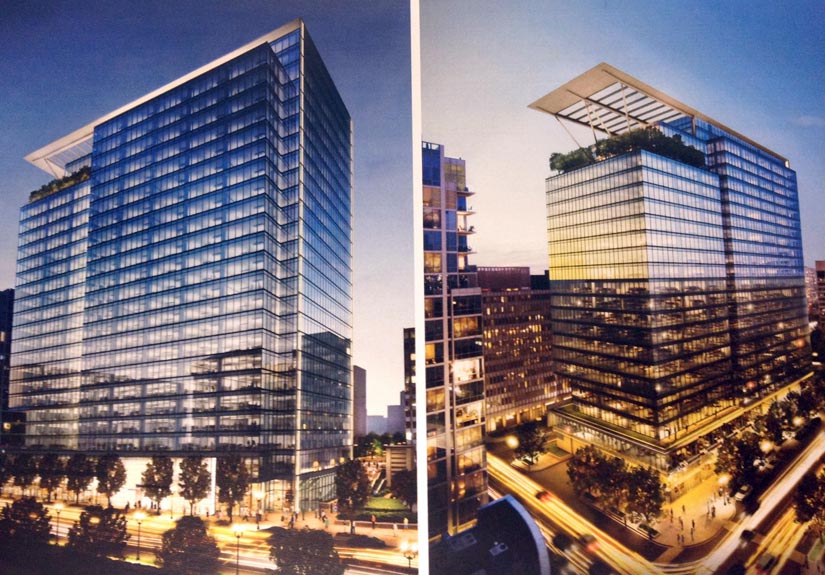
The Arlington County Board has approved a new 24-story office building in Crystal City — a building that’s being billed as a catalyst for Crystal City’s revitalization.

At 24 stories and 719,704 square feet, the building — 1900 Crystal Drive — will be second only to the Pentagon in Arlington in terms of floor space.

(Alhough 1900 Crystal Drive will be the tallest in Crystal City, the 580,000 square foot, 35-story office building currently under construction at 1812 N. Moore Street in Rosslyn is still expected to be the tallest countywide.)

The building includes 11,290 square feet of ground floor retail space, plus a five-level, 732 space parking garage and nearly 150 bicycle parking spaces. Vehicle parking will be available to the public on weekends, holidays and after 6:00 p.m. on weekdays. Some residents expressed concern about extra vehicular traffic as a result of the building, but it won approval from the county’s Transportation Commission by a vote of 9-0.

Vornado, the developer of 1900 Crystal Drive, agreed to a number of community benefits in exchange for the extra zoning density required for the project. Among the benefits:

  • $3 million contribution to the county’s Affordable Housing Investment Fund
  • $75,000 contribution to the county’s public art fund
  • $154,000 for Arlington utility fund, $20,000 for multi-space parking meters
  • Various improvements to 18th Street S.
  • $1.4 million for Arlington County Commuter Services and $65 Metro SmartTrip cards for building employees (to encourage transit commuting)
  • $2.76 million for a temporary half-acre park
  • $2.56 million for a four-pipe hydronic heating and cooling system, part of the county’s plan to encourage a district energy system for Crystal City

Though resident concerns about the building were largely assuaged, thanks to the addition of low-reflection glass and a 900 square foot community meeting room, Board member Chris Zimmerman voted against the project. (It passed 4-1.)

Zimmerman said that the community benefits associated with the project were relatively small for a building of its size, but ultimately his ‘no’ vote came down to his view that the building’s site plan does not pave a sure-fire path to the construction of a proposed, adjacent “Center Park.” Instead, the site plan just requires Vornado to work with county staff “to prepare an implementation plan for guiding the achievement of Center Park.”

(more…)


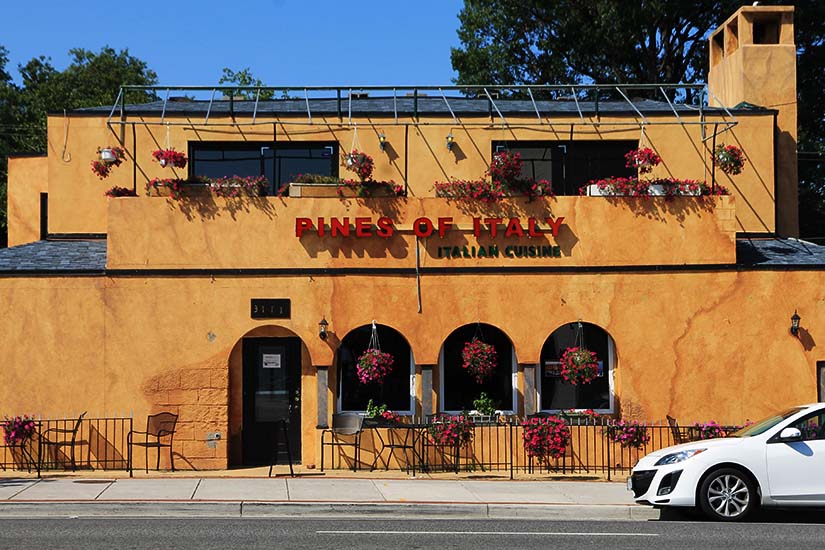
Pines of Italy (3111 Columbia Pike) is trying again this weekend to get the County Board to approve its request for a live entertainment permit.

Board members deferred the issue at their April meeting, when a number of neighbors spoke out against allowing the permit. The restaurant co-owners were given five months to establish the business as one that police do not have to visit regularly, and to improve relations with neighbors.

The county staff report indicates that police have not encountered problems at the site during the past five months. There were also no complaints from community members. Additionally, the owners attended an Arlington Heights Civic Association meeting, and are working with county staff on conditions for allowing the permit.

One such condition is that music and dancing would not be permitted after midnight on Fridays and Saturdays, and not after 10:00 p.m. on weeknights. In addition, entertainment would be restricted to the ground floor in the section of the building closest to Columbia Pike, in an attempt to avoid projecting noise toward residences behind the building. County staff also requested that the restaurant hire dedicated security for the parking lot. To improve the restaurant’s standing with the surrounding community, the owners are to coordinate a standing meeting with the Arlington Heights Civic Association in order to foster a relationship and ensure that any problems are addressed.

The owners have agreed to all the conditions, along with the recommendation of an administrative review in three months, and a County Board review in six months. Should issues come to light during the three month review, the permit could be brought before the County Board for an off-cycle review. Plus, at any time, if more than two violations of the conditions occur, the County Manager can order the restaurant to immediately cease live entertainment until the Board re-examines the permit.

The Arlington Height Civic Association has stood firm in its opposition to allowing Pines of Italy to host live entertainment, based on more than a decade of trouble with owners and clientele. At April’s Board meeting, neighbors reported fearing for themselves and their children due to extremely drunk patrons stumbling through surrounding residential areas, destroying property and starting bloody fights.

Although three applicants are listed on the permit request, one of them has been involved with the property since he purchased it in 1999 when it was Coco’s. In 2001, the County Board revoked Coco’s entertainment permit because of excessive police issues, and a new one was granted in 2002. Problems have arisen off and on since that time, with the peak coming in 2011 when the property was known as Padrinos.

Due to the owners agreeing to the conditions laid out in the staff report, county staff members recommend the County Board approves the entertainment permit for Pines of Italy.


The Arlington County Board on Saturday is expected to vote on contracts for two park projects in south Arlington.

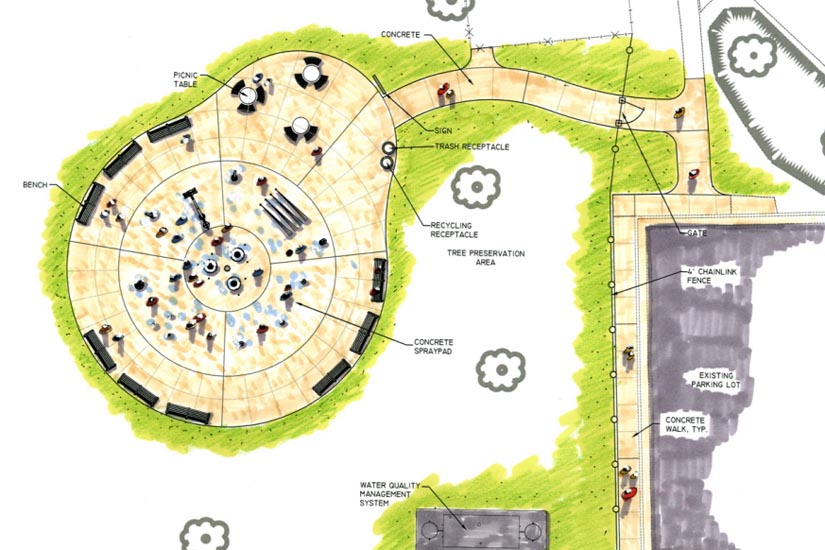
The Board will consider a $573,000 contract to build a new “sprayground” at Virginia Highlands Park, at 1600 S. Hayes Street near Pentagon City. The park was originally scheduled to open this past Memorial Day, but the project has been beset by delays. According to the staff report, the project was finally put out for bid in May, only to have the bids from contractors all came in higher than expected.

The sprayground was redesigned in order to put it within budget. A new water re-circulation system, which should save 113,000 gallons of water per week, was put into place. The sprayground was also reduced in scale, and certain features like a steel fence and a designed rock structure were eliminated.

The Board will vote on whether to award a $521,000 contract contract with a $52,000 contingency to Southern Playground Corporation.

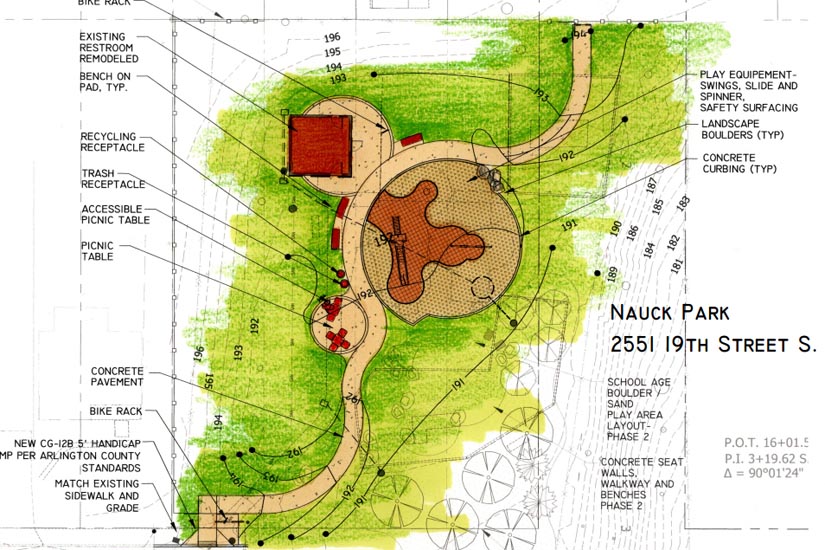
The other contract under consideration is for the tiny 0.6 acre Nauck Park, located at 2551 19th Street S.

Planning for playground upgrades to the park began all the way back in 2004. Construction was finally set to get underway in 2008 — following a plan to enhance amenities at the park while removing an existing restroom — when the Nauck Civic Association request that all work on the project stop, so that the park could be redesigned in a way that would keep the restroom. In order to keep the project within budget, the county scaled down other planned amenities within the park.

On Saturday, the Board is scheduled to consider a $316,000 contract — $287,000 plus a $29,000 contingency — with Avon Corporation. The contract covers renovations to the playground and the bathroom, as well as accessible entrances, an accessible picnic area, benches and bicycle racks.


(Updated at 2:30 p.m.) Approval of the site plan for a new development in Crystal City will come before the County Board at its meeting this Saturday, September 15.

The board is being advised by county staff to adopt four provisions in the development proposal for the office building, dubbed 1900 Crystal Drive. That structure’s site proposal is the first in Crystal City to be considered under the Crystal City Sector Plan, which was adopted in 2010.

Part of the proposal involves rezoning about 1.7 acres of the property from “C-O” to the “C-O-Crystal City” zoning district. Another measure requests approval for construction of the new 24-story office building, which would require demolishing the existing 11-story Crystal Mall III structure (1851 S. Bell Street).

The building, designed to achieve LEED Gold certification, would have nearly 720,000 square feet of office space and more than 11,000 square feet of ground floor retail space. There would also be six levels of parking, with a total of 732 spaces. The parking will be available to the public at a discounted rate after 6:00 p.m.

As part of the agreement with the county, the developer, Vornado, would provide curb, gutter and streetscape improvements around the perimeter of the property. The plan also involves the construction of an approximately 16,000 square foot interim park near the intersection of Crystal Drive and 18th Street South. The park, which is not part of the property included in the current rezoning request, will remain for an undetermined amount of time until a new building is approved and constructed on the site.

In addition to being close to several bus stops, the Crystal City Metro station and the Crystal City VRE station, the site sits just south of a planned 18th Street station for the upcoming Crystal City/Potomac Yard transitway. The proposed transitway would provide service from the Pentagon City Metro station to the Braddock Road Metro station in Alexandria, and would link with the Columbia Pike streetcar.

County staff members say they have not received any written complaints about the site plan from neighboring civic associations, though at least one neighbor told the Washington Examiner that he was concerned that the building would cast a shadow over his condominium and produce additional local traffic.

Staff is recommending the board approve the measures in question. The staff report cites 1900 Crystal Drive as a significant investment that will act as a catalyst for future development, and may create momentum in the market.

The staff report stated, “Considering the impacts of BRAC, it is critical to initiate the redevelopment process, which will be difficult considering market conditions in Crystal City.”

The report asserts that the Crystal City area would not receive the entire scope of listed benefits if the existing building were simply renovated, instead of constructing a completely new structure on the site.


Earlier this summer the Urban Libraries Council honored Arlington Public Library as its 2012 Top Innovator for Sustainability.

The council singled out the library’s “Bikes, Buildings and Broccoli” approach to transportation, energy and food sustainability as one of the factors that helped it win the award. Urban Libraries Council CEO Susan Benton spoke about the award at the July 24 County Board meeting, as seen in the video below from the county’s Arlington TV channel.


There’s been a large scale revamp of the sign regulations in Arlington’s Zoning Ordinance. The County Board approved changes to the ordinance during a marathon meeting last night (Tuesday) that stretched into the early morning.

The effort is intended to clarify gray areas, modernize the regulations and to make them easier for everyone to understand. Major issues included signs placed in the public right-of-way by private parties, the County Board’s involvement in reviewing sign requests and regulations for roofline signs.

Board members Walter Tejada and Chris Zimmerman pushed for a ban on commercial roofline signs — those installed above a height of 40 feet — but it didn’t pass. The county Planning Commission favored the ban, but county staff recommended keeping the signs. The remaining three Board members ended up siding with county staff.

The Board acknowledged the difficulty of resolving the issue and pleasing all involved parties; speakers representing business interests (and some residents) at the meeting spoke in favor of keeping the signs, while a number of residents said they’d like them removed.

“We are being overwhelmed by this development,” said resident Jim Hurysz, speaking against rooftop signs. “If I wanted to live in downtown Las Vegas, I’d live there.”

“I like signs. I look for signs to know where I am. It’s useful, it’s attractive,” countered Rosslyn resident Valerie Crotty. “You’re not living in a suburb. You’re not living in a rural area.”

“All of these companies are now asking themselves ‘does Arlington not want us here?'” said Arlington Economic Development Commission member Marty Almquist. “‘Are they embarrassed that we’ve decided to locate here? Are they not interested in this live, work, play concept that has been touted for the Metro corridor?'”

“In the past, Arlington could rely on companies to relocate here,” Almquist continued. “That will all change when the Silver Line opens in 2013. Tysons Corner and Reston are going to be Metro accessible… that means Arlington needs to have at its disposal a variety of incentives to our tenants to persuade them to move here or stay here… one of those incentives needs to be signage.”

Board member Libby Garvey supported the signs, saying they distinguish Arlington and highlight its exciting atmosphere as an urban village.

“It’s so hugely personal,” Garvey said. “To me, if they’re done well, the sign, it gives the building a personality.”

Under the new regulations, businesses will have to limit the use of lighted signs to 8:00 a.m to 10:00 p.m. (a midnight cut-off was originally proposed) if they face national monuments or lands, such as Arlington National Cemetery or the National Mall. Those signs also will be limited to only one per facade. The Board approved limiting the brightness of lighted signs that are within 100 feet of residential high rises.

Board member Jay Fisette noted that whether for or against lighted signs, addressing the issue in the ordinance is “evolutionary.” Previously, the county did not have any set standards for these types of signs.

Existing signs that previously had been approved but may not meet the new standards will be grandfathered in, at least for now.

Much of the approval process for new signs will now lie with county staff, instead of requiring Board approval. It was noted that this provision is not designed to allow the approval of a higher percentage of signs or to make the regulations less stringent, it’s simply to reduce how often individual sign issues have to go before the Board, so members are freed up to deal with other issues. Small businesses had frequently expressed disapproval over the length of time involved with the sign permitting process, considering 30-40 percent of them had to be approved by the Board.

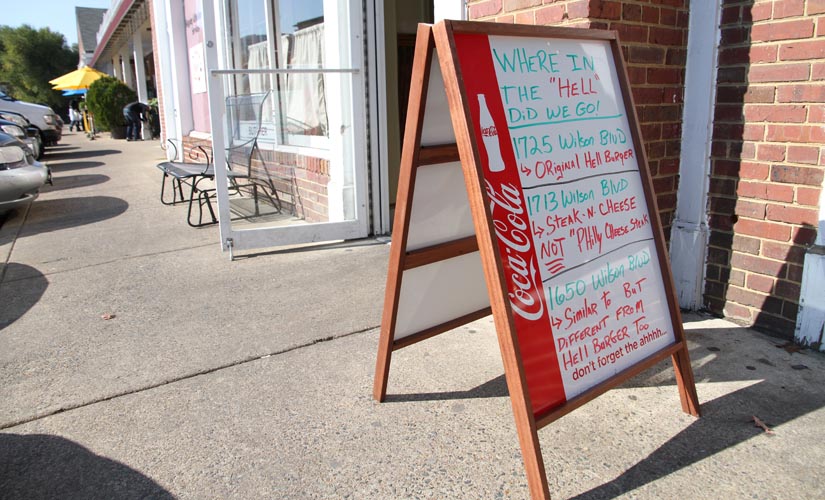
The final point garnering attention dealt with signs in the public right-of-way. Under the new regulations, temporary signs advertising lost pets or community events — such as a meeting or spaghetti dinner — will be allowed, provided they meet size requirements, are secured to the ground, and stay in place for no longer than seven consecutive days. Noncommercial signs that aren’t secured to the ground — like most A-frame signs — would be prohibited in the public right-of-way, but will still be allowed on private property.

The process of updating the signs regulations in the Arlington County Zoning Ordinance has been ongoing since December 2010. County staff members gathered input on the three revised drafts at a number of public hearings and workshops before presenting the Board with the final proposal last night.

Despite nearly six hours of back-and-forth debate on individual aspects of the ordinance, the Board eventually unanimously voted to approve it.

“I think it is not perfect, and I think it is like anything, going to change. But I’ve been unhappy with the sign ordinance in this county since I first got involved with the Board,” said Zimmerman. “I do think the bulk of this is a real step forward for the county.”


(Updated at 1:00 p.m.) The County Board has voted unanimously to follow the recommendation of the Arlington Commission for the Arts, approving $249,100 in grants for local artists and art organizations.

Of the 33 direct financial support application the Commission received, it recommended the Board approve 25 of them. All 25 recommended grant recipients are Arlington arts organizations or individual artists.

The Commission recommends three types of support for the arts — general operating grants, project grants and spotlight grants. General operating grants help organizations with the cost of overall administration and program offerings. Project grants assist organizations or individual artists with completing a specific project. Spotlight grants go to individual artists for their development and presentation of innovative new arts projects or programs.

The largest allocations of funds will go to Signature Theatre and Synetic Theatre, both slated to receive $45,000. Arlington Arts Center receives the next largest sum, at more than $20,000.

WSC Avant Bard is set to receive $18,077.71, but county staff noted that funds for the theater company are contingent on a management transition that’s currently underway.

“Avant Bard is in a transition period that has caused them to restructure their board and reconfigure their season,” staff wrote. “While staff and the Arts Commission firmly believe that WSC Avant Bard will be successful in this process, and are providing them with assistance through our non-profit resource center, our intention is to withhold their financial grant until progress is ensured and their first performance has been scheduled.”

The funds were appropriated in the County Board’s FY 2013 adopted operating budget for Arlington Economic Development. See the full list of monetary grants, after the jump.

(more…)


An entire block of Rosslyn is going to be redeveloped, now that the County Board has approved the rezoning and phased development site plan for the 1 million square foot Rosslyn Gateway project.

The mixed-use project covers the 2.2 acres of land bounded by N. 20th Street on the north, N. Moore Street on the east, N. 19th Street on the south, and Fort Myer Drive on the west. The existing two office buildings will be replaced with three buildings — an office building, a residential tower and a hotel/residential building.

The County Board voted 4-1 to approve the project at its meeting last night (Tuesday).

“Rosslyn Gateway is a turning point for the County’s efforts to transform Rosslyn into a more welcoming neighborhood for the people who live, work or visit there,’’ said Arlington County Board Chair Mary Hynes. ‘’This is exactly the sort of high quality, beautifully designed, mixed use development we hoped that the rezoning of Rosslyn would encourage.”

The project will be constructed in three phases:

  • Phase 1 — 25-story, 490,056 square-foot office building with 8,688 square feet of ground-floor retail.
  • Phase 2 — 25-story building with 133 residential units, 148 hotel rooms and 10,001 square feet of retail.
  • Phase 3 — 20-story residential tower with 140 residential units and 7,687 square feet of ground-floor retail.

Under an agreement with developer JBG, the county will vacate certain easements and public rights-of-way it owns, including the service road that loops around part of the block. JBG would pay compensation to the county for the vacated areas, listed at about $7.5 million.

In addition to removing the service road, three sky bridges will also be removed to accommodate the new development. The sky bridges will be replaced with 12 foot wide clear sidewalks, crossings and street trees to improve pedestrian safety and encourage connections between the buildings. Parking will be located beneath the buildings.

Businesses on the block, such as Continental (1911 Fort Myer Drive), will be affected by the redevelopment. However, it’s unclear if they will relocate or if they will negotiate with JBG to take up some of the ground floor space in the new development.

JBG also agreed to provide $30 million worth of public benefits as a condition of site plan approval. The benefits include contributions to the county’s affordable housing fund, Gateway Park planning efforts, off-site transportation improvements and the Corridor of Light public art project.

A county staff member says the timeline for the project is still up in the air, although JBG’s current work on Central Place will likely take precedence over beginning construction on Rosslyn Gateway. However, due to county guidelines approved in the agreement, work would have to begin sometime in the next five years.


W-L Softball Field Approved — The Arlington County Board has unanimously approved use permits for a new softball field at Washington-Lee High School. The $1 million field will include lighting, grandstands, and a press box.

Comcast Doubling Internet Speeds — Arlington is one of the areas where Comcast is increasing its internet speeds this week. The company says it’s doubling the internet speeds of Arlington customers who currently have the Blast 25 Mbps or the Extreme 50 Mbps internet service, at no additional cost. “This is the seventh time since 2002 that Comcast has increased speeds for its customers,” Comcast spokeswoman Alisha Martin said.

Encore’s ‘Pirates of Penzance’ Reviewed — The Encore Stage and Studio production of “The Pirates of Penzance” — currently playing at the Thomas Jefferson Community Theater at 125 S. Old Glebe Road — is “two hours of solid entertainment for all ages,” according to a newspaper review. [Sun Gazette]

Courtesy photo


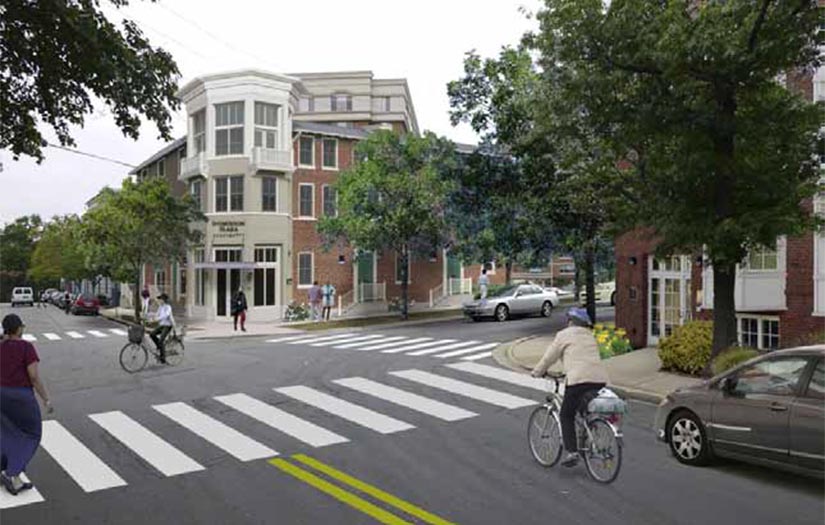
The County Board decided to approve the Columbia Pike Neighborhoods Area Plan during a meeting Monday night that stretched into the early hours this morning. The large scale plan aims to transform Columbia Pike into a more urban and walkable community, while maintaining affordable housing over the next 30 years.

The plan involves increasing density along the Pike — as many as 14,800 new apartments and condo units over the next 30 years — partially through allowing the construction of taller buildings. It also includes retaining approximately 4,500 affordable housing units, with all of them available at 60 percent of the Area Median Income (AMI). Those units are privately owned and operated, with the possibility of the county providing incentives for property owners. It also calls for the county, over the next 30 years, to develop 2,150 new rental units along the Pike that will be contractually committed to remain affordable.

“This is the most ambitious set of actions the county has ever adopted for preserving affordable housing as part of an area plan,” said Arlington County Board Chair Mary Hynes. “Our experience has taught us that if we do not plan for affordable housing from the outset, rising property values make maintaining our diversity in housing choices and rents very difficult.”

For about three hours, 47 residents addressed the Board, both in favor of and against the proposal. The Board spent an additional two hours debating various aspects of the overall plan, such as the amount of affordable housing and how to fund it.

Much debate ensued over the issue of how much affordable housing developers should be required to provide, using Form Based Code to increase density and receive incentives. County staff had recommended 20-25 percent of net new development be reserved for affordable housing. The Board voted in favor of increasing the number up to 35 percent.

Financing the preservation of affordable housing through means such as a tax increment finacing area (TIF) split the Board. Members Chris Zimmerman and Walter Tejada supported the idea of a TIF, which would give 50 percent of revenue from increased commercial property assessments along Columbia Pike back to affordable housing initiatives in the area.

Zimmerman said a TIF would ensure some value goes back to the community to help mitigate any harm the development plan would cause. He also noted that the Affordable Housing Investment Fund (AHIF) would need more funding — an additional $200 million over 30 years, according to county staff — to meet the county’s goals. He believes a TIF would be an appropriate way to boost the fund.

“The fact of the matter is, we don’t have enough money going into AHIF now on an annual basis to meet the goals the county has set. There’s no way that we’re going to get what we need entirely, or probably not even mostly, out of new development,” Zimmerman said. “If we’re going to be serious about achieving the goal here, we have to do a lot more.”

Board member Jay Fisette said the TIF proposal was thrown at him just hours before the meeting. He said it is currently too unexplored and the Board hadn’t been given enough time to examine the concept.

“I cannot support this today. I don’t think it was expected that this was going to be part of the action today,” said Fisette.

Hynes agreed, saying there may be alternate ways to boost the AHIF.

“I do support making regular increases, progressive increases, in the AHIF fund,” said Hynes. “In my view, we’re just not ready to do it this way.”

Tejada clarified that the TIF would not be an additional tax, but would come from the extra money generated by the proposed higher density. He said it’s important if the county wants to ensure the future of small businesses on the Pike.

“Currently we have a lot of businesses in the Columbia Pike area that are very nervous whether they’re going to be able to stay there,” said Tejada. “It’s up to us to act now to protect them.”

In the end, the TIF proposal was struck down by a 3-2 vote. Following that vote, the Board approved a motion to study a TIF in the future.

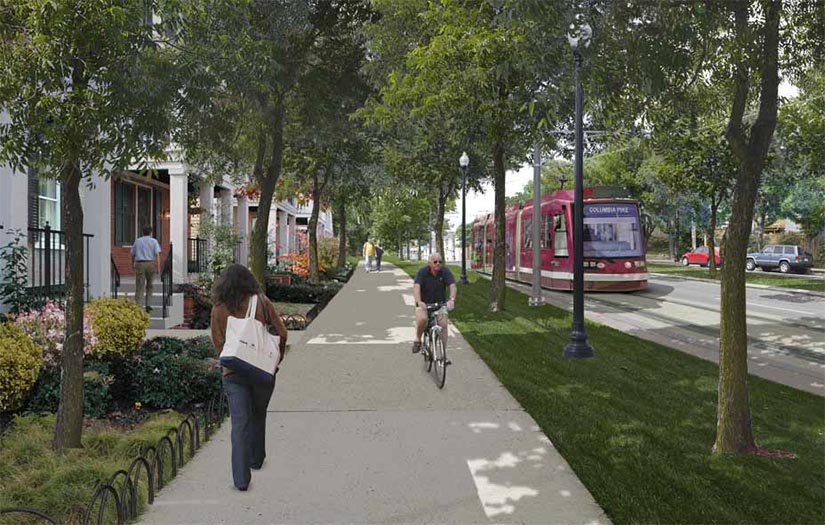
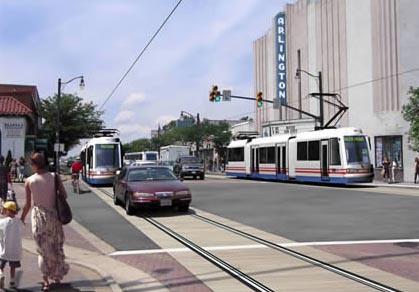
Later in the night, the Board approved another aspect of the long term plan for the Pike — the construction of a streetcar.


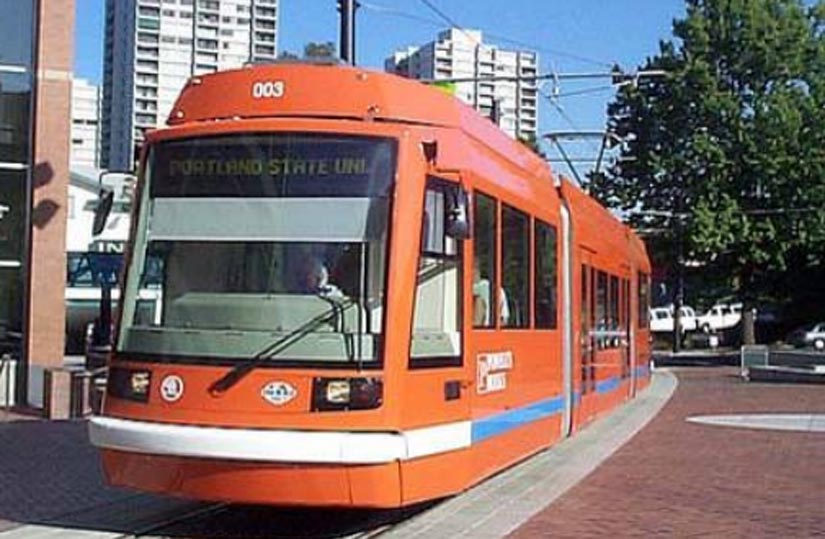
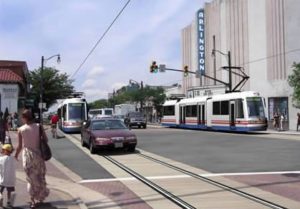
(Updated at 8:55 a.m.) The Arlington County Board voted early this morning to approve the streetcar as the preferred transit option for Columbia Pike.

The Board followed county staff’s recommendation in endorsing the streetcar over enhanced or articulated bus service. Many speakers, including Pike residents plus Republican and Green Party members, urged the Board to consider enhanced or articulated bus service as a cheaper alternative to increasing transit capacity along the Pike.

“I do not believe in the trolley because I just don’t think we have the money,” said resident Paulette Gray. “When you lose your income you don’t keep the cable and you don’t build the big addition.”

Other streetcar opponents said bus service would be more reliable, since it doesn’t rely on rails that could be blocked by accidents or electricity that would get cut off during storms.

“Can’t we come up with something much more inventive for our transportation, other than a trolley?” asked resident Antonios Perros, who recounted how streetcars in D.C. in the 1950s would get stranded during big storms. “It just doesn’t seem feasible that we should have a trolley in the 21st century.”

Other speakers, including residents, real estate developers, business boosters, and county transportation committee members, stated their support for the streetcar, saying it would bring needed development and revitalization to the Columbia Pike corridor.

“We think it is critical to expand Arlington’s core transit options for the future,” said Mitch Bonanno, an executive with Vornado/Charles E. Smith.
“Small businesses [along Columbia Pike] feel that what they are lacking today is enough customer traffic,” said Columbia Pike Revitalization Organization Executive Director Takis Karantonis, who argued the streetcar would bring additional restaurant and retail customers to the Pike.

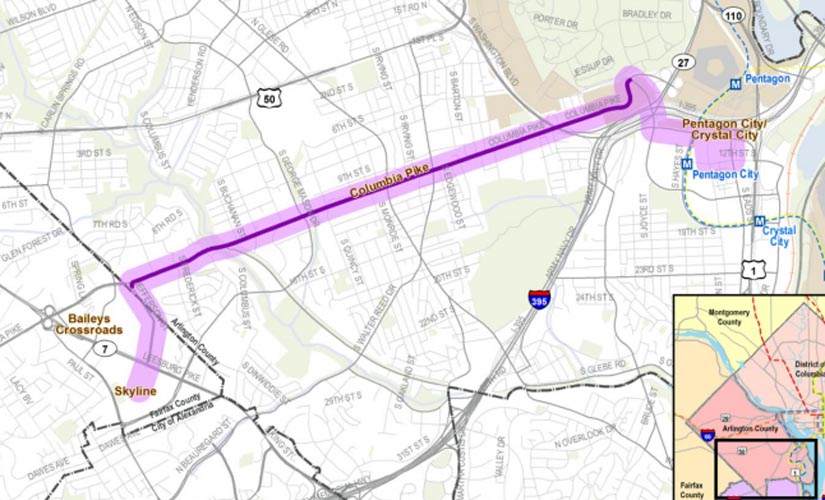
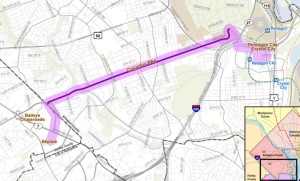
In addition to the development potential of fixed rail infrastructure, other arguments for the streetcar include increased travel capacity, ease of boarding, and the regional connectivity to Fairfax County. The Pike streetcar line is expected to extend five miles from the Skyline area of Fairfax County in the west to the Pentagon City Metro station in the east.

Some streetcar skeptics weren’t convinced of the economic development potential of streetcars versus buses. Others weren’t convinced that new development was necessarily a good thing.

“It is clear that the County Board’s goal here is not to put efficient transit on the Pike, your goal is to completely and massively redevelop the Pike,” said perennial county government critic Jim Hurysz.

“News flash folks, we could CUT commercial property taxes to invigorate the local economy rather than pay for a trolley,” said former Republican County Board candidate Mark Kelly, on Twitter.

By our count, there were 11 speakers in favor of the streetcar, and 12 against. The speeches went into the early morning hours, and the Board’s ultimate vote on the matter didn’t take place until around 1:30 a.m.
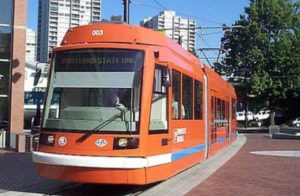
The Board voted 4-0 in favor of the streetcar. Libby Garvey, who’s been on the Board for about 4 months following a special election earlier this year, abstained. In announcing her abstention — saying she “didn’t have enough time” to fully consider the matter — Garvey stated she had significant reservations about the streetcar.

“I cannot see how a streetcar is anything more than a bus with tracks and overhead wires,” she said. “At the moment my common sense is telling me modern bus transit systems are actually better.”

In the end, other Board members disagreed, and voted essentially the same way they did in 2006, when the Board first approved a streetcar system for Columbia Pike.

“I see the… streetcar as the next generation of a regional rail system,” said Jay Fisette. “To me this is an investment.”

The streetcar project is expected to cost $250 million. Of those costs, Arlington County will be responsible for 80 percent, while Fairfax County will be on the hook for 20 percent. Of Arlington’s share, officials are hoping successful grant applications will result in 30 percent being paid for by the federal government, with another 14 percent being paid by the state. Arlington County commercial and industrial taxpayers are expected to pay 56 percent of the costs.

Annual operating costs are estimated at between $22 and $26 million.

County staff said the cost of the streetcar line could be recouped via additional tax revenues attributable to streetcar-fueled development along the Pike. A “conservative estimate” of the tax boost suggests the county could collect $291 million in additional revenue over 30 years.

The Board’s vote — to accept an Alternatives Analysis and Environmental Assessment and adopt the streetcar as the preferred alternative — will pave the way for the County Manager to apply for federal New Starts/Small Starts transit funding. The application process is expected to begin in September.

Before considering the streetcar, the Board approved the sweeping Columbia Pike Neighborhoods Area Plan, which is expected to bring more development and affordable housing to the Columbia Pike corridor.


View More Stories