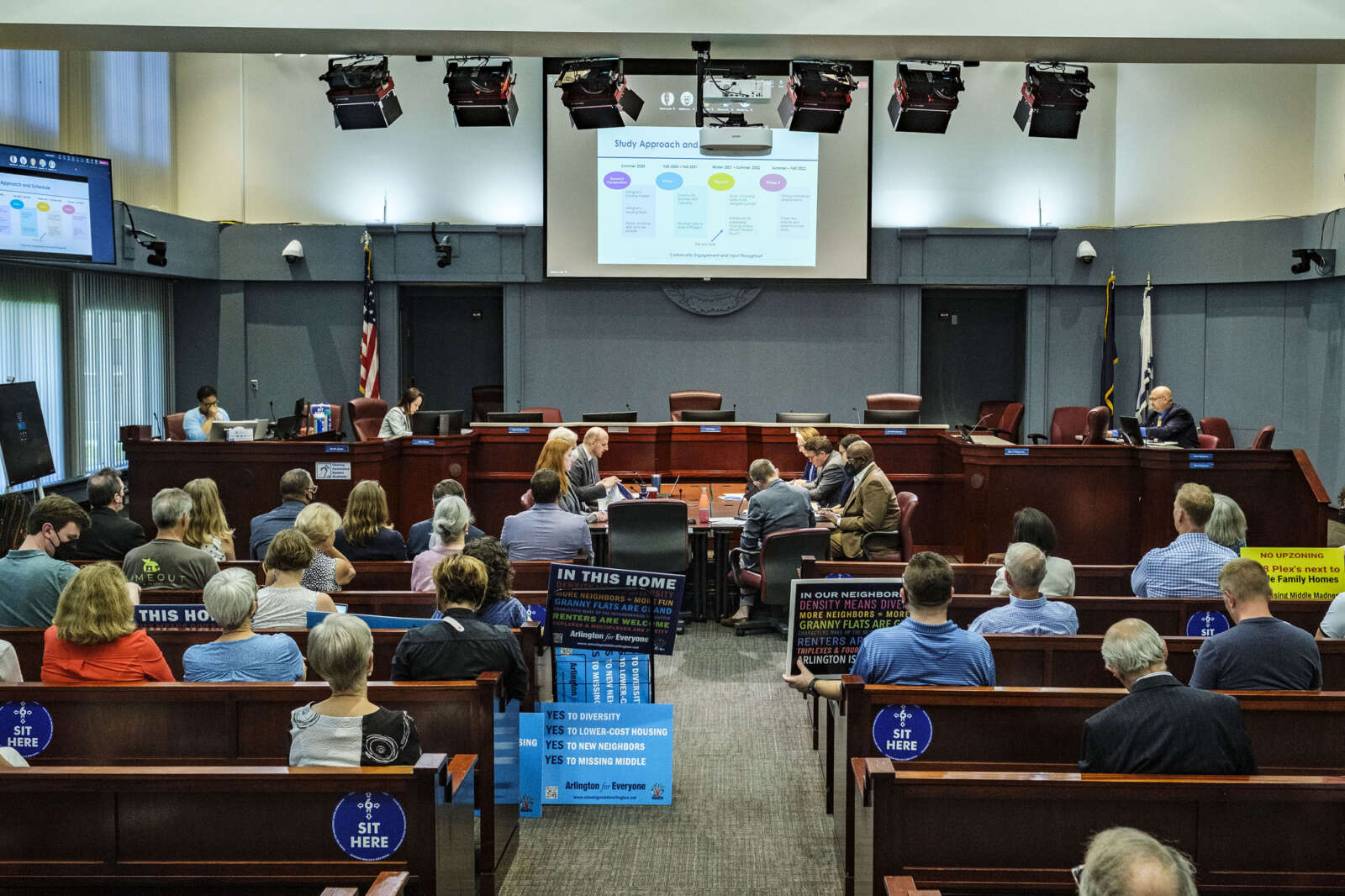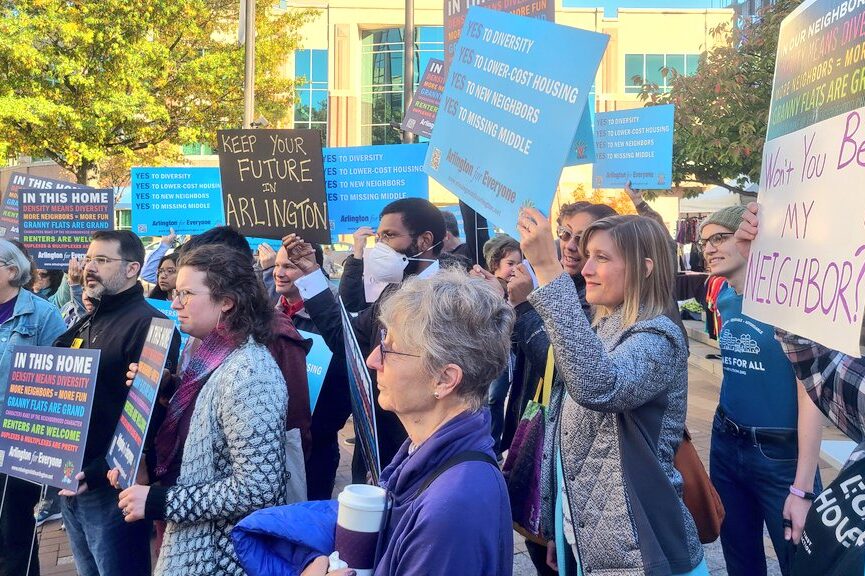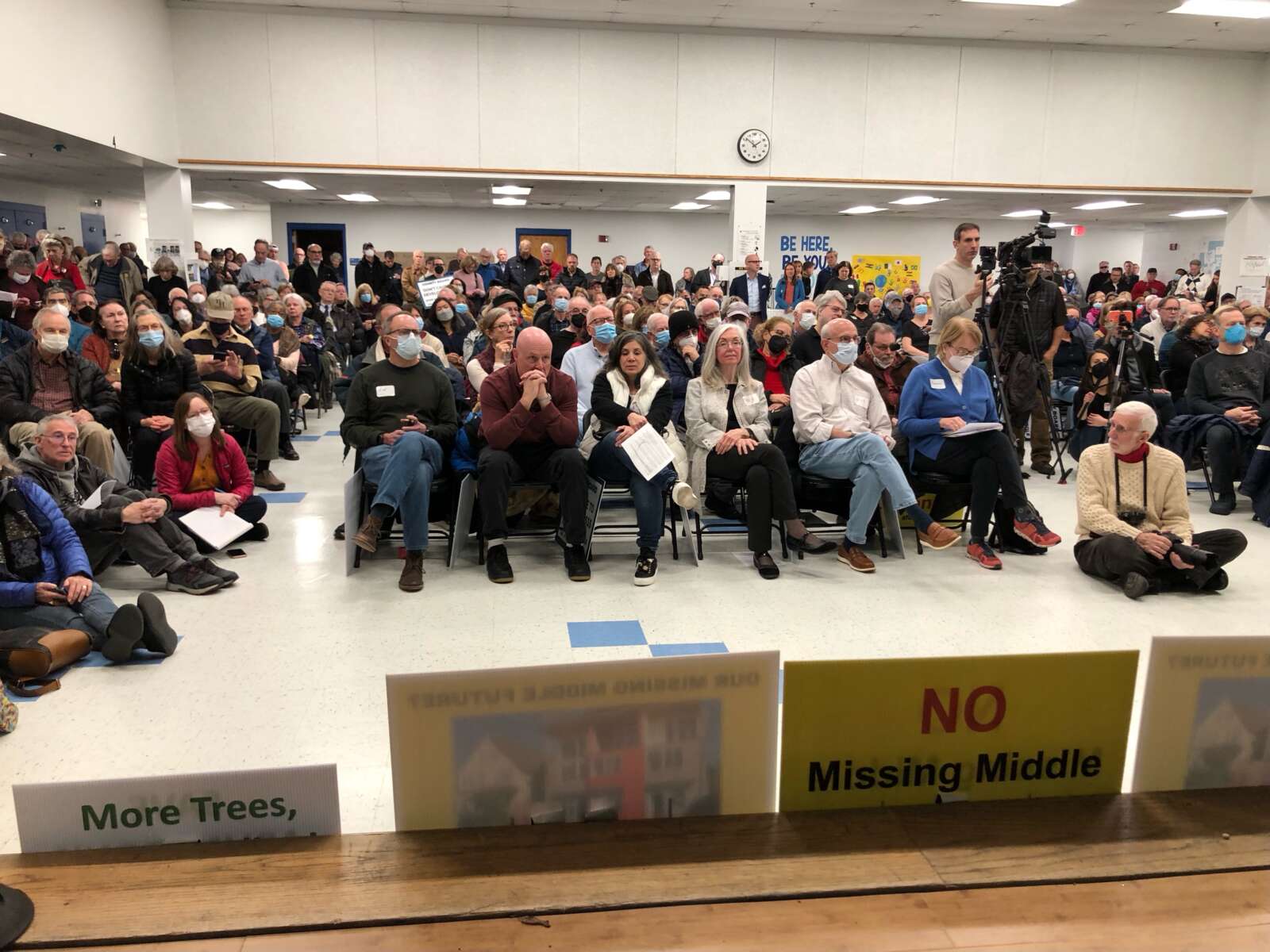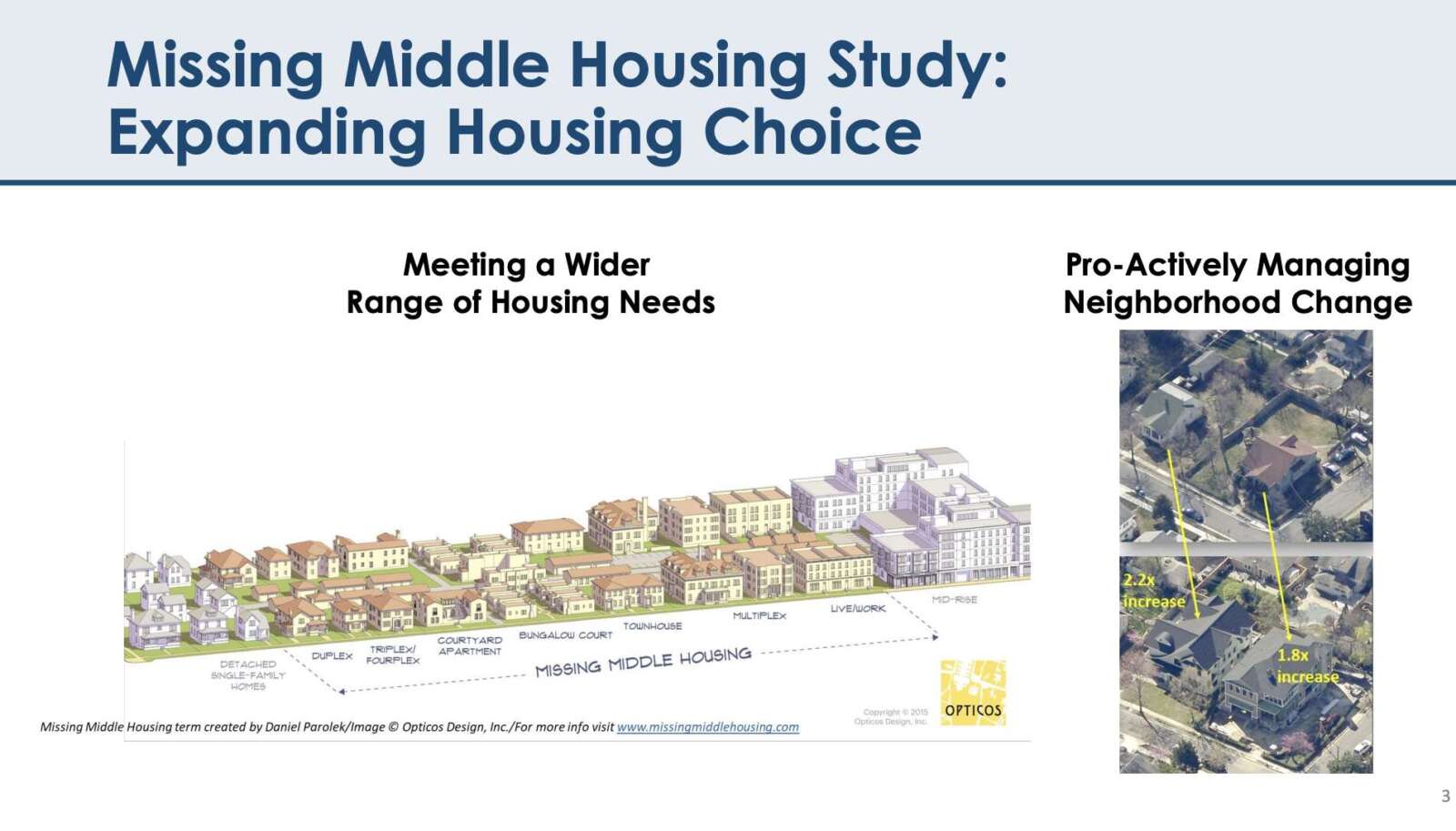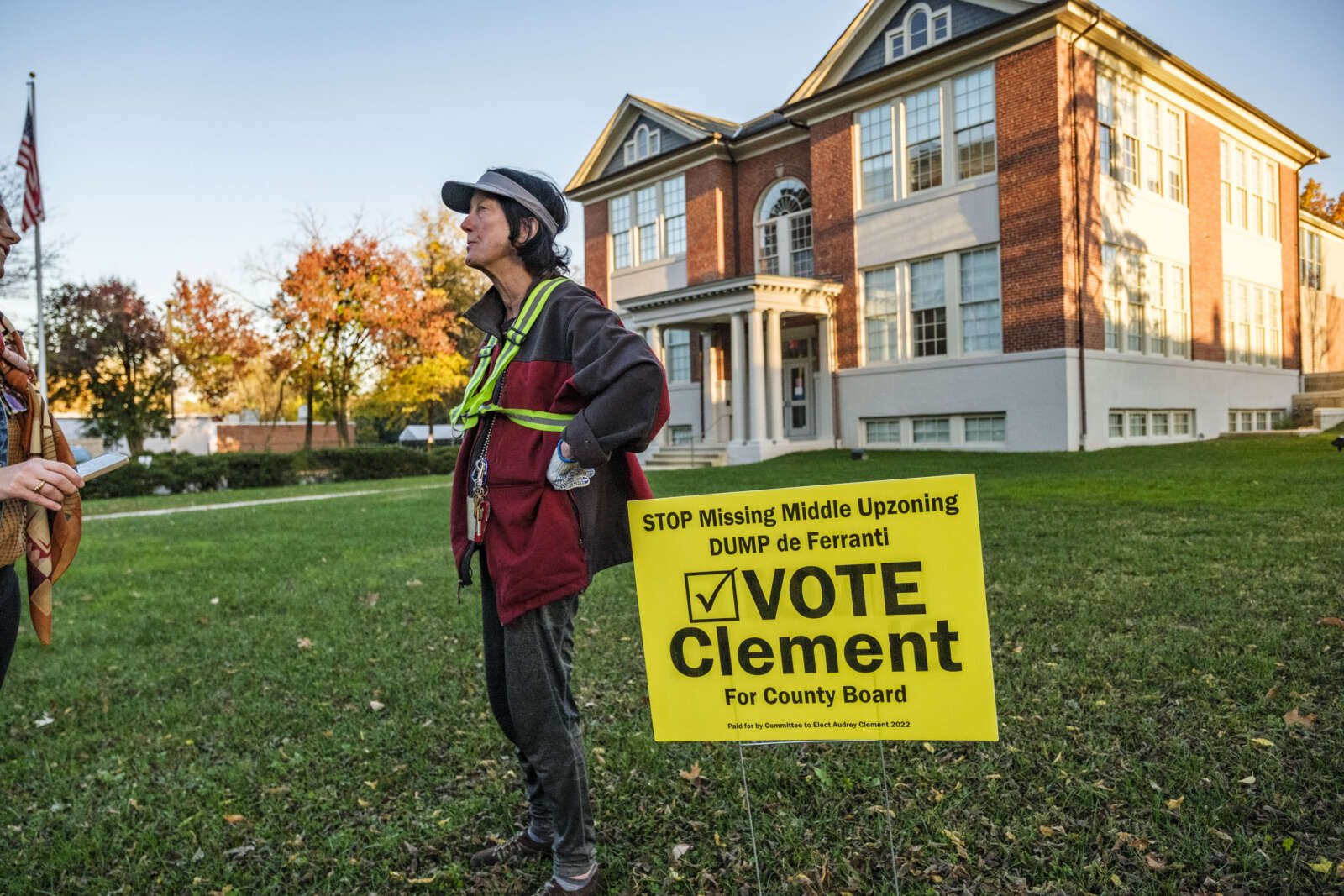
(Updated at 12:20 p.m.) Some 200 speakers and seven hours of public comment later, the Arlington County Board will decide whether to authorize hearings on a proposal to allow “Missing Middle” housing later today (Wednesday).
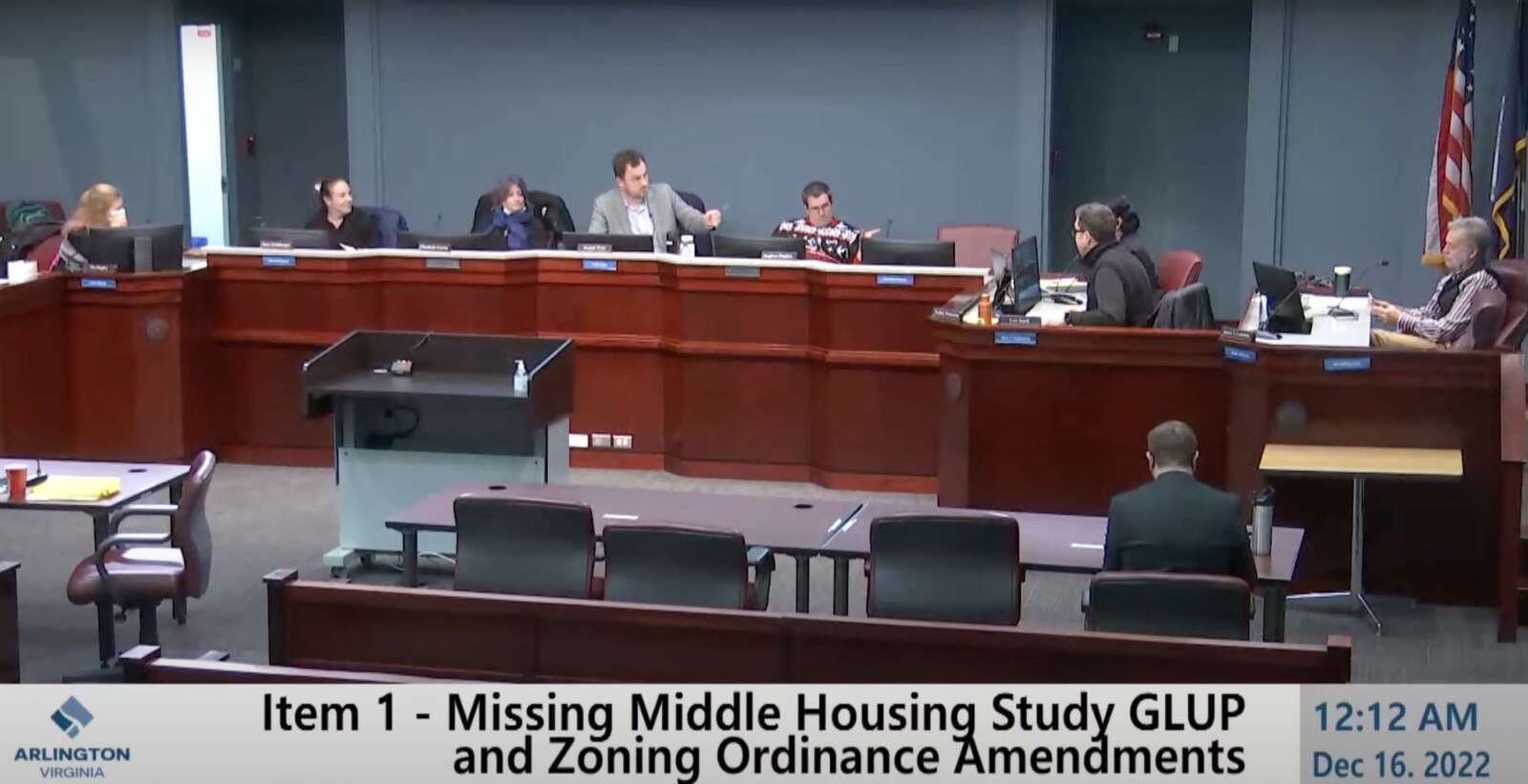
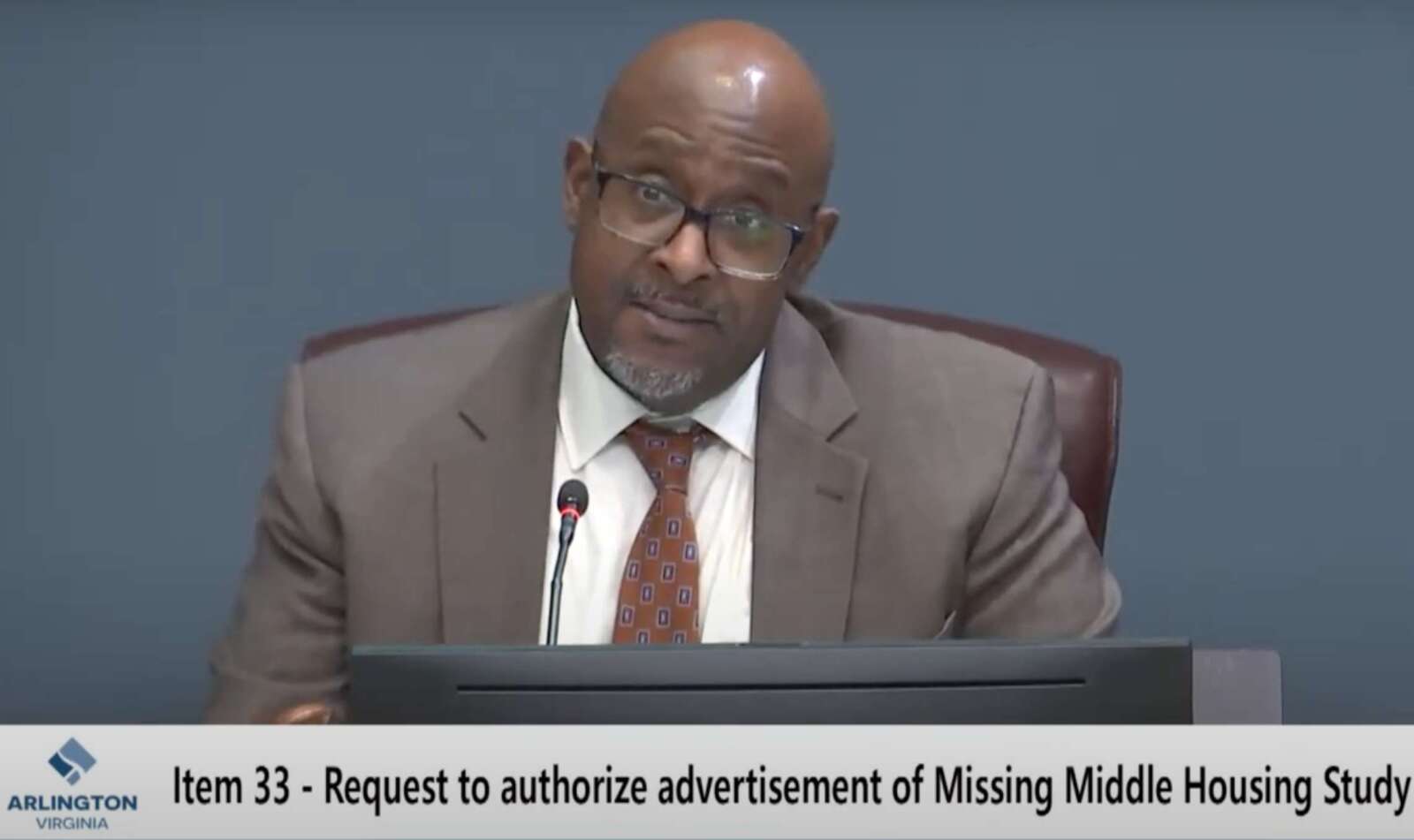
The request to authorize hearings on the zoning proposal was originally placed on the agenda for the Board’s Saturday meeting. After a marathon hearing on Saturday, public comment on the item carried over into the Board’s Tuesday meeting. Rather than make a decision last night, Arlington County Board Chair Christian Dorsey said members will take an extra day.
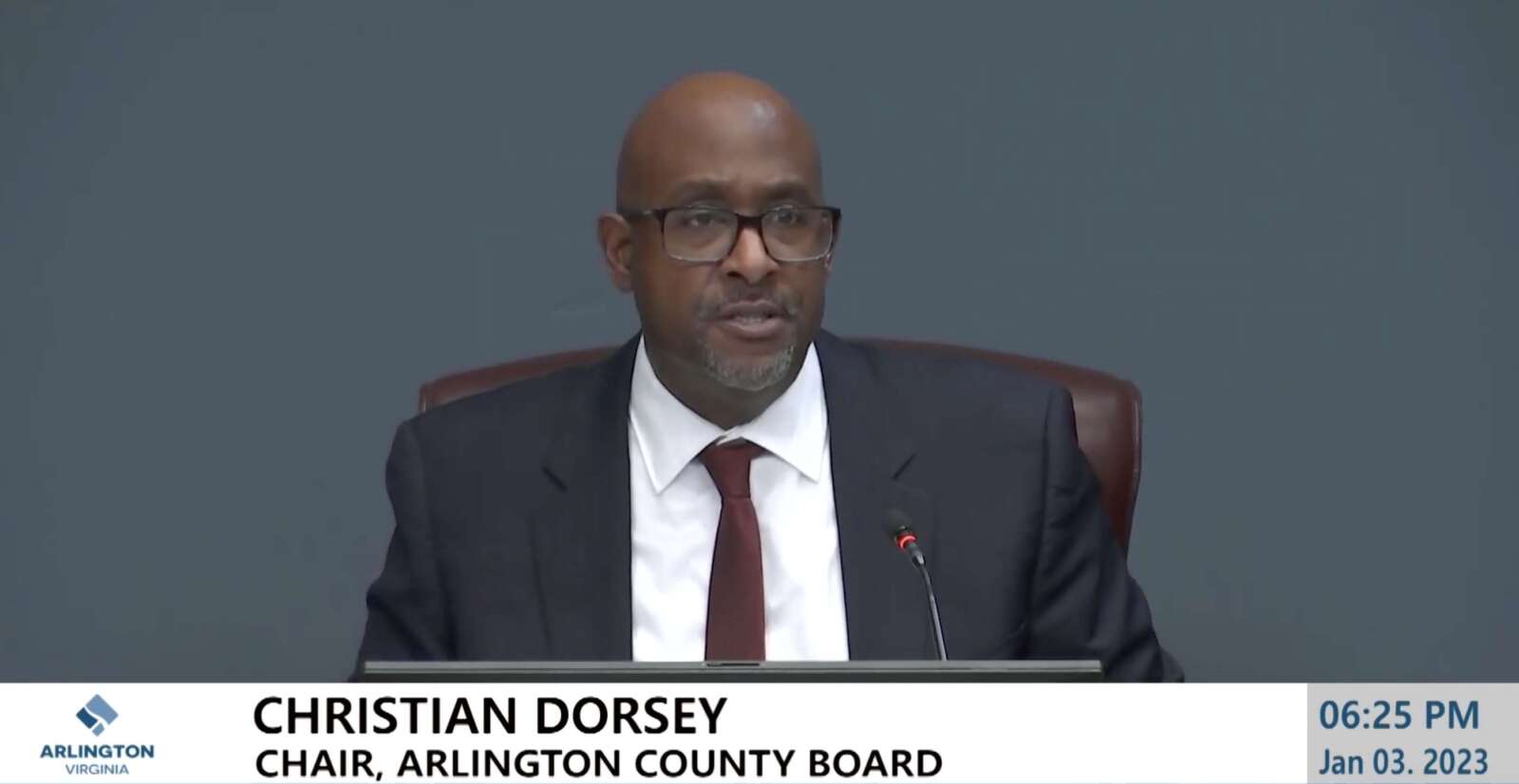
“The matter is with the Board but we’re not going to pick this up right away, colleagues, we are actually going to consider all the testimony we heard on this past Saturday and tonight — the nearly 200 registered speakers — and convene again once we are able to properly deliberate tomorrow afternoon at 4:00 p.m.,” Dorsey said at the conclusion of the meeting.
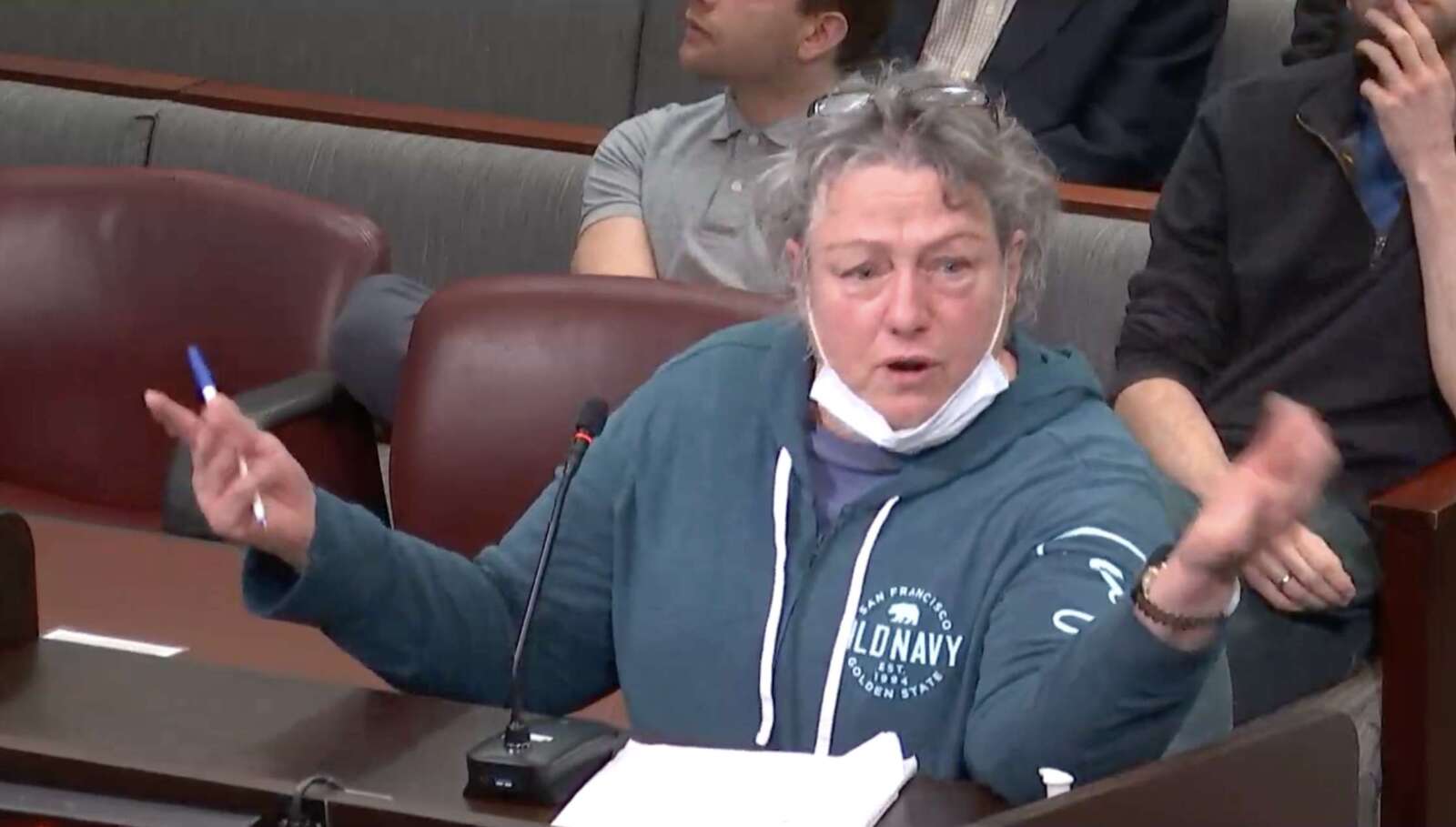
Last night’s meeting had fewer speakers than Saturday’s but featured a contentious exchange between Dorsey and an opponent of the Missing Middle proposal.
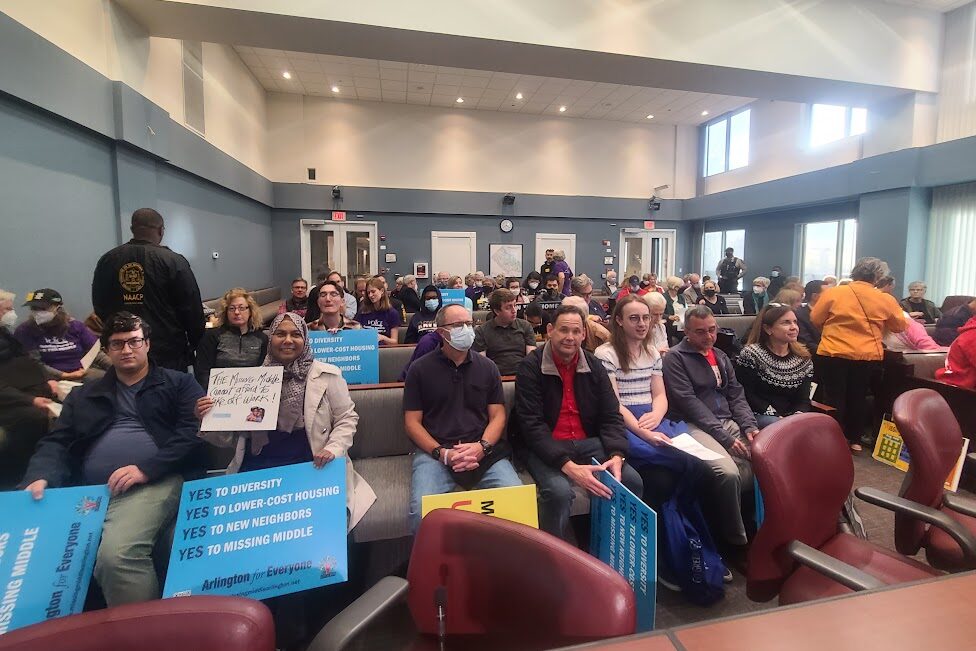
Dorsey intervened twice during the meeting, as some people objected to Missing Middle supporter Jane Green standing behind other advocates of the proposal, holding a sign so it would be visible on camera.
“We had 180 people speak on Saturday and we didn’t have any of this. We’re not going to have it with 20, alright?” Dorsey said. “Let the people speak. You can’t dictate where people stand, so let’s just continue, thank you.”
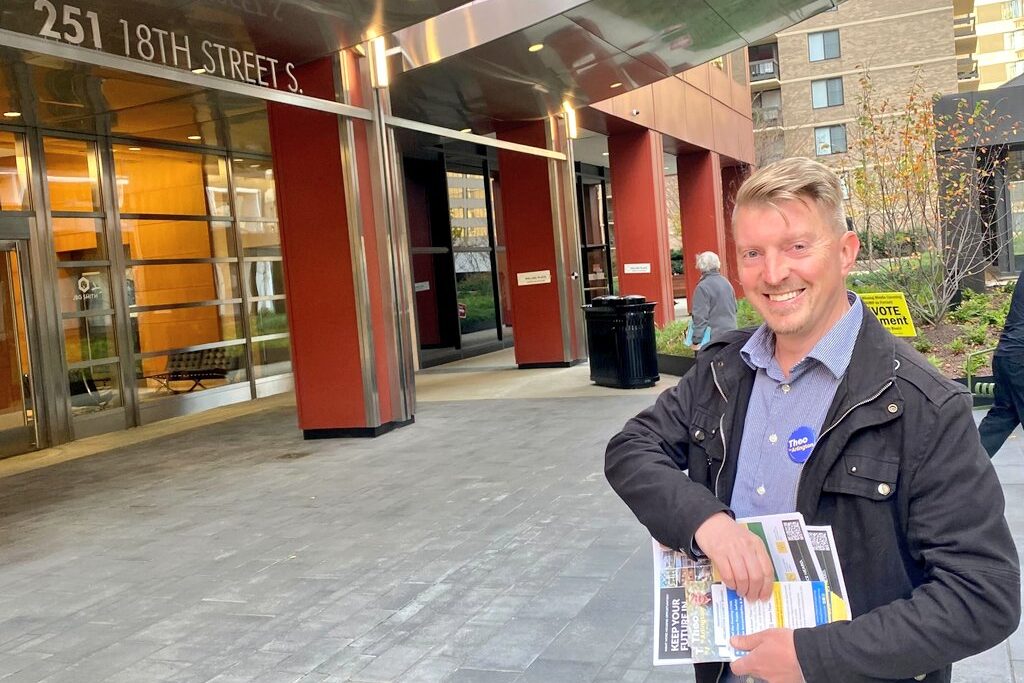
When it was Green’s turn to speak, a man moved to stand behind her and next to Adam Theo, a former County Board candidate and the co-founder of YIMBYs of Northern Virginia, an organization that supports the zoning changes.
“Sit down, please,” Dorsey can be heard saying off-screen. “This is childish, this is childish. I will clear the room. Stop it, everybody. I know tensions are high. I know everybody’s excited but we can all be grown-ups, okay? You can either sit down or you can be removed. It’s your choice.”
A man can be heard saying “No, you grow up,” in response to Dorsey. Later, he adds that the Board should “put this to a referendum and let the county vote.” (The county can hold referenda on bond issuances but a referendum on a county ordinance or policy would require authorization from the state legislature, as Virginia is a Dillon Rule state.)
A total of 17 speakers took the podium last night, including many representing organizations, thus giving them three minutes to speak as opposed to the two minutes allotted individuals speaking on their own behalf Saturday.
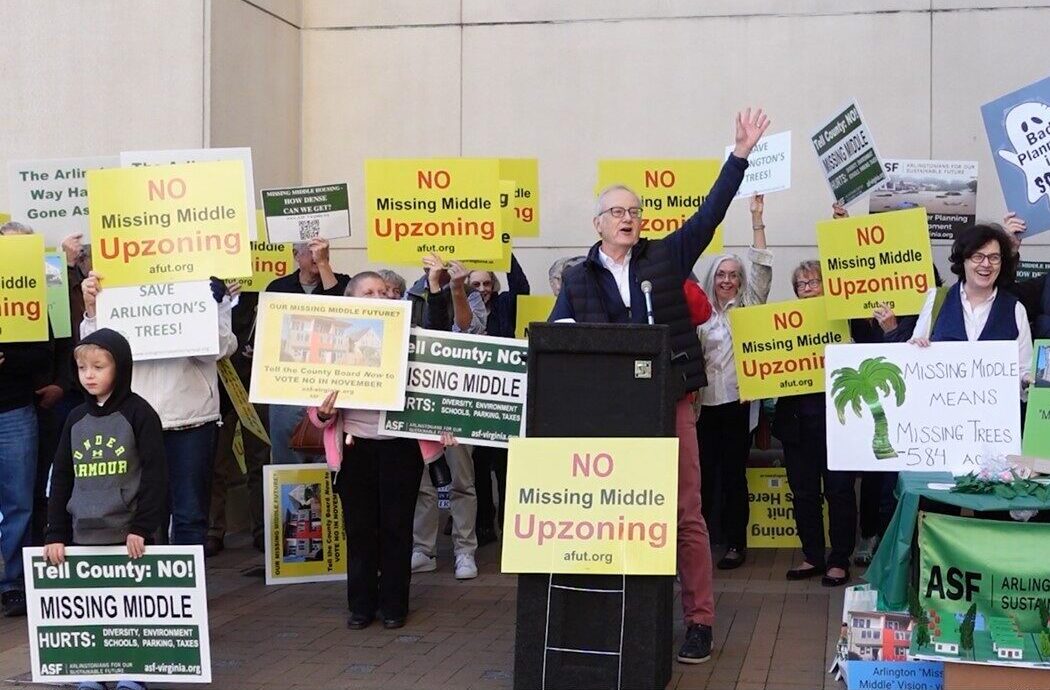
First up was Jon Ware, speaking on behalf of Arlingtonians for Our Sustainable Future, which opposes the measure.
Saturday embodied a lot of what frustrates folks about this process. In the week prior, the county put out 150 pages of dense materials with new zoning that goes far beyond the core specifics released only on Halloween. On Saturday, the county cut public speaking times, and talked at the people followed by the people often talking past each other.
He asserted that the people who will be able to afford the 2-3 bedroom Missing Middle housing units will mostly be white, and the county has no process or metrics to “track who gets displaced,” a mechanism that Portland, Oregon, which allows these types of dwellings, does have.
NAACP Arlington branch second vice president Bryan Coleman said the “elephant in the room” is the lack of diversity among Missing Middle opponents, especially those who are talking about gentrification and displacement.
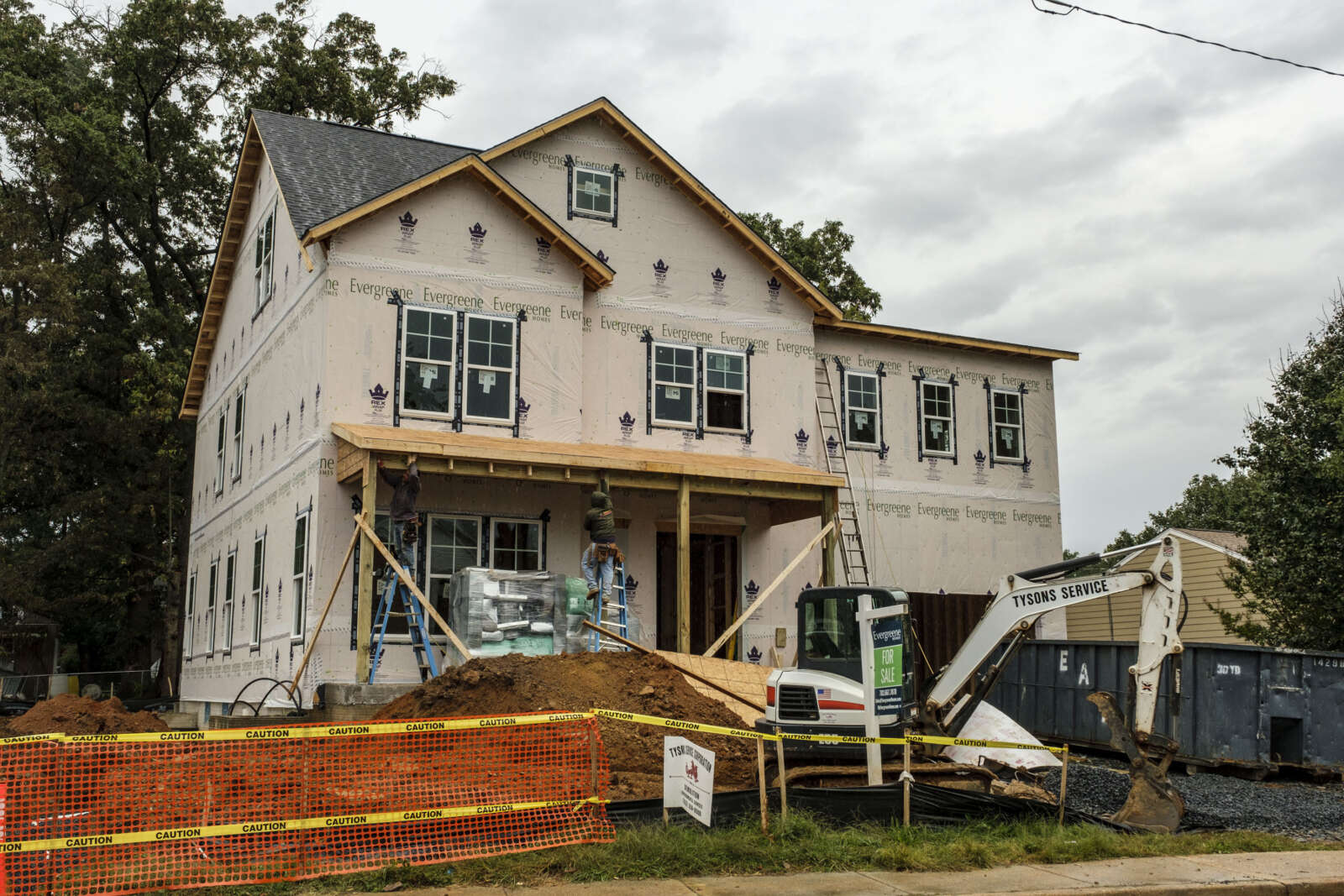
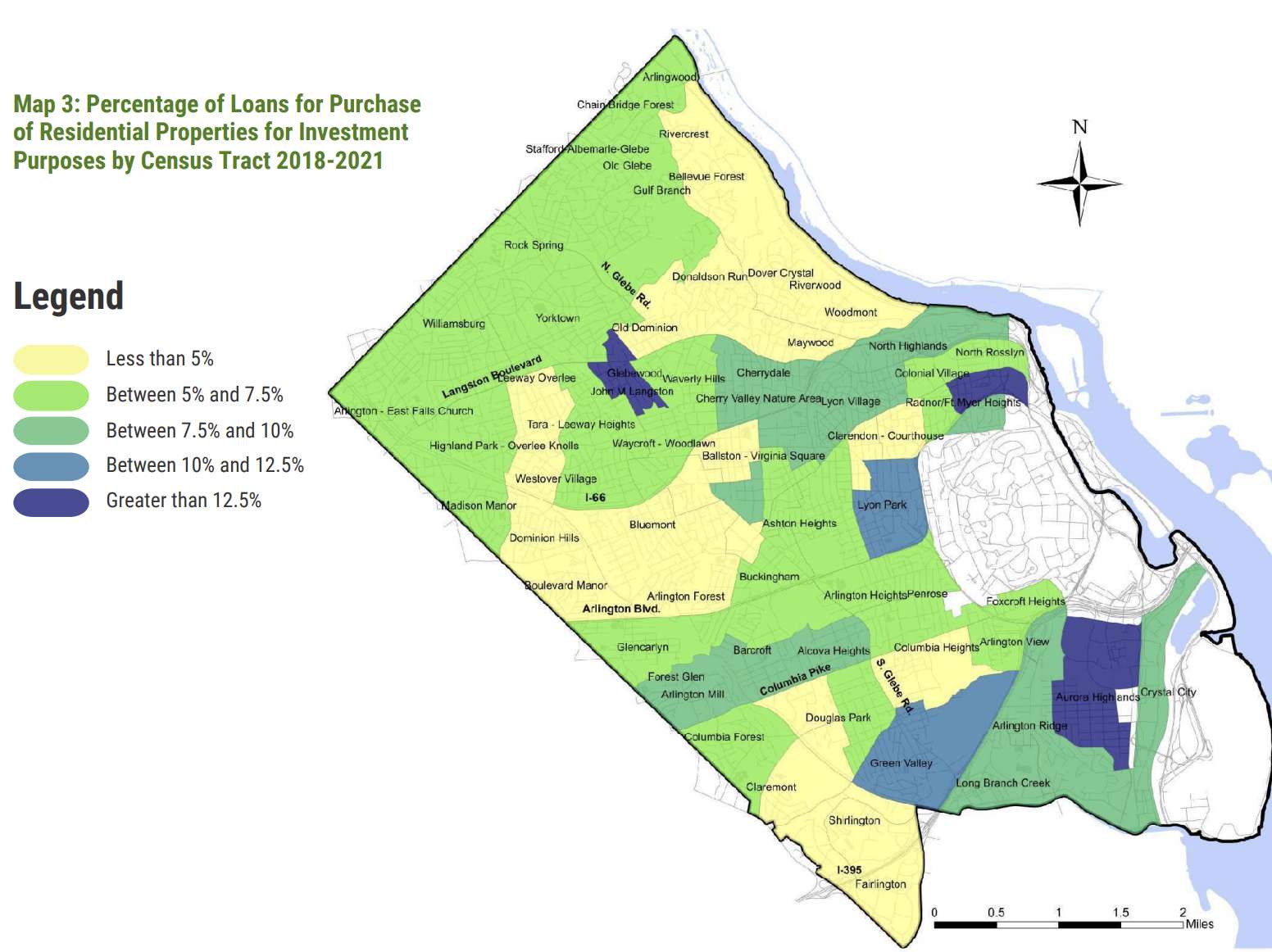
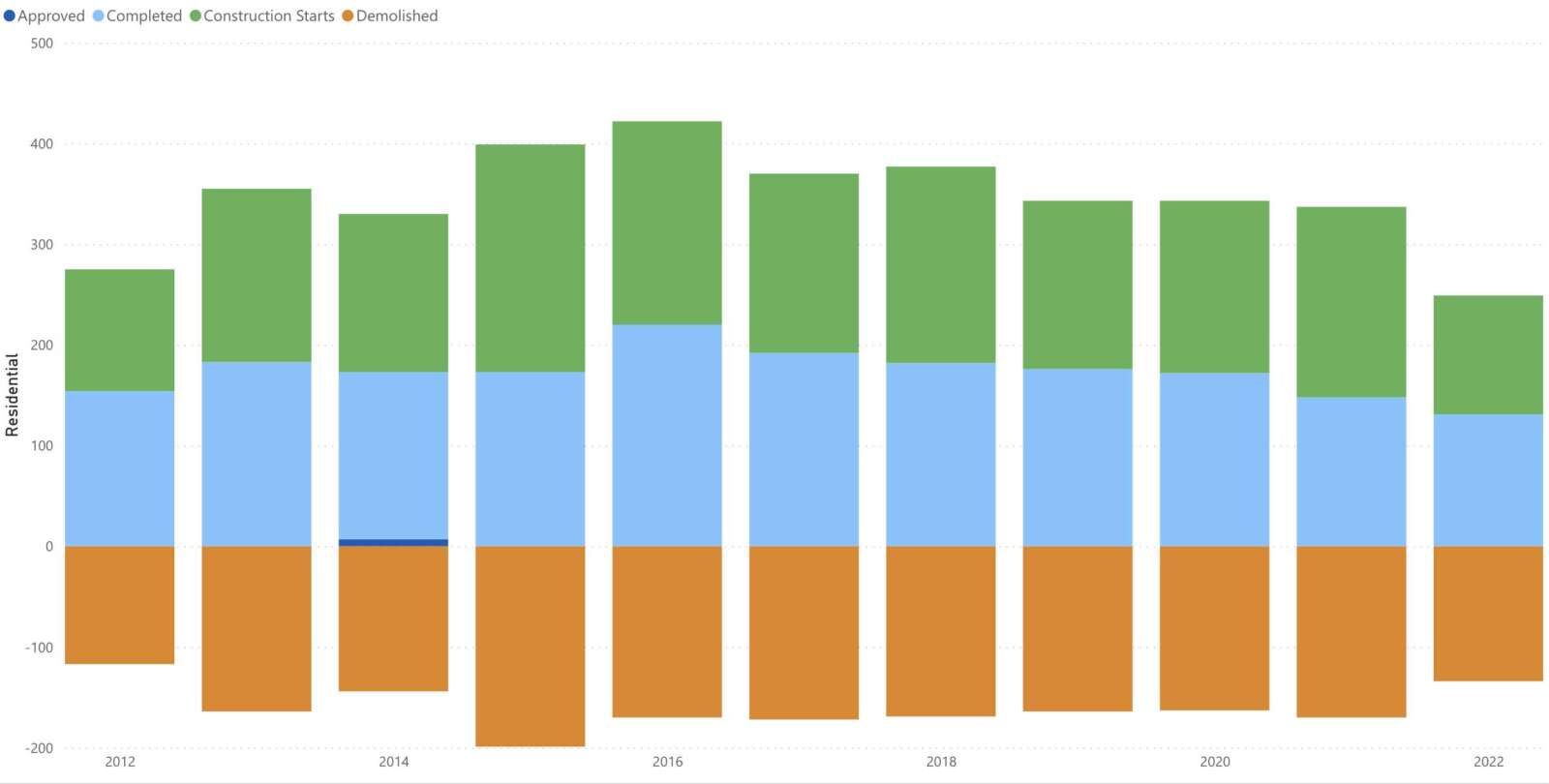
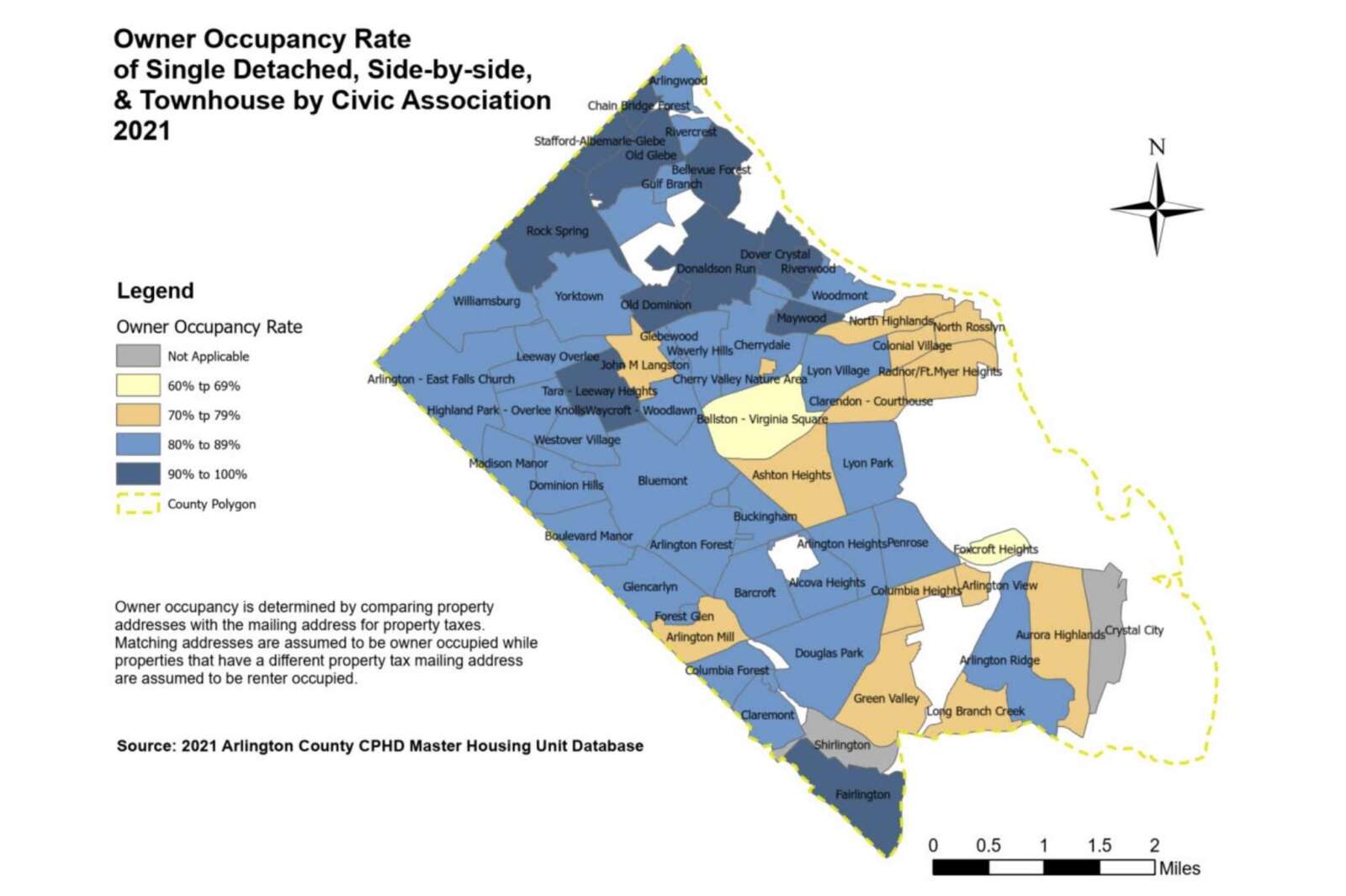
Our residential neighborhoods have already gentrified. The average cost of a detached single-family home last year was $1.2 million. Housing in our residential neighborhoods is getting even more expensive, as 170 homes a year are replaced by McMansions. When we’re talking about displacement, we’re usually talking about lower-income residents being priced out or evicted by landlords. The claim here is different: Upzoning will somehow drive property values so high that some homeowners won’t be able to afford the increased property taxes. Neither part of that claim holds up to scrutiny.
He said it’s implausible a few dozen developments per year will cause property values to spike across the county and those who are burdened by taxes can get relief from the county’s property tax relief program.