The union representing Arlington Public Schools teachers is calling for “drastic and immediate” improvements to the school system’s new remote learning program.

This school year, when most students returned to their brick-and-mortar buildings, others continued online learning through the newly-created APS Virtual Learning Program.

Four weeks in, staff say that the program still has deep problems, in addition to the staffing shortages which ARLnow previously revealed. We’re told by teachers that the issues range from communication to teacher treatment to a lack of needed resources.

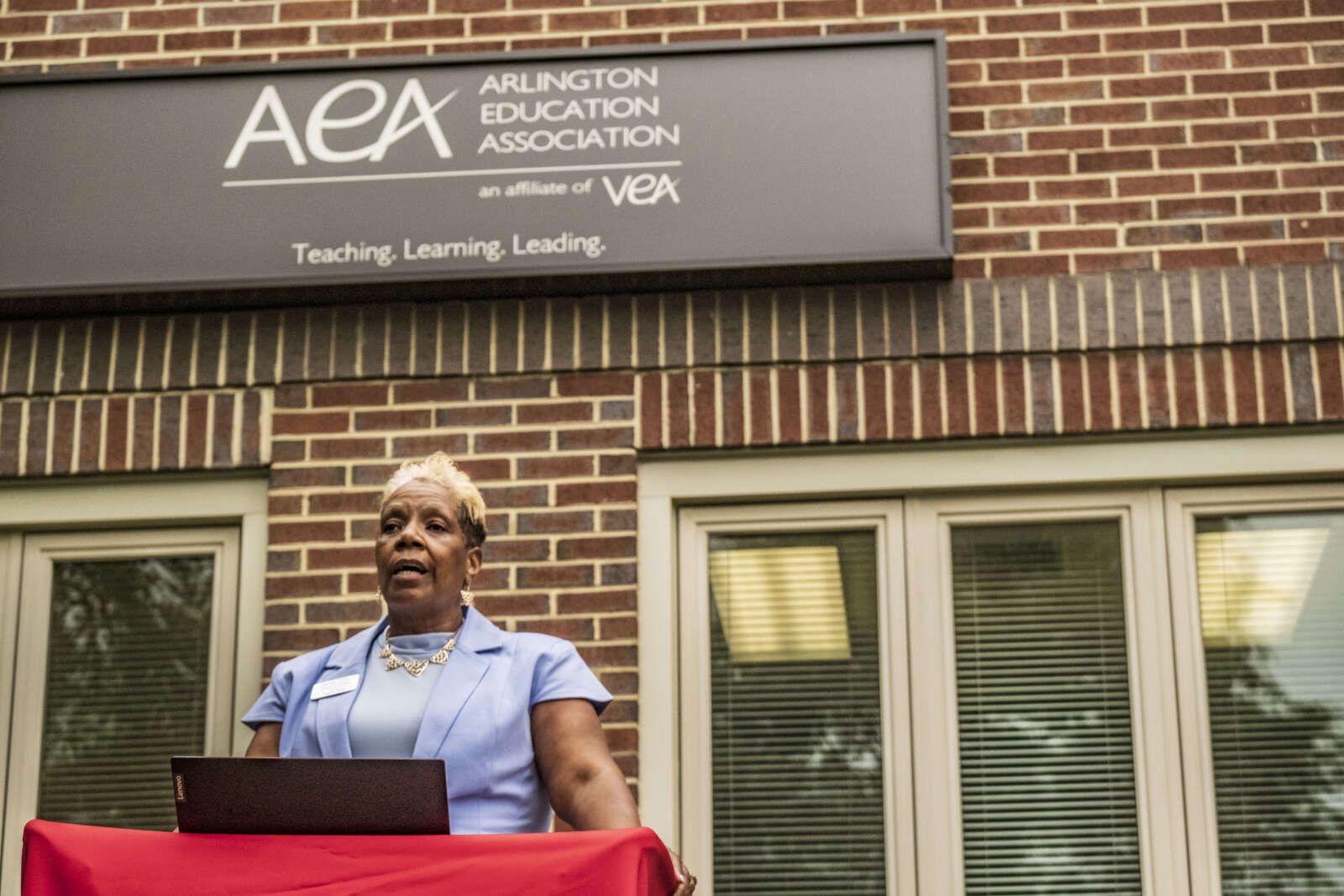
“Every day our educators are being forced to go above and beyond the call of duty,” Arlington Education Association President Ingrid Gant said during a press conference yesterday afternoon on the steps of the union’s headquarters along Columbia Pike. “We, the members of AEA insist the School Board members take action regarding the poor state of communications, staffing and support across APS, particularly in Virtual Learning Program.”

She outlined a variety of concerns, including missing textbooks, incomplete schedules, inadequate substitute coverage, and programming for special education students and English learners, as well as abrupt teacher transfers and long work days.

In response, APS spokesman Frank Bellavia said the school system has not yet had a conversation with AEA about these concerns.

“We welcome that dialogue and have been transparent about the challenges with the Virtual Learning Program and the steps we are taking, as well as the timeline for the distribution of summer school bonuses,” he said.

A number of teachers — some speaking on the condition of anonymity for fear of retribution — tell ARLnow that they feel abandoned. They say there are no regular faculty meetings, emails to administrators go unanswered, and new teachers do not know where to turn to for instructional support and lesson plan help.

“Everything is falling on the teachers to make it work, with no leadership whatsoever. Where is the leadership? Where is the support? There’s no community, nothing,” said one secondary teacher.

“Communication has been dreadful,” said a special education teacher. “It has gotten better, but it has a long way to go. It’s not just with administration, but with home schools as well.”

Bellavia suggested that VLP staff struggling with internal communication issues use the same paths available to other employees.

“As is the expectation for all APS staff, they should start with their administrator to seek help or express concerns,” he said. “If they continue to have concerns, teachers are welcome to reach out to Office of Academics content supervisors or directors.”

Educators also say they’ve been moved to other positions within the program but have not had instructional support or tools to develop lesson plans. Veteran teachers say they’re grateful to have years of experience and their own resources at their disposal in order to get through the myriad of problems.

In one instance, seven teachers signed up to teach English learners were reassigned to teach whatever else they had certifications in — from elementary classrooms to specific high school subjects — in order to address shortages. Teachers tell us that this hasn’t been good for morale.

“Based on teacher credentials, teachers were placed in classes for which they were certified to teach or reassigned to a brick and mortar school​, as necessary,” Bellavia confirmed.

Up until this week, staff say they did not know who within or outside the VLP to consult for instructional help, absences or problems with students’ schedules. Each physical school has support staff and administrators equipped to handle these problems, but the chain of command in the VLP has not been clear, they say.

In contrast, Bellavia said VLP has support staff, including a math coach, a reading coach, a counselor and an assistant administrator. Teachers have been informed about available resources and can begin picking up items at APS headquarters.

“A counselor? What counselor? I don’t think that’s accurate,” the secondary teacher said in response.

Meanwhile, the special education teacher described her program as “a mess.” Special education teachers’ caseloads have yet to be finalized, and in some cases, students with varying needs and different education plans are placed in one classroom, with the teacher expected to deliver individualized instruction.

Still, she said, “I’m not going to give up. I’ll keep beating my head against the wall until things change.”
(more…)


Department of Human Services Director Anita Freedman and Deputy Director Deborah Warren (via Arlington County)

The police department is not the only county department with staffing reportedly in steep decline.

The number of emergency behavioral health clinicians in the Department of Human Services is also in free fall, as 13 members of the 26-person staff have departed in the last year, County Manager Mark Schwartz told the County Board during its Tuesday afternoon meeting. Existing staff cannot cover all the shifts and contractors are being used to fill in the gaps.

County officials say these clinical jobs are complex and demanding, have higher expectations and require significant training. In response, folks are leaving for jobs with better benefits and working conditions.

But they also pin this trend on a decision the Commonwealth made this summer to close more than half of its state-run mental hospitals to new admissions amid its own workforce crisis. Without these beds, people in crisis are “warehoused” at Virginia Hospital Center, and in some cases sedated and handcuffed to gurneys, Schwartz said, grimacing.

“We cannot afford not to take action,” said Director of Human Services Anita Friedman. “I have always viewed most of our clinicians, but especially our emergency clinicians, as non-uniformed public safety. They don’t wear badge, or a gun, but they are in as much danger, oftentimes, as public safety without really the same level of benefits. Without a strong emergency services staff, competent and equipped to deal with people, you’ll see an increase in suicide, homicide and all kinds of community problems.”

The short staffing hurts the Arlington County Police Department, as some officers end up spending most of their shifts in the hospital emergency room with these patients, reducing the officers available to respond to calls.

“I know I’m speaking in somewhat dire tones,” Schwartz said. “I feel like the situation is really critical.”

He asked the County Board to consider setting aside $3 million of American Rescue Plan Act funding — intended for Covid-related needs — for bonuses. Schwartz said he wanted to gauge the Board’s support before bringing forward a fully-baked plan.

“We’re fully with you on moving forward with this,” Board Chair Matt de Ferranti said. “Thank you for bringing this forward. While we want to understand the fiscal details, let’s move forward and address this. There’s a through-line between our police department and our mental health services, and with respect to staffing, that’s what we have to move quickly and the Board is ready to do that with you.”

This situation is coming to a head amid calls from the community and the County Board to transition police officers away from mental health calls. In the wake of the killing of George Floyd by police in Minnesota last year, Arlington County convened a Police Practices Group, which drafted about 100 ways to reform ACPD, including detangling officers from intervening in these cases.

The approved Fiscal Year 2022 budget even included funding for an enhanced mental health crisis response program.

But now, Police Chief Andy Penn says the police are more entangled with mental health calls than ever.

“We certainly supported where the police department should do less with mental health, but I think we’re doing more than we have in some time,” he said. “The need is to help people get the care and treatment they need, but it is a big, broad conversation that goes beyond the police department.”

In a statement provided to County Board members prior to the meeting, the Arlington Coalition of Police said officers overwhelmingly share the community’s desire to limit the interactions police have with those in mental crisis.

“But as is commonly the case, when the community has a problem few others want to address, it turns to the police,” the statement said.

(more…)


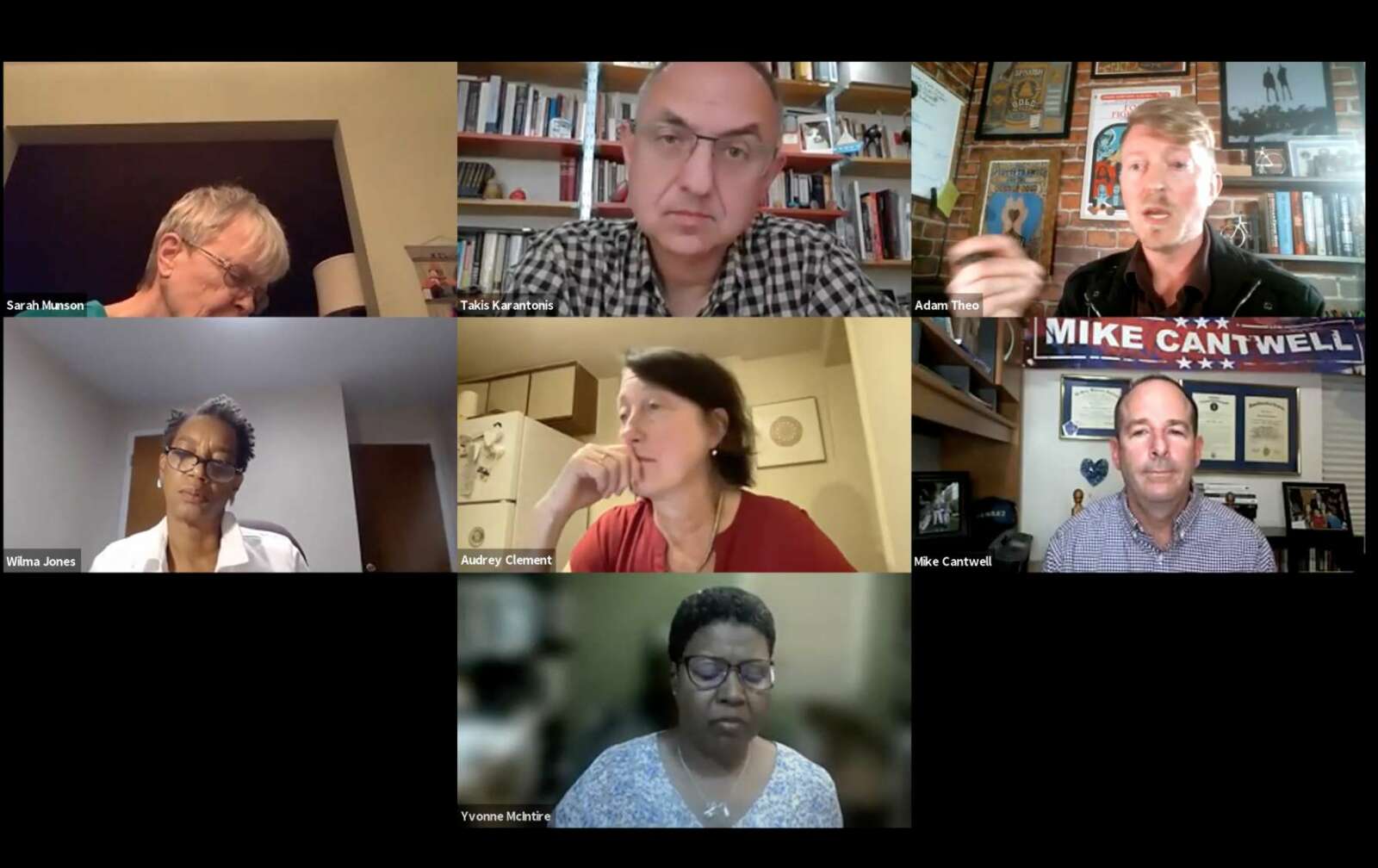
A screenshot from the County Board candidate forum hosted by the NAACP on Monday (via Youtube)

Local candidates offered differing takes on police oversight and demographic disparities in public schools during a candidate forum last night.

The Arlington branch of the NAACP hosted Monday’s forum, featuring the four Arlington County Board candidates — incumbent and Democrat Takis Karantonis and independents Mike Cantwell, Audrey Clement and Adam Theo — as well as School Board candidates Mary Kadera and former Congressional candidate Major Mike Webb.

More than 100 people were in virtual attendance.

The forum addressed two dozen issues facing the county and its communities of color. County Board topics ranged from support for minority-owned businesses to accountability for developers that neighbors say violate construction terms. Schools topics spanned the unequal distribution of Parent-Teacher Association resources to improving outcomes for students of color.

But the sharpest distinctions among County Board candidates came out during a discussion of the powers endowed to the new police oversight board.

This summer, the Arlington County Board established a Community Oversight Board (COB) with subpoena power and authorized the hiring of an Independent Policing Auditor able to investigate community complaints about police officers. The decision, came amid sharp disagreements over whether board had too much, or too little, authority.

“The overall perception from many of the members, [and] people I know who are not NAACP members… is that the board is aligned with interests that are not the ones that the community is telling you we want,” said moderator Wilma Jones Kilgo.

When asked if the COB aligns with their visions, only Karantonis said it did.

“It aligned mostly with [my] vision,” Karantonis said. “We now have to nominate the board, make it work, fund it and staff it.”

Cantwell said the board shouldn’t have subpoena power or investigatory power.

“Elections are where you should hold people accountable,” he said. “You should hold the current County Board, who appoints the County Manager and the police chief, accountable, and vote them out.”

But Theo and Clement said the Community Oversight Board isn’t independent enough.

“I’m glad we got the subpoena power, but it fails utterly with not being able to properly investigate and not being able to follow through with discipline,” Theo said. “It needs to be independent. Right now, it’s still under the County Manager, that isn’t enough.”

Clement, who supports giving the board subpoena power, nonetheless called it “a toothless tiger.”

“In situations where the oversight board exercises concurrent jurisdiction with the police department in a personnel matter, I believe COB should have binding authority, as the likelihood of the police chief honoring a recommendation of the COB that goes against his own decision is nil,” she said.

She also expressed concern that the County Manager, who hires the police chief, also hires the independent auditor.

Later, Karantonis said the County Board has put some pressure on the state to change the law that gives Arlington the power to hire a police auditor.

“It is a flaw that the County Manager formally chooses this person,” he said. “We have asked the General Assembly to change that and fix other flaws in this [provision].”

Meanwhile, Jones pressed Clement and Theo on other issues they raised related to policing and the criminal justice system.

(more…)


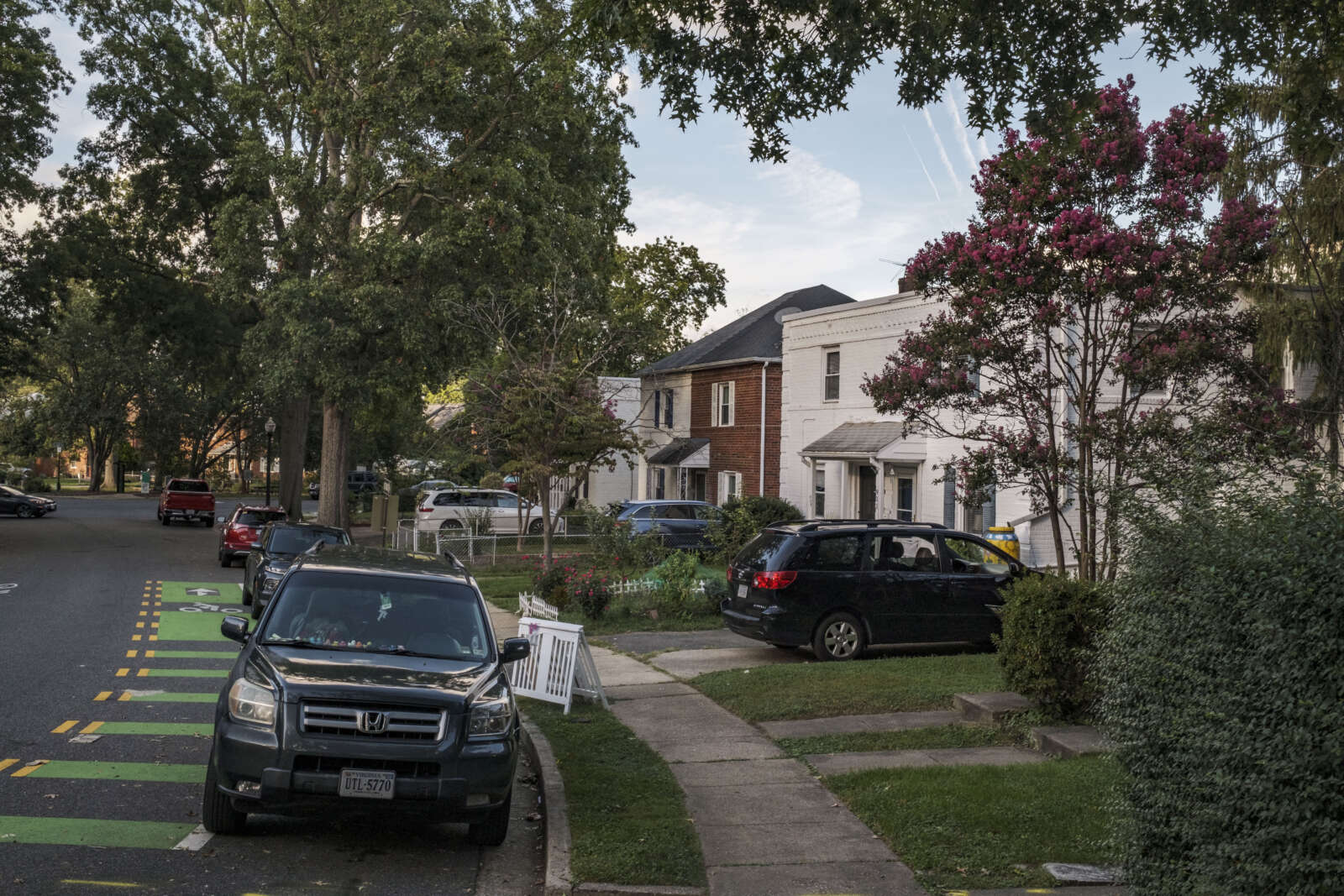
For nearly one year, Arlington County has studied whether the zoning code should be rewritten to allow low-to-moderate density housing types like duplexes in more neighborhoods.

The initiative is dubbed the “Missing Middle Housing Study.” It refers to mid-sized housing types, such as duplexes, triplexes, quads and townhomes, which are denser than a single-family home but smaller than an apartment or condo building.

The county says adding homes in the “Missing Middle” could tackle a local housing shortage. Since its launch, the study has been debated in panels and County Board candidate forums and referenced in discussions about changing zoning ordinances that have hurt some duplex owners.

But something simple may be hindering public perception of the study: the name.

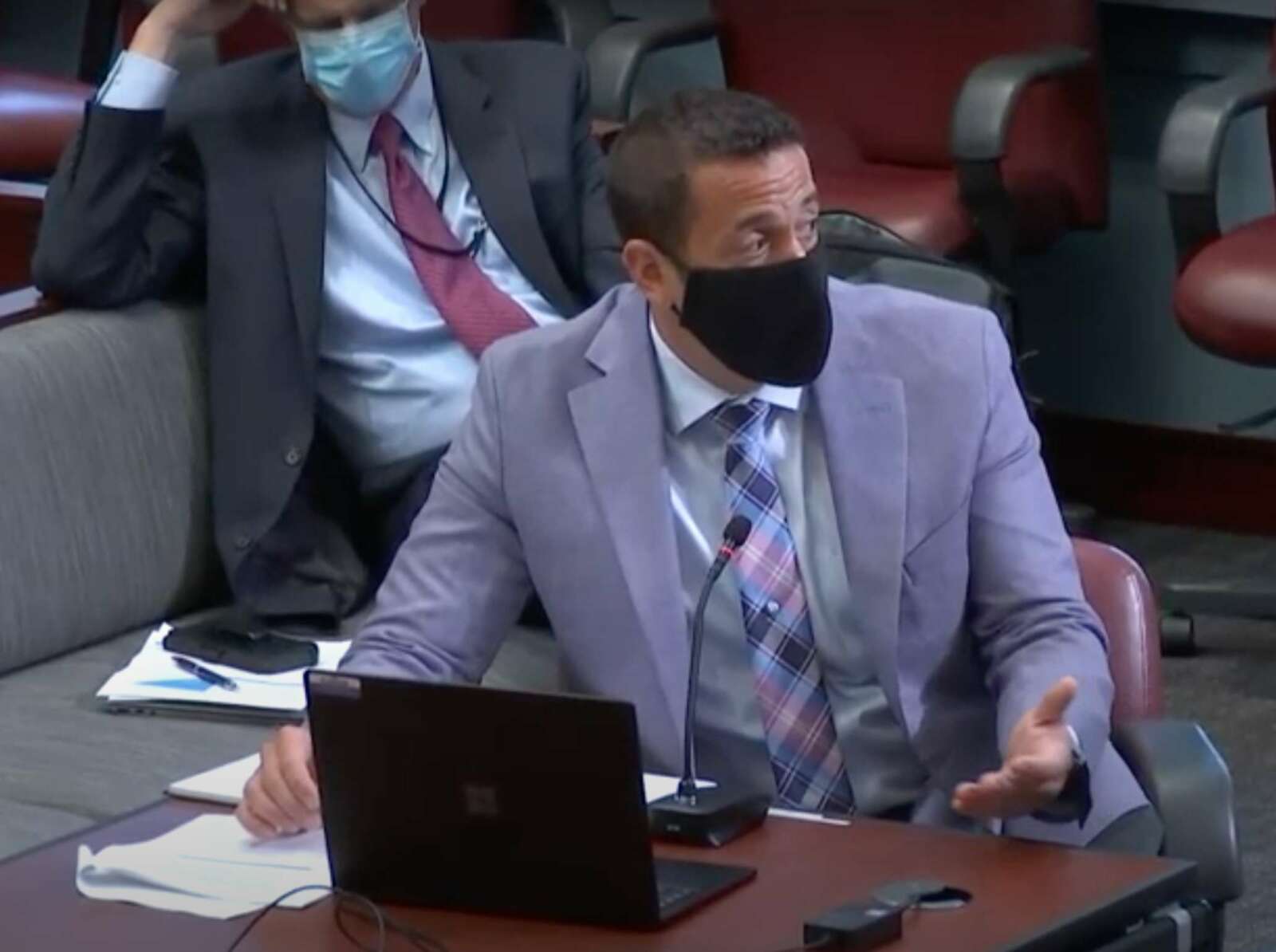
“Everybody assumes it has to do with affordability… and they hang their own viewpoints on that,” said Jim Lantelme, who chairs the Planning Commission.

Speaking on behalf of himself as a resident, Lantelme says a name change may help people disassociate “Missing Middle” and affordable housing, which are separate (but related) issues. He presented this idea to during a joint Planning Commission-County Board meeting last week.

“Missing Middle, for whatever reason, people have a negative reaction right off the bat,” he tells ARLnow. “Why go off a name that’s closing off minds, rather than one that encourages dialogue — one that people have an open mind toward? By renaming it, we might have a better dialogue without having to overcome misapprehensions.”

The county is primarily examining whether different forms of housing can blend into existing, single-family home neighborhoods. The goal is a greater variety and supply of housing, including units that are less expensive than single-family homes but not necessarily affordable to those making well below the area median income in the same way as dedicated affordable housing.

Whether “Missing Middle” housing can be purchased by people in different income brackets depends on size, location and market forces, says Elise Cleva, a spokeswoman for the Department of Community Planning, Housing and Development.

To uncouple “Missing Middle” and affordability, Lantelme suggested names that clarify the study’s exploration of form. He pointed to “Low-Rise,” the name Los Angeles gave to its effort to add more low-rise multi-family buildings to the city.

“Why hobble yourself at the front, when you can try to get a term that is more accurate, that doesn’t have the connotations that people seem to be associating Missing Middle with, which is affordability,” he said.

Cleva said CPHD is also picking up on a disconnect. Over the next few months, during targeted engagement with members of harder-to-reach populations, she said CPHD will debut a clarifying tagline.

“In our interactions with them, we’ll be using a new tagline for the study, ‘Expanding Housing Choice’ and also continuing to articulate that the term ‘Missing Middle’ describes the size and type of a home — in the middle of a spectrum of housing options ranging from single detached homes to mid- and high-rise apartments and condos,” Cleva said.

She says CPHD is trying to address some misconceptions that resulted from a lack of engagement with certain populations.

“Basically, while we’ve reached many people, our engagement data thus far shows that there are many we have not reached, especially among renters and populations that have historically had less access to participate in planning processes,” she said. “It follows then that people we have not had a chance to dialogue with about the study may be unclear about its purpose and scope.”
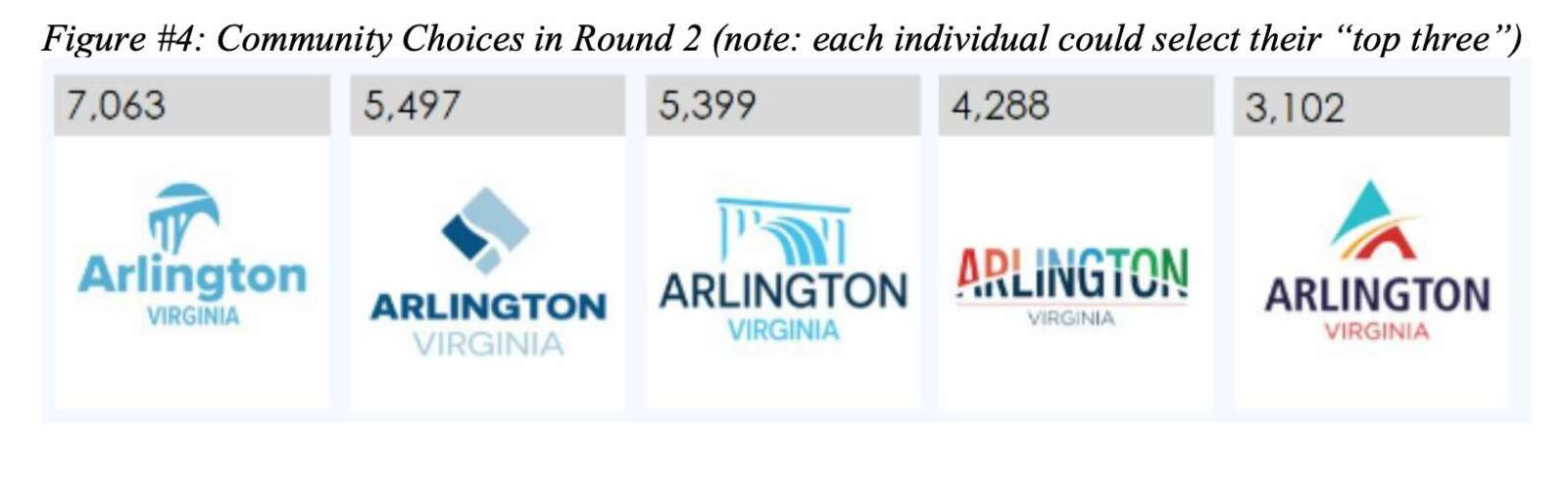
On the question of renaming the study, Cleva said it’s not out of the realm of possibility.

“[We] remain open to the possibility of renaming the study, should we continue to receive feedback about the name causing confusion,” she said.


Sponsored by Monday Properties and written by ARLnow, Startup Monday is a weekly column that profiles Arlington-based startups, founders, and other local technology news. Monday Properties is proudly featuring 1515 Wilson Blvd in Rosslyn. 

Rosslyn-based Bitpath is working to roll out a 21st-century use for a midcentury technology: TV broadcasting.

The company says the architecture used by TV stations to broadcast their programming can also support the secure and efficient transmission of data. After all, TV and radio broadcasters and mobile phone service providers all send information wirelessly the same way, using radio frequency spectrum.

“We’re trying to be innovative and smart about how radio frequency spectrum is used,” said John Hane, the president of the startup.

The ability to repurpose broadcast TV for data services already has approval from the Federal Communications Commission, which regulates the broadcast airwaves. But broadcasters have yet to jump on the new tech because they are too small and too decentralized — relatively speaking — to do research and development and provide the services at a national scale, Hane said.

Bitpath was founded to do just that, he said. The startup is developing a platform comprised of a nationwide network of TV stations and aims to market it to companies that could benefit from better and safer data services. Bitpath is funded by big players in the TV industry, Sinclair Broadcast Group and Nexstar Media Group, which are keen to roll out this technology.

And Hane said Bitpath may be fully operational soon.

“We’re going to be launching services next year,” the president said.

The Bitpath logo (courtesy Bitpath)

This innovation to broadcast comes as more “smart” devices come online and are competing for fast, high-quality data streaming, while big mobile providers are rolling out 5G to support the rising data demand. But no matter how fast these networks get, the networks still have to transmit data through individual streams, which Hane said slows things down.

“The nice thing about the broadcast architecture, it never slows down,” he said. “That releases the cell network to be used for critical uses that can only be carried that way.”

People gravitate toward internet, even when broadcast makes more sense — for instance, streaming a big sporting event — because they are accustomed to the customization the internet provides. Bitpath’s innovations integrate the efficiencies of broadcast with the personalization of the internet, Hane said.

Consumers will one day see the tech in action in a variety of ways, he said. Regional TV stations will be able to air more personalized political advertisements or weather alerts. GPS resolution on devices will get more precise, improving a navigation app’s ability to pinpoint where a driver is and thus the quality of the directions. And security can be enhanced for certain applications.

“You associate TV stations with providing TV. That’s the majority of what they’re going to do, but a small amount of their capacity can provide amazing new services,” Hane said.

Hane says mobile providers were able to pioneer this territory because they were not as regulated as TV broadcasting is.

“Cell networks have grown so fast, because there’s been so much investment in them,” Hane said. “We use them for just about everything, even when we don’t realize that it doesn’t make the best economic sense.”

For Bitpath’s project to work, it has to make sure the hardware is consistent enough for e-commerce companies, car manufacturers and banks to buy in.

“They’re going to want fully developed services, and a platform that just works the same everywhere,” he said. “They’ll have one point of contact, one set of standards, one set of operations, and one point of support, but the capacity actually is comprised of stations all across the country owned by 20 different owners.”


Arlington County will begin imposing a 5-cent plastic bag tax on Jan. 1 of next year.

The Arlington County Board adopted the tax during its public hearing on Saturday — the same day that the Alexandria City Council enacted the tax as well. These votes come on the heels of Fairfax County, which adopted the tax last Tuesday.

Effective Jan. 1, 2022, all three jurisdictions will tax plastic bags from grocery stores, convenience shops and drugstores. The county said in a press release that it’s been working with Alexandria, Fairfax and a regional waste management board to make sure all three localities have similar outreach and education efforts and timelines for rolling out the tax.

“Arlington is proud to take this step to reduce plastic bag waste in our community and to do so with our regional partners,” said Arlington County Board Chair Matt de Ferranti said in a statement. “We have long sought the legal authority for this small fee as a way to protect our environment and become a more sustainable community. We look forward to working with residents and neighbors on implementation.”

Until Jan. 1, 2023, retailers can keep two of the five cents collected for each plastic bag. After that date, retailers and keep one cent per bag.

Revenue can be used to offset environmental cleanup, educational programs around reducing waste and mitigating pollution, or providing reusable bags to recipients of Supplemental Nutrition Assistance Program, or SNAP, and recipients of Women, Infants, and Children Program, known as WIC, benefits.

The county is considering distributing reusable bags at public facilities, the Department of Human Services, affordable housing complexes and farmers markets.

“This is not high-cost and it could be big-impact,” said Deputy County Manager Michelle Cowan.

The tax will not apply to restaurants, farmers markets, clothing stores, Virginia ABC stores and other alcoholic beverage retailers. Bags for wrapping meat, holding produce, protecting dry cleaning and packages of garbage and pet waste bags are also exempt.

“I don’t want to lose sight of what more the Commonwealth can do. It’s not just including the entities that are currently exempt from this go-round, but thinking about this more broadly,” County Board member Christian Dorsey said during the meeting. “Communities that have more successfully changed behavior, which is what this is ultimately getting at… ones that have been most effective have not just looked at plastics, they’ve looked at all bags at the point of sale.”


Arlington’s planning department is stretched too thin and cannot take on a bigger workload, its director told the County Board this week.

At full strength, the 30-person staff of the Department of Community, Planning and Housing Development shepherds a myriad development projects and permit applications through county processes, from cafés seeking to renew their outdoor dining permits to developers planning large-scale projects. It also helps to produce the lengthy planning documents that guide the future development of neighborhoods.

Right now, with a flurry of activity underway in the wake of the arrival of Amazon’s HQ2, seven major long-range planning studies are in process. The department anticipates overseeing 10 major development applications while working through more than 400 minor development and administrative approvals, CPHD Director Anthony Fusarelli, Jr. told the Planning Commission and the County Board during a joint meeting.

“To have this number of ongoing planning efforts and engagements at one time… truly represents a substantial volume of ongoing work being managed by the division, also requiring time energy and resources by other county staff and the community,” Fusarelli said during his presentation. “Collectively, these ongoing efforts command a significant amount of staff resources, leaving little if any capacity to add new work and initiate additional projects at this time.”

Once major projects are done or big milestones reached, he said staff will be freed up to start new initiatives or address new county priorities.

While deferential to the hard work of CPHD, Planning Commission and County Board members had a few ideas for work CPHD should undertake in the near future, from changing how the county evaluates the environmental impact of developments to not losing sight of deferred projects such as implementing the plan to enliven Four Mile Run Valley.

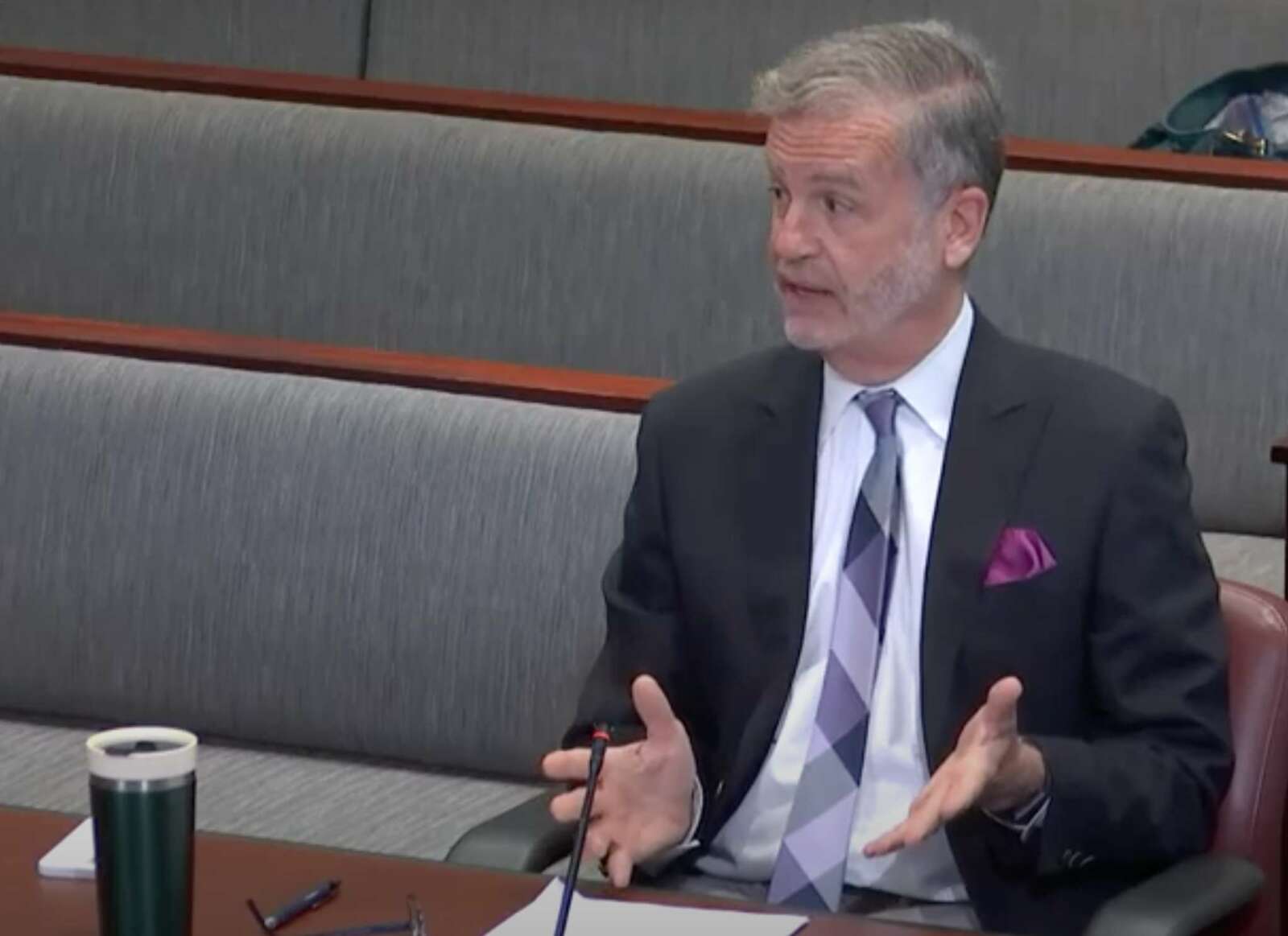
One potential change could save CPHD time and resources, argued Planning Commission Chair James Lantelme. Currently, renovations to “non-conforming” duplexes, townhouses and low-rise multifamily buildings go through the same lengthy approval process used for major developments, known as Site Plan Review. He suggested instead that these folks, who want relief from zoning regulations, go through the Board of Zoning Appeals, which hears similar requests from those on single-family residential lots.

“I’m assuming we’re going to be seeing more of these small things coming before us, and we think we really need to deal with this,” Lantelme said. “It’s a waste of the Planning Commission’s time, it’s a waste of staff time. We have a huge amount of consequential work, and to have a Site Plan for one duplex…  there’s no value added by doing that. It’s not appropriate, and in fact, it’s contrary to what our comprehensive plan is advocating for, for affordable housing — for housing period — and for equity.”

It’s likely on his mind because the commission oversaw one such project, a request to build out the deck of a townhouse, which recently received County Board approval, and members are now reviewing another, a duplex renovation proposed by the owner. The approvals feature televised, public meetings and detailed presentations created by planning staffers.

The townhome was in a “legacy district” used for a few developments in the 1970s, while duplex sits on a smaller-than-standard lot that had been grandfathered into a zoning district. Both owners proposed increasing the footprint of their home, tipping them into the Site Plan Review path, which requires lawyers, experts, and Planning Commission and County Board approvals.

“If it was a McMansion, it would go through BZA,” Lantelme said. “You have to go through more time, expense and uncertainty in order to have a duplex, which is what we want in these areas… It would really save us time money and staff resources if we could get this addressed.”

(more…)


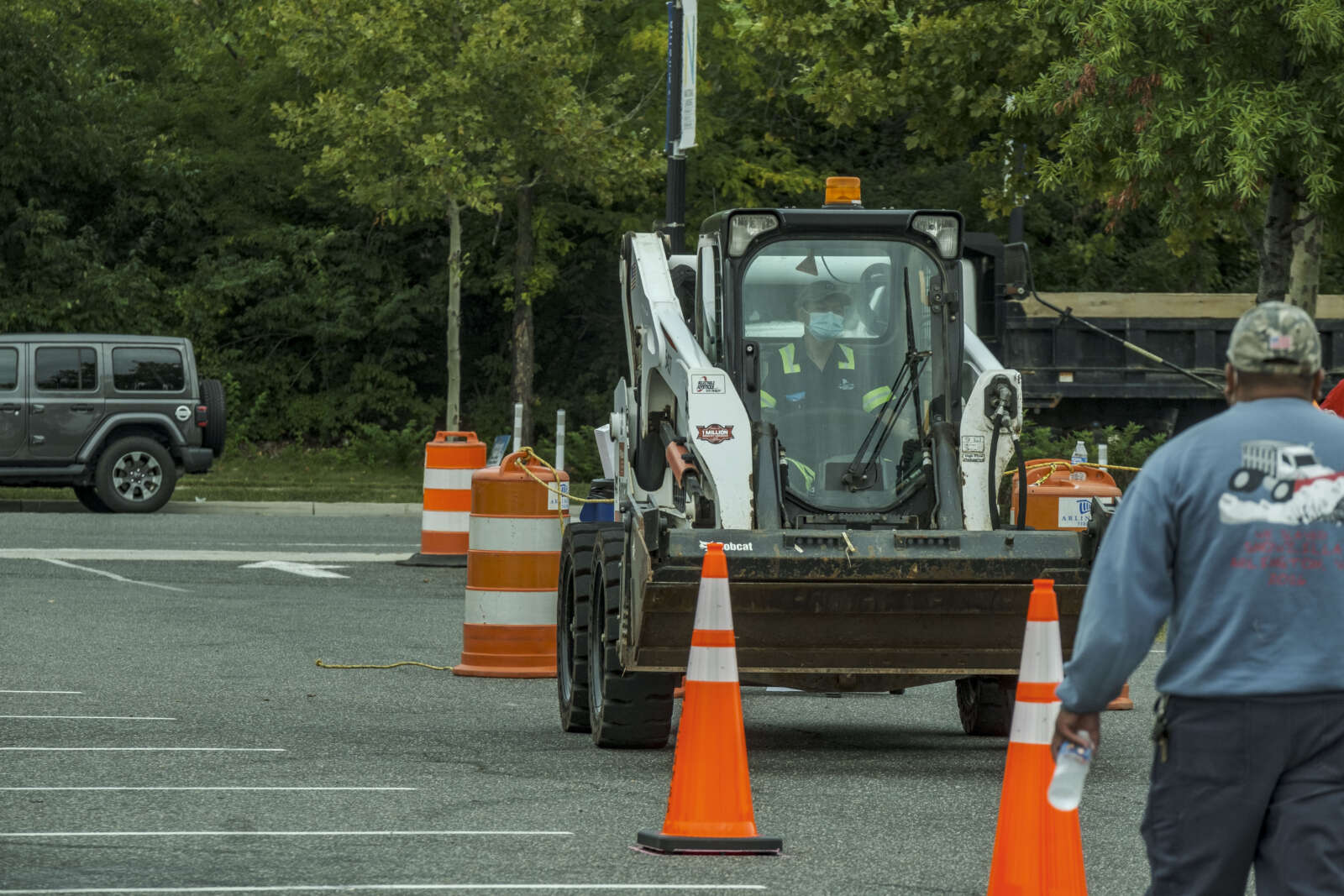
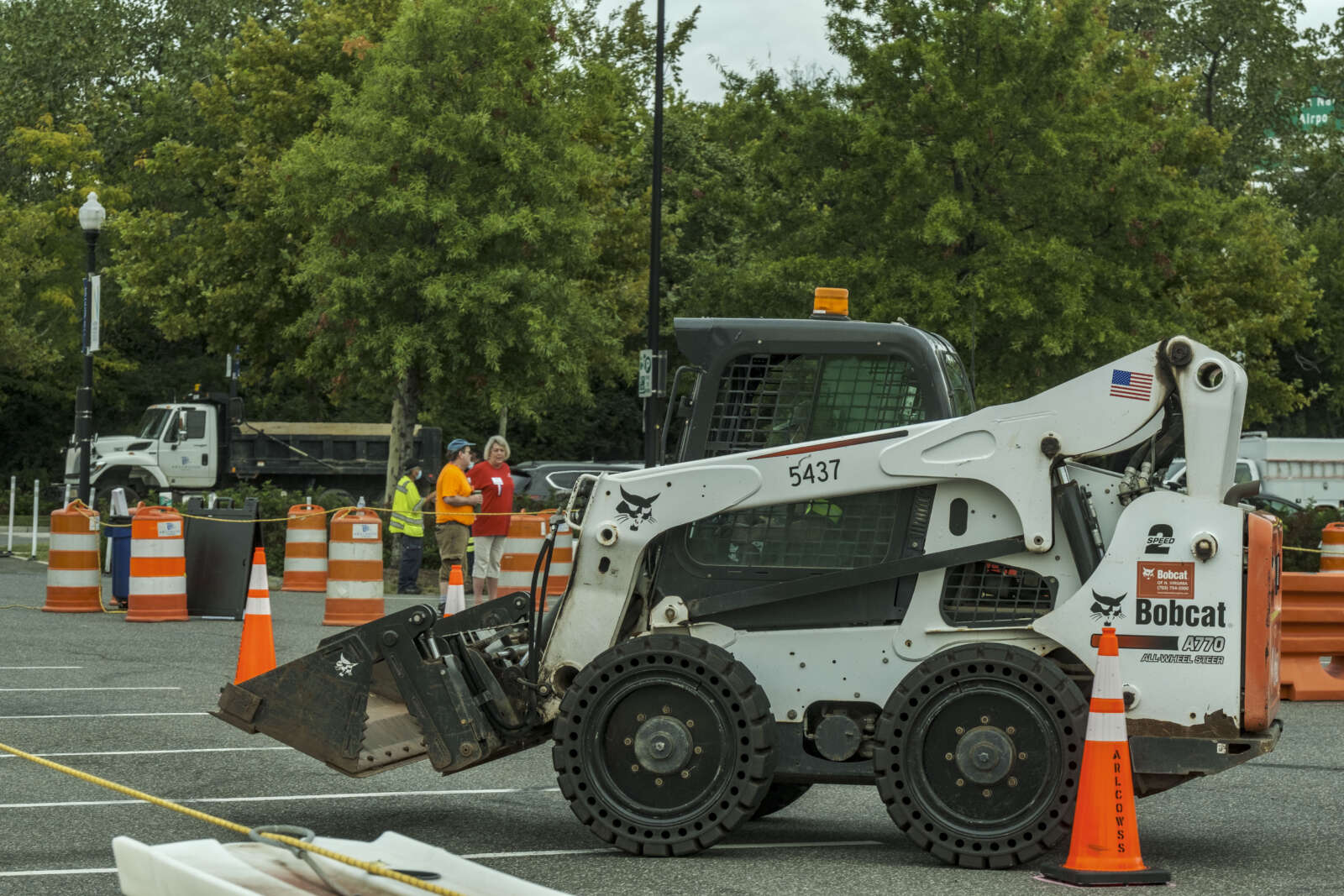
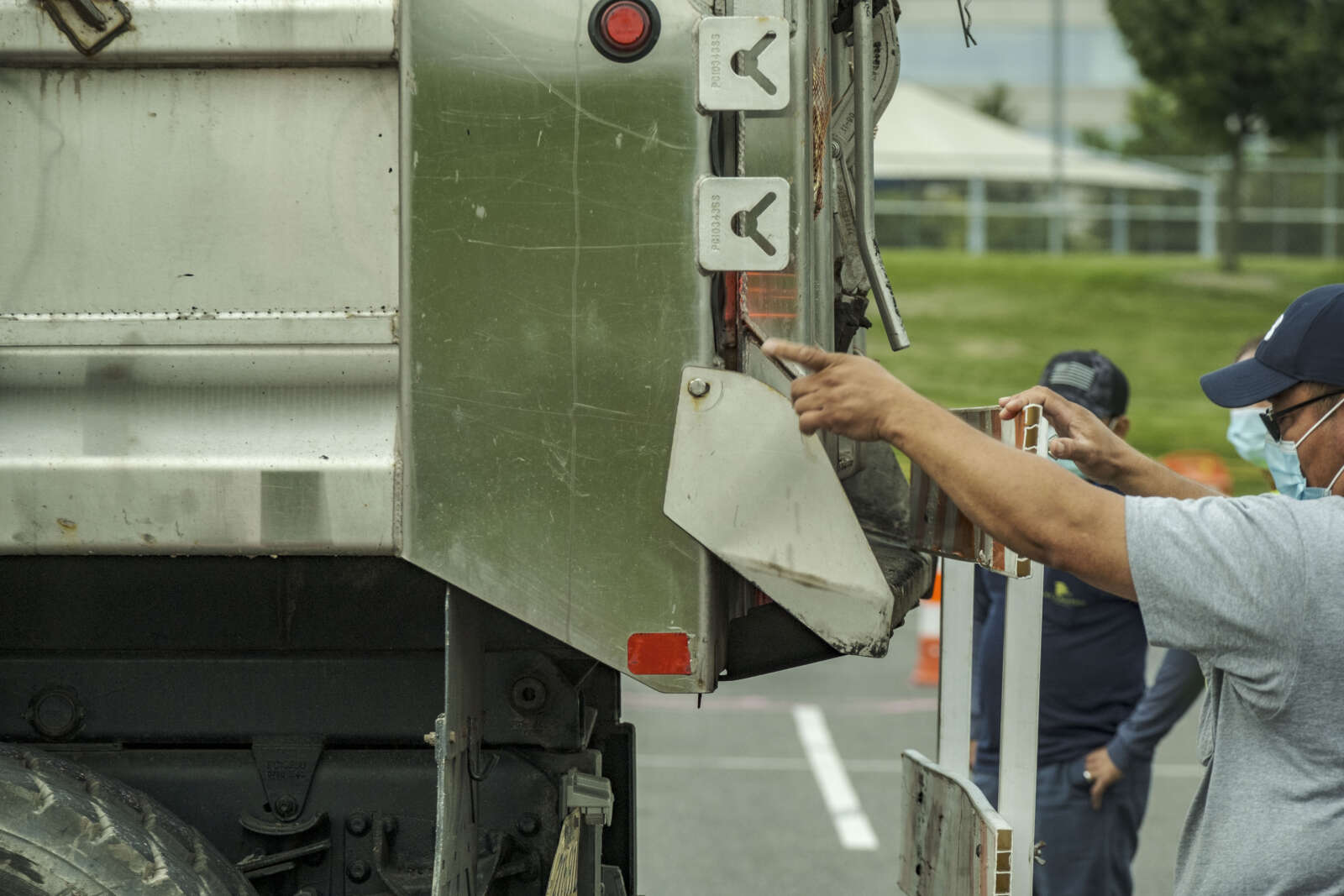
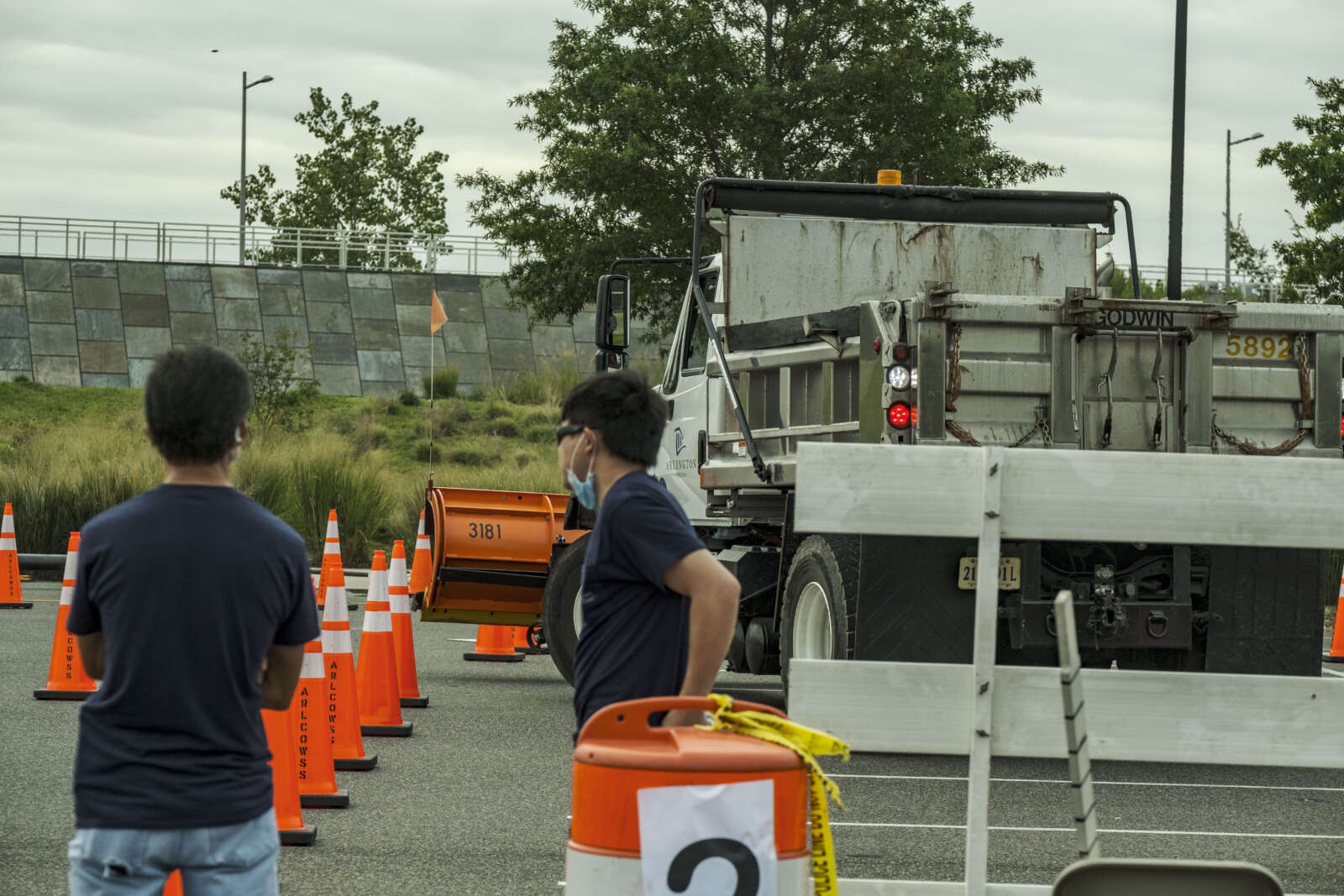
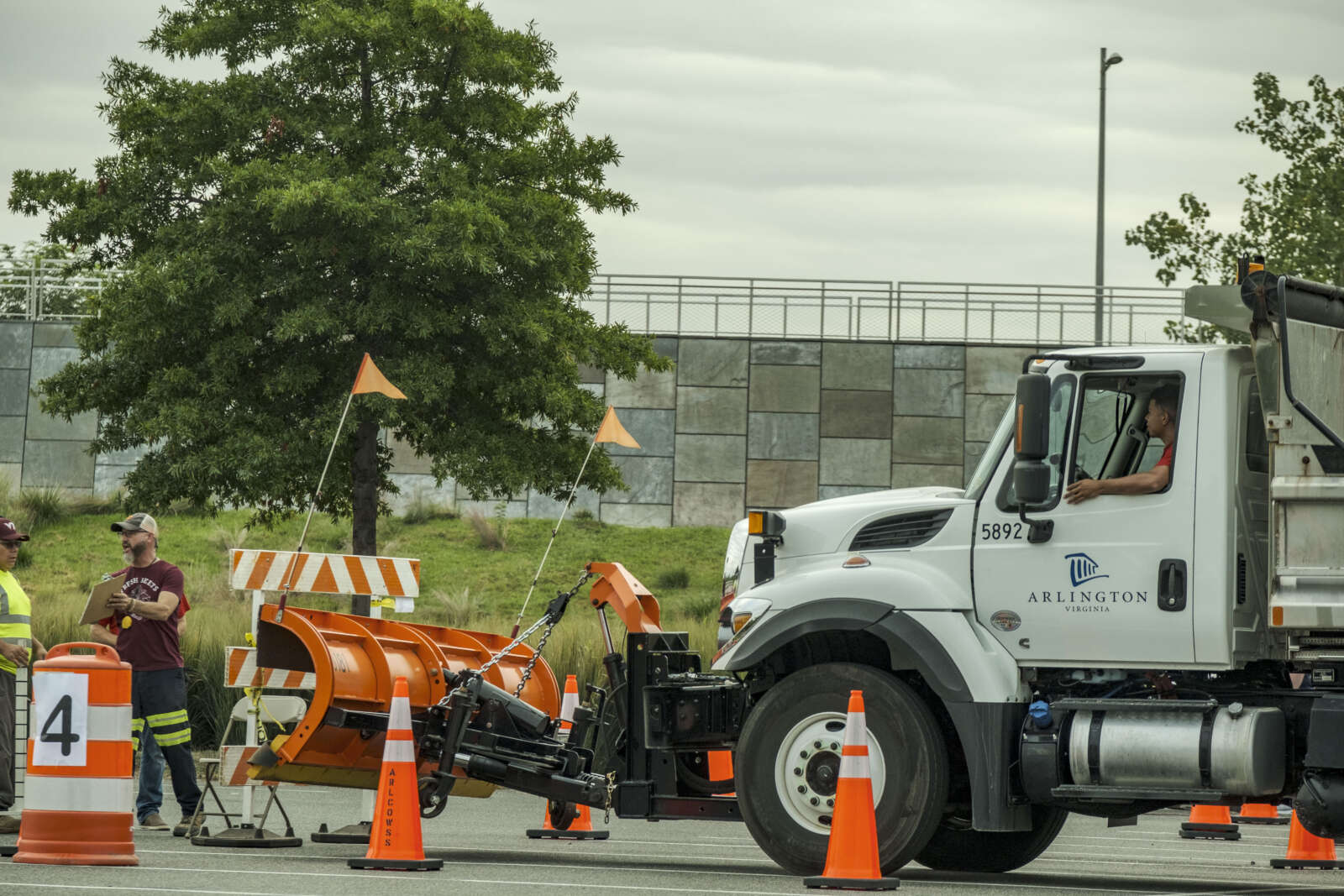
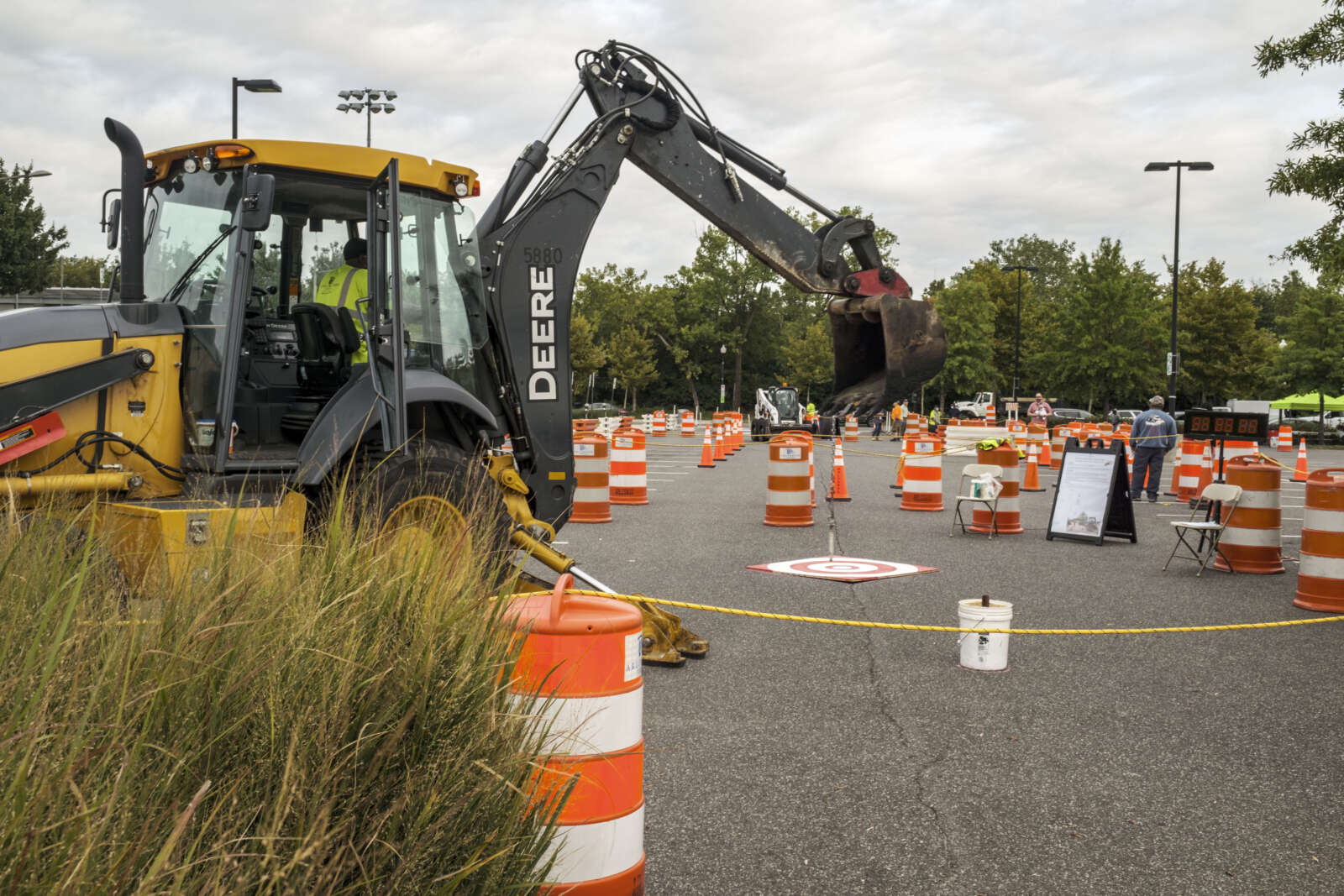
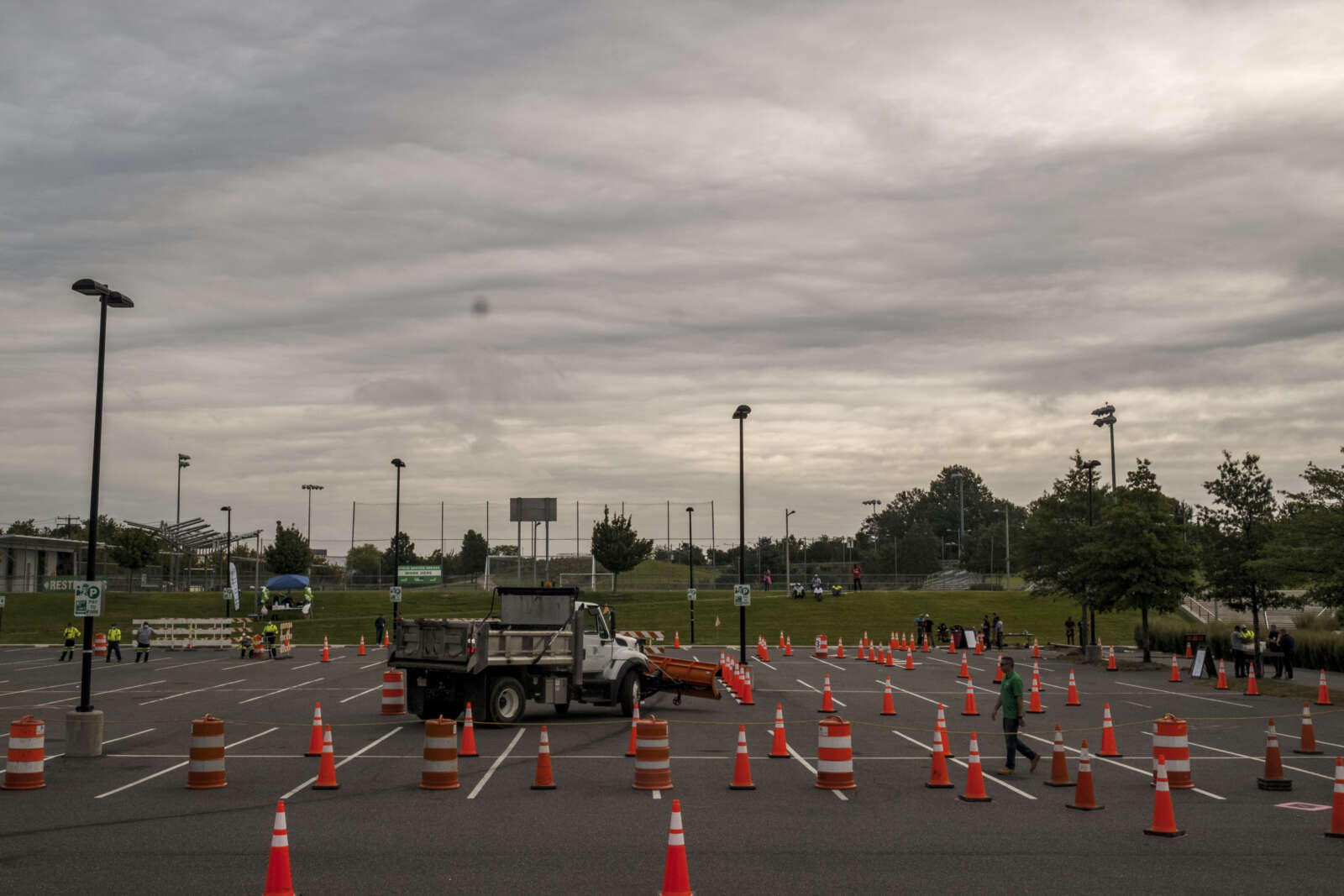
Arlington County public works staff tested out their snow-plowing, water main-fixing skills — and equipment — during a “roadeo” yesterday (Thursday) at Long Bridge Park.

About 75-100 Water, Sewer, Streets Bureau staff participated as either contestants or judges, Department of Environmental Services spokesman Peter Golkin said. The first equipment “roadeo” in recent years was 2014, although the county used to hold the event in the past, he added.

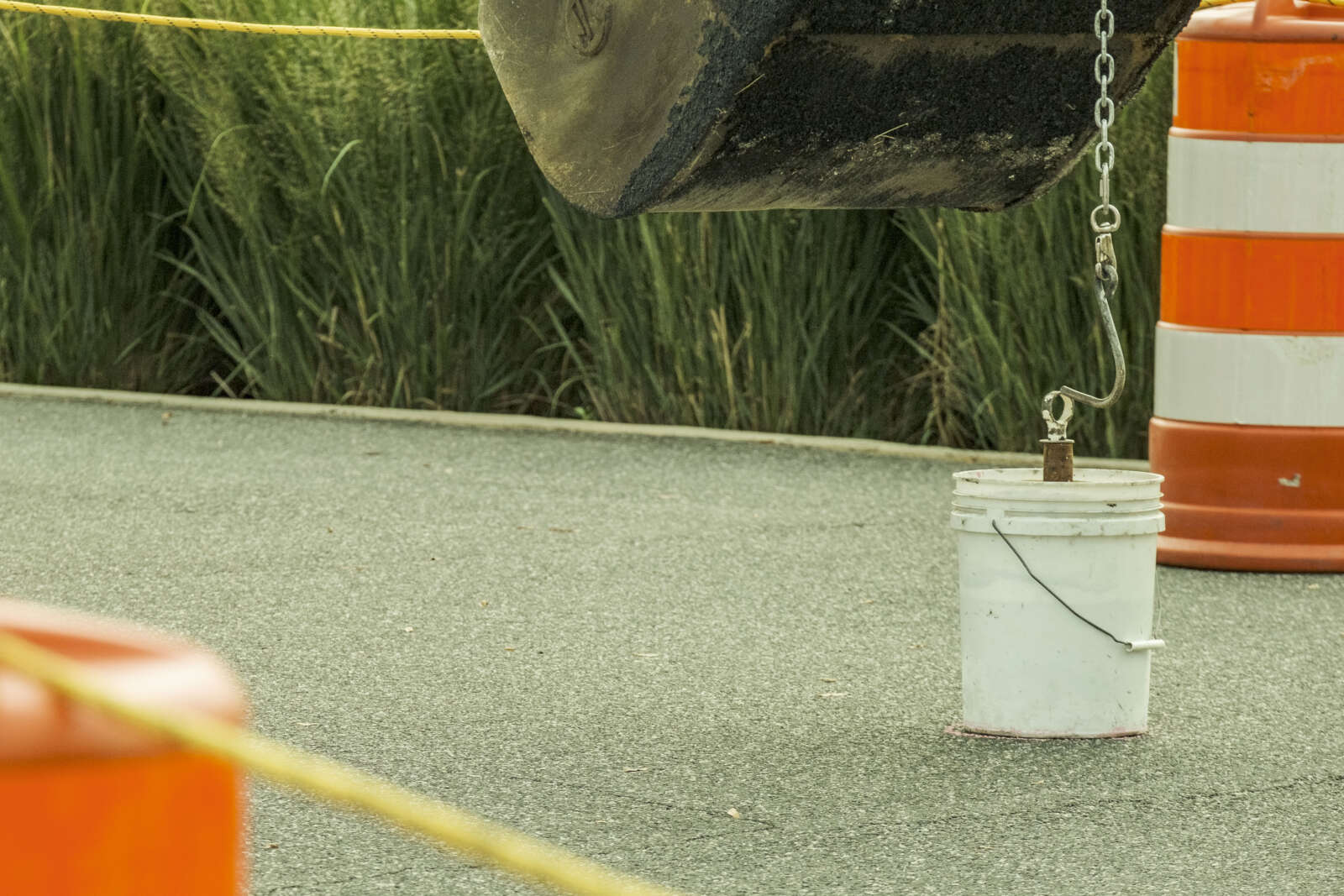
Contestants demonstrated their ability to navigate Bobcats and snowplows around traffic cones and their precision when maneuvering a backhoe, or digger. This involved guiding a hook attached to the digger through a small metal loop.

Water works crews tested out their ability to assemble water meters in “Meter Madness” and respond to water main breaks in “Rapid Tappin.” This year featured an all-female pipe-tapping team, Golkin said.

Winners of the backhoe and snow plow contests will represent Arlington at a “roadeo” hosted by the Mid-Atlantic chapter of the American Public Works Association next spring. Winners of the water events will compete at the Virginia Section American Water Works Association regional competition on Oct. 5-6.

This video of the 2019 “roadeo,” shot by staff photographer Jay Westcott, gives a closer look at the skills on display during the annual event.


(Updated at 4:30 p.m.) A multi-year project to improve transit along Columbia Pike has been delayed by design problems associated with the proposed bus shelters.

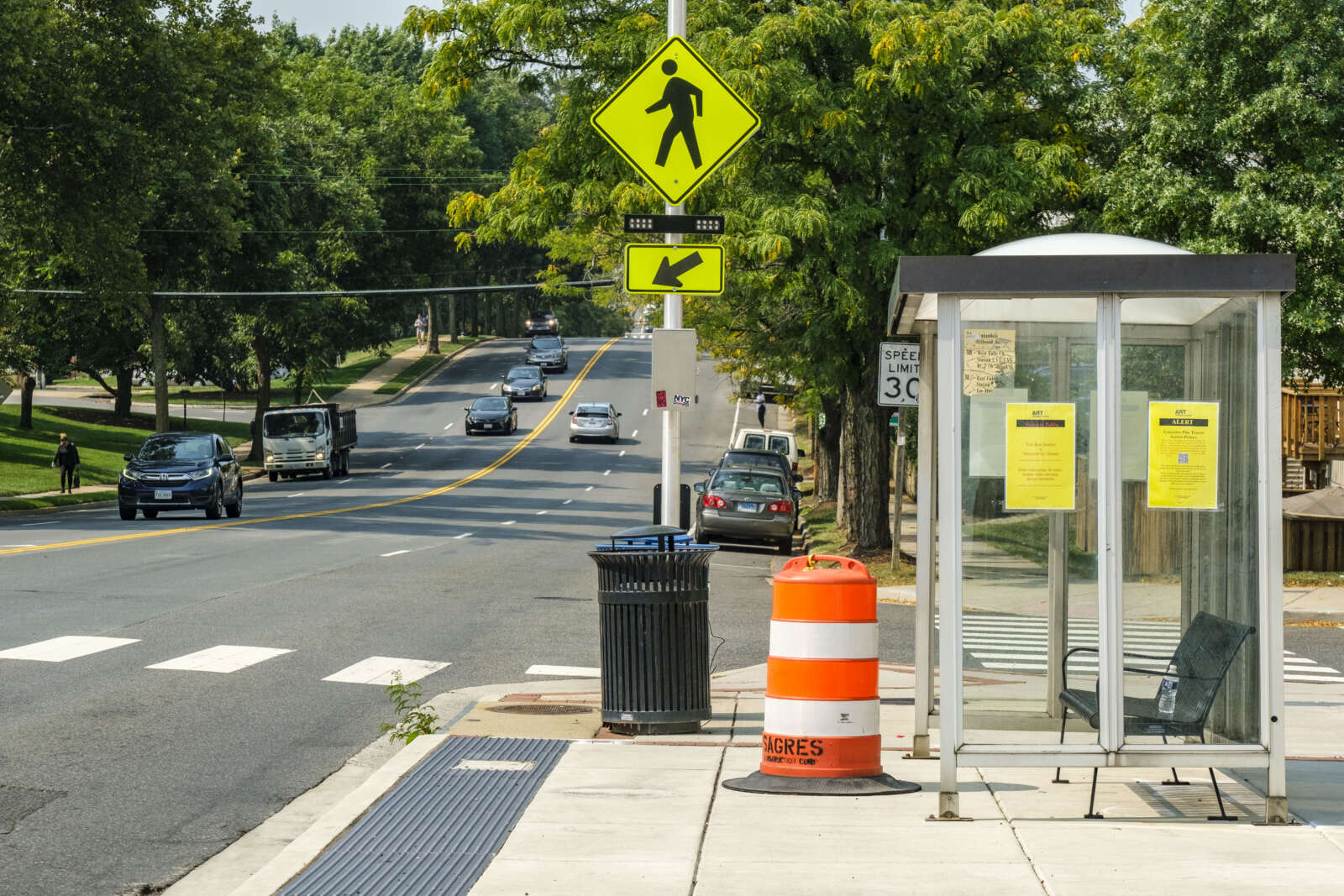
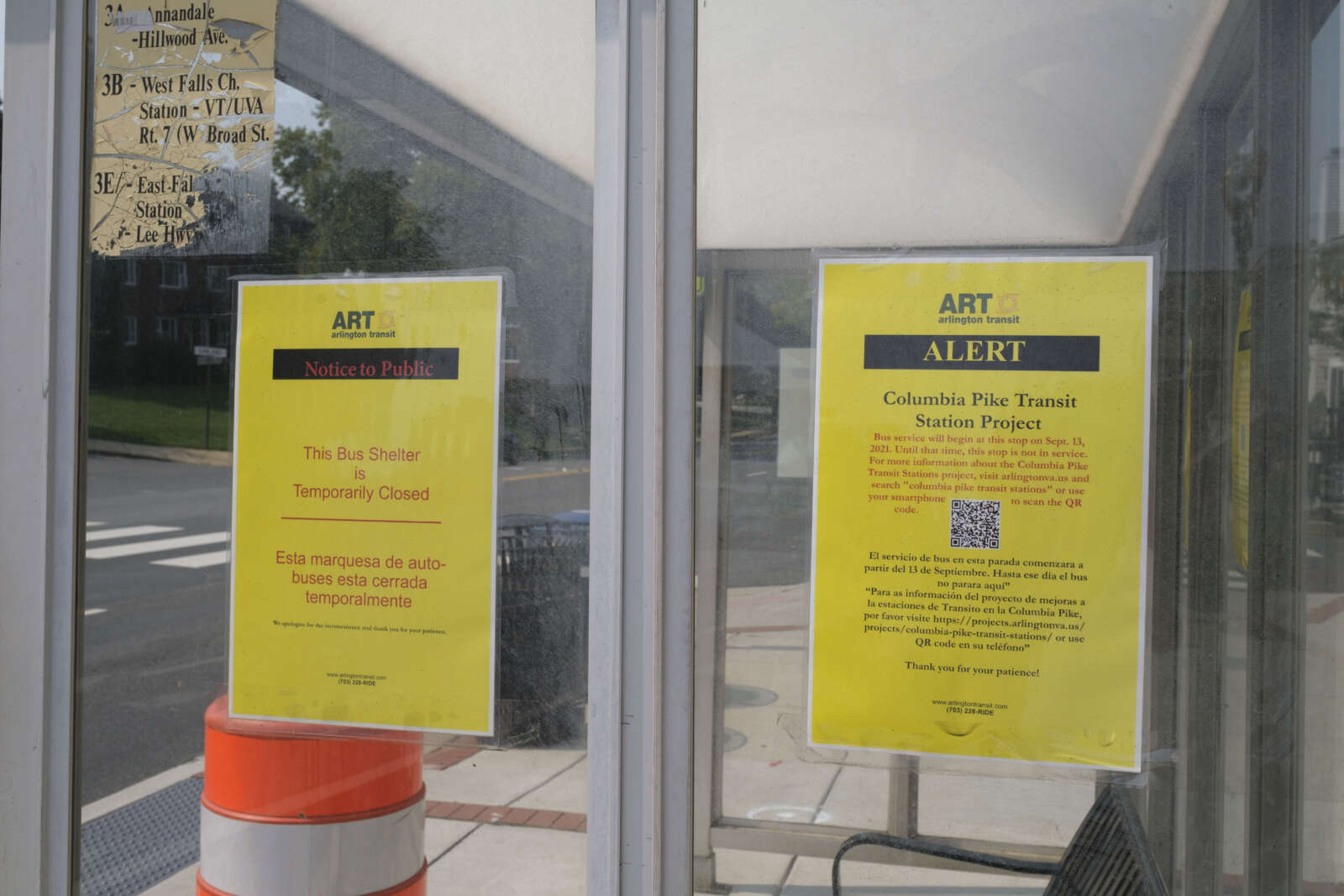
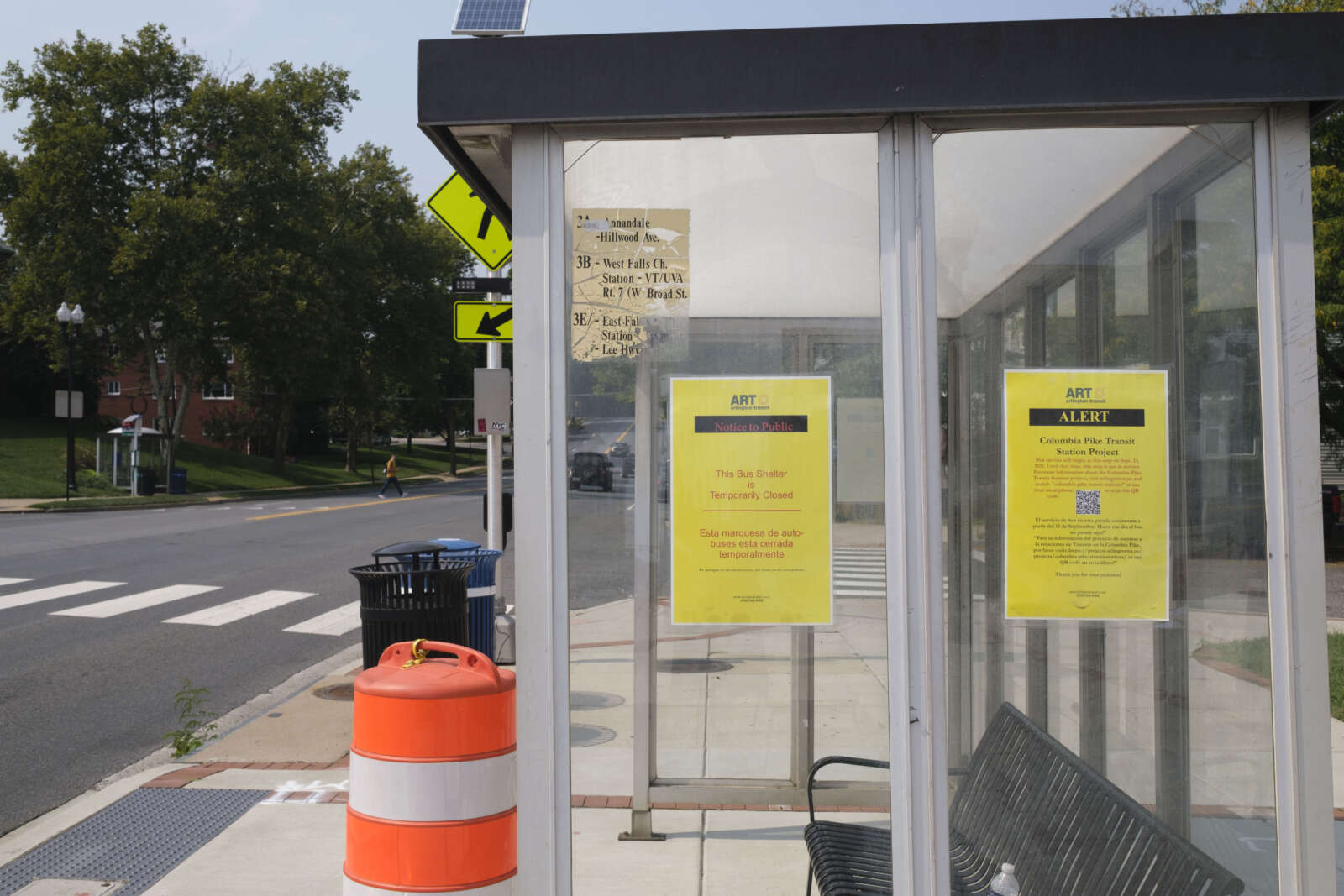
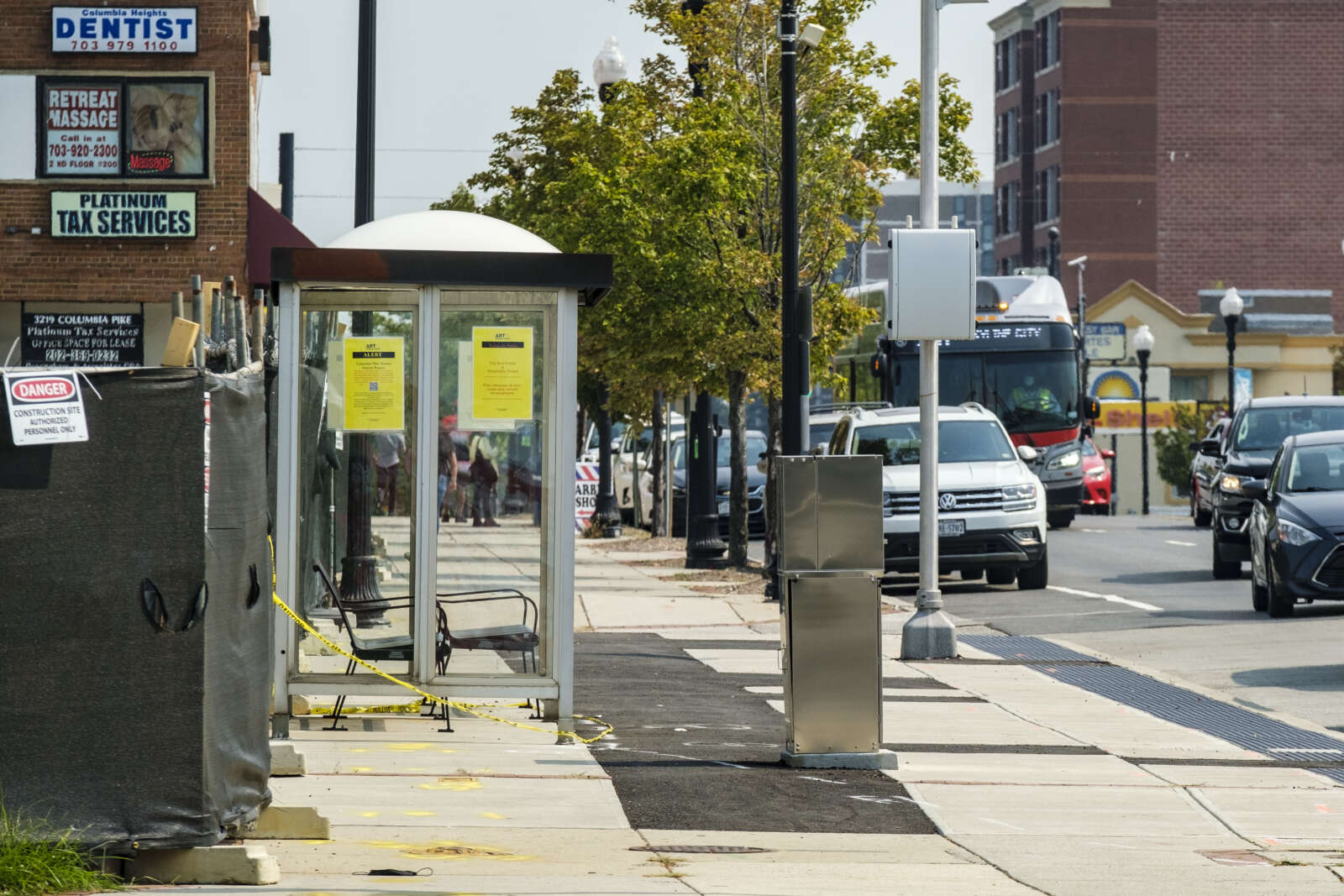
As a result, the first eight of 23 new transit stations, which the Department of Environmental Services was aiming to deliver this spring, will likely be installed next spring. In the meantime, temporary shelters have been installed at these locations, and bus service is set to return to half of them tomorrow (Friday).

The new stations comprise a $16.9 million project to transform the Pike into a “transit-oriented, pedestrian-friendly ‘Main Street,'” according to the county. The County Board approved the upgrades in the summer of 2018 as part of the 2019-2028 Capital Improvement Plan.

“New stations will make transit along the Pike easier, safer, more attractive and accessible — encouraging more people to use it,” the project webpage said.

The bus stop project dates back to the since-nixed plan for a Columbia Pike streetcar. A prototype stop, at the corner of the Pike and S. Walter Reed Drive, made national headlines after ARLnow revealed that it cost more than $1 million.

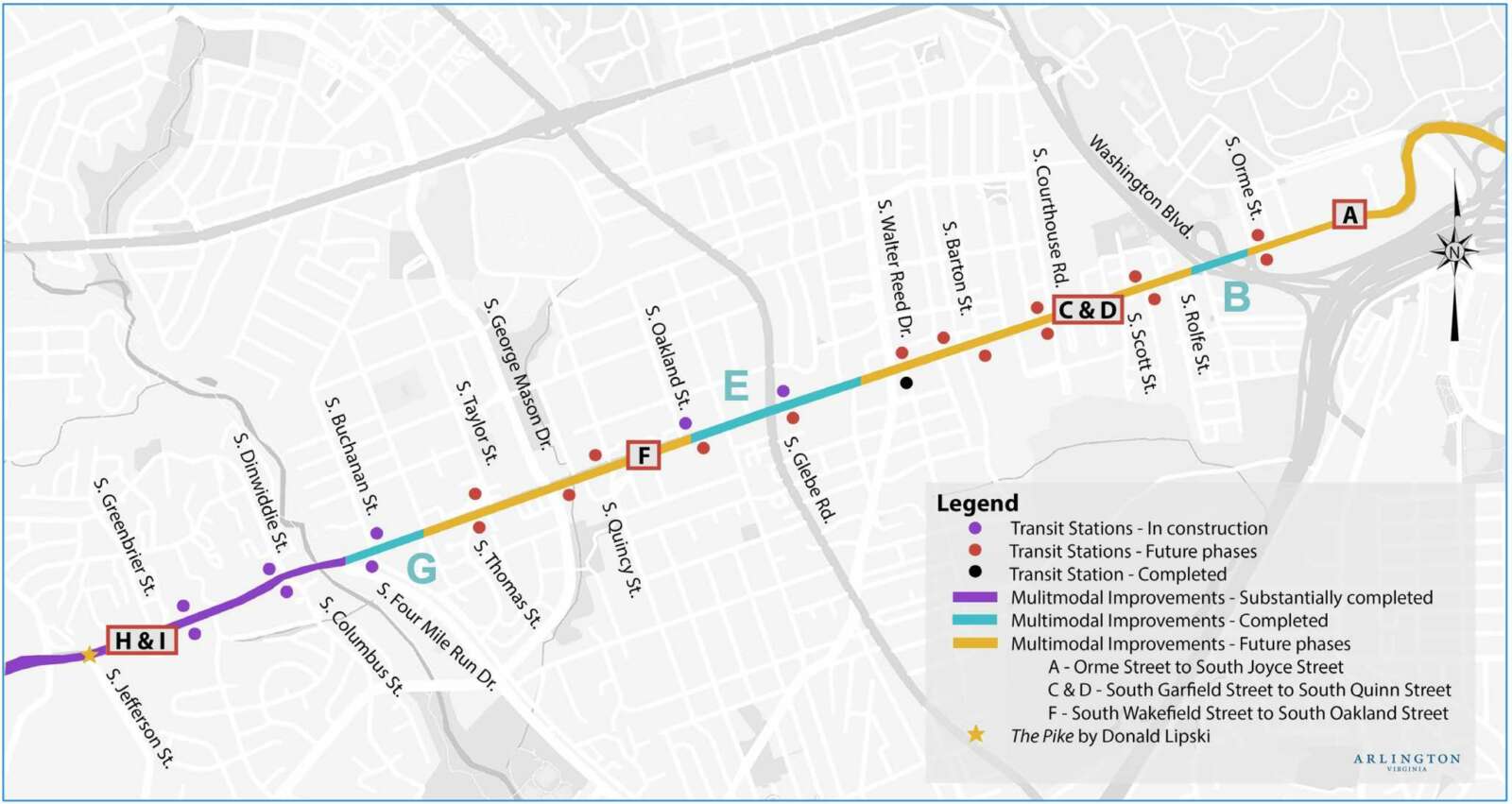
A map of completed, under-construction and planned changes to Columbia Pike for improved bus transit and multimodal experience (via Arlington County)

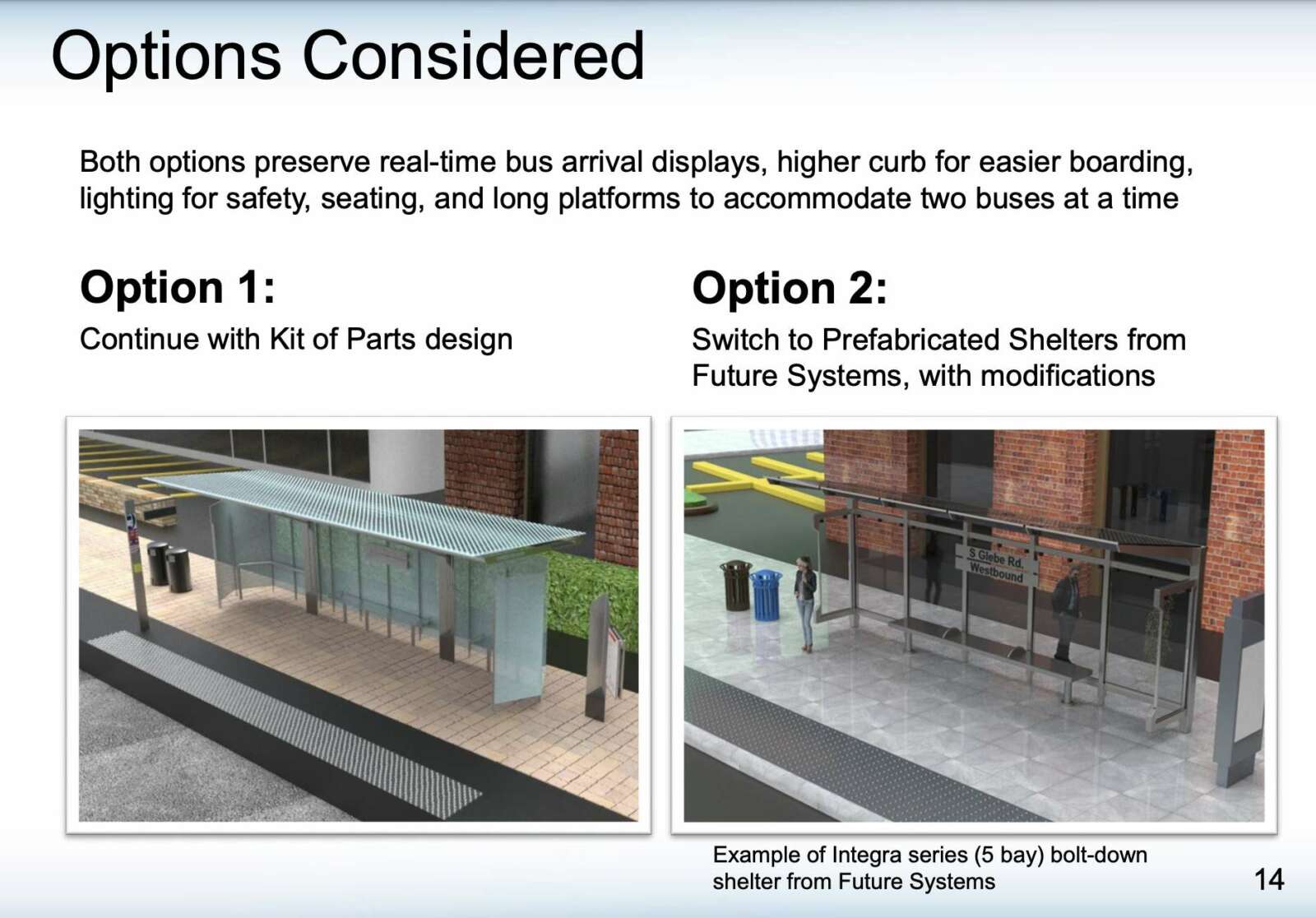
More recently, the station work has been stalled by structural flaws discovered with the bus shelters specially designed for the project, which feature a kit-of-parts design intended to cut down on costs compared to the custom-made $1 million “Super Stop.”

“Last November, our shelter fabricator, Future Systems, built a prototype of the shelter and identified stability issues with it,” said DES spokesman Eric Balliet. “After the design was revised, there were still concerns about its construct-ability and stability. These design issues were causing project costs to increase and further delays in delivery of the first stations.”

DES has opted to install prefabricated shelters from the same manufacturer, a decision supported by the County Board, which directed the department to finish these eight stations by the end of summer 2022. Choosing the prefabricated shelters will allow DES to finish those stations in spring 2022 instead of spring 2023, and will save more than $7 million, according to a recent report.

“Kit of parts” bus shelter vs. prefabricated bus shelter (via Arlington County)

“By the end of the year, we expect to receive the final shelter drawings from Future Systems, to be followed in early 2022 with a Notice to Proceed for production and delivery of the first eight station shelters,” Balliet said. “Installation of shelters and amenities for the first eight stations is expected in spring 2022.”

The prefabricated shelters maintain some of the original shelter’s features — glass finishing, protection against bad weather and real-time bus arrival displays — and will have equivalent or more seating. The shelters are also shallower, giving pedestrians more room.

When finished, the stations will be accessible to people with disabilities and will have platforms that can fit two buses.

(more…)


Three Arlington County parks — Thomas Jefferson Park, Towers Park and Marcey Road Park — could see substantial upgrades over the next year.

Contracts to improve the amenities at these three facilities are teed up for County Board approval this Saturday. The projects were all approved in the summer of 2018 as part of the 2019-2028 Capital Improvement Plan.

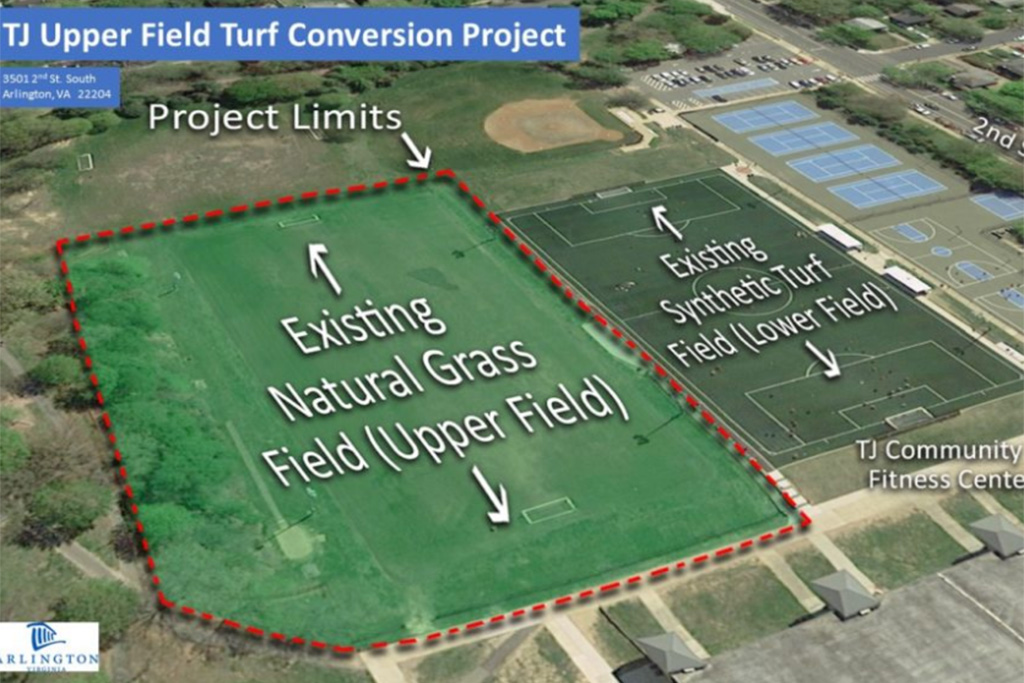
If passed, the natural-grass upper field at the Thomas Jefferson Park (3501 2nd Street S.), which hosts the Arlington County Fair, will be redone with synthetic turf.

As part of the $1.1 million project, the field will get spectator seating, signage, site furnishings and new landscaping, as well as athletic equipment and a long jump area. There will be accessibility and stormwater management improvements. The field’s existing lighting will remain.

“The conversion should not impact the County Fair if it remains at TJ,” Department of Parks and Recreation spokeswoman Susan Kalish said. “The County is looking into investing in a turf cover to protect the field at TJ and possibly at other synthetic turf fields.”

But Arlington County Fair organizers are considering moving the event to Long Bridge Park.

During community outreach about the turf project, conducted in the winter of 2019-20, residents indicated “a strong desire to keep the County Fair at Thomas Jefferson Park,” according to a staff report. The county is once more accepting feedback on the potential move.

In the report, the parks department responded to safety concerns about synthetic turf and pointed to Arlington County Public Health’s Synthetic Turf FAQ.

“At this time, all independent studies report that ‘the preponderance of evidence shows no negative health effects associated with crumb rubber in synthetic turf,'” the report said.

Construction would take about six months.

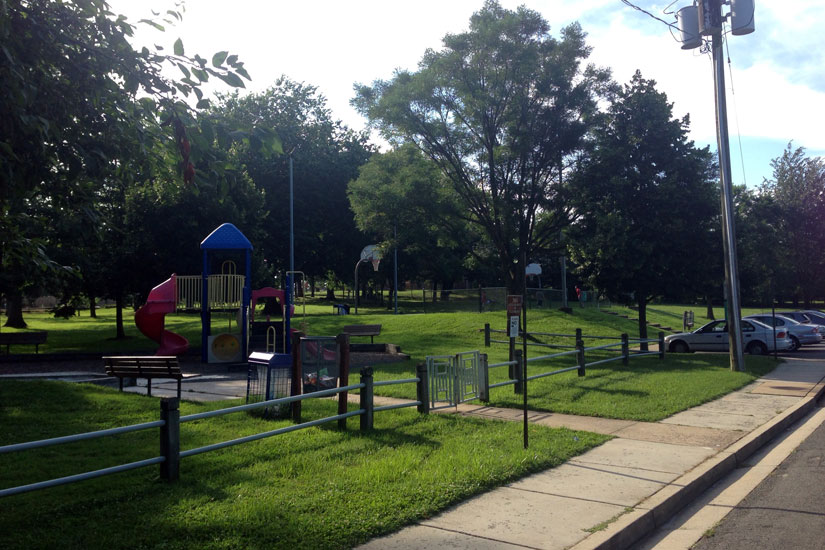
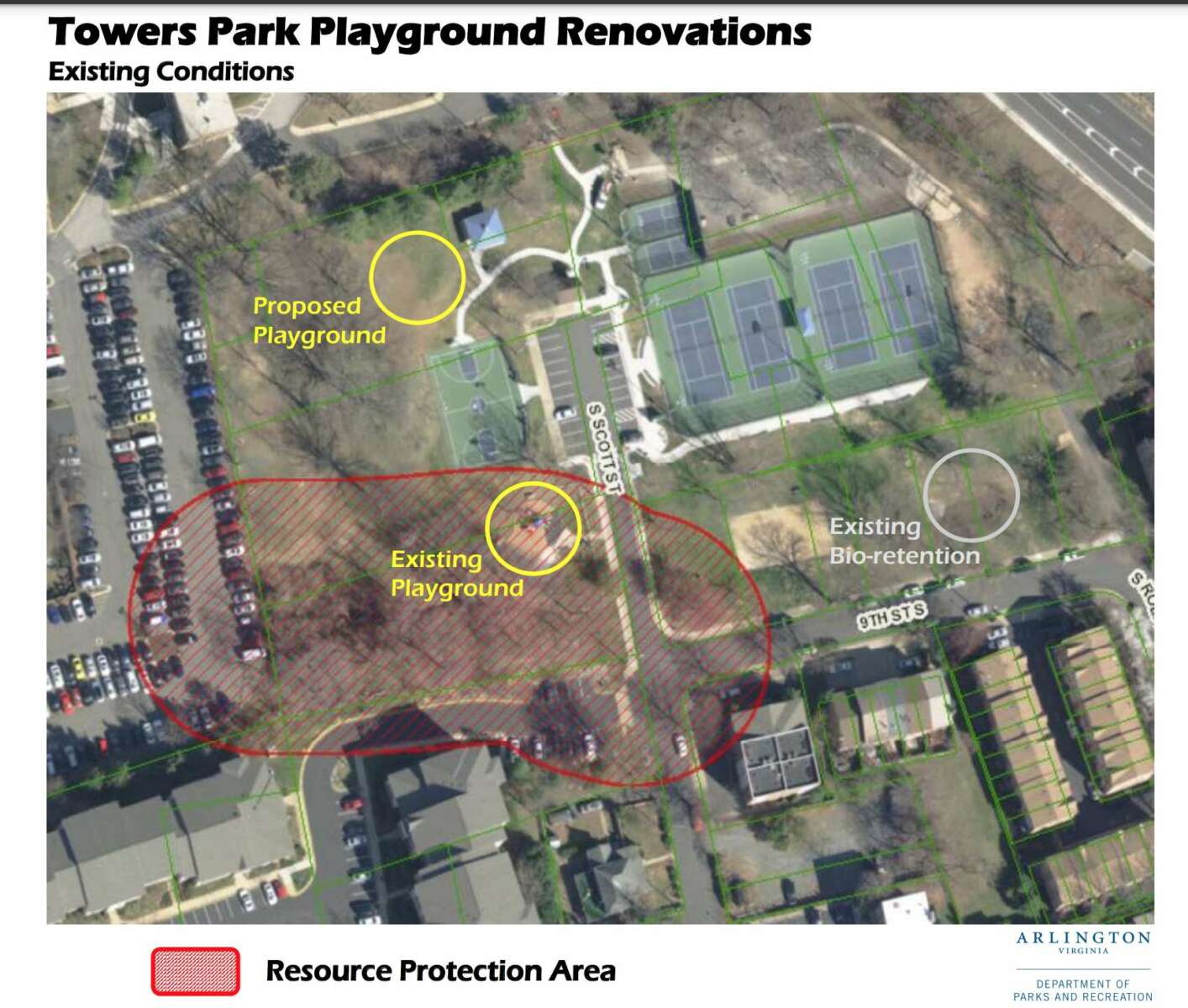
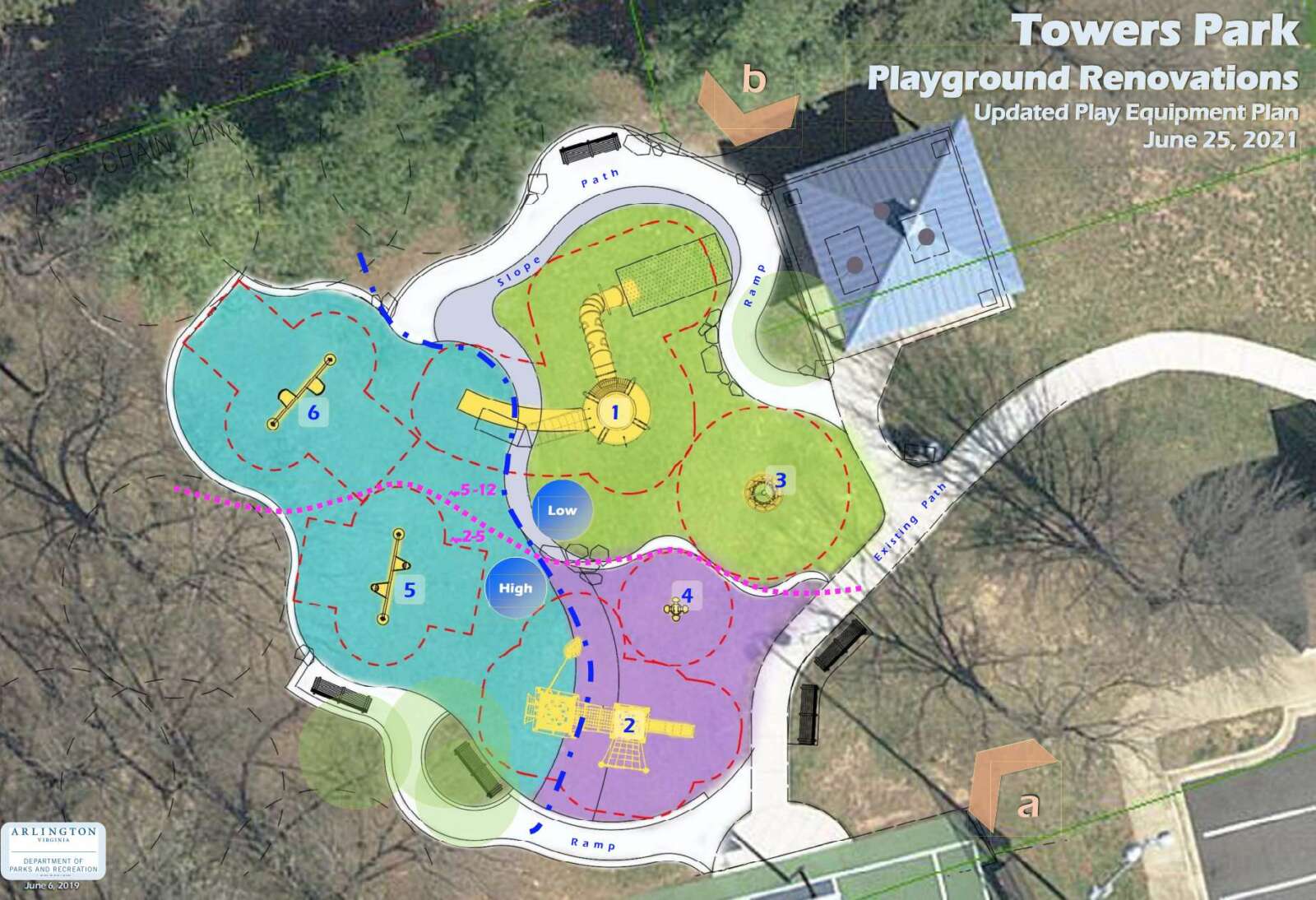
Over at Towers Park, at 801 S. Scott Street near Columbia Pike, the existing playground for 2 to 5-year-olds, last replaced in 2000, would be razed. A new playground for 2 to 5-year-olds and another for 5 to 12-year-olds will be installed elsewhere, as the current structure falls in a resource protection area that will be reforested.

If approved, that project could start in the fourth quarter of 2021 and finish in the second quarter of 2022. There will be stormwater management work and new walkways, fencing, signage, site furnishings and landscaping.

The project was delayed by the pandemic and over-budget bids, per a board report. After a first round of bids came back too high, the report said DPR “value-engineered the play equipment selection” and rebid the project this June. All the bids were still over-budget, but the county negotiated the lowest bid to $825,000.

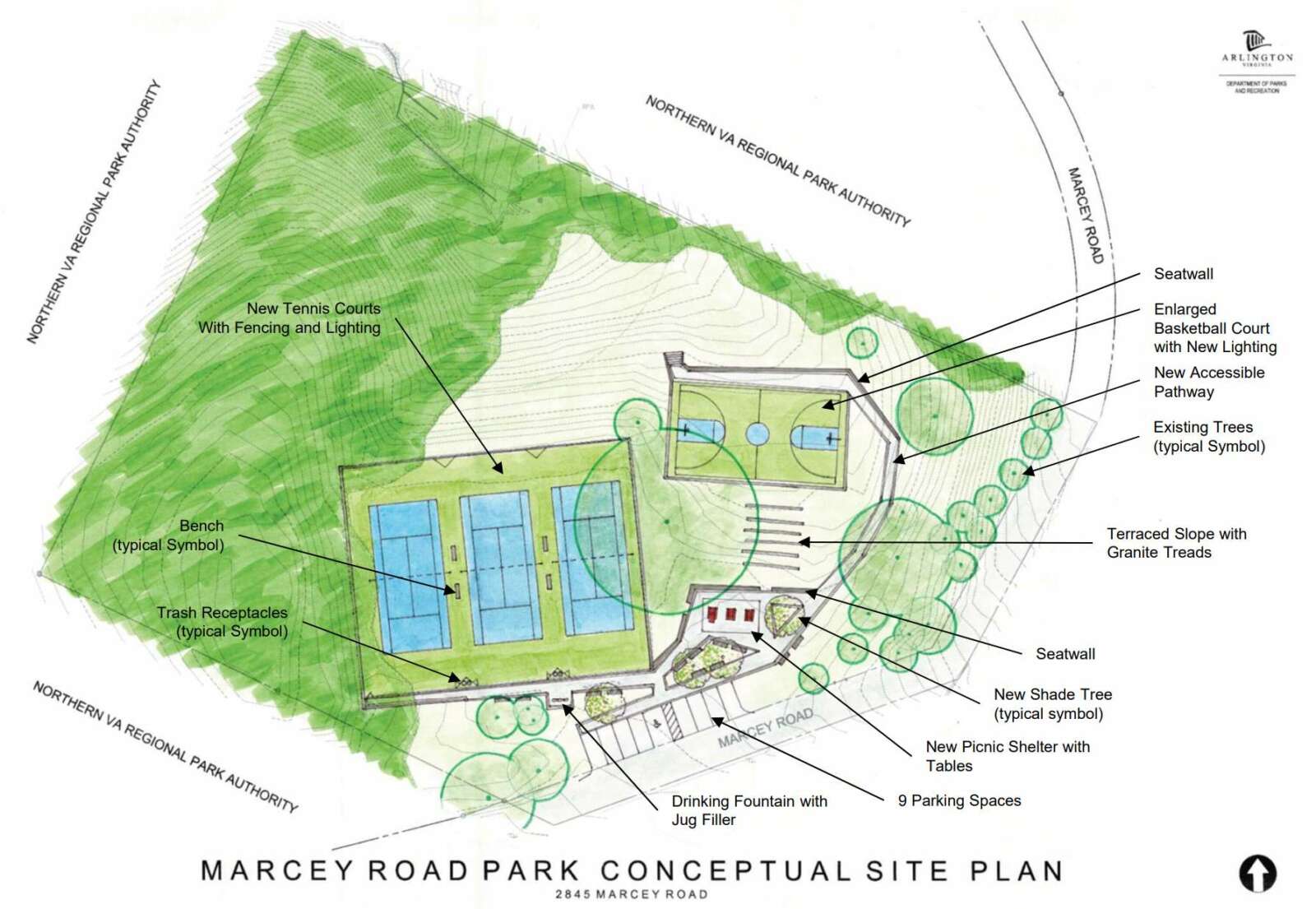
Finally, at Marcey Road Park, located 2722 N. Marcey Road near Military Road, the basketball court, the three tennis courts, the parking lot and picnic shelter will be replaced. The park will get new LED court lighting and furnishings, as well as drainage, stormwater management and landscaping work.

“The outdoor amenities for this park are past their life expectancy and are in need of replacement,” a county report said. “Community feedback indicated the desire for more seating opportunities and trash receptacles, a larger basketball court, a larger picnic area with shade, improved tennis court practice wall, improved accessibility and preservation of as many trees as possible.”

Every bid was over-budget, and the lowest was a non-negotiable $1.3 million, the report said. That project is expected to start in the fourth quarter of 2021 and finish in the third quarter of 2022.


View More Stories