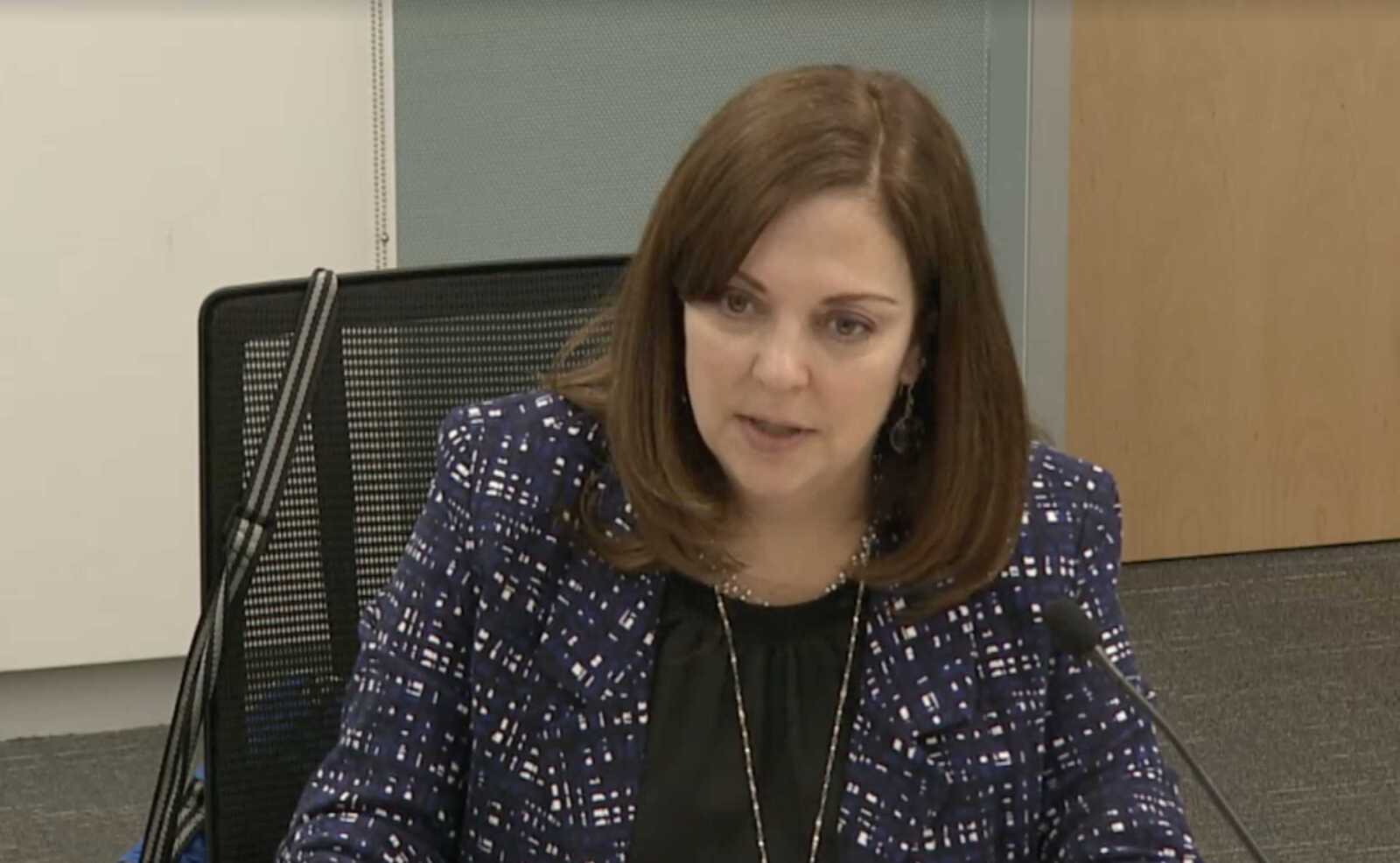
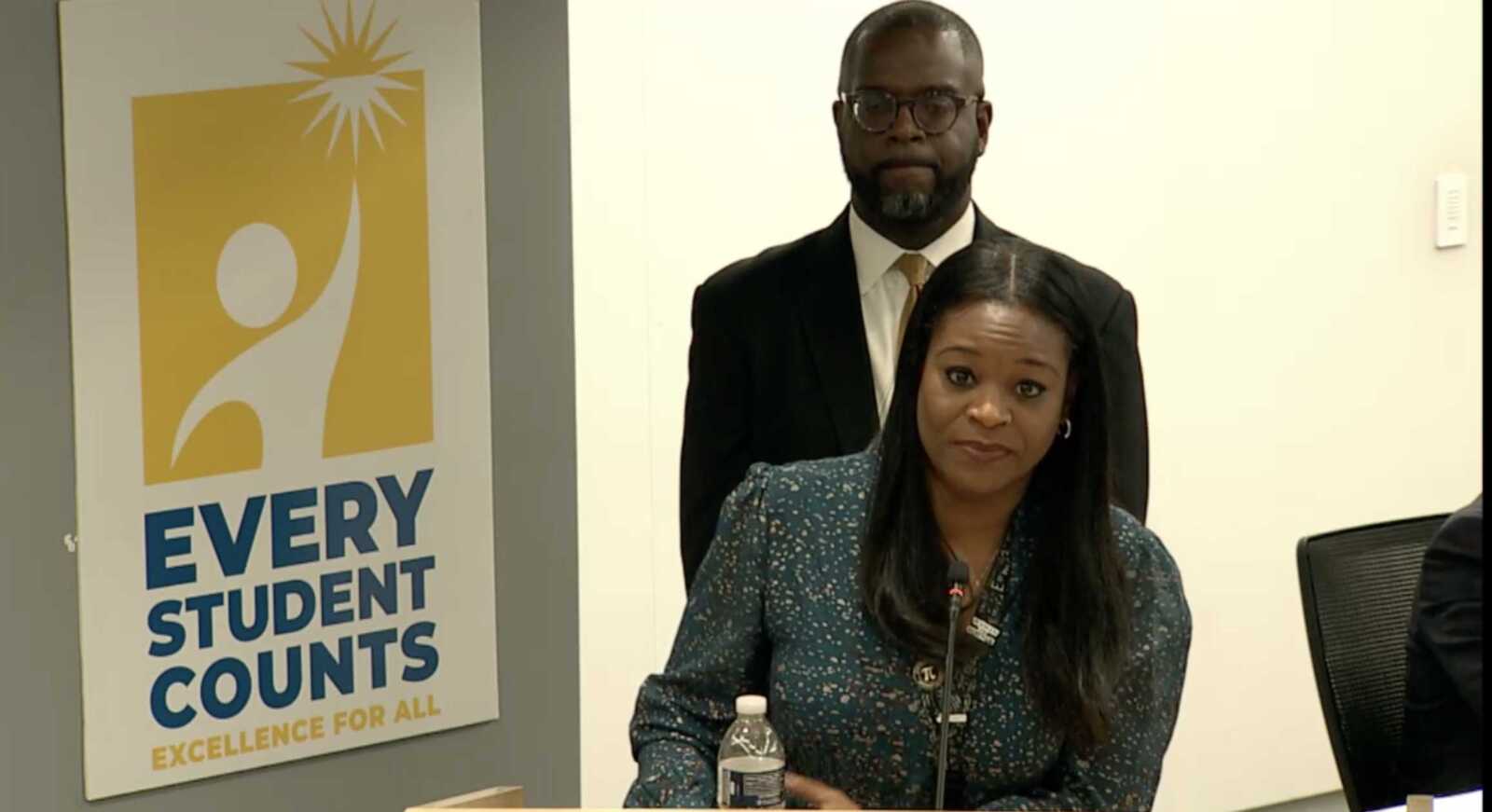
APS Elementary Math Supervisor Shannan Ellis speaks during the School Board meeting on Thursday, Oct. 12, 2023 (via Arlington Public Schools)

Arlington Public Schools says it is closing a math achievement gap worsened by Covid.

But a School Board watchdog group says the school system’s new progress report is missing pre-Covid data and paints a misleading picture of how far APS still has to go.

Overall, every student subgroup Arlington tracks — based on race or ethnicity or economic status, for instance — saw gains since in-person school resumed, according to the APS math office, which presented new data to the Arlington School Board during its Oct. 12 meeting. The new results were part of a discussion of the work of the office and math teachers to help students recover Covid-era drops in performance on state math tests called the Standards of Learning, or SOL.

The office highlighted the growth among students who scored the lowest on math SOL tests and received support from Arlington’s 10 new math interventionists. They are stationed at three middle schools in South Arlington and all but one of Arlington’s 10 Title 1 elementary schools, which have the highest concentration of low-income students. The office noted students with access to interventionists progressed more than their peers without that support.

The distinction was played as part of a pitch for more math interventionists in the upcoming budget. Elementary Math Supervisor Shannan Ellis said teachers report students with access to interventionists demonstrate more confidence in math, think more flexibly and persist when faced with challenges.

“This is for the children in Arlington County to get what they need,” Ellis said. “These are people who are working with our students [who] have the greatest need… [where] it is either highly improbable or impossible for teachers to grow them in one or more years.”

While the presentation focused on three-year trends, a “deeper dive” into more historical math data is forthcoming, Chief Academic Officer Gerald Mann told the School Board.

For Arlington Parents for Education, which formed during the pandemic to advocate for school reopenings and a focus on Covid-era learning loss, not including pre-Covid data downplays the width and persistence of achievement gaps in Arlington.

“APS should not obscure the large remaining challenges to the School Board or the public — it still has a long way to go in terms of recovering from the learning losses caused by prolonged school closures, which have dramatically increased the gap in performance between at-risk students and other students,” it says in a recent letter. “And the rate of recovery on both dimensions is too slow. ”

Virginia Dept. of Education data show the achievement gap in Arlington among Black and Hispanic and white students, for instance, was wider than the state-level gap pre-Covid. The pandemic exacerbated these gaps.

There are similar trends in the achievement gaps for students who are economically disadvantaged or learning English.

Among its issues with the presentation, APE disputed how the presentation celebrated that, for economically disadvantaged students, “APS is closing the gap faster than the state.”

“This overlooks the point above that we are ‘closing the gap’ faster primarily because there is a bigger gap to close (in comparison to the state),” it said, noting APS ranks 65th out of 130 districts in Virginia for math SOL rates for economically disadvantaged students, which is down 10 places from its ranking in 2016-17.

“In other words, not only is APS failing to improve the performance of at-risk students at the same pace as the state, in comparison to the year 2016-17, our performance relative to other districts has declined,” the group said.
(more…)


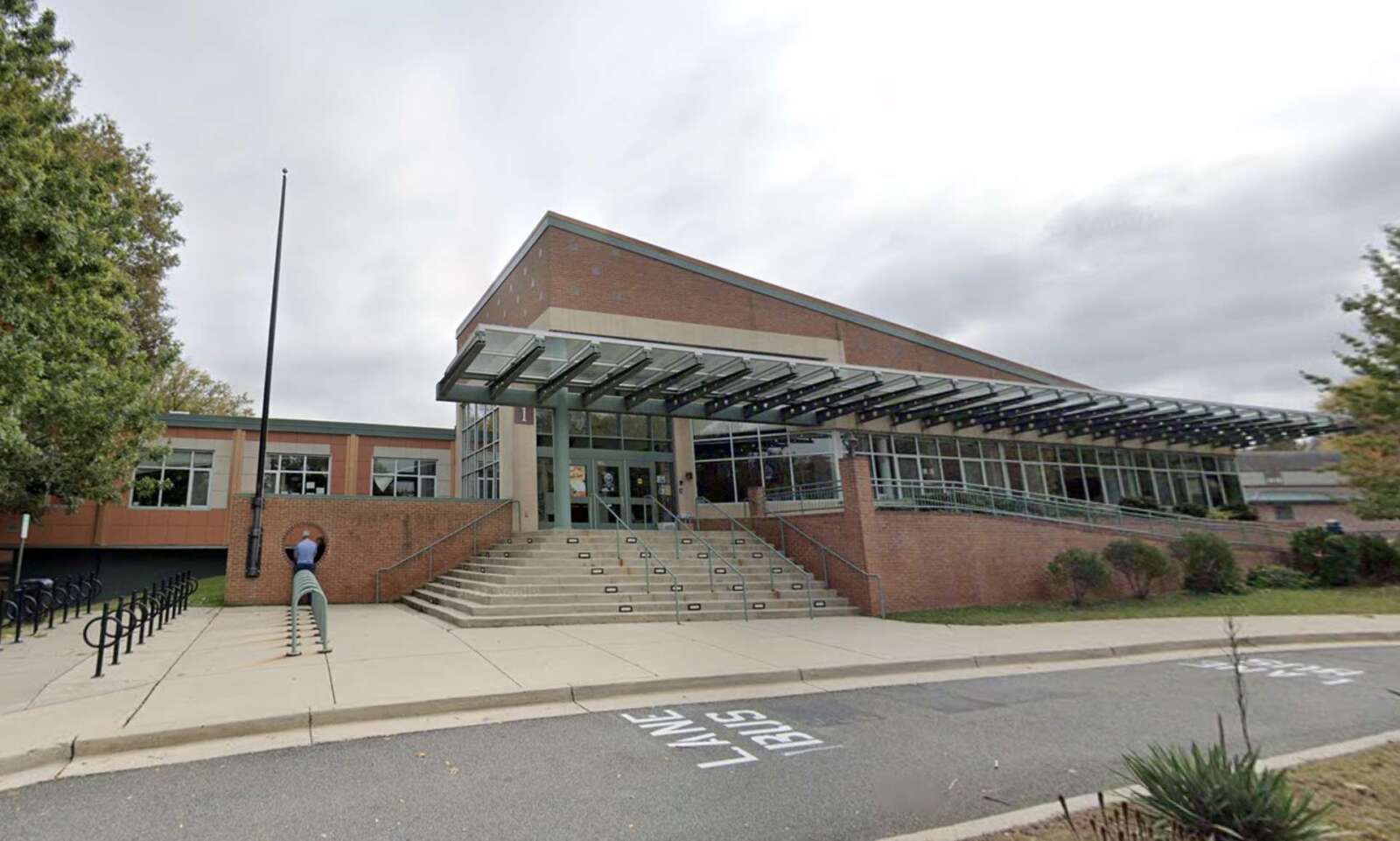
Nottingham Elementary School (via Google Maps)

Nottingham Elementary School will not become a swing space for other schools slated for renovations, according to Arlington Public Schools.

The administration came to this conclusion last night in a “Committee of the Whole” meeting during a preview of a forthcoming report outlining the schools in need of extensive renovations.

This report found none of the schools recommended for renovations need Nottingham to become a swing space “at this time,” per an email sent to families this morning, Wednesday, and shared with ARLnow. The email assured families the swing space proposal will not be included in the Capital Improvement Plan for 2025-34.

“There may be a need for swing space for future projects, and any swing space proposals will be communicated well in advance,” the email said. “Moving forward, a more in-depth feasibility study of any school needing major construction or renovation will be completed prior to determining when and if swing space will be needed, or if there are alternative ways to manage the project.”

This decision closes a chapter of heartache for Nottingham families and staff, opened this spring when APS proposed closing Nottingham, in the Williamsburg neighborhood at 5900 Little Falls Road, and making it a swing space as early as 2026.

APS said it chose this school because it would cost the least to retrofit compared to other schools, county facilities or commercial buildings, and because this approach would be more fiscally responsible than building a new school.

The backlash from current and future Nottingham parents was swift. Some argued APS made the decision on faulty projections of falling enrollment and criticized the system for releasing this information before a renovation plan was ready.

“This entire fiasco could have been avoided if they had waited to get the results of this report,” parent Kiera Jones told ARLnow today. “A ton of time, energy, and stress for nothing.”

“The process was completely out of order,” parent Malini Silva added.

Jones called on APS to “rehaul… their approach to projects and how they treat their stakeholders.”

This includes how APS treats teachers, according to parent Jennifer Loeb and June Prakash, the president of the teachers union, Arlington Education Association.

Teachers felt demoralized and angry after a meeting last month with administrators about the swing space proposal, Loeb told ARLnow. Prakash told the School Board the same thing earlier this month.

“The actions of the current cabinet over the past few weeks highlight exactly why one joins the union,” Prakash said, citing how teachers felt after the “botched informational session” about Nottingham and pending healthcare changes that roiled current and retired teachers.

Prior to the forthcoming report, the Arlington County Council of PTAs predicted APS would not have sufficient funding for the large-scale renovations that would require a swing space.

This was confirmed during the discussion of the renovations report, which found APS has funding for five large-scale projects, Jones said.

During the meeting last night, Loeb said administrators discussed how APS would not know if it truly needs a swing space until it conducts deeper studies of buildings set for renovations and contractors weigh in.

These studies take a year and would not begin until next fall, meaning APS would not know if a swing space were necessary until two years from now.

“You’re talking about work that is happening years from now, but they told Nottingham six months ago ‘It’ll be you,’ when they had none of the necessary data,” she said.

This morning, when parents were walking their kids to school, Loeb said everyone “looked relieved.”

“We can get back to being a community now. We can get back to building our school and really investing in our school community again,” she said. “We have space and breathing room to do that now.”


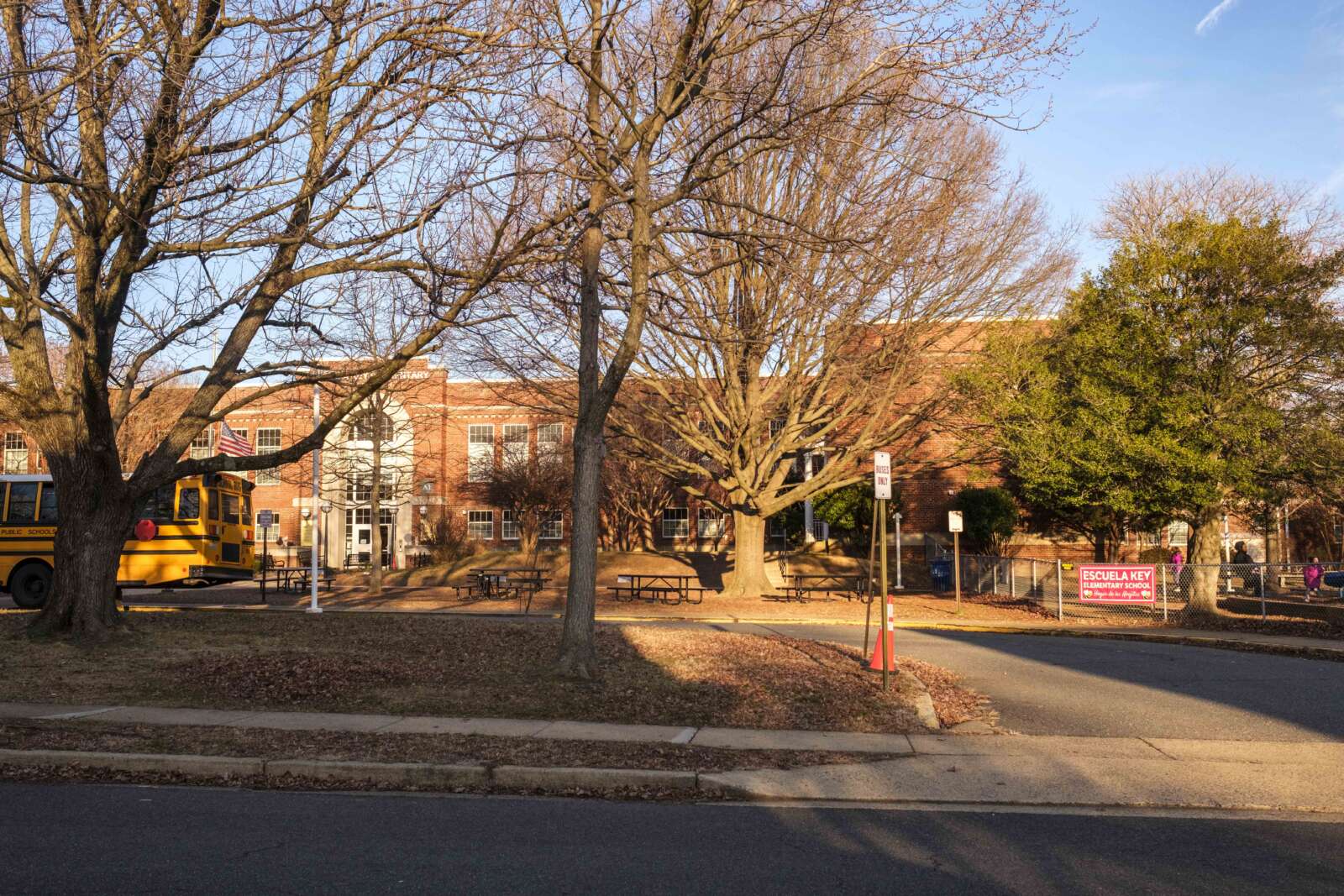
Key Elementary School (staff photo by Jay Westcott)

Graffiti resembling a swastika was found Monday at Key Elementary School, according to the school’s principal.

A staff member noticed the swastika-like drawing inside a bathroom stall in the second-grade trailer, Principal Marleny Perdomo said in an email to families last night, shared with ARLnow.

She said the drawing “is not an accurate depiction of the hateful symbol” but, as a precaution, the school requested Arlington Public Schools Office of Safety and Security and the Arlington County Police Department help with an investigation.

“At Arlington Public Schools, we condemn antisemitism and hate speech in all forms,” she said. “Hate speech impacts us all and is unacceptable, whether it occurs in person on school grounds or on social media. This type of behavior is unacceptable and any student(s) responsible will receive consequences in accordance with the Arlington Public Schools Student Code of Conduct.”

Today, staff at the Spanish immersion school, also called Escuela Key, will discuss “the impact of hate” with all students during class using resources from the No Place for Hate Campaign by the Anti-Defamation League (ADL).

“The goal will be to reaffirm that Escuela Key is a safe and supportive place for all students and that hate speech is not acceptable,” Perdomo said.

The principal urged families to play a role, too. She shared resources from the ADL as well as PBS Kids for talking about hate, violence, race and racism with children.

“I am asking families to talk to students about the serious nature of hate speech, as well as writing on school bathroom stalls, desks and other school property,” Perdomo said. ”We must continue to work together to eliminate discrimination and hateful speech in our school community.”

More from her email:

Our school counselors and administrators will visit classes throughout the coming weeks to reiterate our Escuela Key values of respect for self, others, and our space We will remind students that writing mean and hurtful words and images on walls or surfaces hurts others. We will remind students that our words have power and that we can choose to use them to make our school a better and happier place for everyone.

She noted the school will be hosting a class on peaceful relationships for children and parents tomorrow evening at the library.

The crude swastika coincides with an uptick in antisemitic incidents last year, though few of these incidents occured in Virginia, according to new FBI data. The ADL has observed an increase in antisemitism this month after Hamas, the Islamist military organization governing Gaza, attacked Israel.

Key School had another instance of worrying graffiti this January, when messages involving a possible gun threat and targeting a third-grade girl were found in a bathroom.

Some parents, including the mother of the targeted girl, told ARLnow they were frustrated to receive information in piecemeal updates and learn of a delayed involvement of law enforcement.

APS investigated the response and administrators apologized for the handling of the incident. Perdomo was placed on leave during this time, frustrating other families who pled for her return amid calls for more transparency from APS and the School Board.

The school system also investigated a swastika incident in 2020 at Thomas Jefferson Middle School.


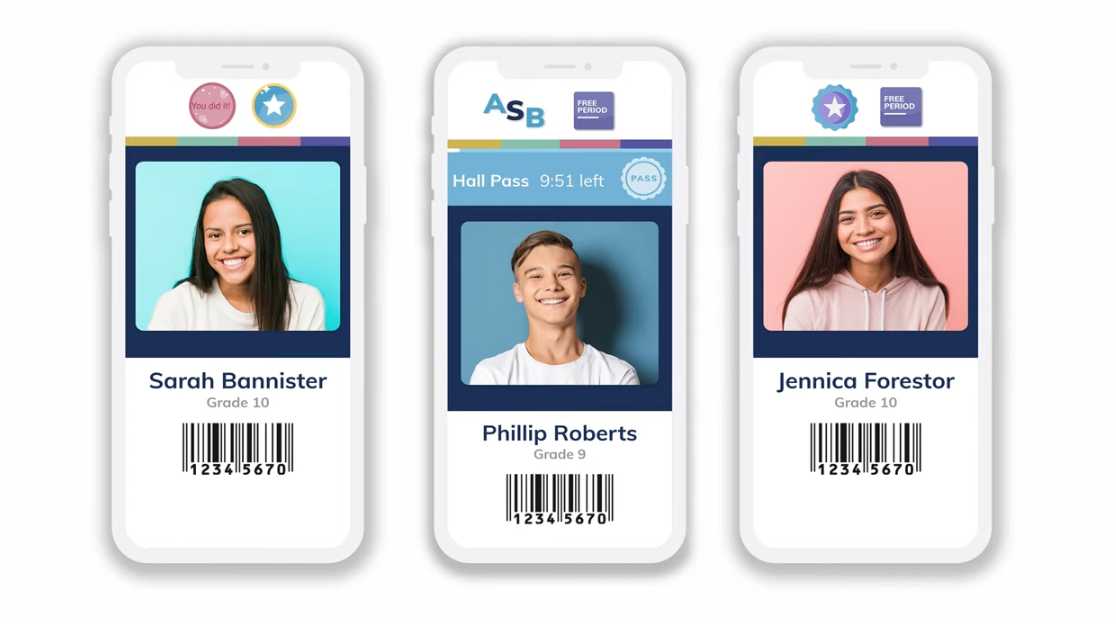
Demo Minga student IDs (via Minga/YouTube)

Next month, Arlington Public Schools is set to roll out a new, electronic campus management platform at a number of middle and high schools.

The goal is to improve building security and provide better oversight of students as they come and go from classrooms.

Kenmore, Dorothy Hamm, Gunston and Thomas Jefferson middle schools, as well as Wakefield, Washington-Liberty and Yorktown high schools, will adopt the app and web-based platform Minga, says APS spokesman Frank Bellavia.

The platform provides hall passes and monitors students coming in and going out of buildings to ensure that only students are in the school, Bellavia said. Schools can limit the number of students in the halls at one time and limit the number of passes per student, per day.

This comes as APS has separately upped its budget for safety and security measures, including school safety coordinators, security cameras and other technological upgrades pertaining to safety. That comes amid reports of student drug use, for which some teachers say skipping class is partly to blame, and nearly a dozen juvenile overdoses in Arlington this year.

Students can download Minga to their smartphone or use it on their laptop or tablet. The platform issues digital IDs with scannable barcodes and digital passes, which would replace physical ID cards and paper passes.

Wakefield High School Principal Peter Balas imported Minga this year from his days leading Alexandria City High School, which has had issues around violence inside and outside of the school.

“I see it as a tool to help me get better safety and security and to help things run more safely and smoothly,” he said. “My experience is that it has been… well-accepted by staff.”

Kenmore piloted an e-pass system last year and, when Balas arrived in Arlington, principals were discussing whether to adopt such a system. That is when he suggested Minga.

Minga notifies teachers of students who are out of class and can ensure certain students are not in the hallways at the same time — if they tend to break school rules when together. It tracks trends over time, such as overall time spent out of class and passes issued or students who spent the most time not in class and where they went.

Balas would like to see students scan their IDs to enter school buildings, too, so staff know who is in the building before they take attendance. He said it also can help staff track down and follow-up with students who arrive at school but ditch class or leave mid-day.

“[But] for me, one of the most important things, from safety standpoint, is that it basically would prevent anyone who doesn’t go to school from trying to get in,” Balas said.

Earlier this year, Wakefield was placed in lockdown after reports of a trespasser, possibly armed with a gun, and a threat against a student.

“Almost every period, we have comings and goings in the school,” he continued. “It will also help us keep track of all that movement and make sure access is secure and legitimate.”

When asked how this might interfere with building-level “Away for the Day” policies — in which phones are required to be off and stored during school hours — Bellavia said students can request passes from their tablets or laptops.

Balas says he does not think this will interfere with Wakefield’s mobile phone policy.

Administrators and security staff are in the first wave of training on the new system and teachers will soon follow.

“I was purposeful not wanting to inundate [teachers] when we aren’t ready to launch yet,” Balas said. “I’m hoping in the next month or so to have it fully up and running but it is something where I have to take the temperature of everyone and make sure it doesn’t overwhelm people.”

Minga will cost around $50,000 to roll out, Bellavia said.


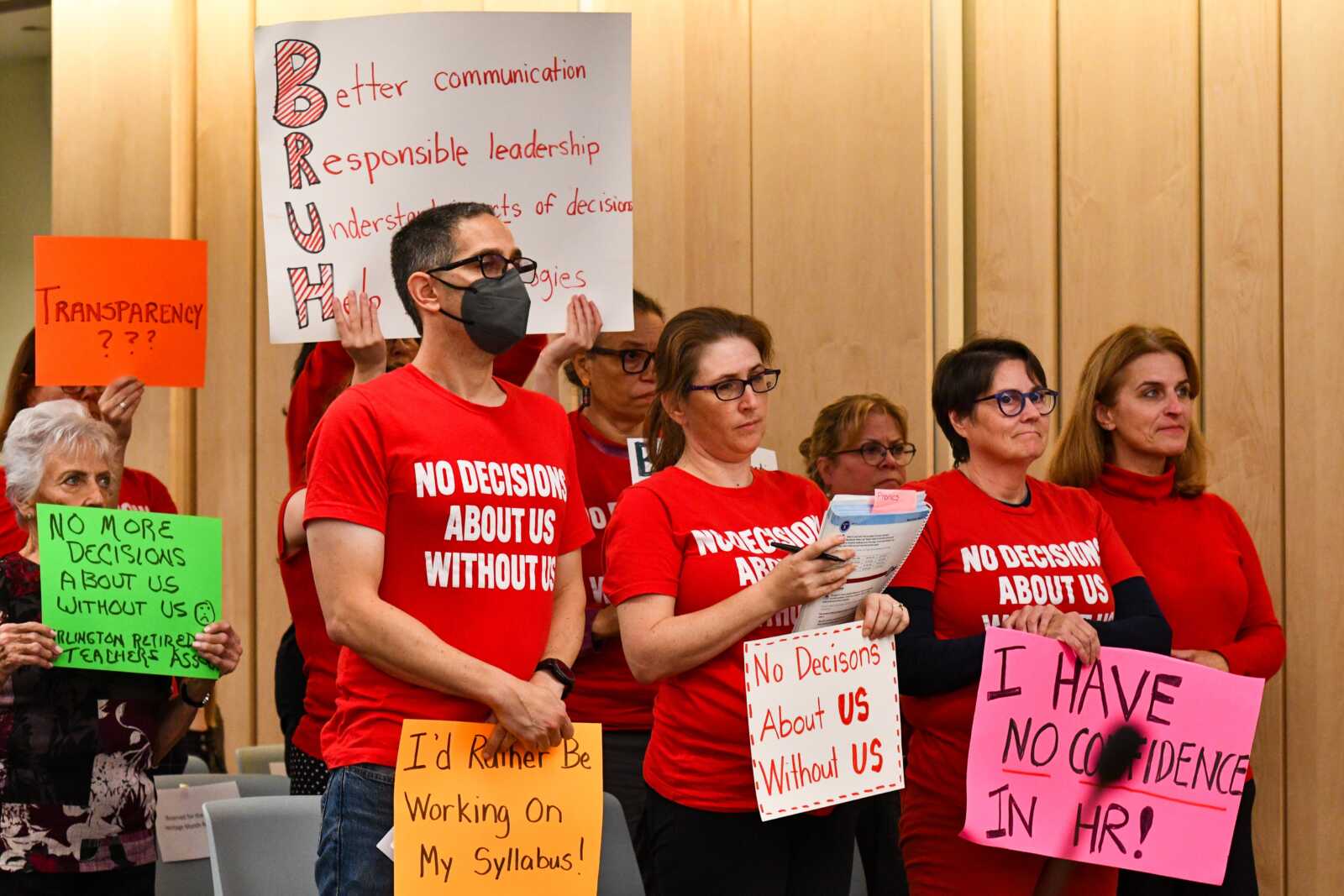
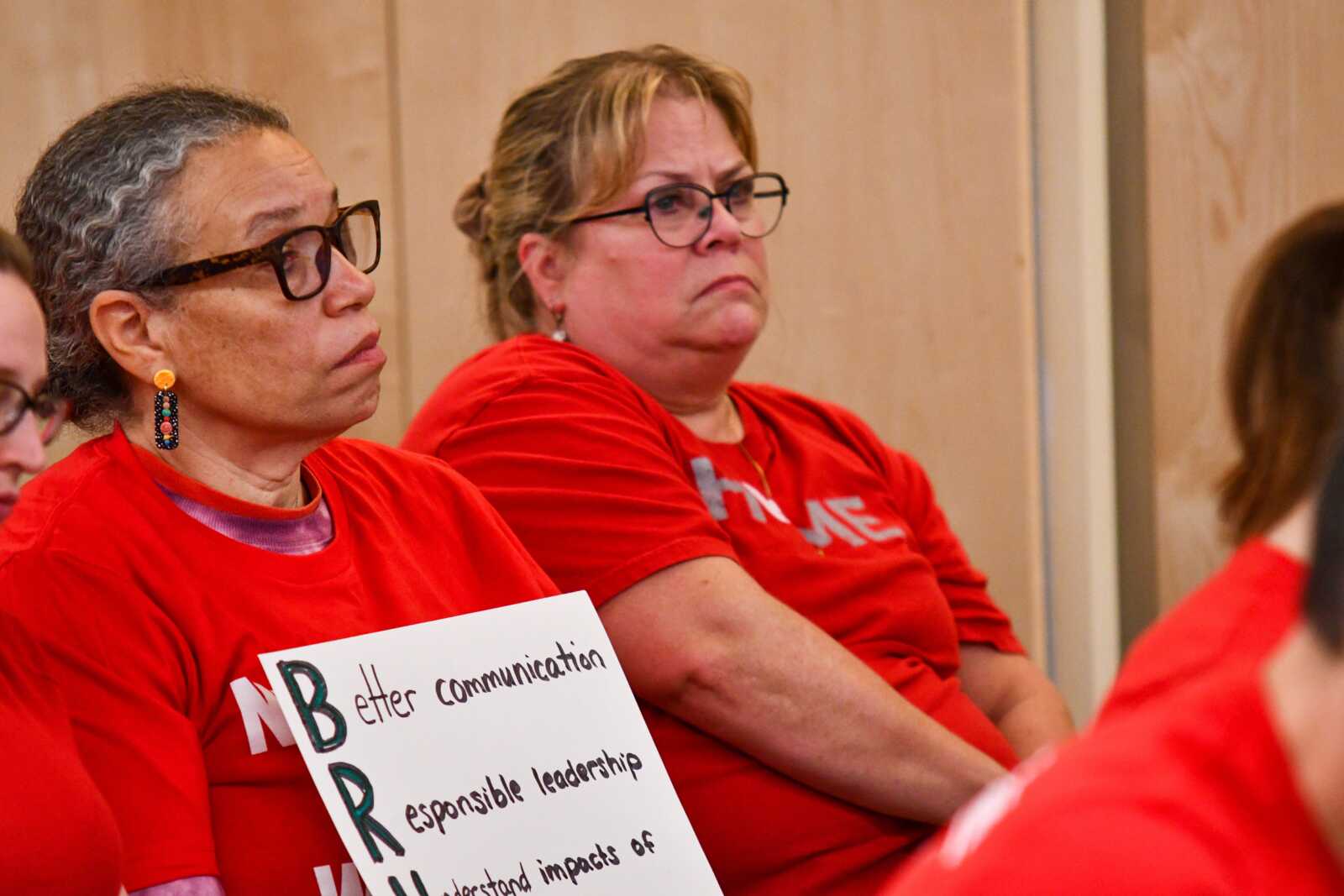
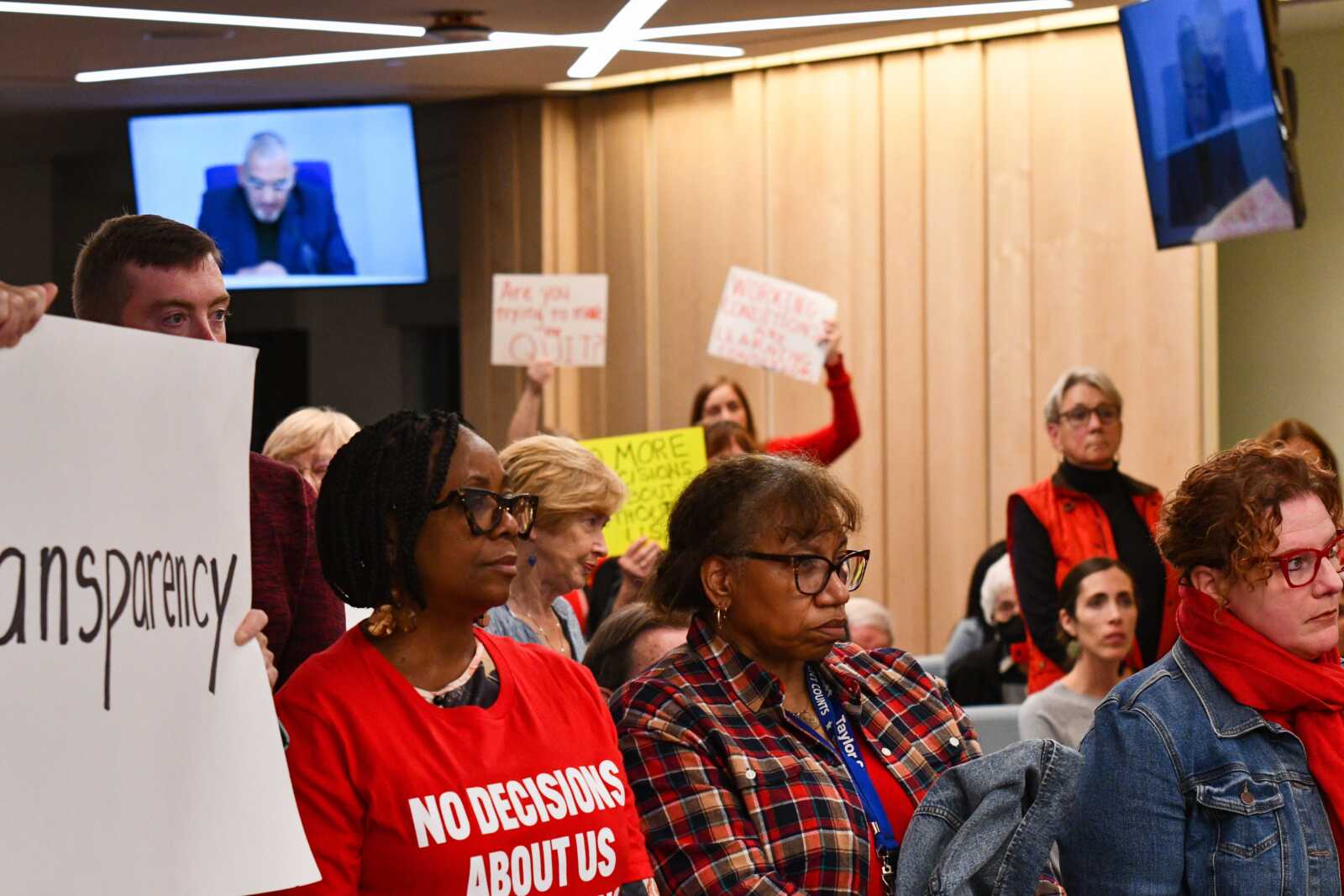
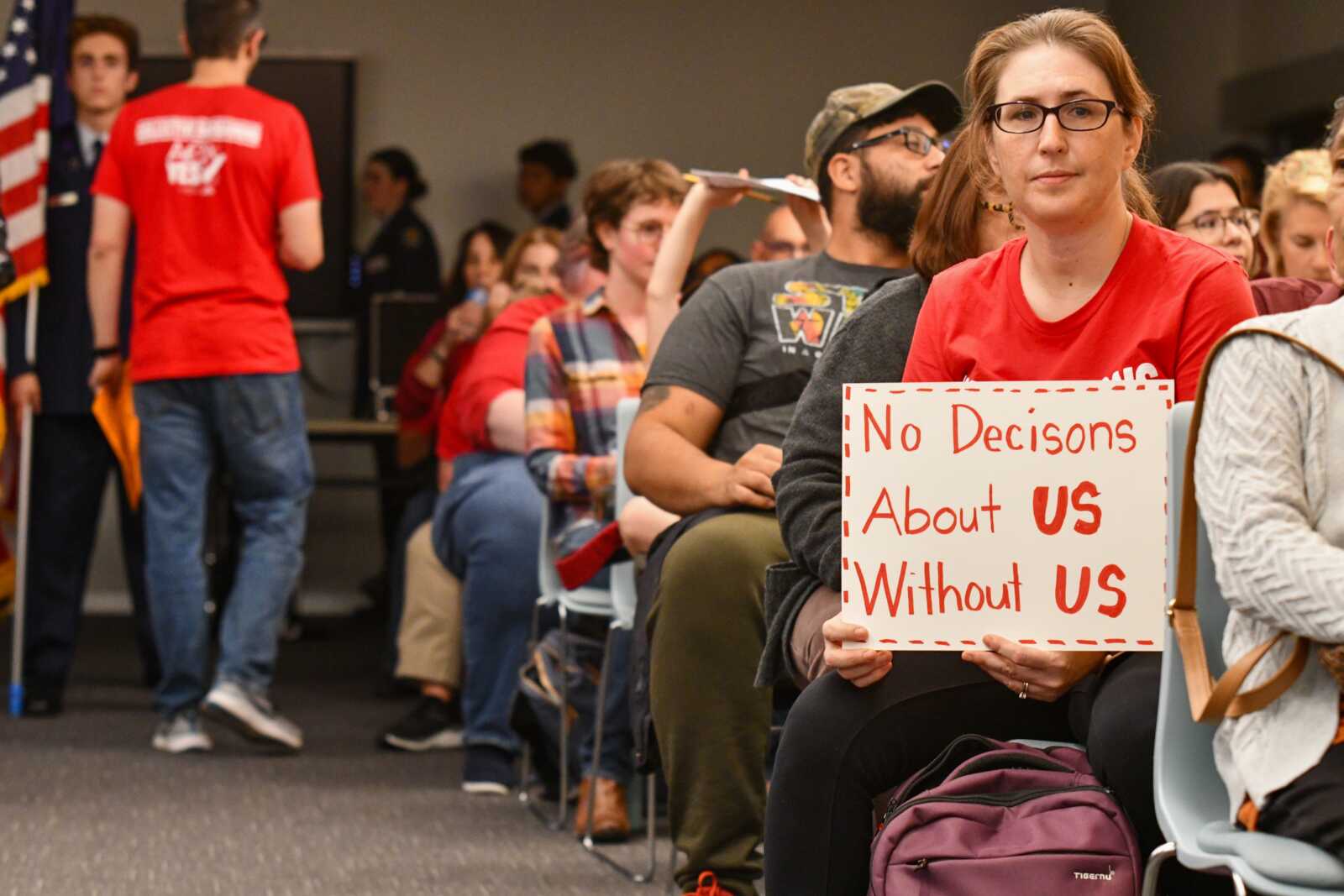
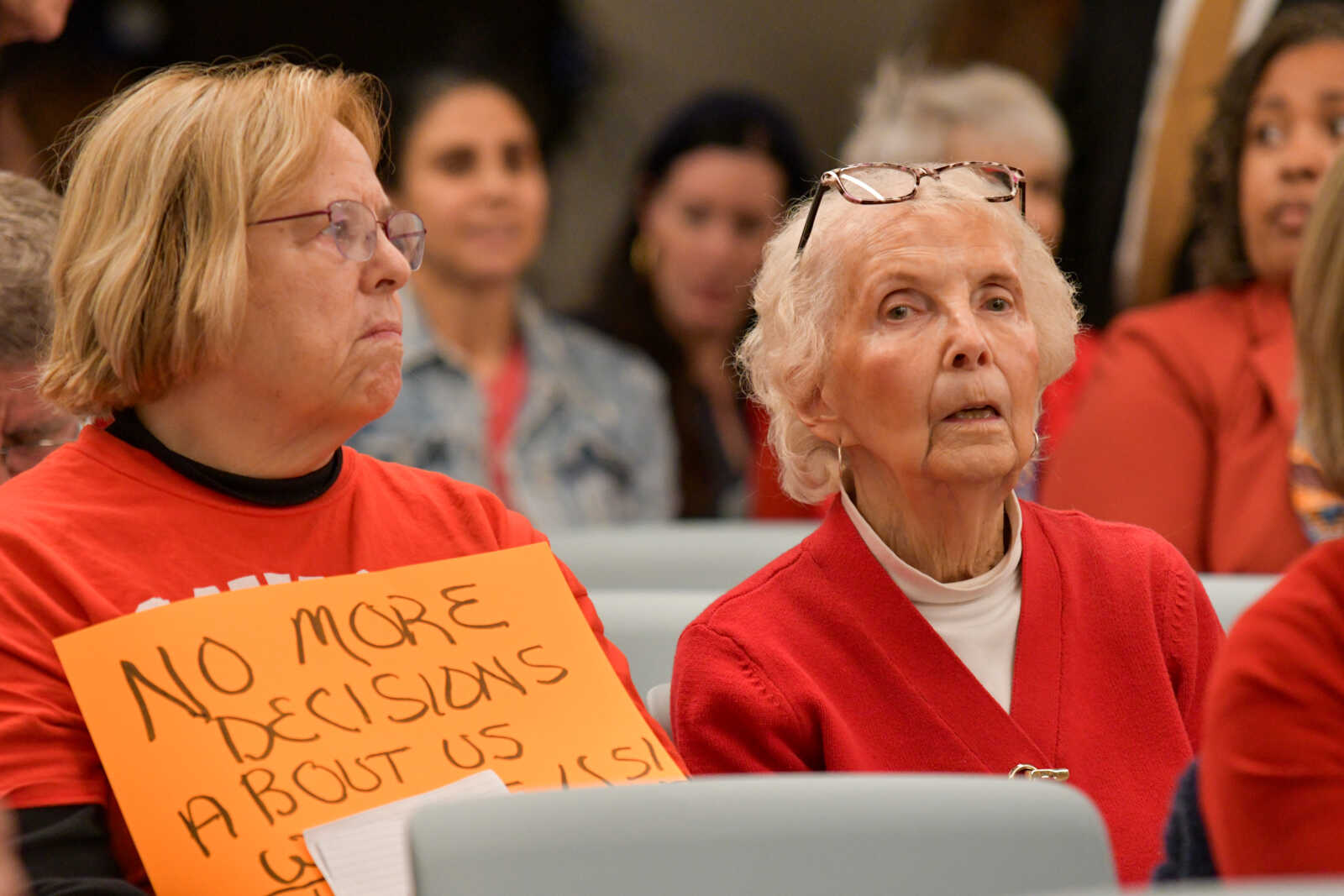
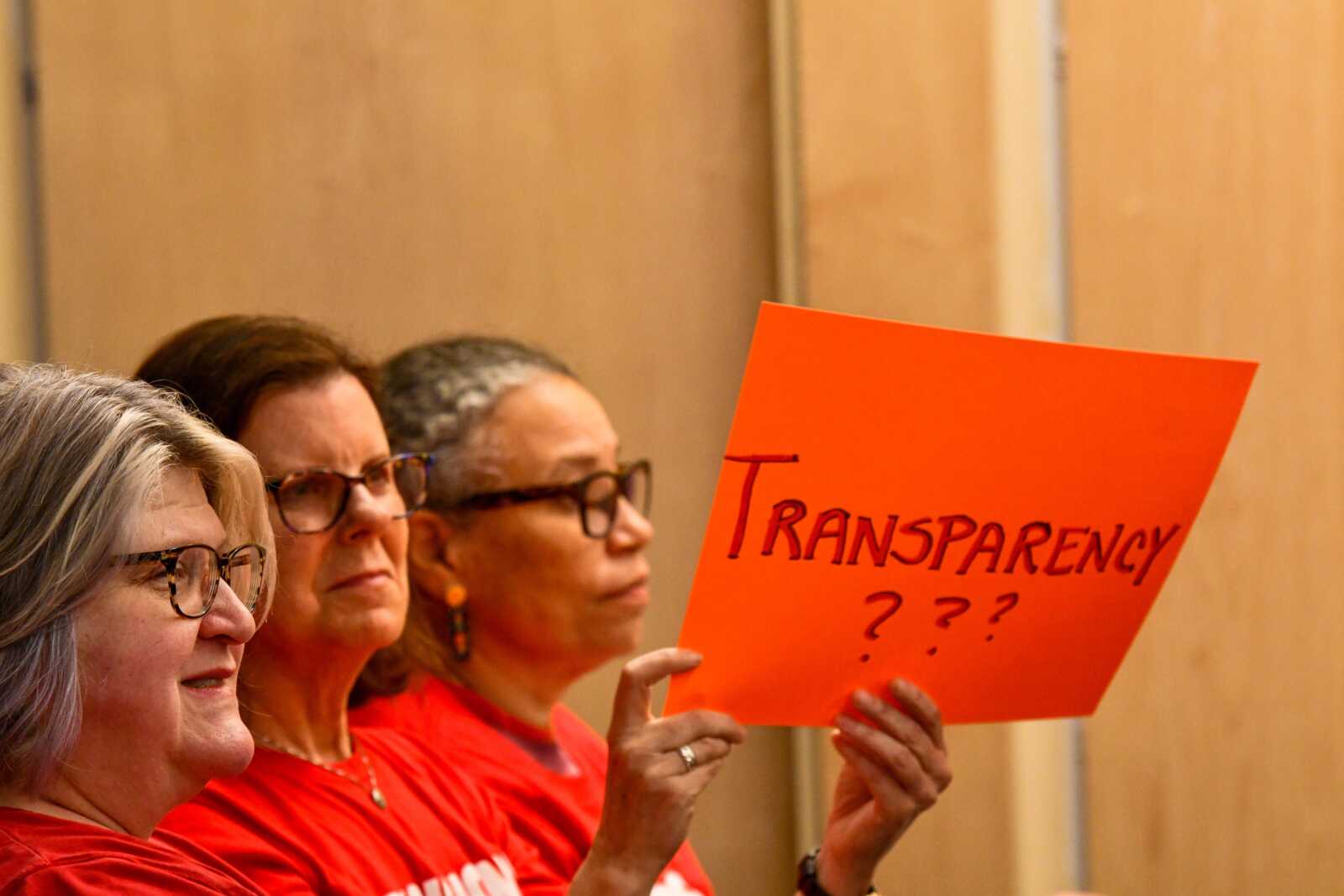
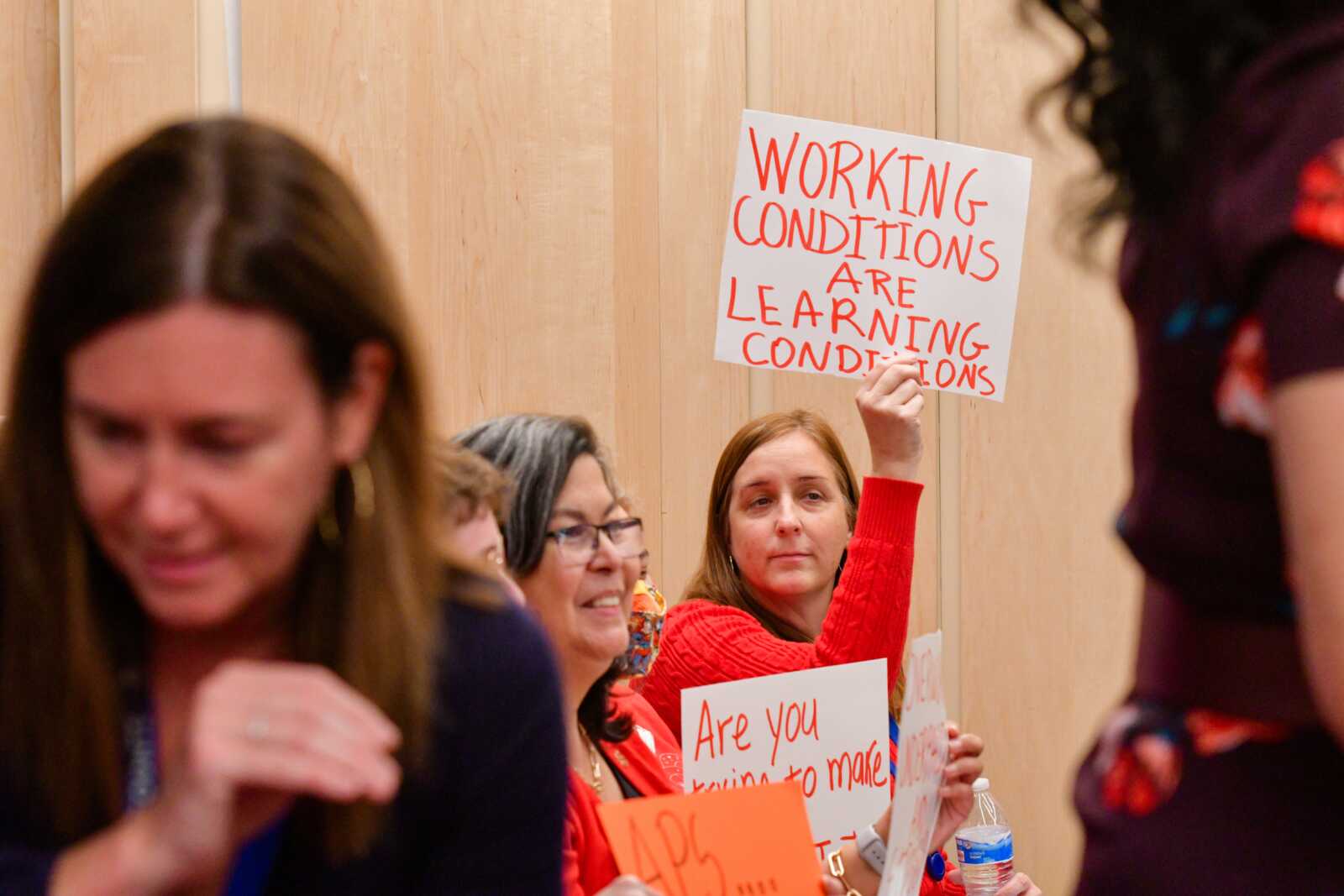
Over the course of an hour last night, Arlington Public Schools teachers excoriated the School Board and central administration for how they are handling what some call a healthcare catastrophe.

On Dec. 31, APS staff will lose the healthcare they receive from Kaiser Permanente and Cigna through APS, to be replaced in January by CareFirst BlueCross BlueShield.

Many current and retired staff say this change will upend the Kaiser healthcare teams they have built for themselves and their families over several years and in some cases, decades.

APS says it solicited bids from healthcare vendors and received four proposals, including CareFirst, the vendor it ultimately selected — but not Kaiser.

The school system first announced the change on Sept. 20 and the response was swift. Teachers spoke up at the subsequent September School Board meeting and ARLnow received at least a dozen emails from staff who were upset and confused by the change.

These feelings reached a boiling point on Thursday despite efforts from APS to smooth things over. APS held a “resource fair” with CareFirst representatives and Human Resources staff to help understand their benefits and enroll but according to the teachers union, the Arlington Education Association, this did not ease the anxiety of the nearly 400 people who showed up — some of whom were turned away.

“This disrespectful treatment of staff, lack of response and inappropriate responses from HR and lack of transparency on issues that not only affect staff but students and families, is disheartening,” says teacher Tricia Zipfel.

When teacher Marnie Lewis took the microphone at the School Board meeting, she began crying but eventually rallied to encouragement from colleagues in attendance.

“This [change] really took me to my knees,” she said. “I can’t believe I’m here. I’m here because this is how upset I am. I used to love working here, I was proud to work here and I’m not feeling that anymore… I would just like it if someone could answer my emails and questions. That would be great.”

Teacher Heidi Haretos, who recently moved from North Carolina to Arlington, asked central office and the School Board: “If your wife, daughter, husband or son had a serious health condition, and had a trusted medical team supporting them through Kaiser, would you have made this decision?”
(more…)


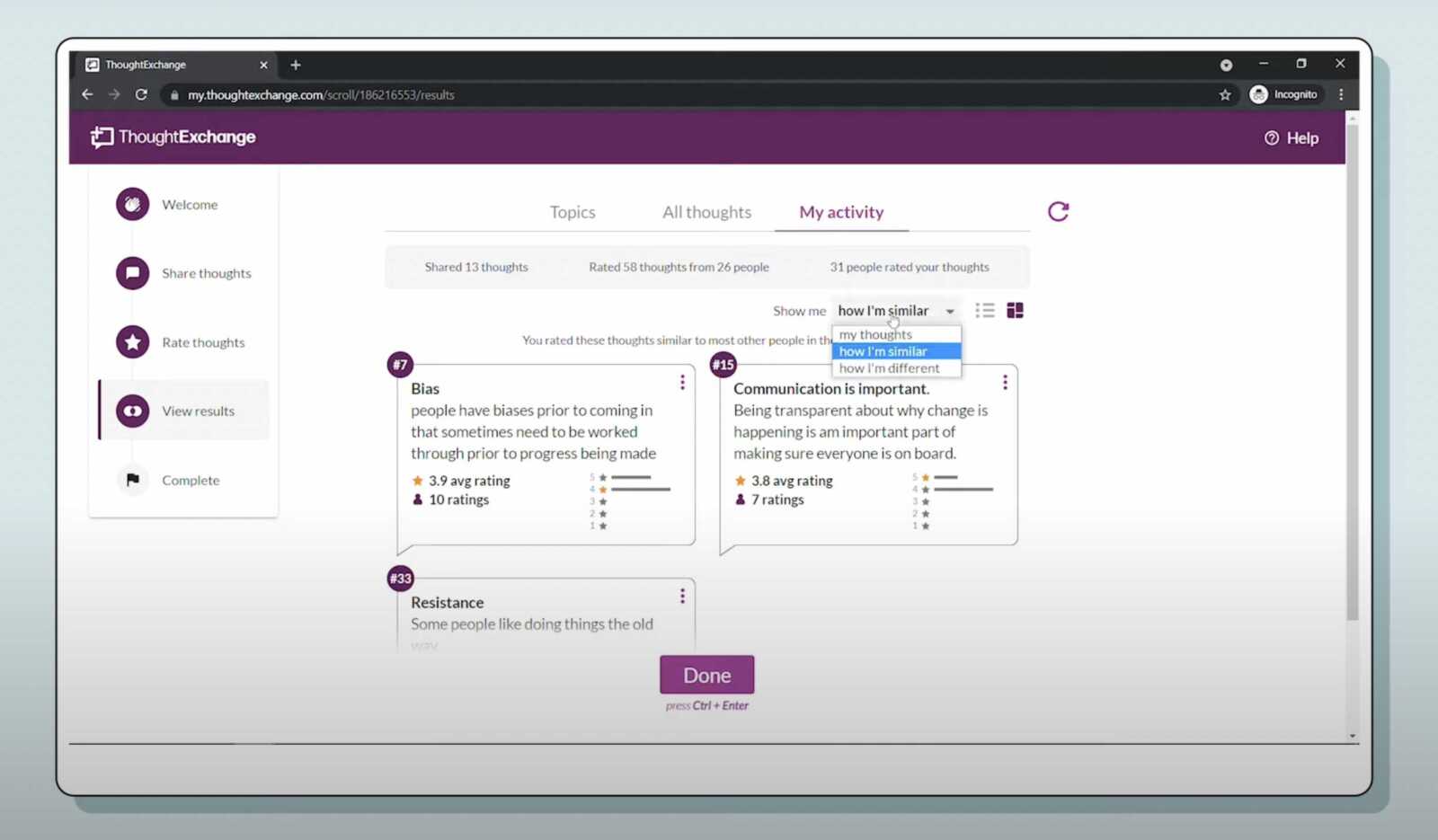
The ThoughtExchange platform Arlington Public Schools has debuted (via APS)

Arlington Public Schools has a new internal social media platform for families but its anonymous commenting policy prompted a tense discussion among some School Board members.

This year, the school system launched ThoughtExchange, which allows people to comment on topics or proposals administrators bring to the community for public comment. Users can also rank the comments others make 1-5 stars.

ThoughtExchange is intended to be a simpler and faster alternative to answering surveys and writing emails. APS has used it to gauge reception of its proposed school calendar and its plans to turn Nottingham Elementary School into a “swing space” and relocate the Spanish immersion program from Gunston to Kenmore Middle School.

“The goal of ThoughtExchange was for us to get more comprehensive feedback from our community,” APS Director of Strategic Outreach Daryl Johnson said in a work session last week. “One of the biggest requests that we continually receive from the community is transparency, and so people are actually able to see the thoughts of others in real time.”

But the platform’s anonymous commenting function raised red flags for School Board member Reid Goldstein.

“In the 10 or 15 years that social media has been around, I have yet to hear anybody, worldwide, say, ‘Boy, this social media is the greatest thing since sliced bread,'” Goldstein said. “I’m curious as to what thought we were going to achieve by creating another social media conduit and allowing commenters to sign up anonymously.”

Johnson said APS allows anonymous feedback so people speak up without worrying their opinions will blow back in their face at, for instance, the next Parent-Teacher Association meeting.

“So yes, sometimes it may go to the other end of the spectrum where it allows someone to say something that may not be the most favorable or the most constructive feedback, but however, it allows people to actually give that honest feedback without the retaliation,” he said.

Goldstein asked Johnson if staff expect “unfavorable” comments to increase, how much time they devote to content moderation and whether the communications team will request a future full-time moderator position.

Johnson noted that staff spend significant time moderating comments and responding to those “spreading misinformation.” He said a full-time moderator is unnecessary because ThoughtExchange uses AI to flag words and notify staff and participants can also report comments.

“We also are able to comment and respond to what people are saying,” he said.

Responding to Goldstein, School Board Chair Cristina Diaz-Torres said anonymous negative comments already exist on other platforms and, with ThoughtExchange, APS at least can moderate.

“These are comments that were happening already in different venues. If you’ve seen an ARLnow comment, if you’ve seen DC Urban Moms and Dads, Arlington Education Matters, these comments have been happening,” she said.

“The reality is that these comments were being made,” she continued. “A lot of these comments are incredibly disrespectful and are incredibly unkind and are incredibly inappropriate, however, here is an area where we can in fact do that moderation, using the tools that Mr. Johnson just mentioned.”

Goldstein agreed these comments have always existed but stressed with the new platform, “we are giving a platform to them and rewarding bad behavior that we have historically…”

“We’re not, though, if we’re taking them away,” Diaz-Torres interjected.

“…historically spent too much time [rewarding],” Goldstein continued, reprising his comment.

Diaz-Torres, who added that she appreciates the ability to rank comments, concluded the discussion with a message to the community “to be kind.”

“This is a new piece of software. And yes, you can be a keyboard warrior to your heart’s content, behind your keyboard, in the privacy of your own home, but remember, that there are humans on the receiving end of this,” she said.


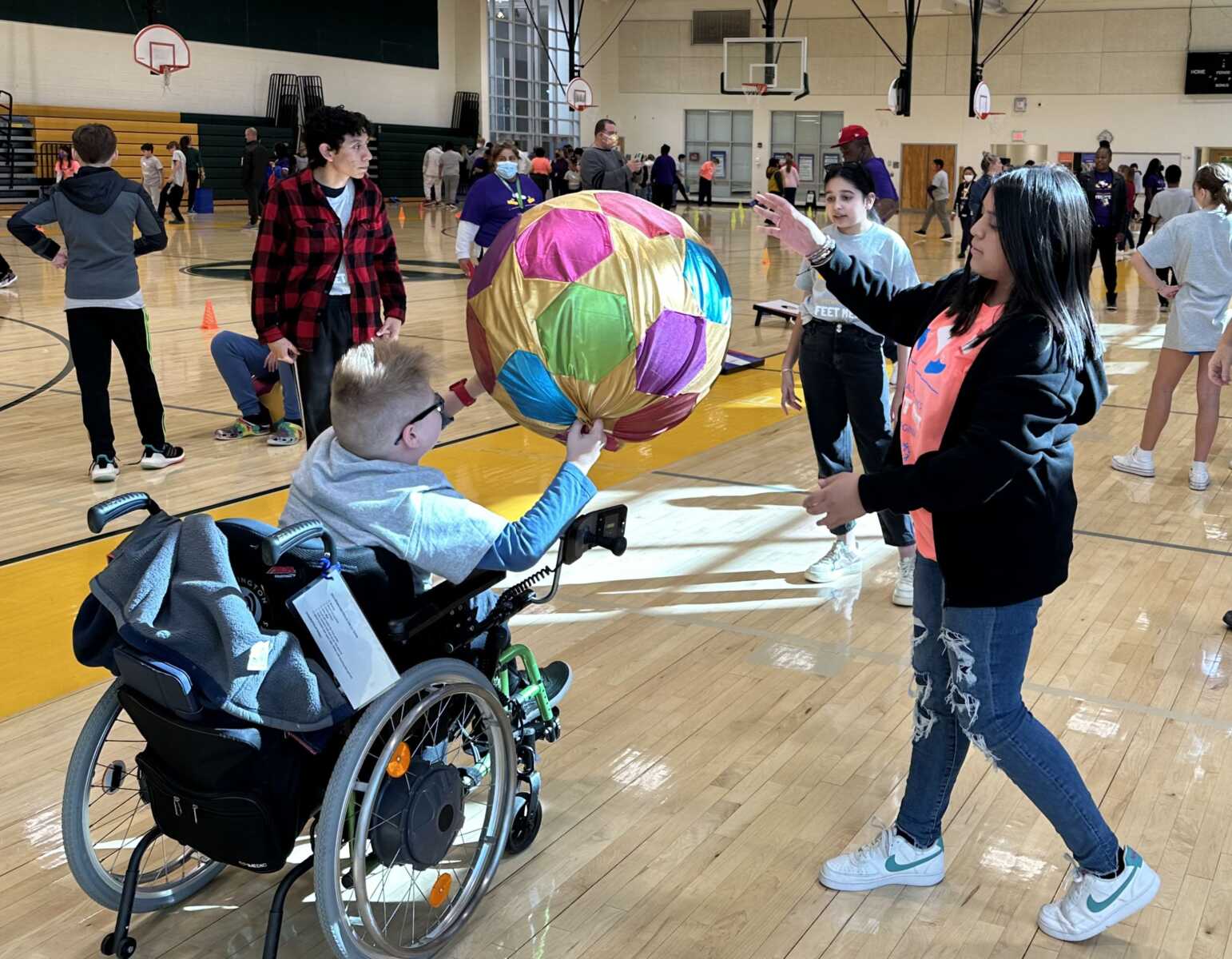
Students at Kenmore Middle School pass a ball back and forth (courtesy of Kenmore Middle School teacher Shauna Dyer)

For the last decade, Arlington Public Schools has tried to increase the time students with disabilities spend with their typically abled peers.

Creating a more inclusive environment can benefit students with disabilities and their peers, according to some studies — though not all — as well as new APS academic data. But it is easier said than done.

As of the 2020-21 school year, 67% of students with disabilities spent 80% of their time in the general education setting. The students who make up the difference might spend more time in a small-group setting or they may be placed in county-wide programs.

The 67% figure put APS 5 percentage points below state targets that year and 13 percentage points below a goal it set in its 2018-24 strategic plan.

Progress toward this goal has been sporadic because APS lacked a concrete plan and system-wide buy in to make these changes, according to old APS reports and interviews ARLnow conducted.

“The basic punchline is that they set the goal… and then they didn’t do anything differently for the subsequent five-plus years,” says parent David Rosenblatt, the former chair of Arlington Special Education Advisory Committee. “There was no meaningful plan except goals on paper.”

There are new signs of progress, though.

This year, the Office of Special Education is working with leaders of schools with inclusion rates below 65% to develop goals around increasing inclusion and strategies to help staff with this work, according to APS spokesman Frank Bellvia.

APS is in the early stages of hiring a consultant to devise system-level changes. It issued a request for proposals this summer and is re-issuing a new one this fall.

Previous consultant reports from 2013 and 2019 said Arlington could improve its inclusion efforts but left it to the school system to change. The 2019 report gave APS low marks for its progress since 2013.

APS confirmed its 2024 goal will transfer to future strategic plans.

“Supporting our [students with disabilities] is a core value for the district, and it will take some time to achieve this goal as it involves several factors,” Bellavia said. “Some of these include building an inclusive mindset with staff and within the community, staffing needs, and master schedules at the school.”

What inclusion looks like today

For APS, the good news is that, in 2019, a majority of students receiving services for their disability said they were treated fairly, welcomed in school and able to participate in afterschool activities.

On the other hand, 30% said this was not their experience and 35% said only some or none of their teachers have high expectations for them or “that they don’t know,” per the report.

For special education attorney Juliet Hiznay, students with disabilities can benefit from the higher expectations set in general education classrooms than in separate programs.

“The rationale for [these programs] is that they need a lower ratio, fewer distractions, modified curriculum,” she says. “The problem with that is that we’re looking at supporting a programmatic model rather than taking the student and saying, ‘How do we include her? What is she capable of?’”

Separate tracks may also contribute to fewer general education teachers who receive sufficient training to teach students with disabilities. The 2019 report found only 45% of general education teachers felt equipped to teach this population.

Annually, APS reports to the state how much time students with disabilities spend in with their typically abled peers in general education classrooms, as well as at lunch, recess, study periods, libraries and field trips.

(more…)


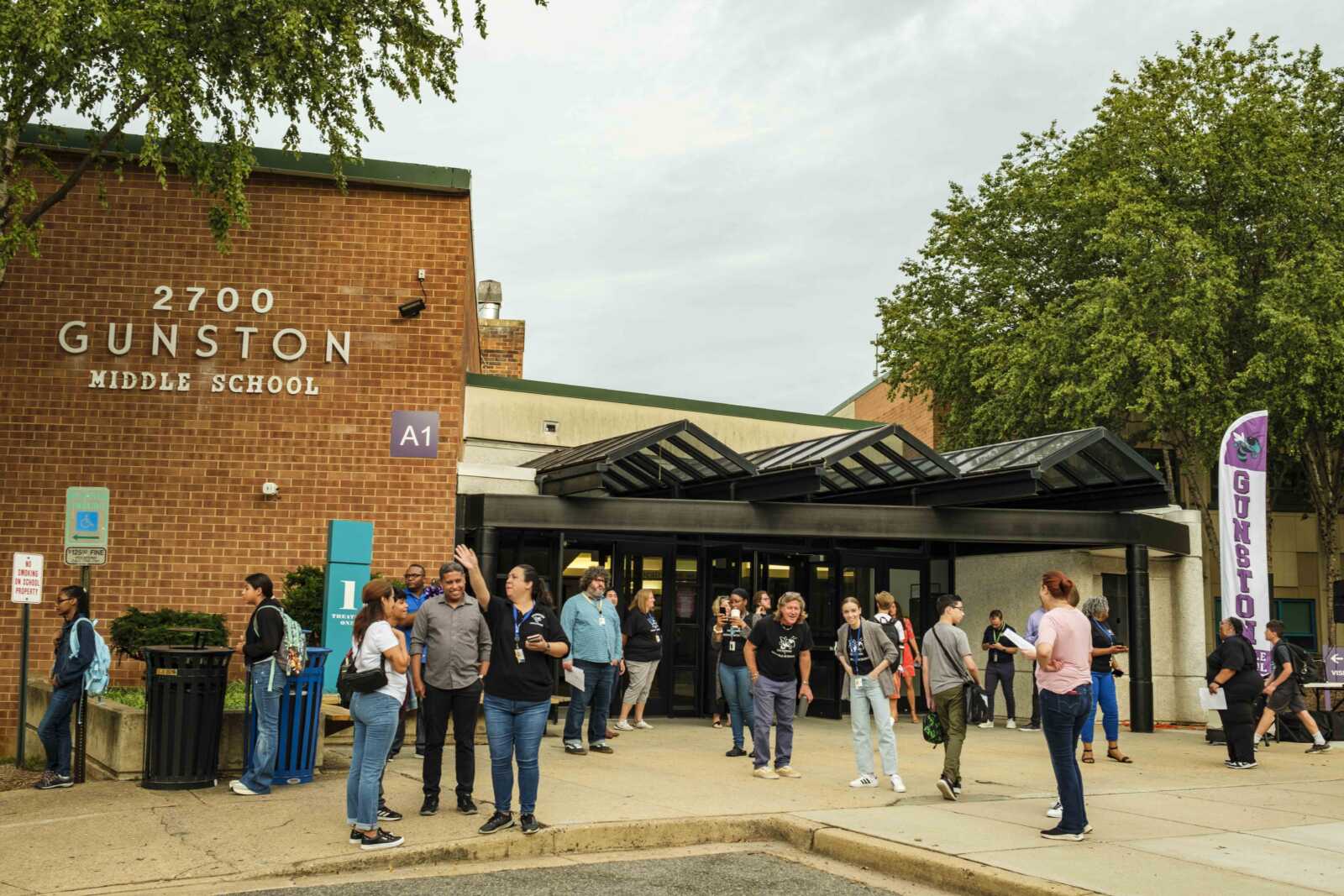
Teachers and staff at Gunston Middle School greet students on the first day of school (staff photo by Jay Westcott)

Arlington Public Schools is pausing an impending middle school boundary process, citing stable enrollment this fall.

Earlier this year, APS was bracing for overcrowding at a few middle schools. It proposed busing some students from Dorothy Hamm and Swanson to under-capacity Williamsburg Middle School. It also floated moving the Spanish language immersion program from overcrowded Gunston to Kenmore Middle School.

Now, administrators say enrollment needs are not pressing enough to warrant these changes just yet. The Arlington School Board endorsed a plan Tuesday to postpone the process for one year. The changes would now affect students going into grades 6 and 9 in the fall of 2026.

“As of last week at each middle school, only one school exceeds capacity: Gunston has two students beyond its design capacity,” Dept. of Planning and Evaluation Executive Director Lisa Stengle told the board on Tuesday. “Every middle school fits right now. So the urgency that we had to change middle school boundaries may not be as urgent as it was when we started this process.”

She attributed this to the home address confirmation process this summer, when APS changed how it verifies students living in Arlington and unenrolled non-resident fifth and eighth graders.

While this effort was underway, several families were voicing their opposition to the proposed boundary changes. Most vocal were Hamm families opposed to plans to bus students to Williamsburg, who said their children would forfeit the option to walk to school.

School Board members opined that walkability becomes the sticking point of most boundary processes and these efforts prioritize walkability — above other priorities, such as demographic diversity — as a result.

“The knottiest problem here… is the dichotomy between walkability and demographics because they both can’t be achieved at the same time,” School Board member Reid Goldstein said.

“We’ve heard, in the past, that when staff goes out to the community and talks about potential boundary changes, they hear ‘Well, we like walkability,’ and then we we just lean in the direction of walkability, which of course does not enhance demographics at all,” he continued.

APS may still, one day, move the immersion program from Gunston to Kenmore, in an effort to get more secondary students to stick with the program, says Director of Strategic Planning Iliana Gonzales.

Most immersion students live within the boundaries of Kenmore and Thomas Jefferson middle schools and may discontinue the program because of travel distance to Gunston, she said. Last year, a task force convened to develop a vision for the dual-language immersion program recommended moving the program to a more centrally located middle school — a change afforded by the then-forthcoming boundary process.

But School Board members and administrators are also concerned about where to put the program because it may impact the balance of native English and Spanish speakers. Only about a third of immersion students in elementary and middle school were classified as English learners, according to a 2022 report.

(more…)


Chief Diversity, Equity, and Inclusion Officer Julie Crawford (via APS)

(Updated at 6:35 p.m.) Black and Hispanic students remain more likely to be suspended from Arlington Public Schools than their peers, according to new data.

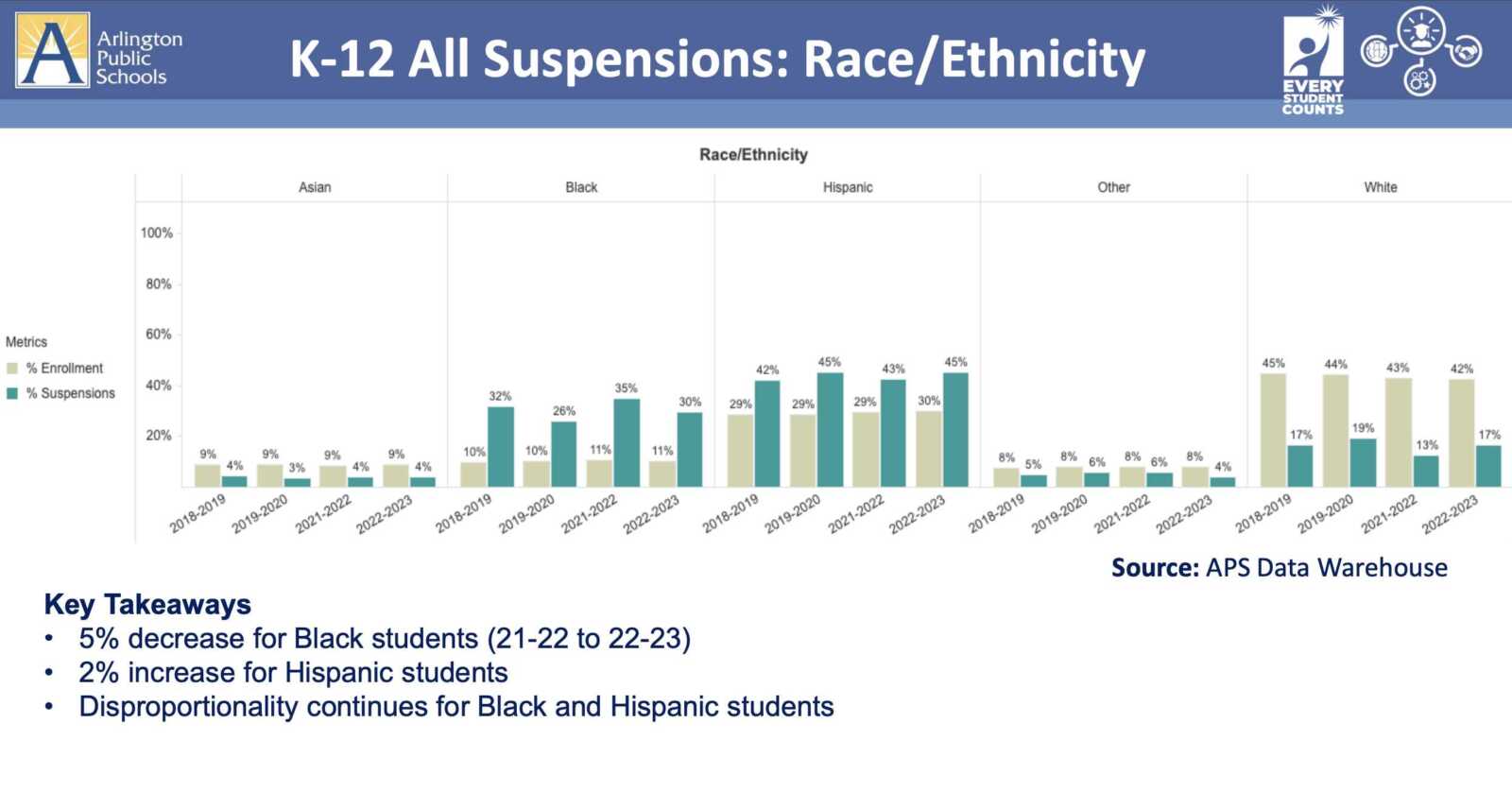
Specifically, Black students make up 11% of students yet 30% of suspensions, while Hispanic students make up 30% of the population and 45% of suspensions, per a presentation to the Arlington School Board yesterday (Tuesday).

Meanwhile, students with disabilities and those learning English are also over-represented in suspension rates. APS says they are, respectively, 2.5 and 1.5 times more likely to be suspended than their counterparts.

APS has made some inroads, noting a 5-percentage point drop in suspensions of Black students, a 4-percentage point drop among students with disabilities and a 2-percentage drop among males. Suspensions rose 2 percentage points for Hispanic students and females and remain unchanged for English-language learning students.

Disproportionate suspensions along race and ethnicity, ability and sex have long existed in APS, which has recently taken steps to reduce these gaps and improve its school climate more broadly.

This includes staff training in implicit biases and the root causes of problematic student behavior as well as in how to prevent crises using de-escalation. Also, the School Board two years ago voted to remove School Resource Officers from school grounds to tackle disproportionate arrest rates among non-white students.

More recently, APS  hired six Deans of Students this school year to address student behaviors at Yorktown, Washington-Liberty and Wakefield high schools as well as three middle schools. Middle schools in particular have seen problematic student behavior, including fights and verbal threats to teachers.

Suspensions by race and ethnicity over the last four school years (via Arlington Public Schools)

Chief Diversity, Equity and Inclusion Officer Julie Crawford described to the School Board how school administrators plan to tackle suspension rates.

“We would like to continue to focus on building our alternatives to suspension at the school level,” she said, adding that the new deans work “to proactively program and build relationships using instructional time, as opposed to removing our students from the school.”

Sometimes, students have to be removed from school. APS says the top reasons for out-of-school suspensions are disruptive behavior, followed by attendance issues — such as skipping class — and drug offenses. The top two reasons for in-school suspensions are the same, followed by fighting.

Tiffany Woody-Pope, dean of students at Thomas Jefferson Middle School, emphasized the importance of good staff-student relationships.

“I think the more that we are intentional about developing our interpersonal relationships with our students, the more comfort they’ll feel in classrooms — so they won’t necessarily have to be classified as ‘disruptive behavior,'” she said.

Seeing “disruptive behavior” top charts set off alarm bells for School Board member Mary Kadera.

“Disruptive behavior gives me a little heartburn… because historically, and broadly, outside of Arlington, ‘disruptive behavior’ has been a catch-all for a wide variety of behaviors and self-expression of students that a teacher may not like,” she said.

Crawford noted it is a broad definition with any of 17 different indicators, including disrespect and defiance.

June Prakash, the president of the teachers union, Arlington Education Association, would also like to see more daylight on “disruptive behavior,” questioning whether teachers and administrators have the ability to record a more accurate, specific reason for removing a student from class.

“Believe it or not, educators will put up with a lot before sending calling for help,” she said. “Staff often don’t feel supported, as it feels like their expertise is disregarded in the building.”

(more…)


The Arlington Public Schools Syphax Education Center (staff photo by Jay Westcott)

High school-based behavioral health services could be in place by November or December of this year, according to the county.

In the wake of a mini-rash of student deaths earlier this year that included the fatal overdose of a 14-year-old Wakefield High School student, Arlington Public Schools and the county government began devising a joint response to the twin epidemics of substance use and mental health issues.

This included plans to place county therapists in schools. The intent was to make it easier for students to get mental health support from the Dept. of Human Services, overseen by Arlington’s Community Services Board, or CSB.

“Both APS and the County seek to reduce barriers for children and youth to receive services from the Arlington CSB,” a county report says. “This agreement will allow for the provision of outpatient services in the school setting rather than the office setting. It will significantly reduce or eliminate the need for transportation and potential family time away from work.”

As part of the 2024 budget adopted earlier this year, the Arlington County Board approved $520,000 in ongoing funding and four full-time employees for this program. Recruitment of the four employees is underway, per the report.

The county notes the program responds to calls from the community for more services to youth.

“Expanded behavioral health services for children and youth has been identified as a community need by both Arlington Public Schools and the County through ongoing dialogues with stakeholders,” the report says.

The report emphasizes that the School-Based Behavioral Health Program cannot be the single, defining solution for struggling teens.

It “supplements and reinforces families’ efforts to enhance youth mental wellness by teaching and coaching youth to develop coping skills for managing emotional challenges in order to improve functioning at home, school, and in the community,” the report says.

The county and APS spent the summer hammering out a memorandum of understanding permitting the DHS Children’s Behavioral Health Bureau to provide behavioral health support in high schools. This weekend, the County Board is set to ratify the document.

Once the four behavioral health specialists are hired and finish mandatory training, they could begin practicing in Arlington high schools in November or December, the report says.


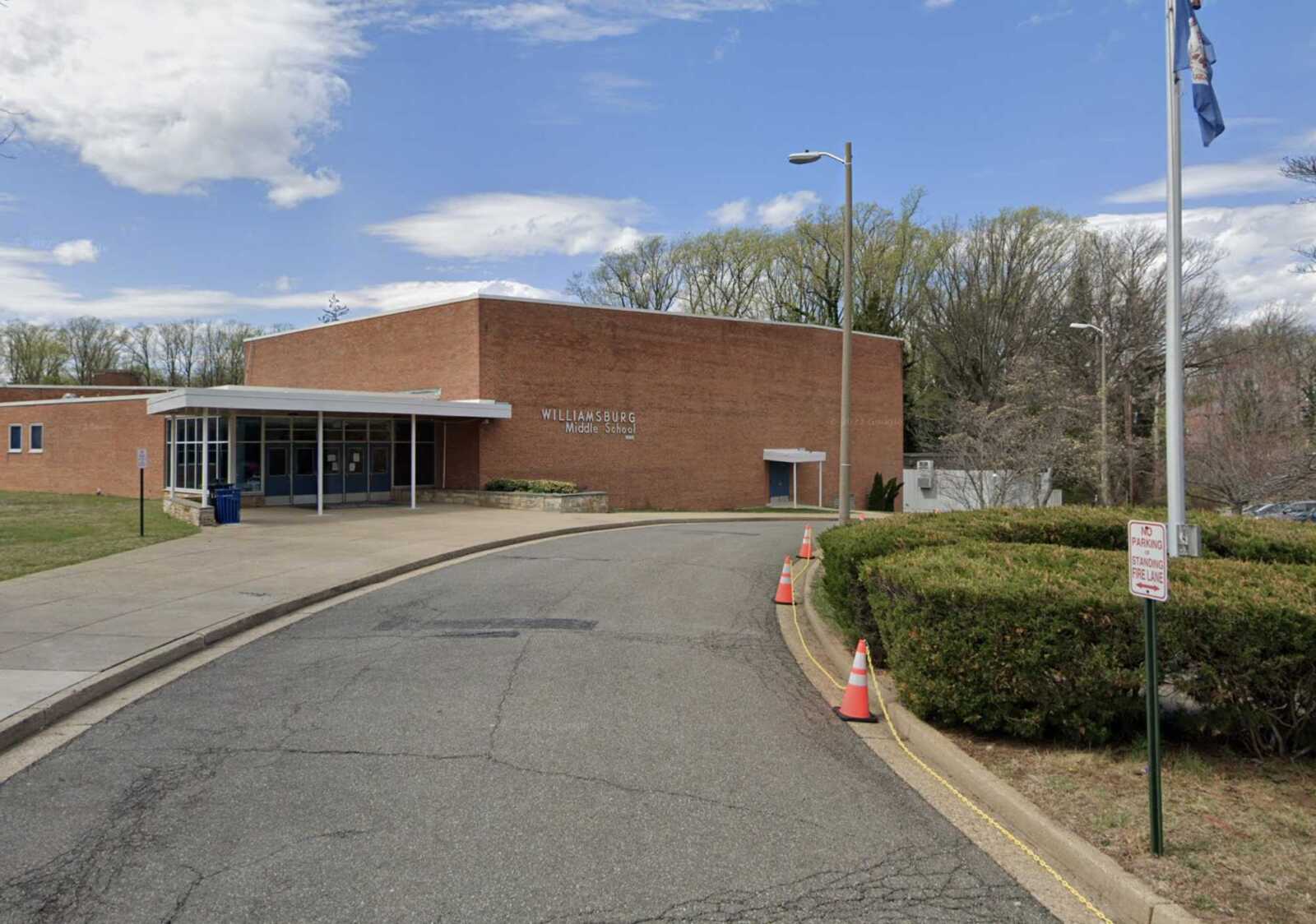
Williamsburg Middle School (photo via Google Maps)

Williamsburg Middle School has been named a National Blue Ribbon School for 2023.

The prestigious honor from the U.S. Dept. of Education has been presented to fewer than 10,000 schools since its founding in 1982. It honors “high-performing schools and schools that are making great strides in closing any achievement gaps between students.”

The National Blue Ribbon School designation was previously bestowed on a handful of Arlington public schools, including Arlington Traditional School in 2019, Patrick Henry Elementary in 2015 and Yorktown High School in 2002.

“This is an extraordinary achievement for our students, staff, and community,” Bryan Boykin, principal of Williamsburg Middle School, said in a statement. “Being recognized as a National Blue Ribbon School demonstrates the hard work of our educators and students, as well as our community’s continued commitment to supporting our schools and students. We are incredibly proud of the accomplishments of our students and the quality of our staff.”

More, below, from a press release.

The U.S. Department of Education today announced Williamsburg Middle School is one of 353 schools awarded National Blue Ribbon Schools for 2023.

The recognition is based on a school’s overall academic performance or progress in closing achievement gaps among student groups on assessments. Williamsburg Middle School earned the prestigious award for Exemplary High-Performing Schools.

“This is an extraordinary achievement for our students, staff, and community,” said Bryan Boykin, principal of Williamsburg Middle School. “Being recognized as a National Blue Ribbon School demonstrates the hard work of our educators and students, as well as our community’s continued commitment to supporting our schools and students. We are incredibly proud of the accomplishments of our students and the quality of our staff.”

The Department recognizes all schools in one of two performance categories, based on all student scores, subgroup student scores and graduation rates:

  • Exemplary High-Performing Schools are among their state’s highest performing schools as measured by state assessments or nationally normed tests.
  • Exemplary Achievement Gap-Closing Schools are among their state’s highest performing schools in closing achievement gaps between a school’s student groups and all students. Nominated schools also complete an extensive narrative application describing their school culture and philosophy, curriculum, assessments, instructional practices, professional development, leadership structures, and parent and community involvement.

U.S. Secretary of Education Miguel Cardona praised all honorees in a statement:

“The honorees for our 2023 National Blue Ribbon Schools Award have set a national example for what it means to Raise the Bar in education. The leaders, educators, and staff at our National Blue Ribbon Schools continually inspire me with their dedication to fostering academic excellence and building positive school cultures that support students of all backgrounds to thrive academically, socially, and emotionally. As the Biden-Harris Administration partners with states and schools to accelerate academic success and transform educational opportunity in this country, we take tremendous pride in the achievements of these schools and their commitment to empowering educators, serving students, and engaging families.”

The award affirms and validates the hard work of students, educators, families, and communities in striving for – and attaining – exemplary achievement. National Blue Ribbon Schools represent the full diversity of American schools and serve students of every background.

National Blue Ribbon School leaders articulate a vision of excellence and hold everyone to high standards. They demonstrate effective and innovative teaching and learning, and value and support teachers and staff. Data from many sources are used to drive instruction and every student strives for success. Families, communities, and educators work together toward common goals.

Past Arlington Public Schools Blue Ribbon Award winners include Arlington Traditional School in 2004, 2001 and 2019; Patrick Henry Elementary School (Alice West Fleet) in 2015; Yorktown High School in 2002; Ashlawn Elementary School in 1990; Oakridge Elementary School in 1986; and Washington-Lee High School in 1985.

Photo via Google Maps


View More Stories